
In short
Podcast Summary: The Happy Pod - Episode: The tiny dog back home after a big adventure
Podcast Overview
- Title: Global News Podcast
- Description: The podcast delivers breaking news, covering various topics including politics, economics, climate, business, technology, and health, with expert analysis and insights. New episodes are released twice daily on weekdays and daily on weekends.
Episode Overview
- Title: The Happy Pod: The tiny dog back home after a big adventure
- Description: This episode focuses on the heartwarming reunion of a tiny dog named Valerie after 529 days in the wild, alongside stories of a zebra escape in Tennessee, a heroic rescue of trapped workers in India, and a footballing milestone for Senegal.
---
Key Stories Discussed
- Valerie the Dog's Reunion
- Background:
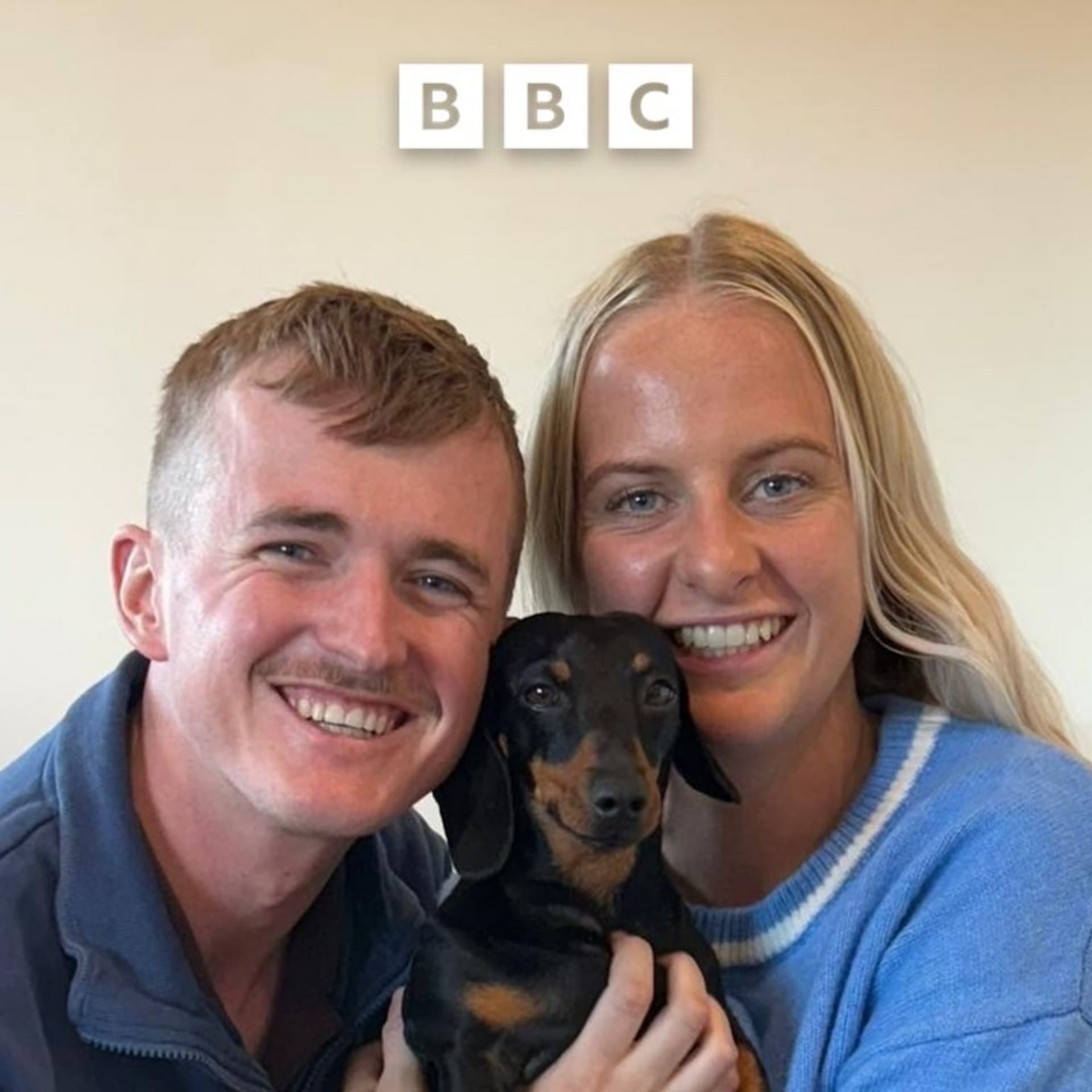
- Valerie, a Dachshund, went missing during a camping trip on Kangaroo Island, South Australia in November 2023.
- Her owners, Georgia Gardner and Josh Fishlock, faced uncertainty about her survival for over a year.
- Rescue Details:
- Valerie was spotted two weeks after her disappearance but remained elusive for about a year.
- In February 2024, a rescue operation commenced, involving 1,000 hours of volunteer work.
- A creative trapping method involved using one of Georgia's shirts to lure Valerie back.
- Reunion Moment:
- Valerie was finally captured and reunited with her owners, creating an emotional scene filled with joy and relief.
- The Escaped Tennessee Zebra
- Summary:
- A zebra named Ed escaped shortly after arriving at his new home.
- He became a sensation on social media during his days on the run, leading to a significant public interest.
- Ed was eventually captured safely and relocated to a more secure environment until a new home can be arranged.
- Heroic Rescue in India
- Story Highlights:
- Australian engineer Arnold Dix risked his life to help rescue 41 workers trapped in a collapsed tunnel in the Himalayas.
- The rescue operation faced numerous challenges, and Dix emphasized the importance of humanity in risking one's life to save others.
- The successful rescue was marked by emotional reunions, highlighting the impact of teamwork and belief in a successful outcome.
- The Signal School in Mumbai
- Description:
- A unique school built from shipping containers aims to provide education for the poorest children, preventing them from engaging in begging or selling goods at traffic signals.
- The school has successfully integrated children from various backgrounds, helping them learn and prepare for mainstream education.
- Cycling for Mental Health
- Overview:
- A community program in Essex teaches women to ride bicycles, which serves as a means of exercise and fosters companionship, particularly for those dealing with mental health challenges.
- Participants report significant improvements in their mental well-being and social connections.
- Senegal's Footballing Milestone
- Highlights:
- Senegal's national football team achieved a historic victory against England, being the first African side to win a senior men's international match against them.
- The joy from fans and the significance of this victory were celebrated and captured in audio snippets from Senegalese media.
---
Conclusion The episode of The Happy Pod beautifully combines heartwarming stories of resilience, community, and achievement. It features a touching reunion of a beloved pet, the thrill of unexpected animal escapes, the triumph of human spirit in rescue missions, and the unifying power of sports. As always, listener engagement is encouraged, inviting stories and experiences for future episodes.
---
If you have any stories you would like to share, you can reach out via email at [globalpodcast@bbc.co.uk](mailto:globalpodcast@bbc.co.uk).
Written by AI. May contain mistakes. Listen to the episode to check what was said.
Transcript
Automatic transcript. May contain errors.0:00This BBC podcast is supported by ads outside the UK. If journalism is the first draft of history, what happens if that draft is flawed? In 1999, four Russian apartment buildings were bombed, hundreds killed. But even now, we still don't know for sure who did it. It's a mystery that sparked chilling theories. I'm Helena Merriman, and in a new BBC series, I'm talking to the reporters who first covered this story. What did they miss the first time? The History Bureau, Putin and the Apartment Bombs. Listen on BBC.com or wherever you get your podcasts. This is The Happy Pod from the BBC World Service.
0:50I'm Bernadette Keogh and in this edition... It was just the best feeling ever. Incredible moment where I don't think I'd like to go over for a long, long time. Our house is just exploding with love. A tiny dog who found fame on a giant adventure finally makes it home. A man who risked everything to save 41 people. The families of these young men who were trapped couldn't help, but I could. Putting your life on the line for other people, that's what we should do. That's at the heart of what humanity is all about. Also, hunting for an elusive rare species. We're basically chasing ghosts. We can't see it, we can't hear it, but we know it's there.
1:35Christina can hear it. Plus the joy of a footballing first for Senegal.
1:46We start with the story of a tiny dog who went on a huge adventure. Valerie, the dashand, was just a puppy when she escaped during a camping trip on Kangaroo Island off the south coast of South Australia back in November 2023. Her owners feared she wouldn't survive on the large, sparsely populated island alone, and for over a year her fate remained unclear. Then, back in February, Valerie was spotted and after more than 500 days in the wilderness and a rescue operation involving 1 ,000 hours of volunteers' time, she's finally made it home and has just celebrated her third birthday. Helena Burke spoke to Valerie's owners, Georgia Gardner and Josh Fishlock.
2:36We spent the remainder of our trip hiking through the hills looking for her. Yeah, it was horrific, pretty devastating. Yeah, it was a pretty, pretty hard time. We both were very upset with having to go back to our jobs and back to the mainland. But once we had spoken with Kingala Wildlife Rescue, we knew that if anything was to come up, they were more than capable of conducting the, I guess, the rescue mission. We did at times think that maybe she had passed away or something like that, but we also tried to not let those thoughts take over our mind. We had to keep thinking that she might be still out there and living her best life.
3:30How long was it until there was those first signs that maybe she'd been spotted? Two weeks after we left, there was two sightings of her, but they were both very far apart. And then we didn't hear a single thing. There was no sightings for a year. And then it wasn't until this year, end of February, when there was another post by a completely different other woman and she said that her partner had seen a sausage dog running through a paddock. And then Kangala saw the post as well and we got in contact with them. We're like, hey, what do you think? they were like yep she's alive we're gonna try and trap her and rescue her we're like oh my goodness but also just trying to keep really level-headed because we just did not want to go through that process of what it was like when we lost her and how upset and how devastated we were and how much you know we'd grieved can you talk me through how they caught her in the end i remember reading online that they'd put one of your t-shirts in the trap to lure her with the sent?
4:28So they had a big cage that was initially set up as a pig trap. And so they had that in an area that she was seen. Initially, she would just come get the food and run off and be super, super fast. And I also sent over a shirt that I wore and played a game of netball in with no deodorant and walked around and went a whole day in that was very, very stinky. And so they cut that up into tiny little pieces and they put it along the fence line and they put it little pieces around the trap and then it got to the point in the end where she she laid down you know and and had a little nap in there so in the end they had a remote controlled trigger and then when she was inside right at the back then they were able to press the remote trigger and it slid the door clothes so I was actually at work when Lisa called me I was just ecstatic I was so excited then I got to FaceTime Josh and I didn't tell him initially I then I was like oh you know look at the photo I've sent you and it was a photo Lisa had sent me through of her and then just watching his face light up and he was just so euphoric it was oh it was just so good oh my goodness it was absolutely amazing it was quite incredible I don't think I said anything for a good couple of seconds I think I was just in shock I was just staring at the photo and the video and then I started to get really emotional to being like wow like it's actually happened this is amazing like I never thought that this moment would ever come just to like see the emotion on George's face as well was incredible.
6:12Some emotions I don't think I've ever felt before. Can you tell me about the day that you guys got to see her again after 19 months? She just ran straight up to me and remembered me straight away, wagging her tail like No Tomorrow was giving me kisses and incredible moment where I don't think I let go of her for a long, long time. Words can't describe. It was just the best feeling ever. I just started bawling my eyes out I was oh euphoric I was just like like Valerie like where have you been and she was she jumped all over me and she was licking my face and licking my mouth and you know I saw her and and she'd gained a lot of muscle mass and you know she'd also gotten older so she changed slightly in that term you talk about the fact that she was looking really healthy and yeah is that surprising for you guys how well she did out there which has you shown any sign of being the survivalist dog before them?
7:07Not really. She was definitely a pampered little pooch. I never went anywhere without her. You know, she would follow me around. She'd had a little car seat. She had a ramp up to the bed. It was incredible, the fact that she had survived. And it really just plays a tribute to, you know, her breed, to the resilience of dogs. It has been so great to have her home. Our house is just exploding with love. Georgia Gardner and Josh Fishlock. And if you have an amazing reunion story, we'd love to hear about it. Just send us an email or a voice note to globalpodcast at bbc.co.uk. And it's been quite a week for missing animals.
7:49In Tennessee, a zebra has been caught after several days on the run. Holly Gibbs has the details.
8:00that's the sound of a zebra being airlifted through the sky to an animal trailer the footage which shows the animal wrapped in a net and being carried by a helicopter has become an internet sensation he's been given the name ed by the public and some social media users have said ed is now a celebrity the zebra was reported missing by his owner at the end of May, just a day after arriving at his new home. He was spotted galloping on a road and wandering round a neighbourhood in the days before he was captured. At one point, a major interstate road was shut after a sighting. Rutherford County Sheriff's Office, which helped with the search, said he was found in a pasture near a subdivision in the Christiana community in central Tennessee.
8:46His owners say Ed is safe and unharmed and in a new, more secure location until he can hopefully be rehomed in a zoo or wildlife park where his newfound fans can visit him. Now to a rather unusual school that's been built under a busy road junction in Mumbai in India. And it's not just the location that stands out. To save money and speed up construction, the building was made out of shipping containers, the giant metal boxes usually used to transport goods around the world. Chavi Suchdev went along to find out more. It's known as the Signal School because it sits on an island next to countless traffic signals.
9:29And it was set up for children who might otherwise spend their days selling or begging at those signals, the very poorest kids. The school itself consists of eight shipping containers. For founder Bhattu Savant, it made perfect sense.
9:56The containers are painted over with bright pictures of children, flowers and stars. Even the flyover above the school has been painted to look like the sky. So I'm in a class with the teacher Shaila Desa. There are 25 little children. And it's story time, so Shaila's going to read them a story. The story is in Marathi, the official language here in Thane. But most of the kids are children of migrants, and back home they speak Pardhi, a tribal language. This language barrier is one of the main reasons that these kids would struggle in a mainstream school. Yes, now they understand Marathi. When I first got here, they would only talk among themselves.
10:44When they started to get to know us, we began introducing new vocabulary and brought them to this point where they know Marathi. And it is in a mix of Marathi and Hindi that I chat with the kids a bit later on.
11:02Gaurav and Sagar are both 11. Gaurav's family sells eggs and Sagar's makes gajras, the jasmine garlands that they sell at traffic signals. Sagar still spends his free days helping his parents make and sell the garlands, but he has big dreams.
11:22Sagar tells me he'll be a big man. I'll have a salary, a job, a car, a big house and good money. What's your name? January. What's your age? Nine. Nine-year-old Janvi's family also sells the flower garlands. Her favourite subject is maths. And when she grows up, she's going to be a chitrakar, an artist. The idea is that eventually all these kids go on to take the state board exams when they are 15 or 16 and then move to mainstream colleges. I'm under yet another flyover, but this one is under construction. Shankar, who's 21, is one of five students who's gone from these classes in a shipping container to starting his own business.
12:08Going to the signal school brought me to this point in my life. If I hadn't gone there, I would probably be working at a signal like my mom and dad. Keeping him off the streets impacted the family's daily earnings. When I first started, I would attend school for a day. Then my parents would pull me out for two days. But now they're backing me to do something good because of school. Negotiating with parents to let their children come to the signal school is, Bhattu tells me, the hardest part of his job. This kind of dropout, it's not permanent dropout. They drop out, we search them again and bring them again in mainstream education.
12:49This is the first generation of this homeless student who are in mainstream education. It's a proud feeling for me. I am feeling that it is our duty and this duty gives me lots of pleasure. I think myself as a good citizen of India. That report from Chavi Suchdev. And you can hear more about the school and other ingenious uses for old shipping containers on People Fixing the World, wherever you get your BBC podcasts.
13:30Coming up in this podcast. It's been the best thing that's happened to me and I learned it all from here and it was wonderful. I mean, seeing myself riding, it's like amazing. If other people can do it, why can't I? How learning to ride a bicycle can help tackle depression.
13:54If journalism is the first draft of history, what happens if that draft is flawed? In 1999, four Russian apartment buildings were bombed, hundreds killed. But even now, we still don't know for sure who did it. It's a mystery that sparked chilling theories. I'm Helena Merriman, and in a new BBC series, I'm talking to the reporters who first covered this story. What did they miss the first time? The History Bureau, Putin and the apartment bombs. Listen on bbc.com or wherever you get your podcasts.
14:33Now, imagine being responsible for trying to save the lives of dozens of people trapped in a collapsed tunnel and succeeding. Back in November 2023, 41 workers spent over two weeks stuck deep under the Himalayas in India when the road tunnel they were building caved in. The relatively soft and fragile rocks made attempts to free them extremely dangerous, both for the trapped men and the rescuers, and several attempts failed. But when he was asked to help, Australian expert Arnold Dix promised the world's media that no one would be hurt and instantly became the public face of the rescue efforts.
15:17Arnold, a professor of engineering who was then the president of the International Tunnelling Association, told my colleague Joe Fidgen why he was prepared to risk everything to save these 41 lives. I felt, and I can't really explain why I felt it, that if we could just be calm and sort of keep focused, maybe this was a chance. I just had a feeling that we could do this. I knew that the families of these young men who were trapped couldn't help, but I could. Putting your life on the line for other people, that's what we should do, because that's what distinguishes us from animals. That's at the heart of what humanity is all about.
16:04And I mean, I've already had my kids and I've had a good life and everything. And I am uniquely skilled to be able to deal with this. The media were tracking Arnold's every move. But two weeks in, he had no good news for them. The rock was too soft and kept collapsing. Time was running out. The rescuers were taking lots of different approaches to get to where the men were and were getting closer, but the final few metres were proving very difficult. So the main method that we were putting our hopes on was the auger, pushing a pipe into rock, and then inside that pipe we have an auger that spins and it drags the rock out like a big sausage mincer or something.
16:50And then the auger itself blew up. Before the auger exploded, it had succeeded in drilling a pipe to within 10 metres of the trapped miners. Even though everything was broken, we've now got, and credit to the team that I was working with, they got in what they call the rat miners, who actually dig by hand. So these are really, really hardworking, come from the poorest parts of the country, and they work in pipes, to unblock pipes. And then we went literally millimetre by millimetre. and the last 10 metres took us a few days, about two, I think it was about two and a bit days. Then we break through and then the first man comes out, everyone's cheering and it's like, you can't believe it, like here's the first man.
17:49But for me, what was amazing, because I'm sitting behind the families, they were just stunned, like just quiet and just sort of weeping. It was probably one of the most moving experiences I've ever had, which is just extraordinary. They looked like 41 men who had a second life. I mean, they looked like people who had been reborn. All I could see was their smiles and just so, so happy. Have you had any contact since the rescue with either the men you helped rescue or the other rescuers? I met some of the men at the airport just by chance. The men I rescued are so happy. Like, here's all these people, and they're going to have a chance to have their lives.
18:38Like, they're going to have a chance to love, they're going to have a chance to play, to maybe have kids, just to live their lives. And while I was doing the rescue, I felt an incredible sense of connection to everything. And I felt as if I was meant to be there, like I was the perfect fit for this particular problem. I was just one little part of the solution, one piece in the puzzle. And every piece of that puzzle was needed, including me. And if any one of them wasn't there, it wouldn't have worked either. So we all pulled together. And when I spoke to the government after the rescue and I asked them, what did I do?
19:22Like, how did I help? And they said, you made us believe. It's like, oh, and I believed. Like, we all somehow believed we could do it. And then we did. Arnold Dix. And you can hear more of that interview on Outlook wherever you get your BBC podcasts. Now let's go deep into the countryside of western Slovenia.
19:51That's the sounds of crickets and grasshoppers, but it's another, rather more elusive insect that UK conservationists have been trying to locate in the woods of the Idria Geopark. The black and orange Circadeta Montana used to be the only cicada native to Britain. living in the New Forest in the south of England. But none have been seen for the last 17 years, and their high-pitched call also makes them hard to find in their remaining habitats across Europe and parts of Asia. Now, though, the conservationists have a specially skilled helper, 12-year-old Christina Kender. Marion Straughan has been finding out more.
20:34You won't hear the cicadas, Marion, because you're too old, as we are. The person who can hear them is Christina. This is the irony. That's Dominic Price from the Species Recovery Trust. They're at 13 kilohertz. When you're young, you can hear probably up to about the age of 25. So we're using special monitoring devices to hear them. This is one of the things which makes it such an incredibly challenging project, is we're basically chasing ghosts for something we can't see it, we can't hear it, but we know it's there. Christina can hear it because she's young enough. Last summer Dominic and Holly stayed at an Airbnb run by Christina's mother and Christina took an interest in their project.
21:19They came here to Slovenia and they talked and I was there too and I listened and I was actually really excited. This first night we went to the woods and we explored together and we put there some nets and then I went every day to look after it if anything changed, if maybe I could catch anything. And so what were you looking for? To see if they popped up out the ground? Yeah, if they came out of that turret from the ground because they usually fly on the trees. And let's hear more about this cicada from Dominic. It can live anything up to seven years. It spends most of its life living underground and living off the roots of trees and grasses and then they emerge and that's when they do this calling sound to attract a mate.
22:10They lay eggs, the eggs hatch pretty quickly and then they go back down into the ground. Why should we be so interested? They're a really unique thing for us to have in England. So they're a very sort of exotic insect for us and it's a shame when we start losing those sort of more exciting insects. We have lost so many species and, you know, within Europe, we are one of the worst countries for keeping our biodiversity. So at the Species Recovery Trust, we're just fighting for all of these species, regardless of whether they perform a function or not. So once these cicadas get caught in the net by Christina, then how do they get back and how many do you need and how quickly can they breed?
22:48It goes through all kinds of various import and export licences. They are then going to a place called Poulton's Park in the New Forest, which some people will know as Peppa Pig World as well. They have the attractions there, but they also have a very top class zoological section. We've built some enclosures where you can actually see under the ground, so we'll be able to watch them burrowing into the ground, which as far as we know, nobody has done before. So it's going to be really good to share that with the public. This is a long-term project, and Christina has already been doing it for a year.
23:21It became kind of viral, and we recorded some TV news. And do you know how long you will be doing it for? I'm not sure. Maybe. I think it's until you catch some. It could be many years. We'll keep going. Do you think you can do that, Christina? Do you think you've got the stamina to do it for several years? I hope it's going to happen, but I don't know. I will try to keep doing this, yeah. Twelve-year-old Christina ending that report from Marion Straughan. next to a group that's helping people with mental health problems simply by teaching them to ride a bicycle cycling together offers the dual benefits of exercise and companionship to women with issues like anxiety or depression and those in abusive relationships claudia hammond went to essex in south-east England to meet them.
24:22They all learnt from scratch. Martha learnt here. You learnt here? So you couldn't cycle at all a few weeks ago? No, no. I wasn't even scared to ride a bicycle and it's been the best thing that's happened to me. Today was fantastic. We had to go into the woods, you know, into the ditches, you know, we manoeuvred and everything and I learnt it all from here and it was wonderful. The scheme is led by a collaboration between two organisations and one of those is called Women Together and it's led by Sidra Naeem. It's quite interesting how many ladies cannot ride a bike. Either it was they didn't get a chance because of maybe poverty, they didn't have a bike.
25:03In their home countries they may not have had the money or it was not the cultural norm where it's seen that the men are the ones who go out to work, they are the ones who need to ride a bike. What difference have you seen it make to people and to their mental health? Absolutely massively and they love it. Also while they're engaged in cycling they talk to each other without even realising. At the same time we're not just promoting good mental health but the cultural awareness from each other. The unity and the community cohesion has been absolutely wonderful. I love that. Where people have learnt from us and we've learnt from them.
25:43Got another one to squeeze in there. The director of Trailnet is Geoff Fletcher, who runs the cycling sessions here. How was your ride today? Lovely. Good? Good day, Farrett. I love coming out in the group. When I ride alone at home, which I do sometimes, it's not as nice as getting out in a group because we egg each other on and we support each other. Don't stop talking.
26:09I think you're right, Jasmine, in that when you cycle on your own, it's absolutely not the same as coming with all of you lovely ladies. Oi, oi, oi. And Jeff. And Jeff. Yeah, I mean, you hear the birds singing and the bluebells are out in the woods. It's really noticeable that you're all smiling. You're all cycled in. Everyone's smiling. That's been dolphins and serotonin. Coming up really early on a Saturday morning is quite difficult. We've all got families. So some of us have got really big families. You see the washing up and you're like, oh, I can't do it because I'm going cycling. I'll be late, you know.
26:45So that's our diligence as well, just getting out early. It's our thing once a week to do for ourselves, isn't it? So it's your time in a way, isn't it? It is our time. I look forward to every Saturday coming here for cycling. How would you say the group has helped you, Sazia? My life standard now is much better than it was before. I wasn't moving anywhere. I was staying in the house. I was in the corner. so yes I was going through so much and it was more conservative like my background women shouldn't be like cycling or outdoor all these things I've never had the chance I mean seeing myself riding it's like amazing if other people can do it why can't I do it so that's the thing I had inside me the people around you they're amazing they're so friendly I wasn't talking much so they would come to you and then just encourage you.
27:41Is it cycling in particular that's made a difference or do you think any sort of group where you got to meet nice people? Everything. I would say everything. So this is something like you look forward to every weekend plus I've met some of these people who encourage me to go on hiking, go on holiday or something. So through cycling, yes, I have expanded my friend circle as well. It's incredible changes happen to my life. So yes, this is like amazing for me, life-changing. And we thought we'd end this episode with a moment of pure joy for football fans in Senegal. On Tuesday, their team became the first African side to beat England in a senior men's international.
Read the full transcript
28:25The Lions of Taranga, as they're known, came from a goal down to win the friendly match, played in Nottingham in central England by three goals to one. Here's the reaction to that final goal from Senegalese TV.
29:02And you don't have to be able to speak French to hear how happy he is.
29:11And that's all from The Happy Pod for now. But if you have a story you think we should cover, we'd love to hear from you. Just send us an email or a voice note to globalpodcast at bbc.co.uk. And you can now watch some of our interviews on YouTube. Just search for The Happy Pod. This edition was mixed by Rebecca Miller, and the producers were Holly Gibbs and Rachel Bulkeley. The editor is Karen Martin. I'm Bernadette Keogh. Until next time, goodbye.
29:50If journalism is the first draft of history, what happens if that draft is flawed? In 1999, four Russian apartment buildings were bombed, hundreds killed. But even now, we still don't know for sure who did it. It's a mystery that sparked chilling theories. I'm Helena Merriman, and in a new BBC series, I'm talking to the reporters who first covered this story. What did they miss the first time? The History Bureau, Putin and the apartment bombs. Listen on BBC.com or wherever you get your podcasts. you
From the publisher
A tiny dog famous for her big adventure reunites with her overjoyed owners, after 529 days in the wild. Also: the escaped Tennessee Zebra; why a man risked his life to save 41 others; and a footballing first for Senegal.