
In short
Global News Podcast: The Happy Pod - What Makes People Instinctively Kind?
Episode Summary In this episode of the *Global News Podcast*, titled "The Happy Pod: What makes people instinctively kind?", host Jannat Jalil explores the nature of altruism through personal stories and expert insights. The episode features Dr. Abigail Marsh, who discusses her research on altruism inspired by her own near-death experience. Additionally, it includes inspiring examples of kindness like kidney donation, a health initiative for fathers and children, and a viral toy in China resonating with modern workers.
Key Themes
- Nature of Altruism: Understanding the instinct to help others.
- Personal Narratives: Real-life stories that exemplify altruistic behavior.
- Social Initiatives: Projects aimed at improving community and familial relationships.
- Cultural Reflections: Insights into societal trends, such as the emotional impact of toys.
Detailed Notes
Dr. Abigail Marsh’s Research on Altruism
- Background:
- Dr. Abigail Marsh, a professor of psychology and neuroscience, shares her fascination with altruism rooted in her personal experience of being rescued by a stranger.
- Her studies suggest altruistic individuals possess greater sensitivity to others' needs, reflected in brain structures.
- Key Findings:
- Altruists have a larger amygdala, which is involved in recognizing distress, compared to psychopathic individuals.
- Altruism is linked to the capacity for compassion and emotional regulation.
- Marsh believes anyone can become more altruistic through action, as helping others enhances personal well-being.
- Advice for Becoming More Altruistic:
- Engage in activities aligned with personal interests (e.g., volunteering at shelters, soup kitchens).
- Start small and build a routine around helping others.
Inspiring Personal Stories
- Tim Swinburne's Kidney Donation:
- Tim donated a kidney to Claire Brixey, a friend whose son he had to inform about a tragic event. Their friendship deepened through this life-saving gesture.
- Tim emphasizes that he does not see himself as a hero; rather, he feels it's a natural human response to help someone in need.
- Catherine’s Participation in Clinical Trials:
- Catherine Whitfield, diagnosed with chronic lymphocytic leukemia, participated in a clinical trial that led to her being cancer-free.
- The trial showcased new treatment methods significantly more effective than traditional chemotherapy.
Health Initiative
Healthy Dads, Healthy Kids
- Overview:
- Initiated in Australia, this program promotes healthier lifestyles for fathers and their children through structured play and education.
- It has shown positive effects on children's emotional regulation and social skills through activities like rough and tumble play.
- Adaptation in Scottish Prisons:
- Inspired by the Australian initiative, prisoners in Scotland participate in sessions designed to improve parenting skills through physical engagement with their children.
- The program aims to strengthen family bonds and reduce re-offending rates.
Cultural Insight
The Crying Horse Toy in China
- Viral Trend:
- A plush toy horse with a frowning expression has gained popularity among young workers in China, resonating with their emotional struggles in the workplace.
- The toy symbolizes a blend of humor and relatability, highlighting societal pressures.
Conclusion This episode of *The Happy Pod* emphasizes the power of kindness and altruism through personal stories, expert insights, and social initiatives. It encourages listeners to consider how they can incorporate more kindness into their lives and recognize the underlying emotional currents in societal behavior.
Contact Information
- Email: globalpodcast@bbc.co.uk
- YouTube Channel: Search for The Happy Pod for video content.
Credits
- Presenter: Jannat Jalil
- Music Composer: Iona Hampson
- Producers: Holly Gibbs, Tamsin Selby, Rachel Bulkley
- Editor: Karen Martin
---
This markdown file encapsulates the content of the episode, highlighting critical discussions and takeaways.
Written by AI. May contain mistakes. Listen to the episode to check what was said.
Chapters
Tap a time to open that second in VOUnderstanding Kindness through Personal Stories
1:15 to 2:58
Explore personal stories that illustrate why people act selflessly.
“lessons in kindness from a woman inspired by trying to understand why a stranger risked his life to save hers.”
Dr. Abigail Marsh on Altruism and the Brain
2:58 to 7:52
Insights from Dr. Marsh on the neuroscience behind altruism and kindness.
“We've often covered inspiring stories of individuals who risked their own welfare to come to the aid of strangers, whether through charitable work, helping after an accident or even donating an organ.”
Tim Swinburne's Kidney Donation Story
7:52 to 11:30
Tim shares his experience of donating a kidney to his friend Claire.
“When Tim Swinburne first met Claire Brixey in England in 2004, she was already suffering from kidney failure and he was a police officer who had to break the news to her that her son Ashley had died in a road accident.”
Catherine's Experience with Leukemia Trials
11:30 to 14:02
Catherine discusses her diagnosis and participation in a clinical trial.
“That is an incredibly special thing to have done.”
Catherine's Journey with Leukemia Treatment
14:02 to 17:25
Learn about Catherine's experience with a groundbreaking leukemia trial and her journey to recovery.
“I thought that's it, that's the first thing.”
Prison Parenting Program: Strengthening Family Bonds
20:16 to 27:06
Explore a program in Scottish prisons that helps inmates bond with their children through play.
“Undercover in the furthest corners of the dark web.”
The Viral Crying Horse Toy in China
27:07 to 28:03
Uncover the story behind a plush toy that has unexpectedly become a bestseller in China.
“Just go to wherever you get your BBC podcasts.”
The Surge of the Crying Toy: A Symbol of Modern Work Life
28:03 to 29:59
Explore how a plush crying horse reflects the sentiments of today's workers.
“Zhang Haojing is the owner of Happy Sister, a shop in the eastern city of Yiwu.”
Transcript
Automatic transcript. May contain errors.0:00This BBC podcast is supported by ads outside the UK.
0:30Visit schwab.com to learn more.
1:00Download Grammarly for free at Grammarly.com.
1:05Dr Abigail Marsh:This is The Happy Pot from the BBC World Service.
1:12Dr Abigail Marsh:I'm Janet Jaleel, and in this edition, lessons in kindness from a woman inspired by trying to understand why a stranger risked his life to save hers. I do kind of think I know what he would say, because it is so consistent in everybody that I've ever talked to, which is, it just seemed like the obvious thing to do. I felt like I had the ability to help them, and so I did. It's a message echoed by a man who donated a kidney to help someone he'd first met in tragic circumstances. Giving the gift of life, for me, it's just a human thing to do. You know, people have said, I'm the hero. I don't see it that way.
1:49I just see that anyone with a heart would give something to keep someone else alive. Also... When you think about treatment in all sorts of things now, it's because of trials. It's innovation and everything else. There was no question.
2:04Dr Abigail Marsh:We hear what it's like to be a patient involved in testing new medical treatments. The extra benefits of a scheme designed to improve the health of fathers and their children. Not only is it fun, but those children who are exposed to quality rough and tumble play have better emotional regulation, better social skills, because it actually develops the power of their brain. Plus the soft toy that's been a surprise hit with young workers in China. We will keep selling it because this crying horse really suits the reality of modern working people.
2:45Dr Abigail Marsh:We start with the woman who's become an expert on what makes some people especially kind and willing to help others and what we can learn from them after she was saved by a complete stranger when she was just a teenager. We've often covered inspiring stories of individuals who risked their own welfare to come to the aid of strangers, whether through charitable work, helping after an accident or even donating an organ. And it's these people that fascinate Dr Abigail Marsh, a professor of psychology and neuroscience at Georgetown University in Washington. She studies the brains of altruists, those who selflessly aid others without expecting anything in return.
3:26Dr Abigail Marsh:The Happy Pod's Riley Farrell went to meet her and started by asking her why some people instinctively help others. I know this will sound self-evident, but most of the research we have done shows that people who are very altruistic help other people because they care about other people, which I know sounds sort of almost too obvious to believe, but you would be amazed how many other explanations there have been for why some people are very altruistic. And I understand that you have a personal reason for being interested in what makes people help strangers. Yes, I can trace my interest in understanding the origins of altruism to an event that took place when I was a teenager and was driving when, as I was coming across an overpass, a dog ran out in front of my car and I did what most people instinctively do, which is swerve to try to avoid it.
4:20And that sent my car fishtailing and then spinning around the freeway until it came to a stop in the fast lane of the freeway on this overpass that had no shoulders facing backward into the oncoming traffic and the engine died somewhere in this chaos. I was sure in that moment that I was also going to die until a stranger appeared at the passenger side of my car. And in this incredibly warm, reassuring voice that I will never forget said, you look like you could use some help. He got into the driver's seat, you know, gunned the car back across the freeway. And then after he made sure I was going to be okay, he even offered to follow me home because I'm sure I'd look like a mess.
4:58You know, he said, okay, well then you take care of yourself. And off he went again. And I never found out his name. I never said, thank you. I don't think, But the goodness and greatness of what he did really had an effect on me. What would you say to him if you saw him? Oh, I would probably burst into tears. I guess I would certainly want to know why. You know, and I've asked dozens or hundreds of altruists at this point why they made the decision to help a stranger at a risk or cost to themselves. I would want to ask my rescuer the same question, but I do kind of think I know what he would say, because it is so consistent in everybody that I've ever talked to, which is, it just seemed like the obvious thing to do, right?
5:44This person was going to die, and I felt like I had the ability to help them, and so I did. What do your findings reveal about how our brains process compassion? The first research that my lab did looking at very altruistic people, my initial prediction was that we would find the opposite of the patterns we typically find in psychopathic people. Like people who are psychopathic tend to have a structure in the brain called the amygdala that is smaller than in the average person. And that's important because that structure seems to be involved in responding to people's distress. And so the very first study we did with very altruistic people showed that in fact, they do look the opposite of people who are psychopathic.
6:25They're better at recognizing others' distress. Their brain reacts more strongly to others' distress, in particular the amygdala, and the amygdala is larger than it is in the average person. Can the average person become more altruistic? I would say the middle of the road, ordinary person absolutely has the capacity for altruism. And the fact that most people do feel good when they help other people is, I think, a really nice demonstration of how altruistic the average person is capable of being. Now, capable of being altruistic is not the same thing as expressing that altruism in terms of how we can improve people's altruism.
7:00In general, when people are flourishing, they're even more likely to be altruistic. My recommendation to people who want to be more altruistic is sort of like analogous to the recommendation people get when it comes to exercise. What most people will tell you is if you want to get fitter, A, just start and pick something that you like. So when it comes to helping people, my advice is exactly the same. Come up with a plan. If you're an extroverted person and you like doing social things to help people, you know, working in a soup kitchen or working in some sort of organization where you're working with other people to help others, that's maybe the best route for you.
7:35If you like animals, volunteer for an animal shelter. I just, I don't think there's a wrong way to do it because what happens is helping begets helping, right? I really do think that the only way to affect durable change in yourself is through action.
7:50Dr Abigail Marsh:Dr Abigail Marsh. Well, that willingness to do whatever you can to help others in their time of need is at the heart of our next story too. When Tim Swinburne first met Claire Brixey in England in 2004, she was already suffering from kidney failure and he was a police officer who had to break the news to her that her son Ashley had died in a road accident. The support he offered led to a lasting friendship and when her first transplant began to fail Tim didn't hesitate to offer her one of his own kidneys as Claire from Somerset in southwest England explains. I said to Tim that my kidney was failing and he said to me well in that case you're gonna have one in mine and I'm not gonna say no for an answer.
8:35I didn't know what to say to be honest at the time because it didn't come as a surprise to me coming from him but it's such an incredible thing to do and kept saying to me you're absolutely certain you want to do this because it's such a big thing and he was adamant that he really wanted to do it and he and he always made me feel really comfortable with accepting it when he he said to me about i would have one of his and he won't take know for an answer, he also said, you won't ever owe me anything. And I don't feel that I owe him anything. But obviously, he feels like he's a member of this family.
9:20And he knows he's a member of this family. And he knows that if ever he needs us, we're here.
9:27Dr Abigail Marsh:Well, Tim has been speaking to the BBC's Sue Kinnear. I've always had admiration for Claire, the number of times that she'd have Ashley's friends around the house to comfort them. And I'm sure that she'd say that actually gave her comfort being able to comfort them. And at that time, you somehow, giving her the worst news imaginable, managed to keep a friendship going and start a friendship. Claire's just one of those special people. And we've joked over the last few months, because we've obviously spent a lot more time together over the last few months with the donation, but we're just like siblings.
10:04We think the same. We could probably answer the same questions. And it's just that bond. You meet someone in this life that you're just attracted to as a friendship base. And she's an amazing friend. In my life, I've had my ups and downs, and she's been there for me and vice versa. So, yeah, it's been amazing. And our friendship is just amazing. And all those years ago, you were there for Claire when she was getting her first kidney. and you've kept this marvellous close friendship. But it's quite something to go from that to saying, have a kidney. How did that come about? When Claire told me that her kidney was failing, as I've just said, we are like siblings.
10:48And it was just the natural thing. Let's see if mine matches, and if it does, you can have it. And the number of times she said to me, are you sure, are you sure, are you sure? I know she would have done the same for me because that is the relationship that we have. So there was no question in my mind. So we'd spent 18 months going through all the tests and everything else, and thankfully, you know, it was accepted. And, you know, to see her on a... You know, no, she's out there riding a horse again. To see her with her grandchildren and her daughter, I mean, absolutely amazing. And that's the reason I've done it, because she is one of the people in life that deserved to live.
11:28and not suffer. And so do you. You've given the gift of life. That is an incredibly special thing to have done. And you say you take great pleasure from seeing Claire doing well, but how are you doing? You're a kidney down, mate. We went through all the questions and everything else. There's a one in 3 ,000 chance of me not making it and things like that. Spoke with my family, my children, and they've been very supportive too but giving the gift of life it's i don't know for me it's just a human thing to do if you can save someone's life especially someone like claire then and as much as you know people have said i'm the i'm the hero i don't see it that way i just see that anyone with a heart would give
12:16Dr Abigail Marsh:something to keep someone else alive tim swinburne talking about why he donated his kidney to his friend Claire. And if you've ever received help that changed your life, or perhaps you've been the one to save someone else, we'd love to hear from you. You can send us an email or a voice note to globalpodcast at bbc.co.uk. Here on The Happy Pod, we often talk about groundbreaking new medical treatments and drugs that are transforming or saving people's lives. They're usually the result of clinical trials, but would you be willing to take part in one, not knowing if the treatment being tested would work.
12:53Dr Abigail Marsh:Well, last summer, a study here in the UK found a new, more effective way to treat the most common form of leukaemia in adults. The Happy Pod's Frankie McCamley has been speaking to one of the patients who took part.
13:11You'll usually find Catherine outside on her ride-on lawnmower, which she affectionately calls her tractor. I would say probably after my grandchildren, that's my, oh I mustn't let him hear that, that's my first love, my sitting on the tractor. She uses it to get around and maintain the fish farm she runs in Leeds in the north of England, breeding trout to sell to local markets and restaurants. We're in the middle of nowhere and it's peaceful, quiet, it's absolutely stunning. A few years ago though she noticed changes to her health. She lost a lot of weight, felt really tired and constantly ached.
13:47After getting blood tests done, she was diagnosed with a form of blood cancer called chronic lymphocytic leukaemia or CLL. Catherine still remembers how it felt to receive the initial diagnosis from her doctor. I just thought I was going to die. I thought that's it, that's the first thing. You think, yes, and he said I suspect it's a form of leukaemia and I just thought, oh my God, I'm going to die. My first thought was I'll never see my grandchildren and it still makes me go oh that's horrible I can't even think about that. She saw a specialist who reassured her and asked if she would be willing to help develop new treatments by joining a trial.
14:27No no question you have to you have to move for you have to do it it's not a question and you know when you think about treatment in all sorts of things now it's because of trials it's innovation and everything else there was no question. The The FLARE trial she took part in involved nearly 800 adults with this form of leukaemia at 96 centres across the UK. Patients were given personalised treatment plans, taking two targeted drugs already used for this condition, but in new ways guided by blood tests. Doctors then compared the results to two other treatments commonly used for CLL, a single targeted drug and a form of chemotherapy.
15:08The trial was led by Dr Talamunir at Leeds Teaching Hospital's NHS Trust. These are two drugs which are called targeted therapies. And what we found was that if we use this combination of ibrutinib and venetoclax, delivered in a very specific way, which is different to standard way, we are seeing that 94 % of the patients will be free of disease at five years time point. In comparison, only 79 % of those on the single drug and 58 % on chemotherapy saw no disease progression in five years. Dr Muneer says the results have been groundbreaking with better survival rates and fewer long-term side effects.
15:58So these drugs have really revolutionised the outcomes for our patients. And most patients have got so good quality of life that it is, I couldn't have believed that where we were standing nearly 15 years ago. And now we are in a situation where we're talking about curing some of these diseases, which was not a possibility before. As for Catherine, she's now cancer-free and happy. she chose to take part in the trial. And the fact that you didn't have to go through chemo, how does that sit with you? Oh, that is a massive relief, you know, because I imagine that that's what I would do and that's what would have to be done once I was, you know, when they first told me, but the relief was massive.
16:44And when I realised how simple it was just to wake up and go, oh, take my tablets, yes, much easier. And Cathy, I mean, I'm looking at you now and you look fantastic and you're full of beans. how are you now and oh great yeah great yeah i feel very well and very healthy and uh you've got grandchildren now yes i have absolutely adorable i go and see them and i just think i just can't imagine not ever have seen them you know and uh yeah yeah so they're a joy
17:18Dr Abigail Marsh:katherine whitfield ending that report by frankie mccanley
17:26Dr Abigail Marsh:Still to come in this podcast, how letting prisoners play with their children could help to stop them re-offending. What we want to achieve is to maintain and strengthen the relationships that they have with their children, to be better fathers, to be better role models.
18:13www.grammarly.com Grammarly's AI agents are built for how you work and where you work so you can find the right words, adjust your tone, and predict how your message might land before you hit send. Your ideas will get a boost while still sounding natural, credible, and just the way you want. For nearly 17 years, Grammarly has been the standard for responsible AI. It's the premier writing tool that 93 % of users trust to get more work done. In a world of generic AI, Don't sound like everyone else. With Grammarly, you never will. Download Grammarly for free at Grammarly.com. That's Grammarly.com.
18:53Shop the Sherwin-Williams Spring Sale and get 35 % off paints and stains marked 13th through the 23rd. Whether you're refreshing your interior or exterior, we've got the colors to bring your vision to life. And with delivery, getting everything to your door is easier than ever. Shop online to have it delivered or visit your neighborhood Sherwin-Williams store. Click the banner to learn more. Retail sales only. Some exclusions apply. See store for details. Delivery available on qualifying orders. Decisions made in Washington can affect your portfolio every day. But what policy changes should investors be watching?
19:29Listen to Washington Wise, an original podcast for investors from Charles Schwab, to hear the stories making news in Washington right now. Host Mike Townsend, Charles Schwab's Managing Director for Legislative and Regulatory Affairs, takes a non-partisan look at the stories that matter most to investors, including policy initiatives for retirement savings, taxes and trade, inflation concerns, the Federal Reserve, and how regulatory developments can affect companies, sectors, and even the entire market. Mike and his guests offer their perspective on how policy changes could affect what you do with your portfolio.
20:06Download the latest episode and follow at schwab.com slash Washington Wise or wherever you listen. We focus on the part of the internet that most people don't know about. It's called the dark web. Undercover in the furthest corners of the dark web. US special agents are on a mission to locate and rescue children from abuse.
20:30Dr Abigail Marsh:Moving on now. From the BBC World Service, World of Secrets, the darkest web follows their shocking investigations. Listen on BBC.com or wherever you get your BBC podcasts.
20:48Dr Abigail Marsh:A scheme created in Australia to help dads become better parents through play has inspired a project thousands of miles away in a prison. The inmates in Scotland are taught parenting skills and then their children are invited into the prison to take part in play sessions with them. We'll hear more about that in a moment. But first to the original scheme, Healthy Dads, Healthy Kids, which began 15 years ago to encourage fathers to act as role models when it comes to diet and exercise. And research has shown it has real benefits for both generations. My colleague, Myra Anubi, has been speaking to its founder, Professor Philip Morgan.
21:28This started as a way to help fathers lose weight. But then we realised the holistic benefits of the programme, given the challenges we have in society of physical inactivity, of poor dietary behaviours. So we get a huge range of father figures that sign up. And what's really interesting is that usually about half are signed up by their partners. They're like, what's this I'm being signed up for? Yeah, yeah, yeah. They're like, you should go along and do this. It'd be good to spend some time with the children. What exactly does the program involve? What do the dads do? There's a dads only session at the start.
22:00And that'd be covering the role of fathers and sports skills, how to emotionally connect with their children. And then they come in with their children together. So they do education content together. And then the practical session, which is really fun, where rough and tumble play and aerobic and muscular fitness. So they're getting a workout. out there developing their physical skills and having a lot of fun. It's interesting you should say this. I have kids and every time my husband is throwing them up in the air, I'm just like, stop. But you're saying some of these things are very valuable.
Read the full transcript
22:34Why? Yeah, that's really interesting because many fathers bond with their children in what's known as an activation relationship. In very rough ways. Yeah, yeah. This is so good for children. Clearly, helping them develop their sport skills is important so they become more competent and confident and more likely to play sports which is good for your physical and mental health there's a fascinating science behind that not only is it fun but those children who are exposed to quality rough and tumble play have better emotional regulation better social skills because it actually develops the part of their brain the prefrontal cortex so reasoning and problem solving and creativity and decision making so quality rough and tumble play well it looks like hey stop mucking around there's a science behind how important that is for children.
23:19Dr Abigail Marsh:Professor Philip Morgan. Well, to find out how his ideas have shaped the new family scheme, Myra Anubi went to visit Barlinny Prison in Glasgow. A group of children are playing happily with their dads. It could be a typical scene in any gym, but we are in a prison gym inside Scotland's biggest jail, and the men are serving sentences for crimes such as drugs and fraud. OK, so what we're going to do is start with the wee warm-up. We're going to get a game of Tig. They play a variety of games designed to get both dads and kids fit and to have fun together. The dads are pretending to be surfboards.
23:59So they're lying on these mats and the kids stand on them and they have to pretend that they're surfing. There's lots of laughter, also a lot of people falling down. This is one of the researchers behind it, Cindy Gray from the University of Glasgow. What we want to achieve is to provide an opportunity for people in prison to maintain and strengthen the relationships that they have with their children, to be better fathers, to be better role models. And the idea is then that family relationships are strengthening, that the children have better relationships with their fathers. These guys know the benefits of self-eating, just sort them out.
24:40Personal power. Sleep power. Wife's weight. The prisoners who have been selected all have school-aged children. The course is once a week for eight days, and it starts with a classroom session on parenting skills, such as the dangers of screen time or the benefits of exercise. Today, the main focus is on what their children eat. Chris is serving a sentence for supplying drugs. He rejects the idea that people who've committed crimes shouldn't be getting benefits like this. Not everyone in prison is a bad person. And also, it's not your kid's or your family's fault that you're in prison, so it's no fair that I'm not there to play games.
25:18I'll teach him how to tie his laces. It's not his fault I'm in here, you know what I mean? He's not done anything wrong. It's me. The course is also trying to help the families of the prisoners. One of the mothers who'd brought her daughter in today told me how much these sessions mean for them. They get to run about like crazy, and then we get to go and have dinner with them. I get dead emotional, actually, because it's... Well, just watching, I'm feeling emotional as well, so I can imagine what that's like for you. It is, and it's so emotional, see when we went for a meal the first time, because it's like the simple things you missed, you know.
25:50We can wait. But listen, it's great. I'm so glad we've got the opportunity to do this, and I hope other families get to do it as well, because you can see how great it is. A wee bit of pizza? A wee bit of pizza? Aye. At the end of the day, the families get a chance to eat dinner together and have a chat. Sitting, having a normal family dinner, just talking, playing games, maybe ice by. So you don't really get the opportunity in other visits to actually sit and have food. But you can sit and have a bit of pizza and a bit of normality. The course has so far run five times here at Balini Jail and it's early days for the research.
26:25But Cindy Gray believes it can have a long term impact. The men, they know themselves for the first time that their important role that they have in their children's lives and that they want to be with them. and that desire to be a good dad translates to being a good person. Through that, we think that's the mechanism through which re-offending will reduce. After the dinner, there are many hugs and tears as the prisoners have to say goodbye to their families. These dads will only have three more weeks on the course before a new group starts but it's hoped that the effects can be long-lasting.
27:06Dr Abigail Marsh:And you can hear more about that scheme on People Fixing the World. Just go to wherever you get your BBC podcasts. A toy has gone viral in China, but not for a reason you might expect. The Happy Pod's Tamsin Selby has the details. At Yiwu International Trade City, China's largest wholesale market, customers crowd into a small shop searching for an unlikely bestseller. ahead of the Lunar New Year. The object making the crowds flog is a frowning red soft toy horse. According to shop owners selling the toy, it was originally made in error after a worker sewed a smile on the horse upside down, making the nostrils look a lot like tears.
27:54From February, China will celebrate the start of the year of the horse, the zodiac sign symbolising high energy and hard work. but the success of this sad plushie suggests that lots of workers in China are not feeling the vibe. Zhang Haojing is the owner of Happy Sister, a shop in the eastern city of Yiwu. She says she expected to issue refunds for the toy but was surprised when it seemed customers were embracing the mistake. A lot of customers like it and they said it makes sense, that it suits the spirit of today's corporate slaves. Many customers liked it and then it started selling very well.
28:34So we just kept producing them. Right now it's pretty good. Sales are quite good. Zhang says some of her customers have joked that the crying horse is how you look at work, while the smiling one is how you look after work. And one buyer told the South China Morning Post that with this crying toy in the year of the horse, they hoped to leave all their grievances at work behind and keep only happiness. Now, the toy is read for good luck with a golden collar and bell around its neck and has the phrase money comes quickly embroidered on its body in golden letters. It also taps into a broader trend for so-called ugly cute toys, popularised in recent years by characters such as Pop Mart's toothy monster, Le Bubu.
29:21But another shop owner in Yiwu, Lu Chen Zien, has been taken aback by the response. I feel really surprised, but our thinking has to follow the customers' preferences and needs. I understand. It's the kind of emotional value young people look for these days. Despite the mix-up, the customers keep coming. And Zhang Haoxing from Happy Sister hopes the animal's gloomy expression will continue to resonate. We will keep selling it because this crying horse really suits the reality of modern working people. they aren't going to stop working once the new year passes, right?
30:04Dr Abigail Marsh:Shopkeeper Zhang Haojing ending that report by Tanzin Selby.
30:13Dr Abigail Marsh:And that's all from the Happy Pod for now. If you have a story to share or you want to comment on anything in this episode, we'd love to hear from you. As ever, the address is globalpodcast at bbc.co.uk. And you can now watch some of our interviews on YouTube, Just search for The Happy Pod. This edition was mixed by Mark Pickett. The producers were Holly Gibbs, Tamsin Selby and Rachel Bulkley. The editor is Karen Martin. I'm Jeanette Jalil. Until next time, goodbye.
From the publisher
We meet a woman whose near death experience as a teenager inspired her to study why some people are willing to risk their lives for others. Dr Abigail Marsh was rescued by a stranger after a car accident and wanted to understand what drove him to help her. She says altruists, those who instinctively help without expecting anything in return, are more sensitive to the needs of other people -- but we can all learn to be kinder.
Also: we hear from a man whose willingness to help others led him to donate a kidney. It went to a woman he'd become friends with after he supported her through a personal tragedy.
We find out about an Australian scheme to help dads and their kids be healthier, which also showed the benefits of rough and tumble play. And it's inspired a project at a prison in Scotland that aims to make dads better role models by playing with their kids. It's hoped that helping them become better parents will make them less likely to reoffend.
Plus, why a crying horse soft toy has been a surprise hit with young workers in China, and what its like to be a patient helping to develop new medical treatments by volunteering for a clinical trial.
Our weekly collection of inspiring, uplifting and happy news from around the world.
(Presenter: Jannat Jalil. Music composed by Iona Hampson)
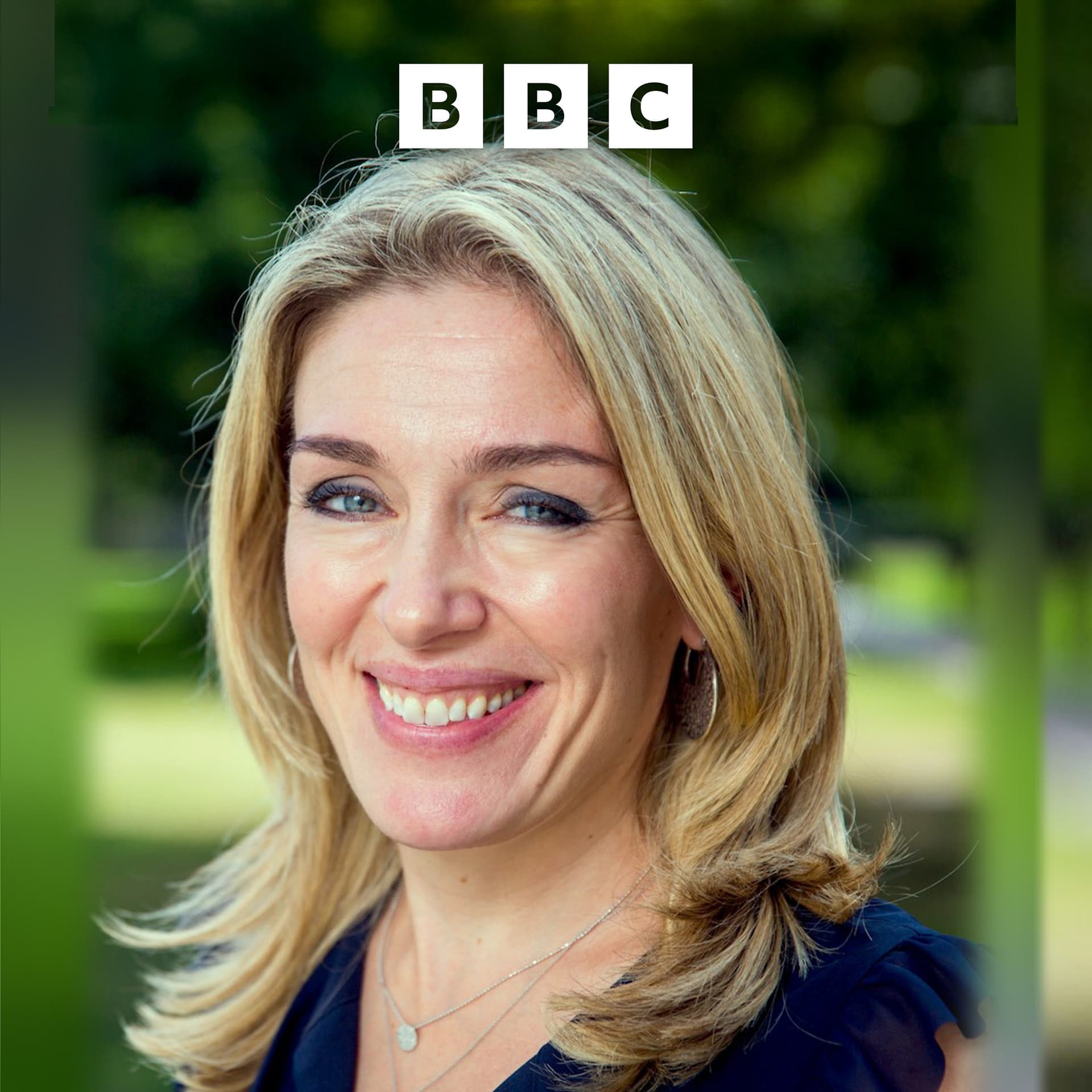
(Photo: Dr Abigail Marsh. Credit Georgetown University)