
In short
A US-Israel-Iran two-week ceasefire announced after Trump’s deadline warning; Strait of Hormuz reopening; markets react as oil prices fall. The episode also covers Zimbabwe constitutional changes and a “slow coup,” plus other global items.
Guests/backgrounds
No named podcast guests; reporting is by BBC correspondents/editors: Tom Bateman (State Dept correspondent), Bahman Kalbasi (BBC Persian, Tehran), Jeremy Bowen (chief international editor), Lise Doucette (chief international correspondent), Daniel DeSimone (Jerusalem), Nick Marsh (business correspondent), Shingai Njoka (Zimbabwe), Ella Bicknell (Vermont story).
Key claims
Ceasefire is “double-sided” but not fully in force yet; Iran’s 10-point proposal includes reopening Hormuz and may demand sanctions relief, compensation, and no time-limited war end; Israel disputes whether Lebanon is included; negotiations in Islamabad start Friday.
Notable examples
Missile alerts/loud booms in Israel despite ceasefire; oil supply shutdown of at least 12 million barrels/day; Zimbabwe parliamentary hearing violence; 14-year-old Dean Roy running for Vermont governor.
Written by AI. May contain mistakes. Listen to the episode to check what was said.
Chapters
Tap a time to open that second in VOCeasefire Announcement
1:26 to 2:05
Discussion of the temporary ceasefire agreed upon by the US, Israel, and Iran.
“the White House says a temporary ceasefire has been agreed between the US and Israel and Iran.”
Trump's Statement on Iran
2:12 to 3:30
Analysis of President Trump's statement regarding the ceasefire and peace efforts.
“90 minutes before a deadline loomed for a deal to be struck with Iran, President Trump took to his Truth Social Network with a statement.”
Escalation and Negotiation Dynamics
3:36 to 4:19
Exploration of the tensions and upcoming negotiations between the US and Iran.
“unless it reopened the Strait of Hormuz.”
Iran's Position on the Ceasefire
4:29 to 6:35
Analysis of Iran's perspective on the ceasefire and their demands.
“So what you've got is the immediate thing, which is the ladder that has been provided to Mr.”
Reactions from Tehran
6:41 to 8:15
Insights into the public's reaction in Tehran regarding the ceasefire announcement.
“which was, you know, remember he said he called on Iranians to rise up and take their government.”
Potential Effects of the Ceasefire
8:19 to 9:32
Discussion on the potential long-term implications of the ceasefire in Iran.
“I've got a number of messages of friends and family who were up waiting to see if this deadline, once it passed, will result in bombardment of Iran's power plants and bridges as Donald Trump threatened.”
Regional Impact and Future Relations
9:33 to 11:39
Examination of how the ceasefire affects relations between the US and Gulf states.
“And so the idea that this will hold fully and for long term at this point is fragile.”
Leadership Dynamics and Economic Implications
11:43 to 14:05
Analysis of the leaders involved and the economic ramifications of the conflict.
“Well, it won't just be the US, Iran and Israel who are holding their breath over this ceasefire.”
Iran's Economic Impact and Leadership Challenges
14:05 to 15:10
Explore how Iran's actions affect global supply chains and the complexities of its leadership amid the conflict.
“And while this regime in Tehran is taking a huge hammering physically, it is not letting go.”
Israel's Response to the Ceasefire Announcement
15:10 to 20:41
Discuss Israel's conflicting statements regarding the ceasefire and its military actions post-announcement.
“In the Islamic Republic of Iran, the supreme leader is the ultimate authority.”
Show all 14 chapters
Market Reactions and Business Updates
21:40 to 27:21
Analyze the market responses and significant business developments as a result of the ceasefire news.
“the big oil producers in the Middle East, they really, really wound down their operations.”
Political Aspirations of a 14-Year-Old
27:21 to 28:00
Meet Dean Roy, a 14-year-old running for governor in Vermont, and explore his political ambitions and views.
“And as Ella Bicknell explains, this could be the start of a very long political career.”
The Call for Change in Politics
28:00 to 28:19
Discussion on the need for a shift in political mindset and policies.
“Prices are rising, people are unheard, and it's like no one's willing to try something new.”
Young Political Aspirations
28:19 to 28:46
Exploration of Dean Roy's ambitions as a young political candidate.
“If elected, Dean Roy says he'd balance governor duties with online classes and only tackle his homework assignments after work hours.”
Transcript
Automatic transcript. May contain errors.0:00This BBC podcast is supported by ads outside the UK.
0:30with clear research-backed insights. No jargon, no misinformation. Make your next financial move with confidence. Follow NerdWallet's Smart Money Podcast on your favorite podcast app. Here's golf legend John Daly. Hell yeah, these wins are piling up faster than my divorces. I only spent on Moto, America's social casino. You know, I've won a couple of majors. And on Moto, I've won majors, grands and epic jackpots on their classic Vegas slots with huge, huge bonus rounds. Moto Casino adds new games and awards players free coins every single day. Grip it and spin it on Moto Casino. Download the Moto Casino app today.
1:03Moto Casino is a social casino. What were prohibited? No purchase necessary. Visit Moto.us for more details. Moto Casino. America's social casino.
1:14This is the Global News Podcast from the BBC World Service. I'm Will Chalk and in the early hours of Wednesday the 8th of April, these are our main stories. the White House says a temporary ceasefire has been agreed between the US and Israel and Iran. Israel says the deal does not include Lebanon, but it does include the reopening of the Strait of Hormuz. And that is good news for the markets and the price of oil. Also in this podcast. This is a coup, a slow coup that is unfolding in Zimbabwe. Mr. Mnangagwa and his government against the people's will. Big constitutional changes are being proposed in Zimbabwe.
2:04So Herculean efforts to de-escalate the US-Israel war with Iran may have actually succeeded. 90 minutes before a deadline loomed for a deal to be struck with Iran, President Trump took to his Truth Social Network with a statement. His post has been voiced by one of our producers. Based on conversations with Prime Minister Shabazz Sharif and Field Marshal Asim Mounir of Pakistan, and wherein they requested that I hold off the destructive force being sent tonight to Iran, and subject to the Islamic Republic of Iran agreeing to the complete, immediate and safe opening of the Strait of Hormuz, I agree to suspend the bombing and attack of Iran for a period of two weeks.
2:45This will be a double-sided ceasefire. The reason for doing so is that we have already met and exceeded all military objectives and are very far along with the definitive agreement concerning long-term peace with Iran and peace in the Middle East. We received a 10-point proposal from Iran and believe it is a workable basis on which to negotiate. Almost all of the various points of past contention have been agreed to between the United States and Iran, but a two-week period will allow the agreement to be finalized and consummated. On behalf of the United States of America as president, and also representing the countries of the Middle East, it is an honour to have this long-term problem close to resolution.
3:24Thank you for your attention to this matter, President Donald J. Trump. A clear difference there in terms of tone and frame of mind from Donald Trump from Tuesday when he delivered that chilling message to Tehran vowing to destroy its entire civilisation unless it reopened the Strait of Hormuz. Tehran then responded, saying it would intensify strikes on Gulf states in return. Well, both sides have now seemingly stepped back from the brink. The Pakistani Prime Minister says the two-week ceasefire has been agreed by the US, Israel and Iran, but all sides have conditions attached. Talks between Iran and the US are scheduled to start this Friday in Islamabad.
4:07Our State Department correspondent, Tom Bateman, told me more about the 10-point plan. I think you've got to separate out two things here. The first is what the Pakistani mediators have achieved, which is this temporary ceasefire for two weeks in return for the Iranians reopening the Strait of Hormuz. Although there seems to be a sense that the Iranians are saying this is sort of still under Iranian military coordination. So what you've got is the immediate thing, which is the ladder that has been provided to Mr. Trump and to some extent to the Iranians to climb down, but particularly to Mr. Trump from the sort of apocalyptic threats he was making today.
4:49So that is a breakthrough and it's significant and it doesn't appear to be in force yet because there's still reports of ballistic missile fire from Iran to Israel at the moment. the Americans as far as I can see are saying that the ceasefire has begun as far as they're concerned so they've ceased fire I mean why they didn't sort of agree at a time you know that they would mutually hold fire is not clear but that seems to be the way they want to do it so I think they're waiting for the Iranians to to also stop firing and then I guess to open the Strait of Hormuz but all that it appears to have been agreed although not in force fully yet clearly The second point is this idea of then having negotiations in Islamabad, which the Pakistanis say will start on Friday, or they're inviting the two countries on Friday, to pore over what the Iranians say is a 10-point plan to try and get a full end to the war.
5:47but on this Mr. Trump is saying this is a sort of workable basis for a negotiation to end the war the Iranians in their spin of this are saying particularly the Iranian National Security Council are saying that this is a total victory for the Iranians and they appear to be much more maximalist positions than are in the 10-point plan the Iranians have released but certainly there's quite a lot of stuff in there that will be at best extremely unpalatable to the Americans including things like a complete and permanent cessation of the war in Iran with no time limit. So that's a complete guarantee they won't attack again.
6:26The full payment of compensation and reconstruction costs, lifting of all sanctions, release of all Iranian funds and frozen assets. This is not what Mr. Trump said he was going to do in the run-up to this war and during it, which was, you know, remember he said he called on Iranians to rise up and take their government. at the beginning. He called for unconditional surrender. And there is nothing in the 10 point plan that deals with Iran's stockpile of nuclear fuel, which was one of the major reasons the Americans say they started this war is to deal with its nuclear capabilities. Right. So every chance you would think that we'll be back here in a fortnight or in future?
7:08I mean, it's just impossible to say with president trump because a prediction is is just not possible um you know i think you're now going to have a really turbulent period where first of all there will be is this a real and meaningful ceasefire you've got two deeply suspicious sides who do not trust each other you've got the potential for an even more hard line and you know paranoid regime in tehran now and a sort of fractured decision-making position by the Iranians, you're going to have Mr. Trump under pressure because you're immediately going to start to get now his political opponents saying that he has backed down, that this was a reckless war.
7:57So I think there's going to be huge pressure on these negotiations now, whether they can succeed. The Americans want to keep the threat of force underneath them, so I think we're in a deeply unstable period, albeit that there is a breakthrough in this ceasefire. Tom Bateman there. Well, there have been celebrations in the streets of Tehran. Batman Karbassi from BBC Persian told me what he's been hearing from Iran. I've got a number of messages of friends and family who were up waiting to see if this deadline, once it passed, will result in bombardment of Iran's power plants and bridges as Donald Trump threatened.
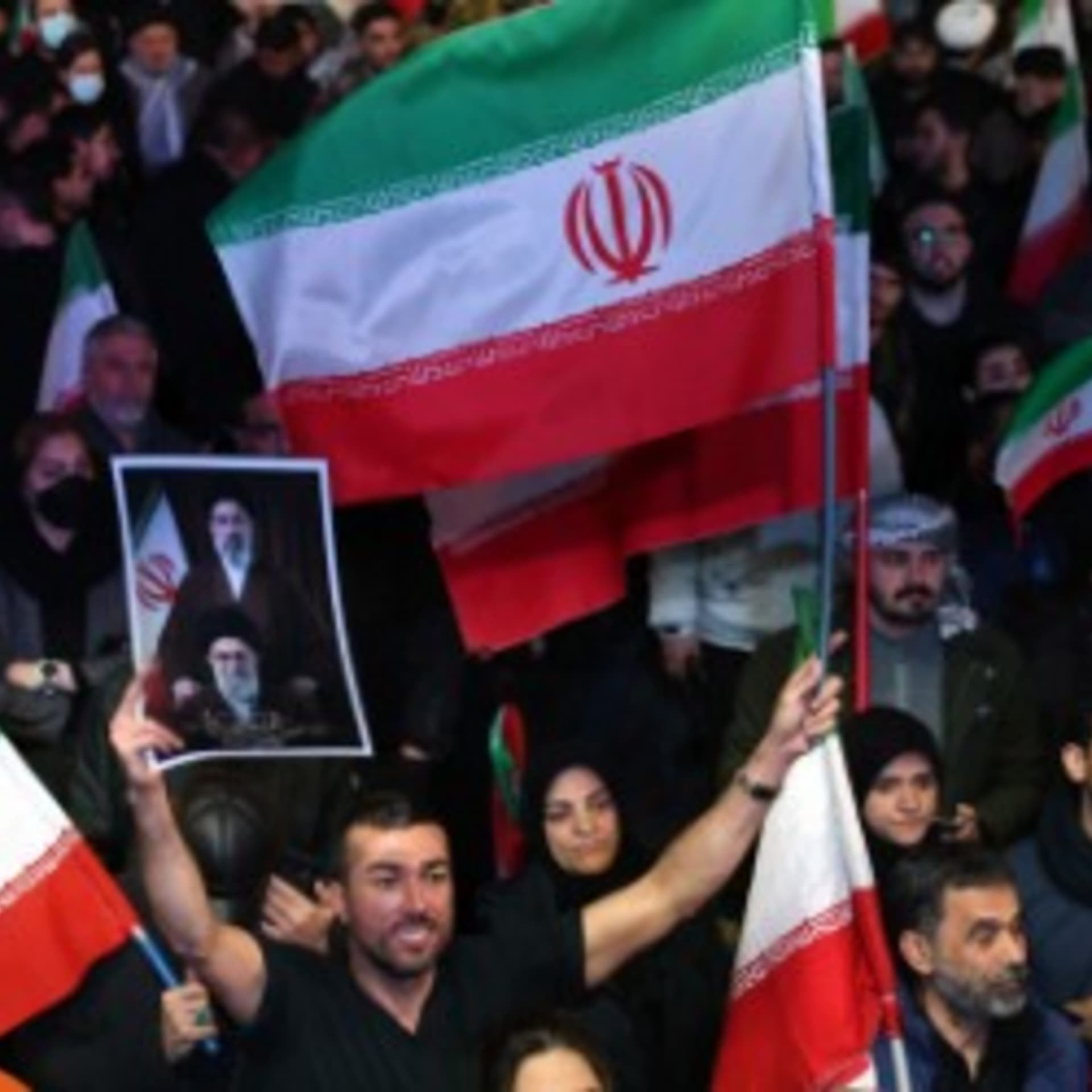
8:36So there was a lot of anxiety in the air, obviously, especially in the cities like Tehran and Isfahan, where millions of people will potentially lose power if those power plants were attacked. So as soon as the news came, a few of them asked if this was real and if it will stick. So there was some sense of relief, but also questioning whether it is something that will hold or as we've seen many times, especially with Donald Trump, that things might change very quickly. So that sense of relief was palpable and clearly a lot of people have had extremely anxious sleepless nights because of jets flying over, bombs being dropped everywhere in major cities.
9:22And tonight they will get one night of quiet after 40 days. But then as you say, the awareness that this is a two-week deal, so we might well be back here in two weeks. And that's a message that you could hear and see in the Supreme National Security Council of the Iranian government saying we are ready and have our finger on the trigger if the conversations in two weeks doesn't result in what we want. And so the idea that this will hold fully and for long term at this point is fragile. And people not just threatened, but have seen bridges destroyed, have seen civil infrastructure attacked, major petrochemical and steel industry that employs tens of thousands of Iranians and many more indirectly have been severely damaged.
10:16So this war has caused extreme pain for the public as well, obviously, as the government, who has lost many of its figures, many of them involved in crackdown and direct massacre of protesters back in January. So the mixed feelings has been there from the beginning. A lot of people welcoming it. But the days went on, especially in the last two weeks, there was a mood shift among many Iranians who wondered if Donald Trump and Netanyahu are more interested in collective punishment than they are in actually bringing the regime down. And just really quickly, what sense do you have about whether the regime was taking this threat from Donald Trump seriously?
10:58I think the regime obviously thought that this is a serious possibility because Donald Trump already attacked bridges, already civil infrastructure was attacked. It wasn't going to be a first. So that played a role in their calculation, and they softened some of their requests for a permanent end of war. They kept refusing the idea of a short-term ceasefire, but now they've settled for one, provided that they keep saying, and that is somewhat confirmed by what Donald Trump wrote, that this is all going to be based on their 10-point plan, which they offered the United States versus the 15-point plan that the United States offered.
11:39So obviously the devil will be in the details. Bahman Kalbasi from BBC Persian, who's in New York. Well, it won't just be the US, Iran and Israel who are holding their breath over this ceasefire. Gulf states like Kuwait, Qatar and Bahrain have paid the price for the US bombardment of Iran in the last five weeks as Tehran struck back hard against American allies. So how will that affect future relations between these countries and America? It's a question I put to our chief international editor, Jeremy Bowen. I don't think they would ever break with the Americans. But I think that after this, when the dust settles, whenever that might be, then they will be looking to diversify in a way, looking not just to China, perhaps, but to other serious countries, countries maybe like India, who they might be able to have alliances with.
12:31But the point is that there is, I think, a lot of eyes are a little bit wider and more open about what alliance with the United States is now meaning in practice. To what extent has everything we've seen so far, do you think, been about two nations with big egos, if you like, that are backing themselves into situations that they can't then back down out of with honour? Well, two leaders, I think, rather than two nations. I think it's quite clear that Trump is some kind of a narcissist who is mostly obsessed with himself. I mean, I think he believes that what is good for me is good for America, because I am the only person who can make America great again.
13:11I'm sure he probably believes that in his head. And equally, at the same time in Israel, there's been loads of evidence over the years that the Prime Minister Netanyahu believes that he is the only person who can protect Israel and make it safe. And of course, that oft-repeated narrative from him took a massive blow on the 7th of October 23 when Hamas attacked, which was a huge security failure for Israel, as bad as any in its entire history, for which many Israelis blame him. Even those people who support the war, many of them blame him for doing that. His poll ratings have not gone up as a result of this war.
13:50But they are both men who think that they are the vital cog in the wheel. and have great faith in their own judgment or appear to be, even when there doesn't seem to be a particularly well thought out strategic objective. Iran has demonstrated that in a global economy, which is enormously integrated, it can put huge pressure on supply chains that keep a lot of the world going, not just oil and gas, but the other things that come out of their petrochemicals industries, the helium needed for the construction of high-tech semiconductors, the feedstocks that go into fertilisers, coming in the Northern Hemisphere now into the planting season for farmers who cannot get the fertilisers that they rely upon.
14:36And while this regime in Tehran is taking a huge hammering physically, it is not letting go. It's still got its, if you like, its boot on the throat of the global economy in the Strait of Hormuz. Jeremy Bowen. There's a lot that's complicated about these negotiations, not least that there are reports that the man supposedly in charge of Iran now, Mujtabar Khamenei, is wounded and unable to govern. So who exactly has been negotiating with the US? And what does the Iranian leadership look like now? Here is our chief international correspondent, Lise Doucette. In the Islamic Republic of Iran, the supreme leader is the ultimate authority.
15:17But no one has seen or even heard Moshtaba Khamenei in public after the attack in the first hours of this war, which assassinated his father, the former Supreme Leader, and injured him. It's still not clear how seriously. Since then, Israel and America have kept killing top commanders and officials, and Iran has kept replacing them. President Trump calls it regime change. But the old order is still there. It's built to survive shocks. Power is now dispersed among multiple actors. But the most powerful of all is the Islamic Revolutionary Guard Corps, the IRGC, in a system which is now more militarized, more hardline.
16:01They're calling the shots in this war and the mediation efforts to try to end it. Other names are mentioned. The parliamentary speaker, Mohamed Bagar-Ghalibov, a hardliner who's seen as a pragmatist. And the president, Masoud Pejishkian, a reformer who has no real power. They're also said to be points of contact for the many mediators now frantically trying to find a way out of this escalating war. Least do set. Still to come in this podcast. I know it sounds crazy, a 14-year-old running for governor. But honestly, look at the people in charge right now. They've been doing this forever. A teenager making political history in the US state of Vermont.
16:55Hi, Uncle Lazer here. America's built on fast cars, fast food, and even faster women. Moto Casino's built in America. You know what they're fast at? Fast cash, prize, redemption. You see, only Moto is US-owned and operated. Moto. It's American made. That's who we are. That's who we care about. Play for free at Moto.us. Moto Casino is the social casino. What were prohibited? No purchase necessary. Visit Moto.us for more details. Must be 21 plus. Moto Casino. American social casino. ¿Quieres mejor internet? Cox Internet de 300 megas tiene las velocidades rápidas y confiables que buscas. Perfecto para streaming y gaming y trabajar desde casa.
17:58This is the Global News Podcast. And let's look now at how Israel is responding to the two-week ceasefire. So Pakistan had said that the ceasefire would also include Lebanon, but the Israeli Prime Minister's office has issued a statement pointing out that it will not. Our correspondent Daniel DeSimone told us more about the Israeli statement. It makes clear that this is President Trump's decision to announce the ceasefire. It's not Israel's decision. It says that Israel supports President Trump's decision. But there's a key conflict has emerged here because the statement from the Israeli Prime Minister's office says that this two-week ceasefire will not include Lebanon.
18:40And as we've heard, the statement from Pakistan's Prime Minister says the agreement does include Lebanon. The statement from Iran also says the agreement includes Lebanon. We've yet to hear from the US on this. But I think the fact there's such a conflict over such a key point shows we're quite unclear about the details of this at this stage. And I think we're going to have to see how Israel responds, because certainly overnight here in Jerusalem, we had missile alerts after the point at which Donald Trump had announced that there was going to be a ceasefire. We had missile sirens sounding out.
19:17We heard various loud booms overhead. And the Israel Defence Forces were saying that was from missiles from Iran. There's also been reports that Israel has carried on attacking Iran after the point at which there were these statements about a ceasefire. I think Benjamin Netanyahu, when this war started on the 28th of February, he publicly said that this war was about ending the threat from the Ayatollah regime. He said that the operation would continue as long as necessary, and there was talk of regime change. I think there's a widespread view that he overestimated Israel and the US's ability to defeat the Iranian military and bring about a change of system.
20:00That hasn't happened. And I think there's also going to be issues here in Israel. Benjamin Netanyahu has far-right ministers in his cabinet. They may well not support a ceasefire. But I think this point about Lebanon is key, and I think we're really going to have to understand whether Lebanon is included in this deal or not, because Israel is saying it isn't. Daniel Desimone in Jerusalem. As we started recording this podcast, The Asian markets were soaring and oil prices have fallen sharply on news that the Strait of Hormuz will reopen, albeit temporarily. It's a closure that forced the shutdown of at least 12 million barrels of oil a day from the Middle East.
20:40Our business correspondent Nick Marsh gave me this update from Singapore. The price of oil, whether it's the Brent crude benchmark or the US traded WTI, dropping by about 15, 16 percent. You know, a real significant drop. The stock markets here in Asia responding pretty positively. The Japanese index, the Nikkei, is up about 5%. In Korea, it's up about 6%. As well, let's not forget Asia really on the front lines of this blockage in the Strait of Hormuz. You know, nearly all of the oil and gas which is stuck there is bound for Asia. So there was a real issue with supply here. So there is relief.
21:20There is a bit of optimism. but as you mentioned, it's temporary. And even if a peace deal is eventually reached after these two weeks, it doesn't mean that oil is just going to start flowing the way it was before the war started. It's going to take months and months for production to ramp up again in the Middle East. Because don't forget, with that blockage in the Strait of Hormuz, the big oil producers in the Middle East, they really, really wound down their operations. It didn't come to a halt, but it kind of collapsed, really. That means there's going to be a severe drop still. It's going to be significantly lower in terms of supply compared to before the war, which means that oil, even though it has dropped, is still going to be pretty, pretty high.
22:00And then all the knock on effects you get economically from that. Nick Marsh in Singapore. Now we're going to move on to other news for the rest of this podcast. Starting with what price would you put on being in business with Taylor Swift, Sabrina Carpenter and Kendrick Lamar? It sounds quite fun, but how does$63 billion sound? That's what an American investment firm has offered to buy the world's biggest music company, Universal. The takeover bid has been made by Pershing Square, which already owns a stake in Universal and also has investments in Amazon, Uber and Google's parent company, Alphabet.
22:37Here's our business correspondent, Simon Browning. Universal Music Group is a titan of music publishing and ownership and was home to nine of the ten top recording artists in 2025. Elton John, The Rolling Stones, Drake and Lady Gaga have been produced or promoted by the company and its vast catalogue of recordings stretches back a century with The Beatles, Sinatra and Bob Marley as part of its history. It owns music labels and the famous Abbey Road Studios in London. The American investment group Pershing Square, which is behind the takeover bid, says Universal's management of its artists has been excellent, but thought its stock market performance has languished, and moving the stock listing from Amsterdam, where its head office is located, to New York could lead to a higher valuation and more interest from investors.
23:26Universal is yet to respond to the offer. Simon Browning. In Zimbabwe, the ruling ZANU-PF party wants to give Parliament, rather than voters, the right to elect the president and extend his term. Now, for critics of President Emerson Mnangagwa, who's due to stand down in 2028, it's nothing more than a power grab. The BBC's Shingai Njoka attended a parliamentary hearing in Harare where people expressed their views about the controversial reform.
23:57I'm standing in the middle of this circular, dimly lit, 4 ,000-seat capacity stadium, which is packed to the rafters. Thousands and thousands of people have turned out from all walks of life to give their views.
24:18I support the bill in its entirety, this woman said. As the microphone is passed around, most echo this view. They agree with term limits being extended from five to seven years and allowing MPs to elect the president, they say to reduce political toxicity. The ruling Zanupiev party says these and other changes will entrench democracy. But suddenly, familiar scenes of violence. The tension is building, pretty chaotic scenes. People tussling as the mic moves towards those who oppose the constitutional amendment. opposition member Fadzai Mahere was caught up in the melee. Zanupia thugs descended and started beating us up, trying to snatch our phones and saying that you will not say anything at this hearing.
25:13So the whole point was to cause commotion in Bay 8 where we were all seated so that no opposing views say anything. In the lead up to these meetings, critics say their meetings were routinely banned and people attacked by unknown assailants. Former Finance Minister Tendaimiti is out on bail following his arrest for holding an unsanctioned meeting. This is a coup, a slow coup that is unfolding in Zimbabwe. Mr Mnangagwa and his government, against the people's will, are endeavouring to manufacture false consensus to create a brand new constitution that consolidated power in him. In 2013, Zimbabweans overwhelmingly adopted a new constitution that sought to curb the excesses of former leader Robert Mugabe.
26:03It states that two referenda are needed to change term limits and secondly to allow the incumbent to benefit. Former Justice Minister Zanupiev's Patrick Chinamasa disagrees. The constitution provides that a presidential term is three years and more. Now the extension for two years is not three years. And for that reason it has escaped the need to go to a referendum. We want to continue the economic development that has taken place since His Excellency took over. The ZANU-PF dominated parliament is set to debate the bill in the coming weeks. Its passing into law appears inevitable. But many here still worry about the precedent that sits in a country still struggling to achieve political stability.
26:56Shingai Nyoka reporting from Zimbabwe. Now, when I was 14 years old, if you'd asked me to list my interest, gubernatorial elections would have been pretty low down the list, to be honest. But not so for Dean Roy. He is set to become the first American under the age of 18 to appear on the ballot in a US state gubernatorial election. He's running to become governor in Vermont as a third party candidate in November. And as Ella Bicknell explains, this could be the start of a very long political career. My name is Dean Roy. I'm 14 years old and I'm running for governor of Vermont. Vermont is the only US state that allows under 18s to run for governor.
27:36It was during work experience at the state's legislature that Dean Roy was inspired to create his own political party and stand for office. When he's not working in his parents' pizza restaurant, he's on social media, campaigning on issues such as affordable housing, nuclear energy and taxation. I know it sounds crazy, a 14-year-old running for governor, but honestly, look at the people in charge right now. They've been doing this forever and things still aren't working. Prices are rising, people are unheard, and it's like no one's willing to try something new. Maybe it's time for a change, not just in policies, but in mindset.
Read the full transcript
28:10The teenager who delivers his social media videos with braces on his teeth describes himself as a centrist, free from the influence of political donors. If elected, Dean Roy says he'd balance governor duties with online classes and only tackle his homework assignments after work hours.
28:31And perhaps one day he might run for the White House. But as a US presidential candidate must be at least 35 years old, the first election he can contest will be in 2048.
28:46Ella Bicknell. And that's all from us for now. If you want to get in touch, you can email us at globalpodcast at bbc.co.uk. You can also find us on X at BBC World Service. Use the hashtag globalnewspod. We have a sister podcast, The Global Story, which goes in-depth and beyond the headlines on One Big Story. So be sure to listen to that if you can. This edition of The Global News podcast was mixed by Chris Lovelock. The producer was Marion Straughan. The editor is Karen Martin and I'm Will Chalk. Until next time, goodbye.
From the publisher
Iran and the US have announced a two-week ceasefire which includes the reoping of the Strait of Hormuz and safe passage for ships. Peace talks will continue between the US and Iran in Islamabad on Friday. We have reaction and analysis from the US and Iran. Israel has issued a statement pointing out that Lebanon is not included in the ceasefire agreement. Also: Major divisions surface in Zimbabwe over attempts to amend the constitution and extend the Presidency of Emmerson Mnangagwa. And, the fourteen-year-old set to become the first American under the age of eighteen to appear on the ballot in a US state gubernatorial election.
The Global News Podcast brings you the breaking news you need to hear, as it happens. Listen for the latest headlines and current affairs from around the world. Politics, economics, climate, business, technology, health – we cover it all with expert analysis and insight. Get the news that matters, delivered twice a day on weekdays and daily at weekends, plus special bonus episodes reacting to urgent breaking stories. Follow or subscribe now and never miss a moment. Get in touch: globalpodcast@bbc.co.uk