
In short
Global News Podcast Episode Summary
Episode Title
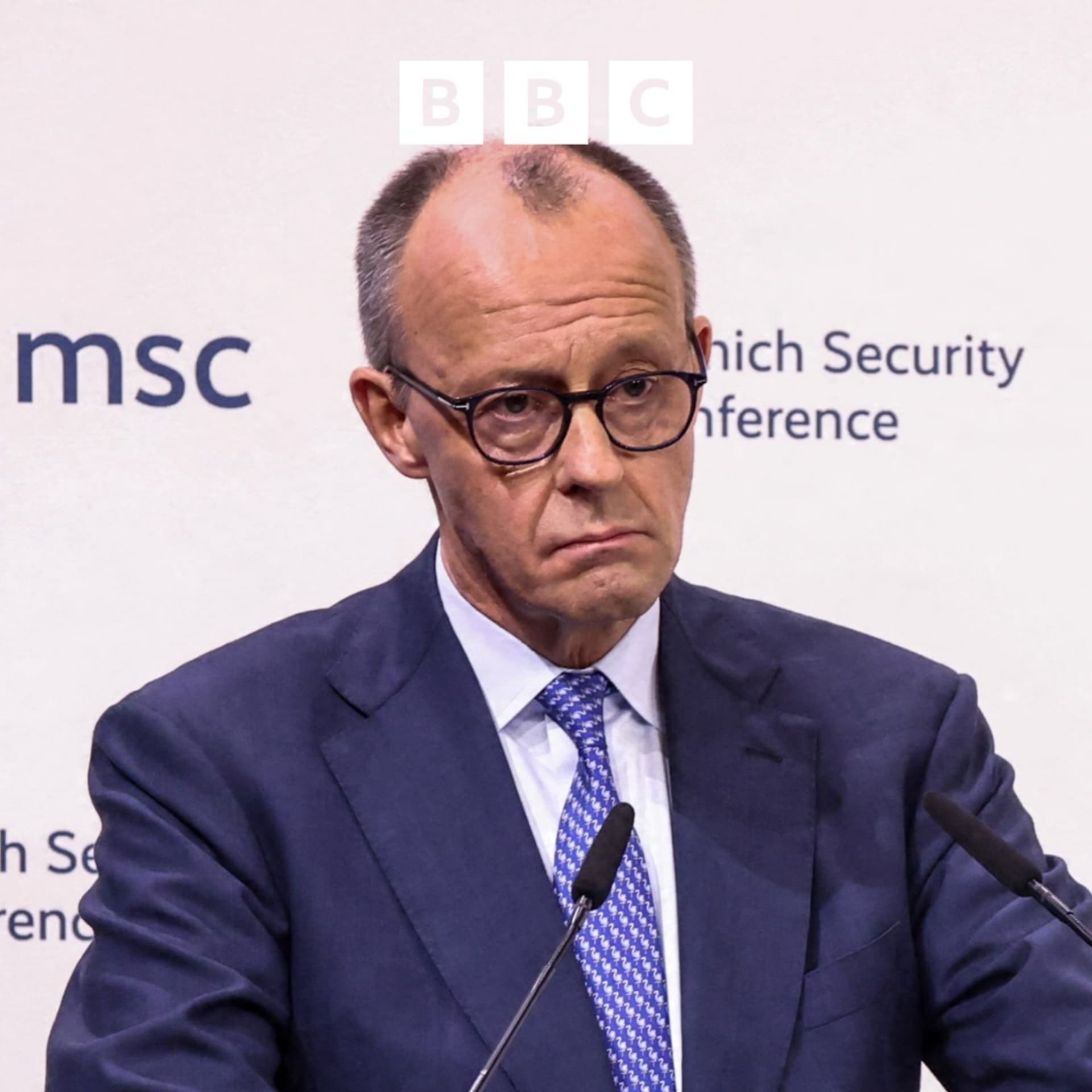
Transatlantic Relations Under Spotlight at Munich Conference
Episode Overview This episode of the Global News Podcast, hosted by Charlotte Gallagher, focuses on significant global developments highlighted during the Munich Security Conference. Key topics include tensions in transatlantic relations, recent political changes in Bangladesh, legal decisions regarding protest groups in the UK, and humanitarian concerns in Mozambique.
---
Key Discussions
Munich Security Conference
- German Chancellor's Statement
- Friedrich Merz declared that the "rules-based world order no longer exists."
- Emphasized the need for Europeans to be ready to make sacrifices for their freedom amid big power politics.
- Shift in US Foreign Policy
- The conference was the first major international gathering since Donald Trump's controversial remarks about Greenland.
- The US delegation, led by Secretary of State Marco Rubio, aims for honest discussions with European allies on defense and security.
- European Defense Concerns
- There is increased pressure on European nations to elevate defense spending amid changing US commitments.
- NATO members are expected to allocate 5% of GDP for defense by mid-2030s, but the US urges immediate action.
Bangladesh Election Results
- Landslide Victory for Bangladesh Nationalist Party (BNP)
- The BNP, led by Tariq Rahman, triumphed in an election following a significant student uprising against the previous regime.
- The election is seen as a crucial turning point for political discourse in Bangladesh.
- Mixed Reactions
- Protester Rashna Marzabin expressed complicated emotions reflecting on the past violence and the current political landscape.
- Concerns exist regarding the legitimacy of the election due to the absence of the Awami League, which has been banned from participation.
Legal Developments in the UK
- Palestine Action Banned Under Anti-Terrorism Legislation
- A UK court ruled that the ban on the pro-Palestinian group Palestine Action was unlawful, recognizing the government’s actions as disproportionate.
- The ruling has caused embarrassment for government officials and could affect those who were arrested for supporting the group.
Humanitarian Crisis in Mozambique
- Cyclone Gezani Approaches
- Mozambique braces for impacts from Cyclone Gezani after enduring months of heavy rains and flooding.
- Authorities have advised coastal residents to evacuate and reinforced homes in preparation for the cyclone.
Other Notable Mentions
- Disappearance of Nancy Guthrie
- The FBI has intensified efforts to find Nancy Guthrie, the mother of a US news anchor, and doubled the reward for leads in the case.
- Cultural Corner: Hello Kitty
- Designer Yuko Yamaguchi, known for her role in creating the global brand Hello Kitty, is stepping down after over 40 years, marking a significant change in the brand's management.
---
Conclusion This episode of the Global News Podcast encapsulates critical global issues, from shifts in political power and security dynamics to pressing humanitarian challenges. These discussions offer listeners a comprehensive look at the current state of international affairs and their implications.
---
Additional Information For more insights and updates, listeners can follow or subscribe to the Global News Podcast on various platforms and engage via email at globalpodcast@bbc.co.uk.
Written by AI. May contain mistakes. Listen to the episode to check what was said.
Chapters
Tap a time to open that second in VOMain Stories Overview
0:45 to 1:37
Overview of the main stories including global security and elections.
“The German Chancellor opens a global security conference by saying that the rules-based world order no longer exists.”
Munich Security Conference Begins
1:37 to 2:10
Discussion on the Munich Security Conference and its significance.
“The Munich Security Conference in Germany, bringing together more than 50 international leaders, has got underway, with Europe's relationship with the US under the spotlight.”
US Delegation's Approach
2:10 to 4:32
Marco Rubio's leadership and the US delegation's focus on Europe.
“Mr Rubio said he would be direct in his discussions with America's European and NATO allies.”
Concerns Over US Commitment
4:32 to 6:28
Analysis of the US's changing commitment to European defense.
“There's a lot of pressure on European governments to step up on defence expenditure.”
Greenland Discussions at Munich
6:28 to 6:41
Discussion on Greenland's significance in security discussions.
“and Europe has said, well, no, you don't.”
Bangladesh Election Results
6:41 to 7:59
Overview of the Bangladesh Nationalist Party's election victory.
“The Bangladesh Nationalist Party, led by Tariq Rahman, has won a sweeping victory in the country's first election since a student uprising toppled the autocratic regime of Sheikh Hasina.”
Reflections on Political Violence
7:59 to 9:55
Personal accounts of political violence during the uprising in Bangladesh.
“And the Jamaat-e-Islami party and former allies of the BNP have since raised questions about the integrity of the vote.”
BNP's Promises and Challenges Ahead
9:55 to 11:10
Discussion on the BNP's promises and the challenges they face.
“He says those charges were politically motivated and brought against him by Sheikh Hasina and her Awami League party.”
Palestine Action Controversy
11:10 to 12:57
Latest updates on the Palestine Action protest group and legal issues.
“But as of now, it's very clear that the people have decided not to endorse any political party who has lost its political character and become a tool which was responsible for gross human rights violations.”
Legal Ruling on Palestine Action
12:57 to 16:45
Analysis of the legal ruling regarding Palestine Action's status.
“On to a story that's been dividing opinion and making headlines here in the UK for nearly a year.”
Show all 18 chapters
Hello Kitty's Video Milestone
16:45 to 17:11
Discover the significance of Hello Kitty's debut in video format.
“For the first time ever, Hello Kitty on video.”
The Weight Loss Drug Revolution
17:11 to 18:03
Explore how weight loss drugs are transforming societal norms and food culture.
“In the span of just a few short years, weight loss jabs have become so prevalent in our culture that they've transformed the way we live, move and eat.”
Cyclone Impact in Mozambique
18:03 to 20:13
Gain insights into the effects of cyclones on Mozambique and government responses.
“There is a lot of difficulty to have proper water and even even us we obliged to buy a bottle of water and something like that and to find something to eat there some grocery to open.”
Kidnapping Case of Nancy Guthrie
20:13 to 22:11
Stay updated on the investigation into the kidnapping of Nancy Guthrie and new developments.
“the elderly mother of American broadcaster Savannah Guthrie.”
The Art and Role of Cinematography
22:11 to 25:51
Learn about the cinematographer's role in filmmaking from Roger Deakins.
“When we talk about the people behind films, it's usually the actors or directors who get the limelight.”
Hello Kitty's Legacy and Future
25:51 to 28:01
Understand Hello Kitty's global influence and the future of its design direction.
“So Roger Deakins, finally, Hello Kitty is one of Japan's most famous cultural exports.”
Hello Kitty's Generational Shift
28:01 to 28:50
Explore the transition of Hello Kitty's design leadership and its implications.
“So it's not like, you know, suddenly there's a vacancy at the top.”
Impact of Weight Loss Drugs on Society
29:21 to 29:52
Discover how weight loss drugs are reshaping societal norms around eating and lifestyle.
“How are weight loss drugs changing our world?”
Transcript
Automatic transcript. May contain errors.0:00This BBC podcast is supported by ads outside the UK.
0:30The Global Story on bbc.com or wherever you get your podcasts.
0:37This is the Global News Podcast from the BBC World Service. I'm Charlotte Gallagher and in the afternoon of the 13th of February, these are our main stories. The German Chancellor opens a global security conference by saying that the rules-based world order no longer exists. Bangladesh's election commissioner says the nation has emerged victorious after a landslide win for the Bangladesh Nationalist Party. A British court rules the government's ban on a pro-Palestinian campaign group under terrorism legislation is unlawful. Also in this podcast, we'll get the latest on the hunt for the missing mother of a US news anchor as the FBI increases the reward money.
1:24They are absolutely convinced that within those leads, within leads from the public, they will be able to solve this case.
1:37The Munich Security Conference in Germany, bringing together more than 50 international leaders, has got underway, with Europe's relationship with the US under the spotlight. It's the first such meeting since President Trump threatened to take control of Greenland, a move widely condemned by Washington's European allies. Last year, the US Vice President J.D. Vance caused uproar with his speech in Munich, slamming Europe for its policies on migration and free speech. This year, the American delegation is being led by the US Secretary of State Marco Rubio. Speaking on the tarmac before leaving Washington, Mr Rubio said he would be direct in his discussions with America's European and NATO allies.
2:18I think they want honesty. They want to know where we're going, where we'd like to go with them. And I think it's at a defining moment. The world is changing very fast right in front of us. The old world is gone and we live in a new era in geopolitics. And it's going to require all of us to sort of re-examine what our role is going to be. We've had many of these conversations in private with many of our allies, and they are our allies, and we need to continue to have those conversations. While the German Chancellor Friedrich Mertz has opened the conference, his address emphasised just how much the international order has changed.
2:54You've chosen a grim motto for this conference, under destruction. And it probably means that the international order based on rights and rules is currently being destroyed. But I'm afraid we have to put it in even harsher terms. This order, as flawed as it has been even in its heyday, no longer exists. Our security correspondent Frank Gardner is in Munich. This is, I think, one of the most crucial Munich security conferences that I've been to, and I've been coming to this for a very long time. Last year, we had the kind of bombshell speech from J.D. Vance, the U.S. vice president, which everyone was expecting him to talk about security instead of which he laid into Europe for its policies on migration and free speech.
3:50This year, we've got Marco Rubio, who's leading a very big, in fact, the biggest ever U.S. delegation. Quite a lot of Congress, men and women coming to this. Marco Rubio is the Secretary of State and, of course, the U.S. National Security Advisor is going to be really giving, I think, a bit of a blueprint for what Europe should expect from the U.S. in terms of ongoing support, both for the war in Ukraine and Europe's defense more generally. And I think there's a fair degree of nervousness about this because there's no question about it. The US is not as committed to Europe and its defence as it has been for the last eight decades.
4:31They're having to adjust to that. There's a lot of pressure on European governments to step up on defence expenditure. So theoretically, it's been agreed that NATO members will pay 5 % of GDP by the mid-2030s. The message coming from Washington is you don't have the luxury to wait another decade. you need to be spending that now because we America are not going to be paying for it any longer. So you need to pay for your own defence. So they're trying to absorb that message. And I think we should hear some ideas here about how that's going to play out. Because it was only yesterday that we found out that US spending on helping Ukraine had dropped by a staggering amount since Donald Trump took to the White House for the second time.
5:17One of the people who's coming in the U.S. delegation here is Elbridge Colby, and he is the number two in the Pentagon. So he's the number two to Pete Hegseth, who's the Secretary of War. Remember, they changed the title of Secretary of Defense to Secretary of War. You can read into that what you like. He is famously and very vocally opposed to America spending any more money on the defense of Ukraine. He considers it Europe's problem and that this is money down the drain, essentially. Instead, he wants America to concentrate on interests closer to home, but also the Indo-Pacific, guaranteeing freedom of navigation in the South China Sea, supporting America's allies in East Asia.
5:59He's not that interested at all in Ukraine. and it's quite significant that he is a major member of the US delegation that's coming here. And obviously something that we've talked to you about a lot recently is Greenland. What's happening with that and will there be discussions about that in Munich? Yes, there will and I'm glad you mentioned that because that I think is the biggest shocker in the last 12 months. This is Donald Trump saying we want Greenland, we need it, we have to have it for America's own security and Europe has said, well, no, you don't. It's a semi-autonomous, self-governing part of the Kingdom of Denmark, a fellow NATO ally, and Europe has had to kind of rush to shore up to show a bit more interest in defence of the high north.
6:44Frank Gardner in Munich. The Bangladesh Nationalist Party, led by Tariq Rahman, has won a sweeping victory in the country's first election since a student uprising toppled the autocratic regime of Sheikh Hasina. 1 ,400 people are thought to have died in the protests back in 2024. Rashna Marzabin was one of the protesters and has mixed feelings about the results. I don't think the experience of July has yet left my body. It was a battleground. You didn't know in the morning when you were going out whether you would be alive or arrested by the end of the day. And now when you're seeing an election where you can have a publicized political discourse of whom you want, whom you don't, at open places, within your rooms and having discussions, supporting whomever you want, even if you like someone or don't like someone, it came with such a bloodshed.
7:41such a bloodshed that has yet not left my body. I still, I think those still haunt me. Those images that I've seen or we have experienced or when we have been chased by the police is something I think would be in my body for a very long time. While Bangladesh's election committee has called the election a neutral and credible one, Sheikh Hasina's Awami League has been banned from participating. And the Jamaat-e-Islami party and former allies of the BNP have since raised questions about the integrity of the vote. We asked our correspondent Yogita Lamai to tell us more about this dramatic turnaround for the BNP ahead of her special report.
8:19Two years ago when Sheikh Hasina won an election which was widely condemned as being rigged in her favour, I don't think anyone would have imagined a day when her grip on power in this country was broken. But then in July 2024 there was a mass student uprising that ousted her. She's now in exile in India. Her party has not been allowed to contest this election. She's denounced the election. And the man who says that she was the reason he was forced into exile 17 years ago, he was living in London, he's now back in the country. His party has won this election very decisively and he is set to be the next Prime Minister of Bangladesh.
9:05I'm standing outside a mosque in Tariq Rahman's constituency and I can see lots of men streaming into the mosque to offer Friday prayers. If people were expecting a grand celebration after the Bangladesh Nationalist Party's victory in the election, that is not happening. What the BNP has done today instead is that it's told its workers, its members, its followers to offer prayers and to pray for the soul of Khalid Azia, who's the former leader of the party, the mother of Tariq Rahman. She died late last year of an illness. Now, for Tariq Rahman, this is an incredible turn of fortunes because for 17 years he was in self-imposed exile in London.
9:51He went there because he was arrested, jailed and allegedly tortured on charges of corruption. He says those charges were politically motivated and brought against him by Sheikh Hasina and her Awami League party. And now he's back and he is going to be the next prime minister of Bangladesh. At their election office, I spoke to the party's main spokesman, Mahdi Amin. The young people of your country came out in an uprising. What they want the most is democracy, freedom of speech, freedom of expression. Are you guaranteeing them that? We absolutely guarantee our leader, Mr. Tharik Rahman, his rights to speech, his rights to broadcast his words that was taken away by judiciary.
10:37And most of BNP leaders couldn't talk. We are facing six million fictitious cases. We want a new Bangladesh where the culture that we've seen of impunity that disappears and we have a new culture of accountability. And the fate that BNP had, no other political party should have it. I know you're keen to say that this is a free, fair and credible election, but doesn't the Abhami League being banned from this election cast a shadow on its credibility? Isn't Bangladesh just caught in this cycle and it's not breaking out of it? We'll go back to people and we'll follow what the people want. But as of now, it's very clear that the people have decided not to endorse any political party who has lost its political character and become a tool which was responsible for gross human rights violations.
11:24The party has made tall promises and the last time the BNP was in power, which was around two decades ago, its tenure was marred by violence and allegations of corruption and human rights violations. And this time it will be answerable to especially the young people of the country who took to the streets and it's because of that uprising that the BNP has had a chance to contest and win this election. and among them there is a lot of anticipation, expectation and hope for change. We want them to deliver their promises to the country and the citizens and we want them to give rights to women and the marginalised people of all sorts.
12:05I think after this election, Bangladesh will get a new guideline, full democracy, free of speech and security too. Food price should come down so that everyone can have their food properly. There are big challenges that lie ahead. Key among them, of course, ensuring that there is democracy, that there are freedoms, that people have their rights, but also that people have jobs, that inflation, particularly food prices, are brought down. And the security and safety of minority communities in this country. Yoghita Lamai. For more on this story, go on YouTube, search for BBC News, click on the logo, then choose Podcasts and Global News Podcast.
12:54There's a new story available every weekday. On to a story that's been dividing opinion and making headlines here in the UK for nearly a year. That of the protest group Palestine Action, which was banned by the government under terrorism legislation. It's one o 'clock with the latest BBC News for Oxfordshire. I'm Jordan Brooks. The Prime Minister has condemned disgraceful actions of pro-Palestine protesters who broke into RAF Bryce Norton and have damaged two planes.
13:25After more than 500 people were arrested in central London at the weekend for marching in support of the prescribed terrorist organisation Palestine action. So you're going to break the law by supporting them? In essence, that's correct, yes. It is incredibly tense here. Lots of people being arrested, either walked out or carried out. And each time people are shouting... The British government have betrayed the British people. Palestine action is back.
13:59That last clip you heard was from earlier today as Palestine action supporters celebrated outside court in central London. It's been ruled the decision to ban them was in fact illegal. Our reporter Nick Johnson told me more. Judges said that Palestine action, they did acknowledge Palestine action, the group, uses criminality to promote its aims. But they said those activities had not crossed the very high bar needed to designate it as a terrorist organisation. So effectively, they said the government's decision to ban it as a terrorist group was disproportionate. Because at the time when it was banned, the supporters of the group said it was laughable that it was on the same list as Islamic State and Al-Qaeda.
14:41Yeah, that's right. I mean, the prescription laws here in the UK, the government can prescribe an organisation. if it commits, prepares, promotes, encourages, or is otherwise concerned with terrorism. There are a lot of groups who are prescribed here in the UK, and you've named some of them. ISIS, for one of them, National Action, the far-right group, another one. And a lot of the supporters, yes, were saying it's laughable that we're on the same sort of page as those groups, particularly, they say, as the protests that they were taking part in, they said were direct action. They were saying this is something that protest groups up and down the country have been used to using for years.
15:19How embarrassing is this for the government and some key figures within the government? Very embarrassing, I think, is the long and short of it. I think it was also a surprise that the decision went the way it did today. I think the government thought that it was nailed on, that this would go their way. The Home Secretary at the time, Yvette Cooper, was the one who was leading the Home Office here in the UK and the one responsible for the ban. But it's Shabana Mahmood, the UK Home Secretary today. She'll give you a bit of reaction. She said she's disappointed by the court's decision. The prescription of Palestine action, she said, followed a rigorous and evidence based decision making process endorsed by Parliament.
15:54But this is not the end of the matter. The government says it fully intends to appeal this decision. So if the ruling isn't overturned by the court, the court of appeal, what will happen to the people that were arrested for supporting Palestine action? Because some of them were arrested for holding placards saying, I support Palestine action. and the leader of the UK Green Party says it's about 2 ,700 people. It's a lot of people, isn't it? And what is unclear at the moment, and Metropolitan Police recently in the last few minutes have just said this as well, because of the unusual nature of the people that were arrested in this procedure, at the moment, people that do turn up holding those placards that say, I oppose genocide, I support Palestine action, will not be arrested.
16:36So it sort of reflects the unclear nature of this whole process, but they say for the moment, those people holding those placards will no longer be arrested. Nick Johnson reporting. Still to come in this podcast. For the first time ever, Hello Kitty on video. Wow, that's amazing. Join Kitty and friends. There's a milestone moment in the history of one of Japan's biggest cultural exports, Hello Kitty.
17:10How are weight loss drugs changing our world? In the span of just a few short years, weight loss jabs have become so prevalent in our culture that they've transformed the way we live, move and eat. Restaurants are serving smaller portions and there's more protein-rich food in grocery stores. Does all of this speak to a renewed obsession with skinniness? Listen to The Global Story on BBC.com or wherever you get your podcasts.
18:02there. There is a lot of difficulty to have proper water and even even us we obliged to buy a bottle of water and something like that and to find something to eat there some grocery to open. Yeah it's not enough because we need we need a lot of rice and everything who can help people to eat. The impact of the cyclone is already being felt in Mozambique, a country that's experienced months of heavy rain and flooding. Our global affairs correspondent, Richard Kogoi, who's in Kenya, told me more. Yeah, basically what the government has advised residents, particularly in areas which are considered to be high risk.
18:44So these are low lying areas along the coast to move to areas which are considered to be safe, which is farther inland. They've been told to identify, you know, areas where they would be able to shelter themselves. They've been advised also to reinforce their homes, so covering their houses with covers, and also at the same time keenly following updates from the local authorities. So this could be from the meteorological department. What the government has also done is advised, because the majority of the people living in these areas are fishing communities, so they banned any sort of activity along the coast.
19:23Any sort of navigation, maritime activity has also been suspended. And this is the last thing that people need in Mozambique because they've had flooding already. There's been months of terrible weather. Absolutely. The country has been battered by extreme weather conditions. It's really been raining, especially for the months of November coming into January. More than 100 people have lost their lives and hundreds of thousands have been displaced. So it's not really what they would want to hear. But because this is one area that has been very vulnerable to cyclones, you know, going back to 2019 with Cyclone Idai, Kenneth and also Chido last year.
20:03So it's quite really a very anxious moment for the residents in southern and central Mozambique. Richard Kogoi in Kenya. It's been almost two weeks now since the disappearance of Nancy Guthrie, the elderly mother of American broadcaster Savannah Guthrie. The 84-year-old is believed to have been kidnapped from her home in Tucson, Arizona. The FBI has released new details about the suspect and has doubled the reward to$100 ,000 for information that would help them find Nancy. Our correspondent David Willis gave us this update from Tucson. Earlier today, investigators erected a crime scene tent at the front of Nancy Guthrie's house.
20:46And it seems that they were trying to gain more information based on those surroundings of the masked man who was pictured in those rather harrowing video surveillance pictures that were released to the public a couple of days ago. Now, based on their assessments today, they have released details about the height and build of the man that they're looking to question in connection with Nancy Guthrie's disappearance. They also released a picture of the backpack, of the kind of backpack that they think this man was carrying. They're saying that he is between 5 '9 and 5 '10 in height and of average build.
21:28And they say that they are very, very interested in information, again, from the public, stressing that. Because there have been thousands of leads, about 4 ,000 within the 24 hours after the release of that video footage, apparently. They are absolutely convinced that within those leads, within leads from the public, they will be able to solve this case. And we saw detectives going door to door yesterday with sniffer dogs. This is an investigation that has been ramped up over the course of the last few days with now several hundred FBI and local sheriffs, deputies involved in the search for her kidnappers.
22:11David Willis in Tucson. When we talk about the people behind films, it's usually the actors or directors who get the limelight. But of course, there are teams of hundreds of extremely talented people that work on every blockbuster. One of them, British cinematographer Sir Roger Deakins, has a pretty eye-watering CV. The Shawshank Redemption, Fargo, The Big Lebowski, Skyfall, 1917, Blade Runner 2049. The way those films looked was all his work. To mark half a century behind the camera, he's written a memoir. My colleague, James Menendez, first asked him the most pressing question. What is a cinematographer?
22:53I get asked that question so many times. Official storyteller, you know, is the same as a still photographer, but the process of film cinematography is very different than taking a still photograph. but you're still telling the story through a visual image. What about the relationship with the director? Is that key on set? Well, yeah, I mean, that actually totally affects what your role is as a cinematographer. I mean, some directors have quite, you know, quite good knowledge of visual, you know, the camera and how they want to tell the story with the camera but there's other directors that have actually said to me, you know, I don't know anything about the camera lighting.
23:41I'll just leave that to you. Let me direct the actors and concentrate on the script. But Roger, are some directors editing too much these days and not letting the story speak for itself? Well, I think there's, for a number of years, there's been a sort of like a transition to sort of multiple camera shooting. So that leads to, you know, direct have a lot of options in the cutting room and it leads to a lot of tinkering with what's being shot. I mean, when I worked with Denny Villeneuve a couple of times, he said, I said, well, do you want to shoot coverage on this shot? You know, is this, is this shot going to hold enough?
24:22And he said, yeah, if I shoot coverage, the studio will make me use it and I don't want to use it. And I think that's the danger. If you have shot something, it's the danger is you'll just use it because we have it. I mean, you've got to understand it. I mean, it is risky that if you cover a whole scene in one kind of evolving shot, you've got no way out of it in the cutting room if the scene's playing too slow or playing too fast or you're not getting the reactions or whatever. But that's the wonder of filmmaking. We need to keep moving! Come on! You know, when you get that shot that expresses the scene and you don't need to cut, and, you know, 1917 is kind of a pretty good example of that.
25:06There is no way you're going to cut out of that shot. Because it looks like one shot. I mean, basically one shot, right? Yeah, and basically it is one shot because we didn't shoot any alternative. Exactly what we shot is in the final version of the film. And, Roger, are you proud when you look back, when you look at the book and think about all the films you've made? Do you feel proud of the work you've done? I don't... Proud's the wrong word, really. I mean, I've had a fantastic experience, many experiences through my life. Yeah, so I look back and think, yeah, I could have never imagined doing that, having that career when I was like 16 or 17 years old in the pub when I shouldn't have been there, you know.
25:51So Roger Deakins, finally, Hello Kitty is one of Japan's most famous cultural exports. But now the designer, who's been at its helm for more than four decades, is stepping down. Yuko Yamaguchi took charge of Kitty in 1980 and oversaw its rise to a global brand. Marika Aoi is the BBC's self-professed Hello Kitty correspondent. What a job. My colleague, Catherine Burehanger, asked her why it's so popular. That's a big question, because if you actually look at Hello Kitty, it's a pretty simple design. And I don't think the company expected to become so huge. And it started as like a design for a wallet that the company was thinking of selling.
26:37And the BBC actually spoke to the original designer of Hello Kitty. And she actually said herself that she didn't expect it to get that big. and she was actually looking at her own cat, I think, when she was designing it. But in case you haven't heard, she's not a cat. She's a little girl from London. And I did ask Sanrio Boss about, you know, really? Like, she really looks like a cat. Is she really a person? And, you know, he had a very diplomatic answer back in the day because this was in the 70s, 80s, I think. You know, she was around when I was a kid. And it was when Japan had this huge admiration for the British culture.
Read the full transcript
27:14And so that's probably why they decided to make her a British girl. And she has a family. She has a younger sister. All of those details that they didn't think would become such a big deal until Hello Kitty became so huge. But yeah, she's everywhere, not just on your stationeries and toys, but she has her own theme park, museum. So absolutely global icon and probably one of the biggest soft power of Japan as it now has to compete against the likes of South Korea with K-pop demon hunters and so on. Tell us who would take on the design responsibilities for Hello Kitty now. We don't know yet. The company said that the new person is going to start by the end of this year.
27:59So quite a bit of a gap there. But I would have thought that there's a huge team of people who have been working on Hello Kitty products. So it's not like, you know, suddenly there's a vacancy at the top. But yeah, but it does feel like a generational change as well. You know, Miss Yamaguchi has been in charge of it for some 40 years. And I'm assuming that the new designer will be someone younger from a different generation. I would have thought that fans wouldn't like to see Hello Kitty changing too much. And I don't think the company would push for that either. because despite Hello Kitty being around for so long, she is still one of the most popular characters at San Diego, which is quite interesting because the company decided to diversify so that it doesn't have to rely too much on Hello Kitty, but still, she's very, very popular.
28:49And that was Mariko Ooi, the BBC's Hello Kitty correspondent. And that's all from us for now. If you want to get in touch, you can email us at globalpodcast at bbc.co.uk. You can also find us on X at BBC World Service. Use the hashtag Global News Pod. Don't forget our sister podcast, The Global Story, which goes in-depth and beyond the headlines on One Big Story. This edition of The Global News Podcast was mixed by James Piper and the producer was Charles Sanctuary. The editor is Karen Martin. I'm Charlotte Gallagher. Until next time, goodbye.
29:30How are weight loss drugs changing our world? In the span of just a few short years, weight loss jabs have become so prevalent in our culture that they've transformed the way we live, move and eat. Restaurants are serving smaller portions and there's more protein-rich food in grocery stores. Does all of this speak to a renewed obsession with skinniness? Listen to The Global Story on BBC.com or wherever you get your podcasts.
From the publisher
A crucial security conference in Munich has heard the German chancellor stating that the rules- based world order no longer exists and Europeans must be ready to make sacrifices for their freedom in an era of big power politics. Friedrich Merz acknowledged that a rift had opened between Europe and Donald Trump's America. It's the first major global event since President Trump threatened Denmark's sovereignty with a pledge to annex Greenland. Also: a landslide victory for the Bangladesh Nationalist party in the first election since a mass student uprising in 2024. Britain's High Court rules that a Government decision to ban the protest group, Palestine Action, under anti-terrorism legislation was unlawful. Mozambique is bracing itself as cyclone Gezani heads its way; heavy rain has been reported in some coastal areas. And the designer behind the global brand, Hello Kitty - one of Japan's most famous cultural exports - is stepping down.
The Global News Podcast brings you the breaking news you need to hear, as it happens. Listen for the latest headlines and current affairs from around the world. Politics, economics, climate, business, technology, health – we cover it all with expert analysis and insight. Get the news that matters, delivered twice a day on weekdays and daily at weekends, plus special bonus episodes reacting to urgent breaking stories. Follow or subscribe now and never miss a moment. Get in touch: globalpodcast@bbc.co.uk



