
In short
Global News Podcast Episode Summary
Episode Title
Trump Removes National Guard from Some US Cities
Release Date
January 1, 2025
Overview In this episode of the Global News Podcast, host Rachel Wright discusses significant political and social developments in the U.S. and around the world. The episode covers Donald Trump's withdrawal of the National Guard from certain cities, updates on the Ukraine-Russia conflict, the experiences of a Syrian refugee, archaeological discoveries in Wales, and a campaign for better facilities for women in the Japanese parliament.
---
Key Topics Discussed
- Withdrawal of National Guard Troops
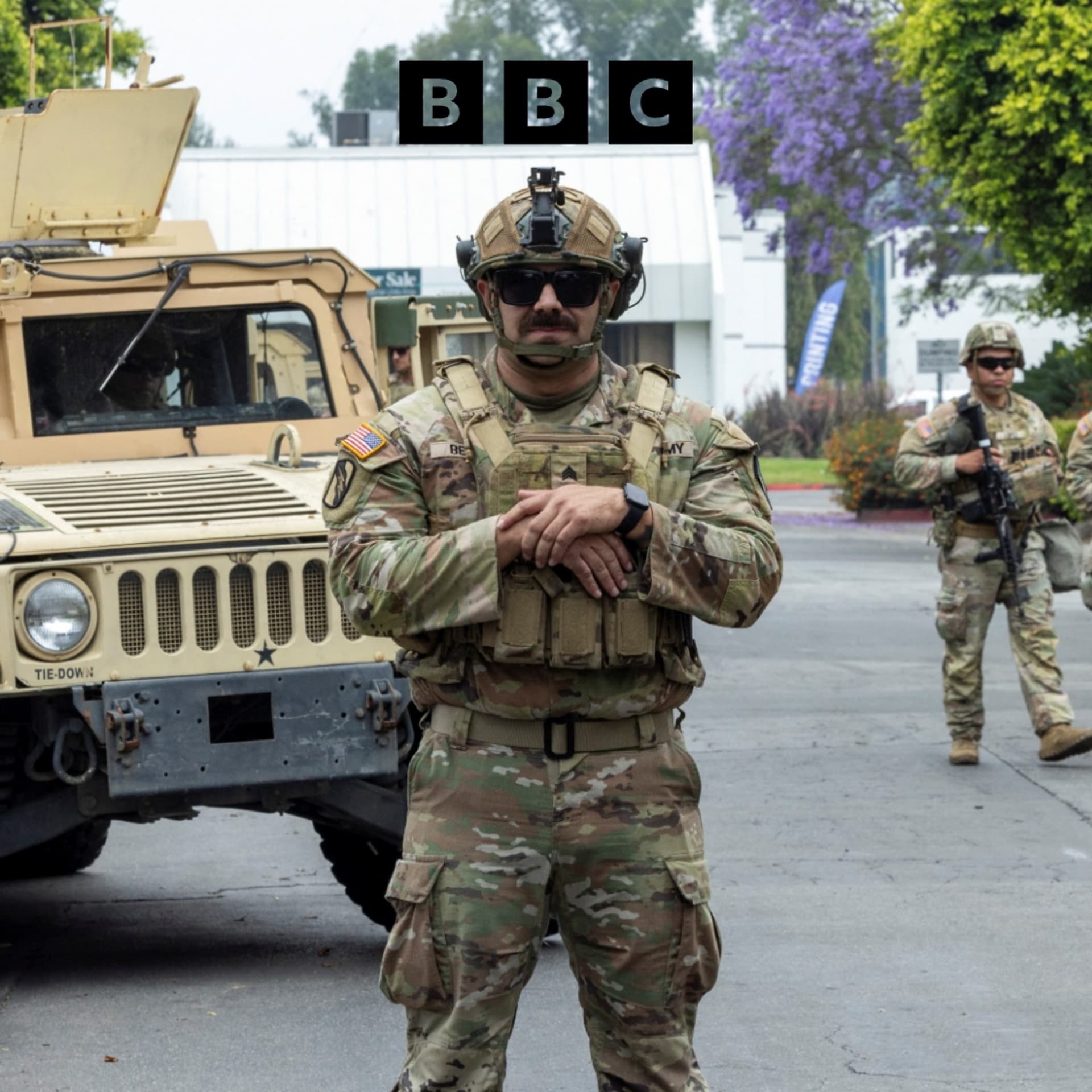
- Trump's Decision: President Donald Trump announced the withdrawal of National Guard troops from Chicago, Los Angeles, and Portland following a Supreme Court ruling that deemed their deployment for policing duties illegal.
- Claims of Reduced Crime: Trump suggested that crime rates have diminished in these cities, but critics argue that he exaggerated crime statistics to justify the troop presence.
- Legal Challenges: Multiple legal challenges arise against the federal overreach of deploying troops in domestic situations, with courts ruling against such actions as a violation of longstanding laws.
Key Quotes
- "Democrats criticized the move as an unnecessary and unconstitutional abuse of power."
- "There is not evidence that it's necessary to send troops in to protect property."
---
- Ukraine’s Stance on Peace with Russia
- Zelensky's Address: Ukrainian President Volodymyr Zelensky stated that Ukraine will not sign a weak peace agreement with Russia, emphasizing that nearly 90% of a peace deal is agreed upon. However, the remaining 10% is critical, particularly regarding territorial disputes.
- Russian Position: In contrast, President Putin expressed confidence in achieving total victory, indicating that Russia is not inclined to agree to terms favorable to Ukraine.
Key Quotes
- "Ukraine is not prepared to sign a 'weak agreement' that would prolong the war."
- "Putin believes he's winning the war."
---
- Syrian Refugee Perspectives
- Maliki Jasmati's Return: A Syrian refugee preparing to return to Syria discusses the changes and opportunities in her homeland post-conflict, including opening a business and supporting women through an NGO.
Key Themes
- Civil peace and healing after years of conflict.
- The necessity of rebuilding the country and empowering women.
---
- Archaeological Discoveries in Wales
- Medieval Cemetery Findings: Archaeologists near Cardiff discover a site with predominantly female skeletons and artifacts indicating wealth and status, suggesting a significant female religious community in medieval Wales.
Key Highlights
- The potential existence of a shrine or chapel at the burial site.
- The implications of these findings on understanding women's roles in early medieval society.
---
- Women's Facilities in Japanese Parliament
- Need for More Toilets: Following the election of Japan's first female prime minister, there is a campaign for increasing the number of women’s toilets in parliament to address long wait times caused by inadequate facilities.
Discussion Points
- The gender disparity in public toilet facilities and its historical context.
- The necessity for equitable provisions to serve the needs of all constituents.
---
Conclusion This episode of the Global News Podcast highlights key political updates, international conflicts, and social issues affecting various communities worldwide. The discussions reveal the complexity of governance, the pursuit of peace, and the ongoing struggle for equality and representation.
Contact Information For comments or discussions regarding this episode, listeners can reach out via email: globalpodcast@bbc.co.uk or find them on social media using the hashtag #GlobalNewsPod.
---
Production Credits
- Produced by: Stephen Jensen and Peter Goffin
- Mixed by: Holly Smith
- Editor: Karen Martin
- Host: Rachel Wright
---
This summary provides an informative overview of the Global News Podcast episode, capturing its essential themes and discussions for easy reference.
Written by AI. May contain mistakes. Listen to the episode to check what was said.
Chapters
Tap a time to open that second in VOThe Flawed Draft of History
0:05 to 0:36
Explore the complexities surrounding historical journalism and its accuracy.
“If journalism is the first draft of history, what happens if that draft is flawed?”
Trump Withdraws National Guard
0:42 to 1:25
Discussion on Trump's decision to pull National Guard troops from cities following a court ruling.
“I'm Rachel Wright and in the early hours of Thursday, the 1st of January, these are our main stories.”
Legal Challenges and Deployment Controversies
1:25 to 2:42
Examine the legal implications and controversies surrounding the National Guard's deployment.
“In the final hours of 2025, Donald Trump announced he was withdrawing federal troops from three US cities, Los Angeles, Chicago and Portland.”
Critics of Trump's National Guard Deployment
2:42 to 4:00
Critics argue that Trump's deployment of the National Guard is an abuse of power and lacks evidence.
“Our correspondent in Washington, Sean Dilley, told us more.”
U.S. Government's Childcare Funding Freeze
4:00 to 6:27
Details about the freeze on Minnesota's childcare funding amid allegations against Somali-run centers.
“Is there any evidence that the security situation has changed at all in any of these cities as a result of the National Guard presence?”
Ukraine's Stance on Peace with Russia
6:27 to 8:06
Zelensky's New Year's address emphasizes Ukraine's refusal to sign a weak peace agreement with Russia.
“amid a highly charged atmosphere drawing on issues of race, immigration and electoral politics.”
Zelensky and Putin's New Year's Addresses
8:06 to 10:40
Contrast between Zelensky's hopeful message and Putin's call for military victory.
“following weeks of intensive talks involving the US and European leaders.”
Drone Attack Claims and Misinformation
10:40 to 12:20
Discussion on Russia's claims of a drone attack and the response from Ukraine and international officials.
“So it's difficult to see a way forward for that 10%.”
Women's Toilet Accessibility Campaign
12:20 to 13:20
Exploring the campaign for better toilet facilities for women.
“For men, you go up to your urinal, you unzip, off you go.”
Syria's Transformation Post-Assad
13:20 to 14:01
Discussion on Syria's changes and the return of refugees amid a new government.
“The Economist magazine named Syria its country of the year for 2025, celebrating its social and political transformation since the fall of the dictator Bashar al-Assad.”
Show all 14 chapters
Building a Future in Syria
14:01 to 16:51
Learn about the challenges and hopes of rebuilding in Syria from a local perspective.
“The electricity, it's coming back slowly.”
Political Disillusionment in Britain
16:51 to 20:39
Explore the growing disillusionment with politics in Britain and its implications.
“When Keir Starmer became the UK's Prime Minister in 2024, he promised to make politics less present in British life.”
Unearthing Women's History
20:39 to 24:14
Discover the archaeological findings that reveal the lives of women in medieval Wales.
“Cardiff have brought archaeologists closer to solving a mystery surrounding the women buried there.”
The Gendered Toilet Crisis
24:14 to 27:17
Understand the rationale behind the disparities in public toilet access for women.
“Japan elected its first female prime minister, Sanai Takeuchi, in 2025.”
Transcript
Automatic transcript. May contain errors.0:00This BBC podcast is supported by ads outside the UK. If journalism is the first draft of history, what happens if that draft is flawed? In 1999, four Russian apartment buildings were bombed, hundreds killed. But even now, we still don't know for sure who did it. It's a mystery that sparked chilling theories. I'm Helena Merriman, and in a new BBC series, I'm talking to the reporters who first covered this story. What did they miss the first time? The History Bureau. Putin and the apartment bombs. Listen on BBC.com or wherever you get your podcasts. This is the Global News Podcast from the BBC World Service.
0:47I'm Rachel Wright and in the early hours of Thursday, the 1st of January, these are our main stories. Donald Trump will pull National Guard troops out of three US cities after a Supreme Court ruling. And in a New Year's address, President Zelensky says Ukraine will not sign a weak peace agreement with Russia. Also in this podcast, If every Syrian people will not take this risk, who will build our country? We speak to a Syrian refugee who's ready to move home.
1:25In the final hours of 2025, Donald Trump announced he was withdrawing federal troops from three US cities, Los Angeles, Chicago and Portland. Over the course of the year, the president has deployed the National Guard to several Democrat-run cities. He claimed they were needed to crack down on rampant crime and help with immigration enforcement. I saw today on one of your networks, not a friendly network, they interviewed about 12 people. Most of them were African-American, who were black. And they were saying, please, please, please let the presidents end. These were people from Chicago. Please, we need help.
2:07We need help. We can't walk outside. We're petrified. But Democrats criticized the move as an unnecessary and unconstitutional abuse of power. And several legal challenges were filed to block the deployments. Last week, the US Supreme Court ruled that it was illegal to send troops to Chicago, citing a longstanding law against using the military as a domestic police force. And now President Trump has announced they'll be withdrawing, claiming that crime rates in the three cities have been reduced. But he said federal authorities could return if crime rose again. Our correspondent in Washington, Sean Dilley, told us more.
2:46Some courts have given the federal government temporary permission to carry on with their deployments in some areas, but he's been facing an awful lot of legal challenges and there are now several judges who've said that it's a federal overreach to use these powers to deploy the National Guard in various places across the United States and there is not evidence that it's necessary to send troops in to protect property and in particular to protect federal property because while the National Guard obviously would normally be aligned to a state they can under some circumstances be deployed by the federal government it's all a question of proportionality an awful lot of people think the deployment is quite an extreme reaction particularly in Washington DC from where I speak to you now the National Guard are absolutely everywhere on an individual basis.
3:31Of course, they are extremely friendly when it comes to tourists and people locally here. But it is still the case that it's controversial. In Washington, D.C., President Trump had essentially at one point overtaken the local law enforcement department, the Metropolitan Police Department. And he has consistently argued that crime is soaring and something needs to be done. But his critics have suggested that he's been exaggerating isolated incidents at largely peaceful protests to justify the sending in of the troops. Is there any evidence that the security situation has changed at all in any of these cities as a result of the National Guard presence?
4:08It's almost a little bit early to say because those annual crime statistics would not be in in the same way. Certainly President Trump claims that crime levels have come down in those areas. But no, I mean, there's no magic bullet there that says, right, OK, crime was at this level. The National Guard came in on this date and he's been deploying them since June in various places across the United States. Nowhere can we say, well, hang on a minute, that's definitively reduced crime. And what's the situation like in the other cities where Trump has deployed the National Guard? There are still National Guards deployed here in Washington, D.C.
4:43There are National Guards deployed in Memphis and in New Orleans. An awful lot of people protesting about that an awful lot of people very unhappy about it legal challenges uh do continue and likewise what's happened is in these areas where there have been protests not just about the national guard but based upon the policies of the federal government on immigration and other such matters the deployments remain incredibly controversial i think what makes this particular decision to withdraw the troops in Portland and LA and in Chicago. What makes it notable is if these have led to withdrawals of National Guard, could places like Memphis be next?
5:24Sean Dilley in Washington. While staying in the US, the Trump administration has also announced a freeze on funding for children's daycare in the Democrat-led state of Minnesota. This comes after a conservative YouTuber claimed in a video that centres run by Somali immigrants were taking public money without providing care. From Washington, here's Tom Bateman. The 42-minute video by Conservative YouTuber Nick Shirley presented itself as an expose of Somali-run child daycare centres in Minnesota using the on-screen techniques of an investigative documentary claiming the centres were defrauding the state of assistance funds.
6:03But the video lacked the standard journalistic checks, right of reply or editorial process usually involved in making such published allegations. It went viral and has been praised by the Trump administration, which has now announced a freeze on federal childcare funds to Minnesota. A backlash accusing Mr Shirley of whipping up tensions with unsubstantiated claims has also taken place online and on the ground, amid a highly charged atmosphere drawing on issues of race, immigration and electoral politics. Mr Trump has for weeks used a series of fraud cases already uncovered by officials in the state to attack Minnesota's Somali community more broadly using highly derogatory language.
6:46Last month he said Somalis had ripped off Minnesota, calling them garbage from a country that stinks, who he said he didn't want in the US. Some 90 people, mostly Somali Americans, have been charged or convicted in Minnesota over fraudulently claiming millions of dollars of public assistance funds, mainly relating to Covid-era aid programmes. Mr Trump has accused the state's Democrat Governor Tim Walz of failing to address the issue, echoing a central charge from Republicans ahead of a 2026 election race in the state, a claim Mr Walz has rejected, saying the state has spent years cracking down on fraudsters.
7:22Tom Bateman. Let's turn to Ukraine now because with very little indication that Russia's military invasion is nearing an end, President Volodymyr Zelensky has used his New Year's address to declare that Kiev is not prepared to sign a weak peace agreement with Russia, insisting all it would do is prolong the war. In a few minutes, a new year will arrive, and I would give everything, everything in this world, so that in this address I could say that peace too would arrive in a few minutes. Sadly, I cannot yet say that. But with a clear conscience, I and all of us can say this. Ukraine is doing everything possible for peace.
8:05But he did express some optimism, estimating that around 90 % of a peace agreement had been agreed following weeks of intensive talks involving the US and European leaders. President Putin took a very different tone in his New Year's address, expressing confidence in total victory. This was his message to Russian soldiers.
8:29You've taken on the responsibility of fighting for your homeland, for truth and justice. Millions of people across Russia, I assure you, are with you on this New Year's Eve. They're thinking of you, empathising with you, hoping for you. We're united in our sincere, selfless and devoted love for Russia. I congratulate all our soldiers and commanders us on the coming new year. We believe in you and in our victory. Earlier, both Ukraine and the EU's senior diplomat Kaya Kalas had poured scorn on Moscow's claims that Ukraine had launched a massive drone attack on President Putin's residence in Novgorod, hours after Mr.
9:09Zelensky's talks in Florida with Donald Trump. So a relatively upbeat message from President Zelensky and a defiant one from the Kremlin. How should we interpret those views in this grinding nearly four-year war? Well, here's our reporter, Will Vernon. Things haven't changed significantly on the battlefield in the last year. Yes, the Russians have made some small gains, but, you know, at a really kind of glacially slow pace, they haven't even managed to fully capture the strategic city of Pakrovsk, which I think we were talking about on this programme maybe two months ago. I was in Kiev a year ago today, and the mood among Ukrainians was much the same as it is now, right?
9:50Weariness, yes, exhaustion, but also defiance, right? And a refusal to kind of bend the knee to Moscow. But it is undeniable that the Russian army has the advantage and Ukraine is losing ground. Zelensky mentioned that the peace talks in his address, didn't he? He said a peace deal is 90 % done. But actually, that 10 % is absolutely crucial, because Vladimir Putin is demanding that Ukraine withdraw entirely from the Donbass region. Ukraine is instead proposing that both sides pull back. But I think that's going to be an absolute non-starter for Moscow, because Putin believes he's winning the war.
10:30He's only going to stop his advancing armies if it's on Russia's terms and withdrawing Russian troops from the front line is certainly not on Russia's terms. So it's difficult to see a way forward for that 10%. And then where are we with this claim by Russia that there was a massive drone attack on one of President Putin's residences? Well, the Ukrainians continue to deny it and they've been joined in that view, as you mentioned, by European officials, most notably Kaya Kalis. President Trump initially appeared to support support Moscow's view of all this. But he's been posting content on social media, suggesting he's perhaps inclined to disbelieve that now.
11:11The Wall Street Journal tonight are reporting that US national security officials have concluded there was no attack. But you know, that's just one report in that newspaper. We don't have any other confirmation of that yet. It's difficult to see why Kiev would decide to attack a presidential residence. You know, It's a really well-guarded site. The security around residential residents in Russia is incredibly tight. I mean, there are many air defence systems. There are all kinds of electronic jamming and electronic warfare resources there. And there's also the question of why would the Ukrainians carry out such a risky move, right?
11:51Targeting a presidential residence would be a really serious escalation. And very little evidence that they'd done it. I mean, there was some very badly done shot video footage. Yes. And the Ukrainians say that this is all Russian disinformation, right, to drive a wedge between Ukraine and Washington. Why the Ukrainians would do that at a time when they're trying to convince Donald Trump that Kiev wants peace and Moscow doesn't, that would be a really weird thing to do. Will Vernon. Still to come in this podcast. For men, you go up to your urinal, you unzip, off you go. For women, you've got to find the cubicle, open the door, shut the door, take your trousers down, sit down and then reverse the procedure.
12:34The campaign to build more toilets for women.
12:46If journalism is the first draft of history, what happens if that draft is flawed? In 1999, four Russian apartment buildings were bombed. Hundreds killed. But even now, we still don't know for sure who did it. It's a mystery that sparked chilling theories. I'm Helena Merriman, and in a new BBC series, I'm talking to the reporters who first covered this story. What did they miss the first time? The History Bureau, Putin and the apartment bombs. Listen on BBC.com or wherever you get your podcasts.
13:22The Economist magazine named Syria its country of the year for 2025, celebrating its social and political transformation since the fall of the dictator Bashar al-Assad. Life in Syria under the new president, Ahmed al-Shara, is far from perfect. Religious minorities, including the Alawites and the Druze, still face violence. But many Syrians who fled the country during its long and bloody civil war have been returning. Maliki Jasmati, a chef from Damascus, settled in Germany as a refugee in 2015. She's been back to Syria several times since Assad fell and she told my colleague James Kumrasami that she's preparing to move home.
14:06I can live there without any problem. The electricity, it's coming back slowly. Everything, it's changed but not 360 degrees. Now I'm start to study if I will open business there in Syria. And also I will start to open my NGO there to help women, to empower women. It's interesting you now feel confident enough to be able to open your business in Syria. Because I'm Syrian. If every Syrian people will not take this risk, who will build our country? If I will say, oh, it's a little bit risky, no one will build our country. It's an NGO to help women that you're setting up. Because one of the big criticisms of the new government in Syria is that there are no women in positions of power, that women are not empowered in this new Syria yet, at least.
15:06Do you agree with that? Yes, but it's not only in this new government. In the Assad regime, we have the same situation. But now all the media, because the new government, they look like they are Islamic, all the people thought now the women, they are not in power. No, no. Before that, also with Assad regime. We have seen just in the last couple of days more violence and attack on a mosque, people killed in Syria. How worried are you about the kind of violence between communities that has been seen over the past year? Actually, we need a lot of civil peace. Assad regime, he make a lot of problem between us.
15:52Always when he kill the people in Syria, he will say we are as a Halaoui. It makes a lot of hating from the Sunni about the Alaoui. So it has roots, it has roots? It has roots, exactly. There is people, they have like a fire inside them because some of their family they killed in the very hard way. So we need this kind of peace. Just a final thought, what is it like cooking in Syria? Is it different to cooking in Germany? In Syria, it's easier for sure. When I'm cooking there, I feel I come back to my home. Even if my grandmother, she's passed away, but I feel all the old women that are around me, they are like my grandmother.
16:42And also the ingredients, it's the taste of this ingredient. It's like the childhood taste for me. It's like peace. Syrian chef Malik A. Jasmati. When Keir Starmer became the UK's Prime Minister in 2024, he promised to make politics less present in British life. In other words, more boring and less newsworthy. Instead, there have been high-profile sackings and resignations from his government, divisions within the governing Labour Party over policy and, with it all, plummeting popularity after little more than 18 months in power. In normal times, all this would benefit the main Conservative opposition party.
17:23But as our political correspondent Rob Watson now reports, these are anything but normal times. A few days ago, I was listening to a phone-in on one of the World Service's sister channels in Britain. Inevitably, of course, the callers ended up talking about politics. I was struck by one in particular who said she was totally disillusioned with politics and that Britain's politicians had failed the British people. I was struck because she sounded so reasonable, so calm and ordinary, by which I mean normal and typical, and yet so totally fed up. It reminded me of the many conversations I'd had with voters at the time of the local elections earlier this year.
18:03What I'd heard then was also a mix of disillusion and anger from perfectly reasonable-sounding people directed at the politicians over such issues as the cost of living, immigration and a general sense that nothing in Britain works properly. Of course, voter anger is nothing new. I remember the same thing at the time of the 2010 general election, when voters were furious in the wake of the scandal over MPs' expenses and the financial crash two years earlier. But this time, it seems even more serious. For a start, current polling suggests the country's mood has never been so sour, with over 70 % of voters saying they expect life in Britain to get worse.
18:48truly staggering 70%. But secondly, this feeling of pessimism and anger is threatening to translate into a serious reshaping of British politics. To some extent, it's already happening. Let me explain. In the past, when one of the two main parties was as unpopular as the current Labour government is now, the other party, in this case the Conservatives, would benefit. But that is not what's happening. Some context. In the 20 elections between 1945 and 2019, the combined vote share of the two main parties averaged a whopping 80.5%. Now the polls suggest they can barely muster 35 % between them. All this matters because it may be that the two parties who have essentially taken it in turns to govern Britain for the last hundred years or so are losing their grip.
19:43The beneficiaries so far are reform to the populist right and the Greens and Scottish and Welsh nationalist parties on the left. You could argue Britain is becoming, dare one say it in this post-Brexit era, more like other European countries, where politics is more fragmented and where the traditional post-war parties of centre-left and centre-right have seen a collapse in their support. So will 2026 be the year in which somehow Labour and the Conservatives fight back? Or does the fragmentation, with all its potential to, yes, revolutionise British politics in a way that would be literally unprecedented in living memory, continue?
20:24It's certainly what I'll be looking out for next year, especially next spring when there are local elections across England and to the Parliament in Scotland and the Assembly in Wales. Quiet it won't be. Rob Watson. Staying in the UK and new discoveries at a medieval cemetery near the Welsh capital Cardiff have brought archaeologists closer to solving a mystery surrounding the women buried there. Our science editor Rebecca Morrell has been to the site to find out more. In a field in the Cardiff countryside, archaeologists are getting ready to lift a skull from a grave. It's 1 ,500 years old and incredibly fragile.
21:0858 skeletons dating to the 6th or 7th century have been unearthed so far. But this site is something of a medieval mystery. What's unusual is nearly all of the skeletons are women. And while their bones show they lived hard lives, objects found amongst the grave suggest wealth and luxury. But a major new clue's been discovered. Buried beneath my feet here is a really intriguing feature. The team here think it could be some kind of building. It's about four metres by five metres, and it's possibly a shrine or even a small chapel. What they do know is that this is clearly important. It's right in the middle of the cemetery.
21:49You can see maybe six graves clustered right around it. It's a highly desired location for people to be buried. Jidda Davis is an archaeologist at Cardiff University. Specifically where we have this kind of clustering of graves, There's sometimes two, three, four individuals that have been buried on the same spot again and again. There doesn't appear to be as much of a taboo over putting bodies in the same place and just moving those still there to one side. The discovery of the potential building adds to growing evidence that the cemetery was part of a female religious community. These were high-status women, and artefacts found at the site have been taken to Cardiff University's lab to be studied.
22:36This object, we're very lucky, has a really nice, what we call patina, and so I've been able to clean it just using cotton wool on a cocktail stick and a small amount of water with methylated spirits. Conservator Nicola Emerson is painstakingly removing the dirt of the dig from a fine copper brooch. We'd have to do some more analysis, but it's probably bronze. Also, we think that it was possibly gilded, which would be a coating of gold over the top. So this would have been a very decorative brooch. I think it's a very special find for the site. When you think about this period, particularly if we're talking about religious community, I wouldn't expect to see something as sort of decorative and pretty as this.
23:20the social structures that would have existed and the ornamentation is probably very different to our modern concept of what that is Back at the dig and domestic items found at the cemetery are also revealing more We have a quernstone for grinding flour for bread we've got pottery and glass for eating and drinking it's clearly not just a place for the dead there's a living community here as well Dr Andy Seaman is leading the excavations. So we might want to think of a community which has cut itself off from the rest of society, perhaps as part of a very early and not yet very well understood religious community.
24:05The pieces of this medieval puzzle are starting to come together, and there'll be more answers as the excavations continue later this year. Our science editor, Rebecca Morrell. Japan elected its first female prime minister, Sanai Takeuchi, in 2025. After the latest election, there are more than 70 women in the Japanese parliament, the highest number ever. And most of them, including the prime minister, have submitted a petition calling for more women's toilets in the parliament building to accommodate them all. There are just two female cubicles close to the chamber where members speak and vote, leading to long queues.
24:46The problem is not a new one and certainly not one confined to Japan. Caroline Criado Perez is the author of Invisible Women, exposing data bias in a world designed for men. She spoke to my colleague, Sean Lay. When you go to a public toilet in any place, right, if it's in the theatre, if it's in a shopping centre, wherever, you will find that there are women queuing for that toilet and the men are sauntering in and out of theirs. it's especially frustrating when you realize that the reason for it is not what we normally think which is women are faffing about in there spending too long doing their makeup generally when public toilets are being designed the way that planners will allocate the space for toilets is they'll do equal floor space which seems to make sense the problem you have is that you can fit more urinals into a particular square footage than you can fit cubicles women can't generally use urinals so when you have a public toilet of a set square footage that has urinals and cubicles and one that just has cubicles, immediately you've got way more provision.
25:50You can have way more people going in and out of the one that has urinals in it. So immediately men have more provision. But women need more provision because there's much more demand on the female toilet. And that is because women are more likely to be taking in other people, for example, small children that they're taking care of, older people that they're taking care of. Also, women for various reasons might need to use the toilet more often because they're pregnant. And also just biomechanically, right? It just takes a little bit longer for men. You go up to your urinal, you unzip, off you go.
26:20For women, you've got to find the cubicle, open the door, shut the door, you know, take your trousers down, probably clean the toilet seat, sit down and then reverse the procedure, right? And that just is, you know, it's small, but it adds up. So essentially, that is why you find women curing. That is admirably clear. What is unclear to me is why this problem persists. Most people don't really realise that. They still just sort of think the default thought, which is, oh, equal space, that sounds fair. And you have to make this slightly protracted argument of why actually equal space isn't fair.
26:51And I think often that argument just isn't made. But a lot of it is historic. There's a fascinating history of women's fight for public toilets, you know, across London, where it was seen as absolutely shocking that women would be out in public and need the toilet. There's a thing called the urinary leash, which is about, well, it's kind of what it sounds like. How far can you go being tethered to the fact that you're going to need to go at some point and there might not be anywhere? Caroline Criado-Perez speaking to Sean Lay. And that's all from us for now, but there will be a new edition of the Global News Podcast later.
Read the full transcript
27:28If you want to comment on this podcast or the topics covered in it, you can send us an email. The address is globalpodcast at bbc.co.uk. You can also find us on X at BBC World Service. Use the hashtag Global News Pod. This edition was produced by Stephen Jensen and Peter Goffin. It was mixed by Holly Smith. The editor is Karen Martin. I'm Rachel Wright. Until next time, goodbye.
28:01If journalism is the first draft of history, what happens if that draft is flawed? In 1999, four Russian apartment buildings were bombed, hundreds killed. But even now, we still don't know for sure who did it. It's a mystery that sparked chilling theories. I'm Helena Merriman, and in a new BBC series, I'm talking to the reporters who first covered this story. What did they miss the first time? The History Bureau, Putin and the apartment bombs. Listen on bbc.com or wherever you get your podcasts.
From the publisher
Donald Trump says he is withdrawing the National Guard from the Democrat-led cities of Chicago, Los Angeles and Portland after the Supreme Court blocked the deployment of troops for policing duties. But the president said federal forces would "come back" if crime rates go up.
Also: President Volodymyr Zelensky says only 10 per cent of a peace deal with Russia remains to be agreed, but Ukraine is not prepared to sign a "weak agreement" that would prolong the war. We speak to a Syrian refugee who spent years living in Europe but is now ready to move home. The discoveries that could solve the mystery of a medieval Welsh cemetery. And a campaign to build more toilets for women in the Japanese parliament. Photo credit: Reuters.
The Global News Podcast brings you the breaking news you need to hear, as it happens. Listen for the latest headlines and current affairs from around the world. Politics, economics, climate, business, technology, health – we cover it all with expert analysis and insight. Get the news that matters, delivered twice a day on weekdays and daily at weekends, plus special bonus episodes reacting to urgent breaking stories. Follow or subscribe now and never miss a moment. Get in touch: globalpodcast@bbc.co.uk



