
In short
Global News Podcast: Episode Summary
Episode Title
Trump 'spent time' with Epstein 'victim'
Episode Overview In this episode of the Global News Podcast, key topics include the implications of newly released emails involving former President Donald Trump and convicted sex offender Jeffrey Epstein, a major corruption scandal in Ukraine, and cultural insights into Japan's fan economy.
Key Topics
- Trump and Epstein Emails
- Context: Democrats in the US Congress released three emails from Jeffrey Epstein mentioning Donald Trump, suggesting Trump's involvement with an Epstein victim.
- Details:
- One email claims Trump spent hours with an Epstein victim.
- Trump has denied any wrongdoing, asserting these allegations are part of a smear campaign orchestrated by Democrats.
- The emails raise questions about Trump's knowledge of Epstein's behavior during their friendship.
- Response: White House Press Secretary labeled the email release as a "false narrative."
- Corruption Scandal in Ukraine
- Background: Ukraine's Justice Minister was suspended amid a significant investigation into bribery within the energy sector.
- Allegations:
- Minister accused of taking bribes from contractors meant to protect energy infrastructure during ongoing conflict with Russia.
- The investigation is linked to a broader corruption issue affecting President Zelensky's administration.
- Implications: There is public concern about the impact of ongoing corruption on support for the government amid wartime challenges.
- US Policy on Drug Smuggling
- Discussion: President Trump's orders to attack suspected drug smuggling boats in the Caribbean have faced criticism.
- Concerns:
- Critics argue that these military actions lack transparency and may violate international law.
- The UK has reportedly paused intelligence sharing with the US regarding these operations.
- Medical Breakthrough in Heart Attack Testing
- Study Findings: Researchers in New Zealand and the UK have developed a quicker test to diagnose heart attacks.
- Significance:
- New bedside testing can provide results within minutes, potentially saving lives through timely intervention.
- The British Heart Foundation plans further trials to evaluate this new testing method.
- Oshikatsu: Japan's Fan Culture
- Overview: The podcast explored how Japanese fan culture, known as Oshikatsu, is energizing the economy.
- Economic Impact: Fan spending has reportedly contributed to a 2% increase in Japan's annual retail turnover.
- Cultural Insights: Young fans spend significant amounts on merchandise related to their favorite characters and idols, reflecting a shift in consumer behavior.
- Royal Shakespeare Company's Initiative
- Objective: The Royal Shakespeare Company is launching an online platform that aims to make Shakespeare more accessible to young audiences.
- Method: The initiative encourages experiential learning through performance rather than traditional reading, aiming to engage students with the emotional and rhythmic elements of the plays.
Conclusion This episode covers critical current affairs, highlighting intersections between politics and public trust, innovation in health care, and cultural trends shaping economies. The discussions reflect the complexities and nuances in global issues from the US, Ukraine, and Japan, underscoring the podcast's commitment to delivering breaking news alongside expert analysis.
Contact Information
- Email: [globalpodcast@bbc.co.uk](mailto:globalpodcast@bbc.co.uk)
- Social Media: Follow on X at BBC World Service using the hashtag #GlobalNewsPod
Producer: Judy Frankel Editor: Karen Martin Host: Will Chalk Next Episode: Stay tuned for the next edition of the Global News Podcast.
Written by AI. May contain mistakes. Listen to the episode to check what was said.
Transcript
Automatic transcript. May contain errors.0:00This BBC podcast is supported by ads outside the UK. If journalism is the first draft of history, what happens if that draft is flawed? In 1999, four Russian apartment buildings were bombed, hundreds killed. But even now, we still don't know for sure who did it. It's a mystery that sparked chilling theories. I'm Helena Merriman, and in a new BBC series, I'm talking to the reporters who first covered this story. What did they miss the first time? The History Bureau, Putin and the apartment bombs. Listen on BBC.com or wherever you get your podcasts. This is the Global News Podcast from the BBC World Service.
0:48I'm Will Chalk and at 16 hours GMT on Wednesday the 12th of November, these are our main stories. US Democrats released new emails from the convicted sex offender Jeffrey Epstein, one of which says Donald Trump spent hours at Epstein's house with one of the late financier's victims. Ukraine suspends its justice minister as part of a major probe into bribery in the energy sector. Also in this podcast, there are hopes a new speedier test will help people having heart attacks and... Oshikatsu is a way of us otakus to appeal our love to like our favourite characters, our favourite idols, our favourite like singers, stuff like that.
1:31We find out how Japanese fan culture is helping to boost the country's economy.
1:41Well, shortly before we came in the studio to record this podcast, Democrats in the US House of Representatives released emails from the convicted sex offender Jeffrey Epstein that reference President Trump. They say the emails raise serious questions about how much Mr Trump knew about the late financier's behaviour. Mr Trump has consistently said he knew nothing of Epstein's activities and didn't engage in any wrongdoing himself. Our North America correspondent Nomiya Iqbal told us more. Three emails were released by Democrats on the Oversight Committee in the US House and they say they were provided by Jeffrey Epstein's estate this morning.
2:21Now, what they appear to show is Epstein mentioning Donald Trump several times. This is in correspondence with Epstein's longtime associate, Glenn Maxwell, who's serving a 20-year jail sentence for trafficking girls to Epstein. And in separate correspondence with writer Michael Wolff. He's an author who's written several books about Mr. Trump. So one of the emails here from Epstein to Maxwell in April 2011 alleges that Donald Trump spent hours with who the House Democrats say was a victim of sex trafficking. And that Epstein called the U.S. president, and I'm going to quote you, the dog that hasn't barked.
2:58And in a January 2019 email to Wolf, Epstein alleged that Donald Trump, again, I'm going to quote to you, knew about the girls because he asked Ghislaine to stop. So this is what the House Democrats have released at the moment. Now, Donald Trump, he's consistently denied any wrongdoing related to Epstein. He said that this was a hoax that was orchestrated by the Democrats. The pair had been friendly for many, many years, but Donald Trump said that they fell out in the early 2000s. A couple of years before Epstein was first arrested, they fell out over some property dispute. But the Epstein files are a huge political thorn in his side because he heavily campaigned to voters that he would release these documents.
3:44It was part of his broader presidential pitch that he would expose powerful people hiding the truth. And what these emails do so far, I think it just reveals that there are more ties between Epstein and President Trump than were previously reported. Nomiya Iqbal. Now, the White House Press Secretary, Caroline Levitt, has responded by saying the Democrats selectively leaked emails to the liberal media to create a fake narrative to smear President Trump. Not for the first time, the Ukrainian government is battling with a corruption scandal, and in the middle of a war with no end in sight, these can hit public confidence hard.
4:26In the course of a major criminal investigation into corruption in the energy sector, the justice minister has been suspended. Herman Halyshenko, a former energy minister, has been accused of taking bribes from contractors hired to protect energy infrastructure against Russian strikes. Only yesterday, prosecutors accused a close ally of President Zelensky, the businessman Timur Mindich, of running a big embezzlement scheme. Our correspondent James Landau is in Kyiv. They are serious allegations, And this is, I think, one of the biggest corruption scandals to hit Ukraine since the full scale invasion.
5:04There's an awful lot at stake. On one hand, there is just the issue itself. The allegations that senior ministers within this government and officials are accused of taking kickbacks in contracts with people who were employed by the government to build defensives and defensive structures to protect. in particular Ukraine's nuclear energy plants, which is so vital at the moment for keeping this country and its economy going. That's the allegation. The prosecutors say they've got thousands of hours of taped recordings providing evidence. They say this is the culmination of a 15-month investigation.
5:46And the key point is that people who are being investigated are right at the heart of this government, including someone who is a close ally of President Zelensky a guy called Timur Mindic who is the co-owner of the television studio that made President Zelensky's television programmes when he was a comedian before he became a politician so on that level it's something that goes right to the heart of the government but then there's also big issues about just what impact it has in a country that at the moment is facing an awful lot of hardship because of the power outages. That means a lot of people are living without power and without light.
6:27And so there's an awful lot of discussion about this right now. Yeah. And how much does the personal links to Zelensky affect things when he's going around Europe asking for more contributions for this war? Well, this is it. On the one hand, President Zelensky and his government is under huge pressure from his allies, in particular the European Union, to say, look, you have to tackle corruption in Ukraine. And so he will say to them, look, this is us doing this. This shows the workings of a mature democracy, that it has these two prosecuting authorities that are tackling these allegations of corruption and going right to the heart of it, even in a way that, you know, is politically damaging.
7:08So that's the sort of the positive argument, if you like. the risk is that what it does is it just is it demonstrates to both allies and to people here in ukraine that corruption is still pretty strong in this administration as it has been culturally within a lot of ukrainian administrations over the years and i think the key point is this is that if people are sat in their flats and they're cold and they have no electricity and they see ministers taking kickbacks from activities that were supposed to be protecting the energy, the flow of energy around Ukraine, I think that has the potential to undermine support and trust in this government.
7:50And I think that's where an awful lot is on the line. It's our correspondent in Kiev, James Landale. President Trump's orders to attack suspected drug boats in the Caribbean have drawn criticism, among others from leading Democrats in the US, such as the California Governor Gavin Newsom, speaking at the COP30 Environment Summit in Brazil. It's chilling to me to see those scenes of the United States of America blowing up boats with no transparency, no advice and consent with the United States Congress, the representatives of my country with briefings that are laughable that members of Congress, both the House and the Senate, including Republicans, have criticised.
8:34If you can't criticise that, what the hell can you criticise? But worries about the policy have also been expressed by allies abroad. Now there are reports that Britain has stopped sharing intelligence with the US in the Caribbean. Our State Department correspondent Tom Bateman is at the G7 meeting in Canada, from where he spoke to Justin Webb. I mean, my sense from the Americans is that I think this is happening. You won't get anyone to confirm it on the record because this is about intelligence sharing. But it seems that, you know, as the reports suggest, that the UK has declined to share certain limited amounts of intelligence with the Americans when it comes to something they were doing in the Caribbean, which was to pass on details of suspected drug smuggling boats to a task force in Florida.
9:26And it appears to be the case that that is not now happening. And the concern, I think, on the British side, according to the reporting, is that there is a concern this would be complicit in potentially illegal activity, as in the American strikes on alleged drug smuggling boats. And you will hear people say, well, the Brits actually, you know, don't contribute necessarily a huge amount there because the Americans are the dominant sort of military force there. But Britain does have naval assets there. And there is clearly some, you know, value to the intelligence in that region. Give us a sense of the scale of it.
10:01We know that Donald Trump has been attacking these boats. And we know that his administration has defended the attacks on them. What is actually happening? And what are they intending to do? Well, what they've done so far is they've blown up at least 19 of these small boats, killing more than 70 people. The Trump administration says that these are, in their words, narco-terrorists, that they're people that are delivering drugs to America that are killing. In each boat, they say 25 ,000 people will be killed by the drugs on each boat, although those numbers simply don't stack up at all, if you look at the numbers that die from fentanyl overdoses each year, for example.
10:41And their view is very strongly that this is a war on America by Latin American drugs cartels, and that it then therefore justifies the extension of terrorism designations and effectively the use of the laws of arms conflict against drug smugglers. The counter argument, and we've heard this, you know, from a lot of lawmakers on Capitol Hill is that this is both in breach of American and international law because this is a criminal enterprise that should be dealt with as it was before through law enforcement. Tom Bateman speaking to Justin Webb. Now cardiovascular disease is the leading cause of death around the world so a new way of testing whether someone is showing the early signs of suffering a heart attack is hugely significant news.
11:30It's come in the form of a study carried out by researchers from New Zealand and the UK. Nick Miles reports. Sometimes the medical breakthroughs that have the most impact aren't necessarily the discovery of a miraculous new drug or a wonder vaccine. They are simple changes to procedure. And that seems to be what's been discovered by this latest research. When someone has a suspected heart attack, a sample of their blood is sent to a hospital laboratory where it's tested for something called troponin, a protein that's released when the heart muscle is damaged. It's a lengthy process at a critical time.
12:06Researchers at Christchurch Hospital in New Zealand and the British Heart Foundation say they've been able to dramatically speed that up. Here's cardiologist Professor Nicholas Mills. The test can be done at the bedside and the results actioned within a few minutes and therefore, or unlike our current process where a blood sample is taken and it's transported elsewhere or to a different hospital in order to measure this protein, and sometimes hours go by before the results return, the results will be available to the clinician that's assessing you right now. That will reduce anxiety by getting a negative test back earlier, but also help pick up heart attacks earlier.
12:46And that is key. The longer the blood flow to a heart is blocked, the more heart muscle cells die, which can lead to heart failure and other complications. Here's Nicholas Mills again. The value of this is going to go way beyond emergency care. The British Heart Foundation are supporting trials to evaluate this in outpatient clinics, in general practice in the community. And we are about to conduct a trial in pre-hospital care in ambulances, bringing forward that time of diagnosis even earlier. Professor Nicholas Mills ending that report by Nicholas Miles. No relation. Still to come, here in the UK, the health secretary denies he's going for a promotion to prime minister, but not everyone's convinced.
13:31What we heard the health secretary say this morning was that he wants to cut waiting lists, but we all know that there's only one waiting list that he really wants to cut. And if you're into Shakespeare but you can't convert your children, help could be at hand.
13:51If journalism is the first draft of history, what happens if that draft is flawed? In 1999, four Russian apartment buildings were bombed, hundreds killed. But even now, we still don't know for sure who did it. It's a mystery that sparked chilling theories. I'm Helena Merriman, and in a new BBC series, I'm talking to the reporters who first covered this story. What did they miss the first time? The History Bureau, Putin and the apartment bombs. Listen on BBC.com or wherever you get your podcasts.
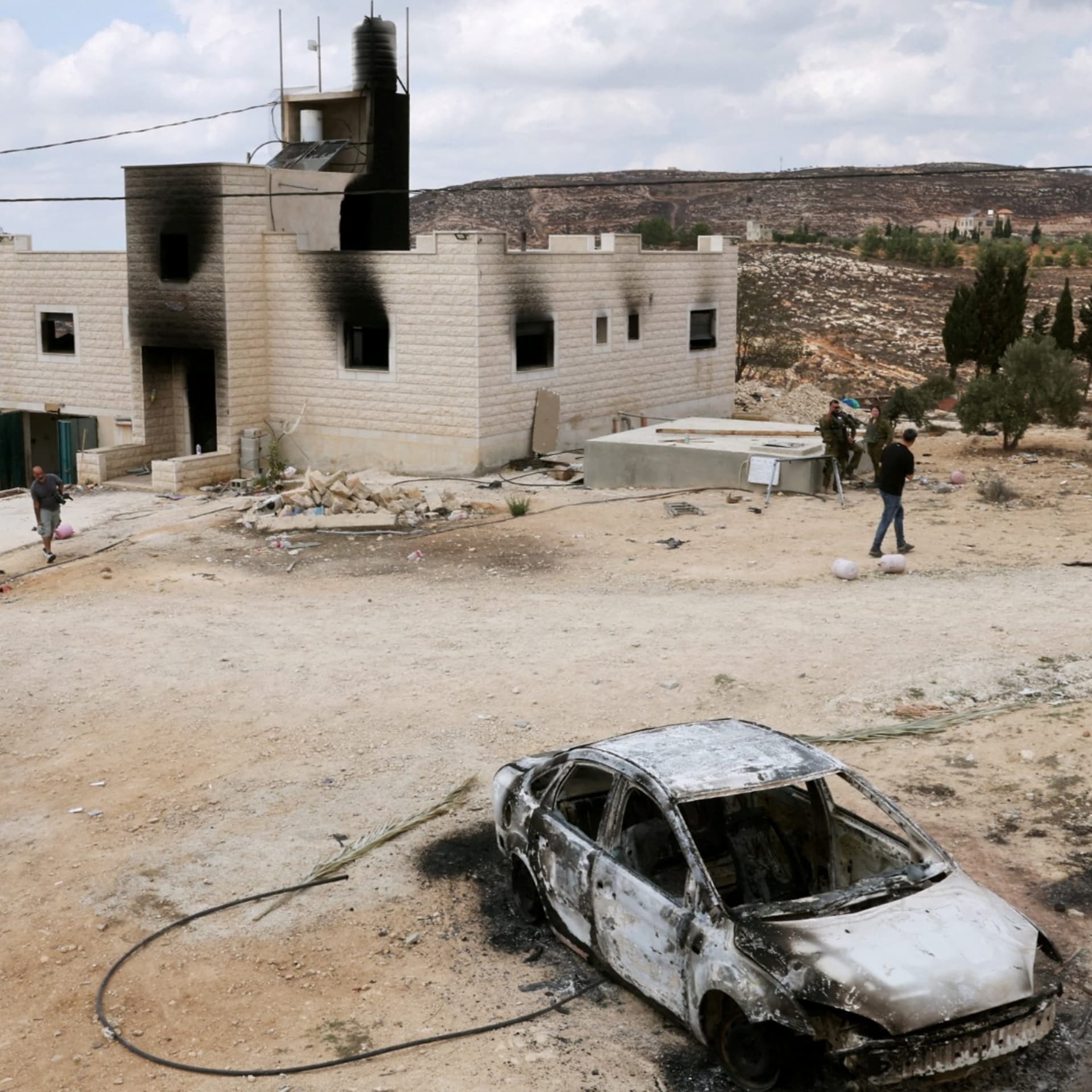
14:30According to figures collected by the United Nations, last month there was more violence against Palestinians carried out by extremist Jewish settlers in the occupied West Bank than at any time in the last 20 years. My colleague John Donison heard more about the violence from our reporter in Jerusalem, Sebastian Usher. It coincides with the olive harvest, which began back in October, and since then, near daily attacks. There's been an upsurge since the Hamas attacks on October 7th, in any case, with young settlers attacking targets of Palestinians. The incident last night was at a dairy factory, mostly focused on that, up in the north near Tulkam.
15:14video that's been shown on social media shows some of the trucks being set on fire dozens of masked young men the settlers who came to that area essentially to try to cause mayhem essentially they also set fire to farmland as they've been doing they've been setting fire to olive groves since the harvest began as they say this is a perennial problem but it's one that is getting worse. The Israeli army intervened, it was called in. There have been over the past few days some actual clashes with the Israeli army, with some of the settlers, which is unusual. It is unusual because they're often accused of sort of standing by and allowing it to happen, aren't they?
15:57Exactly. I mean, that's what activists, that's what Palestinians say. And I mean, we're not talking about on a high level here. I mean, we heard reports from the police that four people were apprehended from this incident last night, and that there'd been another arrest dating back to an incident in October when a Palatine grandmother who was at an olive harvest was injured and a settler involved in that has been detained. So we're not seeing anything large scale. We're not seeing any big change. I think there is a slight sense there was a statement by the head of the IDF command in the occupied West Bank earlier today, giving a sense that the military doesn't want to get involved, saying essentially that what's happening, call them anarchists, that what they're doing is distracting the army from what it should be doing in that area, which essentially, as far as the IDF is concerned, is trying to prevent terror attacks.
16:53Do they get prosecuted? It very rarely results in a prosecution. There is a very strong pushback from the settler movement. And remember, of course, that in the government at the moment, there are two powerful ministers who rose up through the settler movement, Ben Gavir and Smotrich. And I mean, to some extent, they have given the green light to these settler groups to take more and more hostile action. Sebastian Usher. Let's turn to politics here in the UK and the continuing woes of the Prime Minister Keir Starmer. Opinion polls have been consistently showing how unpopular he is with voters and there's now talks of some MPs in the governing Labour Party plotting to oust him.
17:34One of those mentioned is the Health Secretary Wes Streeting who vehemently denied this when asked by the BBC this morning. What I can tell you is that that briefing is categorically untrue. I think it's extremely unhelpful, not least because it basically says from a number 10 source, the Prime Minister's fighting for his own job. No, he's not. He's fighting to turn around the country. In fact, the last time I saw him was on Monday evening with a small group of cabinet colleagues to talk about how we have violence against women and girls, which is a big target and necessary ambition. Those are the sorts of things the prime minister's focused on.
18:12And whoever's been briefing this has been watching too much celebrity traitors. Still, as any PR person would tell you, denying you want a job can simultaneously put the exact opposite idea in people's minds. And unsurprisingly, when Keir Starmer faced questions in Parliament, the situation was referenced repeatedly by the leader of the opposition, Kemi Badenok. Mr Speaker, what we heard the health secretary say this morning was that he wanted to cut waiting lists. But we all know that there's only one waiting list that he really wants. But the prime minister is not going to do anything about the toxic culture.
18:46This is his responsibility. Just last night, his allies accused not just the health secretary, but the Home Secretary and even the Energy Secretary of launching leadership bids. Well, our UK political correspondent Rob Watson gave me his analysis. This is an absolutely massive crisis for Keir Starmer and for the governing Labour Party. I mean, I just can't think you can overstate that. Why now? Because Sir Keir Starmer and the team around him, particularly the team around him, think that there could be a challenge to his leadership, right? And they feel that that might come in a couple of weeks' time after the government's budget.
19:21That lays out its sort of tax and spending plans in a couple of weeks' time, which they think is going to land badly with Labour MPs. Yeah, is there a sense then, I mean, he's been facing questions in the House of Commons, as we just heard. How safe do you think that leaves him? I think he's both unsafe and safe, if I could put it that way. It's a cracking question, Will. Well, unsafe because there's no doubt that most Labour MPs and the polling suggests most people in this country think Sir Keir Starmer is doing a terrible job. And that just leaves him in a very unsafe position, but safe in the sense that the Labour Party would have to ask itself, well, who would we replace him with?
20:01Would it make things any better? And would we not be in danger of looking like the former, the conservative party, the former government, you know, whose 14 years were marked by sort of division and infighting? You mentioned the polls there. We've just heard the leader of the Conservatives questioning Sir Keir Starmer. The Conservatives, we need to say they're not doing well in the polls either. So you've got two parties who aren't polling well, both accusing each other of not not doing well. Absolutely. And I said this is a massive crisis for Labour, but I think this is an unprecedented moment in British political history.
20:34Well, I mean, really no less than that, because you've seen essentially collapsing trust in the system, or at least in the system as represented by Labour and Conservative, the two parties who have governed Britain for pretty much the last hundred years collapsing. Why? Because people are worried about the economy, living standards. They think the state is collapsing and they're concerned about social cohesion and immigration. One recent poll suggesting that something like nearly 85 % of people think the country is divided. This is a very febrile, difficult moment, not just in British politics, but clearly in terms of British society and culture.
21:11Rob Watson there. Now, Japan's economy has been in the doldrums for several years now. But could its superfan culture, known as Oshikatsu, come to its rescue? Figures suggest fan purchasing power has boosted Japan's annual retail turnover by 2%. Rick Kelsey is in Tokyo and he sent this report. We've come to the world's largest anime store in Toshima City here in Tokyo. Anime is a Japanese animation in the form of film and TV shows. And this is a 10-story building covering an incredible 92 ,000 square feet. Those footsteps are fans heading up to the theatre and the event halls on the top floors.
21:5816-year-olds Mao, Emery and Senu are on a mission to find their favourite character's merchandise. It's basically people who love things, love a certain character, anime. It's usually used in anime context or idol context, but Oshikatsu is a way of us otakus to appeal our love to our favourite characters, our favourite idols, our favourite singers, stuff like that. Oshikatsu comes in the physical form. Badges, posters, buttons, mini character toys. If you're a person who takes part in Oshikatsu, you might be known as an otaku, someone who obsessively puts their time, money and energy into a hobby.
22:38Imagine like Valentine's and you know how like a guy gives presents to the girl, right? It's basically that. But like we're giving the we're getting things so that to say gratitude to our favourite 2D characters or whatever. And what are your favorite characters? Hmm, I have a lot though. Yeah, yeah. Do you know Demon Slayer? Yeah. Yeah, my favorite character from Demon Slayer is Muiichiro, boy with like the long black hair with like blue on the bottom. But it's really like love at first sight type of thing and it's like you look at the character and you're like, oh my goodness, I love him. Oshis can be real people, often actors or celebrities as well.
23:14And a recent survey by Japanese marketing company KDG and Oshikoko an advertising agency, suggests the average fan spends US$1 ,600 a year on their Oshii. It's a trend for teenagers and 20-somethings, but after years of little growth, wage rises have seen some older people support an Oshii too. I've headed on the underground to a traditional Japanese tea ceremony to meet with Humiji, who's taught English here in Tokyo for 15 years. many of the adults or grown-ups do oshikatsu like uh like the well someone do oshikatsu for the korean actor or korean musician do you ever feel like it's you're buying into the the commercial i feel it yeah i was i was i mean i don't know if if the english expression is good or not but I feel like, well, I'm trapped.
24:16I'm trapped. Happily trapped. Happily trapped. And so what? I love it. We've come to a rooftop anime festival in Shibuya, a popular shopping and entertainment area to find out more about spending habits. Norahiro Yamaguchi is an economist with Oxford Economics in Tokyo. The biggest contributor is changing the allocation on spending. So, for example, they're increasing the Oshikatsu spending, but at the same time they're cutting the spending on clothing and also on the residents. To make a long story short, they're kind of changing the allocation for Oshikatsu by sacrificing their own spending activities.
25:01Wow. What's brought around this change? Do we know? Younger generations are less interested in the luxury brand products and spending more on Oshikatsu. Oshikatsu in private has been around for years. Now superfan culture is increasingly more open, boosting its potential to grow the Japanese economy. Rick Kelsey reporting from Tokyo. Lastly from us on this podcast, Shakespeare may be Britain's best-known playwright and his plays are performed all around the world. But they can be a hard sell to young people who've never watched them before. Four hours of tricky-to-understand theatre doesn't necessarily scream fun to a 12-year-old.
25:41Well, the Royal Shakespeare Company is hoping to change that. It's launching an online platform for teachers and pupils here in the UK, which uses the RSE's own rehearsal-based teaching approaches, as we heard from the actor Juliet Stevenson. The whole idea is to get Shakespeare off the page. So many kids are intimidated by it. I think many teachers are staring at these words on a page and they seem very sort of alien. And so the whole idea was to get the kids, push those desks to the side of the room, get the kids up, working just as actors would in a rehearsal room. So with children playing the roles, being the director, the designer.
26:16The whole idea is to mirror what happens in a rehearsal room when we as actors are kind of getting these plays up on their feet and delivering them to an audience and working together in groups. So the whole point of it, it's working like a company and having these plays in the bodies, in the mouths and brains. So they're actually physically embodying the plays and really that way accessing all the extraordinary feelings and emotions and thoughts that the plays contain, which I think are really accessible to kids. Once the old cliches about it being inaccessible are sort of broken through. I mean, as a kid, you know, I studied Twelfth Night.
Read the full transcript
26:48I just stared at it on the page and thought, what's this about? This is boring. And then about a year later, a group of actors, about six actors, came into my school hall and did King Lear in jeans and T-shirts. and my whole life changed. And it was like 10 in the morning, you know. And I went into that school hall, one person, and came out another. Because what I was watching was the whole play embodied by these actors. And then they got us up doing bits. And I walked out just feeling, you know, King Leo speaks for me. That is exactly what I feel. Kids really innately from birth really respond to rhythm and language, just like they respond to music.
27:21It's the same thing. I don't really see there's a difference. And even if they don't understand the meaning of the words because they're too young or the words are difficult, they will understand something in the rhythm will be communicated. Rhythms communicate a huge amount. And any kid in any culture, apparently 50 % of children across the world study Shakespeare every year. And although they may be doing it in translation, there's something in the rhythm of those languages which is communicating and the stories too. And when they're allowed to own it, and it's not just being sort of taught at them, when they're allowed to own it themselves, it's magical how they can connect with it.
27:54Juliet Stevenson. That is all from us for now, but there will be a new edition of the Global News podcast later. If you want to comment on this podcast or the topics covered in it, you can send us an email to globalpodcast at bbc.co.uk. We can also be found on X at BBC World Service and you can use the hashtag Global News Pod. This edition was mixed by Craig Kingham. The producer was Judy Frankel. The editor is Karen Martin. And I am Will Chalk. Until next time, goodbye.
28:56And in a new BBC series, I'm talking to the reporters who first covered this story. What did they miss the first time? The History Bureau, Putin and the apartment bombs. Listen on BBC.com or wherever you get your podcasts.
From the publisher
Democrats in the US Congress release three emails by the late convicted sex offender Jeffrey Epstein mentioning Donald Trump. One of the emails says the president spent several hours with a woman described as a victim of Epstein's sex trafficking. The Democrats say the communications raise serious questions about what the president knew at the time about Epstein's behaviour. The White House says the emails represent a "false narrative" and their release is an attempt to smear the president. Also: another corruption scandal shakes the Ukrainian government, with the justice minister being suspended; and how the Royal Shakespeare Company is trying to sell Britain's most famous playwright to young people. The Global News Podcast brings you the breaking news you need to hear, as it happens. Listen for the latest headlines and current affairs from around the world. Politics, economics, climate, business, technology, health – we cover it all with expert analysis and insight. Get the news that matters, delivered twice a day on weekdays and daily at weekends, plus special bonus episodes reacting to urgent breaking stories. Follow or subscribe now and never miss a moment. Get in touch: globalpodcast@bbc.co.uk