
In short
Global News Podcast - Episode Summary: Trump's Peace Plan Still Vague as War with Iran Continues
Episode Overview The latest episode of the Global News Podcast, hosted by Alex Ritson, discusses the ongoing conflict between Israel and Iran, the ambiguous peace negotiations spearheaded by President Trump, and various international news stories affecting politics and economies worldwide.
Key Topics Discussed
- Conflict Between Israel and Iran
- The episode opens with reports of ongoing strikes between Israel and Iran.
- U.S. plans for negotiations with Iran are described as "fluid" with little concrete progress.
- Trump's vague peace plan aimed at stabilizing markets is under scrutiny; oil prices have surged above $100 per barrel.
- Iranian media reports U.S.-Israeli strikes targeting infrastructure in Iran.
- Potential Diplomatic Engagement
- Speculation arises about upcoming meetings between U.S. and Iranian officials in Pakistan.
- Diplomatic correspondent Paul Adams notes that while communication between the two nations appears to be occurring, no substantial talks have been confirmed.
- Market Responses to Political Developments
- Initial market optimism followed Trump's comments about pausing airstrikes, but confusion remains due to unchanged ground realities in Iran.
- Business correspondent Nick Marsh discusses the impact of oil market fluctuations, with significant bets placed prior to Trump's announcement.
- Global Economic Implications
- The Philippines declares a national energy emergency in response to rising oil prices.
- Kenya's flower industry faces severe disruptions due to the conflict affecting air freight to the Middle East.
- Civilian Life in Iran Amid Conflict
- Accounts from Tehran reveal ongoing fear and destruction as airstrikes continue despite diplomatic talks.
- Correspondents share personal stories from Iranian citizens dealing with daily life under bombardment.
- U.S. Energy Policies and Impacts
- The U.S. government's decision to pay French company Total $1 billion to abandon wind farm projects is highlighted.
- Environmental correspondent Matt McGrath explains the broader implications of U.S. energy policy shifts toward fossil fuels.
- Crisis in Cuba
- The episode highlights the humanitarian crisis in Cuba exacerbated by a U.S. oil blockade.
- Pregnant women face dire conditions in hospitals with limited support, leading to fears about the future for newborns.
- Danish Elections and Political Strategy
- Danish Prime Minister Meta Fredriksen faces elections amid challenges from rising populism and domestic issues like cost of living.
- Analysts discuss her political maneuvering to secure a third term.
- Illegal Trade in Baby Eels
- A BBC investigation reveals the underground trade of endangered baby eels, likened to "living cocaine."
- The episode concludes with a discussion of the complexities and scale of wildlife trafficking.
Conclusion The episode encapsulates the current geopolitical tensions and their ramifications on global markets, energy policies, and human lives. It underscores the interconnectedness of international events and the ongoing struggles faced by civilians amid political turmoil.
Key Takeaways
- The situation between Israel and Iran is volatile, with unclear diplomatic resolutions.
- Economic ramifications of conflicts extend globally, affecting markets and industries.
- Domestic policies and elections in countries like Denmark reflect international political dynamics.
- Humanitarian crises, illustrated by conditions in Cuba, highlight the human cost of geopolitical decisions.
Contact and Further Listening
- For more updates, listeners can reach out via email: globalpodcast@bbc.co.uk.
- The podcast also promotes its sister show, The Global Story, for in-depth analysis on major world events.
Written by AI. May contain mistakes. Listen to the episode to check what was said.
Chapters
Tap a time to open that second in VOIran Conflict Update
1:08 to 3:00
Current status of the war with Iran and US involvement.
“Vance, may meet Iranian officials this week in Pakistan.”
Speculation on Talks with Iran
3:00 to 5:36
Discussion on possible negotiations between the US and Iran.
“In Iran, a replacement for the experienced Ali Larajani, who was killed by an Israeli strike last week, has been named.”
Oil Market Reactions to Trump
5:36 to 7:57
Impact of President Trump's comments on global oil prices and markets.
“And briefly, what can you tell us about Iran's new security chief?”
Kenya's Flower Industry Affected
7:57 to 11:24
The effect of the war on Kenya's flower export business.
“And accordingly, the price of oil has started to creep back up again.”
Life in Tehran Amid Conflict
11:24 to 14:02
Personal accounts of life in Tehran during ongoing attacks.
“Despite the possibility of talks between Washington and Tehran, the bombing of Iran continues.”
Impact of Airstrikes on Iranian Civilians
14:02 to 14:50
Discusses the humanitarian costs and chaos following airstrikes in Iran.
“I think this will be very costly for the Iranian people.”
Pregnancy Challenges Amidst Blockade
14:50 to 15:04
Explores the struggles of pregnant women in Cuba during the US oil blockade.
“How am I going to tell her she has no prospect in life?”
Trump Administration's Energy Policies
16:41 to 20:12
Analyzes the Trump administration's decision against renewable energy investments and its implications.
“See website for full terms and conditions.”
National Security vs. Renewable Energy
20:12 to 21:40
Discusses the intersection of national security concerns and renewable energy strategies in the U.S.
“Surely the trend in many countries is towards renewables.”
Cuba's Ongoing Crisis Amid Blockade
21:41 to 24:35
Details the hardships faced by Cuban citizens, particularly pregnant women, due to the fuel blockade.
“The Trump administration's fuel blockade has meant that no oil shipments have reached the country in three months.”
Show all 15 chapters
Struggles of Pregnant Women in Cuba
24:36 to 26:31
Highlights personal stories of pregnant women dealing with limited resources and support in Cuba.
“Seven months pregnant, she invited me into her home in the middle of a power cut.”
Denmark's Snap Election and Political Climate
26:31 to 28:01
Examines the implications of Denmark's snap election and the political landscape under PM Meta Fredriksen.
“Voters in Denmark have been at the polls to decide whether to re-elect their current Prime Minister, Meta Fredriksen.”
Political Dynamics in a Centrist Government
28:01 to 28:54
Explore how a centrist leader is navigating electoral challenges.
“And given that she has been in a centrist government, ruling across the centre, aligning herself with a party on the right and a centrist party, all three of them are down in the polls.”
The Global Trade in Baby Eels
28:58 to 30:08
Uncover the underground market for trafficking baby eels and its implications.
“The endangered species is one of the most trafficked animals in the world.”
Inside the Eel Smuggling Operations
30:11 to 31:49
An insider's perspective on how European eels are trafficked.
“The Asian eel, which used to stock Chinese farms, is also scarce.”
Transcript
Automatic transcript. May contain errors.0:00This BBC podcast is supported by ads outside the UK.
0:30flavor crafted from premium decaffeinated Brazilian beans with 25 grams of protein, 6 grams of fiber, greens, and so much more. Treat yourself to the flavor and nutrition your body craves. Go to cachava.com and use code NEWS. New customers get 15 % off their first order. That's K-A-C-H-A-V-A dot com code NEWS. This is the Global News Podcast from the BBC World Service. I'm Alex Ritson and at 16 hours GMT on Tuesday the 24th of March, these are our main stories. Hope for de-escalation after reports that a negotiation team, including Special Envoy Steve Witkoff and Vice President J.D. Vance, may meet Iranian officials this week in Pakistan.
1:19Meanwhile, the war continues. Iranian media say Israeli-U.S. strikes targeted two gas facilities and a pipeline in the country, hours after President Trump said he would temporarily halt attacks on power infrastructure. Oil prices have risen again, with a barrel of Brent crude going above$100. Also in this podcast, US designs on Greenland hang over Prime Minister Meta Fredriksen on polling day in Denmark. This Trump bump over her leadership in Greenland It's something that she hopes will help hand her victory as she seeks a third term. And the US pays French energy giant Total almost a billion dollars not to build a wind farm.
2:08A day on from President Trump's announcement that attacks on Iranian power plants were being put on hold and that big progress was being made on a deal to end the war with Iran, we're no clearer about what that amounts to. It's rumoured that the US Vice President J.D. Vance and Mr. Trump's Special Envoy Steve Witkoff could travel to Pakistan to meet Iranian officials this week. But there's been nothing concrete from either side. Meanwhile, Iranian state media say Israeli-US strikes have targeted two gas facilities and a pipeline in Iran. Israel's Prime Minister Benjamin Netanyahu has vowed to continue attacking the country.
2:48His defence minister, Israel Katz, has said Israeli forces will take control of southern Lebanon up to the Litani River until the threat from Iran's ally Hezbollah is gone. Tehran has fired further missiles into Israel, including Tel Aviv. In Iran, a replacement for the experienced Ali Larajani, who was killed by an Israeli strike last week, has been named. Mohammed Baga Zolkada is a Revolutionary Guards insider. I asked our diplomatic correspondent, Paul Adams, what we know about moves to end the conflict. I wish I could be definitive, Alex, but frankly, nothing is very clear. Certainly no sign of the major progress and very strong talks that Donald Trump was talking about when he made his surprising announcement.
3:36It is clear that something is going on behind the scenes. We are hearing that messages are being passed by various mediators, including probably Pakistan, Turkey and Egypt. The Qataris, by the way, have said this morning that they are not involved in any of this. An Iranian foreign ministry official was quoted by our American CBS partners as saying, we received points from the US through mediators and they are being reviewed. So clearly there is some kind of background conversation going on. It hasn't yet translated into direct talks between the Americans and the Iranians. It is being mooted that the foreign minister, Abbas al-Raghji, might meet the US envoy Steve Wyckoff possibly later this week in Pakistan.
4:24But at the moment, as I say, all of this is very, very fluid. And I don't think anyone is really optimistic of an immediate breakthrough. What about this speculation that the hardline speaker of the Iranian parliament might be involved despite his denials? Well, yes, it would be surprising. There's no immediate sign that Mohammed Khalibaq is indeed involved, although one of the rumours during the rounds is that he and Vice President J.D. Vance might meet. I mean, he is Mr. Palibas is very much from the hardline camp. He is also thought to be someone who is perhaps somewhat opportunistic, perhaps somewhat pragmatic.
5:09And so there is some speculation that maybe he could be amenable. He could be the kind of figure that Donald Trump might see as Iran's Delce Rodriguez, the vice president in Venezuela who took over there after the US abducted the Venezuelan leader. But again, you know, we are deep in the realms of speculation here. And I think we need a bit of time before any of this comes more clearly into focus. And briefly, what can you tell us about Iran's new security chief? Well, Mohammed Bakar Zolkada is from very much the same background as his predecessor as the head of the National Security Council, Ali Larijani.
5:50He is a veteran of the IRGC, the Revolutionary Guards. He was involved with the Basij, the voluntary militia. I think the fact that he is now the head of the National Security Council is a sign that the hardliners are still in charge, that the IRGC is still calling the shots, and that as far as Tehran is concerned, this is all about displaying some kind of stability and continuity. Paul Adams. Were President Trump's comments about possible talks with Iran merely a ploy to calm the markets, which have been in chaos since war began? If that was his aim, it doesn't seem to have worked. The price of Brent crude oil rose back above$100 a barrel after plunging on Monday.
6:33Speaking during a trade visit to Australia, the president of the European Commission, Ursula von der Leyen, said the soaring gas and oil prices and stock market falls threatened global stability and the hostilities must end. The situation is critical for the energy supply worldwide. We all feel the knock-on effects on gas and oil prices. our businesses and our societies but it is of utmost importance that we come to a solution that is negotiated and this puts an end to the hostilities that we see in the Middle East. So did President Trump's talk of a peace deal reassure investors? I asked our business correspondent in Singapore Nick Marsh.
7:16Well it did reassure them initially when he posted on his social media on Monday morning US time that they'd be postponing bombing these these energy facilities. The price of oil slid pretty quickly. It went down in the case of Brent Cruter below$100 a barrel. So that was good from his point of view. That meant the stock market bounced and things were looking a bit more optimistic when it comes to the idea that there would be productive talks between the US and Iran. But the Iranians say that nothing of the sort has happened, that there's been no talks, let alone talks that have led to a possible ending of hostilities.
7:56So, so long as the facts on the ground haven't changed, i.e. Iran is in control of the Strait of Hormuz, millions of barrels of oil and gas aren't moving through that choke point to countries out here in Asia, for example, then traders and people in markets are looking at that a little bit confused, but at the same time thinking, well, nothing's changed in a material sense. And accordingly, the price of oil has started to creep back up again. And the gains we saw in Asian markets this morning off the back of the US ones were sort of eroded as well. So it's a little bit of as you were. Nick, we've been hearing some reports that there are traders making some very big bets in the oil market ahead of Donald Trump's social media post.
8:41What do you know about this? Well, I've been looking at that data. I mean, they did make big bets. why they made those bets is a completely different matter but yeah hundreds of millions of dollars were put on oil futures contracts about 15 minutes before donald trump made his announcement on on his social media that there had been talks and that you know there was a possible end to the war which triggered a sharp fall in the price of oil so we've seen the bets being put on we don't know exactly why. The White House has said that it doesn't tolerate any kind of insider trading. Let's see what the US financial regulators have to say about it.
9:18Nick Marsh. And just to underscore the effects all this is having on the oil markets, the Philippines has declared a national energy emergency. The government will give subsidies to transport workers and farmers and prevented hoarding and price gouging. But it's not just oil and gas prices in stock markets that have been affected by the war. All kinds of business sectors around the world have been hit, including Kenya's flower industry, one of the country's top foreign exchange earners. Canceled flights has meant severe disruption for sales to its Middle Eastern market, as Jay Hirani from Kenya's Prima Rosa Flowers explains.
9:59Our company has really been affected, our market basically is 80 % to the Middle East. And when aerospace are locked, our flights are reduced, that means we're not able to sell anything because our customers cannot ship out anything. And like all perishables, we have a shelf life. So we usually keep the flowers for maximum of five days. If in those five days they are unsold, we move them to local sales. But the only challenge is we don't get our growing costs back. So in a nutshell, we're still at a loss. Even if we sell them to the local market, it's still a big hit for us. Sometimes the Dubai opened up its airspace and, you know, customers start sending us orders.
10:45So we pack and deliver the flowers to the airport. So once we've delivered the flowers, the customers come back to us and tell us the flight has been cancelled already. And they ask us to collect the boxes back from the airport. It goes back to a shredder machine and we reuse flowers that are unsolved as fertilizers and, you know, it goes back to the compost. I'm assuming the losses on a daily basis for one farm could be anywhere between$20 ,000 to$30 ,000 per day. This is one farm. And if you consider all the other farms, it's a significant amount of loss. Jay Hirani from Kenya's Prima Rosa Flowers.
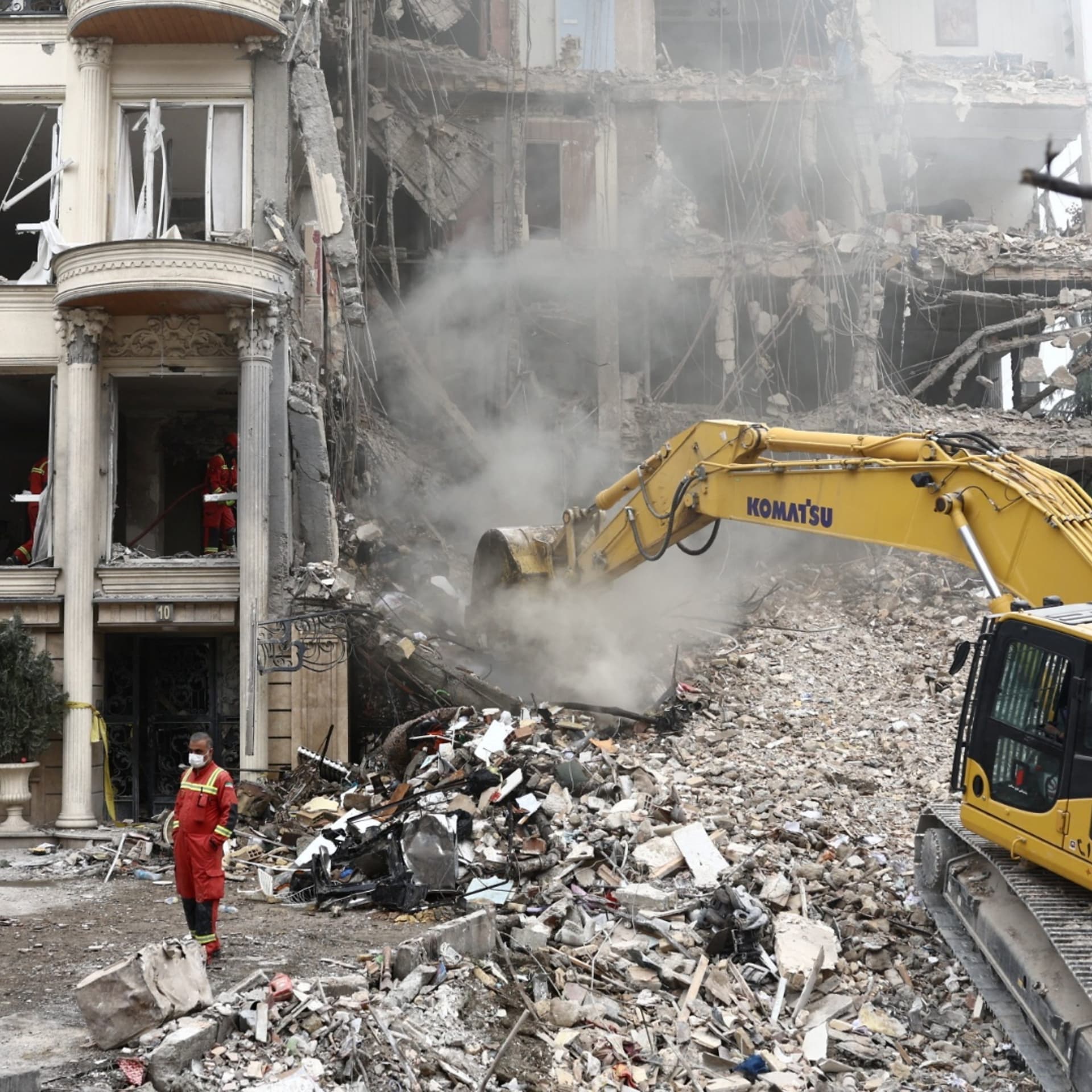
11:26Despite the possibility of talks between Washington and Tehran, the bombing of Iran continues. Our international correspondent Joe Inwood has collated, along with the BBC's Persian service, some of the latest material to make its way out of the country. There's a fighter jet above my head, he says. Air defences below. I'm not sure where exactly. But sometimes you don't need to understand a language to grasp its meaning. The sound of fear is unmistakable.
12:12This is the unauthorised view of Tehran, filmed from rooftops in the dark. And for about 24 hours, there was a serious danger that darkness would be something the people of Iran would have to get used to. President Trump threatened punitive strikes against the country's power plants if the effective blockade of the Strait of Hormuz was not ended. It was the main subject people contacted the BBC's Persian service to discuss. And so, when that threat was lifted, the relief was clear. Last night I was so scared about that power plant that I stayed up late just listening to music and thinking about all the films I've always wanted to watch and just everything I wanted to do, basically when 99 % of them needed electricity.
13:03But the lifting of the threat to power plants did not mean it was a peaceful day in Tehran. A group of men, wearing the uniform of the Red Crescent, carefully dig through rubble. We don't know exactly what else was nearby, but they say this was a residential building, and they're searching for a child.
13:27Whatever the truth of any one event, the destruction being done to Iran is unmistakable. On state TV, the anchor reads a message from the Speaker of Parliament. Our people demand the complete and humiliating punishment of the aggressors, it says. Donald Trump has claimed that negotiations are underway at Iran's request. They have denied that, and nothing coming out of Tehran suggests they are in the mood to compromise. It's a fact not lost on a man who once again got in contact with the BBC's Persian service. I think this will be very costly for the Iranian people. Whether the Islamic Republic remains or realises that it's on its louse legs, it will increase the cost to the Iranian people as much as possible.
14:17Back at the site of the airstrike, and a woman in a colourful headscarf is helped by two Red Crescent workers. She stumbles, then falls into a man's arms.
14:31Behind them, a clean-up operation is already underway. Heavy machining, trying to bring order to a scene of chaos. But it is nothing compared to the diplomatic efforts ahead after a month that has left peace in the Middle East, a smoking ruin. Jo Inwood. Still to come in this podcast. How am I going to tell her she has no prospect in life? She'll have no opportunity for growth here, none. Pregnancy in Cuba, three months into the US oil blockade.
15:40We'll be right back. U.S. Virgin Islands is right here waiting. From the stunning beaches of St. Thomas, St. Croix, and St. John, to the warmest hospitality and vibe like no other. It's the perfect mix of celebration and relaxation. Here's the best part. If you're traveling from the U.S., no passport is required. Just easy travel and no stress. If you love good food, great music, beautiful beaches, and unforgettable vibes, especially during carnival, this is where you need to be. Start planning your carnival getaway at visitusvi.com. That's visitusvi.com. USVI, naturally in rhythm. Hi, Uncle Lazer here.
16:19America's built on fast cars, fast food, and even faster women. Moto Casino's built in America. You know what they're fast at? Fast cash, prize, redemption. You see, only Moto is U.S. owned and operated. Moto, it's American-made. That's who we are, and that's who we care about. Play for free at moto.us. Moto Casino, the social casino. Avoid were prohibited. No purchase necessary. Visit moto.us for more details. Must be 21+. Motor Casino, America's Social Casino.
17:12on pickup or delivery orders only. Restrictions apply. See website for full terms and conditions. In a classroom of sodas, most stay quiet. Then there's Mr. Pibb. Sweet cherry, bold outbursts, the kind of flavor that gets attention. Bold kick of cherry. Hey, yo, Mr. Pibb.
17:36At a time when the supply of oil and gas from the Middle East is coming under increasing pressure. The focus is switching in many countries to renewable energy. According to the energy think tank EMBA, a record number of solar and wind farms were installed around the world last year. But meanwhile, in the US, the Trump administration has announced it's paying the French company Total Energies $1 billion to walk away from its contracts to supply wind power off the coasts of North Carolina and New York. Making the announcement on Monday, the US Interior Minister, Doug Burgum, said the company will invest the money in fossil fuel projects instead.
18:19We're partnering with Total Energies to unleash nearly$1 billion that was tied up in a lease deposit that was directed towards the prior administration's subsidies that were pushing expensive weather-dependent offshore wind With this agreement, we're allowing this great company to redirect those dollars that have been paid into the Treasury towards affordable, reliable and secure oil and natural gas production. Here's our environment correspondent, Matt McGrath. I think, Alex, if you look at what Doug Burgum, the US Interior Secretary, said in his comments there, one of the key words was the word secure.
18:58And security, national security, is an element that the Trump administration has tried to use against wind energy. President Trump's antipathy towards wind has long been known. He famously in 2012 gave evidence against a wind farm off his golf course in Aberdeenshire in Scotland. And he has, in his presidency, tried to essentially move the country away from wind. and they tried last year to shut down five wind farms on the grounds of national security and they issued stop work orders but those orders were thrown out by the courts. This new tactic now seems to be to go to the companies and offer to pay them back the money they've spent on leases which they got under the Biden administration.
19:37They've done that with Total and they've paid them back or they're going to pay them back$928 million. In return, Total are scrapping the leases. They're also committing not to build any other wind in North America and also to invest in liquid natural gas and gas plants in Texas. And according to Total, the company, they said it's a win-win situation for them. They say it's a pragmatic decision. They've changed their mind on the importance of wind since President Trump came to office. They're not renouncing onshore wind, but they think offshore wind is too expensive to make electricity from. Is the U.S.
20:12an outlier in this respect, though? Surely the trend in many countries is towards renewables. Yeah, very much so. And you cited from Ember earlier on, the statistics show that last year renewables overtook coal as the world's principal source of electricity to make electricity. And investments in renewables across the world last year were around$2 trillion, and they have been for a couple of years now. That's essentially double the investments in fossil fuels. But it does depend on where you are. Very much developing countries have embraced renewables very much, So China is racing ahead with renewables while also building a lot of coal.
20:47And countries like the United States are essentially also looking at going back to coal in some respects. And we've seen that from the President Trump's administration, a greater emphasis on trying to make the Department of Defense buy electricity from coal-fired stations to enhance the life of these particular assets. So very much a different picture from different parts of the world on this issue. Very briefly, though, away from the environmental arguments, do they have a point? I mean, their own gas is presumably more secure than a lot of things. Well, it's a very tough question on the question of gas itself.
21:18I mean, yes, the United States is world leader in producing gas, so there's quite a safe supply for them. I think, though, there is more a political and ideological aspect to the deal with Total than it is based on national security. I think it comes down to, realistically, President Trump's antipathy to wind, long held, and he has made no bones about it at all. Matt McGrath. To Cuba now, which has spent most of its weekend without power. The Trump administration's fuel blockade has meant that no oil shipments have reached the country in three months. Some of the worst affected are the elderly, children and pregnant women, with many saying that they've received no state support and are frightened at the prospect of having a baby during a blackout.
22:02Our correspondent, Will Grant, reports from Havana. As Washington shows no sign of letting up its near-total oil blockade on Cuba, most hospitals on the island have been plunged into darkness. Many are only accepting emergency cases. But the lights inside Havana's specialist maternity and neonatal hospital, the Ramón González-Corón, have stayed on throughout the crisis. ¿Y te falta poco? ¿Cuánto te falta? La semana que viene, la próxima semana... Little wonder when you meet one of its patients, Mauren Echeverría-Pena. At 26 years old, her first baby, a boy, is due later this week. It's been a complicated pregnancy as Mauren has had gestational diabetes and chronic hypertension.
22:49She has not left the maternity ward since the blockade began three months ago.
22:59Things have been tough, admits Mauren, with her doctors watching on. But here in the hospital, they've done everything they can for me. They've given me the medicines and insulin I need for the health of the baby and the placenta. She says, though, that the rolling blackouts have her worried about the impending birth.
23:23Over the weekend, representatives of international solidarity movements, among them the US group Code Pink, arrived in Havana under the banner Let Cuba Breathe. They brought with them aid donations, including for the González Córdov maternity hospital. When the President of the United States uses the colonial language of I will take it if I want, This is the same language that is used when it's on Palestine and Gaza. This is the same language. In front of Cuba's ageing Politburo and President Miguel Diaz-Canel, they promised unwavering support to the revolution. The governments used the visit of international pro-Cuba groups to highlight a simple message, that the island's not alone.
24:09However, conditions for most ordinary Cubans remain near unbearable. And while Maoren says she's been well cared for during her difficult pregnancy, many of the other 32 ,000 pregnant women on the island say they've had to face these extremely challenging conditions with no tangible support from the state.
24:36Indira Martinez is one of them. Seven months pregnant, she invited me into her home in the middle of a power cut.
24:47With no working stove or fridge, her calorific intake has dropped significantly in the last few months of her pregnancy. Her husband is also worried about her stress levels.
25:03I haven't received any of the humanitarian aid sent to Cuba. My husband and I didn't enter this pregnancy irresponsibly. We did it knowing that we can't rely on any help from the government. It is us against the world. We just pray that everything works out OK. So, no, I haven't seen any emergency aid. Beyond the huge difficulties of being pregnant in the middle of a fuel blockade, Indira harbours real fears about the future for her baby girl. How am I going to tell her she has no prospect in life? because she won't have any. As much as one would like, as a parent, to offer them a real life and motivate them, I have no basis to tell her that she has a future or can maximise her full intellectual capacity.
Read the full transcript
25:52If I say that, I'll be lying. She'll have no opportunity for growth here, none.
26:01Among the international supporters in Havana was the Northern Irish rap group NICAP. Cuba has an ageing population, a very low birth rate and huge outward migration. The island needs more young people to have children. But Maoren's baby boy, due in days, and maybe even Indira's baby girl, due in two months, will be born under a crippling fuel blockade. In effect, the hardest days in the island's modern history. Will Grant in Havana. Voters in Denmark have been at the polls to decide whether to re-elect their current Prime Minister, Meta Fredriksen. The snap election was called last month after Ms Fredriksen received a poll boost for standing firm against President Trump's repeated calls for the US to annex Greenland, an autonomous Danish territory.
26:53Adrienne Murray was outside a polling station in the capital, Copenhagen. I asked her if this was a gamble for Meta Fredriksen. It does come after months of slumping popularity, actually. And this Trump bump over her leadership in Greenland is something that she hopes will help hand her victory as she seeks a third term. Now, Fredriksson has projected this image of strength and tough leadership. She's earned a reputation as this iLady and certainly punches above her weight for a country of just six million people when it comes to the international stage. She's a vocal supporter of Ukraine, a critic of Russia, and of course, things like immigration, she's very strict on, and she's been calling for a stronger Europe.
27:39But here in Denmark, there's actually a lot of consensus on those issues, and she's much weaker at home. So rather than geopolitics, it's actually domestic issues that are dominating the camping trail here. It's the cost of living, pension reforms, and even pig production and polluted drinking water that have all been on the centre stage when it comes to debates. And given that she has been in a centrist government, ruling across the centre, aligning herself with a party on the right and a centrist party, all three of them are down in the polls. They cannot get a majority. So what's happened is Federer has pivoted left again and she's appealing to voters on the left with a controversial wealth tax.
28:23She's also pledging strict immigration control to sort of fend off a resurgent right wing. And she's really hoping that her strong leadership and her appeal now to left-wing voters will help get over what is really a voter fatigue. She's been in power for six years. And though her party is the biggest and tops opinion polls, they only have 20%. So she really needs to work together with a lot of other smaller parties if she's to win this election. Adrian Murray in Copenhagen. And finally, a BBC Eye investigation has uncovered the workings of a global criminal trade in baby eels. The endangered species is one of the most trafficked animals in the world.
29:10Export bans for commercial use have fuelled the underground trade, which is worth billions of dollars. Sam Piranti reports.
29:24In a high-end restaurant in Paris, Juq, which is not his real name, tucks into a plate of eels. Within the EU, there is a legal market for eels, but Juq isn't interested in that. I'm in the smuggling business in Europe and Asia, focusing on European glass eels. If you see me in the street, you wouldn't think I'm a gangster. Duke has allowed the BBC World Service to follow his trafficking operation, as long as he remains anonymous. It's said 100 tonnes of eels are smuggled from Europe. I'd say that's a very conservative number. We call them living cocaine, cocaine of the sea.
30:08He calls a gang member in Hong Kong to check they're ready for the latest illegal shipment from Europe. Hi, Doug. Tony, are you here? He says they're ready.
30:22The Asian eel, which used to stock Chinese farms, is also scarce. So demand for European eels exploded. There are no legal routes, so the underground trade is flourishing. So here we talk about one of the biggest wildlife crimes in the world, in terms of animals trafficked, as well as fraud value. Scientist Florian Stein advises law enforcement on eel smuggling. The Elvers are packed in suitcases and checked in as hold luggage on flights. And the overall value of that meat is worth two to three billion euros a year. A member of Duke's gang waits on the shore in Hong Kong. He explains what they do after they collect the suitcases from the airport.
31:10The big ships are waiting with the facilities to keep the eels alive. They transport them to China. We use speed boats or other small boats. There are thousands of eel farms in China. Once fattened, processed and killed, they could end up anywhere in the world. With the neighbouring gang, we have six teams, which is enough to run the entire European eel smuggling operation. Gang members told the BBC, though smuggling eels is as lucrative as cocaine, the penalties if you are caught are far lighter. Sam Perranti. And that's all from us for now. If you want to get in touch, you can email us at globalpodcast at bbc.co.uk.
32:06You can also find us on X at BBC World Service. Use the hashtag Global News Pod. And don't forget our sister podcast, The Global Story, which goes in-depth and beyond the headlines on one big story. This edition of the Global News Podcast was mixed by Mark Pickett and the producer was Mickey Bristow. The editor is Karen Martin. I'm Alex Ritson. Until next time, goodbye.
32:58Fine. F***! Fortunately, ZipRecruiter figured out how to fix all that. And right now, you can try ZipRecruiter for free at ZipRecruiter.com slash zip. With ZipRecruiter, you can forget your frustrations. Because we find the right people for your roles fast. Which is our absolute favorite F word. In fact, 4 out of 5 employers who post on ZipRecruiter get a quality candidate within the first day. Faaantastic! So whether you need to hire 4, 40, or 400 people, get ready to meet first-rate talent. Just go to ZipRecruiter.com slash zip to try ZipRecruiter for free. Don't forget, that's ZipRecruiter.com slash zip.
33:38Finally, that's ZipRecruiter.com slash zip.
From the publisher
Israel and Iran continue to strike each other after the US says plans for talks with Tehran remain "fluid". We also hear how President Trump's vague peace plan gives only temporary relief to unstable markets, and about life in Iran under constant bombardment. In other news, the United States pays a French energy company $1 billion not to build a wind farm. Danes go to the polls: will they re-elect their prime minister for a third term? The plight of some of Cuba's most vulnerable people under a US oil embargo. And, the BBC follows an illegal trade as valuable as cocaine - in baby eels.
The Global News Podcast brings you the breaking news you need to hear, as it happens. Listen for the latest headlines and current affairs from around the world. Politics, economics, climate, business, technology, health – we cover it all with expert analysis and insight. Get the news that matters, delivered twice a day on weekdays and daily at weekends, plus special bonus episodes reacting to urgent breaking stories. Follow or subscribe now and never miss a moment. Get in touch: globalpodcast@bbc.co.uk



