
In short
This episode of the BBC Global News Podcast covers: Typhoon Dujuan hitting Tokyo, with heavy rain, strong winds, 1.9 million urged to evacuate, hundreds of flight cancellations (about 400 at Haneda and Narita), and major event disruptions (Tokyo Game Show cancelled; some Asian Games events delayed). It also reports a Belgian-led transatlantic anti-drug operation with nearly 500 arrests across Latin America and Europe, including seizures of drugs, firearms and ammunition. In Gaza, officials plan to evacuate and demolish 250+ buildings at collapse risk amid widespread wartime damage. It adds political coverage: Germany’s CDU losing regional seats amid far-right gains; Russia’s parliamentary election where Putin’s United Russia is set to retain a constitutional majority. Notable guests/interviewees: Dave Ramsey (US personal finance “money guru” interviewed in a promo segment); Kurumi Mori (BBC Tokyo correspondent); Nick Beake (Europe correspondent); Yolande Knell (Middle East correspondent); Frank Gardner (security correspondent in Djibouti); Steve Rosenberg (Russia editor); Rebecca Henschke (BBC reporter on Indonesia boarding-school abuse investigation); Jim Reid (health reporter on UK dementia tech trial); Helena Burke (reporter on deadly sunbed dispute in Greece). Key claims/examples: Gaza buildings described as “ticking time bomb” due to lack of safe shelter; dementia sensors cost about £2,000/year and aim to delay care-home admission; a fatal sunbed fight near Athens involved CPR/defibrillator and led to an arrest.
Written by AI. May contain mistakes. Listen to the episode to check what was said.
Chapters
Tap a time to open that second in VOTyphoon Dujuan's Impact on Tokyo
0:37 to 1:44
Discussion on the powerful typhoon hitting Tokyo, its effects, and evacuation measures.
“I'm Ankur Desai and at four o 'clock GMT on Monday the 21st of September, these are our main stories.”
Correspondent Report from Tokyo
1:44 to 4:44
Correspondent Kurumi Mori reports on the ongoing typhoon and its immediate effects.
“We begin in Japan, where a powerful typhoon is battering the country's capital, Tokyo.”
International Police Operation Against Drugs
4:44 to 5:36
Coverage of a significant drug operation resulting in numerous arrests across Latin America.
“been arrested in a major transatlantic operation against criminal gangs.”
Gaza's Building Demolitions Amidst War
5:36 to 9:08
Discussion on the humanitarian issues in Gaza regarding building collapses and evacuations.
“The Gaza war was triggered by the Hamas-led attack on southern Israel, on 7 October 2023, when about 1 ,200 people were killed.”
Refugee Crisis in Djibouti
9:08 to 11:13
Report on the worsening refugee situation in Djibouti due to conflict in Yemen.
“that they class as being dangerous, and in many cases families are living in those.”
Political Shifts in Germany
12:20 to 14:00
Discussion on the impact of regional elections in Germany and rising political extremes.
“Can politicians improve our economic fortunes?”
Political Shifts in Germany and Europe
14:00 to 16:46
Explore the implications of Germany's regional elections on European politics.
“of our party, our programme and the image of the CDU.”
Russian Parliamentary Elections Overview
16:46 to 18:20
An analysis of the recent parliamentary elections in Russia and their significance.
“From one set of polls in Germany to another in Russia's parliamentary elections, President Putin's United Russia Party is on course to retain its constitutional majority.”
Allegations of Abuse in Indonesian Schools
18:20 to 20:09
A discussion on the investigation into sexual abuse allegations at an Islamic boarding school in Indonesia.
“In our earlier podcast, we brought you a powerful story from Indonesia about a cover-up at a prominent Islamic boarding school involving allegations of sexual crimes by the son of its founder.”
Dementia Care Innovations in the UK
20:09 to 24:43
Learn about a new technology trial aimed at improving the lives of dementia patients.
“And we've also, the report's being shared by some parliamentarians who are also calling for action.”
Show all 12 chapters
The Rise of Sunbed Wars in Europe
24:43 to 27:52
Investigating the growing competition for sunbeds across European beaches and its cultural implications.
“So really, we only need to delay someone's admission to a care home by a month or reduce the days that they spend in hospital by 20%.”
Interview Promotion
28:14 to 28:50
Discover where to find the full interview related to the episode.
“For the full interview, listen to The Global Story on bbc.com or wherever you listen.”
Transcript
Automatic transcript. May contain errors.0:00This BBC podcast is supported by ads outside the UK.
0:06Can politicians improve our economic fortunes? Dave Ramsey says no. I'm Tristan Redmond from The Global Story, and I've been speaking to the massively popular US money guru who says if there's a financial crisis, it's on us. When you borrow on credit cards and take out a$1 ,200 car payment on a freaking Range Rover, you've destroyed your life, not the president. For the full interview, listen to The Global Story on BBC.com or wherever you listen.
0:36This is the Global News Podcast from the BBC World Service. I'm Ankur Desai and at four o 'clock GMT on Monday the 21st of September, these are our main stories. A powerful typhoon is being felt in Tokyo, with police urging more than one and a half million people in the Tokyo area to evacuate. A huge Belgian-led international police operation targeting drugs gangs has seen nearly 500 people arrested, mainly in Latin America. Officials in Gaza have announced plans to evacuate and demolish more than 250 buildings because they're at risk of collapsing. Also in this podcast, as expected in Russia's parliamentary elections, President Putin's United Russia Party is on course to retain its constitutional majority.
1:23So what impact will this result have? And a trial in the UK monitors how gadgets and sensors might help people with dementia live in their own homes. That's the power of technology. We're trying to spot early signs that things might be going wrong and we can keep people at home and out of hospital.
1:44We begin in Japan, where a powerful typhoon is battering the country's capital, Tokyo.
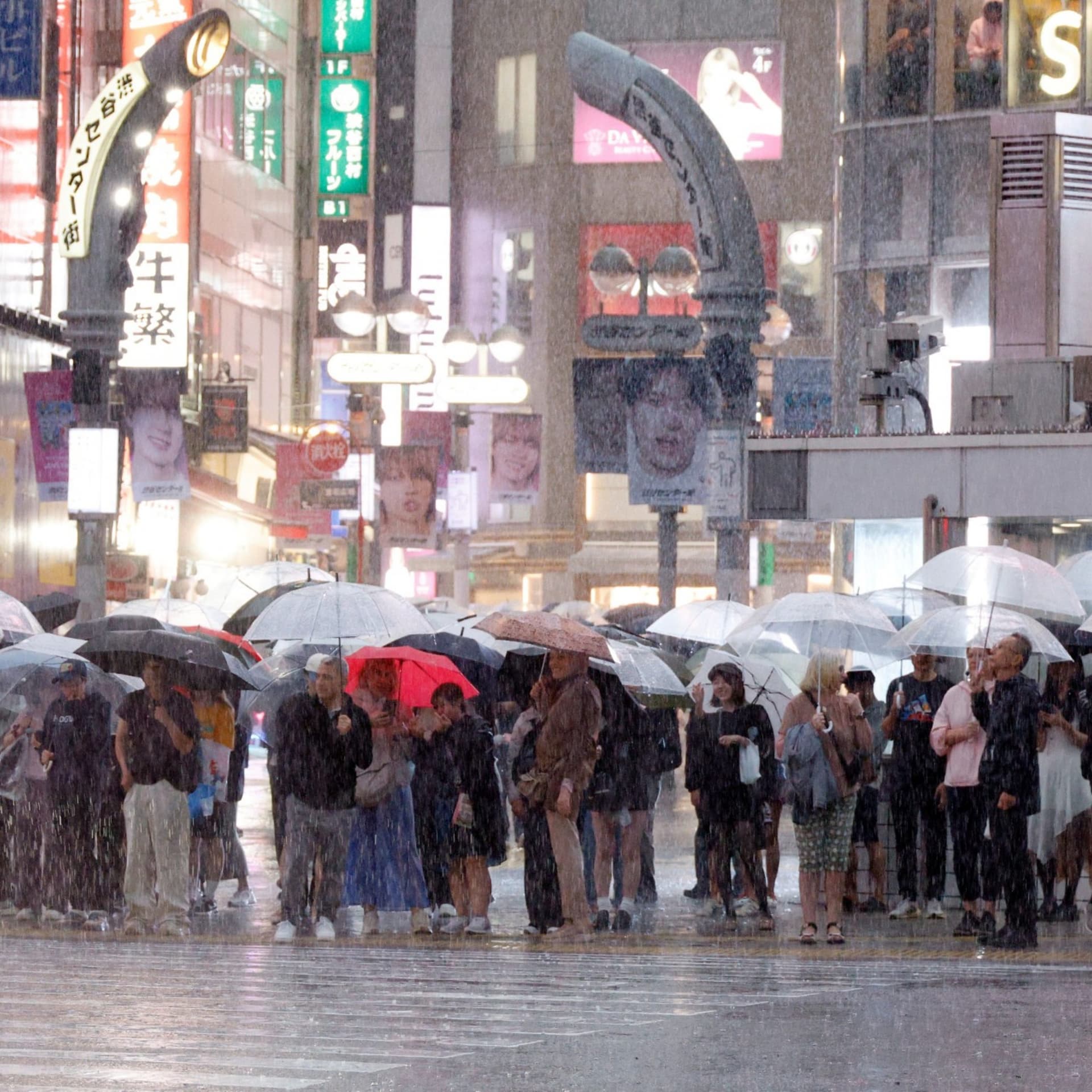
1:54Typhoon Dujuan has forced the cancellation of hundreds of flights and prompted warnings of record-breaking rainfall. 1.9 million people have been urged to evacuate and several major events have been cancelled. This typhoon is the latest in a wave of storms in the Pacific, made more intense by this year's Super El Nino. I got the latest from our correspondent in Tokyo, Kurumi Mori. It sure is powerful. I mean, I woke up this morning to quite light rains here in Shibuya, which is where the Tokyo BBC studios are located, and it turned. I mean, it was heavy rains, strong winds this afternoon. Just in the past hour, it's gotten way dark, and the rain has been stronger and stronger.
2:36There have been special warnings all day coming from the government. I've had mobile alerts go off all day. Something we are watching right now is this river called Meguro River that runs through Tokyo from Shibuya, Setagaya, Meguro and into Tokyo Bay. I just spoke to a resident who lives near there and he's been seeing over the past just two hours just the rise in the level of this river. And so he's concerned. We want to make sure that residents are evacuating if they are on the ground floor, the elderly. but it's definitely something we're watching here in Tokyo today. And Karumi, I guess the wider impact is it's impacting rail services, air services, and also some of the big events as well that are taking place.
3:20We've got the Tokyo Game Show and, of course, the Asian Games, where athletes from over 40 countries are attending. That's right. A lot of impact here. This is Silver Week, which is a holiday week for Japan. Today, tomorrow, and Wednesday are their public holidays. So although there are not many commuters out on the streets, Thankfully, there are a lot of tourists here, a lot of people hoping to travel, but a lot of cancellations happening, whether it's the local trains, the bullet trains, the Shinkansen bullet trains, and also flights. Now we're seeing about 400 cancellations at two of Tokyo's major airports, Haneda and Narita.
3:57Also, Prime Minister Takai-chi was set to leave for New York. Her flight has been delayed to now 11 p.m. tonight for the UNGA. and then events. Tokyo Game Show cancelled its last day today because of the typhoon and the Nagoya Asian Games have some events in Tokyo like swimming and equestrian. Equestrian delayed its events today and pushed it to tomorrow. And Karumi, are we likely to see an impact across East Asia with this typhoon? As of now, what we're tracking is that after it hits the Kanto region, the central area near Tokyo, it's supposed to kind of swerve up and away into the ocean. So it's not set to impact other parts of Asia at the moment.
4:38But you never know because some of the trajectory may change. Kurumi Mori in Tokyo. Nearly 500 people have been arrested in a major transatlantic operation against criminal gangs. Belgian federal police, which led the raids, say large amounts of drugs, firearms and ammunition were seized, mainly in Latin America. Our Europe correspondent Nick Beak reports. More than 370 of these arrests were made in Costa Rica, where raids targeted a criminal network allegedly being protected by senior judicial and security figures, which were sending vast amounts of drugs to Europe. In Paraguay, a record amount of cannabis was said to have been seized.
5:19In Ireland, police dismantled what is believed to be the country's first known cocaine processing laboratory. Europe has been battling to stem the flow of cocaine, in particular, coming from South America, which has enriched crime bosses and fuelled increased gang violence. Nick Beak reporting. According to the UN agency that supports the relief and human development of Palestinian refugees, UNRWA, more than 80 % of all structures in the Gaza Strip were damaged or destroyed during the war between Israel and Hamas. The Gaza war was triggered by the Hamas-led attack on southern Israel, on 7 October 2023, when about 1 ,200 people were killed.
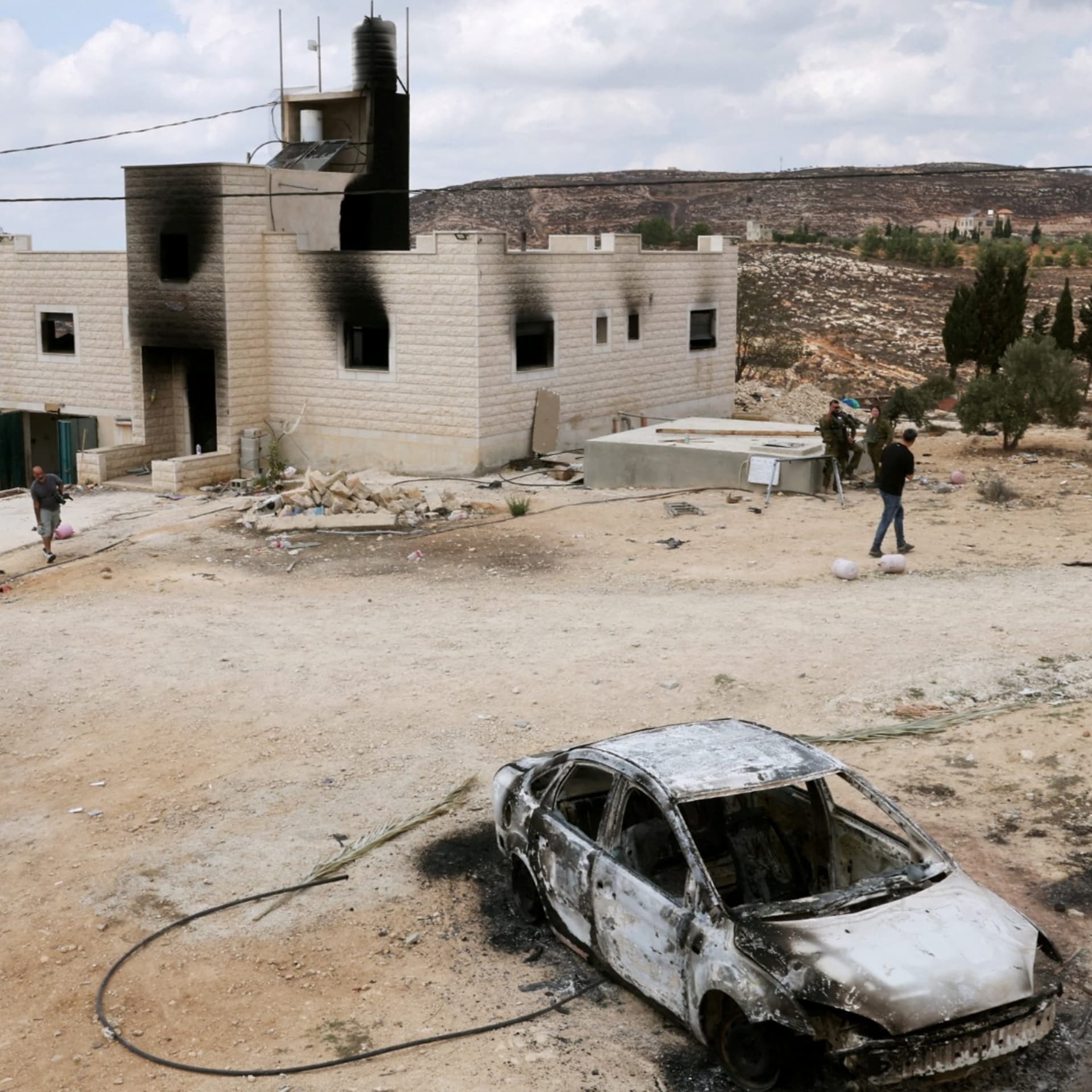
6:00Now officials in Gaza have announced plans to evacuate and demolish more than 250 buildings because they're at risk of collapsing. Our Middle East correspondent Yulan Nel told us this move follows a series of collapses in recent days. In the past week, at least 21 people were killed in Gaza City when a residential building came down. locals who have been living in that area told the BBC that it had been tilting to one side that families knew it was unsafe. One relative who was bereaved said that buildings like that had become a ticking time bomb. But really because of the lack of safe places to go, the lack of durable shelters in Gaza, it is forcing people to go into some of these unsafe buildings.
6:44And as well as that building in the south of Gaza City that really fully came down, On Friday, there was another partial collapse in which five children got minor injuries, and this coming after the first rains of the season in Gaza last week. And that really accelerated the warnings once again about the dangers of some of these places where people displaced by the fighting, now with no homes of their own, have been sheltering. And Yolande, just tell us about the challenges the authorities are facing in terms of trying to implement this demolition plan. There are going to be so many challenges.
7:18This statement from the Hamas-run media office says that local authorities will be going to families and asking them to leave these more than 250 buildings which are at risk of collapse where the situation is urgent. Of course, many of those families will not have places to go. They'll also need to evacuate areas around where the buildings are going to be pulled down. That is another danger. Many families may be refusing to go. Then you've also got the fact that many authorities, they're talking about police and other services that are aligned with Hamas, will have to be working on this. Israel has opposed fully the signs that Hamas has been trying to sort of reassert itself in Gaza.
8:03I've not been able to get some clarification from local UN officials about what their role is going to be here. But certainly this statement is saying that the plan involves UN agencies and other international organizations. They're the ones really with the heavy lifting equipment that will be able to do some of this work. But you've had the UN in recent days really underlying how Israeli officials that control the border crossings, how restrictions from Israel are limiting the work that they can do, whether it comes to that sort of heavy equipment that's so important for rubble removal, the fuel and the oil that is needed to run these machines, and then on top of that, the fact that there is not enough durable shelters in Gaza.
8:50They're looking for things like caravans to be allowed to go into Gaza that would give people better protection as we go into the winter. And Yolande, then we've got the issue of the wider infrastructure in Gaza as well. That's right, and there are big UN longer-term plans to try to improve the infrastructure. Gaza's health ministry has talked about how there are about 3 ,000 buildings that they class as being dangerous, and in many cases families are living in those. You've also got inadequate roads, problems with waste and sanitation. All of these are going to be highlighted once again, particularly as the weather conditions become more difficult with increased rain.
9:32Yolan Nel. A refugee crisis in Djibouti is worsening as people flee renewed conflict in Yemen between the Iranian-backed Houthis and Saudi Arabia. Several thousand have made the dangerous sea crossing, many arriving in Djibouti's northern town of Obok. Our security correspondent, Frank Gardner, is there. I'm in a very crowded, noisy refugee camp. I'm in a warehouse at a place called Obok, which is just on the African side of the Babel-Mandev Strait that separates Yemen from Djibouti here. And this warehouse is absolutely full of Yemeni families who fled across the water. It takes several hours to get across.
10:12And they're telling me that the thing they've been fleeing most from are the airstrikes. They don't care, they tell me, whether these are Saudi planes or Yemeni or whether it's the Houthis, they're just terrified of the bombs. So the situation on their side, on the Yemeni side, is still extremely fluid because we don't know, they don't know whether the Saudis are going to escalate this or not because the Saudis have got a difficult decision to make. They can't get their ships safely through the Babu Mandib Strait with their oil out and that poses an existential threat to their economy and will impact on the world economy because it'll mean shorter oil supplies, higher prices?
10:53Or do they escalate this and increase the airstrikes, increase the misery on the Yemeni side, bring more than the 3 ,000 refugees we've already got here in this camp? Or do they try and mediate it through a country like Pakistan, Turkey? The Saudis are looking around wondering where their friends are right now because the Americans so far are not prepared to do the strikes, the airstrikes and join in that the Saudis may be asking for. Frank Gardner. Still to come in this podcast. Some of the videos online of this mad dash to the sun lounges around pools and beaches are just extraordinary. Crowds of people can be seen lining up at the gates in the morning at resorts waiting to get into the pool.
11:38We hear about how the so-called sunbed wars in Europe have turned deadly.
12:11career. Squarespace, because no matter what you're into, a website makes it real. Use offer code difference for 50 % off select plans. Terms and conditions apply. Can politicians improve our economic fortunes? Dave Ramsey says no. I'm Tristan Redmond from The Global Story, and I've been speaking to the massively popular US money guru who says if there's a financial crisis, it's on us. When you borrow on credit cards and take out a$1 ,200 car payment on a freaking Range rover. You've destroyed your life, not the president. For the full interview, listen to The Global Story on bbc.com or wherever you listen.
12:53This is the Global News Podcast. In Germany, as we reported on the earlier podcast, the emerging success of the far-right anti-immigrant AFD party in regional elections has caused alarm in the ruling party, the CDU, the Christian Democrats. For the first time ever, the CDU was voted out of regional parliament in the northeastern state of Mecklenburg, western Pomerania, where the far-right alternative for Germany is on track to win the most votes. And in another vote in the capital, Berlin, the CDU was beaten by a far-left party. Despite the results, Chancellor Friedrich Metz has vowed to keep his ruling coalition together for what he called the democratic future of Germany.
13:33Mr. Metz told journalists he was determined to live up to the historic challenges Germany is facing, and he said lessons had to be learned. The CDU as a party has fundamental long-term questions to grapple with. Now in the leading body of our organisation, we have decided to pursue intensive discussions about where we have failed, what we are doing and where we're heading. We need to talk about the structure of our party, our programme and the image of the CDU. But Germany isn't the only country in Europe that has seen a shift to the political extremes. Our Europe editor Katja Adler told Justin Webb about the significance of Germany's regional elections for Europe.
14:19Well it's first and foremost a Europe-wide issue because Germany is the biggest net payer into the EU budget. So if you have economic and political upheaval in Germany that has a definite ripple effect. This comes at a time when, you know, the continent, whether it's in the defence industry, or whether it's in politics, say, we need to stick together. We've got aggression from Russia, in Ukraine, hybrid threats throughout the continent. We've got that economic threat from China. We've got the US now so unpredictable, whether it comes to trade or whether it comes to having our back in terms of defence.
14:53Kiev will be worried that if you like, the more fringes of politics are doing well in Germany, whether it's on the left or the right, because Germany is the single biggest supporter in terms of military and other aid to Ukraine. And both those parties are saying no more military aid for Kiev. But yes, more widely in Europe, Brussels says, oh my gosh, we have months ahead of big elections. Every big EU country is holding key elections. We've just had Germany, We've got French presidential elections, Poland, Spain, Italy. And in each one of those countries, nationalist forces are doing well. That comes at a moment where Brussels says the EU really needs to stick together.
15:34Otherwise, Moscow, Beijing and other opponents will just be rubbing their hands with glee. To which some people will say, well, it is the failures of the old established political order, certainly in Germany, but in other places as well, I suppose, that have led to this. They only have themselves to blame. That is very much the sense among voters. I think whether you talk to voters in these regional elections in Germany or whether you go to France, where Marine Le Pen is looking very strong at the moment ahead of the presidential elections, many voters say, look, for decades after the Second World War across Europe, we've given our votes to the centre-right parties or the centre-left parties, those traditional parties of old.
16:14But we now worry about our personal finances for our family, whether we will ever have a state pension. We worry about the effects of wars abroad. And these parties are not coming to us with the answers. Then you have parties like the AfD in Germany or Die Linke on the hard left who say, we're listening to you voters and we can help you. And they have that personal effect. And you can see parties like that right across Europe. You have the Reform Party in the UK that says the same thing. The traditional parties have failed. Give us a chance. Katya Adler. From one set of polls in Germany to another in Russia's parliamentary elections, President Putin's United Russia Party is on course to retain its constitutional majority.
16:57It has won a record number of seats and the near-complete results will ensure it can continue to make changes to the constitution without support from other parties. The victory was widely expected. Only pro-Kremlin parties were allowed to stand. Those opposing the war with Ukraine were not, in elections described as neither free nor fair. From Moscow, our Russia editor Steve Rosenberg reports. Many things about Russia are unpredictable. The results of this election weren't. In a political system tightly controlled by the Kremlin, as expected, the ruling party United Russia, which is backed by Vladimir Putin, is well out in front.
17:37Preliminary results suggest it has retained its constitutional majority. As for those parties that are trailing far behind, but which have cleared the 5 % threshold and made it into parliament, experience shows that their MPs and the Duma normally support Kremlin initiatives. President Putin is likely to use the results to claim that the country is full square behind his policies, particularly the so-called special military operation, Russia's war on Ukraine. This was the first parliamentary election in Russia since the country's full-scale invasion of Ukraine. And from it, the authorities will claim a mandate from the people to justify any future decisions on the course of the war.
18:20Steve Rosenberg. In our earlier podcast, we brought you a powerful story from Indonesia about a cover-up at a prominent Islamic boarding school involving allegations of sexual crimes by the son of its founder. Known as Beki, he was jailed in 2022 for sexually assaulting a student at the school. But BBCI has exclusively recorded footage of him as a free man after serving less than half his sentence. The investigation also uncovered further allegations against him and evidence that the school tried to suppress them. I asked the author of the report, the BBC's Rebecca Henschke, how she had come across the story.
18:57We were investigating allegations of sexual abuse in Islamic boarding schools. It's an issue that's come to a head in Indonesia with a couple of high-profile cases. So Ira Puspita Sari, we were speaking to her about her allegations over years that she was intimidated into withdrawing. And when we were doing that, we started to hear rumours that the man that she alleges raped her since the age of 15 and also was jailed for the sexual abuse of one of her friends had been released early. So we began an undercover investigation to look into what had happened there. OK, and the man at the centre of this story, Becky, are we likely to know what's going to happen next?
19:39Well, the report has just sort of gone live in Indonesia and there's already been a huge reaction on social media with the majority of comments calling for justice for Ira and also for a full investigation by the government into why he was released early. I mean, the government says he was given remissions that are according to the law, but lawyers that we've spoken to said that's often used as a loophole and they want more details about exactly what those remissions were. And we've also, the report's being shared by some parliamentarians who are also calling for action. So there's quite a strong reaction from Indonesia right now.
20:17Rebecca, is this a sign of deeper malaise in Indonesian society, that senior men that are connected are often protected? There is an issue for sure with the legal system and there was a report by Komnas Prempohan, which is the Commission for Violence Against Women and Children, just a few months ago that was saying that this issue of sexual abuse in Islamic boarding school, Pasantrians, where millions of children go to school, many have a very happy time there. But they're saying that this issue of sexual abuse in the schools has reached an emergency level right now because of the unchecked power of the men that are running these schools and is calling for the government to put in place safeguarding, reporting mechanisms.
21:01Because all the cases that we were looking at, the students did raise red flags. They went to teachers or they tried to go to the police. And each time they were intimidated and not helped. For the full investigation, you can search for Catching My Teacher wherever you get your BBC podcasts and you can watch it on the World Service YouTube channel. Hundreds of families are taking part in a study that uses the latest technology to keep people with dementia safer in their own homes in the UK. Scientists at the Dementia Research Institute have kitted out houses with smart gadgets and sensors to try to cut care home and hospital admissions.
21:40The UK's National Health Service, the NHS, says it's following the trial closely to see if it can reduce trips to the hospital and give families peace of mind that their loved ones are safe. Our health reporter, Jim Reid, has been to meet one of the couples involved. Will you please welcome back, fantastic, Barat Patel and Jyoti.
22:02Jyoti Patel has spent decades on stage, always alongside her husband, Barat. The couple travelled the world as a magical double act. That's the real magic. A few years ago, though, some of those routines became harder for Jyoti to remember. Three years back, I saw something I was looking for on the stage and it wasn't there. So I thought something is wrong. I wasn't sure that it is dementia or something, you know, because I thought she might have forgotten it. but we saw the doctor and they says it is coming it's starting you know. If I was going out if I just don't look around then I will find that I'm lost.
22:46Two years after her Alzheimer's diagnosis the couple are now one of 250 families involved in a new project using technology to help people live at home with dementia. You're looking up the sensors for the door. Their house in West London is fitted out with door or movement sensors in every room. If the door is left for a longer time open, I'll get a phone call. If Jyoti tries to leave in the middle of the night or just suddenly starts making more trips to the bathroom, the system can alert her carers. So you can see, much more comfortable and safer. Then upstairs in the bedroom under this mattress is a sensor which can record Josie's heart rate and breathing as she sleeps to try to spot early signs of infection.
23:41And back downstairs in the kitchen, there are more sensors on the fridge, on the kettle, the microwave, even the toaster. The idea is they can help check whether she is sticking to her daily routine and eating properly. You can see here a feed of her heart rate. All this data can then be shared with doctors and care staff in near real time. We'll get that feed from the sleep mat. The team behind the project say the total cost works out at around£2 ,000 a year. I'm Sarah Daniels. I'm an occupational therapist and I work at Imperial College London. That's the power of technology. We're trying to spot early signs that things might be going wrong.
24:26There may be risks that are changing. We spot them early, we can intervene earlier and we can keep people at home and out of hospital. So this kind of system might cost, what, perhaps a couple of thousand pounds. Is that kind of money justified when there's pressure elsewhere on the health service? So really, we only need to delay someone's admission to a care home by a month or reduce the days that they spend in hospital by 20%. And we've more than covered our costs for a year of tech and monitoring. So that's the kind of equation that we're looking at. OK, so that's the socks. I'll just put it on.
25:03Back in the living room, Jyoti is now trialling wearable technology, a smartwatch and smart socks, to spot signs she's at risk of falling. For this couple, it's about reassurance, and in the longer term, about keeping Jyoti in her own home as long as possible. Oh, peace of mind, definitely. Definitely it is a peace of mind. That report from Jim Reid. Now, if you've ever spent time in Europe during the summer, you've probably experienced fierce competition for sunbeds at pools and beaches. But in Greece, a dispute over one of those coveted spots has turned deadly. An 82-year-old man has died after getting into a fight with another man over a sun lounger on a beach near Athens.
Read the full transcript
25:46I spoke to our reporter, Helena Burke, about what happened. According to witnesses at Vuliagmeni Beach, which is about an hour south of Athens, this man had tried to reserve a few sun lounges and was waiting for his companions to join him. This then sparked a dispute with another man on the beach aged in his 70s. The dispute eventually escalated into a physical fight between the two and eventually other people got involved as well. One eyewitness told local media that the scene became so chaotic that the screaming could actually be heard at the other end of the beach. While these two men were fighting, the older man aged in his 80s collapsed.
26:20According to various reports he received CPR and a defibrillator was used on him. He had to be taken to hospital where he later died and the other man involved in the fight has now reportedly been arrested. Helena, there seems to be a growing issue in Europe around this as well. During the summer it feels as though it's got completely out of hand, people competing for a spot on a sun lounger. Yeah, some of the videos online of this kind of mad dash to the sun loungers around pools and beaches are just extraordinary. Crowds of people can be seen lining up at the gates in the morning at resorts, waiting to get into the pool as soon as possible.
26:54There are also reports of people fighting over sun lounges at various European beaches. The market research firm YouGov actually did a poll about this recently, and they found that about 57 % of people in Europe say they've found themselves deprived of a sunbed because they were all taken. The poll also found that the majority of holidaymakers think it's unacceptable to try and reserve the lounges by leaving your town on top of them and then leaving. This isn't only an issue in Europe. There are reports of similar tensions over sun lounges at resorts in North Africa and the Middle East. Anecdotally though, as someone who's originally from Australia and has spent quite a lot of time in Southeast Asia, this isn't really as much of a problem in that part of the world.
27:33I think that some of that is cultural differences, but it's also the fact that there's just generally a lot more space on the beach in that part of the world. The number of tourists going to Europe is increasing every single year. So it seems like these so-called sunbed wars are only going to become a bigger and bigger problem there. Helena Burke reporting. And that's all from us for now. If you want to get in touch, you can email us at globalpodcast at bbc.co.uk. You can also now watch our full episodes. Just search for the Global News Podcast on YouTube. This edition was mixed by Darcy O 'Brie and the producer was Rachel Wright.
28:11The editor is Karen Martin and I'm Ankur Desai. Until next time, goodbye.
28:43your life, not the president. For the full interview, listen to The Global Story on bbc.com or wherever you listen.
From the publisher
A powerful typhoon passing Japan's east coast is bringing heavy rainfall and major disruption. More than 1.9 million people in and around Tokyo have been told to evacuate. Winds from Typhoon Dujuan have caused power cuts for thousands of people, and hundreds of flights have been cancelled. Large events - including the Asian Games and Tokyo Game Show - have been postponed or called off.
Also in this podcast: Nearly 500 people have been arrested in a major transatlantic operation targeting criminal gangs; officials in Gaza have announced plans to demolish more than 250 buildings; Vladimir Putin's political party is on course to retain its majority in Russia's parliamentary elections; a new trial aims to help dementia patients remain in their own homes and out of care facilities; and how arguments over sunbeds on European beaches have turned deadly.
The Global News Podcast brings you the breaking news you need to hear, as it happens. Listen for the latest headlines and current affairs from around the world. Politics, economics, climate, business, technology, health – we cover it all with expert analysis and insight. Get the news that matters, delivered twice a day on weekdays and daily at weekends, plus special bonus episodes reacting to urgent breaking stories. Follow or subscribe now and never miss a moment. Get in touch: globalpodcast@bbc.co.uk Photo: Pedestrians wait at Shibuya crossing under heavy rainfall triggered by Typhoon Dujuan in Tokyo. Credit: Franck Robichon - EPA/Shutterstock