In short
The episode covers four main stories. First, Ukraine’s drone campaign targets Russian-occupied Crimea’s energy infrastructure: strikes on Sevastopol leave the city without electricity, forcing suspension of fuel sales and empty petrol stations. BBC reports residents coping by buying generators and rationing fuel. Guest/analyst Nick Beak (BBC Europe correspondent in Kyiv) says the tactic aims to destabilize daily life, reduce Russia’s oil revenues, and pressure Vladimir Putin toward negotiations, though Ukraine is not trying to retake Crimea. Second, a Western Europe heatwave brings “red alerts” and record temperatures; schools close, rail lines buckle, substations fail, and deaths are reported (including drownings and children left in cars). Mark Poynting (BBC climate reporter) explains early-season 40°C+ heat and humidity risks, plus short- and long-term mitigation. Third, the US Senate narrowly approves a war-powers resolution requiring Trump to halt action against Iran or seek congressional approval; White House calls it symbolic. Fourth, India tightens foreign-funding rules for NGOs. Notable example: sperm whales in the Mediterranean develop distinct vocal “dialects” (west vs east) over ~20,000 years, studied via hydrophones and tracking.
Guests
Nick Beak; Mark Poynting; Dr Kaz Ahmed (movement-snacking study); Luke Rendell (sperm whale dialect study); David Willis (US Senate implications); Emma McCarthy (Lincoln Memorial Reflecting Pool vandalism).
Written by AI. May contain mistakes. Listen to the episode to check what was said.
Chapters
Tap a time to open that second in VOUkraine's Campaign in Crimea
1:38 to 2:22
Explore Ukraine's intensified military actions in Crimea and their effects.
“Red alerts are in place across a number of countries as temperatures continue to soar across parts of Western Europe.”
Impact of Drone Warfare
2:22 to 4:00
Discuss the strategic importance of Sevastopol and the effectiveness of drone strikes.
“Ukraine has long been outgunned and outmanned in its conflict with Russia.”
Strategic Importance of Crimea
4:00 to 6:06
Understand Crimea's significance for both Ukraine and Russia in the conflict.
“We've heard from the drone unit, as it were.”
Heatwave Across Europe
6:06 to 7:30
Examine the current extreme heatwave affecting Western Europe and its dangers.
“Also hitting Moscow's war chest that oil revenues are down, but also this pressure on Vladimir Putin as well.”
Historical Context of Heatwaves
7:30 to 9:21
Reflect on the lessons learned from past heatwaves and current preparations.
“I live in a rooftop flat, so during a heat wave, it's almost impossible to cope with the heat.”
Government Response to Heatwaves
9:21 to 10:39
Learn about government measures to protect vulnerable populations from heat.
“It feels like, yes, we're back into this memory of 2003 when a 19 days heatwave claimed 15 ,000 lives in France.”
Climate Change and Future Preparedness
10:39 to 13:47
Explore long-term strategies to adapt to increasing heatwave occurrences.
“And that allows to reduce the stress on the A &E wards.”
Health Benefits of Short Breaks
13:47 to 14:00
Discover how short breaks at work can enhance health and productivity.
“For some countries this is more commonplace at the moment than others.”
Addressing Extreme Heat Challenges
14:00 to 14:28
Learn about the measures needed to cope with extreme heat in buildings.
“prepared for such extreme heat, the buildings aren't designed for extreme heat.”
The Benefits of Movement Snacking
14:28 to 16:07
Discover how taking short movement breaks can enhance health and productivity.
“Apparently, if we do this every hour, we can not only make a tangible improvement to our health, but also it could help you get more work done overall.”
Show all 21 chapters
Understanding the Science of Breaks
16:07 to 18:01
Explore the psychological and physical benefits of regular movement during work hours.
“And that's the sweet spot it's the hour it's you don't take too long in between it but you don't pop out every 20 minutes.”
Adapting Movement for Different Jobs
18:01 to 18:32
Learn practical tips for incorporating movement into various work environments.
“A train driver can't get up in the middle.”
US Senate War Powers Resolution
20:01 to 21:12
Examine the implications of the Senate's resolution on military action against Iran.
“Enjoy savings on top of savings when you shop in-store or online for easy pickup or delivery.”
Congress's Response to Trump's Actions
21:12 to 24:12
Analyze Congress's growing discontent with President Trump's military strategies.
“The US Senate has approved a war powers resolution calling on President Donald Trump to halt military action against Iran unless he gets authorization from Congress.”
Issues with the Lincoln Memorial Reflecting Pool
24:12 to 26:36
Report on the damage to the Lincoln Memorial Reflecting Pool and related actions.
“I think I'm right in saying that in practical terms, this will not compel President Trump to do anything.”
Celebrating America's 250th Birthday
26:36 to 27:07
Preview of the upcoming celebrations for the 250th anniversary of the USA.
“And as we were hearing there, on the 4th of July this year, the United States will celebrate its 250th birthday, marking the anniversary of the adoption of the Declaration of Independence in 1776.”
India's New NGO Funding Regulations
27:07 to 28:00
Understanding India's tightened rules on foreign funding for NGOs.
“non-governmental organisations receiving foreign funds, requiring them to disclose their activities, social media accounts and websites.”
Government Restrictions on NGOs
28:00 to 28:38
Learn about recent government actions affecting NGOs and their funding.
“not be eligible to receive foreign funds.”
Sperm Whale Dialects Revealed
28:38 to 29:28
Discover how sperm whales have distinct vocal dialects similar to human accents.
“Those clicks are the sound of a sperm whale recorded off the coast of the Spanish island of Ibiza.”
Tracking and Understanding Whale Communication
29:28 to 30:48
Explore the methods used to study whale communication and their cultural evolution.
“Luke Rendell from the Sea Mammal Research Unit at the University of St.”
Social Bonds and Whale Communication
30:48 to 32:36
Learn about the social implications of whale vocalizations and their similarities to human interactions.
“What does that tell us about sperm whales more broadly then?”
Transcript
Automatic transcript. May contain errors.0:00This BBC podcast is supported by ads outside the UK.
0:30The new tropical butterfly refresher from Starbucks. Guava and passion fruit flavors with mango pineapple flavored pearls. Yeah, that feels like summer before you even taste it. Funny how one small stop becomes the best part of the day. Start your summer rhythm with Starbucks. Try the new tropical butterfly refresher from Starbucks. Every dating app swap is another loss. Gym bros, big CEOs, straight up losers. So now the only app I open is Moto Casino, because at least there I'm surrounded by winners, real winners, thousands of them. While everyone else is in the single swamp, I'm at home relaxing while stacking bonuses, hitting wins, and playing all my favorite Vegas-style games.
1:11Moto Casino, the only app worth your time. Moto Casino, the social casino. We're prohibited. No purchase necessary. Visit moto.us for more details. Download the Moto Casino app today. Must be 21+. Moto Casino. American Social Casino. This is the Global News Podcast from the BBC World Service. I'm Nick Miles and at 14 hours GMT on Wednesday the 24th of June, these are our main stories. Ukraine steps up its campaign on Russian-occupied Crimea as energy facilities are hit. Red alerts are in place across a number of countries as temperatures continue to soar across parts of Western Europe. The US Senate has approved a measure demanding that President Donald Trump halt the war in Iran or seek congressional approval before continuing military action.
2:03Also in this podcast, do you ever find yourself fading throughout the day? The study basically showed that a break every hour showed a good improvement in productivity, reduced fatigability through the day and also an improvement in workers' mental health. How movement snacking may help.
2:22Ukraine has long been outgunned and outmanned in its conflict with Russia. But overnight into Wednesday, we got another clear sign about where Kiev excels. Drone warfare. The latest Ukrainian strikes on the biggest city in Russian-occupied Crimea, Sevastopol, have left it completely without electricity. The authorities have been forced to suspend fuel sales to the public. These people in Crimea have told the BBC how they're coping. Things have got worse since the start of the month. I ordered a generator yesterday and I'm going to pick it up today. The funny thing is that now fuel sales have been suspended.
2:59There's nothing to power it with. Since yesterday, the petrol stations have been sitting empty. The fuel is there, but they're not selling it. Deliveries arrived overnight and normally sales would start during the day. But after Crimean Governor Aksonov's decree, everything was shut down. I managed to fill up my tank recently. So now I'm trying to save fuel and avoid using the car unless I really have to. Ukraine has been stepping up attacks on energy infrastructure in areas illegally held by Russia to damage Moscow's oil revenues. I heard more about that strategy from our Europe correspondent Nick Beak, who's in Kyiv.
3:34Sevastopol is important for the Russians strategically, logistically, also symbolically because it is the biggest city in Crimea. and the authorities there, the Moscow installed authorities, are saying, yes, there is this power outage. They've talked about suspending electric transport there. They've told people not to panic and they say that their engineers are trying to get things back to normal as soon as possible. But clearly this Ukrainian tactic, this strategy of drones is working. We've heard from the drone unit, as it were. They said that this operation overnight was highly successful And it is part of this wider theme, the Ukrainians trying to hit Russia itself as well as Russian occupied land.
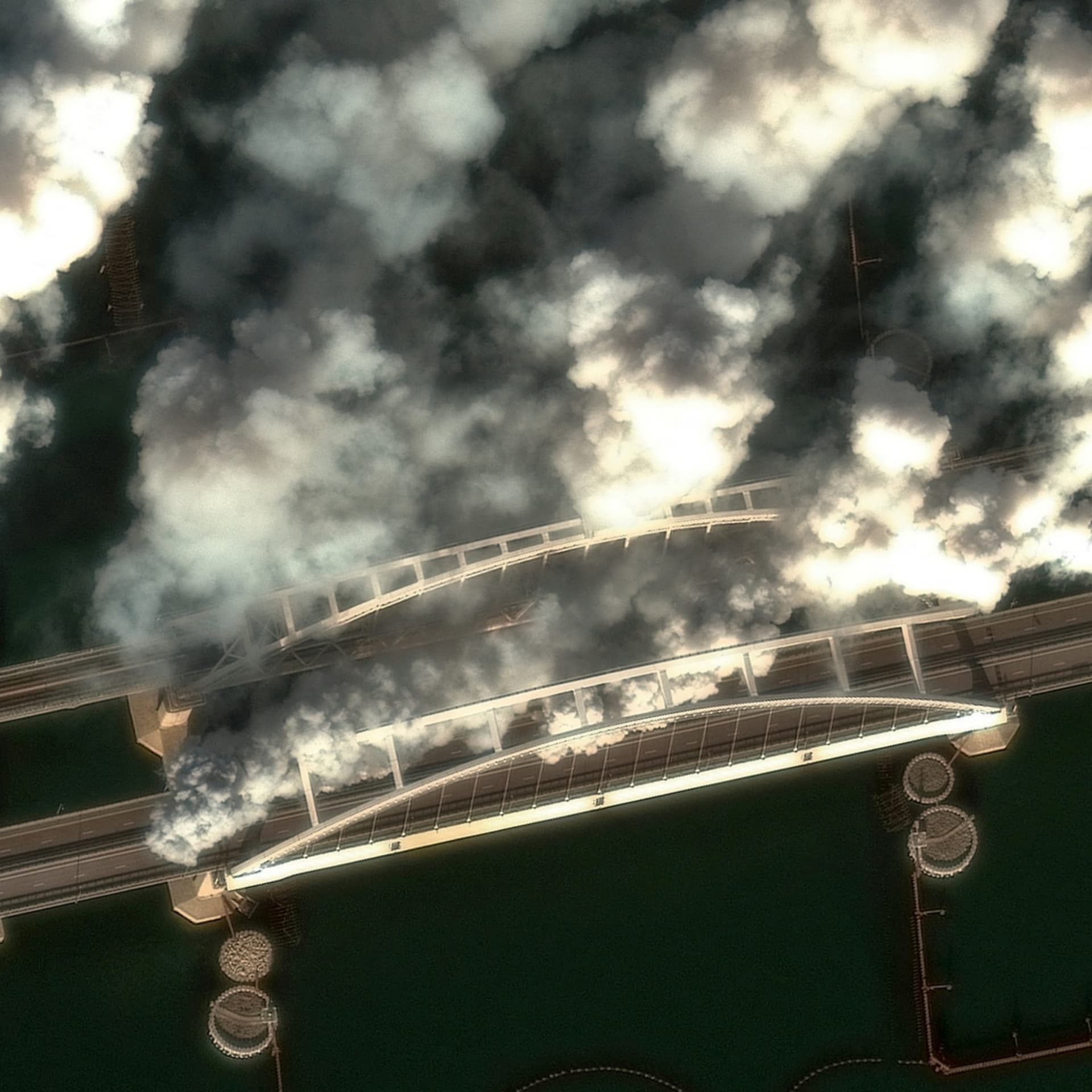
4:16And specifically the significance of Crimea for Russia and Ukraine. It has a special place for both countries, doesn't it? Yeah, absolutely. Crimea illegally annexed by the Russians back in 2014. Also for President Putin, it's hugely important to him. And we've seen the Ukrainians hit particularly the Kirch Bridge, which again holds a special place. As you could say in President Putin's heart, this land bridge that he was there for the inauguration of it when it was opened. And it served not just as a symbolic value, but also it brings in supplies from Russia itself. And it really is a key artery for the Russian war effort.
4:59So the Ukrainians are really pounding this particular part of the world. And it does seem to be having an effect. You've got Vladimir Putin talking about this being a Ukrainian effort to destabilise the population. And in recent days, we've seen suggestions that there could be a ban on the export of diesel from Russia itself. And some Russian newspapers talking about them having to import fuel. So really, this would be a huge change if the Russians are having to recalibrate the whole way they deal with fuel. There is no suggestion that Ukraine might attempt to retake Crimea. that would be extremely difficult, I imagine.
5:37But to what extent is what we're seeing now? Ukraine trying to perhaps gain leverage for some kind of negotiation later on down the line? Yes, I think that is really the case in terms of incrementally or suddenly taking back land. That's just not on the table at the moment. But I think it's kind of threefold, really, what the Ukrainians are trying to do. There's an immediate destabilisation. And so for people living in those areas, they're clearly going to be unhappy with what's happening in their daily lives with a lack of power. Also hitting Moscow's war chest that oil revenues are down, but also this pressure on Vladimir Putin as well.
6:17This idea the Ukrainians want to put forward of sowing the seeds of discontent so that it creates a perfect storm, really, of pressure on Vladimir Putin so that he's in a position to come to the negotiating table. The problem is, Nick, at the moment there is no sign that Vladimir Putin is willing to talk and to stop the missiles, which of course are going towards Ukraine as well. Night after night in different parts of Ukraine, there are these drones and missile attacks. Nick Beak in Kiev. If you take a look at a weather map of Western Europe at the moment, you will see it is coloured the darkest shade of red.
6:49If you're here, you will feel what the record temperatures into the low 40s actually feel like, and it is not pleasant. In fact, heat alert warnings of a risk to life have been issued in Britain, Italy, Spain and France. And that's where we're going to focus our attention over the next few minutes. All this has had a big impact on everyday life. Thousands of schools have been closed, rail lines have buckled and electricity substations have stopped working. There are very few freely accessible, easy or free ways to cool down and that's a concern for us. The heat is exhausting, and as time goes on, these episodes are only likely to become more frequent, with temperatures continuing to rise.
7:34I live in a rooftop flat, so during a heat wave, it's almost impossible to cope with the heat. It definitely changes my routine. I try to leave home as early as possible and come back as late as I can to avoid being stuck in the unbearable heat of the flat. Our reporter Pierre-Antoine And Denis is in Nice in southern France. It feels surprisingly very, very hot, especially for this time of year. I'm in my hometown. I'm with my family. And that's where I grew up. And to be honest with you, temperatures like this, especially early in the morning, overnight, I haven't seen that in June in my life.
8:11I was actually strolling by my high school yesterday where I used to pass this exam in this end of years. And I could see the people there, the kids there, They're absolutely sweltering, completely sweaty. And I was like, have I experienced that? I'm not entirely sure. And it really feels very, very odd. And this is why when the announcement came that this was the hottest day on record in terms of average temperatures all across France on Tuesday, it didn't surprise me. And spending the day in Nice on Tuesday and what I'm going to do again on Wednesday is it really goes to show that both the owners of the shops, shop owners, and people on the streets.
8:51Everyone is really trying to cope with this heat that is historic at all levels. You said it's incredibly uncomfortable, but it's also dangerous. It's deadly potentially, isn't it? Yeah, it has been deadly already. 40 people have drowned since this heat wave began. That's according to the prime minister. We've heard of also two kids dying as a result of being left alone in a car. This really is a very deadly heatwave already. And I think this has been a moment of reckoning in the last few days here in France of people realizing that this is genuinely dangerous. It feels like, yes, we're back into this memory of 2003 when a 19 days heatwave claimed 15 ,000 lives in France.
9:40The messaging wasn't there back then. Hospitals were overflowing with patients. So there is already a deadly heat wave here, but there is a fear that if this goes on into the hottest month of the summer, which are usually July and early August, we may be in for another year like 2003. Now, have preparations improved since 2003, people's responsibilities, personal responsibilities, and also at a national governmental level? That's what the government will claim, that's for sure. I spoke to a few care homeowners and hospital directors on Tuesday. They all told me that we did learn lessons as a nation from 2003 in terms of what the priorities should be, in terms of getting the most elderly and vulnerable people into the hospital, expanding our resources, bringing more and more people into the hospitals over the summer to try and make sure to cope with the demand.
10:41And also, that's very important, trying to tell people that, yes, to stay cool, but also to call the different numbers whenever people feel dizzy or feel they're about to faint or need to be taken care of, not necessarily rushing to A &E, because there are things that can be done over the phone or at least by visiting the person. And that allows to reduce the stress on the A &E wards. And this is probably is one of the key messaging here that has been hammered in the news channels in the last few hours and days here in France. Pierre-Antoine Denis, let's take a broader look now at the heatwave across Europe.
11:21I spoke to our climate reporter, Mark Poynting, and asked him what was so unusual about what many people on the continent are experiencing. I think there are a couple of things that really stand out. The first is kind of just the sheer temperatures this early in the summer. temperatures around Europe don't usually peak until July yet we're getting temperatures of 40 degrees or even higher in much of Western and Central Europe so that's really quite extraordinary but also the humidity in many places around Europe is really quite high and that makes it feel much hotter and so the risks to health are much higher as well now this heat wave will be moving on in a few days to to other countries is it too late for those countries to prepare now what kind of policies can they put in place to mitigate things in the short term well we've seen some countries put in place red heat alerts or health alerts which are kind of really a signal that these temperatures could be quite dangerous not just for the vulnerable so for example the elderly but also the rest of the population so that's one measure they might put in place others might advise people not to travel in the extreme heat or for school children to come home early for example so there's a range of kind of short-term emergency fix measures that you can put in place but of course many countries in Europe simply They aren't designed for kind of these really extreme temperatures, even countries such as France, Italy and Spain, which might be more used to kind of high summer temperatures.
13:04These temperatures are really, really extraordinary for this early in the year. Yes, you're mentioning these countries are often not prepared for such extreme conditions. what about the long-term changes that nations are and can put in place in terms of architectural changes for example? Yeah so we know with kind of very high confidence that these heat waves are going to get more frequent and more intense because of climate change and so as well as kind of cutting the emissions that are driving this warming another important priority will be for countries to prepare much better for the temperatures that they know are around the corner in a few years or decades time.
13:46So one of the most obvious ways might be rolling out cooling technologies like air conditioning. For some countries this is more commonplace at the moment than others. Countries such as the UK and Switzerland for example that aren't really prepared for such extreme heat, the buildings aren't designed for extreme heat. So that's one important measure. Others might be kind of approaches to safeguarding water supplies. Parts of Europe are expected to get drier as well as hotter in summer. And so that's going to be really important to make sure that there's no need for kind of really severe water restrictions in future summers ahead.
14:26That was Mark Pointing. Now, how often do you get up from your desk and go for a five minute walk? Apparently, if we do this every hour, we can not only make a tangible improvement to our health, but also it could help you get more work done overall. A study published by the British Journal of Sports Medicine has found that taking five-minute breaks, or what are termed movement snacks, every hour is the best way to boost well-being without losing efficiency. James Coppnall asked Dr Kaz Ahmed, a national health doctor here in England, about the research. This is a really interesting study and it's kind of this concept of what they call movement snacking, which is a bit of a misnomer because you don't actually snack while you're moving.
15:08That would be my problem. That's the trap that most of us fall into. So the idea of movement snacking is that in short periods of time over the course of a day, you take a small break and you start to move. So instead of taking an actual snack, similar to what you would do if you were snacking and having it at small intervals, you're actually moving and exercising at small intervals. So this has kind of been a concept that's been kind of bandied around for a while now. But this study is quite important because it's a really big study. it's got 11 000 participants across the u.s across different sectors but all of them in office style jobs some of them work from home some of them in the office they all self-selected times where they were intervals where they would be movement snacking having having breaks to move and that was 30 minutes an hour and every two hours and the study basically showed that a break every hour showed a good improvement in productivity reduced fatigability through the day and also an improvement in workers mental health so actually this idea of moving around is it's been shown by this study to be feasible within the working sector and actually probably quite a good thing for workers who are sitting still.
16:08And that's the sweet spot it's the hour it's you don't take too long in between it but you don't pop out every 20 minutes. Yeah so the issue with the 30 minutes was that people were going out far too often so therefore weren't actually getting anything done. With the two hours it was better than doing nothing however didn't have the overall benefits to having the regular breaks did. What's the in simple terms if you can what's the science behind this how does it how does it work having that little stroll around the corner so it's quite there's a few different aspects it's part of it's psychological um so that's the idea that you're breaking up your day you're getting away from a screen and you're kind of keeping yourself moving having a little bit of break where from your brain from from the intense work that you may or may not be doing there's obviously the physical aspect of it so you're getting up and actually moving and that's in short breaks actually adds up over the course of a day so you know we often recommend to people they should be doing 30 minutes or to an hour of exercise every day or at least three or four times a week but if you've got a busy job that's not something that's necessarily feasible especially if you're working long hours so breaking up through a day actually cumulatively does add up and also that change in posture so it's quite good for a reduction in terms of long term diseases things like high blood pressure diabetes or just putting on weight obesity so trying to get away from that just by having regular movement is really important.
17:17Is there a cultural aspect to this that it may be difficult for some people to leave their chair for their computer for five minutes every hour, that they're going to worry the boss is going to say, really, are you going on a walk again? Yeah, I think that's a really valid point because often these kind of working cultures are quite ingrained and it can be quite difficult to get out of that view of exactly what you're doing and having people think that, well, you're just taking a break and you're not doing any work. The power of this study is that it shows that actually productivity is maintained, if not slightly improved throughout.
17:49So actually having these regular breaks does improve workers, not only their well-being, but also their outputs at the same time. So I think there's a really strong argument there to say that these are something that we should be considering going forward. Because if it's getting people moving and also getting people doing stuff, then it can only be a good thing. Not everyone can. I'm on air for three hours. A train driver can't get up in the middle. Are there other things you can do? Wave your arms around, jump up and down? Yeah, absolutely. So it's something that we often talk about in terms of from a patient population.
18:16if I see someone, say a truck driver, who's driving for long hours, then actually what can you do if you're in the cab? Can you do small movements? Can you do exercises with your legs, lifting them up and down? And work-based exercises, desk-based exercises are really important as well. But alongside that, stretching your back too, if you're sitting up in different positions is really important. Dr Kaz Ahmed.
18:36Still to come in this podcast. Sperm whales have been in the Mediterranean for around 20 ,000 years. So the entire span of human history, it has taken them to evolve one new dialect. A new study giving us a rare insight into how sperm whales are developing distinct vocal dialects.
19:12See? Duracell batteries with power boost ingredients. You try. Duracell batteries with power boost ingredients. Belgy. Duracell batteries are built different with power boost ingredients. And they're built right here in the USA with U.S. and global parts. Moto Casino. America's social casino. Welcome to Moto Casino, where the excitement never ends. With thousands of the hottest free-to-play social casino games, fastest payouts, and the best promotions in the industry. No tricks or gimmicks. Owned and operated in the USA. Moto Casino is a free-to-play social casino. No purchase necessary. 21 plus to play.
19:50Void or prohibited. Sign up today for a generous welcome bonus. Moto Casino. America's social casino. Download the Moto Casino app today. Hey, it's Ryan Seacrest for Jewel Osco. Earn four times the points on your favorite brands now through July 28th on eligible items like Pantene Moisturizing Shampoo, Gillette Razors and Refills, Secret Clinical Strength Deodorant, Herbal Essences Hair Care, Old Spice Deodorant, Pampers Swaddler's Diapers, and Crest Clean Breath Toothpaste. Enjoy savings on top of savings when you shop in-store or online for easy pickup or delivery. Restrictions apply. See the website for full terms.
20:26Why is it always chaos when we link up? Because nobody plans anything, bro. Good thing the rug's ready like that. For real. Rain, dirt, whatever. Available all-wheel drive. Five modes. We still outside. And they got some kick too. That turbo? Torque is crazy. The most in its class. It moves, moves. Rogue doesn't mess around and peep the space. Merch on merch. Gear, mics. All of it fits. Load up. We out. 2026 Nissan Rogue. Built for all of it. Auto Pacific Segmentation, 2026 Rogue vs. Latest in-market competitors in the ex-SUV mainstream mid-sites class, excluding electrical vehicles based on manufacturer websites.
21:09This is the Global News Podcast. The US Senate has approved a war powers resolution calling on President Donald Trump to halt military action against Iran unless he gets authorization from Congress. The vote passed narrowly by 50 to 48, after the House of Representatives backed the same measure earlier this month. Its legal effect is disputed, though, and the White House has dismissed it as largely symbolic. But the vote is a setback for President Trump and points to growing unease in Congress, including among some Republicans over the conflict with Iran and the deal he struck to bring it to an end.
21:46Our North America correspondent David Willis told my colleague Jabes Koppner about the implications of the Senate vote. It is a rare rebuke, James, for a president who sidelined Congress, of course, in going to war with Iran. It is Congress's right and Congress alone has the right to declare war. Well, President Trump went right around that, didn't he? And it's a sign, this vote as well, of the growing unease and discontent, I think, on the part of members of the president's own party, as opinion polls here have continued to show that the conflict is proving increasingly unpopular with the vast majority of the American people.
22:30The U.S. War Powers Act was actually passed back in 1973 in response to Richard Nixon's prolonged conflict with Vietnam. But this is the first time since then that a resolution to end a conflict has gained the approval of both chambers of Congress. The House of Representatives approved this same measure earlier this month. Four Republican senators join Democrats today in demanding the president either end the conflict with Iran or seek congressional approval to continue it. Those four, are they people who would typically expect might be willing to go against the president or is it something of a surprise?
23:18They are. They're senators like Lisa Murkowski, Susan Collins, and those who have consistently been opposed to various elements of the Trump administration's approach to this conflict. But it's significant, I think, that the 60-day negotiating window that the Trump administration has set up in order to, in the hope of ending this conflict, expires in August, which is only weeks before the crucial midterm elections. And in those elections, of course, Republicans are expected to find their majorities in both houses of Congress challenged. So that's one reason, I think, why we saw these four Republicans so prepared to take on Donald Trump in ways that members of his own party have thus far been largely reluctant to do.
24:12I think I'm right in saying that in practical terms, this will not compel President Trump to do anything. But is it likely to elicit at least some changes in the administration's approach? Well, you're right. The vote is largely symbolic. It doesn't carry the force of law, but it does represent that setback for the president from members of his own party, the sort that he is unused to. The White House has dismissed this vote as non-binding in its words, but it may, if nothing else, James, put pressure on President Trump to avoid a return to hostilities with Iran, which, of course, is something he suggested might happen if the current negotiations falter.
24:57David Willis speaking to James Coppnall. Let's stay in the US where President Trump says six people have now been arrested allegedly for damaging the newly renovated Lincoln Memorial Reflecting Pool in Washington. Since the$14 million project was completed, the pool has been plagued by peeling paint and a massive algal bloom. The renovation was meant to be completed in time for America's celebrations of its 250th anniversary. Emma McCarthy reports. The reflecting pool is looking far from pristine. It's been plagued by algal blooms and peeling paint. That's despite having undergone a multi-million dollar resealing and painting project as part of America's 250th celebrations.
25:42And it's set to be drained again. That's after President Trump said that a group of vandals cut a massive slit in the pool and that's what's led to its current condition. But when pressed for evidence on that slit, the president told reporters the proof would be provided in court. In the meantime, National Guard and US Park Police are patrolling the site as the renovations continue. The Lincoln Memorial Reflecting Pool is one of the most popular tourist sites in DC and was drained back in April when the president said he wanted to paint it what he called American flag blue, which he did, but algal blooms grew And costs to renovate it?
26:21Well, they ballooned to more than$16 million, according to federal contract data. And with less than two weeks until July 4th celebrations, all eyes will be on the Capitol and this pool. Emma McCarthy. And as we were hearing there, on the 4th of July this year, the United States will celebrate its 250th birthday, marking the anniversary of the adoption of the Declaration of Independence in 1776. In the run up to the celebrations, we'll have a special podcast looking at the state of America today. If you have thoughts or questions on the matter, we would love to hear from you. Please email us at globalpodcast at bbc.co.uk.
27:02And if you can include a voice note, so much the better. Thanks very much. India has tightened rules for non-governmental organisations receiving foreign funds, requiring them to disclose their activities, social media accounts and websites. Groups applying for registration must now specify their activities from an approved list. Those include education, health, culture, religion and social welfare. Our global affairs correspondent Ambarasane Tarajan has more details. Since coming to power in 2014, India's Hindu nationalist BJP-led government has suspended or barred thousands of non-profit groups from receiving foreign funding, accusing some of them of using the money for what it called anti-national activities.
27:47The authorities also accuse some of the charities of using overseas money for religious conversion. The latest amendments to the rules put charities under further scrutiny. Any organisation that has foreign nationals other than those of Indian origin as its key functionaries will generally not be eligible to receive foreign funds. The NGOs will have to declare if any books or articles have been published by them or their functionaries. Rights activists allege the government has tightened restrictions on foreign-funded organisations over the years to further crackdown on civil society under the pretext of national security.
Read the full transcript
28:27Amnesty International says since 2010, more than 20 ,000 licences to receive foreign contributions have been cancelled by the authorities. Ambrose and Etarajan. And now, finally, I'm going to play you a sound from the western Mediterranean.
28:51Those clicks are the sound of a sperm whale recorded off the coast of the Spanish island of Ibiza. Now, listen to this.
29:05and that is the sound of a sperm whale from cyprus in the eastern mediterranean now those two sets of sounds tell us that sperm whales living on opposite sides of that sea have developed distinct vocal dialects a bit like regional accents in human speech the findings as a part of a new study, giving us a rare insight into how new dialects emerge within animal societies. Luke Rendell from the Sea Mammal Research Unit at the University of St. Andrews in Scotland is co-author of the study, and he's been speaking to Rajini Vajinathan. We use small research vessels with toad hydrophones that detect the animal's echolocation clicks, and we can use that to locate and track the animals.
29:47So we would follow them for about a day, taking photographs of their tails to identify them as individuals and also recording any of the social sounds that were being made. So tell us about these social sounds as you describe them. You gathered all of these different sounds and what did you discover? Spoon whales social sounds are vocalisations that we call coders and they're kind of stereotyped patterns of clicks like sort of the shave and a haircut coded knock that people do on doors and things like that. so they sound very distinctive and what we showed by recording a lot of these in different parts of the mediterranean is that actually whereas we previously thought that all of the mediterranean had one vocal dialect one set of patterns that they used in actual fact there's a subgroup that live in the east that have developed their own version of that dialect that's clearly related to the western one but is also distinctively modified from it so it gives us an illustration of how the dialects that we know about in sperm whales around the world and have come to be and how that cultural evolution happens.
30:48What does that tell us about sperm whales more broadly then? Okay so it tells us that the vocal dialects appear to develop in isolation so when a group becomes somehow separated from the other so there is a distinct gap between the population in the east and the population in the west while males do appear to travel between the two populations so they don't diverge genetically very much, there's a very clear difference in their behaviour. So it tells us that behavioural patterns structure populations before the genetics do. It tells us that these behavioural patterns develop very slowly, because we think sperm whales have been in the Mediterranean for around 20 ,000 years.
31:29So the entire span of human history, it has taken them to evolve one new dialect culturally. In the Mediterranean, we have a kind of petri dish where we know the population is quite small and quite isolated. And what are they communicating about then with these cliques? We think that it serves to help sperm whales identify other animals that they might want to cooperate with. So they might want to join up in a group and defend against predators together or something like that. And you can think of it as like if a Welsh person goes to a foreign country and meets another person with a Welsh accent, they're almost certainly going to have a conversation about it may end up cooperating more than they would with people with other accents, for example.
32:11It has a similar kind of purpose for sperm whales. Interesting. And you mentioned the human comparison there. And is there even a musical comparison as well? So when they make these codas, they often do it in a kind of duet. You know, my personal speculation is that there's probably very similar feelings of belonging and bonding that humans would experience if they made a shared rhythm, which we do a lot, you know, clapping together or drumming together or that kind of thing. Luke Rendell from St Andrew University. And that's all from us for now. But if you want to get in touch, you can email us at globalpodcast at bbc.co.uk.
32:47You can also find us on X at BBC World Service. Use the hashtag Global News Pod. And don't forget our sister podcast, The Global Story, which goes in-depth and beyond the headlines on one big story. This edition of The Global News Podcast was mixed by Tom Bartlett and the producer was Aaron Kochi. The editor is Karen Martin. I'm Nick Miles. And until next time, goodbye.
33:35The country's been wracked with political instability. When will it end? For more, listen to The Global Story on BBC.com or wherever you get your podcasts.
From the publisher
Ukrainian strikes on energy facilities in Russian-occupied Crimea have left its biggest city, Sevastopol, without power. The Moscow-appointed governor urged residents not to panic. Ukraine has been intensifying attacks across Crimea as it attempts to cut off the peninsula annexed by Russia in 2014. The authorities have been forced to suspend fuel sales to the public. Also: as sweltering temperatures continue across Europe, tens of thousands of homes are without power in northern France. Temperatures are set to peak across the country on Wednesday during a record-breaking heatwave. The US Senate has approved a measure demanding that President Trump halt the war in Iran or seek congressional approval before continuing military action. And, how a 5-minute walk every hour can make a tangible improvement to our health and could help to get more work done.
The Global News Podcast brings you the breaking news you need to hear, as it happens. Listen for the latest headlines and current affairs from around the world. Politics, economics, climate, business, technology, health – we cover it all with expert analysis and insight. Get the news that matters, delivered twice a day on weekdays and daily at weekends, plus special bonus episodes reacting to urgent breaking stories. Follow or subscribe now and never miss a moment. Get in touch: globalpodcast@bbc.co.uk Photo: A satellite image shows smoke rising from Crimea Bridge, amid Russia-Ukraine conflict, Crimea, June 22, 2026. Credit: Vantor/Handout via REUTERS