
In short
Global News Podcast: Episode Summary
Episode Title
Ukraine Marks 4th Anniversary of Russian Invasion
Episode Description On the 4th anniversary of Russia’s full-scale invasion of Ukraine, the episode highlights ongoing conflicts, international developments, and significant news stories from around the world. Key topics include the war in Ukraine, cartel violence in Mexico, political controversies in the UK, extreme weather in the northeastern US, and a study on stress and cancer.
---
Key Stories Covered
- Ukraine: 4th Anniversary of Russian Invasion
- Current Situation:
- Continued Russian strikes marked the anniversary of the invasion.
- Ukraine has started recapturing territories lost during the initial stages of the war.
- Historical Context:
- The episode reflects on the invasion's immediate impact, recounting the early hours of the attack that surprised many.
- Events to commemorate the invasion and its aftermath are planned in key locations like Bucha.
- Expert Insight:
- Paul Adams, the diplomatic correspondent, describes the significant changes in warfare due to the conflict, including the use of drones and modern military tactics.
- Future Outlook:
- Ongoing discussions in Geneva are expected, but optimism for a quick resolution remains low.
- Cartel Violence in Mexico
- Recent Events:
- Following the death of infamous cartel leader "El Mencho," Mexico deployed thousands of troops to counter violence.
- The Mexican government claims the situation is under control despite reports of chaos.
- Public Concern:
- Local perspectives suggest fear and uncertainty persist among citizens after the violent events related to El Mencho’s death.
- Political Controversies in the UK
- Peter Mandelson's Arrest:
- Former UK ambassador Peter Mandelson was arrested over allegations related to Jeffrey Epstein.
- The arrest underscores a significant political scandal, with implications for public trust in political figures.
- Severe Weather in the US
- Impact of a Major Storm:
- A powerful storm has caused widespread power outages and travel disruptions, affecting over 600,000 people.
- States from Delaware to Massachusetts are under a state of emergency due to heavy snowfall and high winds.
- Health Research: Meditation and Cancer
- New Findings:
- A study suggests that daily meditation could help reduce the spread of cancer by lowering stress hormone levels.
- Professor Pat Price discusses the importance of managing stress for cancer patients.
- Understanding Weasel Words
- Exploration of Language:
- The episode delves into the concept of "weasel words"—ambiguous phrases that can lead to miscommunication.
- Mathematician Adam Kucharski highlights how different interpretations of similar phrases can lead to confusion in critical situations.
---
Conclusion This episode of the Global News Podcast provides a comprehensive overview of current global issues, emphasizing the ongoing conflict in Ukraine, the implications of cartel violence in Mexico, political scandals in the UK, extreme weather events in the US, and important health research. The discussions not only inform listeners about the news but also provoke deeper thought about the complexities surrounding these topics.
For further engagement, listeners can reach out via email at globalpodcast@bbc.co.uk or follow the podcast on social media platforms.
---
Recommendations
- Tune into the Global Story podcast for in-depth discussions and analysis on major topics.
- Engage with current events through reliable news sources to stay informed about ongoing global issues.
Written by AI. May contain mistakes. Listen to the episode to check what was said.
Chapters
Tap a time to open that second in VOMain News Stories Overview
1:08 to 1:52
Explore the main stories including Russian attacks on Ukraine.
“Hello, I'm Ankur Desai and in the early hours of Tuesday, the 24th of February, these are our main stories.”
Fourth Anniversary of Ukraine Invasion
1:52 to 3:17
Reflect on the impact of Russia's invasion of Ukraine four years ago.
“front of my face right now and I'm frozen.”
Frontline Report from Donetsk
3:17 to 7:30
Hear a report from the most contested region of Ukraine amidst the war.
“but few here are optimistic about a quick breakthrough.”
Post-El Mencho Violence in Mexico
7:30 to 9:24
Discuss the aftermath of the death of a cartel leader in Mexico.
“For more on today's big stories, you can go on YouTube, just search for BBC News and then click on the logo and then choose podcast and then Global News Podcast.”
US Military Strikes on Narco-Traffickers
9:24 to 11:15
Examine the US military's recent actions against drug trafficking in the Caribbean.
“And I guess the violence just goes to show the extent of the reach of the cartels and the power they hold.”
Research on Stress and Cancer
11:15 to 14:02
Discover how stress affects cancer treatment and resilience.
“A lack of evidence is exactly why these attacks have been so widely criticised.”
Impact of Stress on Cancer Progression
14:02 to 15:00
Learn how stress hormones can worsen cancer and affect treatment.
“It makes it more able to spread and be able to be more resistant to treatment.”
Updates on British Politics and Arrests
16:04 to 18:00
Discussion on significant arrests involving political figures in the UK.
“But what's happening in America isn't just a cause of global upheaval.”
The Context of Political Misconduct
18:00 to 21:12
Exploring the implications of misconduct allegations against high-profile politicians.
“which is read here by one of our producers.”
Northeastern US Weather Crisis
21:14 to 22:48
Report on the severe winter storm impacting the northeastern United States.
“600 ,000 homes and businesses have been left without power and thousands of flights cancelled.”
Show all 12 chapters
Lindsay Vaughn's Recovery Journey
22:48 to 24:10
Lindsay Vaughn shares her experience after a severe injury.
“A quick update on a story we brought you during the Winter Olympics.”
Exploring Weasel Words and Their Impact
24:15 to 27:36
A survey reveals the ambiguity of weasel words in communication.
“American skier Lindsay Vaughn speaking after her recent leg operation.”
Transcript
Automatic transcript. May contain errors.0:00This BBC podcast is supported by ads outside the UK. Available now on The Documentary from the BBC World Service. In the US, increasing numbers of Americans are embracing Russian orthodoxy. Many new converts say the churches they were raised in are too woke and they're looking for a faith which promotes traditional values. I'm Lucy Ash. Join me to find out more. Listen now by searching for The Documentary wherever you get your BBC podcasts.
0:35America is changing. And so is the world. But what's happening in America isn't just a cause of global upheaval. It's also a symptom of disruption that's happening everywhere. I'm Asma Khalid in Washington, D.C. I'm Tristan Redman in London. And this is The Global Story. Every weekday, we'll bring you a story from this intersection, where the world and America meet. Listen on BBC.com or wherever you get your podcasts.
1:07This is the Global News Podcast from the BBC World Service. Hello, I'm Ankur Desai and in the early hours of Tuesday, the 24th of February, these are our main stories. There have been more Russian attacks on Ukraine on the fourth anniversary of Moscow's full-scale invasion. Mexico deploys thousands of troops to maintain order after the country's most wanted cartel leader known as El Mencho was killed on Sunday. And Britain's former ambassador in Washington, Peter Mandelson, has been questioned by police after being arrested over his dealings with the late American sex offender Jeffrey Epstein.
1:47Also in this podcast, a major storm in the US causes travel disruption and power cuts. I'm sick of it. I don't want to see no more. So visibility is like zero. I can't see it. front of my face right now and I'm frozen. And could meditating twice a day reduce the risk of cancer spreading?
2:10Today marks the fourth anniversary of Vladimir Putin's invasion of Ukraine. Despite predictions that the war would be all over in days, fierce Ukrainian resistance has thwarted the Kremlin's expansionist calculations. Our diplomatic correspondent Paul Adams, reflects on that dramatic day. Four years ago today, in the hours before dawn, Ukrainians awoke to the sound of Russia's all-out invasion. Here in Kiev, we could hear distant explosions. The attack, the subject of repeated American and British warnings over a number of weeks, was underway. That shocking day, which plunged Europe into the worst armed conflict since the Second World War, will be commemorated today.
2:50Events to mark the invasion and its immediate aftermath are planned in places such as Bucha, where Russian soldiers murdered scores of Ukrainian civilians. Leaders and politicians are expected in the capital from all over Europe. As Ukrainians emerge from one of the toughest winters so far, there's an overwhelming sense of weariness that this war drags on, but also a grim determination not to sue for peace at any cost. Another round of talks is due to take place, probably on Thursday in Geneva, but few here are optimistic about a quick breakthrough. Well, the conflict in Ukraine has changed warfare and the world order over the past four years.
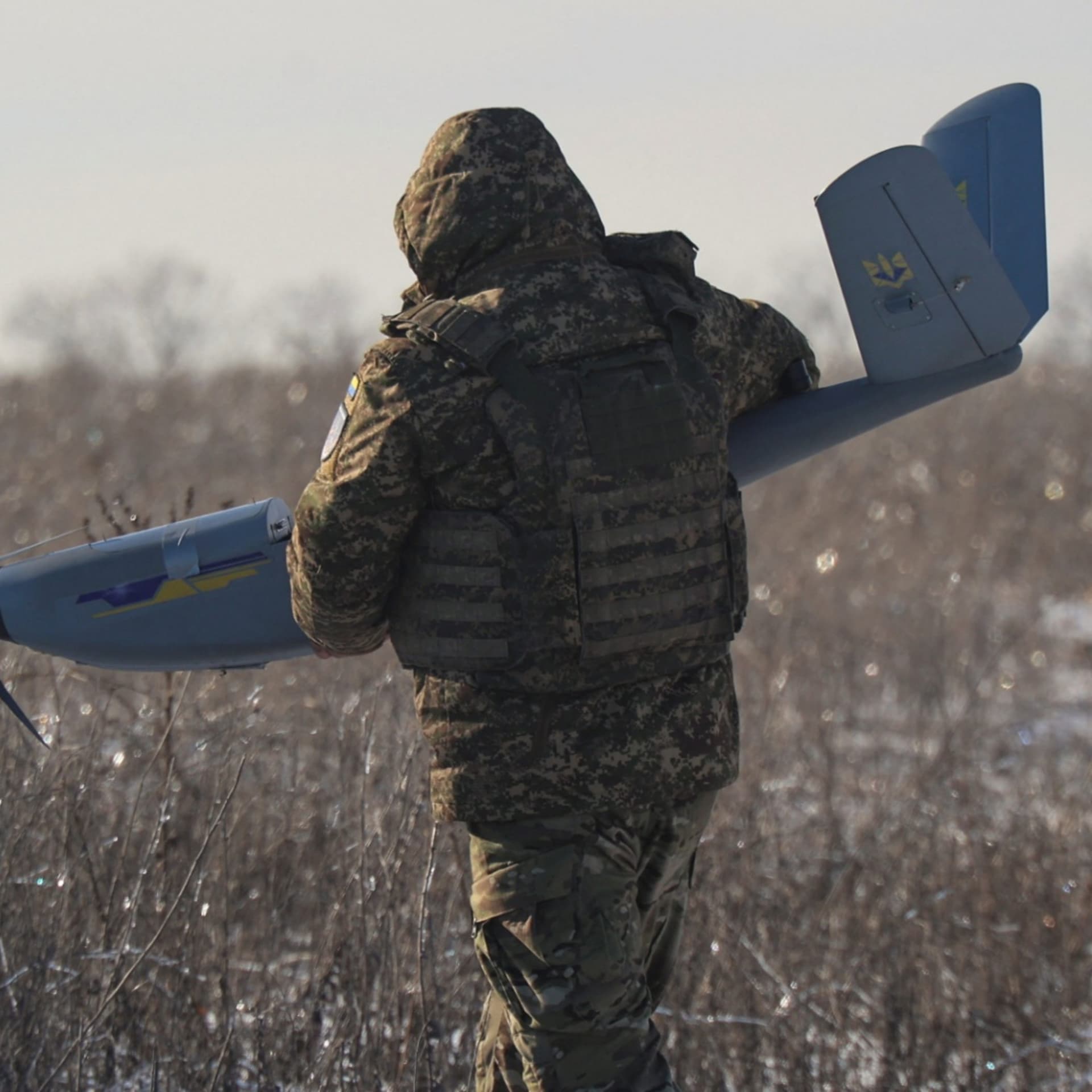
3:30Our international editor Jeremy Bowen sent this report from Donetsk, the most fiercely contested region in eastern Ukraine. You can tell you're getting closer to the Russians when the scene in front of me is unfolding. There's a squad of about a dozen men who are unfurling green plastic netting and attaching it to poles on either side of the road. So the poles are probably about 25 feet high. The netting is encasing both sides and the top of the road and they're doing this because warfare has been transformed by drones. We're walking in across sheets of ice to the military headquarters, which is in a half-destroyed building in this, I've got to say, pretty miserable town.
4:21Driving into this place, burnt-out buildings, feral dogs. You know, it's a front-line town. Down into the basement. It is a command centre of sorts, like a centre of operation. of company and even battalions sometimes. So we're seeing here there are big screens which are relaying pictures from drones. We are currently making some assault moves here and there, trying to close up some pockets of the Russians.
4:59One of the men has got separated from the main group. They're directing him. They're saying someone's on the way to come and get you. If you see him, he's Ukrainian, so be aware of that. The controller has told the guys on the ground that there's a Russian drone approaching them, so be careful, take cover. The commander's call sign is Fisruk. His men are 40 kilometres away. We can't get any closer. The enemy would reach us with their weapons. Who's winning the war? Because I think after so many years, some people have got a bit confused about that. What a question. I think at the moment, it's somewhere in the middle, a balance.
5:46We've come to the Relief Coordination Centre in Lozovar. It's full of people, it's busy every day, who have been evacuated from points further east. Tamara was there with her granddaughters, Mila and Tina, nine-year-old identical twins. the kids we left because of the kids we live near the forest there are lots of tanks drones are flying everywhere in wars not everyone gets killed by high explosives some died because they can't get medical treatment vita a woman in her 60s crumpled with grief as she told me how her husband died of a blood clot he couldn't stand the explosions vita said i buried him in the garden three days ago.
6:34We could have stuck it out, but the drones were too much. No one's left in the village now. One of the first clear signs that the world was changing, becoming more turbulent, dangerous, unstable, was the full-scale invasion of this country by Russia four years ago. Other warning signs emerged from turmoil elsewhere, and not just in the Middle East and in Sudan. But the war in Ukraine still drives change that we all need to understand. Perhaps the biggest for the rest of Europe is the way that the war here has revealed Donald Trump's desire to make deals with Moscow and his disregard for old allies in NATO.
7:15And is the war here in Ukraine going to end this year? not the way things look at this moment, this February, in this dark, cold and icy landscape. Jeremy Bowen reporting. For more on today's big stories, you can go on YouTube, just search for BBC News and then click on the logo and then choose podcast and then Global News Podcast. There's a new story available every weekday. Thousands of troops and special police have been deployed across Mexico to try and maintain order after the country's most wanted cartel leader, known as El Mencho, was shot and killed by the army on Sunday. The authorities say at least 62 people were killed in the operation to capture him and the subsequent violence.
8:04Praising the security forces, the Mexican president, Claudia Sheinbaum, insisted that the situation, despite the current cartel violence, was under control. Today there is more calm and there is government, there are armed forces, there is a security cabinet and there is a lot of coordination. So you can rest assured that peace, security and normality in the country are being safeguarded.
8:32Both the Mexican and the US authorities are claiming a great victory. I asked a Mexico correspondent will grant whether he thought they were right to do so. I think it is one of those situations where it depends a little bit on one's take. Is it a victory to remove El Mencho from the sort of pantheon of drug lords in the country, take him out of the equation when it comes to the fight against drug trafficking? From the perspective of the Mexican military and the Mexican government, absolutely. And that would be echoed in Washington too. I think on the ground, and I'm in the city of Guadalajara, so the state capital of Jalisco, things look a little different for ordinary people who are obviously frightened about a repeat of the rampage of violence that was seen on Sunday and the fact that they haven't yet been able to return to the sort of normalcy that President Sheinbaum was talking about in that clip there.
9:24And I guess the violence just goes to show the extent of the reach of the cartels and the power they hold. Yeah, absolutely. That would be my take too. I mean, it shows that they were in 20 of the 32 states of the country and that they could sew that kind of intimidation at the drop of a hat really was an extraordinary thing to witness. I mean, the scenes of sort of apocalyptic scenes in the wake of some of the violence, you know, burnt out businesses, rather, I should say, more than homes. They definitely targeted businesses and obviously very, very intimidated and frightened residents sort of picking through the debris.
10:00It really is a powerful show of force and it is nationwide. And with immigration and drug control, key themes in the midst of all of this, just how challenging is it to try and manage and control? It's very difficult. I mean, I think we need to be kind of careful to conflate the two things. Obviously, Donald Trump does that a lot and relates immigration to drug control. They are separate issues, but they are related in terms of some of the techniques used by the cartel. and of course that the cartel is involved in the movement of people as much as it is also involved in the movement of drugs north.
10:37What I would say is that this remains a military-led fight in Mexico and I don't think the Shane Baum administration has any intention to change that for the time being. Will Grant reporting. The United States says it has killed another three alleged narco-traffickers in its latest strike on a vessel in the Caribbean. Since last September, the US military has launched more than 40 strikes in the region, killing more than 150 people. The Pentagon insists all these attacks are justified, but has not provided evidence for its claim that the boats or those on board are involved in drug trafficking.
11:14More from our US correspondent Peter Bose. A lack of evidence is exactly why these attacks have been so widely criticised. What we know is based purely on what U.S. Southern Command, which is the military command that oversees U.S. operations in Latin America, what it's posted on X in this latest case, saying that, and I'm quoting here, a lethal kinetic strike had occurred on a vessel operated by, again, quoting, a designated terrorist organization. And it says the boat was transitioning along known narco-trafficking routes in the Caribbean and was engaged in narco-trafficking operations. Claims that have not been independently verified or subjected to any legal investigation.
11:59And the language of this post, very similar to others over recent weeks, this post, like some of the others, included a 20-second video, black and white footage of a strike being launched, an explosion and the boat bursting into flames. And Peter International, law experts and rights groups, have argued that strikes are amounting to extrajudicial killings. Yes, what they're alleging is that people are being killed without court proceedings, a trial or any chance to defend themselves. In other words, that the government or military is acting as judge, jury and executioner. So yes, the legality of these operations has been strongly questioned internationally.
12:42The US administration has provided no definitive evidence that the vessels it targets are involved in drug trafficking. Peter Bowes in LA. This next story is something we can all learn and try to incorporate into our daily lives. It's the battle to beat stress. New research suggests that carrying out simple daily exercises to reduce stress levels could help keep cancer at bay. Scientists at Midwestern University in the US found that the stress hormone cortisol may increase tumour resilience, making cancer harder to treat and more likely to spread to other parts of the body. Incorporating stress-relieving activities like meditation, especially at the start and end of the day, could help regulate cortisol.
13:29Professor Pat Price is a consultant oncologist and a visiting professor at Imperial College London, explained more about what the research revealed. We know that we need to have our stress levels down for our immune system to work well. And so there's been a lot recently about our immune system, you know, immunotherapy and things fighting cancer. So that's great. But this is completely new now. This is actually the scientists there have actually got the cancer cells, not our immune system, and actually put cortisol with them, the stress hormone. And they found that the stress hormone actually makes the cancer worse.
14:06It makes it more able to spread and be able to be more resistant to treatment. So that's important. So it's a double whammy with stress, really. It stops us fighting it and actually makes it worse. We always have different cortisol levels in our body. When we get up, we have higher cortisol and in the evening we have less. But this study also showed that cancer patients have high cortisol throughout the time. Of course, understandable, maybe for other reasons. But we do know this is actually not helping the cancer. So I think we don't want to put pressure on cancer patients. It's enough pressure on them already.
14:39But it does mean that if there's anything we can do to try and reduce the stress, that might be helpful. And I think, gosh, we all know that in our everyday lives, don't we? Go for a walk, all these sorts of things. And it does fit in with other work. Walking after colorectal cancer reduced your risk of it coming back. So it's all leading to the same things, which I think is encouraging. And it's some good news here. Professor Pat Price. Still to come in this podcast, we dive into the world of weasel words. The Korean War stands out, for example. some British soldiers reported things getting a bit sticky.
15:15Americans interpreted that as they were digging in and everything was OK. It's highly probable that you use phrases that are deliberately ambiguous. We explain what they are and how we use them.
15:34Available now on the documentary from the BBC World Service. In the US, increasing numbers of Americans are embracing Russian orthodoxy. Many new converts say the churches they were raised in are too woke, and they're looking for a faith which promotes traditional values. I'm Lucy Ash. Join me to find out more. Listen now by searching for the documentary wherever you get your BBC podcasts.
16:03America is changing. And so is the world. But what's happening in America isn't just a cause of global upheaval. It's also a symptom of disruption that's happening everywhere. I'm Asma Khalid in Washington, D.C. I'm Tristan Redman in London. And this is The Global Story. Every weekday, we'll bring you a story from this intersection, where the world and America meet. Listen on BBC.com or wherever you get your podcasts.
16:58Search for World of Secrets wherever you get your BBC podcasts. Has the manosphere entered a new phase? Step inside the world of looks-maxing, mogging and a guy called clavicular and discover how the rise of a weird internet language is shaping modern masculinity. This is the Global Story podcast from the BBC and we've been finding out why men's beauty standards are being shaped by far-right influencers. Listen to The Global Story on BBC.com or wherever you get your podcasts.
17:57and a one-time British government minister. The Metropolitan Police in London released a statement which is read here by one of our producers. Officers have arrested a 72-year-old man on suspicion of misconduct in public office. He was arrested at an address in Camden on Monday 23rd February and has been taken to a London police station for an interview. This follows search warrants at two addresses in the Wiltshire and Camden areas. Both Andrew Mountbatten-Windsor and Peter Mandelson are being investigated for alleged misconduct in public office. Lord Mandelson has since been released on bail and he's not publicly commented in recent weeks on the Epstein files.
18:34But the BBC understands his position has consistently been that he has not acted in any way criminally and that he was not motivated by financial gain. Andrew has not responded to the BBC's requests for comment on specific allegations that have emerged after the US release of files. He has previously denied any wrongdoing in relation to Epstein. Our UK political correspondent is Rob Watson and he spoke to my colleague Celia Hatton. This is a massive development in British politics. I cannot remember a senior political figure like Lord Peter Mandelson being arrested on the suspicion of criminal offence.
19:12I just can't remember anything like it. What has he been arrested for? What has he been questioned over? It's, as you say, it's misconduct in public office. What does that mean in plain English? it means that he was supposed to be doing a job on behalf of the public, but did something seriously wrong. I mean, specifically, we think it's to do with the time when he was trade minister, so a senior government minister in 2009, after the big financial crash, and that he was passing market sensitive internal UK government information to his friend Jeffrey Epstein. Give us a little bit more of that context.
19:44As we've said, Peter Mandelson has been a public figure here in the UK for years. Remind us how he came to prominence? He's not some obscure politician that people in the streets of Britain would be saying, Peter who? Not at all. He has been a huge figure really in the last four decades of British politics, partly because he was one of the masterminds of what is known as New Labour. That is the idea of moving the Labour Party more to the right of politics under the leadership of Tony Blair to get it back into office after many years in the wilderness. So he was the architect, one of the architects of the so-called New Labour Project.
20:20And then he worked for Tony Blair. He was a minister in Gordon Brown's government. He was a commissioner for the European Union. And of course, most recently, most controversially, the British ambassador to Washington with the hope that somehow, given his past skills, that he could establish a relationship with Donald Trump. I mean, we've seen the arrest, as we said, of the former prince, Andrew Mountbatten-Windsor, and now Peter Mandelson. So we've seen arrests in the UK, but not in the US. No. And of course, there is pressure now in the United States from congressmen and others to say, hang on, look at what the Brits are doing.
20:54I mean, they've arrested a former prince, they've arrested a former senior government minister, we should be doing more of the same. But I guess it's partly a cultural reason. You know, in the UK, we do scandal rather differently here. Passion and relish about seeing the rich and the powerful cut down to size. Rob Watson reporting. A powerful storm is battering the northeastern United States. 600 ,000 homes and businesses have been left without power and thousands of flights cancelled. More than 80 centimetres of snow has fallen in some areas and several states stretching from Delaware to Massachusetts have issued a state of emergency.
21:33Our correspondent Neda Taufik is in New Jazzy. The snow has been falling at more than two to three inches an hour. Already, some places in the northeast are under nearly two feet of snow. And then there's the wind gusts ranging from 40 to 70 miles per hour across the eastern seaboard. Winter storm warnings are in force for tens of millions of people who have been urged to stay home with power out in several areas. It's the first time in 10 years that New York City has been placed under a blizzard warning. The last time the entire state of New Jersey faced such an alert was in 1996. These people described the conditions.
22:10I'm sick of it. I don't want to see no more. So visibility is like zero. I can't see in front of my face right now and I'm frozen. It's a very unique experience to see everything in white. I remember the blizzard of 78, the blizzard of 1983, 1996. This is something I haven't seen in quite some time. The dangerous conditions and low visibility means schools are closed and travel has been severely affected. More than 5 ,000 flights have been cancelled and most above-ground trains have been halted. But New York subway trains are still running. This blizzard comes after a deadly two-week period of snow and below freezing temperatures.
22:47But warmer weather is expected later this week. Neda Taufig reporting from New Jersey. A quick update on a story we brought you during the Winter Olympics. The American ski great Lindsay Vaughn has said she came close to having her left leg amputated after breaking it in a crash in the Olympic downhill race earlier this month. In a social media post, Vaughn thanked the doctor who operated on her leg and said she's now out of hospital. Dr. Tom Hackett saved my leg. He saved me. And you know, I always talk about everything happens for a reason, but if I hadn't torn my ACL, which I would have torn anyways with this crash, if I hadn't done that, Tom wouldn't have been there.
23:31He wouldn't have been able to save my leg so I feel very lucky and grateful for him so I want to say thank you to Tom and all the medical staff in Italy and Colorado that helped take care of me it's been quite the journey and it's gonna be a long road I'm in a wheelchair right now I'm very much in mobile I'll be in a wheelchair for a while because I also broke my right ankle so I hope I can be on crutches in a little bit but we'll see and probably at least be on crutches for two months but I'm gonna get right to work on rehab and see what I can do and take it one step at a time. American skier Lindsay Vaughn speaking after her recent leg operation.
24:19Now I'm almost certain you'll like this last story I mean it's highly probable you'll find it interesting and there's also a good chance you'll want to tell your friends all about it. An example there, not only of some terrible script writing, but also a lot of so-called weasel words where you say something deliberately ambiguous and it's something mathematician Adam Kucharski has been looking into. In a new survey, he's found that if you describe something as being a realistic possibility, it can be interpreted as anything between 10 % and almost 100 % likely. Mr Kucharski has been speaking to my colleague James Kumrasami.
24:59I mean, this is a problem that goes back decades where, you know, originally the CIA realised that amongst themselves, even writing reports, they meant very different things. Of course, if you put a phrase like realistic possibility, or one of the ones that struck them was a serious possibility of an invasion, and the person that goes to has a very different mental idea of actually what that means, you can get into trouble. So there's been attempts, you know, for example, in UK guidance, realistic possibility for it to mean 40 to 50%. But of course, as that gets communicated, that meaning can very quickly drift.
25:33Yes, a serious possibility of some serious consequences when it comes to talking about invasions. But when you say UK guidance, guidance for whom? UK intelligence and within government. So for example, a lot of the COVID reports, if you saw those, when they went into the public domain, you had this little, what's called a yardstick at the bottom. And NATO has a similar one. IPCC for climate has another where it says, if you use this phrase in this report, this is the range that you mean. So it's very helpful for people who are actually kind of working on those things. But actually some of these phrases that although there's a kind of hard number on it in a report, actually when it gets out to the wider domain can really mean a lot of different things.
Read the full transcript
26:12And what about different transatlantic interpretations? You talked about the CIA. I mean, given the importance of intelligence sharing, do Brits and Americans understand these phrases differently? So what's kind of interesting is institutionally, there's quite a difference, actually, in terms of how different organisations define these. But in the data, you know, across this few thousand people, we did see a little bit more optimism with Americans about kind of about 3 % overall in terms of if you ask a phrase what that means. We also saw a bit of variation, for example, in older age groups, a little bit more pessimism.
26:48Again, as people get through kind of more university and degrees. But there have been some historical examples where this has actually caused quite a big issue. I mean, the Korean War stands out, for example, where some British soldiers reported things getting a bit sticky. And the Americans interpreted that as they were digging in and everything was OK. Very briefly, no weasel words. Should we just avoid using them? I think it's hard because you don't just want to hammer people with numbers and it can be very helpful to communicate clearly in language. And I think there's a lot of phrases where actually amongst a lot of people, it will be quite clear what you mean.
27:24But I think it's particularly important amongst those phrases like realistic possibility to be aware. And even if we're talking about could or might, perhaps be aware that we might be trying to avoid judgment if we're using those words in the first place. Adam Kucharski. And that's all from us for now. If you want to get in touch, you can email us at globalpodcast at bbc.co.uk. And you can also find us on X at BBC World Service. You can use the hashtag Global News Pod. And don't forget our sister podcast. It's called The Global Story, which goes in depth and beyond the headlines on One Big Story.
27:59That's available wherever you get your podcasts from. This edition of The Global News Podcast was mixed by Masood Ibrahim Kahil and the producer was Will Chalk. The editor is Karen Martin and I'm Anka Desai. Until next time, goodbye.
28:37I'm Lucy Ash. Join me to find out more. Listen now by searching for The Documentary wherever you get your BBC podcasts.
From the publisher
Russian strikes on Ukraine have continued on the 4th anniversary of Moscow's full-scale invasion. But in recent days Kyiv has been recapturing territory it lost in the first weeks of the war. Also: Mexico has deployed thousands of troops to maintain order after the country's most wanted cartel leader - known as "El Mencho" - was killed by the army. Britain's former ambassador in Washington, Peter Mandelson, has been arrested over his links with the late American sex offender Jeffrey Epstein. A powerful storm is battering the northeastern US, leaving thousands without power. A study into so-called "weasel words" reveals just how misleading they can be. And could daily meditation reduce the risk of cancer spreading?
The Global News Podcast brings you the breaking news you need to hear, as it happens. Listen for the latest headlines and current affairs from around the world. Politics, economics, climate, business, technology, health – we cover it all with expert analysis and insight. Get the news that matters, delivered twice a day on weekdays and daily at weekends, plus special bonus episodes reacting to urgent breaking stories. Follow or subscribe now and never miss a moment. Get in touch: globalpodcast@bbc.co.uk



