
In short
The BBC Global News Podcast covers multiple stories: Russia accuses Ukraine of deliberately targeting civilians after a Ukrainian drone hit a busy beach near Gelendzhik on Russia’s Black Sea coast, killing seven (including three children) and wounding 40; Russia cites no warning sirens and says Ukraine is a terrorist act, while Ukraine hasn’t commented. The episode also reports a suspected projectile hit a cargo ship in the Strait of Hormuz (Britain’s Maritime Security Agency), alongside conflicting US–Iran claims about talks. It includes Myanmar: Aung San Suu Kyi’s family welcomes her first Red Cross contact in 2.5 years, tied to Thailand’s diplomatic pressure. Pakistan-administered Kashmir: BBC access to Rualakot amid JAAC-led protests over affordable food, electricity, and healthcare; authorities call JAAC foreign-funded terrorists. Other segments: Argentina teachers protest education cuts; northwest Nigeria kidnappings/attacks; a UK man jailed for keeping his mother’s body in a freezer to keep benefits; Gaza tech workers surviving amid war and restrictions, with NGOs calling remote work a “digital lifeline.”
Guests
none named as interview guests; correspondents include James Landau, Steve Rosenberg, Bernd de Boosman, Jonathan Head, Caroline Davies, Luis Fajardo, Chris Awoka, Howard Griffith, Yolan Nell, plus tech workers Mahren Bayed, Wala Valides, and Nahran (and Mercy Corps director Nicole Hark).
Written by AI. May contain mistakes. Listen to the episode to check what was said.
Chapters
Tap a time to open that second in VODrone Strike on Russian Beach
0:50 to 2:14
Discussion on the drone strike in Russia, its impact, and casualties.
“This is the Global News Podcast from the BBC World Service.”
Civilian Impact in the War
2:14 to 4:10
Exploration of the civilian toll from the ongoing conflict and Putin's narrative.
“But the governor of this region, which is popular with Russian holidaymakers, accused Ukraine of a deliberate strike on civilians.”
US-Iran Talks and Oil Prices
4:10 to 6:05
Discussion on the US-Iran relationship, ongoing talks, and their economic implications.
“Thousands of mostly Ukrainian civilians have died.”
Trump's Economic Concerns
6:05 to 9:38
Examining President Trump's comments on oil companies and the impact on Americans.
“And they'll sometimes deny it, even though they spend hours and hours together talking.”
Aung San Suu Kyi's Situation
9:38 to 13:14
Update on Aung San Suu Kyi's detention and diplomatic developments in Myanmar.
“And because many Americans think it doesn't really have clear objectives that the president has set out, what exactly it is that the U.S.”
Protests in Pakistan-administered Kashmir
13:14 to 14:00
Coverage of protests in Kashmir for basic rights and the government's response.
“The protesters are from a group called the Joint Awami Action Committee, or JAAC, which was banned by the authorities in June and its members labelled foreign-funded terrorists.”
Violence in Ravlakot: Protests and Casualties
14:00 to 17:30
Learn about the violent protests in Ravlakot and the human toll they have taken.
“Shafqat Hussain came in with low vital signs, a gunshot wound to the chest.”
Healthcare Crisis Amid Protests
17:30 to 19:05
Discover the challenges faced by makeshift clinics treating injured protesters.
“You deliberately concealed your mother's death and took steps to give the impression that she was still alive.”
Political Tensions and Accusations in Pakistan
19:05 to 23:00
Explore the political landscape and accusations against the JAAC amidst the unrest.
“Schwab has everything you need all in one place.”
Teacher Protests in Argentina
23:50 to 26:48
Understand the grievances of teachers protesting in Argentina against budget cuts.
“First in Gusso, in Zamfara State, at least four soldiers were reportedly killed by gunmen suspected to be bandits when they attacked a village in Kaurana Muda, local government area of Zamfara.”
Show all 13 chapters
Violence and Kidnappings in Nigeria
26:48 to 28:01
Examine the recent violent attacks and kidnappings occurring in northwestern Nigeria.
“the peace plan has yet to deliver much of its promise.”
Remote Work as a Lifeline in Gaza
28:01 to 28:58
Learn how remote work initiatives are providing hope in Gaza amid devastation.
“NGOs see the potential of remote work to fill a desperate need.”
Challenges Faced by Tech Workers in Gaza
29:02 to 30:28
Explore the struggles and resilience of tech professionals in Gaza.
“Wala Valides is a 24-year-old computer software engineer and her family's main breadwinner.”
Transcript
Automatic transcript. May contain errors.0:00This BBC podcast is supported by ads outside the UK.
0:30How to Change, as she shares true stories from Nobel laureates, authors, athletes and everyday people about why we make the choices we do and how to make better ones to help avoid costly mistakes. Listen to choiceology at schwab.com slash podcast or wherever you listen.
0:50This is the Global News Podcast from the BBC World Service. I'm Will Chalk and in the early hours of Tuesday the 4th of August, these are our main stories. Russia accuses Ukraine of deliberately targeting civilians after a drone hit a busy beach, killing seven people. Britain's Maritime Security Agency says a cargo vessel has been struck by an unknown projectile in the Strait of Hormuz. It comes as Iran and the United States continue to make conflicting claims about whether they're engaged in talks. Also in this podcast, we'll have a BBC exclusive report from the heart of demonstrations in Pakistani-administered Kashmir and...
1:30It's really critical to help people get back to work. They don't want to be dependent on aid, but it's really finding a safe space and finding something that's affordable and that continues to have consistent electricity. We meet the Gazans still working in tech despite living in tents.
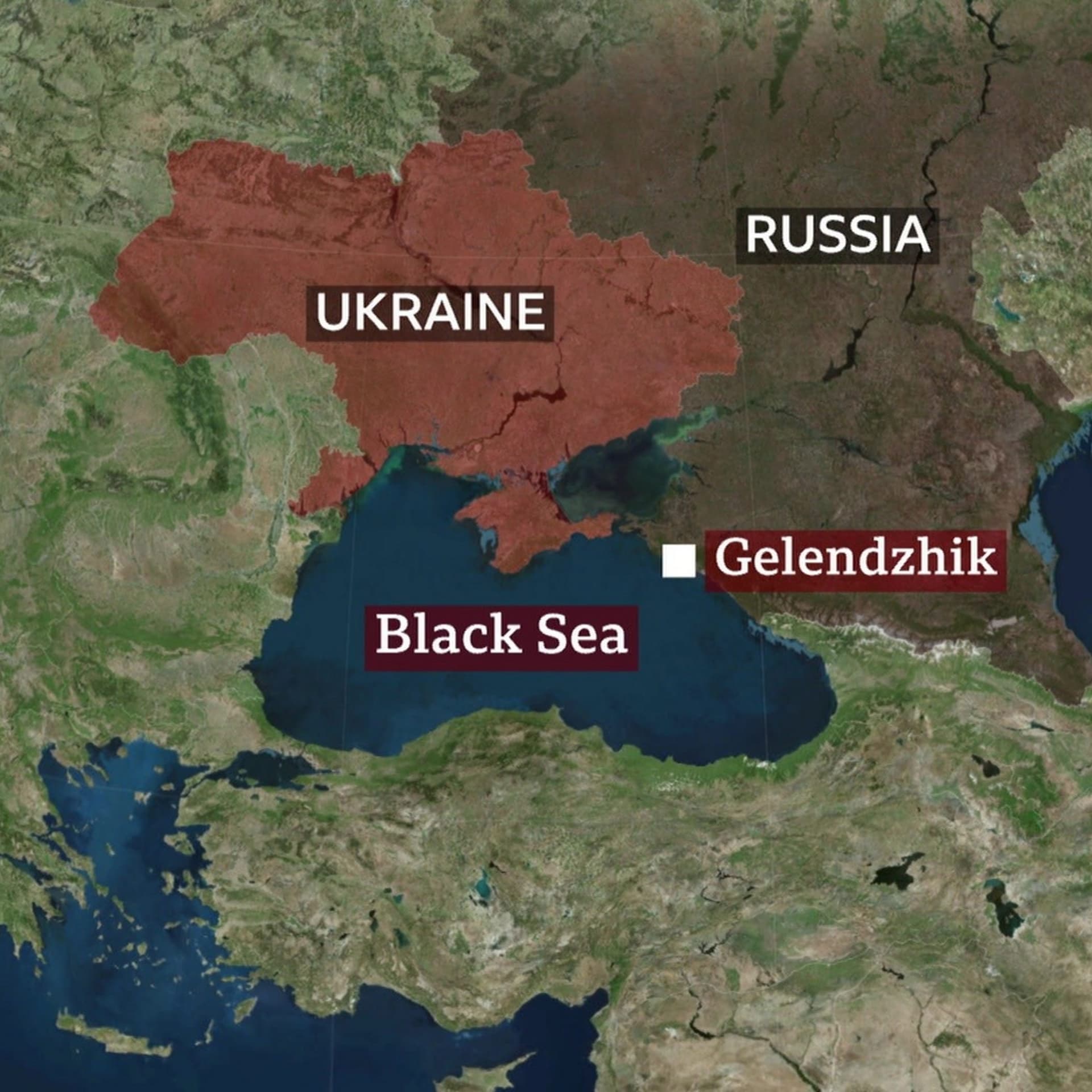
1:50Russia says it was a deliberate strike by Ukraine on civilians in broad daylight that claimed the lives of seven people, including three children, at a seaside resort. Ukraine still hasn't commented, but recently it's been stepping up its long-range attacks deep into Russia, mainly targeting oil refineries and e-commerce warehouses in what it says is a campaign to make Russians feel the cost of the war. James Landau has the details. In this war, both sides say they don't target civilians But civilians are paying a price, even on the beach The drone strike happened at a resort near Jelentschik on the Black Sea coast The authorities said seven were killed, including three children, with 40 wounded Witnesses said there were no warning sirens The sound of gunfire suggesting the drone may have been hit by air defences or electronic jamming, according to Ukrainian media.
2:52But the governor of this region, which is popular with Russian holidaymakers, accused Ukraine of a deliberate strike on civilians. Russia's foreign ministry accused Ukraine and its allies of terrorism. Vladimir Putin!
3:35And just a short drive away, a funeral for a family wiped out by a Russian missile strike last week. Coffins for the parents and three children, but none for five other children, still unaccounted for. Back in Russia, another Ukrainian strike on a warehouse owned by Wildberries, the country's largest online retailer. For Russian businesses and civilians, this war is coming closer to home. Now, Russia itself has repeatedly struck targets in Kiev and other Ukrainian cities too. Thousands of mostly Ukrainian civilians have died. But just how keenly are these recent attacks by Ukraine inside Russia now being felt?
4:18Here is our Russia editor, Steve Rosenberg. They are feeling the war. I think what struck me most was the contrast. You know, the contrast between the horror on that beach in southern Russia and the hurrah for Vladimir Putin. in Siberia, the cheers for Russia's president. It took my mind back to the day that Vladimir Putin launched the so-called special military operation. He made a speech, and at the very top of that speech, within seconds, he had claimed that what he was doing, he was doing for the security of Russia. Well, in the last few days, a bomb has exploded in a Moscow restaurant, killing people.
4:57People were killed on that beach in southern Russia. Ukrainian drones have been targeting oil refineries and wild berries warehouses. Russia today feels less safe and less secure. Those pictures of Vladimir Putin, those images, he looks supremely confident. There is no hint of self-doubt. He seems determined, despite everything that is happening around him, determined to continue fighting until he achieves what he believes will be his victory. A Russia editor Steve Rosenberg in Moscow there. Right now to reports of another apparent attack on shipping in the Strait of Hormuz. Britain's Maritime Security Agency says the crew of a cargo ship has issued an alert saying their vessel was hit by a projectile.
5:40It happened around 20 nautical miles northeast of Al-Hassab in Oman. It comes as the debate rages on as to whether the US and Iran are holding peace talks. President Trump says yes, Iran's foreign ministry says no. But Mr Trump claims it's the Iranians that are being economical with the truth. For some reason, when they're talking, they don't like saying that they're talking. So I say, wait, we're in talks. Big deal. We're in talks. And they'll sometimes deny it, even though they spend hours and hours together talking. No, the talks are going along. President Trump also accused oil companies of cashing in on the shortages caused by the war and suggested they cut their prices.
6:21I asked our Washington correspondent, Bernd DeBoosman, if those diplomatic talks are continuing or not. President Trump, for his part, has insisted that they are taking place, although we haven't heard any details of where they're taking place or between whom. But I think it's worth noting that President Trump and the White House have often accused Iran of saying one thing privately and saying another publicly. At times, they've suggested that Iran's public statements are also aimed at a domestic audience inside Iran that includes hardline members of the government or senior officials within the IRGC who are opposed to making concessions to the U.S.
6:58The same goes for Trump's assertion that he walked back planned strikes because there was diplomatic progress being made behind the scenes. This is at least the fifth time he's done this in this conflict alone. He did something very similar in May. And in July, he said he had planned very hard strikes inside Iran, but had been asked by U.S. allies to not do so because diplomatic progress was being reached. And then very little seems to have materialized publicly. The Strait of Hormuz is still contested and Trump doesn't seem to know exactly where the next step is in terms of these negotiations, or at least he's not saying so publicly.
7:35He is a president and a man who's made no secret of the fact that he likes companies making money. He's a business president, but he has hit out oil companies, hasn't he? He says they're actually making too much money. He did. He spoke out against Exxon and Chevron. Chevron's earnings were up about 400 % to 12 billion compared to 2.5 billion in the same period last year. And Exxon's were doubled to 14.5 billion dollars compared to about 7.1 in that same period a year ago. So on one hand, they are making a lot of money. But part of this is the fact that the Strait of Hormuz has driven up prices, which is something outside of the company's control.
8:13And I think President Trump also is speaking to a domestic audience that is extremely concerned that the war in Iran has forced them to pay more for petrol as well as for other goods. Farmers, for example, are paying much more for fertilizer. So I think by President Trump saying that he wants those companies to give some of that money back to the public and cut retail prices in some form. He's also kind of directly addressing those Americans, many of whom are Republicans, who have expressed concern about those prices. Yeah, because on the horizon are these midterm elections which are creeping ever closer.
8:47And that is a very tangible way that this war is affecting the American public. It is. And at least publicly, President Trump has been very dismissive that the midterms would have any sort of impact on his decision making in Iran. He's not on the ballot coming up in those midterms, but many Republicans are, and they'll be hearing from constituents or possible voters about those concerns about price. And I think that is something that the White House is keenly aware of. He's repeatedly over the last few months promised that prices would fall very quickly once fighting ends and there's some sort of longer term solution to the problem with Iran.
9:22But that hasn't materialized yet. And one poll that was just released on Friday by Reuters and Ipsos showed that only one in three Americans are supportive of the war. And that's the lowest it's been over the five month period. It was never particularly popular to begin with, but it's become increasingly unpopular because of the price issue. And because many Americans think it doesn't really have clear objectives that the president has set out, what exactly it is that the U.S. hopes to accomplish with this conflict. So Washington correspondent Bernd de Boosman. The family of the detained former leader of Myanmar, Aung San Suu Kyi, has welcomed her being allowed to meet a delegate from the Red Cross.
9:58It was her first confirmed contact with the outside world for two and a half years. Ms Suu Kyi's son, Kim Aris, who we heard from on our previous Global News podcast, says he believes the pictures released by the military government, showing her looking well, are genuine. Ms Suu Kyi, who's 81, has been in detention since her government was overthrown five years ago. Myanmar has been seeking to improve relations with the outside world, and in particular, its neighbour, Thailand. So is this move all about diplomacy? Our Southeast Asia correspondent is Jonathan Head. Entirely, yes. I mean, it must baffle a lot of people that the military government has refused to offer proof of life, despite the calls from Aung San Suu Kyi's family, and genuine concern.
10:42She's 81 years old. They had no idea what conditions she was being held in. The military government kept saying she was fine, but there was no proof. The fact that they've offered it now is entirely because the Thai government has asked for it. All Myanmar's neighbours, the members of the Association of Southeast Asian Nations, and Myanmar's a member, remember, have been asking for concessions from the military government, especially since it held its rather sort of rigged election earlier this year and turned itself into a notionally civilian government. They've all been saying, make more concessions, we will start to re-engage with you.
11:15Myanmar's been excluded from all the important meetings while this bloody civil war's gone on. The Myanmar military have been very reluctant to do that. They're being very stubborn about it. But the coup leader, Minong Lai, is due to visit Thailand on Thursday. This is a big diplomatic breakthrough for him. He's not been able to make these kinds of official visits to Southeast Asian countries since the coup. And the Thais, I think, essentially told him, we need to know Aung San Suu Kyi's alive. We can't afford to bring you here, which is very controversial, and then find out she's not alive. It's one of the cards the Myanmar military has decided to play to its own advantage.
11:49I think Aung San Suu Kyi may well understand that, that she's part of a diplomatic game. She's still so high profile and still so popular, particularly in areas that oppose the military government, that her fate, and ultimately one would assume her release, are inevitably going to be part of any process of either trying to settle the civil war, although the military is not making any concessions on that yet, or simply recognising that the military government is there to stay and must be dealt with. Yeah, but the fact this visit is going ahead would suggest then, wouldn't it, that this tactic is working?
12:23Yes, and I think, you know, some other Southeast Asian countries have been much more reluctant than Thailand to give Myanmar this kind of recognition, you know, a big official visit or a red carpet welcome. But China, the most important country in the region, which also has a long border with Myanmar, has fully backed the military government and is the main reason why it's recovered and it's got much better militarily at fighting the opposition. And I think Thailand's view is they also have a long shared border, lots of issues that need to be resolved, lots of problems being caused by the war.
12:53Thailand is one of the Southeast Asian countries saying, well, actually, whatever our distaste for the bloodshed of these generals and the killing they've done, we have to re-engage with them. I think inevitably other Southeast Asian countries, although they want more concessions from Myanmar, even if they don't get them, will eventually have to re-engage. This Myanmar military government now is there to stay. That's Jonathan Head. In the last two months, dozens of people have been killed in clashes between security officials and protesters across Pakistani-administered Kashmir, who say they're simply asking for basic rights such as affordable food, electricity and health care.
13:29The protesters are from a group called the Joint Awami Action Committee, or JAAC, which was banned by the authorities in June and its members labelled foreign-funded terrorists. They deny that accusation. They say they're peaceful and funded by the Pakistani community abroad, not by India. Despite the internet being cut off and roads blocked, the BBC is the first media organisation to gain access to the city at the heart of the protest, Rualakot. With her report on what the team found, here is our correspondent in Islamabad, Caroline Davies.
14:05Despair in the makeshift clinic. Shafqat Hussain came in with low vital signs, a gunshot wound to the chest. But his friends clasped his hand at his bedside, the sheets stained with the blood of the previous patients, and hoped until he passed.
14:25Like many in Ravlakot, Shafkat had been protesting for weeks. They started in June, led by the Joint Awami Action Committee, or JAAC, a group of local activists that have grown in influence since they formed in 2023. The authorities say the JAAC want to disrupt the ongoing regional elections, that they are armed, and that the authorities won't tolerate the march. There was a crackdown, leaving dozens dead, and violent clashes spread across Pakistan-administered Kashmir. Some security officers have died, but most casualties are protesters. Getting inside Ruralikot is difficult. Roads are blocked or guarded.
15:09The internet and phone signal cut. It's meant it's nearly impossible to know what is happening. When the team arrive, they find family after family mourning loved ones they say were shot dead in the protests. This woman lost her only son. He said martyrdom is a great honour. He fought for what was right. He never lived as a slave. Protesters don't trust the local hospitals, scared they'll be arrested, instead going to makeshift clinics. The doctor running it says they struggle to keep up.
15:45We have enough supplies to provide first aid. We can stop bleeding, clean and dress wounds and remove superficial bullets. But patients with serious injuries to the chest, abdomen, head or other vital organs need advanced hospitals. He says they've treated around 50 to 60 critically injured patients in the last week and that he personally treated 15 to 20 with gunshot wounds. Most, he says, were under 40 years old. The authorities have said security forces did not fire on peaceful protesters. but that law enforcement acted against individuals who were involved in attacks on law enforcement personnel, threatened public safety or obstructed lawful authority.
16:28They say it's not true that protesters have been arrested in hospital. The authorities accuse the JAAC of being foreign-funded terrorists and the group has been banned. The JAAC maintain they are peaceful, but we asked one of their core committee, Umar Nazir, about the deaths of security officers. Look, perhaps such deaths did occur. I will not comment on that. However, I believe that certain elements who are under their control were infiltrated into our ranks. They did not provide us with evidence on this alleged infiltration, and the authorities say the JAAC are running a disinformation campaign against them.
17:13The BBC did not see weapons or shooting at the protests they observed. The JAAC say they're open to talk, but there are more protests planned. That's Caroline Davies. Still to come in this podcast... You deliberately concealed your mother's death and took steps to give the impression that she was still alive. A British man who kept the body of his mother in a freezer for nearly three years while claiming her benefits is jailed.
17:49Chicago talks a lot. Hold on. Let me step over here. People are talking too much. We debate about food, deep dish, tavern style, who's got the best beef. We yell across rooms, across blocks, across generations. Yes, nice earrings, Grammy. And now we're doing it on our phones, too. Video calls from the L train, group chats that never shut up. Neighbors texting you the score before your TV catches up. Come on. Get a load of this guy. Catch up on a dog. Yeah, we've got thoughts. Too loud? In Chicago, you're gonna hear it. Because nothing here gets built without conversation. Nothing moves without connection.
18:27So if you think you know AT &T, it might be time to rethink that. Because their network has improved, like, a lot. So Chicago can keep speaking its mind with AT &T Wireless and AT &T Fiber. Chicago won't stop talking. Our improved network backs it up. AT &T, connecting changes everything. AT &T Fiber. Limited availability in select areas.
19:15Schwab has everything you need all in one place. Visit schwab.com to learn more.
19:45or listen to The Global Story on BBC.com or wherever you get your podcasts.
19:53This is the Global News Podcast. In Argentina, teachers have been marching through the capital Buenos Aires, demanding pay rises and denouncing job cuts under President Javier Millet's government. Sonia Alesso is General Secretary of the largest teaching union in Argentina. Today the average teacher's salary can't make it to the end of the month. They pay the rent and by the 15th they are left without money to live, to eat. In Argentina women are mostly the breadwinners. Plus at the moment workers are being fired. This is the situation under Javier Malay's government. Our America's expert from BBC Monitoring, Luis Fajardo, gave us more details about the teachers' grievances.
20:39Teachers are protesting over a number of issues. They are complaining that the government of Millais has implemented drastic reductions in spending on education throughout his time in office. This is not only primary and secondary education, but also university education. So they are complaining about budget cuts, job layoffs, and also about some legislation that the government is introducing that would allow for more private competition in areas that have been traditionally served by public education. For example, there would be more students allowed to participate in homeschooling. So this has created a lot of resistance.
21:20Now, Malay's made no secret that he wants to slash Kos, famously pictured with a chainsaw. So why is this coming to a boil now? The thing is that after several years, many Argentinians are asking, when is this austerity? When are these cuts going to finish? And when is the economy going to start prospering as he promised? There are some indications in Argentina's economy that have showed an improvement, for example, a substantial reduction in budget deficits. And this has also created many other impacts on the macroeconomic stability of the country. So that is presented as a positive result. But for many Argentinians, the fact is the paycheck in some cases doesn't really last for the entire month.
22:07And a lot of people are still seeing a lot of difficulty, a lot of hardship. Not only the education sector, but many other sectors in Argentina that have suffered the consequences of budget cuts and of restrictions and reductions in government services are starting to protest. I mean, how is this all affecting Malay's popularity more generally then? Milley has retained, of course, support during these years in office. Some people argue that a lot of it has to do with the enormous support that the Milley administration received from the United States, from Donald Trump. However, again, as electoral season approaches, it is not clear if Millet is going to continue maintaining these high levels of support that he needs to obtain re-election and to maintain his very ambitious project of economic reform and even social reform in Argentina to continue.
23:02So there is clearly a sector in Argentina that is not satisfied. Argentina has a famously militant labor union sector, and some of these labor unions are starting to flex their muscles as the electoral season approaches. That's Luis Fajardo. At least 18 people, including four soldiers, are reported to have been killed in attacks by gunmen in northwestern Nigeria. In Zamfara state, residents say attackers overran a military outpost before abducting more than 100 villagers. Around half of them are reportedly still being held hostage. There's been an upsurge in northwestern Nigeria of armed men kidnapping people for ransom.
23:41The government hasn't commented on these latest attacks. Our correspondent in Abuja is Chris Awoka. Over the weekend, it's been more of a tale of horror and tragedy. First in Gusso, in Zamfara State, at least four soldiers were reportedly killed by gunmen suspected to be bandits when they attacked a village in Kaurana Muda, local government area of Zamfara. They also got hold of about 102 villagers, abducted them, and then fled with them into the bush. But later, we understand that they were able to separate the women from the men, and they ordered the freedom women to go back home. And then they took their husbands into the bush.
24:24And the husbands, as we understand, remain in captivity. They're still being held. While that was happening in Zamfara, almost at the same time, there was also an attack in Sokoto state. Sokoto is also a neighboring state of Zamfara, also in the northwest. In a village called Lajinge, 12 persons were killed. Six of them were actually burnt alive. And what we understand from the residents, the attackers invaded the community at about midnight on Saturday and operated for several hours, even up to early hours of Sunday morning, without any intervention from security forces. Chris awoke her there.
Read the full transcript
25:04A British man's been jailed for keeping his dead mother's body in a freezer while continuing to claim her pension and benefits for almost three years. Six-year-old Christopher Phillips lied to relatives and the authorities, claiming the 89-year-old had moved from their home in South Wales to London. More from our Wales correspondent, Howard Griffith. Christopher Phillips was his mother Sylvia's main carer and lived with her until her death in March 2023. Instead of reporting her death to the authorities, two days later he bought a chest freezer, wrapped her body in a blanket and placed her inside, covering her with flowers.
25:44The court heard how he slept downstairs to be near his mother and would sometimes open the freezer to hold her hand. For almost three years, he continued to accept her pension payments, benefits and winter fuel allowance, a sum of more than£78 ,000. As she sentenced the 60-year-old, Judge Tracey Lloyd-Clark said his deceit was deliberate and sustained. You deliberately concealed your mother's death and took steps to give the impression that she was still alive. You continued to collect her prescriptions and lied to medical professionals and eventually to the police. Sylvia Phillips's body was discovered only when the local medical practice asked police to conduct a welfare check on her in February 2026.
26:30Christopher Phillips initially claimed she was staying with family in London before officers found the freezer in the dining room. He was sentenced to two years and four months in prison after pleading guilty to fraud and preventing a lawful and decent burial. That report was by Hoel Griffith. Ten months after the US brokered ceasefire between Israel and Hamas, the peace plan has yet to deliver much of its promise. Israeli forces have continued deadly strikes on Gaza, even since President Trump announced a deal last week between his Board of Peace and Hamas on disarmament. Most Gazans still live in tent camps or in the rubble of half-destroyed homes, but in the most trying circumstances, some are trying to connect to the outside world and make a living with their laptops.
27:15Israel imposes tight restrictions on foreign journalists entering Gaza, so our Middle East correspondent Yolan Nell has been speaking online to local tech workers. I lost all my equipment, I lost my house, I lost my office, and I was thinking that is the end of the world here in Gaza. Mahren Bayed, his wife and three young children, now live in a tent in Gaza City. Despite his ruined surroundings, he's one of thousands of well-educated Gazans trying to make a living online, coding and programming. I can work here in Gaza. Anything that is in the freelancing work, starting from mobile application for iPhone, Android, Flutter, to websites, even ads.
27:56So anything that can be worked remotely, we can do it here in Gaza. With Gaza's economy all but destroyed and 80 % of people with no income, NGOs see the potential of remote work to fill a desperate need. It's really critical. I mean, we talk about it now as sort of a digital lifeline, this idea that if you have a laptop, if you have a working internet connection, you can work and earn income. Nicole Hark is country director for the American NGO Mercy Corps, which is trying to help Gazans, focusing on training, getting contacts for freelancers and supporting the new independent co-working spaces that are popping up in Gaza City and elsewhere.
28:36It's really critical to help people get back to work. They don't want to be dependent on aid. They're not looking to sit there and do nothing, right? But it's really finding a safe space and finding something that's affordable and that continues to have consistent electricity and the internet is shockingly incredibly difficult. These hubs have generators and solar panels to provide power and a better internet connection, while most of the population is still living in tents. So let's start with AI engineering. Wala Valides is a 24-year-old computer software engineer and her family's main breadwinner.
29:10Today, she's talking to one of her mentors based in California's Silicon Valley. I have lots of international mentors who not just help me in the technical skills, also in the soft skills, also in the mental health. My mental health, it's not in zero, it's in minus. So, yeah, if you want to complete despite all of these struggles and circumstances, or do you want to just wait for a miracle to happen, and absolutely it will not happen if you don't do anything. Walat has recently got a full-time job with a Dubai-based company. With almost daily bombings, as Israel says it's continuing to target Hamas, safety is still a big concern.
29:53And there are plenty of other challenges for tech-savvy Gazans to overcome, as well as the unstable electricity and internet. Banking restrictions make it difficult to be paid. at Klafia. Nahran is finding it hard to get his laptop screen repaired at this makeshift workshop. There are tight Israeli restrictions on what comes into Gaza, including computer parts, because Israel sees them as having a possible military use. This test is very hard for us, but we are trying to survive. We are trying to say thanks God for what we can do and we start our life again. Gaza's wider recovery may be at a standstill, and yet its tech workers give a glimpse of a brighter possible future.
30:36Yolan Nell in Jerusalem. That's all from us for now. If you want to get in touch, you can email us at globalpodcast at bbc.co.uk. You can also find us on X at BBC World Service. We have a sister podcast called The Global Story, which goes in-depth and beyond the headlines on One Big Story. This edition of the Global News podcast was mixed by Darcy O 'Brie. The producer is Emma Joseph. The editor is Karen Martin and I'm Will Chalk. Until next time, goodbye.
From the publisher
Russia says a Ukrainian drone has killed seven people, including three children, on a beach near the Russian Black Sea resort of Gelendzhik. The regional governor accused Ukraine of a deliberate strike on civilians, while Russia's foreign ministry called it an act of terrorism. There was no immediate comment from Ukraine. Both countries have always denied deliberately targeting civilians. Also: Iran insists no peace talks are happening, but Donald Trump insists they are; meanwhile another cargo vessel is reportedly struck in the Strait of Hormuz. We have an exclusive BBC report from Pakistani-administered Kashmir, where deadly clashes with protestors have been taking place. How Myanmar's efforts to end its diplomatic isolation could be boosted by the release of photos of the detained former leader, Aung San Suu Kyi. At least 18 people are reported to have been killed in attacks by gunmen in northwestern Nigeria. Teachers in Argentina are on strike over pay and job cuts. And we meet the Gazans still working in tech - despite living in tents.
The Global News Podcast brings you the breaking news you need to hear, as it happens. Listen for the latest headlines and current affairs from around the world. Politics, economics, climate, business, technology, health – we cover it all with expert analysis and insight. Get the news that matters, delivered twice a day on weekdays and daily at weekends, plus special bonus episodes reacting to urgent breaking stories. Follow or subscribe now and never miss a moment. Get in touch: globalpodcast@bbc.co.uk Photo: Map showing Russia, Black Sea, Ukraine and Gelendzhik Credit: BBC