
In short
Global News Podcast: Episode Summary
Episode Title: UN backs Trump's Gaza peace plan Air Date: November 18, 2023
Episode Overview
The podcast discusses significant global events, primarily focusing on the UN Security Council's approval of a US-drafted resolution that supports Donald Trump's Gaza peace plan. The episode also covers various international news stories, including violence in the occupied West Bank, a kidnapping in Nigeria, an explosion in Poland, updates from COP30 (the UN Climate Change Conference), an interview with Google's CEO regarding AI, and issues surrounding ticket resellers.
---
Key Topics Covered
- UN Security Council Resolution on Gaza
- Approval of Resolution:
- The UN Security Council passed a resolution endorsing Trump’s Gaza peace plan, achieving 13 votes in favor, with Russia and China abstaining.
- Main Elements:
- Establishment of a Board of Peace to oversee a transitional administration.
- Introduction of an International Stabilization Force aimed at disarming non-state armed groups like Hamas.
- Reactions:
- Trump's Perspective: Trump hailed the resolution as a historic victory that would foster global peace.
- Israeli Concerns:
- Prime Minister Benjamin Netanyahu expressed strong opposition to the plan’s reference to a Palestinian state, reflecting backlash from Israel’s far-right factions.
- Hamas's Response: Hamas rejected the resolution, claiming it undermines Palestinian self-determination.
- Criticism of the Resolution:
- Critics, including Russia and China, pointed out the lack of clarity in the resolution regarding the composition of the proposed stabilization force and the insufficient commitment to a future Palestinian state.
- Violence in the Occupied West Bank
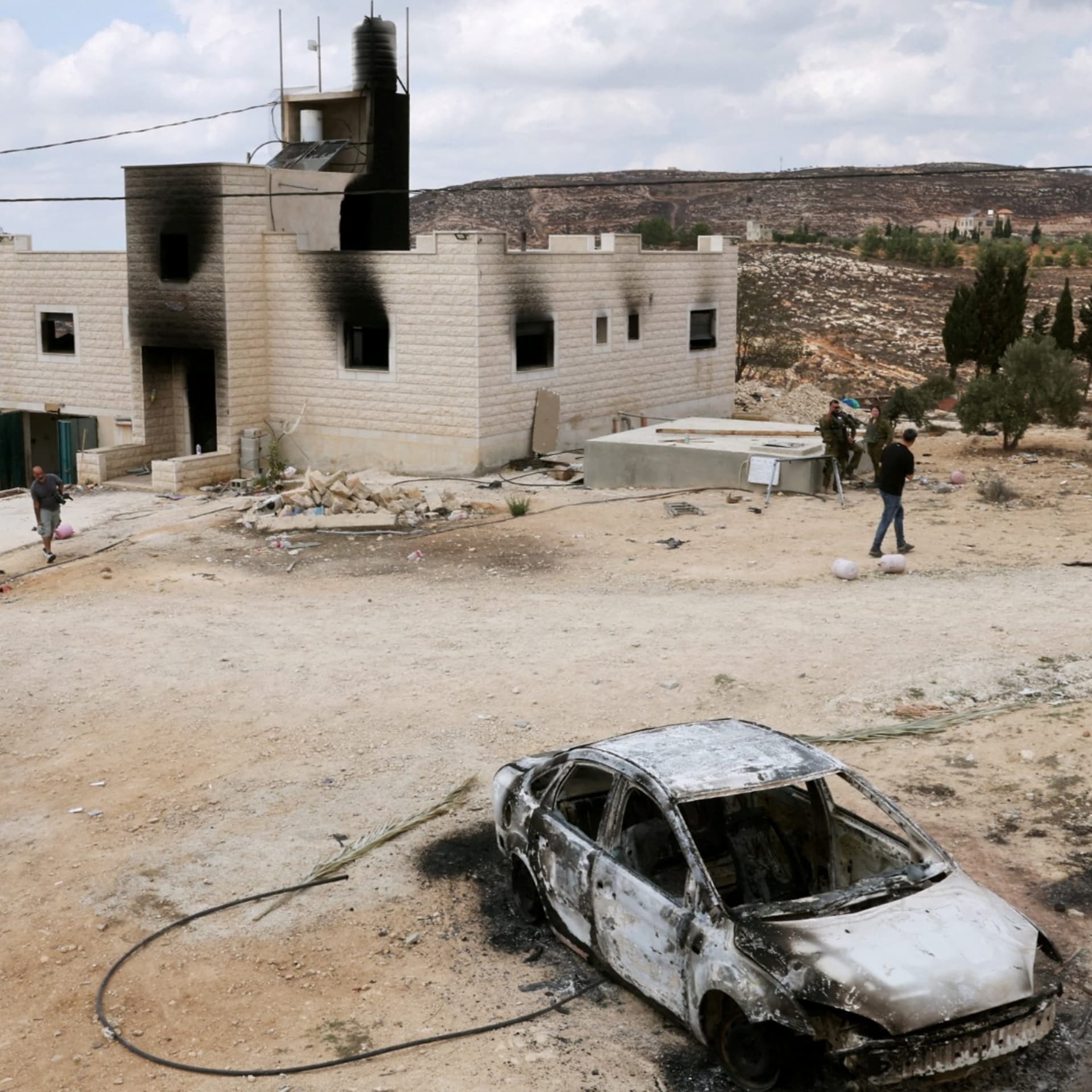
- Reports of increasing attacks by Israeli settlers on Palestinians, with the UN stating such incidents are at their highest in 20 years.
- Netanyahu condemned the violence, but Palestinians accused the Israeli government of enabling such acts.
- Kidnapping of Students in Nigeria
- Armed men abducted at least 25 students from a girls' school, marking another instance of mass abduction in the region.
- The government faces pressure to locate the missing students quickly, with past instances showing that abductions often lead to ransom negotiations.
- Explosion in Poland
- An explosion damaging a crucial railway line to Ukraine raised concerns of a hybrid war, with Polish authorities suspecting involvement from foreign intelligence services.
- PM Donald Tusk labeled the attack as sabotage, amidst ongoing tensions related to the conflict in Ukraine.
- COP30 Climate Conference
- Negotiations at COP30 continued, focusing on financial support for poorer countries to reduce carbon emissions and enhance their plans to limit CO2.
- Concerns linger about India's failure to submit a new carbon-cutting plan, despite significant advancements in renewable energy projects domestically.
- Interview with Sundar Pichai, CEO of Google
- Pichai discussed the transformative impact of AI technologies and emphasized the need for caution regarding their reliability and the potential consequences of over-investment.
- He highlighted the importance of using AI responsibly, pointing out the necessity for a diverse information ecosystem beyond just AI-generated content.
- Issues with Ticket Resellers
- The UK is moving towards a ban on profit-making ticket resale, a topic highlighted by fans’ frustrations with inflated prices for concert tickets.
- Various artists and bands have pushed for government action against scalpers, signaling a significant shift in ticket sales practices.
- Upcoming Jake Paul vs. Anthony Joshua Boxing Match
- The episode previews a boxing match between Jake Paul and Anthony Joshua, reflecting the evolving nature of sports entertainment and its intersection with social media.
- Word of the Year
- The Cambridge Dictionary announced "parasocial" as the word of the year, signifying one-sided relationships formed with public figures and influencers.
---
Key Takeaways
- UN Resolution: Represents a significant but contentious step in Middle East diplomacy, facing pushback from Israel and Hamas.
- Kidnapping in Nigeria: Highlights ongoing security challenges in the region.
- COP30: Underlines the urgency for global cooperation in climate action, particularly from major emitters like India.
- AI Discussion: Emphasizes responsible use and the challenges of integrating AI into society without compromising accuracy.
- Ticket Resale Ban: Illustrates consumer pushback against profiteering in the entertainment industry.
---
Conclusion The episode encapsulates a variety of pressing global issues, showcasing the complexities of international relations, security, climate change, technology, and social dynamics. For further updates, listeners are encouraged to subscribe to the Global News Podcast for the latest developments.
Written by AI. May contain mistakes. Listen to the episode to check what was said.
Transcript
Automatic transcript. May contain errors.0:00This BBC podcast is supported by ads outside the UK. If journalism is the first draft of history, what happens if that draft is flawed? In 1999, four Russian apartment buildings were bombed, hundreds killed. But even now, we still don't know for sure who did it. It's a mystery that sparked chilling theories. I'm Helena Merriman, and in a new BBC series, I'm talking to the reporters who first covered this story. What did they miss the first time? The History Bureau. Putin and the apartment bombs. Listen on BBC.com or wherever you get your podcasts. This is the Global News Podcast from the BBC World Service.
0:48I'm Charlotte Gallagher and in the early hours of Tuesday, the 18th of November, these are our main stories. The UN backs Trump's Gaza peace plan. Israeli settlers continue to attack Palestinians in the occupied West Bank, and an explosion in Poland fuels fears of a hybrid war. Also in this podcast, we hear about AI from the head of Google. You have to learn to use these tools for what they are good at and not blindly trust everything they say.
1:26We begin in New York where a UN resolution that supports Donald Trump's Gaza peace plan has been put out to a vote. The result of the voting is as follows. 13 votes in favour, zero votes against, two abstentions. The draft resolution has been adopted. The US drafted resolution was approved by the Security Council after Russia and China abstained. It sets the stage for a stabilisation force in Gaza, which the US Ambassador Mike Waltz said would chart a new course in the Middle East. Thank you to the council members for this historic and constructive resolution. Today's resolution represents another significant step towards a stable Gaza that will be able to prosper and an environment that will allow Israel to live in security.
2:20President Trump has also hailed the vote, claiming it would lead to peace all over the world. But Israel has taken issue with parts of the UN resolution, and Hamas has said it fails to respect the demands and rights of the Palestinians. Details about how the next phase of Mr. Trump's peace plan will work also remain vague. I spoke to our correspondent at the UN, Neda Taufik, who began by explaining what the Security Council has approved. The resolution essentially endorses Donald Trump's Gaza peace plan and really sets out key elements for phase two of that plan. So, for example, it authorizes a board of peace, which is a transitional governing body that would work with a Palestinian committee.
3:05And that would do things such as, you know, work on the reconstruction of Gaza, work on the delivery of humanitarian aid. And it also sets out something called an international stabilization force. Again, that would work with Israel and Egypt, but have a newly kind of vetted Palestinian police force working alongside it. And the key for that is to essentially disarm the Gaza Strip from any armed non-state groups such as Hamas and to secure some of the border areas. But honestly, with both those key mechanisms, there's really no clarity about their composition. And so that was a key criticism from Russia and China, which although they didn't exercise their vetoes, they abstained to let this resolution pass because the Palestinian Authority and others in the Arab and Muslim world wanted this resolution, those diplomats.
4:06But those were some of the criticisms they flagged, saying it doesn't have enough UN participation and doesn't have a firm enough commitment to a Palestinian state in the future. So it's a win for Trump. But what kind of reaction have we had from Israel and Hamas? Yeah, President Trump has basically said this is a victory of historic proportions and he's going to announce the Board of Peace, who will be on it in the coming weeks and that he will chair it. But a very different reaction from both Israel and Hamas. Israel's Prime Minister Benjamin Netanyahu reiterated that he strongly opposes the creation of a Palestinian state.
4:44And the resolution kind of mentions and references a credible pathway to a Palestinian state. And that was done after pushback from several nations, including Arab nations, that they wanted stronger language in the resolution. So even though it's not the strongest resolution about a Palestinian state, it was enough to anger Israel and very much so the far right wing of Benjamin Netanyahu's party. Hamas also swiftly rejected the resolution. They claimed that, you know, this would just take away Palestinian self-determination. They said that they are against disarming and they said that any body coming in would be pro-Israel and just entrench Israel's occupation.
5:26So what happens next? You mentioned there that Trump would be announcing who was on the board. But when would people in Gaza start to see any changes? Well, I think that's the big question. You know, I had several diplomats saying that although this sets out the framework and very much puts Donald Trump's peace plan in the Security Council's purview, because the Board of Peace would have to report biannually to the Security Council, diplomats underscored that the negotiations happening are largely out of their control. It's happening on the ground between the US and the other parties. So really, it's not clear at all how long it will take to decide who will be on this board of peace, who will make up this international stabilization force, which countries will contribute troops.
6:14All of that is still very much in the future. Nedda Taufik. The Israeli Prime Minister Benjamin Netanyahu has condemned violence committed by what he called a handful of extremists among Israeli settlers in the occupied West Bank. The Palestinian village of Al-Jaba near Bethlehem was targeted. From Jerusalem, here's our correspondent John Donison. This is just the latest violent attack by Jewish settlers. Video shows the masked youth storming Al-Jaba village with batons and throwing stones. The United Nations recently said the number of such attacks on Palestinians is at its highest level for 20 years since it began collecting data.
6:56Israel's Prime Minister Benjamin Netanyahu said the rioters would be prosecuted and that he viewed the latest incident with great severity. But Palestinians accuse his government of letting the settlers act with impunity. Mr Netanyahu's cabinet contains two right-wing extremist ministers who have been accused of inciting such violence, even handing out guns to settlers. That was John Donison. The artificial intelligence revolution is firmly underway, with tech giants investing billions in research and battling to secure key technologies and assets. It's led to a boom in the stock market, but also panic about the potential impact on jobs and society.
7:38Google is one of the tech giants investing heavily in AI with its Gemini tool. In an interview with its CEO Sundar Pichai, the BBC's Faisal Islam, asked him about the impact of this technology. Every decade or so, you know, you have this inflection points. You know, you have a new technology. It was a personal computer at one point, the internet coming in the late 90s. Then it was mobile. Then it's been cloud, what we call as cloud. Now it's clearly the era of AI. And do you have a sense of the scale? You know, maybe four years ago, Google was spending less than$30 billion per year. This year, that number is going to be over$90 billion.
8:21And if you collectively add what all the companies are doing, you know, we have well over a trillion dollars of investment going in, in building the infrastructure for this moment. And one way I think about it is in the next couple of years, we'll end up building what we probably built in the past 10 to 20 years. Now, you mentioned some of those phases of technological advancement that happened with much market excitement as well. And the obvious question is around the whole of this country, around the whole of the world right now, is it a bubble? Given the potential of this technology, the excitement is very rational.
8:56It's also true when we go through these investment cycles, there are moments we overshoot. We can look back at the internet right now. There was clearly a lot of excess investment, but none of us would question whether the internet was profound or did it drive a lot of impact. It's fundamentally changed how we work digitally as a society. I expect AI to be the same. So I think it's both rational and there are elements of irrationality through a moment like this. No company is going to be immune, including us. If you overinvest, you know, we'll have to work through that phase. But the whole point of the value and productivity kind of offer to companies that are buying all your goods and your services is to automate many human tasks, is it not?
9:44Let me put it this way. I think people today are juggling many things and people are overloaded. We've always had, back in the history, it could be a dishwasher coming to your home. I remember growing up when we got our first refrigerator in the home, how much it radically changed my mom's life. It freed her up to do other things. So let's take the example of a radiologist. The number of scans people are getting is growing year on year. And the number of images per scan is also rising pretty significantly. How do you help an radiologist cope up with this increased demand? Maybe an AI tool can help that way.
10:24So I think that's what you will see more or less. All of the hopes, the hype, the valuations, the social benefit of this transformation you've just described, they're built on a central assumption that the technology functions, that it works. Let me propose one simple test. If Gemini is accurate, always, does it tell the truth? Look, we are working hard from a scientific standpoint to ground it in real world information, right? And there are areas, part of what we have done with Gemini is we have brought the power of Google Search. So it uses Google Search as a tool to give answers more accurately.
10:57But there are moments these AI models fundamentally have a technology by which they're predicting what's next. And they are prone to errors. You know some of the examples. There was an example of glue as a pizza ingredient, a sitting senator wrongly accused of assault. This is bad, isn't it? Today, I think we take pride in the amount of work we put in to give as accurate information as possible. But the current state-of-the-art AI technology is prone to some errors. This is why people also use Google Search. And we have other products which are more grounded in providing accurate information. So you have to learn to use these tools for what they are good at and not blindly trust everything they say.
11:40The information ecosystem has to be much richer than just having AI technology being the sole product in it. The scale of the AI build-out you've just described so vividly is creating another trade-off, not just for you, but for humanity, on energy. I think this is an opportunity to be frank, Mr. Pichai, with the world. Is there a new calculus now? Is the build-out of AI more important than climate? Over time, I don't think this doesn't need to be a trade-off or a zero-sum game. So you're right, AI is dramatically increasing demand for energy in a way that the current systems can't fully cope up.
12:16But that is driving extraordinary investments in solar, in battery technology, in nuclear technology and other sources. So I think I am, as a technologist, I'm optimistic that we will have abundant sources of renewable energy in the future. That was Faisal Islam speaking to the Google CEO Sundar Pichai. The authorities in Poland say that an explosion over the weekend, which damaged a key railway line to Ukraine, was committed for a foreign intelligence service. Russia has denied Poland's repeated accusations of a hybrid war. Our correspondent Sarah Rainsford reports. Poland's Prime Minister Donald Tusk visited the scene of the explosion this morning and then posted a video on social media calling the blast an unprecedented act of sabotage.
13:06In a sign that he doesn't think mere criminals are to blame, Donald Tusk vowed to catch those responsible, whoever their backers are. Ever since Russia's full-scale invasion of Ukraine, Poland's rail network has been a vitally important supply route for its neighbour, and this blast targeted one of the main lines to Ukraine's border. The explosion happened on Saturday night, but the impact was only spotted early on Sunday when a train came to an emergency stop just before the gap in the rails. No one was hurt. Further down the same line, a second suspected case of sabotage is now being investigated.
13:43Poland's security services minister says there's a very high chance the explosion was ordered by foreign services. He didn't name Russia directly, and Moscow always denies any role. But there have been multiple cases of arson and sabotage in Poland in recent years, which Warsaw links to Russian intelligence. Part of a hybrid war that isn't stopping and in which Poland is right on the front line. That was Sarah Rainsford. Still to come. Now looking back on it, it gets me annoyed that people are allowed to do that and put us fans into a position where we have to pay that much to be able to see a concert.
14:24How the UK is trying to stop fans being ripped off by resale concert tickets.
14:37If journalism is the first draft of history, what happens if that draft is flawed? In 1999, four Russian apartment buildings were bombed, hundreds killed. But even now, we still don't know for sure who did it. It's a mystery that sparked chilling theories. I'm Helena Merriman, and in a new BBC series, I'm talking to the reporters who first covered this story. What did they miss the first time? The History Bureau, Putin and the apartment bombs. Listen on bbc.com or wherever you get your podcasts.
15:15To Nigeria, where police say armed men have abducted at least 25 students from a girls' school in the northwest of the country. A teacher was killed trying to protect the girls and a second member of staff was injured. A search and rescue operation is underway. Alex Ritson spoke to our correspondent, Krissa Walker in Abuja, who told him more about the kidnapping. At the moment, no group has claimed responsibility. However, this is not the first time we're seeing this kind of mass abduction of students. And usually in the past, some of these kidnaps are intended for ransom. Usually the government does not say it pays ransom, but history shows that when abduction of this type happened, it could lead to payment of ransom, sometimes through community intermediaries, religious leaders, or a kind of informal kind of agreement.
16:10But at the moment, the government would be under pressure just to find these girls and to prevent a situation like this happening again in the country. But it's not always for ransom, is it? It has in the past also been for religious reasons. In April 2014, when nearly 300 schoolgirls in Chibok were abducted, it was basically for religious reasons, because then the ideology was, as the name indicates, Boko Haram, which means Western education is forbidden. So they particularly targeted that school as a way of driving the agenda of not allowing Western education to thrive. But from that time till now, strategies have evolved.
16:53And in this case, we're looking at a group of armed gangs or militia, known locally here as bandits, whose stock in trade appear to be making an industry out of kidnapping and possibly gaining some financial reward. Chris, you've spoken to some of the girls' families. What are they saying? When the news filtered out this morning, some parents, many of them rushed to the school and desperately trying to confirm whether their daughters were among those taken. Parents are frightened, especially because nothing's been heard from them. And there is a push for the authorities to try to get the girls rescued before they could be taken deep into the bush, into the forest, or even they could be divided into groups and scattered among different camps of bandits within the hub where they operate.
17:50And some of these hubs are less policed by security agencies. Very briefly, Chris, do these things normally end well? Well, in the past, we've had a situation where some of them were released, but usually it is not all of them. Other kidnapping incidents that we have witnessed, some are released, but not all of them are usually released. That was Krista Walker speaking to Alex Ritson. Negotiations at COP30 in Brazil have gone late into the night as negotiators eke out compromises on the most contentious questions, how to find money for poorer countries to cut carbon emissions and how to improve the plans that countries already have to limit the release of CO2.
18:32One of the most important countries in the negotiations is India, but there's concern among some observers that the world's third largest emitter hasn't yet submitted a new carbon cutting plan, as every nation is required to do so this year. So what's going on? Our environment correspondent Matt McGrath, who's in Belém for COP30, has more. In over 30 degrees of heat here in Belem, Britain's climate secretary Ed Miliband had what's described as a fireside chat with his Indian counterpart Vupender Yadav. Mr Miliband, who visited India earlier this year, was unstinting in his praise for the remarkable progress the country has made as it started to transition its economy away from fossil fuels.
19:18My observation for talking to Minister Gatav and others is that India is doing this because this is the right thing for future generations, but it is also the right thing for today's generation. So why then hasn't India, the world's third biggest emitter of carbon, published a new plan to cut those emissions? Those plans are called nationally determined contributions, or NDCs in the jargon of the COP. 110 other countries, including the European Union and China, have managed to publish theirs to date. So will this lack of a new plan diminish India's standing in these talks? I put that question to Dr.
20:00Arunaba Ghosh, South Asia COP30 climate envoy. I don't think it is hampering for a different reason, which is that at home, India has delivered more than what its NDC 2.0 has promised. For instance, earlier this year, it kicked off a critical minerals mission with a big focus on recycling. And therefore, that will drive the battery revolution story. It sold 1.9 million electric vehicles last year, most of which were for public transport. We are not trying to sell subsidized Teslas. We're trying to actually make sure poor people have access to sustainable transport. India has the world's largest solar irrigation program underway.
20:47It has one of the world's largest solar rooftop programs underway. It was announced last year for 10 million homes. Already nearly 2 million, about 1.5 million homes have got solar rooftop. That's all fine in India. That's the things you're doing. But here, what's happening with relation to a roadmap or a conclusion? Your question was, is the submission of an NDC holding back? Why should it hold back? Ultimately, if this is the cop of implementation, you have to look at who's implementing rather than who's speaking. Matt McGrath with that report. Now, have you ever been in a situation where you're desperately trying to get tickets to a concert, it sells out, and then just seconds later, those tickets start popping up on resale sites for hundreds of dollars more than they first cost?
21:34It is something that's happened to me and it is so annoying. The UK is understood to be joining a handful of other countries in banning reselling tickets for a profit. Will Chalk told me more. Yeah, you say you've been there, I've been there as well. I tried to give a Taylor Swift tickets, I couldn't get them because I wouldn't pay£1 ,000. Yes, Taylor Swift, it also happened to me, I ended up paying hundreds of dollars. For my tickets to Taylor Swift's Eris Tour, the face value was about$50 originally, I think. It's nothing on Bridget Saric though. She is a Taylor Swift super fan, originally from Australia.
22:05She ended up paying around$900 for her Taylor Swift ticket, and it was originally sold for around$200. At the time, I was just, I wanted to do anything to get into that concert, so I was just happy to pay that. But now looking back on it, it gets me annoyed, like, that people are allowed to do that and, like, put us fans into a position where we have to pay that much to be able to see a concert that is not worth that much, if you get what I mean. So Bridget there speaking for a lot of people, I think. So this would be a long-awaited change from the government. It was actually one of their general election pledges to tackle touts.
22:43But that's quite vague, tackle touts. What does that actually mean? Well, for a while, people thought the plan was going to be to ban reselling tickets for 30 % more than the original price. But now it's actually thought it's going to be a complete ban on reselling tickets for a profit. So we're expecting confirmation of this on Wednesday. It comes after some big names, talking Dua Lipa, Radiohead, Coldplay, all signed an open letter to the government calling for more action last week. But if this is confirmed, it means a lot of people in ticket websites such as StubHub or Viagogo, they'd stand to lose a lot of money.
23:18And then, of course, there are the touts themselves. Mark bleeds there, Will, for the ticket touts. It really does. Well, research from a campaign group, Fairfax, suggests that there are lots of these touts about. So 90 % of tickets on resale platforms they claim in the UK are listed by traders. And that's someone who sells more than 100 tickets per year. So you say your heart's bleeding. OK, but could this be bad for business, even if it is an unpopular business that makes people angry? Well, I asked Richard Davies, who founded the website Twickets. That's a ticket resale site where you have to sell at face value.
23:51They make money by charging the sellers and buyers a fee. Richard told me they are proof that profiteering isn't necessary. This is a sustainable, viable business that makes a profit. We've long believed that there's a business to be had in doing the right thing, in providing fans with what they're looking to achieve, which is simply sell tickets that they can no longer use and for buyers a second chance really to get a ticket, often for a sold out event that they missed out on in the first place without getting ripped off. And the UK isn't alone in doing this. No, countries including France, Norway, Australia, Ireland and some others, they already have either a total ban or, as we discussed before, a maximum percentage that you can make as a profit.
24:37But it's not a popular idea everywhere. Here is Richard Davies again. Well, I'd say the worst market undoubtedly is the US. we operate in the US but we haven't seen a huge amount of uptake yet we work with local artists there bands like the food fighters for instance have been very big supporters of us but beyond the individual artists themselves there's not a huge appetite for change in the US right now now as I said before we haven't had this officially confirmed yet and the government haven't commented either but it is expected that this wouldn't just affect live music it would also affect theatre, comedy and maybe even sporting events soon.
25:17And as I say, confirmation expected on Wednesday for this. And that was Will Chalk. A year ago this week, the YouTube star Jake Paul defeated boxing's two-time heavyweight champion Mike Tyson in a televised fight watched by tens of millions of people. Now Jake Paul is to face another former champion, Britain's Anthony Joshua. And in a sign of how the sport is evolving, the bout will again be shown not by pay-per-view TV but on Netflix Katie Gornall reports. A few years ago it would have been unthinkable that a former world heavyweight champion like Anthony Joshua would step into the ring with a social media influencer.
25:54It's not one for the purists but such is the draw of YouTube star turned boxer Jake Paul that next month's fight will be one of the most watched fights in the history of the sport. Last year Paul's exhibition bout with 58-year-old Mike Tyson attracted more than 100 million viewers, but Joshua is much closer to his prime. Nikisa Bedarian is Jake Paul's business partner and co-founder of Most Valuable Promotions. It's a career-defining moment for both fighters. For Jake Paul, it's a chance to show the world how far he's come. And for Anthony Joshua, it's a chance to end the Jake Paul train. I don't think it's reckless in any way, shape or form.
26:32In a statement, Joshua said, a lot more fighters will take these opportunities in the future. and about to break the internet over Jake Paul's face. It will give the Olympic gold medallist one of the biggest paydays of his career, but at what cost? Here's boxing promoter Frank Warren. But who it's more dangerous for is AJ. If AJ gets caught or he looks bad, he's dumb. People are paid to watch it. It's a car crash, isn't it? The fight will take place next month in Miami and promises to be a night fuelled by followers as much as fighters. That was Katie Gornall. The Cambridge Dictionary has chosen parasocial as its word of the year for 2025.
27:09It refers to the one-sided bond people feel with public figures that they've never met. The term was first used in the 1950s when sociologists noticed viewers forming emotional connections with television personalities. In the internet age, it's come to describe similar attachments to influencers, celebrities and even AI chatbots. and that's all from us for now but there will be a new edition of the global news podcast later if you want to comment on this podcast or the topics covered in it you can send us an email the address is global podcast at bbc.co.uk you can also find us on x at bbc world service use the hashtag global news pod this edition was mixed by derrick clark the editor is karen martin i'm charlotte gallagher until next time goodbye
Read the full transcript
28:03If journalism is the first draft of history, what happens if that draft is flawed? In 1999, four Russian apartment buildings were bombed, hundreds killed. But even now, we still don't know for sure who did it. It's a mystery that sparked chilling theories. I'm Helena Merriman, and in a new BBC series, I'm talking to the reporters who first covered this story. What did they miss the first time? The History Bureau, Putin and the apartment bombs. Listen on bbc.com or wherever you get your podcasts.
From the publisher
The UN Security Council has approved a US-drafted resolution to move to the next stage of Donald Trump's Gaza peace plan. It aims to set up a transitional administration and international stabilisation force, but the details remain vague. Israel has taken issue with parts of the resolution and Hamas has rejected it. Also: Israeli settlers continue to attack Palestinians in the occupied West Bank; students are kidnapped from a girls' boarding school in Nigeria; an explosion in Poland fuels fears of hybrid war; the latest from COP30; an exclusive interview with Google's boss about AI; how to stop ticket resellers ripping off fans; Netflix confirms Jake Paul vs Anthony Joshua boxing fight, and what's the word of the year?
The Global News Podcast brings you the breaking news you need to hear, as it happens. Listen for the latest headlines and current affairs from around the world. Politics, economics, climate, business, technology, health – we cover it all with expert analysis and insight. Get the news that matters, delivered twice a day on weekdays and daily at weekends, plus special bonus episodes reacting to urgent breaking stories. Follow or subscribe now and never miss a moment. Get in touch: globalpodcast@bbc.co.uk