
In short
Global News Podcast Episode Summary
Episode Title
US: 'Achievable Objectives' in Iran in Four to Six Weeks
Episode Overview This episode of the Global News Podcast provides a comprehensive update on the ongoing conflict in the Middle East, focusing on the military operations involving the United States and Israel against Iran and its allies. The podcast covers various perspectives, including the U.S. administration's objectives, the impacts on civilian life in the region, and the wider economic ramifications of the war.
Key Topics and Discussions
U.S. Military Objectives
- Press Secretary's Announcement:
- Karoline Leavitt stated that the U.S. aims to achieve its military objectives in Iran within four to six weeks.
- Specific goals were not detailed, but the emphasis was on unconditional surrender of Iran.
- Military Achievements:
- Claims of significant damage to Iran's military capabilities, including destruction of naval assets and missile systems.
- Trump characterized the military campaign's success rating between 12 to 15 on a scale of 10.
Iranian Response
- Defiance from Iran:
- Iranian officials, including Deputy Foreign Minister Saeed Khatib Zaydah, affirmed their commitment to resist.
- Reports of continued missile and drone attacks from Iran against U.S. military bases in the Gulf.
Civilians Affected by the Conflict
- Life in Iran:
- Eyewitness accounts describe widespread destruction and fear among civilians in Tehran and other cities.
- Reports of civilians sending messages detailing the impact of airstrikes on their lives.
- Impact on Lebanon:
- Israeli airstrikes in Lebanon resulted in significant casualties and displacement, with over 200 reported deaths and 300,000 people fleeing their homes.
- Interviews with Lebanese civilians highlight the complexities and divisions in public opinion regarding Hezbollah and Israel.
Economic Implications
- Global Economic Impact:
- Oil prices surged 30% since the onset of the conflict, impacting global markets.
- Predictions of further price increases could lead to broader economic downturns.
- Statements from Energy Officials:
- Qatar warned that energy exports could halt, exacerbating economic strain on a global scale.
Political Developments
- Cuba Discussion:
- President Trump hinted at potential actions against Cuba following the U.S. intervention in Venezuela.
Memorial for Jesse Jackson
- Tributes to Civil Rights Leader:
- The episode includes a segment covering the memorial service for Jesse Jackson, attended by prominent figures including three former U.S. presidents.
- Reflective personal tributes from family members and colleagues celebrate Jackson’s legacy in civil rights and social justice.
Public Opinion and Responses
- Mixed reactions to the war in the U.S., with protests both in support of and against military actions in Iran.
- Polls indicate a significant portion of Americans oppose further military engagement, reflecting a desire to avoid another prolonged conflict.
Conclusion The episode encapsulates the critical ongoing developments in the conflict involving Iran, Israel, and the U.S., exploring the ramifications on civilian life, global economics, and public sentiment. The inclusion of personal stories from affected regions adds a human dimension to the geopolitical narrative.
For further updates and special reports, listeners are encouraged to connect with the podcast via email or social media platforms.
Written by AI. May contain mistakes. Listen to the episode to check what was said.
Chapters
Tap a time to open that second in VOUS Military Objectives in Iran
2:27 to 4:08
Discussion on the US military objectives in Iran as stated by the White House.
“We are now one week into the US and Israel's war with Iran, and if President Trump is to be believed, the military campaign has been an overwhelming achievement.”
Iran's Response to Military Actions
4:08 to 5:52
Insight into Iran's defiance and military response amid US actions.
“Iran's Deputy Foreign Minister Saeed Khatib Zaydah said that his country remained defiant.”
Public Opinion on the War in Iran
5:52 to 7:42
Analysis of mixed public opinion in America regarding the war actions.
“A week into the war, what are Americans making of it?”
Impact of Military Campaign on Iran
7:42 to 9:23
Details on the military campaign's impact on civilians and infrastructure in Iran.
“As I mentioned earlier, getting access inside Iran is difficult, but journalists at BBC Persian have been working tirelessly to find out how people there are coping.”
Displacement and Humanitarian Crisis in Lebanon
9:23 to 11:12
Report on the humanitarian crisis faced by displaced families in Lebanon.
“The house was shaking for five minutes straight.”
Voices from the Displaced in Lebanon
11:12 to 12:53
Personal accounts from displaced families about their experiences during the conflict.
“There's no room in the schools or the shelters for them.”
Global Economic Impact of the Conflict
12:53 to 14:04
Exploration of the economic repercussions of the Middle East conflict on global markets.
“They sent us notifications to evacuate the area immediately.”
Economic Impacts of Middle East Conflict
14:04 to 16:21
Learn about how the Middle East conflict is affecting global economies and energy prices.
“The conflict in the Middle East is also causing economic pain around the world.”
Uncrewed Ground Vehicles in Warfare
18:19 to 21:56
Explore the role of uncrewed ground vehicles in modern combat scenarios.
“This is not the future we were promised.”
Trump's Predictions on Cuba's Future
21:58 to 24:20
Examine President Trump's statements about Cuba's political landscape and leadership changes.
“It was back in January that US troops forcibly removed the Venezuelan leader, Nicolas Maduro, from power.”
Show all 15 chapters
New Perspectives on Alzheimer's Disease
24:21 to 28:07
Learn about groundbreaking research suggesting Alzheimer's may start outside the brain.
“It could lead to new ways of preventing and treating the condition.”
Commemorating Jesse Jackson's Legacy
28:07 to 28:31
Learn about the memorial service held for civil rights leader Jesse Jackson.
“It was billed as the People's Celebration, and on Friday thousands turned out in Chicago to attend a memorial service for the American civil rights campaigner Jesse Jackson.”
Personal Tributes at the Service
28:31 to 29:35
Hear heartfelt tributes from family and former presidents honoring Jesse Jackson.
“Can we celebrate the life of Reverend Jesse Jackson?”
Celebrating Jesse Jackson's Impact
29:35 to 30:58
Explore the profound impact Jesse Jackson had on various communities and causes.
“It's an honor to join you today to celebrate the Reverend Jesse Lewis Jackson.”
Musical Homage at the Ceremony
30:58 to 31:21
Experience the musical elements that enriched Jesse Jackson's memorial service.
“It's been a long, long, long time coming.”
Transcript
Automatic transcript. May contain errors.0:00This BBC podcast is supported by ads outside the UK.
0:29Schwab. Visit schwab.com to learn more. You know that goal you set at the start of the year? You can still do it, whether you're committed to a through-hike with friends, lifting heavier, or simply walking more. It's not too late to stick with it and make your future self proud, especially with the all-in-one nutrition shake from Cachava. Because quality nutrition shouldn't be complicated. Just two scoops of Cachava's all-in-one nutrition shake, and you've got 25 grams of protein, 6 grams of fiber, greens, adaptogens, and so much more. Plus, it actually tastes delicious. No fillers, no nonsense.
1:08Just the good stuff your body craves. So instead of adding to your backstock of supplements that over-promise and under-deliver, simplify your progress with just two scoops of the highest quality ingredients. Stick with your wellness goals. Go to cachava.com and use code NEWS for 15 % off. That's kachava.com and use code NEWS. K-A-C-H-A-V-A dot com code NEWS. This is the Global News Podcast from the BBC World Service. I'm Alex Ridsson and in the early hours of Saturday the 7th of March, these are our main stories. The White House says that its objectives in Iran could be achieved in four to six weeks.
1:53Israel continues to bombard Lebanon, saying it's targeting Iran's ally Hezbollah. It's ordered hundreds of thousands of people to leave their homes ahead of an anticipated ground incursion. And we take a look at the global economic impact of the war in the Middle East. Also in this podcast, armed robots take to the battlefield in the Ukraine war and at a church in Chicago. Praise the Lord, everybody. Can we celebrate the life of Reverend Jesse Jackson? Three former US presidents are among thousands at a memorial service for the late civil rights leader.
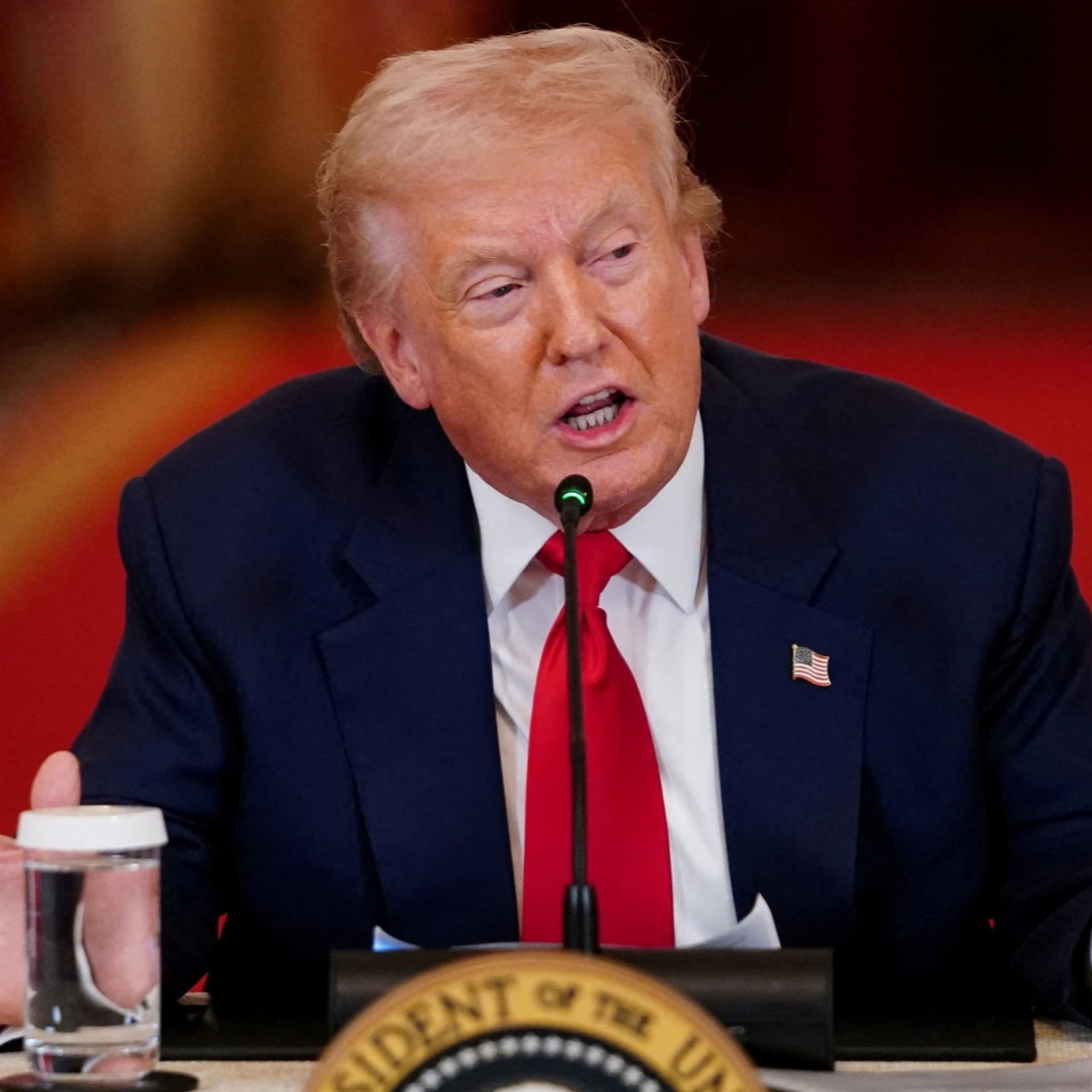
2:36We are now one week into the US and Israel's war with Iran, and if President Trump is to be believed, the military campaign has been an overwhelming achievement. Somebody said, how would you score it from zero to 10? I said, I'd give it a 12 to a 15. Their army is gone. They're just about, look, their navy is gone. Their communications are gone. Their leaders are gone. Two sets of their leaders are gone. They're down to their third set. Their air force is wiped out entirely. Think of it. They have 32 ships. All 32 are at the bottom of the ocean. But other than that, they're doing very well, coach.
3:20Mr. Trump, speaking at the White House on Friday, was holding a conference on college sports in the United States while his press secretary, Caroline Levitt, updated reporters on the war. She told them that for the US to meet its achievable objectives, this would take four to six weeks. But Ms. Levitt didn't say what these were. Throughout the week, the US and Israel proclaimed that thousands of what they claim were targets in Iran have been destroyed. Assessing the true scale of the damage to Iran's military and security apparatus is hard to assess because it's rare for foreign journalists to report freely inside the country.
3:59There's no doubt, though, that the existence of the Islamic Republic is under threat, and President Trump has now demanded Tehran's unconditional surrender. Iran's Deputy Foreign Minister Saeed Khatib Zaydah said that his country remained defiant. We have no option just to resist to the last bullet that we do have and to the last soldier that we do have. This is a very heroic, very nationalistic battle. Iran is continuing to fire missiles and drones at Gulf countries where the US has military bases. Many of these are continuing to be intercepted. In the past few hours, the defence ministry in Saudi Arabia said that a ballistic missile launched towards Prince Sultan Air Base was destroyed.
4:44For more on what the Trump administration has been saying, I spoke to our Washington correspondent Simi Jolaoso. We have an idea of what the ultimate objective is of this military campaign against Iran. President Trump said on Truth Social that there will be no deal with Iran except in quote, unconditional surrender. When asked what he means by unconditional surrender, the White House press secretary, Caroline Levitt, said that when Mr. Trump determines that Iran no longer poses a threat to the United States and that the operations goals are realized, that's when Iran will essentially be in a place of surrender.
5:25When asked what these objectives could be, she did list destroying Iran's navy. She says that the U.S. has already sunk over 30 ships. She spoke about taking out Iran's ballistic missiles and said that they've already seen a 90 % reduction in ballistic missile retaliatory strikes from Iran. She spoke about Iran never obtaining a nuclear weapon and also spoke about weakening proxies in the region. A week into the war, what are Americans making of it? Well, public opinion on this war is very mixed. We've seen rallies outside the White House, one thanking President Trump for the military action against Iran and others calling for an end to the war.
6:09We saw one as recently as Thursday. There have been pro-Trump rallies in Boston and stop the war rallies in New York. A new PBS poll found that 56 percent of Americans oppose military action in Iran. A CBS poll earlier this week found that 45 % of Americans or respondents found that US action against Iran will make the US feel less safe. But one thing's been clear from the American public that they don't want another endless war in the Middle East. This is something that President Trump himself campaigned against. They don't want to see another loss, more loss of American lives. And people here don't fully understand what the imminent threat from Iran was.
6:55And I think that messaging from the Trump administration hasn't been so clear, especially now that Ayatollah Khamenei is dead. The big question is how long will this military campaign last? Briefly, Mr. Trump's been talking to leading US arms manufacturers. Yes, he has. The White House met defence industry executives to discuss weapons production. He said that they've agreed to quadruple the production of exquisite class weaponry and says that America has an unlimited supply of medium grade munitions, which is currently being used in Iran and was used in Venezuela. Simi Jolla Oso in Washington.
7:36Explosions have been heard in Tehran overnight after Israel said that it had launched a broad scale wave of strikes on Iranian targets. As I mentioned earlier, getting access inside Iran is difficult, but journalists at BBC Persian have been working tirelessly to find out how people there are coping. They've made contact with Iranians whose messages have been spoken by actors, as you're about to hear in this report from our chief international correspondent Lise Dissette. Tonight, in the last light of dusk, the dark rises in Tehran. The massive explosions which multiply as this war enters its second week.
8:21By day, more disbelief. Towers of smoke blot the sky. A new phase in the conflict. That's how the countries firing these missiles, Israel and America, have described this moment. All of Iran is in their sights. In the southern city of Shiraz, buildings were flattened. Emergency teams, including the Red Crescent Society, responded in the dead of night. In the north, their own headquarters in the city of Mahabad was reduced to rubble. The clearing and cleanup have started. Israeli and American bombers now control the skies. They say they've already destroyed 60 % of Iran's missiles, sank 24 ships.
9:14But their strikes are also smashing into everyday lives. Some residents of Tehran sent us messages through the BBC's Persian service. The house was shaking for five minutes straight. Last night was the worst night. No, I'm not okay. I barely slept last night because of the constant explosions. It was terrible. They were heating so hard that all the windows were shaking. I woke up at around 4 a.m. from the noise. I could hear the flight jets early in the morning. After Friday prayers, the government's supporters brave the bombs in a show of defiance. President Trump is calling for their leader's unconditional surrender.
9:56They're telling him our fight goes on. Lise Doucette. The war dead aren't only in Iran, more than 1 ,300 people according to the Red Crescent there, but also in Lebanon where Israel is fighting on a second front against the Iranian-backed group Hezbollah. The Lebanese health ministry said that more than 200 people have been killed in Israeli airstrikes this week, while the Norwegian Refugee Council has estimated that 300 ,000 people have fled their homes. In some suburbs of South Beirut, a Hezbollah stronghold, Israel issued evacuation notices. Wira Davis sent this report. We've now come down to Beirut's famous Cornish, the waterfront.
10:41And along the Corniche are several families who've been displaced, who have decided to camp here, including this family of 12 people. They've got a couple of tents, a couple of chairs. It was very dangerous. 12 of us came in small cars that can't even fit eight people. We arrived at dawn while we were fasting. We came in our pyjamas. We slept on the ground here. The head of the family is a man called Adel. and he's told me why they're sleeping here on the streets. There's no room in the schools or the shelters for them. They say. Every shelter we go to tells us there are no spots left, no space.
11:23They tell us to wait until new places open up or try another city. But there's no safety anywhere. Israel hasn't left any space safe. What sort of welcome have you had here? Many people here in Beirut, they blame the resistance. They blame Hezbollah for what is happening now. Everyone is blaming Hezbollah, but no one was blaming Israel when they broke the ceasefire for a year and a half. The world is blaming the victim and not the killer. It's clear, even here as we're speaking to some of these internally displaced people, there are tensions in Lebanon. A man has just come up and he's debating, disputing what Adel is saying, blaming Israel for everything he says.
12:03And it shows just some of the tensions that still remain in Lebanese society. there are dozens of families people of all ages who've been evacuated from dahia from southern beirut what you find is that the the older people are still loyal to hezbollah they blame the israelis they blame the americans for everything but younger people including one 14 year old girl we've been speaking to is perhaps more pragmatic uh i'm dunya i'm i'm 14 and I'm from Hadass. Lebanon is honestly such a beautiful place, so it's really sad to see this happening. When did you leave Dahyeh, and what has it been like trying to find somewhere to get shelter and food?
12:45Well, we left Dahyeh at 3 p.m., like right when they sounded like an alarm. They don't sound the alarm. They sent us notifications to evacuate the area immediately. So where did you sleep? We didn't sleep. We couldn't sleep out of fear. We were just seeing the news just to check on our homes. And who do you and your family blame for all of this? Some people are blaming the resistance. Some people are blaming Israel. We think that Hezbollah, like it's way too early for another war. Since last year we've had a war. I think it's way too early for Lebanon right now to have like another war. And we're not ready enough.
13:31So I feel like them acting on Israel is kind of their problem as well. Oh, we just had another big airstrike right in front of us. It's right in the heart of southern Beirut. The entire area, of course, is now under an Israeli evacuation order. There have been airstrikes throughout the day and throughout the night. Thousands of people have already left. And with bombing in the south and in the eastern Beka Valley, it's impossible to describe anywhere in Lebanon really as completely safe. Weira Davis in Lebanon. The conflict in the Middle East is also causing economic pain around the world. Stock markets have been volatile and oil prices are up 30 % since the war began, with the benchmark Brent crude hitting a two-year high.
14:20Qatar has warned it could double from the pre-war price and bring down the global economy. Motorists in the US are already paying higher prices at the pump, and businesses everywhere face higher energy costs. Our economics editor Faisal Islam has this assessment. The economic dimension of this conflict is threatening to hit countries in new ways. Qatar's Energy Minister Saad al-Kabi has warned that all energy exporters in the Gulf will have to cease exports in days, in line with what his country has done as the world's biggest gas exporter. The oil price shot up after he predicted it could go up a further 75 % to$150 a barrel, something which he said would bring down the economies of the world, talking here, it seems, about the impact on GDP.
15:07In his interview with the Financial Times, the minister said, even if the war stopped now, it could take Qatar weeks to months to get back to normal production. Only one or two ships are risking transit through the key global artery of the Straits of Hormuz, just a few miles from the Iranian coastline. Other refined products such as jet fuels significantly supplied from Gulf processing sites are seeing a near doubling of prices and question marks about supply. James Noel Bezik from the market intelligence firm Sparta Commodities said it could be bad news for airlines. I think we're weeks away from maybe flight cancellations or delays due to lack of jet fuel rather than months.
15:48Jet just logistically is very hard to store in large amounts. So we'll be getting very, very close to emergency points, really. Stock markets continued their fall, though most concern was centred on markets for government borrowing. Expectations are now for fewer or no further interest rate cuts, even rises in some places as central banks prime themselves to fight off a wave of inflationary pressures. While this is not a full-blown energy crisis just yet, the markets are saying the chances are increasing by the day. Faisal Islam. Still to come in this podcast, Donald Trump says Cuba will fall pretty soon and is ready for a new leader.
16:31And if you ask anyone what Alzheimer's is, the most likely answer you'll get is that Alzheimer's is a brain disease. A new study into Alzheimer's disease suggests that inflammation in parts of the body could trigger the condition many years before signs appear in the brain.
17:13political upheaval alongside threats of intimidation and imprisonment. Our Man in Moscow. Watch with a subscription to bbc.com and the BBC app. Visit bbc.com slash docs to learn more. Ever wonder why we make the choices we do? And how to make smarter ones? Introducing Choiceology, an original podcast from Charles Schwab. Join Wharton Professor Katie Milkman, an award-winning behavioral scientist and author of the best-selling book, How to Change, as she shares true stories from Nobel laureates, authors, athletes, and everyday people about why we do the things we do and how to make better choices to help avoid costly mistakes.
17:57Each episode covers the latest research in behavioral science and dives into themes like the power of self-control, shaping your mindset for success, navigating new beginnings, and why starting over can feel so hard. Listen to choiceology at schwab.com slash podcast or wherever you listen. This is not the future we were promised. Like, how about that for a tagline for the show? From the BBC, this is The Interface, the show that explores how tech is rewiring your week and your world. This isn't about quarterly earnings or about tech reviews. It's about what technology is actually doing to your work and your politics, your everyday life.
18:42And all the bizarre ways people are using the internet. Listen on BBC.com or wherever you get your podcasts.
19:05Russia. After drones in the air and at sea, more and more ground-based combat robots are being deployed. Vitaly Shevchenko reports. Uncrewed ground vehicles, or UGVs, have already been used in attacks, defensive operations and even in taking prisoners. They have been equipped with machine guns and grenade launchers and they've been used to plant and clear landmines and barbed why. Kamikaze UGVs blow up enemy positions. Both Ukrainians and Russians are using such killer machines. Here's Oleksandr Afonasev from the Ukrainian army's K2 brigade. Robot wars are already happening. A UGV can open fire on a battlefield where an infantryman would be afraid to turn up, but it's happy to risk its existence.
19:57There have been reports of armed Ukrainian UGVs, ambushing a Russian personnel carrier and defending a Ukrainian position for weeks. In most battles, however, such killer robots are remote-controlled rather than fully autonomous. Here's the deputy commander of the Ukrainian 33rd Brigade's tank battalion, who goes by the callsign Avhan.
20:25modern UGVs are part autonomous they can move on their own they can observe and detect the enemy but still the decision to open fire is made by a human their operator as things stand at the moment fully autonomous fighting systems aren't standard why not because of ethics and international humanitarian law. Robots can misidentify or attack a civilian. That's why the final decision must be made by an operator. Russia has also been developing combat UGVs. According to media reports, they can be equipped with a flamethrower, a heavy machine gun normally found on tanks, and they can run autonomously for five hours.
21:09Yuri Poritsky, the CEO of Ukrainian UGV manufacturer dev droid says that it's a matter of time before Ukrainian and Russian killer robots clash.
21:23Sooner or later, we'll end up in a situation where our strike UGV will come up against their strike UGV on the battlefield. Robot wars may sound like science fiction, but there's nothing sci-fi about the battlefield. It's our reality. Right now, most uncrewed ground vehicles are used for delivering supplies and evacuating the wounded. But experts say that before too long, AI-powered swarms of robots will be able to attack from the air, ground and sea. Vitaly Shevchenko. It was back in January that US troops forcibly removed the Venezuelan leader, Nicolas Maduro, from power. This week, President Trump has suggested that Cuba might be next on his administration's agenda, saying it was just a question of time before there would be a change of leadership on the island.
22:16There have even been suggestions from within the White House that U.S. Secretary of State Marco Rubio, whose parents were born in Cuba, could be put in charge of the island. The comments come as residents there are near breaking point as a worsening fuel shortage, in part due to the ongoing U.S. full blockade disrupts daily life. President Miguel Diaz-Canal says the measure is putting a heavy toll on the Caribbean nation, compounding existing economic hardships. This man describes the impact the fuel shortage is having on life in the capital Havana. Every day is the same. The same hunger, the same misery, the same everything.
22:56Practically everyone is cooking with firewood. I have a daughter. At six in the morning they cut off the electricity. I can't make her a proper breakfast because the bread has to be toasted. I have children. The guy over there has children. If he doesn't have enough to feed his child, he'll rob me. The BBC's Will Grant was in the country recently. He considers how likely Donald Trump's prediction is. They say that they are in, they being the Trump administration, in conversations with the upper echelons of the Cuban government. That can only really mean Raul Castro. He, even at 94, is the only one who makes a decision on something like talking to the Americans.
23:32But it won't be him. It's rumoured to be his grandson, Raul Rodriguez Castro, known as El Cangrejo on the island. He's never been someone who's particularly been considered an important political figure or any negotiating tactics, but he seems to be the trusted person for Raul Castro. They have already made small steps towards trying to get ready for some kind of change, I think, which is that they are beginning to allow the importing of fuel by private businesses for the use of their businesses. but it's just a tiny fraction of what's needed. I went twice to Cuba, each time for a week since the turn of this year and about a month in between them.
24:12It's significantly worse on the second time than the first and that I think will be ultimately the thing that forces the government's hands. Will Grant. For more than a century it has been thought that Alzheimer's disease originates in the brain but a new study suggests the condition may first be triggered by inflammation in other parts of the body such as the skin, lungs or gut, perhaps decades before a person's memory starts to decline. It could lead to new ways of preventing and treating the condition. Richard Hamilton has the details. Alzheimer's disease was first identified back in 1906 by the German psychiatrist Dr Alois Alzheimer.
24:55Since then, it's been assumed to be a brain disease, but this new research is turning that assumption on its head. A team from the Novo Nordisk Foundation in Denmark studied genetic data from more than 85 ,000 people with the condition. They also examined 1 ,000 genes with variants that are thought to increase the risk of getting the disease. To their surprise, these seem to show up far less in the brain than in other parts of the body, such as the skin, lungs and the gut. It's always been considered to be exclusively of the brain. So if you ask anyone what Alzheimer's is, the most likely answer you'll get is that Alzheimer's is a brain disease.
25:41The research was led by César Cunha. What we have found is that despite the pathology of Alzheimer's disease being in the brain, it does not mean that the reason for that pathology being in the brain actually comes from within the central nervous system or within the brain. The genetic risk of Alzheimer's is actually acting in different parts of the body because there's a lot of evidence coming up that peripheral biology and peripheral factors are actually driving a lot of brain biology and brain mechanisms that could lead down the line to Alzheimer's disease. Cesar Cunha's team found that most of these gene variants occurred between the ages of 55 and 60, suggesting that inflammation at this age range is most likely to lead to Alzheimer's later on in life.
26:33And because it was always thought that the disease was caused by a build-up of proteins in the brain, drugs were developed to try to clear these proteins, but they have had limited success. Donna Wilcock from Indiana University is the editor of the journal of the Alzheimer's Association. I think it opens up some new potential therapeutic avenues for us in Alzheimer's disease because a big challenge for us treating Alzheimer's disease is being able to get those drugs into the brain. But I think this points to we might not need those drugs to get into the brain if we can influence in some way the peripheral immune state.
27:20and so I think this might open up new avenues where we don't have to be so considerate about the need for our experimental drugs to have good brain penetration. Currently, there are several trials of vaccines to fight the disease. For example, a recent study in California found that adults who received a vaccine for shingles were about 50 % less likely to develop Alzheimer's. And apart from vaccines, there are other interventions which lower inflammation and protect against the disease, including a Mediterranean diet, reducing alcohol intake, exercising and avoiding smoking. Richard Hamilton. It was billed as the People's Celebration, and on Friday thousands turned out in Chicago to attend a memorial service for the American civil rights campaigner Jesse Jackson.
Read the full transcript
28:20He died last month, aged 84. Former presidents, governors, mayors and the rich and famous rubbed shoulders with the public to honour the Reverend's life and legacy. Wendy Urquhart reports. Can we celebrate the life of Reverend Jesse Jackson? I need everybody around the world. Don't believe that's here. Hallbearers carried Reverend Jesse Jackson's casket into the House of Hope on the far south side of Chicago. A huge floral cross of white roses and several other sprays of flowers were placed around it. Reverend Jackson's son Yusuf paid a special tribute. After he passed, I asked each of my children, Sky, Yusuf, Cassius, Atticus, Matthias, what was their last conversation with their grandfather?
29:11I asked, what did he say to you? each of them, separately and individually, thought for a moment and told me, Dad, Granddad told me he loved me.
29:28And those are the last words I remember him ever saying to me as well. Three of America's former presidents spoke at the ceremony, Bill Clinton, Joe Biden and Barack Obama. It's an honor to join you today to celebrate the Reverend Jesse Lewis Jackson. Jesse didn't just speak to black folks, he spoke to white folks and Latinos and Asian Americans and the first Americans. He spoke to family farmers and environmentalists. He spoke to gay rights activists when nobody was talking to gay rights activists. And blue collar workers. and he gave them the same message that they mattered, that their voices and their votes counted.
30:18He paved the road for so many others to follow. Reverend Al Sharpton shared a fond memory of the first time he met Reverend Jackson. I liked Reverend Jackson because he was a little hipper than the older preachers. He was 27, I was 13 by the time I became youth director. So he was like a father figure to me. When I got about 40, he said, quit calling me father, call me big brother. There was music throughout the ceremony, including a rousing version of Change Gonna Come by the American singer Jennifer Hudson. It's been a long, long, long time coming. The change, change is going to come. Wendy Urquhart.
31:20And that's all from us for now. If you want to get in touch, you can email us at globalpodcast at bbc.co.uk. You can also find us on X at BBC World Service. Use the hashtag Global News Pod. And don't forget our sister podcast, The Global Story, which goes in-depth and beyond the headlines on one big story. This edition of The Global News Podcast was mixed by Lewis Griffin. The producer was Muzaffar Shakir. The editor is Karen Martin. I'm Alex Ritson. Until next time, goodbye.
From the publisher
President Trump's press secretary, Karoline Leavitt, didn't give details of what these objectives were. But she said that when the goals of the war were realised, "Iran will essentially be in a place of unconditional surrender, whether they say it themselves or not". We hear from Iranians on life during wartime, Lebanese civilians living on the beach in Beirut as Hezbollah comes under attack from Israel and the latest on the economic impact of the conflict. Also, after US troops forcibly removed the Venezuelan leader, Nicolas Maduro, from power Mr Trump has suggested that Cuba might be next on his agenda. And thousands of people, including three former US presidents, have attended a memorial service for the American civil rights leader, Jesse Jackson.
The Global News Podcast brings you the breaking news you need to hear, as it happens. Listen for the latest headlines and current affairs from around the world. Politics, economics, climate, business, technology, health – we cover it all with expert analysis and insight. Get the news that matters, delivered twice a day on weekdays and daily at weekends, plus special bonus episodes reacting to urgent breaking stories. Follow or subscribe now and never miss a moment. Get in touch: globalpodcast@bbc.co.uk



