
In short
Global News Podcast Episode Summary
Episode Title
US aerial refuelling plane crashes in western Iraq
Episode Description In this episode, the podcast discusses the crash of a US KC-135 refuelling aircraft in western Iraq, which US officials have confirmed was not due to hostile or friendly fire. The episode also highlights various stories from Lebanon, a violent incident in Michigan, the release of a satirical cartoonist in Eritrea, and controversies surrounding a renowned chef in Denmark.
---
Key Topics Discussed
- US Military Aircraft Crash
- Incident Report: A KC-135 refuelling aircraft crashed in western Iraq; six crew members were aboard.
- Official Statements:
- US officials stated that the crash was not a result of hostile or friendly fire, but rather an accident during military operations.
- Jim Himes, a senior Democrat, commented on the inevitable costs of military conflict, indicating this is part of the risks involved.
- Casualties: Reports indicated at least seven US service members have died in related military operations, with many others injured.
- Israel's Military Actions in Lebanon
- Press Conference: Israeli Prime Minister Benjamin Netanyahu condemned Iran's new leadership and discussed military operations against Iran.
- Evacuations: Reports of mass evacuations in southern Lebanon due to Israeli airstrikes, with civilians fleeing northward.
- On-the-ground Reporting: Correspondents reported on the intense situation in Nabatea, Lebanon, with accounts of bombings and the struggles of civilians.
- Incident at a Synagogue in Michigan
- Shooting Incident: A man identified as Eamon Mohamed Ghazali, originally from Lebanon, was shot dead after crashing his truck into a synagogue.
- Response and Investigation: Local authorities are investigating the motive behind the attack, emphasizing the need for community safety.
- Cartoonist Released from Eritrea
- Biniyam Solomon: A satirical cartoonist released after 15 years in prison without charges.
- Conditions of Detention: Discussion on the harsh conditions faced by prisoners in Eritrea, and the uncertain reasons behind Solomon's release.
- Chef René Redzepi Steps Back from Noma
- Allegations of Abuse: Chef René Redzepi resigned from Noma amidst allegations of creating a toxic work environment.
- Insights into Restaurant Culture: An activist highlighted that the issues at Noma are indicative of broader problems within the restaurant industry.
- Oil Prices and Geopolitical Implications
- US Oil Strategy: The US announced temporary allowances for the sale of sanctioned Russian oil to stabilize prices in response to recent spikes due to Middle Eastern conflicts.
- Market Reactions: Commentary on the ongoing high prices of oil and the economic implications for consumers globally.
- Legal Repercussions in Dubai
- Filming Prohibitions: Dozens detained for filming Iranian missile attacks in Dubai, highlighting strict laws against disturbing public security.
- Government Justification: Officials defended the legislation as necessary for safety, despite concerns over freedom of expression.
---
Key Takeaways
- Military Risks: The inherent dangers of military operations, even in supposedly safe zones, highlight the complexities of international conflicts.
- Impact on Civilians: The human toll of military actions in Lebanon reflects a growing humanitarian crisis.
- Cultural and Political Dynamics: The events involving the synagogue and the cartoonist underscore deeper societal issues regarding violence, expression, and state control.
- Industry Standards: Allegations against Redzepi illustrate the need for reform in workplace culture, particularly in high-pressure industries like hospitality.
- Global Energy Concerns: The fluctuating oil market remains a significant concern for economies worldwide amidst geopolitical tensions.
---
Conclusion This episode of the Global News Podcast provides a comprehensive overview of significant global events, emphasizing the intertwining of military actions, humanitarian issues, and cultural dynamics. For continuous updates on such topics, the podcast invites listeners to subscribe and stay informed.
For more information, contact
[globalpodcast@bbc.co.uk](mailto:globalpodcast@bbc.co.uk)
Written by AI. May contain mistakes. Listen to the episode to check what was said.
Chapters
Tap a time to open that second in VOUS Aerial Refueling Plane Crash in Iraq
0:45 to 1:28
Discussion about the recent crash of a US refueling aircraft in Iraq.
“pre-sale of some Russian oil in another effort to curb the war's economic impact.”
Details of the Incident
1:28 to 2:44
Insights into the crash incident and ongoing rescue efforts.
“a US refueling aircraft apparently crashed.”
Casualties and Military Losses
2:44 to 4:00
Details on US military personnel casualties in the ongoing conflict.
“They said this was not due to hostile fire or even friendly fire and that rescue efforts are ongoing.”
Netanyahu's Press Conference
4:00 to 5:35
Analysis of Israeli Prime Minister Netanyahu's statements on Iran and military actions.
“service personnel have been wounded so far?”
Evacuation in Southern Lebanon
5:35 to 7:20
Report on evacuation orders and the humanitarian crisis in Lebanon.
“At the same time, we are working to advance another objective, to create the conditions for the Iranian people so they can remove the cruel, tyrannical regime that has oppressed them for nearly half a century.”
Life in Nabatea Amid Airstrikes
7:20 to 10:58
A vivid account of civilian experiences during the ongoing airstrikes in Nabatea.
“We're just about to leave at the end of the day.”
US Oil Policy amidst Conflict
10:58 to 13:16
Discussion on the US's recent decisions regarding oil sales during the conflict.
“Weira Davis reporting from Nabatea in Lebanon.”
Filming Missile Attacks in Dubai
13:16 to 14:03
Overview of the legal consequences for filming missile attacks in the UAE.
“Dozens of people have been arrested in Dubai for filming Iranian missiles hitting the city on their mobile phones.”
Legal Implications of Filming in Crisis Zones
14:03 to 15:17
Discussion on the legal consequences of filming incidents in crisis areas.
“But I am aware there have already been some violations of this law.”
Investigation of a Synagogue Attack in Michigan
15:59 to 18:15
Details on a violent incident at a synagogue and the ongoing investigation.
“This isn't about quarterly earnings or about tech reviews.”
Show all 14 chapters
The Situation of Political Prisoners in Eritrea
18:15 to 21:42
Discussion on the release of a satirical cartoonist and broader issues of political imprisonment in Eritrea.
“say that they're investigating this as a crime, which was a targeted act of violence against the Jewish community.”
Scandal at Michelin-Starred Restaurant Noma
21:42 to 25:15
Exploration of allegations against Noma's founder and the toxic culture in the restaurant industry.
“There are estimated to be more than 300 various detention facilities across the country.”
Pritzker Prize Awarded to Architect Smiljan Radic Clark
25:15 to 26:46
Overview of the achievements and architectural philosophy of Smiljan Radic Clark.
“The Chilean architect Smilien Radich Clark has been awarded what's considered the most prestigious annual honour in architecture, the Pritzker Prize.”
Exploring Internet Usage
28:00 to 28:10
Discover the unusual and diverse ways people engage with the internet.
“and all the bizarre ways people are using the internet.”
Transcript
Automatic transcript. May contain errors.0:00This BBC podcast is supported by ads outside the UK. This is not the future we were promised. Like, how about that for a tagline for the show? From the BBC, this is The Interface, the show that explores how tech is rewiring your week and your world. This isn't about quarterly earnings or about tech reviews. It's about what technology is actually doing to your work and your politics, your everyday life. And all the bizarre ways people are using the internet. Listen on BBC.com or wherever you get your podcasts.
1:02pre-sale of some Russian oil in another effort to curb the war's economic impact. Also in this podcast. There have already been some violations of this law. Due process will be followed. This kind of filming puts yourself in harm's way. Why filming Iranian missiles can get you into big trouble in Dubai.
1:27We start with a rescue effort underway in Iraq after a US refueling aircraft apparently crashed. The US military has said neither hostile nor friendly fire were to blame. Speaking to the BBC, White House Representative Jim Himes, the most senior Democrat on the House Intelligence Committee, gave his immediate reaction. This is part of the inevitable costs of a conflict. Even the best military doesn't operate without accidents, and that appears to have been what occurred here. But the United States has already lost, I believe we're up to eight now fatalities as part of this. Lots of individuals injured.
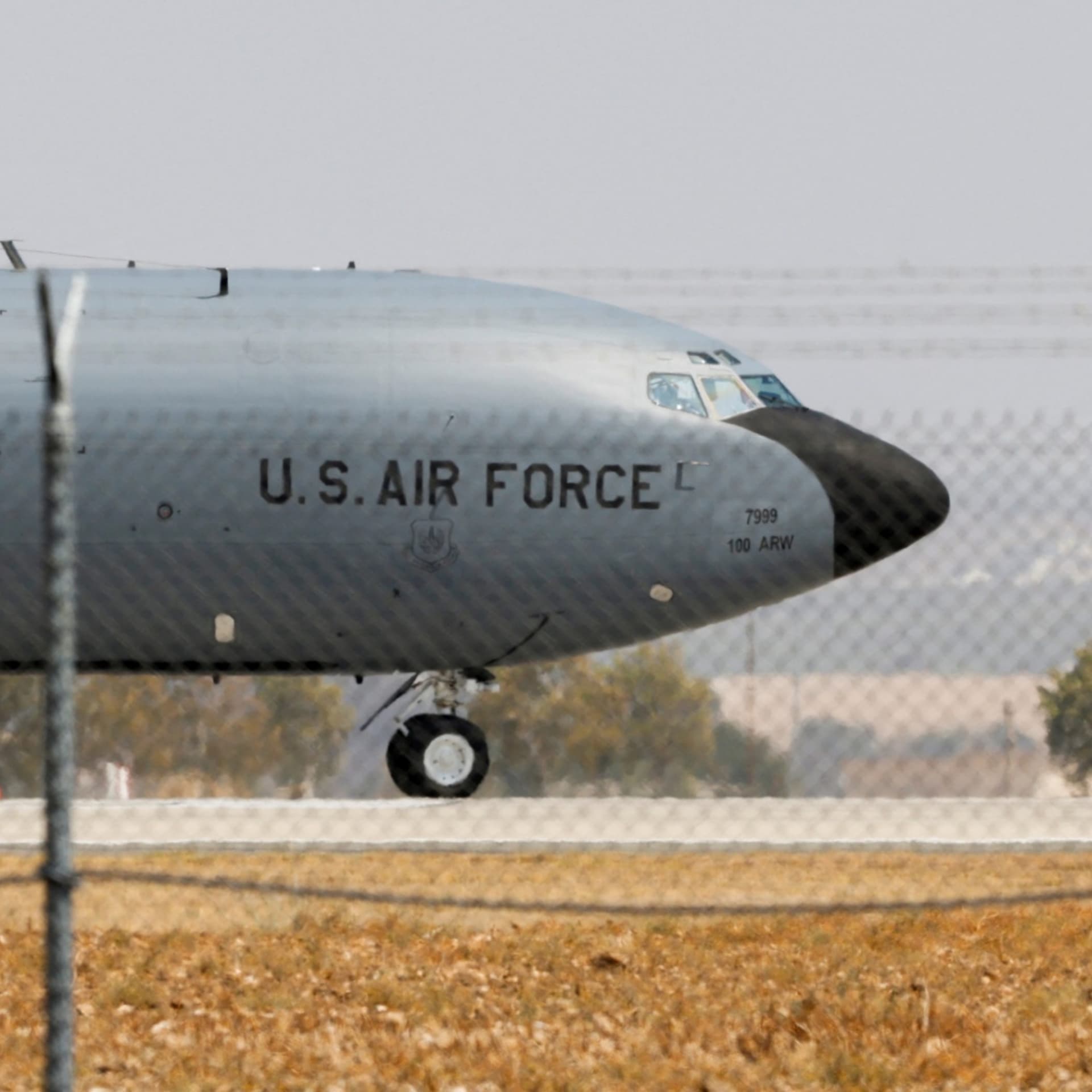
2:04Gas prices high. The Supreme Leader replaced by somebody who is even more extreme than the Supreme Leader of a month ago. And so, amongst other things, we pray for the safety of the crew. But this is the cost to be paid when a nation decides to go to war. I got more from our North America correspondent, Simi Jolaosho. So what we know is that two aircrafts were involved in the incident and that it occurred in friendly airspace. The U.S. Central Command has given us a few more details, saying that one of the aircraft was a KC-135 refueling aircraft and that it went down over western Iraq. And they've now deemed it lost.
2:44But the second aircraft landed safely. They said this was not due to hostile fire or even friendly fire and that rescue efforts are ongoing. and will receive more information as the situation develops. Now, we don't know how many people were on board. KC-135s usually have a crew of three, so you get a pilot, a co-pilot, and a person who would operate the boom to refuel other aircraft. But we know it can carry up to 37 passengers. And this war, obviously, in the Middle East, but this just brings home, you know, the risk to US personnel. Yeah, this definitely highlights the risk of such military operations, even over friendly skies, as Central Command told us.
3:28We know the U.S. has deployed a number, a large number of aircraft to the Middle East. And this is the at least the fourth U.S. military aircraft that has been deemed lost or that's been down by non-hostile fire during this U.S. military operation against Iran. And earlier in the war, three F-15s were mistakenly shot by Kuwaiti forces over Kuwait. But we know the six crew members on board those were able to eject safely. And do we know just how many U.S. service personnel have been wounded so far? Well, there are reports that up to 150 U.S. troops have been wounded in the U.S.-Israeli war against Iran so far.
4:15We do know that seven U.S. service members have been killed. They have had their dignified transfers happen here. President Trump commented at the time and said that they had given their lives for a righteous mission. And he warned that there will likely be more American deaths. But that goes without saying that in this incident, there are no details on how many people have been injured or if there are any deaths. the US Central Command said they're still gathering details in order to provide clarity for the families of the service members that were on board. And I'm sure we'll receive more information as that happens.
4:54That was Simi Jalaosho speaking to me from Washington. Now, for the first time since the start of Israel's joint military campaign with the US, the Israeli Prime Minister Benjamin Netanyahu has held a press conference. Mr Netanyahu denounced Iran's new supreme leader as a puppet of the revolutionary guard. He again called on Iranians to bring down the regime as a new wave of airstrikes targeted the Iranian capital, Tehran.
5:25We are crushing the nuclear infrastructure, the missile and launcher array, the repression headquarters, the regime's centers of power, and many more targets. At the same time, we are working to advance another objective, to create the conditions for the Iranian people so they can remove the cruel, tyrannical regime that has oppressed them for nearly half a century. Our correspondent Lucy Williamson has more details. It was a fairly triumphalist tone struck by Benjamin Netanyahu. Listing what he said was that all the strategic gains made in the war, despite the fact that the regime change he's been calling for hasn't happened.
6:06He talked about the enormous achievements that were changing the balance of power in the Middle East and beyond. This is no longer the same Iran, no longer the same Middle East. And this is not the same Israel, he said. And there are some Israelis who will hear that and will hear in it their prime minister saying that Israel has achieved what it set out to achieve in this war and perhaps gesturing towards the end of that war, even while Iran's regime is still in place and while Israel is still fighting on a second front against Hezbollah in Lebanon. And on that, the prime minister said that Israel was committed to completing that task, saying that Hezbollah would pay a very heavy price for its aggression.
6:53That was Lucy Williamson talking about Benjamin Netanyahu's comments about Lebanon and Hezbollah and we're going to stick with Lebanon for our next story because hundreds of thousands more people are being forced to head north following a new evacuation order by the Israeli military. All residents south of the Zerani River were asked to leave their homes immediately. Our correspondent Weira Davis has spent time with civil defence units in the southern Lebanese town of Nabatea which has come under constant Israeli attack and which is now part of the evacuation zone.
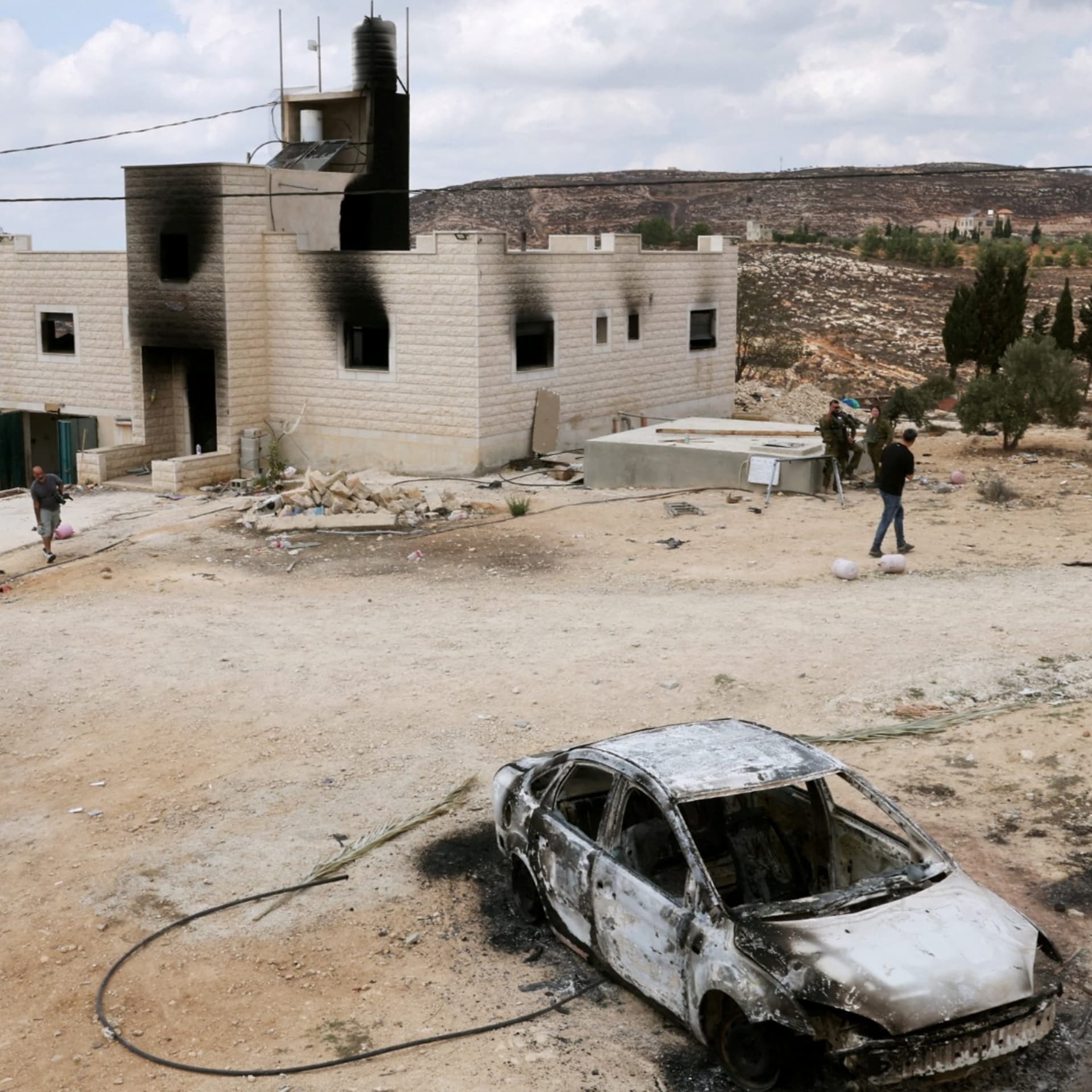
7:32We're just about to leave at the end of the day. There are two more massive explosions. One airstrike hit the village here. That's on the edge of Nabatea. And we are right next to the hospital. Another one over to my south. Now, there were some general evacuation warnings issued by the IDF before these airstrikes, but nothing too specific. We are, of course, in an area north of the southern evacuation zone imposed by Israel. But such is the intensity and the power of these Israeli airstrikes that many of these areas now are depopulated because the risk of staying here is just too great.
8:14We're now in our vehicle following an ambulance through the town of Nabatea to the scene of another airstrike. There have been four in the last 20 minutes, some of them very loud. We're now with a squad from the Civil Defence League. They've gone into this building to try and rescue a disabled woman. She's on the third or fourth story of this building, right next to a building that's taken a big hit and has been completely destroyed.
8:48Her windows have been blown in. and masonry has been blown into her building. There's no way she could have stayed here. But it was a monumental effort to get her down the stairs, into an ambulance and to relative safety.
9:03We've arrived now at the hospital with Intisar, the old woman who was evacuated from the house because she couldn't get herself out. Thankfully, she's now getting treatment at the hospital.
9:16I was very scared when the strike happened. I've been living in fear and panic, and my heart keeps pounding. Your house has been badly damaged by the bombing. There's glass, there's stones everywhere. Do you think you'll go back? The glass on my window shattered from the explosion. I've lived in my home for 25 years. Where am I supposed to go? If the situation calms down, I'll go back to my home. It's really, really busy here because of all the bombing the Israelis are doing in and around Nabatea. Down the hall there's a young family, a mother, her two very young children, a teenage nephew, I think.
9:57They're uninjured, but they had to stay in Nabatea because they simply couldn't afford to leave. We didn't leave because we saw on the TV how people are stranded on the roads and sidewalks. I didn't want that for my two kids, so I decided to stay and trust in God's will. We were sitting on mattresses on the floor having lunch and watching television, when suddenly half the house collapsed. The glass on the windows shattered so we couldn't see a thing. I grabbed my kids and went to hide in a small room until the responders showed up and took us out. Well, it would be absolutely puerile to say that life goes on here despite this.
10:39In fact, Nabataea is like a ghost town. But at some point, the Israeli attacks will stop and people will return. For now, some things are happening. In the background, you may be able to hear the call to prayer. Above it is the omnipresent sound of the Israeli drones. Weira Davis reporting from Nabatea in Lebanon. The price of oil has soared since the war began and the Iranian authorities stopped ships from passing through the Strait of Hormuz. Now the United States has announced it will allow the temporary sale of some Russian oil in a bid to boost global supplies and stabilise energy prices.
11:18I asked our business correspondent Nick Marsh if this is being seen as a major concession by the US. Let's assign that the US is concerned about the rising price of oil. It's currently at around$100 a barrel for Brent crude. Yesterday it finished above$100 a barrel for the first time since the war in Ukraine. So this is an issue because the higher the price of oil is, then the higher the price of everything is. Therefore, ordinary Americans, people all around the world suddenly face a higher cost of living. So saying to countries, yes, you can buy sanctioned Russian oil for 30 days. It's oil that's specifically stranded at sea.
11:54You have all these Russian tankers, some of them delivering oil illicitly, some of them just sort of popping about in the sea. saying to countries, yeah, you can do this, is an attempt to try and increase the supply and to try and ease fears among oil traders. We actually saw last week the US issue a waiver to India specifically. They'd made an agreement with India and India said it would stop buying Russian oil. The US kind of went back on that and said, no, you can carry on. To be honest, neither of these moves have had a very big impact on the price of oil. I mean, it's still very high. And the fact of the matter is that the Strait of Hormuz, you know, that crucial waterway is still very much blocked.
12:28Barely anything's getting through there. And to be honest, until that changes, it's hard to see how the price of oil is going to move that significantly in a downward direction. But it seems clear that someone who definitely will benefit from this would be Russia. Absolutely. Yeah. I mean, I was just looking at some data reporting in the Financial Times that shows that Russia apparently is getting$150 million extra a day in its energy sales, in its fossil fuel sales. Because if you can't buy Middle Eastern oil, or you can't buy oil that's transiting through the Strait of Hormuz, then you turn to Russia, another major oil producer.
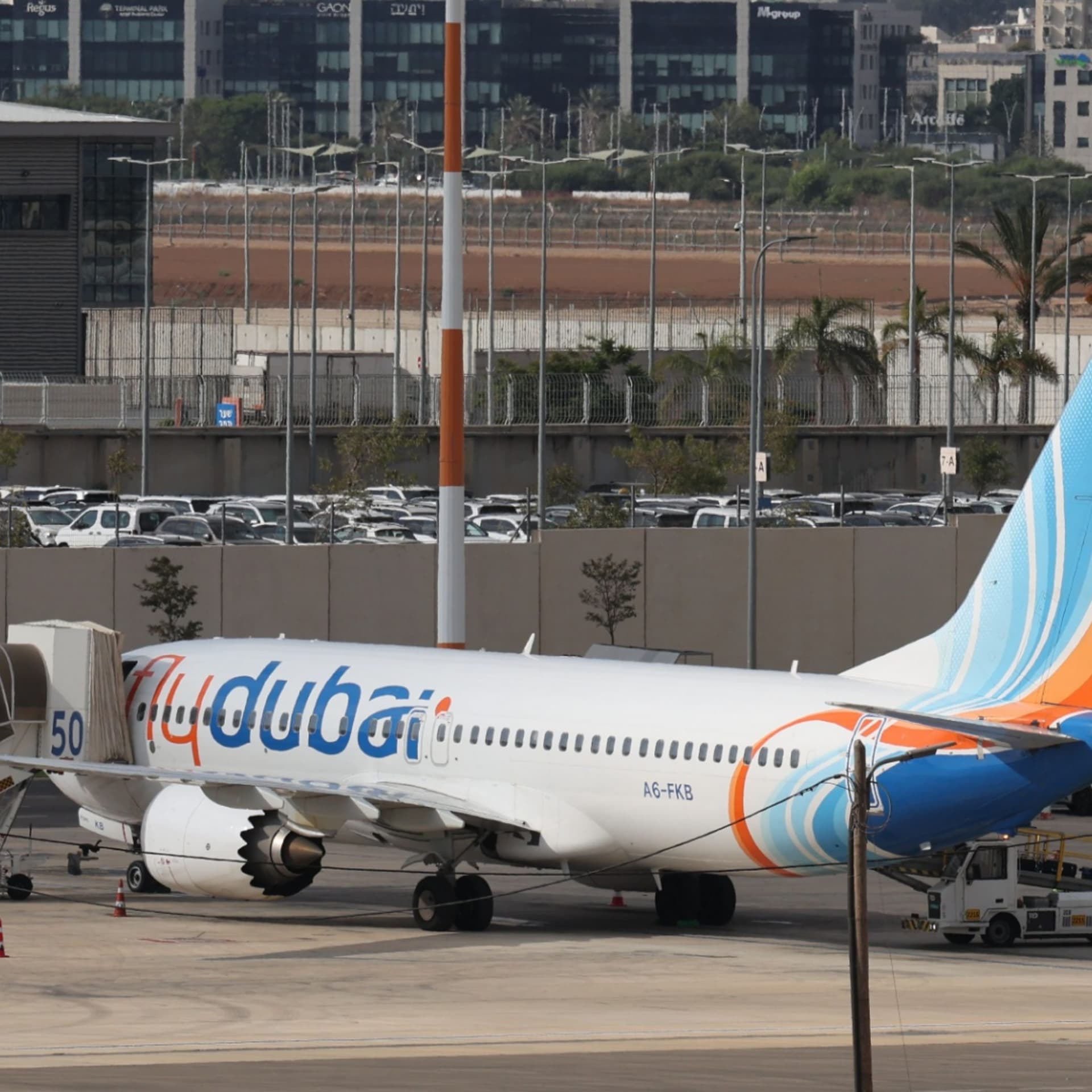
13:01We know China buys a lot of Russian oil. We know India was buying it as well. And now with this waiver, it seems like, you know, more and more countries could be turning to buying what was previously sanctioned Russian oil. So in a financial sense, at least, forget the geopolitics, Moscow is definitely benefiting already. That was Nick Marsh in Singapore. Dozens of people have been arrested in Dubai for filming Iranian missiles hitting the city on their mobile phones. They were detained under a United Arab Emirates law that prohibits the publishing or sharing of material deemed to disturb public security.
13:34And if found guilty, they could be jailed for two years. The BBC's Clive Myrie spoke to the UAE's Minister of State, Lana Nasebi, and he began by asking her how the UAE can justify such harsh punishment for taking photos. In order for everyone to feel safe, it's important at this time that the information is credible and the sources are reliable. That is the basis of the legislation that has come into play in this state, which is obviously a tense time. But I am aware there have already been some violations of this law. Due process will be followed and this kind of filming puts yourself in harm's way.
14:12But if you're just an innocent tourist or me as a journalist and I see something quite extraordinary, the aftermath of a drone attack or whatever, and I innocently pick up my phone, it seems a little bit over the top to arrest that person, potentially have them face two years in jail. Actually, if you look at legislation around the region in the state of crisis, if you even look at legislation in context such as Ukraine, this legislation is quite common. We put out public warnings. We ask people not to do things. Unfortunately, unless there is strict legislation and guidelines in place, a lot of people continue to do those things.
14:47You believe this law is fully justified, that someone can simply take a picture and perhaps go to jail? I don't think the law states that someone can take a picture and go to jail. It's very specifically describing taking pictures of missile interceptions and drone interceptions. I know you and your family and myself and my family would want to be safe, and to do that you need to follow the guidelines. And the law will be applied for everyone's safety, along with all the other measures we have taken to keep this community safe. Lana Nasebi, a Minister of State for the UAE. Still to come on this podcast...
15:25I'm sorry everyone is in this situation. I really, really am. I don't think this represents our team. There's trouble in food paradise after a scandal at one of the world's best restaurants.
15:46This is not the future we were promised. Like, how about that for a tagline for the show? From the BBC, this is The Interface, the show that explores how tech is rewiring your week and your world. This isn't about quarterly earnings or about tech reviews. It's about what technology is actually doing to your work and your politics, your everyday life. And all the bizarre ways people are using the internet. Listen on BBC.com or wherever you get your podcasts.
16:21This is the Global News Podcast. A man's been shot dead by armed guards in the US state of Michigan after ramming his truck through the front door and into the hallway of a synagogue. Here is the local sheriff, Michael Bouchard. All of us have thoughts of maybe why this happened, but we don't operate in a world where we can presume something. We have to determine it through investigation and specificity, and that is a work that's in progress as we speak. All of us will work seamlessly together to get the answers, and then it will be called what it is. Obviously, it's a hateful, terror, terrible thing, right?
16:59But what drove this person into action, that has to be determined by the investigation. We can presume, but we have to find those facts and that's going to happen over the next days. I got more from our correspondent Helena Humphrey, who's in Michigan. Well, the Department of Homeland Security has now identified the man who rammed his truck into the synagogue. They say he was 41 years old, Eamon Mohamed Ghazali. He was a naturalised US citizen who was born in Lebanon. and he came to the United States in 2011. Now we know that he was fatally shot by security officers who were there at the synagogue after he rammed his truck through the synagogue doors, continued driving it down the hallway, and then his vehicle caught fire.
17:50So in the minutes after that attack, we could see smoke billowing from the roof of the synagogue. There was a security officer who was hit by that vehicle. He was knocked unconscious. he's being treated in hospital reportedly not life-threatening injuries but there are also over a hundred children in a preschool on site they were all safely evacuated but a very anxious wait for their parents and the special agent here who's in charge of the fbi's detroit field office say that they're investigating this as a crime, which was a targeted act of violence against the Jewish community. But they've stressed that the precise motive in all of this has to be determined by the investigation.
18:38Now, we've had statements from a number of officials, also from President Trump, who says that this is a terrible thing. And the Michigan governor, Gretchen Whitmer, has said that the Jewish community here in Michigan must be able to live and practice their faith in peace. And an anxious wait then, Helena, for a lot of the parents to find out about their children. No, indeed. You know, stories of parents, grandparents rushing to the scene, falling to their knees as they were waiting for news. One employee on site said that when they heard this crash, they just knew it wasn't good. But they also said that they had been preparing for this with active shooter drills.
19:21The sheriff has called on the community to take a breath, saying that the response, he said, was flawless. And certainly synagogues here in the US have been ramping up security since the US and Israel launched a war with Iran with missile strikes last month. And what we've seen now is police in major US cities saying that they are going to ramp up police patrols around synagogues, Jewish schools, cultural centres and so on. Helena Humphrey speaking to me from Michigan. A satirical cartoonist has been freed from prison in Eritrea after being held for 15 years without charge. Biniyam Solomon was detained in the capital Asmara in 2011, but the reason was never made clear.
20:10I've been speaking to the BBC's Temeskan Debusai, who's originally from Eritrea. Biniyam Solomon, also affectionately known as Cobra in Eritrea, he's a cartoonist. He's also a physics teacher at a secondary school called St Mary's Secondary School. Initially, he started drawing cartoons for the state-run newspaper, But then as private newspapers flourished back in 1997 up until 2001 when they were all shut down during a government crackdown, he was also producing cartoons for the different private newspapers. Now, I'm pretty sure the government didn't take lightly to some of his works because some of it probably had a subliminal message of dissent probably.
20:51Or it was just a matter of interpretation, how they interpreted it. Whether that is the case or not, we don't know why he was imprisoned. Obviously, the question would be, why is he being released now? And the answer to that is that nobody knows, just like nobody knows why he was in prison in the first place. But this is a man who's now probably in his early 60s. It's been 15 years since he's been in prison. And this isn't an isolated case. There's thought to be, what, thousands of other people being held without charge? There are estimates of over 10 ,000. Again, there's no way to confirm the number.
21:28It could be higher than that. It could be lower than that. The good thing is, in recent months, we have been hearing stories of some people being released from prison. Again, reason unknown, but that is definitely a step in the right direction. And how much do we know about the conditions inside these prisons? There are estimated to be more than 300 various detention facilities across the country. Some of them are military camps, underground cells, police stations. The government also uses shipment containers as holding cells as well in the middle of the desert. So you can imagine the conditions very, very hot in the day.
22:05And then the temperatures can go completely very cold in the middle of the night. Some of the more known prisons, I can mention a few, Adda Abaito prison, Mysore Wa, Irairo. Eirairo is notoriously known for housing 11 senior government ministers that called for government reform back in 2001 in September. To this day, nobody knows their whereabouts. Based on the accounts given by former prison guards that have fled the country, it is believed that most of them are probably not alive due to the harsh conditions and obviously their ailing health at the time. But that's the situation in Eritrea. Now if you're into fine dining you've probably had fantasies about eating at the Copenhagen restaurant Noma If you've got the cash to spare you may even have eaten there yourself if you have, lucky you It's got three Michelin stars and has basked in the top spot of the world's 50 best restaurants on multiple occasions but it's been making headlines on Thursday for all the wrong reasons Its founding chef, René Redzepi, has resigned a week after a New York Times report stating that dozens of former employees had accused him of inflicting physical and psychological harm between 2009 and 2017.
23:23A video posted on social media showed him making a tearful statement to his staff. I'm sorry everyone is in this situation. I really, really am. I don't think this represents our team. In order to make sure that you guys are 100 % feeling safe, I'm going to step away. Duncan Kennedy has more. Pushing the envelope of Nordic cuisine to flamboyant levels, René Redzepi's fine dining options have included everything from edible soil to ants. As head chef, his Noma restaurant in Copenhagen has been voted the world's best five times. But the New York Times recently published historical allegations from dozens of former employees who claimed Mr.
24:10Redzepi created a toxic workplace where he hit, jabbed and screamed at staff. Saru Jayaraman, who campaigns for better treatment of staff in the U.S. hospitality industry, says the problem goes wider than one man. This is not the exception. He is not one bad apple. He is not unique at all. He's the rule, not the exception. This is the culture in the restaurant industry worldwide. It is a culture of low or no wages, exploitation, abuse, and frankly, much worse for workers at far less posh restaurants than Noma. René Redzepi championed foraged ingredients for his three Michelin-starred restaurant.
24:56He was due to open a pop-up version of his eatery in Los Angeles, where tickets were selling for$1 ,500. But now he's resigned, accused by those who once worked with him of turning a kitchen into a destructive and unsafe workplace. Duncan Kennedy. The Chilean architect Smilien Radich Clark has been awarded what's considered the most prestigious annual honour in architecture, the Pritzker Prize. The jury said he favoured fragility with buildings that appeared temporary or deliberately unfinished. Danny Eberhard has more details. Smiljan Radic Clark's structures have gained fame far beyond his native Chile.
25:38Tremendously diverse, they range from private homes to commercial buildings and exhibition spaces. A gallery of pre-Columbian art in a Santiago museum, the object seemingly floating in the dark space that appears in part to evoke a basalt cave. A Chilean house perched above the Pacific Ocean with vertiginous, expansive views. A translucent, pillow-shaped fibreglass pavilion that temporarily graced one of London's most prestigious contemporary art galleries, the Serpentine, a sleek, unobtrusive winery in a valley overlooked by the Chilean Andes, intimate spaces that embrace his ideas of shelter and refuge.
Read the full transcript
26:21The Pritzker jury praised him for embracing vulnerability as an intrinsic condition of life. The 60-year-old Radic Clark, who has Croatian and British ancestry, speaks of the importance of ambience, seeking to imbue buildings with their own character. He's also restless in his ideas, keen not to repeat structures. As attested by his Pritzker Prize, it's paid off. Not bad for someone who failed his first attempt to graduate from his architecture course at a Chilean university. Danny Aberhart. And that's all from us for now. If you want to get in touch, you can email us at globalpodcast at bbc.co.uk.
27:03You can also find us on X. We're at BBC World Service and you can use the hashtag Global News Pod. Don't forget our sister podcast. It's called The Global Story and it goes in depth and beyond the headlines on one big story. This edition of the Global News Podcast was mixed by Holly Smith and produced by Stephen Jensen and Wendy Urquhart. The editor is Karen Martin. I'm Will Chalk. Until next time, goodbye.
27:39This is not the future we were promised. Like, how about that for a tagline for the show? From the BBC, this is The Interface, the show that explores how tech is rewiring your week and your world. This isn't about quarterly earnings or about tech reviews. It's about what technology is actually doing to your work and your politics, your everyday life. and all the bizarre ways people are using the internet. Listen on BBC.com or wherever you get your podcasts.
From the publisher
US officials have said a KC-135 refuelling plane that went down in western Iraq was not the result of hostile or friendly fire. They said it had involved a second refuelling aircraft that landed safely. Six crew members were reported to be on the plane that crashed. We also hear from Lebanon where a BBC correspondent has been spending time in the south of the country which is under constant Israeli attack. In other news, a man who was shot dead by armed guards when he drove his truck into a synagogue in the US state of Michigan has been identified as a naturalised US citizen who was born in Lebanon; a satirical cartoonist has been freed from prison in Eritrea after fifteen years without charge; and the chef behind Copenhagen's Noma restaurant steps back after multiple accusations of abuse by staff.
The Global News Podcast brings you the breaking news you need to hear, as it happens. Listen for the latest headlines and current affairs from around the world. Politics, economics, climate, business, technology, health – we cover it all with expert analysis and insight. Get the news that matters, delivered twice a day on weekdays and daily at weekends, plus special bonus episodes reacting to urgent breaking stories. Follow or subscribe now and never miss a moment. Get in touch: globalpodcast@bbc.co.uk