In short
The episode is about the US and Iran reaching a framework “memorandum of understanding” to end their conflict, with a formal signing in Switzerland on Friday. Topic includes: immediate/permanent end of military operations, lifting the US naval blockade, and a 60-day negotiation period on sanctions relief and Iran’s nuclear program; reopening the Strait of Hormuz to restart global shipping and commodity flows.
Key claims
Trump posted “Let the oil flow” and ships were told to “start your engines”; Iran’s deputy foreign minister says war ends on all fronts including Lebanon; analysts warn Israel isn’t part of the deal and Lebanon could still destabilize.
Notable examples
Israel’s Beirut suburbs bombing and Hezbollah rocket exchange; commodity price drops; Iran’s military command calling it “defeat and surrender.”
Guests
BBC Middle East analyst Sebastian Usher (Jerusalem); BBC correspondent Joe Inwood (economy/commodities); BBC Persian service analyst Bahman Kalbasi (assessment).
Written by AI. May contain mistakes. Listen to the episode to check what was said.
Chapters
Tap a time to open that second in VOIntroduction to Global News Podcast
0:30 to 1:27
Overview of the main stories covered in today's episode.
“Make your next financial move with confidence.”
US-Iran Peace Deal Announcement
1:27 to 2:06
Discussion of the newly announced peace deal between the US and Iran.
“I'm Celia Hatton, and in the early hours of Monday, the 15th of June, these are our main stories.”
Details of the Agreement
2:06 to 3:56
Analysis of the specifics of the peace agreement and military operations.
“And the 17-year-old whose school project has come to the attention of Vladimir Putin.”
Regional Reactions and Challenges
3:56 to 6:06
Exploration of regional reactions and potential challenges following the deal.
“Our trust lies in our military strength, our diplomatic capabilities and the support and unity of our own people.”
Economic Implications of the Deal
6:06 to 8:14
Overview of how the deal could affect global economy and oil prices.
“That's certainly the signals that we were getting from various Iranian officials that Israel would face punishment for that attack it carried out on the southern suburbs of Beirut and that it was imminent.”
Iran's Position and Future Negotiations
8:14 to 13:39
Discussion of Iran's stance on sanctions and future negotiations under the deal.
“If the conflict in Lebanon, as we were saying, is somehow brought to an end by this, I have to say that I have serious doubts about that, because Israel is not a part of this agreement, essentially.”
Iran's Military Command Response
13:39 to 14:00
How Iran's military is portraying the agreement as a victory.
“And we've seen evidence that some in Iran are trying to portray this agreement as a victory for Tehran.”
Upcoming Analysis and Decisions
14:00 to 14:55
Analysis on Switzerland's voting results and implications for stability.
“We'll have more analysis from our BBC Persian service later in the podcast.”
Men's Football World Cup Update
15:39 to 18:05
Latest scores and highlights from key matches in the Men's Football World Cup.
“We've got the latest on the Men's Football World Cup for you now.”
Switzerland's Population Vote Analysis
18:08 to 20:50
Discussion on Switzerland's rejection of a population cap and its implications.
“Imogen Folks reports from the Swiss capital, Bern.”
Show all 14 chapters
Alexander Browder's Activism Against Sanctions
20:54 to 24:39
Teenager Alexander Browder discusses being sanctioned by Russia for his research.
“And Alexander found out this month that, like his father before him, he's been sanctioned by Russia.”
Cycling Safety Experiment in the Netherlands
24:41 to 26:34
A trial in the Netherlands to impose a speed limit on cyclists for safety.
“In the Netherlands, a two-week trial has started to impose a speed limit on cyclists.”
US-Iran Peace Deal Discussion
26:36 to 28:00
Analysis of the US and Iran's agreement to halt their war and its implications.
“The US and Iran announcing a deal to halt their war.”
Economic Struggles in Iran Amid Peace Deal
28:00 to 29:08
Explore the dire economic situation in Iran and the implications of the peace deal.
“And at the same time in Iran, we've got more than 85 million people in absolutely horrible economic situation.”
Transcript
Automatic transcript. May contain errors.0:00Alexander Browder:This BBC podcast is supported by ads outside the UK.
0:30Alexander Browder:Make your next financial move with confidence. Follow NerdWallet's Smart Money Podcast on your favorite podcast app. What's up, y 'all? Summer's got a different tempo. Everything's a little looser, brighter. One plan turns into another. You hear something, you stay a little longer. Next thing you know, you're somewhere you didn't plan to be. It's those in-between moments. That's where the ideas hit. Conversations stretch out. Little memories sneak up on you. Sometimes, it's just about what's in your hand. That color. That chill. The new Tropical Butterfly Refresher from Starbucks. Guava and passion fruit flavors with mango pineapple flavored pearls.
1:08Alexander Browder:Yeah, that feels like summer before you even taste it. Funny how one small stop becomes the best part of the day. Start your summer rhythm with Starbucks. Try the new Tropical Butterfly Refresher from Starbucks.
1:26Global News Podcast Team:This is the Global News Podcast from the BBC World Service. I'm Celia Hatton, and in the early hours of Monday, the 15th of June, these are our main stories. Finally, a deal's been reached to end the US war with Iran with the announcement of a formal signing ceremony in Switzerland on Friday. But how solid is this agreement? We have analysis from our correspondents in Jerusalem and London and from the BBC Persian service. Also in this podcast, a game at the Football World Cup that started as a slow burn but became a second half thriller. And the 17-year-old whose school project has come to the attention of Vladimir Putin.
2:11Alexander Browder:It's unprecedented. They've never sanctioned a high schooler before. And so it's clear that my work exposing their currency laundering schemes has touched a nerve.
2:27Global News Podcast Team:We start with a triumphant social media post from Donald Trump. Let the oil flow, he wrote. He then tells ships of the world to start your engines. The US and Iran have confirmed they've agreed to a deal to end their conflict that began just over three months ago. the text of what's been agreed hasn't officially been released, but both sides have indicated they'll lift their blockades on the Strait of Hormuz, a move that could allow ships to pass through it again. Representatives from both countries are scheduled to meet in Switzerland for a formal signing ceremony on Friday. On state TV, the Iranian Deputy Foreign Minister Kazem Garibabadi had this to say after the text had been finalized.
3:13Alexander Browder:Two immediate developments were supposed to take place and will take place, starting last night on the early hours of Monday. First, the immediate and permanent end of the war and military operations on various fronts, including in Lebanon. As you saw, the statement announced by the Prime Minister of Pakistan explicitly referred to the immediate and permanent end of the war on all fronts, including Lebanon. The second development was the lifting and the end of the naval blockade that the United States had imposed on the Islamic Republic of Iran, which was also announced by the US President in his statement.
3:50Alexander Browder:This memorandum of understanding was reached despite our complete distrust of our enemies. We have no trust in the enemy. Our trust lies in our military strength, our diplomatic capabilities and the support and unity of our own people. That is why the implementation of this memorandum of understanding is extremely important. We have specific plans in place to monitor the implementation of US commitments under this memorandum.
4:19Global News Podcast Team:Iran's Deputy Foreign Minister. He mentioned there the Pakistani Prime Minister. Pakistan has acted as one of the main mediators to end the conflict. That mediation role looks set to continue as this agreement sets out a framework for a further 60 days of talks to hammer out some of the more complicated issues on the table, including details on the possible lifting of sanctions and the future of Iran's nuclear program. Our Middle East analyst Sebastian Usher joined us from Jerusalem shortly after the agreement was announced.
4:49Alexander Browder:Interestingly, what the Pakistani prime minister says is that both sides have declared, this is quoting it directly, the immediate and permanent termination of military operations on all fronts, including in Lebanon. Now that is a big step. It was the situation in Lebanon that again almost derailed this at the last moment when Israel bombed the southern suburbs of Beirut that was following the infiltration in northern Israel of several rockets from Hezbollah. Hezbollah. That looked for several hours like it was going to spoil President Trump's hopes that the deal would be done and would be able to be announced on his 80th birthday.
5:30Alexander Browder:Well, he has succeeded in that. But this idea that the war in Lebanon that Israel's waging against Hezbollah will come to an end, I think that's something which will take a bit of unpacking.
5:42Global News Podcast Team:Sebastian, you're speaking to us from Israel. Has there been any reaction from there so far?
5:47Alexander Browder:When we're speaking, I mean, we're speaking very shortly after this has just happened. There hasn't been a reaction so far as I've seen, but there's a kind of mute reaction in the sense that there was an anticipation, a fear that Iran would fire missiles overnight. That's certainly the signals that we were getting from various Iranian officials that Israel would face punishment for that attack it carried out on the southern suburbs of Beirut and that it was imminent. So there was an alert, a higher state of alert that was raised. The Israeli military says that it was prepared offensively and defensively for this, and a sense that Israel was moving back into the mode of potentially being prepared both to take down those missiles as they came in with its Iron Dome system, but then almost certainly to launch its own wave of strikes.
6:43Alexander Browder:And that's exactly what happened this time last Sunday. So I think there will be a sigh of relief over that because one assumes that's not now going to happen. I mean, in this extraordinary back and forth that we've had, I mean, absolutely. I mean, I think everyone who's been following this is slightly dazed by the whiplash turns. It's not beyond the realms of possibility that that attack could still be carried out. But at the moment, it looks far, far less likely.
7:12Global News Podcast Team:You've taken us through some of the challenges still facing the region. And we've described this as a deal, but it's more specifically being termed a memorandum of understanding between the U.S. and Iran. I mean, it's really just the first phase of an agreement, isn't it? Can you take us through what isn't in this deal, what still remains to be agreed?
7:33Alexander Browder:Some of the information that's been given over the past 24 hours or so, from the Iranian side in particular, has suggested that more may be in this memorandum of understanding than had been anticipated. A senior Iranian official said that there was an agreement within it for Iran to dilute its highly enriched uranium, what President Trump has referred to as nuclear dust, inside Iran, rather than, as President Trump had been suggesting, it somehow being taken out of Iran. So that would be quite a big step at this stage. If that held, that would be one of the big stumbling blocks potentially dealt with.
8:18Alexander Browder:If the conflict in Lebanon, as we were saying, is somehow brought to an end by this, I have to say that I have serious doubts about that, because Israel is not a part of this agreement, essentially. And the Israeli government, the Israeli prime minister, has essentially said that they should continue to have a certain level of freedom in the way that they wage that offensive, then that would be a big thing as well. We don't know about the billions of dollars that Iran wants unfrozen. They wanted a certain amount of that to be unfrozen at the beginning of this process within this memorandum of understanding.
8:54Alexander Browder:The latest that we heard from President Trump was that that wouldn't be the case, but it would maybe happen during the process of negotiations that would follow, according to the kind of progress that was made. So we're not sure about that yet. But it may be, potentially, that this is more of a deal, that it goes further than perhaps people have been expecting. I mean, we'll obviously find that out more in the coming hours. That would be very helpful, obviously, in terms of the negotiations, which would be seen as very difficult, and dealing with the red lines, the main stumbling blocks, over the next, some people have talked about, the Iranians particularly have talked about a 60-day period that would follow the signing of this deal.
9:41Alexander Browder:And we've been told the signing will be on the 19th. Things could happen between then, of course. I mean, things have been happening every day that have changed the equation.
9:51Global News Podcast Team:Sebastian Usher. As Sebastian mentioned, full details of the deal have not yet been made public, and it's unclear how quickly the Strait of Hormuz might reopen to all traffic. At issue is not simply a military ceasefire or an Iranian nuclear agreement, but also the state of the global economy. Our correspondent Joe Inwood told us that prices of key commodities had already started to fall.
10:16Alexander Browder:The cost of oil, that seems to have gone down. And of course, it's not just oil that is going to be flowing through the Strait of Hormuz when it is opened up. But of course, there's really important things like fertilizer, gas that's used in other countries as well, really a huge amount of the kind of the lifeblood of the global economy will be gradually unblocked and things could start to get back to normal. Now, of course, all of this is predicated upon not just it being implemented, but it holding. You know, this is definitely, definitely the most optimistic we can feel so far about things starting to get back to normal.
10:51Alexander Browder:But we are not there yet. There are still uncertainties in this. Still hasn't been signed yet. All sides seem to be moving in the same direction. But I think there are still hurdles that remain.
11:02Global News Podcast Team:You mentioned the global economy, Joe. Things looking a bit brighter. Donald Trump has been under pressure, hasn't he, domestically to find some way out of this conflict?
11:13Alexander Browder:Of course, it hasn't escaped people's notice that as well as celebrating the 250th birth of the United States, he's also celebrating his 80th birthday so clearly this was a day he wanted to get this done but I think in a more sort of deep political sense you hit the nail on the head there he has suffered his popularity has suffered partly because he had promised not to get into wars and clearly has got into a war but also because Americans are feeling the cost of this in their pockets you know the the rising cost of whether it's a fertilizer for American farmers or probably more immediately the cost of petrol, of gas to go in their cars.
11:50Alexander Browder:That is something Americans notice. But I think it's really important not to get too fixated on the cost to American consumers. Well, as I was mentioning before, fertilizer, a lot of which goes to the developing world, that is not getting through as well. And while it's inconvenient for people to have to spend more on petrol, it's really a matter of life and death for other people to be able to grow food. So I think in terms of keeping in perspective, I think that is the impact really, that has had the most dramatic effect, if not the one that's had the most impact on President Trump and his popularity.
12:22Global News Podcast Team:Just to focus on what's going on inside Iran for a moment, the Iranians have already said that they really want to focus on lifting of sanctions. What do we know about that?
12:34Alexander Browder:We should say, at the time we're speaking, just before midnight London time, the details that we've had come out don't have any mention of either sanctions relief that I've seen or any kind of unfreezing of assets. So Iranian assets that are held in Western countries or in Gulf countries in their banks, those being unfrozen and given back to the Iranians. I haven't seen at this point any mention of that. It doesn't mean it's not in the deal because the text has not been fully released as we speak, but it hasn't been highlighted by anyone. Whether the sanctions relief is immediate or whether the sanctions relief is phased in, that was always a point of contention.
13:11Alexander Browder:The Iranians wanted to be upfront. the Americans said they wanted sanctions relief to be essentially tied to what they saw as good behavior. So whether the sanctions relief is immediate or phased in, it is definitely going to be the direction of travel that we're going in, that there is going to be a sort of a slight lifting of restriction on the Iranian economy, a freeing up of some of the assets they have overseas. As I say, and how immediately it happens, we don't know, but it will be happening.
13:38Global News Podcast Team:Joe Inwood. And we've seen evidence that some in Iran are trying to portray this agreement as a victory for Tehran. Iran's top military command, Hatam al-Anbiya Central Headquarters, has said Iranians, together with the country's armed forces and Tehran's proxies and allies in the region, have shown the U.S. and Israel that they have no option but to accept defeat and surrender. We'll have more analysis from our BBC Persian service later in the podcast. Still to come in this podcast.
14:13Alexander Browder:With today's decision, the voters have sent a signal in favor of stability, openness and reliability.
14:22Global News Podcast Team:Switzerland votes no to capping the size of its population.
14:55Global News Podcast Team:We'll be right back. Welcome bonus. Moto Casino.
14:59Alexander Browder:America's social casino. Download the Moto Casino app today. Hey, it's Ryan Seacrest for Jewel Osco. For you, save days are here now through June 23rd. Find hot deals throughout the store and earn four times a point. Look for in-store tags to earn on eligible items from General Mills, Pillsbury, Snickers, Oreo, Tillamook, Ziploc, Gold Peak, and Heinz. Then clip the offer in the app for automatic event-long savings. Stack up those rewards to save even more. Enjoy savings on top of savings when you shop in-store or online for easy pickup or delivery. Restrictions apply. See the website for full terms and conditions.
15:38Global News Podcast Team:You're listening to the Global News Podcast. We've got the latest on the Men's Football World Cup for you now. Japan and the Netherlands met in a pulsating match in Dallas. That game ended in a 2-2 draw. All the goals were in the second half. Our sports correspondent John Bennett is in the US for the tournament, and he gave me this update.
15:58Alexander Browder:It was always going to be, I think, one of the best games of the group stage. A semi-finalist from the Euros in the Netherlands against a Japan team, who many people have picked out as a team to watch in this tournament. They breezed through qualifying. They scored over 50 goals. They recently beat the likes of Brazil and England. And it turned out to be the game of the tournament so far, this 2-2 draw. Quiet first half, but then the second half really came to life. Japan twice coming from behind in this 2-2 draw. Crescensio Somerville, he probably thought he'd won it for the Dutch with a beautiful curling effort, but Daichi Kamada headed in a late equaliser.
16:32Alexander Browder:I think it was a fair result in the end. Both teams will take this, although probably the Netherlands, of course, having been 2-1 up, 1-0 up, will have thought they maybe could have won it. But Japan, after being quite passive first half, much more impressive when they were being positive, but an excellent match in Dallas.
16:47Global News Podcast Team:And then earlier, though, a match with two teams that maybe weren't so quite so evenly matched. The tiny nation of Curacao were beaten 7-1 by Germany.
16:57Alexander Browder:Yes, many people were wondering, will this be one of the biggest upsets in World Cup history? Well, it wasn't. Germany came into this tournament under pressure because they'd been knocked out of the last two tournaments in the group stage, but they were excellent today. Having said that, one name will go down in the history of football in Curacao, Livano Cominencia. He scored their first ever World Cup goal on their debut at the tournament. He made it 1-1. Germany looked stunned at that stage. But right after that, there was one of those controversial hydration breaks we've had at this tournament, which kind of splits a game into quarters.
17:30Alexander Browder:They take these breaks due to high temperatures, and that completely halted their momentum. Don't get me wrong, Germany probably would have won anyway. They looked very impressive. Kai Havertz on the score sheet twice. Jamal Musiala, also one of the goal scorers. 72 places in the rankings separated them. It was always going to be difficult. As you say, Carreyrs, the smallest ever World Cup nation, population 150 ,000, and the gap in quality was clear to see.
17:53Global News Podcast Team:John Bennett in New Jersey. And I can give you the result of another match. Ivory Coast has beaten Ecuador 1-0 in Philadelphia. To Switzerland now, where voters have rejected a proposal to limit the country's population to 10 million people. Around 55 % of those who voted in the referendum said no to the plan. Imogen Folks reports from the Swiss capital, Bern.
Read the full transcript
18:15Alexander Browder:Switzerland has grown rapidly in the last 25 years, from 7.3 million people in 2002 to 9.1 million today. 25 % of them are not Swiss. The right-wing Swiss People's Party said pulling the emergency brake on immigration would solve problems like high rents or crowded trains. But in the cities where these problems are most acute, voters disagreed. In Zurich, Geneva and Bern, more than 70 % of those voting rejected the population cap. Switzerland has an aging population. It needs doctors, care workers and hotel and restaurant staff. They come from all over Europe, thanks to non-EU member Switzerland's participation in free movement of people.
19:05Alexander Browder:Swiss Justice Minister Beat Jans, welcome to today's result. With today's decision, the voters have sent a signal in favour of stability, openness and reliability. They have shown clearly that they want to continue relations with the European Union and that in these uncertain times, stability is important.
19:32Alexander Browder:Key to that stability is access to Europe's single market, where half of all Swiss exports are sold, Leaving free movement of people would likely have meant losing that access. And Switzerland, although neutral, is increasing its defence spending. It hopes to cooperate on security with Europe. With the world so unstable, the government argued, now is not the moment to alienate friendly neighbours. The Swiss People's Party is disappointed at its loss, but Member of Parliament Thomas Esche warned that the problems it highlighted won't go away. 45 % said yes to this initiative of the Swiss People's Party.
20:14Alexander Browder:I think that's a very clear signal to our government, to the other parties, to the big lobby organisations of the economy, that the current development cannot continue as it has in the past. Most Swiss voters won't disagree that challenges around housing and transport need tackling. But what today's results suggests is that many of them may be weary of the People's Party's constant focus on immigration as the source of Switzerland's problems.
20:43Global News Podcast Team:Imogen folks, now what does it feel like to be President Putin's youngest enemy? 17-year-old Alexander Browder is the person to answer that question. He is the son of the anti-Putin and anti-corruption campaigner Bill Browder. And Alexander found out this month that, like his father before him, he's been sanctioned by Russia. This after the high school student published research into how Moscow may be using cryptocurrency to evade Western sanctions. The teenager, who's due to take his final school exams next year here in the UK, says it's proof his work has touched a nerve. Julian Worker asked Alexander Browder how he first discovered he'd been sanctioned by President Putin.
21:27Alexander Browder:It's a funny story. I'm still in high school. I was sitting at the back of my economic class. I opened up my laptop and I saw a Reuters headline stating that I was sanctioned. It's unprecedented. They've never sanctioned a high schooler before. And so it's clear that my work exposing their currency laundering schemes has touched a nerve. They're obviously unhappy with what you're doing. So explain in sort of layman's terms what that work involves. Yeah. Over the past year and a half, I created the largest open source database of cryptocurrency money laundering. And what I discovered is that state-sanctioned actors like Russia, Iran and North Korea are heavily utilising cryptocurrency to launder their funds.
22:14Alexander Browder:And specifically, a recent development with Russia's money laundering efforts is that they created Russian-backed stablecoin. So a stablecoin is a type of cryptocurrency which is backed to some real value like the dollar or gold. And in this case, it's backed by the ruble. It was set up in January 2025, and it's been sanctioned here in the UK, in the EU, and the US. But it still continues to function. What I discovered is that many illicit cryptocurrency exchanges, which allow the stablecoin to be converted into cash, registered in Kyrgyzstan. And even more shockingly, it's been reported that the mastermind behind this scheme gifted the Kyrgyz president a luxury jet.
22:57Alexander Browder:So it's clearly a politically motivated thing. Two months ago, on the back of my work, 26 senior MPs and lords wrote to the UK Foreign Secretary urging sanctions on these enablers. Well, two weeks ago, the government responded by sanctioning these enablers. But then what came out of surprise to me is that I myself was sanctioned by Russia. You mentioned sanctions several times during that explanation. I mean, clearly, people listening to this conversation will be aware of the sanctions that already are in place against Russia because of what's happening in Ukraine. But is your argument that this particular methodology that you've described gets them around those sanctions?
23:40Alexander Browder:Exactly. Cryptocurrency for the Russians has become one of the key tools that they use to skirt Western sanctions and also not only that, to fund their war of aggression and target Western countries. In terms of that connection that you've made with parliamentarians in Britain, do you think there's a sufficient understanding amongst those people that you're talking to about what might happen under the heading of cryptocurrencies? Yeah, so I'm relatively young. And so I understand the system well. But the issue is that many people have no idea about how cryptocurrency works. And indeed, most of the senior politicians I speak to have no idea how any of it works, how money gets laundered through cryptocurrency.
24:23Alexander Browder:And it's a really pressing issue because you have bad actors like Iran, North Korea and Russia who are able to move billions through cryptocurrency because they can set up such advanced schemes where politicians and authorities have no idea how to stop them.
24:41Global News Podcast Team:17-year-old Alexander Brouder. In the Netherlands, a two-week trial has started to impose a speed limit on cyclists. The Dutch government boasts, it's on their official website, that they're the number one country in the world when it comes to cycling. So why carry out this experiment? Our correspondent in The Hague is our own great bike enthusiast, Anna Holligan. This is such a Dutch dilemma. And the question at the heart of all of this is how far do you restrict freedom-loving cyclists in order to protect the vulnerable people on the bike lanes? So the children, older riders in a country where bikes are so integral to daily life from school runs to commutes.
25:21Global News Podcast Team:And every morning I ride about 20 kilometers an hour back and forth to school. That's the limit. They're trialing in Houten, which is a place near Utrecht in the center of the Netherlands. Every morning I'm overtaken by teenagers on fat bikes. So these electric bikes that get their name from the size of the wheels. people in their 70s on e-bikes, commuters racing to the office. More than a quarter of all journeys here in the Netherlands are made by bikes. So the cycling infrastructure, it's a victim of its own success. The Dutch are trying to keep that world-class reputation. So this trial is happening because cyclist deaths rose pretty dramatically last year, 14 % to 281.
26:06Global News Podcast Team:And on top of that, an estimated 81 ,000 cyclists ended up in accident and emergency rooms being treated for various kinds of injuries. The lanes that we're riding on every day, they're designed for the traditional sit up and beg or granny bikes, as they're called over here in the Netherlands. But now they're carrying a huge array of users. So they have to find a way to allow all of those different types of riders to coexist without jeopardizing anyone's safety. Anna Holligan. Let's return to our top story. The US and Iran announcing a deal to halt their war. The framework agreement is due to be signed on Friday in Switzerland.
26:44Global News Podcast Team:But details of what it contains are still emerging. BBC Persians Bhaman Kalbasi gave Janat Jalil this assessment.
26:52Alexander Browder:It is an important breakthrough. It is happening in the backdrop of endless mistrust, obviously two wars. and the reality that a lot of disagreements were dragging us on until the very last days. And so those gaps have been closed enough to be able to announce a 60-day period of negotiations, but is also a very important moment given that Israel was very clearly against letting this happen and Mr. Netanyahu openly tried to derail it by attacking the suburbs of Beirut. So it is significant that it has arrived where it has.
27:31Global News Podcast Team:People around the world will be breathing a sigh of relief because basically Iran has been able to hold the global economy hostage.
27:39Alexander Browder:We're talking about the reopening of the Strait of Hormuz, but it will take time, won't it, for oil shipments to flow as freely as they did before? Absolutely. I mean, most experts are looking at this recovering market. that would be a slow one. So it's not going to affect gas prices tomorrow or reduce the chances of inflation right away. And at the same time in Iran, we've got more than 85 million people in absolutely horrible economic situation. It was terrible before the war. It was terrible before the protest in January. And now we're looking at 60, 70 % inflation. So a country that its middle class is all but collapsed.
28:19Alexander Browder:It's poor or even poorer. It's in desperate need of some relief. The question is, will this money released in these sanctions help that economy enough or will it be lost to corruption? But nevertheless, the both sides of this equation are desperate for it to end. Yes, because this war has come at huge costs and it seems pretty much that we're going back to where we were before, Bahman. Indeed. The fundamentals haven't changed, except Iran has a new deterrence, which is now, before it didn't think it could close the Strait of Hormones whenever it wanted. It would have a costly move that only super hardliners in Iran would advocate, but it did it, and now it knows it works, and it could do it again.
28:59Alexander Browder:And the reality is the basis of this deal is not that different from what Barack Obama signed in 2015. Sanction relief for limitation on Iran's nuclear program. None of it has fundamentally changed.
29:14Global News Podcast Team:Bahman Khaldarsy. And that's all from us for now. If you want to get in touch, you can email us at globalpodcast at bbc.co.uk. You can also find us on X at BBC World Service. Use the hashtag Global News Pod. And don't forget our sister podcast, The Global Story, which goes in-depth and beyond the headlines on one big story. This edition of The Global News podcast was mixed by Masood Ibrahim Hale and the producer was Emma Joseph. The editor is Karen Martin. I'm Celia Hatton. Until next time, goodbye.
From the publisher
The United States and Iran say they've reached a deal to halt their war, which would include the reopening of the Strait of Hormuz and removal of the US naval blockade. The agreement includes the end of the war in Lebanon. The deal is due to be signed on Friday. Also in this podcast: Swiss voters reject capping the population at 10 million. We speak to the Kremlin's teenage enemy, Alexander Browder. And the Dutch try out a speed limit for cyclists.
The Global News Podcast brings you the breaking news you need to hear, as it happens. Listen for the latest headlines and current affairs from around the world. Politics, economics, climate, business, technology, health – we cover it all with expert analysis and insight. Get the news that matters, delivered twice a day on weekdays and daily at weekends, plus special bonus episodes reacting to urgent breaking stories. Follow or subscribe now and never miss a moment. Get in touch: globalpodcast@bbc.co.uk
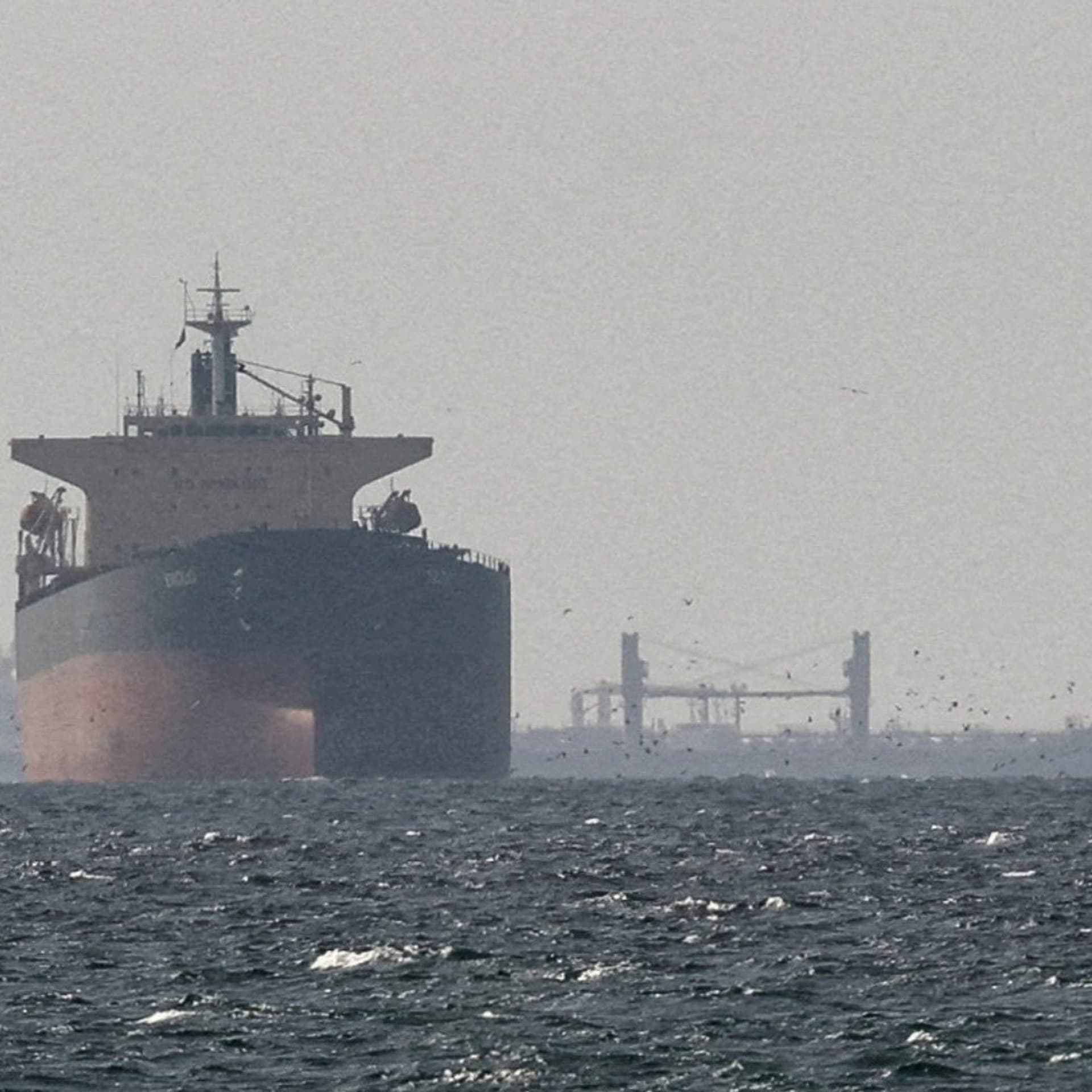
Photo: Cargo ships in the Gulf Credit: Reuters