
In short
Global News Podcast Episode Summary
Episode Title
US and Iran hold crucial talks mediated by Oman
Main Topics Covered
- US-Iran Nuclear Talks
- Ongoing negotiations in Geneva concerning Iran's nuclear program.
- Iranian President Masoud Pazeshkian asserts no intention of pursuing nuclear weapons.
- The talks are considered a last chance for diplomacy amidst rising military tensions.
- Clinton Testimonies on Epstein
- Bill and Hillary Clinton are called to testify before Congress regarding Jeffrey Epstein.
- The Clintons deny any wrongdoing, with Hillary emphasizing the testimonies are distractions from Donald Trump’s legal issues.
- North Korea's Diplomatic Stance
- Kim Jong-un expresses willingness to engage with the US if recognized as a nuclear power.
- North Korea's military ambitions are juxtaposed with potential for diplomatic talks.
- Sudan Conflict and Drone Usage
- The US condemns drone attacks in Sudan as both sides in the conflict escalate violence using unmanned vehicles.
- Age and Cognitive Function Study
- A new study highlights that some older individuals maintain sharp cognitive abilities, linked to neurogenesis in the brain.
- Sustainable Construction Practices in Europe
- Discussion on the shift towards wood construction to mitigate carbon emissions in Europe.
- A rise in modular wooden houses driven by housing shortages and labor issues.
Detailed Breakdown
- US-Iran Nuclear Talks
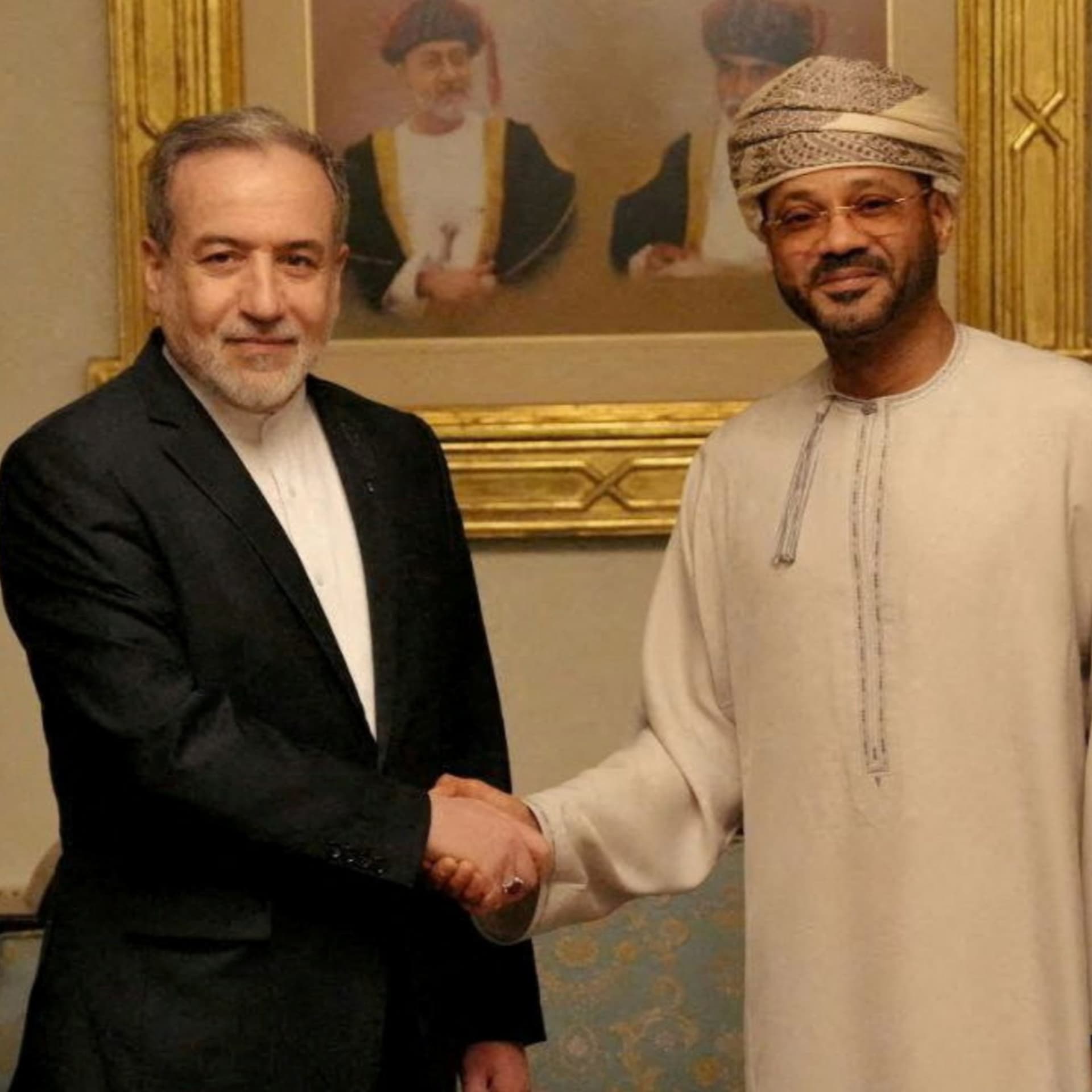
- Current Situation: Iranian and American negotiators are in Geneva, focusing on Iran’s nuclear program.
- Statements from Officials:
- Iranian officials assert their program is civilian-focused.
- US President Trump emphasizes Iran is a "sponsor of terror" and cannot be allowed nuclear weapons.
- Mediator Oman plays a crucial role in facilitating discussions.
- Negotiation Dynamics:
- Different negotiating styles and trust issues complicate the talks.
- Observations indicate a mix of face-to-face and indirect discussions.
- Clinton Testimonies on Epstein
- Significance of Hearing:
- The Clintons are significant figures in the ongoing inquiry into Epstein's actions.
- Their testimonies are expected to shed light on their connections but do not indicate wrongdoing.
- Congressional Committee's Role: Aims to uncover the extent of Epstein's network and ensure accountability for victims.
- North Korea's Diplomatic Stance
- Kim Jong-un's Remarks:
- Suggests that recognition by the US could facilitate cooperation.
- Plans to expand North Korea's military capabilities, including nuclear weapons.
- Speculation of US-North Korea Talks: Recent statements from the North Korean leader have sparked speculation about a potential meeting with President Trump.
- Sudan Conflict and Drone Usage
- Current Events: Rising death toll from drone strikes, with a focus on civilian areas.
- US Response: Calls for both factions to cease the use of drones in the conflict.
- Age and Cognitive Function Study
- Findings: "Super-agers" show higher levels of neurogenesis in the brain, contributing to their cognitive resilience.
- Implications: Research offers insights into potential interventions for age-related cognitive decline.
- Sustainable Construction Practices in Europe
- Shift to Wood Construction:
- Wood is seen as a sustainable alternative to traditional materials like concrete.
- Growing demand for modular wooden homes in response to housing shortages.
- Expert Insights:
- Benefits of engineered wood highlighted in relation to environmental impact and construction efficiency.
Conclusion This episode of the Global News Podcast provides a comprehensive overview of critical global issues, ranging from nuclear negotiations and high-profile testimonies to advancements in cognitive science and sustainable building practices. Each segment emphasizes the interconnectedness of political, environmental, and social dynamics on a global stage.
Contact Information
- Email: globalpodcast@bbc.co.uk
- Social Media: Follow on X (formerly Twitter) @BBCWorldService with hashtag #GlobalNewsPod
Additional Resources
- Sister Podcast: The Global Story for in-depth discussions on significant news topics.
Written by AI. May contain mistakes. Listen to the episode to check what was said.
Chapters
Tap a time to open that second in VOMain Stories Overview
0:45 to 1:35
Overview of key global news stories including US-Iran talks and more.
“US and Iranian negotiators are in Geneva for talks widely seen as the best chance of preventing a military conflict.”
US-Iran Negotiations in Geneva
1:35 to 3:22
Discussion on US and Iranian negotiations regarding nuclear program.
“for what are being seen as crucial talks about Tehran's nuclear programme.”
Insights from Lise Doucette
3:22 to 6:28
Lise Doucette reports from Geneva on the US-Iran talks' significance.
“We understand they have been talking face-to-face as well.”
The Clintons and Jeffrey Epstein
6:28 to 10:12
Overview of Bill and Hillary Clinton's testimonies related to Epstein.
“Mr Clinton also denies any knowledge of the crimes of Epstein, who killed himself in 2019.”
North Korea's Military Ambitions
10:12 to 11:37
Kim Jong-un's statements on nuclear weapons and potential US talks.
“two countries could get along well should Washington recognise Pyongyang as a nuclear power.”
Construction Industry and Carbon Emissions
11:37 to 14:00
Exploring the shift to wooden construction to reduce carbon emissions.
“Now, of course, the one that might be most joyed by this is South Korea, which has been pushing for the two leaders, Donald Trump and Kim Jong-un, to meet as part of their peace process.”
Exploring Engineered Wood in Architecture
14:00 to 15:00
Learn about the innovative use of engineered wood in modern architecture.
“Alex de Rijka pioneered building an engineered wood.”
Fire Safety in Wooden Structures
15:00 to 16:00
Understand the fire safety advantages of engineered timber versus steel.
“And steel collapses suddenly at 500 Celsius, whereas engineered timber, mass timber, just chars and protects itself, just like these trees here.”
The Growing Demand for Modular Housing
16:00 to 17:00
Discover the rising trend of modular housing solutions and their benefits.
“and with the quality that has been contracting with us.”
Sweden's Approach to Sustainable Building
17:00 to 18:00
Learn how Sweden manages its forests while promoting wooden construction.
“which is also materials that you take from the nature, but it never grows back.”
Show all 17 chapters
Revolution in Biomaterials
18:00 to 18:30
Explore how regulatory pressures are shifting construction towards biomaterials.
“We speak to the director of the Norwegian film that could win big at the Oscars This is not the future we were promised.”
Drone Warfare in Sudan
18:50 to 20:30
Examine the rise of drone attacks in Sudan and their implications.
“In Sudan, there's been an upsurge in drone attacks with deadly consequences.”
US Involvement in Ukraine's Future
20:30 to 22:40
Understand the US's role in Ukraine's economic recovery post-war.
“but we've also seen like jihadist groups have been using this to carry out attacks in countries like Burkina Faso, in Mali, Cameroon, and also in Nigeria.”
The Secrets of Super-Aging
22:40 to 24:00
Learn about super-agers and their cognitive advantages in old age.
“I think a lot of economists regard that as a wildly inflated figure, but it is part of Russia's effort to keep the Americans focused on what Russia would like to see.”
Genetics and Cognitive Resilience
24:00 to 26:00
Explore how genetics and lifestyle influence brain health in aging.
“It's really important for learning and memory and spatial orientation.”
Norwegian Film 'Sentimental Value'
26:00 to 28:01
Discover the themes and success of the Norwegian film 'Sentimental Value'.
“Yeah, it's a long-term path, but genetic treatments.”
Exploring 'Sentimental Value'
28:01 to 29:58
Learn about the themes and achievements of Joachim Trier's film 'Sentimental Value'.
“director father betrayed by stella skarsgård who's trying to reclaim his former glory why didn't you want to do the role i can't work with him i guess i i am interested in behavior more than i am in telling stories.”
Transcript
Automatic transcript. May contain errors.0:00This BBC podcast is supported by ads outside the UK.
0:30to make those markets work for you. Follow Merrin Talks Money on Apple Podcasts, Spotify or wherever you listen. This is the Global News Podcast from the BBC World Service. I'm Alex Ritson and at 16 hours GMT on Thursday the 26th of February, these are our main stories. US and Iranian negotiators are in Geneva for talks widely seen as the best chance of preventing a military conflict. Bill and Hillary Clinton prepare to give evidence to Congress about the child sex offender Jeffrey Epstein. North Korea's leader Kim Jong-un says he could get along well with the US if the communist state is recognised as a nuclear power.
1:14Also in this podcast. While a tree grows, it consumes carbon dioxide and it stores it in the tree for as long as these buildings are standing. Why Europe's construction industry is turning to wood to cut carbon emissions. Iranian and American officials have been meeting again in Geneva for what are being seen as crucial talks about Tehran's nuclear programme. It comes as the United States continues to strengthen its military presence in the Middle East, with a number of countries urging their citizens to leave. In his State of the Union address on Tuesday, President Trump said he would never allow what he called the world's number one sponsor of terror to have nuclear weapons.
2:00But Tehran insists it has no intention of building such a bomb and that its program is purely for civilian purposes. Iran's president, Masoud Pazeshkian, said his orders came directly from the country's supreme leader, Ayatollah Ali Khamenei. Trump says that Iran must denounce we will never have a nuclear weapon. The supreme leader has stated that we will never have a nuclear weapon. Maybe you can say that I'm like those politicians and I lie. But the leader of a society, the religious leader of a society, cannot lie. When he says that we will never have a nuclear weapon, that means we will never have it.
2:41Amman, which is acting as mediator, says the negotiations will resume on Thursday evening. This third round is being viewed by some as a last chance for diplomacy. Our chief international correspondent, Lise Doucette, is in Switzerland covering the negotiations for us. Well, I'm speaking to you from outside the Omani residents here in Geneva. You may hear the hubbub of other journalists such as The Interest and the significance of these talks, that there is a large contingent of media from around the world. We saw the American convoy leaving here about an hour ago, then the Iranian delegation left.
3:16What is really significant is that in all the other times when the Iranians and Americans met for mainly indirect, but not completely. We understand they have been talking face-to-face as well. They meet for a few hours and then they go their separate ways. This is the first time that they're coming back. The Omani foreign minister, Badr al-Busadi, who is the main mediator, said on social, on media on X, he said, they exchange creative and positive ideas. We're taking a break and then we're going to come back again. And we understand they are trying to work out the details of some kind of a draft text of an agreement.
3:50And I think the general assessment is that if it is just confined to the nuclear program of Iran in exchange for sanctions, a deal is difficult, but it is doable. So the Iranians do respect the US negotiators? Well, they have very, very different negotiating styles. There is so little trust between the two sides. Bear in mind that Iran was involved in negotiations with the Americans headed by Steve Whitcoff last year, And it was just days before the sixth round of talks that Israel attacked Iran, which triggered the 12-day war which drew in the United States. And don't forget that President Trump pulled out of the 2015 Iran nuclear deal in 2018.
4:32So Iranian officials continue to say that we want to do a deal, we're going to continue to negotiate, but we don't want to be, in their words, surprised. And that's why they, like the Americans, are preparing for war, if indeed it does come to war this time. as well. And also there are very different individuals. You have the foreign minister of Iran, who has more than a decade of experience on the nuclear file. He was very much involved in the last landmark negotiations, which led to that multilateral deal. His deputy, Majid Takravanchi, also has more than a decade of experience. They know every part of these nuclear issues.
5:11Whereas Steve Whitcoff, who's President Trump's golf buddy, President Trump's preferred envoy. You remember that when he first came into the White House for a second time, he said, my envoys may not know about the height of the mountains or the depth of the rivers, but they know how to do a deal. Steve Whitcoff is a property dealer, just like President Trump was, and he has been sent to do these deals. The Iranians are encouraged that this time it's not just Steve Whitcoff. It's Jared Kushner, the president's son-in-law. They see that as an even more direct linked to the president and that he pays closer attention to the negotiations.
5:45And as I was told by a few diplomats, that Jared Kushner takes notes, whereas Steve Whitcoff never did. Lise Doucette in Switzerland. The committee in the US Congress, which is investigating the convicted sex offender Jeffrey Epstein and his accomplice Ghislaine Maxwell, will hear evidence from two of the most important figures in American politics, Bill and Hillary Clinton. She will give evidence on Thursday, while the former president will do so on Friday. The Clintons feature in the millions of documents released on Epstein, but this doesn't imply any wrongdoing, and Mr Clinton said that he broke ties with him before he was convicted of child sex offences in 2008.
6:29Mr Clinton also denies any knowledge of the crimes of Epstein, who killed himself in 2019. There are photographs of the former president in a hot tub with a woman and a swimming pool with Maxwell. The Democratic Congresswoman, Yarsameen Ansari, serves on the committee, and she was asked if she thought Mr Clinton knew about Epstein's behaviour. I really don't know. I'm just as disgusted when I see photos like that, because I know everything that I know. I mean, I hope not. but that's why this deposition is important and not that we'll get all of the information but that's why ultimately getting the entirety of these files in an unredacted form and ending this cover-up is so important.
7:12The Clintons had initially resisted appearing before the Republican-led House Oversight Committee but they agreed after Republicans threatened to hold them in criminal contempt of Congress. Mrs Clinton, a former US Secretary of State, told the BBC that they had nothing to hide. With more, here's our North America editor, Sarah Smith. This is a very, very big moment because these are the two most senior former politicians to have been called in front of the Oversight Committee to give evidence. It's a sign that the committee is managing to do its job in terms of speaking to the people it wants to as they insist that they're conducting an investigation that ought to have been done by the FBI but that they're doing it instead.
7:56They've pledged to try and get justice for victims of Jeffrey Epstein in a way that they think they've been failed by law enforcement. Now, in terms of how much we will learn about Jeffrey Epstein and Ghislaine Maxwell's criminal activities, that's a rather different question with the Clintons, because Hillary Clinton insists she does not recall ever meeting Jeffrey Epstein and that she had only very glancing interactions with Ghislaine Maxwell. Well, Bill Clinton, though, of course, will have more questions to answer when he has to sit for a deposition because he has been pictured multiple times in photographs contained in the Epstein files, including pictures of him in a swimming pool and separately in a jacuzzi with a woman whose face is blacked out.
8:38He flew several times on Jeffrey Epstein's plane, so you'll have more to talk about. But for Hillary Clinton herself, she insists that the only reason that she and her husband are being called to testify at all is to try and distract from Donald Trump. And the trouble he's in over the Epstein files and the ongoing claims that not enough of the files have been released, that there are still millions of documents that ought to be put into the public domain. It's happening behind closed doors, but it is being filmed. and what's happened with similar sessions to this is that some hours after the deposition is finished the tape the television pictures of it are made publicly available so we may have to wait until the next day it might be 24 hours before we get to see in here exactly what Hillary Clinton said it may be into the weekend before we can do the same for Bill Clinton's testimony but we ought to see all of it at some point and quite shortly after the deposition we're likely to hear from members of the committee of what happened whilst she was giving evidence.
9:37Sarah Smith. Every five years, the ruling Communist Party in North Korea holds its Congress. It wrapped up with a military parade in the capital Pyongyang. And during the week-long gathering, there was the usual roaring approval for the leadership.
10:00Normally there are also vicious comments about the US, but this time, at least at first glance, the North Korean leader Kim Jong-un sounded somewhat more conciliatory. He said that the two countries could get along well should Washington recognise Pyongyang as a nuclear power. Last year, Mr. Trump said he was 100 % open to a meeting with the North Korean leader. I asked our correspondent in Seoul, Jake Kwon, what else Mr. Kim had said. Kim Jong-un also had said that he is going to make more nuclear weapons and missiles, that his nuclear bombs are not going away anytime soon. And then he also laid out some wish list of the weapons he wants to acquire in the next five years.
10:44He said that he's going to have a nuclear submarine that can launch missiles from anywhere on Earth, that can hit anywhere on Earth, and also missiles that could hit enemy satellites in the sky. So he laid out some of these ambitious plans. And at the same time, he was saying to the United States that if you accept this as the path of North Korea, then we can get along, we can do some talks. And this is happening. As you said, there's some speculation that Donald Trump might be willing to see and sit down with Kim Jong-un Again, last time they did was in 2019. And Donald Trump will be traveling to Beijing in April this year.
11:22So there has been a lot of speculation that this might be the time the two countries can restart the peace process. Any reaction publicly anyway from Washington? Well, Washington had said that they are open to talks. But I mean, this is something that they repeat many times. Now, of course, the one that might be most joyed by this is South Korea, which has been pushing for the two leaders, Donald Trump and Kim Jong-un, to meet as part of their peace process. But at the same time, North Korea had singled out South Korea, saying that, you know, the relationship between the two countries is really a foregone conclusion, that they do not consider South Korea as part of their brethren anymore, that whatever South Korea has been trying to thaw the relationship with the North, they consider it a mere deception.
12:08So South Korea was quite disappointed by this comment. And we heard from Seoul that this kind of comment does not help. And yet they will keep trying to really thaw the relationship and make peace with North Korea. Let's come back to that possible meeting with Donald Trump. When are we going to know if this could be real and what could it achieve? North Korea and the United States have some things that they could achieve from the other side. Of course, North Korea desperately wants to be recognized as a normal country. that can hold these weapons, which, of course, is something that America traditionally has considered a no-go.
12:45But for Donald Trump, this is an opportunity for him to, again, declare that he is a peacemaker, that he had brought peace on the Korean peninsula. So if these considerations meet, maybe there is a slim chance of this meeting happen later this year. Jake Kwon in Seoul. One of the largest sources of carbon dioxide emissions in Europe is the construction industry. The making of cement and reinforced concrete accounts for around 40 % of CO2 emitted on the continent. Flights make up less than 3%. Research suggests huge reductions could be made by building in wood. In Portugal, an influx of well-off foreigners and a shortage of houses and construction workers is driving an increase in ready-made wooden houses, as Alistair Leithead reports.
13:37On a little piece of land in remote rural Portugal, Professor of Wood Architecture Alex de Riker has big plans for his retirement. This is where the house will be above our heads, on stilts. It's a very steep hill and there's a couple of old cork oak trees. I want this wooden house to nestle amongst the canopies of these trees. An abandoned piece of land on Portugal's wild western coast is not where you'd expect to find the winner of Britain's top architectural prize. Alex de Rijka pioneered building an engineered wood. This makeshift cover is keeping the wood dry and ventilated. Oh wow, okay, here it is.
14:16This is the wood you're talking about. Yeah, this is one piece of wood that's 13 metres long and three metres wide. Wow. I did an experimental house for an exhibition in Oslo called Naked House, where the whole house was made of cross-laminated timber panels. I basically cut the furniture from the walls. So think table, cut from wall becomes window, which lights the table. So the off-cut is the furniture. And now I've brought it here. Right, so that's the house that you're going to put up here. Critics say wooden houses are a fire risk, but Alex isn't worried. despite a wildfire near miss a couple of years ago.
15:00Ironically, you know, wood is much better behaved in a fire than, say, steel. And steel collapses suddenly at 500 Celsius, whereas engineered timber, mass timber, just chars and protects itself, just like these trees here. You know, the only trees after the fire are the cork trees, because they're oak, it's dense timber, and the eucalyptus that caused the fire there are all, you know, stripped away. Professor de Raica is one of many new foreign arrivals to Portugal, buying up an abandoned plot of land. Locals have been leaving the countryside for decades. And with a shortage of builders, wooden houses are a good option.
15:38This is a two-bedroom house, 56 square metres. It's made of three different modules. We can step inside if you want. One of the biggest suppliers in Portugal is Jula. Amaro Santos showed me around the factory. The homes leave here 95 % finished. So one of the main advantages is besides the sustainability, it's the certainty that we can provide to the customer on budget, on time, and with the quality that has been contracting with us. This is not easy to have that result with regular and traditional methods of construction, for sure. He says demand for modular houses is growing like a tide that can't be stopped.
16:20With the labour shortage, it's easier to have people that are working here and living nearby. On most parts of the country, there is no labour. There is no people available whatsoever. But the other question is what about the forests? Sweden has been making wooden houses for decades. So I'm Sandra Frank and I'm one of the founding partners at Arvet, developers in Sweden, and we only develop in wood or wooden buildings. Arvet built the world's first eight-storey apartment block entirely out of engineered wood. Sandra asked the factory how long that would take to grow. And they said 44 seconds. I realised that we didn't question using concrete or steel, which is also materials that you take from the nature, but it never grows back.
17:10While a tree grows, it consumes carbon dioxide and it stores it in the tree for as long as these buildings are standing. Amma's 100-year-old law in Sweden saying every tree cut down must be replaced. And today we are planting about four trees for each tree that you take down. The Swedish forest is actually growing a lot every year. Regulatory pressure to use biomaterials and the laws of demand and supply are driving a revolution here. And even the big construction companies are starting to see the wood for the trees. Alastair Leithead Still to come in this podcast I guess I am interested in behaviour more than I am in telling stories I'm interested in trying to get into the head of people We speak to the director of the Norwegian film that could win big at the Oscars
18:15This is not the future we were promised. Like, how about that for a tagline for the show? From the BBC, this is The Interface, the show that explores how tech is rewiring your week and your world. This isn't about quarterly earnings or about tech reviews. It's about what technology is actually doing to your work and your politics, your everyday life. And all the bizarre ways people are using the internet. Listen on BBC.com or wherever you get your podcasts.
18:50This is the Global News Podcast. In Sudan, there's been an upsurge in drone attacks with deadly consequences. This month alone saw more than 40 people, including children, killed in separate strikes. Now the US has condemned the rival factions for using these unmanned devices. I heard more from our global affairs reporter, Richard Kagoy, who's covering the story from Nairobi. We've seen growing use of drones since the recapture of Khartoum, the military from the RSF. And both sides, that's the Army and the Paramilitar Rapids Support Forces, have been using drones to strike against not just military positions, but we've seen a focus on civilian populated areas like markets, homes, camps for the displaced, and also targeting civilian infrastructure like bridges and also power stations.
19:42So that has really been the major point of focus by both sides. And these drones are more generally sourced from outside of Sudan. So there have been conflict of observatory groups which have been saying that most of them are Turkish-made and Chinese-made drones. This is inevitable, though, isn't it? They've proved what a cheap and effective tool they are in Ukraine. And now they're going to be in every war. It seems so, because as you mentioned, I mean, these are widely viewed as low-cost assets. And we have seen an incremental use of drones, not just in Sudan, but in other conflicts across Africa.
20:16We saw that during the conflict in northern Tigray, in Ethiopia, in Somalia. We've also seen that as well being used in the Sahel region, particularly in West Africa. And it's not just by governments targeting positions by militants, but we've also seen like jihadist groups have been using this to carry out attacks in countries like Burkina Faso, in Mali, Cameroon, and also in Nigeria. So a very growing and a disturbing trend that we can say we have seen. So briefly, Richard, what does the US want to happen and does it stand a chance? Well, the US wants both sides to stop use of drone attacks.
20:52Well, that's difficult, you know, just making that appeal and that call. But then I guess it has to put pressure on countries that have been accused of supplying drones to both sides. Richard Kagoy. We heard earlier about US negotiators Steve Witkoff and Jared Kushner being in Geneva for crucial talks with Iranian officials. But Ukraine is also on their radar and on Thursday they'll be meeting a Ukrainian team about post-war reconstruction. Kiev is hoping to attract hundreds of billions of dollars in funding over the next decade to rebuild the country. Paul Adams is in the Ukrainian capital. This is going to be very much an economic session.
21:31This is not a meeting of the full delegations, and we're not going to see meetings between the Russians and Ukrainians. They're going to be meeting separately with Steve Wyckoff and Jared Kushner, the US mediators, to discuss primarily Ukraine's economic future. Ukraine is looking to secure a package of support for the next 10 years. It's thought to be something in the region of$800 billion to try and reconstitute this war-ravaged economy and really put Ukraine back on its feet once a peace agreement is reached. There's an awful lot of elements to thrash out about that. And that will be, I think, the primary focus.
22:13There was some talk also that maybe they would be discussing the next round of prisoner swaps. And we might get word on that. separately. The Kremlin's economic envoy, Kirill Dmitriev, is also thought to be in Geneva today, and he is also going to be meeting the Americans because the Russians are also dangling the prospect of huge economic investments that the United States and Russia could engage in together after the war, with Kirill Dmitriev talking about trillions of dollars worth of economic advantages and investments. I think a lot of economists regard that as a wildly inflated figure, but it is part of Russia's effort to keep the Americans focused on what Russia would like to see.
22:56Paul Adams in Kiev. Why are some older people's minds as sharp as they were when they were young? Many of us find that our memory and cognition deteriorate as we reach old age, but some people, so-called super-agers, have brains that remain almost perfectly intact. A new study out of the US has found that at the age of 80, these people have about twice the number of new neurons as a typical person. In other words, they're continuing to grow new ones throughout their lives. Tara Spears-Jones is Professor of Neurodegeneration at the University of Edinburgh in Scotland. She wasn't involved in this piece of research, but she spoke to James Menendez about the findings.
23:39This is a really interesting paper and they focused on neurogenesis, which is the production of new neurons. When I trained as an undergraduate and a postgraduate student over 25 years ago, the dogma was you don't make new neurons. But over the past decade or so, now we understand that in some parts of the brain, you do make new neurons. One of those parts is the hippocampus, which is what this study was examining. It's really important for learning and memory and spatial orientation. and what they found was that in people who were super agers that is they had more of this neurogenesis than in other people who were older and much more than in people who had Alzheimer's disease so one of the things they're proposing is that making these new neurons in this part of the brain might be boosting cognitive function in these people.
24:23And how were they able to test it then was it comparing the brains of older people who seem to have great cognitive ability with those who didn't or with younger people how did it work? So what the authors did is they looked at postmortem brain samples from this relatively small group of people. They isolated individual nuclei. That's the part of the cells that contains the DNA. And they looked at thousands and thousands of these individual nuclei from these dozen or so people. And it's from the patterns of the gene expression that they can tell which cells were likely to be newborn neurons. This is a snapshot of dead brain, right?
24:57So they couldn't prove for certain that these were newborn neurons. but based on work in animals over the years we know the pattern of expression of genes that happens in these newborn neurons and so they were just then comparing that pattern of both gene expression and how available the genes were for reading across these different groups. So is it just luck then if we become a super ager? Partly, partly it's luck in terms of the genes you inherit so in the wider field we know that about a quarter of the variability in cognitive decline and cognitive ability in aging is due to your genes, but there is some modifiable factors.
25:31So not all of us can be super agers if we got really unlucky with our genes, but all of us can boost our brain resilience a bit. The most well-substantiated evidence goes to exercise, which you won't be surprised, it's good for you. Exercise boosts your brain resilience, it boosts your vasculature, it reduces inflammation, and both of those things are known to impact brain aging. And it also directly boosts this adult hippocampal neurogenesis. So you make a chemical called brain-derived neurotrophic factor when you exercise, and that stimulates this neurogenesis in that part of the brain. Is it possible that if scientists can identify the sort of genetic differences between superagers and people who aren't, that that could then at some point lead to genetic treatments for people who develop Alzheimer's or to prevent Alzheimer's?
26:18I mean, do you see where I'm going? Is that a possible path? Yeah, it's a long-term path, but genetic treatments. I mean, I don't think we'd be going for gene therapy to make you a super agerist, at least not in the next coming decades. The brain is phenomenally complex. But as we get more and more little pieces of this picture, we will be able to, as scientists and clinicians, work towards drugs that can boost brain health. Neurologist Professor Tara Spears-Jones. The more than 10 ,000 members of the Academy of Motion Picture Arts and Sciences will begin marking up their ballots on Thursday to choose next month's Oscar winners for Hollywood's biggest night of the year.
26:58For the first time, Norway has secured a nomination for the most prestigious award, Best Picture. The film, Sentimental Value, is set in Oslo. It has already won at Cannes, the British Academy Film Awards, the BAFTAs, and it swept the board at the European Film Awards. The director of Sentimental Value, Joachim Trier, has collected many of them and Tom Brook caught up with him in Berlin. Well, I don't know, man. I'm very happy that people care about films from Norway. It didn't used to be like that. Meet Joachim Trier, the director of Sentimental Value. His profile has been boosted by the success of his modestly budgeted Norwegian family drama, which has picked up an impressive nine Oscar nominations and numerous other accolades.
Read the full transcript
27:43My father is a very difficult person. it's the story of a family in oslo the relationship between two sisters and at its center it details the estrangement between one of the sisters an actor played by renata reinser and her film director father betrayed by stella skarsgård who's trying to reclaim his former glory why didn't you want to do the role i can't work with him i guess i i am interested in behavior more than i am in telling stories. I'm interested in trying to get into the head of people. Joachim Trier told me of the genesis of sentimental value. What is different with this film as opposed to with the previous ones I think is that I made something which deals with very fundamental issues of communication and discommunication in family between siblings, parents and children.
28:35Things that I imagine are more universal almost than anything I've done because it's about two sisters who grown up women who's trying to deal with their father, who has been quite a narcissistic, difficult character, quite avoidant, and they're trying to reconcile. So many people see that as an allegory of dealing with men in power or men that are of that generation that don't know how to have that more intimate type of communication. This film was made in a collaboration between Norway, Sweden, Denmark, Germany, France and the UK. And everyone came along to tell a story about a family. grappling with lack of communication.
29:15So that's my experience, and that was a good one, you know. But what Joachim Tre is perhaps most excited about is how his film has travelled to audiences in distant lands to become Norway's most successful film globally in history. I come from a country of 5.5 million people, and it's not to be taken for granted that a film from Norway travels like this. So we're grateful for the... It's a very impressive achievement, isn't it? At the moment, everyone's really struggling in Norway as well because the arts funding hasn't really increased. We're having that fight too. But anyway... Sentimental Value is the first Norwegian film ever nominated for a Best Picture Academy Award.
29:54But quite apart from the Oscars, Joachim Trier has already given audiences a piece of well-crafted cinema with a very resonant, tenderly told human story that seems to touch people quite deeply. Tom Brook reporting. And that's all from us for now. If you want to get in touch, you can email us at globalpodcast at bbc.co.uk. You can also find us on X at BBC World Service. Use the hashtag Global News Pod. And don't forget our sister podcast, The Global Story, which goes in-depth and beyond the headlines on one big story, available wherever you get your podcasts. This edition of the Global News Podcast was mixed by Russell Newlove, and the producers were Muzaffar Shakir and Daniel Mann.
30:45The editor is Karen Martin. I'm Alex Ritson. Until next time, goodbye.
30:56This is not the future we were promised. Like, how about that for a tagline for the show? From the BBC, this is The Interface, the show that explores how tech is rewiring your week and your world. This isn't about quarterly earnings or about tech reviews. It's about what technology is actually doing to your work and your politics, your everyday life. And all the bizarre ways people are using the internet. Listen on bbc.com or wherever you get your podcasts.
From the publisher
Iran's president says Tehran isn't pursuing nuclear weapons and has no intention of doing so, as a third round of crucial talks with the US continues in Geneva. Also: former US secretary of state and first lady, Hillary Clinton, appears before a Congressional committee investigating the late paedophile Jeffrey Epstein. North Korean leader Kim Jong-un says his country "could get along well" with the United States, if Washington recognises Pyongyang as a nuclear power. US condemns the use of drones by both sides in the conflict in Sudan. And a new study reveals why some older people's minds are as sharp as they were when they were young.