
In short
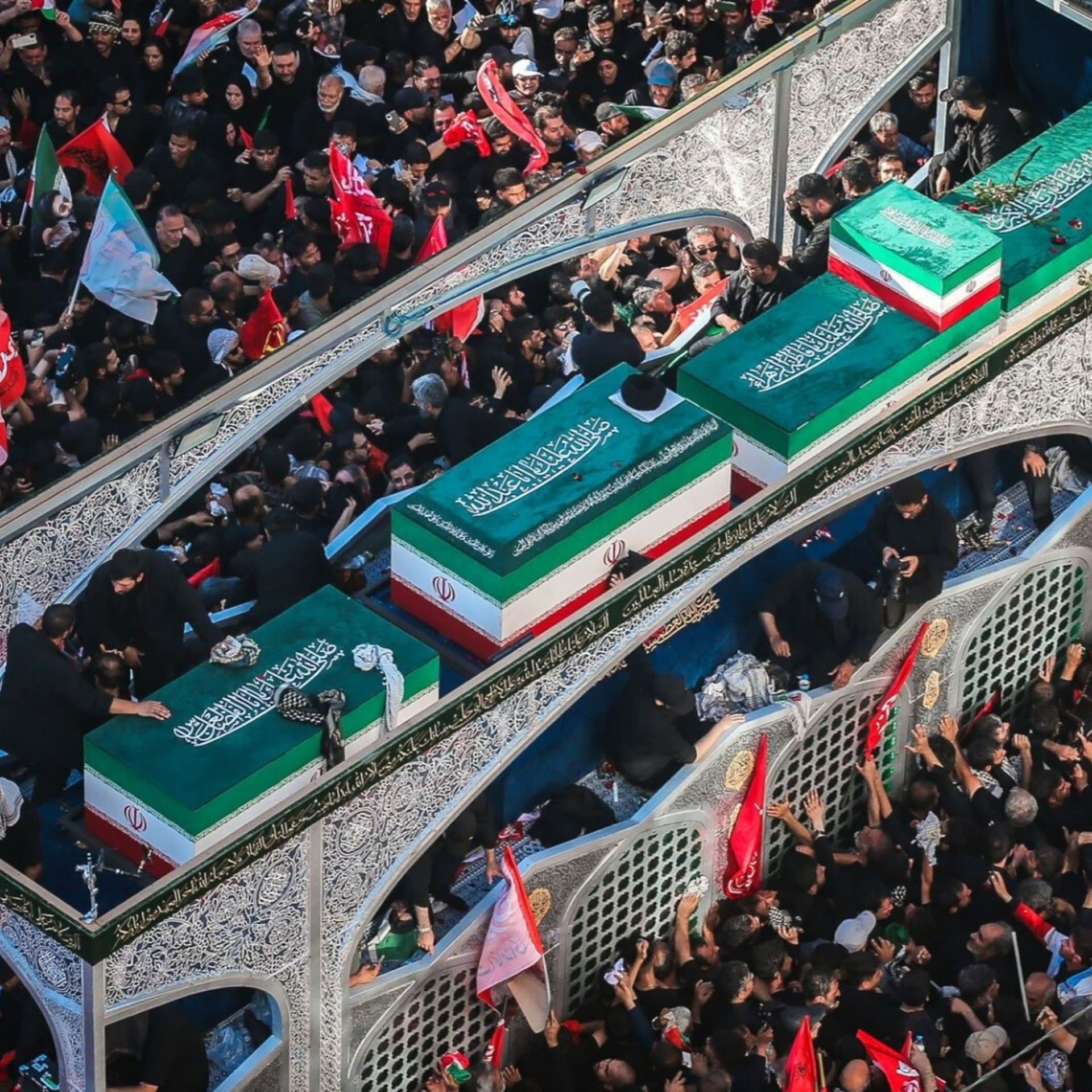
Global News Podcast covers: (1) Iran’s Supreme Leader Ayatollah Ali Khamenei’s burial amid US-Iran ceasefire breaches and tit-for-tat strikes; (2) Venezuela earthquake aftermath and disease risks in displacement camps; (3) Gaza food insecurity and a seed bank helping farmers; (4) World Cup updates (France-Morocco quarterfinal; England-Norway preview); (5) Ukraine conscription violence in Lviv; (6) Ghanaian romance-scam influencer extradited to the US; (7) Trump renaming of Palm Beach airport.
Guests/backgrounds
Lise Doucette (BBC chief correspondent, returned from Tehran); Mimi Sweby (global affairs reporter, on Venezuela); Janat Jalil (interviewee in Venezuela segment); Theo White (BBC reporter, Gaza seed bank); Salama Mahana and Hanadi (seed bank founders, ICRC-funded); Yusuf Al-Astal (Gaza farmer); Thomas Nardi (BBC correspondent, Accra); Paul Moss (BBC correspondent, Lviv); Joe Linsky (football correspondent); Electra Naismith (US airport renaming); Tim Franks (BBC, Norway chant origins); Ola Frålstad (Norwegian fan/schoolteacher).
Key claims/examples
Khamenei burial included defiance; US targeted naval facilities and a nuclear HQ; Iran attacked US-linked Gulf facilities; ceasefire “redefined” as “lesser fire.” Venezuela: 3,800 confirmed deaths, tens of thousands missing; disease risk from overcrowding and lack of clean water. Gaza: only 4% of farmland remained accessible/damaged; seed bank model redistributes seeds and returns same quantity; war destroyed original seed bank; soil exhausted, “no seeds, no fertiliser.” World Cup: France beat Morocco 2-0; France’s Mbappé and Dembélé scored. Ukraine: Lviv crowds attacked conscription team; 100+ confrontations since start of year. Romance scam: Frederick Kumi (“Abu Trika”) accused of using AI fake identities to defraud elderly Americans; faces up to 20 years.
Written by AI. May contain mistakes. Listen to the episode to check what was said.
Chapters
Tap a time to open that second in VOIran's Supreme Leader Buried
0:43 to 0:57
Discussion on the burial of Iran's leader and US-Iran tensions.
“With the new Schwab Teen Investor Account, teens can gain hands-on investing experience and build positive money habits.”
Iran's Supreme Leader Buried
1:07 to 2:10
Discussion on the burial of Iran's leader and US-Iran tensions.
“Iran's late supreme leader is buried as both Tehran and the US continue to breach their ceasefire agreement.”
Escalating Hostilities
2:10 to 3:20
Exploration of the ongoing violence and accusations between Iran and the US.
“Ayatollah Ali Khamenei was killed in US-Israeli strikes at the start of the war.”
Ceasefire Challenges
3:20 to 6:30
Analysis of the complexities and breakdowns in the US-Iran ceasefire agreement.
“This is yet another reminder when was needed about some of the difficulties in the deal signed last month between the United States and Iran.”
Venezuela Earthquakes and Aftermath
6:30 to 7:22
Reports on the impact of earthquakes in Venezuela and ongoing health crises.
“And Iran leaders know that if they don't want to face unrest among their population again, and for the government to make ends meet, it has to continue negotiating with the United States.”
Challenges of Recovery in Venezuela
7:22 to 9:47
Discussion on recovery efforts and health risks faced by displaced Venezuelans.
“Our global affairs reporter Mimi Sweby told Janat Jalil more about what's happening.”
Gaza's Struggle for Food Security
9:47 to 13:54
Report on Gaza's food security issues and innovative solutions like a seed bank.
“When the Donald Trump-backed Gaza peace plan came into effect last October, the UN reported that just 4 % of Gaza's pre-war farmland remained both accessible and undamaged.”
Morocco's Journey in the World Cup
14:00 to 17:40
Explore Morocco's impressive performance in the World Cup and their emotional exit.
“On Thursday, they met again in the first of the competition's quarterfinals.”
Upcoming Quarterfinals: Spain vs. Belgium
17:40 to 20:03
Preview the clash between Spain and Belgium in the World Cup quarterfinals.
“in the semi-finals should they go through.”
Ukraine's Rising Resistance to Conscription
23:15 to 24:10
Understand the growing resistance among Ukrainians to military conscription.
“Yes, Washington has been very keen in trying to crack down criminal networks operating both in the US and in West Africa, targeting vulnerable Americans.”
Show all 13 chapters
Romance Scam Crackdown in Ghana
24:10 to 27:25
Learn about the extradition of a Ghanaian influencer accused of running a romance scam.
“It's believed to be the first time an American airport has been named after a sitting president.”
Florida Airport Renamed After Trump
27:25 to 28:03
Discuss the renaming of an airport in Florida after President Trump and the reactions.
“and I fell in love with that part of it.”
Norwegian Team's World Cup Journey
28:03 to 29:01
Explore the excitement surrounding Norway's performance in the World Cup.
“I've never seen Norwegians act the way they are acting like right now.”
Transcript
Automatic transcript. May contain errors.0:00This BBC podcast is supported by ads outside the UK.
0:30No bouncing between tabs. And best of all, no spreadsheets. Stop managing software and start managing your business with one unified system. Try for free today at odoo.com. That's O-D-O-O dot com. With the new Schwab Teen Investor Account, teens can gain hands-on investing experience and build positive money habits. It's an account co-owned by you and your teen, so you can monitor and engage with the account while your teen learns how to invest and manage money. Learn more at schwab.com. This is the Global News Podcast from the BBC World Service. I'm Nick Miles and in the early hours of Friday the 10th of July, these are our main stories.
1:12Iran's late supreme leader is buried as both Tehran and the US continue to breach their ceasefire agreement. We hear from people in Iran about concerns of a return to all-out war. Also, the soil that is available has been reused again and again. The soil itself is exhausted, as are the farmers. No seeds, no fertilizer. We have a special report on the huge challenges Garzans face to farm their way out of chronic food insecurity. And after the deadly quakes in Venezuela, the silent killer, fears of disease spreading in the camps for the displaced.
1:49Also in this podcast, the Ghanaian man extradited to the US for allegedly running a romance scam, and France becomes the first nation through to the semi-finals of the Football World Cup.
2:06We begin in the Iranian city of Mashhad, where the former supreme leader has been laid to rest after a six-day funeral procession.
2:27Ayatollah Ali Khamenei was killed in US-Israeli strikes at the start of the war. His funeral was marked by open shows of defiance towards Washington by some mourners and many officials. As he was laid to rest, Iranian state media reported that the US had targeted naval facilities in Koronak and a military headquarters in Boshair, where one of the country's nuclear plants is located. For its part, Tehran has attacked what it said were US military facilities in neighbouring Gulf countries. This Iranian man sent the BBC a voice note. If war breaks out again, God forbid, what will be targeted this time?
3:09People are exhausted by this situation. One day there is a ceasefire and the next it's violated. Our chief correspondent, Lise Doucette, has just returned from Tehran. I asked her what she made of the latest violence, despite the US-Iran ceasefire technically still being in place. This is yet another reminder when was needed about some of the difficulties in the deal signed last month between the United States and Iran. It was called a memorandum of understanding, 14 points, and it has been leading to misunderstandings ever since it was signed. Take the Strait of Hormuz. Iran reads, and it can find in the text, that it has been given some sway over this strategic waterway.
3:53When it saw oil tankers moving through the strait, closer to the coast of Oman, on a route not decided by Iran, it attacked the oil tankers. That led the United States to accuse Iran of violating the memorandum, because it says that under the terms of the deal, and it does say it, that there will be a return to the free flow of maritime traffic. In other words, back to the status quo. And Iran has made it clear that if the United States strikes, it will strike back. And this is a measure of how Iran's new leaders, who survived the weeks of war, have been emboldened. They are less cautious than the 86-year-old Ayatollah Khamenei, who most of his life, his main goal was to avoid direct confrontation with the United States.
4:36These new leaders, having survived it, no longer fear it. And at what point do these breaches in the ceasefire lead to a total breakdown of it? I think we're seeing a redefinition of the ceasefire. President Trump has said, well, a ceasefire in the Middle East is different than elsewhere in the world. The UN Secretary General, Antonio Guterres, says that a ceasefire in this region now just means lesser fire. Look at what happened to the Gaza deal. Last October, President Trump announced with great fanfare it was the biggest deal in peace in the Middle East in 3 ,000 years. It was a breakthrough that he brokered, but it was basically the first phase of a ceasefire deal.
5:17And since then, there's really been no ceasefire. It's not all at war, but it's certainly not a calm. In the same way that now President Trump hailed this agreement, it's an important agreement, but it will continue to be not all at war and not permanent peace. You talked about the new leaders in Tehran being emboldened. But if, as a lot of US hawks on Iran want, America reimposes a blockade, it's one thing having political capital in Tehran, quite another having the economic rug pull from under you. For all the bravado of Iran's regime, they have suffered significant military losses. I mean, that's what happens when you go to war against the mighty American army backed up by Israel.
5:59But it does not feel it has been defeated. It is still able to wage war, to hit back. It still has ballistic missiles and it still has drones. But it has also suffered extraordinarily in terms of economic and financial losses. I was stunned when I went to Iran, not the most recent trip I've just returned from, which focused on the funeral. The trip before that, where inflation was a staggering 80 percent, millions of jobs have been lost and Iranians are really struggling. And Iran leaders know that if they don't want to face unrest among their population again, and for the government to make ends meet, it has to continue negotiating with the United States.
6:41because if it doesn't negotiate on its nuclear programme, it's not going to see a lifting of sanctions. It's not going to see the unfreezing of its assets. And yet what we hear from the hardliners within the ruling system, they're now saying, we don't want this deal with the US. How can you negotiate with a country which has killed our supreme leader? Lise Doucette, two weeks on from the two powerful earthquakes that hit northern Venezuela, tens of thousands of people are still living in makeshift camps in parks and public squares. More than 3 ,000 people died as the buildings came down, but now their health officials say many more could still be at risk because of a disease spread and a lack of drinking water.
7:22Our global affairs reporter Mimi Sweby told Janat Jalil more about what's happening. The latest, according to the interim authorities, is that 3 ,800 people have been confirmed as killed, but that figure is thought to rise over the coming weeks many bodies are being pulled out of the rubble. Now, since international rescue teams have largely left rescuing many people, we saw some absolutely miraculous rescues nine days, 11 days after these twin quakes hit northern parts of Venezuela, particularly in La Guayra, the Wursta area. The majority of going from rescue to recovery efforts are now being done by volunteers and relatives of family members still very much determined to find their loved ones and extract them from the rubble.
8:08Bear in mind, there's about 17 million tonnes of rubble in the affected area. So huge amounts of devastation with largely little equipment. So these huge social housing complexes are a focus now for many people. There's a lot of anger at the governments, first of all, for their rescue efforts, but now looking and saying, actually, these housing complexes were not adequately built. They didn't meet safety standards, but very much the efforts at the moment is still on recovering those who are missing. There are tens of thousands of people still missing. Meanwhile, a bit of a health crisis for the many, many people who were displaced.
8:43Yeah, there are nearly 18 ,000 people who are completely homeless, according to the government, but thousands who are displaced. These people have made up kind of makeshift camps, but these camps make diseases and infections very easily transmitted. So that is now a huge concern. And the Pan American Health Organization has come out and said the greatest risk right now for individuals, those who are displaced, those who are vulnerable from the earthquake, are the health care system being in disarray. It was a terrible state before these earthquakes hit and now overcrowding in these camps and a lack of clean drinking water and sanitation.
9:20So people who have had their homes completely destroyed are now facing a new crisis. In these camps as well, there have been moments of joy. There have been clowns coming in to entertain children and volunteers from beauty salons, for example, going in and giving women pedicures, manicures, doing their hair, trying to kind of give some dignity to people living in these camps. Also a sense of normality. And there have been some beautiful moments of people coming together in these really awful times. Mimi Swaby. When the Donald Trump-backed Gaza peace plan came into effect last October, the UN reported that just 4 % of Gaza's pre-war farmland remained both accessible and undamaged.
10:01Eight months on, Israeli forces continue to occupy much of the territory's agricultural land, leaving most Gazans dependent on aid or often unaffordable food markets. With access to fresh fruit and vegetables still limited, the BBC's Theo White reports on one seed bank in central Gaza that's helping locals take control of their own food security. Two years of war has not only devastated Gaza's infrastructure, its buildings and roads, but also its ability to feed itself. The food supply is unreliable, prices are high, and even for those who can afford it, there's little choice in what to eat. We first started thinking about this project in 2013.
10:47In 2017, it officially began operating and we started distributing seeds to farmers. This is Salama Mahana. In response to the difficulties facing Gaza's food supply, he started a seed bank with his daughter Hanadi, funded by the International Committee of the Red Cross. Salama gives the seeds out to farmers and they return the same number after the harvest. That way, the model keeps working year on year. We even introduced farmers to heirloom seeds. Local seeds can withstand the drought, pests and harsh weather conditions. His goal is to give farmers what they need to produce a variety of produce locally.
11:26When Israeli forces advanced into Gaza in 2024, Salama and Hanadi's home was destroyed, along with the original seed bank. Now from a tent, they have started again. Shelves of seeds line the white tarpaulin walls. Each variety is held in a small container. The war, Honadi says, has made their project even more important. The war pushed most residents of the Gaza Strip toward agriculture, whether farming next to tents, in home gardens or in rooftops, for those who were not displaced. This was due to the high prices of vegetables in the market and their scarcity. Yusuf Al-Astal is one of the farmers working with the seed bank.
12:09He's stood in blazing sunshine in a golden field of his own barley, but says he grows much more than this. Right now I have planted local arugula, parsley. I have planted two types of cowbees, two types of okra, watermelon, mulkhia, pumpkin, corn and sunflower. Youssef says he's dedicated a large part of his life to making Gaza more self-sufficient. The Gaza Strip is besieged and completely closed. Some seas were close to extinction and some have already disappeared. So we try to preserve them. We achieve self-sufficiency. But this project accounts for only a tiny fraction of Gaza's food needs.
12:52The UK was among a number of countries last month that described the aid coming into Gaza as insufficient, both in terms of quality and quantity. The Israeli authorities responsible for bringing aid into Gaza told us that, going by UN guidelines, they'd allowed four times the food needed into the territory since the ceasefire with Hamas was struck last year. The International Committee of the Red Cross says the situation isn't good enough. Foreign journalists aren't allowed into Gaza, so I talked to their spokesmen in the territory remotely. Farming in Gaza, there is very little space. The soil that is available has been reused again and again.
13:29The soil itself is exhausted, as are the farmers. And then on top of that, you have the restrictions and what is able to be brought in to support agriculture in Gaza itself. No seeds, no fertiliser, no nursery soil to support new seeds. Despite these challenges, Hanadi and Salama's seeds are taking root across Gaza. Farmers in the territory, for now, have options. Theo White with that report. Now, let's bring you up to date with the World Cup. Four years ago, France and Morocco met at the semi-final stage, with France going through 2-0. On Thursday, they met again in the first of the competition's quarterfinals.
14:10Sadly for Morocco, it was the same scoreline. And that means France are through to the semi-finals once again. French fans in Paris took to the streets to celebrate.
14:25up and down and around the champs elisee they went for moroccan fans at a watching party in boston there was a mixture of pride and sadness so so proud of moroccan they really play very good they did all their best they were amazing oh we feel upset i'm just like any other moroccan fan we had a dream and unfortunately France always stops our dream for some reason but we're always going to keep dreaming I asked our football correspondent Joe Linsky if he thought the match was a bit one-sided Morocco had got past the Netherlands they'd drawn with Brazil as well in the group stage they had looked a spirited force in this tournament and of course they reached the semi-finals at the last World Cup four years ago they were the last African team standing of the nine that made it through to the knockouts but yes as you say France made them look ordinary but they are certainly not the first team at this World Cup to have suffered that fate are Morocco because France with those two goals in the second half the first from Kylian Mbappe bringing him back level with Lionel Messi at the top of the golden boot standings and Ousmane Dembele the Ballon d 'Or holder with the second goal for the French and those two players really demonstrate the wealth of riches that France have, particularly in those forward positions.
15:42Joe, you mentioned that they were the last of the African nations to go out. Nine African teams got through, as you said, to the knockout stages. What was it that impressed you about the African contingent this time around? Well, we had a mix, really, of some of the more established nations. Ivory Coast actually made it through to the knockouts for the first time. You think back in their history and some of the wonderful players they've had in the past, like Didier Drogba, Kolo and Yaya Torre. It was actually this crop of players that made history for them. Unfortunately, it landed them in the path of Norway.
16:14But yeah, we've had DR Congo as well, who met England. I think what's been unfortunate for the African side is many of them kind of ended with a good bit of momentum at the end of the group stage, but then they met European teams and South American teams in the knockouts. And that really is the conundrum they have to solve in African football, I suppose. So much promise, so much potential. the Senegal team I mean they finished the group stage so strongly with that 5-0 win against Iraq that propelled them into the knockouts then they led by two goals to nil against Belgium with just five minutes left of that match they somehow found a way to lose that game and there have just been too many unfortunate moments unfortunately for the African side but once again we look at the potential and the promise of those sides you would think that a team could at least equal Morocco's semi-final showing in the next edition of this tournament.
17:03Joe, let's just look ahead to the first of the remaining quarterfinals. Mouthwatering encounter between Spain and Belgium. Yeah, Spain's approach up to now has really been about control. They have yet to concede a goal at this tournament so far. Their only slip up of sorts was that 0-0 draw with Cape Verde in their opener. But that was such a historic moment for that tiny African nation. Belgium have the potential, they have the players to cause Spain problems, perhaps be the first team to break through them at this tournament. but Spain have been controlled so far in this tournament. What both of these teams know, though, is that they will be on a collision course with France in the semi-finals should they go through.
17:42Joe Linsky. Still to come in this podcast.
17:54Ahead of their game against England, we look at Norway's morale-boosting trend.
18:06The most effective people at work aren't working harder than everyone else. They're working smarter inside better systems. Superhuman Go, from the makers of Grammarly, is the AI chat that works inside every tool you already use. Always ready and already aware of what you're working on. It's a teammate whose only job is to help you be better at yours. With Go working with you, you can show off what you do best. See what Superhuman Go can do at superhuman.com. That's superhuman.com.
19:01and on-trail navigation. Download the free app today and make the most of your summer with AllTrails. Decisions made in Washington can affect your portfolio every day, but what policy changes should investors be watching? Listen to Washington Wise, an original podcast for investors from Charles Schwab, to hear the stories making news in Washington right now. Host Mike Townsend, Charles Schwab's Managing Director for Legislative and regulatory affairs takes a non-partisan look at the stories that matter most to investors, including policy initiatives for retirement savings, taxes and trade, inflation concerns, the Federal Reserve, and how regulatory developments can affect companies, sectors, and even the entire market.
19:45Mike and his guests offer their perspective on how policy changes could affect what you do with your portfolio. Download the latest episode and follow at schwab.com slash Washington Wise or wherever you listen.
20:03This is the Global News Podcast. The Ukrainian police have launched a criminal investigation after crowds of people attacked a military conscription team in the western city of Lviv. Officers were attempting to detain a man they suspected of trying to avoid military service. Paul Moss has more. There was a time when Ukraine's military recruiters could barely keep up. So many men and women were volunteering to go and fight Russia's invasion. But there's been a marked rise in the number who now resist being conscripted, and a rise in the number of confrontations between Ukrainian citizens and those responsible for conscripting them.
20:42Perhaps it's just the ever-rising death toll which is driving this evasion of military service. Despite recent Ukrainian successes in its airstrikes on Russia, deployment to some frontline infantry units is still seen as a likely one-way ticket. And there's also the fact that those most eager to join have now done so. Many of them are now either dead, injured, or just suffering complete exhaustion after long and arduous tours of duty. So the conscription teams should maybe not be too surprised to encounter resistance. and Wednesday saw that resistance turn violent. Locals in Lviv apparently took exception to the army officers trying to detain a suspected draft dodger.
21:25They overturned the recruiter's car and then attacked a police officer who came to help. There have been more than 100 reported confrontations like this since the start of the year. There were nearly 350 in 2025. The mayor of Lviv warned that Wednesday night scenes could be used as propaganda by those hostile to Ukraine. Paul Moss. In recent years, we've reported here on the BBC World Service about the rise of romance scams. They happen around the world, but many originate in West Africa. Now a prominent Ghanaian influencer has been extradited to the United States to face trial for allegedly running such a scam.
22:04Frederick Kumi denies the charges. Our correspondent Thomas Nardi in the Ghanaian capital, Accra, Tell me more about the allegations he faces. Frederick Kumi, popularly known as Abu Trika, a social media influencer, very popular among Ghanaian youth, has been accused of running a romance camp that defrauded early Americans of over$8 million. He's denied those allegations. He was put before court by Ghanaian authorities after he was picked out by a joint US and Ghanaian security operation last year. Now, Frederick Cumi denies all these allegations, but the allegations suggest that he was doing this how?
22:44According to US prosecutors, he used AI tools to create fake online identities, targeting specifically elderly Americans. And he faces up to 20 years imprisonment if he's found guilty. And they attempted to stop an extradition process that was ongoing in Ghana, but they were unsuccessful. And so on Thursday, Ghanaian authorities succeeded to extradite him to the US with face trial. Now, Thomas, this is part of a wider crackdown by the US authorities on criminal gangs in West Africa and in other parts of the world. Yes, Washington has been very keen in trying to crack down criminal networks operating both in the US and in West Africa, targeting vulnerable Americans.
23:28And they've succeeded in securing some few prosecutions. They've extradited a few people, both in Ghana and Nigeria. Just last week, a popular Ghanaian known as Joseph Kujo Bedu Boate, popularly known as Dada Joe Remith, pleaded guilty in the U.S. to using romance and inheritance schemes to defraud Americans. And he's agreed to pay over$4.4 million in restitution. And so this is an ongoing operation by US authorities and security agencies in West Africa to try to crack down criminal networks that are engaged in this particular practice. That was Thomas Nardi. The airport at West Palm Beach in the US state of Florida has officially been renamed after President Trump.
24:16It's believed to be the first time an American airport has been named after a sitting president. These passengers in the terminal gave their reaction. You know, to have a president that lives in our backyard, I mean, we might as well honour him. People need to be honoured for the commitment they've made to our country. The name, because of who it is, I don't agree with his way of thinking. I don't think he sets a good example for the United States. And I'm going to fly in and out of Orlando from now on to get to my destination. Well, the name change was signed into law in March by Florida's Republican Governor Ron DeSantis.
24:56With more, here's Electra Naismith. It's been Palm Beach International for over half a century, but now President Donald J. Trump International is officially open for business. The airport said the name change cost five and a half million dollars. It's unclear whether that includes the other signage changes such as interstate highways. President Trump has pursued an ambitious renaming program in his own honor since taking office for his second term. The courts rejected an attempt to add the Trump name to Washington's John F. Kennedy Center, but it's been successfully imprinted on everything from a new class of naval battleship to a savings account for children.
Read the full transcript
25:31President Trump is a frequent flyer to Palm Beach. It's home to his oceanfront estate, Mar-a-Lago. Airport officials are keen to assure the other eight million annual passengers that a safe and reliable experience will remain their core focus. As its new slogan says, DJT is where greatness takes off. Electra Naismith. Back now to the World Cup. And on Saturday, England will play Norway, who, in one respect at least, are already winners with this.
26:03After their matches, the entire team sits down on the pitch and with a drum to keep time, mimes a rowing action, a nod to their Viking ancestors. A lot of the fans in the stadium join in too. It's even caught on in their parliament in Oslo. Members of the royal family and the country's air force pilots have joined in the tribute as well. At the NATO summit in Ankara, the Prime Minister, Younos Garstor, warned the British Prime Minister, Keir Starmer, that history may be on Norway's side. 45 years ago, Prime Minister, Norway played England in the qualification. and we won't. And the radio commentator said, Maggie Thatcher, can you hear me?
26:49Your boys took a hell of a beating. Meanwhile, the chanter in chief, the Norwegian fan who came up with it, is Ola Frålstad. He's a schoolteacher who's famous for wearing a Viking helmet and he's been speaking to the BBC's Tim Franks about its origins. That goes 10 plus years back. It's something that I saw from a Norwegian soccer team called Rosenborg. And they were yelling Rosenborg on the stadium and they divided their name up in three parts by yelling Ro-sen-borg. And that first part that goes Ro really made an impact on the stadium and I fell in love with that part of it. Many years later, I kept thinking about that Ro sound and we just wanted to use that somehow.
27:35And last year, when I was working on chants for Norway's supporter group, I was trying to find something Viking related, something that had history and culture for us. And then all of a sudden, I remembered this roo from many years ago, and I realized what that meant. It meant row. And there was the idea. Yeah, well, there was the idea. But as I say, the question is how you then got everybody in your country of 5.6 million to start rowing? That's a good question. I've never seen Norwegians act the way they are acting like right now. So I think it's that 28-year wait. People are just in a blast enjoying finally being in the World Cup.
28:15And it's, I mean, it must be fantastic for you, not just to see the entire sort of Norwegian contingent in the stadium, but also, I mean, the players themselves, they've really got into it, haven't they? They have, yeah. And when they did it the first time against Senegal, that was amazing to see. It's just so cool to see how the supporters and the national team are kind of synced in this. And we feel very united. And I think that's something that is helping the Norwegian team right now. They're being backed no matter what. And that we stand together. Feeling good about Saturday? Yes, I do feel good.
28:50But it's going to be a very tough game. England is the favorite team to win this one. But I do think anything can happen. It's the quarterfinals. And we're in a good flow right now. so we're ready to roll. That was Erle Frohlstadt.
29:06And that's all from us for now. But if you want to get in touch, you can email us at globalpodcast at bbc.co.uk. You can also find us on X at BBC World Service. Use the hashtag Global News Pod. And don't forget our sister podcast, The Global Story, which goes in-depth and beyond the headlines on one big story. This edition of The Global News Podcast was mixed by Masood Ibrahim Heil and the producer was Emma Joseph. The editor is Karen Martin. I'm Nick Mars and until next time, goodbye.
From the publisher
Ayatollah Khamenei - Iran's former supreme leader who was killed by US-Israeli strikes - has been laid to rest as fighting continues over control of the Strait of Hormuz. We speak to the BBC's Lyse Doucet, who's just returned from Tehran. Also: thousands of Venezuelans displaced by earthquakes are at risk of disease; Ukrainians attack a military conscription team hunting draft dodgers; Gazans turn to farming amid food insecurity; an alleged Ghanaian romance scammer is extradited; Donald Trump puts his name on a Florida airport; and the latest from the World Cup - as France knocks out Morocco and Norwegian football fans channel their inner Viking.
The Global News Podcast brings you the breaking news you need to hear, as it happens. Listen for the latest headlines and current affairs from around the world. Politics, economics, climate, business, technology, health – we cover it all with expert analysis and insight. Get the news that matters, delivered twice a day on weekdays and daily at weekends, plus special bonus episodes reacting to urgent breaking stories. Follow or subscribe now and never miss a moment. Get in touch: globalpodcast@bbc.co.uk Photo: Crowds taking part in the burial of late Iranian Supreme Leader Ayatollah Ali Khamenei in the city of Mashhad Credit: Iranian Supreme Leader Office



