
In short
This BBC Global News Podcast episode covers four main stories. First, the US and Iran trade fire in the Strait of Hormuz: the US launches strikes on Iran’s Larak Island, targeting rocket launchers and citing an imminent threat; Iran’s Revolutionary Guards report deaths and vow retaliation, then fire ballistic missiles at two US-operated air bases in Jordan (intercepted). The episode notes commercial shipping remains severely disrupted and frames the escalation against Trump’s recent comments about mines being removed/destroyed. Second, flash floods on the Nepal–Tibet border: about 3,000 missing (300 children), nearly 800 dead, and a head teacher (Rajendra Dawadi) who saved 900 students by evacuating to higher ground. Third, Russia’s attacks on Ukraine’s cultural identity: publishing houses, book markets, and UNESCO-listed sites like Kyiv’s Pechersk Lavra are damaged; claims include deliberate targeting to erase Ukrainian nationhood. Fourth, NASA’s Roman Space Telescope launches to map galaxies and study dark matter/dark energy; Princeton astrophysicist Michael Strauss explains the mission’s Lagrange 2 trajectory and wide-field imaging.
Guests
Peter Bowes (US correspondent), Nick Miles (interviewer), Laura Bicker (Beijing correspondent), Dan Johnson (Ukraine correspondent), Michael Strauss (Princeton astrophysical sciences professor), Imad Kudiyar (Gaza journalist), Moussa Abu-Jamah (Gaza zoo owner), Tom Brook (film correspondent), Paul DeGarabedian (RenTrack trends head), Nicholas Barber (BBC film critic), Gary O’Donoghue (interviewer), Raif Thomasin-Joseph (Haitian-born journalist).
Written by AI. May contain mistakes. Listen to the episode to check what was said.
Chapters
Tap a time to open that second in VOUS Strikes in the Strait of Hormuz
1:12 to 2:10
Discussion of US military actions against Iran and the implications.
“I'm Charlotte Gallagher and in the early hours of Monday the 31st of August, these are our main stories.”
Escalation of US-Iran Tensions
2:10 to 4:52
Analysis of the recent escalation in violence and its background.
“Iran and the US are once again facing off in the Strait of Hormuz after Washington struck two rocket launchers on Iran's Larak Island, saying it was dealing with an imminent threat.”
Impact of War on American Lives
4:52 to 5:36
Exploration of how the ongoing conflict is affecting Americans.
“Now, negotiations, as we understand it, are not happening.”
Nepal Flood Disaster
5:36 to 7:19
Covering the devastating floods in Nepal and the ongoing rescue efforts.
“As we record this podcast, it's five days since flash floods ripped through the Nepal-Tibet border.”
Personal Accounts from the Flood
7:19 to 8:34
Survivor stories highlighting bravery during the Nepal floods.
“The Nepali journalist, Badra Sharma, has been to the worst affected areas.”
Chinese Response to the Floods
8:34 to 10:49
Update on the situation in Tibet and China’s handling of the disaster.
“I asked our Beijing correspondent, Laura Bicker, about the latest there.”
Cultural Attacks in Ukraine
10:49 to 14:00
Discussion on Russia's attacks on Ukrainian cultural sites and heritage.
“A series of Russian attacks has hit publishing houses and printing presses across Ukraine.”
Cultural Heritage Under Attack in Ukraine
14:00 to 15:42
Learn about the impact of war on Ukrainian cultural heritage and identity.
“visited on the monastery's 975th anniversary.”
NASA's Roman Space Telescope Mission
15:42 to 17:19
Discover the goals and capabilities of NASA's new space telescope.
“Dan Johnson, now to Cape Canaveral in Florida.”
NASA's Roman Space Telescope Mission
20:09 to 20:23
Discover the goals and capabilities of NASA's new space telescope.
Show all 16 chapters
NASA's Roman Space Telescope Mission
20:34 to 21:59
Discover the goals and capabilities of NASA's new space telescope.
“But the new drink lineup, I mean, it takes things to another level.”
Haitian Community Faces Uncertainty
22:05 to 26:51
Understand the fears and realities faced by Haitians in the U.S. regarding deportation.
“As the Trump administration continues to push to increase deportations, the Haitian community in the US is now facing uncertainty after its protected status was cancelled.”
Reopening a Zoo in Gaza Amid Conflict
26:51 to 28:00
Hear about the challenges of reopening a zoo in war-torn Gaza for children's joy.
“To Gaza now, where after nearly three years of war and with Israeli strikes continuing, a zoo has reopened there.”
Rebuilding Joy in Gaza Through Animals
28:00 to 29:36
Learn about the emotional impact of a zoo aimed at uplifting children in Gaza.
“Buying animals is really expensive now, but we're determined to rebuild.”
Hollywood's Summer Blockbuster Comeback
29:36 to 30:17
Explore how Hollywood is reviving after Covid with record-breaking films.
“and everything will eventually be all right.”
The Cultural Impact of Summer Films
30:17 to 32:59
Discover the societal discussions sparked by major film releases this summer.
“The Odyssey, based on an almost 3 ,000-year-old ancient Greek poem, and the new Spider-Man adventure, Brand New Day, have excited moviegoers around the world.”
Transcript
Automatic transcript. May contain errors.0:00This BBC podcast is supported by ads outside the UK.
0:30an award-winning behavioral scientist and author of the best-selling book, How to Change, as she shares true stories from Nobel laureates, authors, athletes, and everyday people about why we do the things we do and how to make better choices to help avoid costly mistakes. Each episode covers the latest research in behavioral science and dives into themes like the power of self-control, shaping your mindset for success, navigating new beginnings, and why starting over can feel so hard. Listen to choiceology at schwab.com slash podcast or wherever you listen.
1:11This is the Global News Podcast from the BBC World Service. I'm Charlotte Gallagher and in the early hours of Monday the 31st of August, these are our main stories. The US launches strikes on an Iranian island in the Strait of Hormuz, the first attacks since July. How Russia is targeting Ukraine's culture and identity, one schoolbook at a time. And the zoo that has managed to reopen in the Gaza Strip. Also in this podcast. They came and told me a big flood was coming. I'm here to take my daughter. Parents don't just rush in without good reason, so I realised I shouldn't waste a second and must evacuate the children.
1:59The teacher who saved hundreds of children from the devastating floods in Nepal.
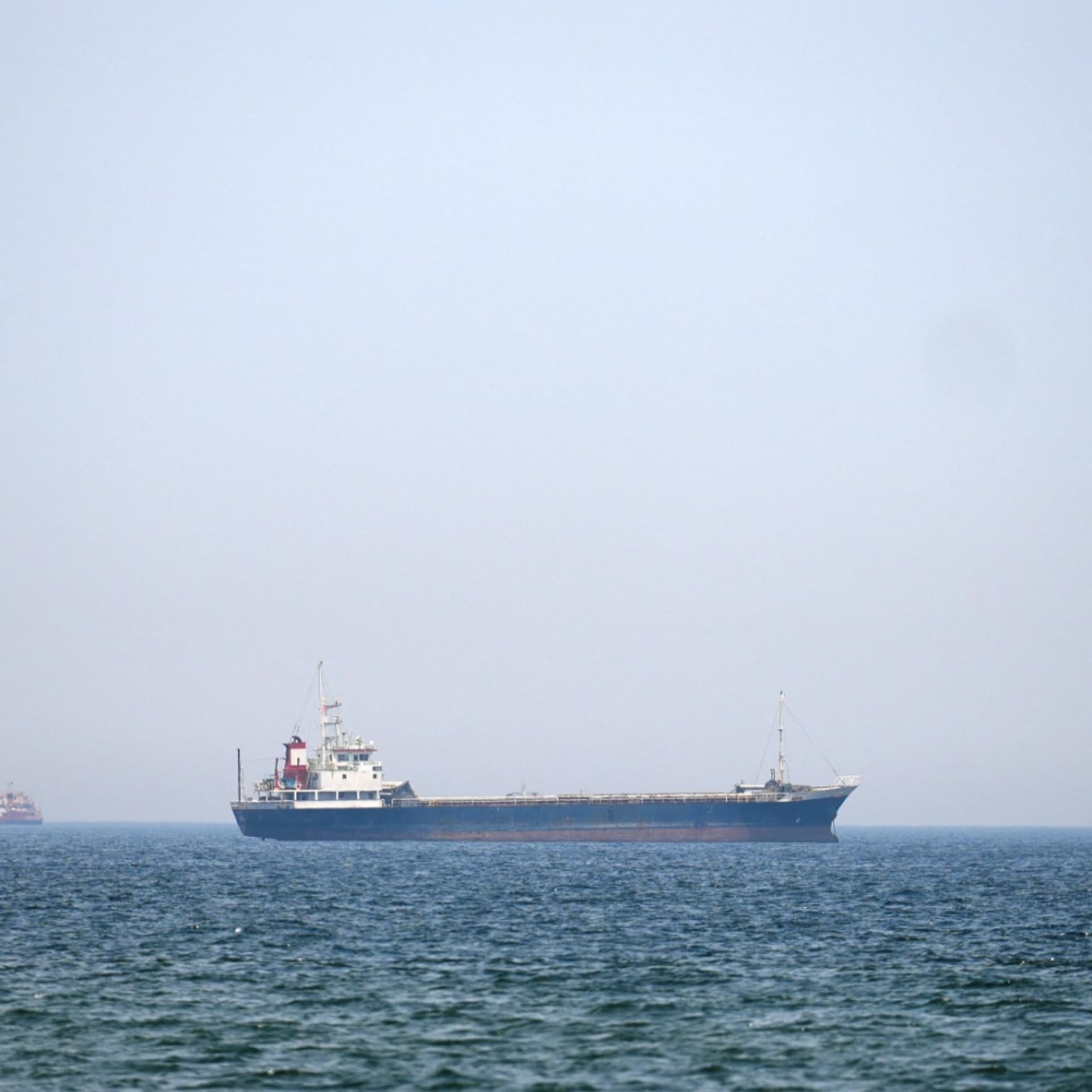
2:10Iran and the US are once again facing off in the Strait of Hormuz after Washington struck two rocket launchers on Iran's Larak Island, saying it was dealing with an imminent threat. Iran's revolutionary guards say several fighters and civilians were killed and wounded in the attack and vowed to retaliate, later firing ballistic missiles at two US-operated air bases in Jordan, which were intercepted. Commercial shipping through the strait remained severely disrupted after six months of conflict. Peter Bowes, our correspondent in the US, gave Nick Miles more details, starting with that original strike from the US, which was confirmed by officials.
2:53This would be the first known American strikes on Iran since late July. The official added that Islamic Revolutionary Guard core forces were observed preparing to launch rockets with sea mines into the Strait of Hormuz. We do have confirmation from both sides that this has happened. Iran's state news agency reported that the US carried out a drone strike and Iran's Revolutionary Guards have said that the attack killed and wounded several soldiers and citizens and would be met with a response and punishment. And the context for this attack is what Donald Trump was saying just a few days ago about mines in that particular area.
3:36Yes, Donald Trump was saying that all mines had been detonated or removed from the Strait of Hormuz, these crucially vital international waters, and that Iran had been told that any ship or boat placing new mines would be destroyed, which would appear, at least on the surface from what we're hearing, to have been what's happened in the last few hours. It seems as if, as far as the United States has been concerned over the last week or so, that they have moved away, or at least had moved away from military action, preferring to look at economic sanctions. But this does once again. An attack has been launched and Iran is promising retaliation.
4:18It's quite hard to say at this stage, isn't it, Peter, quite how significant an uptick in the violence this may well be? Yes. And for that reason, perhaps we don't want to overplay this because during the course of this war, which has gone on now for many months, there were times when it would appear that the negotiations had been making some progress. And then there would be a few skirmishes, but even as they were happening, oftentimes, certainly President Trump would say that it wasn't necessarily spoiling the negotiation process. That appeared to continue behind the scenes. Now, negotiations, as we understand it, are not happening.
4:55So I think maybe quite a lot of people on both sides of this will be holding their breath to see whether this potentially escalates. And any escalation of violence will be met with dismay, I imagine, by many Americans, right? Well, yes, and dismay from many Americans ever since this war started. As it has gone on, people being hit by high fuel prices, high petrol prices. And of course, there is a political element to this now as we get closer to the midterm elections, just over two months away at the beginning of November. And many polls here suggest that certainly Donald Trump and the Republicans across the board are going to pay the price of this very unpopular war.
5:36Peter Bowes. As we record this podcast, it's five days since flash floods ripped through the Nepal-Tibet border. 3 ,000 people are missing, 300 of them children. Their families say they're losing hope of hearing good news. Hospital walls across the region have been plastered with posters of their faces as rescue efforts continue. Hundreds of those being searched for are believed to be employees trapped inside the tunnels of Nepal's hydroelectric plants. Many residents near the disaster zone don't have power and health workers have warned that supplies are running low, with enough food remaining for a day or two.
6:17Amid the loss and devastation, though, there have also been inspiring stories of survival. The BBC has spoken to Rajendra Dawadi, a head teacher who saved 900 students, telling them to run to higher ground minutes before the flood hit his school. They came and told me a big flood was coming. I'm here to take my daughter. Parents don't just rush in without good reason, so I realised I shouldn't waste a second and must evacuate the children. This 16-year-old described running up a narrow and muddy route with other students. My friends and I only made it by 10 seconds. The floods came all of a sudden.
6:58I couldn't walk fast and my friends helped me to climb uphill. Within no time, the bazaar was swept away in front of my eyes. But many did not manage to escape. Nearly 800 people are now known to have died in the disaster. The authorities are collecting DNA samples from unidentified bodies and preparing mass burial sites. The Nepali journalist, Badra Sharma, has been to the worst affected areas. The local authorities have been struggling to manage the dead bodies because they are not identified and they have already started to decompose. Some of the rescuers told me they have started to vomit because of paris milk.
7:42Even the army personnel carrying those bodies are feeling difficult to transport from one place to other places. The issue is that some of the bodies are not even intact. The rescuers have been recovering arm or leg or head, this sort of part of the body. I went to the hospital as well. I saw naked bodies there because their cloths were already wiped out during the flood. They have lost everything, you know. Being an experienced journalist, I have covered the 2015 earthquake. and the deadly avalanches in Everest. I covered everything in Nepal in the last two decades or so. But this time, the situation is more depressing there.
8:27While journalists are free to report from Nepal, information from across the border in Tibet, which is controlled by China, has been limited. I asked our Beijing correspondent, Laura Bicker, about the latest there. We've heard from Chinese authorities that 16 people are confirmed to have died. More than 540 people are still missing. 261 of them are said to be foreign nationals. Now, remember, one of the worst hit areas was that area called Girong Port. It's the mainland border between Nepal and Tibet. It was completely destroyed in those floods. What we've seen from Chinese state media footage is rescuers walking 10 kilometres through various parts of the Himalayan landscape, including scaling mountains, including crossing torrents of river, they're now going step by step through the mud and debris, calling out for survivors.
9:21What they've said through Chinese state media is that so far they've yet to find any survivors. Those rescue operations had to be temporarily halted because there's been yet another landslide in the area, which has formed a lake. Now, they've set up observation points, so sentries, to try to give an early warning system, to try to ensure that rescuers on the ground are really not swept away in further flooding. And we were talking the other day about you as a foreign journalist in China. It's nigh on impossible for you to go to that region. So you're having to rely on information that's coming out of Chinese state media.
9:56Everything we're telling you comes from Chinese state media. As a foreign journalist, I really can't go to Tibet. You need government permission to travel there, and that has not been granted. I think when it comes to this area, it's one of the most carefully controlled areas in China. So I think it's worth remembering that this is carefully controlled state media. And does it seem like Nepal and China are working together a bit more after this? Well, we have heard, yes, that there's been a phone call between the two foreign ministers, between the Chinese and Nepali foreign ministers. And what they're discussing is trying to find ways to share more hydrological and glacial data about the Himalayas.
10:36Because given the current climate and given that we know that global warming is going to perhaps make this kind of tragedy more either frequent or a risk, they have to find ways of avoiding it. That was Laura Bickett in Beijing. A series of Russian attacks has hit publishing houses and printing presses across Ukraine. destroying around 12 million books and leaving some schools short of textbooks for the new term. It's not the first time Russia has been accused of targeting artistic and cultural sites in an attempt to damage symbols of Ukrainian heritage. Prior to the full-scale invasion four and a half years ago, Vladimir Putin questioned the legitimacy of an independent Ukrainian state and culture.
11:21Our Ukraine correspondent Dan Johnson reports from some of the places now feeling the impact of the war. On the edge of Ukraine's capital, the Convy Publishing House bears the imprint of Russia's latest attacks. Its bombed out remains, testament to a dark new chapter of this war. The printing press has been almost completely destroyed. It's burned, the roof has collapsed here. you can still smell the aftermath and there are piles of charred books and then some others that have sort of survived but they've suffered water damage.
11:58These are actually English textbooks that should have been destined for schools. It says, I'm William and I'm from the UK. My dad is Ukrainian but my mum is British. My grandmother lives in Nottingham, it's a beautiful city. This means there's going to be a textbook shortage now for the start of the new term. The company's commercial director, Victoria Haidai, tells me the strike came just as they were ramping up to print 1.3 million textbooks.
12:29I believe it is deliberate on the part of the Russian Federation. Over the past two months, some of the largest publishing houses have lost their warehouses, where very large quantities of books were stored. The Russians are also destroying printing houses in an attempt to erase Ukraine as a nation, but frankly, they will not succeed. Kiev's Pochina second-hand book market was also hit, burning down hundreds of stalls and destroying countless treasured books. In the smouldering ruins, I met Lilia Velika, a book blogger determined to salvage something from the ashes. Books are saving us, and losing this is like losing our hearts.
13:11It's not only books Museums, art galleries, opera houses and a film studio have been damaged Symbols of collective identity Ukrainians believe are being targeted To undermine their sense of national belonging And a Russian drone hit the golden domes of Kiev Pachersk Lavra A cultural and spiritual icon And a UNESCO World Heritage Site The decoration in here is incredibly ornate There's gold leaf everywhere It's seriously impressive with really detailed images and murals. There are fans running to try to dry this cathedral out because of the water damage, and I can still smell the impact of the fire that tore through the roof.
13:59UNESCO Director General Khalid El Anani visited on the monastery's 975th anniversary. I was deeply saddened to see today the significant damage caused by June attacks. UNESCO firmly condemns them and all attacks against cultural property protected under international law. Russia denied targeting the Pachursk Lavra and claimed to only attack sites with military links. Ukraine's Culture Minister, Tetiana Berezhna, dismisses that. This is existential war, so Russia wants to destroy us as a nation, to erase assassination like Ukrainians do not exist and have never existed. That's why Russia targets our cultural heritage, the symbols of our presence here for a lot of time.
14:48They understand that it's very important for us because we protect our identity, we protect our culture, and Russia wants to ruin everything that it cannot appropriate. She says digitisation can protect art and literature and ensure children can learn even without physical books.
15:08But back at Convy Publishing, Victoria Hydei captures the depth these attacks strike at. In the beginning was the word. The word is everything. It is our development, our culture and our historical heritage that is passed down from generation to generation. The word is born in a book and the book is born in a printing house. Vladimir Putin has denied the existence of a distinct Ukrainian culture, but the sight of burning books means his war is only hardening determination here to ensure it survives. Dan Johnson, now to Cape Canaveral in Florida. T-minus ten, nine, eight, seven, six, five, four, three, two, one, ignition and liftoff.
16:00Go Falcon Heavy and go Roman Space Telescope. That's the sound of NASA's powerful next-generation space telescope taking off successfully. Named after the space agency's first woman chief of astronomy, the Nancy Grace Roman Space Telescope has a five-year mission to map more than a billion galaxies. It's set to provide larger, clearer images of stars and planets and help us in our understanding of the mysterious components of dark energy and dark matter. Michael Strauss is a professor of astrophysical sciences at Princeton University. My colleague Sean Lay spoke to him about what happens next in the mission.
16:43For the next three months, the spacecraft and the telescope will be making its journey to the so-called Lagrange 2 point, which is a stable point in orbit around the Earth and the Sun about a million miles from Earth. In three months from now, it will be able to open up its cameras and take its first images of the celestial sky. Is it just the case that this telescope has bigger cameras and therefore will generate bigger images or is it going to be able to do something different? Well just bigger cameras is a big deal in our field. Instead of looking at some tiny piece of sky at once it can image vast swaths of the universe.
17:24Much of what we do in astronomy is driven by mapping the universe. And this is a mapper in the sense that it can obtain data over a very large field of view and thus learn in some detail about the full statistical properties of galaxies and stars and how they're distributed in space. And those questions lead directly to our understanding of the structure of our own Milky Way galaxy and the structure of the universe as a whole. What about the role of dark matter? There's been some talk about it playing a part in the expansion of the universe. Could this telescope help us explain that part? Absolutely, and that is one of the design goals for this mission.
18:05Dark matter is a material whose physical nature we do not understand. Only about 4 % of the universe, as we understand it, is made up of ordinary matter of the type that we're familiar with. Another roughly 25 % is dark matter. There's another component. The accelerated expansion of the universe is driven by something that we call dark energy, dark matter and dark energy. Do we understand what these things are and exactly how they work? No. And this is one of the key goals of the Roman Space Telescope. Michael Strauss.
18:43Still to come in this podcast. We knew that's going to be an experience and we had to show up and be the first to see it. I'm super excited. I've been waiting literally a year for this movie. After a blockbuster summer for movies, is the industry having an epic comeback?
19:06This is Danielle Robay from Bookmarked by Reese's Book Club. Nothing compares to the anticipation of something new. A new start, a new year, a new home, or a new car. When it's time to get a new car, where do you start? Car shopping can honestly be a little overwhelming, but it should be fun. Buying your next car should be exciting, and it can be, if you remember one thing, cars.com. Cars.com has the tools and expert advice to help you figure out what vehicle is right for you. Their advanced search filters allow you to explore 2 million new and used cars so that you can find the perfect car. The site is so easy to use.
19:45Looking for an electric vehicle with a third row and leather seats for easy cleanup? Cars.com has you covered. A variety of tools and badges are used to help shoppers understand the price of a vehicle and find the best deal. And every review is written by a real person, reflecting a real-life experience. So don't take any chances. Do car shopping the easy way. Start your search with Cars.com. Where to next? With the new Schwab Teen Investor account, teens can gain hands-on investing experience and build positive money habits it's an account co-owned by you and your teen so you can monitor and engage with the account while your teen learns how to invest and manage money learn more at schwab.com hey this is kevin this is joe and nick jonas from hey jonas this episode of hey jonas is brought to you by the all-new drink lineup at mcdonald's i don't have to tell you that there are already so many great drink options at McDonald's.
20:39But the new drink lineup, I mean, it takes things to another level. They've got delicious caffeinated refreshers like the Strawberry Watermelon Refresher, crafted sodas like the Spriteberry Blast, and now the all-new Red Bull Dragonberry Energizer. We're talking about a total game-changer. It's made with Red Bull that's mixed with blue raspberry flavor and topped with freeze-dried dragon fruit. McDonald's has given us a refreshing new boost for your day. And the Red Bull Dragonberry Energizer is arriving just as you're heading back to the dorms for the fall semester. It's got a boost of energy and a kick of flavor when you need it the most.
21:17You know, powering through those lectures and studying sessions, you're going to need it. Kicking the afternoon slump or rallying for the weekend. Try one of the many new drinks like the Red Bull Dragonberry Energizer, also available with Red Bull Zero, now at McDonald's. Hey, it's Ryan Seacrest for Jewel Osco. Now through September 29, save on all your favorite personal care essentials and earn four times the points. Shop in-store or online for items from your favorite brands like Native, Pantene, Crest, Always, Gillette, Oral-B, and Tampax and earn four times the points. Points can be redeemed for discounts on future purchases on groceries and gas.
21:53Get these deals before they're gone. Offer ends September 29th. Restrictions apply. Offers may vary. Visit Julesosco.com for more details.
22:05This is the Global News Podcast. As the Trump administration continues to push to increase deportations, the Haitian community in the US is now facing uncertainty after its protected status was cancelled. There are around 350 ,000 Haitians in the US and Washington is working to send them back to Haiti where gang violence and lawlessness are part of daily life. On Sunday, mourners gathered in a hillside community near the capital Port-au-Prince after 47 people were killed reportedly by gangs inside a church. Vise D 'Orsonville is a Haitian migrant who fled five years ago and has since set up a new life in Springfield, Ohio.
22:53He spoke to Gary O'Donoghue. I was not surprised because we have been at the heart of the situation since after the presidential campaign in 2024. And, you know, there was that type of conspiracy theory of Haitians eating people's cats and dogs. I should say you're in Ohio in Springfield where that was all meant to supposed to be happening, though there was no evidence of any of it, right? Yeah, so when the Supreme Court took the decision to terminate the TPS, it was like they validated every racial slur that was said against the Haitian community in Springfield. So, I mean, how scared are you of being deported right now?
23:47I am so scared, I am so fearful but you know, I just use my voice for the voiceless because the Haitian community and Springfield they are so much vulnerable I mean there's some talk about people having to wear ankle bracelets as well what circumstances would that have to happen? It has been so humiliating they send them a check-in letters and they ask them to report to ICE facility centre And when they get there after interviewing them, they are being outfitted with this ankle monitor. We call it a shackle because it symbolizes the shackle that the slaves used to wear during slavery time. It brings all type of humiliation to the folks.
24:37Some of them are not eating. Some of them are expressing themselves by saying words that has to do with suicide, saying that if it were not because of my kids, I would have killed myself. Rafe Thomasin-Joseph is a Haitian-born journalist for an independent non-profit newsroom dedicated to reporting with and for immigrant communities. He explained what has been lost. It's a humanitarian program the Congress created in 1990. So basically, it gives people from certain countries who are already in the United States and cannot safely return home due to ongoing armed conflict, environmental disaster, epidemics or other extraordinary circumstances.
25:26You know, they offer these people temporary conditions. So basically, they have a work permit and they can remain in the country illegally until they can return safely home. That's the thing. What do you make of the U.S. government saying it's OK to go back now? From what I've heard from many advocates, from many organizations, they say that the Trump administration contradicts itself because they have many core arguments and those arguments have been presented. and different amicus briefs. For example, the U.S. Department of State maintains a level four do not travel advisory for Haiti, which is the highest travel warning level.
26:12So the advisory urges U.S. citizens not to travel to Haiti and advises those in the country to leave as soon as it's safe to do so. So the Federal Aviation Administration extended restriction bearing U.S. commercial aircraft from flying below 10 ,000 feet over parts of Haiti. And now we have 1.5 million displaced people because of the gang violence. And the gangs control 80 percent of Haiti's capital, Port-au-Prince, and many other areas in the country. Even this week, there have been massacres. Raif Thomasa Joseph. To Gaza now, where after nearly three years of war and with Israeli strikes continuing, a zoo has reopened there.
Read the full transcript
27:02It's in Khan Yunus in the southern part of the strip and has animals like monkeys, turtles, peacocks and parrots. Imad Kudiyar, who's a journalist in Gaza, went to visit the zoo. He asked the owner, Musa Abu-Jamah, how he started caring for the animals.
27:22We started looking after a small number of animals and birds in a shelter at home for over 20 years. Then in 2023, we took a big step and opened a zoo, bringing in bigger animals for the first time. The war began a few months later and everything was destroyed. It affected everyone, people and animals. The losses were devastating. We were forced to leave the area and try to come back several times. When we returned, we found none of the animals had survived. This year, we began rebuilding from scratch, gathering whatever resources we could to create the zoo. One of the biggest challenges we've had is replacing the animals we'd lost.
28:03Buying animals is really expensive now, but we're determined to rebuild. Why did you decide to re-urban an animal zoo in this area? The main reason we opened is because there's a lack of recreational spaces for children and families, particularly in the southern Gaza Strip. Also, we love animals and birds. We have a close connection and are committed to raising them. The most beautiful thing we see is the smiles of children, young people and girls, especially under difficult circumstances we are living through. Unfortunately, the attacks are still continuing despite the existence of a ceasefire.
28:42Strikes and attacks continue to affect all areas across the Gaza Strip. Because of this, we do our best to provide children with psychological support and emotional relief through play activities and interaction with animals. Our aim is to bring a smile to their faces, even if for a few moments. When we see them smile and feel the joy in their hearts, that happiness is reflected in us as well. What do you hope exactly these animals can provide the local community with?
29:12I always hope to see the smiles and faces of Palestinian people, especially our children and young people, and to see them happy and full of joy. I also hope that they can overcome the painful moments they've experienced during the war, and even if only for a while, move beyond the suffering and tragedies that they've endured throughout this devastating conflict. God willing, the situation will improve, and everything will eventually be all right. Moussa Abu-Jamah Finally, this summer has been a good one for Hollywood Two films, Spider-Man, Brand New Day and The Odyssey have been breaking audience records around the world So are we witnessing a return to health for an industry that has struggled since Covid?
29:57As the lucrative summer season draws to a close our film correspondent Tom Brook has been looking at the implications for cinema going and the Hollywood studios For many, the summer of 2026 will be remembered for the intense heat and for the movies. The Odyssey, based on an almost 3 ,000-year-old ancient Greek poem, and the new Spider-Man adventure, Brand New Day, have excited moviegoers around the world. We knew that's going to be an experience and we had to show up and be the first to see it. I'm super excited. I've been waiting literally a year for this movie. In the US alone, box office is now heading for its best post-pandemic year.
30:39Paul DeGarabedian is head of marketplace trends at RenTrack in Los Angeles. Overall, to me, this is maybe the most interesting, dynamic and consequential summer I've ever seen in my 34 years of tracking and analyzing box office. The summer movie season got a huge boost in mid-July when the epic The Odyssey, directed by Christopher Nolan, held its world premiere here in Leicester Square in London. Not only did it take off rapidly at the box office, but it created animated discussions, both in the real world and online, about its content, its casting, that piqued the interest of individuals who don't normally go to see movies.
31:20The Odyssey was just one of several movies BBC film critic Nicholas Barber saw this summer. To him, The Odyssey was more than just a movie. It's very rare for a film to become a cultural phenomenon where people are discussing the film, they're arguing about the film, there's Elon Musk getting upset about the film. So it's one that even if you haven't seen it, people are talking about it. I didn't know you could get that big. Spider-Man Brand New Day was an even bigger commercial success. It brought in more than$2 billion globally in record time. No. Together with the low-cost horror blockbusters Obsession and Backrooms, made by YouTube filmmakers, moviegoing has most definitely picked up.
32:06But for many, going to the cinema still remains a sporadic activity, and one that's seen as too expensive. If there's a lesson to be learned from the summer movie season, it's that originality can pay off. Help me go home. Nobody thought The Odyssey, a nearly three-hour epic with a restrictive rating based on an ancient poem, could become such a massive hit. Keep us straight! A movie with an impact amplified by social media. Despite the excitement surrounding box office revenues, the fundamentals aren't so reassuring. By one estimate, the number of cinema tickets bought in North America is down by 37 % from pre-COVID times.
32:51But revenues are higher because of increases in ticket prices and the presence of premium formats such as IMAX, as was the case with the Odyssey. Tom Brook reporting.
33:04And that's all from us for now. If you want to get in touch, you can email us at globalpodcast at bbc.co.uk. You can also find us on X at BBC World Service. Use the hashtag Global News Pod. and don't forget our sister podcast, The Global Story. This edition of The Global News Podcast was mixed by Rosanwyn Dorrell and the producer was Alfie Habershon. The editor is Karen Martin and I'm Charlotte Gallagher. Until next time, goodbye.
From the publisher
The US has bombed Iranian launchers on Larak Island in the Strait of Hormuz - the first known attack in weeks. Tehran has launched retaliatory strikes against American bases in Jordan. Also: rescue efforts intensify after Nepal-Tibet flood; Russia is accused of targeting cultural sites in Ukraine; NASA launches its space telescope; a zoo reopens in Gaza's Khan Younis; and the best movies of the summer.
The Global News Podcast brings you the breaking news you need to hear, as it happens. Listen for the latest headlines and current affairs from around the world. Politics, economics, climate, business, technology, health – we cover it all with expert analysis and insight.
Get the news that matters, delivered twice a day on weekdays and daily at weekends, plus special bonus episodes reacting to urgent breaking stories.
Follow or subscribe now and never miss a moment.
Get in touch: globalpodcast@bbc.co.uk
Photo: Ships and boats on the Strait of Hormuz, Oman, 29th April 2026 Credit: Reuters