In short
The BBC Global News Podcast covers renewed US-Iran strikes and the risk to shipping through the Strait of Hormuz; Ebola misinformation driving violence in DR Congo; Microsoft’s view on AI and job impacts; conservation findings from the IUCN Red List; and World Cup quarterfinals (France vs Morocco) plus a separate US Senate campaign suspension story.
Guests and backgrounds
Sebastian Usher (BBC global affairs/Middle East expert) discusses US-Iran developments and the “memorandum of understanding.” Phil Belcher (Intertanko, International Organization for Independent Tanker Owners) explains tanker route changes and sailor risks. Marco Silva (BBC Verify reporter) investigates Ebola misinformation and attacks. Anthony Zerker (North America correspondent) reports on Graham Platner’s Maine Senate campaign suspension. Zoe Kleinman (BBC tech editor) interviews Microsoft president Brad Smith. Helen Briggs (BBC science correspondent) covers the IUCN Red List. Sean Farrington (BBC colleague) interviews Belcher. Jo Curry (sports correspondent) previews France-Morocco. Lizo Mazimba (entertainment correspondent) reports on Bonnie Tyler.
Key claims and examples
US says it struck 90 Iranian sites; Iran targets US assets in Bahrain/Kuwait; explosions reported near Iran’s nuclear plant at Bushehr and in Bandar Abbas. Shipping drops from ~130 normal to ~30, with the central strait closed due to mine threat; Belcher cites mine threat and “single figures” on the southern route. Ebola: BBC Verify verified 12 incidents where misinformation fueled attacks on treatment centers, assaults on health workers, and disrupted burials; example: Red Cross volunteer Daniel Wello attacked with spades/machetes over a rumor a coffin was empty. Microsoft: Brad Smith argues young people are “made for this moment” to use AI; Microsoft cutting ~5,000 jobs while retraining ~4,000. Conservation: desert rain frog habitat threatened by diamond mining and a green hydrogen project. Sports: FIFA rejects Egypt’s officiating complaints after Argentina match; France favorites but Morocco missing injured Ishmael Sabari.
Written by AI. May contain mistakes. Listen to the episode to check what was said.
Chapters
Tap a time to open that second in VOUS-Iran Conflict Escalates
2:17 to 4:04
Discussion on the escalating US-Iran conflict and military actions.
“after a second series of American strikes on Iranian targets and defiance from Tehran.”
Iran's Domestic Situation
4:04 to 5:58
Examination of Iran's internal dynamics amid external pressures.
“that essentially that memorandum is now over.”
Impact on Shipping
5:58 to 7:41
Analysis of how the US-Iran conflict affects shipping in the Gulf.
“his death, his assassination does seem to have pulled people together to some extent right now.”
Scandal in US Politics
7:41 to 11:16
Coverage of Graham Platner's campaign suspension amid scandal.
“Because, you know, speaking to consultants advising businesses about the region this morning, they've been saying that in a way the advice hasn't changed in recent weeks because volatility has been expected.”
Remembering Bonnie Tyler
11:16 to 14:02
A tribute to singer Bonnie Tyler following her passing.
“He entered the race last August and built a remarkable grassroots movement in Maine.”
Bonnie Tyler's Musical Legacy
14:02 to 15:19
Explore Bonnie Tyler's impactful career and unique vocal style.
“Her other hits included Hold It Out for a Hero, which featured in the films Footloose and Shrek, and her breakout single It's a Heartache.”
Emotional Range in Tyler's Songs
15:19 to 15:48
Discuss the emotional depth and range within Bonnie Tyler's music.
“Now, it would have been easy to think with a voice like that.”
Ebola Misinformation Crisis
16:50 to 17:00
Learn about how misinformation is affecting Ebola treatment efforts.
Impact of Misinformation on Health Workers
17:00 to 19:08
Examining real-world violence fueled by Ebola misinformation.
“and making it harder to tackle a deadly outbreak in the Democratic Republic of Congo.”
Community Resistance and Trust Issues
19:08 to 21:07
Understanding the distrust within communities regarding medical response.
“And of course, they are dying as a result.”
Show all 17 chapters
Microsoft's Vision for AI and Jobs
21:07 to 23:53
Brad Smith discusses AI's impact on young workers and job creation.
“The president of Microsoft, Brad Smith, has told the BBC that young people are best placed to take advantage of the AI revolution, despite concerns about its impact on entry level jobs.”
Threats to the Desert Rain Frog
23:53 to 26:54
Investigate the endangered status of the desert rain frog and habitat loss.
“Now that's the sound of the desert rain frog, which is about the size of a ping pong ball.”
Success Stories in Conservation
26:54 to 27:10
Highlighting conservation success stories and their implications.
“It was down to just a few hundred species, again, losing its habitat, also preyed upon by cats and red foxes.”
World Cup Excitement and Fan Support
27:10 to 28:01
Capture the excitement of World Cup quarterfinals in Boston.
“Our science correspondent, Helen Briggs.”
Morocco's World Cup Ambitions
28:01 to 29:22
Explore Morocco's determination to make history in the World Cup.
“It will be tough in the ground in the field but it will be tough as well in the stands yeah we are here to push them until the final for sure.”
France vs Morocco: A Clash of Styles
29:23 to 31:05
Analysis of the contrasting football styles and developments of France and Morocco.
“Meanwhile we've seen some real character from France to stay calm of course in the face of that provocation from Paragry last time out.”
Referee Controversies in Football
31:06 to 31:51
Discussion on the fallout from the Egypt vs Argentina match and refereeing issues.
“Lionel Messi and company coming from 2-0 behind and then Egypt unhappy with the refereeing in that one.”
Transcript
Automatic transcript. May contain errors.0:00This BBC podcast is supported by ads outside the UK.
0:30keeps the joints moving, and Tums ready to counterattack with fast heartburn relief. Learn how Halion can assist your game day goals at halionassist.com. Milo's Money Days are here, and we're making it rain for rewards members. For the first time ever, when you make a purchase of$200 or more through July 12th, you'll get up to$30 back in extra Milo's money. Not a member yet? Join for free today, because members get more at Lowe's. Milo's Money Award varies based on status. Members in gold get 30, silver get 20 and bronze get 10. Milo's Money valid for 30 days. Restrictions and more terms at lowes.com slash milosmoneydays.
1:11This is the Global News Podcast from the BBC World Service. Hi, I'm Ankur Desai and at 16GMT on Thursday the 9th of July, these are our main stories. The latest from the Middle East as the US and Iran trade strikes for a second night. It comes as large crowds are lining the streets in the city of Mashhad, where Iran's late supreme leader is due to be buried later. The BBC finds false claims about Ebola are fuelling violence against health workers in the Democratic Republic of Congo. And the president of Microsoft says young people are best placed to take advantage of an AI revolution, reshaping jobs and the workplace.
1:50Also in this podcast. People often ask me, you know, don't I get fed up of singing totally clever? Of course I don't. I love it, you know. We mark the life of singer Bonnie Tyler, who has died at the age of 75. And the quarterfinals of the World Cup begin today.
2:10France and Morocco kick it all off in Boston.
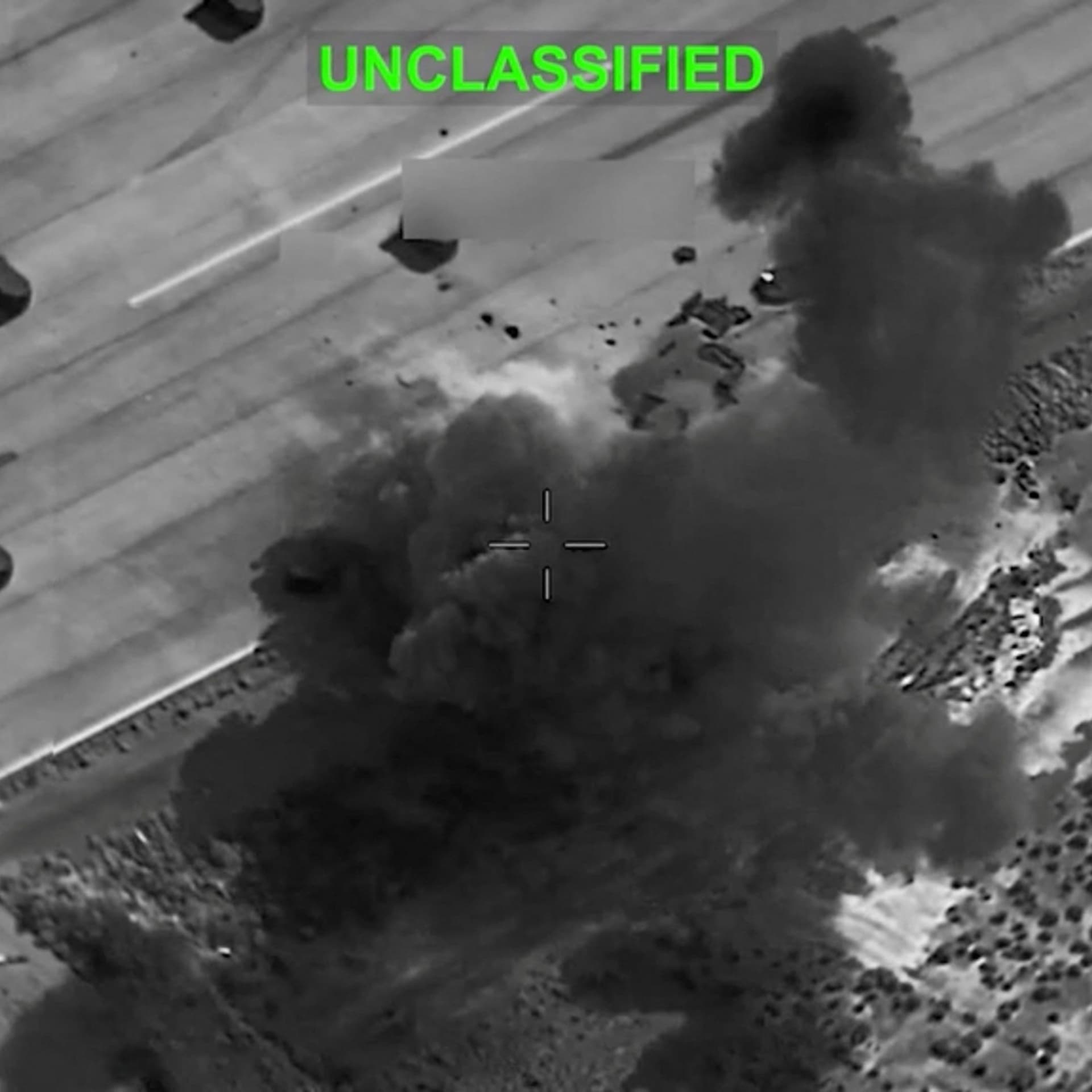
2:16The prospect of a proper peace between the US and Iran is looking even dimmer. after a second series of American strikes on Iranian targets and defiance from Tehran. The US military says it struck 90 sites, some near the very Strait of Hormuz, which is now at the center of the conflict. There are also reports of explosions in Bashar, where Iran's main nuclear plant is located. Iran suggested some attacks had hit civilian infrastructure and accused America of a war crime. President Trump spoke about the latest strikes on Air Force One as he returned from a NATO summit in Turkey. We just hit them very hard, and I say we hit them 20 to 1.
2:57Every time they hit us, we're going to hit them 20. And we did it last night. It did a little something today, but it was really retribution for last night. They hit actually three boats, not two. And when they hit, we hit back much harder. But the American military might wasn't deterring Tehran. In response to the U.S. attacks, Iran targeted American assets in neighbouring Bahrain and Kuwait, all of which appears to suggest we're close to being back where we were. Earlier, our global affairs reporter and Middle East expert Sebastian Usher talked me through the latest developments. There do appear still to be strikes going on.
3:33Reports in the Iranian media saying that the coastal city of Bandar Abbas have been explosions. In Boucher, which is where Iran's main nuclear power plant is, we've heard differing accounts, but one account saying that the perimeter of it was hit. So this is certainly causing concern over that memorandum of understanding and how long it can withstand this kind of pressure. We have been here before. It's a question of how much is it being calibrated, despite the talk from President Trump that, you know, they're going to hit harder and harder, that essentially that memorandum is now over. It's what he actually does, what the US does that matters.
4:10And I think from the other side, from the Iranian side, It's how much this is the hill that they're going to die on in terms of the Strait of Hormuz. If they give up all control of that, which I think is what they're concerned about at the moment, and they don't carry out some drone or missile strikes on ships that they say are going in areas that they haven't authorized, this is Iran, you know, nobody else, then that shows that they are losing that grip. And that's their key card. And they feel that they haven't got what they want yet from the deal so that they have to continue doing this. And of course, all the while with the backdrop, Iran is on to the last day of the funeral of its former supreme leader.
4:46Yes. I mean, we're hearing just now in Mashhad, which was his birthplace and also one of the holiest cities in Iran, again, tens of thousands of people lining the streets. This has been six days that the Iranian authorities, I think, will have been quite happy with. They've allowed foreign journalists to come in. Now, of course, over the years, there's been a sense that people are being bussed in for these shows of solidarity with the regime. But certainly, there is a genuine element to this as well. It's what comes after. Does this show a country that has been united to some extent, despite the huge divisions there were, the mass protests that there were just back in January?
5:26Or does it show that temporarily, there can be a sort of coming together, but beneath that, those divisions are growing? And that's reflected in the leadership. We really don't know if the leadership now has become more hardline with the Revolutionary Guards now completely calling the shots or whether those who signed the Member of Understanding, the President, the Speaker of Parliament, those who are more pragmatic, whether they have the upper hand. That really, while their tensions are still going on, while strikes are still being carried out, we're not able to see through that. And I think today, again, will be a moment in which the Ayatollah Ali Khamenei, though he certainly wasn't popular amongst many in Iran, his death, his assassination does seem to have pulled people together to some extent right now.
6:13But that unity, as I say, could be short lived. Sebastian Usher. Well, unsurprisingly, the renewed fighting and the uncertainty around the Strait of Hormuz is taking its toll on shipping in the region. Not just on the number of ships using the straits, but on the lives of the sailors in the oil shipping industry in the region. To find out more, my colleague Sean Farrington spoke to Phil Belcher from the International Organization for Independent Tanker Owners, Intertanko. He says very few vessels are choosing to use the route. The number of ships we're going through overnight is sort of about single figures in the southern route, which is maintained off the coast of Oman by the US, and about 20 going through a northern route done by Iran.
6:57The central main kind of highway through the strait is currently closed due to the mine threat, which is going on there. So we've got about 30 ships or so going through, when the normal number would be about 130 ships. so you can see the impact has been enormous at the moment and this has fallen from about 70 or so just a week ago so we really need to look to the future. So there has been a drastic change in the last couple of days compared to where you were a week ago. Yes there has been falling from about 70 which was about half the amount of the oil and gas which we were seeing going through before the conflict back in February, starting there.
7:37And so the drop has been dramatic, yes. And so has the confidence, the mood changed around about shipping in the region? Because, you know, speaking to consultants advising businesses about the region this morning, they've been saying that in a way the advice hasn't changed in recent weeks because volatility has been expected. But is that the case with shipping? It sounds like there was some optimism. Yeah, and I think there was an exuberance of optimism following the signing of the MOU between Iran and the US. There was this quite a large increase in the number of ships. The threat assessment was reduced to the lowest it's been for four months or so.
8:20But now the threat is very much there. I mean, on Monday night, nearly half the ships which were on the way out in the southern part were struck by the Iranians who were shot at there with a real flagrant disregard for the lives of innocent civilian seafarers on board those ships. This cycle of violence, this cycle of up and down, positive, negative news, it's having an enormous impact both on the business but on the seafarers themselves. These are civilian seafarers coming from the Philippines, from the UK, from Norway, India, etc., who know all that's going on. Their families at home are hearing all of this as well.
8:58So the support that we have to give across the board to be the seafarers ashore as well as on board the ship. It's been there. And it's going to get worse now over the next few days. Hopefully we can have some cooler heads looking at this and we can break this cycle. But at the moment, the strait is not very open. Phil Belcher. And we have more on this on our YouTube channel. Search for BBC News on YouTube and you'll find Global News Podcast in the podcast section. There's a new story available every weekday. To the U.S., where a scandal-plagued Democratic candidate Graham Platner has announced he suspended his campaign in Maine's U.S.
9:36Senate race after days of mounting pressure over allegations of rape and sexual assault. He has denied the allegations. He posted an emotional video on X explaining his decision. We believe that for the movement to continue, it can't be made. And for that reason, we are suspending campaign operations. This is incredibly difficult because I know that some will think it's an admission of guilt, and it most certainly is not. We're not doing it because of the allegations. We're doing it because of the structures that are being taken away from us by those in power. North America correspondent Anthony Zerker has more on what led up to this announcement.
10:21It was a gut-wrenching video. He clearly was very emotional. He had to pause multiple times as he was delivering his remarks. It didn't even seem like it was all that scripted. He blamed the system. He denied that there was any truth to the accusations being made against him. But he said that it was the system and the structures of the system that were being denied to him that forced him to announce his suspending the campaign and his withdrawal from this race. Of course, earlier this week, multiple individuals, leaders of the Democratic Party had rescinded their endorsements. But even more importantly, the Democratic committees that were funding his campaign, spending millions of dollars to support him, all of that had been frozen.
11:07So he would have had to fundraise and finance on his own. And with his support collapsing nationally, that would have been a very difficult task, essentially forcing his hand here. He entered the race last August and built a remarkable grassroots movement in Maine. Over 15 ,000 volunteers in that state. He campaigned in all of their counties. He defeated the incumbent Democratic governor who was running against him. But from the very beginning, there were also all of these allegations dogging him. Allegations, evidence of incendiary posts, anti-woman, anti-gay posts he made on social media. There was a report shortly before the Democratic primary last month about him being verbally and even physically intimidating during his relationships with women over his dating career.
11:59There was a report about after he got married in 2024 that he was sexting, sending text messages to other women. And of course, he had a Nazi themed tattoo on his chest that was revealed. He's since had it covered up and said that he didn't know the origins of the skull and crossbones on his chest. He denies most of these most serious allegations, but the social media posts, the texts, you know, once he confirmed. Anthony Zerker. Now, you might be familiar with the classic power ballad Total Eclipse of the Heart. Well, its singer Bonnie Tyler has died aged 75. She'd been unwell for some time after having emergency surgery in Portugal.
12:38Total Eclipse of the Heart topped the charts in the United States and across Europe in 1983. And it's still popular today, passing a billion streams on Spotify earlier this year. It was written and produced by Meatloaf's regular collaborator, Jim Steinman, the Wagner of rock and roll, according to the LA Times, who brought his trademark operatic bombast to the track. This is Bonnie speaking about it to the BBC in 2023. Well, I've done a lot in the last 40 years, but I never get tired of singing Total Eclipse of the Heart. The very first time I sang that song was with two of Bruce Springsteen's musicians.
13:15And, you know, it was just awesome to be singing with this band. Oh, my God, I never thought, you know, I mean, I've grown up in a council house and believe it or not, I was a very shy little girl, you know. So how on earth I got to where I am now, from where I was then, is, you know, it's a bit of a journey. My mother always brought me up to believe in myself, right? Believe in yourself. If you think you've got a talent, go for it. People often ask me, you know, don't I get fed up of singing Total Cliff? Of course I don't. I love it, you know. Born in Wales to a coal mining family, Bonnie Tyler's breakthrough came in 1976, when Lost in France made the UK top 10.
14:02Her other hits included Hold It Out for a Hero, which featured in the films Footloose and Shrek, and her breakout single It's a Heartache. She also represented the UK in the 2013 Eurovision Song Contest in Sweden. A friend of Bonnie Tyler's, the Welsh musician Mal Pope, said her personality matched her distinctive musical style. She needed that big voice to be able to carry those James Steinman songs. She was big all round, OK? She had that big voice, big hair, but she had a big character. And, you know, if you're going to go into that world, you would need that. The humility is knowing how to treat people in a local superstore here in Swansea.
14:39And she would be the same to everybody. But she knew she could sing with the best. You know, she knew who she was. She'd take no nonsense from anybody. But she wasn't one to fling it about either. Our entertainment correspondent, Lizo Mazimba, has more. People will be very shocked by today's news because she was a much-loved singer, those songs were absolutely huge, and she was one of those people, when you heard that voice, you knew exactly who it was. And, you know, those raspy vocals, you know, that gravelly voice, that was actually the result of... In the 1970s, she had an operation on her throat for nodules, and one day afterwards, she kind of screamed in frustration, and that kind of produced this permanent, incredible voice.
15:22Now, it would have been easy to think with a voice like that. All you did was kind of belt out these kind of like power songs and action packed hits. But actually what she had the power to do was bring a huge range of emotion into that. I mean, total eclipse of the heart. I mean, what a song. And, you know, the songs ranged from, you know, just kind of real action images to real, genuine, heartbreaking emotion. She could do all that within the range of her voice. and she was somebody who just loved what she did. Lizzo Mazimba. Still to come in this podcast, this desert rain frog is an endangered species.
16:04Now we tell you why its habitat is threatened by open caste mining and human encroachment.
16:17The United States is about to mark its 250th anniversary. And so on the Global Story podcast from the BBC, we're telling surprising tales of American influence on the world stage and in ordinary people's lives all across the globe. We have this ability to export our story and a lot of people have bought it. I feel like the American dream is alive, but not well. From the BBC, it's the United States at 2.50. Listen on BBC.com or wherever you get your podcasts.
16:49This is the Global News Podcast. BBC Verify has found evidence that false and misleading claims about Ebola are fueling violence against health workers and making it harder to tackle a deadly outbreak in the Democratic Republic of Congo. More than 1 ,700 infections have been reported and 600 people have died from the virus since May. Yet doctors and aid workers say some people in affected communities falsely claim that Ebola doesn't exist and distrust those trying to treat it. Marco Silva is the reporter who's been looking into this story for us. So fundamentally, we identify 12 different incidents where Ebola misinformation appears to have fuelled real world violence.
17:32Seven of them we verified using social media footage. Others were confirmed through local news reporting. And just to give you a sense of the types of incidents that we're talking about here, we're talking about attacks on treatment centres and equipment. We're talking about assaults on health workers, but also repeated attempts to disrupt the safe burial of people who died of Ebola. In one incident in particular, four Red Cross volunteers were attacked and severely injured as they attempted to safely bury someone who had indeed died of Ebola. I spoke to one of these volunteers. His name is Daniel Wello.
18:09They grabbed me from behind and started punching me, hitting me with spades and machetes. So the crowd turned on Daniel and his colleagues on that day because of a rumour, a rumour that the coffin being buried that day was actually empty. Daniel told us as well that some of the people at the cemetery on that day, the people who attacked him, some of them didn't believe Ebola was real. Others thought that the Red Cross was only there to make money, which was clearly not the case here. So what impact then is this having on efforts to try to contain the disease, Marco? So for this report, I spoke to several organisations that are involved in the response to this particular Ebola outbreak.
18:55They all say that rumours and falsehoods about Ebola are having a very tangible effect on their ability to do their job. And this isn't just about the safety of those response teams. These organisations say that because of misinformation, some people also aren't seeking treatment until it's way too late. And of course, they are dying as a result. And that misinformation is also making it harder to stop the virus from spreading further in this part of the DR Congo. Just have a listen to Dr. Aime Mbonda-Nula. He's with the International Federation of Red Cross and Red Crescent Societies in Bunia, Ituri province.
19:35When communities don't believe on the disease, when communities don't believe on our action, immediately when we are coming to support the communities, we will not be receiving the community. they will immediately be resistant. So all of this misinformation are directly affecting our operation on a daily basis and also affecting the security of our volunteers, but also of our staff. So it's incredibly difficult and challenging, I imagine, to tackle this disinformation. How do you fight it? Well, experts say that part of the reason why these claims are spreading so far and wide in the eastern DRC is because within some of these communities, there is a profound sense of distrust, not just of the central government, but of outsiders in general.
20:23And as a result, if the response teams really want to get into these communities, experts say they need to tap into local voices, local networks, trusted community voices that can make the case that this is indeed a real virus and that there are ways that you can protect yourself from this virus. Slowly, some say, you know, perceptions are already changing, but this is painstaking slow work. Another idea that is being put forward involves telling the stories of Ebola survivors. Of course, if people see that people have been infected and survived the disease, then perhaps they will also seek help from the authorities and from health workers.
21:12Marco Silva reporting. The president of Microsoft, Brad Smith, has told the BBC that young people are best placed to take advantage of the AI revolution, despite concerns about its impact on entry level jobs. He said the challenges they had faced included being educated during the COVID pandemic, as well as being digital natives meant that they were in a very strong position to be able to adapt and work with the new technology. He's been speaking to our tech editor, Zoe Kleinman. We need a future where AI can be used to create better jobs for more people. And if we don't do that, then I think we're letting not just ourselves down, but future generations down as well.
21:53There is a backlash, though, isn't there, particularly among younger people who are very concerned about the impact of AI on their futures and on the planet and everything else. What do you say to those people? You are made for this moment. You've had to endure hardships that the rest of us did not, including going to school through a pandemic, learning through a screen. Those things were not easy. You've seen the pros and all the cons of social media, including its impact on mental health. But because you've been through all of that, you were made for this moment. You are a digital native. You can master new skills faster than somebody like I can.
22:35go to work, learn everything you can, act with ambition, make the world a better place. You too will leave work for your successors. We always do. But I think the young people today can use AI and ensure that it is better for the planet and every country and help us all build the future that we would be proud to create. Microsoft this week has announced that it's cutting nearly 5 ,000 jobs. Now that is not as a result of AI, is it? The gaming department has been hit hard. Sometimes you have to restructure a business when it's not doing well. And that was true with our Xbox business. So we're restructuring it.
23:17We all need to adapt and we are adapting to remain successful. What I'm more enthusiastic about is the 4 ,000 people in the last year who we retrained and moved from one job that we didn't need to a new job that we did. And I think that's got to be the ultimate measure. We're bringing in entry-level workers in new ways. We're exposing them to broader disciplines so they have a broader range of skills. We're supplementing that with AI skills. In that way, I think we're building a workforce for people. The president of Microsoft, Brad Smith, speaking to Zoe Kleinman.
24:00Now that's the sound of the desert rain frog, which is about the size of a ping pong ball. It's sand coloured and speckled with bulging eyes and it lives in a narrow 10-comitre wide part of coastal southern Africa. But its habitat is threatened by open caste mining as well as human encroachment. It's one of the nearly 175 ,000 species which are included in the new Red List report from the International Union for the Conservation of Nature. Almost 50 ,000 of them are heading towards extinction. Our science correspondent, Helen Briggs, has been reading the report and told us more about it. It's the latest update from the IUCN, the International Union for Conservation for Nature, their Red List.
24:43So they're a sort of global health check of all the plants, animals and fungi on the planet. So they go through species in a very rigorous way and just look at how they're faring on the planet, how close they are to extinction. And they update and talk about the things they're most concerned about, one of which is this desert rain frog, which lives in southern Africa. And I guess we want to know and understand why this is happening. Do we know why it's happening? The point they're making really from this latest update is that nature is under pressure across the world and it's now starting to affect even the creatures that live in the most hostile and unusual habitat.
25:29So they've survived in really unusual places like deep sea mollusks, tiny sea creatures living around hot vents on the seafloor. And this desert rain frog, now it's confined to just a small stretch of coastal dunes in Namibia and South Africa. And it survives by burrowing into the sand. So really, it's not like a normal frog in terms of it doesn't live in water. It actually lives in sort of wet sands and burrows down and it only comes up to eat and to breed. So it's very rare and obviously scientists find it very, very difficult to come across. Its habitat is under pressure from diamond mining and also a future green hydrogen project.
Read the full transcript
26:17And also they're worried about frogs as a whole because they're under lots of pressure across the world, climate change, pollution and also the pet trade. So can this report be a catalyst maybe to help preserve and save the species? Well, I think by highlighting what's going on, that's the first step. And also, we have so many gloomy stories about conservation. They're actually highlighting some success stories, showing that if the work is put in, there are winners. And they're highlighting the numbat, which is a little stripy marsupial that lives in Australia. And it was under threat. It was down to just a few hundred species, again, losing its habitat, also preyed upon by cats and red foxes.
27:01But there's been this massive conservation effort to try and protect it. And now there are 2 ,000, 3 ,000 numbats. So with concerted conservation efforts, then we can save these animals and these plants and these fungi. Our science correspondent, Helen Briggs. After the first rest day of the World Cup, we are well and truly at the business end of the tournament now with the best eight teams left. The first of the quarterfinals gets underway later in Boston, with France the favourites in many people's eyes. taking on the team they knocked out in the semi-finals four years ago. That's Morocco. Now, many of the two sets of supporters have already descended on the city, but it's going to be far rowdier than a Boston tea party.
27:45Have a listen to this. From a downtown park, more than a thousand Morocco fans set off fireworks and chanted Dima Maghreb, always Morocco, as they sang and danced.
28:00and the French fans were also celebrating in another part of the city
28:09so let's hear from the fans both groups as you can imagine are pretty confident the French have sauntered through the competition with typical flair and aplomb Morocco well four years ago they were the first African nation to reach the last four of the World Cup and they hope to emulate that achievement. Right now we have to actually revenge what we did and we're super super excited I think we're going to make history we're going to go to the semi-final again we're going to make we're going to make history for first time ever for Africa. It will be tough in the ground in the field but it will be tough as well in the stands yeah we are here to push them until the final for sure.
28:45So can Morocco do it? I asked our sports correspondent Jo Curry. Well even before this tournament started many were tipping france to be the ones to win the world cup and so far they haven't shown anything to say that that can't happen but morocco are proving to be a real force themselves if they are to win tonight though which they are capable of doing they're going to have to do something they haven't done all tournament and they just play well for 90 minutes they were really poor and lethargic in the first half against canada in the last round they're a team who have spells and games where they look impressive they just can't maintain it they've got power they've got skill but the problem for them tonight is they are without key forward Ishmael Sabari.
29:22He's injured. It's a real blow and it makes them quite a bit weaker if I'm honest. Meanwhile we've seen some real character from France to stay calm of course in the face of that provocation from Paragry last time out. We already know about their quality and they will start as favourites but I suspect this is going to be a much closer match than many are expecting. Yeah really interesting one as well contrast of styles and also contrast of development as well. We know France have been brilliant for so many years because of the investment in infrastructure. But that seems to be also the case in Morocco now.
29:50Are they on the verge of becoming not just an African powerhouse, which they already are, but more of a global powerhouse potentially? I mean, certainly from the outside looking in, they are incredibly ambitious. There's been the sustained investment in the game, which has filtered down from the king. We've had significant sums of money pumped into a state of art training facility, a national academy, regional training centres, stadium redevelopments, and thousands of amateur pitches as well. And of course, They're building what will be the globe's largest ever football stadium ahead of co-hosting the next World Cup in four years' time.
30:20It's going to have a capacity of 115 ,000. To put that into perspective, that's 25 ,000 more than Wembley. On the pitch, of course, they've got a lot of young footballing talent coming through. Many players are often born and raised outside of the country, but then go on to represent Morocco through their heritage. They're literally searching for any Morocco talent they can find around the world. 19 of the current squad, 26 players, were born outside of Morocco. That gives you some perspective. And this, of course, has all been done to give the team the best possible chance to become the first African team to win the World Cup in four years' time on home soil.
30:54They finished fourth, who said, at the last World Cup in 2022. If they get victory tonight, it would mean, at the very least, they would do the same again this time around. Yeah, I love the French-born Boadi, who's in that centre midfield. Absolute talent. OK, so away from this game, still a fallout from the Egypt-Argentina match. Lionel Messi and company coming from 2-0 behind and then Egypt unhappy with the refereeing in that one. Yes, Egypt had a 2-0 lead. They also had another goal ruled out, they say controversially, and then went on to lose 3-2 to Argentina. Yesterday, the Egyptian Football Association said it had asked FIFA to kick the officials in charge of that game out of the tournament.
31:28They said they wanted an investigation into double standards of officiating. Well, today, FIFA Chief Refereeing Officer Pierre-Luigi Colina has responded by saying nobody can question the integrity of the World Cup match officials and described Egypt's comments as unfounded allegations. Of course, there will always be an element of subjectivity in some decisions, but FIFA are happy with how this principle has been applied throughout the tournament. So another day, another day of chaos. Our sports correspondent, Joe Currie. And that's all from us for now. If you want to get in touch, you can email us at globalpodcast at bbc.co.uk and you can also find us on X at BBC World Service.
32:06Just use the hashtag Global News Pod. And don't forget our sister podcast, The Global Story, which goes in-depth and beyond the headlines on one big story. This edition of The Global News Podcast was mixed by Volodymyr Muzekka and the producer was Adrian White and the editor is Karen Martin. I'm Ankur Desai. Until next time, goodbye.
32:32The United States is about to mark its 250th anniversary. And so on the Global Story podcast from the BBC, we're telling surprising tales of American influence on the world stage and in ordinary people's lives all across the globe. We have this ability to export our story and a lot of people have bought it. I feel like the American dream is alive, but not well. From the BBC, it's the United States at 250. Listen on BBC.com or wherever you get your podcasts. Mountain Christ
From the publisher
The US has carried out a second wave of airstrikes on Iran after Tehran attacked tankers in the Strait of Hormuz earlier in the week. The perimeter of Iran's main nuclear plant, at Bushehr, was reported to have been hit. Iran said attacks on its civilian infrastructure could be war crimes. Tehran ordered retaliatory strikes on neighbouring Bahrain and Kuwait. Also: the toll of the war on tanker sailors in the Gulf; scandal forces a leading US Democratic Senate candidate to suspend his campaign; Welsh singer Bonnie Tyler dies at 75; rising false claims about the Ebola outbreak in the DRC; why young people may be best placed to take advantage of AI; the danger facing a little-known desert rain frog; and scores to settle: Morocco take on France again in the World Cup.
The Global News Podcast brings you the breaking news you need to hear, as it happens. Listen for the latest headlines and current affairs from around the world. Politics, economics, climate, business, technology, health – we cover it all with expert analysis and insight. Get the news that matters, delivered twice a day on weekdays and daily at weekends, plus special bonus episodes reacting to urgent breaking stories. Follow or subscribe now and never miss a moment. Get in touch: globalpodcast@bbc.co.uk Photo: Explosion at unknown location, Iran Credit: Reuters