
In short
Global News Podcast: Episode Summary
Episode Title
US and Israel Step Up Attacks on Iran
Overview In this episode, the podcast covers the escalating military conflict involving the United States, Israel, and Iran, alongside other global news developments. The discussions include the impact of airstrikes on Iranian cities, the retaliatory actions by Iran, the political dynamics in Nepal, conservative Anglican church disputes, and new research on weight loss medications.
---
Key Topics Discussed
- US and Israel's Military Actions Against Iran
- Increased Attacks: Significant explosions reported in Tehran and Karaj as the US and Israel intensify their bombing campaigns on Iranian military installations.
- Eyewitness Accounts: Reports indicate destruction and civilian fear in Tehran, with civilians reacting differently based on their political affiliations.
- Civilian Casualties: The latest reports indicate over 1,097 civilian deaths in Iran due to the ongoing conflict.
- Iran's Response and Regional Impact
- Retaliatory Strikes: Iran continues to launch attacks on Israel and other neighboring countries, denying involvement in drone strikes in Azerbaijan.
- Geopolitical Dynamics: The tensions are illustrated by drone activities impacting locations as far as Bahrain and Qatar, complicating regional relationships.
- Potential Support from Ukraine
- Zelensky's Offer: Ukrainian President Volodymyr Zelensky indicates readiness to assist Gulf states facing Iranian missile threats, leveraging Ukraine’s experience with drone warfare.
- Types of Support: Ukraine may provide hardware and expertise, though there are concerns about diverting resources from its own defense.
- Nepal's Political Landscape
- Election Overview: The episode discusses Nepal’s first election post-Gen-Z protests which led to the ousting of the previous government.
- Voter Sentiment: Young voters express a desire for change, focusing on issues like corruption and unemployment, with a mix of seasoned politicians and new faces vying for power.
- Anglican Church Developments
- Leadership Changes: Conservative factions within the Anglican Church announce a new leadership structure, affirming their opposition to the liberal direction of the Church of England.
- Research on Weight Loss Medications
- Study Findings: New research suggests that stopping weight loss medications can lead to rapid weight regain, with many people recovering about two-thirds of lost weight within a year.
- Health Implications: The discussion highlights the importance of lifestyle changes in conjunction with medication for long-term weight management.
---
Key Takeaways
- The conflict between Iran and regional powers is intensifying, posing severe humanitarian and geopolitical challenges.
- The responses from international players like Ukraine reflect shifting alliances and the complex nature of global diplomacy.
- Domestic political movements, particularly among youth in Nepal, signal a potential shift in governance and priorities.
- Developments in the Anglican Church illustrate the ongoing debates within global religious communities about doctrine and leadership.
- The findings on weight loss treatment efficacy emphasize the need for comprehensive approaches to obesity management.
---
Conclusion This episode of the Global News Podcast provides a compelling overview of critical global issues, highlighting how military conflicts, political changes, and health research interact within the broader context of international relations and societal challenges.
For more in-depth coverage, listeners are encouraged to tune in regularly and engage with ongoing discussions about these pivotal topics.
Written by AI. May contain mistakes. Listen to the episode to check what was said.
Chapters
Tap a time to open that second in VOEscalating Conflict Overview
0:32 to 1:06
Discussion on the ongoing conflict and its implications across the Middle East.
“Listen on BBC.com or wherever you get your podcasts.”
Eyewitness Accounts from Tehran
1:06 to 2:18
Eyewitness reports detailing the situation in Tehran amidst the attacks.
“Thousands move from southern Lebanon to escape strikes there.”
Israeli Military Goals
2:18 to 3:32
Insights into the Israeli military's objectives and operations in Iran.
“Today I went to the Tehran Sahar and I was there exactly when Azadi was hit.”
Life in Tehran During Attacks
3:32 to 5:48
Exploration of daily life and public sentiment in Tehran amidst the bombings.
“So what's it like for those living in Iran?”
Potential Successor to Supreme Leader
5:48 to 6:41
Discussion on Mojtaba Khamenei as a potential successor to the Supreme Leader.
“But obviously, the civilians have been impacted by these attacks.”
Lebanon's Displacement Crisis
6:41 to 8:00
Accounts from Lebanese residents forced to evacuate due to conflict.
“Israel is fighting on two major fronts in this war, attacking Iran and also Hezbollah targets in Lebanon.”
Civilian Impact and Trauma
8:00 to 10:01
Interview discussing the psychological impact of conflict on children in Lebanon.
“Yesterday they sent us to evacuate all the south.”
Regional Repercussions of the Conflict
10:01 to 11:18
Discussion on Iranian retaliatory actions and their effects in the region.
“As the US and Israel continue their bombing campaigns, the Iranians are still hitting back, launching rockets at Israel and also launching aerial attacks on other countries in the region.”
Ukraine’s Role Against Drone Threats
11:18 to 14:03
Analysis of how Ukraine could assist Gulf states facing drone threats from Iran.
“And Iran has now denied that it targeted Azerbaijan, but Azerbaijan has reacted to a strong criticism.”
Shifting Dynamics in Global Arms Supply
14:03 to 15:00
Explore how the tables have turned in the arms supply situation between Ukraine and the Gulf countries.
“For the last four years, they have been the ones with the begging bowl, asking allies and others around the world to supply them with weapons.”
Show all 16 chapters
Voices from the Iranian Border
15:00 to 18:00
Hear firsthand accounts of the situation in Iran from people at the Turkish border.
“Our diplomatic correspondent James Landale in Kiev.”
Nepal's Generational Political Shift
18:00 to 22:33
Investigate the changing political landscape in Nepal following youth-led protests.
“They are targeted by both regimes, Israel and America, but it's been a really tough situation in Iran for everybody.”
Counting Votes in Nepal
22:33 to 23:43
Understand the complexities of counting votes in Nepal's challenging terrain after elections.
“So, Azadeh, can you paint a picture for us about what these Gen Z protesters really want?”
Anglican Communion's Leadership Changes
23:43 to 24:50
Discover the implications of GAFCON's new leadership structure in the Anglican Communion.
“As you can imagine, it takes time to collect and count all the votes across Nepal's mountainous terrain.”
Weight Loss Drug Research Findings
24:50 to 27:18
Learn about new findings on the effectiveness and rebound effects of weight loss drugs.
“Our global religion correspondent, Lebu Di Seco.”
Exploring Technology's Influence
28:11 to 28:34
Discussion on how technology affects work, politics, and daily life.
“This is not the future we were promised.”
Transcript
Automatic transcript. May contain errors.0:00This BBC podcast is supported by ads outside the UK. This is not the future we were promised. Like, how about that for a tagline for the show? From the BBC, this is The Interface, the show that explores how tech is rewiring your week and your world. This isn't about quarterly earnings or about tech reviews. It's about what technology is actually doing to your work and your politics, your everyday life. And all the bizarre ways people are using the internet. Listen on BBC.com or wherever you get your podcasts.
1:02of the conflict continues to spread. Also in this podcast, could Ukraine help Gulf states facing missile and drone attacks? Thousands move from southern Lebanon to escape strikes there. And we'll take you to Nepal's election, the first since Gen Z protests brought down the last government. I'm here to vote, hoping to bring new changes in Nepal. That was what all of us are seeking. And that was what all the Gen Z revolt was about.
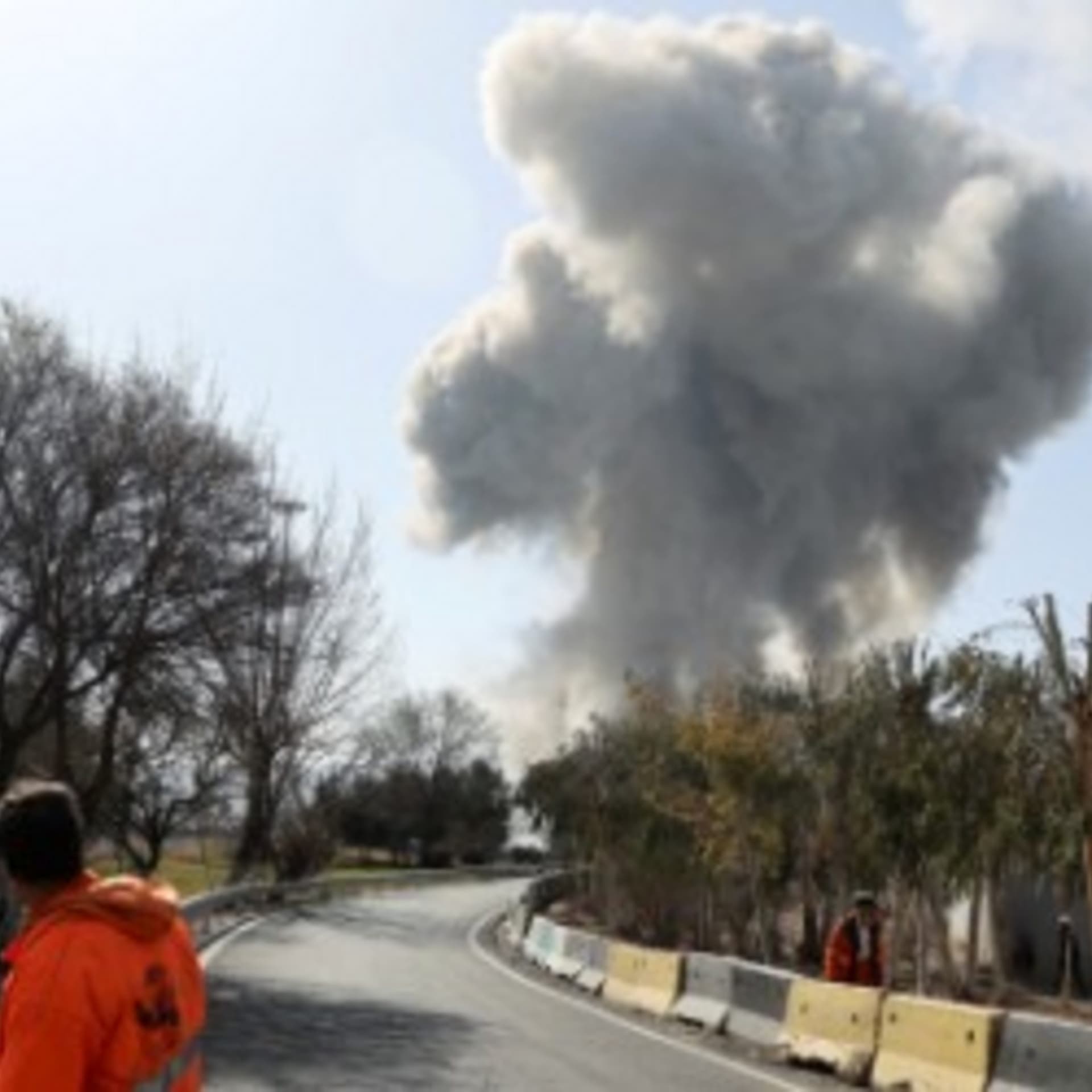
1:37Day six of the US-Israel war with Iran and frustration and fatigues being expressed in many parts of the Middle East. In the last 12 hours, there have been fresh waves of attacks. The United States and Israel have intensified their joint bombing campaign on Iran. In the last few hours, we've seen images of destruction across the Iranian capital, Tehran. Those verified images, you can see them for yourself on the BBC website, show huge clouds of smoke rising from the centre of the city. One video that's circulating online shows Tehran's Azadi football stadium severely damaged, with smoke coming out of a sports hall.
2:17Here are some eyewitness reports that have been voiced by our producers. Today I went to the Tehran Sahar and I was there exactly when Azadi was hit. When the first strike hit Azadi, nothing much happened. But when the second one hit, orange smoke rose up from the ammunition depot. The situation was really bad. Last night there were a lot of strikes. From about 3 to 5 a.m., they were hitting places constantly. When it gets to around 9, people go up onto their rooftops. They sit there waiting for the strikes to happen. If the attacks slow down a bit and all the leaders of the republic killed, then people will definitely pour into the streets.
2:59Eli Defran is a spokesperson for the Israeli army. The goal of the operation is to inflict severe damage on the Iranian terror regime until it removes the existential threat, to strike and remove that threat over time. We continue to deepen the damage to the regime. it's important for me to say that it's already shaken. It was shaken by the first strike on Saturday morning when the leadership was thwarted. And every day we continue to destabilize it more and more to deepen the damage to it until the existential threat is removed. So what's it like for those living in Iran? I spoke to Siavash Mehdi Ardalan from the BBC's Persian service.
3:41Life in Tehran may be different to life in other cities around Iran because Iran is a vast country, seven times the size of the UK. But in Tehran in particular, the population of 10 million, the mood is very diverse. We haven't seen instances of panic shopping or queues at the petrol stations because the government has assured that they have enough foodstuff to sustain the population for a few months. But the mood generally depends on what your political affiliations are. If you're part of that minority of pro-government, pro-regime supporters, you're probably defiant and a little bit scared that the regime may collapse as a result of this.
4:19If you're firmly in the anti-regime camp, you might even be cheering on the U.S. and Israeli drones and fighters that are flying at very low altitudes in Iran's virtually defenseless skies. And also there are a lot of people who have disdain for the regime, but who also don't see any good coming out of this. But I guess the common sense is one of fear of what is to come, probably, you know, combined with a bit of hope or with a bit of despair. In past conflicts, we've seen people try to get out of the cities in Iran. Are we seeing this as well? Not so much in Tehran, because so much of the attacks have been, you know, precision targets on military installations.
5:06So we have even seen instances where people, when they hear drones or fighter jets flying overhead, they go onto their roofs and they try to film this. But in other cities where you have military industrial installations there, where you have naval assets, for example, in the city of Boucher, which is in the southern part of Iran with a population of 250 ,000, The city is almost deserted because they've just decimated the entire industrial hub in that city relating to military production, which is one of the objectives of U.S. and Israel. So depending on where it is and which city we're talking about, which part of the country, the moods are different and the people's reaction are different.
5:48But obviously, the civilians have been impacted by these attacks. Latest toll we had yesterday was of 1 ,097 civilian deaths as a result of these attacks in the past five days. On Wednesday, the funeral ceremonies for the Supreme Leader were postponed. Any news on a potential successor? Yes, his son, Mojtaba Khamenei, is tipped to be the successor. The votes have already been cast by a body called Assembly of Experts, which is comprised of 87 clerics who decide who the successor to the supreme leader should be. But they just haven't announced it yet, perhaps waiting for the funeral to take place before the announcement is made.
6:32But the reason why Mojtaba Khamenei is tipped to be the successor is because he has very good connections with the military and security establishment. And if there is any compromise to be made or if there's any new policy or change of directions, he is the person who the military will listen to. Ziavash Mehdi Artalan. Israel is fighting on two major fronts in this war, attacking Iran and also Hezbollah targets in Lebanon. Israeli forces have crossed the border into Lebanese territory in a number of areas, according to the UN peacekeeping contingent in the country. Residents in Beirut's southern suburbs have been attempting to flee en masse, hampered by huge traffic jams following an evacuation warning by Israel.
7:19Rana Hamoud is one of those leaving South Lebanon. She's fled before when the Israeli invasion happened in 2023. Along with her family, she's now in Saidun, further north. She spoke to the BBC's James Copnell. It was a disaster, catastrophic. We stayed 10 hours on the road. We slept in the car on the street for one night with my three children and the cat. It was a nightmare. My friend called me at midnight. She said they're throwing rockets to Israel. I did not believe that. I was in total denial. In 2023, I did not leave. We stayed like 10 days. and my children are traumatised. We've been going to therapists.
8:06Yesterday they sent us to evacuate all the south. This means like 60 villages, cities, people. Last time in 2023 this did not happen. We did not evacuate all the south. And what about with your children? I'm really sorry to hear about their trauma. How are they getting on? Well, they know that's the situation. This is our reality. My youngest, he's nine. When he went back to school, he was a blank paper. He forgot everything. We had to start all over again with the basics, writing and reading. But this time we brought the books with us. But now we still did not find a house. So where are you staying right now?
8:51Our friend in Seidel, she said we can stay for a couple of days until we find a place. But this is very difficult because this time it's different because people do not want to rent their houses to the southerners, to us, because they say all the people from South Lebanon, we are with what is happening. You're supporting Hezbollah, basically? Exactly, yes. If you're from South Lebanon, you're supporting them. So, yes, it's very difficult. You need to prove that. No, I'm against war. I do not want this to happen. and the prices for a house like a bedroom, a living room and the kitchen, $15 ,000 and we need to pay one year in advance.
9:38I don't have$15 ,000. I do not want to stay out of South Lebanon for one year. I prefer to leave the country. We're going to collapse one day because this is too much for us. We did not ask for this. We did not want this. We never want this. But it's always happening to us. We're always paying the price. Rana Hamoud speaking to James Koppino. As the US and Israel continue their bombing campaigns, the Iranians are still hitting back, launching rockets at Israel and also launching aerial attacks on other countries in the region. Explosions have been reported in Bahrain and in the Qatari capital, Doha, with black smoke rising over the horizon.
10:22In the seas off the coast of Kuwait, an explosion is reported to have hit an oil tanker. And Azerbaijan has said Iranian drones struck an airport in the west of the country.
10:40That's the whine of an approaching drone followed by a blast, recorded and posted by a Nazari social media user and verified by our in-house experts at the BBC. Lise Doucette is the BBC's chief international correspondent. War Once Unleashed has a momentum and a mind of its own. It's being shown to us in stark relief every day. Yesterday, you were doing a story about a naval destroyer of Iran being torpedoed by a submarine just out of Sri Lankan territorial waters. And today came the attack, as you mentioned, that drones went into Azerbaijan, which is on the border, the northern border of Iran.
11:21And Iran has now denied that it targeted Azerbaijan, but Azerbaijan has reacted to a strong criticism. It has close historical and religious links to Iran. It's a Shia-majority country, and one of the big ethnic minorities in Iran are the Azeris. But in the long disputes between Azerbaijan and Armenia, Iran has sided with Armenia. And of course, Azerbaijan has longstanding relations with the U.S. and Israel. but it doesn't have U.S. bases. So the big question is, if they are targeting it, why? The whole ambition of Iran seems to be, although it denies this, but to increase the price for those close to those fighting the war.
12:03Lise Doucette. Well, one country that has plenty of experience countering missile and drone activity is Ukraine. And on Wednesday, Ukraine's president, Volodymyr Zelensky, said he was prepared to lend his support to Gulf states. He's ordered his government to present options for how it could help those facing Iran's missile and drone attacks. I asked our diplomatic correspondent James Landell in Kyiv what this support might look like. I think it would come primarily in two forms. One would be actual hardware. In other words, the many forms of interceptor drones that the Ukrainians have developed and are developing, that they use to counter the threat of the Shahed drones, as they're known, from the Russians.
12:47In other words, these are relatively slow-moving but pretty devastating attack drones that are causing so much devastation across the Gulf at the moment. So there's the hardware, which we've been speaking to defence sources here in Kiev today, and they say the Ukrainians have a huge capacity to upscale their production of those. So they'll be able to get quite a lot to the Gulf quite quickly. The problem is this. The second thing that Ukraine could give the Gulf is expertise and training. And that is much harder to provide because the Ukrainians say that at the moment their training programs, at the moment training their own people, both in the military and civilians, to use these interceptor drones, that training program is incredibly full.
13:33It is oversubscribed already. And I think Ukraine will be very reluctant to send its own people to the Gulf if that in any way put at risk Ukraine's own defense. And that point is something that President Zelensky has made very, very clear. Absolutely. I mean, President Zelensky has his own war to fight. What's the strategy here? Is Zelensky seeing an opportunity to win allies? Yes, absolutely. I think the Ukrainians are not relishing, But they are certainly taking note of the fact that the tables have turned. For the last four years, they have been the ones with the begging bowl, asking allies and others around the world to supply them with weapons.
14:14Now it is the other way about. There are teams of people from the Gulf here in Kiev right now asking the Ukrainians, what can you give us? How soon can you give it to us? And I think that that is certainly something that not only is that something that the Ukrainians can use to make money, They can improve their own defence production to satisfy the demand in the Gulf. But also President Zelensky has made it very clear also that this is something that he could use for what he called diplomatic investment. In other words, using it to win more friends and allies around the world. So, look, you know, we can do business together.
14:50You need to be with us. And so you need to put more pressure on Russia as a result, because this threat of Shahid drones is clearly a global threat now. It is not just one for, you know, Ukraine. It is not just one for the Gulf. Our diplomatic correspondent James Landale in Kiev. And for a more in-depth look at the military situation in the Middle East, with an assessment of the weapons Washington and Tehran are using and how long their stockpiles can last, you can watch our defence correspondent on our YouTube channel. Search for BBC News on YouTube and you'll find the Global News podcast in the podcast section.
15:28There's a new story available every weekday. Still to come in this podcast, what happens to people's bodies when they stop taking weight loss drugs? It is suspected and known that when you stop these treatments, there will be a rebound in the body weight. We'll hear the results of a new study.
15:55This is the Global News Podcast. Turkey has drawn up plans to deal with a potential influx of people fleeing the war in Iran, but it's said so far there hasn't been much change in movement along the border. Our correspondent James Waterhouse is close to one of the crossing points. He's been speaking to people there, some of whom have left Iran and others who are going back. The hour and a half journey from the city of Van to the Kapikoy border crossing here is a weaving one through jagged, mountainous terrain under a brilliant white snow covering for as far as you can see. It is bitterly cold and the activity here is only increasing.
16:44It is a peephole into a country under sustained aerial assault. Where the Iranian flag used to be, you can now see a black one. In an official sense, at the very least, it is a country mourning the death of Ayatollah Ali Khamenei. There are people taking their suitcases, heading into Iran, and of course there are people looking to escape going in the other direction. My name is Hemi. I come from Mashat. And what's the situation like there? The intern is going out and the situation is very bad. We couldn't contact our family in somewhere else in the world. But also, on the telephone, we couldn't reach somebody.
17:30What do you make of what Israel and the US are doing? What do you make of those tactics? You're worried about that? It's interesting. Someone's expression here might tell one story while their words tell another. Not everyone wants to be named. they certainly don't want to criticise the regime openly and they're almost reluctant to give a view on what Israel and the US is doing. This man did, however, tell us what his hometown is going through. It's been bombed rapidly. They are targeted by both regimes, Israel and America, but it's been a really tough situation in Iran for everybody. Every single person is really getting scared and they want to get out of there.
18:15You can see in my face how tired I am to get just to get in here. There is a real nervousness, a hesitation here among Iranians to not just speak ill of the regime, but even to say where they lived. They are fearful of reprisals, not just for them, for when they return, but their families as well still in Iran. I spoke to one gentleman there, really didn't want to be filmed or recorded. I asked him what it's like and he just turned and said, they can't beat iran and you sense he really meant it visibly angry visibly tied by the events of the past few days i can't see my mom honestly and where's your mother my mommy's uh i don't know and how is it in this shovel honestly unbelievable honestly how so i could see Just, you know, young people dying.
19:13It's just terrible. From airstrikes? No, from me, from policing inside Iran. You can see how difficult it is to, for people to talk openly, even once they've crossed the border. Those who talk of change do so out of optimism here, rather than pragmatism. James Waterhouse on the Turkish border with Iran. To Nepal now, where the votes are being counted in a general election. It's being seen as a contest between the old guard and a new generation of politicians, taking place nearly six months after a wave of youth-led protests that left scores dead and forced Nepal's then prime minister to quit. Candidates now include a former rapper and a former prime minister.
20:03These are some voters in the capital, Kathmandu. I'm here to vote hoping to bring new changes in Nepal that was what all of us are seeking and that was what all the Gen Z revolt was about I felt somehow I'm able to fulfill duties and responsibility as a person and a citizen because each of our votes matter our South Asia correspondent Azadema Shiri is in Kathmandu and she's been telling me about the candidates right now I'm outside of a Hindu temple that's been converted into a polling station here near Kathmandu. And one of the candidates was actually here earlier. I spoke to him, who is the leader, one of the senior leaders of the Nepali Congress.
20:47He is someone who has been part of the long established political system here. Gagantapa has been part of the fragile coalitions that have ruled Nepal for the past three decades. Because what's important to understand here when we talk about a new generation of faces unseating these veteran heavyweights is that since the 90s, there hasn't been a coalition government that has completed its full term. And it ends up turning into a round of musical chairs where the same three parties tend to bargain and negotiate about what happens next after the protests in September with the rise of other faces like Balan Shah, a former rapper turned politician who became the mayor of Kathmandu only three years ago.
21:33People are hoping that these new politicians, these younger ones, he's about 35 years old, could dethrone some of these veteran politicians. That includes the former prime minister, KP Sharma Oli, who was forced to resign after the protests back in September. Now, he also is part of one of these veteran parties. And when I spoke to him earlier today at another polling station, I asked him whether he thought he still had a chance. And he said, of course, that he's confident he will win, that he is confident that his party will win as well. And after the protests, he told me that his party's dedicated and committed to listening to younger generations and understanding their concerns.
22:18So the established parties think that they can continue this long political dynasty that they've had. And these new faces like Balin Shah are ready to shake things up. And this result will test whether those Gen Z protesters who are hoping for change have managed to convince the rest of the country that it's time for an untried generation to lead Nepal. So, Azadeh, can you paint a picture for us about what these Gen Z protesters really want? You talked about their calls for change and their concerns. What are the big issues for them? Number one, and this comes up no matter how old people here in Nepal are, is corruption.
22:59They feel like after decades of the same parties in charge, corruption hasn't been dealt with. And the reason that they marched in September was initially triggered by a social media ban, but it turned into days of anti-corruption marches. The second is unemployment. They really want jobs. Youth unemployment here stands at about 20 percent, among the highest in South Asia. and they don't want to have to leave Nepal in search of better opportunities. So those are the two big issues that they're hoping will change after this election. Azadeh Mishiri. And for more from Nepal, check out our BBC News website where we're following the results.
23:37One warning, it will take time, perhaps a few days, for a final vote tally to come in. As you can imagine, it takes time to collect and count all the votes across Nepal's mountainous terrain. Conservative Anglicans, meeting in Nigeria's capital Abuja, have pulled back from electing a rival leader to the first female Archbishop of Canterbury. The plan had been seen as a direct challenge to Sarah Mulally's leadership just weeks ahead of her installation. Many churches, mainly in Africa and Asia, oppose liberal shifts in parts of the Anglican communion. Our global religion correspondent, Lebu Di Seco, reports.
24:18GAFCON, a conservative group of Anglicans, said that it was leaving behind old structures and as a result was leaving behind old titles. Their new leadership council will be headed by the Archbishop of Rwanda, Laurent Mbanda. A GAFCON spokesperson said the root cause of the divide with the Church of England was doctrine. But speaking today, he repeated a previous GAFCON statement that the majority of the Anglican communion still believes that the Bible requires an all-male episcopacy. And he said her support for same-sex blessings was unbiblical. Asked repeatedly if they recognize Sarah Mulally, the spokesperson said that she is the Archbishop of Canterbury, but that GAFCON recognized Archbishop Mbanda as its leader.
25:00Our global religion correspondent, Lebu Di Seco. And last, some news that might surprise you about weight loss drugs. The latest research into injections such as Monjaro or Ouigavi suggests most people will regain almost two-thirds of the weight they lose within a year of stopping the drugs. The study at Cambridge University included six trials involving more than 3 ,200 people. Professor Antonio Vida-Puj has been speaking to the BBC's Nick Robinson. I think with respect to the current new treatments for obesity, they are certainly good at helping people to lose weight. But then it is clear that people cannot stay in these treatments forever.
25:43So these treatments can help you to lose around 50 to 20 percent of your body weight in a very short period of time. But the price that you pay is that it is expected and known that when you stop these treatments, there will be a rebound in the body weight simply because the need of restored energy that perceives your body. But as I understand the research is this right you you still keep off about 25 % of the weight loss so there is some overall gain. Yes in principle this is the you only recover around 60%. However what we don't know at this present moment is that if the weight that you recover is exclusively you recover fat or you, for example, don't recover enough muscle.
26:29During the period that you are taking your drugs, it's fundamental to use this time to relearn the way you eat, also to maintain a very active lifestyle so that when you are weak from this type of treatment, you can defend yourself from the natural tendency of your body to regain the body weight. Professor Antonio Vida Pooch from Cambridge University.
27:18and what lessons can be learned in Iran. This edition of the Global News Podcast was mixed by Hannah Montgomery, and the producer was Marion Strachan. The editor is Karen Martin. I'm Celia Hatton. Until next time, goodbye.
27:39This is not the future we were promised. Like, how about that for a tagline for the show? From the BBC, this is The Interface, the show that explores how tech is rewiring your week and your world. This isn't about quarterly earnings or about tech reviews. It's about what technology is actually doing to your work and your politics, your everyday life. And all the bizarre ways people are using the internet. Listen on BBC.com or wherever you get your podcasts. This is not the future we were promised. Like, how about that for a tagline for the show? From the BBC, this is The Interface, the show that explores how tech is rewiring your week and your world.
Read the full transcript
28:24This isn't about quarterly earnings or about tech reviews. It's about what technology is actually doing to your work and your politics, your everyday life. And all the bizarre ways people are using the internet. Listen on BBC.com or wherever you get your podcasts.
From the publisher
Massive explosions are reported in Tehran and in Karaj to its west as the United States and Israel step up their attacks on Iranian cities. We hear what life is like for those living there. Iran continues to retaliate with attacks on Israel and other countries in the region -- although it denies carrying out drone strikes in Azerbaijan. Ukraine's President Zelensky says he is prepared to lend his support to Gulf states facing Iran's missile attacks and we ask what that help might look like. Also: we take you to Nepal's election, the first since Gen-Z protests brought down the last government. Conservatives from the Anglican church deny they are splitting from the communion after choosing a Rwandan bishop to head a new religious council. And new research suggests stopping weight loss jabs can lead to rapid weight regain in one year. The Global News Podcast brings you the breaking news you need to hear, as it happens. Listen for the latest headlines and current affairs from around the world. Politics, economics, climate, business, technology, health – we cover it all with expert analysis and insight. Get the news that matters, delivered twice a day on weekdays and daily at weekends, plus special bonus episodes reacting to urgent breaking stories. Follow or subscribe now and never miss a moment. Get in touch: globalpodcast@bbc.co.uk