
In short
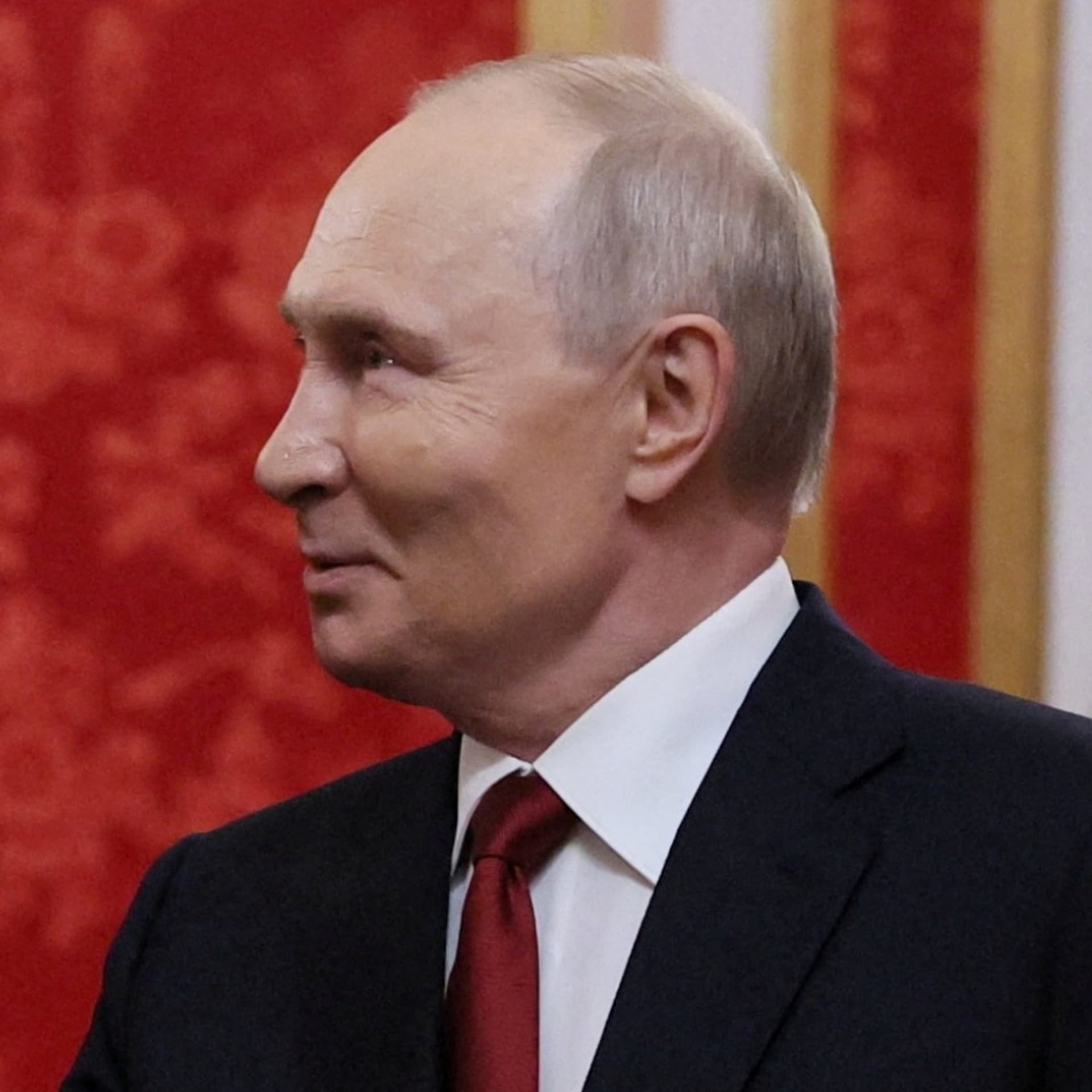
This episode of the BBC Global News Podcast covers multiple stories. Main topic: US peace efforts in the Ukraine war, with Trump envoys Steve Witkoff and Jared Kushner holding “substantive” talks with Vladimir Putin in Moscow, then heading to Kyiv.
Key claims
Russia and Ukraine agreed not to attack each other’s capitals during talks; hopes for progress are low. Ukrainian MP Oleksandr Mareshko (Zelensky’s party; chair of the Foreign Policy Committee) argues prior Russian “28-point plans” were a surrender plan, rejects any deal involving ceding territory, and proposes a non-conditional ceasefire along the current front line with guarantees Russia won’t attack again.
Notable examples
Kiev damage (“every third building” hit); Putin praised envoys; Mareshko cites a Russian attack killing a family including a child. Other segments: Sudan chemical weapons dossier (NYT; Ronan Bergman; alleged chlorine/toxic bombs); wildlife entering homes in Australia (Helena Burke; University of Melbourne researchers Helena Burke and Sarah Bukessi); Met Opera snake audition (Steve Jackson); US ambassador Mike Huckabee visiting Palestinian Americans in the West Bank (Lucy Williamson); White House MAGA video games (Keza MacDonald); Oman bagpipes with African/Zanzibar roots (Martin Venard); Hungary gravedigger competition (Wendy Urquhart).
Guests
Oleksandr Mareshko; Ronan Bergman; Helena Burke; Sarah Bukessi; Steve Jackson; Lucy Williamson; Keza MacDonald; Martin Venard; Wendy Urquhart.
Written by AI. May contain mistakes. Listen to the episode to check what was said.
Chapters
Tap a time to open that second in VODiplomatic Efforts to End the Ukraine War
0:53 to 2:06
Overview of recent US diplomatic engagement with Russia regarding Ukraine.
“This is the Global News Podcast from the BBC World Service.”
Insights from Russia's Perspective
2:06 to 3:41
Steve Rosenberg discusses the Kremlin's attitude towards peace talks and challenges ahead.
“If you're Donald Trump's peace envoys, there's no slipping quietly into the Kremlin.”
Ukrainian Response to Peace Proposals
3:41 to 6:38
Ukrainian MP Oleksandr Mareshko shares his views on US envoys and peace proposals.
“But what message are the two envoys taking from Russia to Ukraine?”
Chemical Weapons Usage in Sudan
6:38 to 9:42
Report on the use of chemical weapons by the Sudanese military amid civil war.
“That was the Ukrainian MP Oleksandr Mareshko.”
Wildlife Encounters in Australian Homes
9:42 to 11:16
Discussion on research about wildlife entering homes in Australia due to habitat destruction.
“noting that Sudan has signed up to the chemical weapons convention.”
Architectural Solutions for Wildlife
11:16 to 13:01
Ideas for designing urban spaces to accommodate wildlife and promote biodiversity.
“Because it's actually driven by habitat destruction for these poor animals.”
The Met Opera's Unique Audition
13:01 to 14:01
The Met Opera holds auditions for a snake in a new adaptation of a classic opera.
“This kind of stuff may seem trivial, but cities are increasingly having a role to play in helping to tackle the biodiversity extinction crisis.”
The Snake in Cosi Fan Tutte
14:01 to 14:38
Learn about the unique adaptation of Mozart's opera featuring a live snake.
“When Mozart's Cosi Fantute was first performed in 1790, there was no role in it for a snake.”
Ambassador's Visit to the West Bank
16:46 to 19:31
Examine the US ambassador's recent visit and the situation of Palestinian Americans.
“Americans in the occupied West Bank after a rise in attacks by Israeli settlers.”
Ongoing Settler Violence
19:31 to 20:44
Discuss the ongoing violence and the implications of Israeli policies.
“You're saying Israel is the small child of America?”
Show all 14 chapters
White House Arcade Games
20:44 to 22:25
Explore the controversial arcade games released by the White House.
“With early 1990s-style pixel art, the White House has released a series of games inspired by nostalgic classics.”
Oman's Bagpipe Tradition
22:25 to 24:41
Learn about the unique bagpipe music tradition in Oman and its history.
“And of course, if anyone, you know, diehard Trumpian video gamers are going to spend five minutes with them, laugh, maybe take a screenshot and move on.”
World Gravedigger Competition
24:41 to 28:03
Discover the unique World Gravedigger Competition and its significance.
“Lots of people will be fascinated to hear the bagpipes.”
Grave Digging Competition Insights
28:03 to 29:16
Learn about the rules and challenges of a unique grave digging competition.
“And just in case you're wondering, winning is not just about digging a hole in record time, there are rules involved.”
Transcript
Automatic transcript. May contain errors.0:00This BBC podcast is supported by ads outside the UK.
0:33If you are currently overpaying on software to run your business, remember this number, 10 ,000. That's the number of new businesses that join Odoo per month. Join Odoo today at odoo.com. That's O-D-O-O dot com. This is the Global News Podcast from the BBC World Service. I'm Keith Adams and in the early hours of Sunday 6th September these are our main stories. President Trump's envoys have held what were called substantive talks with Vladimir Putin about ending the war in Ukraine. A new dossier claims the Sudanese military used chemical weapons in the war against the paramilitary rapid support forces.
1:21Also in this podcast...
1:30Bagpipes with African drums. We'll tell you where you can hear this fusion of sound.
1:38Another attempt is underway by President Trump to end the Ukraine war. It's a weekend of diplomacy. US envoys met President Putin in Moscow on Saturday before travelling on to Kiev. A White House spokesperson said Steve Witkoff and Jared Kushner discussed what they called substantive plans for ending the conflict. Both sides have agreed not to attack each other's capitals while the talks are taking place, but hopes for progress towards peace are not high. Here's our Russia editor, Steve Rosenberg.
2:11If you're Donald Trump's peace envoys, there's no slipping quietly into the Kremlin.
2:19Vladimir Putin greeted the visitors. Steve Whitcoff and President Trump's son-in-law, Jared Kushner. The situation is difficult, he conceded, but there was gushing praise for his guests. You have been enjoying our pool trust and it's been quite convenient for us to work with you. When we retire, we'll have all these incredible stories and incredible memories and yours will be right at the top of it all. But up to this point, the Kremlin has shown little sign of wanting to end its war on Ukraine. A peace deal so far has proved elusive. Many Russians are hoping for a diplomatic breakthrough. Grigory Yivlinsky is founder of a party that is publicly calling for peace, for an immediate ceasefire in Ukraine.
3:16The party has been barred from running in Russia's upcoming parliamentary election. It's necessary to find the common language. If to continue in the same way, we would come to something like nuclear war. And that will be the end of story. But finding a common language with a Kremlin that is still pushing for victory, that's a challenge. Steve Rosenberg in Moscow. But what message are the two envoys taking from Russia to Ukraine? And could a compromise really be on the cards? My colleague Paul Henley spoke to Oleksandr Mareshko, a Ukrainian MP from President Zelensky's party and chair of the Parliament's Foreign Policy Committee.
3:59The previous experience with the Russian so-called 28-point plans, it was basically a Russian plan. It was a plan of surrender for Ukraine. And I hope that Mr Trump will not repeat the same mistake again. But Putin has not renounced his previous absurd demands with regard to Ukraine. So I don't think it will be serious plan, which will be acceptable for Ukraine. So what are you hoping for from this US visit to Kiev tomorrow? And what are you expecting, maybe? The envoys of President Trump will talk to people will talk to President Zelensky will see the results of Russian attacks against Kiev because every third building in Kiev was damaged one way or another.
4:46And maybe they will start to understand better what's going on. And they will come from the spell of Russian propaganda. Well, do you think they're already biased against Ukraine? And it sounds like it. Judging by their statements, yes, they continue to be biased. And today's compliments addressed to Putin by Mr. Witkow, it has already caused a pro in Ukraine because today Russians have killed a family, including one child. So Russia continues to kill us. And Mr. Witkoff is full of these compliments to Russian war criminal. For us, it's incomprehensible. Is Ukraine in any mood to make any compromise in the name of peace right now?
5:31Yes, we have already agreed to such a compromise, which is not in our interest, not in our best interest. What have you agreed to? Non-conditional ceasefire along the current front line. But no giving up a territory? Absolutely. It's impossible from an international legal perspective. It's not in the interest of the global security. But we also need guarantees that Putin will not attack us again. Right. Can you imagine any peace agreement signed by all sides that would not involve some handing over of territory to Russia? Well, it's impossible. It's impossible from the point of view of our constitution.
6:12Our people would never agree to cede an inch of our territory to Russia. And, you know, to reward the perpetrator, the aggressor, you know, I think it's not good for any country, including the United States. It's exactly the same stand that you've always taken, in other words. Yes, absolutely. Yeah, but it's fair. It's fair. It's based on international law. It's based on political realities. That was the Ukrainian MP Oleksandr Mareshko. The civil war in Sudan between the army and the paramilitary rapid support forces has been devastating, with both sides accused of war crimes and civilians bearing the brunt of the brutality.
6:53Now, a dossier reported by the New York Times newspaper adds to evidence that the military developed and used chemical weapons. Our reporter Anna Aslam has the details. There have been persistent accusations of Sudan's army using chemical weapons to gain an edge in the civil war, which is now in its fourth year. But with impartial investigators unable to gain access, there's been no definitive proof. Now, though, a dossier containing documents, voice notes and texts has been shared with The New York Times by a Middle Eastern intelligence agency. It bolsters allegations that the Sudanese army developed toxic bombs in the second half of 2024.
7:31Images and videos show gas cylinders inside what appear to be partly constructed bombs, workers wearing gas masks and a test strike in the desert. Ronan Bergman from The Times looked through the material. The general who was appointed, according to the dossier of intelligence, to head the chemical warfare project in the Sudanese army, he suggested a dual head bomb that will contain explosive RDT and TNT, and chlorine and some ball bearing. And he says in his messages to Iran-Sudan officials that this will have the impact of terrorizing, of creating the intimidation that is embedded to the use of chemical agents, but at the same time will not leave the same kind of traces like the big cylinders.
8:20French journalists had earlier found evidence of the Sudanese army using chlorine in a strike on a key oil refinery north of the capital Khartoum in September 2024. This dossier suggests the bombs used were not gas cylinders as initially reported, but the smaller purpose-built munitions. It's understood a Sudanese general texted, they drank the gas after the attack, and the chemical weapon claim was corroborated by the RSF and news coverage at the time. Other reported strikes are harder to confirm. Ronen Bergman explains how the army gathered enough chlorine to make hundreds of bombs while the country struggled with cholera outbreaks.
8:58The massive cylinders of chlorine, at least some were taken from water stations. Some of them were supplied by international humanitarian organizations. So it's not just that they produce weapons based on chlorine, but the chlorine was supposed to be used for the purification of water for the civilians. Sources say the United States was shown the dossier before it imposed multiple rounds of sanctions. The alleged chemical programme appears to have closed after Washington sanctions in May 2025. Days later, there was an apparent effort to cover up the project, with the army chief instructing to remove all traces.
9:37A Sudanese military spokesman has rejected the dossier's findings as baseless and threatened to sue the New York Times, noting that Sudan has signed up to the chemical weapons convention. Anna Aslam, now, have you ever had an unwelcome creature enter your house? For most people, rats, mice, bed bugs, that's about as bad as it gets. But in Australia, some residents are dealing with far more exotic intruders. Researchers at the University of Melbourne have analysed thousands of wildlife break-ins at homes and other buildings. They say habitat destruction is making these encounters increasingly common, and not just in Australia, but around the world.
10:16I spoke to Helena Burke about some of the animal squatters recorded in the study. There's a big variety. It ranges from things as cute as little sugar gliders, which kind of look a bit like a squirrel, to tiger snakes, which are one of the most venomous snakes in the world. By far the most common home invader, though, is possums, according to the study. They're cat-sized marsupials that kind of look like a cuter version of a rat. I spoke to one of the researchers involved in the study, and she told me there's some pretty funny stories of people finding these animals in their homes. One woman had an echidna get inside her pantry and start pulling things off the shelves.
10:53Another person came home to a koala sitting on her bed. And another person heard strange chirping sounds coming from the extractor fan in their shower, only to discover that a family of kookaburras had taken up residence inside the fan. Wow. I mean, personally, I can't think of anything cuter than coming home and finding a koala in my bed. I mean, my wife might have something to say about it, but I think it sounds great. But this is serious, isn't it? Because it's actually driven by habitat destruction for these poor animals. Yeah. So this research focuses on 2 ,400 instances of wildlife entering buildings in the Australian state of Victoria.
11:29And a lot of these are occurring in cities, particularly the capital of Victoria, Melbourne. And that's because of urban sprawl. More and more trees are being cut down. And these animals are having to find new places to nest and shelter because of it. And sometimes that's inside people's homes. While habitat destruction is a big problem, one of the co-authors of the study, Sarah Bukessi, actually told me that wildlife being around people's houses isn't necessarily a bad thing. There's been some really interesting recent research that shows if you can hear and see birds from your house, even if you have possums nesting in your roof, which probably irritates some Australians, but actually the evidence is it's good for your health.
12:10It's really good for your mental wellbeing in particular. The health and wellbeing benefits of connecting with and having nature close to us are really quite extraordinary. But maybe not so close there in your bed. I mean, is there anything the researchers are telling us, Helena, that we can do to keep the wildlife in the wild? So aside from preventing further habitat destruction, we can also help animals by creating spaces around our homes that accommodate them. And that's something that Professor Bakessi is really encouraging in future architecture. Imagine a moment where we could actually start really intentionally designing for co-inhabitation in our homes.
12:47So that might mean having a sleeping habitat for possums or accessible places for wombats to burrow under houses, intentional spaces for bats to nest within our wall cavities. This kind of stuff may seem trivial, but cities are increasingly having a role to play in helping to tackle the biodiversity extinction crisis. So all of these things can add up to really benefit biodiversity over the long term. Here in the UK, swift bricks are already very common, which are these hollow bricks in a wall that contain a hole that allow birds to nest inside them. So it's really stuff like that that conservationists are wanting to see more of.
13:30Helena Burke on those intrusive critters. And from animals in people's houses to animals on the stage. The Metropolitan Opera in New York has held an audition for a snake to take part in a forthcoming adaptation of the classic Mozart opera Cozy Fantutti. The performer who gets to work with the creature examined each candidate to check its temperament and whether it could handle the bright lights of the theatre. Steve Jackson has more.
14:01When Mozart's Cosi Fantute was first performed in 1790, there was no role in it for a snake. But the Metropolitan Opera's adaptation is set at a 1950s Coney Island carnival, and a serpent is very much part of the act. This is thought to be the first time the Met has held live auditions on site for a snake. The winner was a peach-coloured boa constrictor named Princess, a larger snake who was a more charismatic performer. But a second, smaller snake is being taken on as an understudy in case the star of the show gets rattled before a performance.
14:38Steve Jackson, a master of puns, reporting. Still to come. It's tough. The ground is very hard and it's tiring. It's very different here at the race because here speed is the main thing. But what are they racing to achieve? We'll fill you in before the end of the podcast.
15:25choice matters no matter your goals investing style life stage or experience schwab has everything you need all in one place so you can invest your way visit schwab.com to learn more john deere is putting in work and putting up highlights oh man look at those passes tillage planting harvesting three years in and these pre-owned machines are still at the top of their game. We're talking reliability, performance, and long-term potential. And get this, these veteran machines can pick up the latest precision tech with ease. You know it, and fans ready to add John Deere certified pre-owned equipment and more options to their lineup can shop at machinefinder.com.
16:08Booyah!
16:21how to change, as she shares true stories from Nobel laureates, authors, athletes and everyday people about why we make the choices we do and how to make better ones to help avoid costly mistakes. Listen to choiceology at schwab.com slash podcast or wherever you listen.
16:43This is the Global News Podcast. The US ambassador to Israel has visited Palestinian Americans in the occupied West Bank after a rise in attacks by Israeli settlers. Mike Huckabee again described settler attacks as acts of terror, but he has repeatedly defended Israeli settlements, which are illegal under international law. Our Middle East correspondent Lucy Williamson filed this report from the West Bank. How are you doing? Got enough cameras over there? America's ambassador said he came to Thomas Ayer to listen. The residents lined up to greet him at a house here today, awaiting for America to act.
17:24And in representing American people, if they have grievances, we want to hear them. Palestinian Americans in the occupied West Bank have lost land, homes and family members in settler attacks. More than 80 Palestinians have been killed in the occupied West Bank this year by Israeli soldiers or settlers, according to the UN. Mike Huckabee says the problem isn't Israel's fiercely pro-settlement policies, but a tiny minority of settlers who he's labeled terrorists. Hi, everyone. Speaking to journalists after his meetings today, Everybody set? He said there should be equal justice for violence, whether the perpetrator was Israeli or Palestinian.
18:03Crime is crime. Terror is terror. When people do it, they should have an expectation that they will have severe consequences for doing it. But what's America actually prepared to do? Your government lifted sanctions on violent settlers here. Why did the government, your government do that? And are you going to reimpose them, given what's happening? Let me tell you what an ambassador does and doesn't do. We carry out policy, but we don't make it. So I'm the pharmacist, not the chemist. Would you support reimposing sanctions? I don't make the medicine, I dispense it. That's a question you need to raise to Washington.
18:39It's conversations we certainly have. Even with the U.S. ambassador in Termas Iyer, the daily incursions by settlers continued. He doesn't care. Look at that eagerness. As residents stood with Huckabee on the roof of the house, pointing out illegal settler outposts, Jewish settlers in an ATV briefly entered Thomas Ayer, driving down a road meters from the ambassador, who began filming on his phone. There is no respect for nobody. They have no respect, one of his Palestinian hosts says. Yes, the ambassador replies. To our land, we step to our houses. One of the residents in the house with Huckabee today was Abu Awad, an American citizen whose nearby farmhouse has been blocked by settlers for months.
19:25But America is the only country that could really pressure Israel to do something. Yeah, but, you know, America, as I told you, you don't put pressure on your small child. You're saying Israel is the small child of America? Exactly. Even who supported Israel, who supplied Israel with the weapons, who destroyed the whole region. But how does that feel for you as an American? I feel bad. I would like America to be, you know, justice and freedom and equality. That's their message for the whole world. Do you think Huckabee will help you get your house back? I don't think so.
20:10Earlier this week, a Jewish settler was filmed on the roof of a house in Tumasaya, laying claim to it. All Israeli settlements in the West Bank are illegal under international law. Israel said this week it had arrested five people for violence in the West Bank, including for settler attacks. But despite Israel's powerful security services and the words of its superpower ally, Israelis are still carrying out attacks. The BBC's Middle East correspondent Lucy Williamson with that report. Now, it's an arcade promoting the MAGA agenda.
20:51With early 1990s-style pixel art, the White House has released a series of games inspired by nostalgic classics. One is a Tetris-style game called Build the Wall. Rio Run, inspired by Snake, sees players collecting immigrants as Border Patrol. Others are Trump Savings Tycoon, flappy bill and supply line. It's all drawn sharp criticism from human rights groups. Keza MacDonald is the games editor for the British Guardian newspaper. This is far from the first time that the Trump White House has used video game imagery in its messaging. Last year, the White House tweeted a picture of President Trump as master chief from Halo games.
21:31They've also used Call of Duty footage in posting about the war on Iran. Today, the Tetris company posted a message saying the Tetris company believes in acceptance and togetherness, which is obviously a reaction to one of these games, Build the Wall, being a riff on Tetris. But then also, if you look at the trailer for this little collection of White House arcade games, it riffs on the Sega branding. Sega, it goes MAGA in the same way that the Sega consoles used to. So I do think someone somewhere at some point is surely going to have an issue. And the alt-right, as it used to be known, and video game culture have always actually been intertwined.
22:06A lot of the modern kind of far-right figures have arisen from toxic gamer culture. These are younger men mostly and the people who are doing trump's messaging the people who are working in trump's comms video game imagery isn't foreign video game memes are kind of home ground and also obviously it speaks to people who grew up with video games which at this point is everyone under about 40 so it's a large group of people who will find this stuff instantly recognizable and i think with these games they're not intended to be great video games that are entertaining to play what they're intended to do is annoy people i truly believe they're out there to spark outrage and to poke the bear, as it were.
22:39And of course, if anyone, you know, diehard Trumpian video gamers are going to spend five minutes with them, laugh, maybe take a screenshot and move on. They're not, you know, serious pieces of work in any way. Keza MacDonald, which country do you think of when you hear the bagpipes? Probably not Amman on the southern flank of the Strait of Hormuz, but the Middle Eastern country has a rich tradition of bagpipe music, which it says predates any contact with Scottish pipers. Among the players in Oman are a group of people who can trace their origins to Zanzibar off the coast of East Africa. Now the American producer Ian Brennan has recorded an album of their music called Songs of Returning and Leaving and has been telling the BBC's Martin Venard all about it.
23:32Zanzibar was united with Oman in the Omani Empire from 1696 to 1856. And there was an active slave trade, oceanic slave trade, and the main port was in Oman. And the musicians continue to sing to this day in Swahili dialect, a feature music with African rhythms and bagpipes. And they are the descendants, most of them, of the people that work the trade or people that were brought over in the trade. And they sing the songs of those who were brought forcibly by ship to Oman. Many songs about longing for home, longing for East Africa.
24:14And where did you go to record these songs? We went to Oman last summer, meaning 2025. Most of these singers continue to work as fishermen, so we recorded on the beach. It couldn't have been a more peaceful and idyllic environment. And Oman had invested heavily in tourism, and it makes it all the more tragic to see what's happened since, with the war in the region. It's completely shut that down and transformed the area.
Read the full transcript
24:47Lots of people will be fascinated to hear the bagpipes. Where do the bagpipes come from in this part of the world? Well, the assumption is that the bagpipes were spread globally by the British military. But what's interesting about the region is that archaeological records show that arguably the bagpipe originated in the Arabian Peninsula. And this is a very defining instrument there. So they would have learnt the bagpipes when their ancestors arrived in Oman. Right. It's an incorporation of the two cultures that were in constant communication with each other through these voyages. The songs themselves repeatedly reference East Africa with titles like, You Shouldn't Treat the Man from Zanzibar That Way, He is Suffering, or The Boy Has Just Arrived from East Africa and Doesn't Know How to Speak Arabic.
25:36Almost all of them talk about the journeys, the welcomes that they've received, but also the experience of the people once they've arrived in Oman.
25:52And can this music and this culture survive into the future? I believe that it will survive. It's something that people take pride in because it's seen as something very special. You know, in the same way bagpipes are to Scotland, they are very valued in Oman.
26:14What a great sound. That report by Martin Venard. Now, what's your dream job? Being a gravedigger might not be at the top of everyone's list, and it's not easy to find people to do what some would consider a bit of a grisly job. That's exactly why the authorities in Hungary launched the World Gravedigger Competition in 2016. The event was so popular that it now takes place every year. And this weekend, grave diggers from all over the globe descended on a town in northern Hungary for the big dig. Wendy Urquhart reports.
26:54With shovels in hand, the 19 teams of two got down to business in the hope of winning the 2026 World Grave Digging Competition. and it's no mean feat. The earth is so hard in some places that they have to use pickaxes. Joseph Varga from the Hungarian Cemeteries Association says it's fun for the competitors and the crowds that come to watch and it also shows the public just how demanding the job actually is. When relatives arrive at a funeral the grave is already dug, they don't see what actually precedes it. When videos of the competition became more widespread year by year, they saw how hard and stressful it was physically and psychologically, and now they have more respect for the gravediggers.
27:42This contest is also a PR exercise for the trade. There's not enough room for mechanical diggers in some graveyards, so digging by hand is the only other option, and the hope is that this event will shake off some of the taboos surrounding death and persuade young people to join the industry. To make the competition fair, each team pulls a plot number from a pot before the event begins. And just in case you're wondering, winning is not just about digging a hole in record time, there are rules involved. Each grave has to be exactly two metres long, 80 centimetres wide, and 1.6 metres deep, and the earth has to be neatly piled at the side too.
28:29Laszlo Kiss and Robert Nagy dug their grave in one hour and 21 minutes to win the competition this year, and both said it was really hard work. You can't prepare for this separately because we work every day. There are weeks when there is more digging or less digging, but we have been doing this for years. It's in our make-up.
28:56It's tough. The ground is very hard and it's tiring. It's very different here at the race because here speed is the main thing, whereas when you dig a grave for a funeral, you have to keep the exact dimensions and make sure the grave is beautifully carved. The authorities don't exactly dig deep when it comes to winnings. After all their hard work, the two men who came out on top have to share prize money of just$640. But then they do have bragging rights. You know, I really dug that report by Wendy Urquhart. And that's all from us for now. If you want to get in touch, you can email us at globalpodcast at bbc.co.uk.
29:40You can also find us on X at BBC World Service. Use the hashtag globalnewspod. and don't forget our sister podcast The Global Story which goes in-depth and beyond the headlines on one big story This edition of The Global News Podcast was mixed by Mark Pickett and produced by Paul Day and Wendy Urquhart The editor is Karen Martin I'm Keith Adams Until next time, goodbye
From the publisher
The US is bringing a "proposal to end the war" to Russia and Ukraine - but hopes for progress towards peace are not high. President Trump's top envoys are visiting Kyiv after a "constructive" meeting with Vladimir Putin in Moscow. Also: evidence grows of Sudanese army using chemical weapons in civil war against RSF; the US ambassador to Israel visits Palestinian-Americans in the occupied West Bank; the White House releases retro arcade games with MAGA agenda; how habitat loss forces animals into our homes instead; Oman's bagpipers showcase their musical heritage; and gravediggers dig deep for world championship.
The Global News Podcast brings you the breaking news you need to hear, as it happens. Listen for the latest headlines and current affairs from around the world. Politics, economics, climate, business, technology, health – we cover it all with expert analysis and insight. Get the news that matters, delivered twice a day on weekdays and daily at weekends, plus special bonus episodes reacting to urgent breaking stories. Follow or subscribe now and never miss a moment. Get in touch: globalpodcast@bbc.co.uk Photo: Russian President Vladimir Putin meets US special envoy Steve Witkoff and Jared Kushner, Donald Trump's son-in-law, at the Kremlin in Moscow. Credit: Mikhail Metzel/Reuters



