
In short
The episode is a BBC World Service Global News Podcast covering: (1) U.S. charges former Cuban president Raúl Castro with murder for a 1996 incident in which Cuban fighter jets shot down two civilian aircraft operated by Cuban exiles; the acting attorney general Todd Blanche announced the indictment in Miami, and the episode frames it as part of a broader “maximum pressure” campaign amid fuel blockades and power outages. Key claims include that the indictment is politically symbolic for Cuban Americans in South Florida and that Cuba’s proximity to the U.S. (90 miles from Key West) makes it strategically important. (2) SpaceX’s IPO: tech correspondent Lily Jamali explains SpaceX’s value as a rocket maker, Starlink provider, and owner of XAI/X and cites filings showing £13.8bn revenue, net loss in the latest quarter, and $100bn+ assets. (3) Ukraine drone defense: defense correspondent Jonathan Beale reports Ukraine aims to shoot down 95% of Russia’s long-range drones, using private contractors and civilians with SkyMap-linked systems; it cites interceptors destroying 30,000 drones in March and notes FPV drones still cause casualties. (4) Caribbean legal battle: reporter Chelsea Coates describes Barbuda pink-sand beaches threatened by wealthy developers; Miranda, a former bar owner, says her land was bulldozed after Hurricane Irma, while developers deny occupation; the dispute hinges on Barbuda’s communal land-lease system. (5) Everest queue: global environment correspondent Naveen Singh Khadka explains a bottleneck near Camp 3/4 caused by delayed rope/ladder fixing after a serac collapse, with Nepal issuing a record 500 permits. (6) International Booker Prize: winners Yang Shuangzi (Taiwan Travelogue) and translator Lin King discuss a pseudo-translation framework about 1938 forbidden love, colonialism, and Taiwanese history; they emphasize translation complexity and the role of Taiwanese cuisine.
Written by AI. May contain mistakes. Listen to the episode to check what was said.
Chapters
Tap a time to open that second in VOU.S. Charges Raul Castro with Murder
1:10 to 2:23
Discussion on the charges against Raul Castro regarding a 1996 incident.
“I'm Celia Hatton, and in the early hours of Thursday, the 21st of May, these are our main stories.”
Political Reactions and Implications
2:23 to 3:56
Analysis of political reactions to the indictment and its implications.
“Well, it's now been revealed that the island's former president, Raul Castro, has been charged with murder.”
U.S. Strategy Towards Cuba
3:56 to 6:20
Examination of the U.S. strategy and foreign policy concerning Cuba.
“Now, whether he actually faces these charges is a different question entirely.”
Strategic Importance of Cuba
6:20 to 7:37
Discussion on the strategic significance of Cuba for the U.S.
“And I think this move will be very popular among them, which benefits the White House and Republican candidates more broadly.”
SpaceX's Trillion Dollar Valuation
7:37 to 11:10
Insights into SpaceX's financials and its impending IPO.
“Bernda Boosman speaking to us from Washington.”
Ukraine's Air Defense Innovations
11:10 to 14:01
Overview of Ukraine's advancements in air defense against Russian drones.
“In the last few months, Moscow's been stepping up its long-range strikes, but so is Ukraine, launching hundreds of drones a day at Russian oil refineries and cities.”
Ukraine's Air Defense Challenges
14:01 to 15:31
Learn how Ukraine's innovative air defense is combating Russian drone attacks.
“And this is the weapon, more than any other, that's transformed its ability to take down Russian drones.”
Impact of Russian Missile Strikes
15:32 to 17:03
Explore the human toll of missile strikes in Kyiv and their implications.
“12-year-old Lubava and her 17-year-old sister Vera were among 24 killed when a missile hit their apartment block.”
Repatriation amid Protests in South Africa
17:14 to 22:36
Understand the situation of Ghanaians in South Africa amidst immigration protests.
“According to a social media post by the Ghanaian Foreign Ministry, a free flight has been arranged.”
Barbuda's Beachfront Land Struggles
22:37 to 28:13
Discover the legal battles over beachfront land in Barbuda and local community impacts.
“And I've reached out to government officials for a response on this.”
Show all 12 chapters
Exploring Linguistic Complexities in Historical Context
28:13 to 29:51
Learn about the challenges of translating a story set in historical colonial Japan and Taiwan, focusing on language and cultural nuances.
“A lot of the terms that they were using were from a very imperial perspective.”
The Significance of Taiwanese Cuisine
29:54 to 30:37
Discover the author's perspective on Taiwanese cuisine's identity and its distinction from Chinese and Japanese cuisines within the context of their book.
“I want to comment that when I was a child, what I heard most often from people is commenting about how Taiwanese cuisine is a part of Chinese cuisine.”
Transcript
Automatic transcript. May contain errors.0:00This BBC podcast is supported by ads outside the UK.
0:30Now at Menards.
1:05This is the Global News Podcast from the BBC World Service. I'm Celia Hatton, and in the early hours of Thursday, the 21st of May, these are our main stories. The U.S. charges Cuba's former president, Raul Castro, with murder over the downing of two planes in 1996. Elon Musk's rocket and satellite company is set to make the first ever trillion dollar debut on a US stock market. Our tech correspondent in San Francisco tells us why SpaceX is so valuable. Also in this podcast, we'll hear from this year's winners of the International Booker Prize. And we'll take you to the Caribbean. You come to Barbuda, you get poor beaches to yourself.
1:48And not just beaches, pink sand beaches. Pink sand. A legal battle is being fought over those beaches. We'll tell you the story.
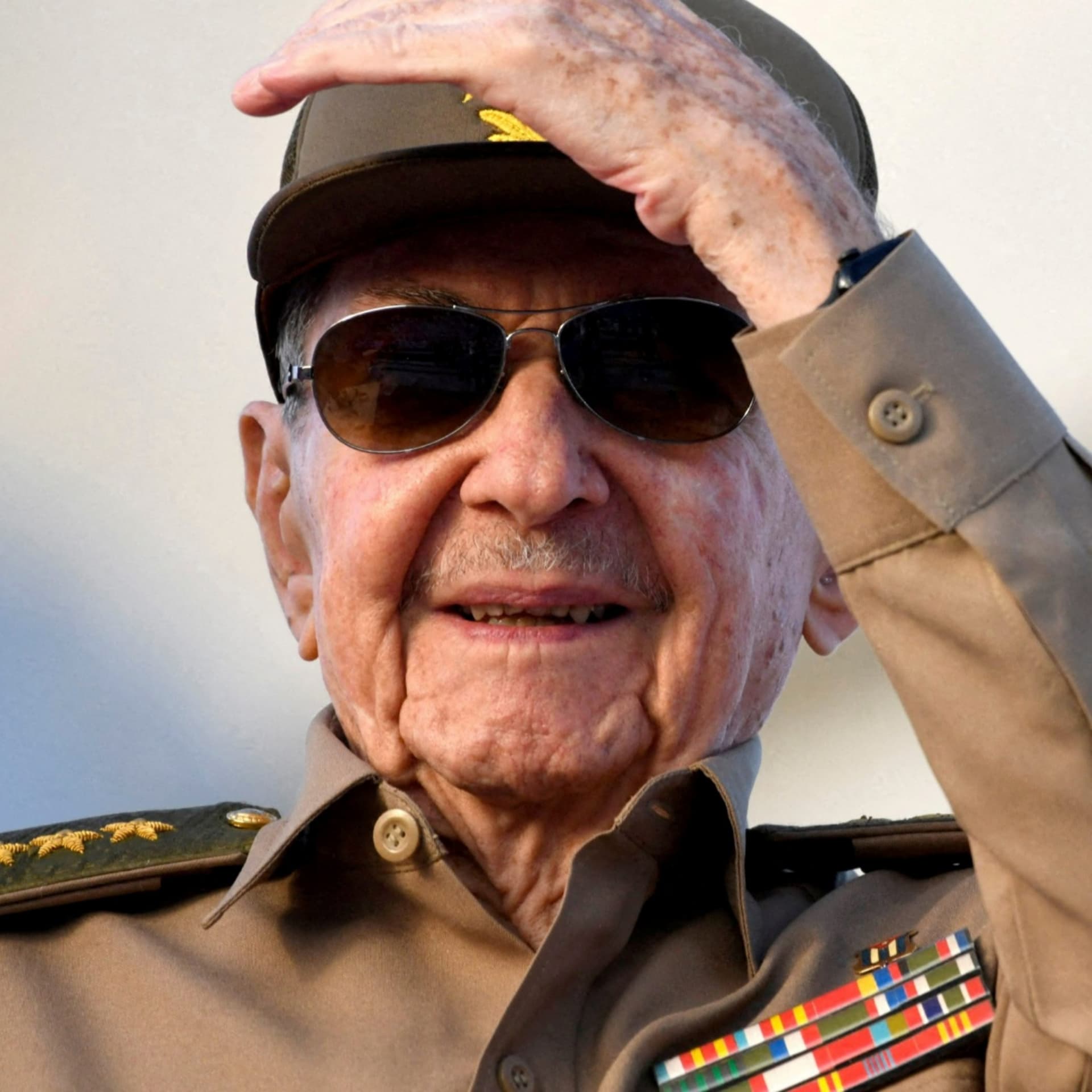
2:00We begin with Cuba. For months, the United States has been intensifying its pressure on the island, imposing a fuel blockade that's triggered sustained power outages. Cuba's economy was struggling before the embargo, and now it's close to collapse. In our last edition, we mentioned growing rumors that the Trump administration was getting ready to go a step further. Well, it's now been revealed that the island's former president, Raul Castro, has been charged with murder. The charges stem from a 1996 incident in which Cuban fighter jets shot down two civilian aircraft operated by a volunteer group of Cuban exiles.
2:39The acting attorney general, Todd Blanche, made the announcement in Miami at a ceremony to honor those killed. This isn't a show indictment. This is an indictment because we expect that there was a warrant issued for his arrest. So we expect that he will show up here by his own will or by another way. President Trump praised the indictment, which came after he and members of his administration have threatened to invade or take military action against the island. Just as Mr. Trump was boarding an airplane, reporters asked if Americans might soon expect further U.S. action against Cuba. There won't be escalation.
3:19I don't think there needs to be. Look, the place is falling apart. It's a mess. And they've sort of lost control. They've really lost control of Cuba. Cuba's leadership has condemned the U.S. indictment as a political maneuver, devoid of any legal foundation. Our North America correspondent, Bernd DeBuzman, spoke to us from Washington. The indictment itself is symbolically extremely important here in the United States. There are many Cuban exiles and Cuban Americans, particularly in South Florida, that feel extremely strongly about the Castro family, both Raul and his late brother Fidel. And for them, it's very important that there at least be this suggestion that he could be brought to justice.
4:02Now, whether he actually faces these charges is a different question entirely. Of course, the U.S. could go in and seize him. And just this afternoon, Senator Rick Scott made the suggestion that they do so, as they did with Nicolás Maduro in Venezuela in January. But of course, that has humanitarian implications, launching a military operation on an island that's already suffering from massive shortages. And of course, Raul Castro is turning 95 years old on June 3rd. So any operation to seize him, of course, has to take into account that he's an elderly man, which makes it much more complicated than it was in the case of Maduro.
4:40And what about the wider U.S. strategy towards Cuba? The U.S. president says there won't be an escalation. He did say there won't be an escalation. But then in a subsequent statement from the White House, the president vowed that the U.S. wouldn't tolerate what the White House described as a rogue state just 90 miles from American shores. shores. There's very much been essentially a maximum pressure campaign on the island, which has seen, for example, the U.S. threatened tariffs on countries that trade fuel to Cuba. That's led to the massive energy and fuel shortages that we've seen, which have been the most significant in decades.
5:20Why is this maximum pressure campaign happening now? Why place so much pressure on Cuba? Well, for one, President Trump, with the exception of Iran, he's very much refocused U.S. foreign policy on Latin America. We saw earlier in this administration the beginning of strikes on drug boats coming through the Caribbean, for example. We've seen military strikes in Ecuador. We've seen indictments against current and former officials in Mexico. And I think also it needs to be said, this is something that could benefit President Trump and the Republican Party more broadly politically here in the U.S.
5:55As I mentioned, many, many Cuban Americans feel very strongly about this. And that's generally a block of people that has been in favor of President Trump. But over the last year and a half, we saw those numbers start to slip, the rather harsh immigration policies, which didn't spare newly arrived Cubans from detention centers, for example, or from having their political asylum blocked. That was raising quite a lot of concern among Cuban Americans in Florida and in other places. And I think this move will be very popular among them, which benefits the White House and Republican candidates more broadly.
6:32What strategic importance does Cuba have for the United States? For one, I think its main strategic importance to the United States is that it's very close to its shores. The distance between Cuba and Key West, the southernmost point of the United States, is just 90 miles. And that's something that has raised alarm for decades since the communist revolution took Cuba in 1959. Many people will remember the Cuban Missile Crisis of 1962, for example, in which Russian missiles were based in Cuba, almost prompting what very well could have escalated into a nuclear war. And we're seeing kind of a continuation of that.
7:10Just this week, Defense Secretary Pete Hexeth raised concern that Russia and China could have intelligence gathering functions in Cuba oriented to the United States. And that's not something that this White House is willing to allow. They very much see Cuba as kind of the heart of a problem in Latin America. And I think that's, in addition to its proximity, that's the main strategic interest the United States has on the island. Bernda Boosman speaking to us from Washington. Elon Musk's rocket and satellite company SpaceX is poised to become the first trillion dollar debutant on an American stock market.
7:48I spoke with Lily Jamali, our tech correspondent in San Francisco, and asked her how SpaceX had become so valuable. It is a lot of money, isn't it? And this company is many things all in one. It is a rocket maker. It has, in that regard, become almost a replacement for NASA, the U.S. space program. It's a complement, but it has replaced some of the key functions that NASA once carried out. It's also the provider of Starlink, the satellite internet service, which a lot of people around the world use. And it has under its auspices XAI, which is Elon Musk's AI startup, which makes Grok, the chatbot that's been embroiled in controversy a couple times over the last year or so, as well as X.
8:38So it's prolific. What we've learned more about SpaceX from its initial filings to the stock market, what did that uncover? Yeah, finally getting a very intimate look at the financials of one of the most valuable parts of Elon Musk's business empire. So we learn, for example, what their revenues look like, what do sales look like, and I'll just give you two numbers here. They have made a lot of money, 13.8 billion pounds in revenue. I believe that's for last year. But at the same time, they suffered a net loss in the most recent quarter. So they are making a lot of money, but they are also spending a lot, especially right now, presumably as they gear up for this IPO.
9:27So we got a little bit of that. We also understand that they have$100-plus billion in assets. They also carry some debt. So a mixed bag, but overall a company that I think is in fairly sound financial health. And I think that confirms what many observers have seen, given the wide array of businesses that SpaceX operates in. It's a huge company, isn't it? But it's not the only company that Elon Musk has. So where does SpaceX fit within Elon Musk's business empire? So the other major company that he is the head of is Tesla, which is also publicly traded right now. And he owns majority of SpaceX.
10:09So this IPO, SpaceX, remember, values itself as well over a trillion dollars, could mean Musk reaps a payday of north of, you know,$600 billion. And that could push him into the category of the world's first trillionaire. He has Tesla. He has a couple of other business interests like Neuralink, which is in sort of the biotech space, and others. The boring company is yet another that just has not gained a lot of traction. yet, maybe never will. But, you know, SpaceX has been, even with all of the political controversy that Musk has found himself in, aligning himself with U.S. President Donald Trump, shifting to the political right, SpaceX has been one of these rare islands that are devoid of controversy.
10:58That is, of course, until they pulled in Twitter and XAI. Now there's a little bit of legal exposure the company is exposed to. Nidalee Jamali in San Francisco. Ukraine says it aims to shoot down 95 % of Russia's long-range drones by the end of this year. In the last few months, Moscow's been stepping up its long-range strikes, but so is Ukraine, launching hundreds of drones a day at Russian oil refineries and cities. The two countries' air defenses are being tested like never before. But as our defence correspondent Jonathan Beale reports, Ukraine is making significant advances to defend its skies.
11:41Russia's still trying to pummel Ukraine into submission. This month launching one of its largest attacks. More than 1 ,500 drones and 56 missiles within 48 hours. But most were shot down. Yuri Miranenko, Inspector General at Ukraine's Ministry of Defence says they're getting better at defending their skies With ballistic missiles it's not so easy but for Shahid we're working about it and every month we raise our results and I think now we are unfortunately the best in the world Ukraine's using all means possible to improve its air defences, including enlisting the help of private companies and civilians to target Russian drones.
12:40We're in a basement where there are just rows of desks, computer screens that show maps and also cameras. This is where this private company is tracking Russian drones and shooting them down. A lot of the people operating the systems, just simple gaming controls, have been trained for three weeks. They could be mums, they could be veterans, they could be taxi drivers. And this is now their job, working for a private company, hunting down Russian drones. They fire remotely controlled machine guns. And it's all plugged in to Ukraine's military system known as SkyMap, which fuses information from radar and thousands of sensors.
13:22On the map we can see a drone approaching one of the mobile automatic guns they've got trained on the horizon, waiting to see if it comes within range. It's not complicated, it's very simple. It's controlled just like a computer game, like you'd play on a phone, an Xbox or PlayStation. Anyone can control it. Ruslan's the head of Karminskai. We are fully integrated into the military system. This isn't the Wild West. We follow the instructions and the commands of the military.
14:00Embracing innovation and technology is giving Ukraine an edge. And this is the weapon, more than any other, that's transformed its ability to take down Russian drones. In March alone, these kinds of interceptors destroyed more than 30 ,000 Russian drones. This is the P-1 Sun interceptor drone, shaped like a bullet, about half a metre tall. It can travel at more than 300 kilometres an hour. Welkos is the commander of this air defence unit. We're showing the world we can fight a bigger enemy while inflicting significant losses. and at the same time we're defending ourselves effectively.
14:47But there are gaps in Ukraine's air defences. Near the city of Kherson, small FPV drones, still the cause of most casualties, continue to strike fear on the front line. How far are the Russians? How far away? 6-7 kilometres. 10 kilometres. 6 kilometres. 6 kilometres.
15:13The simple rifle, this Ukraine Marine unit's last line of defence.
15:25And Russian drones and missiles are still getting through. This week in Kyiv, the funeral of two young girls. 12-year-old Lubava and her 17-year-old sister Vera were among 24 killed when a missile hit their apartment block. They'd already lost their father fighting on the front line. Their grieving mother, now the family's sole survivor. These mass attacks are designed to overwhelm Ukraine's air defences. But Ukraine's own long-range strikes are now posing the same problem for Russia. Jonathan Beal. Still to come in this podcast. Already you move very slowly on that height, on that altitude. But because of this queue, they're barely moving.
16:19That is what is causing the concern. The people stuck in a slow-moving queue halfway up Mount Everest.
16:32I'm Kai Wright. I'm Carter Sherman. Welcome to Stateside with Kai and Carter. We're a new show from The Guardian. We're talking to big thinkers and the best journalists just trying to understand the world through smart conversation and honest reporting. We don't have billionaires telling us what to say. Stateside with Kai and Carter will come out three times a week, Monday, Wednesday and Friday starting May 13th. Subscribe on YouTube or wherever you get your podcasts.
17:04Ghana is due to repatriate some of its citizens from South Africa early on Thursday. That's following a wave of sometimes violent protests against illegal immigration across major cities in South Africa. According to a social media post by the Ghanaian Foreign Ministry, a free flight has been arranged. Our correspondent Mayani Jones is in Johannesburg. The Ghanaian government says 300 of its citizens in South Africa have expressed an interest in being repatriated home. It's not clear how many of them will be on the chartered flight leaving today. This follows protests against illegal immigration in various South African cities.
17:41The demonstrations have been organised by a group called March & March, which describes itself as a citizen-led movement for immigration reform. Protesters have blamed illegal immigrants for low wages and unemployment in South Africa. Nigeria has also said that more than 100 of its citizens have asked to be flown home. The South African government has condemned any violence and criminal acts directed at foreign nationals, saying that they don't represent the views of South Africans, no government policy. In a statement earlier this month, President Cyril Ramaphosa added that his country needed to deal with illegal immigration, saying that it added a strain on health care, housing and social services, particularly in disadvantaged communities.
18:19Mayani Jones in Johannesburg. Let's focus on the Caribbean now and one of its smaller tourist islands. You might have heard of Antigua, but let me tell you, Barbuda is where it's at. Barbuda? Really? We got Nelson's Dockyard, English Harbour, and we got the party. Exactly, man. You come to Barbuda, you get four beaches to yourself and not just beaches. Pink sand beaches. Pink sand? I'll take some. Well, as you've heard there, Barbuda is famous for its beautiful beaches. But campaigners say many of those pristine beachfronts are under threat from wealthy developers. They're accused of buying up land for private use and cutting off access for locals.
19:01So some of Barbuda's citizens are challenging the developments in court. Our reporter Chelsea Coates told me more about what's happening there. The beaches on Barbuda are really unique, especially on the south coast. Once a year, the sand actually turns pink, so this lovely kind of rosy hue. Barbuda has quite a small population. It's only around 2 ,000 people. So it's quite a tight-knit community. And a lot of the people I was speaking to there, one of them is called Miranda. She's a school teacher. She used to have a bar on this pink sand beach. And she was talking about how there's a really kind of slow pace of life.
19:39So people kind of go there to play dominoes throughout the week, and they go there to relax after church on Sundays. The beach is a community hub for everyone to kind of gather around. It sounds lovely, Chelsea, but what's changed on the beaches now? The main kind of thing that's changing in Barbuda, but also across the entire Caribbean, is that as these islands are becoming more popular tourist destinations, they're seeing more developers coming in and buying up beachfront property. Miranda herself has been affected by this. after Hurricane Irma back in 2017, the whole of Barbuda's population was evacuated from the island to its sister island, Antigua.
20:22And her bar and her house were destroyed. And she says that this kind of opened the floodgates for lots of offers for people to start offering her money to buy her land. She rejected all of these offers. She said that the money isn't what matters to her. She wants to preserve her bar for her children. But eventually she told me her bar was bulldozed and she's been locked in a legal fight to gain her land back ever since. I've spoken to the developers that she claims are occupying her land. That's the wording that the Global Legal Action Network uses. That's the network of lawyers that's supporting Miranda.
20:58They said that they are not and have never occupied the land and they strictly followed all agreements since entering a lease in Barbuda in 2017. But she argues, like many other campaigners across the Caribbean, that this is about more than just a source of income or having access to a beach because it's a place to relax or kind of catch a suntan. For her, it's about her heritage, her culture, and her way of life drastically changing and wanting to preserve that for future generations as well. Chelsea, what's the government doing during all of this wrangling over beachfront land? The laws around beachfront ownership are quite complicated there, aren't they?
21:39They are. So the laws around beachfront ownership, in fact, land ownership generally differ from island to island. But Barbuda is quite unique in that they have something called communal land ownership. Practically, what that means is that individual citizens have the right to occupy a plot of land if they apply for a lease to the local authority. But technically, they don't privately own that land. So instead, all land is owned communally, and citizens share the collective right to be consulted on what happens to any said plot of land. That is the kind of system of ownership that they've had in Barbuda ever since slavery ended in the late or mid 18th century.
22:19This has complicated a lot of the legal fights that are happening in Barbuda. Campaigners were telling me they feel that the government essentially isn't defending the land laws they have had for centuries on the island. And they feel like it's the start of a slippery slope. And they're calling on the government to protect their land. And I've reached out to government officials for a response on this. But so far, they haven't got back to me on that. Chelsea Coates. Next to another slightly colder destination, because right now hundreds of people are stuck waiting in line up on Mount Everest. This year saw what's thought to be the biggest number of permits ever issued to climb the world's highest peak.
23:02And as our global environment correspondent Naveen Singh Khadka explained to Paul Moss, many of the people trying to climb the mountain are now in trouble. This is about Camp 3, Camp 4, about 7 ,000 meters. That is where people have started queuing up to go to the summit. And this is where the serpentine line you'll see. The site is, even during nighttime, all the lamps on the head, the headlamps, you know, going right to the top of the mountain. So imagine that temperature, this place that I'm talking about, 8 ,000 plus, it's also known as the death zone. And already you move very slowly on that height and that altitude.
23:41But because of this queue, they're barely moving, barely. And at times you have to really, really just stand. That is what is causing the concern because in the past, similar traffic jams have led to deaths and injuries. So how did it end up with this happening? So many people on that crest of the mountain all at once. This time around, the government has given out a record number of climbing permits. That's around 500. This is climbing permits alone. That means for 500 people. Now, those 500 climbers will have support staff. So that's why they say multiply that number by two or three. That means either, you know, between 1 ,000 to 1 ,500 people will have to be on the summit.
24:23At least they will try to go there. And if you remember, in the past, the climbing, the summiting would have been evenly distributed. You have very limited days, but you would know it beforehand. So maybe, you know, by mid-May, this many people, this many groups, and then towards last of May, this many groups. Yeah, but this time what happened was there's this massive ice block called Serac hanging right above on the Khumbu Ice Falls, just above the base camp. And that delayed everything, rope fixing, ladder fixing. You know, everything was delayed. And as a result, all these mountaineers could not acclimatize and also could not distribute that, you know, who would go first and who would go later.
25:01And as a result, all of them now, you know, assembled there on the higher camps. And that is why that concern that, you know, what would happen again. You know, it's also about logistics. Who has enough oxygen bottles and who has not? It sounds like there may have been some kind of mistake in giving so many passes for people to climb Everest. What is the Nepalese government saying about this? The logic has always been that, you know, Nepal needs money. It's a relatively poor country. This is one of those very limited source of income. Of course, you know, it also caters to the tourism industry.
Read the full transcript
25:36But then what they have been telling me is they didn't know that there would be this bottleneck because of that Serac and so on and so forth. And also they say that they have deployed liaison officers to take care of it. Naveen Singh Khadka speaking to Paul Maas. And last, every year, the International Booker Prize is awarded to the best novel or a collection of short stories translated into English. The prize money is split equally between the writer and the translator. This year's winners are Yang Shuangzi for her novel Taiwan Travelogue, written in Mandarin Chinese and translated by Lin King.
26:13Taiwan Travelogue is a story set in 1938, a forbidden love between two women, a Japanese novelist and her Taiwanese interpreter. It's also an exploration of colonialism and a love letter to Taiwan's cuisine. My colleague James Menendez discussed the book with the prize winners Yang Shuangzi and Lin King with the help of interpreter Jean Lin. The main point is to have a conversation with Taiwanese people and let them know what happened on our land. When you talk about a conversation to the Taiwanese people about what Japanese colonialism did to the island, is that the theme at the heart of the book?
26:58What I wanted to say is that there's an important point in Taiwanese history where in 1945, the ROC regime migrated after civil war to Taiwan. And that kind of erased a part of our Japanese rural era history in Taiwan. And the conversation I want to have with Taiwanese people is to recall that lost history of ours. So this is when the Chinese nationalists came over from mainland China to Taiwan. Let me bring in Lin at this point. I mean, Lin, it's also, fittingly, a book about translation, isn't it? Yeah, indeed. And Shang Zi herself is not, she only writes in Mandarin Chinese and doesn't translate professionally.
27:42But the framework of this book being a pseudo translation, a fake translation, was so that she could translate what happened in history that feels unfamiliar for a modern readership that is maybe hearing about some of these things for the first time. But for a real translator, it then becomes this great opportunity to really jump in and sort of flaunt the aspects of the book that are only possible because it's framed as a translation. And what challenges did that bring for you? The story is set in the 1930s. This is colonial Japan. A lot of the terms that they were using were from a very imperial perspective.
28:23So things that are no longer said in modern Japanese, because now they try to respect Taiwan as a separate culture. And in addition, Taiwan, even though since 1945, the national language has been Mandarin Chinese, a lot of times people still speak, say, haka or Taiwanese hokian, which we now call daigi. So actually, in the story itself, historically, they would have only been speaking Japanese and daigi and not Mandarin Chinese. So even though the work was originally written in Mandarin Chinese, the translation is trying to present it as a historical, accurate work where all the dialogue is being conducted, not in Mandarin Chinese.
29:08It's hugely complex. I mean, you'll be very modest about this. But I mean, did this kind of do your head in to some extent where you were trying to grapple with it? Yeah, and we were working really hard to gauge what point would make the hurdle just too high for the average reader picking up this book in a bookstore? Like, at what point would they just give up because there are too many sets of pronunciations, too many languages, too many things to keep track of? But I think my publishers and I really believed in the reader. We believe that even in this day and age, people can hold their attention, can really dive into a story to learn its internal logic, its linguistic systems, and still get something entertaining and rewarding out of the story itself.
29:53Tell us about food. How important is food to this book? Why is it important? So firstly, as an author, I love food. I want to comment that when I was a child, what I heard most often from people is commenting about how Taiwanese cuisine is a part of Chinese cuisine. I was confused and furiated to a point that I just want to talk back. And then therefore, on the framework of writing about Taiwanese cuisine under Japanese rule, I want to make a point. This is my response to those people that I believe Taiwanese cuisine is not part of Chinese cuisine, nor is it a part of Japanese cuisine. Yan Shuangzi, author of Taiwan Travelogue, and her translator, Lin King, winners of the International Booker Prize.
30:46And that's all from us for now. If you want to get in touch, you can email us at globalpodcast at bbc.co.uk. You can also find us on X at BBC World Service. Use the hashtag Global News Pod. And don't forget our sister podcast, The Global Story, which goes in-depth and beyond the headlines on one big story. This edition of The Global News Podcast was mixed by Elena Bowles and the producer was Stephanie Zacherson. The editor is Karen Martin. I'm Celia Hatton. Until next time, goodbye.
31:46your podcasts.
From the publisher
The US justice department has unveiled criminal charges against the former Cuban president, Raúl Castro. The accusations against the 94-year-old include conspiracy and four counts of murder. They stem from a 1996 incident in which Cuban military jets shot down two planes flown by Miami-based Cuban exiles. President Trump has described the indictment as a "very big moment".
Also: SpaceX is poised to make the first $1tn debut on an American stock exchange, in a move that could make Elon Musk a trillionaire. The fight against foreign developers buying Caribbean beaches. And an award winning novel that tells the story of forbidden love between a Japanese novelist and her Taiwanese interpreter.
The Global News Podcast brings you the breaking news you need to hear, as it happens. Listen for the latest headlines and current affairs from around the world. Politics, economics, climate, business, technology, health – we cover it all with expert analysis and insight. Get the news that matters, delivered twice a day on weekdays and daily at weekends, plus special bonus episodes reacting to urgent breaking stories. Follow or subscribe now and never miss a moment. Get in touch: globalpodcast@bbc.co.uk



