
In short
The episode of the BBC Global News Podcast covers the U.S. search for a missing aviator in Iran after an F-15 was shot down. It explains that one crew member was rescued after ejecting, while another remains missing; Iranian state TV shows alleged debris and offers rewards for capturing and handing over pilots. A retired U.S. Marine Corps Special Operations specialist (Jonathan Hackett) describes rescue priorities: cover and water, map-based movement, balancing communication quality against detection, and the risks of extraction in mountainous terrain. Notable examples include helicopters coming under fire and a reported second jet crash. The episode also notes a French-owned cargo ship’s passage through the Strait of Hormuz, Cuba’s mass prisoner releases under U.S. pressure, Ukraine’s drone/missile attacks, and Artemis II Orion updates.
Guests
Jonathan Hackett; Captain John Conrad; plus correspondents Simi Jalawasha, Sarah Rainsford, Joanna Keane, James Menendez, Tom Brook, Andrew Peach, and Joe Linsky.
Written by AI. May contain mistakes. Listen to the episode to check what was said.
Chapters
Tap a time to open that second in VODesperate Search for Missing Aviator
1:50 to 2:45
Explore the details surrounding the search for a missing American aviator in Iran.
“rescue team is desperately searching for an American aviator still missing after the Iranians shot down an F-15 fighter jet.”
Implications of the Downed Jet
2:45 to 5:46
Understand the political and military ramifications of the downed fighter jet.
“and how that person's fate could change how the U.S.”
Details of the Rescue Mission
5:46 to 10:32
Learn about the intricacies and risks involved in military rescue missions.
“And in terms of public perception, you're right.”
Navigating the Strait of Hormuz
10:32 to 13:12
Discuss the significance of maritime routes and recent developments in the Strait of Hormuz.
“and then eventually into the desert areas where they try to be evacuated.”
Oscar-Winning Documentary on School Shootings
13:12 to 14:02
An overview of the Oscar-winning documentary highlighting the impact of school shootings.
“There were two of them that went into the strait, backed out again, renegotiated how they're going to get through.”
Exploring 'All the Empty Rooms' Documentary
14:02 to 17:53
Learn about the impactful documentary highlighting the tragedy of school shootings.
“Since then, the documentary All the Empty Rooms has reached an even bigger audience.”
Introduction to Global News Podcast
17:53 to 18:24
An introduction to the ongoing global news with a focus on Ukraine.
“Do you have a recommendation for where we should start prioritizing putting the Orion trash bag as we generate them?”
Intensified Russian Attacks in Ukraine
18:24 to 21:26
Understand the recent surge in Russian attacks and its implications for Ukraine.
“Let's head to Ukraine now, where there's been no let up in the intensity of Russian attacks over the last few days.”
Cuba's Prisoner Releases Amid U.S. Pressure
21:26 to 25:02
Discussing Cuba's release of prisoners and its impact on U.S.-Cuba relations.
“Let's focus on Cuba, where the authorities have begun to release prisoners.”
Cleanest Winter Olympics in Decades
25:02 to 26:33
Discover the doping-free status of this year's Winter Olympics in Italy.
“This year's Winter Games in northern Italy have been described as the cleanest in nearly three decades by sporting officials.”
Show all 12 chapters
Updates from the Artemis II Mission
26:33 to 28:06
Get the latest updates and insights from NASA's Artemis II mission to the moon.
“One of those images, called Hello World, captures the vast blue expanse of the Atlantic Ocean, framed by a thin glow of Earth's atmosphere.”
Managing Trash on the Orion Spacecraft
28:06 to 28:45
Learn about the challenges of waste management aboard the Orion spacecraft.
“So we did generate quite a bit of trash in the first 30 hours of the flight.”
Transcript
Automatic transcript. May contain errors.0:00This BBC podcast is supported by ads outside the UK.
0:30companies don't just start here, they grow here. Not culture or business, culture and business. Puerto Rico. It's not what's next, it's where. Visit investpr.org forward slash business. Ever wonder why we make the choices we do and how to make smarter ones? Introducing Choiceology, an original podcast from Charles Schwab. Join Wharton professor Katie Milkman, an award-winning behavioral scientist and author of the best-selling book, How to Change, as she shares true stories from Nobel laureates, authors, athletes, and everyday people about why we do the things we do and how to make better choices to help avoid costly mistakes.
1:15Each episode covers the latest research in behavioral science and dives into themes like the power of self-control, shaping your mindset for success, navigating new beginnings, and why starting over can feel so hard. Listen to choiceology at schwab.com slash podcast or wherever you listen.
1:39This is the Global News Podcast from the BBC World Service. I'm Celia Hatton, and in the early hours of Saturday, the 4th of April, these are our main stories. A U.S. rescue team is desperately searching for an American aviator still missing after the Iranians shot down an F-15 fighter jet. We'll hear what the crew member is trained to do to avoid capture. A French-owned cargo ship sails through the Strait of Hormuz, thought to be the first vessel linked to a European nation to go through the waterway since the Iranians virtually closed it. And Cuba begins a mass release of prisoners following U.S.
2:19diplomatic pressure. Also in this podcast. She loved the lights. Yeah. And they've actually been on since she left them on. We haven't turned them off. An Oscar-winning documentary about the empty bedrooms of children killed in mass shootings.
2:41We'll start with the hunt for a missing American aviator inside Iran and how that person's fate could change how the U.S. and Iran handle this war. Just over a week ago, President Donald Trump claimed there was nothing Tehran could do about U.S. aircraft in its skies. He's facing a far different situation now that an American fighter jet's been shot down in southern Iran. One crew member has been rescued. But as we record this podcast, another remains missing. And so a major search and rescue operation is underway. Iranian state television has been showing pictures of what it says is debris from the jet.
3:19And the regime in Tehran has made clear the significance of this development.
3:28If you capture and hand over a pilot or pilots of the enemy alive to the law enforcement and military forces, you'll receive a valuable reward and prize. It's been a very dangerous rescue operation for the Americans so far. One of the helicopters involved in the U.S. rescue mission is reported to have come under fire, injuring some of those on board. And there are reports that a second jet crashed after being shot at while assisting in the rescue. The pilot on that jet ejected to safety. Making the only official comment on the incident so far, U.S. President Donald Trump told the American network NBC that the downing of the fighter jet would not affect negotiations over a ceasefire with Iran.
4:15Not long ago, I spoke with our Washington correspondent Simi Jalawasha. The American F-15 fighter jet that was shot down over southwestern Iran, we know that the two members in that both ejected. The pilot was found, but the second crew member is still missing. Now, the pilot was only found because of a search and rescue mission, as you mentioned, that comprised of a jet and two helicopters. The jet was shot, but the pilot of the jet was able to eject and has been rescued. Of the two helicopters, one of the helicopters took fire, but it landed safely, although the crew members on board was wounded.
4:55Hmm. So, Simi, how damaging is this scenario for the Trump administration and the U.S. public perception of the war? It wasn't really great to begin with. Yeah, well, this would mark the first time that a U.S. aircraft is taken out over Iran. And this comes, as you mentioned, Celia, after President Trump said Iran, quote, can't do a thing about U.S. planes flying over its country. Turns out it can. So if anything, this is pretty embarrassing. And it begs the question, what way is this war really going? You've got the defense secretary here who says that the U.S. has air superiority over Iran and that they've degraded Iran's air defense.
5:39Yet this has happened. And we've seen attacks by Iran continue. So this shows that Iran still retains, even though it might be reduced or limited, a capacity to defend its skies. And in terms of public perception, you're right. The public have been very mixed from the start about this war. But this particular incident may increase nerves about more U.S. service members being impacted by the war, especially with recent talks of a ground invasion, which would increase the risk to U.S. personnel significantly. But it's clear that there's no support here for a so-called endless war in the Middle East and no support for the loss of more American lives.
6:22And Simi, just briefly, I mean, Donald Trump has been talking about the U.S. budget today. He's seeking to boost the defense budget to$1.5 trillion. How is he justifying that alongside cuts to domestic spending? Well, his administration says this money is for bolstering munitions, building out the U.S. naval fleet and for the increase in salaries for military personnel. The White House is calling it a reinvestment in America's national security infrastructure. And they say that security threats justify this spending amount. But regarding the cuts, especially to what they call wasteful or woke programs, including a cut to the Department of Housing, they're reframing the cuts as a reallocation of money away from less essential or ideological programs.
7:12Our Washington correspondent Simi Jalawa show. Well, staying with the war and that news that U.S. forces are searching for an American aviator after a U.S. fighter jet was shot down inside southern Iran. So what's involved in this type of rescue mission? Jonathan Hackett is a retired U.S. Marine Corps Special Operations Capabilities Specialist. He now provides commentary for the British-Israel Communications and Research Center. My colleague, James Menendez, asked him what the crew would do first, assuming they had managed to eject safely. So the first thing they're going to try to do is seek cover and also get water.
7:53because you have to think about the weather in this area. It's very warm during the day, about 37 degrees Celsius, and then it gets a little chilly at night. So they're going to look for a place to find shelter, not to sleep overnight, but to get an idea of where they're at. They're going to break out a map and start trying to figure out where do they move to next. How do they make contact with base? Can they? Yes, they have multiple ways to communicate with the outside world. Typically, they have at least four methods, And the problem here is that the better communication quality, the easier it will be to be discovered.
8:26He's going to have to decide how much do I want to expose myself right now to let the United States know where I am. If he uses a very good signal, then the Iranian government can also see that signal. If he uses something a little bit more primitive, it'll be harder for the U.S. to see it, but it's a little bit safer for him to use. Would the Air Force, the U.S. military more widely too? I mean, would they have a pretty good idea where they are? Yeah, so before the pilots launch, they always have a flight plan that they brief to their team. The unit specifically that he launched from or she launched from will actually have access to that plan.
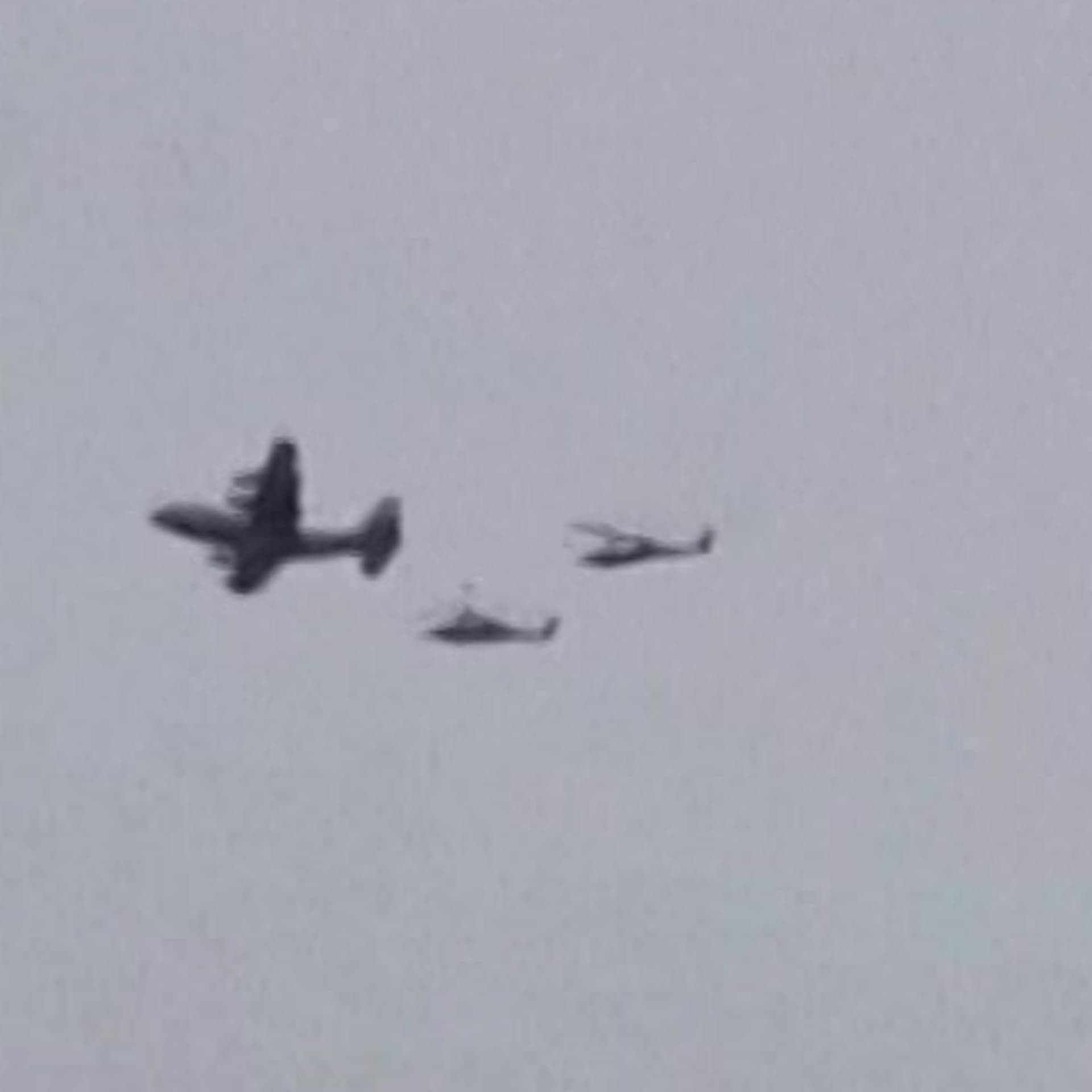
9:00And basically, they'll follow that plan throughout the flight path. We don't know exactly how they went down or why they went down, but it would be in the general vicinity of the area that they had pre-planned in advance. The challenge here is this is a very mountainous, rugged area, very low population. so even if they're on one section of that path it may be divided by a very deep valley from the other part that they had briefed their commander on where they were supposed to be flying. Yeah and we've seen this footage of a couple of helicopters and perhaps a surveillance plane flying over some of that mountainous region.
9:33I mean getting them out once their location has been found I mean how risky is that? So it's exceptionally risky and there are several options. There's a kind of a conventional way to get them out, which is those aircraft that you see where the U.S. military will come in and actually take them in various ways. The other options are much riskier, but a little bit safer for the other U.S. forces that would be in the area. And that's using locals who already have agreed in advance to work with the United States in something called a non-standard assisted recovery mission that has been built very long in the past for years and has existed in this area for exactly this type of rescue mission.
10:09It's riskier, but there's a higher chance that the US person on the ground would be able to be rescued with less US footprint in Iran. I mean, presumably speed is of the essence because the Iranian military will also be trying to find them, right? Right. And actually, the person on the ground is going to be going through four things in their mind. That's the weather, the enemy, terrain and time. And they're going to be balancing those four considerations at all times as they're moving throughout the mountains and then eventually into the desert areas where they try to be evacuated. They're gonna have to make decisions about do I move now or do I wait?
10:39And that decision could be life or death. Jonathan Hackett. Over the last few weeks, we've been speaking a lot about the almost total closure of the crucial waterway that flows alongside Iran, the Strait of Hormuz. Only a handful of ships have passed through that bottleneck since the start of the war, causing havoc to the global economy. But now a possible breakthrough. The first vessel linked to a European nation, a French-owned cargo ship, has moved through the strait. It's believed to have used an Iranian-approved route that's been dubbed the Tehran Tollbooth, and it was followed by a Japanese ship carrying liquefied natural gas, highly flammable cargo to be carrying through perilous waters.
11:22There are still thought to be around 2 ,000 ships trapped inside the Gulf. Captain John Conrad is the CEO of the maritime news site G-Captain. We are starting to see that early initial trickle of ships, which is a positive sign. And what is also really positive is a little bit of the diversity of ships. We were seeing previous days some bulk carriers with low-cost cargo. Now we're seeing a few container ships and even an LNG vessel, which is positive because those carry explosive gas, liquefied natural gas. So the fact that the company thought that it was safe enough to get through with such a flammable cargo is positive news.
12:08So is this individual carriers making their own decisions to say the risk is worth taking? Well, you know, ships are very complicated international beings. A ship may be insured with one nation flagged under another, owned by another nation. The cargo owner can be from somewhere else. And all of those interests have to align. And then you need insurance for these vessels. So the ship that we saw go through most recently is the CMA CGM Caribbean, which is a French-owned ship. But it's Maltese flag and, you know, insurance and crew. We don't know where the crew is from, but likely all from different nations.
12:52Is that some kind of signal from Iran that it is safe, at least for these ships to use the strait? We've seen President Trump say you can come in and use the strait. You've seen Iran saying that you can negotiate with us who comes and who goes. You've seen ships like a few Chinese ships last week. There were two of them that went into the strait, backed out again, renegotiated how they're going to get through. and then the next day made it safely out of the Persian Gulf. Captain John Conrad speaking to my colleague Andrew Peach. And there's more coverage from the conflict in the Middle East on our website.
13:36Have a look there for updates. Moving on now, Jackie Cazares was nine years old when she was killed in a mass shooting at her school in Texas. Last month, her mother, Gloria, spoke on stage at the Academy Awards ceremony in Los Angeles when a documentary about school shootings won an Oscar. Standing with the filmmakers, she said her daughter's bedroom had been frozen in time. Since then, the documentary All the Empty Rooms has reached an even bigger audience. Tom Brook sent us this report from New York. She sits her room. All the Empty Rooms won the Best Documentary Short Film Oscar this year.
14:19Based on a quite simple concept, it follows veteran CBS News correspondent Steve Hartman and photographer Lou Bopp as they visit the empty bedrooms of children killed in U.S. school shootings. Love the lights. She loved the lights. Yeah. And they've actually been on since she left them on. We haven't turned them off. Images from the film really lingered in my mind, so I tracked down filmmaker Joshua Seftel to find out more. There are over 100 school shootings a year in this country, which is an astounding, disturbing number. And we wanted to try to find a way to get at the issue and talk about it in a way that would get people's attention and get them to feel something again.
15:02Because we worry that we become numb in this country, that there are so many school shootings that it starts to, you know, you start to just feel like, oh, this is normal. But it's not a normal thing. and it can't be seen as a normal thing. This is how it was almost five years ago, his dirty clothes. I don't think he wanted to lose his smell in his room because it's distinctly him. Yeah. In a way, this film is an effort to try to bring home the tragedy of gun violence by putting the emphasis on the way in which those who've lost children in school shootings just can't let go of their loved ones.
15:43We get to meet and learn about these children who are no longer here. We get to see the things that are left behind in these bedrooms, these bedrooms which are frozen in time. And they're rooms that the parents hold on to. They're rooms that the parents keep to remember their children. When that time comes that that room is not there, does she go away? For me, All the Empty Rooms was an attempt to talk about an issue that a lot of us know about, but to talk about it in a new way. We don't even mention the word gun in our film. It's never said. This is a film in which winning an Oscar trophy makes a big, big difference.
16:31It has added momentum to a short that's already spawned photo exhibits and special screenings around the U.S. I'm very interested in telling stories that build bridges. I'm very interested in telling stories that don't preach to the choir, stories that are just human, that share someone's life. And then we can decide when we watch it what we should think or what we should do. And our hope is when people watch this film, they feel something, that they say, oh, wow, I was numb. I used to feel something when I heard about a school shooting. It used to upset me. It used to disturb me. Now I've heard about so many of them that I stopped feeling anything.
17:15And we want this film to break that cycle. Ideally, people will watch it and say, this is not normal, and we need to do something to change what's happening. OK, guys, so here is the outfit. It's going real cute. All the empty rooms also shows how much difference a small, independent film can make. The distribution rights to this 35-minute short were acquired by Netflix. It's been made available in more than 100 countries in 37 different languages. And now, thanks to its Oscars night victory, its audience just continues to grow.
17:52Tom Brook reporting on the Oscar-winning documentary All the Empty Rooms. Still to come in this podcast... Do you have a recommendation for where we should start prioritizing putting the Orion trash bag as we generate them? Daily life on the spacecraft heading towards the moon.
18:22This is the Global News Podcast. Let's head to Ukraine now, where there's been no let up in the intensity of Russian attacks over the last few days. And Friday was no exception. James Menendez heard from our correspondent in Kyiv, Sarah Rainsford. It was another large scale attack. So this was a combination of hundreds of drones and three dozen missiles that were launched by Russia across Ukraine, starting overnight, but then coming in waves and continuing into the middle of this morning, which I think is a bit of a shift in tactics by Russia because daytime attacks, big attacks haven't been common, but there have been two now in just over a week.
19:03Seven days ago, there was a really large attack using hundreds and hundreds of drones and missiles. So this has followed on. There are six people that we know so far have been killed, around about 40 people injured across the country in various places. And we've seen very dramatic pictures, one of them in particular of a Russian drone slamming into the side of a block of flats and, of course, bursting into flames. and another series of pictures from rescue workers showing them digging through the rubble of people's homes, multiple residential buildings which were just reduced to ruins and people trapped under that and injured in that particular incident.
19:43So really a large scale attack. And it came even as President Zelensky here had been calling on Russia to agree to a truce for the Easter period. And he said that this was proof that they were not interested in that. He said that they wanted an Easter escalation and intensification of their attacks rather than a pause in the hostilities. And Sarah, what about the fact that, you know, lots of the world's attention is now on what's going on in Iran? I mean, what impact is that having, I guess, both militarily and diplomatically as far as the Ukraine war is concerned? I mean, I think the first big impact it's having is that the efforts to come to some kind of peace deal that were mediated by the United States, those efforts have pretty much stalled.
20:25There have been two postponements of planned meetings and they're just not happening at the moment. Russia says they're on hold. President Zelensky says he's happy for the U.S. mediators to come here to meet him and then to shuttle to Moscow to talk to them. But at the moment, that's just not happening. And then in the meantime, there's lots of concerns here in Ukraine linked to the war in the Middle East because it means it's pushing up energy prices. And diesel in particular is what Ukraine needs in large amounts to keep its tanks rolling and to keep its vehicles on the road. So that's a big worry for the troops.
20:57But it also is a worry that the U.S. is sending so many of its air defense missiles to the Middle East because Ukraine needs to buy those to protect its cities and its civilian infrastructure here in the country and its military sites, too. So it's a big worry that going forward there is going to be an even greater shortage of those vital Patriot air defense missile systems for here in Ukraine. Sarah Rainsford in Kiev. Let's focus on Cuba, where the authorities have begun to release prisoners. It's the second mass release in a month as Havana faces heightened pressure from the U.S. It's not clear whether any political prisoners are among those let out so far, a key demand of the American government.
21:44Cuba is believed to be holding more than 700 people on political charges. Outside one prison in Havana, this mother was reunited with her son, who was being released early after receiving a pardon for his crime of robbery.
22:02It's been very difficult, but today God granted me happiness. This is how all mothers who are seeing their sons being free today should feel. This is freedom, a pardon, owing nothing to anyone. I'm heading out into the world. Our global affairs reporter Joanna Keane told me more about what's been happening. Cuba said it was going to release 2 ,000 inmates. They called it a humanitarian gesture to mark Easter. And we've seen the first of those prisoners being released. We've seen some really emotional scenes actually in a prison in the east of Havana. People holding their release papers, crying, hugging relatives.
22:40One man just said he couldn't sleep when he heard this was going to happen. So we know that they're being released. What we don't know is exactly who is being released. Now, Cuba says it's being decided on a case-by-case basis. They're looking at the offence, how much of that sentence has been served, and also the health of the prisoner. But rights groups say actually hundreds of political prisoners are being held in Cuba. And one of the key demands from the United States is that these are the people that should be being released. The United States has said it doesn't know that that's happening, but it is monitoring the situation.
23:15You just mentioned the United States. It seems key to all of this. What is the current state of relations between Washington and Havana? Yeah, you're right. It's absolutely key. Now, the US has made no secret to the fact that it wants to see a change of leadership on the communist island. And since the beginning of this year, it's imposed a fuel blockade on Cuba. Now, the island has suffered some really terrible conditions, have been rolling blackouts. Millions of people have been in darkness. There's been a shortage of food, medicines. Hospitals have been struggling to maintain emergency and intensive care services.
23:51We've seen some airlines as well grounding flights or suspending flights to the island. Earlier this week, we did see potentially an easing in those tensions when a Russian tanker was actually allowed to dock at one of Cuba's ports. Now, the White House says the blockade's officially still in place, But President Trump did say he had no problem with that tanker docking. He said Cubans had to survive. That was his comment. So we've got to see where it goes from here. So what does the United States want when it comes to Cuba? We're not entirely clear. We saw what happened in Venezuela earlier this year.
24:25It might be that a complete change of government would suit the United States. But in the meantime, it's been making these demands, one about the release of political prisoners. and there have, we think, been private talks going on about the future of the island, but there have been sticking points. Now, is what we've seen in this past few hours, is what we've seen Cuba sort of saying, you know, we're willing to do this? Is the United States allowing this tanker to dock, saying, OK, we're meeting halfway? We just don't know. It's too early to say at the moment. But there are signs of some movement and negotiations there.
Read the full transcript
25:02Joanna Keane. Some Olympics news. This year's Winter Games in northern Italy have been described as the cleanest in nearly three decades by sporting officials. No competing athletes in Milan Cortina were found to have tested positive for doping. The first time this has happened since the 1998 Winter Olympics in Japan. Our sports news correspondent Joe Linsky has more. More than 3 ,000 samples from almost 2 ,000 athletes and as yet not a single positive doping test. February's Winter Olympics were, as things stand, the cleanest since the 90s. It's significant because for the last two decades, both the Winter and Summer Games have had to change results retrospectively due to positive tests.
25:47At London 2012, for example, 31 medals were withdrawn after the event. Milan Cortina's record is being put down to a ramping up of testing before the Games started. Benjamin Cohen is from the International Testing Agency. I think it has been our most extensive programme ever implemented. We monitor the athletes throughout a much longer period. I think athletes know about this and I think this is also the reason why we see less and less positive doping control during the Olympics. Things could change though. Samples are kept for 10 years so authorities can check them again as technology improves.
26:27For now though, anti-doping agencies around the world are cautiously optimistic. Joe Linsky. While we're ending the podcast with the latest on the Artemis II mission, as the four astronauts continue their journey to loop around the moon, NASA shared the first high-resolution images of Earth taken by the crew on board the Orion spacecraft. One of those images, called Hello World, captures the vast blue expanse of the Atlantic Ocean, framed by a thin glow of Earth's atmosphere. You can see it on our website. Here's Lakeisha Hawkins from NASA. It shows a backlit Earth revealing auroras as the crew heads towards the moon.
27:09It was taken by Reed Wiseman out of an Orion window, and it features two auroras, top right and bottom left, and zodiacal light, which is at the bottom right. It's visible as the Earth eclipses to sun. You know, it's great to think that with the exception of our four friends, all of us are represented in this image. We also wanted to bring you a snapshot of what life is like on board Orion for the astronauts. NASA is providing a live online feed, so we're able to hear their conversations with Mission Control in Houston. On Thursday, astronaut Christina Cook was dealing with a faulty toilet. Now she says they're tackling another issue.
27:53Houston integrity. Yeah, Christina, we will take what you've got first. All right, thanks. Well, first of all, as you might imagine, there's kind of an inrush of trash when we first get up here as we're deploying everything. So we did generate quite a bit of trash in the first 30 hours of the flight. We've been managing that by kind of finding hiding holes for it and putting some of it back into empty locations. So our ask is, do you have a recommendation for where we should start prioritizing putting the Orion trash bags as we generate them? And potentially a request to consolidate some stowage so that we can designate a C2B that's all for trash.
28:45Well, let's hope things are resolved soon. Astronaut Christina Cook on board the Orion spacecraft. And that's all from us for now. If you want to get in touch, you can email us at globalpodcast at bbc.co.uk. You can also find us on X at BBC World Service. Use the hashtag Global News Pod. And don't forget our sister podcast, The Global Story, which goes in-depth and beyond the headlines on one big story. This edition of the Global News Podcast was mixed by Derek Clark. The editor is Karen Martin. I'm Celia Hatton. Until next time, goodbye.
29:50us to get more work done. In a world of generic AI, don't sound like everyone else. With Grammarly, you never will. Download Grammarly for free at grammarly.com.
From the publisher
American forces are searching for a missing crew member after a US fighter jet was downed in Iran. Iranian state media says Iran's security forces are also looking for the aviator. Iran is also claiming to have shot down a second US warplane over the Gulf. US media say the A-10 combat plane was shot at near the Strait of Hormuz during a search-and-rescue mission for the first downed aircraft. The pilot ejected and was rescued. Also in the podcast, Cuba begins releasing more than 2,000 prisoners as US pressure mounts. We'll hear about the Oscar winning documentary focusing on the empty bedrooms of children killed in school shootings. Why the recent Winter Olympic Games in Italy are being called the cleanest on record - but could this change? And the crew of Artemis II take 'spectacular' image of Earth.
The Global News Podcast brings you the breaking news you need to hear, as it happens. Listen for the latest headlines and current affairs from around the world. Politics, economics, climate, business, technology, health – we cover it all with expert analysis and insight. Get the news that matters, delivered twice a day on weekdays and daily at weekends, plus special bonus episodes reacting to urgent breaking stories. Follow or subscribe now and never miss a moment. Get in touch: globalpodcast@bbc.co.uk