
In short
The episode covers four main stories: US-Iran exchange of fire in the Strait of Hormuz during a month-long ceasefire; Russia’s scaled-back Victory Day parade amid fears of Ukrainian drone attacks and wider war impacts; EU fashion sustainability rules and their effect on resale and brands; and separate explainers on US immigration deportation cases, Japan’s debate over Article 9 pacifism, and David Attenborough’s 100th birthday.
Guests/backgrounds
David Willis (BBC North America correspondent); Steve Rosenberg (Russia editor); Catherine Belton (Washington Post reporter, author of Putin’s People); Wendy Urquhart (fashion correspondent); Rajini Vaidyanathan (immigration reporter); Kurumi Mori (Japan correspondent); David Sillito (Attenborough culture correspondent). Also interviewed: eBay’s Kirsty Keegan; Gucci parent company sustainability exec Marie-Claire Deveau; Russian MP Yevgeny Popov; Russian residents; Zoila Sandoval-Guerrera; Rachel Girard (lawyer).
Key claims/examples
US says it struck Iranian facilities after Iran attacked three warships; Iran says it retaliated for US ceasefire violations and reports explosions at Quesem Island. Trump calls it a “love tap” and says the ceasefire remains. Russia reduces parade hardware, restricts internet, and cites security; Moscow residents cite inflation and Putin’s bunker life. EU bans destroying unsold fashion and requires garment QR codes; fast fashion cited at 8–10% of emissions. US immigration relief reversed for Zoila, risking separation from her US-born child. Japan protests Article 9 changes; “No war” rallies. Attenborough is praised for engaging wildlife filmmaking, including remote-ancestor evolution imagery.
Written by AI. May contain mistakes. Listen to the episode to check what was said.
Chapters
Tap a time to open that second in VOUS-Iran Tensions in the Strait of Hormuz
2:16 to 6:01
Discussion on the recent exchange of fire between the US and Iran.
“The US military says it struck Iranian military facilities after Iran tried to attack three American warships crossing the strait.”
Russia's Victory Day Preparations Amidst War
6:01 to 10:41
Report on Russia's Victory Day celebrations and its implications amidst the Ukraine war.
“Saturday is Victory Day in Russia, marking the defeat of Nazi Germany in the Second World War.”
Economic Impacts of War on Russia
10:41 to 14:02
Analysis of how the war has affected the Russian economy and public sentiment.
“Catherine Belton is a reporter on Russia for The Washington Post and author of Putin's People.”
Fashion Industry Faces Major Regulatory Changes
14:02 to 17:40
Learn about new EU regulations impacting sustainability in the fashion industry.
“Washington Post reporter Catherine Belton.”
Immigration Challenges Following a Tragic Accident
18:28 to 23:30
Explore the personal and political impacts of immigration policies after a disaster.
“Spring is a time to give yourself a refresh, so spend time on self-rejuvenation.”
Japan's Shift from Pacifism
23:30 to 27:08
Understand Japan's debate over changing its pacifist constitution amidst regional tensions.
“Japan basically wrote never go to war again in its post-Second World War constitution.”
Celebrating David Attenborough's 100th Birthday
27:08 to 28:00
Reflect on the legacy of David Attenborough as he celebrates a milestone birthday.
“To mark the event, a concert is being held at London's Royal Albert Hall.”
David Attenborough's Impact on Wildlife Filmmaking
28:00 to 29:10
Explore how David Attenborough's unique style and experiences shaped wildlife documentaries.
“This fantastic fountain of fire rising 200 feet or so into the air.”
Reflections on Attenborough's Career
29:10 to 30:30
Learn about the breadth of Attenborough's experiences and changes he has witnessed in nature.
“And the hairs on the back of my neck stood up when you deliver that piece.”
Personal Moments with David Attenborough
30:30 to 31:30
Hear about intimate moments that showcase Attenborough's passion for wildlife.
“But in that same time, he's seen more change than has ever happened in our planet.”
Transcript
Automatic transcript. May contain errors.0:00This BBC podcast is supported by ads outside the UK.
0:30That's Thrive Cosmetics. C-A-U-S-E-M-E-T-I-C-S dot com slash shine26. Here's golf legend John Daly. Hell yeah, these wins are piling up faster than my divorces. I only spent on Moto, America's social casino. You know I've won a couple of majors. And on Moto, I've won majors, grands, and epic jackpots on their classic Vegas slots with huge, huge bonus rounds. Moto Casino adds new games and awards players free coins every single day. Grip it and spend it on Moto Casino. Download the Moto Casino app today. Moto Casino is a social casino.
1:07This is the Global News Podcast from the BBC World Service. Hello, I'm Ankur Desai and in the early hours of Friday the 8th of May, these are our main stories. The U.S. says it struck Iranian military facilities after Iran tried to attack three American warships crossing the Strait of Hormuz. Iran says it was retaliating for U.S. violations of the ceasefire. There are nerves in Moscow ahead of Russia's annual Victory Day celebrations, and some are questioning the political future of Vladimir Putin. Also in this podcast. That crucial moment when our far distant ancestors took a step away from being apes and a step towards humanity.
1:57One of the most recognisable broadcast voices of all time, the naturalist and broadcaster David Attenborough celebrates his 100th birthday. We hear from some of his closest friends and colleagues.
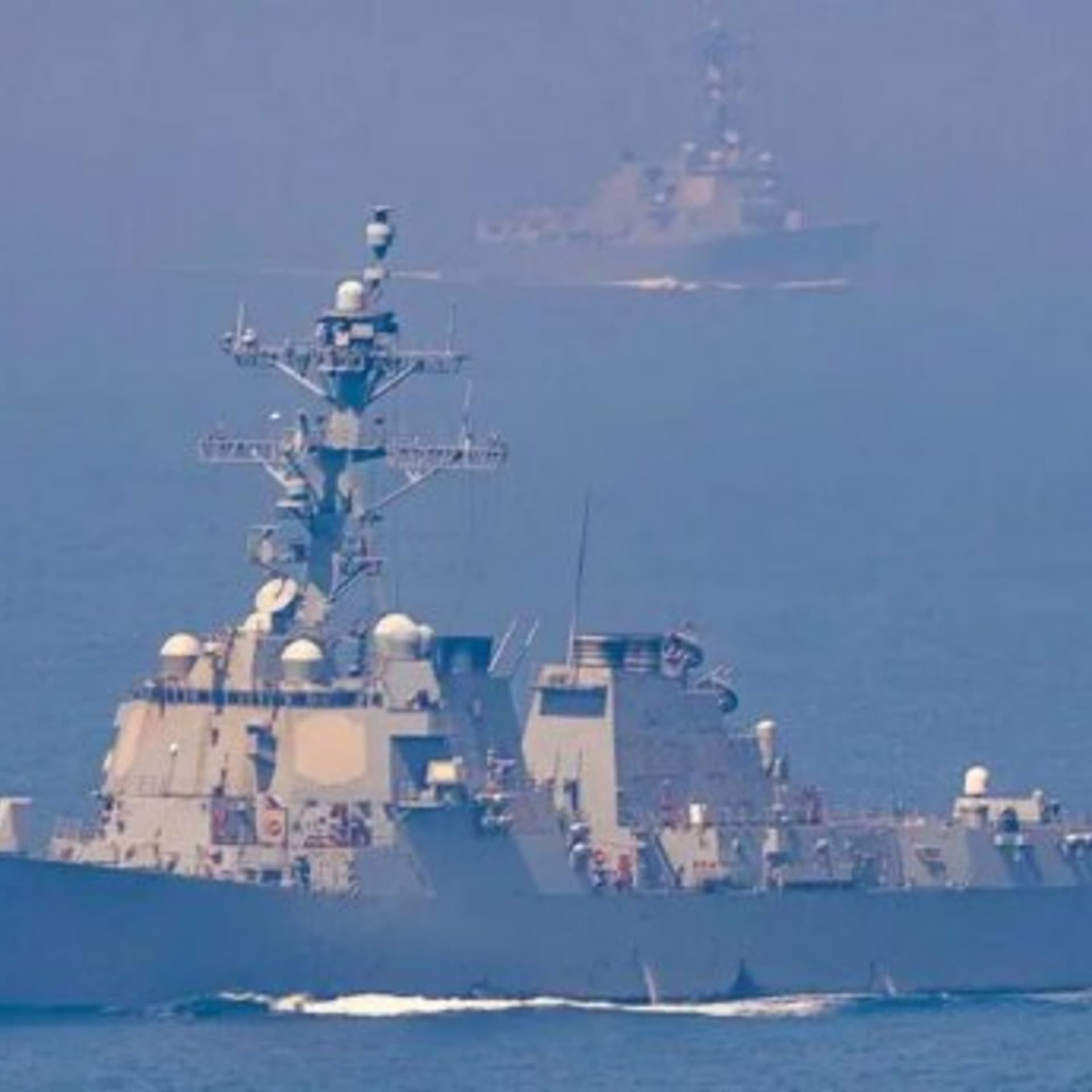
2:15We begin with a major development in the Strait of Hormuz, where the US and Iran have exchanged fire. The US military says it struck Iranian military facilities after Iran tried to attack three American warships crossing the strait. Iran says it was retaliating for US violations of the ceasefire. President Trump has described the American strikes as a love tap and insisted the ceasefire is still in effect. Iranians, we took our three destroyers and we rammed them through some pretty big stuff today and we knocked the hell out of them. The destroyers weren't hurt in any way. The people weren't hurt, but they were firing at us and we were firing back at them.
3:00And our firepower was a hell of a lot stronger than theirs and they knocked the hell out of them. Is the ceasefire with Iran still on? Yeah, it is. They trifled with us today. I'll let you know when there's no ceasefire. You won't have to know. If there's no ceasefire, you're not going to have to know. You're just going to have to look at one big glow coming out of Iran. And they better sign their agreement fast. I've been speaking to our North America correspondent, David Willis. It's the most serious test yet, Anka, isn't it, of the month-long ceasefire between the United States and Iran, involving three U.S.-guided missile destroyers that are forming part of the U.S.
3:42naval blockade of Iranian ports. Both sides saying the other fired first. The U.S. says that its destroyers were not hit, claiming that it acted in self-defense in response to what it called unprovoked hostilities on the part of Iran. And in a post on social media, President Trump claimed the U.S. Navy had inflicted great damage on what he called the Iranian attackers, whose boats, he said, went to the bottom of the sea quickly and efficiently. Missiles were shot at our destroyers and were easily knocked down. Likewise, drones came and were incinerated whilst in the air. And he added with another rhetorical flourish, they dropped ever so beautifully down to the ocean, very much like a butterfly dropping to its grave.
4:33Well, Iran, for its part, says that it fired drones and missiles in response to U.S. aggression, as it put it, in the Strait of Hormuz, involving two of its vessels. And also claims that the U.S. response included attacks on Iranian military facilities in the region. Indeed, there were reports of explosions on Iran's Quesem Island. That's an oil port at the entrance to the Strait of Hormuz. David, could this exchange of fire jeopardise any negotiations between the US and Iran or impact this ceasefire? It's a very good question. Of course, all this comes as Iran is reported to be reviewing a US proposal to end the war.
5:18And that proposal is thought to include a moratorium on Iran's nuclear enrichment, the lifting of U.S. sanctions, release of billions of dollars in frozen Iranian funds, and both sides lifting restrictions on transit through the Strait of Hormuz. Now, according to Iran, today's exchange of fire constitutes a violation of the very fragile ceasefire. According to President Trump, however, it does not. The Trump administration is seeking to play down this matter. It doesn't want to escalate the crisis. But this is not the first time the two sides have exchanged fire in the Strait of Hormuz since the ceasefire began.
6:00And the question is, how many more such skirmishes can that fragile truce endure? David Willis. Saturday is Victory Day in Russia, marking the defeat of Nazi Germany in the Second World War. Traditionally, the focus of celebrations is at the annual Red Square parade in Moscow. But this year, the event is being scaled back over concerns that Ukraine might target it with a drone attack. A Russia editor, Steve Rosenberg, reports from Moscow.
6:38These are Russian soldiers marching near the Kremlin. But Saturday's parade will be different from previous years. There'll be no tanks, no ballistic missiles, no military hardware on display in the centre of Moscow. Yevgeny Popov is a Russian MP. Our tanks are busy right now. We need them more on the battlefield than on the Red Square right now. With the war in its fifth year, not only has Russia not yet secured victory, but under pressure from Ukraine, you're now scaling back the parade. Some people would say that's embarrassing. And what? What other choice we have? We are fighting for our security guarantees.
7:26Orudiye, we are together! Vladimir Putin chose to invade Ukraine and chooses to keep fighting there. But over time, the front line has moved closer to home.
7:44Ukrainian drones have been reaching deep into Russia. Earlier this week, a drone struck a luxury residential block in Moscow, just four miles from the Kremlin. There were no casualties, but extensive damage to one of the upper floors. Moscow has threatened a massive retaliatory strike on the centre of Kiev if Ukraine tries to target Saturday's parade. Russia's foreign ministry spokesperson warned diplomatic missions to evacuate staff promptly from Kiev in the event of a mass strike by Moscow. Here in the Russian capital, the Russians I spoke to near the Kremlin were nervous. It's a worrying time, Vladimir says.
8:24But what can you do? We live and we worry. There is a safety issue, concedes Sergei, but parading our military hardware shows our strength on the world stage. Perhaps we should be displaying something. In current circumstances, it would be foolish to showcase hardware, Yulia tells me. On the other hand, this means that we're scared of something. That's also not great. To protect the parade and the public, the Russian authorities say that mobile internet in Moscow will be restricted on Victory Day. They claim that digital shutdowns, which have become common across Russia, prevent drone attacks and acts of sabotage.
9:09They're deeply unpopular, though, with the public, but MP Yevgeny Popov doesn't mind that. It would be better to be with no internet than to be killed by Ukrainian missile or drone. Under Vladimir Putin, victory in World War II has become such a key part of Russia's national idea, and the Red Square Parade normally an opportunity to project Russian military power to the world. In a village on the edge of Moscow, they're holding a minute's silence for Russians killed in World War II, what's known here as the Great Patriotic War. But here too, as special guests, are two men who've been fighting in Ukraine, They're wearing military fatigues and masks to hide their identities.
10:04After the ceremony, one of the men tells me that Russia is a country of victors and always will be. The Kremlin would like Russians to view the Ukraine war as a continuation of the great patriotic, as a just war. But they are very different. In 1941, Nazi Germany invaded Russia. In 2022, the Kremlin invaded Ukraine. The war there has already lasted longer than World War II for Russia. And for Moscow, victory remains elusive.
10:41That report by Steve Rosenberg. Catherine Belton is a reporter on Russia for The Washington Post and author of Putin's People. She's been telling Evan Davis how life in Moscow has been impacted by the war. For many years of the war, somehow it looked like the Russian economy was defying gravity, it was defying the sanctions. But now it's like a cumulative effect of Putin's wartime spending spree, the sanctions biting, which caused massive inflation. People are talking about food prices doubling, tripling. And then the central bank moved in to yank up interest rates to try to cool down the inflation.
11:25Now businesses can't pay off their loans. They can't pay higher taxes. We hear of a record number of restaurants in Moscow closing. People are saying now the shops are empty. People are starting to economise on just basic everyday goods. They're really feeling the pinch. What do you make of reports? There was quite a long account in the Financial Times of Putin increasingly spending his time in bunkers, worried for his safety. Where is he at the moment? Ever since the war began, he has been spending a lot of his time in bunkers. But over the last two months, he has pretty much disappeared from view.
12:04He's cut down the number of public visits. And I think there was this real sense of disquiet when the Kremlin saw what happened to the supreme leader Ayatollah Khomeini. And they feared that the US-Israeli coalition had used the internet to survey and then attack and kill the Iranian leader. And I think this is one of the reasons why, one, Putin has been taking increased security measures, and two, why they've started shutting down the internet, because they fear Putin could be victim to a drone attack or something else. It's a really interesting picture. And it obviously is a very significant shift from what was seen as Russia making great advances in the war.
12:47Are people contemplating life beyond Putin in Russia? Yes, it's really a big sea change. People have begun speaking out against Putin. And this we have not seen for a very, very long time. There was a very prominent social media influencer called Victoria Bonia, who launched a diatribe against government failings and internet restrictions. And then there was a lawyer who used to work for the Kremlin. He basically said Putin should resign and be brought to justice as a war criminal and a thief. And we haven't heard rhetoric like that really since before the beginning of the war. This lawyer was carted off to a psychiatric hospital, but then after 30 days, he was released.
13:30And people are saying that the fact that he could get away with it and he's continuing his criticism is a sign that really the Russian elite is now dividing into two camps. There are hardliners who just want to crack down and there is an increasingly large and vocal progressive camp who are saying, hang on, things really aren't going well. Why are we still fighting this war? And they're really beginning to chafe away at Putin's rule. And it's definitely the case that we see people really are starting to think about Russia without Putin. Washington Post reporter Catherine Belton. The great and the good from the top tier of fashion are in Copenhagen for the Global Fashion Summit.
14:15And they've got a lot to talk about. The European Union is slapping major new regulations on the industry that will force brands to put sustainability first and change the way they operate forever. Wendy Urquhart has the details. When our favourite brands go on sale, most of us hit the shops in the hope of finding that ultimate bargain. But trends change like the wind, which means fashion companies are constantly producing high volume, low quality, cheap clothing just to keep up with the fashionistas. Fast fashion is responsible for around 8 to 10 percent of global carbon emissions. That's more than all international flights and maritime shipping combined.
14:56The industry also uses around 93 cubic metres of water, which could meet the needs of 5 million people. And it generates 12.6 million tonnes of textile waste in Europe alone. On top of that, what's not sold eventually ends up in landfill, usually in Africa or South America, where it can take up to 200 years to decompose. But there are big changes coming that will stop all that and prevent what's called greenwashing, where companies use fake labels like eco-friendly, green or natural to fool consumers. From mid-July, it will be illegal for fashion brands in the European Union to destroy unsold clothes, footwear and accessories.
15:41And from September, Remember, all garments must have a QR code with details of where they were made and what chemicals are embedded in them. That's manna from heaven for resale companies like eBay, Vinted and Brand Alley, which are already well established. Here's eBay's General Manager of European Fashion and Luxury, Kirsty Keegan. If retailers choose to list that excess in the industry, then hopefully it means we can very easily find that stock another home and it doesn't end up in landfill. That's exactly what eBay is here to do. That's all very well, but for high-end brands, finding a home for what doesn't sell is a much more sensitive issue.
16:21They don't produce as much as cheaper brands, but they don't want to be seen ditching stuff either. So to protect their luxury image, some are using invite-only resale platforms and private archive sales to sell excess stock. Marie-Claire Deveau, who's Chief Sustainability and Institutional Affairs Officer at Keiring, which is the parent company of Gucci, Yves Saint Laurent, Bottega Veneta, Balhanciaga and others, says younger fashionistas are checking the sustainability credentials of fashion companies before they splash their cash. When you buy a luxury product from Gucci, from Bottega Veneta, what we speak about sustainability is really inherent to the quality.
17:05So even if they don't ask any questions about which kind of processes we implemented, the new generation and above all the Gen Z are asking more and more very concrete questions. They want more detail. These new rules will be costly, but it's just possible that the fashion industry is tailor-made to promote sustainability and drive home the need to protect the environment. Wendy Urquhart reporting. So to come in this podcast. A question I have been asked throughout my lifetime with BBC was, is David Attenborough really as nice as he appears to be on the television? We'll have the answer to that question as the great man celebrates his 100th birthday.
18:27We'll be right back. No purchase necessary. Visit moto.us for more details. Moto Casino. America's Social Casino. Hey, it's Ryan Seacrest for Jewel Osco. Spring is a time to give yourself a refresh, so spend time on self-rejuvenation. Shop in-store and online for great savings on all your favorite personal care items. Now through May 26, earn four times points when you shop participating items like Pantene Shampoo, Crest Toothpaste, Tampax Radiant, Native Shampoo, and Secret Gel Deodorant. Then redeem points for discounts on future purchases of groceries or fuel. Offer ends May 26. Restrictions apply.
19:02Offers may vary. Visit Jewelosco.com for more details. I drive my bus in a busy city. That's why road safety is so important to me. I know that I must slow down and be extra careful when I make a wide turn. Buses need more room than cars. Everyone can help keep our roads safe. Next time you're driving, remember to give buses plenty of time and space to finish turning before driving ahead. Let's all plan to share the road safely. Learn how at www.sharetheroadsafely.gov.
19:41This is the Global News Podcast. One of the issues that has defined President Trump's second term domestically is immigration. Among his boldest pledges was a mass deportation drive to send anyone who'd entered the US illegally back to their home countries. The policy has been hugely controversial, particularly in Democrat-run states. In Maryland on America's east coast, one in six people were born overseas. Its largest city, Baltimore, is one of the US's major ports. In 2024, the route into the port was partially blocked after a container ship, the Dali, struck the Francis Scott Key Bridge, causing the bridge to collapse.
20:26Regine Vardyanathan has been talking to one family caught up in that disaster and now caught in Maryland's deportation net. You can see some posts, scaffolding of where the bridge was. Rachel Girard's a lawyer in Baltimore. From the full-length glass windows of her 21st floor offices, she has a distant view of the tragic site. Rachel still remembers the day the Dali container ship struck the city's iconic bridge. Eight construction workers ran out of the water when the bridge fell. Six lost their lives. Most were immigrants, but all were Marylanded, hardworking, strong and selfless. In the aftermath, President Biden encouraged around 30 of the relatives of those who died to apply for humanitarian immigration relief, with assurances their applications would be approved.
21:15One of the victims was 37-year-old Jose Menor Lopez, originally from Guatemala. And it's in Rachel's office where we meet Zoila Sandoval-Guerrera, his former partner and co-parent to their seven-year-old daughter, Dany. Zoila remembers their last conversation. I was cooking. It was white beans with pork. He loved that meal. And he told me to save some for him. And that was our last conversation that day. Oh, when they told me the news, it was devastating. We shed many tears that day. And mixed in with her grief, uncertainty. The Trump administrations reversed President Biden's reprieve. It means Zoila, who crossed into the US illegally from Guatemala two decades ago, is facing deportation with a hearing in July.
22:09In the corner of Rachel's office, Dainey's drawing and colouring with felt pens. What would this mean for your daughter, who was obviously born here? She would stay alone. I couldn't take her with me to Guatemala because she would lose all her benefits. And she's doing well in school here. so she will probably have to stay with my brother. The Trump administration pledged to deport the worst of the worst from America but Zoile is keen to point out that she's not a threat to national security and that she's built a life in America over years. Sometimes it's the most hard-working people who are being deported while there are so many lazy people on the streets hanging around without working, without anything.
22:56We asked the US government about Zoila's case. The Department of Homeland Security sent us a statement saying that while any loss of life is tragic, immigration relief schemes, like all immigration benefits, are granted on a case-by-case basis according to the law. Do you ever feel like you just want to go home? I have thought about it. I have thought about going back, but my daughter was born here, she goes to school here, and her future is here. That report by Rajini Vaidyanathan. Japan basically wrote never go to war again in its post-Second World War constitution. But now it's debating whether to change that.
23:39The Asian nation has taken a major step away from its pacifist stance, lifting decades-long restrictions on arms exports and expanding its military role abroad. The government says it's necessary in an increasingly tense region, with Prime Minister Sana 'i Takeichi, who took office in October, hoping to revise the constitution. But for many Japanese residents, it's raising alarm. As fears grow that the country is becoming a war-capable nation, protests are gaining momentum. This report from our Japan correspondent, Kurumi Mori.
24:18On a Tokyo street corner under pouring rain, a crowd gathers, holding up drenched posters and flags. Stamped on them in big, bold Japanese characters, a simple message. No war. It's a scene that's becoming increasingly common across Japan, which is currently witnessing its largest anti-war protests in decades. Japan basically wrote, never go to war again, into its constitution. But now it's debating whether to change that, and these people are not happy about it. They're saying we are a peaceful nation, and the current pacifist constitution is Japan's treasure. Among them, Akari Maizono, a woman in her 30s holding brightly painted lanterns calling for peace.
25:07She thinks the public isn't being heard. I'm angry that these changes could be made without properly listening to us, the public. I don't want the LDP to touch the Constitution anymore. Nearby stands Hidehiro Iijima, a 79-year-old resident gripping a bright red banner who says he shares a similar sentiment. The Japanese Constitution, Article 9 in particular, must be protected at all cost. It kept Japan from being drawn into past conflicts like the U.S.-Iran war. Without it, surely we would have entered the war by now. Anti-war protests like this one have been gaining traction over the past few months nationwide.
25:49The backstory? After World War II, Japan adopted Article 9 known as the pacifist clause instead of traditional military. But Prime Minister Sanae Takaichi took office in October to post-ordemate the Constitution saying times have changed and there are intense geopolitical risks. In today's incredibly challenging security environment, I believe that no country can protect its own peace and security alone. I think it is important to have partners who support each other, even in terms of defense equipment. She argues that Japan sits right next to China, North Korea and Russia, while the U.S. has been pushing for a more active military role.
26:37For many Japanese, especially those with living memory of conflict or of the Hiroshima and Nagasaki atomic bombings, any move away from pacifism can ignite a big fear. And that anxiety is now spilling onto the streets. So Japan is facing a choice. Hold on to its pacifist identity or adapt to a more uncertain world. Kurumi Mori with that report. The world-famous British wildlife filmmaker David Attenborough says he has been overwhelmed by the thousands of messages that he's received on his 100th birthday, including one from the British Prime Minister Keir Starmer. To mark the event, a concert is being held at London's Royal Albert Hall.
27:26A new song has been composed for him, and he's even had a wasp named after him. Sir David first gained worldwide attention following the release of his groundbreaking BBC natural history series called Life on Earth back in 1979. A culture correspondent, David Sillito, has been talking to some of his closest friends and colleagues about what makes him so special.
27:52Rattlesnakes. This is the western diamondback. No animal alive can excel these creatures when it comes to finding, stalking and dispatching their victims. Sir David Attenborough. I'm in Iceland. This fantastic fountain of fire rising 200 feet or so into the air. Behind me is molten rock. He talks with his body. He doesn't just stand and present with a microphone. He's animated, he's interesting, he's engaging. Cameraman Gavin Thurston has been part of the Attenborough team for nearly 40 years and took me back to a moment in Africa. We're both kind of nipple-deep in water, and as this chimpanzee went into the water, it stands up and they don't like getting their hands wet, it stands up and puts his arms in the air to wade through the water.
Read the full transcript
28:41Suddenly, an image from our remote past becomes vivid little light. A time when our distant ancestors, in order to keep up with the changing environment, had to wade and keep their heads above water. in order to find food. Even though he's kind of got his back to the chimpanzee, he's totally aware of that, he's totally aware of the camera eye line, and he nails that piece in one. That crucial moment when our far distant ancestors took a step away from being apes and a step towards humanity. And the hairs on the back of my neck stood up when you deliver that piece.
29:20And Pam Jackson's working relationship goes back to life on Earth in the 70s. We'd nip him with a comb. He didn't like it. Try and comb his hair very quickly and get out of the way again. So he wasn't a prima donna about his appearance? Not at all, no. The question I have been asked throughout my lifetime with the BBC was, is David Attenborough really as nice as he appears to be on the television? And I always say to people, if it's possible he's even nicer.
29:59But what makes him truly special is what he's experienced over his hundred years on the planet. A killer whale. These young pups have never seen anything like it before. For Alistair Fothergill, who's worked with him for some 40 years, he is unique. He started travelling in the early 50s when the planet was pristine. But at that same time, international air travel was just starting. David has seen more of the natural world than any human being that's ever lived on our planet. But in that same time, he's seen more change than has ever happened in our planet. But even now, on his 100th birthday...
30:42He's just got better and better and better through his whole career. Gavin wanted to show me this. Even though there are more wild foxes in London than almost any other big city. It's still a huge thrill to see one suddenly emerging from the bushes. Totally wild creature. David sat there on the deck chair and his little fox cubs came out. Hello. It's just a really sweet moment where you see David's passion for the wildlife in one simple shot. The boyish joy is there, isn't it? And here it is. It's a Harvey's mouse. Welcome to your new home. There you go. He doesn't want to leave. David Sillito with that report.
31:40And that's all from us for now. If you want to get in touch, you can email us at globalpodcast at bbc.co.uk. And you can also find us on X at BBC World Service. Use the hashtag Global News Pod. And don't forget our sister podcast, The Global Story, which goes in-depth and beyond the headlines on One Big Story. This edition of The Global News Podcast was mixed by Masood Ibrahim Kehl and the producer was Helena Burke. The editor is Karen Martin and I'm Ankur Desai. Until next time, goodbye.
32:19I'm Kai Wright. I'm Carter Sherman. Welcome to Stateside with Kai and Carter. We're a new show from The Guardian. We're talking to big thinkers and the best journalists just trying to understand the world through smart conversation and honest reporting. We don't have billionaires telling us what to say. Stateside with Kai and Carter will come out three times a week, Monday, Wednesday, and Friday starting May 13th. Subscribe on YouTube or wherever you get your podcasts.
32:48We'll be right back.
From the publisher
The US says it struck Iranian military facilities after Iran targeted American warships crossing the Strait of Hormuz. Tehran claims the US was violating the ceasefire. President Trump says the ceasefire is still intact. Also: Russia prepares to celebrate Victory Day amid fears Ukraine may launch a drone attack. Fashion companies prepare for the introduction of strict new sustainability laws in Europe. We take a closer look at the US immigration crackdown. Protests in Japan over the lifting of restrictions on arms exports. And the British wildlife film maker, David Attenborough, celebrates his 100th birthday.
The Global News Podcast brings you the breaking news you need to hear, as it happens. Listen for the latest headlines and current affairs from around the world. Politics, economics, climate, business, technology, health – we cover it all with expert analysis and insight. Get the news that matters, delivered twice a day on weekdays and daily at weekends, plus special bonus episodes reacting to urgent breaking stories. Follow or subscribe now and never miss a moment. Get in touch: globalpodcast@bbc.co.uk



