
In short
The episode covers renewed US-Iran conflict after “heavy” US strikes on Iran. The US says it bombed dozens of Revolutionary Guards-linked sites, including command centres, missile/drone sites and coastal surveillance, after Tehran targeted American bases in Jordan on Tuesday. Iran’s state media says three Revolutionary Guards members died, but also reports a residential hit on Kesham Island in the Strait of Hormuz killing a couple and their child. Jordan and Kuwait then reported Iranian attacks (missiles shot down; Kuwait says one worker died). BBC Middle East correspondent Yolande Nell interviews James Menendez on escalation and widening fronts (Saudi-backed actions in Iraq; Houthi threats; a suspected drone attack on Egypt’s Damietta port). Other guests/backgrounds: Radek Sikorski (Poland foreign minister) reacts to Russian missile/drone strikes on Ukraine and a missile landing in Poland; Thomas Nardi reports on African migrants repatriated from South Africa (Richard, Emmanuel Asamua, Aiden Aris); Stephanie Prentice reports on Singapore’s fine/arrest of French teenager Didier Gaspard Maximilian for public nuisance (licking an orange juice straw). Key claims/examples: energy-market jitters from possible Egypt front; Ukraine power-generation pressure; Singapore’s strict enforcement (fines up to $2,000, jail possible).
Written by AI. May contain mistakes. Listen to the episode to check what was said.
Chapters
Tap a time to open that second in VOEscalation of Conflict in Iran
0:45 to 1:32
Discussion on recent U.S. strikes on Iran and escalating tensions in the region.
“The African migrants forced out of South Africa, some leaving behind a spouse.”
Iranian Attacks on Jordan and Kuwait
1:32 to 3:00
Details on Iranian attacks in response to U.S. military actions and implications.
“So US forces are said to have bombed dozens of sites in Iran, which they say are linked to the Revolutionary Guards.”
Widening Conflict and Regional Implications
3:00 to 4:19
Analysis of how the conflict is spreading geographically and its impact on regional dynamics.
“You know, Saudi Arabia launched those attacks with the US on Iran backed groups in Iraq.”
Russian Missile Attacks on Ukraine
4:19 to 6:23
Reports on recent Russian attacks on Ukraine and their consequences.
“But we've had no reports of it coming under attack in the past five months since the Iran war started, unlike other US allies across the Middle East.”
Poland's Reaction to Airspace Violation
6:23 to 8:23
Discussion on Poland's response to a missile that landed on its territory amidst the war.
“And what we've also seen is a missile land in Poland.”
Impact of Anti-Immigration Protests in South Africa
8:23 to 12:43
Exploring the plight of African migrants forced to leave South Africa due to violence.
“why we need to rebuild our defence industry base and why I welcome the announcement by President Trump in Ankara, I was there, that licences will be granted to make some of this equipment in Europe.”
Teenager's Legal Trouble in Singapore
12:43 to 14:06
A French teenager faces consequences for a viral stunt in Singapore.
“Thomas Nadi reporting from Accra, Ghana.”
Understanding Singapore's Strict Laws
14:06 to 15:32
Learn about Singapore's tough legal penalties for public nuisance offenses.
“But it seems the prosecutors and the defence were happy to agree to a fine.”
Podcast Preview
15:36 to 15:46
A brief overview of what to expect in the upcoming segments of the podcast.
Rescue Efforts After Kumamoto Earthquake
16:08 to 19:04
Hear about the ongoing rescue operations following a devastating earthquake in Japan.
“to find survivors following Tuesday's powerful earthquake in Kumamoto in the south of the country.”
Show all 13 chapters
Wildfires in Europe: Current Situation
19:05 to 21:02
Explore the current state of wildfires in France, Spain, and Greece amidst rising temperatures.
“France, Spain and Greece are continuing to battle wildfires spurred by soaring temperatures, parched vegetation and strong winds.”
Qantas' Ambitious Project Sunrise
21:10 to 23:09
Discover Qantas' plans for the world's longest non-stop flight and its implications.
“has just completed its first-ever test flight, lasting more than 24 hours.”
Reconnecting with Physical Experiences
23:11 to 27:33
Ian Bogost discusses how small, everyday actions can help us reconnect with the physical world.
“But some argue that it's made us too disconnected from the physical world.”
Transcript
Automatic transcript. May contain errors.0:00This is the Global News Podcast from the BBC World Service. I'm Valerie Sanderson and at 15 Hours GMT on Thursday 30 July, these are our main stories. Jordan and Kuwait have both come under Iranian attack after the United States carried out another wave of strikes on Iran. More than 30 people are known to have died in Japan's earthquake. An object that violated Polish airspace overnight was most likely a Russian missile, according to the Polish Prime Minister. So, how significant is the escalation? Also in this podcast... My business was attacked and it felt like I couldn't afford to take care of my family.
0:42It was painful for me to leave one person who is my best friend. It hurt me so much. The African migrants forced out of South Africa, some leaving behind a spouse. And the last straw, how a French teenager fell foul of the law in Singapore.
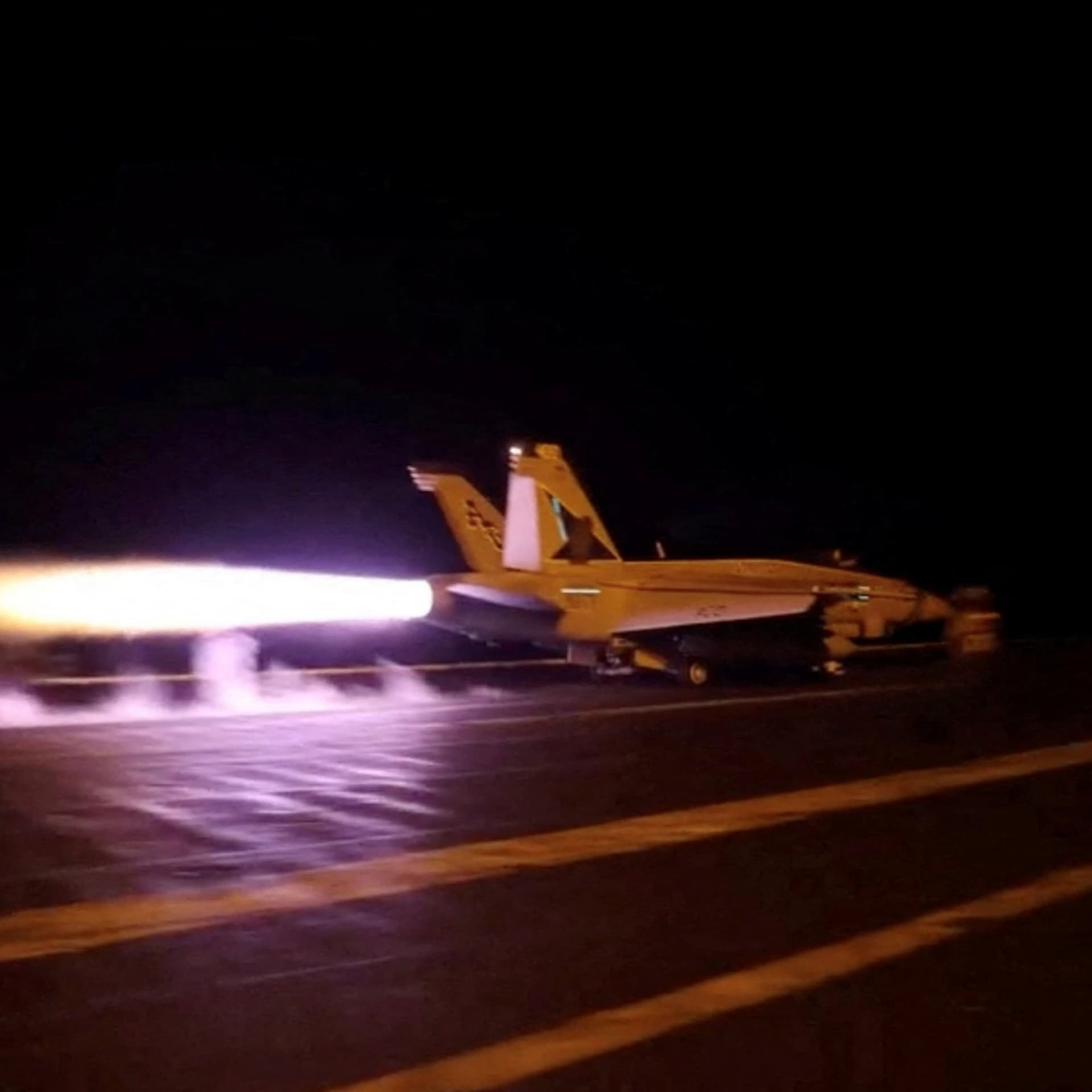
1:04After a short period of relative calm, the U.S.-Israel war with Iran has reignited. The U.S. military says it's completed a heavy wave of strikes in retaliation for Tehran targeting American bases in Jordan on Tuesday. In the last few hours, Jordan and Kuwait have both come under Iranian attack. For days, both Iran and the U.S. had halted strikes as talks apparently restarted in hopes of some type of diplomatic solution. James Menendez has been speaking to our Middle East correspondent, Yolande Nell. So US forces are said to have bombed dozens of sites in Iran, which they say are linked to the Revolutionary Guards.
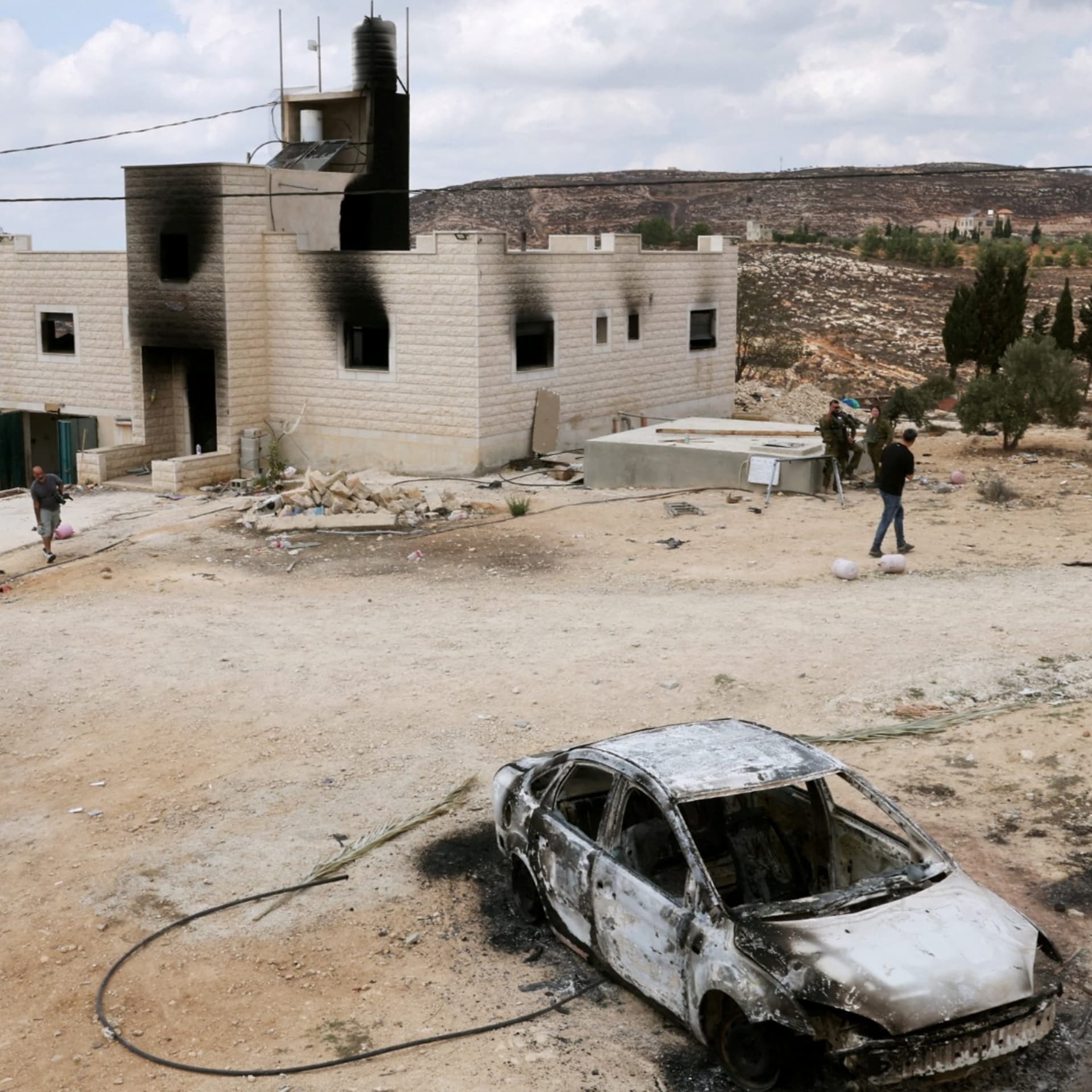
1:42Military command centres, missile and drone sites, coastal surveillance sites, they say. Iranian state media say three Revolutionary Guards members were killed, but also a couple and their child when a residential building on Kesham Island in the Strait of Hormuz was hit. Now, retaliation came fairly quickly. Kuwait said that one worker was killed in an Iranian attack on a Chinese firm in the north of the country. And then in Jordan, again, five missiles shot down. The armed forces there say no reports of casualties. But this U.S. attack earlier on Iran was said to be a powerful response to Iranian attacks one day ago on U.S.
2:21forces in Jordan, which are also said to have been unsuccessful. for. Does it feel like this war, certainly at the moment, is spreading geographically? Certainly, first of all, you know, the lull that we saw at the end of last week now seems to be over. It remains to be seen, though, if the pattern of, you know, nightly US strikes, Iranian retaliation against US forces and US allies in the region is going to resume. You've still got talks going on in the background via mediators. But, you know, in recent days, the war has widened and it has become more complicated. You know, Saudi Arabia launched those attacks with the US on Iran backed groups in Iraq.
3:05Although we are told from reports that when the Saudi defence minister was meeting President Trump last night, he was passing on a message that says that Saudi Arabia is calling for a de-escalation. But I don't think we've heard the last of Iraq Mark, some 20 members of this pro-Iranian militia said to have been killed, as well as several Iranian advisers. And then, of course, you've had in the past week, a lot of attention switched as well to the Houthis in Yemen, their threats to Red Sea shipping. And the Egyptian authorities saying that a fire which broke out in a port yesterday, they're saying that was a drone attack.
3:42I mean, do we know where that drone came from? That has not been confirmed yet. No party said to have claimed responsibility. There was a big fire that started off the port of Damieta on Egypt's northern Mediterranean coast. And, you know, now we're looking at it as another possible new front in the US-Iran war. And that's causing jitters on the energy markets because, of course, of its proximity to the Suez Canal, which is really the last safe route out of the Middle East now for Saudi oil. You know, important to mention here that Egypt is a close ally of the US, of course, in the region. But we've had no reports of it coming under attack in the past five months since the Iran war started, unlike other US allies across the Middle East.
4:28And that is really because Egypt does have this longtime national security policy of not allowing foreign troops to be based on its soil. But of course, Egypt does have significant US commercial interests based there. Yolande Nel. Russian forces launched more than 70 missiles and almost 300 drones on Ukraine overnight, killing at least 13 people and injuring dozens more. The capital Kiev and western region of Lviv on Ukraine's border with Poland were the main focus of the assault. The deputy mayor of Lviv, Andrei Moskalenko, is visiting a residential area hit by a strike. 4 a.m. in our city was damaged by Russian missiles.
5:08So we are right now on one of the sites where emergency service tried to find people who are under the building because two big buildings, residential area was destroyed. Partly a few blocks of the building totally was destroyed. We pray that all people will be alive. And so now in a hospital, more than 20 people, also children. It also was damaged to kindergarten, one school. Poland scrambled fighter jets to secure its airspace during the attack. And the Polish Prime Minister, Donald Tusk, said a 10-metre-wide crater and debris in a field 100 kilometres from the Ukrainian border was probably due to a Russian missile.
5:48Radek Sikorsky is Poland's foreign minister. He gave Sarah Montague his reaction to these latest attacks. The Russians may be counting that they might break Ukraine's resistance by attacks on heating and power generation. They've destroyed 80 percent of Ukraine's electricity generating capacity, which, of course, affects not only civilians, but also production capabilities in the defense sector and so on. So Putin seems to be desperate in throwing his all at Ukraine. And what we've also seen is a missile land in Poland. How significant is that? Because obviously it's a violation of Polish airspace and so NATO airspace.
6:38Do you imagine that it was done deliberately? We don't know. But we've had these incidents before. At the beginning of the war, a similar missile landed 10 kilometres from my house, which is in Western Poland. It traversed two thirds of my country. But you have no doubt that it was a Russian missile. It seems to have been tracked across the territory of Ukraine and into Poland. And if it's the type of missile that our military thinks it's likely, judging by the speed and so on, only Russia owns and launches such missiles. So what should the response be, both to the idea that you're setting up that Ukraine is at a particular point where Russia is going to apply pressure, but also that there has been this violation of Polish airspace?
7:34Well, we need to stick to our plan of assistance to Ukraine. What's particularly needed is effectors to the patriot system, the latest PAC-3s. As allies, we have rallied around Ukraine with supplies, but clearly there are shortages. Right. Shortages that make Ukraine much more vulnerable. Indeed. And is that something that European nations should be addressing immediately? It's something that is being coordinated by NATO in Brussels with American leadership. These are weapons that are not in oversupplies, you know, as well as I do, that there is another war in them at least as well. Right. So there just aren't enough to go around, particularly given what's going on with America's war in Iran.
8:23why we need to rebuild our defence industry base and why I welcome the announcement by President Trump in Ankara, I was there, that licences will be granted to make some of this equipment in Europe. Poland's Foreign Minister, Radek Sikorski. African migrants have been forced to leave South Africa in the past few months after a wave of anti-immigration protests and growing fears for their safety. Diplomatic tensions between South Africa and some African countries have risen in recent weeks, as people returning describe being forced to leave behind their homes, jobs, businesses, and sometimes their South African-born spouses.
9:06Now back home, they face the difficult reality of rebuilding lives from scratch. Thomas Nardi has met some of those starting over in Ghana and Nigeria.
9:21This was the moment the first flight carrier Nigerians from South Africa landed in Lagos and a voluntary repatriation program. For years, many had built lives in South Africa, but as anti-immigration protests grew, some felt they had no choice but to leave. For 15 years, Richard built a life in South Africa. He ran a vehicle refurbishment business, bought a house, got married and became the father of twin daughters. He thought he had found stability. Then everything changed. By business, he was attacked. Protesters demanded undocumented migrants leave South Africa. But Richard, who claimed legal status, said he also faced harassment.
10:08He says his biggest loss is being separated from his family, especially his South African wife. It was painful for me to leave one person who is my best friend. If I come back from work and she comes back, we are together. We tell each other things. So it hurt me so much that a situation that I was in the course of the situation is now letting me lose life of 15 years of a journey that I loved so much. He says starting a business again has been difficult. I feel useless. I feel empty. The thing that broke me was I could not provide. We are tired of seeing African migrants moving all over the world, refusing to fix your own country.
10:49In April, Emmanuel Asamua, a Ghanaian hairstylist, was confronted by a group of South Africans in a viral video. I'm in Ghana now, I'm fixing my country. The video sparked outrage online and prompted the Ghanaian government to start immediate evacuation of its citizens. I was scared. What I was praying in my mind is they would leave me so that I would get my life. I was very scared. Emmanuel was the first Ghanaian to be repatriated by the Ghanaian government. He has since started a business in Accra with the support of the Ghanaian authorities. Like Emmanuel, Ghanaian footballer Aiden Aris also joined Ghana's repatriation program, alleging authorities in South Africa are failing to stop vigilante attacks on migrants.
11:33If I'm in a country and I'm being chased like an unworthy animal, then it becomes very, very, very worrisome. If not backed by government or the government is looking away for all these things to happen, how can an individual become so powerful more than the state institutions? That is ridiculous. South African authorities have denied such claims. Richard in Nigeria and Aiden in Ghana are struggling to start life all over again. I'm lodging in a friend's house and it might take a while for me to be on my feet. If I remember, I was this OK in Nigeria before I left, and now I'm on level zero. Nigeria says it will seek compensation for abandoned businesses and property, but South Africa has ruled out payments.
12:22Yet amid the loss, Richard says there's also relief. I felt that welcome from the airport. I don't know the kind of joy that came into it when I asked myself, why did I leave in the first place? Ghana has petitioned the AU over anti-immigration attacks, while South Africa has dismissed an ICC request by two Ghanaians as opportunistic. Thomas Nadi reporting from Accra, Ghana. The International Criminal Court, or ICC, has not said whether it will consider that request to investigate. Singapore is known for its enforcement of rules around public order, cleanliness, vandalism and disruptive behaviour.
13:00Now a French teenager studying there has found out just how seriously the nation state views the adherence to strict regulations. Stephanie Prentice told me more. So this 18-year-old boy, he's called Didier Gaspard Maximilian, he was in Singapore studying business and he filmed himself, this was back in March, approaching an orange juice vending machine, taking a straw out of it, licking the straw and putting it back for someone else to find. He then posted that on his Instagram story with the caption, city is not safe. He doesn't appear to have been an influencer and Instagram stories disappear, as we know, after 24 hours.
13:40But someone captured it, reshared it, and it started going viral, particularly in Singapore community groups and social media accounts. People were outraged. International coverage followed and that led to his arrest. Now, he's just appeared in court. He pleaded guilty to one count of public nuisance and he was fined$450, which actually could have been a lot worse. So public nuisance offenders in Singapore can get fines of up to$2 ,000, three months in jail or sometimes both. But it seems the prosecutors and the defence were happy to agree to a fine. His team said he was very sorry. He thought he was being playful.
14:20He quickly admitted to the stun and the judge said there was no real evidence of harm. Singapore does not mess around on issues like this, does it? Absolutely not. So Singapore is very strict on everything from drug laws to even bringing a vape into the country. This April, an Australian man in his 60s who was accused of being drunk and disorderly on a flight. He was arrested when he landed. He faced five years in prison. Last November, quite a famous case, the court sentenced another Australian man to nine days in prison. that was after he jumped these security barriers at a premiere he grabbed Ariana Grande the actress and singer that was at the premiere for Wicked so he did nine days in prison and then once released immediately deported a Thai national who urinated inside a train carriage got a week in jail but even matters like shouting in public singing loudly smoking outside of designated areas spitting on the ground feeding pigeons you can get fined you can really get in trouble One case I actually found involved a big fine over letting a dog urinate on a neighbour's shoe rack.
15:24And even in your own home, behavioural caution is advised. If you're seen walking around naked, you can also get fined. Now you know, Stephanie Prentice. Still to come in this podcast.
15:46in a world dominated by devices how small moments like these can help us reconnect with the physical world this is the global news podcast in japan rescuers are still combing through the debris of a paper mill and a shopping mall to find survivors following Tuesday's powerful earthquake in Kumamoto in the south of the country. Aftershocks in the area are happening throughout the day and thousands are without power and water. Our correspondent in the region, Jake Kwon, gave him the latest. We have heard from the Kumamoto prefecture this is where the earthquake epicentre was and we are hearing now that the death toll has risen to 34.
16:33Now, many of these deaths are from the shopping centre and the paper mill where the chimney had collapsed, trapping the workers beneath. And the rescue workers are still combing through the rubbles, trying to find the few missing people still there. But what we are hearing is that the aftershock has continued renewing the fear that there could be a day two or day three major earthquake, which is what happened 10 years ago in 2016, when an earthquake there, the second one, was even bigger than the first, and that ended up killing 278 people. But thankfully, we haven't really seen something of that scale yet.
17:09But the picture that is emerging now is how much worse, how more deadly this earthquake could have been. Because if you look at the shopping center where the second floor had collapsed, there was an explosion, a gas explosion likely, that happened an hour after the earthquake. And what we're hearing from the operator of the shopping mall, that there were 3 ,000 customers inside when the initial quake happened. And they were evacuated very quickly. And the people who were killed or missing inside the shopping mall are mostly the employees. And what about the effect of the destruction? I mean, how many people are without power and water?
17:47So we're hearing that about 20 ,000 homes are still without electricity. And many of these government designated shelters set up at government offices or stadiums are without air conditioning. Now, if you've ever been to this region, Japan or East Asia, the summer can be quite brutal. It is very humid and without air conditioning, a lot of people die of heat strokes. And we're talking about a country where it is known for having a lot of elder population. So the government said its other priority is to get generators and air conditioning there. And we just heard from the defense ministry saying that they have just delivered 300 units of air conditioning and many more to the shelters at this point.
18:27And Jacob, there are a lot of questions now about how prepared Japan was for just such an event. So we have heard from the operator of the shopping mall, Aon, and they were saying that the building, the shopping center, was renovated recently and it was built to the latest earthquake resistance standard that Japan had. And Japan is a place that really knows earthquake. They're very prone to it. They have a small quake every few minutes. I think what we're seeing today is really talking to the preparedness of Japan when it comes to something like this. Jake Kwan. France, Spain and Greece are continuing to battle wildfires spurred by soaring temperatures, parched vegetation and strong winds.
19:14Around 8 ,000 people were evacuated on the Greek island of Crete as wildfires threaten a tourist resort and villages. In Spain, Prime Minister Pedro Sanchez described the crisis as extreme, with at least 10 active wildfires causing concern. Two people were arrested in France on suspicion of arson, but the authorities say the fires near Bordeaux have not spread overnight, despite flare-ups and a spike in temperatures on Wednesday. A correspondent in Paris is Hugh Schofield. The latest is good news, frankly. They've been stabilising over the last three or four days, since the weekend, really. And now for the first time, the authorities down there are talking about light at the end of the tunnel.
19:55We're no longer seeing a fire in the conventional sense, certainly not like what we saw at the weekend with, you know, vast swathes of forest burning. It's now a charred landscape with outbreaks of fire which are caused by embers. You have what they call these zombie fires where smoke suddenly starts rising from the peat, which is very, very supercharged with heat. and then that can burst into flames again and these have to be stamped on straight away. But I really do think we're in the end game here now and they're talking for the first time, the authorities, of allowing people back, these evacuees back.
20:30Already some people from very near Bordeaux are allowed to go back. The bulk, though, haven't and I think it'll be a few more days probably before they're sure enough that they can let them back. The weather is also looking good. We had a very, very hot day yesterday up at 40 degrees Celsius and I think getting through that day was key and they did get through that day and last night was no worse. Things are pretty stable. There's even a bit of rain predicted for today so for the first time there's a note of optimism creeping in and I noticed that the press, the national press here in Paris is for the first time now not leading with this story.
21:08Hugh Schofield. Australia's national airline Qantas in conjunction with Airbus has just completed its first-ever test flight, lasting more than 24 hours. The flight from Melbourne to the Airbus headquarters in Toulouse in France is part of the airline's plan to reshape long-haul travel by cutting out stopovers en route from Australia to Europe. The plan is called Project Sunrise, and from next year, Qantas is hoping to launch the world's longest non-stop regular flight from London to Sydney. The Airbus test flight pilot, Vincent Zabel, described the experience to the BBC's James Kumrasami. It was just amazing.
21:48Two sunsets, two sunrises. The crew were super excited to do that. The two sunsets and two sunrises, clearly spectacular and, you know, not been done before. Beyond that, what are the advantages of being able to fly for so long? In one flight, you cross half of the world and honestly, we had the feeling that it went fast. And the reason you're able to fly for these extra hours is because the plane's modified. It has this additional fuel tank, doesn't it? Yes, exactly. That's the main novelty of this ULR version of J350-1000. We have an extra tank that allows onboarding more fuel and that permits to do such flight.
22:31Now, I suppose people listening are wondering what the experience would be like if you are in an economy seat for 24 hours. Can you reassure people it would still be a decent experience? Honestly, it's quite comfortable. And on top, what has been anticipated on this aircraft compared to others is that there is a social area that has been designed for passengers. It's different to a flight where you stay on your seat for 16 or 17 hours without any space to walk or to discuss or to stand up. Pilot Vincent Sabel. We live in a world of devices and modern conveniences, from automatic cars to voice-operated entertainment and contactless payments.
23:19But some argue that it's made us too disconnected from the physical world. Ian Bogost is a contributing writer for The Atlantic and professor at Washington University in St. Louis and author of a new book, The Small Stuff. He wants us to stop and think about the everyday actions we make, like some of these.
23:50Now, if you haven't guessed, the sounds there were of a can opening, a door closing, plastic wrapping and a coffee machine. Through these everyday moments, Ian Bogos thinks we can reconnect and enjoy our physical world and find peace within. Donnie Diamond asked him what his favourite small things are. They're not quite hobbies, they're sort of regular activities. I pull espresso with a manual espresso sewing machine every morning. And I love doing that. But I also love just the feel of the warm cup in my hand. And of course, the taste of the coffee. I love the sound of the ice against the walls of the water bottle that I carry with me.
24:30I love pulling a satisfying door closed such that it clicks just ever so, ever so gently. I love mowing the lawn. There's really so many things. And not all of them are things that I think of as a part of my life most of the time. But then when they reveal themselves, when they're available to me, I try to accept them. And that's an exercise that's been different for me as I've kind of been working on the book and also trying to, I suppose, evangelize the idea of gratification as an immediate, simple, easy pleasure that's always available. A fair number of the things that you've mentioned or the kinds of things that you might relate to are going as things become automated or things become driven by what we cannot see and what we cannot control.
25:20You're not harking back to a previous, more difficult world. No, I think it's easy to look at the past and notice how certain things, or maybe like a diversity of experiences, were available to us. And many of them got squished into computers, But others became disconnected through choices that we didn't really make that aren't exactly about progress, but are more about automation and efficiency. I think my favorite example of this is all of the automated sensors in a washroom. You know, you go into an airport or an office building or something and you don't turn on the faucet or pull a paper towel.
25:58You now wave your hands around underneath it and it's supposed to give it to you. You know, you may think, well, I don't want to touch things in the public facilities. And that might be true. But also, that's not exactly progress, is it? You didn't really choose that life. It's one that was designed around you and you maybe didn't even notice or maybe licking a stamp. And until you think of it as something that you once did, then it's easy to forget that that was one piece of contact with the world. I mean, a fair number of people love the ease of automation, whether it is calling out to a computer to turn the lights on in their house or, as you say, dipping their hands into the air dryer rather than pulling down the paper towel.
26:43Are they missing something? I think what they're missing is what I would call diversity. It's so delightful to automate parts of our life, and it's delightful to touch a smartphone screen. I have my home lights on the kind of automation system you're talking about, and I put the whole house to bed with the touch of a button. But I'm still gratified by touching the button and feeling it give under my finger. It sits on my nightstand next to my bed. So it's not a choice between technology or no technology or the future or the past. It's rather a matter of understanding that whatever you're doing, including some of those more automated or more efficient or more technological means of living, that one of the things that makes them pleasurable is not just getting the task done, but the experience of doing it.
Read the full transcript
27:32And we have somewhat lost track of the idea that experience is meaningful and maybe as meaningful, maybe more meaningful than just outcomes. The author, Ian Bogost. And that's it from us for now. If you want to get in touch, you can email us at globalpodcast at bbc.co.uk. You can also find us on X at BBC World Service. Use the hashtag Global News Pod. And don't forget, we have more on our YouTube channel. Just search for BBC News on YouTube and you'll find Global News Podcast in the podcast section. This edition of the Global News Podcast was mixed by Martin Baker. The producer was Rebecca Wood.
28:13The editor is Karen Martin. I'm Valerie Sanderson. Until next time, bye-bye.
From the publisher
The US military says American forces hit dozens of targets across Iran in a two-hour wave of strikes after Iranian missile attacks on US forces in Jordan were intercepted. Iranian state media reported that the islands of Qeshm and Abadan, both central to the oil industry, were among the areas hit. Jordan and Kuwait have come under further attack from Iran in retaliation. Also: More than thirty people are known to have died in Japan's earthquake. An object that violated Polish airspace overnight was 'most likely' a Russian missile, according to the Polish Prime Minister. African migrants forced to leave South Africa after a wave of anti-immigration protests speak about their difficulties in rebuilding their lives. A French teenager falls foul of laws in Singapore over an incident with a straw, and in a world dominated by devices how small moments can help us reconnect with the physical world.
The Global News Podcast brings you the breaking news you need to hear, as it happens. Listen for the latest headlines and current affairs from around the world. Politics, economics, climate, business, technology, health – we cover it all with expert analysis and insight. Get the news that matters, delivered twice a day on weekdays and daily at weekends, plus special bonus episodes reacting to urgent breaking stories. Follow or subscribe now and never miss a moment. Get in touch: globalpodcast@bbc.co.uk Photo: A U.S. military aircraft takes off from an unknown location during what U.S. Central Command (CENTCOM) says are strikes on Iran, in this screengrab from a handout video released on July 29, 2026 Credit: US Central Command