
In short
US retaliatory strikes against Iran after Iran downed an American helicopter; escalation risk and fragile ceasefire, plus other global news segments.
Guests (named people in the episode)
Peter Bowes (North America correspondent, reporting on Iran-US strikes); Jeremy Bowen (international editor, discussing Trump’s decision and diplomacy); Sebastian Usher (Middle East analyst, reporting on sanctions against Israeli settler-violence financiers); Nina Nazarova (BBC Russian Service, discussing a Paris trial of a book-theft gang); Rob Watson (UK political correspondent, explaining UK immigration-related unrest); Evan Davis (interviewing Marin Alsop about Gaudi music); Marin Alsop (American conductor, discussing “The Seven Dreams of Gaudi”); Pallab Ghosh (science correspondent, covering Artemis 3); Helena Burke (reporter on Finnish bumblebee cognition).
Key claims/examples
US Central Command struck Iranian air defence, radar and control sites near the Strait of Hormuz; Iran says it hit US bases in Bahrain, Jordan and Kuwait and will not leave attacks unanswered. Smotrich barred from France over settler violence/annexation claims. Book thieves allegedly stole rare Russian classics for sale in Moscow/auctions; gold easier to guard than high-value books. Belfast riots followed a Sudanese refugee knife attack; UK unrest linked to viral violence and immigration fears. Gaudi centenary: Sagrada Familia structurally complete; new oratorio with bells. Artemis 3: named crew; landers by Blue Origin and SpaceX; delays and skepticism. Bumblebees solved a ball-moving puzzle (over 70%).
Written by AI. May contain mistakes. Listen to the episode to check what was said.
Chapters
Tap a time to open that second in VOUS-Iran Strikes Overview
0:34 to 1:10
An overview of the recent strikes between the US and Iran following the downing of a helicopter.
“This is the Global News Podcast from the BBC World Service.”
Retaliation and Escalation
1:10 to 2:09
A detailed look at the retaliatory measures taken by Iran after US strikes.
“Many of the books were probably sold already somewhere in Moscow or online auctions.”
US Military Response
2:09 to 3:09
Analysis of the US military's response and implications for US-Iran relations.
“Our North America correspondent Peter Bowes gave me this update.”
Diplomatic Efforts and Challenges
3:09 to 5:37
Discussion on the diplomatic efforts between the US and Iran amidst rising tensions.
“Is there now a danger of further escalation?”
Israeli Minister's Sanctions
5:37 to 7:21
Exploration of sanctions against Israel's finance minister and the implications on Israeli politics.
“With his thoughts on the decision President Trump faces, here's our international editor, Jeremy Bowen.”
Thieves and Russian Literary Classics
7:21 to 9:29
Details on a trial concerning the theft of rare Russian literary works across Europe.
“Essentially it's saying that Mr Smotrich is promoting the annexation of a West Bank and the recolonisation of Gaza.”
Knife Attack in Northern Ireland
12:35 to 13:08
Report on a knife attack by a refugee that sparked protests and violence in Northern Ireland.
“use for future savings on groceries or gas.”
Knife Attack in Northern Ireland
13:11 to 14:00
Report on a knife attack by a refugee that sparked protests and violence in Northern Ireland.
“Here in the UK, a knife attack by a refugee from Sudan has sparked violence by anti-immigration protesters in Northern Ireland.”
Public Sentiment on Immigration
14:00 to 14:38
Discussion on public concerns regarding immigration and community safety.
“Emma Little-Pengelly, condemned the violence but understood why people were angry.”
Protests in Belfast
14:38 to 15:41
Report on protests in Belfast, highlighting the violence and community reactions.
“Other political leaders have called for calm and the streets of Belfast are now mainly quiet but earlier Dan Johnson sent this report from the city.”
Show all 17 chapters
Historical Context of Violence
15:41 to 16:12
Exploration of recent violence in the UK and its implications.
“The violence in Northern Ireland follows trouble in the city of Southampton in England last week.”
Political Reactions and Social Concerns
16:12 to 18:58
Insights into political responses to immigration and social cohesion issues.
“I asked our UK political correspondent, Rob Watson, why immigration is such a hot-button issue in the UK.”
Celebrating Gaudi's Legacy
18:58 to 19:35
Reflection on the life and works of architect Antoni Gaudi on the centenary of his death.
“which social scientists point to, which is that sense amongst some people at least of just not having any control over their lives, of looking at incidents like this and feeling helpless and feeling angry.”
Musical Tribute to Gaudi
19:35 to 23:28
Discussion on a musical piece celebrating Gaudi's life and work.
“and seven of his works have been declared UNESCO World Heritage Sites, including Parc Goel, Casamilla and his masterpiece, the Sagrada Familia, which are in Barcelona in Spain.”
NASA's Artemis 3 Mission Plans
23:28 to 24:22
Overview of NASA's upcoming Artemis 3 mission and its significance.
“NASA says the next stage of its mission to the moon will be another bold step and the beginning of the future.”
Bumblebees' Problem-Solving Skills
24:22 to 28:00
A study reveals surprising cognitive abilities of bumblebees.
“The Orion spacecraft will aim to dock with two prototype lunar landers, made by Jeff Bezos' Blue Origin and then Elon Musk's SpaceX.”
Understanding Animal Intelligence
28:00 to 28:20
Explore how different forms of intelligence can lead to goal-directed behavior.
“It means that they are actually planning what they are doing next.”
Transcript
Automatic transcript. May contain errors.0:00This BBC podcast is supported by ads outside the UK.
0:34This is the Global News Podcast from the BBC World Service. I'm Alex Ritson and in the early hours of Wednesday, June 10, these are our main stories. The United States has carried out strikes on Iran in response to the downing of an American helicopter. Iranian forces say they've retaliated by targeting US bases in the region. The Israeli finance minister Bezalel Smotrich is banned from entering France over violence by settlers against Palestinians in the West Bank. Also in this podcast. Many of the books were probably sold already somewhere in Moscow or online auctions. The gang that managed to steal rare editions of Russian literary classics from libraries all over Europe.
1:29There's been a tit-for-tat exchange of strikes between the US and Iran in the Middle East, once again endangering their fragile ceasefire. The US Central Command said it had attacked Iranian targets close to the Strait of Hormuz after President Trump accused Tehran of shooting down an American Apache helicopter on Tuesday. Iran has responded by firing missiles and drones at US bases in Bahrain, Jordan and Kuwait. Iranian state TV quoted a statement posted on social media by the country's foreign minister Abbas Aragji saying Iran's armed forces will leave no attack unanswered. We prefer diplomacy but we also know how to speak other languages, says Mr Aragji's statement.
2:20Our North America correspondent Peter Bowes gave me this update. Iran was very quick to launch retaliatory attacks after the United States launched its own series of attacks over the last few hours. And according to Iran, its state media, it launched drone and long-range missile strikes targeting American bases in Bahrain, Kuwait and Jordan. And according to Iran's Revolutionary Guards, they say that they are ready to deliver a, quote, crushing and decisive response to any further US attacks. And this clearly is the most serious escalation of hostilities now between Washington and Tehran since the truce was agreed between them some two months ago.
3:08The US military had said earlier that they'd completed their attacks. Is there now a danger of further escalation? I think given the tense nature of the situation, there is clearly a danger of escalation. I think there was a view at one point a few hours ago, and maybe that will still prevail, that this could be contained within a roughly 24-hour period, that the US would hit back, it believes, in response to the downing of that American helicopter on Monday. and it has certainly done that and in fact I've got the statement in front of me saying that the US has indeed completed its strikes in response to, as it puts it, Iran's attack on the Apache helicopter and it lists what it sees as its achievements in this attack striking Iranian air defence, ground control stations, surveillance radar sites near the Strait of Hormuz with, it says, precision munitions from US Air Force and Navy fighter jets And it finishes with this line, which really goes to your question.
4:15It says US forces remain vigilant and postured to defend against, as it puts it, unjustified Iranian aggression. The Iranians appear to be aiming at US military targets rather than civilian ones in the region. Is that going to make a difference? It could make a difference in the same way as the United States has been targeting Iranian military sites as opposed to political sites. the country's leadership, as it did at the height of the war. So this does appear to be both countries attacking the other's military sites, which does suggest that this may be containable, that it isn't the kind of series of attacks that is going to have further political repercussions and it could well be held within this period of 24 hours.
5:06And I think that will give some people hope, especially those negotiators on both sides that are putting a lot of hope in the series of talks that we've been hearing about, but actually not getting much detail, although President Trump very recently said that he believed that there could actually be a deal in the next three to four days. We've heard him say that before. He's saying it again now. It does show that he wants diplomacy. It seems the Iranians want diplomacy. But I think it's fair to say this ceasefire looks increasingly fragile. Peter Bowes in Los Angeles. With his thoughts on the decision President Trump faces, here's our international editor, Jeremy Bowen.
5:44The downing of the Apache helicopter is another reminder that Iran's rulers can still hurt the Americans and will not budge in their determination to come out of this war on top. President Trump and his generals will try to calibrate their response to show just as emphatically that they cannot be pushed around, but at the same time to preserve the sluggish and so far unproductive diplomatic process. Donald Trump has been banking on a deal with Iran to reopen the Strait of Hormuz and agree on much longer term talks over the big issues, starting with Iran's stockpile of enriched uranium and its wider nuclear plans.
6:23The war is unpopular in America and he wants a way out that he can present as a victory. It is proving to be a tough challenge. Military action rarely unfolds, as leaders expect. The Gulf remains tense, dangerous and unpredictable. Mr Trump and Israel's Prime Minister, Benjamin Netanyahu, are learning an old lesson. It is easier to start a war than to end one, let alone deliver a clear victory. Jeremy Bowen in Beirut. Britain, France and Canada are among countries which have imposed sanctions on what they call networks involved in financing and enabling Jewish settler attacks against Palestinians in the occupied West Bank.
7:06France has also barred the Israeli finance minister Bezalel Smotrich from entering the country. The Israeli government has said it's rejected what it called disgraceful measures. Our Middle East analyst Sebastian Usher reports from Jerusalem. Essentially it's saying that Mr Smotrich is promoting the annexation of a West Bank and the recolonisation of Gaza. I mean, he belongs to a far-right party. He and the National Security Minister here, Itamar Ben-Gavir, are really the leaders of that vein of Israeli political influence and power, who are pushing very hard, essentially, the settler cause. And in this particular coalition government, they have had a large say.
7:53So partly due to their roles in that government, there's been expansion of the settlements. I think it's not just to do with them, obviously, in any way, but there's also been a considerable increase in settler violence. That, I think, is to some extent down, of course, as so many things are here, to the aftermath of the Hamasad attacks on October 7th, 2023. I mean, France is not the only country to have barred Mr Smotrich. Several other countries have done so for the same reasons. And the same also applies to Mr Ben-Gavir. Just last week, Ireland said that both of them were banned. So it's a kind of concerted move by European allies to show that they believe that the course that these two political leaders here in Israel would like to lead Israel on is one that they are very much opposed to and would like to make that clear diplomatically.
8:45In terms of what impact it will have on them, I think obviously that is pretty limited. What impact it will have on the way they're regarded in Israel I think won't change. Those who support them will continue to do so. Those who don't will continue to do that. This comes also as other measures are being announced in Europe and also Australia and Canada, along with the UK. Other sanctions on entities which they say have helped finance and enable settler violence. And so this, as I say, is a concerted effort by a number of countries, all of which have traditionally been pretty close to Israel, to show their displeasure with the way that things are going at the moment here.
9:26Sebastian Usher in Jerusalem. After a four-year investigation, the trial of a gang of thieves from Georgia is now underway in Paris. The suspects are charged with stealing rare editions of Russian literary masterpieces from libraries all over Europe. Nina Nazarova from the BBC Russian service told Tim Franks about the alleged plot to steal these masterpieces.
10:13that he was like a sorcerer with the books. However, he denied that he made any of the copies, but he had a great experience with restoring and working with old books. And presumably there was a market for this, and was this market deemed to be back in Russia? Yes, we have clues that the market was back in Russia because another convicted person, Mikhail Zet, who is also actively cooperating with the court in France, admitted that he was doing crimes on orders from Moscow, and he personally received$30 ,000 in cryptocurrency for stealing books from a Lithuanian library. Have any of these books been recovered?
10:50Some of the books were recovered by Everpol, but none were returned to the libraries. And many of the books were probably sold already somewhere in Moscow or online auctions in Moscow. Is it clear why this team went after books? I mean, it sounds sort of quite fiddly. Was it to do with the security in these libraries? Yes, actually the person I interviewed, Becca T, he was talking theoretically, but he told me that it was way easier to steal a book worth thousands of thousands of dollars than, for instance, any jewelry or a piece of gold. Because a piece of gold is guarded by men with guns and the old book of the same value guarded by an old lady librarian.
11:31That was Nina Nazarova from the BBC Russian service. still to come in this podcast think about how many spacecraft all of which will eventually carry human beings will be in orbit at the same time from dragon shenzhou soyuz possibly starliner starship and blue origin landers this seems like the beginning of the future that we imagined as children not quite over the moon nasa names the astronauts will take part in the next artemis mission.
12:32avoid. We're prohibited. No purchase necessary. Visit Moto.us for more details. Moto Casino. America's Social Casino.
13:02use for future savings on groceries or gas. Offer ends June 23rd. Restrictions apply. Offers may vary. Visit jewelosco.com for more details.
13:14This is the Global News Podcast. Here in the UK, a knife attack by a refugee from Sudan has sparked violence by anti-immigration protesters in Northern Ireland.
13:31the disorder in belfast on tuesday night followed the attack a day earlier the victim a man is in hospital with serious injuries to his eyes neck and back the sudanese man is due in court later on wednesday charged with attempted murder he was given a five-year refugee visa after arriving in the UK from Ireland in 2023. The subsequent disorder meant people had to flee their homes as they were set on fire along with vehicles. Northern Ireland's Deputy First Minister, Emma Little-Pengelly, condemned the violence but understood why people were angry. People want to have a conversation about immigration.
14:11I think communities are very concerned about what is happening. No community wants a dangerous person living within their community and I do think that people are very frightened about that. That is an entirely separate debate and I think what we're seeing very often is that frustration from people, that their genuinely held concerns are not taken seriously and there's not the action to follow up to take those issues seriously. Other political leaders have called for calm and the streets of Belfast are now mainly quiet but earlier Dan Johnson sent this report from the city. This is Newton Nards Road just south of Belfast City Centre.
14:51This is where there was quite a large crowd earlier of maybe 100, 150 people gathered here for a couple of hours in protest. Lots of them young people with masks or balaclavas. They pushed bins together that were then set on fire. And that actually a bus that had to stop in the middle of the road because of the traffic being blocked. That bus actually caught fire. Just around the corner from here, we've just heard that a house of multiple occupancy, essentially a house that's been converted to flats, has been targeted by a crowd who tried to set that on fire. We've seen pictures of the fire service and police officers actually bringing families out of those buildings through the flames to safety.
15:29So there is a real risk to life on the streets this evening. The police, the authorities, all day long have been calling for calm, have been calling for people not to gather or to protest in peace. And although we have seen that in some places, what we are seeing is that there is damage, there is destruction, there has been property that has been burned and there has been a threat to life in some places. The violence in Northern Ireland follows trouble in the city of Southampton in England last week. Arrests were made there after police were criticised for handcuffing a dying white man who'd been stabbed by a Sikh man.
16:05He wasn't an immigrant, but he was born in Britain. He had falsely accused his victim of racism. The arrest was filmed and widely viewed online. I asked our UK political correspondent, Rob Watson, why immigration is such a hot-button issue in the UK. Well, I think it's a fever pitch because we've now had two videos showing truly graphic violence, and I think you can't understate how important it is that these dreadful videos have been seen by so many people, not just in Britain, by the way, Alex, but around the world. And it's very hard to see these videos without having a strong reaction of horror, sadness, anger, depending, of course, on the kind of person you are.
16:48And so what that has done is that it sort of brought this simmering concern about immigration and social cohesion very much to the fore. And it is extraordinary that before these two videos even, And if you look at the polling, it does strongly suggest that concern about immigration, not just illegal immigration or about refugees or asylum seekers, is actually now a more important issue for British voters than even the economy, which is pretty extraordinary. Yeah. I mean, talking of strong reactions, how's the prime minister and the Labour government in London taking this? The government in London is stressing the need for calm and saying, look, it's just not going to do anyone any good.
17:31You could feel strongly about the issue of immigration, but going out and trashing things is not the way to do it. Let the police do their work. But of course, you do have politicians, particularly those more on the populist right, if I could put it that way, saying that, look, something is going to have to be done about immigration. and there was one politician from Northern Ireland very much on the right of Northern Irish politics who talked about the importing of an alien culture into Northern Ireland and that that kind of thing had to stop. So feelings are clearly running very, very high indeed.
18:07The sort of thrust of what the government is trying to do is to calm things down. Yeah, you mentioned the video of the Henry Novak case last week. just how dangerous a moment is this for the UK? Well, I think the view of the government and of the police is that it's a very dangerous moment indeed, because, you know, we had seen riots before a couple of summers ago, and feelings are just running very high about the issue of immigration and social cohesion. Because if you broaden it out into that question of social cohesion, again, the polling suggests that, you know, well over half the population just think we're not getting along properly in Britain.
18:47So this is not some sort of superficial issue. It's something that really goes to the heart of British politics. And there is that sort of sense, and I think, again, the graphic nature of these videos hammer home something which social scientists point to, which is that sense amongst some people at least of just not having any control over their lives, of looking at incidents like this and feeling helpless and feeling angry. And, of course, there are certainly those on what might be called the sort of far right of the spectrum who are prepared to take that one step further and to countenance violence.
19:23Rob Watson. Anthony Gaudi was a famous Catalan architect and designer who died 100 years ago today. He was driven by his passion for architecture, nature and religion, and seven of his works have been declared UNESCO World Heritage Sites, including Parc Goel, Casamilla and his masterpiece, the Sagrada Familia, which are in Barcelona in Spain. The latter is now structurally complete and will be declared finished as part of the centenary celebrations, although it does still need some work. Barcelona will celebrate the life of Anthony Gaudi with several events, including a mass and ceremonial blessing by Pope Leo, and the London Philharmonic will perform a new musical work in his honour.
20:13It's called The Seven Dreams of Gaudi and will be conducted by the American maestro Marin Alsop, who's been telling Evan Davis more about it.
20:29The seven dreams of Gaudi represent the different stages of his life, not only as an artist, but also as a spiritual person searching for, as we all are, for the meaning of life. And so they all explore different facets of his experience, his imagination, his creative output.
21:00It's sort of an oratorio-like piece. So it's got choirs, soloists, it's got big orchestra, and also these fantastic bells.
21:18Gaudi left plans to construct 84 bells, and so far three of them have been created.
21:30So it's got a little bit of something for everyone. Would someone listening to it, Marion, would they think of it as Gaudi-like? I mean, Gaudi's got all these wonderfully imaginative creations. Is it Gaudi-esque, the music? Can music be Gaudi-esque? I think it captures much more the esprit, the spirit of Gaudi.
21:56he was a very a very spiritual person he was very in touch with nature and the natural world around him and you know his background the fact that his father was a you know a blacksmith and and created things out of different kinds of metals so there's always there are these anvils that or played in the orchestra.
22:30Is there a real buzz in Barcelona at the moment over this 100th anniversary of his death? But also, it's not absolutely finished, is it, the Sagrada Familia, but all the structural work is finished. It is this sort of official opening. I think that's sort of the magic of this place is that even when it's finished, it won't be finished. You know what I mean?
22:56You know, in comparative terms, a guide showed us some pictures from the late 90s. And I mean, it's so much more completed than it was then. You know, we forget.
23:12I think the most important thing is to celebrate Gaudi as a creator, as an artist. And of course, the Pope is going to be here in Barcelona. And I think Gaudi is under consideration even for sainthood. So, you know, it's pretty exciting for everyone.
23:37American conductor Marin Alsop. NASA says the next stage of its mission to the moon will be another bold step and the beginning of the future. The American Space Agency has named the four astronauts who will be taking part in the Artemis 3 mission, which is due to launch next year. Unlike the crew of Artemis 2 who took a trip around the moon, those on board Artemis 3 will barely be any further from Earth than the International Space Station. Here's our science correspondent, Pallab Ghosh. After the triumph of Artemis 2 looping the moon in April, the follow-up mission will send astronauts on an orbit of the Earth.
24:16It seems like a backward step, but it's supposed to be a way forward to an eventual moon landing in 2028. The Orion spacecraft will aim to dock with two prototype lunar landers, made by Jeff Bezos' Blue Origin and then Elon Musk's SpaceX. NASA announced an all-male crew for the mission. They are Andre Douglas, Frank Rubio, Luca Parmentino, who's a European Space Agency astronaut, and commanded by an ex-marine, Randy Bresnik. The head of NASA, Jared Isaacman, told a news conference that science fact was catching up with science fiction. Think about how many spacecraft, all of which will eventually carry human beings, will be in orbit at the same time.
Read the full transcript
25:00From Dragon, Shenzhou, Soyuz, possibly Starliner, Starship and Blue Origin landers. This seems like the beginning of the future that we imagined as children. This seems like the very beginning of Earth's first star fleet to me. Artemis 3 was supposed to have been the mission that sent astronauts to the moon, but Isaacman changed the plan in February. This is partly due to delays to the development of both lunar landers, a problem made much worse by the explosion last month at Blue Origin's launch pad, which is the only means for Blue Origin's lander to be sent into space. So there's much scepticism that the Artemis 3 mission will be ready for launch next year.
25:38but the message from spokespeople from both SpaceX and Blue Origin was the same. Don't worry, we'll be ready. Alab Ghosh. Finally, to Finland, where a group of scientists have made a surprising discovery about bumblebees. In an experiment, the bees were found to have impressive problem-solving skills. The researchers say the findings, published in the journal Science, suggest the insects may be much smarter than they've been given credit for. Helena Burke has the details. In 1913, the German psychologist Wolfgang Kuhler conducted what came to be considered a seminal study in animal intelligence.
26:18He suspended a banana just out of reach of chimpanzees and placed boxes nearby. The chimps soon stacked up the boxes, climbed them and grabbed the treat. This was evidence, Dr Kuhler believed, of complex problem solving by the primates. More than a century on, Dr Olli Lokolla, a behavioural ecologist at the University of Ulu in Finland, wondered whether bumblebees with brains the size of a sesame seed might be capable of the same task. First, we trained the bees to know that blue artificial flower contains sugar water. Then we moved the flower to the ceiling just out of reach. And to solve the problem, the bee had to move a small ball under the flower, climb under the ball, and then they could reach the flower.
27:03The scientists designed the experiment to ensure that the insects couldn't just fly and make a beeline for the sugar water. They had to move the styrofoam ball to get their treat. The trick was that the arena was a little bit too tiny for them to fly. So we kind of planned so that the arena ceiling was so low that they couldn't fly, but it was a little bit too high for them to stand and reach the ceiling. Dr. Lokoula had previously taught bees how to play football, so his hopes for their cognitive abilities were higher than most. But the results surprised even him. Most of the bees that we tested, they solved the task.
27:39I was surprised because I was expecting something like 10 % or 15 % max, but more than 70 % I was like mind-blowed. Dr Locola hopes the findings will help people see bees as more cognitively and emotionally complex beings. Bees are able to solve this task without any direct training, so it means that they must have a goal in their mind, so their behaviour is goal-directed. It means that they are actually planning what they are doing next. This shows that intelligence comes in many forms, and we shouldn't expect B intelligence to look exactly like human intelligence, but these results show that a very small brain can still support flexible and goal-directed problem-solving.
28:20Dr Oli Lokola ending that report by Helena Burke. And that's all from us for now. If you want to get in touch, you can email us at globalpodcast at bbc.co.uk. You can also find us on X at BBC World Service. Use the hashtag Global News Pod. And don't forget our sibling podcast, The Global Story, which goes in-depth and beyond the headlines on one big story. This edition of the Global News Podcast was mixed by Holly Smith and produced by Muzaffar Shakir and Wendy Urquhart. The editor is Karen Martin. I'm Alex Ritson. Until next time, goodbye.
From the publisher
The US has said that it's completed a series of strikes against Iran which targeted air defence systems, ground control stations and radar sites following the downing of an American helicopter. The Iranian Revolutionary Guards said they hit back with strikes on US bases in Bahrain, Jordan and Kuwait. Also, France has said that it will ban Israel's finance minister, Bezalel Smotrich, from entering the country because the far right politician has been actively promoting the annexation of Palestinian territories. Anti-immigration violence breaks out in Northern Ireland after a man from Sudan has been charged with attempted murder. Barcelona celebrates the life of the Sagrada Família architect, Antoni Gaudi, with events which include a mass and ceremonial blessing by Pope Leo. And scientists in Finland have discovered that bumblebees have impressive problem solving skills.
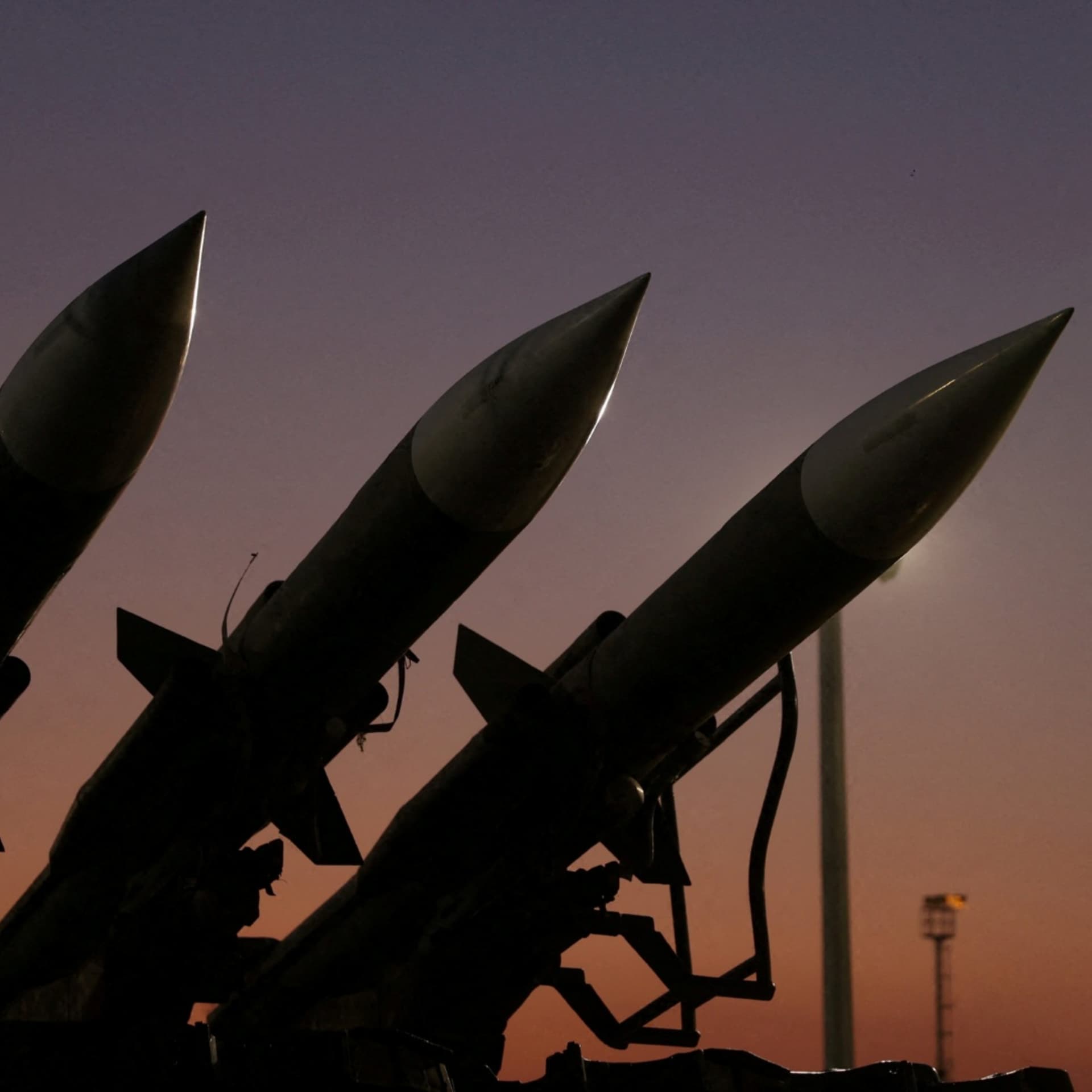
The Global News Podcast brings you the breaking news you need to hear, as it happens. Listen for the latest headlines and current affairs from around the world. Politics, economics, climate, business, technology, health – we cover it all with expert analysis and insight. Get the news that matters, delivered twice a day on weekdays and daily at weekends, plus special bonus episodes reacting to urgent breaking stories. Follow or subscribe now and never miss a moment. Get in touch: globalpodcast@bbc.co.uk Photo: Iranian missiles displayed at the Islamic Revolutionary Guard Corps(IRGC) Aerospace Force Museum in Tehran, Iran. Credit: Reuters