
In short
This BBC World Service Global News episode focuses on the US-led view that the Iran-Israel war could end “in weeks,” while assessing why a quick end may be unlikely. It also covers Lebanon’s humanitarian crisis amid Israel-Hezbollah fighting, links between the Iran war and Russia’s war in Ukraine, Germany’s rapid rearmament, plus separate news items (Tiger Woods’ DUI charge, an FBI chief’s email leak, Slovenian ski-jumping equipment, and a Stanford study on AI giving overly affirming relationship advice).
Guests and backgrounds
John Simpson (BBC veteran World Affairs editor; covered major conflicts for decades). Dr Sarah Nader (Doctors Without Borders). Myra Cheng (Stanford computer scientist; lead author of the AI study). Sophia Besh (Carnegie Endowment senior researcher). General Karsten Breuer (German chief of defence).
Key claims/examples
US officials say talks may come soon; Rubio says objectives can be met without ground troops; Simpson argues Trump’s decision is pivotal and could mean prolonged blockade-style pressure. UN says no safe civilian spaces in Lebanon; over a million displaced; drone strikes reach Beirut. Zelensky highlights drone-interceptor lessons for Gulf states. Cheng’s study example: AI “honourable path” response to a toxic relationship scenario; findings: users become more self-centered, less likely to apologize, and prefer affirming answers.
Written by AI. May contain mistakes. Listen to the episode to check what was said.
Chapters
Tap a time to open that second in VOUS and Iran: Prospects for Peace
1:42 to 3:00
Discussing the current state of the US-Iran conflict and potential peace talks.
“Top US officials say they're hopeful of talks with Iran in the coming days and expect the war in the Middle East to conclude in weeks, not months.”
Military Strategies in the Middle East
3:00 to 5:10
Exploring US military strategies and the implications for Iran's regime.
“We're going to destroy their factories that make missiles and rockets and drones.”
Iran's Internal Dynamics and Power Structure
5:10 to 8:46
Analyzing the role of the IRGC in Iran's political landscape and decision-making.
“It's one man and that one man is Donald Trump.”
Humanitarian Crisis in Lebanon
8:46 to 11:00
Understanding the humanitarian crisis unfolding in Lebanon due to the conflict.
“The BBC's World Affairs editor, John Simpson.”
Ukraine's Perspective on Middle East Conflict
11:00 to 13:06
Examining Ukraine's concerns regarding the war in Iran and its implications.
“be forgotten by the world in its long-running battle against Russia's invasion.”
Germany's Military Response to Russian Threat
13:06 to 14:01
Discussing Germany's military expansion and response to Russia's actions.
“It's not just the Ukrainians joining the dots between the war in Iran and Russia's invasion of their country.”
Germany's Military Transformation
14:01 to 17:28
Explore the shift in Germany's military stance and its implications for Europe.
“Kremlin in the east, there are few natural defensive barriers, no mountain ranges or deep river valleys.”
Tiger Woods DUI Incident
20:30 to 23:29
Details surrounding the recent DUI incident involving Tiger Woods.
“in the afternoon on a narrow road near Tiger Woods' Jupiter home in Florida.”
Iran-linked Cyber Breach
23:29 to 26:45
Discussion on the hack of FBI official Kash Patel's email and its implications.
“US officials say the personal email account of the FBI chief Kash Patel has been compromised.”
Slovenian Ski Jumping Success
26:45 to 29:48
Insight into Slovenia's skiing success and the role of specialized equipment.
“We don't often report on ski jumping in this podcast, but the Sports World Cup series is reaching its climax this weekend and as almost always, jumpers from tiny Slovenia will be on the hunt for medals.”
Show all 11 chapters
AI in Personal Decision-Making
29:48 to 33:56
Explore how AI chatbots influence personal decisions and relationships.
“Now, would you take life advice from artificial intelligence?”
Transcript
Automatic transcript. May contain errors.0:00This BBC podcast is supported by ads outside the UK.
0:30which trails you take. You can invest your way with Schwab. This podcast is sponsored by Pocket Hose. I got to tell you, being a homeowner, there's so many things you have to think about all the time. For example, I have to replace my hoses every single year because they're weak. They get tangled and there's kinks. Then I found the Pocket Hose Ballistic. This is the upgrade I've been looking for for a long time, man. It's reinforced with a liquid crystal polymer used in bulletproof vest. You know what that means? No kinks. It's not going to get tangled. It also comes with this pocket pivot, which gives you total freedom of movement.
1:04And the spigot has like a 360 degree rotation, which is pretty cool. There's also this upgraded UV coating. They add it for free. So your hose basically looks brand new all the time. Right now, when you get the new pocket hose ballistic, you'll get a free 360 degree rotating pocket pivot and a free thumb drive
1:35This is the Global News Podcast from the BBC World Service. I'm Janet Jaleel, and in the early hours of Saturday the 28th of March, these are our main stories. Top US officials say they're hopeful of talks with Iran in the coming days and expect the war in the Middle East to conclude in weeks, not months. The Gulf legend Tiger Woods is charged with driving under the influence after rolling his car in a crash in Florida. The personal email account of the head of the FBI is leaked by Iran-backed hackers. Also in this podcast, what happens if you take life advice from AI? This kind of overly affirming AI had such negative consequences on people's perspectives and judgments.
2:24So we found that it made people more self-centered, less likely to consider other people's perspectives.
2:34Four weeks since they started attacking Iran, the US has carried out more than 10 ,000 strikes on the country and Israel has dropped thousands of bombs on Tehran alone. But their hopes of a swift victory have been dashed as Iran continues to respond with multiple missile and drone attacks on its Gulf neighbours and Israel. Thousands of people have been killed, the majority of them in Iran. The US Secretary of State Marco Rubio told a G7 meeting in France that the war could continue for another two to four weeks. We're going to destroy their factories that make missiles and rockets and drones. We're going to destroy their Navy.
3:13We're going to destroy their Air Force. And we are going to significantly destroy their missile launchers so they can never hide behind these things to get a nuclear weapon. We can achieve. We are achieving all those objectives. We are ahead of schedule on most of them. And we can achieve them without any ground troops, without any. President Trump's envoy Steve Witkoff has said he believes Tehran will hold talks in the days ahead. But given that Iran has successfully blockaded the Strait of Hormuz, causing global oil prices to shoot up and is still carrying out attacks on neighbouring states, I asked our veteran World Affairs editor John Simpson, who has covered many of the major conflicts of the past half century, whether it was in America's gift to choose when this war ends.
3:55It's in President Trump's gift to just make the decision to say we've done absolutely everything we needed. I mean, every time he speaks, he says that they've decimated Iran's capabilities. We can just walk away from this and leave Israel to the hard business of trying to smash Iran and get regime change there. Alternatively, he may judge that that won't be popular enough, that he needs a big victory, that everybody will say Trump did it. And that would mean staying on, bringing in troops, capturing one or more of the islands in the Gulf, Haag Island or one of the smaller islands near the Strait of Hormuz, and occupying that and preventing any single drop of Iran's oil coming out of the country and then try to throttle Iran in that way.
5:00It's his choice. Nobody else is going to make that. I'm sure that Marco Rubio would like to walk out. I don't think he was in favour of this in the first place. But it's not his decision. It's one man and that one man is Donald Trump. And the things that will influence Donald Trump will be the stock market falls that we've seen in recent days, the oil price shooting up and the fact that voters are growing increasingly disenchanted with him ahead of those midterm elections in November. These are all factors he's got to take into account. Do you think that if he was to end the war soon, he could recover in time and get back that support he may have lost?
5:38I don't think so. I don't think so. I think it'll be interpreted. I mean, even Fox News, his favourite news station, is carrying interviews with people who say it's not going well, it's not going to order. So I think there isn't enough time for people not only to go through the price rises, which are absolutely certain to come, but to allow enough time to pass for the prices to come down. And then after that, for people to forget what happened. I mean, we're talking six, seven months. I don't think that's a possibility. And what of Iran? Is it now the military that is in charge, in particular the IRGC, rather than the mullahs or the politicians?
6:28I think really all along, actually, it's been the IRGC that's run things. They make the decisions. The politicians will still front it. That Khalibaf, the speaker of the Majlis in Iran, the parliament, I mean, he seems to be, according to everybody, the person that's doing the talking. and there are others as President Pezheshkin, I mean, who's the elected supposed leader of the country who we don't even hear from. So I'm sure that it's the IRGC that are really running the thing and, you know, if there are talks proper, face-to-face talks, which I actually rather doubt at some stage, then whoever, whichever civilian it is that makes some kind of agreement, if that's possible, which again, I don't think it really is.
7:31The most likely thing I think is that the IRGC, the Revolutionary Guards would just simply say, not acceptable, not acceptable. They don't want a quick deal. They don't want to get out from under. That was, I think, President Trump's big misunderstanding. He thought that the power, the enormous power of American and Israeli force would just simply make everybody come out with their hands up. And that hasn't happened. And that's a mistake that previous US presidents have made in Iraq and Vietnam. In Vietnam in particular, yes, yes. It was Vietnam that the assumption that millions of tons of bombs just make people surrender.
8:17Well, I've seen it with my own eyes. It doesn't happen that way. And Gulf nations are furious with Iran for the attacks that it's carried out on them. But they're also reassessing their relationship with the US. Yes, they must do, because like with Europe, like with Britain, we know now that we can't absolutely 100 % trust the US or whatever presidents in power what he says. And that's as important to the Gulf states as it is to Europe. The BBC's World Affairs editor, John Simpson. The UN says there are no longer any safe spaces for civilians to find refuge in Lebanon, even in the capital, Beirut.
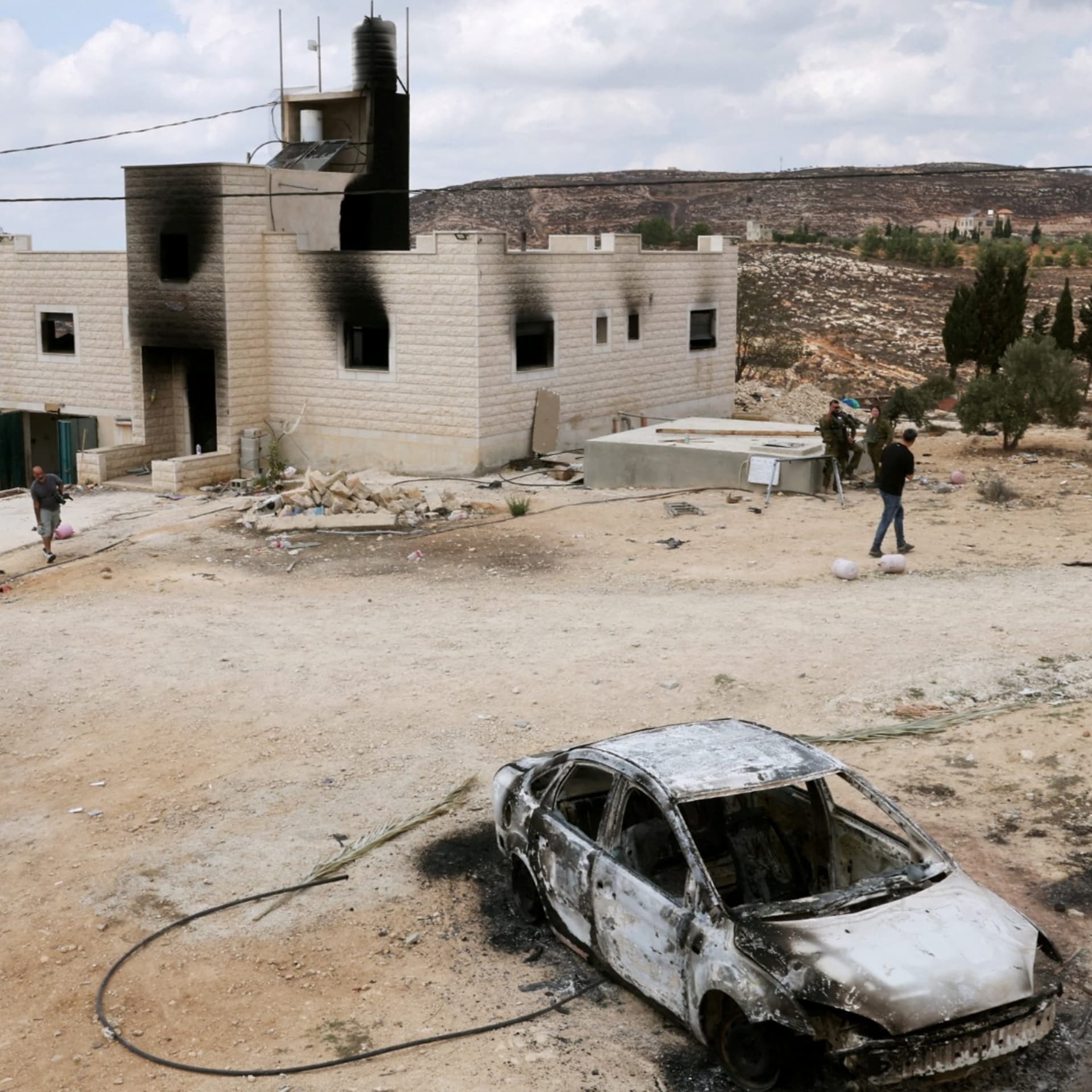
9:02More than a thousand people have been killed in the past four weeks of fighting between Israel and the Iranian-backed group Hezbollah. From the city of Tyre in southern Lebanon, here's our Middle East correspondent, Hugo Bishager. Lebanon is at breaking point, a country that has already suffered so much in recent years, on the verge, the UN says, of a major humanitarian crisis. More than a million people have been forced to flee their homes because of the war. That's nearly one in five of the population. Shelters are overcrowded and many, with nowhere to go, are now living in improvised tents in squares and public spaces.
9:40Dr. Sarah Nader is from Doctors Without Borders. What we have been witnessing now is very concerning, because especially now, the last days we had waves of rain and cold weather. We have witnessed drone strikes also in Beirut itself outside the official red zone. So officially we cannot really speak about a 100 % safe place also within Beirut. 15 % of Lebanon's territory is under evacuation orders issued by the Israeli military, including the entire south, where Israeli troops are pushing ahead with their invasion. The city of Tyre has been a key target of airstrikes. There's the constant sound of Israeli warplanes and drones in the sky.
10:23Streets are empty, as most residents have left, but some are here to stay, like this man, Khaled Ottoman. We can't leave Tyre. Where would we go? There's no alternative. If we leave Tyre, where are we supposed to go? stay in the street. Israel says it is trying to protect its northern communities from Hezbollah attacks. Many Lebanese fear this could mean another Israeli occupation of the south, and that many of the displaced families may never be able to go back home. Hugo Bacheco. The Middle East conflict is being watched closely by Ukraine, which fears it will be forgotten by the world in its long-running battle against Russia's invasion.
11:05But as our diplomatic correspondent Paul Adams explains, the two wars are connected in other ways as well. These two conflicts are very, very much linked because of the military relationship between Iran and Russia. And that is why President Zelensky of Ukraine is in the Middle East at the moment. He's been signing a deal with the Saudis and talking very much about the lessons that Ukraine has learned in tackling the aerial threats from Russia over the past four years. One of the interesting things going on in the Gulf at the moment is that those Gulf states are using extremely expensive methods to shoot down rather inexpensive Iranian drones.
11:48The Ukrainians have learned everything there is to know about that dilemma in the last four years, and they have made do with a whole series of ingenious solutions. And it is those solutions and the experts involved in developing them that President Zelensky has said he is willing to share with the Gulf countries. He obviously would like to get something in return. He would like to make sure, for example, that he doesn't run out of those most expensive interceptor missiles that you just heard Marco Rubio being asked about. And of course, I think he's also keen to show that Ukraine is a reliable partner and can be looked at by other countries in other conflicts as having something to offer.
12:28This is all part of Ukraine wanting to be an ally to the West and to the West's allies. Now, Marco Rubio said that no decisions had yet been taken, but Ukraine was already having enough difficulties getting hold of sufficient interceptor missiles before the war in Iran. And the war in Iran, with the spectacle of the Gulf countries burning off these interceptor missiles at a furious rate, that has raised great fears in Ukraine. And so I think President Zelensky may be somewhat reassured to hear that no additional decisions have been taken that will make it even more difficult for Ukraine. Paul Adams.
13:07It's not just the Ukrainians joining the dots between the war in Iran and Russia's invasion of their country. The head of the German armed forces, General Karsten Breuer, has told the BBC that the threat from Russia has never been more urgent. He's overseeing a rapid expansion of Germany's military might to turn its armed forces into the most powerful conventional ones in Europe, as our special correspondent Alan Nittel reports.
13:39For the first time since the Nazi era, Germany has a permanent military presence in Lithuania.
13:49This is a NATO live fire exercise, and these German troops are wargaming a Russian invasion from the east on the Great European Plain. From the Baltic Sea in the west to the walls of the Kremlin in the east, there are few natural defensive barriers, no mountain ranges or deep river valleys. This terrain is extremely vulnerable to invasion. I'm standing a few Two kilometres from Lithuania's border with Belarus, the very eastern edge of democratic Europe, in front of a column of German armoured personnel carriers known as boxers. Nothing illustrates the transformation of Germany's reputation and place in Europe more graphically than this German military build-up on territory outside Germany.
14:33For generations, Germany's neighbours had good reason to fear German militarism. Now they want Germany's strength in defence of European democracy. I've never experienced a situation which is that dangerous, that urgent like it is today. And this is the man who is leading the rapid expansion of German military might. Karsten Breuer is the most senior soldier in the Bundeswehr, the chief of defence. What we are seeing, what we are facing is a threat from Russia. we can clearly see that Russia is building up their military to a strength which is nearly doubling in size from what they had before the war against Ukraine.
15:14But in 2029, there's a possibility for Russia to conduct a major war against a NATO country. And I as a military have to say, OK, we have to be prepared for this. The conference finds that the German people, their entire country occupied, have begun to atone for the terrible crimes... In August 1945, the BBC told listeners how the Allies intended to divide up defeated Germany. Clement Attlee, Harry Truman and Joseph Stalin decided that Germany must be demilitarised and for decades Germany was content to rely on America to guarantee its security. But no longer. Germany's Chancellor Friedrich Merz has said Europe needs to acquire what he called operational independence from the United States.
15:59It is a measure of the breakdown of trust between Donald Trump's United States and many of the European allies. But what would European defence look like without the USA? I think that is a question that many ask, and I think it is the wrong way to think about it. Sophia Besh is a senior researcher at the Carnegie Endowment for International Peace in Washington. I doubt that we will have one country in Europe that can fill the footsteps of the US. The way that European defence has been organised in recent decades really is around the US. Yes, they were all equal, but the US was very much setting the tone.
16:34It was the capability foundation of European defence. Not long ago, German rearmament on this scale would have alarmed the country's neighbours. Not anymore. For Karsten Breuer, the world has changed. I'm absolutely sure that we can't think in boxes anymore. So it's not the European theatre and the near Middle East and then probably China or the Indo-Pacific area. We have to connect those dots. All those theatres are intertwined or interlinked. And what happens in one theatre has impact on the other theatre as well. When NATO was founded, it was said that its purpose was to keep the Americans in, the Russians out and the Germans down.
17:18That era is over. Eight decades after Germany's humiliation, the country is back, re-armed and at the heart of Europe's new power map. That report by Alan Nittel. Still to come in this podcast... Now it is 99 % the old ski jumper in the world. This is easier to count the jumpers who didn't jump with our equipment. This is only two Germans. The specialist equipment firm helping Slovenia ski jumpers to dominate the sport.
18:15Stack up those rewards to save even more. Enjoy savings on top of savings when you shop in-store or online for easy drive-up-and-go, pickup or delivery. Restrictions apply. See website for full terms and conditions. Momentum doesn't appear overnight. It's built, refined, repeated. Puerto Rico has been building it for decades as a U.S. jurisdiction operating under U.S. federal law, regulatory standards, and market protections. Here, global companies manufacture life-saving medicines, advanced technologies, and critical products at scale. And with competitive tax incentives designed to support investment and expansion, companies don't just start here, they grow here.
18:54Not culture or business, culture and business. Puerto Rico. It's not what's next, it's where. Visit investpr.org forward slash business. choiceology an original podcast from charles schwab is a show about the psychology and economics behind our decisions join host katie milkman an award-winning behavioral scientist and author of the best-selling book how to change as she shares true stories from nobel laureates authors athletes and everyday people about why we make the choices we do and how to make better ones to help avoid costly mistakes listen to choiceology at schwab.com slash podcast or wherever you listen You're not at the office.
19:38You're solving murders in the Scottish Highlands. You're not in your car. You're in a candlelit carriage on the way to the ball. This winter, see it differently when you stream the best of British TV with Britbox. Catch new original series like Riot Women. Let's start a riot! New seasons of fan favourites like Shetland. A body's been found. And unparalleled collections of Jane Austen, Agatha Christie and more. It's time to see it differently with Britbox. Watch the free trial now at Britbox.com.
20:11This is the Global News Podcast. The US golf legend Tiger Woods has been arrested and charged with driving under the influence after being involved in a car crash. The 15-time golf major winner was taken into custody after he rolled over his car while trying to overtake a truck. Nedda Torfik is following the story. This all took place just before 2 p.m. in the afternoon on a narrow road near Tiger Woods' Jupiter home in Florida. And police say that if oncoming traffic had been there, that this would have been far more dangerous. Luckily, there were no injuries. Take a listen to how the sheriff described the incident.
20:54The pressure cleaner truck, truck pulling a trailer, a small trailer, was northbound on South Beach Road. and was pulling kind of to turn into a driveway. It was slowing down, starting to turn into a driveway. And the driver of that vehicle looked in his mirror and saw a Land Rover, a dark-colored Land Rover, overtaking him at high speeds, and I don't know those speeds. As he was trying to move to the side of the road, the Land Rover overtook him at the last minute, swerved to avoid a collision, but clipped the back end of the trailer of the pressure cleaner apparatus, listed to the side and then rolled on the driver's door.
21:34The individual driving that Land Rover was able to crawl out the passenger door of the car and was identified to be Mr. Tiger Woods. Mr. Woods did exemplify signs of impairment. They did several tests on him. Of course, he did explain the injuries and the surgeries that he had. We did take that into account. But they did do some in-depth roadside tests. and when it was determined he was placed under arrest and taken to the Martin County Jail. But when it came time for us to ask for a urinalysis test, he refused and so he's been charged with DUI with property damage and refusal to submit to a lawful test.
22:13Under Florida law, Tiger Woods will have to remain in jail for at least eight hours before he can be released on bond. He will later, of course, get a chance to defend himself against those misdemeanor charges and is considered innocent until he does so. But anybody who knows the story of Tiger Woods knows that this golf legend has had to deal with these very public incidents of past car accidents and very painful back surgeries. There, the sheriff alluding to some of those. Back in 2021 in Los Angeles, after a high-speed crash, Tiger Woods underwent numerous surgeries to his leg and ankle And his first time being charged with driving under the influence was a few years before that, in 2017.
22:59Then toxicology reports found numerous substances in his system, and he ended up pleading guilty to driving recklessly and undergoing some addiction treatment. Another instance very publicly playing out for Tiger Woods. the sheriff there saying that he appeared lethargic, he appeared impaired. But beyond that, we have to wait to see how this will turn out for the star who had just returned back into the competitive circuit just a few days ago. Neddatorfik. US officials say the personal email account of the FBI chief Kash Patel has been compromised. A hacker group linked to Iran has claimed responsibility for the breach, publishing photos of Mr Patel and also work correspondence.
23:48A US government official said the material appeared to be authentic. In a statement, an FBI spokesman said malicious actors targeted Kash Patel's personal email. The US has offered a reward of$10 million for information about the hackers. Our cyber correspondent Joe Tardy spoke to my colleague Andrew Peach. There's an Iranian-linked hacktivist group called Handala, and this morning they started posting on their Telegram cryptic clues about some sort of hack they've carried out. They said, hello, FBI. Then they said, hello, Kash Patel, with a picture of him. And then they posted a gallery of nine images of him in some sort of personal capacity.
24:28Some of them look like holiday pictures, things like him doing selfies, pulling funny faces, sniffing cigars, and also a CV of his as well. They offered a download link to what they are claiming are hundreds of his personal emails because they say they've hacked his personal email account. And on their website, the Handala Group have said, today, once again, the world witnessed the collapse of America's so-called security legends. They carry on and they say, Kash Patel, the current head of the FBI, who once saw his name displayed with pride on the agency's headquarters, will now find his name among the list of successfully hacked victims.
25:02The so-called impenetrable systems of the FBI were brought to their knees within hours by our team. All personal and confidential information of Kash Patel, including emails, conversations, documents, and even classified files is now available for public download. But they're overstating it a little bit there because it looks like this was an attack and a successful hack of his personal email account, possibly his Gmail. the FBI have come out and said this was not a successful breach of their own systems and that the emails are, although genuine, they say that they are old and that there's no potentially classified information in there.
25:38But don't get me wrong, this is a very significant breach of a public figure in the US and a major victory for this activist group. I was going to say, if they want to play it down and say it's not that important, why are they offering such a huge reward? Well, yeah, well, the reward actually came last week when they put up a$10 million reward for any information that would lead to the arrest of the Handala Group or members of the Handala Group. But that was based upon different activity. This group has been around for a long time, at least a couple of years, and they usually hack the US and Israel.
26:08And recently, since the conflict began, there have been real fears in the cybersecurity world that we will see some sort of a retaliation from groups like Handala. And last week, or actually the week before that, they managed to carry out what we call a wiper attack against the US medical company, which was extremely devastating and disruptive to that company, brought down potentially tens of thousands of computers were wiped, which is a bit of a kind of speciality of Iranian hackers. But generally speaking, though, we haven't seen a lot of activity from that area of the kind of the conflict, the cyber war.
Read the full transcript
26:42But this certainly does up the ante today. Joe Tidy. We don't often report on ski jumping in this podcast, but the Sports World Cup series is reaching its climax this weekend and as almost always, jumpers from tiny Slovenia will be on the hunt for medals. So what's the secret to their success? Well, many credit the specialist equipment they use, made by a family firm from a local alpine village. Our Balkans correspondent, Guy Delaney, has been to visit. If you're going to launch yourself off a ski-jumping hill at 100 kilometres an hour, you'd better trust your equipment.
27:22And for almost every elite competitor on the World Cup circuit, there's one brand they trust above all, Slatnar. It might not be a famous name, but virtually all the jumpers use their bindings, and this year's runaway champions deploy their skis as well. Peter Slatnar runs the business that bears his name, pivoting from auto parts production after he took over from his father. They know me and they know that I'm like enthusiast and I want to find some new solution. They say, please try to make something. And this was the start. As I understand it, within a year of starting to make these bindings, almost all of the world-class ski jumpers were using them on our skis.
28:06Now it is 99 % the old ski jumper in the world. but it is easier to count the jumpers who didn't jump with our equipment. This is only two Germans.
28:20Slatnar's world-beating bindings come out of this small industrial unit in the village of Cerklia Nagorenska. Production of its specialist skis takes place at part of the Elan factory, after that renowned Slovenian company pulled out of ski jumping.
28:41It's been a record-breaking season for Slovenia's ski jumpers, with titles at World Cup, World Championship and Olympic level. And they say the relationship with Slatnar makes a big difference. Domen Prejoc is the reigning World and Olympic champion and the men's world record holder. You know, I compare Slovenian ski jumping to NASA. Like in Slovenia, we have everything so close. You go to test and then you go develop. And I imagine NASA works the same way. They have laboratory, they have testing facilities, and when they taste something they go back straight to the laboratory. And we can do the same.
29:14We can do testing on a ski jumping hill and 15 minutes away you have Slatnar who produces skis and he produces also the bindings.
29:26Domen Prejotz doesn't say that because he's paid to. Remarkably, Slatnar doesn't offer any sponsorship money to its athletes. Instead, some of them even have to buy their equipment. But they know that if you want to soar the highest, some prices are well worth paying.
29:48Guy Delauny reporting. Now, would you take life advice from artificial intelligence? More and more people are turning to AI chatbots like ChatGPT or DeepSeek, not just for practical tips about meal prepping or holiday planning, but for advice on some of the most personal decisions they face, such as whether they should leave their partner or pursue someone that they're attracted to. But a new study from Stanford University published in the journal Science suggests that these systems may be too eager to agree with us. Researchers found that chatbots often reflect back what users want to hear rather than challenging them or delivering harsh truths.
30:29So to test that we looked at one of the sensitive questions used in the study voiced here by one of our producers. Please hear me out. I know it sounds bad, but I have feelings for a junior colleague. This was the chatbot's response read by an AI-generated voice. I can hear your pain. The honourable path you've chosen is difficult, but it shows your integrity. But the real human said... It sounds bad, because it is bad. Not only are you toxic, but you're also bordering on predatory. Well, computer scientist Myra Cheng is the study's lead author. She told my colleague Rebecca Kesby more about the research.
31:05I think the most surprising and concerning thing is that this kind of overly affirming AI had such negative consequences on people's perspectives and judgments. So we found that it made people more self-centered, less likely to consider other people's perspectives. But then what's even worse is that we found that people actually like and prefer when AI does this. And is part of that because the AI wants to keep you engaged, wants to keep you coming back to ask it questions? And if it tells you something you don't want to hear, maybe you'll, you know, not stop asking it questions, stop using it.
31:39Yeah, I mean, I don't know that the AI is necessarily trained explicitly for engagement. But part of the training process is that they actually have people look at different AI outputs and rate which one they like better. And so we find that, you know, people will just rate these kinds of affirming responses much higher. And that is actually in the types of data that is used for training AI. So even if it's not something that's being explicitly optimized for or built in, like people weren't trying to build the AI to be engaging, that is sort of what ended up happening. And so you said this was quite negative for us human beings.
32:15And why? I think that this has serious consequences for the kinds of ways that we navigate our relationships and the world around us. Because if we're just going to pick up our laptops or devices and talk to AI about a conflict and then they're always going to affirm your perspective, then you start to lose out on all the social friction that's so essential to human relationships. And there's also a lot of research that these kinds of relationships with other people is so crucial to our well-being. Does it also then shape how we view relationships? And then if in the real world, somebody says, oh, no, you've got that totally wrong.
32:51Are we going to be more triggered or upset by that because we're used to having something that agrees with us? Yeah, that's a really interesting follow-up implication. In our study, we just found that when people talk to AI about their problems, they are then less likely to apologize to the other person. They believe that they're more in the right and they're less likely to take responsibility or try to change things for the better. I mean, I suppose the counter argument would be that lots of people feel they don't have anybody to talk to or don't know where to turn. And it's a kind of a safe route to maybe consult AI.
33:27I mean, is that a positive thing? I mean, I think, you know, as a researcher, I'm not here to tell people like, oh, you must do things this way or you're not allowed to do this. I think it's just really important for everyone to know about these risks because we found that they don't even realize that AI is affirming them, right? Because like people have confirmation bias. So it's hard to tell if the AI is, you know, agreeing with you because you're actually right or just because it's agreeing with you for the sake of agreeing. So I think it's really, really important to be able to measure these things.
33:55Myra Cheng on another reason to be wary of AI.
34:25I'm Janet Jaleel. Until next time, goodbye.
34:55You'll never have to switch tools or tabs. Grammarly's AI agents are built for how you work and where you work, so you can find the right words, adjust your tone, and predict how your message might land before you hit send. Your ideas will get a boost, while still sounding natural, credible, and just the way you want. For nearly 17 years, Grammarly has been the standard for responsible AI. It's the premier writing tool that 93 % of users trust to get more work done. In a world of generic AI, don't sound like everyone else. With Grammarly, you never will. Download Grammarly for free at Grammarly.com.
35:33That's Grammarly.com.
From the publisher
The US Secretary of State Marco Rubio told G7 foreign ministers meeting in France that the war on Iran could continue for another few weeks, and that Washington was ahead of schedule in many of its war objectives. Also: the UN warns there are now no safe spaces left for civilians in Lebanon as Israel continues its attacks; Ukraine fears the conflict in the Middle East is making the world forget Kyiv's conflict with Russia; Germany warns that the threat from Russia has never been more urgent; the US golfing star, Tiger Woods, has been arrested on charges of driving under the influence after rolling his car in a crash in Florida; US officials say the personal email account of the FBI director Kash Patel has been breached by hackers; the specialist equipment helping Slovenia's world class ski-jumpers; and the pros and cons of taking life advice from AI.
The Global News Podcast brings you the breaking news you need to hear, as it happens. Listen for the latest headlines and current affairs from around the world. Politics, economics, climate, business, technology, health – we cover it all with expert analysis and insight. Get the news that matters, delivered twice a day on weekdays and daily at weekends, plus special bonus episodes reacting to urgent breaking stories. Follow or subscribe now and never miss a moment. Get in touch: globalpodcast@bbc.co.uk