In short
Global News Podcast - Episode Summary
Episode Title
US Seizes Second Oil Tanker Off Venezuela's Coast
Episode Overview In this episode of the Global News Podcast, critical international events are discussed, focusing on the U.S. seizure of oil tankers off Venezuela's coast, the ongoing hostage situation involving Hamas, a mass shooting in Australia, and significant space exploration achievements.
Key Stories Covered
- U.S. Seizure of Oil Tankers
- Overview: The U.S. military seized a second oil tanker off Venezuela's coast, claiming that the oil is financing narco-terrorism.
- Reactions:
- Venezuela accused the U.S. of theft and kidnapping, calling the actions "colonialist."
- U.S. strategy includes increasing military presence in the Caribbean and building tension around oil sanctions.
- Background: President Trump has previously indicated a desire for regime change in Venezuela.
- International concerns: The potential for armed conflict in Venezuela raises alarms about humanitarian disasters, with regional leaders voicing their concerns.
- Israeli Hostages and Hamas
- Current Situation: Only one Israeli hostage remains in Gaza, leading to the winding down of the Hostages Family Forum's operations.
- Public Response: Families united under the forum, organizing demonstrations and raising awareness about the hostages.
- Political Climate: Polls show a public shift toward prioritizing defeating Hamas over hostage recovery.
- Mass Shooting at Bondi Beach, Australia
- Incident Details: A mass shooting occurred during a celebration of Hanukkah, resulting in 15 fatalities.
- Government Response: Prime Minister Anthony Albanese announced a review of police and intelligence to address the changing security environment.
- Community Impact: Increased concerns about anti-Semitism and overall safety.
- Space Exploration Breakthrough
- Notable Achievement: Michaela Benthaus, a German aerospace engineer and wheelchair user, became the first person with a disability to travel to space aboard a Blue Origin rocket.
- Significance: This achievement represents an important step toward inclusivity in space tourism.
- Discovery of an Unusual Exoplanet
- Astronomical Findings: A lemon-shaped exoplanet, similar in size to Jupiter, was discovered using the James Webb Space Telescope.
- Scientific Implications: Researchers are puzzled about the planet's composition and formation, raising questions about our understanding of planetary systems.
Additional Insights
- Complex Narratives: Discussions around U.S.-Venezuela relations highlight the interplay between public narratives and deeper geopolitical strategies.
- Public Sentiment: The impact of hostage situations and mass shootings on national sentiment and policy highlights the critical role of public opinion in shaping governmental responses.
- Inclusion in Science: The story of Michaela Benthaus emphasizes the importance of representation and inclusivity in fields traditionally dominated by able-bodied individuals.
Conclusion This episode of the Global News Podcast encapsulates pressing global issues, from geopolitical tensions and humanitarian crises to significant advancements in inclusivity and space exploration, providing listeners with a comprehensive overview of current affairs impacting various regions of the world.
Contact For feedback or inquiries, listeners can reach out at: [globalpodcast@bbc.co.uk](mailto:globalpodcast@bbc.co.uk).
---
*Note: This summary encapsulates the main discussions and news stories featured in the episode while providing insights into the underlying themes and implications of each story.*
Written by AI. May contain mistakes. Listen to the episode to check what was said.
Transcript
Automatic transcript. May contain errors.0:00This BBC podcast is supported by ads outside the UK. If journalism is the first draft of history, what happens if that draft is flawed? In 1999, four Russian apartment buildings were bombed, hundreds killed. But even now, we still don't know for sure who did it. It's a mystery that sparked chilling theories. I'm Helena Merriman, and in a new BBC series, I'm talking to the reporters who first covered this story. What did they miss the first time? The History Bureau, Putin and the apartment bombs. Listen on bbc.com or wherever you get your podcasts. This is the Global News Podcast from the BBC World Service.
0:48I'm Anna Holligan, and in the early hours of Sunday, the 21st of December, these are our main stories. For the second time this month, the United States says it seized an oil tanker off the coast of Venezuela. Commemorations are taking place across Australia, one week on from the terror attack at Bondi Beach. Also in this podcast, Ukraine's President Zelensky says the US has proposed fresh face-to-face negotiations between officials from his country and Russia. And an engineer from Germany becomes the first wheelchair user to blast into space. That was so cool. I could feel every stage of going up.
1:31You just showed the world that it is possible. I think you should never give up on your dreams, right?
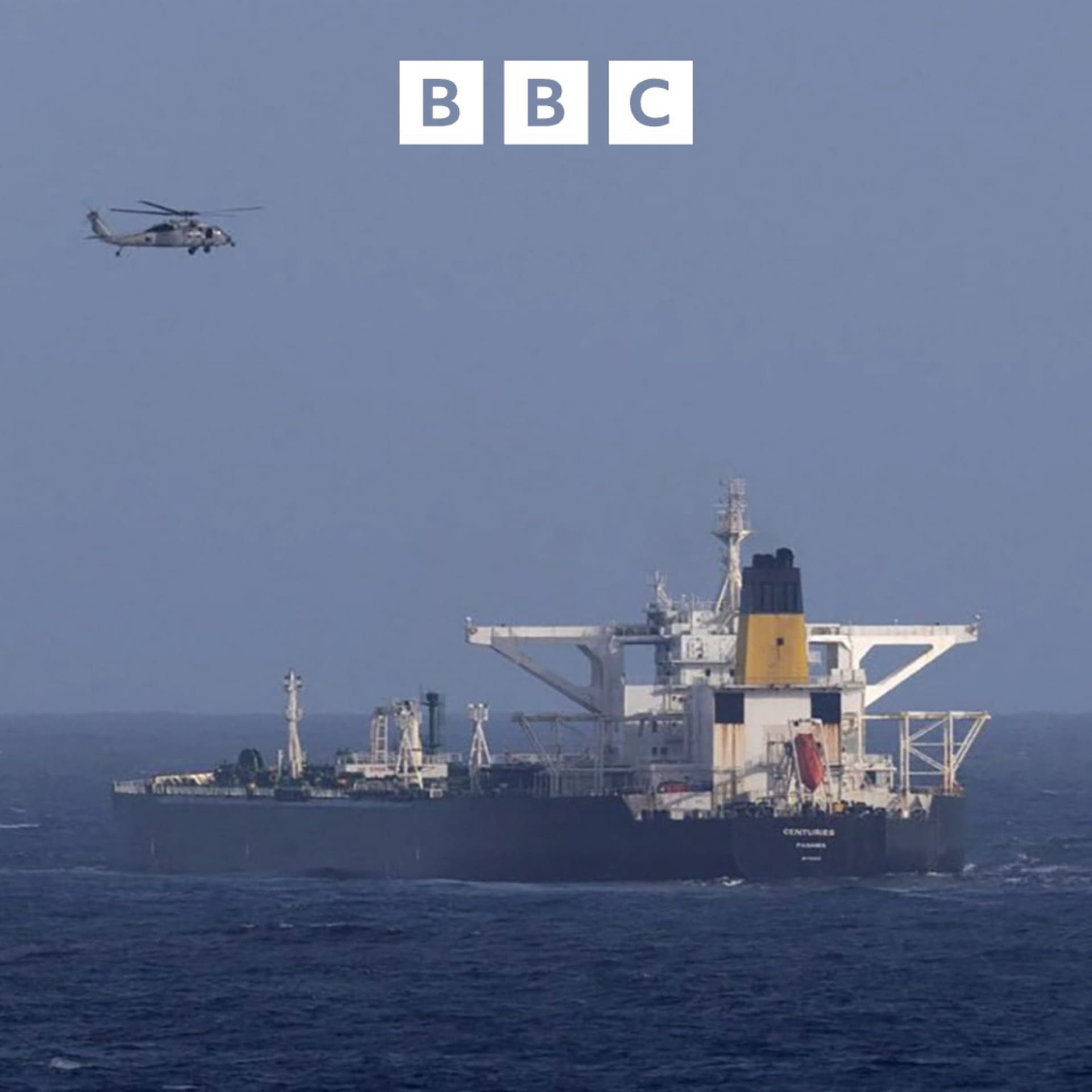
1:41The US has released dramatic footage of its military forces seizing an oil tanker off the coast of Venezuela, 10 days after taking control of another ship in similar circumstances. Washington claims the oil is being used to fund narco-terrorism, but Venezuela has accused the United States of theft and kidnapping. In recent months, the US has been building up its military presence in the Caribbean Sea, carrying out deadly strikes on alleged Venezuelan drug-smuggling boats. President Trump hasn't ruled out the possibility of war against Venezuela, something other regional leaders are deeply troubled by.
2:18The Brazilian President Lula da Silva warned that armed conflict would have catastrophic consequences.
2:29More than four decades after the Falklands War, the South American continent is once again astonished by the military presence of a foreign power. The limits of international law are being tested. An armed intervention in Venezuela would be a humanitarian catastrophe for the hemisphere and a dangerous precedent for the world. But Argentina's president and ally of Mr. Trump told the same meeting that he welcomed the US pressure to, in his words, free the Venezuelan people. Our correspondent in Washington, Sean Dilley, told me more about this latest oil tanker seizure. They had helicopters, they had military personnel, they had the Coast Guard.
3:10So in reality, we would have to say apprehended. But I think it's safe to say that that looked pretty much to us like they seized it. To what extent does this escalate the situation? I think it would be hard to say that it escalates it beyond the realm of anything we were already in because there was another tanker seized 10 days ago called the skipper president trump not long before that had posted to social media in a message in his words to drug dealers and pilots to consider the airspace above venezuela as closed so it's part of escalating tensions and let's not forget that since the summer there have been escalating military resources posted to the area initially least the US Navy were there.
3:52As time went on, those numbers increased. And last month, the largest warship in the world, the Gerald R. Ford, was placed within striking distance of Caracas. So that pressure is ratcheting up. But this is an expected consequence of the blockade of sanctioned oil that President Trump had announced earlier in the week. And what's the strategy? What's Washington's strategy here? On the face of it, the US is concerned about the transportation of drugs coming to America and harming Americans. And they're also concerned separately linked, they would argue, about oil that they argue is going to fund illicit terrorist organisations.
4:31There is a deeper narrative here, however. President Trump, when he was first elected, had very openly said he wanted a different president for President Maduro. So there are some very deep, complex reasons behind this. if they were totally what's being presented on the surface. Well, people ask, well, what about the neighbouring countries that are also involved in the transportation of drugs? And, of course, many of those drugs destined for Europe and many drugs that come in to the United States via Mexico. So there's the story they tell publicly and no doubt stories that they don't necessarily share quite so openly.
5:04And any response from Venezuela? Repeatedly, President Maduro has accused the United States president in the country more generally of having colonialist ambitions. With the seizure of the skipper 10 days ago, they said, well, this goes to show it's not really about drugs and it's not really about President Maduro. This is about wanting Venezuela's oil. So they have accused the United States of murder and theft on the high seas. And they've likened the US president and the United States to pirates of the Caribbean. There was a warning from the Brazilian president that war could cause a humanitarian disaster.
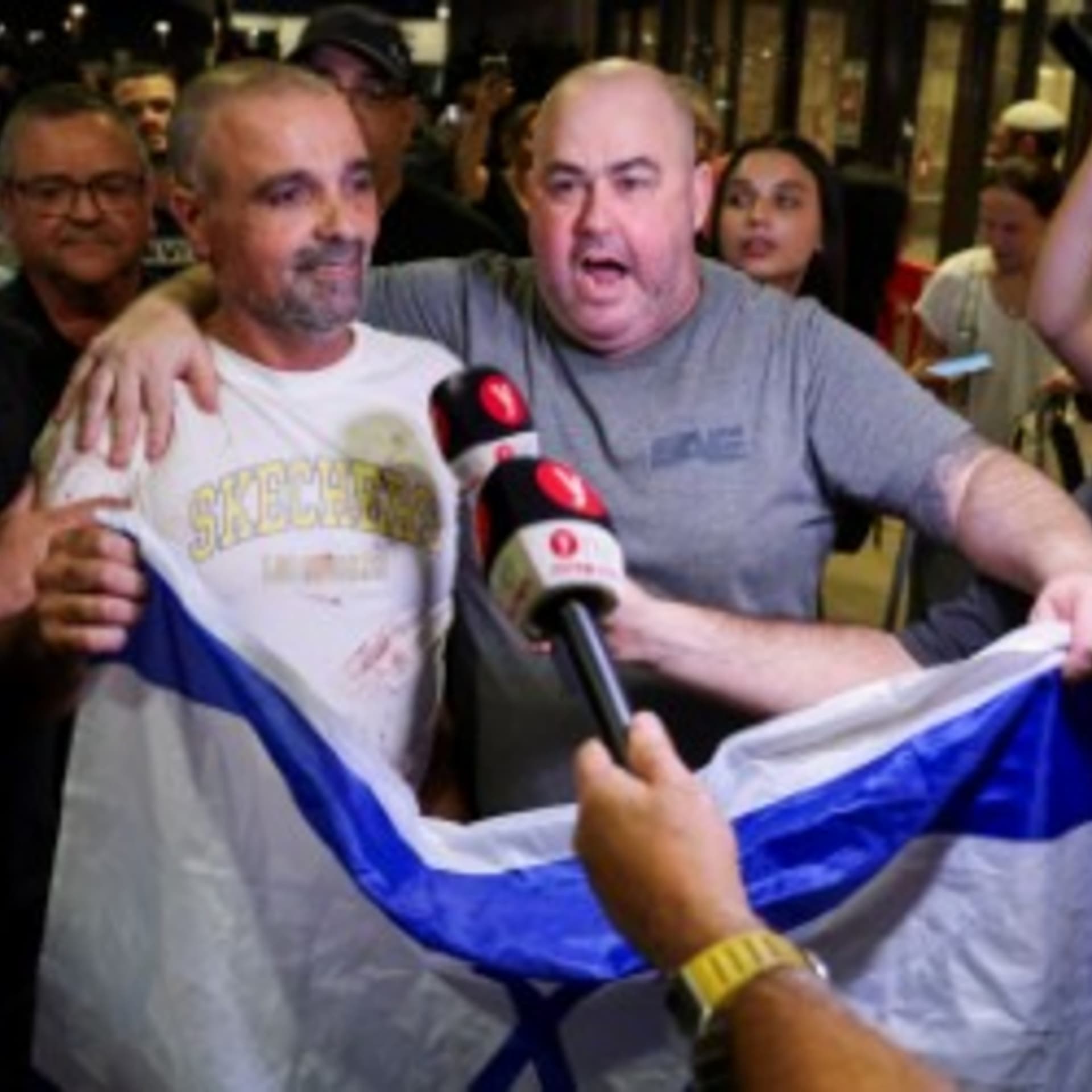
5:39Is that looking like something on the horizon? Well, President Trump is very well known for keeping all options on the table. There haven't been ground strikes. Although President Trump is indicating that he would consider it, that notably hasn't happened yet. So his strategy appears to be one of escalating the pressure on President Maduro through means other than ground strikes at the moment. Sean Dilley reporting from Washington. With just one Israeli hostages remain still held by Hamas in Gaza, Israel's hostages family forums largely winding down its operations. The campaign group was set up after 251 hostages were taken during the deadly Hamas-led attacks on Israel.
6:26168 returned alive. With the help of thousands of volunteers, the forum organized near-daily demonstrations. As tensions rose with Israel's government, it went global in its efforts to return captives to their families. Our Middle East correspondent Yulan Nel reports. Welcoming in the Jewish Sabbath in Tel Aviv's Hostages Square, the events led by the family of Ran Gavili, the last hostage in Gaza. The young police officer was killed by Hamas fighters in a kibbutz on the 7th of October, two years ago. His father, Itzhek, is determined to bring his body back for burial. We are still on the 7th of October, but we were strong and we are waiting for him and we do whatever we need and this gives us hope, the support of the people.
7:22From the start, people power has been key to the hostage families. There was chaos after the Hamas attacks which killed some 1 ,200 people in Israel, with more than 250 missing, distraught families gathered for the first time in Tel Aviv one week on from the assault. Among them was Gil Dickman, whose cousin Kamel Gat was being held in Gaza. We were together in this. It fell on me that this is actually real, that, OK, now we're going to face this unbelievable challenge of understanding where all these people are and getting them back home. And the second thing was understanding that, OK, we're in this together.
8:04I'm not going to stand alone. Bring them home! Bring them home! Bring them home became the rallying cry of the Hostages and Missing Families Forum, backed up by more than 10 ,000 volunteers and funded by donations. After the first truce of the Gaza war broke down, with about half of the hostages released, polls suggested Israelis prioritized defeating Hamas over the return of those still held captive. The forum brought in political strategist Lior Khorev. It appeared that everything was stuck and the public opinion was against us. As a civil society organization, we could not impact whether or not there's going to be a deal.
8:45But we could work hard on the Israeli public opinion to ensure that if a deal came into place, it will have a sound civilian majority within the country.
8:57With mass protests and powerful interviews, the hostages' families forum became a force to be reckoned with. it led to growing tensions with the Israeli government. But polls indicated a shift in public opinion so that most Israelis supported a ceasefire deal to bring home the hostages. Visiting foreign officials made sure to go to Hostages Square and the forum's nearby headquarters, recalls Israeli journalist Tal Schneider. This place became like a foreign ministry for the country, for the families of the 250 people. So they kept going 24-7 for two years. Someone was thinking from the early start on how to grasp the international media attention.
9:41It was very, very important. And I think they needed to bypass their own government. Ultimately, it was a foreign leader, the newly elected US president, working with regional mediators who secured the hostages' release, brokering deals between Israel and Hamas. Early this year, a prominent campaigner, Mikhail Levi, was emotionally reunited with his brother Orr. But after Israel ended the ceasefire, he continued to demonstrate with the relatives of others held captive. I couldn't just be happy. I had to fight for them as well because they became my family. We still have to keep fighting for Porani because his family deserves closure.
10:32Since the last 20 living hostages came home in October, the bodies of others have slowly returned. The remaining funds of the Hostages' Families Forum are now supporting the Gavilis, and the group's left its offices and taken down the stage in Hostages' Square. Painful questions linger over why more lives weren't saved. The Hostages' Families Forum recently released Hamas videos found in Gaza showing six hostages, including Carmel Ghat, celebrating Hanukkah months before their captors killed them. The hostage crisis continues to cast a long shadow over Israeli society, even as many take heart from the family's message of endurance and solidarity.
11:17Yuland now reporting. The Australian Prime Minister Antony Albanese has ordered a review into the police and intelligence services one week after the mass shooting at Bondi Beach in Sydney. Fifteen people were killed when two gunmen opened fire on crowds gathered to celebrate the Jewish festival of Hanukkah. Many within the Jewish community have long warned about a rise in anti-Semitic attacks, while other Australians say the attack has shaken their sense of safety. One week on, people gathered for a beachside vigil next to a makeshift floral memorial honouring those who died.
12:01Our correspondent Phil Mercer in Sydney has more on this day of reflection. It's very difficult to think of the events of last week, given that it seems such a long time ago now. So much has happened. We've had funerals. We've had the political leaders promising various measures around gun control and hate speech, promising to make Australians safer. But here we are, seven days after 15 people were murdered on Australia's most famous stretch of sand. The flags on the Sydney Harbour Bridge, they are at half-mast as they are on government buildings and other buildings right around the country. After dark, many of these buildings will be bathed in yellow light to honour those who were killed and wounded in the attack.
12:49The Prime Minister, Mr Albanese, will attend a special memorial at Bondi Pavilion today and Australia will pause to share its grief after one of its darkest ever weeks. Today we've also heard Australia's Prime Minister Albanese saying he has ordered a review into the police and intelligence services in the wake of this attack. Just tell us a little bit more about that. We've been hearing from government ministers who say that they've had complete faith in both the intelligence services and the police. But this review will make sure that they are properly equipped to cope with what the prime minister is describing as a rapidly changing security environment in this country.
13:35Mr Albanese, the prime minister, says that the attack in Australia a week ago was inspired by ISIS. And this review will be extremely thorough, according to the Prime Minister. It will look about how things might be able to change the processes and the powers to make Australians safer. And as you say, the review will be pretty prompt and it will be published in April. So certainly in the last seven days, we've seen a lot of grief. We've seen funerals, anger and sadness. but also we've seen at great pace the political response to this around gun crime, the response to anti-Semitism and now the response to Australia in terms of reviewing the performance and powers of its intelligence services and the Australian Federal Police.
14:22Phil Mercer reporting from Sydney there. Now to a flight being celebrated as a breakthrough for inclusion in space tourism. A German engineer has become the first wheelchair user to travel to space. She launched from Texas on a Blue Origin rocket. Carla Conte has been exploring this story. Chamber pressure looks good. Who gets to go to space is changing. On Saturday, Michaela Benthaus, a 33-year-old aerospace engineer from Germany, made her dreams come true when she left her wheelchair behind to blast off into space on board of a rocket ship. After damaging her spinal cord in a mountain bike accident in 2018, Michaela thought whatever chance she had to explore space had just vanished.
15:14But since the injury, her passion only grew stronger as she began researching ways to make space exploration accessible to people with disabilities. Now she has become the first wheelchair user to travel to space, launching from Texas with Blue Origin, the space tourism company founded by Jeff Bezos. She was accompanied by a retired SpaceX engineer also born in Germany, Hans Koenigsmann, who helped organize and sponsor her trip. The flight lasted around 10 minutes, with roughly three minutes of weightlessness. This was the moment Michaela and her five crewmates began to float.
16:01And as they touched back down on Earth, the adrenaline was still running high.
16:21Let's not stop you. I think you should never give up on your dreams, right? The mission, known as NS37, is the 16th suborbital space tourism launch carried out by Blue Origin, the cost of which has not been revealed. This comes at a time of fierce competition for private space companies as they battle for dominance in commercial spaceflight. Carla Conte reporting.
16:48Still to come in this podcast, the curious lemon-shaped planet that's fascinating scientists. Imagine if you had like a ball of Play-Doh and you put it next to a really strong vacuum, the vacuum would kind of suck the front and create this shape and that's exactly what's happening in this system.
17:11If journalism is the first draft of history, What happens if that draft is flawed? In 1999, four Russian apartment buildings were bombed, hundreds killed. But even now, we still don't know for sure who did it. It's a mystery that sparked chilling theories. I'm Helena Merriman, and in a new BBC series, I'm talking to the reporters who first covered this story. What did they miss the first time? The History Bureau, Putin and the apartment bombs. Listen on bbc.com or wherever you get your podcasts.
18:12Kirill Dimitrov is in Miami and has been meeting Donald Trump's special envoy Steve Whitcoff and President Trump's son-in-law Jared Kushner. Mr Dimitrov told reporters that discussions had so far been constructive. Our correspondent Samira Hussain reports from Kiev. President Zelensky said the proposed face-to-face talks would include Ukraine, Russia and the United States. The last time Russia and Ukraine held negotiations in person was in July. when the two sides agreed on a prisoner exchange, but not much more. Speaking to reporters in Kiev, Mr Zelensky acknowledged the new American proposal.
18:53Indeed, the United States of America said that they would have a separate meeting with representatives of Russia, and they proposed such a format, as far as I understand, Ukraine, America, Russia. Mr Zelensky added that the US has said the Europeans could also be present in the talks, a prospect that may not go down well with Russia as its relations with Kyiv's main allies are strained. The U.S. Secretary of State, Marco Rubio, has insisted Washington is not trying to force Ukraine to accept a peace deal and has said no agreement will be made unless Kyiv signs up to it. But with American envoys offering Ukraine security guarantees, it seems likely that Kiev will be expected to make territorial concessions.
19:41This is likely to spark a fierce backlash from many Ukrainians. And this latest flurry of diplomatic efforts to end the war comes after seven people died in Ukraine's southern region of Odessa in a Russian ballistic missile strike. Samira Hussain, since Russian forces invaded and captured large parts of eastern Ukraine, the Kremlin has tightly controlled news about life in the occupied regions. In recent months, though, videos from pro-Russian bloggers and content creators detailing life under occupation have attracted thousands of online followers. But many have described those videos as disinformation, as James Beardsworth has been finding out.
20:31Across Russian-occupied Ukraine, hundreds of content creators are making slick, professional-looking videos, celebrating life under Russian occupation. Mariupol is becoming better and better every day. Its changes are literally shocking, says 23-year-old content creator Maria Chushkina. Maria's blog is one of hundreds of channels run by often young, attractive men and women which broadcast pro-Russian content from occupied Ukraine to tens of thousands of followers. One of those creators is Elizaveta Cheriakova, a 21-year-old from Mariupol. Despite her city being almost completely flattened by Russia's invasion over three years ago, Elisabetta now posts pro-Russian content, posing in front of the Russian flag and celebrating the Kremlin's rebuild of her city.
21:29I asked her why she began making her videos. She's voiced by one of my colleagues, as she didn't want her voice to be broadcast. To be honest, I always want to create a content, even before all the famous events. And when everything changed, I saw that my city was often presented on the internet as a ghost town. And I wanted to show the reality that we are living, not what it's sometimes written in the news. The bloggers carefully choreographed their videos, often showing newly built apartment blocks, shops and restaurants built by Russia, but rarely mentioning the death and destruction caused by the war or who started it in the first place.
22:06Elisaveta told me more about how she believes her city has changed since Russia's arrival. There is a feeling that the city is coming to life, that life is gradually getting better, that the constant internal tension that used to be in the background has gone.
22:26Like many other content creators in the region, Elisaveta learned how to make her eye-catching content at the Donbass Media Centre, a series of newly opened schools across occupied Ukraine. The centres offer free vocational video-making courses to people under 25. Pavel Khodbovsky is a blogger and teacher at the school. He told me more about the centres. The Donbass Media Centre is a school of bloggers. A few hundred people have studied here. In Donetsk, in Lugansk, in Mariupol and one in Militopol. It's very cool because somebody needs to say what is happening in our region in order to tell, let's say, residents of Britain or France, so that when they watch the content, they understand that their government or the Ukrainian government is trying to sell them something that is far from the truth.
23:15Ilya Yablokov is an expert on Russian disinformation at the University of Sheffield in the UK. He has been monitoring these schools. They've created this network of media centres, propaganda outlets, let's put it that way, that aggregate information but also produce it on an industrial scale. If you look at the pictures, you see absolutely regular boys and girls. These guys are being trained to spread the message about the war in Donbass, or rather the peace in the Donbass. I put those claims to Elisaveta. Personally, I don't promote anyone's interest. I just live in my city and show my reality.
23:53I'm a patriot of my country, but this is not about work or promoting interest. Videos posted by the Donbass Media Centre show hundreds of teenagers doing presentations about what they call Russia's new regions, with prizes including trips to Moscow for the most successful students. According to Ilya, the content is created with a wide range of audiences in mind, both to show Moscow's occupation as a positive thing to a Russian domestic audience, as well as show an alternative reality of home to the millions of Ukrainians that were forced to flee their homes. Imagine yourself living as a refugee.
24:32You question quite a lot of things. So that message is to create the cognitive dissonance. This is how post-truth reality works. Media Freedom Group, Reporters Without Borders, have described the four Ukrainian regions partly occupied by Russia as information black holes where they say only Kremlin mouthpieces are allowed to work. James Beersworth reporting. Now let's take you out of this world for a moment because scientists say they are baffled by a bizarre lemon-shaped planet that defies explanation. The exoplanet, which is outside our solar system, is the size of Jupiter and was discovered with the help of the James Webb Space Telescope.
25:18Maya Belezny from Stanford University was involved in the study and told Rebecca Kesby what makes it so remarkable. The very special thing about it is its shape and its composition. This is a very unique system. It's 2 ,000 light years away from us. And we have a planet-like object orbiting around the remnant of a dead star. And this dead star is very interesting because it's the size of a city, only 10 kilometers in radius, but it weighs almost two times the mass of our sun. So it has a, yes, and it has a really strong gravitational pull. And it's this pull that is causing this planet to be distorted into this lemon-like shape.
25:59You can imagine if you had like a ball of Play-Doh and you put it next to a really strong vacuum, the vacuum would kind of suck the front and create this shape and that's exactly what's happening in this system. Interesting. Do we know if it's like made up of gases or whether it's actual matter? What kind of planet is it? Yes, so the surface has gas and presumably it's getting denser and solidified in the middle as it cools down. It's difficult to say what this really is. So this is actually a tough question to answer. We're not sure if this is really a planet or the remnant of a star. And so what the focus of this study was, was to study sort of what's on the surface, because that's really all we can see.
Read the full transcript
26:42When astronomers measure light coming from stars or planets, that light is really only telling us what's on the surface. So it's really difficult to tell what's actually on the inside. But from what we can see, the outside is just covered in carbon, which is something that has never been seen before. Goodness. I mean, all this sounds very bizarre, in fact, in terms of what we know of other planets and universes. Could you believe that this is what you were seeing? And how does it help us understand space? Or does it change what we understand about space? It's really incredible. And honestly, it raises more questions than answers.
27:18Our team has been debating for almost a year now about what this object really is. You know, it fits the definition of a planet. It's the same size, it's the right mass, it's the right density, but planets form from all the debris that's around stars. And that debris contains all sorts of atoms, not just carbon. We can't explain with planetary formation models how this can be a planet. Maya Belezny from Stanford University.
27:48And that's all from us for now but there will be a new edition of the Global News Podcast later If you want to comment on this podcast or the topics covered in it you can send an email to globalpodcast at bbc.co.uk This edition was mixed by Chris Lovelock and the producers were Arian Kochie and Chantal Hartle The editor is Karen Martin I'm Anna Holligan. Until next time, goodbye.
28:26If journalism is the first draft of history, what happens if that draft is flawed? In 1999, four Russian apartment buildings were bombed, hundreds killed. But even now, we still don't know for sure who did it. It's a mystery that sparked chilling theories. I'm Helena Merriman, and in a new BBC series, I'm talking to the reporters who first covered this story. What did they miss the first time? The History Bureau, Putin and the apartment bombs. Listen on bbc.com or wherever you get your podcasts.
From the publisher
The United States has released dramatic footage of its forces seizing an oil tanker off the coast of Venezuela, ten days after taking control of another ship in similar circumstances. Washington says the tankers’ oil is funding narco-terrorism, while Caracas accuses the United States of theft and kidnapping.
Also: with just one Israeli hostage’s remains still held by Hamas in Gaza, Israel’s Hostages Family Forum begins winding down its operations. The Australian prime minister, Anthony Albanese, has ordered a review into the police and intelligence services after the mass shooting at Bondi Beach last week. President Volodymyr Zelensky says he would support direct talks between Ukrainian and Russian teams if it unlocked prisoner swaps or paved the way for negotiations between him and Vladimir Putin. A German engineer becomes the first wheelchair user to travel to space on a Blue Origin rocket. And astronomers marvel at an unusual lemon-shaped exoplanet the size of Jupiter spotted with the James Webb Space Telescope.
The Global News Podcast brings you the breaking news you need to hear, as it happens. Listen for the latest headlines and current affairs from around the world. Politics, economics, climate, business, technology, health – we cover it all with expert analysis and insight. Get the news that matters, delivered twice a day on weekdays and daily at weekends, plus special bonus episodes reacting to urgent breaking stories. Follow or subscribe now and never miss a moment. Get in touch: globalpodcast@bbc.co.uk