In short
The episode covers: US strikes on Iran after alleged renewed attacks on commercial shipping in the Strait of Hormuz; NATO talks amid Russia’s Ukraine war and Russia’s fuel shortages from Ukrainian strikes on oil refineries; France’s far-right Marine Le Pen confirming she’ll run for president after an appeals ruling tied to an embezzlement conviction; IOC provisionally lifting Russia’s Olympic ban for 2028; BBC investigation into super-strength cannabis (“caliweed”) smuggled into the UK; World Cup quarterfinal matchups; and a Manhattan skyscraper evacuation after structural damage during a Pfizer-to-apartments conversion.
Guests
Peter Bowes (BBC North America correspondent, reports on Iran strikes); James Landale (BBC diplomatic correspondent, reports on Russia fuel queues); Sophie Pedder (Economist Paris bureau chief, on Le Pen appeal); Vitaly Shevchenko (BBC Monitoring chief analyst, on IOC/Russia sports policy).
Written by AI. May contain mistakes. Listen to the episode to check what was said.
Chapters
Tap a time to open that second in VOUS Strikes Iran: An Escalating Conflict
0:39 to 1:40
Discussion of US strikes against Iran related to shipping threats in the Strait of Hormuz.
“I'm Celia Hatton, and in the early hours of the 8th of July, these are our main stories.”
Iran's Response and Military Posture
1:40 to 3:03
Exploration of Iran's military response and the implications of US sanctions.
“but the conflict between them is heating up around the Strait of Hormuz.”
Russia's Fuel Crisis Amidst War
3:03 to 4:50
Insights into Russia's fuel shortages due to the ongoing conflict in Ukraine.
“The US said Iran's actions were a clear violation of the ceasefire and that it had demonstrated, it says, unwarranted and dangerous aggression.”
Putin's Strategy and Public Sentiment
4:50 to 8:57
Analysis of public sentiment in Russia about the fuel crisis and Putin's response.
“His country is experiencing widespread fuel shortages as Ukrainian missiles and drones continue to strike Russian oil refineries.”
Marine Le Pen's Presidential Campaign
8:57 to 12:19
Coverage of Marine Le Pen's confirmation to run for president amid legal challenges.
“But their president may disappoint NATO leaders, hoping for change in the Kremlin.”
IOC Lifts Ban on Russian Athletes
12:19 to 14:01
Discussion on the IOC's decision to provisionally lift the ban on Russian athletes for the Olympics.
“Well, for much of the past decade, Russia has been banned from the Olympic Games, initially for state-sponsored doping and then for its full-scale invasion of Ukraine.”
Russia's Olympic Participation Debate
14:01 to 16:18
Explore the implications of Russian athletes potentially competing in the Olympics.
“It seems as though the International Olympic Committee and possibly other governing bodies in global sports are not that concerned anymore about what Russia is doing, specifically what it's doing in Ukraine.”
Introduction to Global Story Podcast
16:20 to 17:16
Hosts introduce the Global Story podcast and its upcoming topic on 'Made in China'.
“Did you not feel that you were being exploited?”
Severe Weather and Landslides in China
17:48 to 20:42
Discuss the aftermath of intense storms and landslides in China.
“To China now, large parts of the country have been experiencing intense storms.”
The Rise of Super-Strength Cannabis in the UK
20:43 to 24:41
Investigate the smuggling of super-strength cannabis into the UK and its implications.
“A BBC investigation has uncovered a multi-billion dollar business of super-strength cannabis being smuggled into the UK.”
Show all 13 chapters
World Cup Quarterfinals and Controversies
24:44 to 28:01
Analyze recent World Cup matches and the excitement of upcoming quarterfinals.
“Now to the men's football World Cup, where we're now down to the business end of the tournament.”
Building Safety Concerns in Manhattan
28:01 to 29:21
Learn about the evacuation and safety measures taken due to building issues in Manhattan.
“This man, Miles Grant, says he used to work inside the building.”
The Trend of Repurposing Office Buildings
29:21 to 30:58
Discover the trend of converting office buildings to residential spaces in NYC.
“which is just a street or two up the road as well.”
Transcript
Automatic transcript. May contain errors.0:00This BBC podcast is supported by ads outside the UK.
0:30so you can monitor and engage with the account while your teen learns how to invest and manage money. Learn more at schwab.com. This is the Global News Podcast from the BBC World Service. I'm Celia Hatton, and in the early hours of the 8th of July, these are our main stories. The US has carried out a series of strikes against Iran in response to what it calls renewed Iranian targeting of commercial shipping in the Strait of Hormuz. The French hard-right leader Marine Le Pen says she's still running for president next year, despite losing her appeal against a conviction for misuse of European Parliament funds.
1:12Also in this podcast, we look ahead to the quarterfinals of the men's World Cup and some mouthwatering clashes. And... I mean, I saw the state of that building. It was a lot of construction going on. The building was pretty old. I mean, I hope they get it fixed. The New York City skyscraper that shut down a large part of Manhattan.
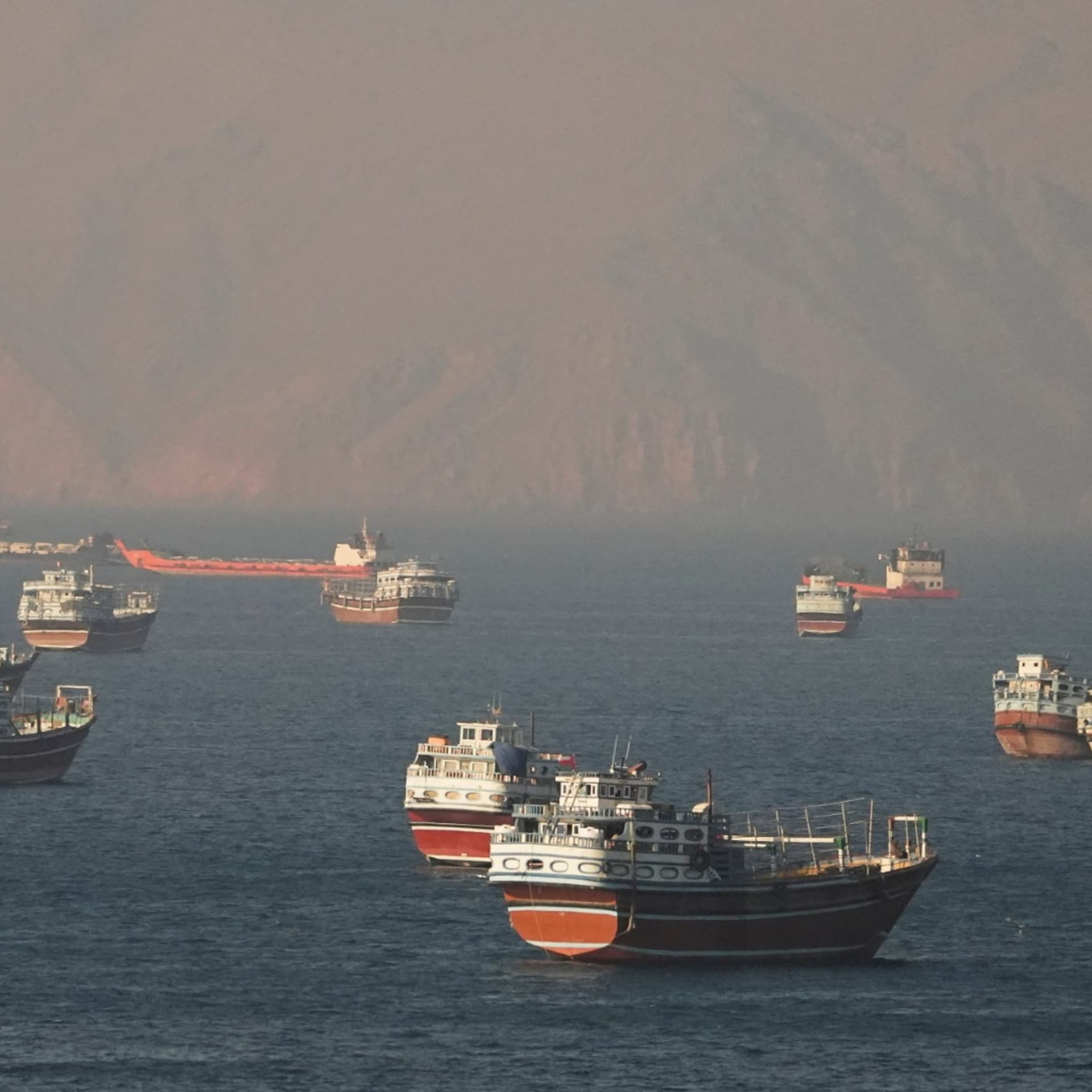
1:39The United States and Iran are supposed to be working out a peace deal, but the conflict between them is heating up around the Strait of Hormuz. U.S. Central Command says the powerful American strikes hitting targets in Iran came after reported Iranian attacks on commercial ships transiting through the strait. It says it's struck over 80 targets, including Iranian air defence systems. Iranian media is reporting hits in multiple locations in the south of the country. Our North America correspondent Peter Bowes told me the latest. Iranian media has reported several explosions in the southern port city of Sirik, as well as Keshem Island and Bandar Abbas.
2:22And these do, in fact, appear to be the heaviest U.S. strikes since the ceasefire came into effect. The statement from U.S. Central Command is strongly worded. It says American forces have launched a series of powerful strikes to impose what it describes as heavy costs for targeting and attacking commercial shipping, crude, it says, by innocent civilians in an international waterway. Now, those attacks described earlier by a US official as wholly unacceptable. It was earlier also that the British military said that three tankers had been hit in the Strait of Hormuz within a 24-hour period on Monday and Tuesday.
3:02No casualties were reported. The US said Iran's actions were a clear violation of the ceasefire and that it had demonstrated, it says, unwarranted and dangerous aggression. And it's not just strikes going back and forth, is it? The US has also reimposed oil sanctions on Iran? Yes, the US's initial response, when we heard about this really just before those later strikes, was to revoke a license which temporarily lifted some sanctions on Iran as part of the Memorandum of Understanding into the Cessation of Hostilities. That's when these sanctions were first brought into effect. But the sanctions waiver had allowed the Islamic Republic to produce, sell and deliver oil.
3:47So it was a key part of the process to get to the next stage of the negotiations between the US and Iran with the big issues, nuclear weapons still to be resolved. Iran's foreign ministry has called the move a breach of the memorandum and it said that it proved the bad faith, inconsistency and unreliability of the US government. And it It added that Tehran would take whatever measures it considers necessary to safeguard its national interests and national security. Peter Bowes in Washington. Iran's top joint military command has said Iranian armed forces would deliver a crushing response to the US.
4:27They added that they wouldn't allow US interference in the management of the Strait of Hormuz, saying the only safe passage for commercial ships through the strait was a route determined by Iran. While NATO leaders who are currently meeting in the Turkish capital, Ankara, won't just be discussing Iran at their gatherings, they'll also want to talk about Vladimir Putin and what he plans to do next. The Russian leader is not getting it all his own way in his war with Ukraine. His country is experiencing widespread fuel shortages as Ukrainian missiles and drones continue to strike Russian oil refineries.
5:02Will that encourage Mr. Putin to talk or fight back? Our diplomatic correspondent James Landell in Moscow sent this report.
5:13If you want to get a sense of the fuel crisis gripping Russia, take a drive around Moscow. There are queues at most petrol stations, some short, some long. And if there are none, it means there's no petrol left. Little wonder some folk are feeling frustrated. Yekaterina tells us she's not happy. I think it's a point of panic because everybody thinks that there will be no oil.
5:45Valeri says he thinks it's a bit strange having to queue for fuel in a country that extracts so much oil. Andrei accepts things could get worse, but he's not afraid. We survived through the 90s, he tells us. We remember times which were more difficult. It doesn't scare us. But Elmar tells us there's no fuel, prices are rising, and he's rethinking a road trip to Dagestan. And what's to blame? In our country, you cannot say what's to blame, he tells me.
6:25Well, what's immediately to blame are the rising number of Ukrainian drone and missile attacks on Russia's oil refineries, strikes deep within Russian territory. And less fuel means more queues. For years, Vladimir Putin's tried to insulate people from the impact of his war on Ukraine. Well, these queues are making that much harder. For these drivers, the war is not just coming closer to home, it's having a material impact on their daily lives. And that's true for Russians across this vast country. Social media is awash with images of queuing drivers, not all of whom remain patient. Call the police, she cries, as a fight ensues.
7:10Images of angry drivers go viral, as do aerial shots of snaking queues kilometres long, such as in Chita, in Russia's Far East.
7:23Here's a queue, says the man, and it's now gone into its second day. It's just crazy. So how worried is the Kremlin? Well, President Putin is concerned enough to address the issue publicly on state TV.
7:39These attacks on our infrastructure facilities are obviously creating problems. We are currently seeing a certain shortage, but it's not critical. When President Zelensky meets Donald Trump at the NATO summit, he'll argue the fuel shortage is putting pressure on the Kremlin to change tack. But when Vladimir Putin spoke to the US president at the weekend, he accused Europe of spreading false perceptions. But will all this economic turmoil translate into political pressure? Nina Khrushcheva, professor of international affairs at the New School in New York, tells us President Putin is unlikely to bend.
8:19The more pressure he feels, the more likely he would act aggressively and repressively. Another argument coming from Europe is that if you can force Putin to negotiations table, that's a wet dream. I mean, that doesn't happen. All the signs now are that President Putin will double down. He's been filmed in military fatigues, meeting commanders, claiming victories on the front line, promising to take yet more territory. So Russians are queuing for fuel. The war has come a step closer. But their president may disappoint NATO leaders, hoping for change in the Kremlin.
9:05James Landale in Moscow. Next to the hot political story coming out of Paris. In an earlier edition, we covered a court case in France which cleared the way for the far-right leader, Marie Lapin, to run for president. Ms. Lapin has now confirmed that she will run in the next presidential election after the appeals court ruling. That's despite an embezzlement conviction which requires her to wear an electronic ankle tag for a year. On French television, the longtime party leader said she would appeal against that restriction and said that she would not be required to wear the tag while the appeal was still being heard.
9:44I'd indicated, as you know, that I would not campaign while wearing an ankle tag, but my appeal to the High Court suspends the effects of the ruling. I will therefore campaign without an electronic bracelet. So this evening, I am a candidate for the presidential election. I'm a candidate for the presidential election.
10:28Rally Party. He's happy she's now a presidential candidate. Of course, Marine Le Pen is our candidate. And now we are happy to see that she's free to be the candidate for the run for the presidential election. And we are happy to see that the French people will be able to decide and not judges decide on politics in France. It will be the fourth time that Ms. Le Pen will run for the presidency, and her party is currently leading in the opinion polls. We spoke with Sophie Pedder, Paris bureau chief for The Economist. What makes a real difference is the fact that the court ruled that not only it was shortening her sentence, this ban on her running for elected office, but that she had already served that part of the penalty.
11:15And that is what's made the difference for her. She now can run. She doesn't have to run, but the decision was in her hands. And that's, I think, where things shifted for her this afternoon. What it also did, however, is impose the wearing of the ankle tag. Now, that is something that is going to be quite unprecedented in France. I can't think of a single presidential election with a candidate in that situation. She's going to contest it, as you just said, in the highest court, the Cour de Cassation. The argument she was making on French television this evening is that, you know, given that the court had reduced the sentences, She thought that she had a case to take to the highest court.
11:53So she may think that she can some way, there's some way around that or a way of making that to sort of shortening the time frame for the wearing of it. She's a populist candidate. She has already in the past given, you know, made a sort of victimhood appeal about all of this. And I think that she will continue to appeal to the general voter who thinks that she's been hard done by the whole court situation. Sophie Petter in Paris. Well, for much of the past decade, Russia has been banned from the Olympic Games, initially for state-sponsored doping and then for its full-scale invasion of Ukraine.
12:29But Russian athletes could be allowed to compete in the 2028 Games after the International Olympic Committee provisionally lifted Moscow's suspension. The last time Russia competed in an Olympics under its own flag was in Rio de Janeiro in 2016. Kirstie Coventry is the IOC president. We wanted to ensure all athletes have the possibility to compete at the Olympic Games and not be held responsible for their government's actions. And I believe that this is what this decision speaks to. But we've also been very clear that we do not condone any violence and war around the world. We will continue with that stance and we will review the protocols around the anthem and flag in the future.
13:15Russia's sports minister Mikhail Dityrov said the committee had given a clear signal that the Olympic movement must remain free from politics. The president of the Swedish Olympic Committee, Hans von Uttmann, said it sent the opposite message. It is disappointing. We believe it's wrong. And we've been very clear about that. And while we have to respect the IOC's decision, we think it's unfortunate. There's nothing in the ongoing war that justifies allowing Russian athletes to compete in the Games. Nordic and Baltic associations have been very clear on where we stand, but other member nations are of another opinion.
13:56Ukraine says the IOC's decision is premature and unfounded. Oliver Conway heard more from BBC Monitoring's chief analyst Vitaly Shevchenko. It seems as though the International Olympic Committee and possibly other governing bodies in global sports are not that concerned anymore about what Russia is doing, specifically what it's doing in Ukraine. And what the International Olympic Committee said today, they provisionally lifted the suspension of the Russian Olympic Committee because it no longer was active in occupied parts of Ukraine. Now, Russian athletes and competitors have appeared in various competitions, albeit maybe not with their flags or not as part of an official Russian team.
14:50What are we likely to see at the next Olympics? The next Olympics are taking place in 2028 in Los Angeles. Donald Trump will still be in charge and I'm sure he will not be hugely opposed, put it this way, to seeing Russian athletes with Russian flags there. And also, I would argue that there will be spectators who would want to see the best athletes competing, regardless of which country they're representing and what that country is doing to its neighbours. there is one country that will be particularly opposed to this happening and that country is Ukraine. It's been really vocal to what we've seen over the past years, this gradual relaxation of bans on Russian athletes competing, permissions for them to compete under neutral flags in a neutral status.
15:55The Ukrainian foreign minister, for example, Andriy Sibiha said that this, and I quote, betrays the very spirit of sport. And I was looking at what people in Ukraine are saying on social media today. And one commentator called Lachin, he's saying, it's a madhouse. Vitaly Shevchenko. Still to come in this podcast. Did you not feel that you were being exploited? No, no. It was a choice I made. What are you feeling when you're walking through that airport? You know, you're wondering if anybody sees me. I was just thankful for it when it was all over. The BBC tracks super-strength cannabis flooding into the UK.
16:46When you hear the phrase made in China, what do you think? I'm Tristan Redman. And I'm Asma Khalid. And together we host the Global Story podcast from the BBC. And today on our show, we look at the origins and evolution of made in China, because it actually wasn't inevitable. What we're talking about is the world's largest communist nation is at the beating heart of the capitalist system. For more, listen to The Global Story on bbc.com or wherever you get your podcasts. Decisions made in Washington can affect your portfolio every day. But what policy changes should investors be watching? Washington Wise is an original podcast from Charles Schwab that unpacks the stories making news in Washington right now and how they may affect your finances and portfolio.
17:36Listen at schwab.com slash Washington Wise. That's schwab.com slash Washington Wise.
17:48This is the Global News Podcast. To China now, large parts of the country have been experiencing intense storms. More than 20 people were killed in a landslide on Tuesday in the northwestern Gansu province. Rescue teams are still at the scene. And in the southern region of Guangxi, heavy rain caused widespread flooding, leading to four deaths. The authorities are warning people in parts of southern China to prepare for more heavy rainfall. Our correspondent Stephen MacDonald joined me from Beijing and began by telling me about that landslide in Gansu. Of all the various places where China is struggling with these emergency weather events, it seems Gansu has been the worst in terms of the death toll because now we're hearing that 21 people have died in that landslide.
18:38And it was a group of workers just heading along a road, they were going to clear some forests or something. And all of a sudden, a landslide came down and covered their trucks. Some people have been pulled out. But unfortunately, it turns out most of them have died. Really extreme weather hitting large parts of China. Can you describe what you've been seeing? The state media has released some dramatic footage over the last few days. Yes. And given how serious, well, for example, the flooding has been in Guangxi, it's quite remarkable that there aren't more people dead. I mean, the power of these swollen rivers, there are apparently 341 dams where the water level has reached emergency levels.
19:23Many of those, the water's pouring over the side, and at least one of them has seen huge cracks and holes emerge in the dam with flood water pouring through it. Now, Now, given all of that, only six dead and 11 missing. I say, of course, for the families of those people involved, it's absolutely terrible. But when you consider that 130 ,000 people have been moved to safer locations, it could be much worse. The bad news, first, is that more heavy driving rain is expected over the coming days. But the good news is that the People's Liberation Army specialist flood rescue teams have arrived on the ground in Guangxi And as you know, China is pretty good at managing these disaster situations because it has very good equipment.
20:12It can throw a lot of resources at these emergencies. And so it seems that most who have been cut off, slowly but surely, the rescue teams are getting to them. People sitting on roofs are being brought into boats and what have you. And then you've got all that on top of that tornadoes hitting Hubei province. And 11 people killed there. So a lot of terrible weather, all apparently caused by global warming. Stephen McDonnell in Beijing. A BBC investigation has uncovered a multi-billion dollar business of super-strength cannabis being smuggled into the UK. Originally known as caliweed, this strain of cannabis was first cultivated in California, but it's now being grown in Thailand and then shipped to the UK, either by cargo transport or human drug mules.
21:05Last year, the British authorities seized 167 tonnes of the drug with a street value of more than$2 billion. More from our investigations reporter, Scott Hesketh. Super-strength cannabis is flooding the UK like never before, with Border Force officials seizing record amounts. But what's behind the clamour? This is Zee, not his real name. He agreed to talk at an undisclosed location after I was introduced by a source close to the UK drugs trade. Zee operates in Thailand, where legalisation prompted a freewheeling market and major interest from gangs in Liverpool and Manchester. The Thai guys out there on a remote island, we started to grow Kali weed.
21:49Zee recruits local growers to cultivate seeds he buys from legal dispensaries in California, growing it on the cheap in unlicensed conditions to mimic the sort-after Cali strains. He shows me astonishing pictures of what he says is his latest yield. He says 100 kilos landed in the UK before Christmas. Yeah, the buyers are all up at Liverpool, Manchester, mainly up the north, who we know. Z recruits couriers to smuggle the drug into the UK. They don't really know much. They're just thinking it's a holiday. Unlimited drugs, unlimited girls. On the last day, that's the day when you just put it on them.
22:27Yeah, take these bags. Last year, British border officials seized 167 tonnes of herbal cannabis. The hall includes 28 tonnes flown in suitcases by 800 couriers arrested by the National Crime Agency. I've had a couple of binges on heroin, a bit of the crack cocaine. This courier told me he brought back cases to pay off a drugs debt. He said he'd got through six times. Did you not feel that you were being exploited? No, no. It was a choice I made. What are you feeling when you're walking through that airport? It's stressful. You know, you're wondering, has anybody seen me? I was just thankful for it when it was all over.
23:09Tightened security at airports has left traffickers looking for alternative smuggling methods, with gangs shipping it over, hidden in cargo. Z says he used popcorn cans to send packages to Manchester. He's even used the post. Do they know what it is they're taking delivery? Yeah, paratrainers. Once Z's product lands in the UK, it's placed in shiny packaging to make it look like it's a premium Californian import. What would you say to people who say cannabis is a harmful drug? Nobody could even improve it, no, don't we? It's got depression, anxiety. Yeah, I beg to defer. So these are lab-based data.
23:49Psychiatrist Dr Marty DeForti led the UK's biggest study on cannabis and psychosis. So the greatest risk is associated in the chance of developing a clinical psychotic disorder predominantly driven by paranoia. So people might also hear voices that nobody else can hear and then we are beginning to unlock also potential risk for general physical health. So for instance there is something called scrumeting. Scrumiting. It's a fusion between screaming and vomiting. In a statement, the Home Office called our reports concerning. They said seizures hit a record high last year, taking massive quantities of drugs out of circulation and costing gangs billions.
24:30Do you think the Home Office crackdown is working? No. Why? Because more of it is coming through. It's never going to stop. Our investigations reporter, Scott Hesketh. Now to the men's football World Cup, where we're now down to the business end of the tournament. We know the teams who are going to play in the quarterfinals. Argentina secured their place in the last eight after coming from two goals down with just over 10 minutes to go to beat Egypt 3-2. And after that, Switzerland beat Colombia on penalties. Our correspondent Gary Rose watched the game in Vancouver. This stadium in Vancouver is one of these that have got a closed roof.
25:10so pretty much any game here will have an amazing atmosphere but the Colombians really built a party here they marched down to the stadium in the numbers it was like a sea of yellow, the colour of their shirts through the downtown to the ground and then it was the same in the stands they absolutely dominated to the extent it was probably like a home game and you just think when there's that amount of support that level of noise, the advantage would be with them but credit to the Swiss because they dealt with that situation really well They obviously sort of cancelled out the Colombians. It was a very even game.
25:43It wasn't the most entertaining games in the world. But when you get to the point of extra time, you hope for penalties. And then we got plenty of drama in that. Well, speaking of entertaining games, that nail-biter between Argentina and Egypt, it really looked like Egypt was going to win. Yeah, exactly. I mean, you know, this World Cup has definitely delivered games with drama and games with controversial moments. I mean, yeah, Egypt was 2-0 up with just 12 minutes to go. But then Argentina, they scored three goals. one coming in stoppage time to win it. As I say, it wasn't without controversy.
Read the full transcript
26:13And there were some VAR calls and some of the official calls that the Egyptians weren't happy with afterwards. Their boss was saying that they were treated unfairly and suffered injustice. So it wasn't without controversy, but one of the big guns has now gone through to the quarterfinals. And now we have all the quarterfinalists. There are some exciting games coming up. What should we be looking out for? So the quarterfinal lineup is looking brilliant so far. It's got some of the really strong contenders that have looked great so far throughout the tournament. France, one of them. They've been great with Kylian Mbappe on fire.
26:44They're up against Morocco, sort of one of the more modern giants now. They're always doing well in major tournaments and got to the 70 finals of the last World Cup. And then we have Spain-Belgium, which is a great all-European clash. Spain are looking strong. Belgium did well to sort of thrash one of the co-hosts USA in the last round to go through. And then we have England versus Norway, which is England versus Erling Haaland is likely how it's going to be billed, with them knowing all about his exploits for Manchester City. And again, he's been scoring regularly at this tournament as well. And then finally, Argentina-Switzerland.
27:16We could have had Argentina versus Colombia, which would have been an exciting tie. But yeah, this should still be interesting because the Swiss, I don't think, can be discounted really. They showed today they can handle high-pressure moments. And I think they'll be in a similar situation when they face Messi of Argentina as well. Gary Rose in Vancouver. And last, let's focus on what's happening in New York City, a skyscraper located in Manhattan, has been evacuated after showing potential signs of collapse. The building, the former headquarters of the pharmaceutical giant Pfizer, is currently being converted into apartments.
27:50Emergency services were called in after bricks were seen falling from the upper floors. After structural damage was found inside, the tower was forced to close along with other buildings nearby. This man, Miles Grant, says he used to work inside the building. I mean, I saw the state of that building. It was a lot of construction going on. The building was pretty old. I mean, I hope they get it fixed. They were converting it to residential and it definitely needed a lot of work to become ready for residential. No injuries have been reported, but the closure has brought a huge section of Manhattan to a standstill.
28:28The newsroom's Pete Ross told us more. Let's get a picture of exactly where this building is. It's in central downtown Manhattan, which is not only one of the busiest parts of New York, it's also an area of the town that is crammed full of these huge skyscrapers. Nearby, you've got the United Nations headquarters and the famous Art Deco Chrysler building, which is perhaps one of the most recognisable buildings in the Manhattan skyline. Now, this particular disruption began on Tuesday morning after, as you say, reports of falling bricks. The fire department were called in And after an inspection, the decision was made to evacuate and set up a so-called frozen zone around the building.
29:07That meant evacuating not only that building, but office blocks around it, hotels, streets were closed, and an emergency response was brought in that disrupted the morning rush hour around the very busy Grand Central Terminal, which is just a street or two up the road as well. Now, as for the building itself, a safety manager for the building says that a steel beam on the 21st floor was compromised. Two support columns inside the building were buckling. And according to fire officials, several upper floors were sagging. You can see some pretty dramatic video of this online. Now, New York City Mayor Zoran Mamdani has described the situation as extremely serious.
29:48However, the New York City fire chief has allayed concerns that this building will completely collapse, saying that it's been constructed in such a way that it won't happen. However, what could be possible is, in his words, a localised collapse. Interesting. I mean, this is a bit of a running theme in New York City right now, isn't it? It's not the first building of its kind in New York to suffer problems with construction. That's right. This particular building has actually been beset by previous problems. It's been the focus of multiple complaints. There's a construction worker that filed a lawsuit after he was injured last year.
30:24But yeah, this building conversion of this particular building and other buildings is part of a broader effort to repurpose many empty office blocks in that part of Manhattan as more and more people work from home. Perhaps one of the most famous examples as well. Another issue is that they're, you know, somewhere like New York, space is at a premium. So they build very tall, high towers. They're called pencil towers. The most famous example perhaps is 432 Park Avenue in the Billionaire's Row. It's a very salubrious part of Manhattan, but it's a very high one. And that's had lots and lots of issues.
30:58So this is something that you see quite often in New York. And when it happens, because everything's so tightly crammed together, it can cause huge disruption. Pete Ross. And that's all from us for now. Now, if you want to get in touch, you can email us at globalpodcast at bbc.co.uk. You can also find us on X at BBC World Service. Use the hashtag Global News Pod. And don't forget our sister podcast, The Global Story, which goes in-depth and beyond the headlines on one big story. This edition of The Global News Podcast was mixed by Holly Smith. The editor is Karen Martin. I'm Celia Hatton. Until next time, goodbye.
From the publisher
The US carries out strikes in Iran, in retaliation for what it says is renewed Iranian targeting of commercial shipping in the Strait of Hormuz. Tehran has condemned the attacks. Also: the French far-right leader Marine Le Pen confirms she will contest next year's presidential election. China is dealing with severe rain and flooding that's left more than 20 people dead. Super-strength cannabis is flooding Britain. The line-up for the quarter-finals of the World Cup is now complete, and a Manhattan skyscraper has been evacuated after fears that it could collapse.
Global News Podcast brings you the breaking news you need to hear, as it happens. Listen for the latest headlines and current affairs from around the world. Politics, economics, climate, business, technology, health – we cover it all with expert analysis and insight. Get the news that matters, delivered twice a day on weekdays and daily at weekends, plus special bonus episodes reacting to urgent breaking stories. Follow or subscribe now and never miss a moment. Get in touch: globalpodcast@bbc.co.uk
Photo: Vessels at the Strait of Hormuz, as seen from Musandam, Oman. Credit: REUTERS/Stringer