In short
Global News Podcast - Episode Summary
Episode Title
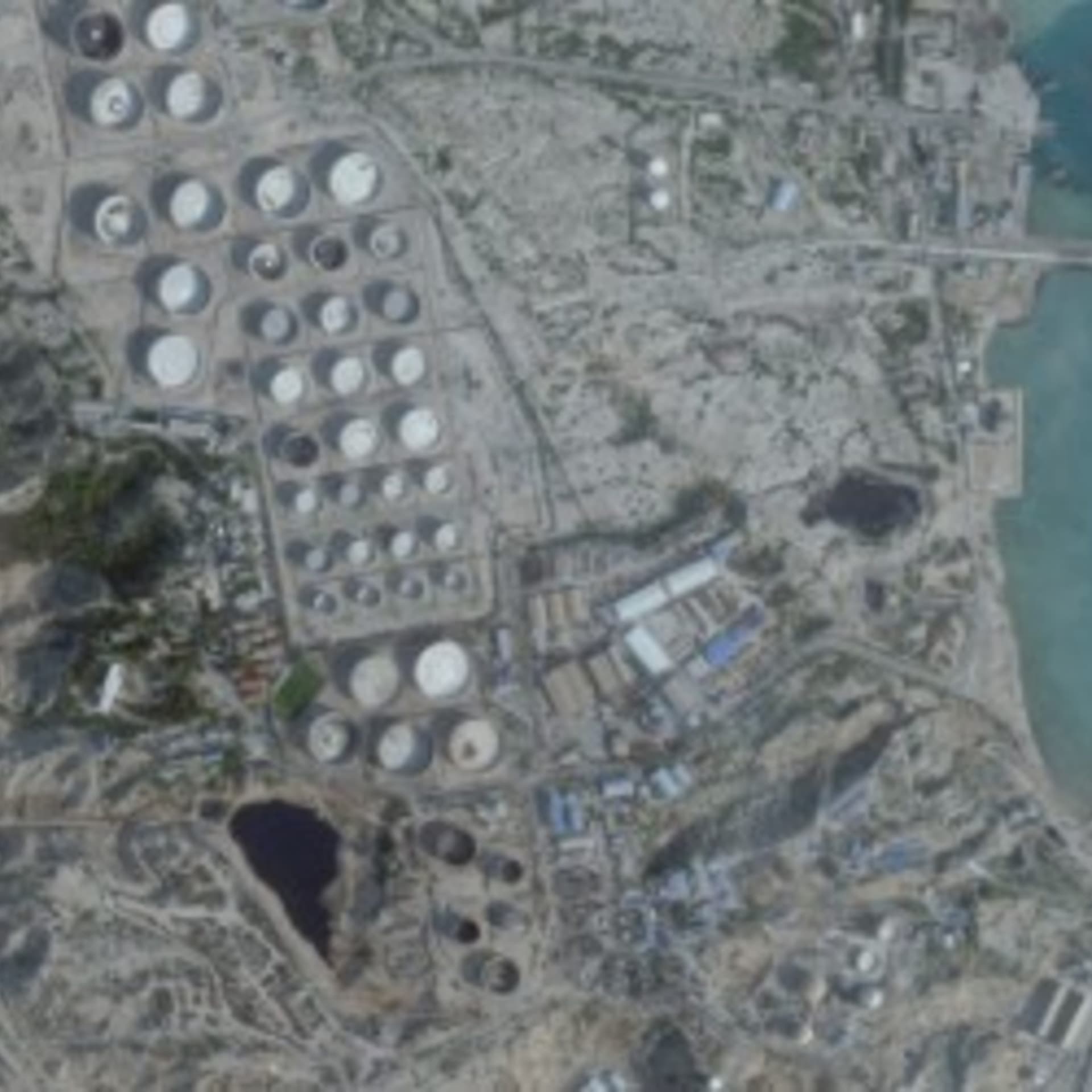
US Strikes Iran’s Key Oil Island
Overview This episode discusses significant developments in the ongoing conflict between the United States and Iran, particularly focusing on the U.S. military's strikes on Kharg Island, Iran's main oil export terminal. The episode also touches on international responses, humanitarian impacts, and other global news stories.
---
Key Headlines
- U.S. Strikes on Kharg Island:
- President Trump announces military strikes targeting military installations on Kharg Island.
- Kharg Island is crucial as it accounts for approximately 90% of Iran's oil exports.
- Trump states the U.S. has avoided targeting oil infrastructure but warns of potential future actions.
- Escalation of U.S. Military Presence:
- Reports indicate the deployment of 2,000 Marines and amphibious ships to the Gulf region.
- Potential implications for the Strait of Hormuz, a vital shipping route for global oil.
- Civil Unrest in Iran:
- Thousands rally in Tehran in support of the regime amid escalating conflict.
- The Iranian government claims substantial casualties from the conflict.
- International Reactions:
- Israel conducts strikes in Lebanon, reportedly hitting health facilities.
- Ongoing negotiations between Cuba and the U.S. amidst an oil blockade affecting Cuba.
---
Detailed Discussion
U.S. Actions and Statements
- Strikes on Kharg Island:
- Trump described Kharg Island as “Iran's crown jewel” but refrained from destroying oil infrastructure to maintain some economic functionality.
- The strikes are aimed at military targets, with ongoing debates about the potential for ground operations.
- Military Reinforcements:
- The Pentagon's deployment involves a naval task force, suggesting an expanded operational scope, including potential protection for commercial shipping through the Strait of Hormuz.
- Statements from Trump:
- Acknowledges that the U.S. could escort oil tankers through the Strait soon.
- Emphasizes that the operation will last "as long as necessary."
Humanitarian Impact
- Civilian Casualties:
- Iran reports over 1,300 deaths since the conflict began, with significant destruction to homes and infrastructure.
- There is a noted humanitarian crisis, with over 3 million people displaced.
- Continued Resistance:
- Iranian regime shows signs of defiance, with strong public displays of support amidst military action.
Global Context
- Middle East Tensions:
- Lebanese health ministry reports fatalities from Israeli strikes on health facilities.
- Iranian Kurdish groups express readiness to engage in conflict against the Iranian regime, seeking U.S. support.
- Cuba-U.S. Negotiations:
- Cuba confirms ongoing discussions with U.S. officials, hoping to alleviate economic pressures from the U.S. blockade.
---
Noteworthy Innovations
Medical Advances with Spider Silk
- Regenerative Medicine:
- A breakthrough in using spider silk to repair broken nerves, showcasing innovative medical applications.
- This technique enables nerve regeneration through a biodegradable silk scaffold, potentially changing treatment protocols for nerve injuries.
---
Cultural Segment
Documentary on Russian Education
- Mr Nobody Against Putin:
- A Russian teacher-turned-documentarian, Pasha Talankin, risks his life to expose the militarization of the Russian education system.
- His documentary highlights the propaganda efforts within schools and has garnered international recognition, including an Oscar nomination.
---
Conclusion This episode of the Global News Podcast provides an in-depth look at the current geopolitical landscape, particularly focusing on U.S.-Iran relations, the humanitarian plight in the region, and broader global issues such as medical innovations and cultural narratives in conflict zones.
For further updates or to reach out, listeners are encouraged to contact the podcast at globalpodcast@bbc.co.uk.
Written by AI. May contain mistakes. Listen to the episode to check what was said.
Chapters
Tap a time to open that second in VOUS Strikes on Haag Island
1:23 to 1:51
Discussion on US military strikes against Iran's oil terminal.
“President Trump says the US has carried out strikes against military targets on Haag Island, Iran's main export terminal for oil in the Gulf.”
The Significance of Haag Island
1:51 to 2:28
Understanding the strategic importance of Haag Island for Iran.
“It's small in size, but not in significance.”
US Military Deployment Details
2:28 to 4:22
Overview of US military reinforcements being sent to the Middle East.
“It's Iran's main export terminal for oil, and tonight President Trump announced the US had obliterated military targets on the island.”
Trump's Strategy and Statements
4:22 to 6:15
Analysis of President Trump's comments on the ongoing conflict.
“And what more do we know about these media reports, David, about President Trump potentially sending thousands of Marines and other personnel to the region?”
Iranian Response and Civil Impact
6:15 to 8:22
Reporting on Iranian rallies and the humanitarian impact of the war.
“The Trump administration has its work cut out defending the Strait of Hormuz, through which, what, 20 % of the world's oil is transported.”
Damage Assessment in Iran
8:22 to 11:15
Examination of the damage and casualties from the conflict in Iran.
“The Red Crescent says nearly 20 ,000 homes have now been damaged, along with businesses, schools and 16 of its own facilities.”
International Surveillance and Reporting
11:15 to 12:06
Discussion on challenges in reporting the situation in Iran.
“So independent information is far harder to come by.”
Impact of Israeli Strikes on Lebanon
12:06 to 14:01
Review of the humanitarian impact of Israeli airstrikes in Lebanon.
“John Sudworth speaking to Paddy O 'Connell.”
Humanitarian Impact of War in Lebanon
14:01 to 14:58
Learn about the displacement crisis in Lebanon due to ongoing conflict.
“forcing hundreds of thousands of people to leave their homes.”
Iranian Kurdish Fighters Prepare for Conflict
14:58 to 16:48
Discover the motivations and hopes of Iranian Kurdish fighters in Iraq.
“Here in northern Iraq, we're heading to meet those hoping to join in.”
Show all 20 chapters
Voices from the Kurdish Resistance
16:48 to 18:10
Hear firsthand experiences from Kurdish fighters eager to return to Iran.
“Do you think there's a danger that President Trump could suddenly say, I'm finished with this war now, it's over?”
Grammarly Advertisement
18:10 to 19:38
Explore how Grammarly can enhance your writing and communication skills.
“Still to come in this podcast, a Russian teacher who smuggled footage from his school could be in line for an Oscar.”
Attack on a Synagogue in Michigan
21:11 to 23:45
Examine the details and implications of a violent attack in Michigan.
“in the state of Michigan died after shooting himself.”
Cuba-US Talks Amid Economic Crisis
23:45 to 25:04
Understand the context and challenges of ongoing Cuba-US negotiations.
“That was Helena Humphrey reporting from Michigan.”
Mr. Nobody Against Putin Documentary
25:04 to 27:42
Discover the story of a filmmaker's fight against propaganda in Russian schools.
“as Cuba sort of sits under a month-long US oil blockade.”
Oscar Nominee Pasha Talankin's Journey
27:42 to 28:00
Follow the experiences of Pasha Talankin as he navigates Hollywood.
“The BBC's culture editor Katie Razzle went sightseeing with Mr Nobody in Hollywood.”
Pasha's Journey: From Filmmaker to Whistleblower
28:00 to 29:57
Learn about Pasha Tulankin's courageous stand against propaganda in Russia.
“until he was forced into exile two years ago.”
Reflections on War and Loss
29:57 to 31:15
Explore the emotional toll of war through Pasha's experiences and losses.
“Last month, Mr Nobody Against Putin won Best Documentary at the BAFTA Film Awards.”
Revolutionary Surgery: Spider Silk and Nerve Regeneration
31:15 to 33:13
Discover how spider silk is being used to revolutionize nerve repair surgery.
“A British company led by a National Health Service surgeon, who incidentally was also a zoologist, has achieved a medical first by using the spider silk as scaffolding to help broken nerves regrow.”
Understanding Nerve Injuries and Recovery
33:13 to 33:48
Gain insights into the nature of nerve injuries and the recovery process.
“So if you've ever sat on the toilet for a bit long or woken up and your arm's a bit numb, your foot's gone a bit dead, that's a type of nerve injury.”
Transcript
Automatic transcript. May contain errors.0:00This BBC podcast is supported by ads outside the UK.
0:30Schwab. Visit schwab.com to learn more. Momentum doesn't appear overnight. It's built, refined, repeated. Puerto Rico has been building it for decades as a US jurisdiction operating under US federal law, regulatory standards and market protections. Here, global companies manufacture life-saving medicines, advanced technologies and critical products at scale. And with competitive tax incentives designed to support investment and expansion, companies don't just start here, They grow here. Not culture or business. Culture and business. Puerto Rico. It's not what's next. It's where. Visit investpr.org forward slash business.
1:14This is the Global News Podcast from the BBC World Service. I'm Charlotte Gallagher. And in the early hours of Saturday, the 14th of March, These are our main stories. President Trump says the US has carried out strikes against military targets on Haag Island, Iran's main export terminal for oil in the Gulf. There's defiance in Tehran as thousands of protesters turn out for a pro-government rally. And we hear from Iranian Kurds in Iraq who want to return to Iran.
1:51also in this podcast Cuba confirms that negotiations with the US are underway and we hear how in a medical first spider silk has been used to repair broken nerves it bridges the gap that's made between these new two nerve ends and then the new nerves try and grow out it's almost like a plant sprouting from the ground but they attach to the silk and then they grow along it our silk dissolves and the nerve is able to then regenerate
2:21Haag is an island only eight kilometers long, located just off the coast of Iran. It's small in size, but not in significance. It's Iran's main export terminal for oil, and tonight President Trump announced the US had obliterated military targets on the island. It comes as reports swell that the White House is preparing to send reinforcements to the Middle East, including thousands of Marines. The war is now entering its third week, something President Trump was asked about before boarding Air Force One. How long now do you think the war is likely to last? I can't tell you that. I mean, I have my own idea, but what good does it do?
3:01It'll be as long as it's necessary. Our North America correspondent, David Willis, told me more about the significance of Haag Island. It lies, Charlotte, about 25 kilometres off the coast of Iran in the northern Gulf. And around 90 % of Iran's oil exports come from there, making it potentially very significant. It hasn't been targeted up to now. And oil tankers have been seen filling up with oil there since the conflict began. It's been described as the economic lifeblood of the Iranian regime. And in a post on Truth Social, President Trump said that the U.S. military had destroyed every military target in what he called Iran's crown jewel, Khag Island, excluding its oil infrastructure.
3:54But he went on to say that should Iran do anything to impede the safe passage of vessels through the vitally significant Strait of Hormuz to the southeast of Hag Island, he would, as he put it, reconsider that decision. In other words, he's using a potential attack on Hag Island as leverage, if you like, in an attempt to keep the Strait of Hormuz open to international shipping. And what more do we know about these media reports, David, about President Trump potentially sending thousands of Marines and other personnel to the region? That's right. A naval task force made up of additional troops and machinery is being deployed to the Middle East from its base in Japan.
4:41And that's between 2 ,500 and 5 ,000 Marines and sailors, apparently, members of an expeditionary unit. and the amphibious assault ship USS Tripoli will be accompanying them and form part of the deployment. An amphibious ready group typically includes, I'm told, vessels capable of carrying landing craft as well as large numbers of helicopters. And the deployment suggests that the United States is considering perhaps an expanded range of options, possibly occupying Haag Island, possibly protecting commercial shipping in the Strait of Hormuz, and conceivably some kind of limited amphibious landing.
5:25Now, the Pentagon has declined to comment on these reports, as you probably expect, but it's thought the deployment does not necessarily indicate that a ground operation is imminent or about to take place, although President Trump himself hasn't ruled that out. And throughout this time, President Trump and the Defence Secretary, Pete Hegseth, have said quite contradictory things. Do we get a sense now that this operation is nearing an end, or maybe it's the opposite completely? Well, it might be the opposite. I mean, President Trump again insisted today that the United States was, as he put it, way ahead of schedule in regards to its operation in Iran.
6:05But he wouldn't be drawn on how much longer the conflict would last, saying simply that it would go on for, as he put it, as long as it's necessary. But this is now about more than simply attacking Iran. The Trump administration has its work cut out defending the Strait of Hormuz, through which, what, 20 % of the world's oil is transported. And President Trump conceded that the US could start escorting oil tankers through the strait soon, as he put it. David Willis. There were explosions in the Iranian capital Tehran on Friday, while thousands of people were taking part in a rally in support of the regime.
6:46The country's health ministry says at least 1 ,300 people have been killed since the start of the war. Iran has also continued to attack its Gulf neighbours. Qatar has, in the past few hours, issued an evacuation order covering parts of Doha, saying it's a precautionary measure. Here's our diplomatic correspondent, Caroline Hawley. From an embattled Iranian regime, a show of defiance, loyalists came out in large numbers, just as their new supreme leader had asked. And many carried his image, though Mujtabakh Manei himself has still not been seen. State-run TV showed Iran's president, Masoud Pezeshkian, out on the streets, even looking relaxed.
7:31and another very powerful figure in the regime who had a message for Donald Trump. The problem with Trump is that he's not intelligent enough to understand that Iranians are a mature and strong and determined nation. The more pressure he exerts, the stronger our nation's willpower will become. This is the Al-Quds rally held every year to oppose Israel. Suddenly, an explosion nearby. Another airstrike took place as state-run TV was interviewing Iran's hardline head of the judiciary. People are not afraid of these attacks, he says. We will not back down in any way.
8:15But many Iranians are very afraid as the human cost of this war and the humanitarian consequences grow. The Red Crescent says nearly 20 ,000 homes have now been damaged, along with businesses, schools and 16 of its own facilities.
8:34Iranians are continuing to flee. More than three million of them have left their homes so far, according to the UN. At Turkey's border with Iran, one man said bombs were raining down on his homeland. Near the central city of Isfahan, one glimpse into the intensity of the bombardment.
8:57The man filming is clearly happy to see regime targets hit.
9:08Duck down, someone says, as airstrike follows airstrike.
9:17And Donald Trump says Iran will continue to be hit very hard. Caroline Hawley. But what do we know about the overall destruction in Iran from Israeli and US attacks? The US Defence Secretary, Pete Hegseth, says Iran has no functioning Air Force, Air Defence or Navy and that its missile volume is down by 90%. But two weeks on, Iran is still firing missiles and drones. The BBC's John Sudworth has been verifying the damage in Iran so far. What we can say with certainty is that for 14 straight days now, Iran has been hit by a huge and sustained bombardment. The US and Israel say they've struck more than 15 ,000 targets so far.
10:05In terms of what's being hit, the list is a long one. Across multiple cities and other towns, other locations, The targets include military bases, missile launch sites, weapons factories and the Iranian Navy, of course, with more than 60 ships damaged or sunk so far. And the targeting in recent days of the citywide checkpoints set up by the Basij, Iran's feared volunteer militia out on the streets to crack down on any hint of dissent. But beyond the military targets, the strikes are also aimed at civil infrastructure, such as government leadership facilities. That's how Ayatollah Khomeini was assassinated on the first day of the war, of course.
10:49But those civil targets also include state media, airports and energy facilities. And what about the effect on Iranians, the loss of life? Well, Iran says that more than 1 ,300 people have been killed so far, including 175 people in a school, most of them children, in a strike now widely believed, of course, to have been the result of a US targeting error. Iranian state TV has been broadcasting footage of some damaged apartment blocks with rescue workers on site, making the point that civilians are being targeted. So independent information is far harder to come by. Some of the big US-based satellite data companies, it's been interesting to watch them.
11:33They provide high-resolution imagery of the kind that was once only available to spy agencies, but it's now readily available for little or no cost. But they have now introduced a time delay up to 14 days at the current time of speaking for their imagery of the Middle East. That's to stop Iran using it for surveillance, intelligence and targeting purposes. But it also makes it much harder, of course, for journalists and analysts to assess the scale of the destruction. Although I think we can say without too much guessing that it's likely, of course, to be extensive. John Sudworth speaking to Paddy O 'Connell.
12:09The Lebanese health ministry says an Israeli strike has hit a health centre in the south of the country, killing at least 12 medical personnel. It says it was the second medical facility to be hit in a matter of hours. Nearly 800 people have been killed in the current campaign, according to the Lebanese health ministry. Aid agencies say the country is nearly at breaking point. Our correspondent, Wira Davis, sent this report from Beirut. The Israeli military dropped leaflets over parts of Beirut, not areas of particularly strong Hezbollah support, calling for people to rise up and help ensure that Hezbollah is disarmed.
12:48It was a blunt attempt by Israel to capitalise on the clear divisions and tensions in Lebanese society over the damage being done by the war and Hezbollah's decision to continue firing rockets against Israel in support of Iran. The leaflets also had QR codes that people were warned to avoid scanning for fear that their phones or other devices might be compromised. Two locals in the Hamra district of Beirut gave us their reaction. We were sitting when we heard a very loud sound, like a strike. We looked up and saw two batches of leaflets being dropped, one in front of us and another further ahead.
13:29There were a lot, you could say, about the size of a car. That's how many there were. If they wanted this to affect us, it would have long ago. No matter what they do, we remain steadfast, working, carrying on with our lives and earning our livelihood. Israel says it's been expanding the scale and scope of its bombing campaign, hitting targets across Lebanon in a wave of airstrikes against Hezbollah's weapon stores, control centres and financial institutions. It has bombed targets in southern Beirut, the Bekar Valley and an expanded exclusion zone in south Lebanon, forcing hundreds of thousands of people to leave their homes.
14:11The Norwegian Refugee Council says that at least 800 ,000, or one in seven people in Lebanon, have been displaced by the war, a number set to rise further and create severe humanitarian challenges as Israel bombs more towns and villages in its attempt to destroy Hezbollah as a military force. Weira Davis. In Iraq, Iranian Kurdish opposition groups say their fighters are prepared to cross the border and join the war against Iran. Many Iranian Kurds have loved ones who were killed by the Iranian regime. The fighters want the United States to give them a no-fly zone so they can return. Our senior international correspondent, Orla Gurren, reports from one of their mountain bases.
14:57Across the border, war is raging inside Iran. Here in northern Iraq, we're heading to meet those hoping to join in. Iranian Kurdish fighters, some in exile here for decades.
15:19Eager to return to their homeland with the weapons they have to hand. Woman, life, freedom. The slogan of the protest movement brutally crushed in Iran. These Kurdish fighters are called Peshmerga, meaning those who face death. Donald Trump has blown hot, then cold, on their guns coming into the fight. Very difficult to come up now. Hello, hi. Hello, hi. Orla from BBC. My name is Shaho. Nice to meet you. Shaho Bluri hopes to return home soon to honour all the dead. One of your brothers was hung. Yeah, yeah, hung. Many of our family were one by one killed and hanging. How many members of your extended family have been killed by the regime?
16:20I think directly 18. 18? 18. If you are able to go home, what is the first thing that you want to do?
16:47The fighters here now joining forces with other Kurdish-Iranian groups. but in need of US support. Do you think there's a danger that President Trump could suddenly say, I'm finished with this war now, it's over?
17:06Personally, I don't trust Trump. I think he may decide to stop the war. No one can predict what Trump will do.
17:18Suddenly, the commander, Amjad Panahi, gets news of a strike on one of their bases, sparking fears of an attack at our location.
17:31Spread out, he warns. Now, man. There's a cave up there, guys. OK, let's move. We've just been asked to disperse, to spread out a bit. They're worried about too many people being in the same place and being a bigger target. They've had some intelligence that there may be a drone strike. These camps are being hit very regularly.
18:01So the Peshmerga watch the skies and urge us to leave. They remain in position. Still on the sidelines for now. Ola Garen reporting. Still to come in this podcast, a Russian teacher who smuggled footage from his school could be in line for an Oscar. Regarding the Oscar speech, it will be written by my students. They are already working on it. And if we win, it's going to be their speech.
18:48and reports to proposals and updates. You're expected to think clearly, write confidently, and get it right the first time. And every message counts. That's where Grammarly comes in. It gives you everything you need to think, write, and finish in one place. Or anywhere you type and text. You'll never have to switch tools or tabs. Grammarly's AI agents are built for how you work and where you work. So you can find the right words, adjust your tone, and predict how your message might land before you hit send. Your ideas will get a boost while still sounding natural, credible, and just the way you want.
19:24For nearly 17 years, Grammarly has been the standard for responsible AI. It's the premier writing tool that 93 % of users trust to get more work done. In a world of generic AI, don't sound like everyone else. With Grammarly, you never will. Download Grammarly for free at Grammarly.com. That's Grammarly.com. Wander why we make the choices we do and how to make smarter ones. Introducing Choiceology, an original podcast from Charles Schwab. Join Wharton professor Katie Milkman, an award-winning behavioral scientist and author of the best-selling book, How to Change, as she shares true stories from Nobel laureates, authors, athletes and everyday people about why we do the things we do and how to make better choices to help avoid costly mistakes.
20:16Each episode covers the latest research in behavioral science and dives into themes like the power of self-control, shaping your mindset for success, navigating new beginnings, and why starting over can feel so hard. Listen to choiceology at schwab.com slash podcast or wherever you listen. It's 2009 and we're in the German mountains. A man straps himself into a car on the world's most dangerous racetrack. he whispers to himself, it's time to put my balls on the dashboard, as he starts the engine. In 15 minutes, he's in an ambulance, unconscious. In 15 years, he's a billionaire. This is Toto Wolff, Formula One's most powerful team boss and the breakout star of Drive to Survive.
21:02This week on Good Bad Billionaire, how Toto Wolff made his billions. Listen wherever you get your BBC podcasts. The US authorities have said the Lebanese-born man who rammed a truck into a synagogue on Thursday in the state of Michigan died after shooting himself. No one else was killed, though a security guard was injured. Reports say he carried out the attack soon after several members of his family were killed in an Israeli airstrike in Lebanon. The US authorities called it a targeted act of violence and would not be drawn on a motive. Jennifer Runyon is the FBI special agent in charge of the investigation.
21:44Our team has been working around the clock to ensure that we remain focused on providing confirmed facts about this investigation rather than uncorroborated speculation. The FBI has forensically confirmed that the assailant responsible for carrying out this attack was Eamon Mohamed Ghazali, age 41, from Dearborn Heights, Michigan. He has no previous criminal history and no registered weapons. He also has never been the subject of an FBI investigation. Our correspondent Helena Humphrey reports from Michigan. Temple Israel's congregation north of Detroit is coming to terms with an attack that could have claimed the lives of worshippers and children at an on-site preschool.
22:26Eamon Mohamed Ghazali, a naturalised US citizen born in Lebanon, rammed his truck through the synagogue's doors and drove down a hallway. The mayor of Dearborn, where Ghazali lived, said he had recently lost several family members, including a niece and nephew, in an Israeli strike in Lebanon. A Lebanese official told the AP News Agency that they were killed last Thursday as they were having their fast-breaking meal during the Muslim holy month of Ramadan. While the motive is still under investigation, a rabbi at Temple Israel says the congregation had practiced an active shooter drill just weeks earlier.
23:04Look, American Judaism is such these days that every synagogue is a target and every synagogue is well aware that we need to take precautions to keep our people safe. So we have regular active shooter drills. We offered one a few weeks ago for our clergy, our staff, our security team, and our teachers run by the FBI that walked us through over and over again what to do in case of an active shooter situation. And I can honestly say that that protocol saved lives. Amid the war between the U.S., Israel and Iran, President Trump says he's not worried about the threat of domestic terrorism. But for many American Jews going about their daily lives, their sense of safety has been shaken.
23:45That was Helena Humphrey reporting from Michigan. There was a significant announcement on Cuban national television on Friday.
Read the full transcript
23:56In those talks, we have expressed our willingness to continue the process under the principles of equality and respect for the political systems of both countries. That's the moment we're in now in relation to dialogue with the United States. That was President Miguel Diaz-Canel confirming that talks between Cuban officials and the US government are underway. The US embargo has choked off oil supplies, triggering a severe energy crisis on the island nation. But it's hoped these negotiations will bring an end to the economic hardship that swept across Cuba. My colleague Jane Hill has been speaking to Rory Nickel, who's a correspondent in Havana for The Guardian newspaper.
24:38She began by asking him about the US-Cuba talks and what everyday life is like on the island. Finally, the Cuban government have said that these talks are occurring, which is a major moment. However, there is disquiet, I would say, among Cubans because that is all they've said. There has been no explanation about what a plan might be. And the situation on the streets in Cuba is getting worse by the day now, as Cuba sort of sits under a month-long US oil blockade. Yes. Well, talk to us a little bit about the problems that people are facing. You have to put this in context of the fact that the Cuban government has been bankrupt for several years now since the pandemic.
25:24This is a communist state. People were used to being able to go to the bodega, get their ration of beans, rice, etc, etc. That has now pretty much disappeared. The bodegas are emptying. There has been increasing problems with electricity supply. There is rolling blackouts, but there's also been a sort of countrywide blackouts. The system is very antiquated. Blackouts means the water doesn't come in. It means they can't sleep at night because there's no fans. It means the food, which is very expensive for most people, goes off in their refrigerator. The cars have stopped running. There's no gas.
25:58The state offices have closed. The power cuts have become very much worse. friends of mine are getting up in the middle of the night to cook because that's the only time, the two hours that they get electricity. The situation could get very bad indeed. And by that, I mean starvation. I mean disease. It really is that bad? It's not at the moment. There's food in the shops. But again, because of the economy being in tatters, there's been hyperinflation for the last few years. So if you work for the state, which is about half the people, or you're on a state pension, which affects an awful lot of people, then those have been reduced to between five and ten dollars a month but you know a bag of beans could be three dollars if you're getting five dollars a month that's a disaster.
26:42So when people hear that there have been talks what would they want from any of these talks? Well they want change they want to be able to have enough money to buy things or get things and feed their children. What I now hear from most Cubans is I really don't care who's to blame can somebody give us a break? Marco Rubio has said he wants regime change. Is it possible to gauge what the ordinary person, to use that phrase, would want? Would they take a view on regime change? I haven't yet heard Cubans say to me that they want the Americans to come in. That just doesn't happen. Cubans here certainly don't want some sort of armed invasion.
27:21Roy Nicholl speaking to Jane Hill. Mr Nobody Against Putin is a documentary about propaganda in Russian schools and how teachers were forced to repeat government scripts about the Russian invasion of Ukraine. A filmmaker at one school took great risks to smuggle footage out of Russia to show the world and he could win an Oscar this weekend. The BBC's culture editor Katie Razzle went sightseeing with Mr Nobody in Hollywood. You see that Hollywood's music? From a self-styled Mr Nobody to Mr Somebody in Hollywood. Pasha Talankin had never left Russia. until he was forced into exile two years ago.
28:03Now, on his 35th birthday, I've joined the Oscar nominee on a bus tour of LA. It's a long way from Karabash, where, after the full-scale invasion of Ukraine, school videographer Pasha was instructed to film and send to the authorities proof that a new militarised curriculum was being followed.
28:32He was so horrified at teachers being used in President Putin's propaganda machine that he became a filmmaking whistleblower. When I started making the film, I was driven by rage. I didn't care really. I thought, let anyone do it. Let anyone show this film. Let anyone edit it. The main thing is that it exists to show what is happening. Here's co-director David Bornstein, who made the film with footage they smuggled out of Russia. In the beginning of the film, we just wanted to show what was happening in Russia because we thought it was so important for the world to see that Putin obviously has no intention of stopping with just Ukraine.
29:13He's telling the children of Russia every single day that you need to prepare for a future of warfare and empire. Pasha fights authoritarianism with acts of resistance, changing the pro-war symbols on the school's windows, taking down the school's Russian flag while blasting out Lady Gaga singing the US national anthem.
29:45He was eventually forced to leave his motherland and his mother behind. and now lives in an undisclosed location outside Russia. He told me he believes he will return one day, because the regime can't last forever.
30:03Last month, Mr Nobody Against Putin won Best Documentary at the BAFTA Film Awards. Sorry, I don't speak English, but I will tell you, thank you. If an Oscar follows, he says his former students in Russia will play a key role. Regarding the Oscar speech, it will be written by my students. They are already working on it. So have you been to Santa Monica Pier before? Yes, I was. You like it? Yes. And the first time I saw it, it looked like GTA. Yeah, that's true. Grand Theft Auto. As we walked on Santa Monica Pier, it felt a long way from the horrors he charts in the film. The former students who die in Ukraine.
30:50The children taught battlefield tips by Wagner Group mercenaries. But the spectre of Ukraine loomed even here. Today I found out that one of my students died. And I know him. He's a kind guy. And he would never have gone without the propaganda. That was Pasha Tulankin, the Oscar nominee, ending that report by Katie Russell. Now, you wouldn't normally associate groundbreaking surgery with spiders, but scientists here in the UK have discovered that spider silk, which is incredibly fine but also incredibly strong, can help to regenerate human nerves. A British company led by a National Health Service surgeon, who incidentally was also a zoologist, has achieved a medical first by using the spider silk as scaffolding to help broken nerves regrow.
31:44Dr Alex Wood explains how the procedure is carried out. We work with quite a few patients, patients who suffer peripheral nerve injuries, either from trauma or patients having cancer resections. But we've recently done a first in human study in Panama. There's a big hospital, quite well-known neurosurgeon there. And we recruited five patients into a study that started last summer. and these are patients who are going through the normal treatment that we give for patients right now so when they're having biopsies of nerves or they're having nerve injuries normally treated surgeons have to cut out another nerve to move it from the body so that injury would be left untreated so we've agreed in a trial to allow us to repair that treated nerve with our implant peripheral nerves are essentially like fiber optic cables they supply all your feeling and all your movement outside of the brain and spinal cord and so in these patients the nerve that we would normally sacrifice to you know if you fall off a motorbike and you damage a nerve in your arm you can't move your thumb anymore the best treatment we've got at the moment is to cut out a nerve from your leg which would make your foot numb because we say well look you know giving someone a numb foot is better than not being able to move your thumb but obviously that causes extra harm and unfortunately it doesn't work particularly well either our implant which is called silk axons is made from the what we call dragline silk from golden orb web spiders and what that means it's a silk that if you see a spider dangling off a stick that's their drag line silk and we have made an implant that can go down tubes so it kind of mimics the natural axons or scaffold that the body normally has in a nerve and what it does is it bridges the gap that's made between these new two nerve ends and then the new nerves try and grow out it's almost like a plant sprouting from the ground but they attach to the silk and then they grow along it a bit like a rose on a trellis until they bridge the gap and then that sort of repairs the damage our silk dissolves and the nerve is able to then regenerate.
33:28So if you've ever sat on the toilet for a bit long or woken up and your arm's a bit numb, your foot's gone a bit dead, that's a type of nerve injury. It's bruising of the nerve. But because the outer tubing is intact, it can always recover. If you cut a nerve, it can't recover on its own. It pulls itself apart. And although it throws out a little collagen scaffold to try and regenerate, without some sort of surgery, it won't do so. Dr Alex Wood. And that's all from us for now. If you want to get in touch, you can email us at global podcast at bbc.co.uk. You can also find us on X at BBC World Service.
34:01Use the hashtag global news pod. This edition of the global news podcast was mixed by Johnny Hall and the producer was Marion Straughan. The editor is Karen Martin. I'm Charlotte Gallagher. Until next time. Goodbye.
From the publisher
President Donald Trump says the United States has carried out strikes against military targets on Kharg island, Iran's main export terminal for oil in the Gulf. Writing on social media, he said he'd decided not to destroy the oil infrastructure on the island. US media report that amphibious ships carrying 2,000 Marines are being sent to the Gulf, but the Pentagon has declined to comment. There have been explosions in the capital Tehran, as thousands of Iranians took part in a rally in support of the regime. And in Lebanon the health ministry says an Israeli strike has hit a health centre in the south of the country. Also: Cuba confirms talks with Trump officials amid US blockade; how spider silk has been used to repair broken nerves; and a school videographer turned Oscar nominee who took great risks to smuggle footage out of Russia.
The Global News Podcast brings you the breaking news you need to hear, as it happens. Listen for the latest headlines and current affairs from around the world. Politics, economics, climate, business, technology, health – we cover it all with expert analysis and insight. Get the news that matters, delivered twice a day on weekdays and daily at weekends, plus special bonus episodes reacting to urgent breaking stories. Follow or subscribe now and never miss a moment. Get in touch: globalpodcast@bbc.co.uk