
In short
Global News Podcast - Episode Summary
Episode Title
US Submarine Sinks Iranian Warship in Indian Ocean
Date of Release
March 4, 2023
Hosts
Celia Hatton
Overview
This episode covers a significant military incident involving a US submarine sinking an Iranian warship in the Indian Ocean, the subsequent humanitarian impact, and ongoing conflict dynamics in the region, including Iranian missile attacks and the involvement of Kurdish forces.
---
Key Headlines
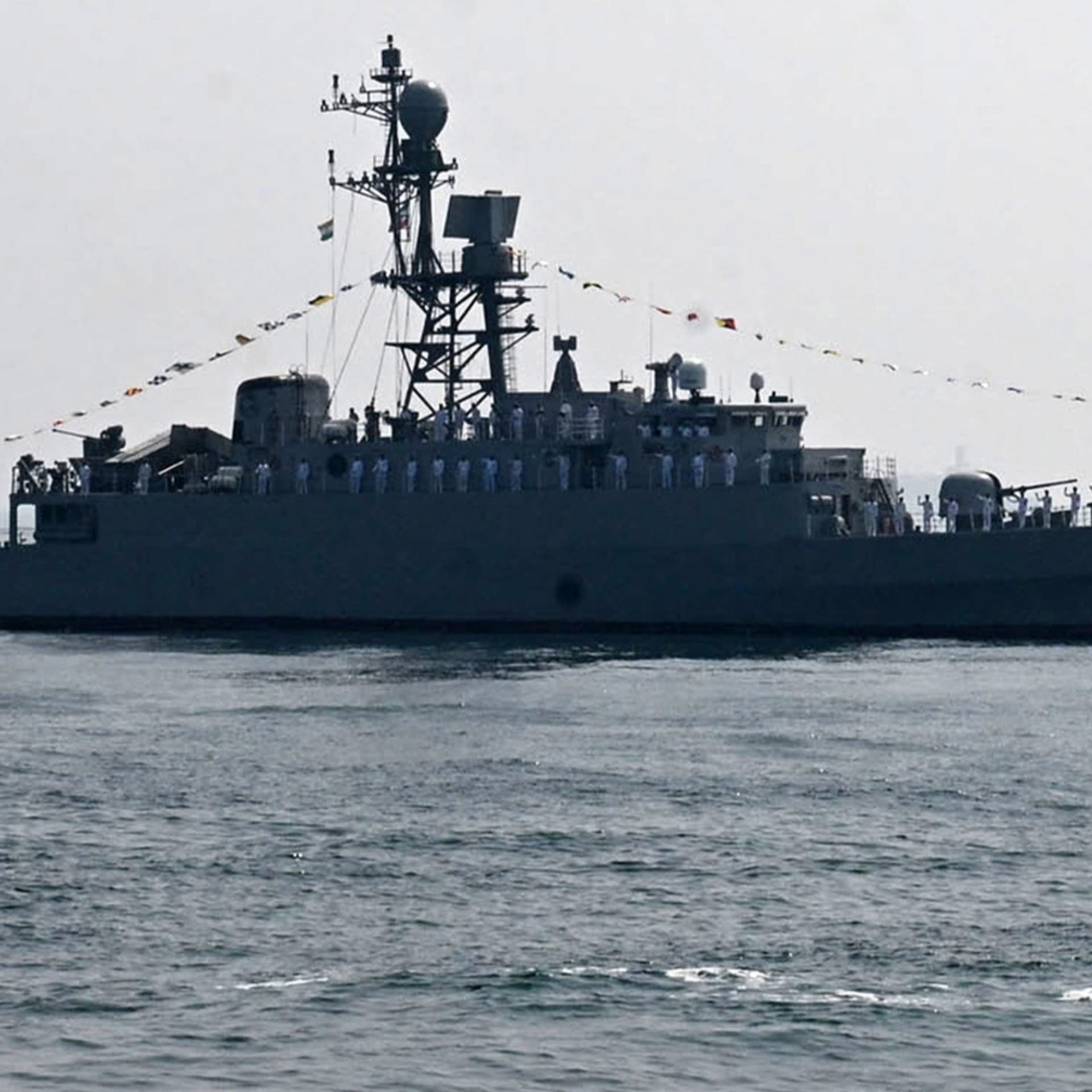
- US Submarine Sinks Iranian Warship: A US submarine sank the Iranian warship IRIS Dana using a torpedo in what the Pentagon describes as an unprecedented military action for the US since World War II.
- Humanitarian Impact: Following the sinking, the Sri Lankan Navy reported recovery operations, with at least 87 bodies found and 67 sailors still missing.
- Wider Regional Conflict: The podcast highlights Iran's missile and drone strikes across the Gulf region, escalating tensions with Israel and the US.
- Kurdish Forces and Potential Insurgency: Discussion on whether Kurdish forces might capitalize on instability to insurgently challenge the Iranian government.
---
Detailed Discussion Points
- US Submarine Attack
- Incident Description: The US Defense Secretary confirmed that a torpedo from a US submarine sank the IRANIAN warship, marking a significant military action.
- Verification Issues: The claim of being the first sinking of an enemy ship by torpedo since WWII is contested. Historical instances from the British and Indian navies are noted.
- Response from Sri Lanka: The Sri Lankan Navy received a distress call and initiated search and rescue operations, reflecting their neutral stance in the conflict.
- Humanitarian Crisis
- Casualties: Reports indicate a devastating loss of life, with bodies being recovered from the ocean.
- Sri Lanka's Neutrality: Sri Lanka's role as a neutral party is emphasized; they seek to manage their involvement amid escalating tensions.
- Iran's Military Actions
- Ongoing Strikes: Iran has conducted multiple missile and drone attacks across various Gulf states, targeting military and civilian infrastructure.
- Regional Reactions: Countries like Qatar and Saudi Arabia report interceptions of Iranian missiles and drones, highlighting rising regional tensions.
- Kurdish Forces Dynamics
- Potential Insurgency: Kurdish groups are discussed as possible insurgents to destabilize the Iranian government amidst ongoing conflicts.
- US-Kurdish Relations: Historical ties between Kurdish forces and the US raise the potential for renewed collaboration against Iran.
- The Situation in Iran
- Civilian Impact: Civilian casualties and internet blackouts create significant unrest and fear within Iran, with many fleeing the conflict.
- Social Stability: The podcast highlights the precariousness of social order within Iran, with citizens stockpiling essentials and fearing military aggression.
- International Perspectives
- Turkey's Stance: Turkey's indifference towards the conflict is noted, with warnings against escalation.
- NATO's Involvement: Turkey's air defense has reportedly intercepted Iranian missiles targeting its airspace.
---
Key Takeaways
- The US-Iran conflict has escalated significantly, with military actions resulting in civilian and military casualties.
- Humanitarian concerns are paramount as regions struggle with the fallout from military actions.
- Kurdish groups may play a crucial role in future regional dynamics, influenced by US interests.
- The international community's response, especially from neighboring countries, remains critical as tensions rise.
---
Concluding Remarks This episode of the Global News Podcast provides listeners with a comprehensive overview of the complexities and human ramifications surrounding the military escalations in the Indian Ocean and broader Middle East. The dialogue reflects a deep interconnectivity of military actions, humanitarian crises, and geopolitical strategies that continue to evolve amidst ongoing conflicts.
For further insights and updates, listeners are encouraged to subscribe to the Global News Podcast.
Written by AI. May contain mistakes. Listen to the episode to check what was said.
Chapters
Tap a time to open that second in VOMain Stories Overview
0:44 to 1:38
Overview of the main news stories, including military actions and events in Iran.
“The United States has sunk an Iranian warship off the coast of Sri Lanka.”
U.S. Sinks Iranian Warship
1:38 to 2:54
Discussion about the sinking of an Iranian warship by a U.S. submarine.
“In this podcast, we'll have the latest on Iranian drone and missile attacks across the Gulf region.”
Sri Lankan Navy Response
2:54 to 4:02
Details on the Sri Lankan Navy's response and rescue efforts related to the sinking.
“Pete Hegseth did not name the ship during a briefing, but earlier the Sri Lankan Navy picked up a distress call from the Iris Dana.”
Casualties and Conflict Overview
4:02 to 6:41
Update on casualties and Sri Lanka's stance in the ongoing conflict.
“And when they spoke with those people, that's when they confirmed that they were on board the Iranian ship Iris Dana.”
Hostilities in Lebanon
6:41 to 7:05
Overview of escalating tensions and attacks in Lebanon involving Hezbollah and Israel.
“It is said that it will pay tribute and pay condolences to all the lives lost in this war, including those lost on the Iranian side as well.”
Israeli Airstrikes in Beirut
7:05 to 10:15
Report on Israeli airstrikes in Beirut and their impact on the local population.
“We're going to hear from both sides of the border.”
Iranian Drone Attacks Update
10:15 to 13:19
Update on Iranian missile and drone attacks across the Gulf region and their implications.
“Much more of the country, of the capital, now seems to be attacked by Israel.”
Human Stories from Iran Amid Conflict
14:21 to 18:11
Insights into the human impact of the ongoing conflict in Iran, including civilian casualties and reactions.
“Turning to the situation inside Iran, the Iranian Red Crescent says nearly 800 people have been killed in the offensive so far.”
The Situation of Iranians in Turkey
18:12 to 22:44
Discussion about the experiences of Iranians fleeing to Turkey and the complexities of their situation.
“So that's the reason why this has been postponed for now, because it's going to be a huge logistic operation.”
Kurdish Dynamics and US Involvement
22:45 to 26:08
Analysis of the relationship between Kurdish groups and the US, and their strategic relevance in the context of the Iranian regime.
“which was heading towards Turkish airspace.”
Transcript
Automatic transcript. May contain errors.0:00This BBC podcast is supported by ads outside the UK.
0:30bbc.com and the BBC app. Visit bbc.com slash docs to learn more. This is the Global News Podcast from the BBC World Service. I'm Celia Hatton and at 16 Hours GMT on Wednesday the 4th of March, these are our main stories. The United States has sunk an Iranian warship off the coast of Sri Lanka. Iran has carried out further attacks on several countries as Israel and the U.S. continue to strike Iranian targets. Funeral ceremonies for Iran's Supreme Leader Ayatollah Khamenei that were due to begin today have been postponed. Also in this podcast, we hear from Iranians who fled across the border to Turkey to escape the war.
1:19There is a lot of chaos in the city, a lot of missiles and attacks. We hear some things, some pollutions outside of the city, sleeping in fear and waking up in stress.
1:37We're focusing on the U.S.-Israel war with Iran. In this podcast, we'll have the latest on Iranian drone and missile attacks across the Gulf region. They're happening as American and Israeli airstrikes on Iran continue. We'll also be hearing from BBC Persian about the situation on the ground in Tehran. But first, the U.S. Defense Secretary Pete Hegseth says a torpedo fired by a U.S. submarine has sunk an Iranian warship in the Indian Ocean. In fact, yesterday in the Indian Ocean, and we'll play it on the screen there, an American submarine sunk an Iranian warship that thought it was safe in international waters.
2:20Instead, it was sunk by a torpedo. Quiet death. The first sinking of an enemy ship by a torpedo since World War II. Like in that war, back when we were still the War Department, we are fighting to win. BBC Verify has clarified that claim, and it's not the first sinking of an enemy ship by torpedo since World War II. The British sank an Argentinian ship in 1982, and an Indian frigate was torpedoed by a Pakistan submarine in 1971. However, if confirmed, it is the first time since 1945 that an American submarine has done this. Pete Hegseth did not name the ship during a briefing, but earlier the Sri Lankan Navy picked up a distress call from the Iris Dana.
3:10Lucy Hawkins has been speaking to our South Asia correspondent in Mumbai, Yogita Lamaye. I actually spoke to the Sri Lankan Navy spokesman a short while back, and he at that time had refused to comment. He'd in fact rejected reports that it was a submarine attack on this particular ship and had said that the cause of the sinking was still under investigation. What they had said is that early this morning, the Sri Lankan Navy had received a distress call. It came from roughly just over 40 miles off the coast of Sri Lanka, off the southwestern coast of Sri Lanka near the city of Gaul. When they responded to this particular call, they say that what the first responders saw was patches of oil floating on the water as well as some life rafts, after which they started search and rescue operations.
3:56They said that at the time, 32 people had been rescued, brought to a hospital in the city of Gaul. And when they spoke with those people, that's when they confirmed that they were on board the Iranian ship Iris Dana. They said that the search and rescue operation is still ongoing. They were hoping to find more survivors. They've seen the documentation of this particular ship. And from that documentation, they say 180 people were believed to be on board. Of course, the exact number can only be confirmed by other people who were on board this ship. And what do we know about the location of where this happened, Yagita?
4:30Was it in Sri Lankan waters or international waters? So the Sri Lankan Navy spokesman said that this, it didn't happen in their waters, but it was in their search and rescue nation. And as a maritime nation, they said this is our international obligation. That's why we've launched this search and rescue operation, and we will continue going on with it. Now, as far as this ship is concerned, there is an earlier post from the Indian Navy, a post from mid-February, which talks about this ship being a part of an international fleet review that was hosted by India between the 15th and 25th of February.
5:09Dozens of countries were participating in this international fleet review, the US and the UK included. There is a specific post about Iris Dana. We have since contacted the spokesperson of the Indian Navy, and so far there has been no comment from them to confirm whether this was a ship participating in that event. We've also been trying to find out more information about the ship itself. And from Iran's Tasneem News Agency, from earlier reported articles, this ship is described as a warship that carries on board lots of weapons, including anti-ship missiles and torpedoes as well. So that is what we know as of now.
5:52And do you have anything more than what we've just been getting here in London, Yagita, about the number of people killed or any of the figures? I mean, there's some suggestion now from Sri Lankan media that 80 people have been killed. So, you know, at the time that when I spoke to the Navy spokesman, he said that they have been able to recover some dead bodies. He was refusing to comment on the exact number at that point. We have had a number now from the secretary of the defence ministry saying that they have recovered about 80 bodies. I suspect that number will change. Of course, at the moment, we don't know how many people exactly were on board that ship as well, although the documentation says 180.
6:30Search and rescue operations will continue as far as we are told by Sri Lanka's military. I mean, Sri Lanka's position as far as this war is concerned is that it is in favor of the de-escalation of the war. It is not in favor of the war. It is said that it will pay tribute and pay condolences to all the lives lost in this war, including those lost on the Iranian side as well. So as far as the war is concerned, you know, it has placed itself at the center, refusing to kind of side with any particular party. Yoghata Lamaye in Mumbai. Let's move on now to hostilities in Lebanon. Israeli forces are stepping up their attacks against the Iranian-backed group Hezbollah.
7:10We're going to hear from both sides of the border. First, John Donison, who's in northern Israel. We've come up to the small Israeli town of Matula. It's about as far north as you can get. You can see the border wall just a few hundred meters away. And in fact, if you look just in the distance, you can see the ruins of a Lebanese village, which was destroyed in the war between Hezbollah and Israel, what, 18 months ago. Now, Hezbollah, the Shia militia group based in Lebanon, is religiously, financially and ideologically tied to Iran. And given those ties, it was almost inevitable that they were going to get involved in this conflict.
7:55It started with Hezbollah firing missiles towards Israeli cities. Israel responded with airstrikes on Beirut and in the south. And now they've gone in on the ground to try and push Hezbollah back. We've heard the sound of explosions in the distance. Could have been airstrikes, could have been tank shelling, just as we arrived here this morning. Now in the past Hezbollah was able to launch attacks on towns like Matula from just a few hundred meters away. Israel is determined that will not happen again. And in the past when the war in Gaza started these villages in Israel they had to be evacuated.
8:36Some 60 ,000 people living in the north of Israel had to leave their homes for well over a year. And the Israelis are determined that that will not happen again. That was John Donison in northern Israel. Now to the Lebanese capital, Beirut, where our correspondent Weira Davies has been to the site of one Israeli attack.
9:01This is the scene of one of the latest Israeli airstrikes. It's a hotel called the Comfort Hotel, but it was also housing several families. This isn't an attack in the southern suburbs of Beirut. There's areas that are considered to be Hezbollah strongholds. This is an eastern suburb called Hazmiyeh. What has happened here, according to the owner, is that at about four o 'clock in the morning, missiles came through the roof and exploded, as we can see, on about the first and second floors of this hotel. The owner and her family say they were so worried about the prospect of an attack that they were staying elsewhere with relatives when this happened.
9:40But a young woman who lives in a hotel, the receptionist, was on the first floor. She is very, very badly injured, according to the owner, and she's being treated at a nearby hospital. In the last hour, we've heard the sound of another airstrike in the southern suburbs. And Israel seems to be expanding its military operations. Remember last night as well that four people were reportedly killed in Israeli airstrikes way over in the Beqar Valley. So this Israeli military operation, whether it's against Hezbollah, whether it's against other militant organisations, isn't just confined to Beirut and the southern border areas.
10:16Much more of the country, of the capital, now seems to be attacked by Israel. We're not sure what the target was here, whether a Hezbollah operative had fled from other parts and they were staying here with their family. But what is clear, according to the owner here, and it's just her opinion, is that she blames Hezbollah as much as she blames Israel for what is happening now. She blames Hezbollah for bringing the war to Lebanon. Hezbollah and Israel, in the eyes and views of many Lebanese, share equal blame for what is happening now. But one thing is clear, there seems to be no immediate end to this conflict.
10:52Indeed, the Israeli military operation appears to be expanding. We're a Davies in Beirut. Iranian missile and drone attacks have been continuing across the Gulf region, with Qatar, Saudi Arabia, and the United Arab Emirates reporting the use of air defences. Our correspondent Barbara Plett-Asher is in Qatar and give us this update. One of the most recent strikes was on, again, an oil refining facility in Saudi Arabia, which had been hit before. It was a drone attack. So that's one of the more recent significant strikes. There was also a hit on the Al-Udeid military base here in Qatar overnight.
11:29This is the biggest U.S. military base in the region. And the Qataris said two missiles came in. They shot one down, but one of them struck the base. There was no casualties, but we didn't get any more information about that. There was also a strike on the U.S. consulate in Dubai. That was a drone, and it hit the parking lot, it seems, and burst into flames. So there's been a fire there, but again, no casualties. And we have a list given recently from the various countries in the region about what they've been dealing with today. The United Arab Emirates says it has intercepted three ballistic missiles today so far, Wednesday, and 129 drones, which means that the Iranians are really firing a lot of drones at the United Arab Emirates.
12:14The Qataris also said they'd intercepted six drones, and the Kuwaitis said they had intercepted a wave of projectiles in their airspace. So missiles and drones keep coming. Okay, so a whole spread of military activity. Are you seeing a hardening of attitudes against Iran in the region? Well, certainly the Arab countries are very angry and concerned because of the regular onslaught of missiles and drones, of course, from a security point of view, but also because the economic infrastructure has begun to be targeted. It's not just the U.S. military bases, but you have civilian infrastructure as well as energy infrastructure.
12:53The oil refinery, which has now been hit twice in Saudi Arabia, there were also liquid natural gas plants hit here in Qatar a couple of days ago, production stopping. So they're seeing the impact not just on security, which is big, but also on the economy. And it's believed that Iran's strategy is exactly that, to disrupt the regional economy, to sow chaos, so that the Arab governments begin to put more pressure on the U.S. to stop the airstrikes. Barbara Pladasher in Doha. Still to come in this podcast. If the Iranian state apparatus was to collapse further, then that may well force people's hands.
13:34We hear from our correspondent close to Turkey's border with Iran.
13:45I'm Steve Rosenberg, the BBC's Russia editor. In Our Man in Moscow, I'll show you what it's like being a news correspondent in Russia as the Russian authorities wage war on Ukraine and try to silence dissent. The sound of war has reverberated around Ukraine for three years. Dramatic geopolitical upheaval alongside threats of intimidation and imprisonment. Our Man in Moscow. Watch with a subscription to bbc.com and the BBC app. Visit bbc.com slash docs to learn more.
14:19This is the Global News Podcast. Turning to the situation inside Iran, the Iranian Red Crescent says nearly 800 people have been killed in the offensive so far. Although one human rights organization is putting that number at more than a thousand. Let's get some more human stories now. We want to bring you a clearer picture of how Iran's population are coping with the conflict. These people spoke after crossing into neighboring Turkey. I'm coming from Tehran and there is a lot of chaos in the city, a lot of missiles and attacks from U.S. and Israel. I'm not into the politics, but I know it's a lot of, it brings just a lot of sadness to people.
15:05We hear some things, some pollutants outside of the city, but not inside of the city, sleeping in fear and waking up in stress. So the situation is a little bit awful. I got more from Berang Tajdin from BBC Persian. It's the fifth day of internet blackout, which means getting accurate, up-to-date information directly from people is extremely difficult. It's not impossible because some people have access to the internet somehow through Starlink or other means. What we are hearing is that, for example, the capital Tehran, which is a very busy city of over 10 million people, is very, very quiet and almost deserted at night, especially.
15:53Most shops are closed or many shops are closed. Markets are closed. And there are just few places that you can get essentials and people are stockpiling at home, which is a legacy of Iran-Iraq war back in the 1980s. I clearly remember those days, you know, and you hear the stories. And yeah, there is a sense of fear amongst many people, because when you hear that 1097 civilians have been killed, including 181 children in just over four days, this is not a pinpoint operation. You know, there are civilians being killed and people are rightly scared because when a police station is attacked, sometimes it's neighbor to a block of flats, you know, and there's inevitably some civilian casualties, as we have seen.
16:52And it's been confirmed by human rights activists in the US. I mean, we're seeing video images of destruction in Tehran, some of those images available on the BBC News website. What do you make of it when you see those images? I try not to, you know, because we have to report on what's happening, because every time the Israel military or the American military attack a target, they have a reason for that. But again, for example, when you target police stations, yes, those police stations have been used as a way of suppressing protests and taking people there. But if you also catch a thief, you will need a police station to take them there.
17:42So it's a mixed picture. We understand, Berang, that funeral ceremonies for the Supreme Leader were due to start today, but they've been postponed. Do we know why? They say because of logistics and preparations. Because, again, if you assume just 10 % of the Iranian population completely support the regime, that's 9 million people. And half of them at least would want to attend these ceremonies. And the state, the Islamic Republic, wants everyone to see that so many people are pouring in, completely ignoring the fact that those who don't want to go there. So that's the reason why this has been postponed for now, because it's going to be a huge logistic operation.
18:50continues, much larger numbers of people might flee abroad. Correspondent James Waterhouse is in the Turkish city of Van. So what's he been seeing there? It's not as simple as those being pro-regime and staying and those being anti-regime in Iran and leaving, voicing their support for this extraordinary bombing campaign by Israel and the US. As you can imagine, it's a bit more nuanced. Yes, you have those who did move back to Iran to take part in those demonstrations in the new year, who described in vivid detail seeing how those protests were shut down so brutally by the security services and how they quietly held hope for this regime to bring some kind of meaningful change.
19:36We met others who were returning to Iran out of concern for their families. And many talk about the fear they're experiencing with those particular airstrikes. And so I think at the moment, the border is open. Van, where I am in eastern Turkey, is popular among Iranians. And there are some societal pressures here in terms of how the Iranians can integrate here, how easy it is to get jobs. And of course, now you have that extra security dimension where you have aerial bombardments happening across the border, but also reports of the US looking to arm Kurdish military groups as well. So there is a lot going on.
20:18And of course, you look for whatever symptom you can when it's so hard to get access to Iran itself. You mentioned that the border is open for now where you are. I mean, are there wider concerns that there might be a large number of Iranians trying to cross out of Iran if the war grinds on? It's not a concern you detect. It seems the sort of Turkish authorities are controlling things for now and the numbers are manageable. And of course, Iran, like Turkey, is a big country. So it seems there are several places of refuge for people to go to inside Iran. And of course, Turkey is comparatively more expensive to base yourself in.
21:00However, we know that can change if the Iranian state apparatus was to collapse further. And we're hearing people describe severe limitations on how much food they can buy. There are stockpiling in shops. There are depleted stocks. If that was to continue, then that may well force people's hands. But at the moment, it does seem to be manageable, which lends itself to the broader question as to the efficacy of this bombing campaign. And it seems among the, you know, certainly from the White House, the impression you get is it is less and less about repression against the Iranian people and even, you know, a seismic political shift.
21:42and seemingly more about, if you look at the latest lines this morning, about depleting missile capabilities, air defences, and of course the nuclear program in Iran. James, what is Turkey's stance on this war? Turkey's stance at the moment is fairly indifferent. It is looking in, I think, with interest. Their attention here, as I mentioned, with Kurdish militias on the border. They certainly have been more hostile towards Israel in recent years in terms of the political rhetoric you hear. And so I think if you look at the destabilizing effect, and this is me trying to read between the lines here, President Erdogan I don't think is particularly enthusiastic about this military operation is going on, simply because of the destabilizing effect it is clearly having on the broader region.
22:31So that kind of governmental messaging has not been as obvious as you might imagine. And, you know, you would expect that to change if things were to upscale in any kind of way. James Waterhouse in eastern Turkey. In another development, Turkey said NATO air defences had destroyed an Iranian ballistic missile, which was heading towards Turkish airspace. The defence ministry in Ankara warned all parties to refrain from taking any steps that could cause the conflict to spread further. Expanding our focus a bit, there's a large Kurdish population that spans across borders from Western Iran and into Iraq, Syria and Turkey, as James just mentioned.
23:12A sizable number of those Kurds are hostile to the Iranian regime, and that's something the Americans are well aware of. President Trump spoke to Kurdish leaders in Iraq by phone this week, and today there are reports that he suggested that Kurdish forces launch an insurgency to help topple Tehran's government. Jiar Golv from BBC Persian is following developments from Tel Aviv. What's happening, it seems to me, in the Kurdish region, which historically have grievances with the Islamic Republic of Iran, and that region have almost 47 years of armed struggle experience against Islamic Revolutionary Guards, and also have witnessed numerous uprisings.
23:59The latest one was in 2022 when Mahsajina Amini, the Kurdish woman, was killed in Tehran. And then there was a mass uprising and then it spread across the country. I think at this point of time, it seems to me all the elements there, it seems to me the Kurdish fighters in the mountain are getting ready to go inside the country. In the same time, I think the American and also the Israelis are hoping by bombarding the police station, the Revolutionary Guard, the intelligence service, I think they are hoping to pave the way for the Kurdish people there to rise up. In the same time, the Kurdish fighters who are waiting and armed in the mountain to go down and enter the region.
24:43Is that because also there are ties still between Kurdish groups in that region and the Americans? I think so. I think historically the Kurds have been in the region, have been in contact with the U.S. Don't forget during the war against ISIS in Syria, that was the Kurds in Syria who led the ground troop. They were the boots on the ground and obviously the air power of the U.S. led correlation, in fact, resulted in the defeat of ISIS. And I think also in the war in 2003 when the U.S. attacked Iraq, Saddam Hussein, the Kurds had a pivotal role. I think this time around also the Kurds in that region because of their experience, the networks they have inside Iran, the cells they have inside that region.
25:28I think the U.S. and the Israelis definitely see them as a tool or as an asset to use them to topple the regime, or at least by capturing Western Iran, which many, I would say almost 50 percent of Iranian missile launchers are based in those Kurdish cities across the border because in terms of distance, they are closer to Israel. And there's some evidence of Iranian drone strikes hitting that region as well? What I'm hearing from inside that region, Revolutionary Guards have deployed more troops to the border area and having using drones and missiles actually attacking U.S. bases. They're also in the past 24 hours, they have intensified their attacks on the bases and the headquarter of Iranian Kurdish oppositions based in Iraqi Kurdistan.
26:24BBC Persians, G.R. Goal. And that's all from us for now. If you want to get in touch, you can email us at globalpodcast at bbc.co.uk. You can also find us on X at BBC World Service. Use the hashtag Global News Pod. And don't forget our sister podcast, The Global Story, which goes in-depth and beyond the headlines on one big story. This edition of The Global News Podcast was mixed by Nick Randall and the producer was Rebecca Wood. The editor is Karen Martin. I'm Celia Hatton. Until next time, goodbye.
27:22three years. Dramatic geopolitical upheaval alongside threats of intimidation and imprisonment. Our Man in Moscow. Watch with a subscription to bbc.com and the BBC app. Visit bbc.com slash docs to learn more.
From the publisher
The Pentagon has released footage of a US submarine firing on an Iranian warship in the Indian Ocean and sinking it. Earlier, the Sri Lankan Navy picked up a distress call from the IRIS Dena. Sri Lankan police and defence officials say 87 bodies have been recovered from the water, and 67 sailors are still missing. Also: Iran carries out missile and drone attacks on several countries as Israel and the US continue to strike targets in Iran; we report from eastern Turkey where some Iranians have been crossing the border; and could Kurdish forces lead an insurgency to help topple the government in Tehran?
The Global News Podcast brings you the breaking news you need to hear, as it happens. Listen for the latest headlines and current affairs from around the world. Politics, economics, climate, business, technology, health – we cover it all with expert analysis and insight. Get the news that matters, delivered twice a day on weekdays and daily at weekends, plus special bonus episodes reacting to urgent breaking stories. Follow or subscribe now and never miss a moment. Get in touch: globalpodcast@bbc.co.uk