
In short
Global News Podcast Episode Summary
Episode Title
US to Cut Flights if Government Shutdown Continues
Key Details
- Podcast Title: Global News Podcast
- Episode Date: 6th November
- Host: Charlotte Gallagher
Episode Overview This episode addresses the ramifications of the ongoing US government shutdown, which has become the longest in history. The Federal Aviation Administration (FAA) announces a potential 10% cut in air traffic as a safety measure, alongside other significant global news stories including political events in Mexico, updates from Gaza, and a catastrophic typhoon in the Philippines.
---
Key Stories
- U.S. Government Shutdown and Air Travel
- Background:
- The US government shutdown has lasted for over five weeks due to Congress's failure to agree on a funding deal.
- Air traffic controllers have been working without pay, leading to staffing issues, with some controllers calling in sick.
- FAA Announcement:
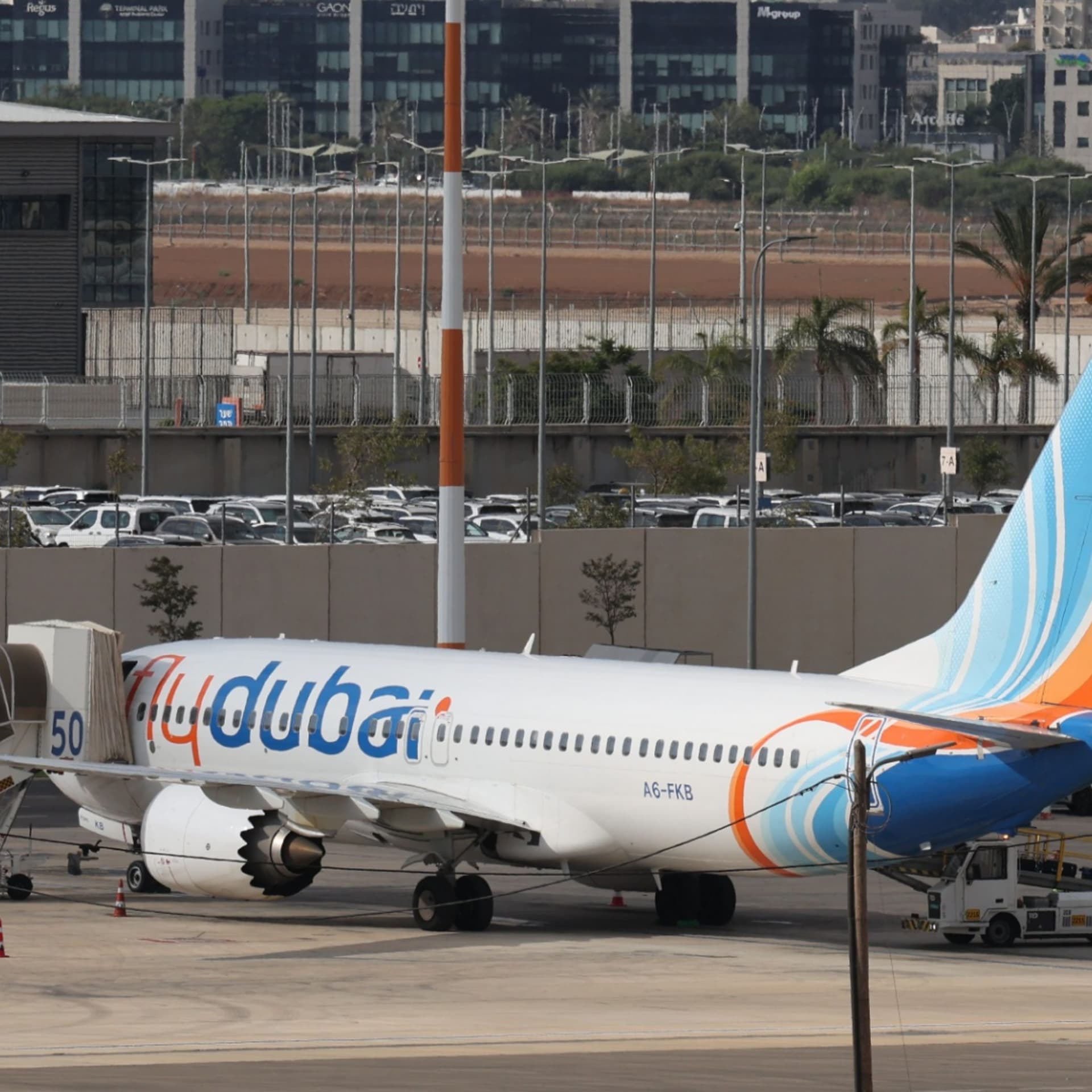
- The FAA plans to cut air traffic by 10% across 40 major airports to maintain safety.
- Transportation Secretary Sean Duffy assures that air travel is still safe but acknowledges increased delays and cancellations due to staffing problems.
- Impact:
- Approximately 44,000 flights daily are handled in the US, making a 10% reduction significant—around 4,000 flights.
- Concerns are raised about potential delays in maintenance of aircraft due to workforce shortages.
- Political Outrage in Mexico
- Incident Involving Claudia Sheinbaum:
- Claudia Sheinbaum, Mexico’s first female president, faced attempted sexual harassment in public, prompting her to call for legislation against sexual harassment.
- The incident highlights issues of security and the pervasive culture of machismo in Mexican society.
- Public Reaction:
- The event has sparked national outrage and discussions around safety for women in Mexico.
- Gaza Updates
- BBC Access to Gaza:
- The BBC reports from Gaza for the first time since a ceasefire was declared, under strict military oversight.
- Current Situation:
- The Israeli army maintains that confrontations with Hamas are ongoing.
- Reports indicate that Hamas is attempting to assert control and intimidate civilians.
- Typhoon in the Philippines
- Casualties and Damage:
- A recent typhoon has caused significant devastation in central Philippines, leading to at least 114 confirmed deaths and many missing.
- Cebu is the worst-hit area, overwhelmed by heavy rainfall and flooding.
- Government Response:
- President Bon Bon Marcos is set to visit affected areas to support recovery efforts, which are expected to be lengthy.
- Political Developments in India
- Elections in Bihar:
- Polling has opened in Bihar, India's poorest state, with significant implications for Prime Minister Narendra Modi's party.
- Key issues include economic development, corruption, and gender-based welfare programs.
- Voter Demographics:
- More women than men are turning out to vote, reflecting demographic challenges, including male migration for work.
---
Additional Topics
- US Supreme Court and Trade Tariffs:
- Ongoing hearings regarding President Trump's emergency powers to impose tariffs, with potential implications for small businesses.
- Nuclear Testing Preparedness in Russia:
- Discussions around Russia's military stance in relation to US nuclear testing plans.
- Margaret Atwood’s Reflections:
- The episode concludes with a segment featuring author Margaret Atwood discussing her literary career and societal themes reflected in her works.
---
Closing Remarks
- The episode emphasizes the interconnectedness of global events, showing how political, environmental, and social issues are shaping current affairs worldwide.
Contact Information:
- For comments or inquiries: globalpodcast@bbc.co.uk
- Social Media: @BBCWorldService (Hashtag: #GlobalNewsPod)
---
Produced by: Mazzafah Shakir and Daniel Mann Editor: Karen Martin Mixed by: Lee Wilson
Next Episode Preview Listeners can expect to hear more timely updates and analysis on significant global issues in future episodes of the Global News Podcast.
Written by AI. May contain mistakes. Listen to the episode to check what was said.
Transcript
Automatic transcript. May contain errors.0:00This BBC podcast is supported by ads outside the UK. If journalism is the first draft of history, what happens if that draft is flawed? In 1999, four Russian apartment buildings were bombed, hundreds killed. But even now, we still don't know for sure who did it. It's a mystery that sparked chilling theories. I'm Helena Merriman, and in a new BBC series, I'm talking to the reporters who first covered this story. What did they miss the first time? The History Bureau, Putin and the apartment bombs. Listen on bbc.com or wherever you get your podcasts. This is the Global News Podcast from the BBC World Service.
0:48I'm Charlotte Gallagher and in the early hours of the 6th of November, these are our main stories. As some flights are set to be grounded, we'll get the latest on the US government shutdown that's now the longest in history. Outrage in Mexico after a man tried to grope the country's first female president in public. A key test for India's nationalist prime minister in an election in the country's poorest state. Also in this podcast. Hamas is actually trying to arm itself, trying to assert dominance, assert control. He is killing people in broad daylight to make sure they understand who is boss.
1:28The BBC is allowed into Gaza, where Israeli soldiers keep a close watch on Palestinian fighters.
1:39The federal government shutdown in the United States, which started more than five weeks ago, is now the longest on record. The failure of Republicans and Democrats in Congress to agree a new funding deal means that flights will have to be cancelled from Friday. The Federal Aviation Administration has said it will cut air traffic by 10 % across 40 busy airports in order to maintain safety. Air traffic controllers have been working without pay for more than a month and some are now calling in sick. The Transportation Secretary, Sean Duffy, has said they're looking for work elsewhere. What we're finding is that our air traffic controllers, because of the financial pressures at home, are taking side jobs.
2:23They need to put food on the table, gas in the car, pay their bills. And so because of that, we have seen staffing pressures throughout our airspace. Those who travel will see that we've had more delays. We've had more cancellations. We do not want to see disruptions. But our number one priority is to make sure when you travel, you travel safely. I heard more from our North America correspondent, Peter Bowes. This is going to have a huge impact. Given that the US system handles roughly 44 ,000 flights every day, that's passenger flights, cargo planes and private aircraft. So a 10 % cut, about 4 ,000 fewer flights.
3:04So this is a proactive move to relieve the pressure on the air traffic controllers. So specific airports will be affected. We don't know at this stage which ones. And in fact, since the original announcement, the Reuters news agency has reported, quoting its sources, that these cuts will be rolled out from Friday, perhaps starting at about 3 or 4 percent and getting up to 10 percent by the beginning of next week. So I think what this tells us is that this is a moving situation. The airlines have only really just discovered that this is going to happen and clearly will be working very hard to try to organise this and work out the implications for its passengers.
3:46I mean, this just sounds unbelievable to me, that you can have people doing such an important job, like air traffic control, and they're not being paid. I mean, is this affecting the safety of air travel? That is a key question. There is no indication right now that air travel in this country is not safe. That's what they're trying to avoid. In fact, the FAA has said the system is still operating safely, but they are warning about these staffing problems and the fatigue pressures, especially amongst its staff, saying that as time goes on, this is now a record -breaking shutdown in terms of the number of days, and the problems are only going to get worse as every day goes on.
4:27The other concern is that because of staff shortages, there could be delays in maintenance work on critical equipment. And again, were that to be causing a significant concern that equipment simply wasn't working properly, that could cause further flights to be delayed or indeed cancelled. Peter Bowes. Mexico's first female president, Claudia Sheinbaum, has called for sexual harassment to be made a crime in the country after footage showed a man trying to grope her in the street. She's filed a complaint against the man who she said was drunk. He's since been arrested. The attack happened on Tuesday when she met supporters near the presidential palace in Mexico City.
5:09Will Grant is our correspondent there. I think it really has shocked Mexicans because one thing, of course, is that there might be a breach of security, but it's quite another that a member of the public with bad intentions could get so close to the president, could touch her body without permission, could attempt to kiss her, and that a good few seconds pass before any member of her team stepped in. And you could see on her face that she was visibly shaken by the incident. I think it says two key things to us, really that this lamentable episode, as President Claudia Sheinbaum put it, shows just how ingrained machismo is in Mexican society.
5:53As people have been putting it, ultimately, if that can happen to the president, what chance do ordinary women in the streets stand? So that is one side of it, and it's a very, very coherent argument which has been resonating around the country since this happened. And the other of course is the one you've mentioned which is presidential security. It's happening just days after a very popular mayor of a municipality called Uruapan in Michoacan was murdered at a Day of the Dead celebration in a public square. Shortly after he called for more support and more protection from Claudia Sheinbaum. So it just goes to show that while her team have always allowed her to mingle with crowds, to shake hands, pose for photos and hugs and so on.
6:37It does come at a real security cost, but one that she said in her morning press briefing that she was not prepared to change. The fact that this has happened to the president and the fact that she's speaking out about it now, do you think that that could make a difference? It's such a public moment. It's such a shocking display of machismo, of assuming that a woman is there for him to be able to touch if he wants to, even if she be the president. I think the things that Claudia Sheinbaum said afterwards that she was going to carry through with bringing charges against this man because he'd done it to other women that day, she was told.
7:15And also to say that enough is enough, that we as women in Mexican society won't put up with this and she needs to be seen to be leading that charge. So I think it has the potential to do something. The difficulty is, of course, that even as a candidate She was talking about clamping down on gender-based violence, on working harder on femicide, which is notoriously bad in Mexico. And we're not seeing any significant improvement on those numbers since she's come to office. And you're out in Mexico City at the moment. Is this something that people are talking about? It is. It actually is. I've been listening on the radio stations and it was often the subject of conversation.
7:54You can see people talking about it in chat groups. It's something that people are shocked about. and it is, of course, leading all the newspaper coverage. It stands out because it's so brazen, but it also stands out because it's so ordinary. And I think that is what disheartens Mexicans, that even the head of state isn't protected from the machismo in this society. What happened to Claudia Sheinbaum happens every day to women in Mexico, and it happens often. It just so happened that on this occasion, he was caught on camera doing so, was arrested and will face charges. But the vast, vast majority of those incidents around Mexico go completely unreported and unpunished.
8:33Will Grant. The BBC has been allowed to enter Gaza for the first time since the ceasefire was declared last month. The Israeli army took a group of journalists into the Palestinian territory on Wednesday. They weren't allowed to go beyond the Yellow Line, which is the temporary boundary between the areas of Gaza controlled by Hamas and those controlled by Israeli forces. Military censorship laws in Israel mean that army personnel were shown our material before publication. The BBC maintained editorial control of this report from our Middle East correspondent Lucy Williamson at all times. As you're seeing in front of you is the battlefield of Sajayia.
9:14To the left is Gaza City. The yellow line, you can see it, it is a bit before the first line of buildings or after the first line of buildings. I'm just standing now on a ridge very close to the Yellow Line, and for 180 degrees around me, all I can see pretty much is rubble. Buildings just smashed into piles of grey concrete and stones. In the far distance to my left, there are buildings of Gaza City, some of them still standing. That's, of course, where many people are still living. But the rest of it just shows what this two-year war has done to Gaza. It was not a goal. IDF's goal is to combat terrorists, to release the hostage and make sure Hamas can ever create another October 7th.
9:54Lieutenant Colonel Nadav Shoshani is an Israeli military spokesman. And when you ask the commanders fighting here how the battlefield looked like, they'll tell you. Almost every house had either a tunnel shaft or was booby-trapped or had an RPG or a sniper station. Israel doesn't allow international news organizations to report independently from Gaza. This visit with a group of journalists was a short, highly controlled trip with the Israeli army, with no access to Palestinians or other areas of Gaza. Israel's forces say there are confrontations with Hamas in this area almost every day, and that its troops will stay in Gaza until Hamas disarms and gives up power.
10:37It's not yet clear when or how that will happen. So what's the specific condition? I know you say Hamas disarmament, but the process for that hasn't even been worked out yet. Well, on the contrary, Hamas is actually trying to arm itself, trying to assert dominance, assert control over Gaza, is killing people in broad daylight to kind of terrorize the civilians and make sure they understand who is boss in Gaza. So we're actually seeing the opposite of it, and it's very clear that there will need to be pressure. We hope disagreement is enough pressure. The division of Gaza has left it in a tense limbo, And the Americans are pushing very hard to try and move quickly onto the next stage.
11:17But there are reminders every day of how fragile this situation is. And every time this ceasefire cracks, it threatens to bring the whole deal crashing down. Lucy Williamson. Polls have opened in the Indian state of Bihar, where millions of people will cast their votes in the first phase of assembly elections. Bihar is the country's poorest state. The outcome will be critical for Prime Minister Narendra Modi and his Hindu nationalist party, the BJP, which is seeking to retain power with its regional ally. They face a strong challenge from an opposition alliance of the RJD and Congress parties.
11:56Steve Lai spoke to Davina Gupta, our correspondent in Patna, the capital of Bihar State. We've seen a steady stream of people coming in this polling booth, which essentially is a school. So there are people coming from behind me where their identity cards are checked and then men and women are sent to separate booths. This is where men go and then press that button on the electronic voting machine to cast their vote. Out of 243 seats in this state, half of them are going to polls today. The next half will be on the 11th of November. And there are around 90 ,000 polling booths like this with security guards and election officials who are making sure that voters get their chance to cast their ballot.
12:39What we are expecting is a turnout, which has traditionally been around 50 to 60 percent in this state. Women have turned out more than men. And that's what I've also witnessed in this polling booth. There have been more women coming in with their daughters to cast their vote. And this is also because how the demography of this state is shaped. Most of the men have to travel out from here in search of jobs. This is one of the poorest states. So what that means is the odds are stacked against them. Out of 1 ,000 births, nearly 47 children don't make it to their first birthday. One in every five women have to drop out from their education and they are pushed into early marriages.
13:17And men, because of lack of job opportunities in industries, have to migrate outside. And these are also the issues which are on top of mind of these voters here. Yeah, there's a lot of challenging issues that they have to contend with and also think about when it comes to their voting. Just to elaborate a bit more on the issues that will be top of their minds. Well, we've seen that this place also has a national aspect to it because the regional party here, the JDU, which has ruled this place for 20 years, is in alliance with the Hindu Nationalist Party, the BJP at the centre. India's Prime Minister Narendra Modi has been coming and campaigning here.
13:51In the opposition, there is the Congress with other local parties. and all of them have been looking at development in the state. They've been pushing that they would get more industries to invest here. But there is a problem of corruption. There is also a problem of making the labor stay here because there are lucrative options elsewhere. So those are the main challenges for these political parties. They've also targeted welfare schemes towards women because they know they turn out in higher numbers than the men, as we spoke about. So there have been promises of cash handouts and direct transfer to their bank accounts.
14:24There are scholarship schemes that have been introduced for them, promises of government jobs by different political parties. But one has to see how these voters will be looking at them. There's also an interesting matrix of caste and religion that plays out. So a multiple and complex layers of India's democracy in play in the state elections. That was Davina Gupta. Still to come in this podcast. I really did seriously get asked in about 1967 not whether I was going to commit suicide, but when I was going to commit suicide. No way. Margaret Atwood looks back at the start of her literary career.
15:11If journalism is the first draft of history, what happens if that draft is flawed? In 1999, four Russian apartment buildings were bombed, hundreds killed. But even now, we still don't know for sure who did it. It's a mystery that sparked chilling theories. I'm Helena Merriman, and in a new BBC series, I'm talking to the reporters who first covered this story. What did they miss the first time? The History Bureau, Putin and the apartment bombs. Listen on BBC.com or wherever you get your podcasts.
15:49A typhoon which has caused devastating floods across the central Philippines has killed at least 114 people. Official figures show that more than 120 others are still missing. Our Southeast Asia correspondent, Jonathan Head, is monitoring the storm. I think it's a big mess they've got to clear up, particularly on the island of Cebu, which is the worst affected. Of course, it has quite a high population, at least in Cebu City. I mean, this typhoon was a very strong one, but it was the amount of water it carried that seems to have caused the most damage. Effectively, it dumped a month's worth of water on Cebu in just a day.
16:23And the Philippines is mountainous, very deforested. It can't absorb a lot of water. And that water just churned down right into urban areas. From the pictures, it almost looked like a tsunami had hit. So it's left behind it. Enormous amounts of damage, completely blocked roads, massive amounts of rubble. I mean, in amongst that rubble, you've got broken parts of buildings. You've got cars, you've got shipping containers all piled up, making it very hard to clean up and a huge amount of mud as well. Now, President Bon Bon Marcos is due to arrive there today to at least symbolically show his support for the population and perhaps to encourage the cleanup effort.
16:57But that's going to take an awful long time. And we do think the casualties are going to rise. And that storm is still very, very strong. It's measured as a category four typhoon, which is exceptionally strong for a typhoon that's already been through the Philippines and is now moving west across the South China Sea. So south central Vietnam, which expects to feel the brunt of it later this evening, people there are stocking up on food, people in more vulnerable areas are evacuating because by Vietnamese standards, this is still a very, very strong storm and potentially a very, very damaging one.
17:28Jonathan Head. The US Supreme Court has been hearing arguments over the legality of President Trump's use of emergency powers to impose tariffs on imports. A number of small businesses and a group of states say most of these are illegal and should be struck down. If the court agrees, Mr. Trump's trade strategy would be upended. Outside the court, the Democrat Senator Ed Markey had this to say. This case is not enemies of the state versus Trump. It is small businesses versus Trump. It is Main Street versus Mar-a-Lago. and it is mom and pop versus Trump's billionaire buddies. Nick Miles heard more from Gary O'Donoghue in Washington.
18:16The court spent a couple of hours going through these arguments with the lawyers, oral arguments effectively, and essentially those that oppose these tariffs say, look, there's only one institution in this country that can raise revenue, raise taxes, tariffs are a tax, and that institution is Congress, and the president can't do this. It's simply not part of his constitutional powers. On the other hand, the proponents and the Trump administration say, look, there are these emergency powers, this Emergency Economic Powers Act, under which the president can take measures to what's called regulate importation.
18:53And they say regulating importation can mean, among other things, imposing tariffs. So that is the essential argument. It's an argument about a particular statute in one case, this emergency act and how it's being implemented. but it's also a constitutional argument about where the line is drawn between the powers that Congress has versus the presidency. And Gary, it's hard to overstate, isn't it, quite how many people and companies have been affected by the tariffs in the US. How much is riding on the outcome of this case for them and also for Donald Trump? Well, so far in purely financial terms, you're looking at about$100 billion, which if the Trump administration loses it's going to have to pay back to importers and various companies that have paid these tariffs so that's a big hit when you look at the level of taxes that have imposed on pretty much every country in the world the lowest rate is 10 % most of them are much much higher than that and of course at the end of the day some of that may be absorbed by importers some of it may be absorbed by foreign manufacturers but certainly a chunk of it's going to be absorbed by American consumers and at a time when the economy is you know showing some signs of slowing down a little certainly the labour market slowing down that is something they can't afford so a lot rides on this for Donald Trump in terms of the rest of his time in power.
20:12And very briefly Gary when can we expect a decision on this? Well normally with big cases like this you have to wait until the middle of the following year so next June but there is some suggestion that this is considered so important by the court they may come back sooner than that and a very quick thing to add a lot of the conservative or at least a couple of the conservative judges on this conservative-dominated core were sounding slightly sceptical about the government's arguments. That was Gary O'Donoghue. Russia's defence minister has advised President Putin he should prepare for full-scale nuclear testing after President Trump said the US would start testing nuclear weapons.
20:49Mr Trump's energy secretary later clarified this, saying the tests would not involve nuclear explosions. But Mr Putin is remaining cautious. as our Russia editor Steve Rosenberg explains. The Russian state television showed Vladimir Putin chairing a meeting of the Russian Security Council with top security officials like the Defence Minister and the Chief of the General Staff. The Russian Defence Minister, Andrei Belousov, he was champing at the bit. He suggested that Russia should prepare for full-scale tests immediately. However, in Russia, it's what Vladimir Putin says that counts. So let's look very closely at the language he used.
21:25President Putin did not say full steam ahead, please, with nuclear testing. He told officials to draft proposals about a possible start on work to prepare for a nuclear test. He also said Russia has always strictly adhered to and continues to adhere to its obligations under the Comprehensive Nuclear Test Ban Treaty. And we have no plans to deviate from these commitments. So it looks like the Russians were sending a message to Washington that if you really are planning to resume nuclear testing, just be aware Russia is not going to sit idly by. We'll do it too. And I think there was a certain degree of surprise here in Moscow last week when President Trump made that announcement about nuclear testing, a certain amount of scratching of heads trying to work out what exactly Donald Trump meant.
22:14Steve Rosenberg. Finally, the first book written by the Canadian author Margaret Atwood was a collection of poetry published in 1961. In the 64 years since then, she's published 18 books of poetry, 18 novels, including The Handmaid's Tale, and now a memoir, Book of Lives, a memoir of sorts. She's been speaking to Nuala McGovern, who first asked Margaret Atwood about the difficulties she faced as a female author in the 1960s. What were the role models at that time? I really did seriously get asked in about 1967, not whether I was going to commit suicide, but when I was going to commit suicide. No way.
22:56Well, it would show that you were serious, right? Yeah, I understand that there was meant to be this torment that was attached to. Yes, you were supposed to be very tormented and sort of nun-like, or else you could be a high priestess of the imagination and do some human sacrifice, like the white goddess in Robert Graves' books, which were circulating at the time. So those were the models and it was somewhat daunting. But you persevered nonetheless. Did you always feel that you would be successful as a writer? Oh, no, no, no, no, not at all. This was Canada. So no, you didn't think you were going to be successful, you thought you were going to be dedicated.
23:36So it wasn't considered a career, it was considered a vocation, like being a priest. The Handmaid's Tale, I want to come back to that, your dystopian novel about a patriarchal society in which women are forcibly assigned to produce babies. It was heralded not just as a modern classic, but also prescient in the way that it warned what might happen in the future and that reproductive freedoms could be challenged. Some say that they are now. We are talking specifically about the United States. Yes. We are talking about the form an autocracy would take were there to be one in that country. So it would not be, hi, my name is Joe, let's all be communists.
24:18That would not fly in the United States. What is much more likely to fly, as we are seeing unfold before our very eyes, and going way back to the 17th century when the Massachusetts Bay Colony was set up as a Puritan autocracy, not a democracy, forget that part. That came in the 18th century. So what form would it take? Were there to be one in the United States, and it would take the form of a theocracy, at least in name. People would say they were doing these things in the name of the Almighty. That's what they would do. And once they got into power, they would get rid of all the other religions, not just all the other non-Christian religions, but all the other Christian religions, because autocracies are autocracies.
25:10Do you ever worry about something like that happening? Of course I have a worry, and so do people who live there. But it is my contention that America is a very ornery place and that people in it dislike being told to line up and do as they're told. And that can have a plus and it can have a minus. But the plus is they're likely to be resistant to tyranny. They're not very deferential. But with The Handmaid's Tale, or indeed, the year of the flood, people see it as preempting the 2008 financial crash. What do you say to people who say you can read the future? Nobody can read the future because there isn't one future.
25:55The future is multiple, so the decisions we make now will influence the future we get, but there are always going to be unexpected factors. You can make educated guesses. You can say, if we continue doing this, that will probably be the result. But that's all you can do. And The Handmaid's Tale was based on a theoretical question. question. If the tendencies that started to become manifest during the first years of the Reagan regime, if those continue, and America deep minds its own past, namely the 17th century, this is likely to be the result. That was Margaret Atwood. And that's all from us for now.
26:43But there will be a new edition of the Global News Podcast later. If you want to comment on this podcast or the topics covered in it, you can send us an email. The address is globalpodcast at bbc.co.uk. You can also find us on X at BBC World Service. Use the hashtag Global News Pod. This edition was mixed by Lee Wilson and the producers were Mazzafah Shakir and Daniel Mann. The editor is Karen Martin. I'm Charlotte Gallagher. Until next time, goodbye.
Read the full transcript
27:15If journalism is the first draft of history, what happens if that draft is flawed? In 1999, four Russian apartment buildings were bombed, hundreds killed. But even now, we still don't know for sure who did it. It's a mystery that sparked chilling theories. I'm Helena Merriman, and in a new BBC series, I'm talking to the reporters who first covered this story. What did they miss the first time? The History Bureau, Putin and the apartment bombs. Listen on bbc.com or wherever you get your podcasts.
From the publisher
The Federal Aviation Administration in the US has said that if the government shutdown continues, it will cut air traffic by ten per-cent across forty busy airports from Friday, in order to maintain safety. Air traffic controllers have been working without pay for more than a month and some of them are now calling in sick. The Transportation Secretary, Sean Duffy, insists air travel is still safe, and the decision to cancel the flights is being made to ensure efficiency. Also: the BBC has been allowed to enter Gaza for the first time since the ceasefire was declared last month; Mexico's first female president, Claudia Sheinbaum, has called for sexual harassment to be made a crime in the country after footage showed a man trying to grope her in the street; and a typhoon which has caused devastating floods across the central Philippines has killed at least 114 people.
The Global News Podcast brings you the breaking news you need to hear, as it happens. Listen for the latest headlines and current affairs from around the world. Politics, economics, climate, business, technology, health – we cover it all with expert analysis and insight. Get the news that matters, delivered twice a day on weekdays and daily at weekends, plus special bonus episodes reacting to urgent breaking stories. Follow or subscribe now and never miss a moment. Get in touch: globalpodcast@bbc.co.uk