In short
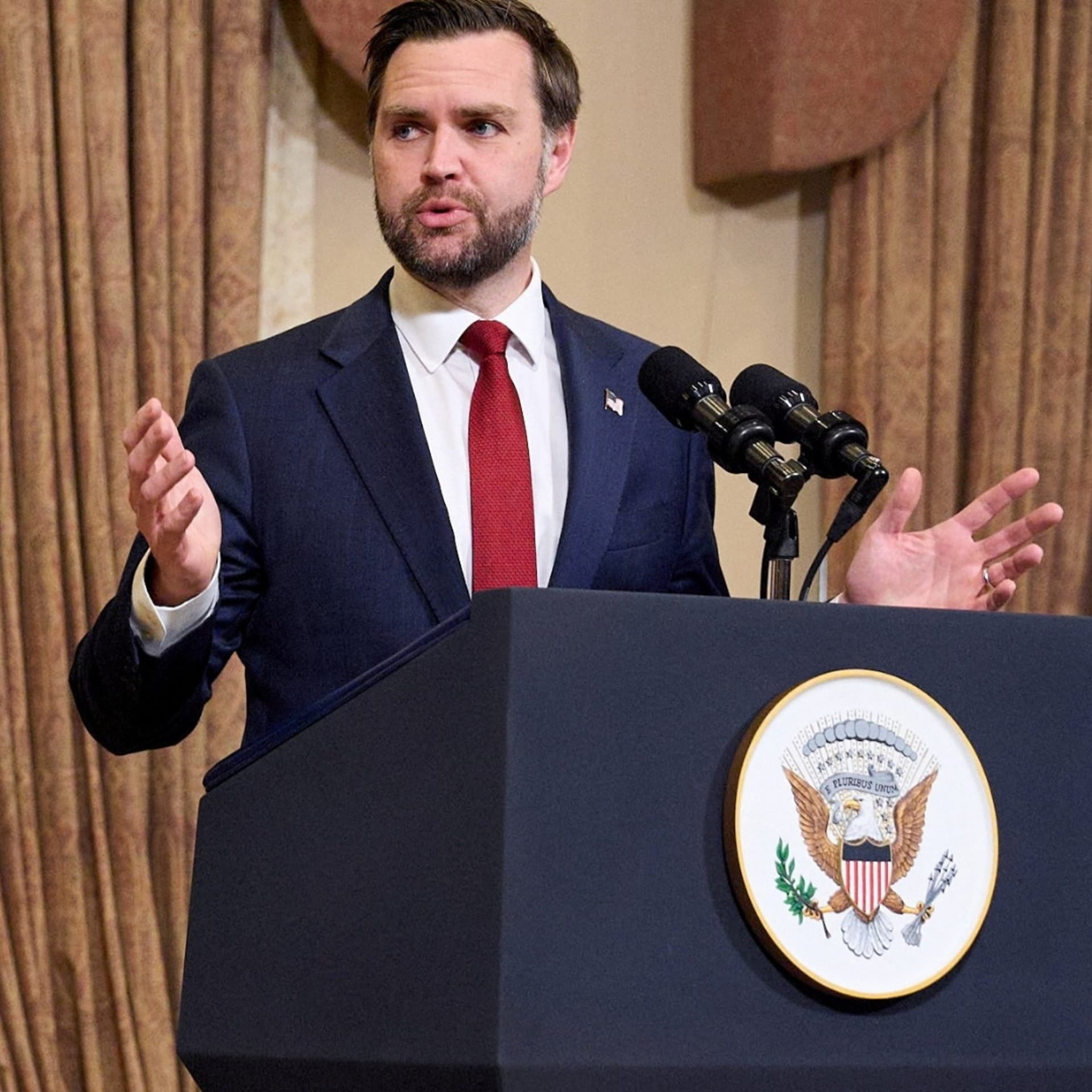
The episode is a BBC World Service news roundup plus tech/industry segments. Topic 1: US-Iran tensions: US Vice President J.D. Vance says talks could resume, but Iran must act. He demands Iran remove enriched material and give a conclusive nuclear non-development commitment. He accuses Tehran of “economic terrorism” for largely closing the Strait of Hormuz and says the US blockade of Iranian ports is now in effect.
Notable examples
talks in Islamabad over the weekend; US Navy enforcing a rival blockade; Vance says Iran moved the “goalposts.” Topic 2: Pakistan hospital HIV outbreak: BBC investigation alleges life-threatening malpractice at THQ hospital in Tonsa, including syringe reuse and unqualified volunteers; whistleblower footage shown. Topic 3: Colombia hippo cull: invasive “cocaine hippos” descended from Pablo Escobar’s zoo; government plans euthanasia/sterilisation/moves.
Guests
Professor Massimo Fagioli (Trinity College Dublin) on Pope-Trump clash; Alice Adderley (reporting on Colombia hippos); Ghazal Abasi (reporting on Pakistan HIV case); Simon Jack (business editor on market impacts); Peter Bowes (North America correspondent on Iran talks); Helena Burke (reporting on Duolingo “taxi test”); Shama Khalil (Paramount-Warner merger coverage); Nedda Taufik (Trump vs Wall Street Journal lawsuit background); plus Duolingo CEO Luis von Ahn (taxi test interview).
Written by AI. May contain mistakes. Listen to the episode to check what was said.
Chapters
Tap a time to open that second in VOUS Vice President on Iran Talks
0:45 to 1:09
Discussion on potential resumed talks between the US and Iran.
“The US Vice President, Jody Vance, suggests talks with Iran could resume, but the ball is in Tehran's court.”
BBC Investigation on Malpractice
1:09 to 1:42
A BBC investigation reveals malpractice in a Pakistani hospital.
“Also in this podcast, Colombia is to begin a cull of its invasive hippopotamus population to protect local ecosystems and native species such as manatees and river turtles.”
Colombia's Hippo Cull Initiative
1:42 to 2:25
Colombia prepares to cull invasive hippos threatening local ecosystems.
“the US Vice President has given an indication that fresh talks could be revived, but says the ball is in Iran's court.”
US-Iran Tensions and Blockades
2:25 to 2:59
The US Vice President's remarks on Iran's economic actions and US blockades.
“then this can be a very, very good deal for both countries.”
Statements from North America Correspondent
2:59 to 3:21
Peter Bowes discusses the implications of the US blockade and Iran's actions.
“He said by blocking traffic, Iran was engaging in an act of economic terrorism.”
Global Economic Impact of Tensions
3:21 to 4:00
Analyzing how US sanctions affect global markets and economies.
“Donald Trump has said more ships are getting through.”
Inflation and Economic Growth Effects
4:00 to 4:50
Exploring the impact of inflation on businesses and consumers worldwide.
“Tehran, he said, wasn't responding in the way that he and the president wanted.”
The Role of Russia in Current Crises
4:50 to 5:46
Examining how Russia benefits from the current geopolitical tensions.
“Well, the conflict in the Middle East has had a volatile effect on markets and the wider global economy.”
Long-Term Effects of Economic Confidence
5:46 to 6:12
The importance of confidence in economic stability amid crises.
“And we've seen things like fuel rationing in Sri Lanka.”
Political Tensions Between Trump and the Pope
6:12 to 7:04
Discussing the ongoing tensions between Donald Trump and Pope Leo.
“And the more you are reliant on the Gulf, the more that hardship, and certainly Asia fits that bill.”
Show all 19 chapters
Historical Context of Papal Relations
7:04 to 7:52
Analyzing historical papal interactions with political figures.
“And the longer this goes on, the worse it gets.”
Different Political Contexts of the Vatican
7:52 to 8:11
Understanding the Vatican's political stance in contemporary issues.
“Donald Trump may have removed the AI post on his Truth Social feed, which depicted himself as a Jesus-like figure after supporters accused him of blasphemy.”
Colombia's Hippos and Ecosystem Challenges
8:11 to 14:02
The challenges posed by hippos in Colombia and proposed solutions.
“after the U.S.-born pontiff had said a delusion of omnipotence was fueling the war in Iran.”
Cocaine Hippos: Environmental Protocols
14:02 to 15:01
Learn about the Colombian government's euthanasia protocol for controlling the cocaine hippo population.
“The Environment Minister Irene Velez said that following scientific advice, the government was issuing a euthanasia protocol to control the numbers of the so-called cocaine hippos.”
Teaser for Upcoming Stories
15:01 to 15:28
Get a glimpse of the interesting topics to be covered in the podcast.
“People open up to you because they're not likely to ever see you again.”
HIV Outbreak in Pakistan: A Family's Tragedy
16:18 to 20:13
Understand the devastating HIV outbreak affecting children in Pakistan and its aftermath.
“In 2024, eight-year-old Muhammad Amin was treated at THQ hospital in Tonsar, central Pakistan, for a fever.”
Trump's Lawsuit Against Wall Street Journal
20:13 to 23:08
Explore the details of Trump's defamation lawsuit against a major newspaper.
“It's on the BBC World Service YouTube channel.”
Opposition to Paramount-Warner Merger
23:08 to 24:21
Learn about the concerns surrounding the proposed merger of Paramount and Warner Brothers Discovery.
“More than a thousand actors, directors and filmmakers have signed an open letter voicing their opposition to a proposed merger between Paramount and Warner Brothers Discovery.”
The 'Taxi Test' in Hiring Practices
24:21 to 27:38
Discover the controversial hiring practice of assessing candidates through their behavior with taxi drivers.
“Now how would you feel if the taxi driver taking you to your prospective job interview could make or break whether you get the role?”
Transcript
Automatic transcript. May contain errors.0:00This BBC podcast is supported by ads outside the UK.
0:06Welcome to The Interface, the show that decodes the tech that's rewiring your week and your world. On this week's episode, we'll look at the way that algorithms could change how much you're paying for your groceries, how even astronauts have issues with Microsoft Outlook, and whether the next trend in tech is less tech. Listen on BBC.com or wherever you get your podcasts.
0:33This is the Global News Podcast from the BBC World Service. Hello, I'm Ankur Desai, and in the early hours of Tuesday 14th April, these are our main stories. The US Vice President, Jody Vance, suggests talks with Iran could resume, but the ball is in Tehran's court. He was speaking after the US Navy began enforcing a blockade of Iranian ports. A BBC investigation uncovers evidence of life-threatening malpractice on the paediatric ward of a Pakistani hospital previously linked to a HIV outbreak. Also in this podcast, Colombia is to begin a cull of its invasive hippopotamus population to protect local ecosystems and native species such as manatees and river turtles.
1:23This is a necessary action to reduce the population. Without that action, it's impossible to control the population.
1:35As the US and Iran continue to tussle over the key waterway that is vital to the global economy, the US Vice President has given an indication that fresh talks could be revived, but says the ball is in Iran's court. This comes after J.D. Vance accused the Iranian government of carrying out what he called economic terrorism by largely closing the Strait of Hormuz to ships. On Monday, the U.S. began a rival blockade, stopping ships from using Iranian ports. And it comes after talks between the U.S. and Iran crumbled over the weekend in Islamabad. Mr. Vance has been speaking to Fox News but insists certain conditions must be met.
2:16We must have the enriched material out of Iran. We must have their conclusive commitment to not develop a nuclear weapon. And I think that if the Iranians are willing to meet us there, then this can be a very, very good deal for both countries. I heard more from our North America correspondent Peter Bowes, who's in L.A. He said the ball was very much in Iran's court. He also addressed some issues that we didn't hear about when the talks broke up in the early hours of Sunday over the weekend. namely the status of the Strait of Hormuz. In fact, Mr Vance went as far as to accuse Tehran of moving the goalposts during the meeting, saying that he'd expected the Iranians to fully reopen the Strait in return for a ceasefire.
2:59He said by blocking traffic, Iran was engaging in an act of economic terrorism. And were that to continue, he said, the US would abide by the same principle that no Iranian ships would get out either. He said two could play at that game. And as we know, and as you've been reporting, the US blockade of Iran's ports is now in effect. Donald Trump has said more ships are getting through. But this issue remains the most sensitive, at least I think for the next coming days, because as long as global trade is being hampered in the way that it has been in recent weeks, it seems highly unlikely that any of the other big issues are going to be resolved.
3:38Peter also seemed to allude that they talked over a number of things in Islamabad over the weekend with Iran. It seemed to give an indication of what some of those topics would have been. Yes, he did. He elaborated a little bit more on these core issues that are dividing the two countries. He said the US had to put a lot on the table and he said it had done that. Tehran, he said, wasn't responding in the way that he and the president wanted. on the table, he said, was the ceasefire and the promise that Iran could one day be treated like a normal country. He said, if it was a normal economy, people would prosper and thrive.
4:15But in order for Iran to be a normal country, he said, it could never get a nuclear weapon. And he said, we must have, just to quote him, the enriched material out of Iran, we must have the conclusive commitment not to develop a nuclear weapon. That, he said, would be a very, very good deal for both countries. And he repeated what he and the president have been saying, that their view was that the weekend talks made some progress, but that both sides had to progress even further and that it was up to Iran to make the next move. North America correspondent Peter Bose reporting. Well, the conflict in the Middle East has had a volatile effect on markets and the wider global economy.
4:59A few hours after the start of the US blockade of Iranian ports, and shortly after the close of trade on the American markets, I spoke to our business editor, Simon Jack. The oil price is still actually right now below$100. And stock markets in the US are actually up and in fact have eradicated all their losses so far this year. So either they're being horribly complacent about this, or there's reasons for confidence that a deal can be achieved. Asian markets, Asian countries and their economies are desperate for all because we know this strait is so important to them. So what are their solutions then if they want to try and access oil?
5:34Well, we've seen supply constraints, which has seen what they call in economic terms demand destruction. Things either get so expensive you stop doing them or the supplies aren't there and you can't do them. And we've seen things like fuel rationing in Sri Lanka. We've seen LPG rationing in India, four day weeks elsewhere, people being told to stay at home. All of these kind of things to try and bring down demand. And also there are, of course, other sources of oil. The Gulf isn't the only one. China, for example, gets quite a lot of its oil from Russia. India also gets some from Russia. But I'm not trying to downplay the fact that there are real shortages in some places causing real hardship.
6:12And the more you are reliant on the Gulf, the more that hardship, and certainly Asia fits that bill. Yeah, reserves are being drained by the day for sure. A lot of people listening will wonder, well, how is this affecting me? How is this affecting my pocket, my bank balance and the finances of many people around the world? Well, it pushes up inflation and inflation is a killer in two ways. One is it increases the cost for businesses of doing business. And at the same time, it takes money out of the pocket to those customers. So it's a double whammy on, if you like, economic growth. So inflation goes higher, economic growth goes lower.
6:45For many governments, that means that the amount of tax they get in from that economic activity will also go down at the same time as interest rates being higher, the amount they pay on their borrowings. This is particularly true in Asia, which has a lot of US dollar denominated debt. So the public finances can get very stretched very quickly. And the longer this goes on, the worse it gets. And there's one commodity which really gets battered in a situation like this. And it's not oil and it's not helium and it's not fertilizer. It's confidence. Confidence means that businesses don't spend money, they hoard cash, they don't invest, and that can affect growth for many weeks, months, even years down the line.
7:23Finally, in every situation, someone benefits. So a lot of people are looking towards Russia. So are Russian oil producers currently rubbing their hands with glee at the prospect of many countries knocking on their door? This is a birthday present for Russia. They're obviously big suppliers to both India and China, both of who are in desperate need of it. So, yes, Russia is a big winner from this. And also, given the fact that the Ukraine war is going on, international attention has obviously been diverted to the Gulf. So good news for Russia, bad news for Ukraine. Simon Jack. Donald Trump may have removed the AI post on his Truth Social feed, which depicted himself as a Jesus-like figure after supporters accused him of blasphemy.
8:03But he's not backing down in his spat with the leader of the Roman Catholic Church. Late on Sunday, he accused Pope Leo of being weak on crime and terrible for foreign policy after the U.S.-born pontiff had said a delusion of omnipotence was fueling the war in Iran. But the Pope said he had no fear of the Trump administration and he would continue to speak out loudly. In response, President Trump stood his ground when he was asked about the row at the White House. Pope Leo said things that are wrong. He was very much against what I'm doing with regard to Iran, and you cannot have a nuclear Iran.
8:41Pope Leo would not be happy with the end result. You'll have hundreds of millions of people dead, and it's not going to happen. So I can't. I think he's very weak on crime and other things. So I'm not. I mean, he went public. I'm just responding to Pope Leo. So how does the current spat compare to previous disagreements between popes and political figures? Professor Massimo Fagioli from Trinity College, Dublin, is an expert on the Christian church. He's been speaking to the BBC's James Kumrasami. So there is a history of contraposition between strongmen, strong leaders, Hitler and Mussolini and then Stalin.
9:21But there was a sense of respect of the Vatican as an institution that we don't see here, right? What's different now is that the United States of Donald Trump claims to be the defender of Christianity. And Donald Trump himself claims to be a kind of political messiah, right? And so that's a different level. The Pope during the war years, Pius XII. The Pope, who remained in the Vatican City during the hard-fought battle for Rome, granted an audience to Allied troops after the occupation and gave them his blessing. What would you point to in terms of how he interacted with politicians? Because it's a pretty controversial legacy he has, isn't it?
10:07It is. And that's the problem that every pope wants to avoid, meaning the question of how silent a pope can be in the face of war crimes, genocide. And so here you had a church that was very much in between, Soviet communism on one side and fascism, Nazism on the other side. But everything was dealt at the level of ideology of we Catholics, we communists. Of course, what we have now is an American pope and an American president locking horns. And I just wonder, looking back to more recent times, when we have a Polish pope, John Paul II, being seen as a real beacon in the fight against communism.
10:56The imperialistic monopoly of economic and political supremacy at the expense of others. That's true. The big difference is that in 1979, when John Paul II visited Poland just a few months after his election, He knew he had almost the entirety of the Polish people behind him. That cannot be said for Pope Leo because America is very polarised. How unusual is it for the Pope, the current one, to very specifically saying, look, I'm not afraid of what the Trump administration is going to say, being quite direct and standing his ground against, well, specifically the riposte from the White House? It's very unusual.
11:44Pope Leo spent 20 years in Peru at the time when Peru was a very dangerous place, a civil war, armed gangs, killing priests. That has given him an armour that I think is quite interesting to see. Has the Pope always been a political figure to a certain extent? Yes, the Catholic Church has a very political understanding of itself. Not partisan, though, right? So that's the difference. So being political means that you care deeply about the most vulnerable, the environment, but you also avoid being on the side of one political party, one nation, one leader. That's in the DNA of Catholicism. But this is different, again, because he's dealing with an administration that is saying they are on a divine mission.
12:36And that makes it very hard for the Vatican not to respond. Professor Massimo Fagioli speaking to James Kumrasami. Colombia has announced that it's going to begin a cull of its invasive hippopotamus population, which is descended from animals smuggled in by the late narco-terrorist Pablo Escobar. The government says the beasts, which form the only wild population of hippos living outside Africa, are threatening its ecosystems and native species, as well as posing a danger to local people, as Alice Adderley reports. In the 1980s, Pablo Escobar was renowned for being a violent cartel leader, but he was less known for creating an extravagant private zoo featuring more than a thousand exotic animals smuggled from overseas.
13:25The wildlife included giraffes, elephants, zebras, rhinos and exotic birds, but the most famous and destructive part of the collection was four African hippos, one male and three females. After Escobar was killed in 1993 in a shootout with Colombian security forces, the hippos escaped from his abandoned hacienda and began breeding, thriving in the Colombian climate with no natural predators. Now there are estimated to be up to 200 of their descendants living in the wild. The Environment Minister Irene Velez said that following scientific advice, the government was issuing a euthanasia protocol to control the numbers of the so-called cocaine hippos.
14:17This is a necessary action to reduce the population. Without that action, it's impossible to control the population. And as we saw in the estimates, by 2030, we would have at least 500 hippos affecting our ecosystems and harming our native species, such as manatees and river turtles. While some of the hippos which roam freely in the Magdalena River Valley will be culled, others will be sterilised or moved. Maybe some will be lucky enough to end up in the family-orientated theme park and wildlife sanctuary which Escobar's former ranch Hacienda Napoles has become. Alice Adderley reporting. Still to come in this podcast.
15:02People open up to you because they're not likely to ever see you again. Some people can be more than generous and other people the opposite. Always got to be good to your cab driver because he's only trying to do his best. The taxi test used by one company for interviews where the cab driver could have a say on whether you get the job.
15:28Welcome to The Interface, the show that decodes the tech that's rewiring your week and your world. On this week's episode, we'll look at the way that algorithms could change how much you're paying for your groceries, how even astronauts have issues with Microsoft Outlook, and whether the next trend in tech is less tech. Listen on BBC.com or wherever you get your podcasts.
16:17diseases. The BBC's Ghazal Abasi reports. In 2024, eight-year-old Muhammad Amin was treated at THQ hospital in Tonsar, central Pakistan, for a fever. Doctors gave him injections and sent him home. Instead of recovering, he grew worse. Muhammad Amin's mom, Sugra, describes what happened next. My son started feeling pain. He developed a very high fever. Eventually, Muhammad Amin was referred to another hospital in the neighbouring city of Multan, where he was tested. They said, according to his report, your child has HIV. The infection has attacked. He began treatment, but it came too late. His eyes closed up.
17:00Then at 5pm, he passed away. But the family's trauma didn't end there. What's your name? Shortly after Muhammad Amin's death, his older sister Asma developed flu symptoms. She received treatment at THQ hospital. Two months later, she too fell seriously ill. I had her tested. The hospital staff said, your daughter has HIV. Asma was not alone. Over the winter of 2024 and 2025, a local clinician called Dr Gul found that dozens of children had contracted HIV. I had the reports for 65 to 70 children that I had diagnosed. The THQ hospital in Tonsa was the common factor between them. Almost all the children had gone there for treatment.
17:54Following doctors raising the alarm and protests from parents, the government intervened. The hospital medical superintendent was dismissed and the authorities reassured parents that the wards were now safe. But months after the crackdown, the eye heard from a whistleblower from inside the hospital in Thonsau. He told the BBC that nothing had changed. I felt concrete action should be taken. It's my duty to save my people. Believing children's lives were at stake, he went undercover. The footage recorded over three months shows nurses injecting children through their clothes, passing over dirty syringes for reuse and unqualified volunteers injecting child after child from a contaminated vial of medicine.
18:41In March 2025, during the government intervention, Dr. Ghasim Buzdara became the new medical superintendent of THQ Dansa. The BBC showed him the evidence collected in his hospital, including the use of unqualified volunteers. There are no volunteers in the hospital at this time. Then why were they here? Either your footage is staged or it dates back to the time of the hospital boss performing. So according to our evidence, the nursing staff take one syringe and draw medicine from a multi-dose vial and then administer it to the child through a cannula. Then they take the same syringe back to the multi-dose vial.
19:18This contaminates the vial. No, now this practice is not happening at all. We can see injections being given with 10cc syringes. This is old footage. This is not old footage. The Punjab local government, which runs the hospital, told the BBC there is no evidence to suggest the hospital is the source of an outbreak and said infection control measures are in place. Asma will have HIV for the rest of her life. Medication is keeping her alive, but there is no remedy for the stigma that has blighted this little girl's childhood. Gari Abid is her uncle. The neighbours and our relatives don't even let their children touch asthma.
19:58Then she asks her mother, what is wrong with me? The poor girl says, other children don't play with me. They won't even walk with me. You can watch the full documentary, BBCI Stolen Lives, Who Gave Our Children HIV? It's on the BBC World Service YouTube channel. A federal judge in the United States has thrown out President Trump's multi-billion dollar lawsuit against the publisher of the right-leaning Wall Street Journal. The lawsuit centered around the publication by the newspaper of a drawing of a nude female body the newspaper said was done by Mr Trump as a birthday greeting for the convicted sex offender Jeffrey Epstein.
20:39The president said the drawing was a fake and sued the paper, which is owned by his former friend Rupert Murdoch. Our correspondent in Washington, Nedda Taufik, began by giving us the background to President Trump's lawsuits. This was from last summer when the Epstein crisis was really in full steam. And President Donald Trump kept saying, the press needs to focus on my accomplishments. This is all a Democratic hoax. And you had the Wall Street Journal reporting that Donald Trump back in 2003 had actually contributed to Epstein's 50th birthday book. And it wasn't just the fact that he contributed to the birthday book, it was that he wrote a handwritten note in the shape of a naked woman, signed his name.
21:29And in the note, there were a few lines such as, you know, may every day be another wonderful secret. And you had not only the president, but all of his advisors saying that's not even Donald Trump's signature. That is a complete fake. This is all about destroying his reputation. And so Donald Trump said he was going to sue the Wall Street Journal for defamation, insisting that this was all just a fake attempt by the journal to make him look bad. Why did the judge throw out the case? Well, for defamation cases in the U.S., you have to show actual malice, right? So you have to prove two things, not only that it is false, but that the outlet who reported it should have known it was false or did know it was false, or they just acted in complete reckless disregard.
22:22And the judge noted in this case, there was no way that President Trump could have proven that in this instance. So the judge said that President Trump could refile a lawsuit. But in this case, there was nowhere close to showing that there was malice towards him. And last night, any word from Donald Trump in reaction to the judge's decision? President Trump put out a truth social post confirming that he would refile a lawsuit. He's going to take a second crack at this before the deadline of April 27th that was set by the judge. So he has just a limited time to kind of redraw up the lawsuit. And this was a pretty conclusive decision by this judge.
23:04Let's see what happens if the president does in fact refile the lawsuit. Neda Tawfiq speaking to Celia Hatton. News from Hollywood now. More than a thousand actors, directors and filmmakers have signed an open letter voicing their opposition to a proposed merger between Paramount and Warner Brothers Discovery. They warn it could further damage an industry already under pressure, with California alone losing around$4 billion and thousands of jobs in recent years. A Los Angeles correspondent, Shama Khalil, reports.
24:04other regulators to step in and block the deal. In February, Paramount Global agreed a deal worth over£80 billion to take over Warner Brothers' discovery that would bring together some of the biggest names in global media, including CBS, CNN and HBO under one umbrella. There are also concerns about what the deal could do to the US news landscape, with warnings that CNN, which has regularly been criticised by Donald Trump, could end up under the control of the Ellison family, who are seen as being close to the White House. Shama Khalil reporting. Now how would you feel if the taxi driver taking you to your prospective job interview could make or break whether you get the role?
24:44The boss of the language app Duolingo said the business conducted what it called a taxi test on people applying for senior roles. Now this involved paying the driver who took them to their interview to assess their behaviour unbeknown to them. Helena Burke has the details. Difficult co-workers are a fact of life for many people. But Luis von Arn, the boss of Duolingo, believes he may have found a way to avoid hiring nasty workers. Mr von Arn told a podcast called The Burnouts that Duolingo paid drivers taking candidates to interviews to give feedback about the way they were treated by them. The logic is that if a person is mean to their driver, then they're probably going to be mean to the people they work with.
25:25Mr von Arn told the podcast that Duolingo had followed through on this. There was one hire that we were going to make. We had been looking for a chief financial officer for like a year and there was this one person that we all really liked had a really strong resume and then it turned out that they were pretty mean to their driver from the airport to the to the office and that made us not not hire them the bbc asked taxi drivers in london what they thought of the idea you get chatting with them it's quite a long journey you can people open up to you because they're not likely to ever see you again so they can give you little details of what's going on and stuff.
26:02Yeah. So you think it's quite a good idea? Yeah, why not? Particularly, I guess, if they're paying you to give the judgment. Yeah. Yeah. Even better. Well, I tend to think that you see the best and the worst of people in dealing with the public, especially as a cab driver. You do see the best and the worst. And then some people can be more than generous and other people, the opposite. In an interview, you're being your best, aren't you? They don't always treat everybody else the same, do they? Always got to be good to a cab driver because he's only trying to do his best. Not everyone is in favour of introducing the taxi test at other companies.
26:38The practice raises questions about fairness and transparency. Kate Bennett, who is the CEO of a human resources service for businesses, says it could potentially be discriminatory. For example, if I'm neurodivergent and part of my condition being neurodiverse is that I might not pick up on social cues and that natural conversation and I don't know that that's part of the interview process that could be deemed as discrimination based on my neurodivergence if that was a disability but also whether it's the cabbie or the receptionist it's their personal judgment it might be how they feel about you know how that person is on the day?
Read the full transcript
27:24Are they really making objective, unbiased opinion? For now, Duolingo says it's dropped the taxi test because, now that it's public knowledge, applicants are savvy to the consequences of being mean to their driver. Helena Burke. And that's all from us for now. If you want to get in touch, you can email us at globalpodcast at bbc.co.uk. And you can also find us on X at BBC World Service. Use the hashtag Global News Pod. And don't forget our sister podcast, The Global Story, which goes in depth and beyond the headlines on One Big Story. This edition of the Global News Podcast was mixed by Pat Sissons and the producer was Alice Adderley.
28:06The editor is Karen Martin and I'm Anka Desaim. Until next time, goodbye.
28:19Welcome to The Interface, the show that decodes the tech that's rewiring your week and your world. On this week's episode, we'll look at the way that algorithms could change how much you're paying for your groceries, how even astronauts have issues with Microsoft Outlook, and whether the next trend in tech is less tech. Listen on bbc.com or wherever you get your podcasts.
28:46Amen.
From the publisher
JD Vance says progress was made in discussions with Iran at the weekend and the ball is in Tehran's court. But he also accuses the Iranians of "economic terrorism" over the partial closure of the Strait of Hormuz. He was speaking hours after the US began enforcing its own naval blockade of Iranian ports. President Trump warned that any Iranian vessel that approached the blockade would be "immediately eliminated". He also said Iran couldn't be allowed to blackmail the rest of the world and extort money by imposing restrictions on shipping through the Strait of Hormuz. Iran responded by calling the US blockade "piracy" and threatened retaliation. Also: After Mr Trump criticised Pope Leo, we look at the history of spats between popes and politicians; Colombia plans to cull its hippopotamus population; a BBC Eye investigation reveals life-threatening malpractice on a Pakistani hospital ward; Hollywood actors, directors and filmmakers oppose the Paramount-Warner Brothers Discovery merger; and Duolingo asks taxi drivers to assess the conduct of job applicants.
The Global News Podcast brings you the breaking news you need to hear, as it happens. Listen for the latest headlines and current affairs from around the world. Politics, economics, climate, business, technology, health – we cover it all with expert analysis and insight. Get the news that matters, delivered twice a day on weekdays and daily at weekends, plus special bonus episodes reacting to urgent breaking stories. Follow or subscribe now and never miss a moment. Get in touch: globalpodcast@bbc.co.uk