
In short
Global News Podcast episode covering (1) Venezuela’s anger over slow earthquake response after last week’s massive quakes, (2) worsening Ebola outbreak in DR Congo, (3) UK politics: Andy Burnham’s “Number 10 North” devolution plans, plus shorter segments on a dinosaur fossil in Antarctica, Germany’s eastern population decline, South Africa’s anti-immigration protest warnings, Australia–Vanuatu security deal amid China concerns, and Serena Williams’ Wimbledon singles return.
Guests and backgrounds
Orla Gerin (BBC senior international correspondent in Catia La Mar, Venezuela); Will Grant (BBC correspondent in Venezuela, speaking to rescue/search efforts); Emery Macumino (BBC reporter in Kinshasa, DR Congo, on Ebola figures); Rob Watson (BBC political correspondent on Burnham’s plans); Jessica Parker (BBC Berlin correspondent on Germany’s eastern demographic decline); Richard Kagoi (BBC reporter on South Africa’s protest warning); Katie Watson (BBC Australia correspondent on Australia–Vanuatu deal); Claire Balding (BBC interviewer with Serena Williams); Rebecca Morrell (BBC science editor on Antarctic dinosaur fossil).
Key claims
Venezuela’s government response is seen as absent/slow; streets were closed, delaying access; many rescues are done by neighbors; death toll ~1,500 with tens of thousands missing; building-code/infrastructure failures worsened damage. Ebola: 47 new infections and 12 deaths in one day; outbreak expanding beyond initial health zones; cross-border risk high regionally. Burnham: devolution via “Number 10 North” in Manchester; keep existing fiscal rules.
Notable examples
Catia La Mar families waiting for permission to reach rubble; newborn Gael Garcia delivered 11 hours after quake; father and son buried alive for days; hospital walls listing names of missing children; Germany: Oschesleben ~26% population drop since 1990; Serena: 14 Wimbledon titles, returning after four years.
Written by AI. May contain mistakes. Listen to the episode to check what was said.
Chapters
Tap a time to open that second in VOVenezuelan Earthquake Overview
1:02 to 1:41
An overview of the earthquake in Venezuela and its impact.
“The Venezuelan earthquake death toll climbs as anger grows over the slow response by the authorities.”
International Aid Response
1:41 to 2:18
Details on international aid being provided to Venezuela post-earthquake.
“in the wake of last week's massive earthquakes.”
Voices from Katyalamar
2:18 to 4:13
Reports from locals in Katyalamar expressing their frustrations and losses.
“Our senior international correspondent, Orla Gerin, is in a northern coastal town which has badly hit.”
Search and Rescue Efforts
4:13 to 6:05
Discussion on the ongoing search and rescue operations in Venezuela.
“People tell us they've gone through the pain of losing their loved ones and now they have to try to rescue them themselves.”
Infrastructure and Building Code Issues
6:05 to 8:16
Analysis of building codes and infrastructure issues in Venezuela.
“and told me about wider search and rescue efforts.”
Ebola Outbreak in DRC
8:16 to 10:06
Update on the Ebola outbreak in the Democratic Republic of Congo.
“but there are tens of thousands of people believed to be missing.”
Political Changes in the UK
10:06 to 13:44
Discussion on the political landscape in the UK following leadership changes.
“According to the latest official figures, 47 new infections and 12 deaths were recorded in the DRC on Saturday alone.”
Devolution for Growth in Britain
14:00 to 15:10
Discussion on the need for devolution of power to local governments to stimulate growth.
“So the idea is, and he says it's based on his experience in Manchester, that if you really want growth, you need to kind of devolve the power down to local government, to local businesses, local people and get cracking.”
Financial Markets and Mr Burnham
15:10 to 16:41
Analysis of financial market reactions to Mr Burnham's economic policies.
“And is this going to tackle the real problems that Britain faces?”
Fossil Discovery in Antarctica
16:41 to 18:12
Reporting on the discovery of the first dinosaur bone found in Antarctica.
“History Museum in London, as our science editor Rebecca Morrell explains.”
Show all 17 chapters
Fossil Discovery in Antarctica
18:36 to 19:03
Reporting on the discovery of the first dinosaur bone found in Antarctica.
“Take the leash off your laptop with the processor that gives you long battery life.”
Fossil Discovery in Antarctica
19:06 to 19:56
Reporting on the discovery of the first dinosaur bone found in Antarctica.
“Have you ever actually looked at the label on your dog's food?”
Demographic Changes in Germany
19:56 to 21:12
Exploring the population decline in East Germany and its impacts.
“with the help of some tiny metal objects?”
Socioeconomic Factors in East Germany
21:12 to 25:50
Investigating the socioeconomic factors contributing to population decline in East Germany.
“In Germany, large parts of the country's east are forecast to see their population drop over the coming decades as deaths in the country outpace births and at the same time immigration levels are falling.”
International Relations in the Pacific
25:50 to 28:00
Discussion on Australia's security agreements in the Pacific region amid China's growing influence.
“The South African president Cyril Ramaphosa has appealed for calm ahead of planned anti-immigration protests on Tuesday.”
Australia's Position in Vanuatu Amidst Chinese Influence
28:00 to 28:44
Learn about Australia's response to China's growing influence in the Pacific.
“Well, I mean, it certainly puts, as I said, it puts Australia in this good position in Vanuatu.”
Serena Williams' Comeback and Reflections
28:44 to 31:36
Discover Serena Williams' thoughts on returning to Wimbledon and her current mindset.
“Wimbledon started a few hours ago and a familiar face will return to the centre court on Tuesday.”
Transcript
Automatic transcript. May contain errors.0:00This BBC podcast is supported by ads outside the UK.
0:29Snapdragon. That's how. If you are currently overpaying on software to run your business, remember this number. 10 ,000. That's the number of new businesses that join Odoo per month. Join Odoo today at odoo.com. That's O-D-O-O dot com. This is the Global News Podcast from the BBC World Service. I'm Alex Ritson and at 15 hours GMT on Monday 29th June, these are our main stories. The Venezuelan earthquake death toll climbs as anger grows over the slow response by the authorities. The Ebola outbreak in the Democratic Republic of Congo worsens with 47 new infections and 12 deaths on Saturday alone.
1:16Britain's Prime Minister-in-waiting Andy Burnham sets out his plans for running the UK. Also in this podcast. The main fear is that we will see towns and villages which are half empty. If only half the population is left in a village, the infrastructure suffers. Germany's population crisis in the east. We begin in Venezuela, where more international support has been pledged for disaster response efforts in the wake of last week's massive earthquakes. The Netherlands says it's sending a naval vessel to the country with emergency supplies, while China has promised almost$15 million in assistance.
1:59Almost 1 ,500 people are now known to have died, and tens of thousands more are still believed to be missing. While international rescue teams are undertaking large-scale searches for survivors with equipment and sniffer dogs, anger has been growing against Venezuela's government for what people say is a lack of action. Our senior international correspondent, Orla Gerin, is in a northern coastal town which has badly hit. Daybreak in Katyalamar, the heart of the disaster zone. But where is the response? We reached the area easily. State agencies seemed in no rush. Inside a shredded building, a faithful friend still waits.
2:43Relatives looking on. These women know their sister is under the rubble. For the newly homeless, time to face another day. Wilmer lost eight of his loved ones. Most are still entombed by their homes. We have only recovered three. This is what hurts the most, that we won't have the chance to give them a proper burial as they deserve.
3:16On top of everything, the government decided to close the streets, making it harder to bring help. Yesterday we waited from 6 a.m. to 4 p.m. to get a permission to come here. We wasted hours. Local people are here waiting as they have been for days and for nights, hoping that the bodies of their loved ones will be found. On top of this mound of rubble, there are some more residents from the area. One man has located the body of his father beneath all of that crushed wreckage, but he has no way, nothing except his own hands, to try to recover the body. What's really striking here is not just the scale of the destruction, but the complete lack of any large-scale organised official assistance.
4:12There's no sign of the state here. People tell us they've gone through the pain of losing their loved ones and now they have to try to rescue them themselves. And in the midst of all this, a newborn baby boy, Gael Garcia, tended by his grandmother, Lady, on a mattress in the dirt. His mum, Eliana, delivered him on the street 11 hours after the quake. Lady has had no word from her other daughter, Angelus, and her three children. And nearby, 79-year-old Yvonne gives us a warm welcome as she waits patiently for help to come. How do you think about what the government has done or failed to do since all of this happened.
5:05Listen to me. I don't like to make comments that I know might have consequences later. I survived and I am still here, all by the will of God. But I am surprised that our governor hasn't shown his face around here. It's been five days now.
5:28This afternoon, a few members of Venezuela's National Guard appeared with precious little help.
5:38But for this young boy, help came in time today. Rescue workers gently carrying his weakened body, prized from under the ground. Recovered with him, his father. The two had been buried alive since Thursday. These scenes will bring hope to many desperate families here. But miracles are few. Orla Gerin, the BBC's Will Grant, is in Caracas and told me about wider search and rescue efforts. It's hard to get a complete picture because it's so many states along that northern coastline. coastline. But what I can say is in Caracas, the neighbourhoods that have been damaged are in very, very poor state.
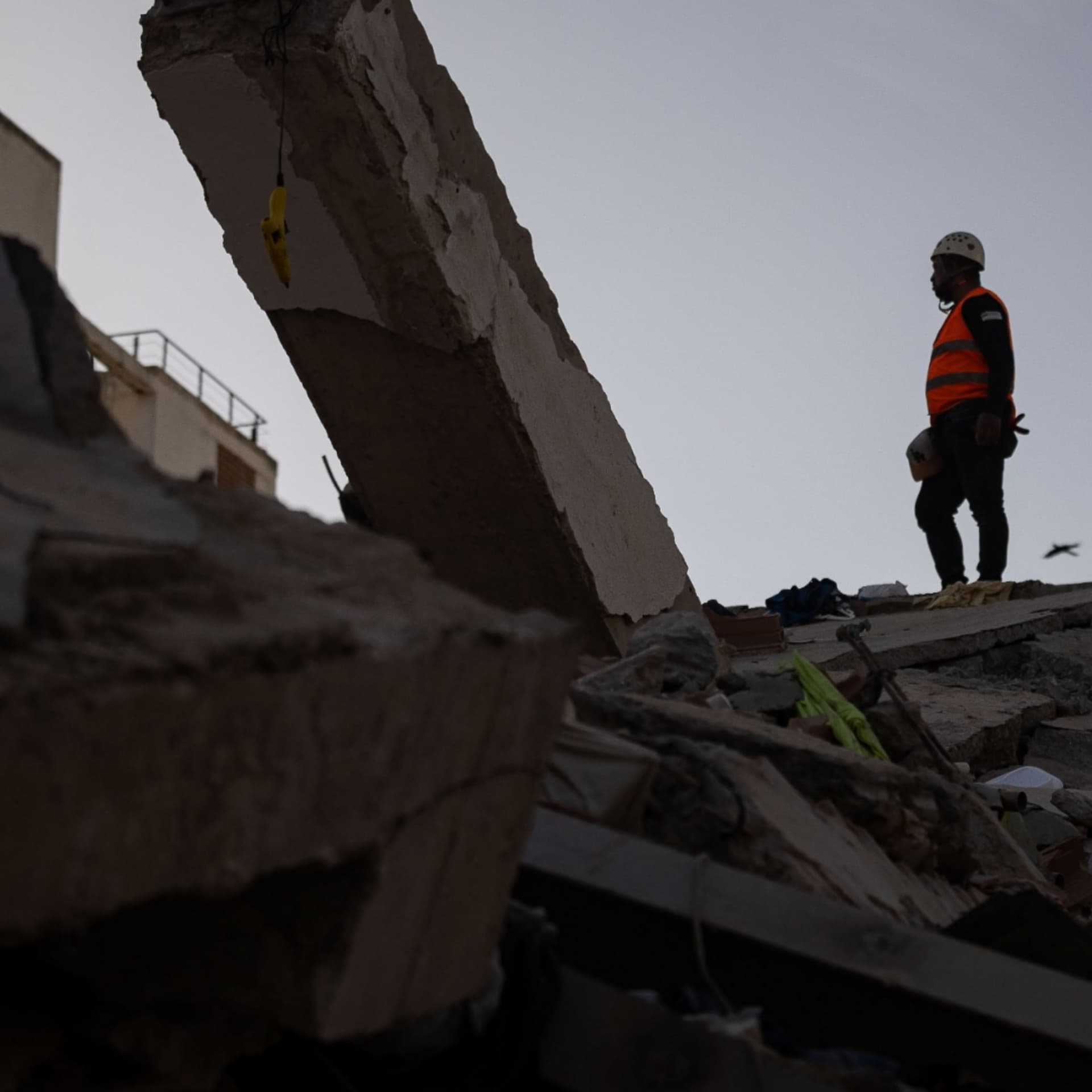
6:24There are buildings down to the tune of about 150 across the capital. But it's also the degree to which those that haven't been brought down completely have been so cracked and damaged that they're going to be uninhabitable. And then you think about places like where I've been over the weekend, Cathy Alamar and La Guaida State, where the devastation is genuinely hard to describe. You walk down certain streets or you drive down certain parts of the town and there are more buildings completely collapsed than there are still standing and there are teams working on them, but then you realise they're not necessarily official rescuers or teams sent from abroad.
7:05They're just neighbours with pickaxe and hands. I spoke to one man who was a mechanic from Caracas and figured he could help, so got on a motorbike and head his way down there. So that's the sort of picture of what's going on, and people are well aware that they're probably basically looking to pull out bodies at this stage rather than find any more survivors. What about the more organised rescue efforts? Because there are teams coming in from overseas. Yes, and their support has been hugely appreciated by the Venezuelan people and the families. I think the basic score, though, is there simply hasn't been enough of it, and that people who are desperately waiting, not just for their family members to be fined, but for the buildings where they know their family members were, to be properly searched, that they feel that no attention has been turned onto their buildings and that they've been left on their own.
7:53And that, I think, is the biggest frustration. That frustration is beginning to turn into much clearer anger towards the government. But I think there is also a recognition that the scale of this disaster is one that would be a challenge for any nation, particularly in Latin America, and that for Venezuela that's been through so much in recent years, it is a Herculean task. Yes, because we're told the death toll officially is, what, 1 ,500 people approaching, but there are tens of thousands of people believed to be missing. That's right. I'm at a hospital in Caracas at the moment. There was just quite a sizable aftershock and apparently the children in the paediatric ward began to scream, saying it's happening again, it's happening again.
8:39You can imagine the trauma there. And on the walls of this hospital are the names of the missing. So, of course, those who are inside the hospital, particularly the ones who've been reunited with their families, really are the lucky ones. And that picture that I tried to paint for you in Catia La Mar is really just how bad and difficult things are for so many in Venezuela. It's no surprise that there's been earthquakes in Venezuela. Why weren't the buildings constructed in a way that they didn't fall down? Well, there are earthquakes in Venezuela, and obviously a lot of the buildings have been built to code.
9:19But over the years, for whatever reason it may be, lack of infrastructure, lack of investment, poor building codes in the first place, or simply corruption to sort of cut corners, there are swathes of the country that are simply not up to building code. That's true across Latin America. Mexico, which I know very well and where I live, is a country that has improved its building codes over time to bring it up to earthquake code. All the schools, for example, are going through that experience now, but Venezuela lags behind in that regard, has been made abundantly clear by this event. The BBC's will grant in Venezuela.
9:58Containing the Ebola outbreak in the east of the Democratic Republic of Congo remains a huge crisis for the country and the rest of Africa. According to the latest official figures, 47 new infections and 12 deaths were recorded in the DRC on Saturday alone. The outbreak was declared last month with more than 1 ,200 confirmed cases and 360 deaths. Earlier I spoke to the BBC's Emery Macumino, who's in the capital of the DRC, Kinshasa, and he told me more about the figures. They haven't reached a plateau where they will stabilize the cases of new infections and death before expecting a decrease in numbers.
10:40And this is in the seventh week into the response where authorities are still catching up with the Ebola virus that has been spreading. They are coping with movement restrictions and also a change in their way of practicing a send-off of a loved one. And these restrictions have been even extended to Kinshasa, where authorities have actually banned any protest or any sort of rally just to prevent the spread of the virus. But despite the restrictions, the geographic area where the disease is now killing people is just getting bigger and bigger. Yes, unfortunately. When you take North Kivu, South Kivu and Ituri, we are speaking of 15 million people in that area.
11:30And within the three provinces, we started here with three health zones affected by the virus. But now within the seven weeks here, it has increased from three to 35 health districts now that have notified cases of Ebola. Should people outside the DRC be concerned? Well, according to the World Health Organization and also the Africa Centre for Disease and Prevention, they are saying that the risk of further spread is high in the country and also in 11 other countries here in the Central Africa and East Africa region. That risk of cross-border is still very high, but it is low when it comes to global spread or transmission.
12:20But these are things which are evolving. Last Wednesday we saw that France notified a case of Ebola from Kinshasa here. So authorities are vigilant and they are trying to contain at least the disease in the three provinces and not have it spread to additional provinces. Emery Macumino. Here in Britain, we've had six prime ministers in the last ten years. The man, who's widely expected to be the seventh, Andy Burnham, has been setting out his plans to be prime minister a week after the incumbent from the governing Labour Party, Keir Starmer, said that he would resign. Mr Burnham is currently the only candidate to replace him.
13:02He pledged to take power from the centre and put it in the hands of people and places that he said could use it best. Even the Prime Minister's residence, 10 Downing Street, would see a partial move from London to the north of England. Number 10 North will be the nerve centre of a rewired Britain. It will be the conduit through which we redistribute power and resources across the UK. It will coordinate all parts of government at national and local level to agree a long-term economic strategy and help all places set new growth ambitions. Our political correspondent Rob Watson told me more about Number 10 North.
13:44Well, we now know, don't we, Alex, what Andy Burnham's big idea is. How is he going to be different from Keir Starmer? It's the idea of devolution, sending power from Westminster to all parts of the country. And it's an interesting one because Britain is one of the most centralised states in the whole of the developed world. So the idea is, and he says it's based on his experience in Manchester, that if you really want growth, you need to kind of devolve the power down to local government, to local businesses, local people and get cracking. And so the idea of the number 10 of the north, which will be based in Manchester, is to force that through to make sure that power and resources are indeed taken from where I'm sitting here in Westminster.
14:27Haven't other leaders promised similar ideas though before? They have indeed, Alex. And it's interesting, when I was listening to him, I was remembering sitting in Manchester myself, listening to David Cameron, anyone remember him, in 2015, saying that it was incredibly important after their election victory that the wealth of the southeast of England needed to be spread to places like Manchester. And no doubt everybody will remember Boris Johnson. Anyone remember him, Mayor of London, his big plan after Brexit that Britain needed to be levelled up. So, yes, these sort of promises have been made before.
15:00And that's why it's going to be all about delivery for Mr Burnham. Maybe that's one reason why, Alex, he said this was a 10-year plan to tell everyone to be patient. What are the financial markets going to make of it all? Well, the financial markets will be pleased that he said he was going to live within the existing fiscal rule set by the current Labour government that he's taking over from, which is basically not to be increasing the major taxes or borrowing or spending. But I think more broadly the markets and private sector more generally would want to know, as a person of the centre-left, does Mr Burnham get it as they would see that what industry, what you really need for growth in Britain is not just sort of things like devolution, but essentially to make it easier, cheaper for businesses to set up in Britain and to invest here from overseas.
15:47And is this going to tackle the real problems that Britain faces? Well, I guess the answer to that is, Alex, that it would if it works, right? I mean, his promise at the end was, what was it? To bring growth to every postcode and hope to every heart. It's, you know, that's what we'll be looking at over the next two, three, four, or as Mr. Burnham would like, ten years, Alex. And briefly, his colleagues, any reaction? Well, you know, they love it. They love the hopeful message that, you know, hope in every heart, giving a more sort of joyful picture of Britain and the idea that people all over the country and their representatives can take back control and you know that sort of stuff goes down well but again you know it's details delivery.
16:24Rob Watson. A fossil which has been ignored for 40 years has turned out to be the first dinosaur bone ever found in Antarctica. The specimen belongs to the British Antarctic Survey based in the English city of Cambridge. It's now been identified by experts from the Natural History Museum in London, as our science editor Rebecca Morrell explains. The 10 centimetre wide fossil was unearthed during an expedition to James Ross Island four decades ago. Its discovery was recorded in a filled notebook with a tiny sketch of the fossil and a note saying vertebrae from a large reptile. But that was as far as the identification went, until the fossil was spotted amongst the thousands of specimens stored at the British Antarctic Survey.
17:08Its distinctive shape revealed it was part of the tail of a titanosaur, the largest dinosaurs ever to roam the earth. It dates to 82 million years ago when Antarctica was very different to how it is today. It would have been covered in lush forest providing ample food for this four-legged long-necked dinosaur. Professor Paul Barrett, a paleontologist from the Natural History Museum, helped to identify the bone. So it's significant in being the first dinosaur that was found on the continent. We know that these are really big animals, they require lots of food, so at least we know that there's a lot of things there that are growing for them to feed on.
17:42There are animals that also find their way into New Zealand and Australia, so it helps link those land masses together with the sorts of dinosaurs that are around on them at this time, and shows that an area that we now think is really uninhabitable was once actually very habitable and had this huge cast of characters living on it. The scientists think the dinosaur this fossil came from was about seven metres long, which is small for a titanosaur, suggesting it was a young animal or even a dwarf species. Rebecca Murrell. Still to come in this podcast. I definitely have a lot of experience on my side and I have a lot of championships where I don't feel the pressure to do anything.
18:21As Wimbledon gets underway, we speak to a returning champion, Serena Williams, who's making her singles come back.
18:36Take the leash off your laptop with the processor that gives you long battery life. Work on the go. Jump between back-to-back calls. Stay locked in from brewing morning coffee to burning the midnight oil. Get maximum performance, even when unplugged. Finally, the freedom to move across the room or across the world is here. Snapdragon, that's how. This episode sponsored by We Feed Raw. Have you ever actually looked at the label on your dog's food? Most dog food labels are a long list of things that don't look like food. Powders, starches, additives used to hold ultra-processed kibble together. At We Feed Raw, the label looks very different.
19:22High quality meat, nutrient-rich organs, Complete and balanced nutrition formulated by PhD nutrition experts. No fillers, no artificial preservatives, just real ingredients that support your dog's whole body health. That's why many pet parents see real changes after switching to We Feed Raw's fresh meals. If you want to feed your dog one of the healthiest diets possible, We Feed Raw makes it simple. Right now, new customers can get 40 % off their starter box plus free shipping. Visit We Feed Raw at wefeedraw.com to get started today. How did the United States build the largest soft power empire in the world with the help of some tiny metal objects?
20:03I'm Tristan Redmond, one of the hosts of the Global Story podcast from the BBC. To mark 250 years of the United States, we speak to Roman Mars of 99 % invisible. This soft power, this influence was an incredible invention. For more, listen to The Global Story on bbc.com or wherever you get your podcasts.
20:48caught the fever. Casual fans are now diehard fans. And the More Than The Score podcast is bringing you the stories beyond the scorelines. More Than The Score from the BBC World Service. Listen now wherever you get your BBC podcasts.
21:09This is the Global News Podcast. In Germany, large parts of the country's east are forecast to see their population drop over the coming decades as deaths in the country outpace births and at the same time immigration levels are falling. But why is Germany's former communist east so affected? Our Berlin correspondent Jessica Parker reports. I'm in the town of Oschesleben in the state of Saxon-Anhalt. Of the five states that were once part of Germany's communist east, this one has seen the most drastic population drop, around a 26 % fall since 1990. We're here to meet a guy who came back to his hometown after years away, Jan Nicholas.
21:56You were born in 1989. Yes. So when the Berlin Wall fell. Yes. A Wendikind. A Wendikind, yes. Turning point child, as it were. You were obviously a baby in 1989. Sure. But growing up here, what did you see change in the local area? There was a big change because obviously lots of people left after the reunification. People needed to look for new jobs, for new opportunities. And obviously lots of people left because the opportunities were in the West. This is the middle of the checkpoint. The police are making no attempt to stop people. The gates have been thrown open. There was euphoria when the Berlin Wall fell.
22:36They were pouring over to take a look at a West. In some cases, their first look. But for the East, it would also lead to a huge sense of loss. Many firms suddenly exposed to capitalism struggled or collapsed. There was an exodus west. Birth rates in the East plunged. They later picked up but remained low as part of a wider trend. So we were really happy to get a place in the kindergarten. It's something Jan Niklas is noticing. Now our kindergarten asks us if we know other families with children. So actually in the newspaper there are now articles where kindergartens need children. So what specifically are you doing to try and get people into Osher Sloben?
23:17I want to bring this topic back on the kitchen tables that people start talking about demographic change more. We have to talk to everyone to come back. We're driving past forests and fields and it's across large parts of the more rural east where further big population falls are forecast, regions that have seen way less immigration than the big cities or the West. And when it comes to those who left after the wall fell, there's something else that's important to understand. The second wave of out-migration peaked around 2005. Dr Katja Salamo is a sociologist. It was highly selective. Young people, highly educated people, and especially women were more likely to leave.
24:05But the women left, they left ages ago. I mean, there must be... New women now. There must be new women, exactly, yeah. So if you look at the current marriage population, the 18 to 40-year-olds, you will see that in the older age group of that population, you still have this imbalance. But the children that were never born continue to be a miss, and they will also not have children. So this is how population decline works. It gets worse and worse and worse.
24:39A campaign video by the far-rights Alternative for Deutschland. Sachsen-Anhalt may be the epicenter of a political earthquake. In upcoming elections, the AfD has a real shot at winning power.
25:06accordingly, as we know from surveys, along with the feeling of not receiving a fair share of what society has to offer. There are initiatives to try and pull people to the east. Cathy Luver runs one of them from Halberstadt, a town nestled near the Hartz Mountains. She works to promote the area and match people with jobs. The main fear is that we will see towns and villages which are half empty. If only half the population is left in a village, the infrastructure suffers. We already see school closures in many parts of the region. And I think we have to fight against that to maintain a certain quality of life in our rural areas.
25:46Gatti Luver ending that report by Jessica Parker. The South African president Cyril Ramaphosa has appealed for calm ahead of planned anti-immigration protests on Tuesday. He says while people have the right to demonstrate, intimidation and violence will not be tolerated. Richard Kagoi reports. In his weekly newsletter, President Sul Ramaphosa asked South Africans to protest peacefully, warning that freedom comes with responsibility. He acknowledged public concerns about illegal immigration, saying the government would respond with effective action. Police are preparing a nationwide security operation after anti-migrant groups say the 30th of June as the unofficial deadline for undocumented foreigners to leave, Fearing violence, thousands of migrants from neighbouring countries are camping outside their consulates in Johannesburg, Cape Town and the transit centres in Dublin waiting to be repatriated.
Read the full transcript
26:37Nearly 300 Nigerians are expected to leave on Monday evening. Richard Kagoi. As China's influence in the Pacific grows, other countries in the region are watching warily and trying to strengthen their positions. To that end, Australia and Vanuatu have signed a sweeping economic and security agreement that bars any foreign military base on the Pacific Island nation. Our Australia correspondent Katie Watson told me more. It was meant to have been signed nearly 10 months ago, but at the signing ceremony last September, Vanuatu's Prime Minister, Jotham Nappat, pulled out, citing concerns about sovereignty.
27:16So this agreement, it's a watered down version of the original. It still sets out that critical infrastructure in Vanuatu won't become militarised. And in exchange, Australia will provide greater economic support. Now, there have been concern previously raised about China's funding of a wharf in Vanuatu's Luganville, which is the second largest city. My understanding is that this kind of new, slightly watered down agreement won't veto any foreign investment in certain infrastructure projects. But yes, when it comes to foreign military bases, this basically gives Australia a much stronger position as the country's most important security and policing partner.
27:57So what will this mean for the growing might of China? Well, I mean, it certainly puts, as I said, it puts Australia in this good position in Vanuatu. This is it's a time when there's growing concern over China's influence in the Pacific region. Certainly, it was back in 2022 when Beijing struck a security deal with the Solomon Islands. That definitely caused a great concern here in Canberra. There are several Pacific Island nations that have changed their diplomatic recognition from Taiwan to Beijing in recent years. So it's a bit of a tussle. Certainly, it is a concern here in Australia, that growing influence.
28:36but the fact that you've got this security deal in Vanuatu is going to be seen as a big win for Australia. Casey Watson. Tennis. Wimbledon started a few hours ago and a familiar face will return to the centre court on Tuesday. Serena Williams will make her singles comeback there after four years. She's been champion at Wimbledon 14 times, seven singles and six doubles titles, as well as one mixed doubles title. But in recent years, the 44-year-old has been focusing on her family life and her daughters. The BBC's Claire Balding has been speaking to Serena Williams and asked if she felt nervous ahead of her return.
29:18I've felt a lot of things where I haven't felt the butterflies yet. Do you think you will? Soon, I'm sure. I absolutely will. 100%. I just haven't felt it yet. I would love to ask you about what Serena Williams 2026 hats that maybe Serena Williams 2000 didn't have, that maybe Serena Williams 2016 didn't have. What are the best things about being you right now? Well, I have two amazing kids. I think that's the best thing that I have that I didn't have then. I would have totally taken them then as well. I definitely have a lot of experience on my side and I have a lot of championships where I don't feel the pressure to do anything except for have fun and enjoy myself and enjoy the moment.
29:57So is that what makes it most different walking in here this year, that you can be totally free? There is nothing to... No, I think so. I'm never a free person. In general, you see me play. I don't play. I play like a maniac. So we'll see. I mean, as of now, I'm calm, but I might change in a matter of minutes. Who knows? And what does success look like for you? What do you want it to be? I think success is just walking out there. I never expected to be here. I mean, I expected to play doubles, but I didn't even expect that three, four months ago. So success is just enjoying myself for me and sticking to my game plan that my coach gives me.
30:38Being disciplined. Being disciplined. So that's what I'm trying to do. Have you been back in the village yet? And have you got your house set up and all that? Yeah, everything is back. I'm back in the house that I stayed in several years. So it's like it's been a very easy re-transition. So it's like nothing too new. And at the same time, it's everything new. I don't know my way around here. I'm like, wait, what? Where am I? I couldn't get here. I was lost. But it's still fun. Change is good. It's going to be a blast to see you on court again. You think? I do. OK. But there is a bigger message here.
31:18And what do you want the big message to be? That is such a big question for me right now. I don't know. I just want to... Anything is possible, I guess. But also, sometimes it's good to just enjoy yourself. So that's what I'm planning to do. Serena Williams. And that's all from us for now. If you want to get in touch, you can email us at globalpodcast at bbc.co.uk. You can also find us on X at BBC World Service. Use the hashtag Global News Pod. And don't forget our sister podcast, The Global Story, which goes in-depth and beyond the headlines on One Big Story. This edition of the Global News Podcast was mixed by Martin Baker and the producer was Daniel Mann.
32:07The editor is Karen Martin. I'm Alex Ritson. Until next time, goodbye.
32:19Take the leash off your laptop with the processor that gives you long battery life. Work on the go. Jump between back-to-back calls. Stay locked in from brewing morning coffee to burning the midnight oil. Get maximum performance, even when unplugged. Finally, the freedom to move across the room or across the world is here. Snapdragon, that's how.
From the publisher
More international support has been pledged for disaster response efforts in Venezuela in the wake of last week's massive earthquakes, but with tens of thousands still missing, hopes for finding more survivors are fading. Also, the Democratic Republic of Congo is still struggling to contain the Ebola outbreak, recording 47 new infections and 12 deaths on Saturday. Australia and Vanuatu sign a sweeping economic and security agreement in the face of growing concerns over Chinese influence in the region. Tennis great Serena Williams makes her singles comeback at Wimbledon. We hear from the 23-time singles Grand Slam winner. And, a fossil ignored for 40 years is identified as the first dinosaur bone ever found in Antarctica.
The Global News Podcast brings you the breaking news you need to hear, as it happens. Listen for the latest headlines and current affairs from around the world. Politics, economics, climate, business, technology, health – we cover it all with expert analysis and insight. Get the news that matters, delivered twice a day on weekdays and daily at weekends, plus special bonus episodes reacting to urgent breaking stories. Follow or subscribe now and never miss a moment. Get in touch: globalpodcast@bbc.co.uk Photo: A member of a rescue team walks over the rubble of a building in La Guaira, Venezuela, 29 June 2026. Credit: EPA/Shutterstock, Ronald Pena R



