
In short
This BBC Global News Podcast episode covers: a record-breaking heatwave across Western Europe, with France reporting its hottest night in 80+ years and temperatures expected above 41C; the UN Secretary-General Antonio Guterres says fossil fuels drive “climate chaos,” and a Sahara “heat dome” is trapping hot air. It also reports EU–Taliban talks: Belgium issued five single-day visas for a Taliban delegation to attend an EU migration meeting in Brussels, despite criticism and no formal EU recognition. A Romania cyberattack story: ransomware hit the Hippocrate medical software; DNSC ordered 100+ hospitals offline, forcing pen-and-paper, and 26 were fully infected. Other segments include Sri Lanka’s worst dengue outbreak in years (44,000+ cases, 28 deaths) and a Nature study on “biological age” possibly linked to early-onset cancers.
Guests
Antonio Guterres (UN SG); Anastasia (southern France resident); UN/Europe correspondents Hugh Schofield, Guy Hedgco, Simon King (BBC Weather); Ambrassan Etarajan (global affairs reporter); Daniel Bush (correspondent); Joe Tidy (cyber correspondent); Professor Nilika Malavige (immunologist); Dr Anisha Patel (study participant); Professor Manuel Electro Ribeiro (tourism researcher); Paulino Diaz (economist/football fan); Kenny Andradi (bar manager). Key claims/examples: heat dome mechanism; schools closed and alcohol restricted in France; EU says talks aren’t recognition; Romania’s offline decision “bought time”; dengue risk linked to cyclones/extreme temperatures and reduced vector-control attention; phenotypic age calculator phenoAge used on 160,000 people.
Written by AI. May contain mistakes. Listen to the episode to check what was said.
Chapters
Tap a time to open that second in VOThe Record-Breaking Heatwave
1:20 to 2:26
Discussion on the record-breaking heatwave affecting Western Europe.
“Also in this podcast, how Romanian health officials went back in time to deal with a devastating hospital cyber attack and...”
UN Secretary-General on Climate Change
2:26 to 4:00
Antonio Guterres discusses climate chaos and its implications.
“but first here's the UN Secretary-General, Antonio Guterres, on the link between what's happening and climate change.”
Human Impact and Adaptation
4:00 to 5:20
Personal accounts of how individuals and cities are adapting to severe heat.
“Large parts of the country are under weather warnings.”
Understanding the Heat Dome Phenomenon
5:20 to 8:06
Expert explanation of the heat dome and its connection to climate change.
“it's going to be part of our lives and they're having to adapt.”
Global Context of Heatwaves
8:06 to 9:42
Exploration of heatwaves and their deadly impact around the world.
“that heat waves in the future will become more intense, more frequent, more prolonged.”
EU Talks with the Taliban
9:48 to 11:28
Coverage of the EU's recent dealings with the Taliban regarding migration.
“the United States will celebrate its 250th birthday, marking the anniversary of the adoption of the Declaration of Independence in 1776.”
U.S. Diplomacy Amidst Tensions
11:28 to 14:01
Analysis of U.S. Secretary of State Rubio's trip to the Middle East.
“said the bloc had no other option than to talk to the Taliban about returning irregular migrants to Afghanistan.”
U.S. Reassurances in Middle East Diplomacy
14:01 to 15:13
Explore the challenges the U.S. faces in reassuring Middle Eastern allies amidst ongoing tensions.
“for America to give reassurances that it can back up because, as you were saying, these Gulf allies were attacked considerably in the opening days and weeks of the war.”
Cyber Attack on Romanian Hospitals
16:37 to 20:12
Hear about a significant cyber attack on Romanian hospitals and their response.
“And on the interface, we decode the tech that's rewiring your week and your world.”
Dengue Fever Outbreak in Sri Lanka
20:12 to 23:59
Understand the causes and seriousness of the dengue outbreak in Sri Lanka.
“Sri Lanka is reporting its worst dengue outbreak in years, with more than 44 ,000 infections and 28 deaths since the start of 2026.”
Show all 16 chapters
Biological Aging and Cancer Rise
23:59 to 27:21
Learn about the connection between biological aging and the rise of early-onset cancers.
“Professor Nilikar Malavige, who was speaking to Anne Soy.”
Cape Verde's World Cup Journey
27:21 to 28:06
Discover Cape Verde's remarkable journey in the World Cup and its economic impact.
“Cape Verde is an archipelago of nine islands in the Atlantic Ocean off the coast of West Africa.”
Cape Verde's Historic World Cup Experience
28:06 to 30:45
Discover the excitement and economic impact of Cape Verde's first World Cup game.
“and the excitement here is on another level.”
Local Reactions to the World Cup
30:45 to 31:44
Hear local voices describe the surge in tourism and community spirit post World Cup qualification.
“And this is a positive impact on the economy as well.”
Media Clarifications on Political Terms
31:44 to 33:39
Explore the debate surrounding the correct terminology for political transitions in the UK.
“If you want to get in touch, you can email us at globalpodcast at bbc.co.uk.”
Upcoming Tech Stories Preview
34:00 to 34:28
A sneak peek into the next episodes covering technology and its societal impact.
“And on the interface, we decode the tech that's rewiring your week and your world.”
Transcript
Automatic transcript. May contain errors.0:00This BBC podcast is supported by ads outside the UK.
0:30majors, grands, and epic jackpots on their classic Vegas slots with huge, huge bonus rounds. Moto Casino adds new games and awards players free coins every single day. Grip it and spend it on Moto Casino. Download the Moto Casino app today. Moto Casino is a social casino. What we're prohibited, no purchase necessary. Visit Moto.us for more details. Moto Casino, America's social casino.
0:53This is the Global News Podcast from the BBC World Service. I'm Nick Mars and at 15 hours GMT on Tuesday the 23rd of June these are our main stories. As a record-breaking heat wave continues in Western Europe the head of the United Nations has warned that fossil fuels are driving a climate crisis. Afghan Taliban officials have held talks about migration with the European Union in Belgium the first time the bloc has hosted such a delegation since the group seized power in Afghanistan five years ago. Also in this podcast, how Romanian health officials went back in time to deal with a devastating hospital cyber attack and...
1:35Diet, exercise, smoking, sleep, stress, being overweight, chronic inflammation. And these can then affect the way our dreams express themselves later on in life. We look at the factors that are making current generations age faster and faster.
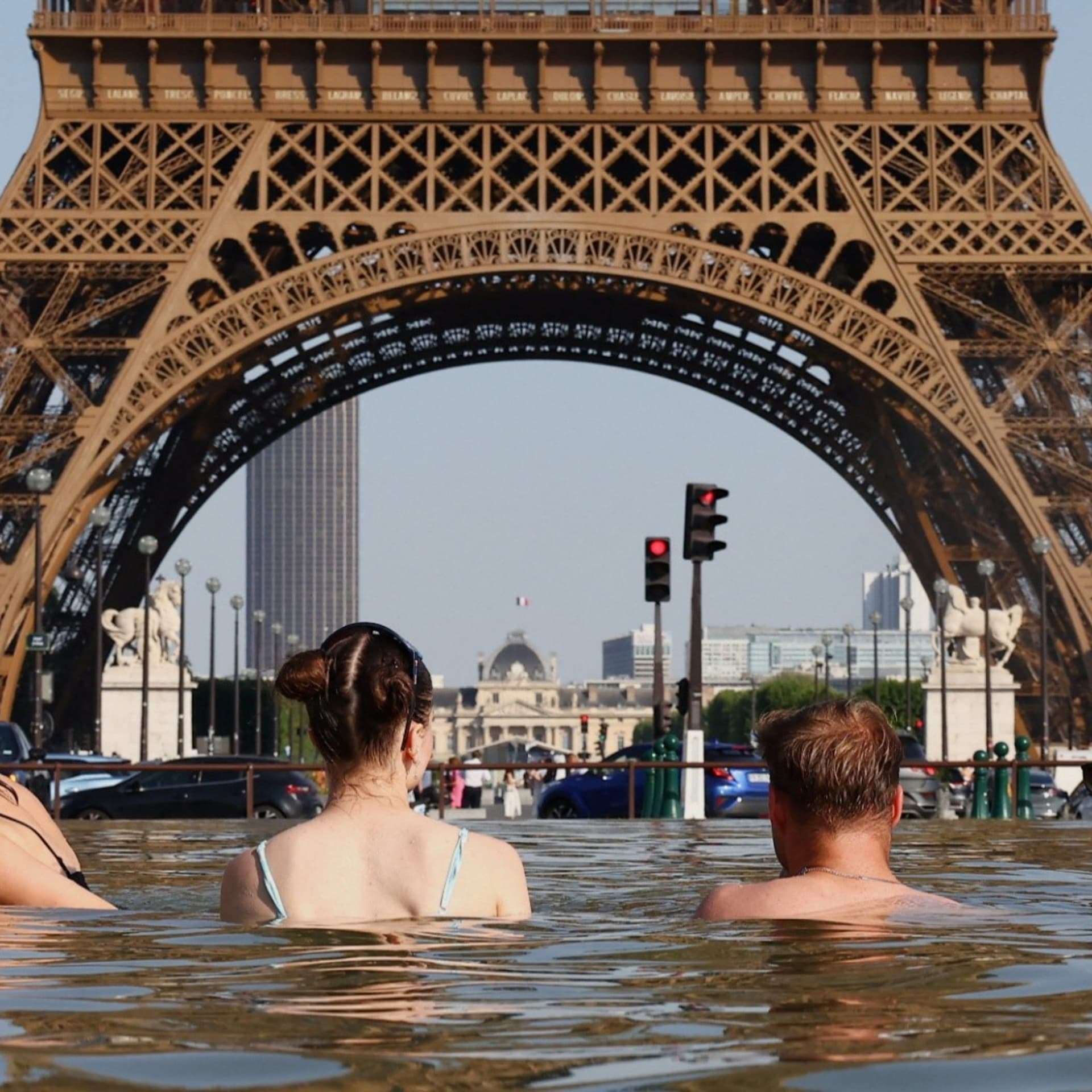
1:54Temperature records are continuing to break across Europe. France has just sweated through its hottest night in more than 80 years. It's expected to peak on Wednesday afternoon at more than 41 degrees. It's a similar story across Spain, Italy, Germany and even up as far north as the UK. A funnel of air has been drawn in from the Sahara because of a persistent area of high pressure that's loitering stubbornly over Western Europe. More on the human impact of that in a moment, but first here's the UN Secretary-General, Antonio Guterres, on the link between what's happening and climate change. Climate chaos is accelerating before our eyes.
2:36We have just lived through the 11 hottest years ever recorded. And today, this city and far beyond are experiencing the hottest day of the year with higher temperatures to come. London isn't just going, it's cooking. We must act with far greater urgency to strictly limit the magnitude and duration of any overshoot beyond 1.5 degrees. Italy has declared a heat red alert in 15 cities, while rising temperatures are increasing the risk of forest fires in Germany. Half of France's regions are currently under the harshest weather warning. Hundreds of schools have been closed and drinking alcohol has been restricted outdoors.
3:17Just a couple of the measures officials are introducing to deal with what is already a record-breaking heatwave. Anastasia spoke to us from southern France. Nîmes is one of the hottest cities in France. We just go outside at night because during the afternoon it's really hot and really hard to be outside. I think we have to adapt now. We have to use the AC to change because I think it's going to be harder and harder now. We know now because it's the second heat wave we have. We had one in May, now we have one in June, and I don't know what is going to be in July and August. Spain has already been dealing with the heat for weeks.
3:59Now it's getting even more intense. Large parts of the country are under weather warnings. This woman describes the conditions in the south. It's horrible. It feels catastrophic. I don't know what temperature we're at, but it feels horrendous. It feels awful. The heat right now is really, really, really bad. Our correspondent in Paris, Hugh Schofield, told us more about the impact the heat's having. Gradually, over the last few years, we have been becoming accustomed to periods like this. And the forecasters have been telling us, everyone believes it now, that they are going to become more regular and therefore part of our lives.
4:39We were reporting in very similar circumstances about a month ago with a very similar period of unprecedented heat. And back then, all the people we were speaking to were saying what they're saying now, which is this is something we're just going to have to learn to cope with. It's not pleasant. It's a kind of Middle Eastern style of heat, which the country's not really, certainly the northern part of the country, is not equipped for. Here in Paris, private homeschools don't tend to have air conditioning. and that's something which people are beginning to think more and more of. I know that there's been a rush on buying air conditioning units from suppliers.
5:15So, yeah, I mean, more and more, every time this happens, people realise that it's for real, it isn't a one-off, it's going to be part of our lives and they're having to adapt. Now to Spain. Our correspondent in Madrid is Guy Hedgco. We heard there from someone down the south of the country and it's normally the south which sees the worst of the heat. today for example we're expecting temperatures up to 44 celsius down in the the guadalquivir valley i think as you mentioned that i think that the big shock for people is seeing these kinds of temperatures earlier in the year before the end of june that comes as as quite a shock because many people you know they're work they would they're trying to work as normal or you know children are at school and when you have a heat wave in the middle of july or august it's slightly different because much of the country tends to shut down even many businesses shut down certainly there's no school or no university classes in the middle of summer, but this is not the middle of summer.
6:09So that presents a series of challenges. Now, the government a few years ago did introduce some legislation aimed at this, for example, making sure that manual workers are not allowed to work during the hottest time of day during a heat wave. We've seen a number of measures like that being gradually introduced, and we've seen a spike in the sale of air conditioning this year, the same as France as well. But I think the fact that it comes so early in the year, this kind of heat, is presenting a lot of challenges for businesses and for ordinary people here in Spain. Guy Hedgco. Well, across much of Western Europe, forecasters have warned that the heat wave will be widespread, long-lasting and intense, with temperatures not expected to drop until the end of the week.
6:52Something called a heat dome is being blamed for the scorching temperatures. For more details on that weather phenomenon, here's Simon King from BBC Weather. The heat dome is essentially a large area of high pressure. So in meteorology, when you've got a high pressure, that essentially means that air is descending down the atmosphere. So when you've got the air coming down through the atmosphere, it's drying out as it does so, and it's heating up as it does so as well. So that's drying out, that heating up means that you've got more sunshine, and therefore more sunshine is reaching the ground, heating the ground and heating it up from below.
7:29but it's also as the air is descending it's compressing so think of a bicycle pump as you pump up a bicycle tyre and you put in the pump you feel your hand getting warm and that's the air compressing and heating up so this heat dome is essentially this process of a large area of high pressure which becomes static it doesn't move and all that heat builds and it just doesn't get released anywhere it's trapped underneath it and that's why we see those temperatures rise sometimes really quite rapidly. Now this is clearly a weather event. To what extent is it made more likely by climate change? Well, climate change is making it worse.
8:03Climate scientists have been very clear over the last few decades that heat waves in the future will become more intense, more frequent, more prolonged. They'll get hotter. And this is exactly what we're seeing. So the temperatures in Europe have been rising gradually over the last decade or so. In fact, Europe is warming at twice the rate as the rest of the world. So when you think about the baseline temperature just increasing by just a few degrees, it means that when you get these heat dome scenarios or this weather pattern we've got, the temperature then is allowed to go higher than it would have done in the past climate.
8:38So the new climate that we're facing ourselves in at the moment is just essentially adding on to the weather patterns and making those hotter. And I suppose we should mention at this stage, we're talking about temperatures in the low 40s. In other parts of the world, we're increasingly seeing temperatures into the low 50s, aren't we, in areas that are even less able to cope with those kind of increases? Yeah, of course, in India, as just one example, it has been extremely hot there. And of course, India does get extremely hot ahead of the monsoon. You see that heat really building up. But again, in other parts of the world, like India, heat waves again are going to get more intense and prolonged.
9:17So we're going to see those temperatures, again, approaching the 50s in degrees Celsius. The Middle East also, of course, sees those sort of temperatures. But you're really stretching the limit at where the body can cope with that sort of heat. And in places like India, when people have to be working outside, they have to be exposed to that heat, they can't cool themselves down. These sort of heat waves are deadly, unfortunately. And we're going to see more excess deaths in the future because of these higher temperatures. Simon King. On the 4th of July this year, the United States will celebrate its 250th birthday, marking the anniversary of the adoption of the Declaration of Independence in 1776.
9:58In the run-up to those celebrations, we will have a special podcast looking at the state of America today. If you have thoughts or questions on the matter, we'd love to hear from you. Please email us at globalpodcast at bbc.co.uk. And if you can include a voice note, so much the better. Thanks very much. Since the Taliban took back control in Afghanistan five years ago, it has banned girls from schools beyond the sixth grade and sought to erase women pretty much from public life. The European Union hasn't recognised the Taliban government, but despite that, Belgium has just issued five single-day visas to a Taliban delegation to attend an EU meeting in Brussels on migration.
10:43The Afghan Taliban government says a delegation has met European Union officials in Brussels to discuss the topic. Our global affairs reporter Ambrassan Etarajan is following the story. A spokesperson for the Belgian foreign ministry said visas given to the Taliban delegation were restricted, allowing travel only to Belgium and for a single day. The EU has not formally recognised the Taliban administration but wants to discuss deporting Afghans as part of a crackdown on irregular migration. The decision to invite the Taliban has drawn criticism, with rights groups urging the Commission to cancel the planned meeting.
11:21However, Brussels has denied that hosting the group is tantamount to recognising the government in Kabul. Earlier this month, the European Union's migration chief, Magnus Brunner, said the bloc had no other option than to talk to the Taliban about returning irregular migrants to Afghanistan. Figures show that EU countries received about a million asylum applications filed by Afghans between 2013 and 2024. About half as many were approved over that period. Ambrassan Atirajan. Up until now, the US Secretary of State, Marco Rubio, a long-time Iran hawk, has been largely absent from public discussions surrounding the peace deal between Washington and Tehran, instead leaving that role to the Vice President, J.D.
12:07Vance. But that looks to be changing. Mr. Rubio is now in the Middle East for a series of high-stakes meetings, during which he will speak to Arab Gulf allies from the UAE, Kuwait and Bahrain. Our correspondent Daniel Bush is in Abu Dhabi and told me why the trip mattered. Well, this is a critical trip for the Secretary of State, Nick. He's the first senior U.S. official to visit this region since the ceasefire extension deal was reached. And it's an important moment for the U.S. because Secretary of State Rubio essentially is being sent here to assuage allies in the Gulf region that this deal is good for the broader region.
12:45He will be visiting the United Arab Emirates. He arrives here shortly, a little later today, as well as Kuwait and Bahrain. These are all key allies of the U.S. that have in general welcomed this deal. But there are deep concerns among allies in the region about this memorandum of understanding about whether the United States and Iran can reach a long-term deal and whether or not the U.S. gave up too much to Tehran in the bargain here in the short term. Of course, these are countries that came under attack directly from Iran before the ceasefire was reached. And these are also countries that may be on the hook potentially to compensate Iran in the form of reconstruction funds.
13:23The Memorandum of Understanding, this U.S.-Iran deal calls for$300 billion in reconstruction funds. It's unclear where that money is coming from, but the U.S. has suggested that it could come from regional allies, even as the president has insisted that it won't be paid for at all by the United States. That's another issue on the agenda. And, of course, this will be a difficult test for Marco Rubio himself, who has been fairly quiet about this deal. So far, he's allowed Vice President J.D. Vance, who was in Switzerland, to begin the next round of negotiations, be the face of this agreement. But now Rubio is going to have to be a little more vocal about what he sees as a positive in the deal for allies in this region here.
14:00It is going to be very difficult, isn't it, for America to give reassurances that it can back up because, as you were saying, these Gulf allies were attacked considerably in the opening days and weeks of the war. That's right. And these are countries that have been dealing with Iran for decades, you know, and who regard Tehran with suspicion. This is not the first moment that the U.S. and Iran has been locked in some sort of diplomatic negotiation that has then fallen apart. That's happened now multiple times since the U.S. and Israel launched this war back in February. So these allies regard Iran with suspicion.
14:36And frankly, they're going to come to these meetings with Rubio with a good deal of wariness about the U.S. as well, as I said, because they need reassurances that the U.S. is serious about a long-term deal with Iran that includes multiple things that the U.S. claimed were priorities at the beginning of the war that are also very important for these allies, such as limiting Iran's ballistic missile program to make it more difficult for Iran and its proxy groups in the region to attack these countries. So these allies are going to be looking for these reassurances, and Marco Rubio is going to try and deliver that message, and we'll see how these meetings.
15:13Daniel Bush. Still to come in this podcast. This feeling of pride, of unity, will have a huge impact at the economic side. There will be a cave world before today and a cave world after today. And a footballing minnow come good.
15:43Because at least there, I'm surrounded by winners. Real winners. Thousands of them. While everyone else is in the single swamp, I'm at home relaxing while stacking bonuses, hitting wins, and playing all my favorite Vegas-style games. Moto Casino. The only app worth your time. Moto Casino. Social casino. We're prohibited. No purchase necessary. Visit Moto.us for more details. Download the Moto Casino app today. Must be 21+. Moto Casino. American Social Casino. Hey, it's Ryan Seacrest for Jewel Osco. For you, save days are here. Now through June 23rd. Find hot deals throughout the store and earn four times a point.
16:16Look for in-store tags to earn on eligible items from Triscuit, Quaker, Reese's, and Dots pretzels. Then clip the offer in the app for automatic event-long savings. Stack up those rewards to save even more. Enjoy savings on top of savings when you shop in-store or online for easy pickup or delivery. Restrictions apply. See the website for full terms and conditions. Every story is a technology story in one way or another. And on the interface, we decode the tech that's rewiring your week and your world. On this week's episode, we look at the UK's teen social media ban and ask, what happens next?
16:52Why are AI companies so interested in nuclear fusion energy? And will the new iPhone AI update mean that Siri will finally be good? Listen on BBC.com or wherever you get your podcasts.
17:15Cyber attacks are on the increase around the world. America's FBI says that healthcare is now one of the areas most targeted. One mass attack on hospitals in Romania was so serious that 100 hospitals were forced to shut down the internet and use pen and paper instead. Our cyber correspondent Joe Tidy, tell me what happened. Well, in a sense, this is a good news story because although it sounds really, really serious, and it was, Romania did a fantastic job of coping with what could have been a really catastrophic situation. So I'm in Romania now. We've made an in-depth report about exactly what happened and what were these sort of unseen heroics from doctors and cybersecurity professionals.
17:55It was in February 2024 when the attack took place and ransomware hackers got into a Romanian software maker and they are the makers of this very popular piece of medical software called Hippocrate. and using that access they infected dozens of hospitals across Romania and in the chaos of not knowing which hospitals were infected or not the DNSC the cyber security center here took a very you know important but also quite a controversial decision to order all the hospitals to go offline so that was more than 100 hospitals that went offline that obviously forced doctors and nurses to go back to pen and paper in the end that was known and sort of looked at as a very wise move because it bought them time to work out which ones were actually infected.
18:40Going offline is one thing, but one imagines that in the short term it would have put some patients at risk of dying who were in a particularly bad state of health. This happened two years ago. Why has it only come into light now, do you think? Well, we reported on it at the time, but of course in the kind of melee of the breaking news story, we never really found out what happened behind the scenes. So I've come back here to do an in-depth report on it, which is on the BBC News website. We've made a 10-minute YouTube documentary as well because there's just a really fantastic story here to be told about what can be done to keep these kind of things from affecting patient care because, as you say, it could have been a deadly attack.
19:20And in the end, 26 hospitals were fully infected with ransomware and that caused a huge amount of disruption. But the doctors and nurses managed to find a way through. And I think one of the reasons that I've been told is that there is a kind of the institutional memory of working in an undigital way is quite fresh here because Romania is a more recently digitised country. So that may have been a factor. But also it was, you know, quick thinking and heroics from people in the cybersecurity centre. Lots of Romanian experts offered their time for free and they got through it. And these healthcare attacks are becoming a real problem.
19:56Only months after the attack here, there was an attack that affected hospitals in London and someone did die. And that was a direct result of the cyber attack from those hackers. It was one of the contributing factors. So it just goes to show how high the stakes are. Joe Tidy in Romania. Sri Lanka is reporting its worst dengue outbreak in years, with more than 44 ,000 infections and 28 deaths since the start of 2026. Five children are among the dead. Health officials say cases nearly doubled between April and mid-June. The mosquito-borne disease causes high fever, headaches, nausea, vomiting, muscle pain, and in the most serious cases, bleeding that can lead to death.
20:39Health authorities are warning that hospitals are being overwhelmed with 1 ,000 admissions daily. Health experts warn infections are likely to keep rising in the coming weeks. Professor Nilika Malavige is an immunologist from Sri Lanka. So what's driving this outbreak? One would be, of course, the vector. So we've had very diverse climatic changes. We had cyclones then followed by very extreme temperatures, which would, of course, favor increasing vector breeding sites. And last year, we had a massive chikungunya outbreak and, of course, less dengue. So then people are less worried about dengue.
21:16So because we didn't have a massive dengue outbreak for a while. So less, I would say, attention towards eliminating vector breeding sites. That would be another reason. But also coming to other reasons is unplanned urbanization. And the other factors is the virus itself. You see the virus evolves. And as I mentioned last year, we had a massive chikungunya outbreak, which actually led to a decline in dengue cases. Both chikungunya and the dengue virus use the same vector, which is EDS mosquitoes to transmit. So I think the current virus, which has been around for a while, would have adapted for better transmission as well.
21:53All these things coming together lead into this massive outbreak we are seeing right now. And just for people who have not heard about it, how serious is dengue fever? Yes, so that's a very good question. The vast majority of dengue infections are mild. But let me define mild. Still, it's like a very painful illness. You have high temperatures and basically you are disabled and not being able to go to work. For some people with mild illness, when I mean mild, I mean not needing hospital admission, sometimes they can't go to work for 14 days because of the tiredness they feel. But the people who do require hospitalization, that is because when they have certain warning signs that alert clinicians that they might go into trouble, which is we are talking about plasma leakage and lowering of blood pressure, which they can go into shock.
22:43And when you have this plasma leakage, then the mortality rates have been over 20 percent. And that's, you know, pretty high. So right now, because we don't have treatments and we don't know which patients are going to be developing this very bad plasma leakage, all patients suspected of going to develop complications need to be admitted to hospitals. And, you know, the capacity reached the limit in some hospitals. So how can people prevent it? So there are many ways for prevention. For dengue as well, it's an integrated strategy that actually everybody accepts that that is the way forward. One thing, of course, is the vector control.
23:24So when we say vector control, it is getting rid of breeding sites. But we've been doing that for the last 70 years and we see the dengue incidence increasing. So that alone is not going to be effective. We need better vector control methods. And there are other new novel techniques like spatial repellents coming in. The other one is a vaccine. So the good thing is we now have two dengue vaccines and many others undergoing phase three clinical trials. But still, despite these things, there will be people who still get, you know, symptomatic dengue, need hospitalisation. So all these strategies need to come together to find long lasting solutions for dengue.
23:59Professor Nilikar Malavige, who was speaking to Anne Soy. Now, you may have heard the term biological age. That's how quickly our cells are ageing and the overall state of our health, quite independent of the number of years that you've been alive for. Well, a new study just published in the journal Nature suggests that we are biologically ageing faster than our parents. Researchers at Washington University School of Medicine in St. Louis are now questioning whether this could explain a rise in early-onset cancers. Dr Anisha Patel was diagnosed with bowel cancer at a young age and was involved in the study.
24:35This is a big study that's done in the UK and the US, 160 ,000 people. And what they did was they analysed blood samples and looked for various markers in the body to do with the immune system, to do with the chronic inflammation, to look at wear and tear of the cells. And they have got a calculator called phenoAge, which sort of works out the individual's biological age. and then they associated this with those of us that are born in more recent generations. We are biologically ageing faster and this may be causing cancers in the young, particularly lung, bowel and womb cancer. But it doesn't show a definite cause.
Read the full transcript
25:17I think what's really important here is that it's a clue. Certainly some cancers are increasing at an earlier age than they were in the past, aren't they? yeah absolutely and the work that we're doing with team prospect which is funded by the cancer grand challenges is to try and establish what is the global rise and what is the cause of this global rise of early onset and we're specifically looking at bowel cancer but we know there are several cancers 11 in fact that are rising in the under 50s and a study in the lancet in 2024 showed that 27 out of 50 countries showed a global rise in bowel cancer for example which is huge and England is the fourth fastest rising so we need to do something this is a major public health issue.
26:03And that may or may not have anything to do with this speeding up of biological aging what is the reason for biological aging speeding up? Yeah so we think it's going to be multifactorial as is the cause of why young people are getting cancer and so it is the interplay of sort of chronic inflammation, our lifestyle, environmental factors that weren't such a factor many years ago and these are called epigenetic factors, you know, diet, exercise, smoking, sleep, stress, being overweight, chronic inflammation and these can then affect the way our dreams express themselves later on in life, potentially causing early cancers and causing biological aging, this cell wear and tear.
26:46There's no doubt that some countries are doing better than others in terms of this aren't they? Yeah I mean I think you know we are seeing it in developing and developed countries which is really interesting and you know developing countries are not only competing with their health inequalities and the disease that they have to deal with they're now taking on the western lifestyle as well which is further adding to that so I think I think it's something that we really need to have further studies on to get the answers that we need to try and prevent this rise to intervene earlier and to stop this global epidemic.
27:21Dr Anisha Patel, in an earlier edition of the podcast, we covered the tiny country of Cape Verde becoming the talk of this Football World Cup, already achieving draws in its group games against former tournament winners Spain and Uruguay. Cape Verde is an archipelago of nine islands in the Atlantic Ocean off the coast of West Africa. For a nation with a population of around half a million people to be on the world stage is obviously a big achievement. The country's football federation gets$12 million just for qualifying. But as well as the football, what impact is the World Cup having on its economy?
27:55The BBC's Rachel Wright travelled to Cape Verde to find out. I'm at one of the many fan zones with big screens that have been set up throughout the city of Praia and the excitement here is on another level.
28:15we're just minutes away from the beginning of their first world cup game ever against one of the tournament favorites spain and everyone is really excited very confident because for the first time they will see cape vert playing a so big game like this how do you feel about today I feel very proud because Cape Verde already won. It doesn't matter what happened there. The Cape Verde team is known as the Blue Sharks and it's the second smallest country in this year's World Cup. Most of the squad are from the large diaspora. That's probably why a country of less than 500 ,000 people punches way above its weight and has qualified for the World Cup.
29:03I'm with Paulino Diaz, who's one of the country's best-known economists and also a huge football fan. Paulino, tell me, how does the country feel today? I never saw something like this that we are witnessing today. This feeling of pride, of unity will have a huge impact on the economic side. I would say forever, perhaps, because there will be a Cape Verde before today and a Cape Verde after today. And of course Cape Verde's economy is largely dependent on tourism. I went to see Professor Manuel Electro Ribeiro, who studied tourism in Cape Verde. This is a great exposure for the country. For example, a very popular influencer from South Korea travelled to Cape Verde after the country qualified for the World Cup.
29:51To know this country that everyone is talking about, this video is on YouTube. It has almost two million views in two months. I've come to the seafront in Sidervella on the Cape Verde island of Santiago, and I'm with Paulina Diaz again. What are the short-term benefits that you think qualifying for the World Cup finals will have? For the first time, everyone in the world is talking about Cape Verde for free. So everyone is trying to come to Cape Verde to know who is that? Who the hell is this Cape Verde? This will attract for sure more investors to the tourism sector. And we also have the impact in the consumption.
30:31You'll see a crowd of people just buying flags, buying T-shirts, in the restaurants, bars, small shops. Everyone is happy. When everyone is happy, you are more likely to consume. And this is a positive impact on the economy as well. As you can hear, excitement is at fever pitch as the game ends in a 0-0 draw. cake verdi the second smallest country in the world cup against one of the favorites spain the party is only just getting started here on this group of islands in the middle of the atlantic i'm with kenny andradi who manages one of the bars here in praia kenny a great day for you you must be very happy oh yeah yeah very very we're loving it tell me roughly since the World Cup started.
31:26You have double the amount of people? I would say triple. I hope I get to see more tourists coming this way, you know. Still little islands where we make a lot of noise. That report was by Rachel Wright in Pryor, the capital of Cape Verde. And that's all from us for now. If you want to get in touch, you can email us at globalpodcast at bbc.co.uk. You can also find us on X at BBC World Service. Use the hashtag Global News Pod. Listener Richard Pembridge has contacted us to draw attention to the issue of journalists choosing the wrong words. He was referring to our story about the resignation on Monday of the British Prime Minister, Keir Starmer, and a correspondent, Rob Watson, referring to the coronation of his likely successor, Andy Burnham.
32:14Mr Pembridge says the correct word is investiture. The misuse of coronation, he says, is an affront to the king. He had this response from Rob Watson. Richard, thank you so much for getting in touch. And you make an excellent point. And the BBC and others, I should say, should always be absolutely clear that in this country, prime ministers absolutely are not crowned. They do not have coronations. I think the sort of technical constitutional language which is that they are appointed by the monarch on the basis of their ability to command the confidence of the House of Commons. I guess the excuse for why we've used coronation, and it's not just political journalists, but it's been the politicians as well, and I think we probably caught it from them, Richard, is that coronation was used to contrast it with the idea of there being a contest for the leadership of the Labour Party.
33:08And there are many supporters of Andy Burnham, the mayor of Greater Manchester or outgoing mayor of Greater Manchester, who think that it would be much better to have, in inverted commas, a coronation to avoid some noisy, angry debate within the Labour Party. But, of course, once he becomes leader of the Labour Party, if that indeed is what's going to happen and there is no contest, he will, of course, go to see King Charles, where he will be appointed by the monarchy, definitely will not be crowned at any point at all. This edition of the Global News Podcast was mixed by Rob Fanner and the producer was Ed Horton.
33:47The editor is Karen Martin. I'm Nick Miles. And until next time, goodbye.
33:59Every story is a technology story in one way or another. And on the interface, we decode the tech that's rewiring your week and your world. On this week's episode, we look at the UK's teen social media ban and ask, what happens next? Why are AI companies so interested in nuclear fusion energy? And will the new iPhone AI update mean that Siri will finally be good? Listen on BBC.com or wherever you get your podcasts.
From the publisher
As a record-breaking heatwave continues in western Europe, the United Nations has warned that fossil fuels are driving a climate crisis. France has endured its hottest night in more than eighty years and temperatures are expected to climb above 41C. Spain, Italy, Germany and the UK are also sweltering. Also: the European Union issues single-day visas to a Taliban delegation to attend a migration meeting in Brussels, despite not recognising the government in Afghanistan; the US Secretary of State Marco Rubio heads to the Gulf for high-stakes talks with Arab allies; a major ransomware attack in Romania forces a hundred hospitals offline; Sri Lanka battles its worst dengue outbreak in years; a new study suggests people may be biologically ageing faster than previous generations, raising questions about a rise in early-onset cancers; and we look at the economic impact of Cape Verde’s remarkable run at the mens football World Cup, as the tiny Atlantic island nation enjoys global attention.
The Global News Podcast brings you the breaking news you need to hear, as it happens. Listen for the latest headlines and current affairs from around the world. Politics, economics, climate, business, technology, health – we cover it all with expert analysis and insight. Get the news that matters, delivered twice a day on weekdays and daily at weekends, plus special bonus episodes reacting to urgent breaking stories. Follow or subscribe now and never miss a moment. Get in touch: globalpodcast@bbc.co.uk
Photo: People cool off in the Trocadero Fountain next to the Eiffel Tower as temperatures rise during a heatwave affecting a large part of the country, in Paris, France, June 22, 2026. Credit: REUTERS/Abdul Saboor