
In short
The episode (BBC Global News Podcast) leads with the latest Ebola outbreak: WHO declared the DRC eastern North Kivu/Ettore-area outbreak a Public Health Emergency of International Concern; it has spread to Uganda, with Rwanda and South Sudan on alert. About 80 deaths and 246 suspected cases are reported. Key challenge: a rarer Ebola species with no treatments/cure; response relies on public health measures, including safe funeral practices, protecting health workers, and water/sanitation. Notable example: the 2018–2020 DRC outbreak response, including community engagement, clear-plastic treatment cubicles, and body bags with windows to reduce risky contact. Guests/voices: Jean Kaseya (Africa CDC head), Rafael Mahima Kasali (Goma resident), Joe Inwood (BBC correspondent; previously in DRC), Abdul-Jalil Abdurusilov (BBC reporter; interviews Ukrainian soldiers), Colin Patterson (BBC entertainment on Shakira), Anbarasan Etarajan (BBC global affairs on Maldives diving deaths), Gideon Long (BBC on UK data centres; interviews Equinix MD James Tyler and residents Ros Naylor/Odette Garvey), Sarah Montague (watch industry; interviews Roger W. Smith).
Written by AI. May contain mistakes. Listen to the episode to check what was said.
Chapters
Tap a time to open that second in VOEbola Outbreak Overview
1:41 to 3:00
Learn about the latest Ebola outbreak threatening the DRC and its neighbours.
“Ukraine claims Russian forces are preparing for a major offensive in the summer.”
Public Health Response to Ebola
3:00 to 5:48
Understand the challenges health authorities face in containing Ebola.
“The unique species of the virus is proving an extra challenge as currently no treatments or cure are available.”
Impact of Previous Ebola Outbreaks
5:48 to 7:10
Explore lessons learned from past Ebola outbreaks and their applications.
“and sometimes with good reason of central government that they are there to help.”
Current Hantavirus Outbreak
7:10 to 9:21
Overview of the Hantavirus outbreak on a cruise ship from Argentina.
“And we'll have more on this new Ebola outbreak on our YouTube channel.”
Ukrainian Military Situation
9:21 to 13:00
Insights into the Ukrainian military's current challenges and conditions.
“The Ukrainian military claim Russian forces are preparing for a major offensive in the summer.”
Shakira's Tax Victory in Spain
13:00 to 14:04
Details of Shakira's legal battle and recent tax ruling in her favor.
“The Colombian singer Shakira has been battling with Spain over a giant tax bill and now the High Court there has cleared her tax fraud.”
Shakira's Tax Ruling Reaction
14:04 to 15:42
Learn about Shakira's reaction to her tax ruling and its implications.
“She said she didn't have children there or a business there.”
Tragic Scuba Diving Incident in Maldives
16:22 to 20:54
Hear about a scuba diving incident that led to multiple fatalities in the Maldives.
“Not necessary, visit Moto.us for more details.”
Impact of Data Centres on Communities
20:54 to 25:23
Explore the effects of data centres on local communities and the environment.
“Data centres are becoming an ever bigger part of our lives.”
Swatch's New Pocket Watch Craze
25:23 to 28:03
Learn about the excitement surrounding Swatch's latest pocket watch release.
“Police were called to swatch stores across the UK over the weekend to control crowds.”
Show all 13 chapters
The Rising Popularity of Watches in Britain
28:03 to 28:52
Explore the resurgence of watch-making businesses in Britain and its significance.
“And since then, there's been a huge resurgence in businesses, people setting up companies to make watches and clocks within Britain.”
Changing Trends in French Wine Consumption
28:53 to 29:22
Learn about the shifting preferences from wine to beer among the French.
“If the battery goes, you just go and it gets replaced for you.”
Factors Influencing Wine's Decline in France
29:25 to 31:26
Discover the key factors driving the decline of wine consumption in France.
“for the first time in France's modern history.”
Transcript
Automatic transcript. May contain errors.0:00This BBC podcast is supported by ads outside the UK.
0:30Oh, good. Get a commercial auto insurance quote today at Geico.com and see how much you could save. It feels good to Geico. What's up, y 'all? Summer's got a different tempo. Everything's a little looser, brighter. One plan turns into another. You hear something, you stay a little longer. Next thing you know, you're somewhere you didn't plan to be. It's those in-between moments. That's where the ideas hit. Conversations stretch out. Little memories sneak up on you. Sometimes, it's just about what's in your hand. That color. That chill. The new Tropical Butterfly Refresher from Starbucks. Guava and passion fruit flavors with mango pineapple flavored pearls.
1:08Yeah, that feels like summer before you even taste it. Funny how one small stop becomes the best part of the day. Start your summer rhythm with Starbucks. Try the new Tropical Butterfly Refresher from Starbucks.
1:26This is the Global News Podcast from the BBC World Service. I'm Charlotte Gallagher and at 1600 hours GMT on Monday the 18th of May, these are our main stories. Health authorities scramble to stop the spread of Ebola after the latest outbreak threatens the Democratic Republic of Congo and its neighbours. Ukraine claims Russian forces are preparing for a major offensive in the summer. And pop star Shakira scores a tax victory in Spain. Also in this podcast. You're losing a large part of the countryside of productive farmland. Building it on agricultural land is not the answer. You can't eat data.
2:14Why opposition against the building of some of Europe's biggest data centres is growing in the UK.
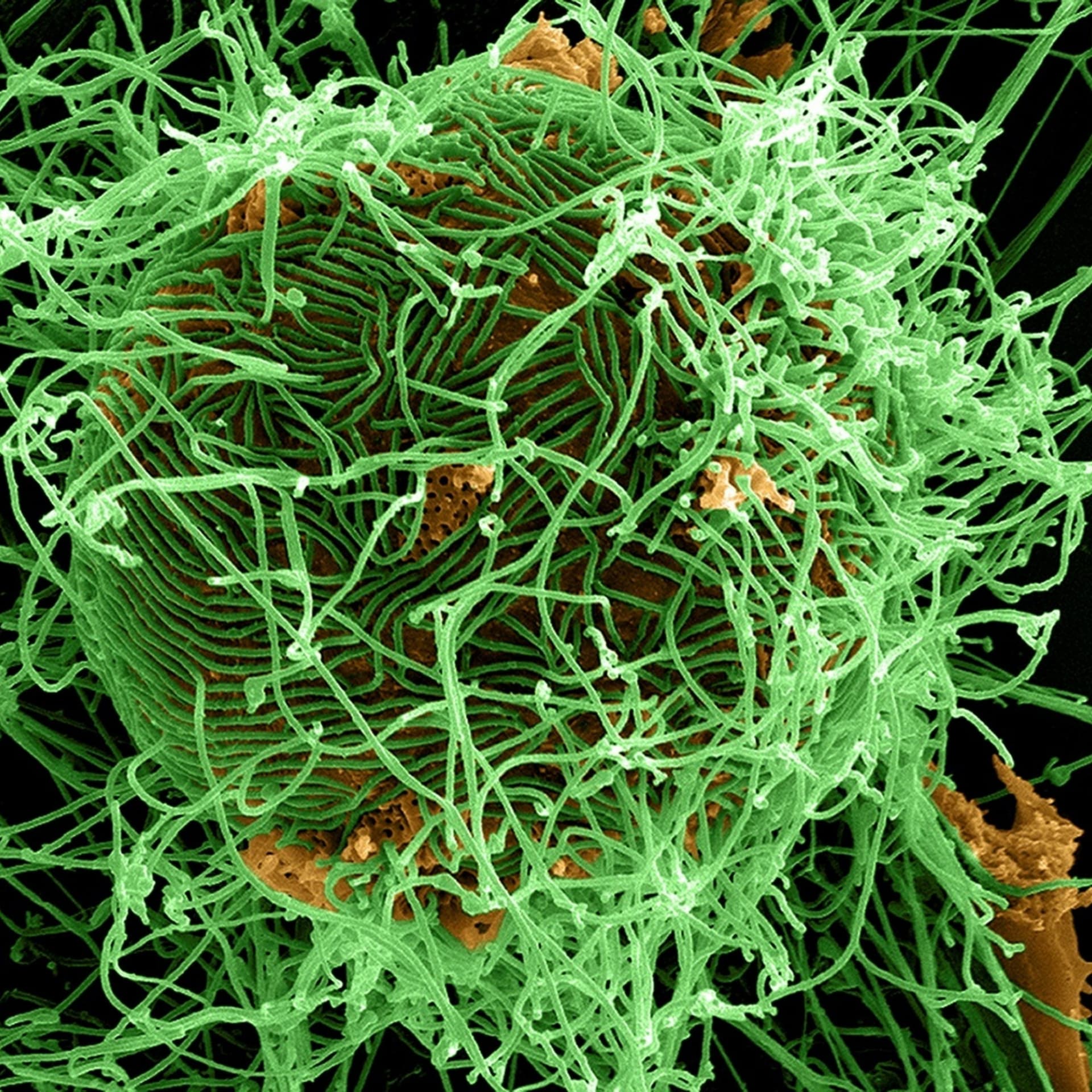
2:25First to news of yet another outbreak of the deadly Ebola virus. The head of the World Health Organisation is due to speak about the issue at a conference in Geneva. At the weekend, the WHO declared the outbreak, which began in the DRC's eastern Ettore province, as a public health emergency of international concern. It's now spread to neighbouring Uganda. Rwanda and South Sudan are also on high alert. So far, around 80 people have died and there are 246 suspected cases. Health officials are scrambling to contain it. The unique species of the virus is proving an extra challenge as currently no treatments or cure are available.
3:07The head of the Africa Centres for Disease Control and Prevention, Jean Kesea, said educating the public about health and hygiene measures will be key. We don't have vaccines, we don't have medicines, we are mostly relying on public health measures. It means providing appropriate information to the population on how to handle the issue, how to handle funerals, because we don't want to see again people being infected because of funerals. providing the protection measures for health workers and also this wash component, the water and sanitation component. With one case recorded in the DRC city of Goma, residents are worried.
3:50Rafael Mahima Kasali is one of them. I'm afraid, like any human being, because we have children at school and they still come into contact with a lot of people. We don't really know who they might be around or play with. Once they come home, they can infect the whole family. Our correspondent Joe Inwood has been telling me more. This outbreak of this slightly rarer species of Ebola is centred around a Turi province. Now, Turi is right on the eastern border of the DRC. This is a really impoverished part of a really impoverished country, really remote. And there seems to be a spreading of this virus throughout the communities there, the remote communities.
4:33what they are concerned around is that this virus, which is incredibly dangerous, leads to internal bleeding, to hemorrhaging and often to death, is going to be spreading in these remote communities away from the eyes of healthcare workers. They're trying to get resources onto the ground. But the problem is, A, it's really remote. B, it's a really dangerous part of the world. There's lots of armed groups. There's some linked to IS. There's another group. You mentioned the city of Goma. That's in the hands of a rebel group. And on top of that, also the World Health Organisation is facing a funding crisis.
5:05So this is a real cause of concern for them. People might remember the really big outbreak in 2018 to 2020. And you were there, weren't you? You were in the DRC. What was it like? Yeah, I was based out in Africa at the time and we did about five trips. It was a really, really serious outbreak. This lasted for more than two years, claimed about two and a half thousand lives. And the way they brought it under control at the time was with a huge health care response right across the region, really well-funded at the time. And what they did is over the years or the months, they obviously learned quite a lot of lessons.
5:36Firstly, the crucial one was developing a vaccine. Now, that was for that strain. They haven't got one for this new strain. But the key message they seem to be putting out is that community engagement is the most important thing, trying to persuade people who often are quite mistrustful and sometimes with good reason of central government that they are there to help. And we saw these healthcare centres where they had got clear plastic kind of almost cubicles to treat people in where the doctors were able to reach them through gloves. That allowed their families to see that they were being treated and to still communicate with them.
6:09Slightly more grim, we saw these body bags, which they had developed to put a clear plastic window in. Now, that sounds like a small thing, but it allowed families, when they were burying their loved ones, to be able to feel like they were interacting with the body without putting themselves at risk. Because actually, Ebola, it doesn't spread in the same way that COVID does. You need to have close contact. You need to exchange bodily fluids. And some of the problems are to do with kind of ingrained practices around funerals, that sort of thing. And that's why it's so hard to crack. Do you think the response this time around shows that they've learned from that huge outbreak?
6:46I mean, certainly as soon as it was announced, they seem to be trying to mobilise quickly. I mean, I was listening to a spokesperson from the World Health Organisation speaking yesterday. and she was saying they've got a transport plane of aid in already, but really that's not going to scratch the surface. They have said that they need to get much, much more in. And as ever with these things, it's not just about communication, it's going to be about money as well. That was Jo Inwood. And we'll have more on this new Ebola outbreak on our YouTube channel. Search for BBC News on YouTube and you'll find the Global News Podcast in the podcast section.
7:20There's a news story available every weekday. Meanwhile, efforts to contain another serious outbreak are continuing. Three people died and dozens of people were put in quarantine when Hantavirus spread on board a cruise ship on a trip from Argentina to Cape Verde. Most passengers were evacuated last week when the ship moored off Tenerife, but a 25-person crew and two medical staff remained for the final leg. The ship has now arrived at the port of Rotterdam in the Netherlands. Anne Holligan joined us from a boat alongside the Dutch cruise ship as it approached its final destination. It's a surreal sight, actually.
7:56After almost 50 days at sea, this Dutch cruise ship is returning to the port. 27 people on board. Those people will be taken ashore. They will disembark. They will undergo some kind of disinfecting routine. There are cabins at the dock and some of the people will be kept in quarantine here in the Netherlands. There are four Dutch citizens on board. The Dutch will go into quarantine isolation at home. The others will probably be held here for a period of about 40 days to be sure they're not infected. But the latest that we've heard from the cruise operators oceanwide is that everyone on board is asymptomatic at the moment.
8:38So this is, as the WHO has been saying, purely a precautionary measure. And as you said there, the WHO say the outbreak is still low risk. But how are people feeling in the Netherlands about this boat docking? We haven't seen any of the kind of protests that we witnessed in Tenerife. And in fact, no sign at the port of Rotterdam of any discontent or discord among the Dutch population. I think the Dutch have been quite keen to show that everything is now organised, well orchestrated, in contrast to the scenes witnessed on board the ship over the last 47 days. That was Anna Holligan. The Ukrainian military claim Russian forces are preparing for a major offensive in the summer.
9:27Russian troops are already approaching the outskirts of a strategically important city in the eastern Donetsk region. The BBC's Abdul-Jalil Abdur-Usolov has spoken to Ukrainian soldiers, some of whom spent 225 days inside what's known as the kill zone.
9:48A Ukrainian soldier is lying on a hospital bed while nurses are rubbing his body with alcohol. His call sign is Kenya and he has just come out from the front line where he spent 225 days. When you went in, did you expect that you would spend so much time at the position?
10:14Nobody knows when they would return. Commanders tried to change us several times, but each time our replacement failed to reach us because of drones. In the end, Fogg helped the incoming team, and we were swapped.
10:31Kenya is an infantryman from the 93rd Brigade. His unit defends Konstantinivka, a strategic city in eastern Ukraine. Kamikaze drones hunt down everything that moves there. And the area along the front line that's within the range of these machines is called the kill zone.
10:55Every time when we had to come out of our positions, we prayed we would come back alive. At night, we had to put on an anti-drone cloak to protect us from thermal cameras, but they would last for 20 minutes at the most.
11:19Honey stayed at the front-line position for 122 days. He's originally from the Palestinian territories. He came to Ukraine as a student in the 1990s and stayed. Now, he says, he's defending his new home. The scariest moment for Hani was when the Russians discovered his position.
11:45First they dropped explosives and sent kamikaze drones. Then two assault troopers tried to go into the basement where we stayed. They threw grenades and blew up an anti-tank mine that destroyed the entrance. They thought we were all dead, but our basement was very big and we survived. It's the paradox of modern warfare. As machines increasingly replace humans on the front line, the role of troops becomes even greater. But that comes at a cost. There was constantly a shortage of water and food. Drones that delivered supplies would often get destroyed before they could reach us. In winter, it was extremely cold.
12:27We couldn't make a fire. This was one of the harshest winters in Ukraine for many years. How did you survive it?
12:37Some of us survived, some didn't. My comrade got very ill, and one day he didn't wake up. He died from hypothermia. The battle for Kostiantynivka is continuing. And while most fighting is done by drones today, it is the foot soldiers who hold Ukrainian territory. That was Abdul Jalil Abdurusilov. The Colombian singer Shakira has been battling with Spain over a giant tax bill and now the High Court there has cleared her tax fraud. Judges have ordered the Treasury to reimburse the superstar millions of dollars that she paid as a fine. Our entertainment correspondent Colin Patterson has been following the story.
13:21Eight years this has been going on. Shakira, one of the biggest Latin music stars on the planet. Hits like Waka Waka, Hips Don't Lie, things I've heard you do in karaoke, Charlotte. My secrets are coming out. This is all about her tax bill for 2011 in Spain because she was married to the Spanish footballer Gerard Pique, who at the time was playing for Barcelona and the tax authorities consider Shakira to be a resident of the country. But what Shakira argued was that year, She played 120 concerts in 37 different countries and did not crucially spend the 183 days in Spain that would have made her liable to have to pay tax there.
14:04Also, she didn't have a home, she says. She said she didn't have children there or a business there. And now the High Court has come out in her favour, returning this verdict of eight years ago, the Spanish tax agency having to reimburse her around 70 million dollars. That's including the fines she paid and the interest that she's paid on them. And has she said anything yet about this? She has. She's actually issued a very, very angry statement, which I think is worth reading. She says,
15:05using my name and public image to send a threatening message to the rest of the taxpayers. Today, that narrative crumbles, and it does so with the full force of a court ruling. My greatest wish is that this ruling sets a precedent for the Treasury and serves the thousands of ordinary citizens who are abused and crushed every day by a system that presumes their guilt and forces them to prove their innocence at the cost of economic and emotional ruin. The victory is dedicated to them. Tell us how you really feel, Shakira. That was Colin Paterson. Still to come in this podcast...
15:49Why France's long-term love affair with fine wine is fizzling out.
16:21We'll be right back. Not necessary, visit Moto.us for more details. Moto Casino. America's Social Casino. Another app for inventory. One for CRM. Oh, don't forget accounting. Wait, which login was that? Or you could use Odoo. One fully integrated system that does it all without the hassle. Ah. Ditch the app overload. Get everything your business needs on one platform. Try Odoo free today at odoo.com. That's O-D-O-O dot com.
17:34This is the Global News Podcast. Last Thursday, a group of Italian tourists went scuba diving in the Maldives, but four of them and their instructor never returned. Since then, rescuers have attempted to retrieve their bodies from caves, but there was a further tragedy at the weekend after one of the rescue divers died. Today, the government in the Maldives say four of the bodies have now been located. Our global affairs reporter, Anbarasan Etta Rajan, is following the story. Since Monday morning, a group of specialist divers from Finland, arranged by the Italian government as well as the Maldivian Defence Forces divers, have been searching underwater.
18:14This is Wawu Atoll, south of the capital, Mali, in the Maldives. and initially they were supposed to do orientation diving, basically to understand the topography under the water. Now, a short while ago, the Maldivian government and the Italian Foreign Ministry announced that the divers, they had located the four bodies out of the five. The first body was found on Thursday itself. And I earlier spoke to the Maldivian government spokesperson, Mohamed Uzain Sharif, and this is what he had to say. The dive team led by the Dan experts from Finland confirmed that they found all four missing Italian researchers.
18:57And as was previously thought, the four bodies were found inside the cave, not only inside the cave, but well inside the cave, into the third segment of the cave, which is the largest part. And do we know how the initial divers died? Because they were experienced divers. They weren't amateurs. They were really good at this. When you hear this government spokesperson, it is very clear that they went deep inside this cave. We are estimating about 100 metres or more in the third segment. So there have been various theories given by the specialist Maldivian divers. Probably they ran out of oxygen.
19:36That's one possibility. The fact that all the four bodies were found in the inner compartment shows that that's one reason. The second is people are talking about the composition of the cylinders. What is the percentage of oxygen? You know, there is an oxygen toxicity. When you go very deep under the water, your body reacts in a different way to these oxygen inhaled through the cylinders. And the third, I mean, obviously something happened that, you know, kicked off the sand and the dust, completely disoriented the divers. So these were some of the reasons why this could have happened, because this is quite unusual for the Maldivians and also for the country.
20:15It's the worst diving incident in the country. So they are trying to find out what led to this one, number one. And the second thing is whether they were permitted to go such a deep distance. It was about 60 meters. Yesterday, I was talking to one of the Maldivian government officials. He was saying that they were allowed to go for recreation purpose only 30 meters. And it is 60 meters. Every metre counts when you go under the water. The pressure is increasing. And then they said there was no mention of cave also in their proposal initially. So how this happened, why they were allowed to go, these are all subject to investigation.
20:48Now the Maldivian authorities in the next few days are hoping to work towards retrieving these bodies. That was Ambarasan Etarajan. Data centres are becoming an ever bigger part of our lives. They're vast warehouses of computers powering everything from AI chatbots to how people file tax returns online. They're springing up around the world and many more are coming. But for people living nearby, the impact can feel very real from concerns over noise and water use to rising energy demand. So as the AI boom drives the need for ever more digital power, how do communities learn to live with data centres?
21:26Gideon Long reports. I'm on the edge of a field just north of London It's a lovely spring day and the field is full of yellow flowers from the rapeseed crop that's planted here and I'm here because there's a plan to build a big data centre here one of the biggest in Europe and some of the local residents from the nearby commuter town of Potter's Bar are not happy about it I'm with two of them, Ros Naylor and Odette Garvey Ros, what have you got against this plan? You're losing a large part of the countryside. You're using up a large amount of productive farmland that has produced agricultural crops for centuries.
22:08And Odette, you live nearby. What does this land mean to you, and what will it mean to you if the data centre's built? It'll be devastating. There won't be our place to come to. It'll just be another urban sprawl with warehouses and concrete, and our green space will be gone forever. We need data centres. They have to be built somewhere. Yes, but building it on agricultural land is not the answer. You can't eat data. Odette, what about that argument, though, that we do need data centres? I mean, I guess you use technology, you use mobile phones, you use computers, as we all do, and there is an argument that we have to build these data centres somewhere, so why not here?
22:49I'm not against data centres. It's just where we place them. I thought I was going to stay here to retire and I don't think this is going to be the dream anymore when this is built Even you were saying earlier, Odette that she doesn't want to walk here anymore because the prospect of it makes her feel so sad We have to do archaeological digs as part of the planning process Right On the other side of the site, just a few hundred metres away I meet James Tyler, the Managing Director for the UK at Equinix, the company that will build and operate this data centre. The site looks very different here, not as pretty.
23:27The rapeseed has been hacked down to stubble and you're much closer to the busy M25 motorway that surrounds London. So James, just give me a sense of what this area will look like once the data centre is constructed. At the moment it's an arable field, or clearly was used for agriculture. there are electricity pylons here there are trees you can see the motorway from here what will it look like once the project is complete we'll build a number of data centers that will be very sympathetic to the local environment we'll be planting thousands of trees we'll keep at least 50 percent of the entire site as green and then we'll be building new pathways and making sure that the site really remains very accessible to the to the local community a lot of people say we need data centres but why do they have to be built so close to London in the south east of England which is already very heavily populated and heavily built on?
Read the full transcript
24:24The business that Equinix is in is serving customers who need applications to be highly responsive and milliseconds matter whether that's financial transactions, healthcare support systems, the amount of time it will take information to travel from this data centre into central London for example over the fibre networks is less than a millisecond and that really matters to our customers. So building this data centre, let's say, on a disused industrial site in the north of England or, I don't know, in the north of Scotland or a remote part of England, that's just not going to work? Well, for our customers, latency matters and proximity to economic hubs matters.
25:01And what do you say to those people who have listened to your arguments and still say we need all the green space we can get and this shouldn't be built here? I would say that the UK needs to continue to invest in very high quality data centre infrastructure if we want the economy to grow and thrive because it underpins so much of our underlying economic growth. That was Gideon Long. Police were called to swatch stores across the UK over the weekend to control crowds. In Paris, police fired tear gas because it became so rowdy. A fight broke out in Milan and in New York, one person queuing at the watch shop described it as a mosh pit.
25:42And that's all for a new Swatch. It's called the Royal Pop and it's a brightly coloured pocket watch. It's also a collaboration with the luxury watchmaker Audemars Piguet, which may explain a few things. Their watches normally cost more than$20 ,000, but the new Swatch collection sells for hundreds. and it's already flooding the resale market at luxury prices. The BBC went out to speak to some shoppers hoping to get their hands on one of the watches. I am hoping to get a Swatch AP, do you know? I've been here for three days, ongoing. I feel like it brings us back to school days, to somewhat where you're lining up in the lunch queue or in the playgrounds or whatnot.
26:28What's going on? What did you just get today? The Royal Swatch AP collab. And what are you going to do with it? I'm going to keep this for my collection. Oh, really? You're not going to sell it? No. Why not? One day, if the price is right, you know what they say, if the price is right, anything is for sale. But right now, absolutely not. No chance. Yeah, I sold it. How much? Just over a thousand. A thousand, so a profit of 900 quid? Yeah. What have you done with the money? I'm just going to have to come back and try and buy some more. So what does this tell us about how the watch industry is changing?
27:01Sarah Montague has been digging into this with one of the best watchmakers in the world, Roger Smith of Roger W. Smith, whose watches are worn by the likes of Mark Zuckerberg and Ed Sheeran. Well, it surprised me, but I think if you want to get headlines, there's no better way than to release a pocket watch. I mean, for me, pocket watches, they did sort of die out. But I've noticed with my clients more latterly, there is more interest in requests for pocket watches. British watchmaking. I mean, we think of the Swiss, and I think we used to think of Britain as being good at watchmaking. Is there a revival with people like you?
27:41Certainly. Yeah, I mean, there is. I mean, when I started making watches many, many years ago, the industry within Britain was non-existent. with exception to George Daniels, who used to make one watch per year. More latterly, there has been a groundswell of interest. And several years ago, I helped form a group called the Alliance of British Watch and Clockmakers. And since then, there's been a huge resurgence in businesses, people setting up companies to make watches and clocks within Britain. So, yeah, it's going through some exciting times. Right. Well, presumably even more exciting if people are putting their phones down and wanting to buy, well, even, I mean, these brightly coloured ones, Audemars Piguet, would you want one of those?
28:26I bought one of the Swatch pieces, the other Swatch Amiga Speedmasters. You know, I may just buy one. I may buy one just for the sheer hell of it. And because, yeah, I think, I mean, my nephew contacted us the other day. He would like one. And he's going to be camping out trying to get one of these watches. So, yeah, it's anything that engages with the young and introduces them to watches, I'm in favour of. OK, and just briefly, I mean, Swatch, I think, is a pretty neat thing. If the battery goes, you just go and it gets replaced for you. What is special about an AP watch, just in a few sentences?
29:05I think it's a history. It's a story. There's something for young people to dive into there and explore and find out about fine watchmaking. That was Roger Smith speaking to Sarah Montagu. Finally, France has a rich history of winemaking and drinking, but that's now changing. A group which follows trends in wine drinking says beer has overtaken wine for the first time in France's modern history. Stephanie Prentiss reports.
29:37Les Français adore le pied d 'or. One of France's most famous wine adverts from the 80s, a time when daily wine with lunch and dinner was common. But its popularity has been steadily declining since then, and now the country famous for its luxury champagnes and heritage reds has a new favourite. New research into drinking habits last year shows that beer consumption outstripped wine by 10 million litres, and that over the past three decades, wine consumption has fallen by almost 40%, while France's population increased by about 15%. According to the experts, three major factors are at play. Beer getting a rebrand as more glamorous, with craft beers surging in popularity.
30:30The economy and the fact that beer is less expensive, particularly for young adults. And a general shift of people being more health conscious and choosing alcohol-free options.
30:44The team also pointed out that the famous long lunch, often seen on screen, is on the decline. Despite the shift, French people overwhelmingly still see wine as key to the national identity, with more than 90 % of people asked in a recent survey saying it's a cornerstone of their culture and a noble product that boosts the country's image globally. Well, I don't know about you but I'm going to have a glass of wine now That was Stephanie Prentice And that's all from us for now If you want to get in touch you can email us at globalpodcast at bbc.co.uk Let us know where you're listening and we'll try to give you a shout out and put a pin in our world audience map for you This edition of the Global News Podcast was mixed by Resenwyn Durrell and the producer was Adrienne White The editor is Karen Martin I'm Charlotte Gallagher Until next time, goodbye.
32:08or wherever you get your podcasts.
From the publisher
There have been more than 390 suspected cases and more than 80 reported deaths from the new species of Ebola, according to the Africa Centres for Disease Control and Prevention. The infection has already spread from the Democratic Republic of Congo to neighbouring Uganda, while Rwanda and South Sudan are now on "high alert". Health officials are warning that the variant is deadlier than previous outbreaks.
Also: International efforts to contain the Hantavirus are ongoing, as the cruise ship at the centre of the outbreak arrives in the Netherlands for disinfection. The Ukrainian military claim Russian forces are preparing for a major offensive in the summer. Spain's High Court has acquitted the Colombian singer Shakira of tax fraud and ordered her to get almost $65,000,000 in fines she had paid, plus interest. We get the latest on the Italian tourists who went missing whilst scuba diving in the Maldives. Why Swatch's Royal Pop collaboration with the Swiss luxury watch brand Audemars Piguet is causing chaos at shops around the world... and the drink that's putting an end to France's long-term love affair with wine.
The Global News Podcast brings you the breaking news you need to hear, as it happens. Listen for the latest headlines and current affairs from around the world. Politics, economics, climate, business, technology, health – we cover it all with expert analysis and insight. Get the news that matters, delivered twice a day on weekdays and daily at weekends, plus special bonus episodes reacting to urgent breaking stories. Follow or subscribe now and never miss a moment. Get in touch: globalpodcast@bbc.co.uk