
In short
Wildfires across France and Spain causing mass evacuations; Sudanese army opens a strategic highway after clashes; backlash in Bali over a digital-nomad running club; death of German plastination anatomist Gunter von Hagens; Seattle food-festival mass shooting; Wham! history in 1980s China; County Mayo ends a 75-year Gaelic football “curse.”
Guests/backgrounds
No recurring podcast guests; interviews include BBC correspondents Sarah Rainsford (France/Spain fires), Thomas Mokwana (Sudan), Lisa Tambunin (Bali), Danny Eberhard (von Hagens), and Anita Anand (Wham! backing singer “Pepsi”); sports reporter Andy Watters and Mayo fan Sean Carney.
Key claims
Wildfires are “unpredictable” and resources are insufficient; wet winter vegetation increases fuel; Sudan highway reopening ends siege conditions for ~500,000 trapped people; Bali club allegedly used biased automated registration; von Hagens developed plastination; Seattle shooting involved at least one shooter in custody; Wham! concerts were first Western band performances in communist China; Mayo’s 1951 “curse” ended after All-Ireland win.
Notable examples
Gironde evacuations (200,000), Spain evacuations (75,000+), El Obed highway (Khartoum–El Obed), Bali screenshots of delayed Indonesian applications, Body Worlds controversies, Seattle Centre shooting at Bite of Seattle, Wham! “Freedom” performance, Mayo beating Kerry after 11 lost finals.
Written by AI. May contain mistakes. Listen to the episode to check what was said.
Chapters
Tap a time to open that second in VOWildfires Ravaging France and Spain
0:00 to 0:32
Discussion on the wildfires in France and Spain, including evacuations and governmental responses.
“This BBC podcast is supported by ads outside the UK.”
Wildfires Ravaging France and Spain
0:38 to 1:09
Discussion on the wildfires in France and Spain, including evacuations and governmental responses.
“Save big during Lowe's Pro Savings Days.”
Wildfires Ravaging France and Spain
1:22 to 2:19
Discussion on the wildfires in France and Spain, including evacuations and governmental responses.
“More than 300 ,000 people have been forced to flee their homes in France and Spain as wildfires continue to rage.”
Crisis in France: Firefighters' Struggles
2:19 to 3:38
Details on firefighting efforts in France, including resource shortages and local responses.
“Firefighters and local authorities are bracing for yet another heatwave.”
The Impact of Wildfires in Spain
3:38 to 7:06
Examination of wildfires in Spain, their severity, and the role of weather conditions.
“The Prime Minister, Pedro Sanchez, has been visiting an area in the Valencia region where a huge fire is out of control.”
Interview Promotion
7:06 to 7:27
Promotion of an interview about wildfires available on the BBC YouTube channel.
“and that way is more severe, unfortunately.”
Sudan's Military Control
7:27 to 10:24
Update on Sudan's military actions and implications for humanitarian conditions in El Obed.
“And you can hear an interview about these wildfires with our climate editor on our YouTube channel.”
Digital Nomads in Bali
10:24 to 13:21
Discussion of the impact of digital nomads on local culture and economy in Bali.
“In recent years, more and more countries have been seeing the arrival of what's known as digital nomads, foreigners who come to live and work remotely, typically using the internet and a special visa.”
Death of Gunter von Hagens
13:21 to 14:00
Coverage of the death of anatomist Gunter von Hagens and his contributions to science.
“Bali and building exclusive communities on the island.”
Introduction to Gunther von Hagens and Plastination
14:00 to 15:00
Learn about Gunther von Hagens' invention of plastination and its significance.
“Gunther von Hagens invented plastination in the late 1970s, perfecting it over the years.”
Show all 20 chapters
Controversies Surrounding Body Worlds Exhibitions
15:00 to 15:46
Explore the controversies and public reactions to the Body Worlds exhibitions.
“He thought outrage, though, was a natural response, as he told the BBC.”
Accusations and Ethical Considerations
15:46 to 16:33
Understand the ethical concerns and accusations linked to the sourcing of bodies.
“He agreed to return seven Chinese bodies for burial.”
Mass Shooting in Seattle: Eyewitness Accounts
16:33 to 17:26
Hear firsthand accounts from witnesses of a tragic mass shooting in Seattle.
“They took us to the Great Wall of China, which was extraordinary.”
Seattle Shooting Updates and Community Impact
17:26 to 20:02
Learn about the police response and community reactions to the shooting.
“Plus, check out our weekly flyer and find great deals happening now.”
Wham's Historic Concert in China
20:02 to 21:05
Discover Wham's groundbreaking performance in China and its cultural significance.
“Some footage from that time has been unearthed and will be shown for the first time in a new documentary released in cinemas worldwide on the 28th of July.”
Performing in a Foreign Land: Wham's Experience
21:05 to 23:26
Listen to insights from Wham's backing singer about their unique concert experience in China.
“You know, we were in a culture that we'd never been in before.”
The Impact of Wham's Visit to China
23:26 to 24:25
Explore the lasting impact of Wham's concerts on Chinese perceptions of Western music.
“You two just sort of seem to be sort of, you know, very much happy-go-lucky and sort of, you know, taking things as they came, you with Shirley.”
Mayo's Gaelic Football Championship Victory
24:25 to 27:39
Learn about the emotional win of County Mayo's Gaelic football team after a long drought.
“Now to a moment of sporting history in Ireland.”
Sean Carney's Personal Journey with Mayo's Losses
27:39 to 28:00
Listen to Sean Carney's reflections on his team's historical losses and ultimate victory.
“He was at the game in 1951, aged six, and he was there yesterday, aged 81.”
Celebrating a Historic Victory
28:00 to 29:12
Listeners will hear a personal recount of a significant sports victory and its emotional impact.
“It should be the second biggest occasion in my life.”
Transcript
Automatic transcript. May contain errors.0:00This BBC podcast is supported by ads outside the UK.
0:30That's powerful, painless, and proven. Learn more at intuit.com slash erp. My Lowe's Pro Rewards members. Save big during Lowe's Pro Savings Days. Get your member volume discount plus an extra 5 % off eligible orders with a quote of$2 ,000 or more. And buy more and save more with up to 20 % off in-stock molding when you spend$250 or more. Members get more at Lowe's. Valid for 731. Exclusions, more terms, and restrictions apply. can't be combined with any contract or special pricing. Loyalty programs subject to terms and conditions. Visit theprodesk or lowes.com slash terms for more details. Subject to change.
1:09This is the Global News Podcast from the BBC World Service. I'm Charlotte Gallagher, and at 15 hours GMT on Monday, the 27th of July, these are our main stories. More than 300 ,000 people have been forced to flee their homes in France and Spain as wildfires continue to rage. We get the latest from Sudan as the army claims a victory against a paramilitary group, the RSF. Another mass shooting in the US. Three people are killed at a food festival in Seattle. Also in this podcast, the controversial German anatomist Gunter von Hagens, who preserved and displayed bodies, has died. And?
2:05A 75-year sporting curse is finally broken.
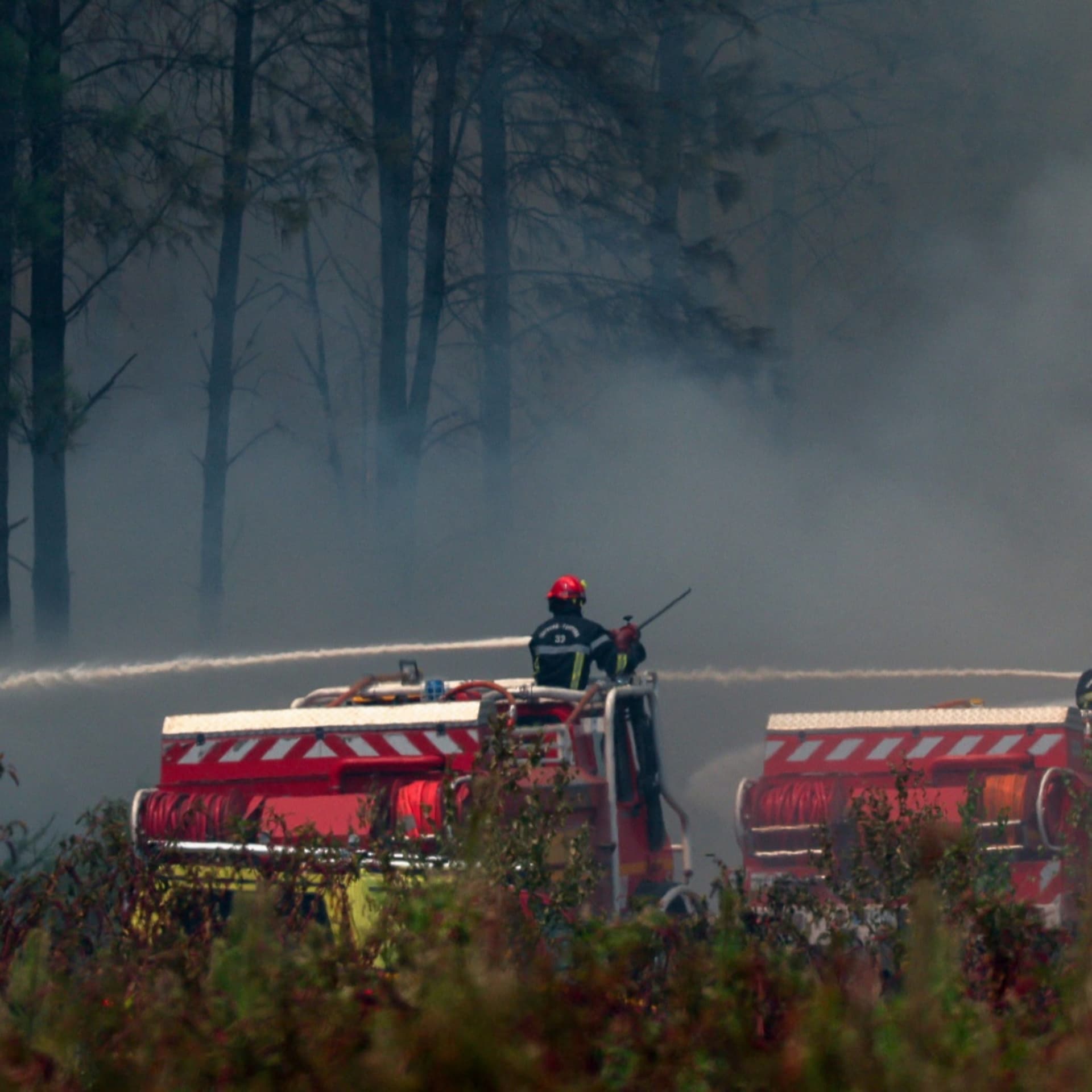
2:15We start the podcast in Western Europe, where multiple wildfires are burning across France and Spain. Firefighters and local authorities are bracing for yet another heatwave. and with temperatures of over 40 degrees expected in the coming hours, there are fears the bad situation is about to get worse. In the French region of Gironde alone in the southwest of the country, 200 ,000 people have already been forced to evacuate. The French president Emmanuel Macron held a crisis meeting on Monday and is set to visit the region later. One fire is just 15 kilometers from the city of Bordeaux. The region has asked tourists to stay away and has cancelled holiday camps.
3:00Jean-Luc Lays is president of the Gérard department and in charge of the firefighters. He's warned that France needs more help. It's not under control now. The whole white fire are 120 kilometers. So it's very, very long. We would need, I suppose, more planes and a lot of more people. It's not possible now to put firefighter trucks every 100 metres or 300 metres. We don't have enough people and enough trucks and even I think France don't have enough. In Spain, more than 75 ,000 people have been evacuated across the country. The Prime Minister, Pedro Sanchez, has been visiting an area in the Valencia region where a huge fire is out of control.
3:50He's declared a civil protection emergency. Our correspondent Sarah Rainsford has been watching developments.
4:00The fire they're battling in southwestern France is the country's worst in decades. In the Gironde region, around Bordeaux, the military are now helping firefighters and police, but still struggling to bring the flames under control. This firefighter says what they're facing is unusual, a fire that speeds up then slows down, moves left then right, he says. It is very hard to read.
4:34Locals are pitching in trying to protect property and land. Using tractors with water tanks or just buckets, attempting to dampen down smaller fires before they can take hold. It makes you want to cry. Honestly, it's horrible. We're overwhelmed. The firefighters are doing what they can, but there aren't enough resources. So we're helping them. But honestly, it's hard. It's really hard.
5:05Because every time one fire is doused, it seems there are more sparks.
5:13Tens of thousands of people have had to abandon their homes for camp beds in sports centres and in schools.
5:23Michelle left Arkashan on the coast on Friday and says the road back is now impassable. She had been hoping to go home today, but the fire is still spreading.
5:40The mayor of Bordeaux has stressed reports the city itself is being evacuated are false. But France's interior minister called conditions unfavourable and a regional official has warned tourists to stay away or to leave until this fire has been contained.
6:03In Spain, there are now a dozen fires blazing, including new ones near Valencia, where helicopters have been shuttling through thick grey smoke to empty sacks of water onto the flames. Outside Madrid, the immediate danger seems to have eased, but the interior minister called the fires there the most aggressive Spain has ever seen. And the prime minister, Pedro Sánchez, warned of difficult hours ahead. He said the flames had already torched six times more land than last year. One reason is all the vegetation produced by a very wet winter that's made more fuel for fires when the summer is as dry and as hot as this one.
6:53Michael Byrne is a climate scientist at St Andrews. It's really the perfect storm for wildfires and why we are very confident as climate scientists that this threat of wildfires is really only going to go one way and that way is more severe, unfortunately. In Spain and in France, the word used most often for these fires is unpredictable. And this week, once again, the temperature is expected to rise.
7:26Sarah Rainsford. And you can hear an interview about these wildfires with our climate editor on our YouTube channel. Search for BBC News on YouTube and you'll find Global News Podcast in the podcast section. There's a news story available every weekday. Next, Sudan's army says it's taken control of a strategic highway linking the capital Khartoum to the city of El Abade following two days of fierce clashes with the rapid support forces. It marks the Sudanese army's first major offensive against the paramilitary group in months, with the civil war now in its fourth year. The RSF has amassed troops around El Abade, where around half a million people are trapped, cut off from food and essential supplies.
8:12The UN has been warning of a humanitarian catastrophe. So what could the opening up of the highway mean for the people trapped there? I spoke to our Africa correspondent, Thomas Mokwana. This means that the city is now not under siege as it was over the past month and more. so the city of El Obed is near the central part of Sudan particularly a state known as northern Kodofan state and it's the capital of that state and over the the last few months it's been facing a lot of drone strikes by the paramilitary rapid support forces and this particular road that you're speaking about known at the El Sadarat highway or the export road is the road that critically links what is the capital Khartoum on the northern side with the city of El Obed that is the endpoint of that road.
9:06And that town of El Obed, which has been under siege over the last few months, surrounded by Arasaf and facing heavy bombardment, that town is where most roads meet, connecting Darfur state and all the other southern states. And so for Arasaf, it was important and crucial to control this town because it meant that they could get supplies to all parts of Sudan, including the capital, to fuel their war. And for the people of El-Obey, this means that there's more supplies, humanitarian support, which has been lacking. As you know, the UN and EU sounded the alarm over an impending humanitarian crisis because of the bombardment in that town.
9:42And could this be part of a bigger offensive, perhaps, by the Sudanese military? It could. It could, because as the Sudanese armed forces was announcing this major win and celebrations were seen across El Obed and other neighboring towns, there was also an order by the Sudanese general Arbour Han to widen this attack against RSF because this is seen as a win. and as you know, momentum works like that. And if you can get more supplies in many places, it's supplies that win wars, military supplies, personnel, and the faster you can get people to places, the easier it is to win. So if that declaration is anything to go by, it means that this war might be raging on.
10:22Thomas Mekwana. In recent years, more and more countries have been seeing the arrival of what's known as digital nomads, foreigners who come to live and work remotely, typically using the internet and a special visa. Their presence can be good for the local economy, but some complain it can also be detrimental to local people. In one such case on the Indonesian island of Bali, a running club that's popular with digital nomads is facing a backlash for allegedly turning away Indonesians. Immigration officials have now banned two Dutch nationals who were linked to the club from re-entering the country.
11:00I got more details from our correspondent in Indonesia Lisa Tambunin. This running club is popular among digital nomads and recently it came under fire after several Indonesian nationals shared screenshots online saying they were rejected or ignored during the club's registration process for a recent running event. These allegations quickly gained traction on social media. There were many posts and among the online posts was by a mixed couple where a partner who had an Indonesian name and number said that their application was delayed while her partner who applied using his foreign name and number was immediately approved.
11:43And this scandal ignited a massive social media uproar, drawing heavy criticism from both local citizens and Bali-based expatriates who noted that foreign visitors must respect Indonesian laws and culture rather than build exclusive enclaves. And what's been the response from the running club to all this? The running club has issued an apology claiming that the mistake was due to an automated onboarding system that had unintentionally introduced registration bias. In a statement, they also claim that Indonesians made up the largest group of participants, nearly 25 percent, for this event that gained so much attention.
12:32However, two people who are linked to this running club have been banned from re-entering Indonesia. So Indonesian immigration authorities imposed this ban after they had actually left. And I saw quite a lot about this on social media And it seemed that this wasn't just about the running club. There was also a feeling in Indonesia that local people born there were being pushed out for these people that were coming to do their digital nomad work, pushing up the prices and then excluding Indonesians from events like this. Yes, it can be said that these viral allegations in relation to this running club and also surrounding this whole scandal has reignited existing frustrations at foreigners who are perceived to be acting with entitlement in Bali and building exclusive communities on the island.
13:25So it has also reignited this anger towards what is perceived to be Indonesians and local citizens who are being left out of activities on their own island. Lisa Tambunen. The German anatomist Gunter von Hagens, sometimes known as Dr. Death for preserving and displaying human bodies, has died. He was 81. Dr von Hagens became famous for developing a technique called plastination, allowing people and animals to be preserved and dissected in remarkable detail. Danny Eberhard reports. Gunther von Hagens invented plastination in the late 1970s, perfecting it over the years. He'd seen human bodies encased in plastic blocks, but wanted instead to preserve them from within.
14:15He developed techniques to replace the fluids and fat in donated human corpses with rubber or polymers. For him, it opened up anatomy to the wider public. The incredibly detailed specimens showed organs, the cardiovascular system and parts of the nervous system too. They've been used as teaching aids at universities or by research institutes. They've also been displayed to millions worldwide in his touring Body Worlds exhibitions. so the fascination is clear. But many recoiled. Some religious leaders were outraged by what they saw as a desecration of the human body. Other viewers found them ghoulish or sensationalist, all charges von Hagens rejected.
15:00He thought outrage, though, was a natural response, as he told the BBC. Very natural when it comes to our own mortality, our own lives, when we are mortals. it becomes very emotional and not everybody has thought about it and is comfortable with this idea. Von Hagens, a showman who wore a trademark black hat, certainly did not shy away from controversy. There was a plastinated body of a pregnant woman, her belly cut away to reveal her fetus, and a graphic coupling of adults having sex. The poses were dramatic, including sports people in action. And there were animals too, horses, a bear, a giraffe, even an elephant.
15:45The controversies extended beyond the displays. After accusations in a German magazine that von Hagens had used bodies of Chinese people who'd been jailed and executed, he said it was highly improbable, but that he couldn't rule out that, unknowingly, some such bodies might have been delivered. He agreed to return seven Chinese bodies for burial. The institute he set up says its donors give full informed consent and can change their mind. It says well over 20 ,000 people have signed up worldwide to be plastinated for posterity. As for Dr von Hagens himself, in a statement his family said that, at his request, his body will be plastinated too.
16:29That was Danny Eberhard. Still to come in this podcast. They took us to the Great Wall of China, which was extraordinary. I remember looking on at George and Andrew, and that is actually when I realised, oh my gosh, this is big. And I just knew the world was going to know who George and Andrew and Wham were. How the 1980s pop stars Wham took communist China by storm.
17:25We'll see you next time. Plus, check out our weekly flyer and find great deals happening now. This is the Global News Podcast. There's been a mass shooting at a food festival in the US city of Seattle near the Space Needle landmark. At least three people have been killed and five others injured, including a two-year-old boy. These people described what happened. There were so many people that I seen on the ground. It was horrible. It's hard to tell anything. I mean, I was just asking people if they were okay. Everything was just so chaotic. Once they told us to go back in, we started running. It was like, and then it was like, bop, bop, bop, bop.
18:12I don't know weapons, but I guess it was like probably a semi-automatic. And then it was probably pistols after that. We were probably 20 feet from wherever the shots were. First stop, there were fireworks. And then everybody flooded, ran past us. We ran through the garden and we ducked and we decided to keep running with the crowd until we got, and I looked up for the space needle to try to keep track of where we were. It was really scary. It's the first mass like shooting anything I've ever been involved in. Assistant Police Chief Tyrone Davis gave this update. This afternoon we had officers working our Bite of Seattle event.
18:47At 6.01pm gunshots were heard. We had officers in the immediate area when these gunshots went off. Officers responded and addressed one of the shooters. That person gave up and was taken into custody. There was another person that we believe that was also involved that fled the scene and officers began an active search for that person. He went on to say that two people may have been firing at each other. Washington state has some of the strictest gun laws in the US, but the mayor of Seattle, Katie Wilson, said much more had to be done. I'm sorry that we're having to gather here tonight under these tragic circumstances.
19:28What happened here today at the Seattle Centre was an unbelievable tragedy, a horrific act of violence. My heart right now is with the victims and their families and with everyone in our community who is reeling from what happened here today. We have far too much gun violence in this city and in this country And we're coming off of a week in Seattle where we've had three major incidents of gun violence in just a few days. We have a lot of work to do as a city and as a country to make this better. The mayor of Seattle, Katie Wilson. The British pop star's Wham! made history in 1985 by becoming the first Western band to perform their music in China.
20:07Some footage from that time has been unearthed and will be shown for the first time in a new documentary released in cinemas worldwide on the 28th of July. Two young men in a sort of geopolitical situation. You're not really going to come and ask us about our opinions, are you? Well, timing was exquisite. There was a hunger in China for connection with the West. The film Wham! Ten Days in China tells the story of George Michael and Andrew Ridgely staging two concerts in Beijing and Guangzhou. They were fairly unknown in the country and people weren't sure what to make of them or their music. Anita Anand spoke to Pepsi, who was one of Wham !'s backing singers, about what she remembered of the tour.
20:59As far as memory goes, it's not visual for me. It's like a feeling. You know, we were in a culture that we'd never been in before. Also, we did feel that we were being scrutinised. You know, wherever we went, we were like looked at, like we were in the market and people were looking at us thinking, why are you wearing those lovely green hats with the red star? We really felt totally out of our own culture. For us, the first song, going on stage, seeing the audience, usually we're usually met with like a barrage of applause and loud screams, but there was nothing. And it was bright lights. We went on stage and we were almost like stopped in our tracks because it was so strange.
21:47we were not getting a response from the audience other than the audience that were very far back, right up at the auditorium where they were like dancing. And I think they were sort of foreigners from the embassy or whatever. So they were kind of letting loose at the back. But unfortunately, they were marched out. They were told not to do that. So we were not getting the reaction that we were usually used to. Were you aware of what a historic occasion it was? You know, the first Western band to go to communist China. Did you feel like ambassadors? Did you feel like trailblazers? We just thought another show, another country.
22:27You know, there was strategy involved regarding doing the China gig because by doing China, it meant the world's lens were on us. One thing that you may not be aware of is just how many Chinese say that was the moment that hearts and minds opened and that they were first introduced to this beat that didn't make any sense, these people who they didn't understand and a music that they were unfamiliar with. For Shirley and I on tour with Wham and Chana, we were literally two peas in a pod, like moving around because it just felt very, very strange. And in fact, the moment I knew that something extraordinary was happening was when we started to perform Freedom.
23:13I don't want your freedom. I remember us coming off stage and thinking, wow, that song, I think, did something. Because at the time, it was very kind of, there was lots of restrictions, et cetera, et cetera. We were just there doing a job. You two just sort of seem to be sort of, you know, very much happy-go-lucky and sort of, you know, taking things as they came, you with Shirley. but I just wonder what it did to George, Michael in particular, and Andrew Ridgely, who were just used to coming out on a stage and everyone knowing them and adoring them and screaming their names and then not having that.
23:51I hear what you're saying but they knew why they were doing it. They took us to the Great Wall of China which was extraordinary. I remember looking on at George and Andrew because there was a lot of press. These two guys with this wall behind them, which was built by hundreds of people, blood, sweat and tears. And there was George and Andrew. And that is actually when I realised, oh, my gosh, this is big. This is really enormous. And I just knew the world was going to know who George and Andrew and Wham were right then. That was Pepsi speaking to Anita Anand. Now to a moment of sporting history in Ireland.
24:47Do you think they were excited there? That was County Mayo's Gaelic football team ending a 75-year losing streak after winning the All-Ireland Championship. in doing so shaking off a curse that is said to date back to 1951. Andy Watters is a sports reporter at the Irish News and he's been telling me all about that curse. Folklore has it that on the Tuesday after Mayo had won this would have been their third All-Ireland title and there was a back-to-back win so they were coming back on their bus from Dublin to join in the celebrations in Mayo and they came through the little town of Foxford and there was a funeral taking place at the time.
25:33Now, people have looked into it and apparently there's no evidence that there was a funeral in Foxford on this Tuesday. I don't want to ruin the whole folklore end of it, or the mystique. But anyway, so the legend has it that the players maybe were celebrating or had celebrated a bit too zestily and they were disrespectful to the cortege and the priest told them, listen, you'll never win another All-Ireland. Newark County will never win the Sam McGuire again until every member of that team has passed away. And the last member of that team died, was it in 2023? And yesterday it was their first final since then.
Read the full transcript
26:13Yesterday was their first final indeed, and they had lost 11 finals since 1951. There was five games after 2012. You know, they seemed to find new ways to lose every time. You know, they scored two own goals in one game, you know missed penalties players getting sent off yeah obviously yesterday and finally get over the line you know that outpouring of emotion was was really you know amazing and did people really believe in the curse do you think there was no real mention of the curse for quite a few years but then it sort of it sort of started getting a bit of traction then it's around 2010 you know people oh do you know there's this curse and then everybody started getting into it And whether you believe it or not, that 75-year wait came to an end.
26:59So a huge moment of celebration and a huge moment of relief as well for people in Mayo. Oh, absolutely. I mean, Kerry are the sort of old money aristocrats of Gillick football. They've got 39 All-Ireland titles behind them. They were the defending champions. Everybody expected them to win. But at the same time, everybody was hoping outside Kerry. and was hoping that Mayo would do it. You know, and certainly, even though they got off to a bad start yesterday in the final and looked a wee bit nervous and you were wondering, oh God, are these bad habits going to resurface? They were the better team and fully deserved their win.
27:38Andy Watters. Well, Sean Carney is a Mayo super fan. He was at the game in 1951, aged six, and he was there yesterday, aged 81. He's been telling Rebecca Kesby about the moment his team won. When the final whistle went, I'm telling you, I gave a big shout up my oar. And I was fit to cry, but I didn't cry because it was such an occasion. It should be the second biggest occasion in my life. The first one was when I married my good wife, Mary. And she was there with you to watch it? She was. She was. You were six the last time your team won. Do you remember that? Yeah, I was six, yes. I was a child, but I remember it vividly.
28:18The team came up the main street of the town of Clare Morris. on a truck and there was people walking in front of us in a torchlight procession. And they came up to the square, they were all on the truck and we were all cheering them and clapping them. And so since then, Sean, the team has made it to, I think, 11 finals and been thwarted every single time. Talk us through the heartbreak of that. It has been terrible, especially the two finals of 2004 and 2006. we encountered the same team as we encountered yesterday and we got a very bad beating. So going into yesterday's final, we all had a touch of trepidation about what the outcome might be.
29:02But they played like heroes and they won like heroes. They did indeed. My family are from Mayo and I know how much it means to everyone there. That was Mayo superfan Sean Carney. And if you want to hear more about the curse of County Mayo, you can find it on the BBC's Amazing Sports Stories podcast. And that's all from us for now. If you want to get in touch, you can email us at globalpodcast at bbc.co.uk. You can also find us on X at BBC World Service. Use the hashtag Global News Pod. Now, Margareta from Moldova has been in touch to say she's listening to the Global News podcast almost daily over the past six or seven years, either when running in a park in the capital, Chisinau, early in the morning.
29:48Well done, Margareta. Or when walking to the office. Margareta says thanks to the podcast, she often feels like one of the smartest people in the room. Thanks, Margareta. And we've put a pin in Moldova on our world map. And also don't forget our sister podcast, The Global Story. This edition of the Global News Podcast was mixed by Sarah Kimberley and the producers were Judy Frankel and Stephen Jensen. The editor is Karen Martin and I'm Charlotte Gallagher. Until next time, goodbye.
From the publisher
Firefighters have warned they are still not in control of a major wildfire near Bordeaux and fears grow that the situation in France and Spain will worsen as a fresh heatwave arrives. More than 300,000 people have been evacuated. Also: the Sudanese army says it has taken control of a major highway from the paramilitary Rapid Support Forces which links the capital Khartoum to the besieged town of el-Obeid. Three people are killed in a shooting at a food festival in Seattle in the United States, despite the city's strict gun laws. The German anatomist, Gunther von Hagens, sometimes called Dr Death, has died; he was known for developing a technique called plastination, allowing him to display and dissect human bodies and animals in detail. A documentary film is being released about how the British pop duo Wham! made history in 1985 by becoming the first western band to perform their music in China. And the curse of County Mayo's Gaelic football team is over as it triumphs in the all-Ireland final after 75 years.
The Global News Podcast brings you the breaking news you need to hear, as it happens. Listen for the latest headlines and current affairs from around the world. Politics, economics, climate, business, technology, health – we cover it all with expert analysis and insight. Get the news that matters, delivered twice a day on weekdays and daily at weekends, plus special bonus episodes reacting to urgent breaking stories. Follow or subscribe now and never miss a moment. Get in touch: globalpodcast@bbc.co.uk Photo: Firefighters battle wildfires in Gironde department, France Credit: REUTERS