
In short
A BBC Global News Podcast roundup focused on UK politics (Keir Starmer resigning; Andy Burnham as likely Labour leader and next PM), US-Iran talks in Switzerland over the Strait of Hormuz and nuclear inspections, South Sudan’s worsening food crisis, and major culture/sports items including Clive Davis’s death and World Cup updates (Messi record; Mbappé scoring; weather delays).
Guest backgrounds
No named podcast guests; reporting is by BBC correspondents (Rob Watson, Jessica Parker, Mark Savage, John Bennett, Tim Vickery, etc.). Clive Davis is profiled posthumously.
Key claims
Burnham is “favourite” to replace Starmer; no clear leadership challenge. US says Iran agreed to reopen Hormuz and accept nuclear inspectors; Iran disputes new nuclear commitments. South Sudan: over 7 million need aid; families eat wild plants; displacement repeats.
Notable examples
South Sudan mothers describing starvation; Clive Davis mentoring Aretha Franklin, Bruce Springsteen, Whitney Houston; Messi becomes World Cup all-time leading scorer (18 goals); Mbappé reaches 16; France vs Iraq halted by lightning.
Written by AI. May contain mistakes. Listen to the episode to check what was said.
Chapters
Tap a time to open that second in VOPolitical Developments in Westminster
1:13 to 1:48
A resignation of the UK Prime Minister and the likely succession by Andy Burnham.
“This is the Global News Podcast from the BBC World Service.”
Reaction to Prime Minister's Resignation
1:48 to 4:02
Analysis of the resignation's impact and who may succeed the Prime Minister.
“The American music executive Clive Davis has died at the age of 94.”
Andy Burnham's Political Future
4:02 to 6:54
Discussion on Burnham's potential leadership and the challenges he might face.
“It doesn't seem like there's going to be a challenge.”
US-Iran Talks and Regional Stability
6:54 to 9:46
Updates on US-Iran negotiations and their implications for regional peace.
“you want something really radically different to Keir Starmer in terms of policy, I think they're much less likely to get that than they are to get a much better communicator.”
Humanitarian Crisis in South Sudan
9:46 to 13:56
A report on the severe food shortages affecting millions in South Sudan.
“The world's youngest nation, South Sudan, is seeing half of its entire population facing food shortages.”
Remembering Clive Davis: A Music Legend
14:00 to 15:30
Learn about the impact and legacy of Clive Davis in the music industry.
“The American music executive Clive Davis has died at the age of 94.”
Introduction to Diverse Topics Ahead
15:30 to 17:02
Get a preview of various stories, including a unique spider and social media changes in the UK.
“We never saw this combination of this high specificity of just catching one particular type of prey in a spider's web and then also using this enormous high performance snare.”
Disability Rights in Germany: A Call for Inclusion
17:02 to 22:00
Examine the challenges faced by disabled individuals in Germany's workforce.
“Listen now, wherever you get your BBC podcasts.”
The Gambia: Climate Crisis and Local Solutions
22:00 to 25:51
Discover how climate change is impacting The Gambia and local adaptive strategies.
“The country is grappling with rising temperatures, coastal erosion, erratic rainfall and growing pressure on communities that depend on agriculture and fisheries.”
The Fascinating Ballista Spider
25:51 to 28:00
Learn about an innovative spider species and its unique hunting technique.
“Now to a fascinating story about a new species of spider, which biologists have discovered in the rainforests of Australia.”
Show all 14 chapters
The Ballista Spider's Unique Hunting Technique
28:00 to 28:56
Learn about the remarkable hunting strategy of the Ballista Spider and its energy-efficient web design.
“So you can imagine a spider spends about half an hour building the snare and placing line after line.”
Lionel Messi's Historic World Cup Achievements
28:57 to 29:55
Discover how Lionel Messi became the leading goal scorer in World Cup history at age 39.
“Let's now celebrate yet another milestone for the magician that is Lionel Messi.”
The Impact of Weather on World Cup Matches
29:56 to 31:36
Explore the effects of weather interruptions during the World Cup and the protocols in place.
“at the World Cup because France were taking on Iraq but for the first time at the tournament weather interrupted the game.”
Kylian Mbappe's Rise in World Cup Rankings
31:37 to 32:18
Learn about Kylian Mbappe's impressive performance and goal tally in the World Cup.
“the top women's goal scorer at World Cup.”
Transcript
Automatic transcript. May contain errors.0:00This BBC podcast is supported by ads outside the UK.
0:30deals happening now.
0:35The biggest men's football World Cup in history is here. 48 teams and a record 104 games being played across the United States, Canada and Mexico.
0:50And the More Than The Score podcast is bringing you more than just the latest results, stats and fixtures. We're taking a closer look at the new teams competing. the Cup's standout stars and the fans who are shaping the tournament. More than the score from the BBC World Service. Listen now wherever you get your BBC podcasts. This is the Global News Podcast from the BBC World Service. Hi, I'm Ankur Desai and in the early hours of Tuesday the 23rd of June, these are our main stories. A dramatic day in Westminster. The UK Prime Minister steps down and his likely successor steps in. After the first round of talks with the US in Switzerland, Iran's lead negotiator has reiterated that the Strait of Hormuz will be administered by Tehran.
1:40And South Sudan grapples with a food crisis that is affecting millions. Also in this podcast, we pay tribute to the man who shaped Bruce Springsteen and Whitney Houston's careers. The American music executive Clive Davis has died at the age of 94. And at the Football World Cup, more Messi magic. It was clear that Argentina had become his number one priority. I just don't want the carnival to end. Argentina's Lionel Messi becomes the all-time leading scorer at the tournament.
2:16We begin with a dramatic day in Downing Street as the British Prime Minister leaves number 10. Every decision I've taken has been about putting the country I love first. That is why I will resign as leader of the Labour Party. His likely successor enters Westminster. I swear by almighty God that I will be faithful and bear true allegiance to His Majesty King Charles, his heirs and successors, according to law. So help me God. Andy Burnham was sworn in as an MP hours after Keir Starmer stepped down from the top job. In an emotional speech, the Prime Minister touted his achievements over the past two years and said he would now focus on being a family man.
3:03Meanwhile, Andy Burnham's focus is firmly set on 10 Downing Street, as he confirmed that he would bid to fill the vacancy. Some other MPs are also considering putting their names in the hat. but the so-called king of the north is favourite to win. Our political correspondent Rob Watson has been following what's been a day of big changes and mixed emotions for the Labour Party. It was a dramatic day and although it wasn't very unsurprising you have to keep pinching yourself and say, my goodness, Britain has just got rid of a sixth prime minister in 10 years. Unsurprising because it had been pretty clear that support was draining away from him from inside the Downing Street, but still that moment when he stepped out from behind the famous black door and announced he was resigning because the Labour Party didn't want him anymore.
3:52And then after all those two years of never revealing even a hint of emotion to suddenly at the very end show how sad he was, attention now focuses to who will replace him. And essentially, Anker, if nothing else happens, it'll be Andy Burnham, who's the outgoing mayor of Greater Manchester, who will become the leader of the Labour Party and the next Prime Minister in the middle of July, unless, of course, someone challenges him for the leadership, or indeed if the Labour Party decides to move that schedule forward. It doesn't seem like there's going to be a challenge. It feels like a real coronation.
4:27And someone who's not very long back as an MP, he's going to be leading the country, which is quite an incredible set of events. It is. And the argument in favour of a coronation is it's going to be hard enough to sell the idea of a seventh prime minister to the British voters in 10 years, and that it would only make things worse if you had some horrible, angry debate with inside the governing Labour Party. I mean, the argument against that is, well, you know, if you are going to have a seventh prime minister, you better make sure that they're tested in debate. But it does look like more of a coronation.
4:59As to the challenge that he faces, I mean, it's extraordinary. He will have only just become an MP again after being the mayor of Greater Manchester. And in pretty short order, he's going to have to get a government together. I mean, that's no mean feat. It involves tens and tens of ministers. It means getting some policies together and facing all the challenges that did for Keir Starmer, which are basically a sluggish economy, public services stretched and kind of concerns over social cohesion and immigration. None of that stuff is going to go away. What do we know about his politics? And are we going to see a bit of a change for Labour in terms of how they position themselves going forward?
5:37And what's going to make him so distinctive or set him apart from those that have failed, I guess, before him? Certainly in terms of personality and approach, it'll be very different to Keir Starmer. He's a much more obviously sort of relatable person. He finds it easier to deal with people and he has a sort of sunny disposition compared to Keir Starmer's rather sort of gloomy demeanour. But, I mean, in terms of his politics and his ideology, well, a lot of people have accused him of being a bit of a shapeshifter, that he just goes along with whatever's fashionable in the Labour Party at the time over the last 20 years.
6:11I mean, I think really, though, he is a rather typical politician of the centre-left, soft-left, whatever you like to call it. So he thinks that, by and large, the state is a force for good. He thinks that the main focus of government should be on improving the lives of ordinary people. Well, those are all things that Keir Starmer also believed in. The question is, and what you're hinting at, is will somehow he move Labour off to the left, as some of the party would like to be sort of radical wealth taxes, more taxes on businesses. The problem with that is that the financial markets would not like it one little bit and already think that this has been a pretty left-wing government.
6:49So, yeah, the danger he faces is really disappointing those in his own party. you want something really radically different to Keir Starmer in terms of policy, I think they're much less likely to get that than they are to get a much better communicator. Rob Watson reporting. In a sign that reaching a final deal to end their war may take some time, we're getting conflicting reports on what the US and Iran agreed at their first round of talks in Switzerland. The US is sounding upbeat, saying Tehran has agreed to open the Strait of Hormuz and allow nuclear inspectors back into Iran. But the Iranians say there have been no new commitments on nuclear inspections and the administration of the strait will never return to how it was before the war.
7:39Back then, ships could pass freely through the waterway, free of charge. This is what the U.S. Vice President J.D. Vann said about progress towards a lasting peace after the talks. The President of the United States has himself said, sometimes these ceasefires just mean you're shooting a little bit less, but we wanted to make sure that we had the proper coordination set up so that if Hezbollah fires at Israel or if Israel responds, if there are other conflicts that arise in the region, we're actually talking to each other and figuring out how to stop the shooting, how to make the region safer.
8:12Our teams working with the Iranians, the Qataris and the Pakistanis made great progress yesterday. They will continue to work at the technical level. And then those technical negotiations are going to continue over the weeks and days to come. The question now is what happens next? Our correspondent in Lucerne, Jessica Parker, gave her assessment of these latest developments. This initial round of talks have established the framework for the negotiations going forward. and technical talks are set to continue here in Switzerland this week. Obviously, a couple of the big issues here. First of all, trying to get the Strait of Hormuz back to normal.
8:51There's also the matter of trying to implement the fragile ceasefire in Lebanon between Israel and the Iran-backed armed group Hezbollah. The U.S. Vice President J.D. Vance said that Iran had agreed to allow U.N. nuclear inspectors back into the country. Now, Iran's foreign ministry later said that no new commitments had been made regarding their nuclear program. But there does seem to be a bit of quid pro quo going on here because the U.S. has also said it's going to suspend some sanctions on Iranian oil. Now, going forward, the mood music has been fairly upbeat from people like J.D. Vance, but negotiators now face the task of tackling highly complex issues at high speed, including issues that have dogged U.S.-Iran relations for decades.
9:45Jessica Parker in the Swiss city of Lucerne. The world's youngest nation, South Sudan, is seeing half of its entire population facing food shortages. Years of conflict and climate shocks have left more than 7 million people in need of assistance. Thousands of families are in a cycle of displacement, having fled violence multiple times. In some of the hard-hit areas where aid is in short supply, many are resorting to consuming things they wouldn't normally eat to survive. The BBC has managed to hear stories from impacted families in one of the country's difficult-to-access regions. Kalkidan Ibelta has more.
10:30In a remote village in Akobo, one of South Sudan's most restive regions, small boats carrying families, including young children, glide towards the riverbank. They're returning home from neighbouring Ethiopia after fleeing in March when violence swept through the area. It's a place prone to both drought and flooding. It's also a hotspot for recurring conflict, which means the hundreds of thousands who call it home often find themselves running away from one disaster or another. Food has long been scarce and medical help is in short supply. But in recent months, things have got dramatically worse.
11:16Nialith Jani Minek had to see her son die due to a lack of food and medical attention. He was a year and nine months old. I knew that my child was in the worst situation because I did not have anything to give him that he needed. I knew my child was suffering in my hands. He had been crying when he was starving. I took him to a clinic. He was given fluids, but he died the same day. Fierce fighting between government troops and armed groups operating in the area forced humanitarians to leave the place. Hospitals were ransacked and farms burned down. With the army controlling most of the area now after an extensive offensive, relative peace seems to have returned.
12:02But food shortages have worsened and people are forced to eat wild leaves and lily flowers. Nia Chudiratang, like many mothers, is concerned for the well-being of her young child. We depend on grass leaves and spend up to four days without anything else to eat. We went around to find some domestic plants to cook for the children. My child cries because of hunger. When I give him my breast, he wails because he isn't getting enough milk. Imagine I am a lactating mother and not eating food for days. For South Sudan, since its birth as an independent nation 15 years ago, food insecurity seems to be a persistent and recurring problem due to a history of protracted violence and climate shocks.
12:47A recent report by three UN agencies paint a grim picture. Millions are facing hunger. The country's very poor road network has made it difficult to distribute aid, but also to record how many people are dying from hunger-related issues. Obia Acheng is the deputy country representative for the UN's children's agency. This was not necessarily their first displacement. There are people who had been displaced first, second and almost three times as internally displaced people. When you get first displaced, you retain some. But second displacement, it decreases. Third displacement, it basically means you don't have any.
13:28Relief workers and government officials stress the need for urgency. South Sudanese children are starving and the arrival of crucial help could mean the difference between life and death. But for Nialit, it's already too late. He was already severely malnourished when he was given medication. I didn't receive any food. I am unable to think properly because of what happened to my baby. Kalkidan Yibeltal with that report. Next to the man who helped guide some of the most legendary careers in show business. The American music executive Clive Davis has died at the age of 94. He became a household name in the music industry, despite not being a performer himself, but having shaped the careers of artists including Aretha Franklin, Bruce Springsteen and Whitney Houston.
14:21Mark Savage looks back on his life. If you pick up an encyclopedia of pop and rock history, Clive Davis's name will almost certainly be on every page. Across an incredible career, he signed and mentored everyone from Simon and Garfunkel to Aretha Franklin, Bruce Springsteen, Billy Joel, Aerosmith, Alicia Keys, Whitney Houston. He was known for having a Midas touch. In 1995, the producer of Whitney Houston's I Will Always Love You wanted to chop off the 42nd acapella intro that starts the song. Davis insisted that it remain, and it went on to become the biggest hit of her career, spending 10 weeks at number one in the UK.
15:03He wasn't always popular. Barry Manilow was one of the artists who complained that Davis wouldn't let him sing his own songs at the start of his career. But the guest list at his annual Grammy party suggested that he was widely loved in the music industry. Attending the Bash this year, Joni Mitchell, Olivia Dean, John Legend, Art Garfunkel and many, many more. Mark Savage reporting. Still to come in this podcast, the Australian ballista spider that's found a remarkable way to catch its prey. We never saw this combination of this high specificity of just catching one particular type of prey in a spider's web and then also using this enormous high performance snare.
15:58Every story is a technology story in one way or another. And on the interface, we decode the tech that's rewiring your week and your world. On this week's episode, we look at the UK's teen social media ban and ask what happens next? Why are AI companies so interested in nuclear fusion energy? And will the new iPhone AI update mean that Siri will finally be good? Listen on BBC.com or wherever you get your podcasts.
16:31The biggest men's football World Cup in history is here. 48 teams and a record 104 games being played across the United States, Canada and Mexico.
16:45And the More Than The Score podcast is bringing you more than just the latest results, stats and fixtures. We're taking a closer look at the new teams competing, the Cups standout stars and the fans who are shaping the tournament. More Than The Score from the BBC World Service. Listen now, wherever you get your BBC podcasts.
17:41This is the Global News Podcast. Disabled people are the most unfairly treated minority in Germany, according to one former member of parliament. This is especially true in the world of work. The unemployment rate among disabled people is twice that of people with no disability. When they do find work, it's often in an institution where they are paid less than the minimum wage and where they do not have the usual rights and protections enjoyed by most employed people. Amy Zayed is one of the very few disabled journalists working in Germany and asks what can be done to make Germany more inclusive.
18:27This is a small group and we have here people with severe disabilities and a very high need of assistance. This is what in Germany we call a Werkstatt für behinderte Menschen, a workshop for disabled people. Some 300 ,000 disabled Germans work in places like this one in Paderborn. The boss, Carla Bredenballs, shows me their gardening project. I think this project is a nice project because it shows that for us it's not always about working, it's about developing people. But these workshops are controversial in Germany. The disabled people who come to work here are often making goods for commercial companies but are paid less than the minimum wage.
19:12There is no group that experiences more discrimination than people with a disability. Hubert Hüppe is one of the most prominent critics of the workshop system and of the way disabled people are separated from the rest of society. He says this separation begins early.
19:37In principle, once you become part of this segregated system, you never get out of it. So you'll go from a special kindergarten into a special school and then into one of those sheltered workshops. Then you'll end up in a special care home and eventually you may even be buried there. Some of these homes have their own cemetery. The workshops are supposed to prepare people to work in the mainstream economy. But only 1 % of people in workshops ever make it to what we might call a regular job. Carla Bradenballs acknowledges that this is too few. I know that the critics are there, that there's only 1 % of people going back to the first market.
20:19And I do think also that that's way too low. I mean, that's the self-critic I have to take also, because we are much better than others. We are around the 1 % also. Here in Dortmund, they are holding what they're calling an Inclusionsmesse. It's a trade fair for inclusion companies. An inclusion company is one where 30 % of the workforce is made up of disabled people.
20:52The director of the authority behind this event is Georg Lünemann. He's just announced an ambitious target to the audience here, to bring at least 10 % of people in sheltered workshops in this region into jobs in the mainstream economy. He told me that at a time of economic difficulty in Germany, disabled people were an essential resource.
21:20We see a real opportunity in the labour market for people with a disability in terms of skilled workers because a huge number of businesses are looking for people and we're trying to get a foothold in that market and make crystal clear the potential that people with a disability have. The German government says that it's working on legislation to reform the workshop system. This, it says, would enable more people than today to move into the mainstream economy. And you can hear more from Amy Zayed on this week's edition of Assignment here on the BBC World Service. Now let's head to the Gambia, Africa's smallest mainland nation, which is on the front line of a climate crisis.
22:06The country is grappling with rising temperatures, coastal erosion, erratic rainfall and growing pressure on communities that depend on agriculture and fisheries. So what local solutions are emerging and how can they be financed as international aid comes under strain? The BBC's Nkechi Ogbona asked National Geographic Explorer and marine ecologist Maya Tal Hoshemi how rising sea levels are affecting the livelihoods of farmers and fishermen. These climate changes are affecting the livelihoods of us Gambians, particularly farmers, because as the sea level is rising, it's bringing in salt water. And what that saltwater does is it causes agricultural farms, particularly rice farms, to be encroached with salt.
22:56And therefore, these seedlings are not able to adapt to that change. And so it reduces the harvesting that we were once able to have. And unfortunately, today we are importing more than we are producing. But also with oysters and fisheries, we're seeing how these species are trying to adapt, but unfortunately are not able to adapt to this changing environment. Now, I covered climate issues in the Gambia, I think it was in 2022 or 2023. And I went to the ocean front, the beachfront, and I was shown where the water used to be and where it is now. But I also saw tree planting activities were happening.
23:38Is that not a mitigation effort that is helping the issues that cities like Banjul are facing when it comes to rising sea level? Restoration activities are happening along the Gambia River as well as the Atlantic side of the coastline. And we are so grateful for our community-based organizations as well as our village local people that are actually taking the lead in restoration activities. And we have seen some growth, regrowth, especially in the central and southern part of the Tambi wetlands. We are doing the science, but we're also working with the communities that are doing the restoration activities so we can see this positive change.
24:18The Oceans Conference took place in Nairobi, Kenya's capital. What outcomes would you say could emerge from those discussions? Because a few climate experts have just said most of these conferences are just talk shops. They are not deal rooms where proper policies are actually going to be implemented. Right. I mean, just to have our Oceans Conference on the Continent Speaks Volumes with the slogan, our ocean, our heritage, our future. I mean, when you talk about the future, you have to talk about continents like Africa that have been affected by climate change. And although some people do think that these conferences don't create meaningful policies, I see it from a different perspective.
25:03It allows us to come together to connect and to work together. Sometimes policies are not implemented the way that we would like them to be. But that's why we have to come together and meet and we make the change that we need for our continent and for the world. And top of that conversation is climate financing, which remains a major challenge, especially in many countries in Africa. Now, is enough funding reaching communities on the front lines of climate change? That's an interesting question. And I found value working with organizations like National Geographic Society, because what it does is it does bring in that blue finance for us.
25:43And we get to work with other explorers. We get to come together. We get to scale up our projects and do on the ground conservation efforts. Maya Tal Hoshemi. Now to a fascinating story about a new species of spider, which biologists have discovered in the rainforests of Australia. But this isn't any old spider, because it has developed a very clever and remarkable way of capturing its prey, a single species of ant. Dr. Jonas Wolff is a senior co-author of the paper, which has just been published. He's based at the University of Groswald in Germany and was part of the team that studied the spider in North Queensland.
Read the full transcript
26:23He described what the spider does to Tim Franks. So the web of this spider, which we call the ballista spider, looks actually pretty weird. It's not like you would imagine a typical spider's web. So at the lowest end, there's a little silken cone. It looks a little bit like an inverted ice cone. And that cone is attached to a lot of straight lines that are under tension. So weaver ants are attracted to this cone and attack it. And by doing so, the ants destabilize the whole structure. and then because it's under tension the cone detaches from the ground and that forces the ant still clinging to the silken cone to be lifted off the ground at an insane speed and it's kind of shot up right into the core web of the spider where it's already waiting and then it's wrapping up the ant right and it all happens within just a few milliseconds that is extraordinary so the spider has previously woven this trap which as you say is i mean it sounds like sort sort of quite a complicated structure, but it's then held under tension until the moment that the ant crawls in because it's attracted in and is outraged by the presence of this and then is flung upwards.
27:36Yeah, exactly. So the ballista spider actually uses a combination of two quite clever tricks. So the first is it's luring the prey into its web and it's kind of manipulating the prey's behaviour and kind of uses it for himself So because the end is aggressive, it actually causes this as a trigger. And then it uses this principle of power amplification. So you can imagine a spider spends about half an hour building the snare and placing line after line. And each time it's kind of pulling this line straight. And thereby it's a little bit like a spring where elastic energy is stored. And because it uses so many lines, then there's a massive amount of energy that is all released in one go at an instant.
28:23That is stunning. And is it a specific species of ant as well to make this even more clever? Right. Have you come across anything remotely like this? No, this is quite unique, both because we never saw this combination of this high specificity of just catching one particular type of prey in a spider's web, and then also using this enormous high performance snare, which uses this principle of power amplification. Dr. Jonas Wolf of the University of Greifswald in Germany on the very cool Ballista Spider. Let's now celebrate yet another milestone for the magician that is Lionel Messi. The Argentine superstar created another immortal moment.
29:06Just two days before his 39th birthday, he became the leading goal scorer in the history of the Football World Cup. His two goals helped the defending champions defeat Austria 2-0 and extended his tally to 18 goals. And it puts Argentina through to the knockout stages. Tim Vickery is a South American football expert and gave his insight into why Messi has been able to take his national team to another level. Over these last two World Cups, Messi has been right at the centre. I think it probably helped. they started a fight with Barcelona around the 2019 mark and it was clear that Argentina had become his number one priority and Argentina have built that team around him and I just don't want the carnival to end.
29:51Now before we give Messi his flowers we need to get across another huge story at the World Cup because France were taking on Iraq but for the first time at the tournament weather interrupted the game. BBC Sports' John Bennett was at the match in Philadelphia and spoke to me outside the stadium during the second half of that game. Yes, we expected it because there are protocols here, not governed by FIFA football's governing body, but by the local authorities. And if there's any lightning detected within an eight mile radius, it means that stadiums have to be evacuated and fans have to go into the concourses away from the stands.
30:28And that's what What happened at halftime, there was a message that went across the PA system and on the screens, telling the fans to take shelter. And the game was halted. It was actually halted for about two hours, 11 minutes. Play resumed at 8 p.m. local time. So about 15 minutes ago, it was 1-0 before the interruption. It's now 2-0. Kylian Mbappe with two goals. And he's now up to 16 World Cup goals in total. So he's actually only two goals away from Lionel Messi. This record can keep getting broken during this World Cup. It's astonishing. Yeah, it is incredible, isn't it? And he's got so many years still ahead of him.
31:04Look, Lionel Messi turns 39 in a couple of days' time. But what more can we say about this guy? Just incredible. He seems born to break records and he's got another feather in his cap, John. It is really remarkable because you're right, 38, 39 on Wednesday. We wondered, will he still have the stamina? Will he still have the fitness level to perform at his best? but he has been sensational. Hat-trick in his first game, two goals in his second game. So he now stands alone with the record. He's overtaken Miroslav Klose, the old record holder. He's on 18. And he's also passed the Marta's record as well, the top women's goal scorer at World Cup.
31:42So he has the entire record now, Lionel Messi. And it is astonishing. And it's one of those World Cups where maybe Argentina will be able to rest him as well at certain points now that they know they're through to the next round and resting for the big games in the knockout round. So it's very exciting to have not only a Kylian Mbappe at the top of his game in this competition at the age of 27, but also a Lionel Messi at the top of his game at the age of 38. It really is great for the tournament. The top stars, most of the top stars, apart from Cristiano Ronaldo, have really shown great form so far in this tournament.
32:15John Bennett reporting there from Philadelphia. Well, that match ended in the end with France beating Iraq by three goals to nil. There was a goal from Ousmane Dembele and two from captain Kylian Mbappe. As we mentioned, he's now currently on 16 World Cup goals, just two behind Lionel Messi. Another superstar also made his mark again. Norway defeated Senegal 3-2 thanks to a brace from their star Erling Haaland. And that's all from us for now. If you want to get in touch, you can email us at globalpodcast at bbc.co.uk. And you can also find us on X at BBC World Service. Use the hashtag Global News Pod.
32:56And don't forget our sister podcast, The Global Story, which goes in-depth and beyond the headlines on One Big Story. This edition of the Global News Podcast was mixed by Daniel Fox and the producer was Emma Joseph. The editor is Karen Martin and I'm Ankur Desai. Until next time, goodbye.
33:21Every story is a technology story in one way or another. And on the interface, we decode the tech that's rewiring your week and your world. On this week's episode, we look at the UK's teen social media ban and ask, what happens next? Why are AI companies so interested in nuclear fusion energy? And will the new iPhone AI update mean that Siri will finally be good? Listen on bbc.com or wherever you get your podcasts.
From the publisher
The man poised to become Britain's seventh prime minister in a decade has been sworn in as a member of parliament, hours after Keir Starmer announced his resignation. Andy Burnham - the former mayor of Manchester - won an emphatic by-election victory last week and has confirmed he'll now stand for the leadership of the governing Labour Party. But who is Andy Burnham? And what is his vision for the UK?
Also in this podcast: After the first round of peace talks with the US in Switzerland, Iran insists the administration of the Strait of Hormuz will never return to the way it was before the war. Families in South Sudan face starvation and malnutrition amid a severe food shortage. We look back on the life of the man who helped guide some of the most legendary careers in showbusiness - including Bruce Springsteen and Whitney Houston. Scientists discover a new ingenious species of spider in the Australian rainforest. And Lionel Messi becomes the all-time leading goal scorer at the World Cup.
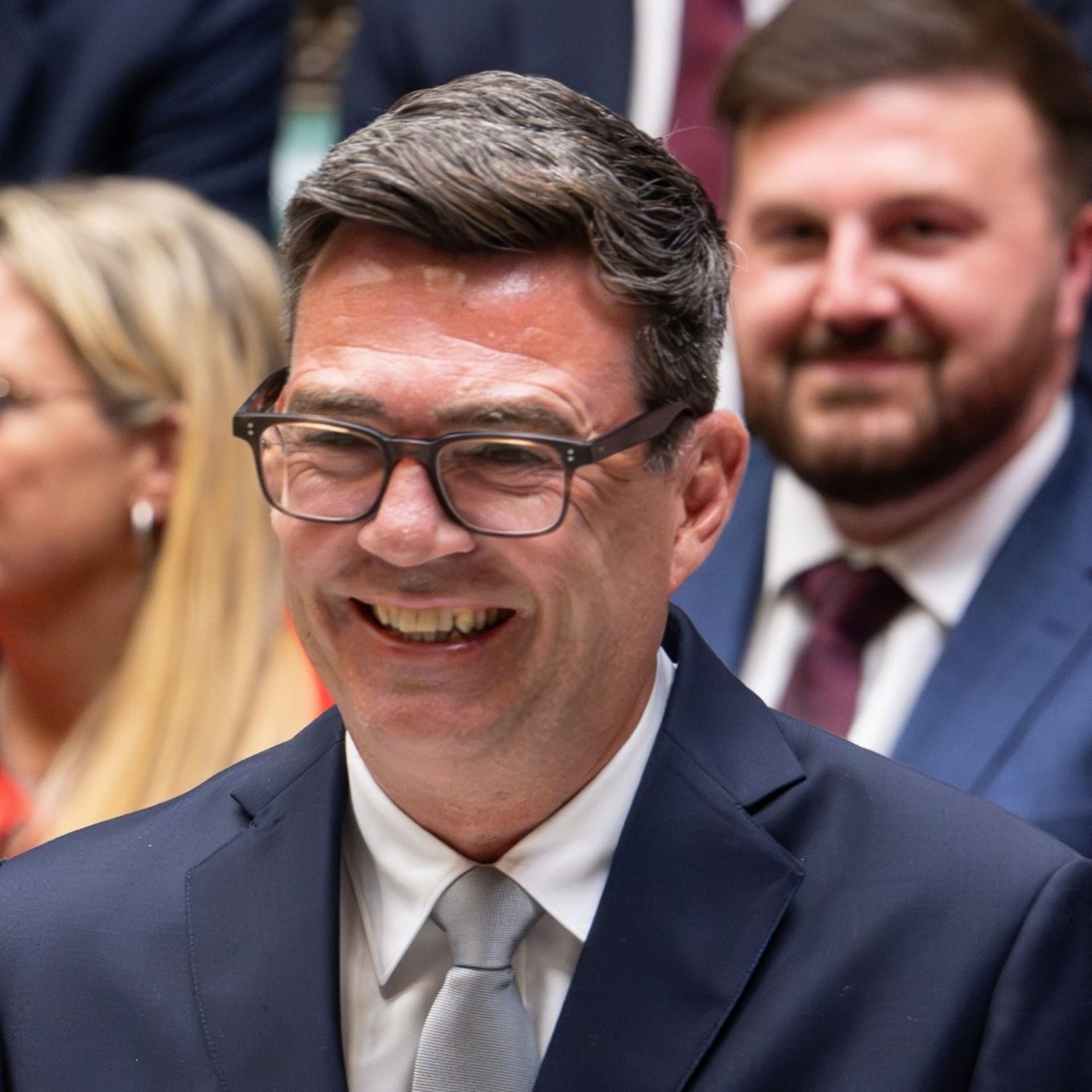
The Global News Podcast brings you the breaking news you need to hear, as it happens. Listen for the latest headlines and current affairs from around the world. Politics, economics, climate, business, technology, health – we cover it all with expert analysis and insight. Get the news that matters, delivered twice a day on weekdays and daily at weekends, plus special bonus episodes reacting to urgent breaking stories. Follow or subscribe now and never miss a moment. Get in touch: globalpodcast@bbc.co.uk Photo: Andy Burnham being sworn in as an MP in London, after winning the Makerfield by-election Credit: House of Commons/PA Wire