
In short
Global News Podcast Summary
Episode Title
Winter Olympics Disrupted by Protests and 'Sabotage'
Episode Overview In this episode, the Global News Podcast, hosted by Paul Moss, covers significant global current affairs, highlighting disruptions at the Winter Olympics in Italy due to protests and potential sabotage. The episode also discusses various political and social issues across different countries, providing expert analysis on these complex matters.
---
Key Topics Covered
- Winter Olympics in Italy
- Protests:
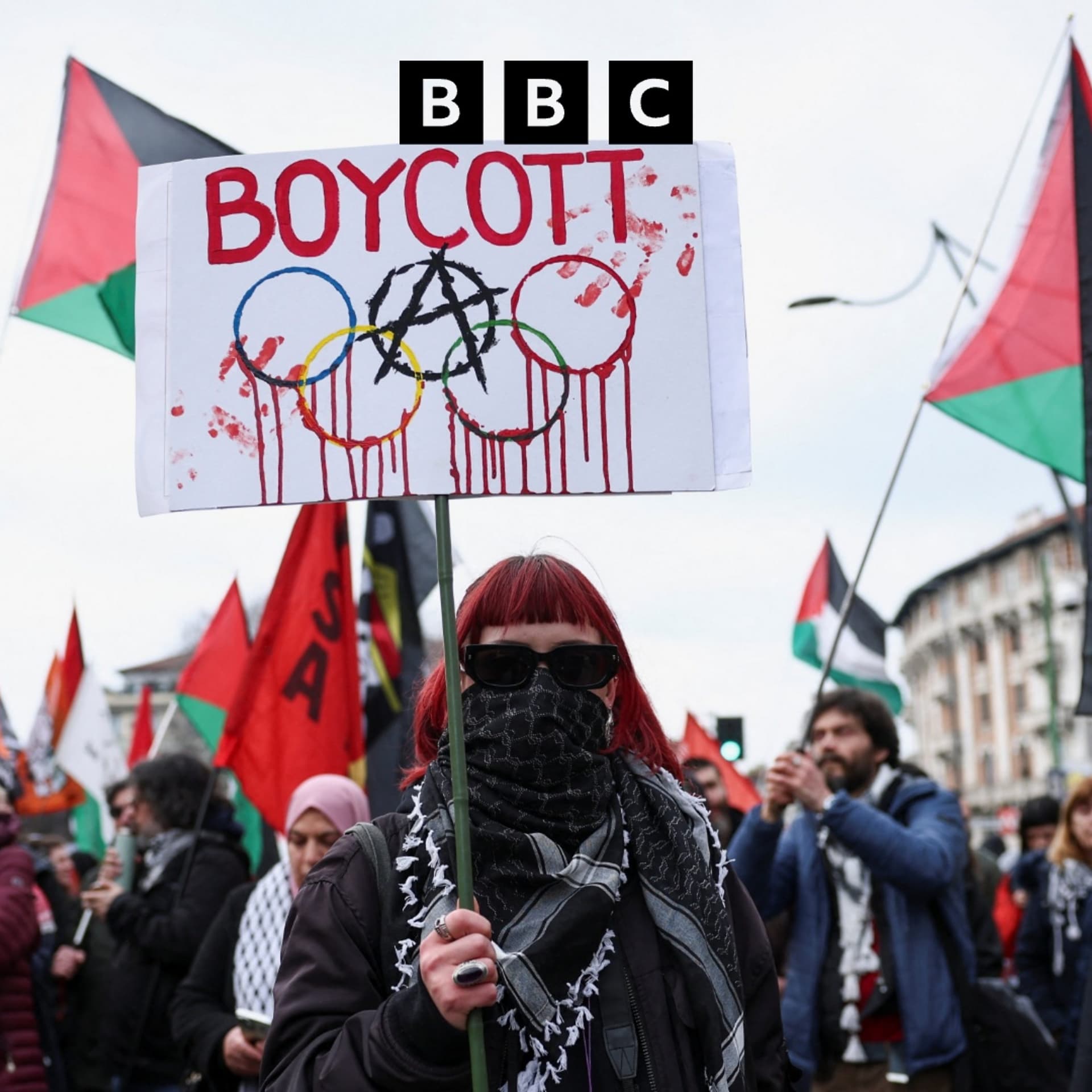
- Violent protests erupted in Milan against the Olympics, organized by a group called the Unsustainable Olympics Committee.
- Participants expressed concerns over the environmental impacts of Olympic venues, leading to clashes with police using tear gas and water cannons.
- Sabotage:
- Authorities reported incidents on the Italian rail network, including severed cables and a fire at a switch box, causing mass delays.
- The government is investigating the incidents, considering parallels to earlier events during the Paris Olympics.
- Jack Lang's Resignation
- Veteran French politician Jack Lang resigned as head of the Arab World Institute amid revelations of his connections to Jeffrey Epstein.
- Lang’s reputation has suffered due to financial connections and social interactions with Epstein, although no direct criminal allegations have been suggested against him.
- France's Demographic Issues
- The French government is encouraging citizens to have more children, citing a historical decline in birth rates.
- A controversial campaign includes sending letters to 29-year-olds, urging them to consider their fertility.
- Medical Milestone in Spain
- Spain conducted the world’s first face transplant from a deceased woman who consented to organ donation before assisted dying.
- The operation was facilitated by the unique opportunity to prepare extensively due to the donor's prior arrangements.
- International Relations and Conflicts
- President Zelensky of Ukraine indicated that the US aims for a peace deal with Russia by June, amidst ongoing military actions and severe attacks on Ukrainian energy infrastructure.
- The episode highlighted the humanitarian impact of the war, including the harsh winter conditions faced by civilians.
- Political Developments in Thailand
- Voting is underway for a general election in Thailand, with the ruling Conservative Party facing stiff competition from the reformist People’s Party.
- Concerns persist over the political influence of unelected bodies on election outcomes.
- Elon Musk's AI Plans
- Elon Musk proposed the idea of placing AI data centers in space, claiming they could be powered by solar energy.
- Experts expressed skepticism regarding practical and economic challenges of such a concept.
- Washington Post Leadership Changes
- The Washington Post CEO, Will Lewis, stepped down following mass layoffs at the publication, highlighting tensions among staff regarding management decisions.
- Cultural Insights on Iranian Cinema
- An exhibition in London showcases the Iranian new wave cinema, emphasizing its historical significance and resonance with contemporary societal issues.
- Iranian Protests Abroad
- Protests by Iranian expatriates continue in the US and Europe, demanding acknowledgment of the ongoing struggles faced by people in Iran against governmental oppression.
---
Key Takeaways
- Environmental Concerns: Protests against large international events are increasingly tied to climate activism and sustainability issues.
- Political Accountability: Scandals surrounding high-profile figures show the interconnectedness of politics and personal actions.
- Demographic Strategies: Governments are looking for innovative ways to address declining birth rates, though responses may vary among citizens.
- Technological Aspirations vs. Reality: Musk’s ambitious plans for space-based technologies face significant skepticism from the scientific community.
---
Conclusion This episode of the Global News Podcast provides a comprehensive overview of pressing global issues, from sports and environmental concerns to political scandals and technological innovations. The discussions reflect a world grappling with complex challenges and the pursuit of sustainable solutions amidst turbulence.
Contact Information For further inquiries or to provide feedback, listeners can reach out via email at globalpodcast@bbc.co.uk.
Written by AI. May contain mistakes. Listen to the episode to check what was said.
Chapters
Tap a time to open that second in VOMain Stories Overview
1:08 to 1:52
An overview of significant news stories, including sabotage and layoffs.
“I'm Paul Moss and in the early hours of Sunday the 8th of February, these are our main stories.”
Protests at the Winter Olympics
1:52 to 2:38
Discussion of protests during the Olympics and the political atmosphere.
“This gave us a unique opportunity, which is having enough time in order to prepare the surgery.”
Unsustainable Olympics Committee
2:38 to 4:03
Details on activist protests against the environmental impact of the Olympics.
“Scores of people gathered in Milan on Saturday afternoon.”
Sabotage and Rail Network Issues
4:03 to 5:10
Examination of sabotage incidents affecting Italian railways linked to protests.
“Saturday also saw a suggestion that the railways in Italy have been sabotaged in several places.”
Jack Lang's Controversial Connections
5:10 to 6:41
Exploration of Jacques Lang's ties to Jeffrey Epstein and political repercussions.
“which they blame on Russia, targeting foreign ministry websites, some of the Olympic Games website as well.”
Pressure on Jacques Lang
6:41 to 7:58
Discussion of the growing pressure on Lang amid criminal inquiries.
“It's quite clear that that was the case, because Epstein would constantly be in touch with Lang when he came to Paris.”
France's Fertility Initiative
7:58 to 10:21
Details on France's new letter initiative aimed at encouraging childbirth.
“And at a time when France wants to boost its standing around the world and wants to be squeaky clean, it was clear that the pressure on him to go was very, very strong.”
Innovative Face Transplant Procedure
10:21 to 13:00
Insight into a groundbreaking face transplant procedure and its unique circumstances.
“Spain has been a global leader in organ transplants for more than three decades, with Valdebron Hospital in Barcelona leading the way.”
Future of Facial Transplants
13:00 to 14:00
Discussion on the potential advancements in facial transplant procedures.
“In years to come, probably this will be just history.”
Ukraine's Ongoing Conflict and Challenges
14:34 to 16:30
Discussion on the grim situation in Ukraine amid ongoing conflict and challenges in peace talks.
“Listen on BBC.com or wherever you get your podcasts.”
Show all 17 chapters
Impact of Russian Attacks on Ukrainian Infrastructure
16:30 to 19:07
Reporter insights on the impact of Russian missile strikes on Ukraine's energy infrastructure during winter.
“This is a level of attack that no terrorist in the world has ever allowed themselves to carry out, and Russia must feel the response of the entire world.”
Thailand's Election and Political Landscape
19:07 to 21:04
Coverage on the early election in Thailand and the challenges faced by reformist parties.
“In fact, I think the mood is actually hardening and the anger at Russia has increased in recent times, is my assessment.”
Elon Musk's Space Data Center Plans
21:04 to 25:56
Discussion on Elon Musk's proposal to establish AI data centers in space and the skepticism surrounding it.
“Thailand's once-dynamic economy has ground to a halt, and opinion polls suggest the latest incarnation of the reformers, the People's Party, will win again.”
Challenges at The Washington Post
25:56 to 27:22
Analyzing recent workforce cuts at The Washington Post and the impact of leadership decisions.
“Jeff Bezos is another tech billionaire who's been in the news, though it's matters terrestrial that concern the owner of Amazon.”
Iranian Protests and Global Solidarity
27:22 to 28:06
Report on ongoing protests in Iran and demonstrations by Iranians abroad in support of reform.
“They may have been shot down on the streets of Iranian towns and cities, but protests against the country's rulers continue abroad.”
Protests and Political Expressions in Iran
28:06 to 30:02
Learn about the recent protests in Iran and the role of cinema in expressing dissent.
“and mainly these people here were also chanting, showing their support for the former Crown Prince, Rezaf Ahlevi.”
The Evolution of Iranian Cinema
30:02 to 30:43
Explore the characteristics of the Iranian New Wave and its impact on cinema today.
“Stories about class repression, sexuality, freedom of expression.”
Transcript
Automatic transcript. May contain errors.0:00This BBC podcast is supported by ads outside the UK.
0:30World Service. Listen now wherever you get your BBC podcasts.
1:00Listen on BBC.com or wherever you get your podcasts.
1:07This is the Global News Podcast from the BBC World Service. I'm Paul Moss and in the early hours of Sunday the 8th of February, these are our main stories. The Italian authorities denounce what they call serious sabotage on the rail network, linking the incidents to the start of the Winter Olympics. The US has apparently insisted that a peace deal on Ukraine be reached by the end of June and the Washington Post's chief executive is stepping down days after the newspaper announced mass layoffs. Also in this podcast, the French government is sending 29-year-olds a letter urging them to have children and a medical milestone.
1:52She offered to donate her face. This gave us a unique opportunity, which is having enough time in order to prepare the surgery. A woman offers to donate her face for a transplant before she undergoes euthanasia.
2:10On Friday, the Winter Olympics was all about sport and celebration. The opening ceremony in Milan saw music for Mariah Carey, and this being Italy, from Puccini and Verdi as well. And yet politics did intrude. The audience loudly booed the US Vice President J.D. Vance and the Israeli Olympics team. And A2 has seen all the talk of sport and universal brotherhood once again rudely interrupted. There were reports of sabotage on the Italian rail network linked to the Games. And then there was this.
2:49demonstrators out on the streets of milan blue whistles and chanted slogans against the olympics presence and what began peacefully then deteriorated into violent clashes with riot police so what exactly is it that these protesters object to about the winter olympics I asked our global affairs reporter, Ambarasan Ethirajan. Scores of people gathered in Milan on Saturday afternoon. Basically, they were all part of this big group called Unsustainable Olympics Committee. This was an activist organisation. They had mobilised students, housing activists, many sports groups, all from the northern part of Italy.
3:32And they were against what they called the environmental impact of these Olympic venues. When you build such a huge venue, it is causing damage to the surroundings. When they reached the Olympic village, violent activities were happening. They were throwing fireworks and then police used water cannon as well as tear gas to disperse the group. And then only one group was firing these fireworks as well as attacking police vents. The other group, they were protesting peacefully and they wanted to highlight how unsustainable these games could be. Saturday also saw a suggestion that the railways in Italy have been sabotaged in several places.
4:10Do we know if there's any connection with the protests you're talking about? The authorities are talking about three incidents. One was about a box containing a switch was set on fire. This is near the city of Pesero. And the second one was where they saw severed cables near the city of Bologna and a very rudimentary explosive device in another location. So that actually caused more than two and a half hours of delay in these high-speed trains. They were suspended for a while. But later on Saturday afternoon, they started resuming the service. But the ministers are taking this very seriously. What they are saying is that this echoes what happened in France during the Paris Olympics in 2024, when the high-speed network was targeted by a group of people, but the officials were blaming various groups, including anarchists and extreme left.
5:00And they say probably the similar kind of thing was happening, but the ministers in Italy saying that it will not deter them and the Olympics will continue. This also comes two days after the Italian authorities were talking about cyber attacks, which they blame on Russia, targeting foreign ministry websites, some of the Olympic Games website as well. Ambarasan Ethirajan. There can't be many people who've served as the country's culture minister, but also been sent to North Korea to talk about its nuclear missile programme and advise the United Nations on how to prosecute Somali pirates. But then Jack Lang was a giant of the French political and cultural scene over several decades, which makes it all the more pointed that he's now been brought down by his relationship with Jeffrey Epstein.
5:48He joins the ever-growing list of people whose reputations have been tarnished or ruined by their relationship with a late sex offender. Our Paris correspondent Hugh Schofield has the details. Anyone who knows anything about modern French politics and history will know about Jacques Lang. He's an incredibly permanent figure in the French political landscape. He's now 86. He's been around since the 80s as Mitterrand's socialist culture minister back then. So a very, very well-known figure, now head of this Arab World Institute. And when the files were revealed a week or so ago, it was quickly seen that Jack Lang's name keeps coming up.
6:27It comes up nearly 700 times in the new files. And his daughter's too, Caroline, who was a figure in the film world. Now, there's no suggestion for a second that either of them had anything to do or knowledge of his sexual activities. But there is a suspicion that they were, A, very friendly with him. It's quite clear that that was the case, because Epstein would constantly be in touch with Lang when he came to Paris. He had a home here. And then there's more because it's clear also that between Caroline Lang and Epstein, there was some kind of financial arrangement to set up an offshore company in the American Virgin Islands, which was funded by Epstein in theory to buy French artworks.
7:06works. Plus, there's indication that at some point Jacques Lang intervened with Epstein to try to arrange the sale of a of a Riyadh, a fancy house in Morocco, and that he got$60 ,000 from Epstein to help fund a film about his political career, none of which amounts to criminality. But it's all highly embarrassing. And the pressure has been building on Jacques Lang to step down from this sort of diplomatic post, which he's got kind of permanently at the head of the Arab World Institute. And on top of that, you know, there is now a preliminary criminal inquiry. I mean, it doesn't necessarily mean that it will end up as a full criminal kind of prosecution, but the prosecutor's office is looking into suspicions that maybe there's something criminal that went on financially between the Langs and Epstein.
7:52I imagine regarding this offshore account in the Virgin Islands. So all in all, highly embarrassing. And at a time when France wants to boost its standing around the world and wants to be squeaky clean, it was clear that the pressure on him to go was very, very strong. Hugh Schofield and staying in France, 29-year-olds there will soon be getting a letter in the post reminding them that their biological clock is ticking. The French government, like others around the world, is urging people to have more children, as official data shows France recorded more deaths than births last year for the first time since the Second World War.
8:28But the new scheme hoping to buck that trend is not going down well as our reporter Stephanie Prentice told Anka Desai. Well the scheme to tackle fertility issues in France has been in the works for a while at the Ministry of Health but it's just been revealed, well aspects at least. One of 16 new measures is this letter that will arrive when people turn 29 reminding them of their biological clock and basically give them an urge to say, get on with it if you want to have children. Its goal, it says, to tackle what it calls the if only I had known mentality, which some young people in France have been reacting to.
9:09So they're saying this doesn't make any sense. They're saying sending a letter to remind them isn't necessary. French influencers have also been commenting, mostly humorously, saying lack of awareness isn't the issue, they haven't got any money, they haven't got job security, with one viral comment saying people don't want to be pressured, saying Macron et la compénie d 'enfants, pointing out that the French president, Emmanuel Macron, doesn't have biological children. Now, what's the reaction been as well, the broader reaction? Well, this is part of a broader plan to support people in France.
9:41It estimates one in eight couples have fertility issues. The letter includes a reminder that egg freezing can be done for free there between certain ages. It says it wants to make France a world leader in fertility research. So that's been welcomed. Before we came on air, I spoke to a professor at the University de Paris. She's called Stéphanie Tartin. She specialises in public health policy. She thinks it's very complicated. She says the plan ignores fundamental issues in French society. She described a kind of tangle of societal, economic and behavioural reasons. And she said that young women are basically opting out of having children.
10:16Her prediction is that the birth rate will continue to decline. Stephanie Prentice. Spain has been a global leader in organ transplants for more than three decades, with Valdebron Hospital in Barcelona leading the way. And this week, the staff there have marked another world first in the way a face transplant was conducted. The recipient was identified only by her first name, Kame. She'd suffered facial tissue necrosis, which affected her ability to speak, eat and to see. The donor was a woman who'd been terminally ill and who opted for assisted dying, and that made the operation easier to perform, as Dr.
10:55Juan Peribaratt explained to my colleague, Julian Warica. She commented that she wanted to donate all her organs and tissues, and that the transplant coordinators had an interview with her. She also offered to donate her face if there was anyone that really needed that in order to get a face transplantation. And I think it's a maximum expression of love and generosity. And she was smiling during all that process. So I think the intensity of all feelings and emotions and everything during that time was very, very high. We then obviously start to talk about the recipient. What was the actual medical procedure that you then had to carry out and the enormity of it and the scale of it?
11:37What went on? This also gave us a unique opportunity that no one else had carried out before in the world, which is having enough time in order to prepare the surgery, making plans with my medical engineers in terms of how to cut the bone to be a perfect match. Also, we had time to go to the anatomy department to make all the rehearsals of every tricky steps of the surgery and also prepare all the teams that had to be involved in that because with euthanasia it's probably the most complex type of multi-organ donation that exists. Tell us about the recipient now. How is she doing? She's doing quite well.
12:14She has to cope now with some difficulties like any other transplant patient. But now she's in the rehabilitation phase. Now she has recovered sensation in all her transplant area. So all the transplanted tissues that went to her face now have full sensation. and now she's regaining movement in all the facial muscles. Where does this take the potential for these kinds of procedures in the future? I have a figure in front of me here, 54 facial transplants have been performed worldwide, six in Spain, three by your team. Where does this go? How much more widely could this apply in the near future, do you think?
12:54My impression is that we are going to advance a lot in terms of regenerative medicine and biology, also in terms of bioengineering. In years to come, probably this will be just history. Dr. Juan Pérez Barrett from Barcelona's Val de Hebron Hospital. Still to come in this podcast, could Elon Musk really put AI data centres in space? It is not impossible to put a single data centre into space, but it's never going to be a better idea than building it here on Earth. and the enduring appeal of Iran's new wave cinema.
13:40The Interview. The best conversations from across the BBC. Today we are spending trivians on war and peanuts on peace. With the people shaping our world. You're making decisions that will have long-term consequences for the levels of greenhouse gases in the atmosphere. Wind power in the United States has been subsidized for 33 years. Solar for 25 years. That's enough. The interview from the BBC World Service. Listen now wherever you get your BBC podcasts. America is changing. And so is the world. But what's happening in America isn't just a cause of global upheaval. It's also a symptom of disruption that's happening everywhere.
14:22I'm Asma Khalid in Washington, D.C. I'm Tristan Redman in London, and this is The Global Story. Every weekday, we'll bring you a story from this intersection, where the world and America meet. Listen on BBC.com or wherever you get your podcasts. I am Nina Khrushcheva, the great-granddaughter of Nikita Khrushchev, the leader of the Soviet Union in 1962. And I'm Max Kennedy, the nephew of U.S. President John F. Kennedy. We explore what was a terrifying moment in history. The story of the Cuban Missile Crisis. How close the world came to nuclear war. And what they had to do to pull it back from the brink.
15:03The bomb, Kennedy and Khrushchev. All episodes available now, wherever you get your BBC podcasts. The headlines never stop and it's harder than ever to tell what's real, what matters and what's just noise. That's where Pod Save America comes in. I'm Tommy Vitor, and every week I'm joined by fellow former Obama aides Jon Favreau, Jon Lovett, and Dan Pfeiffer to break down the biggest stories, unpack what they mean for the future of our democracy, and add just enough humor to stay sane along the way. You'll also hear honest, in-depth conversations with big voices in politics, media, and culture like Rachel Maddow, Gavin Newsom, and Mark Cuban that you won't find anywhere else.
15:39New episodes drop every Tuesday and Friday with deep dives every other weekend. Listen wherever you get your podcasts, watch on YouTube, or subscribe on Apple Podcasts for ad-free episodes.
15:53When it comes to the war in Ukraine, there have been plenty of grim predictions that the conflict will go on and on. The two sides irreconcilable, Russia's demands unacceptable. And yet it seems Donald Trump wants the whole thing over and done with by June. According to President Zelensky, the US administration has set June as a deadline because it wants the situation sorted out well ahead of America's midterm elections in November. Mr. Zelensky made clear the challenge of reaching a peace deal, not least that this new deadline was imposed just as Russia launched one of its most ferocious drone and missile attacks yet on Ukraine's energy infrastructure.
16:35This is a level of attack that no terrorist in the world has ever allowed themselves to carry out, and Russia must feel the response of the entire world. Russia must demonstrate that they don't just care about striking and the war itself, but also truly about the negotiations that are currently ongoing and that they must deliver results. But until that happens, it is of course the ordinary citizens of Ukraine who bear the brunt of Russia's attempt to destroy its power supply. People like Katerina Melofyeva, a journalist living in Kiev. At home, the heating is completely cold. The radiator is cold.
17:13You could see the steam coming out of your mouth because it's so cold. And yeah, so basically the situation is difficult for all members of this part of the city. And of course, there is no hot water because it depends on the electricity. The electricity will have like three, four hours a day. That's not enough. So everyone just hope for the spring time, because at least in springtime, you know, the power outages in general, it's not as frightening as actually staying without heat. It's really, it's really hard. Talks to end the war in Ukraine were held in Abu Dhabi this past week, but with little sign of progress there due to reconvene in Miami.
17:56And President Zelensky has now confirmed that he will be sending a delegation. But what the president has repeatedly made clear is that the country needs more military equipment to fend off for Russian invasion, which for now remains ongoing. And that was made all too clear by the latest attack on energy infrastructure, as Sarah Rainsford explained from Kiev. It's another large scale attack and a large number of those missiles and drones making it through Ukraine's air defences, which I think is significant because it points to what Ukraine keeps saying, which is that their air defences lack enough missiles to defend the big cities and the power plants in particular that are being repeatedly and relentlessly targeted.
18:38Yesterday, we went to visit the remains essentially of a thermal power plant here in Kyiv that had been hit with five ballistic missiles in recent days in just one night. And the damage there is extraordinary. I mean, just a massive mess of rubble and metal. And the power plant itself was only producing heating and hot water at the time to nearby apartment blocks. So, you know, the laws of war are pretty clear about striking civilian infrastructure, but Russia is doing that repeatedly. But at the same time, you know, despite these Russian attacks on the energy infrastructure, the difficult conditions in the midst of a very bitterly cold winter here, I haven't seen any sign that the mood for compromise is increasing.
19:19In fact, I think the mood is actually hardening and the anger at Russia has increased in recent times, is my assessment. But in terms of the concrete stuff, well, it's interesting that President Zelensky He says that Russia has stopped kind of its pseudo historical lectures and instead it is focused on on the actual discussions and that they are discussing, for example, how any ceasefire, if it were ever agreed upon, would be monitored. You know, who would be responsible for that kind of real concrete stuff. But as for where that ceasefire line would ever be drawn, there is still total disagreement on that point.
19:51And of course, that is the big the big issue, you know, the issue of territory. Interestingly, I think Mr Zelensky said there was a discussion or kind of a suggestion that at some point the hardest decisions, the hardest stuff, particularly, of course, that issue of territory, would eventually have to be decided by the presidents of Ukraine and Russia, as well as Donald Trump. Sarah Rainsford. As we record this podcast, voting is taking place in Thailand. in an election called early after a series of coalition governments collapsed. The ruling Conservative Party faces tough opposition from the People's Party.
20:27The latter is ahead in the polls and has the support of young urban voters who are calling for political reforms. But as Jonathan Head reports, winning the most votes doesn't necessarily mean you get to rule the country. As in the last election three years ago, this one pits a youthful party advocating far-reaching reforms against conservative forces and the populist movement headed by former Prime Minister Taksin Shinawatt. Three years ago, the young reformers won, only to be barred from forming a government by the military-appointed Senate and then dissolved by the notoriously interventionist Constitutional Court.
21:03That led to a series of unstable coalitions in which two prime ministers were dismissed by the same court. Thailand's once-dynamic economy has ground to a halt, and opinion polls suggest the latest incarnation of the reformers, the People's Party, will win again. Although the current Conservative Prime Minister, Anitin Chan-Wirukun, is mounting a strong challenge by appealing to nationalist sentiment in the wake of the two short border wars with Cambodia last year. But everyone here knows winning entire elections is never enough. Powerful, unelected bodies like the courts will ultimately decide who actually runs this country.
21:39Jonathan Head. There were a few people scratching their heads when Elon Musk announced he was merging two of his companies. XAI is the artificial intelligence wing of his corporate empire, while SpaceX, of course, focuses on space rockets. So what's the connection? Well, it seems Mr. Musk wants to take the data centres used for AI and send them into orbit, where he believes they can be powered by the unfiltered energy of the sun. Science fiction? Not at all, the tech billionaire insisted. It's a development that's just round the corner. It's a no-brainer for building solar-powered AI data centres in space.
22:19The lowest cost place to put AI will be space, and that'll be true within two years, maybe three, three at the latest. It should be said that Elon Musk's plans for space have often been dismissed, only for some of them at least to materialise just the way he promised. And yet this latest plan has met with particular scepticism. Among the doubters is Adam Michael Becker, an American astrophysicist who spoke to my colleague James Kumarasamy. There are a lot of reasons why data centres in space make absolutely no sense. And at the top of that list is a very basic fact about space, which is that the best insulator is a vacuum.
23:03So putting a data center in space is like putting a giant blanket around it. And data centers need to be kept nice and cool. Elon Musk's answer to that, certainly when he was speaking at the World Economic Forum, is that you have a radiator pointed away from the sun. It would be massive. And that's going to be extraordinarily difficult to deploy in space for just one data center, much less, you know, a lot of them. There are also many other problems. For example, the radiation levels are much higher in space and radiation wreaks havoc on digital data. If you ever want to upgrade the hardware in the data center, congratulations, you have to do a spacewalk.
23:48But I suppose one could ask, are they insurmountable problems, given, you know, at some point in our history, the idea of even going into space was thought to be fanciful. Are these insurmountable, necessarily? It is not impossible to put a single data centre into space, but it's never going to be a better idea than building it here on Earth. Well, you've addressed the economic and the practical, but there is another aspect to this, is there not? And one that you're interested in, which is the philosophical one, the why, not just Elon Musk, but others are saying, look, we have to look to the stars for our future.
24:28You know, Musk talks a lot about putting a million people on Mars by 2050 in order to create a backup for humanity that will survive in the event of a massive disaster here on Earth, like an asteroid strike. This is possibly the stupidest idea that I've ever heard. I think that for someone like Musk or, you know, someone like Jeff Bezos, who's espoused similar ideas, there's two things that work there. I think two main things. First, that they are afraid of death and want to transcend all limits and see going to space as part of that project. And second, they watch too much science fiction and misunderstood it.
Read the full transcript
25:11Is your concern then that some of this is displacement activity for actually addressing the problems on Earth? Yeah, absolutely. The way that Musk talks about Earth is like it's doomed. You know, yeah, we've got problems here on Earth, but none of them are nearly as difficult to solve as the problem of getting a large number of people to be able to live on the surface of Mars. And then take a look at somebody like Jeff Bezos. He thinks that, you know, the biggest problem that we're facing is that we're going to use up all the resources on Earth. And so we have to go to space to have access to more energy.
25:49We could also just find better ways of using the energy and resources here on Earth. Adam Michael Becker. Jeff Bezos is another tech billionaire who's been in the news, though it's matters terrestrial that concern the owner of Amazon. Mr Bezos stands accused of deliberately killing off the Washington Post, the newspaper he bought in 2013. The Post announced this week it was cutting a third of its workforce and Saturday saw the chief executive, Will Lewis, resign. Rory Gallimore has this report. The Washington Post's official slogan is democracy dies in darkness. Many of its staff say these sweeping cuts made a mockery of that motto.
26:29Much of their anger has been directed at the paper's billionaire owner Jeff Bezos and the man he appointed as its publisher two years ago, Will Lewis. The British journalist has proved a divisive figure at the Post. Under his leadership, it's failed to reverse heavy financial losses and tens of thousands of readers cancelled their subscriptions when Mr Bezos stopped the paper from endorsing Kamala Harris during the last presidential election. Mr Lewis reportedly angered staff even further by not showing up to the video call announcing the job losses. The task of explaining the cuts was left to the Post's executive editor, who said the decision was painful, but insisted it would bring stability and help reinvent a struggling business model.
27:09Mr Lewis has now told colleagues it's the right time to go. He said difficult decisions had been made to ensure the Post could keep delivering high-quality news. He's been replaced by the chief financial officer. Rory Gallimore. They may have been shot down on the streets of Iranian towns and cities, but protests against the country's rulers continue abroad. Saturday saw demonstrations in Berlin and in the United States. A nationwide gathering of Iranian-Americans was held in Washington, D.C., from where BBC Persia's Kayser Joneidi sent this report. A group of Iranians gathered here at the National Mall in Washington, D.C.
27:50on Saturday to show support for the protesters inside the country as they were chanting slogans against the leadership of the Islamic Republic and the Khamenei.
28:05The rally was organized by pro-monarchist groups, and mainly these people here were also chanting, showing their support for the former Crown Prince, Rezaf Ahlevi. You could see them holding flags of the pre-revolutionary Iran as well as the American flag and the Israeli flag. The protesters were also chanting in English, calling on President Trump to take action against the Iranian regime. Trump at no! Trump at no! I have to mention that several of these protesters who I've talked to were saying that they were not very happy that the U.S. administration is engaged in diplomatic talks with the Iranian government at this moment.
28:53Despite the obvious focus on protest and politics, critics of Iran's government have often expressed their views through the arts, and particularly cinema. Indeed, a feature film about dissidents there, It Was Just an Accident, has received two nominations for this year's Oscars. But the history of Iranian cinema long precedes the country being an Islamic republic, and a festival has just opened here in London which is screening some of those earlier films. The curator, Ehsan Hoshpakt, told us they feel particularly resonant at these uncertain times. In the late 50s and early 60s, there was this international movement in cinema of renewing the language of film.
29:34We are familiar with the examples from around the world, France, Japan, Czechoslovakia, and I think the least known of these cinematic new waves was the Iranian new wave of the early 60s up to the time of the revolution. The films were extremely bold. They were pushing the language of the film to the extent that even films after the revolution couldn't match the same level of innovation and intensity as the films made in a period. Stories about class repression, sexuality, freedom of expression. And I think the most distinctive aspect of the Iranian New Web is the use of language and poetry, 1400 years of poetry, and also the use of allegory.
30:23Today, I think some filmmakers totally reject that because they want something head on, because the cinema has now become perhaps more militant than what it was back in the 60s and 70s. Still, the beauty of allegory, the timelessness that allegory gives you, because it's wrapped in many different layers of image and language. These are the origins of a cinema of dissent, of a cinema of rebellion. Iranian-born filmmaker Ehsan Khoshbakt. And that's all from us for now. If you want to get in touch, you can email us at globalpodcast at bbc.co.uk. You can also find us on X at BBC World Service. Use the hashtag hashglobalnewspod.
31:09And don't forget our sister podcast, The Global Story, which goes in-depth and beyond the headlines on One Big Story, available wherever you get your podcasts. This edition of The Global News Podcast was mixed by Shalota Hadroy-Tozhimska and the producer was Muzaffar Shakir. The editor is Karen Martin. I'm Paul Moss. Until next time, goodbye.
31:36The Interview. The best conversations from across the BBC. Today we are spending trivians on war and peanuts on peace. With the people shaping our world. You're making decisions that will have long-term consequences for the levels of greenhouse gases in the atmosphere. Wind power in the United States has been subsidised for 33 years. Solar for 25 years. That's enough! The Interview from the BBC World Service. Listen now wherever you get your BBC podcasts.
From the publisher
The Winter Olympics in Italy are disrupted by violent protests and the authorities launch an investigation after severed cables cause mass delays on the railway network. Also: The veteran French politician, Jack Lang, resigns as head of the Arab World Institute in Paris over his links to the late American sex offender, Jeffrey Epstein. France urges people to have more children to boost the population because there were more deaths than births last year. Spain carries out the world's first face transplant from a woman who gave consent before she underwent an assisted dying procedure. President Zelensky says the US wants a peace deal agreed between Russia and Ukraine by June. Voting is underway in a general election in Thailand, where the governing Conservative Party faces tough competition from the People’s Party. Critics are sceptical about Elon Musk's plans to build AI data centres and send them into space. Washington Post CEO, Will Lewis, steps down after mass layoffs at the newspaper, and a new exhibition about Iran's new wave of cinema opens in London.
The Global News Podcast brings you the breaking news you need to hear, as it happens. Listen for the latest headlines and current affairs from around the world. Politics, economics, climate, business, technology, health – we cover it all with expert analysis and insight. Get the news that matters, delivered twice a day on weekdays and daily at weekends, plus special bonus episodes reacting to urgent breaking stories. Follow or subscribe now and never miss a moment. Get in touch: globalpodcast@bbc.co.uk