
In short
Global News Podcast - Episode Summary
Episode Title
Woman Shot Dead by US Immigration Agent
Episode Overview This episode of the Global News Podcast addresses several pressing news stories, with a primary focus on the fatal shooting of Renee Good, a 37-year-old woman, by an Immigration and Customs Enforcement (ICE) agent in Minneapolis. The episode explores the conflicting narratives from local officials and the Trump administration regarding the incident, as well as other global news topics.
---
Main Topics Covered
- Shooting of Renee Good
- Incident Summary: Renee Good was shot by an ICE agent while attempting to flee in her vehicle. Local authorities claim she was not the target of an immigration enforcement operation.
- Contrasting Accounts:
- Trump Administration's Narrative: Homeland Security claims Good was obstructing law enforcement and attempted to run over officers, justifying the agent's use of deadly force.
- Local Reaction: Minneapolis Mayor Jacob Frey and Minnesota Governor Tim Walz vehemently dispute the federal account, indicating that such actions exacerbate community distrust and chaos.
- Public Response: Vigils and protests erupted in response to the shooting, highlighting the broader tension between local communities and federal immigration enforcement.
---
- US-Venezuela Relations
- Oil Sales Agreement: President Trump announced that Venezuela has agreed to use its oil proceeds solely to purchase American goods, marking a significant shift in US-Venezuela relations.
- Economic Analysis:
- Experts highlight that Venezuela's contribution to global oil supply is minimal, questioning the actual impact on oil prices.
- The political implications of these actions are examined, particularly in light of upcoming midterm elections in the US.
---
- Health Study on Weight Loss Medications
- Research Findings: A study indicates that individuals who discontinue weight-loss medications often regain weight much faster than those who lose weight through diet and exercise.
- Key Takeaway: The importance of long-term strategies and support in weight management is emphasized, suggesting that medications are not a sole solution.
---
- Education in Gaza
- Return to School: Following a ceasefire, children in Gaza are returning to makeshift schools after more than two years without formal education due to the ongoing conflict.
- Challenges: Schools face severe infrastructural and supply challenges, yet the resolve of communities to prioritize education shines through.
---
- Death of Aldrich Ames
- Background: Aldrich Ames, a former CIA agent, was responsible for significant intelligence breaches during the Cold War, leading to the execution of multiple Soviet agents.
- Legacy: Discussions focus on the moral implications of his actions and the personal motivations behind them.
---
- Tennis Wild Card Entry Incident
- Unusual Match: Egyptian tennis player Hajar Abdelkader made headlines for an exceptionally poor performance in her wild card entry match.
- Discussion: The incident raises questions about the criteria for granting wild card entries and the responsibilities of tournament organizers.
---
Key Takeaways
- The shooting incident involving Renee Good has sparked significant civil unrest and debate over immigration enforcement practices in the US.
- The geopolitical dynamics between the US and Venezuela highlight the complex interplay of economic and diplomatic strategies.
- The recent health study underscores the necessity for holistic approaches to weight management rather than reliance on medications alone.
- The resilience of Gazan children in pursuing education amid adversity serves as a poignant reminder of the importance of learning.
- Aldrich Ames’ actions continue to evoke discussions about loyalty, ethics, and the personal motivations behind espionage.
- The bizarre nature of the tennis wild card entry incident illustrates the complexities and sometimes arbitrary nature of sports qualifications.
---
Conclusion This episode of the Global News Podcast encapsulates critical current affairs, emphasizing the importance of understanding diverse perspectives and the implications of actions on global and local scales. For more updates, listeners are encouraged to subscribe and engage with the podcast.
Written by AI. May contain mistakes. Listen to the episode to check what was said.
Chapters
Tap a time to open that second in VOMain Stories Overview
0:42 to 1:18
A summary of the main stories covered in this episode, including a shooting incident.
“I'm Chris Barrow and at 4.30 GMT on Thursday 8th January, these are our main stories.”
Renee Good Shooting Incident
1:18 to 2:26
Detailed account of the shooting of Renee Good by an ICE agent, including conflicting narratives.
“These drugs are really helpful in losing weight, but they're not a silver bullet.”
Political Reactions
2:26 to 3:34
Local officials and President Trump's differing responses to the shooting incident.
“ICE agents repeatedly ordered her to get out of the car and to stop obstructing law enforcement, but she refused to obey their commands.”
Video Evidence and Contrasting Accounts
3:34 to 4:25
Discussion about the video evidence of the shooting and contrasting interpretations of events.
“Well, video of this incident, Chris, shows a maroon-colored SUV cutting through a crowd of federal agent vehicles on a suburban street.”
Immigration Crackdown in Minnesota
4:25 to 5:50
The impact of increased ICE presence in Minnesota and reactions from local authorities.
“How can there be two very, very different characterisations of the events that took place when even the video evidence that you suggest that it can be interpreted surely in any one way?”
Trump's Oil Policy on Venezuela
5:50 to 7:24
Analysis of Trump's policy on Venezuelan oil and its expected effects on the market.
“Donald Trump has announced that any money Caracas receives from oil sales will only be used to buy products made in America and that he'll decide how the profits will be divided between the US and Venezuela.”
Geopolitical Dynamics of Oil Supply
7:24 to 9:10
Exploration of geopolitical implications surrounding US control of Venezuelan oil.
“China used to buy most of Venezuela's oil.”
US Interests in Greenland
9:10 to 13:14
Discussion on US desires for Greenland and strategic implications of its resources.
“to invest and the many many years it's going to take to rebuild this industry that's fallen into disuse.”
Trump's Power and Global Order
13:14 to 14:03
Examination of Trump's approach to power and its implications for global relations.
“For more on this story, you can go on YouTube, search for BBC News and click on the logo, and then choose Podcasts and Global News Podcast.”
Trump's Unpredictable Power Dynamics
14:03 to 16:51
Explore how Trump's approach to power is viewed by global leaders.
“And he's moving so quickly that it's causing consternation, I think, not just among adversaries, but among allies as well.”
Show all 17 chapters
Introduction to a Troubling Past
16:51 to 17:57
Understanding the implications of a CIA traitor's history.
“Still to come in the Global News podcast.”
Challenges of Weight Loss Medications
18:39 to 21:24
Insights on the implications of weight loss drugs and their effectiveness.
“Unfortunately that behavioural support whilst they were taking the drugs did not seem to protect them against weight regain later and that suggests that if treatment stops people are going to need some other help.”
Education Resumes Amidst Conflict in Gaza
21:24 to 26:00
Children in Gaza return to school, highlighting their resilience amidst war.
“and the University of Cambridge found that people prescribed the new generation of weight loss drugs may be vulnerable to nutritional deficiencies and muscle loss.”
The Life and Betrayal of Aldrich Ames
26:00 to 28:00
An in-depth look at the life of the CIA traitor and his motivations.
“Aldrich Ames was the worst traitor in the history of the CIA.”
The Moral Dilemma of Aldrich Ames
28:00 to 29:14
Explore the motivations behind Aldrich Ames' betrayal of his country.
“He had a fellow who was a good close friend of his.”
The Wild Card Controversy in Tennis
29:14 to 30:10
An analysis of the unprecedented wild card entry in a tennis tournament.
“Pete Early, the author of Confessions of a Spy, the real story of Aldrich Ames.”
Understanding the Anomalies in Tennis Selections
30:10 to 32:22
Discuss the unusual selection process for tennis players in tournaments.
“James Kumarasamy put that question to Tamara Prenn, a sports writer with the British Daily Mail newspaper.”
Transcript
Automatic transcript. May contain errors.0:00This BBC podcast is supported by ads outside the UK. If journalism is the first draft of history, what happens if that draft is flawed? In 1999, four Russian apartment buildings were bombed, hundreds killed. But even now, we still don't know for sure who did it. It's a mystery that sparked chilling theories. I'm Helena Merriman, and in a new BBC series, I'm talking to the reporters who first covered this story. What did they miss the first time? The History Bureau, Putin and the apartment bombs. Listen on bbc.com or wherever you get your podcasts. This is the Global News Podcast from the BBC World Service.
0:47I'm Chris Barrow and at 4.30 GMT on Thursday 8th January, these are our main stories. The shooting dead of a woman by a federal immigration officer in the US city of Minneapolis has sparked a huge row between the Trump administration and local officials over who's to blame. Donald Trump says Venezuela has agreed to buy only American goods with the money it will receive from a new oil deal. Our international editor gives us his assessment of the changing world order. Also in this podcast... These drugs are really helpful in losing weight, but they're not a silver bullet. So you really need to think about these as part of a much longer-term strategy.
1:28A new study suggests that people who stop taking weight loss jabs put weight back on much more quickly than if they'd been dieting. And in tennis, the wildest of wild cards. Most of her serves to not get over the net. Balls are bypassing her and at one stage she doesn't seem clear on which side of the court to serve. A woman who could barely hit a serve loses almost every single point at a tournament in Kenya.
1:56First to Minneapolis in the United States. Say her name! Renee Good! Say her name! Renee Good! Say her name! The chance of hundreds of people who've been attending a vigil for Renee Good, a 37-year-old woman shot dead in a car by a federal agent from ICE, that's Immigrations and Customs Enforcement. The incident has sparked a row over who was to blame. Homeland Security Secretary Kristi Noem claimed the woman had blocked the road with her car, then tried to run over officers. ICE agents repeatedly ordered her to get out of the car and to stop obstructing law enforcement, but she refused to obey their commands.
2:34She then proceeded to weaponize her vehicle, and she attempted to run a law enforcement officer over. This appears as an attempt to kill or to cause bodily harm to agents, an act of domestic terrorism. The ICE officer fearing for his life and the other officers around him and the safety of the public fired defensive shots. He used his training to save his own life and that of his colleagues. But the mayor of Minneapolis, Jacob Fry, says that account of what happened isn't true and that immigration agents should leave the city. We've dreaded this moment since the early stages of this ICE presence in Minneapolis.
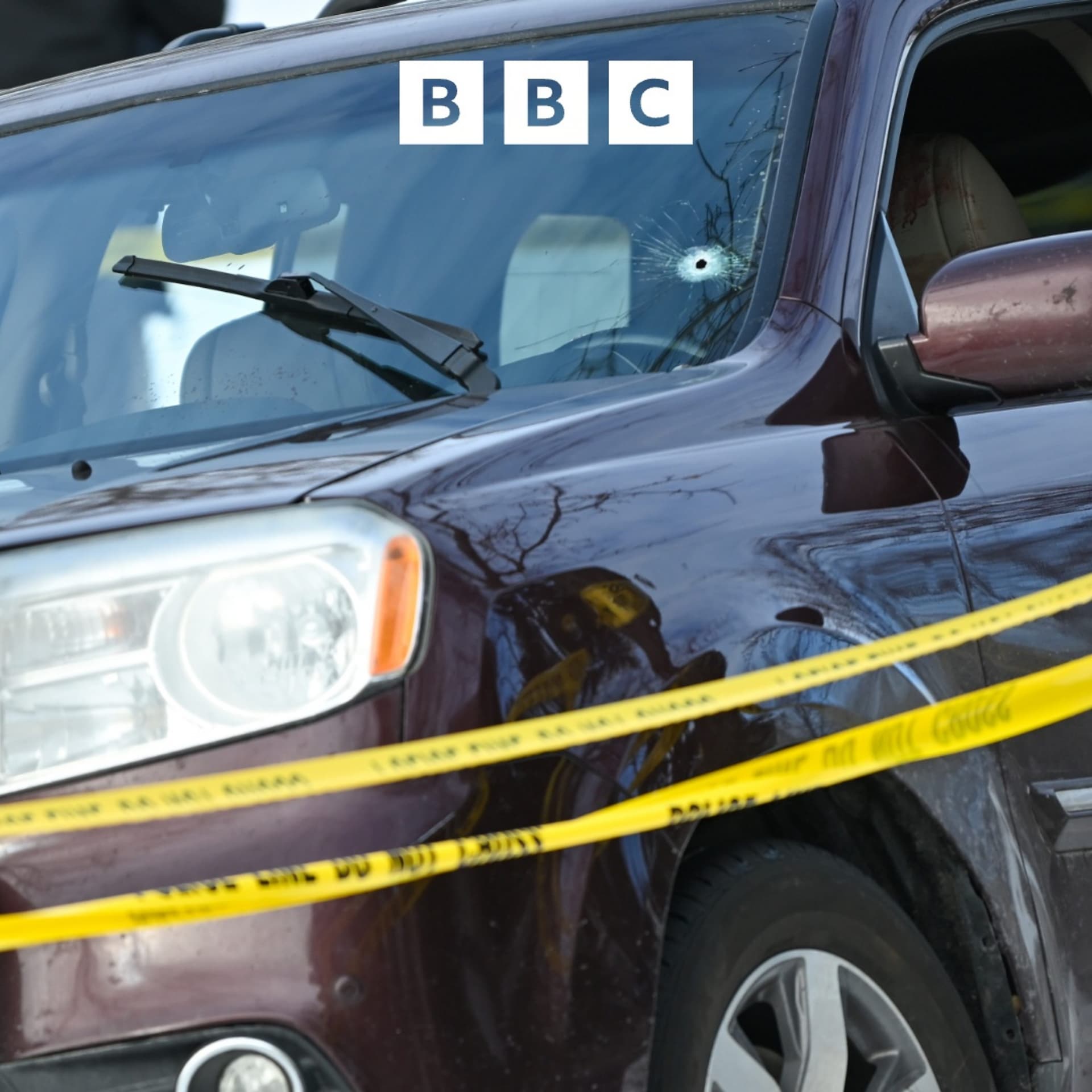
3:13They are not here to cause safety in this city. What they are doing is not to provide safety in America. What they are doing is causing chaos and distrust. They're ripping families apart. They're sowing chaos on our streets. And in this case, quite literally killing people. David Willis is our North America correspondent. Well, video of this incident, Chris, shows a maroon-colored SUV cutting through a crowd of federal agent vehicles on a suburban street. And as the SUV moves forward, an immigration official attempts to open the driver's side door. And at that point, the vehicle accelerates and narrowly missing another official in its path, another agent who draws his weapon and fires several shots.
4:09Now, the SUV then crashes into a parked car, and it's since been revealed that the person behind the wheel, the victim of this incident, was 37-year-old Renee Good. Now, officials say that she was not the target of immigration enforcement activity at the time. How can there be two very, very different characterisations of the events that took place when even the video evidence that you suggest that it can be interpreted surely in any one way? Well, that's right. There are two starkly contrasting accounts of what happened. Chris, the mayor of Minneapolis, Jacob Fry, has accused those federal agents of sowing chaos in the city.
4:55The Minnesota Democratic Governor Tim Walz blamed the incident on a federal administration that seeks to, as he put it, ferment fear, headlines and conflict. And Donald Trump weighed in as well, claiming that the agent in question acted in self-defense. He said the driver of the car viciously tried to run over the agent who seemed to have shot her in self-defense. Hence, the reason, Mr. Trump goes on, these incidents are happening is because the radical left is threatening, assaulting and targeting our law enforcement officers and ICE agents on a daily basis. But it's true that hundreds of immigration enforcement agents have been sent to the state of Minnesota in the last month as part of this nationwide crackdown brought into effect by the Trump administration on illegal immigration.
5:52has taken place and another 2 ,000 federal agents are due to arrive this very week in the state, that state of Minnesota, and that has led to tension with local residents as a result of which the governor, Tim Walts, has put the National Guard on standby in the event that protests break out there. David Willis. Donald Trump has announced that any money Caracas receives from oil sales will only be used to buy products made in America and that he'll decide how the profits will be divided between the US and Venezuela. He also claims that the US taking control of Venezuela's oil reserves will bring prices down.
6:32So how will this affect the market price of oil? Nick Marsh is our business correspondent. Donald Trump says it will come down because of an increased supply, just working on a basic supply and demand premise. But the numbers don't really back that up. Venezuela contributes less than 1 % to the world's global oil supply. The supply in general is pretty high now. The US uses around 20 million barrels of oil a day. So we need to be talking about an enormous amount of oil to move the dial here. And that's just not the case. There is also, of course, a political dimension to it all. We know Donald Trump is vulnerable on the economy, on the cost of living.
7:14The midterm elections are at the end of the year. And he will be wanting to show that he's doing everything possible to lower that cost of living, not least by bringing down the price of oil. China used to buy most of Venezuela's oil. So will they continue to do that? Or is it going to be tainted by the Donald Trump connection? Well, it looks like they won't be able to if the US is indeed controlling the oil supply, as the White House says it is. China will find another supplier, probably a more expensive one. There's been reports of maybe Iranian oil, but it's a disruption for Beijing more than a proper economic blow, because Venezuelan oil only made up of quite a small percentage of China's oil imports.
7:54What it does do, though, is it effectively severs a partnership that had been getting closer and closer for many years now. China had been pouring lots of money into Venezuela in exchange for this oil, and that displeased the White House. Marco Rubio has explicitly said that America's adversaries were operating in the Western Hemisphere, in Latin America, where the US should be calling the shots. And you can see now these increasing crackdowns on the so-called shadow fleets, transporting sanctioned oil to regimes like Russia and Iran, other American adversaries, that this is something that the United States is taking very seriously.
8:29And as with all these sort of geopolitical machinations, a lot of it does boil down to this rivalry between Beijing and Washington. The oil companies themselves, presumably they have a say. It's all very well saying, you know, we'll take over. But the oil companies, they might not want to invest in this setup. Well, they've not said anything publicly. We know that the US Energy Secretary is meeting with them this week. The White House is very keen to get them on board. But they're going to want security guarantees. They're going to want guarantees of political stability. We still don't really know who's running things in Venezuela right now.
9:02These companies were kicked out in the late 2000s under Hugo Chavez when the oil industry was fully nationalized. They lost billions in assets. they're going to want guarantees on returns for the billions and billions they're going to have to invest and the many many years it's going to take to rebuild this industry that's fallen into disuse. Donald Trump says 18 months. Experts say it's going to take a lot longer than that. And then there's the question of where are these profits going to go because these oil companies are going to be ultimately accountable to their shareholders much more than they will be to the people of Venezuela.
9:34Then there's this question about Venezuela being forced to buy American-made products as a result of any profits that they might make. Can you see that working? It's an America first policy, you know, that the White House is very openly pursued. The truth is really, we know so few of the concrete details here. There's a strong chance that the policy is still being worked out because on the one hand, the White House is saying American oil companies have the right to control the Venezuelan oil industry. But at the same time, it will be paying Venezuela for this oil, it's still very much up in the air where this money is going to go, who this investment is going to come from, and crucially, when it's going to happen.
10:13Nick Marsh there. And it's not just Venezuela that the US has in its sights. The US Secretary of State Marco Rubio says he'll hold talks with Denmark next week about the future of Greenland. Donald Trump recently said he was considering using the military to take it by force. Denmark, which has control over Greenland's foreign and defence policy, has warned that any attack could see the end of the NATO military alliance. So why does President Trump want the territory? A question for our diplomatic correspondent, James Landell. Well, if you look at the map, the Arctic is a crucial geopolitical battleground.
10:47And as the ice melts, Trump claims that the seaways are crawling with Russian and Chinese ships. But it's not just about security. Greenland is also packed with valuable natural resources, including oil and critical minerals, that the Americans want. And the new US national security strategy also highlights Trump's belief that the US should be able to dominate what he calls the Western Hemisphere. And that means the North as well as the South. So what are the president's options? Well, the US could attack the capital nuke, even though Denmark has hardly any troops there. What we're talking about is political theatre, really.
11:26They could have a single officer walk into downtown nuke and just claim that Greenland is now the possession of the United States. There's no armed force they need to quell, or there's no local population that they need to attack. European leaders warned this week that any military action would fundamentally damage the transatlantic alliance. But today, Mr Trump hit back, saying he doubted his NATO allies would be there for the US if it really needed them. We will always be there for NATO, he said, even if they won't be there for us. So if military action is less likely, what else? Well, the US could buy Greenland, something the White House says is actively being considered.
12:11And America's top diplomat says he'll discuss options with Danish officials next week. If the president identifies a threat to the national security of the United States, every president retains the option to address it through military means. As a diplomat, which is what I am now and what we work on, we always prefer to settle it in different ways. But buying Greenland would require the support of the 57 ,000 people who live there, and polls suggest they may not be that keen. There are two camps. One wants to annex Greenland, the other one wants to persuade and buy Greenland, and I would say that neither should happen.
12:44Greenland is not for sale and Greenland will never be for sale. A third option would be to offer the people of Greenland a special association agreement where the US would control their defence and they, in return, would get economic support. As for a fourth option, well, the US already has an air base in Greenland. It could simply send thousands more troops under an existing military deal. But for now, the US seems to want this Arctic snowscape for its own, whatever the cost. James Landale. For more on this story, you can go on YouTube, search for BBC News and click on the logo, and then choose Podcasts and Global News Podcast.
13:21There you'll find more analysis on whether President Trump would use military force to take control of Greenland. And there's a new story available every weekday. So what does all of this mean for America's role in the world and for everyone else? I asked our international editor, Jeremy Bowen, for his assessment. Well, if you look at the way that Donald Trump behaved when he came back to office for his second term, the phrase being used by his people in Washington was that they were flooding the zone. In other words, there was just this bewildering fury of activity, closing down departments, firing people, cutting budgets, all that sort of thing.
13:57I think at the moment we're seeing not just a hemispheric, but a global version of that. And he's moving so quickly that it's causing consternation, I think, not just among adversaries, but among allies as well. And that's because they can't predict which way he's going. Is it just good judgment? Is it arrogance? Is it hubris? overconfidence before a disaster. We've talked about a new world order before, but do you feel like this is a new, new world order? What we're seeing now is really the starkest exposition, if you like, of the way that Donald Trump and his people regard power and the way that power is used and the way that America can use it.
14:41And I think there are some constants in the way that they behave, even though it's super unpredictable. He believes strongly that America can use power with impunity. Now, the record of America using power in moments like this, and I'm thinking particularly after the 9-11 attacks in 2001, when al-Qaeda attacked America, that ended really badly for the Americans. There was that mood then of we can do a great deal and look how strong we are. It was expressed differently. They believed in alliances in a sense. But the results in Iraq and in Afghanistan were disaster in places, catastrophe in others.
15:19So he thinks, though, it's going to be different because he has great faith in the power of his will, backed up by raw American power. And he's surrounded by people who agree with him and keep telling him he's right. I just wonder, as China and Russia, how will they be viewing these events? Chinese diplomats, I think, did about the last meeting with the former Venezuelan president before the Americans went in just a matter of hours beforehand. They were in his palace and he was joking with them, dressed in a nice suit, not in the prison garb that he's wearing now. And today, the tanker that the Americans seized in the North Atlantic was, the Russians said, temporarily, but it was under a Russian flag.
16:00Now, interestingly, while the Chinese condemned what they, I think, correctly assessed to be a blatant violation of international law in the attacks on Venezuela. The Russians have been very muted about that tanker. Now, why is this? I think it's because both those big countries are eyeing Trump and they're thinking, hmm, I wonder what he's up to. Not least because if he believes there can be an American empire, then maybe he'll agree that there can be a Chinese empire in Asia. And maybe he'll agree with Russia that actually they deserve to have Ukraine. And they certainly deserve to have all of the territory that they're claiming in the formulations of possible ceasefire agreements.
16:40So I think they are probably now standing back. They're a smart, experienced people in Moscow and in Beijing. And they are thinking, what's in this for us? BBC International editor Jeremy Bowen. Still to come in the Global News podcast. He was responsible for at least 10 people being executed, jeopardised some 20 more who were imprisoned. He lived in a moral abyss. The CIA's worst ever traitor has died at the age of 84.
17:19If journalism is the first draft of history, what happens if that draft is flawed? In 1999, four Russian apartment buildings were bombed, hundreds killed. But even now, we still don't know for sure who did it. It's a mystery that sparked chilling theories. I'm Helena Merriman, and in a new BBC series, I'm talking to the reporters who first covered this story. What did they miss the first time? The History Bureau, Putin and the apartment bombs. Listen on BBC.com or wherever you get your podcasts.
17:57New data published in the British Medical Journal suggests that people who stop taking weight loss jabs can put the pounds back on around four times faster than if they'd been dieting and exercising. The research from the University of Oxford was led by Professor Susan Jebb. She's been speaking to our health reporter, Jim Reid. What this research has shown is these drugs are really helpful in losing weight, but they're not a silver bullet. They're not a magic solution forevermore. When people stop the treatment, the weight goes back on surprisingly quickly. So you really need to think about these as part of a much longer term strategy to help you control your weight.
18:36One of the messages that came through is that people on these kind of drugs are going to need more support to come off them. Whilst people were taking these weight loss medications, those people who also had a good behavioural support programme, helping them to reset their diet and physical activity actually were much more successful and they lost four and a half kilos more weight than those people who didn't have that extra support. Unfortunately that behavioural support whilst they were taking the drugs did not seem to protect them against weight regain later and that suggests that if treatment stops people are going to need some other help.
19:17At the moment, I don't think we know what is the best option, but there's lots of research ongoing so that we'll be able to give people advice on how best to maintain their weight loss in the future. And can I ask you one question about what your research showed around the other markers to your health and how quickly they returned to baseline? Because this wasn't necessarily just about weight, right? This was about cardiovascular and other issues. So when people lose weight, we see that all the risk factors for heart disease improve quite markedly and very quickly. So blood pressure comes down, blood glucose control improves, cholesterol reduces.
19:57And that's fantastic news because it's what helps improve your health and reduce your long term chances of heart disease. However, perhaps unsurprisingly, if you put weight back on, then those problems return. So we really do need to find a way of consolidating that weight loss in order to also preserve those long term health benefits too. You mentioned it's not a silver bullet for individuals. Presumably the same thing would go for the health service here. And there was some suggestion that this might not be as cost effective as potentially some people might hope. For people with severe and complex obesity, these treatments really are incredibly important and they're going to be a very good way to help them improve their health.
20:42But they may well need to be continued long term. For people with less severe obesity, it's questionable whether these will be cost effective. And what we should probably be doing is really ensuring we give other people access to other cheaper forms of support. We know that many dietary programmes are actually very successful and although you perhaps lose a little bit less weight than you do with the drug treatment, you may keep it off for longer. So I think we need to use these drugs in a very intelligent way, focusing them on the people with the greatest clinical need, but ensuring that other people also have access to other treatments that can help them manage their weight.
21:23Professor Susan Jebb and her study comes as separate research from University College London and the University of Cambridge found that people prescribed the new generation of weight loss drugs may be vulnerable to nutritional deficiencies and muscle loss. Now while pupils in Western countries return to school after the Christmas break, in Gaza many children are going back to school for the first time in more than two years. Most of the Strip's 658 ,000 school-aged children have had no formal education since the outbreak of war with Israel in October 2023. According to the UN Children's Agency UNICEF, over 97 % of schools have been damaged or destroyed.
22:04But after a so-called ceasefire was announced, and despite hunger, shortages and displacement, many Palestinian families are choosing education first. Shaila Khalil's been following their stories. Walking in a straight line, their small arms rusting on each other's shoulders. Pupils are beaming as they head into a tented makeshift school in Gaza City. For two years, Gaza was more accustomed to children screaming in pain. Now, the buzz of classrooms full of pupils is back. This makeshift school stands on the ruins of an old one, destroyed by Israeli strikes. For a few hours a day, it offers something rare.
22:48structure and relative safety, a glimpse of the lives they once knew. 14-year-old Naima al-Asmar and Ritha al-Ala 'arb were students here before the war. The thing I miss most about returning to school is having a better space for learning, like more classrooms as it's so tight here, and being in a solid room rather than a tent.
23:12This isn't really a school now. It's made of tarps and tents. Before we were in a proper school building and we used to study every day. Now it's every other day. The thing I miss most about school before is my teachers, my friends and the education. As they restart school, their smiles carry something fragile but powerful. The sense that life might finally begin to move forward despite the continued suffering. Run by UNICEF, the school brings together children from the original classrooms and those displaced by war. It doesn't teach the full Palestinian curriculum, just the basics. English, Arabic and maths.
23:55Classes run in three shifts, trying to reach thousands of children who were forced to flee again and again, while tens of thousands more still have no access to education at all. The school's principal, Dr. Mohamed Saeed Sheber, says despite the efforts, they're unable to accommodate everyone. We only have six classrooms in one shift. We have a neighbouring camp next to the school. It has displaced people from the north and from east Gaza. There is a large number wishing to register in this school, but we can't take them. So much is still missing. UN spokesperson Jonathan Crick stands outside one of the tents of the UNICEF Gaza City School and points to what the children still don't have.
24:37Education supplies have not been prioritized to enter the Gaza Strip. So what I'm talking about is paper, notebooks, pens, erasers, rulers. We have been asking for a long time that these school supplies can enter the Gaza Strip and they haven't been allowed in. It's the same for mental health toy kits that can be used to do mental health activities and recreational activities with the children. These are also supplies that cannot enter for the moment. An Israeli security official referred us to the prime minister's office, who did not respond to our questions. Despite the ceasefire, Israel's bombardment of Gaza continues with almost daily strikes in response to what it says are Hamas violations of the deal.
25:19But still, these children keep coming to class. What's the meaning of death? Khulud Habib is a teacher at the school in Gaza City. She explains why being here is paramount to the lives of Gazans. Education. There is no debate that it is the foundation of our lives as Palestinians. It is our capital in this life. We lose homes, we lose money, we lose everything. But knowledge is what we invest in our children. So much has been taken away from them. Their homes, their safety, their loved ones. What remains is a belief that learning still matters, that it's a lifeline to a future they still dare to imagine.
26:00Thank you. That report by Shima Khalil. Aldrich Ames was the worst traitor in the history of the CIA. He was jailed for life in 1994 for giving the Soviet Union the names of at least 10 Soviet agents who were working with American intelligence during the Cold War, which led to them being executed for treason. It was a hugely damaging breach of security, not least because Ames was head of the CIA's Soviet counterintelligence branch. The US government banned the press from talking to him, but prison staff didn't get the message, so they allowed The Washington Post reporter Pete Early to interview him.
Read the full transcript
26:37And he's been speaking to my colleague James Menendez. Like all these spies, he wanted to tell his story because it gave him a chance to rationalise and justify and talk about how it's just a game and it's just a matter of us catching them and them catching us. He minimised that completely. How did he rationalize sending so many agents to their deaths? His attitude was, look, I betrayed my country. The US was going to try to catch me. And if they caught me, I'd be in prison the rest of my life. And the same was true about the Soviets who had volunteered to help us. And so in his eyes, it was either them or him.
27:20And he claimed that he picked out three people who the Russians had tried to send us, that he knew weren't real spies. And he gave those names to them. And then it dawned on him that once he had gotten paid by the KGB, our spies over there would see his name, recognize that he was in the CIA and a traitor, and turn him in. And so then he immediately went and gave the Russians the names of every one of the U.S. assets that were working for us. And he completely closed down our eyes and ears in Moscow for quite a long period. He was responsible for at least 10 people being executed, jeopardized some 20 more who were imprisoned.
28:05He lived in a moral abyss. It was all transactional. He had a fellow who was a good close friend of his. He had recruited, as a matter of fact, and he turned that guy over to the KGB. They didn't execute him. He escaped the country. He got to Canada. He called Ames, and they were good friends, and told Ames, you know, he wanted to get back in the United States. And what did Ames do? He called the KGB and told him, hey, this is where he is in Canada. Was it just for the money? Was that his motivation, do you think? Yes. He was leaving his first wife and was madly in love with Rosario, this flamboyant, Latino, from Columbia, and he needed$50 ,000 to get rid of the divorce and marry Rosario.
28:54He'd said, the truth is, I did it for love and also grandiosity, becoming this international man of mystery. I get effect history, etc. He wanted to be somebody, and he couldn't believe anybody was ever going to catch him. What gave him up in the end? Was it just his levels of spending? Yes, it was the levels of spending and good detective work. And also, he covered his tracks well. Pete Early, the author of Confessions of a Spy, the real story of Aldrich Ames. Professional tennis tournaments, including grand slams like Wimbledon, have wildcard entries, which have spaces in the draw usually reserved for players like local stars or perhaps big names that have fallen out of the rankings.
29:33They certainly bring in big crowds, but they haven't managed to qualify through the normal route. One, however, has turned out to be wilder than most. She's a 21-year-old Egyptian called Hajar Abdelkader, whose first-round match at an International Tennis Federation event in Nairobi is quite something to behold, especially because the prize money for the tournament is$30 ,000. Footage on the ITF website shows her struggling to hit the ball. Her German opponent, ranked 1 ,026th in the world, dropped only three points in her 6-love-6-love win, and unbelievably, two of them were double faults. So just how bad was it?
30:10James Kumarasamy put that question to Tamara Prenn, a sports writer with the British Daily Mail newspaper. It feels unprecedented to me, and I'm sure it will have felt unprecedented to so many tennis fans watching it, to say it's a standard far away from what you would expect at any level on any of the tennis tours internationally is an understatement, I think, for all of those people who say, oh, I could beat top ten players. You maybe don't have a chance of doing that, but you could have a chance of getting at least a set against Avdelkader. How could something like this happen? Wild cards are given at the discretion of the tournament organisers.
30:50So in this case, that was Tennis Kenya rather than the ITF. And they can be given for all sorts of reasons. Perhaps you want to give an opportunity to a promising junior who doesn't otherwise have the ranking points to make it into the main draw. or someone who is going to really pack in the crowds and comes with their own historic achievements to their name. This is somewhat unusual and I think it remains a mystery. I believe it's due to a late dropout and then Abdul Qadr offered as an alternate. But the question is, why was her name in the mix at all, if that's her skill level? It's quite baffling to watch most of her serves to not get over the net.
31:36Balls are bypassing her and at one stage she doesn't seem clear on which side of the court to serve and has to be told where to stand by her opponent. This is not just first performance nerves, this is something more, something bizarre really, isn't it? Totally. That is why people have questions because it seems she doesn't fit any of the requirements that people might understand from a discretionary wildcard. There are very few details about her on her ITF player profile. This appears to be her first professional match, so you can't say, oh, perhaps this is just a terrible case of tournament nerves.
32:12It's really hard to understand where they got the information to make the decision. Sports journalist Tamara Prenn. And that's all from us for now. There'll be a new edition of the Global News podcast later on. If you'd like to comment on this podcast and the topics we're covering, do send us an email. Our address is globalpodcast at bbc.co.uk. This edition was mixed by Nick Randall. The producers were Paul Day and Nicky Verrico. The editor is Karen Martin. I'm Chris Barrow. And until next time, thanks for listening. Goodbye.
33:13I'm talking to the reporters who first covered this story. What did they miss the first time? The History Bureau, Putin and the apartment bombs. Listen on bbc.com or wherever you get your podcasts.
From the publisher
The mayor of Minneapolis in the United States has strongly rejected the Trump administration's account of the fatal shooting of a woman by an Immigration and Customs Enforcement agent in the city. Jacob Frey said video of the incident directly contradicted assertions by the White House that the agent had shot Renee Good in self defence. Hundreds of people gathered in protest at the site of her shooting, lighting candles overnight. Video shows she was shot as she drove off when ICE agents were trying to stop her. Also: President Trump has said that Venezuela has agreed to use the proceeds from the sale of its oil to buy only American-made goods. A study in Britain indicates that people who stop weight-loss jabs put the weight back on much quicker than if they'd lost it by dieting. And Aldrich Ames, the most damaging CIA traitor in agency history, dies aged 84.
The Global News Podcast brings you the breaking news you need to hear, as it happens. Listen for the latest headlines and current affairs from around the world. Politics, economics, climate, business, technology, health – we cover it all with expert analysis and insight.
Get the news that matters, delivered twice a day on weekdays and daily at weekends, plus special bonus episodes reacting to urgent breaking stories. Follow or subscribe now and never miss a moment.
Get in touch: globalpodcast@bbc.co.uk