
In short
Global News Podcast covers Ukraine’s internal politics and anti-corruption raids; Israel’s West Bank housing tenders; Gaza missing persons and deaths; London’s ultra-low emission zone effects on children’s lung recovery; U.S.–South Korea drills cut short amid Trump–Kim engagement; Somalia malnutrition from aid cuts; SpaceX rocket debris near Christmas Island; and a giant water lily strength competition.
Guests/backgrounds
Vitaly Shevchenko (BBC Monitoring Ukraine analyst); Yolande (Jerusalem correspondent); John Donison (Jerusalem); Nick Miles (health reporter); Chris Griffiths and Helen Wood (Queen Mary University researchers); Jake Kwon (Seoul correspondent); James Elder (UNICEF global spokesperson); Alice Gorman (space archaeologist, Flinders University); David Watshorne (Christmas Island Tourism Association); Alex Summers (Kew curator).
Key claims/examples
Zelensky sacked Irna Mudra after anti-corruption agencies linked her to money laundering; Mikhail Fedorov calls for wartime elections. Israel tenders for E1 homes to create “facts on the ground” before October elections; Gaza health ministry: 70,000+ deaths; Red Cross: 5,000+ missing. Study: children in London “caught up” lung growth after ULEZ. Trump cuts joint drills, citing Kim relationship. UNICEF: 1.9m Somalia children face malnutrition; aid cuts close nutrition services. Starship test rocket landed intact; water lily pads held 102 kg.
Written by AI. May contain mistakes. Listen to the episode to check what was said.
Chapters
Tap a time to open that second in VOUS-South Korea Relations
0:11 to 0:37
Discussion on US reducing military exercises with South Korea amid North Korea ties.
“I'm Asma Khaled, and I host the Global Story podcast from the BBC.”
Main Stories Overview
0:41 to 1:36
Brief overview of key news stories including Ukraine and Israel.
“I'm Celia Hatton and at 14 hours GMT on Wednesday the 19th of August, these are our main stories.”
Zelensky's Dismissal of Aide
1:36 to 3:19
Details about President Zelensky dismissing an aide amidst political turmoil.
“We often talk about Russia's war on that country.”
Election Concerns and Corruption
3:19 to 4:35
Analysis of wartime elections and ongoing corruption issues in Ukraine.
“As our listeners will know, Celia, Ukraine has been battling corruption for a long time.”
Fedorov's Popularity and Impact
4:35 to 6:24
Discussion on the political influence of former defense minister Mikhail Fedorov.
“It's all going on as we've also had this call from Mikhailo Fedorov, the former defence minister, calling for fresh elections.”
Israeli Settlements in the West Bank
6:24 to 9:06
Analysis of Israel's new housing bids in the occupied West Bank and their implications.
“Almost half a million Israelis live there, and all Israeli settlements there are considered illegal under international law.”
Human Impact of Gaza Conflict
9:06 to 13:11
Examination of the humanitarian crisis and missing persons in Gaza.
“We saw that last week with a lot of focus on Kusra, this Palestinian village south of Nablus, where two Palestinian families have been besieged in their homes by a group of settlers.”
Impact of Air Pollution on Health
13:11 to 14:00
Discussion on the effects of air pollution reduction on children's lung health.
“The air that we breathe has a huge impact on our health.”
Impact of Air Quality on Children's Lung Growth
14:00 to 15:10
Discover how improved air quality in London positively influenced children's lung development.
“Ula, those oxides have gone down significantly.”
Political Implications of Air Quality Findings
15:10 to 17:05
Explore the potential political impacts of recent findings on air pollution and children's health.
“Well, you've just got to look at the impact that particularly strong cases have had in the past.”
Show all 19 chapters
Introduction to U.S.-South Korea Relations
17:05 to 18:08
Learn about the recent changes in U.S.-South Korea military exercises under President Trump.
“Still to come in this podcast, I looked out to what I thought was some ships, which are quite common, looked a bit closer and then realized it was a rocket, a space rocket, just out at sea that was being towed.”
Trump's Strategy in Relation to North Korea
18:08 to 20:14
Analyze Trump's motivations for reducing U.S. military exercises with South Korea amid North Korean relations.
“will be cut short and finished six days earlier than planned.”
Somalia's Humanitarian Crisis
20:14 to 21:46
Examine the ongoing humanitarian challenges faced by Somalia amidst instability and conflict.
“And maybe he's looking for a win by moving some attention back to North Korea.”
UNICEF's Warning on Child Malnutrition
21:46 to 23:50
Understand the dire warnings from UNICEF regarding child malnutrition in Somalia.
“are expected to suffer from malnutrition in Somalia this year.”
Personal Stories from Somalia's Crisis
23:50 to 25:41
Hear personal accounts of mothers and children affected by Somalia's deteriorating conditions.
“You've been speaking to children like Abdullah.”
SpaceX Rocket Recovery near Christmas Island
25:41 to 28:00
Learn about the recovery of a SpaceX rocket off Christmas Island and its implications.
“UNICEF's global spokesperson, James Elder.”
SpaceX Starship Re-Entry Insights
28:00 to 29:13
Learn about the implications and risks of SpaceX's Starship re-entry and its technology.
“So it's extraordinary that this one landed whole.”
Heat Shield Performance Analysis
29:13 to 29:52
Discover how scientists evaluate the heat shield of the Starship during re-entry.
“What can the scientists learn from this then?”
Giant Water Lily Weight-Bearing Competition
29:52 to 31:56
Explore the fascinating competition involving giant water lilies and their strength.
“And finally, a competition to find out how much weight a giant water lily can bear.”
Transcript
Automatic transcript. May contain errors.0:00This BBC podcast is supported by ads outside the UK. Is President Trump snubbing South Korea to reignite his friendly relationship with Kim Jong-un? I'm Asma Khaled, and I host the Global Story podcast from the BBC. The U.S. and South Korea have been close allies since the 1950s, but this week Trump announced that the U.S. will substantially reduce joint military exercises with South Korea. He cited his very good relationship with North Korea's Kim Jong-un. For more, check out The Global Story on BBC.com or wherever you get your podcasts. This is the Global News Podcast from the BBC World Service.
0:41I'm Celia Hatton and at 14 hours GMT on Wednesday the 19th of August, these are our main stories. Ukrainian politics and turmoil as a senior member of President Zelensky's team is sacked and the former defence minister calls for wartime elections. Israel opens up bids to build new housing in the occupied West Bank. And joint US-South Korean military exercises are cut short six days earlier than planned. Also in this podcast, scientists say they're stunned by how quickly children's lungs can recover in the wake of pollution restrictions. And... One of our gardeners, he stood on it and he's 102 kilos, which is considerable.
1:22I mean, if you imagine most leaves certainly couldn't take 83 kilos. And this year, we've managed to go with 102 kilos. A special global competition to find the world's strongest giant water lily.
1:35We'll start in Ukraine. We often talk about Russia's war on that country. But today, a lot is going on with Ukrainian domestic politics. In the last few hours, Ukraine's President Volodymyr Zelensky has dismissed a deputy head of the presidential office, Irna Mudra. No reason was given for sacking her, though that change comes shortly after anti-corruption agencies said she'd been linked to a group accused of money laundering. Those same agencies have been carrying out raids today, targeting current and former lawmakers and top government officials. That's all unfolding not long after Ukraine's former defense minister, Mikhail Fedorov, called for wartime elections, which are prohibited under the Constitution.
2:19In a video posted online, he said Ukraine was facing a crisis of governance and corruption. We must answer a fundamental question. How should the state function if the war lasts for years? Can Russia in effect gain the right to decide when Ukrainians will again be able to elect their authorities? I am convinced that it cannot.
2:45Mr Fedorov was a popular defence minister. His abrupt sacking in late July led to mass protests. Many credited him with overhauling Ukraine's armed forces, tackling corruption and using data and advanced technology to improve Ukraine's standing in the war. Ukraine hasn't had an election in a while. President Zelensky's five-year term as president was due to end in May 2024. However, elections have been suspended in Ukraine while the country's under martial law, in place since Russia's full-scale invasion in February 2022. I asked our Ukraine analyst from BBC Monitoring, Vitaly Shevchenko, about the significance of this latest dismissal within the president's office and the corruption rates.
3:29As our listeners will know, Celia, Ukraine has been battling corruption for a long time. And for many people, the success of this battle determines Ukraine's success of another battlefield in its war against Russia. So today, two of Ukraine's key anti-corruption agencies, they published what they said were excerpts of intercepted conversations between members of what they call a criminal group discussing ways of laundering money to pay bribes. And they said that this group includes former and current members of parliament and also an official from the president's office. So on the one hand, it's a setback or an inconvenience at the very least for President Zelensky.
4:26But on the other hand, it shows that under his leadership, Ukraine is doing something to combat corruption. That's interesting. It's all going on as we've also had this call from Mikhailo Fedorov, the former defence minister, calling for fresh elections. What more can you tell us about him and also that call for new elections? He is popular at the moment. I've had a look at opinion surveys in Ukraine and at the moment he is Ukraine's third most popular figure. But that does not seem to be enough for Mikhail Fedorov to force Vladimir Zelensky hand on any of the issues that he wants resolved, such as holding an election despite what Ukrainian law says.
5:18And it says that as long as there's martial law, you can't hold elections. Mikhail Fedorov just does not have the political clout to achieve that. Even though he's shot up in popularity, he is still lagging behind Woldymyr Zelensky. And his supporters, Mikhail Fedorov's supporters, are still rallying in Kiev and in other parts of Ukraine. But the scale at the moment, Celia, it's nowhere near enough to pose a challenge to Woldymyr Zelensky. And also, Mikhail Ofedrov seems to be an outlier in this respect. No other prominent figure in Ukraine or an opponent of Volodymyr Zelensky is calling for fresh elections.
6:06Even Mikhail Ofedrov's supporters, they are demanding his reinstatement, not Zelensky's ouster or an election. So my prediction, if I were to go out on a limb, is that that ship has sailed and it is going to blow over. Next, to the Middle East, and in particular what's going on in the occupied West Bank. Almost half a million Israelis live there, and all Israeli settlements there are considered illegal under international law. And now Israel has just opened up bids for the construction of more than a thousand new homes east of Jerusalem. Yolan Nel is our correspondent in Jerusalem. So this is an area that is called E1.
6:47It's just to the east of occupied East Jerusalem and close to another large Israeli settlement in the West Bank called Mal Adamim. And the reason this is so important for Palestinians, why the international community has really for years, you know, tried to get Israel to keep any plans to develop there on hold is because it really disrupts the contiguity of the West Bank. It makes a kind of large Israeli development between Ramallah and Bethlehem, and it sort of bisects the West Bank. So that is why, really, for about three decades, Israel has shelved plans to develop there. That changed last year when the far-right finance minister Bezalel Smotrich, who also has responsibilities for setting Israeli government policy in the West Bank, He announced that there would be three and a half thousand new settler homes that would be developed in that area.
7:45And he said he was acting in response to various countries, including the UK, recognizing a state of Palestine. Now, what has happened since then is that there have been attempts by Palestinian Bedouin residents of that so-called E1 corridor and Israeli NGOs, including Peace Now, NGOs against occupation, really to try to stop or delay the implementation of this, the opening of construction tenders, which, of course, is the big step. But what's happened in the past day is that the government has put out, despite that active court process going on, tenders for half of the houses. Yolande, what's the significance of the timing of all of this?
8:28We have to note that Israel is planning to have elections in late October. That's right. And I think this government wants to do as much as possible to create what they call facts on the ground before those elections happen. Because if you look at the polls at the moment, they indicate that the prime minister's Likud party and his coalition parties are not on track to keep power. So they want to kind of, you know, protect what they would see as being their legacy. And this Israeli government has authorised 104 settlements in the past three and a half years, with all settlements being illegal under international law.
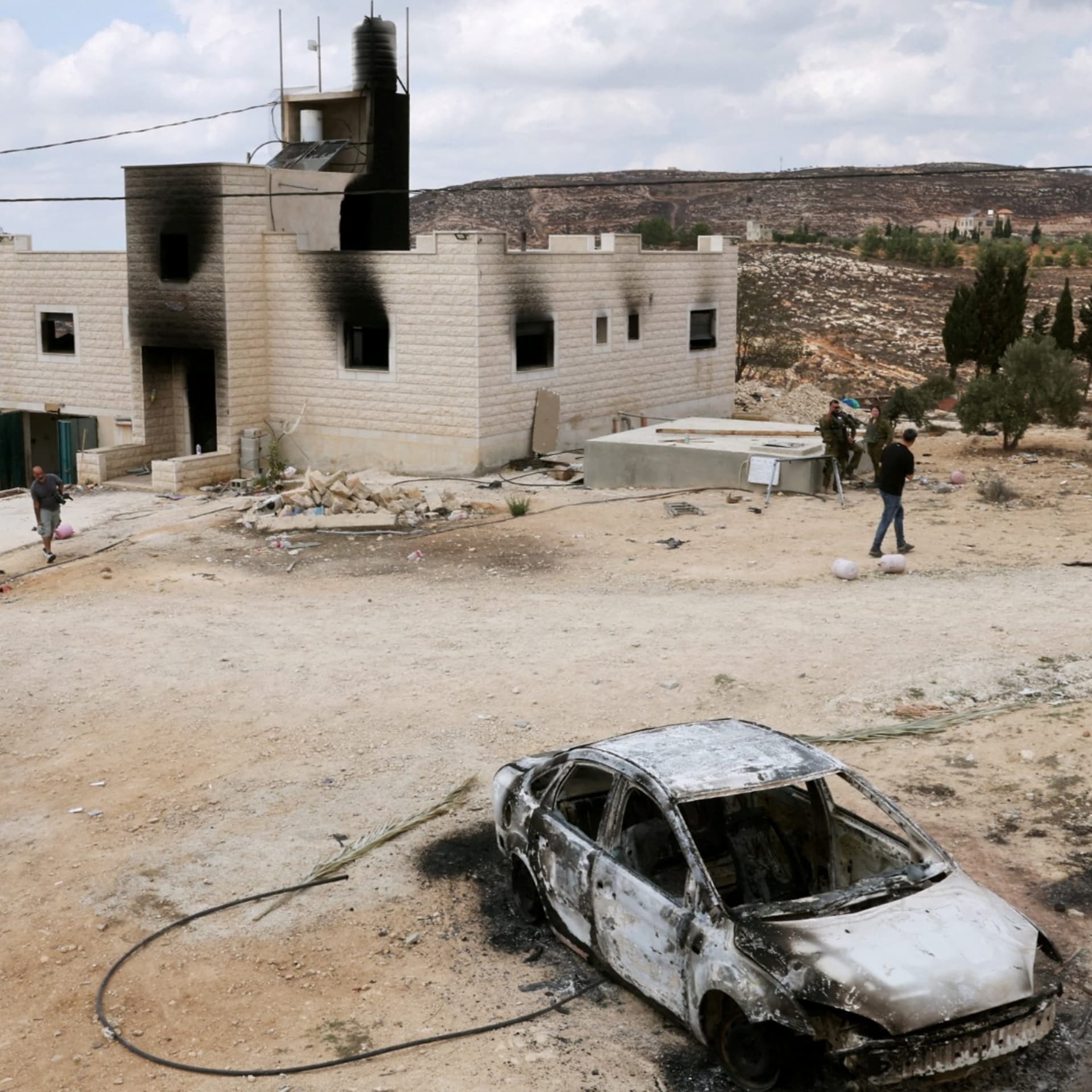
9:05There's been a surge in settler violence in the West Bank. We saw that last week with a lot of focus on Kusra, this Palestinian village south of Nablus, where two Palestinian families have been besieged in their homes by a group of settlers. And that remains ongoing until now. Are those families still unable to move, but they're trapped by the settlers there? Yolanda now speaking to me from Jerusalem. Meanwhile, the conflict in Gaza has taken a huge toll on those inside the territory. The health ministry there says more than 70 ,000 Gazans have died since the conflict began. More than 1 ,200 of those who died were killed in Israeli strikes in Gaza since a ceasefire was announced last October.
9:48Many others are still missing, presumed dead. Israel does not allow journalists free access to the territory. Our correspondent John Donison has this report from Jerusalem. In Gaza City earlier this month, a mass funeral. For more than 100 people killed in an Israeli attack in 2023. Their bodies were only recently recovered from under the rubble. and across the strip there remained thousands who were still missing.
10:25Ahmed Al Madhun was 21 when he was last seen alive. The young man who has Down syndrome disappeared in May 2025 after popping to the shop. His family show us a video of him belly flopping into a swimming pool. They say he was loved by everyone and always joking around. For his mother Majdia, it's the not knowing that's hardest.
11:00I haven't lost hope. Whether I find him alive, find him dead, find him buried, if they just tell me here he is, then I will truly be at peace. She knows Ahmed may well be dead, but there's also another reason why Gazans go missing. Aida al-Drimli shows us a picture of her son, Mahmoud, a fresh-faced young man draped in a Palestinian scarf.
11:31He too disappeared in 2024. Aida feared he'd been killed. But then this summer, a photo emerged on social media showing two Israeli soldiers posing with a Palestinian detainee, blindfolded and bound. The family believes it's Mahmoud. My heart was torn into two when I saw the photo. I was relieved that my son was OK, but at the same time, how can they humiliate him and other prisoners like him? We asked the Israeli prison service about Mahmoud. They said they had no record of holding him. The Israeli military declined to comment.
12:18Well, here in Jerusalem, I've come now to meet Tal Steiner, an Israeli lawyer who's the executive director of Hamoket, a human rights organisation that works to trace missing Gazans who may be being held in Israeli jails. What is the impact on the families of these people in terms of not knowing? The impact on families of the enforcedly disappeared people is devastating. It's an open wound that doesn't heal. They have no rest, not even in knowing if their relative is dead or alive to bring him to proper burial. Amid the destruction, the Red Cross estimates there are more than 5 ,000 missing people in Gaza.
13:01For their families, displaced and homeless, they're still not able to grieve. John Donison. The air that we breathe has a huge impact on our health. Unfortunately, we can't choose the quality of that air. And if you live in an urban area, more often than not, that air will be polluted. Six years ago, London became the first city to bring in what's called an ultra-low emission zone. All vehicles, including passenger cars and motorbikes, have to comply with strict emission targets. Drivers of higher polluting vehicles have to pay a daily fee or face fines. Now comes the first evidence of the impact that those changes have had on the health of a group of children.
13:46Our reporter Nick Miles has been looking into this. We've long known that particularly particulates like nitrogen oxides are deeply damaging for the health of lungs, particularly of young, growing children. And we also know that since Ula, those oxides have gone down significantly. So we know what's working. What we haven't known until now is what impact that will have on lungs of children who had been damaged because of pollutants in the past. What Queen Mary University have done, they took 3 ,000 children, they compared 1 ,500 in London, where there had been a reduction in these emissions over the last five years, and they compared them to people in a town called Luton, a relatively small town where there hadn't been much pollution in the past.
14:33People have been talking about it as a stunning, a stunning result, really. Well, let's listen now to one of the researchers, Chris Griffiths. The children in London, before the ULES was introduced, had smaller lung volumes compared with the Luton children, and then as air quality improved, we saw acceleration of lung growth in the children in London relative to those in Luton, so that after only four years, the measure that we was using was forced expiratory volume in one second. So after only four years, they caught up the lost lung growth that they'd experienced from prior exposure to pollution.
15:10So this is an astonishing finding. Amazing, Nick. So what impact might this report have? Well, you've just got to look at the impact that particularly strong cases have had in the past. There was one case of a nine-year-old girl who died from an asthma attack. She was living next to a very, very busy road in London. And for the first time, the coroner put on her death certificate the cause of air pollution. And that had a huge impact. It brought in some of the ULS legislation that we're seeing now. What perhaps we may well see, and what a lot of the authors of this report are saying to me, is that we really do need this result, this very graphic result of lungs coming back to life, if you like, of young children.
15:53We need that to actually give the political will a little bit of a bolster because there has been a lot of opposition to these ULAs over the last five years. It's expensive for people. A lot of people see it as a tax on the poor. So what is the hope for the future? Helen Wood is another member of this study. Given you can't undertake a randomised trial, you can't take a bunch of children and put them in a place with clean air versus a bunch of children and put them somewhere with dirty air, then this is the best kind of research that you can do when you're looking at epidemiology. I would hope that our policymakers and our elected politicians would look closely at this evidence that we've produced because it's an important study.
16:35It's a very big study. And politicians around the world, she hopes, as well, because there are 200 cities in Europe alone that have got these kind of low emission zones in. They're also in place in some Chinese cities in Singapore and elsewhere. And people will hopefully look at these reports and say, look, it does have an impact on people's health. And when politicians are looking at these cost benefit analysis of the pressure of perhaps keeping down costs against people's health, they will come down on the side of people's health more often than they have in the past. Nick Miles. Still to come in this podcast, I looked out to what I thought was some ships, which are quite common, looked a bit closer and then realized it was a rocket, a space rocket, just out at sea that was being towed.
17:21Christmas Island locals wake up to a surprise as debris from a SpaceX starship floats off the coast.
17:34Is President Trump snubbing South Korea to reignite his friendly relationship with Kim Jong-un? I'm Asma Khaled, and I host the Global Story podcast from the BBC. The U.S. and South Korea have been close allies since the 1950s. But this week, Trump announced that the U.S. will substantially reduce joint military exercises with South Korea. He cited his very good relationship with North Korea's Kim Jong-un. For more, check out the Global Story on BBC.com or wherever you get your podcasts.
18:07Next is South Korea and an announcement that the joint military exercises with the United States will be cut short and finished six days earlier than planned. This comes just days after President Trump said he wasn't happy with U.S. participation in the drills. He described them as being costly and hostile towards North Korea. I heard more from our South Korean correspondent Jake Kwon. This is a major exercise that happens every year, and it is between the United States and South Korea. And this year, some 18 ,000 South Korean troops were to participate, as well as troops from around 12 countries around the world.
18:43These are America's and South Korea's allies participating. And then what we are hearing is that this 11-day exercise will be cut in half. So this Friday will be the last day as the Americans withdraw from the exercise after having done only the first half of it. And this is a training exercise that has been done nearly every year. There was a time that Mr. Trump had suspended it in 2018 for the sake of currying favor with Pyongyang. But it was reinstated in 2022. And like that time, this is training that takes months to prepare. And it is really unprecedented. it would be cut abruptly, like what we've seen today.
19:22And it is really a symbol of South Korea's alliance and America's commitment to protecting South Korea from possible adversaries. Why is Donald Trump citing the U.S. relationship with North Korea right now? Are there developments in that relationship? Well, it's difficult to understand exactly what prompted Mr. Trump to focus on North Korea suddenly. He claimed that he has a great relationship with Kim Jong-un, and this is partly why he is suspending the exercise with South Korea. But we haven't seen any, for example, letters or communication happening between the two countries. We haven't heard anything from North Korea yet, any response to what President Trump has claimed.
20:07So, you know, it is difficult to say exactly why now, But some of the observation has been that Mr. Trump is currently having some difficulty ending the war with Iran. And maybe he's looking for a win by moving some attention back to North Korea. He had that unprecedented, a very historic meeting with Kim Jong-un, North Korea's leader, back in 2018. And perhaps he is trying to restart some of that. But at the same time, if you look at the same post, he does talk about some frustration and disappointment with South Korea not helping him out in the Iran war. So some of us are also seeing it as a punishment of South Korea.
20:47Jake, what does this mean for the U.S. relationship with South Korea in terms of trade or diplomacy? Well, I think there is this concern in South Korea that what used to be a very separate issue of security, American commitment to South Korea and the South Korea's trade with the United States, it is all being mixed up under the Trump administration. And for South Korea, you know, they will try their best to kind of navigate this issue. But they're trying to see the silver lining because for South Korea, they have been asking Mr. Trump to speak to Kim Jong-un. And it seems to be heading that way, possibly.
21:21Jake Kwon in Seoul. To Somalia now, it's been grappling with decades of instability and the ongoing violent insurgency by the militant al-Shabaab group, as well as prolonged droughts and severe flooding. On top of that, it's now facing cuts to its aid budget and rises in fuel and fertilizer costs because of the conflicts in Ukraine, Iran and the Middle East. Now, the United Nations Children's Fund, UNICEF, is warning that nearly 1.9 million children are expected to suffer from malnutrition in Somalia this year. Nearly half a million of those will have severe acute malnutrition, the deadliest form of malnutrition.
21:58Anne Soy spoke to UNICEF's global spokesperson, James Elder, who's in Somalia. In the first six months of this year, we've seen a 50 % increase versus last year of girls and boys, babies being admitted to stabilise centres with complications. And why? It's simple, because when you have fewer facilities, you have longer journeys for mums and their babies. Longer journeys means later treatment, and later treatment means more severe illness, and more preventable death, to be perfectly honest. And we're seeing aid cuts close doors to healthcare. They're shutting down those nutrition services and they're just pushing everything that kids need, water, education, further and further out of reach.
22:35How important are those services that you're talking about that are closing down now? Because this is a country that has been in crisis for such a long time. Yeah, they're everything. I met a boy yesterday, Abdullah. He's a teenager. He wanted to be a mechanic, right? He was always tinkering with machinery in his village and Al-Shabaab noticed this and they offered him work and training as a mechanic. Now, he had no opportunity. He was desperate to support his widowed mum. He took it. It was a lie, right? He was thrown into the battlefield. He tried to escape. He was caught. He was eventually wounded in battle and he was captured by government forces.
23:07Now, again, go back before these aid cuts really bit. And UNICEF, we supported, you know, more than 160 children who'd been in those armed groups, enrolled in training centres, electrics, mechanics, cooking. They got starter kits to help them start their own business. They got jobs or they, as I say, created small businesses. Now, aid cuts mean for a boy like Abdullah, no starter kit, no kickstart. So that training, those kits, you know, they're a pathway to a stable future, helping kids not get re-recruited and contribute to their communities. So the question is, you know, in that sense, it's not whether Somalia needs less aid because the world's become more difficult.
23:42The question is whether the world can afford to make Somalia more fragile whilst these difficulties are multiplying. And, you know, the answer's got to be no. You've been speaking to children like Abdullah. What about the parents that you have spoken to? What are they saying to you? It's achingly sad because, again, you are not seeing parents sitting around waiting for aid. You are seeing parents do everything in their capacity to protect their children, but everything working against them. So a couple of days ago, in the southwest of Somalia, I met many, many mums, but I think of just one, a lady called Hajo.
24:14Hajo, she had a home, right? Her children went to school. She had cattle, but again, drought, a worsening climate started to kill her cattle. Eventually, they're all dead, right? So from a relatively prosperous life, Hajio and her children have nothing. So she fled. You go looking for help. But increasingly, there's often none. So today, she's in a makeshift shelter. These are not tents. This is plastic and sticks. It's no protection from burning heat, no protection from when it rains. She went to this town, Bokaba, in the southwest because she was told there'd be support. Now, when she got there, in fairness, the nearby community itself one of the poorest in the country they gave us some clothes and tomatoes she got nothing from the international community and i can't tell you how many times i heard this line from a mum so when i ask hagio or mums i say what do your children ask for some of them will tell me it's food it's clothes it's school other mums will just say look around you james i mean this is their grim reality my children know this they ask for nothing Hadjia's words are etched on my mind She just said, I always feel sad And there is anger and stress There is no way to be happy anymore So, you know, what does Hadjia do?
25:21She tells her children stories at night She reads to them, she's a smart woman But they've got nothing And she's watching these children get thinner and thinner Based on wars around the world Or a climate crisis that she's got no carbon footprint Or aid cuts that she just doesn't understand Why this meagre support has been taken away At her moment, their moment of greatest need UNICEF's global spokesperson, James Elder. A 52-metre-long SpaceX rocket has been drifting off the coast of the remote Christmas Island, some 1 ,500 kilometres off the coast of Western Australia. The spacecraft was launched in Texas in late July and released 20 satellites before the upper part of the rocket re-entered the atmosphere and landed in the ocean.
26:03Engineers from Elon Musk's SpaceX have now retrieved the rocket and are analysing it. But that initial recovery operation was hampered by rough seas. Among the locals who went to have a look was David Watshorne, chair of Christmas Island's Tourism Association. I just drove to work one morning in my two-minute commute on Christmas Island. Pulled up at our scuba diving centre, got out of the car and looked out to what I thought was some ships, which are quite common. I looked a bit closer and then realised it was a rocket, a space rocket, just out at sea that was being towed. I was able to get my crew together.
Read the full transcript
26:40We got the boat off the jetty and went out to have a look. Some visitors that were at the local cafe, they walked out. They didn't really realise, and I stopped them and pointed out that there was a space rocket out at sea, which they didn't initially believe me, but we were able to take a few out snorkelling today and get really close to it. Alice Gorman is a space archaeologist at Flinders University in Adelaide. She spoke with Kasia Madeira about the rarity of this kind of event. It's pretty rare. Normally, these rockets break up before they reach land or sea intact. And normally, a lot of space junk simply burns up in the atmosphere.
27:22So people don't even realize that it's coming in every day. So to see a whole rocket of this size floating intact in the ocean, a pretty amazing sight. So is it a mistake that it didn't burn up and break apart? It was intended to land upright to test the feasibility of sending something reusable back from orbit. So this was all part of the plan, but it was a test launch. So if something had gone wrong, that was kind of also expected. But normally the impact of coming through the atmosphere and then hitting the ocean, it often breaks rockets apart. So it's extraordinary that this one landed whole.
28:07It didn't sink. It didn't release any toxic fuel into the environment. So it's a pretty good result for SpaceX. We're hearing more and more about this kind of space junk that is incredibly damaging, even tiny little particles. Should we be concerned about having something this size land back on Earth? Something this size is not going to be launched that frequently for a while, but the intention is Elon Musk is envisaging a launch of the Starship, you know, on a daily basis. So if they perfect that reusable return to Earth technology, that's great for the Starship. But we're going to see more spacecraft re-entering from orbit and the sheer number of the anticipated spacecraft means that more parts will survive intact to earth usually parts of the fuel system so we do have an increased risk that people or property or environmental harm might happen.
29:13What can the scientists learn from this then? from this starship re-entry one of the key things is how the heat shield performed so that's all the ceramic tiles that you can see on the outside some of them definitely burnt up when it re-entered but a lot of them are still present the starship is going to be used to actually send people humans to and from the moon so how that heat shield performs is absolutely critical to their ability to survive coming back to Earth. So this is what the scientists are going to be particularly interested in now, how that heat shield survived. Space archaeologist Alice Gorman.
29:55And finally, a competition to find out how much weight a giant water lily can bear. Unbelievably, these plants are strong enough for a grown person to stand on. About 40 gardens around the world are taking part this year, including the Royal Botanic Gardens in Kew here in London. Alex Summers is curator of Living Collections at Kew. He's been speaking to my colleague Emma Barnett. It is as crazy as you say but equally I think we do it for a very good reason which is celebrating the majesty and diversity of the plant kingdom and any route we can get out there to do that is fantastic. So in the case here the water lily way off across about 40 botanic gardens and zoos globally we all grow these large water lilies.
30:36Many people will be familiar with them because when they come through botanic gardens, they'll see them, these massive leaves, up to three metres in the case of the plants we're growing in the pools at Kew here. And those leaves, they can bear a massive weight. So the question is who can put the largest weight on the lily pads that they grow? So essentially you've got a structure there, a leaf, as many people will be familiar with, and the veins of the leaf. So if anybody looks under a leaf that they've got at home, they'll see that they'll have these protruding vein structures. They are really, really prominent in these Victoria water lilies.
31:06they allow the leaf structure to be very strong and they have these rigid air pockets in them and that allows them to carry an enormous amount of weight what we've done here at Kew obviously one of our gardeners he stood on it he's not one of our smaller gardeners either 102 kilos last year it was about 83 kilos that somebody put on a leaf which is considerable I mean if you imagine most leaves certainly couldn't take 83 kilos and this year we've managed to go with 102 kilos so maybe maybe we'll win across that network of botanic gardens but I think it is worth saying we are in a really fortunate spot because the Victoria water lily that we've actually entered on was described in 2022.
31:38We work with partners in Bolivia, so Victoria Boliviana. And so we do have somewhat of an advantage because it is within this group of water lilies. It's the one with the largest pads and we're one of the few people to grow it globally. But it does equally highlight how amazing the Plant Kingdom is, how much there is still to discover. The competition takes place across Instagram, TikTok and Facebook. And this year's heavyweight champion of water lilies will be announced on August 28th. And that's all from us for now. If you want to get in touch, you can email us at globalpodcast at bbc.co.uk.
32:12You can also now watch our episodes in full. Just search for the Global News Podcast on YouTube. And don't forget our sister podcast, The Global Story, which goes in-depth and beyond the headlines on one big story. This edition of the Global News Podcast was mixed by Callum McClain. The producer was Judy Frankel. The editor is Karen Martin. I'm Celia Hatton. Until next time, goodbye.
32:41Is President Trump snubbing South Korea to reignite his friendly relationship with Kim Jong-un? I'm Asma Khaled, and I host the Global Story podcast from the BBC. The U.S. and South Korea have been close allies since the 1950s. But this week, Trump announced that the U.S. will substantially reduce joint military exercises with South Korea. He cited his very good relationship with North Korea's Kim Jong-un. For more, check out The Global Story on BBC.com or wherever you get your podcasts.
From the publisher
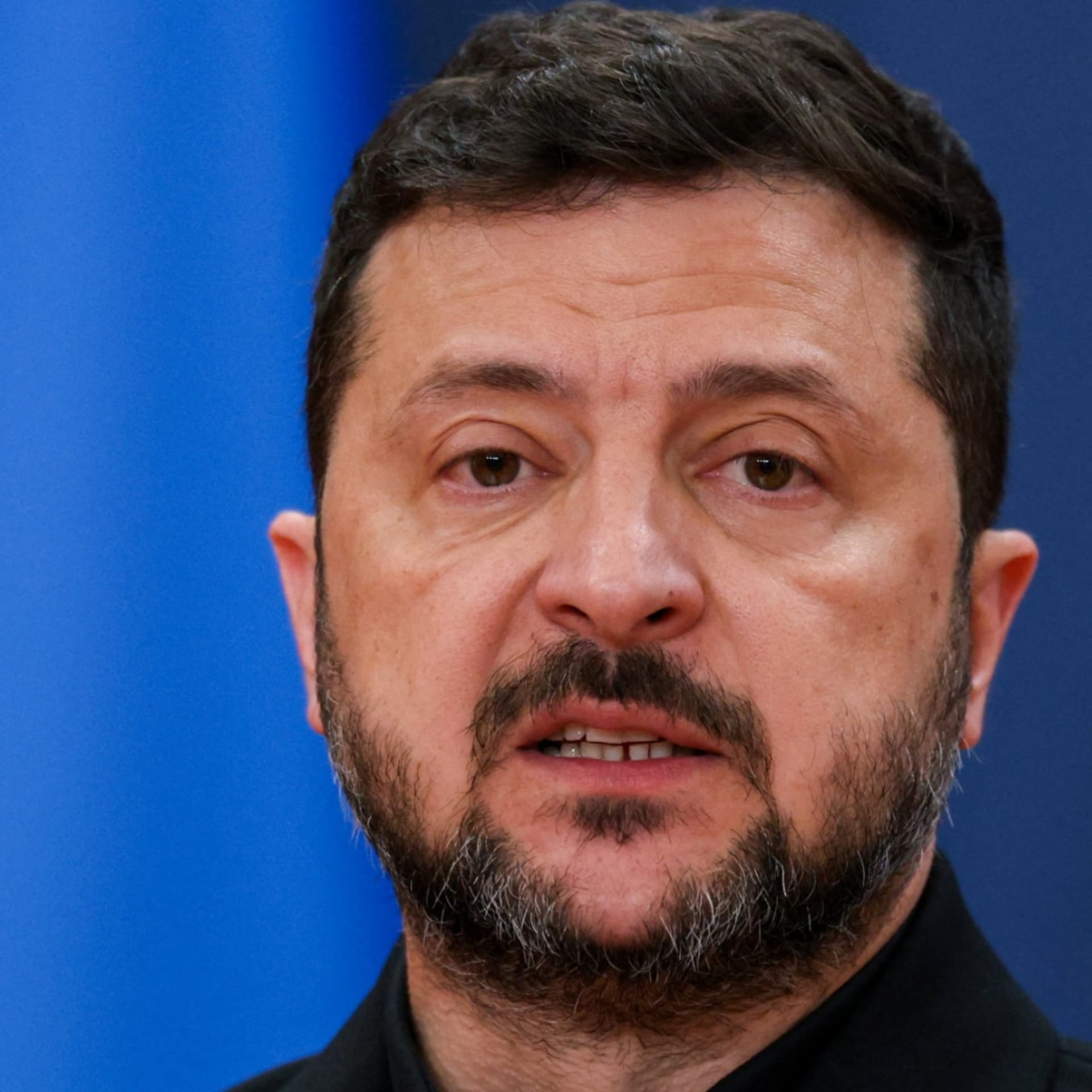
Ukraine's President, Volodymyr Zelensky, has fired one of his top aides, who is reported to be the target of a corruption investigation. Iryna Mudra, the president's deputy chief of staff, was sacked after Ukraine's anti-corruption agency said it had raided the homes of a senior official on Wednesday morning. Meanwhile the former defence minister, Mykhailo Fedorov - whose removal last month prompted widespread street protests - has called for elections. Also: Israel opens up bids for construction of more than 1,000 new homes east of Jerusalem, that would contravene international law. We hear from Gaza about families searching for their relatives - some of the thousands of people missing presumed dead in the conflict with Israel. Plus, the impact pollution controls have had on the lungs of children in London; why South Korea and the US have cut short joint military exercises, and the message it sends to North Korea; the SpaceX rocket drifing in the South Pacific; and the water lilies that can take the weight of a grown person. The Global News Podcast brings you the breaking news you need to hear, as it happens. Listen for the latest headlines and current affairs from around the world. Politics, economics, climate, business, technology, health – we cover it all with expert analysis and insight. Get the news that matters, delivered twice a day on weekdays and daily at weekends, plus special bonus episodes reacting to urgent breaking stories. Follow or subscribe now and never miss a moment. Get in touch: globalpodcast@bbc.co.uk Photo: Ukrainian President Volodymyr Zelensky during visit to Serbia, August 8, 2026. Credit: Reuters