
In short
The Global News Podcast episode covers: Zelensky sacking Ukraine’s army chief after protests; France banning social media for children under 15; a US strike on an Iranian primary school in Minab killing 156 (120 children) with US findings still unreleased; Venezuela earthquake recovery amid ongoing US drug-trafficking case against Nicolas Maduro; Novo Nordisk suing Eli Lilly over weight-loss drug advertising; an abandoned marmoset found on a London bus; and sleep-monitoring tech aimed at disease prediction.
Guests/backgrounds
No named podcast guests in this transcript; reporting is by BBC correspondents (e.g., Paul Adams in Kyiv; Hugh Schofield in Paris; Nawal al-Makafi in Minab; Will Grant in Venezuela; Samira Hussain in New York; Shona McCallum; plus experts like sleep researcher Dirk Jandijk and Withings founder Eric Cariel).
Key claims/examples
Zelensky removed Gen. Oleksandr Syrsky after “Syrsky out” protests; replaced him with Mihailo Drapati, praised for Kiev defense; protesters favored drone/tech-forward Defence Minister Mikhailo Fedorov. France’s ban starts Sept 1 for new accounts with age verification; existing accounts get four months; fines up to 6% worldwide turnover. Minab school attack evidence “likely” US responsibility; US may never release findings. Novo alleges Lilly ads use outdated head-to-head data; Lilly says ads reflect best evidence. RSPCA warns UK primate licensing may increase abandoned monkeys. Sleep trackers/rings/mattress sensors generate “health scores” to flag illness risk.
Written by AI. May contain mistakes. Listen to the episode to check what was said.
Chapters
Tap a time to open that second in VOUkrainian Military Leadership Changes
0:57 to 1:28
Discussion on President Zelensky's decision to sack military leaders.
“But honestly, it's even worse when you buy business software.”
Ukrainian Military Leadership Changes
1:40 to 2:06
Discussion on President Zelensky's decision to sack military leaders.
“We're recording this at four o 'clock GMT on Wednesday the 22nd of July.”
Public Reaction to Leadership Changes
2:06 to 3:19
Analysis of public protests demanding military leadership changes in Ukraine.
“In a study, people using Lily's Zep bound lost an average of 50 pounds compared to an average of 33 pounds with up to a 2.4 milligram dose of the Wigovian's accent.”
The Clash of Military Strategies
3:19 to 6:05
Examination of the differences between the old and new military strategies in Ukraine.
“People chanting Sirsky out will now, after six days of protests, President Zelensky has been forced to give in and sack General Sirsky, while praising his efforts in commanding the defence of Kiev earlier in the war.”
Impact on Zelensky's Authority
6:05 to 7:40
Discussion on the implications of leadership changes for President Zelensky's authority.
“And in fact, they believe that the tide has been turned and that Mr Fedorov is partially responsible for that.”
France's Social Media Ban
7:40 to 7:52
Overview of France's new law banning children under 15 from social media.
“And perhaps if Ukrainians continue to see the war turning in their favour, they will forgive and perhaps forget what President Zelensky did a week you go.”
Implementation of the Social Media Ban
7:52 to 10:01
Details on how France plans to enforce the social media ban.
“France has become the latest nation to take action over the harmful effects of social media, banning children under 15 from using it.”
Iran School Attack Report
10:01 to 11:47
Report on the tragic school attack in Iran amidst the US-Israeli conflict.
“It can be use of a third party who will take in passport details or whatever, and then use that to reassure the platform or to assure the platform that the person is of age.”
Aftermath of the Attack
11:47 to 14:00
Personal accounts from survivors and families affected by the school attack.
“primary school in the southern Iranian city of Minab, killing 156 people, 120 of them children.”
Aftermath of the School Attack in Iran
14:00 to 17:18
Learn about the tragic impact of a US strike on a school in Iran and the collective grief of the families affected.
“Experts say evidence indicates it was a US strike that hit the Shajar-e-Tayyabah school in Minab, southern Iran.”
Show all 15 chapters
Venezuela's Struggles Post-Earthquake
17:50 to 19:45
Explore the ongoing recovery efforts in Venezuela following devastating earthquakes.
“It's almost a month since twin earthquakes struck Venezuela.”
Legal Battle in Weight Loss Drug Industry
19:45 to 22:45
Unpack the legal dispute between Novo Nordisk and Eli Lilly over weight loss drug advertising.
“because in truth, it really doesn't feel like we have a leader.”
Abandoned Animals and New Legislation in the UK
22:45 to 24:41
Learn about the rise in monkey abandonment in the UK due to new ownership laws.
“Imagine the surprise of a London bus driver who spotted a large bag left behind making this noise.”
Innovations in Sleep Monitoring Technology
24:41 to 28:00
Discover how new sleep technologies can predict diseases and improve health.
“From gadgets like wearable trackers to high-tech innovations such as smart mattresses and headbands, sleep monitoring has become an obsession for many.”
Evaluating Sleep Measurement Devices
28:00 to 28:56
Learn about the challenges and advantages of using non-medical devices for sleep studies.
“We know that when we compare the measures of those devices against gold standard measures, it's quite difficult.”
Transcript
Automatic transcript. May contain errors.0:00This BBC podcast is supported by ads outside the UK.
0:30most to investors, including policy initiatives for retirement savings, taxes and trade, inflation concerns, the Federal Reserve, and how regulatory developments can affect companies, sectors, and even the entire market. Mike and his guests offer their perspective on how policy changes could affect what you do with your portfolio. Download the latest episode and follow at schwab.com slash Washington Wise or wherever you listen. Imagine buying a toy for your kid, but it doesn't come with batteries. That sucks. But honestly, it's even worse when you buy business software. You end up with fragmented, disconnected systems that cost a fortune and don't talk to each other.
1:12Odoo completely changes that. Odoo comes fully complete, with all your business apps perfectly integrated and working together seamlessly. It's everything your business needs in one place, saving you time, headaches and serious money. Stop paying for missing pieces. Go to odoo.com. That's O-D-O-O dot com to learn more. This is the Global News Podcast from the BBC World Service. Hello, I'm Oliver Conway. We're recording this at four o 'clock GMT on Wednesday the 22nd of July. Ukraine's president sacks the head of the armed forces after protests call for changes in the military leadership. France becomes the first EU state to ban social media for children.
1:57And we report from the Iranian school hit by a deadly strike on the first day of the war with the US and Israel. Also in this podcast. In a study, people using Lily's Zep bound lost an average of 50 pounds compared to an average of 33 pounds with up to a 2.4 milligram dose of the Wigovian's accent. Weight loss rivals go to court in a dispute over advertising claims and the unusual pet abandoned on a London bus.
2:33Ukraine, like Russia, has changed its military leadership several times during the past four years of all-out war. But the Ukrainian president, Wladimir Zelensky, appears to have shot himself in the foot last week by getting rid of his popular defence minister, Mikhailo Fedorov. The 35-year-old reformist has been credited with revolutionising Ukraine's drone warfare and taking the fight to Russia. But he clashed with the head of the armed forces, Oleksandr Siersky, and President Zelensky was forced to choose between them. He ended up siding with the 60-year-old Soviet-trained general and removed Mr Fedorov from his post.
3:11But that didn't go down well with the public.
3:19People chanting Sirsky out will now, after six days of protests, President Zelensky has been forced to give in and sack General Sirsky, while praising his efforts in commanding the defence of Kiev earlier in the war.
3:36I'm grateful to Oleksandr Sirsky and every one of our soldiers for Ukraine's strong frontline positions. I'm grateful to Mikhail Adropati for having precisely the same view. Today, with Alexander Sirsky and the Chief of General Staff, we talked about further service formats and the correct transfer of affairs. I heard more about the changes from our diplomatic correspondent Paul Adams in Kiev. President Zelensky has clearly bowed to popular pressure to a certain extent. One of the key demands of the protesters who've been on the streets for the past week has been the removal of General Sierski.
4:15That has now happened. President Zelensky heaped praise on him, not least for defending the city of Kiev four years ago at the start of Russia's full-scale invasion. And he has replaced him with a new, much younger commander-in-chief, Mihailo Drapati, a man in his mid-forties, a man thought to be a good friend of the ousted defence minister, Minister Mihailo Fedorov. Mr Fedorov has put out a statement of his own, calling the appointment of the new commander-in-chief a breath of fresh air. That will be good news for President Zelensky, because he will be hoping that that will take the sting out of the protests.
4:53We still don't know exactly what the impact will be, because we don't know what the fate of Mr Fedorov himself is. We know that President Zelensky has offered him some kind of position. We don't know what exactly. And so I think supporters of Mr Fedorov who've been out on the streets We'll want to know a bit more about that, and I'm guessing that the discussions are still going on about his future. Yeah, because everyone will want to know what these personnel changes mean for Ukraine's war effort, which has been having some success. Yes, I mean, look, what we've had revealed in the past week is that there has been a breakdown in the relationship between the defence minister and the commander in chief.
5:32And that's obviously a major issue in the midst of a war. Most protesters believe that President Zelensky chose to remove the wrong person when he removed Mr Fedorov as Minister of Defence. And so they were demanding that he make amends for that mistake as they see it and remove someone who they see as kind of representative of the old guard and a man trained in the Soviet military system who represents old ways of fighting. As all sorts of people put it here, you can't fight a large Soviet army with a small Soviet army. That's what they thought General Sersky was doing. They see Mikhail Fedorov as representing the future, his whole interest and involvement in the promotion of drone warfare and a whole array of other technological innovations, which Ukrainians see as the only way Ukraine can really turn the tide of the war.
6:23And in fact, they believe that the tide has been turned and that Mr Fedorov is partially responsible for that. But I think the fact that Mr Fedorov has given his endorsement to the new commander-in-chief does mean that essentially this week-long crisis is kind of over. But has it damaged President Zelensky's authority? And if so, what will that mean for the rest of the conflict? It has definitely not been good for President Zelensky. For the second time in a year, he has been forced into a kind of U-turn, although this U-turn perhaps is not quite as dramatic as the one last year when he had to reverse a decision on limiting the powers of the anti-corruption unit in Ukraine.
7:04But it is in some ways equally damaging. He has, you know, in the eyes of many been seen to make the wrong choice and then had to change his mind. People suspect that he acted because he felt that Mr. Fedorov was becoming too popular. And this is not the first time Mr. Zelensky has been accused of trying to remove people who he thinks might pose some kind of political threat in the future. And so it has not been a good week for him. But if as a result of this, he has a team who have a similar vision, you know, who can function as a coherent team, then something good will have come out of this.
7:40And perhaps if Ukrainians continue to see the war turning in their favour, they will forgive and perhaps forget what President Zelensky did a week you go. Paul Adams in Kiev. France has become the latest nation to take action over the harmful effects of social media, banning children under 15 from using it. It's the first country in the EU to do so. The new law, which also prohibits the use of mobile phones in high schools, was passed by an overwhelming majority. The French president, Emmanuel Macron, said it was an important moment.
8:16I'd like to thank all the members of parliament. The government has done it and this is a major step forward. France is leading the way in Europe when it comes to protecting our children and teenagers. We'll keep moving forward. But there were mixed reactions on the streets of Paris.
8:34Honestly, I discovered Snapchat and Instagram when I was about 15, but things have changed since then. It scares me to see the content some kids post and what they can see online. I think this law will keep them a little safer. I don't think it's a sufficient measure. The more things are forbidden, the more teenagers want to do them. And a young person with a phone in hand has plenty of workarounds, like VPNs. Our Paris correspondent Hugh Schofield told James Kumar Asami how the social media ban will work. It'll be in two stages. The ban will come into effect on September 1st for new social media accounts.
9:15So if you're on September 1st or 2nd wanting to open a social media account, you will then be asked to provide age verification. All new accounts then will have that stipulation. All existing accounts are given a grace period of four months, during which time the platforms themselves will have to have put in place that check. So the onus is entirely on the platforms, you know, Instagram, Snapchat, TikTok, to institute these checks. And those checks, what do we know of them? Nothing in the sense that the government is saying you've got to do it this way or that way. It's leaving it up to the platforms themselves to decide how they go about it.
10:01It can be use of a third party who will take in passport details or whatever, and then use that to reassure the platform or to assure the platform that the person is of age. Or there are face recognition apps as well, which can read your face. These techniques do exist. And the government is saying to the platforms, you choose, but you've got to do it, and you've got to do it effectively. If not, you'll be fined. Serious fines? I mean, is this something that the platforms are going to take very seriously do you think? The fine it says could go up to six percent of their worldwide turnover for the platforms.
10:38And France is the first EU country to introduce something like this isn't it other countries are doing similar things what kind of debate has there been around this in France? France is not unique in any way in having this what's unique about it is I suppose having a President Macron who who has wanted to make this a kind of important social piece of legislation which will define the end of his era and he thinks be very important. So he's pushed it very hard. But obviously, there's been a fair degree of consensus on this. There was a sort of quite a substantial left wing opposition, but not not nearly enough to block it.
11:15Everyone else was for it. And that, I think, reflects the fact that gradually over the last few, two or three years, there has been a growing consciousness here as elsewhere of the problems caused by social media and where a few years ago you'd have got an automatic reaction from parents saying I can't let my little child not have this because he'd be so left out of the group. Instead of that you're getting more and more parents saying no I can see that this is you know a real problem. Hugh Schofield in Paris. On the first day of the US-Israeli war on Iran a strike hit a primary school in the southern Iranian city of Minab, killing 156 people, 120 of them children.
11:58Almost five months on, the US has still not released the findings of its investigation into what happened, although media reports of an initial assessment suggest the US military was likely responsible. President Trump has said it may never be known who was to blame. Our correspondent Nawal al-Makafi, producer Jasmine Dyer and camera journalist Jack Garland have been given rare access to visit the site. Their report contains distressing testimony throughout. In the blazing heat, the search continues. Months after a missile hit the Shajar-a-Tayyab school in Minab, people here are still looking for what remains of those who were killed.
12:41The authorities were keen for us to visit because this attack has become a big part of Iran's case to the world. Local officials say 156 people died here, including 120 children. I've been teaching here for six years and I'm a first grade teacher. We meet Amina Nadimi. She leads us through what's left of the building. The walls that remain are bright, with painted balloons, flowers and children's writing. She points up to where the girls' classrooms once were and to where they collapsed into the boys' classrooms below. You can't call it a school. Here there are only walls, that smell of death, grief and the blood that was shed here.
13:30Parents, desperate to find their children, arrive to a horrific scene after the attack in February.
13:40I thought, why are they coming here? There's no one inside. Everyone has fled. I didn't know they were all under the rubble. Reza was one of the first emergency responders to arrive. I saw one of my relatives. He was begging that just found my child, found my son. I couldn't tell her that your son is not alive. Experts say evidence indicates it was a US strike that hit the Shajar-e-Tayyabah school in Minab, southern Iran. They've also questioned whether the school was hit because of its proximity to an Islamic Revolutionary Guard Corps site. The U.S. is yet to release the findings of its own inquiry.
14:21Many had hoped foreign intervention would bring political change after months of bloody anti-regime protests. Reza's adamant there was no military activity in the area. The place of the army and everything that was near here is changed. There wasn't any army or anyone that related to this regime around here.
14:46I'm walking around the cemetery where many of the children killed in the Manab school attack have been buried. And around me, there are so many families that have come to visit their young children. They come here every day. I can see some of the siblings of those that were killed kissing the photos of their loved ones that stand by their grave. There are some that are so young that they're playing in between the different tombstones. There is row after row after row of graves. It's a really sobering place to be. Masume lost her nine-year-old daughter Satayesh in the attack. The school had gone.
15:32There was only the smell of smoke and children's hair. I saw a hand, a foot. They had been torn to pieces. Like many of the parents here, her grief has become intertwined with anger. May Trump be destroyed. May he drown in the blood of these children. And may he be afflicted with such suffering that everyone hears about it. In a country deeply divided over its authoritarian leadership, the strike on this school has united many in grief, a stark reminder that every war brings with it a devastating human cost. Nawal al-Makafi reporting from Minab in southern Iran on condition that none of her material is used on the BBC's Persian service and similar restrictions apply to all international media organisations operating in Iran.
16:28Still to come on the podcast, what's your sleep score? I see that you are sleeping a low number of hours. Your heart rate, which has been higher at the beginning of the night and then decreasing. How monitoring our shut-eye can help identify possible illnesses.
16:50Self-directed investing, trading, full-service wealth management, automated investing, financial planning, thematic investing, retirement planning. Phew. And to think, that's just a small taste of what Schwab offers. Because Schwab knows that when it comes to your finances, choice matters. No matter your goals, investing style, life stage or experience, Schwab has everything you need, all in one place, so you can invest your way. Visit schwab.com to learn more. Most of us are one good deal away from finally replacing that worn out rug, fixing up the backyard, or getting the bedroom we actually want.
17:29Good news. That deal's almost here. Wayfair's Black Friday in July sale. Get up to 80 % off area rugs and up to 60 % off outdoor and bedroom furniture. Shop Wayfair's huge selection of styles and find the piece to fit your style, budget, and space. Plus, free shipping. Black Friday in July ends July 27th. Shop today at Wayfair.com. Way fair, every style, every home.
17:54This is the Global News Podcast. It's almost a month since twin earthquakes struck Venezuela. More than 5 ,000 people are now known to have died, and recovery efforts are still going on. In other times, Venezuelans might have been keeping a close eye on the US criminal case facing their ousted leader, Nicolas Maduro. He and his wife are due to return to a New York court on Wednesday for a hearing about their alleged participation in a drug trafficking operation. But as Will Grant reports, people in Venezuela have other things to worry about. Everywhere you turn in La Guaida, there's more evidence of the devastation, whether it is social housing on this side of the road, down near a place called Playa Los Cocos, or indeed on the other side of the road where you see businesses and homes, private homes, also completely crushed.
18:48The picture everywhere you turn remains one of devastation. Of course, now the heavy machinery is moving a lot of the rubble, but there are still family members burrowing into the remnants of those homes, trying to find the bodies of their missing loved ones. And in that context, it's very hard to imagine the idea of the ex-president, Nicolas Maduro, facing drug trafficking charges in a US courtroom. Most people we've spoken to say they simply don't have capacity to think about that now. Yes, many remain extremely angry at not just this government, but previous governments for the state of the nation, and that they believe he should be facing charges.
19:31but many others say all they can focus on now is this moment. Right now, we all feel like we don't have a president here. No one at all. Our president is ourselves, our families and the Venezuela people because in truth, it really doesn't feel like we have a leader.
19:51Honestly, Maduro has never worried about whether the Venezuelan people are doing well. That has always been a lie. What matters to them is how they're doing, nothing more. Whether things go well or badly for him now is down to God above. Only he will give the answer to that and a solution to all of this too. As you were hearing from both of those grieving family members, they have no interest in what is happening in New York or what is happening to their ex-president, Nicolas Maduro. All they are concerned about right now is what's happening in here, in the rubbling La Guaida, in the search for their missing relatives.
20:26Will Grant, reporting from Venezuela. The two biggest players in the multi-billion dollar weight loss drug industry are heading to court. The maker of Wegovy and a Zempik, Novo Nordisk, has launched legal action accusing its arch-rival Eli Lilly, which makes Monjaro and Zepbound, of false advertising in suggesting its weight loss drugs perform better. In a study, people using Lilly's Zepbound lost an average of 50 pounds, compared to an average of 33 pounds with up to a 2.4 milligram dose of the Wagovi injection. The US is one of only a handful of countries to allow pharmaceutical companies to advertise prescription medicines directly to consumers.
21:10Novo Nordisk is now seeking damages, including some profits its rival allegedly made from the ads. John Cuckerman from Novo Nordisk spoke to Bloomberg. They're using an old, outdated study that is a head-to-head study, which is no longer current. and if they were using current data, it paints a very different picture. What we will show first is that it's obviously misleading. So the only outcome and the only right thing to do is to pull these advertisements and to pull them this morning. Our business correspondent in New York, Samira Hussain, has the details. The Danish firm Novo Nordisk filed a lawsuit in the U.S.
21:49claiming Eli Lilly made adverts that created the misleading impression that Eli Lilly's medicines are superior. Now, the American pharmaceutical giant hit back, saying it firmly stood behind its advertising, that it was grounded in the most direct scientific evidence available. Novo says that the ads compare the highest approved doses from Eli Lilly to lower doses of Novo's while omitting newer, higher dose options. Now, Novo says it is seeking a court order requiring Eli Lilly to pull its ads and instead run what it called corrective advertising campaign. Now, the two companies are locked in a fierce battle to dominate the weight loss industry, especially here in the US, which by some estimates could be worth more than $100 billion by 2030.
22:45Samir Hussain in New York. Imagine the surprise of a London bus driver who spotted a large bag left behind making this noise.
22:59Well, inside was a monkey in a cage. The marmoset had been abandoned and was reported to the RSPCA Animal Welfare Organisation. Oyster, named after the Oyster card used on London Transport, is now doing well. But the RSPCA's Claire Dew says the number of abandoned monkeys is likely to rise after the UK passed a law requiring the estimated 5 ,000 primate owners in Britain to get a licence. Animal abandonments are very common. They are the bread and butter, unfortunately, of animal welfare situations like ours, but it's usually cats left in carriers and bin sheds or dogs tied to lampposts or rabbits let free in the wild.
23:41It's very rare to find a monkey that has been left unattended or abandoned. However, the change in legislation recently gave us some cause for concern. The RSPCA certainly were aware that there would be more numbers. This is the first one we've seen in London at the moment, or the first one we found. The worries are that there will be more unattended, abandoned, dumped monkeys, or maybe even released directly into the world, left places where nobody can find them. They certainly can't cope here in the UK by themselves. We don't know what type of monkeys people may now have. The smallest ones are potentially the cutest, but that doesn't mean that people won't move on to something bigger.
Read the full transcript
24:21They're very demanding. They like to live in large social groups. Most people that keep them, keep them individually, which is not great, which means it wants a lot of attention. They've got some very specialist health needs. If you keep a primate now in the UK, you're almost obliged to keep it as well as a zoo. So I think we are concerned that the number will rise. Claire Dew from the RSPCA. From gadgets like wearable trackers to high-tech innovations such as smart mattresses and headbands, sleep monitoring has become an obsession for many. But new developments in sleep health technology are now focusing on disease prediction, as our reporter Shana McCallum has been finding out.
25:01According to research, nearly half of all Americans and around 48 % of people in the UK are tracking their sleep. And I'm not just talking about the duration. I'm talking about really drilling into all aspects. So room temperature, the time you go to bed, how long it takes for you to fall asleep once the lights go out, which is something called sleep latency. REM sleep, which means rapid eye movement. That's the stage of sleep where most of your dreams happen. Deep sleep or slow wave sleep, which is the time of the night that supports the memory growth and cell regeneration. There's a lot to it.
25:39Now, this can be done using wearables, smart rings such as the Aura, the Samsung Galaxy or the Lunar Ring are ones that are popular, but also by devices that you wear on your wrist. So things like the Whoop and, of course, watches like the Garmin, the Fitbit or the Apple Watch. All of these look at things like your breathing, your heart rate and your body movement. And they usually give you a score in the morning based on a combination of all of those things. I went to Withings, a French health tech company. after trying out their sleep analyzer. Now, this is a kind of device that's like a small mat.
26:13It goes under the mattress, so you don't have to wear it, and it's not intrusive. And it was the first sleep tracker to provide sleep lab metrics without anything to wear. It's what the industry calls a needable. That's technology in your environment rather than on your body. Manon Navalou is the mechanical manager at Withings. The pressure sensor records changes. When you breathe, your thoracic rise and fall will be recorded here as well. The tech aims to, by monitoring what it can through the movement of your body, heart and breathing, build a health score that can predetect disease and connect you with a doctor at exactly the right time.
26:53So after looking at the mechanics of the sleep analyser, I went through my own data with Withings founder Eric Cariel. I see that you are sleeping a low number of hours. and what about this sleep score then at the moment we're seeing i've got 49 it's out of 100 what we see is that your duration is quite low if you have taken glass vine last night your heart rate which has been higher at the beginning of the night and then decreasing regularity i guess is something that you're going to be tracking over a longer period of time yes if we look at for example april we've got more green there so april i slept slightly better yeah exactly last month more yellows creeping in and this month more red.
27:36This evolution is very important to detect a lot of things like a disease which is coming and probably you are preparing to be ill. It's why sleep is very important and can really affect your health. So you can see the range of different things I was able to determine from my own data but of course I wanted to talk to an expert as well. I'm Dirkendijk, Professor of Sleep and Physiology at the Surrey Sleep Research Centre at the University of Surrey. We know that when we compare the measures of those devices against gold standard measures, it's quite difficult. With gold standard, we bring people into the laboratory, we put electrodes on their head, close to their eyes, we measure muscle tone.
28:19And if we have those signals, we can very accurately quantify sleep according to very well established criteria. So these are not medical devices providing that gold standard sleep study but they do have their uses. Some of these devices are used in real research studies. One of the big advantages of those devices is that you can record sleep for many many nights, weeks or months which is something that's very difficult to do in the laboratory with your gold standard methods. Sleep and physiology professor Dirk Jandijk, ending that report by Shona McCallum. And that is all from us for now, but the Global News Podcast will be back very soon.
29:04This edition was mixed by Chris Cousaris and produced by Stephanie Zacherson. Our editor is Karen Martin. I'm Oliver Conway. Until next time, goodbye.
From the publisher
The Ukrainian President Volodymyr Zelensky has fired his army commander-in-chief, Oleksandr Syrskyi, in one of the biggest shake-ups of the country's military leadership since the start of Russia's full-scale invasion. General Syrskyi had clashed with the popular defence minister, Mykhailo Fedorov, whose own removal from office last week triggered rare mass protests in Ukraine.
Also: France becomes the first country in the EU to ban children under the age of 15 from using social media. A special report from the school in Iran where 156 people, mostly children, were killed at the start of the US-Israeli war. As Venezuela's ousted leader Nicolás Maduro is due back in court in New York, Venezuelans tell the BBC they are too focused on trying to rebuild their lives after the earthquakes to give much thought to the criminal proceedings. The maker of Wegovy and Ozempic, Novo Nordisk, has launched legal action against its rival Eli Lilly, accusing it of false advertising in suggesting its weight-loss drugs perform better. Animal welfare experts in Britain are looking after a marmoset monkey that was found abandoned in a laundry bag on a London bus. And we look at the new developments in sleep health technology focusing on disease prediction.
The Global News Podcast brings you the breaking news you need to hear, as it happens. Listen for the latest headlines and current affairs from around the world. Politics, economics, climate, business, technology, health – we cover it all with expert analysis and insight. Get the news that matters, delivered twice a day on weekdays and daily at weekends, plus special bonus episodes reacting to urgent breaking stories. Follow or subscribe now and never miss a moment. Get in touch: globalpodcast@bbc.co.uk
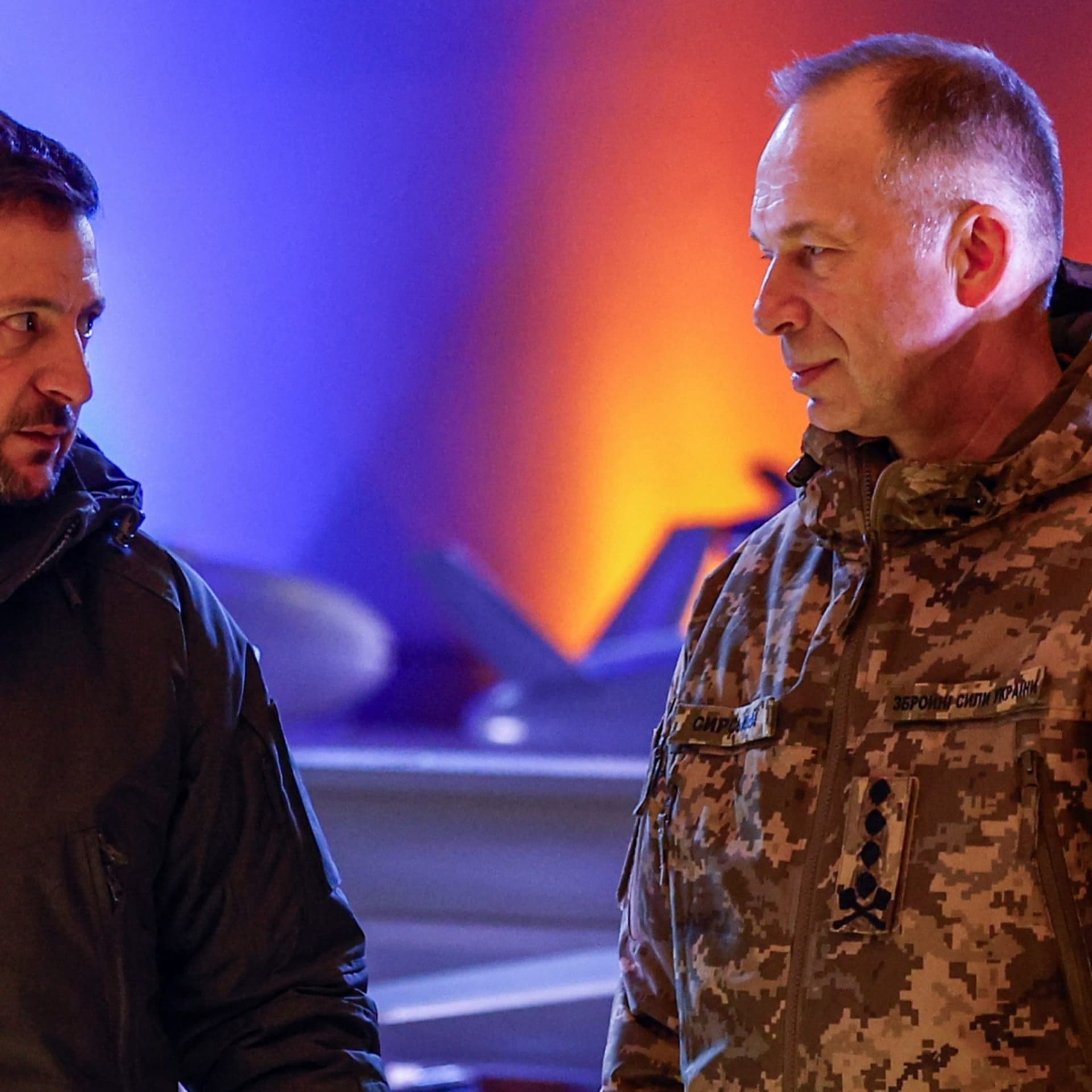
Photo: Ukraine's President Zelensky and now former Commander in Chief of the Ukrainian Armed Forces, Colonel General Oleksandr Syrskyi, visit an exhibition of new Ukrainian made drone-missiles Peklo in Kyiv. Credit: REUTERS/Valentyn Ogirenko