
In short
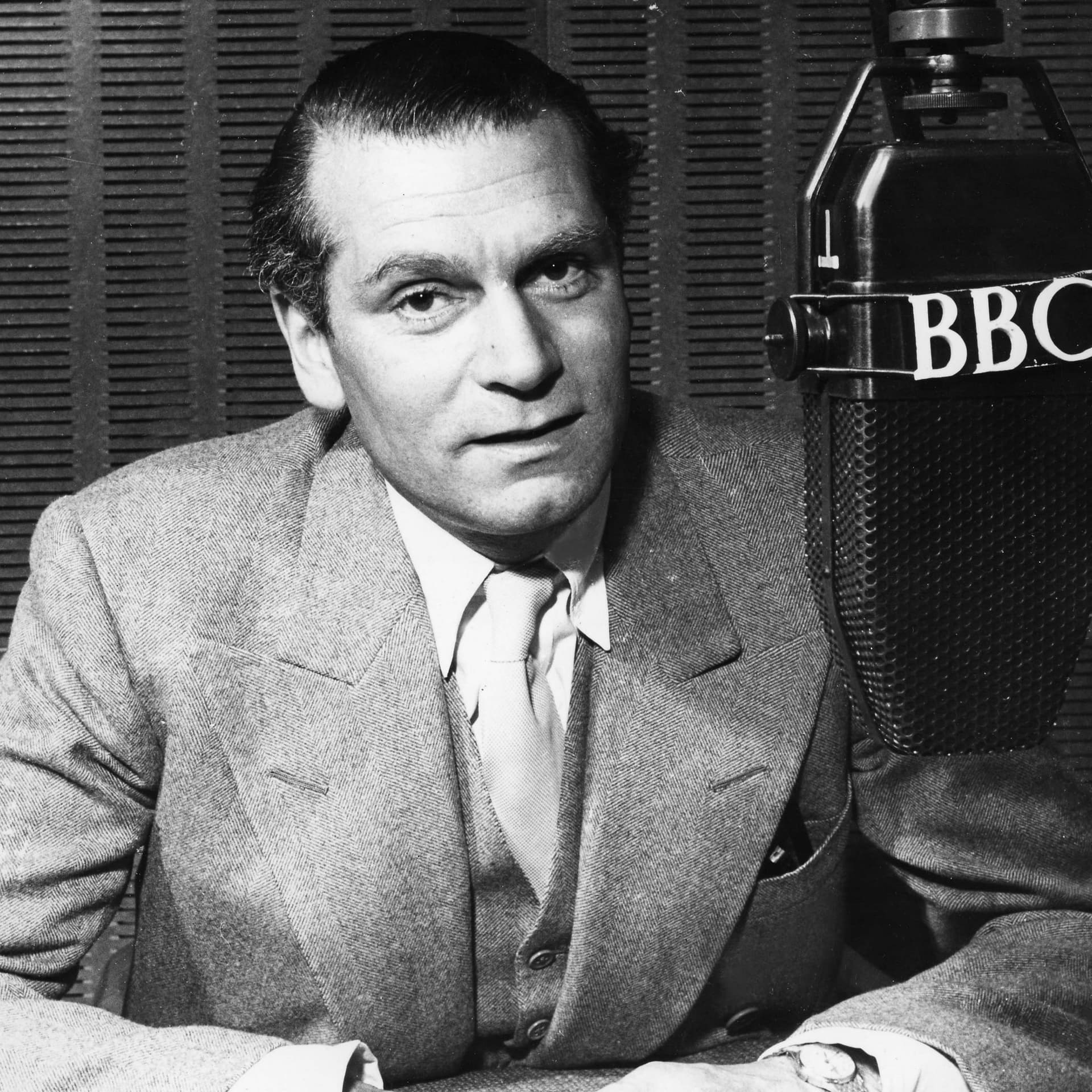
The episode profiles actor Laurence Olivier (Baron Olivier of Brighton) through stories from his nominator, journalist Tim Walker, and actor Sir Derek Jacobi. Topic: Olivier’s theatrical “transformation” (vanishing as himself and reappearing as someone else), his physical-voice technique, and his role as the driving force behind the National Theatre.
Guests
Tim Walker is a long-time newspaper journalist and wrote a play about Olivier and Margaret Thatcher; Derek Jacobi helped found the National Theatre and began his professional career at 23.
Key claims
Olivier coached Thatcher’s voice and appearance, turning her into a “Lady Bracknell” figure; he was “acting 24-7” and unsure who he was offstage; his “greatest” mystique helped secure institutional power.
Notable examples
Olivier as Othello and Henry V; Thatcher “scratchy” voice; Olivier’s “Sword of Edward Keane” badge; anecdotes about slapping Maggie Smith during rehearsals and his cancer bout.
Written by AI. May contain mistakes. Listen to the episode to check what was said.
Chapters
Tap a time to open that second in VOIntroducing Laurence Olivier
0:30 to 0:51
The hosts discuss the significance of Laurence Olivier and introduce guests.
“The idea of pretending to be somebody else, of making an audience believe that I was somebody else.”
Tim Walker's Perspective
0:51 to 2:26
Tim Walker shares his admiration and early impressions of Olivier.
“It's amazing this series has run so long and no one has proposed him before.”
Derek Jacoby's Experiences
2:26 to 3:34
Derek Jacoby recalls his time with Olivier and the National Theatre.
“Scratchy and screechy, and he stopped her being screechy.”
Coaching Margaret Thatcher
3:34 to 5:36
The conversation shifts to Olivier's coaching of Margaret Thatcher.
“And there was nothing grand about him at all.”
Olivier's Acting Style
5:36 to 7:27
Discussion on Olivier's unique acting style and physicality.
“when I'd never seen him in the make-up or anything, I mean, I was really so astonished because he looked so amazingly different.”
Olivier's Early Life and Career
7:27 to 9:26
Exploring Olivier's childhood, early influences, and acting beginnings.
“because when you are the greatest, it's very difficult to keep it going.”
Marriages and Relationships
9:26 to 12:28
A look into Olivier's tumultuous marriages and relationships.
“Tim, I was struck by what was said about his mother and his desire for her love and affection.”
Flirting with Fame
12:28 to 14:00
Discussion on Olivier's charm and appeal to audiences.
“about whom he later said, poor old Jill, she didn't deserve much, but she deserved better than me.”
Exploring Laurence Olivier's Charisma
14:00 to 16:41
Learn about the captivating persona of Laurence Olivier and his theatrical techniques.
“And I mean, there have been, you know, a guy called Donald Spotto wrote a book suggesting a relationship with Danny Cape.”
Olivier's Unique Acting Style
16:41 to 18:31
Discover how Olivier's acting approach combined physical presence and vocal techniques.
“you look at them when they're in a film, you're aware of them.”
Show all 15 chapters
Olivier's Evolution as an Actor
18:51 to 21:32
Discuss Olivier's career transition and influence on younger actors.
“If you look at that acting now, it is a bit mannered.”
The Duality of Olivier's Persona
21:32 to 24:15
Explore the complexities of Olivier's identity as an actor and a person.
“So he hadn't made the kind of money that the kind of actors who decided to be film stars had made because he was serious about acting, and I think he'd made great sacrifices for it.”
Olivier's Legacy and Film Roles
24:15 to 26:54
Reflect on Olivier's prominent film roles and his approach to acting.
“He wasn't quite sure of that person who was not required to do anything to impress an audience.”
Memories and Tributes to Olivier
26:54 to 28:00
Hear about personal memories and tributes paid to Laurence Olivier.
“Tell me, Tim, about The Sword of Edward Keane.”
Memorial Service Reflections
28:00 to 28:39
The guests share memories of Laurence Olivier's memorial service.
“The following October, there was a memorial service held at Westminster Abbey, in which I think you, Sir Derek, were a participant, as you say.”
Transcript
Automatic transcript. May contain errors.0:00Tim Walker:This BBC podcast is supported by ads outside the UK.
0:30Derek Jacobi:School ready at Whole Foods Market. I found it the biggest fun. The idea of pretending to be somebody else, of making an audience believe that I was somebody else. The words of Laurence Olivier, Baron Olivier of Brighton, actor, director, first head of the National Theatre, star. It's amazing this series has run so long and no one has proposed him before. So I'm delighted to welcome his nominator, Tim Walker, to our show, and also to let you know that we're recording in the home of Sir Derek Jacoby, who began his professional career as one of the founding members of the National Theatre at the age of just 23.
1:12Derek Jacobi:And he's with us too. But Tim Walker first. Why, Tim, are you nominating, what should I say, Larry? Should I say Sir Lawrence, Lord Olivier? What should we say? You like to be called Sir Lawrence.
1:24Tim Walker:And there's some debate about how you say Olivier. I mean, And I've had arguments with directors who will say to me, it's yay at the end. So I first became aware of him as this man that everybody felt was amazing. And, you know, my parents would say, my goodness, there's the lance in this admittedly awful film, like maybe Clash of the Titans or playing Rudolf Hess in Wild Geese 2. But there was a kind of grandeur about him, even in terrible films.
1:50Derek Jacobi:Tim Walker, I should add, is best known as a journalist for nearly every paper. And you wrote a play about him, him and Mrs Thatcher.
1:58Tim Walker:I mean, this was a big secret. People like Derek, who were in his inner circle, knew. But he was nevertheless a very private person, a very discreet person. And Thatcher, basically, he changed her voice. He made it somewhat deeper. He certainly made her hair much bigger. He did things, you know, with her makeup and her outfits and transformed her from being a Miss Prism into kind of a real-life Lady Bracknell. Slightly camp, slightly over-the-top, wouldn't work today, but he made that metamorphosis for her. Scratchy and screechy, and he stopped her being screechy. Absolutely. And you yourself, in your own memoirs, called her scratchy.
2:37Tim Walker:A lot of people didn't seem to even remark upon it, but there's wonderful footage of a young Michael Cockerell, the television journalist running alongside her and saying, Mrs Thatcher, you seem very different to how you were yesterday. And she said, no, I don't think I am. And he said, but you are. And who were your two stars in the play? Well, the great Derek Jacoby, who was himself a protégé of Sir Lawrence, and Francis Barber, who admittedly doesn't look anything like Mrs Thatcher, but on radio she did sound like her. And that's all that mattered. Yes, she did.
3:07Derek Jacobi:Derek Jacoby. So, Derek, you were invited to become one of the founding members of the National Theatre, along with all kinds of famous people, Maggie Smith, Joan Plowright. Tell us about that time. Was he an intimidating man? He was a god. To me, he was a god. I remember him saying, call me Larry. I could no more call him Larry than fly to the moon. He was always Sir Lawrence, and he was a wonderful employer. He was a great friend. He was so encouraging. And there was nothing grand about him at all. And it was he who kick-started the whole idea of the National Theatre, wasn't it? Yeah, indeed it was.
3:49Derek Jacobi:It was his baby. And that's what he called us all. We were his babies. He was a father figure. He was great. But eminently approachable. There was nothing grand about him. Any plays that he directed you in? Othello was one, wasn't it? Yes, I, what did I play? And I'm so old now, I forget everything, forgive me. But it was a lovely, lovely part. Not Iago. That was Frank Finlay. That was wonderful Frank. No, it's gone, it's gone. But it was a good part. It was a very good part. And to be up on the stage with Sir Lawrence and the effect that he had on an audience, that they're almost in awe of him.
4:33Derek Jacobi:You know, it was wonderful. Did you know about his coaching, Mrs Thatcher? I discovered that at some point, that he had given her lessons. And I thought, what the hell has he taught her? You know, I mean, I wouldn't have thought that voice came anywhere near Laurence Olivier. But apparently he did. Thatcher was in effect a theatrical creation, you've said in an interview, Tim, and Larry as well. Let's hear him speak. This is Sir Lawrence Olivier. Take a listen. You have always impressed me as probably the most physical fit actor I've ever seen. Is this true? Yes, I am. I am very physically fit.
5:17Derek Jacobi:I work hard at a gymnasium whenever I get the opportunity, well, at least two hours a week. And I think it's an essential thing for an actor. I think if people ask me what is the prime requirement or qualification for an actor, I would say physical strength is almost the first. And this is Maggie Smith. The first time I ever saw him at the dress rehearsal of Othello when I'd never seen him in the make-up or anything, I mean, I was really so astonished because he looked so amazingly different. I mean, I don't know how he does that, to sort of vanish as a person and reappear as somebody else, but it really was an astonishing sight.
5:51Derek Jacobi:I mean, it was quite extraordinary. Famous voices. Oh, yes, I adored Maggie. We were great, great chums. I learned so much from Mags she was a superb actress and just hearing her there was very emotional
6:11Tim Walker:what she didn't mention there was when she saw him in his make-up in his Othello make-up you can tell the story
6:18Derek Jacobi:well the story I knew is that they had adjoining dressing rooms and on matinee days she would put the Supremes on baby love I'm not going to let the old bugger sleep She said, I'm going to keep him awake.
6:34Tim Walker:But she adored him. But she took the mick out of him. Like, he did once. And this has been documented, and Maggie herself has talked about it. We're so annoyed by her, although it was in the part and he had to do it, he slapped her with some force. Yes, he did. He did. He hit her. Gosh, gosh.
6:51Derek Jacobi:Laurence Olivier was born in Dorking in Surrey. His father was a rector, and his mother died suddenly when he was only 12. Do we know when he began acting, either of you? I think at school.
7:03Tim Walker:At school. I mean, and famously, he was just 17, and Ellen Terry was in the audience. I mean, as she is, you know, in school productions. I don't know quite how that happened. I think I saw a picture of him too in a school production in drag. I mean, he played a queen in Shakespeare. But even at that age, you know, for Ellen Terry to say he wasn't playing Brutus, he was Brutus. You know, he was this great actress. This word great has been hanging around his head a bit like a millstone because when you are the greatest, it's very difficult to keep it going. And I think that's why people, perhaps towards the end of his career, did take the mickey out of him a little bit.
7:38Tim Walker:And he became arguably, I think younger actors nowadays will always think it's a style of acting that's not fashionable anymore. But poor chappy simply acted the way he was taught. We were all in awe.
7:50Derek Jacobi:Peggy Ashcroft was also contemporary. she said that his hair stood on end but he was intensely lively and fun how about you sir derrick what were you like as a young man did your hair stand on end no i was called carrots because i i had flame red hair constant embarrassment with bright red hair and freckles covered in freckles gosh they're not gone not the prettiest sight yes all gone how did acting How did acting become a career for you? That's what I wanted to do from the year dot. That's what I wanted to be. There was nothing in the house or in the family that suggested theatre was going to be my career.
8:35Derek Jacobi:I was just born like it. Here's another actor, Toby Jones, reading from the Radio 4 Book of the Week, Olivier, back in 2013. Lawrence, nicknamed Paddy due to his explosive temper, does not seem to have been a prepossessing child. According to a family friend, he learnt deliberately to provoke his father's wrath in order to produce more love and attention from his mother. He felt an urgent need to ingratiate himself with all around him. Everyone likes to be liked, but Olivier's craving for popularity was both exaggerated and enduring. He's coy. He's vain. He has tantrums. He needs to be wooed, said his friend and admirer, Eliakazan, many years later.
9:28Derek Jacobi:Tim, I was struck by what was said about his mother and his desire for her love and affection. Tell me more.
9:36Tim Walker:Well, I think his father, who was a vicar, was quite a remote vicar. But his mum, Agnes, he was very, very close to. I think most of us are, to be perfectly honest. It's a much closer relationship with our mum. And so when she died unexpectedly of a brain tumour, when he was just 12, of course it hurt him terribly. And I think, you know, I think about my own mother. You know, I could literally go mad with a machine gun in the office and she would say, well, they all deserved it. You know, your mother has unequivocal love and support for you. And I think if you lose that, if I'd lost that at an early age, I think you would chase it in other people.
10:11Tim Walker:And I think all the women in his life, you know, although he's married three times, there were lots of other women in his life. And I think he was kind of chasing that affirmation, that validation, that you can only really get from a mother.
10:22Derek Jacobi:My father's only advice was stop making an exhibition of yourself. Oh, I've heard that said to me. Fortunately, I didn't take the advice. Neither of us would have had the careers that we've had. No, exactly, exactly. Was Sir Lawrence an immediate success?
10:37Tim Walker:Well, it was his great old rival, John Gielgud, who gave him his first break in, I think, Romeo and Juliet. So he kind of owed it to Gielgud. And I think, you know, like Derek, Birmingham Rep was the big thing in his career, which got him going. And that was where he spotted you. And I think that's where he had an affinity. He was a sort of father figure to me.
10:55Derek Jacobi:We had a very close relationship, more than just a renowned, famous actor and a young, upcoming young actor, you know. Noel Coward did quite a bit to help him early in his career, didn't he?
11:10Tim Walker:amazing production of Private Lives, and, you know, Noel Coward mentored him to some extent. And I think, you know, he talked to him in his book about how when he did his early films, he was, you know, he was being too theatrical, and directors were saying that's not, you know, less, it's more. And it did take him a while to adapt. I mean, even now when you look at Rebecca or Ruthering Heights, it seems slightly mannered, but it was of its time.
11:33Derek Jacobi:Here's a few famous voices on his acting style, beginning with Evelyn Asher, who knew him at drama school. He was always being ticked off for waving his arms too much or dramatic gestures or suddenly producing some extraordinary piece of business which nobody had ever thought of. With Hamlet, he actually raised his brow line to an enormous extent by shaving off the whole top half of his hair. I thought he was a dazzling actor, that the voice was virtuosic, that he was completely in the character and I don't think that the reports of how good he was are exaggerated by wit. You're listening to The Great Life of Sir Lawrence Olivier, Lord Olivier, nominated by Tim Walker and we're recording today in the home of Sir Derek Jacoby.
12:24Derek Jacobi:Can we talk about his wives? His first marriage was to Jill Esmond about whom he later said, poor old Jill, she didn't deserve much, but she deserved better than me. And then he met Vivian Lee. Tell me either of you about that relationship. I only met Vivian, I think, once. Immediately fell under the spell. She was hypnotic. She was beautiful. Vocally, she was extremely alluring too. He obviously adored her.
12:58Tim Walker:Was he a good husband, do you think, Tim? No, I don't think so. I mean, Jill Esmond would no doubt if she was still alive say he wasn't because clearly he was having a relationship with Vivian Leigh while he was still married to her, as indeed Vivian Leigh was still married to somebody else. So it was a colossal mess. But I think he couldn't really help himself. I think he flirted with men, he flirted with women. He was very camp. Absolutely. Yes, really, very camp.
13:25Derek Jacobi:Because it was the essence of masculinity. but he could flap his wrists like no tomorrow. Vivian fell into his life like a wounded bird, writes Roger Lewis in his Real Life of Laurence Olivier. Callow with Jill Esmond, patriarchal with Joan Plowright. With Vivian and in his prime, he was a hero, beset by sin and a demigod afflicted by fallibility. They never got over each other. What do you make of that, Tim?
13:54Tim Walker:And, you know, unlike Derek, you know, he hadn't been to university. He wasn't a great intellect, you know, and he often would compare himself to John Gielgud and say, you know, he was an actor who acted, you know, very much with the cranium, whereas he acted with the rest of his body. And I mean, there have been, you know, a guy called Donald Spotto wrote a book suggesting a relationship with Danny Cape. I don't think that was true. But I think like all good actors, I think the kind of aspect of him where he could flirt with men and women. And that's why you looked at him. And he had the whole audience looking at him.
14:24Tim Walker:Absolutely, absolutely.
14:26Derek Jacobi:He appealed to every aspect of those watching him. Here's Sir Lawrence talking about trying to get on with Rafe Richardson in an interview with Michael Billington on Radio 4. I said, come and have a drink, won't you? And he said, oh, yes, thank you. Not very willing, but quite pleased to have a drink. And I said, what would you like? He said, I'll have a half pint, I think, please. And I said, thank you very much, a half pint. and a gin and pep, please. He said, what? I said, gin and pep? He said, what on earth, then? I said, well, it's gin, half gin and half peppermint cordial. He said, good God.
15:05Derek Jacobi:He said, nice. I said, I don't care if it's nice or not. And I risked it. I took a big risk in making an effeminate joke. I said, oh, yes, I like it very much. Actually, it's very good for the ovaries. To my great relief, he laughed. And we've been friends ever since then. That was in 1925 or 6. Oh, that's sweet. Well, we should say that in the war he joined the fleet air arm and then began working on Henry V where, as we've said before, he went to great lengths to look the part. Later he would play King Lear and he took great care to prepare and eat a wild rabbit, replacing its innards with a piece of salmon which looked almost the same and probably shocked the audience.
15:53Derek Jacobi:Here he is though in Richard III with Rafe Richardson. I'm keen to know what you both think of this. What's o 'clock? I am thus bold to put your grace in mind of what you promised me. Well, but what's o 'clock? Upon the stroke of ten. Then let it strike! Why, let it strike. Because that like a jack thou keep'st the stroke betwixt thy beginning and my meditation. I'm not in the giving vein today. Why, then resolve me whether you will or no. How trouble is to me. I'm not in the vein.
16:33Tim Walker:Gloriously over the top. Yes, wonderful. He had that thing, Derek has it too, and it's very unfair. For some reason, you look at somebody when they're on a stage, you look at them when they're in a film, you're aware of them. But he was very declamatory. He wanted the people at the back of the stage to hear, you know, for sure. I mean, I remember interviewing Jonathan Miller once, and he said when he was playing Shylock, he said, you're going to have to take at least three inches off that nose. That sort of thing doesn't work these days. But Lowry, that was the kind of actor he was. He had to get the look, you know, he had to get the walk, he had to get all the physical.
17:07Tim Walker:I think it's called acting from the outside in. But also he had that thrilling voice.
17:14Derek Jacobi:He had notes in his voice that were just made to fill a theatre.
17:20Tim Walker:And he did something with his eyes too. His eyes could sort of raise to the top of his head. He was an incredibly flirtatious man. Oh, he was. And I think you see that on stage, he couldn't help himself.
Read the full transcript
17:33Derek Jacobi:Has his vocal technique aged well? I've got to admit that I find it a bit stilted, a bit overproduced. I did, even at the time, you remember Peter Sellers used to do, mimic him. It's been a hard day's night and I've been working like a dog, like a dog. Yes, but you can't deny that it was thrilling to listen to. It was unique that that sound was coming out of this man. He made words special. He made everything he did, everything he said special. That's what I admired about him, that he's totally unique, totally. There was no other actor. There never has been. Pop quiz. What's in your kid's lunchbox?
18:24Derek Jacobi:At Whole Foods Market, they've already done the studying. Over 300 food ingredients are banned from their shelves. No hydronated fats in the peanut butter and no high fructose corn syrup in the cookies. And for sandwiches, there are no synthetic nitrates or nitrites in any of their deli meat. so you can pack lunchboxes with peace of mind. Get back to school ready at Whole Foods Market.
18:50Tim Walker:It's hard to judge him as an actor because it was kind of mannered. If you look at that acting now, it is a bit mannered. And a great skill, I think, was mentoring younger actors like Derek. And that, I think, kept him young and kept him current in terms of the acting world. And I don't think he really liked, probably, initially, those kitchen sink dramas. I think they probably seemed pretty ghastly to him. But he knew he had to make that transition. And so he started doing the John Osborne play, the entertainer. And he did make the transition. So he was a great re-creator of himself. Yes, and his company at the Old Vic was full of the young, thrusting actors.
19:25Derek Jacobi:And he enjoyed being part of that. Let's talk about his role at the National Theatre. We mentioned earlier an institution that came late to Britain. France had a National Theatre since 1680. What do you remember, Sir Derek, of the early years before it moved to its purpose-built home on the South Bank? Oh, those early days at the Vic were... It was the old Vic, wasn't it? It was the old Vic. They were wonderful. It was just a home. Albie Finney, Maggie Smith, Bob Stevens. And I was a youngster. I mean, I was Mr Nobody. But to be in that company, in that glorious, renowned, famous theatre, was a young actor's dream.
20:12Derek Jacobi:Do you think, Tim, anything was lost with the move to the National Theatre, the building on the South Bank?
20:18Tim Walker:I mean, he got together with Dennis Lasden to design it. And he, you know, it was very much, I mean, architects always say to me, I mean, architects are not an odd breed, but they always say it's a very beautiful building because it's very purpose built. You know, you've got the huge stages, the right acoustics and everything. So I think the National, I think, was the perfect venue for, you know, a perfect theatre, you know, made to be a theatre. I think our nation needed a focal point for theatre.
20:44Derek Jacobi:In 1970, he was told that he would have to give up acting for a year. Here he is talking to the PM programme on Radio 4 about this decision on the day that he made it. I didn't want to believe it. Well, then yesterday, I'm told that I can't act for a year. Then this morning, I go early in the morning to the hospital again, and that's sort of corroborated, except that it's... Well, it's rather gloomy. Let's talk of something else. It'll be all right eventually, I'm sure. It must have been rather shattering, though, because you do enjoy acting, I think. Well, I don't enjoy acting, but I can't live without it.
21:20I'm like a sort of cart horse with a collar around its neck.
21:23Derek Jacobi:If you take it off, it starts wooing for it. oh that sounds that's so typical of him i mean it's just wonderful to hear that
21:32Tim Walker:truly truly he had been ill had he was the yes i mean he was quite open about it you know he had a bout with cancer which he came through but he gave an awful lot to his business it is exhausting and also unlike the peter o'tools and the albert finney's it wasn't about money for him and you Recently, his place near Stenning in Sussex, his family home, was put on the market. His estate agents put out a video. It was quite a basic place. It wasn't some vast mansion. So he hadn't made the kind of money that the kind of actors who decided to be film stars had made because he was serious about acting, and I think he'd made great sacrifices for it.
22:09Derek Jacobi:I was so interested in what he said about not being able to live without acting. I've read some people suggest that he saw everything as a performance, on stage, off stage, all the time. Is that fair? Yes, that would be true. He was an actor 24-7. Yes. Was he very good at being himself? Was there a himself behind all that? Very interesting question. I sort of thought I'd found it at one point. He took to me and we got on. He allowed me to see his underbelly. I would go on walks with him down in Brighton, along the Esplanade and onto the beach. And he was an older, wonderful, distinguished, kind actor, father figure to me, and he was great.
23:06Derek Jacobi:Was he comfortable, Tim, when he wasn't being somebody else?
23:10Tim Walker:I don't think he was. I mean, I remember Jonathan Miller, who directed him in The Merchant of Venice, saying to me, if ever I'm around Sir Lawrence, if we just hang around together, nobody notices him. He described him as being like a bank manager, you know, very unassuming, just, and nobody would look up. But that life came to him when he was on the stage, when he was on film. But as an ordinary person, I don't think there was much there. And I think to some extent he was a creation. He created himself. And you think about, you know, somebody like Peggy Ashcroft, who was at acting school with him, who described the young Olivia as very uncouth.
23:45Tim Walker:You know, it was a tough word. And now you think about the man in the suit, this very smooth, very urbane figure, very statesman-like figure. So to some extent, I think he was acting all the time. I think he did create himself.
23:58Derek Jacobi:Take a listen to this. It's Joan Plowright, who was his wife for the last three decades of his life. There were times when he said, I don't think I know who I am when I'm not acting. He wasn't quite sure of that person who was not required to do anything to impress an audience. So then he would do his gardening and pruning his roses and take great pleasure in it. What a lovely voice. Unforgettable. Did he think of himself, Tim, as the greatest actor of all time? Is that what he wanted to be?
24:44Tim Walker:I think it's horses for courses really and I think you know John Gielgud was a different kind of actor Derek's a different kind of actor it would be like if I suddenly said I'm the world's greatest journalist obviously there'd be people making arguments for other people and I don't think in journalism or any other trade or profession I can think of there's the greatest I think to some extent you know the more I think about it I think Kenneth Tynan who was a big critic of his day and very much kind of bigged up Sir Lawrence at every opportunity I think he was a kind of Alastair Campbell figure to Sir Lawrence and I think he kind of created this greatest mystique around him because it served his own purposes it got him a job as literary manager at the National and I think it it was done to somewhat at the cost of people like Gielgud who I think was in his way every bit as good an actor but a different actor so I think the whole greatest thing and to some extent embracing the establishment as he did you know accepting the peerage, accepting his knighthood, when people like Albert Finney and Paul Schofield wouldn't accept honours, you know, that whole royal court crowd thought that he'd maybe sold out a bit.
25:48Tim Walker:But I would argue that he needed all of that to be a force majeure to make things like the National Theatre happen, to be taken seriously by prime ministers. And so they didn't mess with him. Theatre needed a spokesman. And I think that's what Sir Lawrence was.
26:02Derek Jacobi:I totally agree with that. because, in a sense, he was a missionary. He had a sense of purpose. The National Theatre was his child and he spent all his time, towards the end of his life, repaying for the kudos and the fame that the profession had given him.
26:24Tim Walker:What were Sir Lawrence's great film roles? I think he was good in Heathcliff, rather in Heights, he was good in Rebecca, but you see the tragedy is for my generation you know we do think of wild geese too we think of van helsing and dracula we think of heaven forbid clash of the titans and we think of those later films and it's not fair because we're judging him by you know the trail end of his career and i think he took the view i'm going to make as much money as i can for joanie and the kids and and and it was just a transaction but the awful thing is you know arguably if he didn't really care about money He should have just quit in a way, because that, unfortunately, is what now we see of him, you know, in reruns of old films that are often terrible.
27:08Tim Walker:Tell me, Tim, about The Sword of Edward Keane. Now, this was given to him when he was a young actor by John Gielgud, and it was a kind of almost like a badge of office. It meant I am the most significant actor of my generation. I think Ellen Terry gave it to him. Ellen Terry, thank you for that. and normally he would give it to another young actor. He held on to it. He held on to it. And Frank Finlay, at his great big church service when he died, he carried it in in procession, a bit like the artefacts of a great pharaoh, all of his great things from his life and career. But that's why I think he got on so well with Thatcher, because neither of them like giving up the trappings of office.
27:51Tim Walker:And God just knows, you know, I can understand that. But I do think that's a slight weakness in him. I think he should have given that to a younger actor. You know, the golden thread goes on in the business. He died in July 1989.
28:05Derek Jacobi:The following October, there was a memorial service held at Westminster Abbey, in which I think you, Sir Derek, were a participant, as you say. Carrying the crown, was it, used in the film of Richard III? You can't remember what you carried. I carried the sword of a crown. I carried something. I carried something that was associated with him. Now you remind me, I think it was The Crown. My thanks to you, Tim Walker, creator of When Maggie Met Larry, which is still available online, and also to you, Sir Derek, for allowing us to turn your home into our studio for the day. My great pleasure. Goodbye.
28:45Derek Jacobi:Goodbye.
From the publisher
Laurence Olivier, Baron Olivier of Brighton, was born in Dorking in 1907. He's best known these days for roles in films ranging from Wuthering Heights to Spartacus to the ageing Nazi hunter Ezra Lieberman in The Boys from Brazil. He received twelve Oscar nominations but was in his pomp on stage, particularly in John Osborne's The Entertainer, and in multiple Shakespearean roles. He was also the first director of the National Theatre.
Nominating Olivier is political writer turned playwright Tim Walker, author of When Maggie Met Larry. This is the extraordinary tale of how Olivier, who was known for over the top performances, helped to shape Mrs Thatcher's appearance as she rose to become prime minister. Also joining the discussion is Sir Derek Jacobi, who confirms this story and who was a good friend of Olivier in his later years. Derek Jacobi was one of the founding members of the National Theatre alongside Maggie Smith, Frank Finlay and Joan Plowright, who became Olivier's third and final wife.
"He was a god. To me he was a god. I remember him saying, 'Call me Larry.' I could no more call him Larry than fly to the moon." Sir Derek Jacobi.
Olivier was also famously married to Vivien Leigh, star of Gone with the Wind, and before that to Jill Esmond.
This is presenter Matthew Parris's 61st and final series of Great Lives. He's been the presenter since April 2006. His guests in this final run include Mel Giedroyc, Russell Kane, Ruby Tandoh and Pauline Black of The Selector who has picked singer Poly Styrene of X Ray Spex.
"I adore presenting this show, and believe my series editor and I have done a good job. The programme goes from strength to strength. But I'll be 77 soon. Quit when you're winning." Matthew Parris in The Times, June 2026