In short
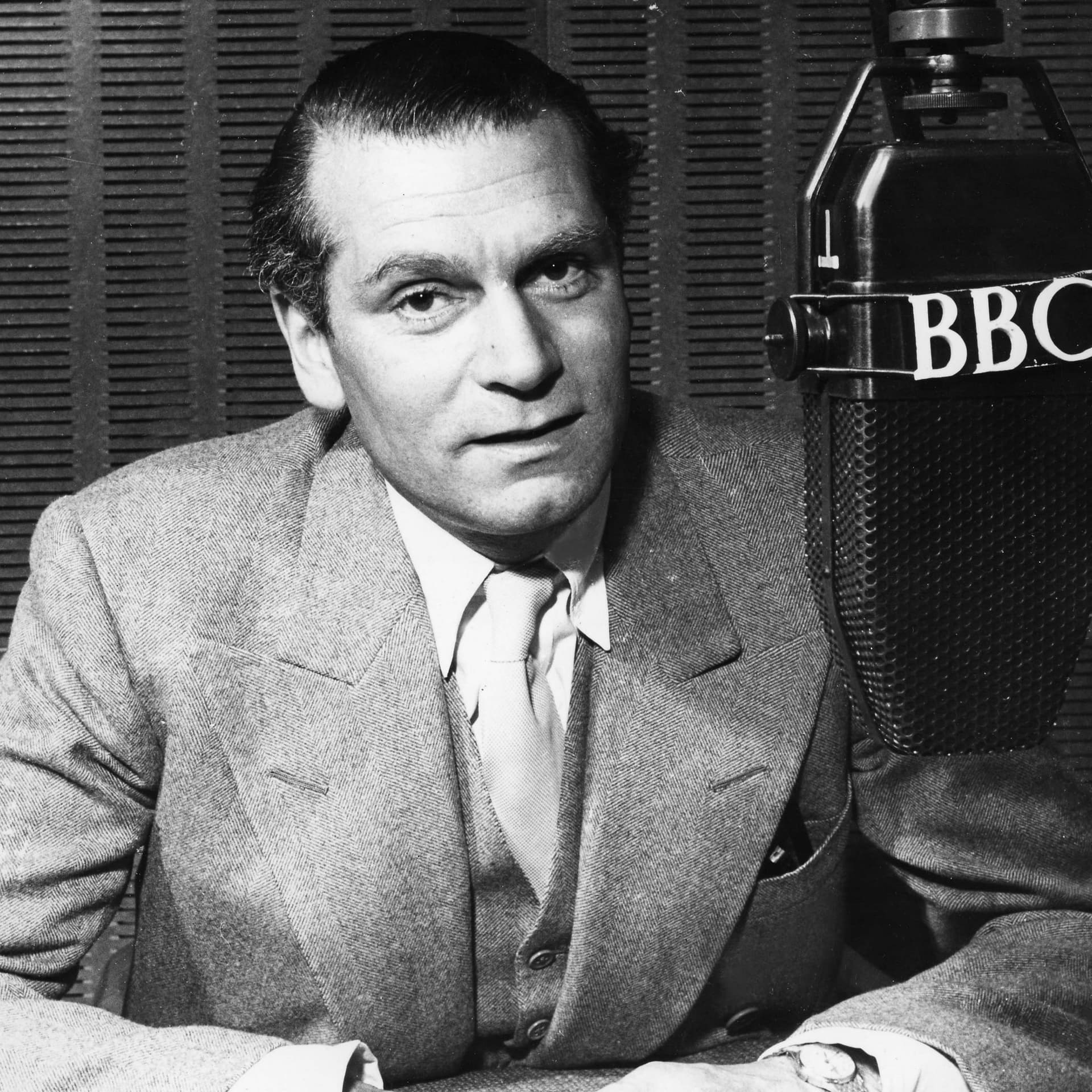
Alistair McGowan discusses author H.E. Bates—his love of nature, short stories, wartime contribution to RAF morale, and the enduring appeal of works like The Darling Buds of May and Fair Stood the Wind for France.
Guests
Alistair McGowan (actor, impressionist, pianist, poet, comedian; voiced characters in early Spitting Image). Richard Bates (son; executive producer of the TV adaptation Darling Buds of May; helped bring it to Yorkshire TV; claims he discovered Catherine Zeta-Jones). Vicky Wicks (granddaughter; researched Bates’s wartime RAF writing and family life).
Key claims
Bates wrote 200+ short stories; McGowan calls him the best short story writer ever. Bates’s war stories helped the RAF develop an ethos and communicate RAF realities. Darling Buds was inspired by a real family he observed; Pop Larkin reflects Bates’s own joy-in-life philosophy.
Notable examples
Bates’s RAF stories about airmen bouncing back after missions; Fair Stood the Wind for France—crash in occupied France, arm amputation, love and “kindness” amid Nazi tension; Darling Buds characters Pop, Ma, and children; Bates’s Kent idyll and garden-focused writing.
Written by AI. May contain mistakes. Listen to the episode to check what was said.
Chapters
Tap a time to open that second in VOH.E. Bates: An Overview
1:47 to 3:00
Discover why Alistair McGowan admires the writer H.E. Bates.
“Well, Matthew, I've chosen the writer H.E.”
Bates' Influence and Style
3:01 to 3:50
Explore Bates' unique contributions to literature and his style.
Bates and the British War Effort
3:51 to 5:06
Learn about H.E. Bates' impact on British morale during WWII.
“That world is much closer to the world I grew up in than the world today.”
Reflections on H.E. Bates' Life
5:07 to 6:56
Hear Alistair's thoughts on Bates' life and legacy.
“You said that in a very Churchillian way, Matthew.”
Bates' Family and Personal Life
6:57 to 8:21
Insights into Bates' family life and how it shaped his work.
“That sounds like it's towards the end of his life.”
Darling Buds of May: The TV Adaptation
8:22 to 14:02
Learn about the adaptation of Bates' work into television.
“And I want to assure that Alistair was not me that turned him down for the part of Charlie.”
Reflections on War and Writing
14:02 to 15:22
Explore H.E. Bates's experiences during wartime and his writing process.
“There was a bigger lake and we would go there and there were bigger fish to be had there and that was much more exciting.”
Bates and the Air Ministry
16:18 to 19:06
Discover how H.E. Bates contributed to the Air Ministry during WWII.
“Well, when the war started, he tried for a commission.”
The Airman's Experience
19:06 to 20:30
Delve into the stories Bates wrote about airmen during the war.
“He noticed the WAF who had to answer the telephone and field the questions.”
Themes in Fair Stood the Wind for France
20:30 to 23:24
Analyze the central themes of love and kindness in Bates's novel.
“They didn't want to know about him at all.”
Show all 14 chapters
Impact of the Novel and Family Life
23:24 to 26:13
Examine the impact of Bates's novel on his family life and publishing journey.
“There's something in this story which is so affecting that they just keep wanting to shave.”
Bates's Representation of Women
26:13 to 28:01
Discuss how H.E. Bates effectively portrayed women's perspectives in his works.
“The book was published, sold in millions around the world, and so suddenly he had money.”
Exploring H.E. Bates' Representation of Women
28:01 to 29:17
Learn how H.E. Bates effectively captures the psyche of women in his writing.
“Can I ask you a question as well about his writing insofar as the representation of women?”
The Enduring Legacy of H.E. Bates
29:17 to 29:44
Discover why H.E. Bates' works have stood the test of time despite changing literary styles.
“Why, Alistair, do you think his books have survived so long after him?”
Transcript
Automatic transcript. May contain errors.0:00Vicky Wicks:This BBC podcast is supported by ads outside the UK.
0:29Vicky Wicks:CFO. LinkedIn has a word for that. Bull spend. Now you can invest in what looks good to your CFO. LinkedIn ads generates the highest ROAS of all major ad networks. You'll reach the right buyers because you can target by company, industry, job title, and more. So cut the bull spend. Advertise on LinkedIn. The network that works for you. Spend$250 on your first campaign on LinkedIn ads and get a 250 credit for the next one. Just go to linkedin.com slash broadcast. That's linkedin.com slash broadcast. Terms and conditions apply. Chicagoland Wayfair's Memorial Day Sale starts May 11th and you can score up to 70 % off everything home in person.
1:17Vicky Wicks:Shop Wayfair's Memorial Day Sale May 11th through 26th at the Wayfair store and we'll met. Wayfair, every style, every home.
1:28Alistair McGowan:BBC Sounds. Music, radio, podcasts.
1:33Vicky Wicks:Today's guest is an actor, impressionist, pianist, poet and comedian who provided voices for the early series of Spitting Image on TV. Welcome, Alistair McGowan. Tell us whom you've picked and why.
1:48Richard Bates:Well, Matthew, I've chosen the writer H.E. Bates, who's probably best known for The Darling Buds of May, which people I'm sure will remember fondly from the television adaptations in the early 90s, with David Jason, also remade as the Larkins recently with Bradley Walsh. Best known for that. And also probably the novel Fair Stood the Wind for France. But H.E. Bates wrote so much more than that.
2:09Vicky Wicks:What do you love about him most?
2:10Richard Bates:Oh, goodness me. His love of nature, kindness, the fact that the stories are about love, they're about friendship, his sensuality particularly, and also just the fact that he was so versatile. He was really a short story expert. Yes, I love his short stories. Yeah, this is a form which has always fascinated me. I was lucky enough to be pointed towards them for my A-level. We studied Maupassant. We studied Joyce's Dubliners. And then I went on to read some Chekhov stories in my early career on the BBC, now available on 4Extra. And it made me very interested in that form. And I discovered Bates' short stories and continue to discover new ones that I've never come across before.
2:48Richard Bates:He wrote over 200 of them. And I think that H.E. Bates was the best short story writer in any language ever in the world. That's quite a claim. well also yeah and the fact that he's sort of not known for that and he's only known really for the Darling Buds of May by a few people now if they know him at all but I honestly think he's the best short story writer and his contemporaries we think of you know people like Graham Greene, Evelyn Moore and Orwell we know about because they wrote a landmark novel Bates didn't but I think his style his content is as good as any of those writers and to me it's a minor literary tragedy that he is so little known and so little trumpeted and I would urge anybody who doesn't know his short stories go and read them and if you want the novellas as well i read two in preparation for this in the bath um but in 80 minutes it was a long bath you can read the triple echo or you can read dulcimer and you will have your breath taken away his style his passion his sensuality i think i said that earlier on considering most of his novels were written and are certainly set in the 30s 40s 50s i realize with alarm as i'm sure we all do when you play these maths games that that era i was born in 1964.
3:52Richard Bates:That world is much closer to the world I grew up in than the world today. Herbert Ernest
3:57Vicky Wicks:Bates, as it possibly said on his bank statements, was born in 1905 in Northamptonshire but he's probably best known for his series set in Kent and I'm told you once auditioned for a role in The Darling Buds of May which was wildly successful but you didn't make the cut.
4:15Richard Bates:I didn't. Didn't get the part and so I was probably turned down by the producer, whoever that was. And in a way, I thanked them because, you know, I wouldn't have had the career I've had had I gone on to do that. But at the time, I watched the first one go out, I remember, and saw this man called Philip Franks playing the part I would have played, which is Charlie, Mr. Chanton. And Philip, you know, did it very well, of course. But I was watching it thinking arrogantly, as one does, when one's turned down for these things, that I would have done it better. So I watched 10 minutes of it and switched it off and thought, right, if they didn't want me, I'm not watching it, which is ridiculous.
4:47Richard Bates:but an act of jealousy goes a long way and the other thing which we must talk about I'm sure we will talk about is this extraordinary unique contribution that he made to Britain's war effort and I would go so far as to say again that what Noel Coward did for the British war effort and for the spirit of the nation on film Bates did through literature now Coward we know about we see his films all the time in which we serve etc and they were great morale boosters Bates was doing that through literature and is forgotten and again I think that's it it's a huge shame because he was a massive part of British society at that time.
5:20Richard Bates:And we will return to that. It is, as you say, very important. You said that in a very Churchillian way, Matthew. We will return to that. I'm glad we will. Thank you. That was you, by the way. That was me? I don't sound like that. Well, no, perhaps. No, no, you don't. We'll come back to that as well.
5:41Vicky Wicks:Here he is, H.E. Bates, that is, in 1960, from a series called Town and Country. Take a listen.
5:49Alistair McGowan:Now, Mr Bates, you've been down in this part of the world quite a long time, I think. Oh, the better part of 30 years. We came here in the days of the Depression in 1931 when we first married. This is a house which was then a barn, a granary, part of an old home farm belonging to a large estate which had just been broken up. when we first came to live here. The view you see from the windows was a very different one, where you now see large beds of flowers and so on and so forth. There was a haystack and piles of junk and nettles and so on and so forth. There's been a great change in the house and the garden, but in the actual village green where the house stands, there's been hardly any change at all.
6:40Alistair McGowan:One of the very few places, I think, in the district and perhaps, you know, in England, in southern England, and it hasn't changed at all.
6:48Vicky Wicks:What do you think, Alistair? Have you heard enough to be able to do an impression of that?
6:52Richard Bates:No, not at all. I was far too interested in what he was saying to listen to his voice, actually. I couldn't hear a hint of Northamptonshire in there at all, which I thought I might do. That sounds like it's towards the end of his life. So he died relatively young, I suppose, in modern terms, 68. And I know he tired himself out frequently, the amount of writing that he did. but it's wonderful to hear him and also talking about Kent and in a way I was just thinking this may sound daft but I think in a way he was like Noah in that from what I can gather the place that he moved to and what he did with it when nobody else was doing this sort of thing either I mean he really was such a dreamer H.E.
7:27Richard Bates:he just transformed this barn restored this barn when people weren't doing that people do it all the time now but he was almost creating the world that he wanted to live in the world that he wanted to have been
7:36Vicky Wicks:in his writing as well as in his life
7:38Richard Bates:Yeah, and where he grew up, but he did it sort of better than where he grew up. He was creating this idyll surrounded by nature. He even wrote books about gardens and gardening. Loved the natural world so much. But his writing generally is very sparse, which is what I like. But sometimes the only criticism I'd have of him, and it's particularly in one book, which is Love for Lydia, which was made into a television series in the late 60s, early 70s, I think. In that book, he talks so much about the flowers. And every time he walks to this particular house where Lydia is and her family are, he has to describe every flower and what state it's in.
8:09Richard Bates:And you think that's probably post the gardening book. But he just loved the natural world. And again, it's an affinity that I have with him.
8:15Vicky Wicks:Also here, we have his granddaughter, Vicky Wicks. And on a line from South Africa, his son, Richard, who directed that hugely successful TV version of his Darling Buds of May books. How did they come about, Richard? I think you sold it to Yorkshire TV. Tell us a bit about that.
8:32Alistair McGowan:Actually, I was the executive producer. And I want to assure that Alistair was not me that turned him down for the part of Charlie. However, I will lay claim to having discovered Catherine Zeta-Jones for the part of Mariette. My partner and I went to a television market, which was held in April every year in Cannes. It was like the Cannes television festival. we went there and there I bumped into somebody who turned out to be the head of entertainment for Yorkshire and was a Darling Buds fan to cut a long story short he said oh that's wonderful that's wonderful I'd love to do that and I said well you know be my guest he said um how long are you staying here for I said well we're here to the end of the week he said I'm going to phone you at the end of the week when you're back in your office give me your phone number he said I'm going back to the office this afternoon.
9:34Alistair McGowan:So he disappeared. And I thought, well, we'll never hear from him again. Following Friday, I'm back in the office with my partner, and Vernon phones from Yorkshire and says, right, we're on. Pardon. He said, David Jason says he'll do it. He got David to read the book overnight. And so he was able to go within 48 hours of meeting me. He was able to go upstairs and say to the bosses I've got a new series, Darling Buds H.E. Bates, David Jason.
10:07Vicky Wicks:Alistair could you just in a nutshell tell us what the Darling Buds of May books were? Who were the characters?
10:15Richard Bates:Well the main character and the genesis of this is fascinating. He was in quite a slough his previous novel The Sleepless Moon which I think is better than Lady Chatter's lover I think. But he observed in his slough of depression outside a garage this family who turned up in a painted blue lorry, and they were deliriously happy. There's Pop, played by David Jason, Ma, who is a big woman, and these children, and they were eating ice creams and eating crisps at the same time, and they were really the rural embodiment, I think, of the you've-never-had-it-so-good feel of the 50s. They gorge on life.
10:49Richard Bates:He has a wonderful description of them in his autobiography. He says they thought through the pores of their skin, and they just love life, and everything is happy. And Pop Larkin, really, he admitted, is based on himself, this wonderfully happy man who sees joy in everything, doesn't pay tax, lives outside society. But they are full of very amusing stories, but they are just so sensual. Everyone's fit to bursting with everything. It's an extraordinarily happy experience.
11:16Vicky Wicks:Now, let me put that to his granddaughter, Vicky. Was your grandfather anything like Pop Larkin? Well, you're certainly right that he really that was really very much his philosophy. It was so much about love. And he didn't also believe in saving. So he would have poo-pooed the idea of you sort of being a mouse, poor Miss Pilchester, you know, eating a little bit of cheese. He thought it was absolutely dreadful. If you had something, you had to live, you know, open a bottle of wine. Chaps, you know, he'd throw his arms out when we all arrived. He absolutely loved family life. He loved people to be enjoying themselves.
11:54Vicky Wicks:and a marvellous Sunday lunch with my grandmother who was absolutely fantastic at cooking. And I have to say that when I grew up, I was born in 59, my memories are completely infused in the happiness that he got from those books. My aunt used to say you could hear him laughing when he was writing them, either in the study or in his little summer house. These visits were to Kent when he'd moved to Kent, were they? Yes. Fortunately for me, my parents didn't really like taking us on holiday with them, so they'd dump us with our grandparents, which was absolute heaven because it really was heavenly.
12:28Vicky Wicks:And everybody would talk all the time about the characters and who was this person and who was that person. It just seemed to infuse all our mealtimes. Let's go back to the beginning. He was born in Northamptonshire, went to Kettering Grammar School. His first job was as a reporter, which he hated, and then a warehouse clerk, which gave him time to write. What about you, Alistair? what were you like as a young man? Is that how it was for you? Were you ever a clerk?
12:57Richard Bates:Well one thing I used to do was to pick plums and fruit and veg I was brought up in the Vale of Evesham and that's what people did and I think again that brings that's all brought to life by H.E. Bates' work where he talks so lovingly especially in the Darling Buds of the fruit picking season What was he like as a father?
13:14Alistair McGowan:Well he wasn't a very tall man all of his children I think we were taller than him I don't know how that came about and he was very much a family man, always fun. I mean, we were all born before the war and even in the early days of the war, he would take us out into the countryside. One of his particular hobbies was fishing and just near our house, we had a pond. He would bait up a rod for each of us and we would sit there with the Battle of Britain going on over our heads and fishing and then as we got a bit older, the war went on and he'd been to other parts of the country interviewing aircrew.
13:59Alistair McGowan:He would take us a bit further afield. There was a bigger lake and we would go there and there were bigger fish to be had there and that was much more exciting. By then, of course, we had doodlebugs dropping out of the sky over our heads. So the war was always with us, which was extraordinary looking back. He was there a lot of the time because he wasn't posted away. I mean, he would go and stay a couple of weeks or maybe less on a fighter station. And then he would come home for a few days and write. And he would say to air ministry, I'm not around, you know, I'm going home. He was the only person who could sort of walk out of the building without anybody stopping in.
14:40Alistair McGowan:He'd just say, I'm going home.
14:44Alistair McGowan:Chicago talks a lot. Hold on, let me step over here. People are talking too much. We debate about food, deep dish, tavern style, who's got the best beef. We yell across rooms, across blocks, across generations. Yes, nice earrings, Grammy. And now we're doing it on our phones, too. Video calls from the L train, group chats that never shut up. Neighbors texting you the score before your TV catches up. Get a load of this guy. Ketchup on a dog. Yeah, we've got thoughts. Because nothing here gets built without conversation. Nothing moves without connection. So, if you think you know AT &T, it might be time to rethink that.
15:22Alistair McGowan:Because their network has improved. Like, a lot. Which means Chicagoans can keep speaking their mind with the top-rated fiber internet in the city. Chicago won't stop talking. Our improved network backs it up. AT &T. Connecting changes everything. AT &T Fiber. Limited availability in select areas. Top-rated and fastest internet. AT &T Fiber. Based on analysis by Oocalypse. Pizza's intelligence data to age 2025.
15:44Richard Bates:I sold my car in Carvana last night. Well, that's cool. No, you don't understand. It went perfectly. Real offer, down to the penny. They're picking it up tomorrow. Nothing went wrong. So, what's the problem? That is the problem. Nothing in my life goes to smoothie. I'm waiting for the catch.
15:58Vicky Wicks:Maybe there's no catch.
Read the full transcript
15:59Richard Bates:That's exactly what a catch would want me to think.
16:02Vicky Wicks:Wow, you need to relax.
16:04Richard Bates:I need to knock on wood. Do we have wood? Is this table wood? I think it's laminate. Okay, yeah, that's good. That's close enough.
16:09Alistair McGowan:Car selling without a catch. Sell your car today on Carvana. Pick up fees may apply.
16:17Vicky Wicks:Vicky, you've been doing some serious digging into his wartime career. Tell us what you found. Well, when the war started, he tried for a commission. He was turned down. He resisted going into one of the air ministries as a writer. All the writers were sort of applying for all these positions. And I think he knew very well that he would not cope with being cooped up in an office, sitting at a desk and working for somebody he didn't respect. He would have balked against that. And I think he thought he could ride it out. He had an exemption for a while with four young children. Cecil Day Lewis asked him to write a foreword for a book of portraits of war artists.
16:57Vicky Wicks:Nothing happened. Graham Greene got him an interview for a ministry. The man didn't turn up until he marched out. Nothing happened. and he became increasingly, increasingly worried. Presumably he wanted to make a contribution of some kind. I believe he said he'd be better off making marmalade. Well, yes, exactly. So he joined the Home Guard and he said he was so terrified of the rifle he was given he would be better employed making marmalade. But exactly that. He wanted to make a contribution, but I think he was very, very nervous about the idea of just being drafted in as a regular soldier. So he was writing letters and writing letters and trying to get into one of these ministries, so many letters.
17:34Vicky Wicks:And one letter arrived at just the right moment on the desk that was forwarded to John Nerny, who was the Air Ministry's chief librarian, and he commissioned him to write stories. And there was a very particular purpose to it because John Nerny, who had worked at the Air Historical Branch, who was the Air Ministry's chief librarian, realised that the RAF needed to develop an ethos about itself. It was a young service after all. It didn't have a history to create its image as the others did. And it didn't just need to tell the public what the RAF was and what it was doing. It needed to find a way to communicate to the other services exactly what a very difficult job the RAF was faced with in autumn 1941.
18:20Vicky Wicks:and Nerny thought that Aitchie would be able to get that across in his stories far more effectively than they could with a lot of facts and figures. And he did. I was reading one of those short stories last night. It describes an airman who was in the Battle of Britain and how many hours he'd flown and how he went out and always bounced back as if he was a rubber ball that had hit a wall, the way he bounded around the mess room afterwards. describes how he was almost killed and his gunner was killed at the end. And you feel you know this young man and sorry that people didn't know more about the valiant effort that he was making.
19:00Vicky Wicks:So Airman will have loved to read these stories, but the general public will too. Yes, and the other important thing about the stories that he didn't just write about Airman. He noticed the WAF who had to answer the telephone and field the questions. You know, are they back yet? Is K for Kitty back yet? Well, K4 Kitty wasn't back, wasn't coming back. And I think that if you were the parents of a WAF like that or a young officer like that, you understood something that you hadn't before for the first time, what they couldn't tell you, and what, of course, you would never read in the papers. And Richard, these stories were a huge success.
19:35Vicky Wicks:What do you think the airman that he met in the mess thought of him? I mean, did he stride in and command an audience? How would he have gone about it? No, not at all.
19:45Alistair McGowan:It wasn't an easy job to take on. I think he was probably very apprehensive. One half of him would have leapt at the opportunity and I think the other half would have probably very scared because it meant he was going to have to go to various bomber stations and fighter stations. he would be strolling into the mess as a commissioned officer, finding himself surrounded by young men, teenagers, a lot of them no more than 18, 19. If you got to 24, you were damn lucky if you were an aircrew. And, of course, he was so old, they called him granddad. At 35. At 35. He tried to sit in the officer's mess and catch their attention.
20:34Alistair McGowan:They didn't want to know about him at all.
20:36Vicky Wicks:And he got permission from the War Ministry to take them to pubs, and that's what...
20:42Alistair McGowan:That's right. He applied to Air Ministry for a beer allowance so that he could say to the chaps, if you fancy a beer, I'll be in the local pub at 6 o 'clock. Come down and, you know, we'll have a chat.
20:58Vicky Wicks:Great idea. You're listening to The Great Life of H.E. Bates, author of Fair Stood the Wind for France, and I want to talk about that now. First, though, I think we can hear an extract from a recent Radio 4 production dramatised by Maddy Fredericks and starring Rory Kinnear, whose plane had just crashed in France. The engine's dead. You've been out cold for ten minutes. The ground was too soft. We just looped and wrapped up. We're in some kind of marsh. God, I hate this bloody country. What are we going to do with the kite? Burn it? The whole neighbourhood will have seen us come down. Yeah, be running off to tell the jerrys by now, no doubt.
21:40So, let's get out of here.
21:42Vicky Wicks:Ow! Look, I don't like the look of that. We haven't got time. Let's get your jacket off and roll over a bit, can you? OK, OK. I'm going to pull the sleeve off now. You ready? I wish I believed in something. If I believed in something, I'd pray. Hold it up, hold it up
22:03Richard Bates:I need to get a tourniquet on
22:04Alistair McGowan:I never liked the sight of Press down with your other hand I said hold it
22:10Richard Bates:Don't give out on me Frankie
22:13Vicky Wicks:But I was slipping away Down a slope of cold darkness Alistair, in a nutshell What's the plot there?
22:22Richard Bates:The plot is very small actually This aircraft comes down, engine trouble And they're in occupied France which they prefer to unoccupied France because they think there'll be more loyalty towards them. They find a farm, the people there take them in, but Franklin, as you can hear there, John Franklin, played by Rory Kinnear in that extract, has really badly damaged his arm. And so he has to wait when the others can escape, they're helped to escape by the French. He has to wait for his arm to recover. It doesn't, and he has to have his arm amputated. Now, around the farm, the Nazis are always there.
22:54Richard Bates:It's the most wonderful sort of Hitchcockian tension all the time. Are they going to be discovered? but is he going to get better? And then during his recovery, he falls in love. Well, he falls in love very early on with a young girl who is 17, 18 years old, I think, who is so capable and so kind in this farmhouse. He's only 21 himself. And it's really about their love and how they value their country, how they want their countries back, what is country, what is home. And effectively, really, it's about kindness. It's about love. And it's the most beautiful, beautiful story. And also about shaving, Matthew.
23:26Richard Bates:There's something in this story which is so affecting that they just keep wanting to shave. And they talk about, I shaved and felt a lot better. And they meet people in the most obscure on their travels. And can I shave? When can I shave? And I shaved today just in case Richard was looking at me thinking, you haven't shaved. Father would be gross. But there is something about shaving. And it's something so human, again, in this thing. If I look better, I'll feel better. There's hope. And this is the thing in this novel. There's hope. There's love of the world. And I think this is the thing about H.E.
23:57Richard Bates:is that he knew the world was beautiful and could be beautiful, but he's always threatened. Here we are today, always threatened by demons.
24:05Vicky Wicks:Did the story emerge from his work, Vicky as Flying Officer X? Where did it come from? Yes, it was immensely fortunate. Just before he left RAF Oakington, the first bomber base he was posted to, he was invited to meet a pilot, forced to crash land his Wellington in occupied France. and he'd been told, there's your story, Bates, but you must not tell it yet. There he was, driving home with two weeks' leave in his car, fizzing with excitement, with ideas. He could see this novel in his mind, the novel that would change his life. And I think that was one of the reasons that it became so popular so quickly, was because the story was new.
24:43Richard Bates:And reading it, as I did recently, on A Good Read, we were astonished. Nicola Sturgeon, as well, who was on the panel, and she said, I can't believe that this was written during the war. he didn't know how it was going to end. And we look now and think, well, of course he knows that they won. He didn't. They didn't know what victory was going to be. But it doesn't glorify war. None of his stories do. But at the same time, he doesn't take a moral stand against it. It's just, this is the way things were. This is how people reacted. And as historical documents, they are absolutely fascinating because you see how people felt.
25:11Richard Bates:You see how society functioned and how it suffered.
25:14Vicky Wicks:Richard, first of the wind for France was immediately successful. Did it change things in your family?
25:21Alistair McGowan:Yes, it did. When he wrote the book, having met this pilot who had crashed in France, he wrote the book in a matter of weeks. I mean, it was absolutely red hot story. And he took it to air ministry very proudly. And they were absolutely horrified, because what he had learned from this pilot was highly secret. And that was that French people who were prepared to risk their lives helping Allied soldiers, airmen, anybody. And that was highly confidential information. So he couldn't publish as soon as he thought he probably could. But the Normandy landings were not very far in the future. And once, of course, we were into Europe, then those secrets could be divulged.
26:18Alistair McGowan:The book was published, sold in millions around the world, and so suddenly he had money.
26:25Vicky Wicks:Now, where did the idea of The Darling Buds of May come from, Vicky? Well, I think, as Alistair was saying, that they were going to see some friends, and they stopped off, and my grandmother wanted to buy some Easter eggs for their children. And then they saw this marvellous family with all the children, you know, living the kind of life that they would like to. I mean, they did in a way. Tell us a little bit about that. Well, he was completely dependent upon my grandmother. She had all the common sense. If you think about Darling Buds of May, it's always ma and pop. And she was able to create exactly the right environment to allow him to work.
27:04Vicky Wicks:Good gardener, marvellous cook. When I was a child, I remember thinking he looked a little bit like a cross between Winnie the Pooh and Sir John Betjeman. Is there a difference? Exactly. So he got a little bit portly. As a young man, he had this dreadful abdominal condition called duodenal diverticulum, made him very unwell, gave him terrible pains. It wasn't operated on until his 40s, and then he could enjoy my grandmother's cooking. But what that meant for us as grandchildren, and he loved children, which was a great joy for us. He would come into a room beeping like Toad's motor car, but by then he wasn't a rush-around grandad, which was lovely.
27:46Vicky Wicks:He talked to us very naturally. I have a postcard that he sent me from the Lebanon and he went to see the Temple of Baalbek. And he says, here's that wonderful temple I told you about. You know, he was very sensitive to atmospheres.
28:01Richard Bates:Can I ask you a question as well about his writing insofar as the representation of women? Because to me, he seems to be able to get inside the psyche of a woman really, very, very successfully. one moment in particular that I just read recently the Glenda Jackson character in the Triple Echo which is an amazing little novella as I said, 80 minutes in the bath, you can read it in one go but at one point she's flirting with this soldier who comes to stay in her house and she goes upstairs to change out of her normal farm gear and she thinks about putting on a scarf and doesn't, she then goes down to eat with him and she's nervous and she's coy and he describes how she goes to play with the scarf and realises it isn't there and so her fingers had nothing to do and I think from anybody's point of view, certainly from women's point of view, you must think he really observed and put himself inside the heads of people of every age, but gender as well.
28:50Vicky Wicks:You're absolutely right. From very early on, he seemed to have a sensitivity. He was very oversensitive, perhaps, and that perhaps is where it came from. He observed very, very well. Observed is, I think, a key word throughout this discussion. He's been gone half a century now. H.E. Bates died relatively young when he was 68. His wife moved into a bungalow next to the granary in Kent and lived for another 30 years. Why, Alistair, do you think his books have survived so long after him? He seems in some ways an old-fashioned figure, a figure from another age, and yet there's something about his style or his themes that lives on.
29:31Richard Bates:He's just a phenomenally good stylist and a great craftsman who tells good stories, and I think not all of them work. I'm sure he'd say the same thing. You could read a book of 12 with them and think, well, six of those didn't appear to me. But six of them you will remember forever.
29:44Vicky Wicks:My thanks to you, Alistair McGowan, and also to H.E. Bates' son and granddaughter, Richard and Vic. Final words go to H.E. himself, being interviewed here back in 1960. Goodbye.
29:57Alistair McGowan:You've got this wonderful climate here, wonderfully fertile soil, which produces great variation of crops throughout the year. and people like Larkins can work happily at all kinds of jobs in the fields and do very, very well out of it financially. So I think they are rather special to Kent, although at the same time everybody's now telling me that they all know a Larkin family wherever they live in England.
30:28Alistair McGowan:I drive my bus in a busy city. That's why road safety is so important to me. I know that I must slow down and be extra careful when I make a wide turn. Buses need more room than cars. Everyone can help keep our roads safe. Next time you're driving, remember to give buses plenty of time and space to finish turning before driving ahead. Let's all plan to share the road safely. Learn how at www.sharetheroadsafely.gov.
From the publisher
HE Bates is probably best known for the Darling Buds of May and Fair Stood the Wind for France, but Alistair McGowan is surprised that he is not known for his short stories, which he believes are the best ever written. "To me it's a minor literary tragedy that he is so little known and so little trumpeted." Joining him in studio is HE Bates' granddaughter, Vicky Wicks; and from South Africa his son, Richard Bates who was executive producer of the wildly successful tv adaptations of the Darling Buds of May starring David Jason. The programme also includes Bates own voice plus an extract from Fair Stood the Wind for France, his second world war novel about a British plane that crash lands in German occupied France.
Produced in Bristol for BBC Studios by Miles Warde