In short
A discussion of Cleopatra VII’s real political power versus later sexualized myths in Shakespeare and Roman/modern retellings, focusing on how Rome portrayed her, her Ptolemaic background, her calculated alliances with Julius Caesar and Mark Antony, and the disputed stories of the carpet and the asp.
Guests
Professor Kate Williams (University of Reading; Professor of Public Engagement; co-host of Queens, Kings and Dastardly Things; biographer of Empress Josephine and young Queen Victoria; author of Regina, a history of women in power). Professor Joyce Tilsley (Manchester University; Professor of Egyptology).
Key claims
Cleopatra is mischaracterized as a “sexualised failure”; she was a rational diplomat and effective ruler who “beat off Rome” longer than others. Roman sources are biased and written decades/centuries later; medieval Arabic traditions preserve alternative views.
Notable examples
Temple of Dendera image of Cleopatra as a divine mother; Cleopatra meeting Caesar after Pompey’s execution; Antony meeting her as Isis; the carpet and asp myths questioned; Cleopatra’s suicide story disputed; Octavian’s political incentives for how she was portrayed.
Written by AI. May contain mistakes. Listen to the episode to check what was said.
Chapters
Tap a time to open that second in VOCleopatra: A Misunderstood Queen
0:00 to 1:02
Discussion about Cleopatra's legacy and how she is often mischaracterized.
“This BBC podcast is supported by ads outside the UK.”
Cleopatra: A Misunderstood Queen
2:15 to 2:59
Discussion about Cleopatra's legacy and how she is often mischaracterized.
“Well, Matthew, Cleopatra is the most famous queen of the ancient world.”
Professor Kate Williams' Insights
2:59 to 3:51
Kate shares her extensive research on Cleopatra and her iconic imagery.
“We also believe, Kate, that you were a previous guest on this show.”
Joyce Tilsley's Perspective on Cleopatra
3:51 to 5:59
Joyce discusses the multiple Cleopatras throughout history and their importance.
“whether it's Shakespeare or whether it's Plutarch or whether it's Elizabeth Taylor tumbling out of a carpet at Richard Burton's feet, have exercised such drama and seduction on our eyeballs.”
Sources of Cleopatra's Life
5:59 to 7:40
Exploration of the historical accounts and biases surrounding Cleopatra.
“We remember Cleopatra VII, the famous one, because she interacts with Rome.”
Cleopatra's Fame and Legacy
7:40 to 9:12
Analysis of why Cleopatra remains a prominent figure in history and literature.
“And that's happened so many times, as Kate has said.”
Cleopatra's Background and Rise to Power
9:12 to 12:11
Discussion on Cleopatra's lineage and her path to becoming pharaoh.
“It was the ancestors, her various Ptolemies, the rulers before her, who mortgaged Egypt to Rome because they hated their relations so much that they mortgaged Egypt to Rome.”
Meeting Julius Caesar
12:11 to 14:00
Details of Cleopatra's first meeting with Caesar and its implications.
“Now, their vision of marrying your sibling is that it will mean that everyone will live happy ever after.”
Caesar and Cleopatra: Power Dynamics
14:00 to 15:15
Explore the strategic relationship between Caesar and Cleopatra in Egypt.
“and you really want everybody in Egypt to know who's in charge.”
The Carpet Myth and Cleopatra's Image
15:46 to 18:25
Unravel the myths surrounding Cleopatra, including the carpet story and her political maneuvers.
“Summer savings await you at Whole Foods Market.”
Show all 17 chapters
Cleopatra's Relationship with Mark Antony
18:25 to 22:24
Delve into the dynamics of Cleopatra's alliance with Mark Antony and its political ramifications.
“You're listening to The Great Life of Cleopatra, nominated by Kate Williams and also on the line we have Professor Joyce Tilsley.”
The Dark Side of Cleopatra's Reign
22:24 to 24:55
Examine Cleopatra's ruthless decisions and the political consequences of her rule.
“And everything about this play, which is wonderful, which I love, is all about the dangers of giving women power, that you want to keep it male-oriented.”
Death of Cleopatra: Conjectures and Consequences
24:55 to 28:00
Discuss the various theories surrounding Cleopatra's death and its aftermath.
“So, you know, the whole family is sort of diminished, to say the least.”
The Fate of Cleopatra's Children
28:00 to 29:00
Explore what happened to Cleopatra's children after her death and their legacy.
“Do we know that he had a model of her dead body in his triumph and made her children walk alongside?”
Future Discoveries and Cleopatra's Tomb
29:00 to 30:08
Discuss the potential for discovering more about Cleopatra and her burial site.
“And do you think, Joyce, that there's anything more to find out about her life that we could have some hope of finding out in the years ahead?”
Cleopatra's Legacy and Misrepresentation
30:08 to 30:55
Analyze Cleopatra's true legacy and how she has been misrepresented in history.
“I think that she has been treated that way.”
Cleopatra's Legacy and Misrepresentation
31:25 to 32:00
Analyze Cleopatra's true legacy and how she has been misrepresented in history.
“well, that's a not-so-great conversation with the CFO.”
Transcript
Automatic transcript. May contain errors.0:00This BBC podcast is supported by ads outside the UK.
0:29CFO. LinkedIn has a word for that. Bull spend. Now you can invest in what looks good to your CFO. LinkedIn ads generates the highest ROAS of all major ad networks. You'll reach the right buyers because you can target by company, industry, job title, and more. So cut the bull spend. Advertise on LinkedIn. The network that works for you. Spend$250 on your first campaign on LinkedIn ads and get a 250 credit for the next one. Just go to linkedin.com slash broadcast. That's linkedin.com slash broadcast. Terms and conditions apply. Enjoy the sunshine with sales on grill ready favorites from Whole Foods Market.
1:14Take cookouts to sizzling new heights with their marinated salmon and made in house marinated beef and chicken. Entertain with low price 365 brand chips and dips like hummus and guacamole and sweeten every party with brown butter chocolate chip cookies. Remember to pack the cooler with probiotic sodas, sparkling waters and more. Summer savings await you at Whole Foods Market. Hello. Age cannot wither her, nor custom stale her infinite variety. I could, of course, be talking about my guest, but Shakespeare's line refers to Cleopatra, the great pharaoh of Egypt who died, according to legend, clutching an asp to her bosom.
1:56When she died, the date was 30 BC, it brought to an end an independent civilisation dating almost 3 ,000 years. And we've waited for someone to nominate Cleopatra for almost as long. So welcome, Professor Kate Williams, to our show and tell us why you've picked her today. Well, Matthew, Cleopatra is the most famous queen of the ancient world. She's one of the most famous queens in history. Yet over and over again, she's characterised as a failure, as sexualised. And none of this was true. She was a great pharaoh. She beat off Rome. She held off Rome for longer than anyone else could. So she's both a great life, but also the whole question of why do we want to characterise her as a sexualised failure?
2:40And what does that say about our feelings about women in power in the modern day? Kate, I should add, is Professor of Public Engagement at Reading University and co-host of Queens, Kings and Dastardly Things. She's written biographies of Empress Josephine and the young Queen Victoria. And her latest book is a new history of women in power called Regina. We also believe, Kate, that you were a previous guest on this show. We've done 600 of them, so hard to check. But as the biographer on an episode about Nelson's mistress, is that right? Emma Hamilton. My first book. Yes. My first book being the most celebrated woman in Europe, a figure of glamour and a figure who actually created and gained political power through Nelson and through her relationship with the Queen of Naples.
3:30An incredible rise for a woman who was born into abject poverty. You were our expert last time. The good news this time is that as the nominator, you don't actually need to know everything about Cleopatra. But a quick question. How much do you know? I think I spent about seven months on pure Cleopatra research. You're pretty clued up there. She's such a huge figure and so emblematic when you want to talk about her representations, whether it's Shakespeare or whether it's Plutarch or whether it's Elizabeth Taylor tumbling out of a carpet at Richard Burton's feet, have exercised such drama and seduction on our eyeballs.
4:04and so I'm a big fan of Cleopatra and during my researches what I found so striking was the Temple of Dendera which is a beautiful temple not far from Luxor she may have even laid the foundation stone with her father and on the back of the temple is an image of Cleopatra as a divine mother with her son Caesarean in front of her this is the image of Cleopatra she wanted across the world a divine goddess and I've got it oh you've got it yes very small but hey we are it's so fascinating isn't it because, you know, looking at that, Matthew, you know, you might just walk past it thinking it's just another temple goddess.
4:39But this is Cleopatra, the most powerful woman in the ancient world, and she's showing herself really as subservient to her son. Caesarean has the greater crown. He's the one in front of her. And it really shows us what makes her dangerous. She's not just dangerous because she's so wealthy. All of Rome wants her money and power. But also she has this son by Julius Caesar who could be ruler of both Rome and Egypt. And they are terrified of Caesarian. They are terrified of Cleopatra. Rome is so fearful of her that they characterise her in these monstrous, monstrous ways. Well, there's no doubt about your knowledge.
5:14My own knowledge is very scant and largely comes from Shakespeare's Antony and Cleopatra, plus the wonderfully overblown film starring Elizabeth Taylor and Richard Burton, which we've mentioned. We may talk about that later. But first, I'm delighted to welcome back Joyce Tilsley, Professor of Egyptology at Manchester University, listening in to our conversation today down the line from Liverpool. And Joyce, what do you make of the conversation so far? Is this a Cleopatra you recognise? It is, and I think it's probably worth pointing out that there is more than one Cleopatra, which people very rarely touch on.
5:51But the whole Ptolemaic dynasty is full of Cleopatras who also rule and are also quite powerful women, and we've just completely forgotten them. We remember Cleopatra VII, the famous one, because she interacts with Rome. She is remembered because Octavian Augustus is remembered and he needs her as part of his history. And she's part of the history of Julius Caesar and Mark Antony. But there are other earlier Cleopatra's who are also really powerful women, particularly Cleopatra II and III. There are loads of them. There were seven of them. Everyone in the entire story is called Cleopatra or Ptolemy.
6:25Everyone. The old Alexander pops up as well. It's like Mary, Queen of Scots when everyone's called Mary or James, you know, just lots of them. Joyce, what are the main sources for her life? Well, we don't have very many eyewitness accounts of her at all. We have a few people who write about meeting her principally Cicero. What we mainly rely on are the Roman authors who wrote 100 or 200 years after her death. And they're writing from a very biased historical perspective. They obviously haven't met her. They claim to have read writings from people who've met her and so on. But they're telling a story which is very much designed to put Rome and Octavian as the good people and Cleopatra and Egypt as the less good and Mark Antony somewhere in between.
7:08They're trying to explain why Julius Caesar and Mark Antony, who are Roman men, can fall for this woman as they displayed. But that's not really history as we would like to read it. There are also other accounts of Cleopatra, which we are far less familiar with, which are in the medieval Arabic tradition, where Cleopatra is seen as a scholar and a writer and a scientist. But because these haven't been read widely in the West, they've not been included in our own understanding of it. And we just overlook it. So we get a very biased view of Cleopatra. The one thing I think we should be avoiding at all costs is focusing on what she looked like.
7:44And that's happened so many times, as Kate has said. We talk about Cleopatra and we instantly cut to what did she look like? Was she in love? That sort of thing. And all the evidence that we have suggests that she is a completely rational, logical, sensible diplomat and politician who does a lot of good for Egypt. And we've somehow forgotten all of that and instead gone for the romantic tale, which is just a myth, I would say. Why is she so famous today? Is it just Shakespeare, Kate, do you think? I would say that Shakespeare really, he's not really writing about Cleopatra. No. By this point, queens are out of fashion.
8:22He's pleasing James I. So it's showing this queen as led by her emotions. This is the sort of thing that's going to please the Jacobean audience. That's the problem for Cleopatra. The people who write about her, the people who recreate her, do it in these fabulous words. But as Joyce said, the reality is so far from the sources. All of these writers who are nearly all male are all writing about her to tell something to the Romans, to tell something to the Jacobean. And with the Romans, it really is all about saying, look at us. We are amazing. And Cleopatra never wanted to rule Rome. What she wanted was to rule her own country in safety.
9:04But it's impossible when Rome is surrounding you. She was really the last bit of the puzzle to fall. But it really wasn't her fault. It was the ancestors, her various Ptolemies, the rulers before her, who mortgaged Egypt to Rome because they hated their relations so much that they mortgaged Egypt to Rome. And so it's something that she fights off as long as possible. We mustn't get ahead of ourselves. And I want to know about her background. Who was she and why did she become the pharaoh? What do you think, Joyce? Well, she's the latest in a long line of Ptolemies who come to rule Egypt after the death of Alexander the Great.
9:40and they're Macedonian by heritage so they're not native Egyptian pharaohs but obviously when they've been in power for 300 years you know it's like saying our own royal family isn't British but they're not like the pharaohs of old they live a very different life they live in Alexandria a modern port it's a modern city very different to the rest of Egypt they have a very Hellenistic lifestyle. We've mentioned that there are images of Cleopatra on temple walls as a traditional Egyptian, but that's because that's a traditional Egyptian context where she's appearing day to day life. She would have worn just Greek clothes rather than wearing Egyptian clothes.
10:21In fact, we're told that she's the first Ptolemy that actually takes the trouble to learn how to speak Egyptian. The rest couldn't even speak the language of the country that they're ruling from. I mean, after 300 years, you think they might have got a bit of Egyptian duolingo down. Yeah, I think it shows you very much the differentiation between life in Alexandria, where there's a very high Greek population, there's a very high Jewish population, and the rest of Egypt, where there's obviously many more native Egyptian people. And the emphasis is much more on Egyptian Egypt, if you like, as opposed to Hellenistic Egypt.
10:52What was the state of Egypt at this time? Hugely wealthy. It's got this wonderful agriculture, a lot of minerals. It's got a very sophisticated economy. comparatively modern place for women. Comparatively, women have many more rights than they do anywhere else in the ancient world and have much more economic activity. They can preserve their property and marriage. They have shops and merchants. It is a very industrious country, yet what the big problem is for Egypt is Rome. So the state of Rome is an advancing empire. It's an advancing empire. Rome is really capturing all around it. Rome is the Death Star coming for all these plucky little rebels of Star Wars in Egypt.
11:36And Cleopatra is brought up understanding Roman influence because her father is pushed off the throne and she goes to Rome with him. She understands the ways of Rome. And when he comes back and gets back on the throne, he says, you are my heir. So she is now the heir and he starts to use her. So she gets a bit older into her mid-teens. He starts to use her as a joint monarch. she is absolutely signified as the next queen. But when she comes to the throne, she has to rule with her younger brother, who the idea is that you marry your sibling. So you've got to marry a sibling. That's what the Ptolemies do.
12:11Now, their vision of marrying your sibling is that it will mean that everyone will live happy ever after. There's no rivalry. There's no anger. Money and power is kept within the family. But as you can imagine, Matthew, that's not the case. You marry your sibling and it's really dog-eat-dog world. Ptolemies bump each other off. There's various poisonings. People push each other off the throne. So don't marry your sibling. It's not a good plan. And Joyce, do we know when she first met Caesar? She first met Caesar when he came to Egypt, chasing Pompey, who was fleeing from him because he'd just been defeated in battle.
12:46Pompey, unknown to Caesar, has already been executed by Cleopatra's brother. Caesar lands in Alexandria and Pompey's head and signet ring are brought to him there. Julius Caesar should probably have been pleased because one of his enemies has been killed. But of course, he can't be seen to be happy that mere Egyptians have taken it upon themselves to execute a Roman. So he becomes very angry and he basically starts a miniature invasion of Egypt by marching to the palace and occupying it. He then summons Cleopatra and her brother to come before him because he wants Egypt to function well, because he wants the grain, because, of course, Rome is avid for grain.
13:26So this is how they meet. And they go for a cruise on the Nile. Well, they have the Alexandrian wars first, so Alexandrian is absolutely devastated. And Ptolemy XIV, it's Cleopatra's first brother-husband, dies at the end of the Alexandrian war. Apparently he wears gold armour and it's so heavy that when he falls in the sea he can't swim. She is left to marry her other brother, who's even younger, and it's at this point that Caesar and Cleopatra, we are told, a sail down the Nile, which is not surprising. It's a good thing to do because Egypt is a long-thin country and you really want everybody in Egypt to know who's in charge.
14:03They took soldiers with them. We can't prove that this happened, but a couple of writers tell us that it did and it does seem to make a sort of sense. Caesar got to see Egypt and the Egyptians, most importantly, got to see him. ever invest in something that seemed incredible at first but didn't live up to the hype like those five dollar roses at a gas station or a second-hand piece of technology that breaks in the first 10 minutes marketers know that feeling we optimize for the numbers that look great impressions reach and reacts but when they don't show revenue well that's a not so great conversation with the cfo LinkedIn has a word for that.
14:46Bull spend. Now you can invest in what looks good to your CFO. LinkedIn ads generates the highest ROAS of all major ad networks. You'll reach the right buyers because you can target by company, industry, job title, and more. So cut the bull spend. Advertise on LinkedIn, the network that works for you. Spend$250 on your first campaign on LinkedIn ads and get a 250 credit for the next one. Just go to linkedin.com slash broadcast. That's linkedin.com slash broadcast. Terms and conditions apply. Enjoy the sunshine with sales on grill ready favorites from Whole Foods Market. Take cookouts to sizzling new heights with their marinated salmon and made in house marinated beef and chicken.
15:33Entertain with low price 365 brand chips and dips like hummus and guacamole and sweeten every party with brown butter chocolate chip cookies. Remember to pack the cooler with probiotic sodas, sparkling waters and more. Summer savings await you at Whole Foods Market. Cleopatra and Caesar are really showing, like you said, everyone who's boss. And just what Joyce was saying about we always get obsessed with Cleopatra's looks and whether she was in love. I mean, when Cleopatra and Caesar meet, it's not a love story. It's not this seductive love story that Liz Taylor acts out so well. It's a meeting of two superpowers.
16:13And Caesar needs Cleopatra. He really needs that grain. And this whole carpet myth is a very interesting one. The two big myths about Cleopatra, aren't they, Matthew, are the carpet and the asp that you refer to. These are the two big stories. Tell me about the carpet myth. It's that Cleopatra goes to see Caesar in secret, bundled up in a carpet, slung over the shoulder of her servant, Apollodorus, and snuck into Caesar's rooms, reducing her and making it a dramatic version. But the idea that the carpet makes her this romantic, sexualised idea, and I throw as much suspicion on the carpet story as I do on the ASP story, but we'll come to that one.
16:55I'm rather enjoying the carpet story, but never mind. You would be rolled up in a carpet, would you, if you had to be snuck through, snuck into the BBC in a carpet if you didn't have your pass. It would be even harder to get into the BBC without a pass. Carpets wouldn't do it. We think Cleopatra went to Rome in about 46 BC, maybe a couple of short trips or maybe a couple of years, we don't know. And this same time ended when Caesar was assassinated. What do we know about that time, Joyce? Very little. It seems an odd thing to have done, actually, to go away to Rome as soon as you've got your civil war at home sorted out and you're on the throne with the younger brother to then leave Egypt for a length of time.
17:37So it's possible that it's two trips rather than one and we've sort of elided them together. We know that she stayed there until Caesar was assassinated but within a month of the assassination she'd left. And we know, of course, that at this stage she'd already had one child by Caesar. Oh, yes. Caesarian operation. Ptolemy Caesar, who was known as Caesarian, or little Caesar. I mean, the really interesting thing about him is that nobody ever tells us who his father is. But from the name, we kind of make assumptions that it's Julius Caesar and nobody denies that it's Julius Caesar either. But for Cleopatra, this is not a mistake.
18:13This is a really, really sound, practical move. Because by having a child by Julius Caesar, albeit an illegitimate child because Caesar is already married to somebody else, It means that when her son comes to inherit Egypt, he will rule as a king in Egypt and presumably Caesar, who will be effectively ruling Rome, will be well disposed to his son and it will preserve Egypt and it will preserve her family. You're listening to The Great Life of Cleopatra, nominated by Kate Williams and also on the line we have Professor Joyce Tilsley. Time to introduce Mark Antony. Why did he come to Egypt and how did they meet, Joyce?
18:53They've got a long connection with Egypt, Mark Antony and his troops. But by the time he meets Cleopatra, he's trying to chase down the assassins who have killed Caesar. So he summons Cleopatra to appear before him. She has to prove that she's been loyal. And she doesn't really want to go. She pauses and thinks about this. She does this a lot, actually, at key points in her life. Rather than rushing into things, she pauses and thinks about it and sees how the wind's blowing before she makes an action. The few occasions where she does have to act quite hastily don't always turn out well. But when she does pause and reflect and come up with a plan before she acts, things do tend to go well.
19:33This goes very well because she decides that she will meet Mark Antony in the guise of Isis, the Egyptian goddess Isis, because she knows that he regards himself as a form of the god Dionysus. And Isis is one of the possible wives of Dionysus. So she's matching him. But for Cleopatra, I know, for Cleopatra, though, this is not just a disguise. Ever since she had her son Caesarian, she's been promoting herself as the living embodiment of the goddess Isis, the new Isis. I think it's very easy for us to sort of laugh about this and think, how could you think you're a god? But it happens often enough in the ancient world that I really think that she believed this.
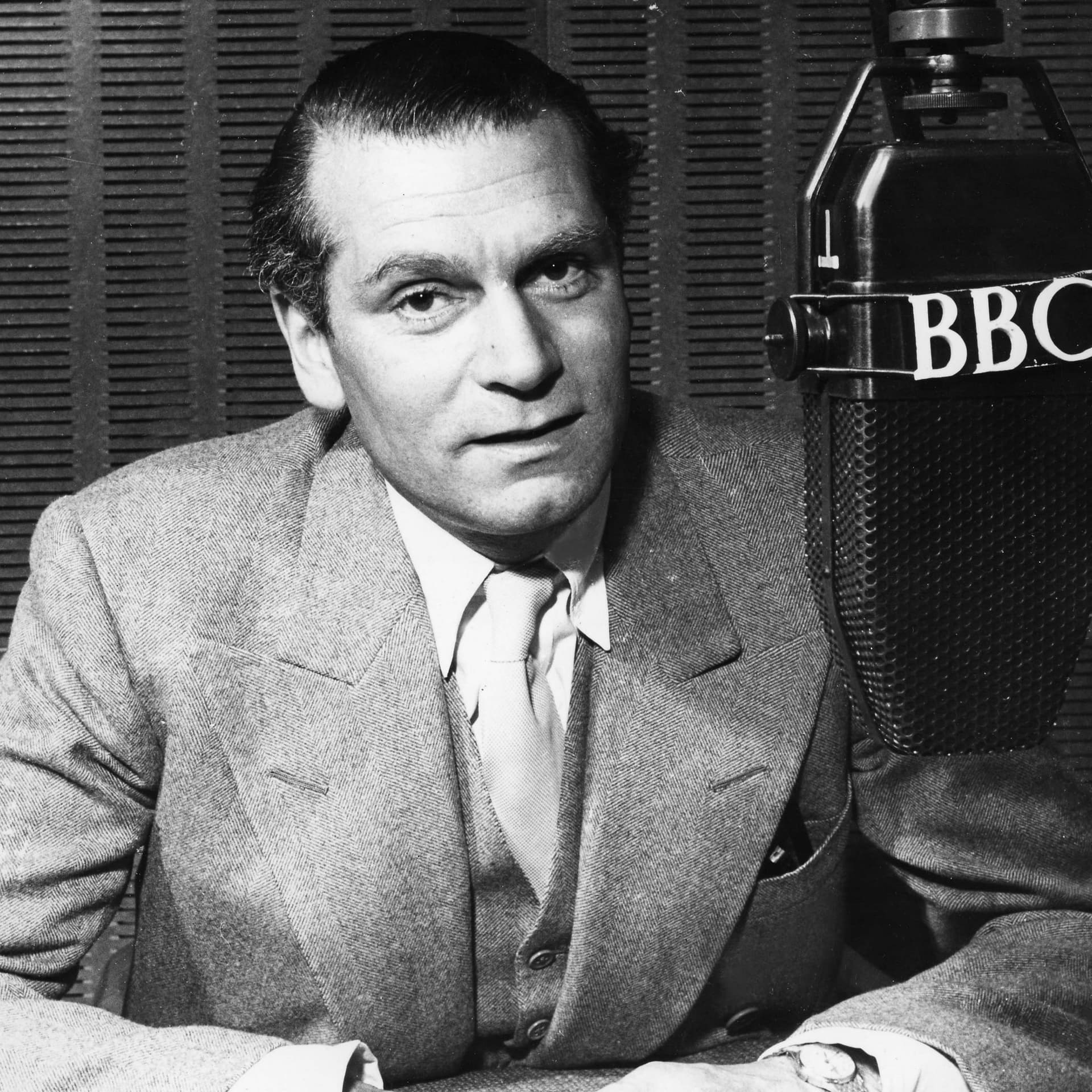
20:15Anyway, off she went to meet him, dressed as a goddess in a beautiful barge with music playing and incense and little boys dressed as cherubs. And she completely wowed him. And he instantly fell, as we are told by the Romans, under her spell. But again, this is a calculated political move. It's not just a fancy dress party. We spent a while looking through the various performances on the BBC of Shakespeare's Antony and Cleopatra, played at various times by Laurence Olivier, Vivian Leigh, Sian Phillips and Robert Stevens, Francis Barber and David Harewood, and hear from a decade ago on Radio 3 by Alex Kingston and Kenneth Branagh.
20:58I must from this enchanting queen break off. Ten thousand harms more than the ills I know my idleness doth hatch. Now now, Ina Barbers. What's your pleasure, sir? I must with haste from hence. Why, then, we kill all our women. We see how mortal an unkindness is to them. If they suffer our departure, death's the worst. I must be gone. Under a compelling occasion, let women die. It were pity to cast them away for nothing. Cleopatra catching but the least noise of this dies instantly. I have seen her die twenty times upon a far poorer moment. I do think there is metal in death which commits some loving act upon her.
21:42She hath such a celerity in days. She is cunning past man's thought. She is cunning past man's thought. What can you do with these female monarchs? What do we think of Shakespeare's Cleopatra? I mean, that is probably the source, main source of how we see her. I think it's one of Shakespeare's greatest plays and it's pure imagination. I'm struck by that line that Cleopatra says, doesn't she? I don't want anyone to buoy my greatness. It brings home to us the fact that when this was actually performed, it wouldn't be great actresses like Vivian Leigh or Alex Kingston. It would have been a 12-year-old boy performing Cleopatra.
22:21That's who performs the female roles in the Shakespearean company. And everything about this play, which is wonderful, which I love, is all about the dangers of giving women power, that you want to keep it male-oriented. We have to remember that the gunpowder plot really was all about placing James's daughter Elizabeth on the throne. So all of these messages tied up with misogyny, tied up with sexism, tied up with the idea that Egypt can be othered and sexualised. None of the prehistory of the Ptolemies or the Cleopatras, nothing about her great uncle mortgaging Egypt to Rome is there. It's all Cleopatra's fault.
23:00And the idea is that she loses Egypt through her sexual obsession with Mark Antony. Because if Shakespeare had written a play about Joyce and mine's Cleopatra, who's this great ruler, this great bureaucrat, brilliant economist, speaks many, many languages. You know, Plutarch suggests that she might even speak up to nine languages. She's this hugely successful ruler. Probably wouldn't be so interesting with Cleopatra looking over her grain stores. But what we want women to do is die tragically for love. And that's what Shakespeare makes Cleopatra do. Yes, magnificently, yes. But very quickly, Joyce, because this is important in the lead up to her death.
23:39Why did the alliance with Mark Antony not work out for Antony? Well, Mark Antony is absolutely stunned when he meets Cleopatra and they're able to talk to each other. And she does promise him certain rewards, financial rewards. In return, she actually gets him to kill his sister, other things as well. But she gets him to kill her younger sister because she's been acting as a focus for potential rebellion in Egypt. So I think it's important to remember that as well. Cleopatra is not always a nice person. and she does what has to be done, just like the other Ptolemies. Some mysterious deaths going on, aren't there, Joyce?
24:17Very strange deaths. There are, because her second brother-husband also dies not long after she comes back from Rome. Because with Caesar dead, it's quite clear that Caesarean, her son's future is in Egypt, not in Rome, and there's no need for the brother-husband because she can now rule with her son as her co-ruler. So it's still a Ptolemaic co-regency between a man and a woman. But she doesn't need a husband. and she can use her son. So she bumps him off as well. So she's lost her eldest sister who was executed by their father. Her younger sister is killed probably by Mark Antony on her behalf.
24:54She possibly bumps off her second brother, her first elder brother. He drowns in the wars of Alexandria. So, you know, the whole family is sort of diminished, to say the least. I think it's important to remember this because Cleopatra isn't all goodness. She is a great accountant. She is great at building Egypt. She is very loyal to her people and to her very tiny family. And she is loyal to the gods of Egypt. But she can also be very dangerous if you cross her. But Octavian is on the warpath. Why did she kill herself, assuming that she did? And how? The story is, and Shakespeare goes to town on this, doesn't he, is that Cleopatra kills herself with the asp because she doesn't want to be in a Roman triumph.
25:41And we do believe that in the actual triumph, there was a representation of Cleopatra, whether it was a waxen figure or whether it was a picture, of her with asps up her arms, this dramatic, sexualised vision of Cleopatra dying because Octavian is advancing upon the palace. Mark Antony commits suicide. Cleopatra is taken prisoner by Octavian and he tries to keep her alive. but she kills herself with a secret asp who's secreted in her rooms so she won't be in the triumph, she won't be displayed in this disgrace. But, you know, when you look at it, is this really possible? There's a fascinating fresco in Pompeii of Cleopatra, we think it's her committing suicide, of her drinking, her drinking poison because your average Roman is going to know that it's not going to be a very effective way of killing yourself with snake poison.
Read the full transcript
26:29No, it's got to be a pretty big asp. It's got to be a big asp. How are you going to hide that in your rooms? Also, a lot of them are dry poison and it takes a long time to enact. And even though Cleopatra was a great scholar of medicines and poisons, even if you use a sort of pin and put it into a vein, you know, there's lots of possibility for failure here. Yes, we'll never know how Cleopatra died. But who really benefits from this? The real beneficiary of this is Octavian, because he doesn't want Cleopatra in a triumph. She might turn it round to her advantage. She's been this great queen of power and splendour.
27:03If she comes in the triumph, people either might think, oh, well, she's only a little person. Why are we so scared of her? Why did they say she was a monster? People might even see her and be wowed by her grandeur. The Romans, of course, think that any man has to see Cleopatra in faint, in thrilled and excitement. So there is, I think, this terror of putting Cleopatra into the triumph. and not long after Cleopatra. Caesarian, little Caesar, is bumped off so he's no longer alive. Why not kill Cleopatra as well? So much of this, though, is conjecture. It is. We will never know. What do you think, Joyce?
27:38Well, I don't agree about the triumph. I think he did want her in the triumph. I think he wanted to show everybody who she was. She was deeply unpopular in Rome anyway. The probability is that after she'd been displayed in the triumph that she would have been strangled because that's what happened, that attempt of Vr. Singatorix before her, she would have died anyway. And I think she did it to thwart him. Do we know that he had a model of her dead body in his triumph and made her children walk alongside? It's been reported that he did. The children were in chains, gold chains, and then they were given to Mark Antony's ex-wife, divorced wife, to be brought up and lived in Rome.
28:19And people felt sorry for them when they saw them in the chains. They thought these are the children of a Roman. There's three children by Marc Antony. There's twins and there's a little boy. And both boys disappear from the record reasonably swiftly. So what happens to them is an interesting question. But Cleopatra's daughter, Cleopatra Cellini, she's brought up in Rome. And then she marries another young man who's brought up in Rome, Prince Duba of Mauritania. And then they go up and she goes off with him to be queen. and there she creates a Cleopatra-style court with Alexandrian scholars and it seems like the Ptolemies line lives again but after her death her son is killed and that's the end of the Ptolemies line.
29:00And do you think, Joyce, that there's anything more to find out about her life that we could have some hope of finding out in the years ahead? There's a lot missing. A lot of Alexandria has been lost. It's either been lost under modern building works or it's been lost under the Mediterranean Sea but there are people excavating in the sea and bringing up remains all the time. So fingers crossed we will find something. There are people looking for Cleopatra's tomb. Personally, I'm not sure that they're going to find that because I think that's also under the Mediterranean Sea. And I also have a feeling that maybe, and this is just guesswork on my part, but that Octavian would have had Cleopatra cremated rather than leave a body for burial because he probably wouldn't have wanted anything that could form a focus for rebellion or to rally the people in the future.
29:47So there might not be much to find. It doesn't seem likely that he would mummify her. No, I agree with you. I think he would have got rid of her body as fast as he could. Kate, just pulling together the rather flimsy threads of what we do know, I really get the impression that Cleopatra can be almost a blank slate on which we write our hopes, our prejudices, our fears. I think that she has been treated that way. But if we look at the evidence that we do have, the way in which she managed to get more influence over these Roman generals, these Roman men in power than any of her ancestors ever managed to do.
30:29The fact that she survived for so long when everyone else is being bumped off all around her really suggests her power, her brilliance, her intellectual capacity and her ruthlessness. And this is the queen that we have. She's a great and successful queen. She's not what she's been presented as in any way. And I think we're still looking for a movie that represents Cleopatra in the way that she really was. My thanks to Kate Williams, to Professor Joyce Tilsley, and to Cleopatra herself. Goodbye.
31:25well, that's a not-so-great conversation with the CFO. LinkedIn has a word for that. Bull spend. Now you can invest in what looks good to your CFO. LinkedIn ads generates the highest ROAS of all major ad networks. You'll reach the right buyers because you can target by company, industry, job title, and more. So cut the bull spend. Advertise on LinkedIn. The network that works for you. Spend$250 on your first campaign on LinkedIn ads and get a 250 credit for the next one. Just go to linkedin.com slash broadcast. That's linkedin.com slash broadcast. Terms and conditions apply. Say big on your landscaping project.
32:10Now at Menards. Whether you're installing a patio or a new retaining wall, Menards has the blocks you need to get the job done right. We carry the largest in-stock selection. Ready to take home today. Stop in and get our 12-inch smooth patio block on sale now. Save big on concrete landscape blocks at Menards. Plus, check out our weekly flyer on Menards.com for all the great deals happening now. Save big money at Menards.
From the publisher
"Age cannot wither her, nor custom stale her infinite variety." She's the most famous character in antiquity, made more famous by Shakespeare and Hollywood films. But this Cleopatra is not the one Kate Williams has come to nominate. She wants to move from the cliches and reclaim her as an astute politician determined to keep Egypt from falling to Rome. The discussion includes Professor of Egyptology Joyce Tyldesley and is presented by Matthew Parris.
The producer in Bristol is Miles Warde