
 Ask ChatGPT

- Podcasts
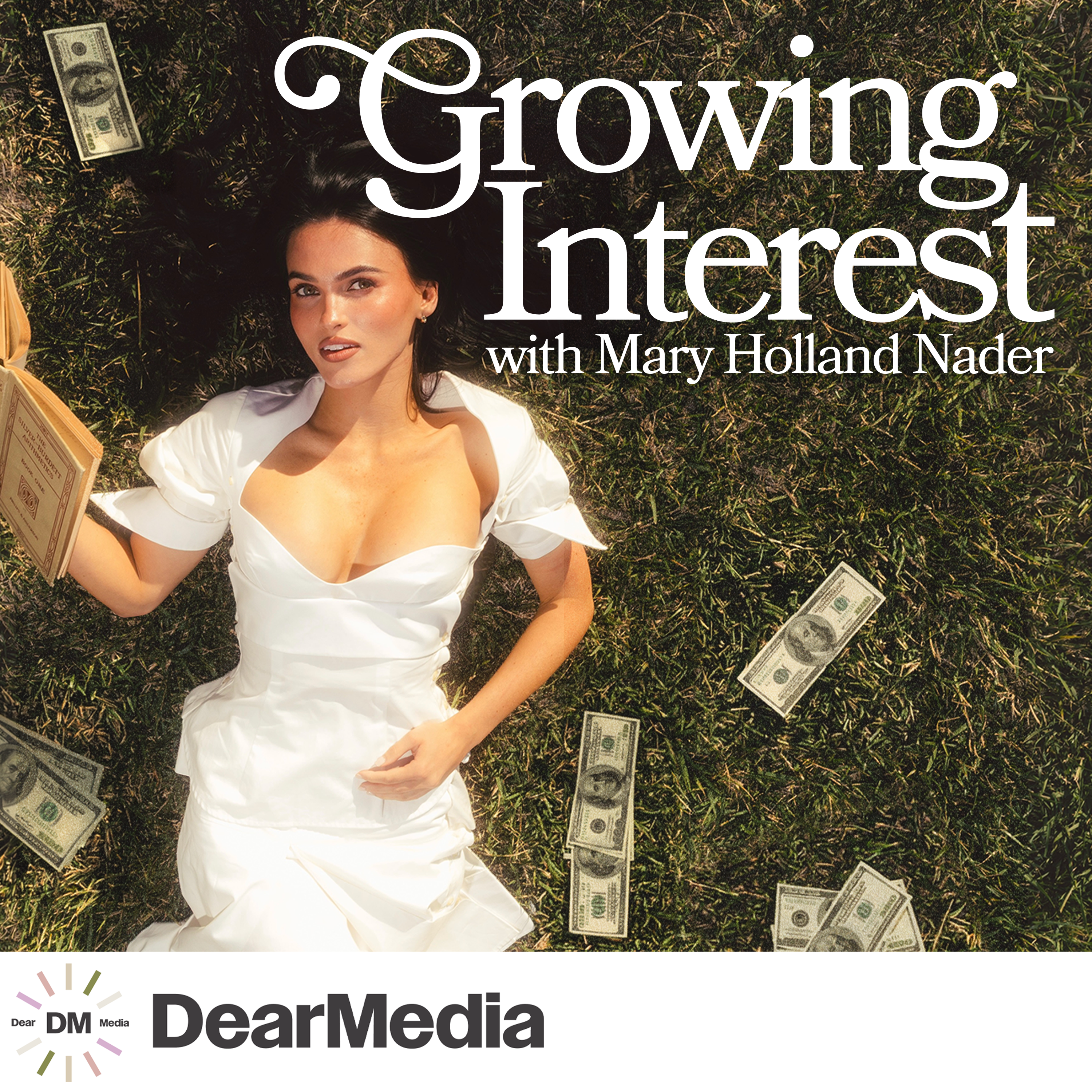
- Growing Interest with Mary Holland Nader
- Financially Fluent In One Hour with Mrs. Dow Jones
Growing Interest with Mary Holland Nader3 Nov 2026 · 47m · 20 chapters
Financially Fluent In One Hour with Mrs. Dow Jones
In short
Financial literacy “in one hour,” translating market headlines into plain English. Guests cover stock market vs economy, major indexes (S&P 500, Nasdaq, Dow Jones), index funds/low-cost ETFs, time horizon, Fed interest-rate effects, HYSA vs CDs, and how to act (automation, avoiding rate chasing). They also discuss housing, passive-income myths (laundromats/side hustles), and policy/voting’s impact on wallets.
Guest backgrounds
Haley Sachs (“Mrs. Dow Jones”)—early finfluencer/“finance pop star,” spent 8 years translating financial jargon to 2M+ people; previously worked in comedy in NYC (including for Lorne Michaels/SNL) and later built her personal finance app/company Mary and Pip and hosts Financial Tea (twice weekly). Co-host Mary (podcast host) is a Wall Street alum and runs Mary and Pip.
Key claims
Market is future-focused; economy is present-focused. Index funds via automation beat overthinking; use long time horizons (10+ years). Don’t YOLO due to “Learned Financial Helplessness.” Fed raises rates to cool inflation; lowers rates to stimulate borrowing. Rate chasing wastes “financial energy.” Homebuying shouldn’t be timed to rate drops; stocks are more hands-off than real estate.
Notable examples
Nordstrom/Jessica Simpson “basket” analogy for index funds; S&P 500 weighted toward AI (top 10 companies ~40% weight); HYSA rate changes vs CD lock-in; Japan trip funded by HYSA interest; “buy now, pay later” Coachella YOLO warning; laundromat/individual-stock course hype as “glossy” traps.
Written by AI. May contain mistakes.
Chapters
0:45
Understanding Financial Jargon
Discussion on breaking down complex financial terms into simpler language.
“We're going to break all of that jargon down into plain English.”
1:53
Haley Sachs' Journey to Mrs. Dow Jones
Haley Sachs shares her background and the inspiration behind her brand.
“What inspired you to start a whole page about financial literacy?”
4:58
The Shift from Comedy to Finance
Transitioning from a career in comedy to full-time financial content creation.
“in these types of videos while you were working in comedy.”
6:35
Taking Action in Personal Finance
Exploring the importance of taking action in personal finance and overcoming barriers.
“Love that transparency because so many people get so scared to make the jump, but it's almost nice.”
7:48
The Market Explained
Explaining the stock market, its indices, and how they relate to the economy.
“Like I think that we really discount our own ability to create that momentum just by the media diet that we consume.”
12:02
Market vs. Economy
Understanding the difference between market performance and economic reality.
“And you can buy either those companies individually.”
14:00
Current Economic Challenges
Discussion on the difficulties faced by Americans amidst economic uncertainty.
“where, you know, especially in a time right now where things are so hard, inflation is so high, people cannot find new jobs.”
15:14
The Importance of Financial Planning
Exploration of the need for financial planning despite economic fears.
“So I think that you do save for college because of the optionality.”
17:03
Investment Strategies and Index Funds
Understanding different stock indexes and the benefits of low-cost index fund investing.
“The NASDAQ is a more tech-weighted index.”
19:21
Understanding Time Horizons in Investing
The significance of time horizons and risk tolerance in investment decisions.
“And one thing that I try to hone in is like time horizon is because in Merriam-Pip, we have managed portfolios, managed by professionals.”
Show all 20 chapters
21:45
Action Money and Building Wealth
Concept of 'action money' and steps to build wealth through saving and investing.
“So if someone listening has $100 extra of that action money, which I love that concept, to invest, what should they understand before putting it in the market?”
23:00
Exploring the Fixed Income Market
Introduction to the fixed income market and the role of the Federal Reserve.
“They have the best advice from the end of the day.”
26:57
High Yield Savings Accounts Explained
Advantages and considerations of using high yield savings accounts and CDs.
“because with high yield savings accounts, with those cash accounts that she was talking about, those go up and down with those Federal Reserve interest rates.”
28:01
The Pitfalls of Rate Chasing
Learn about the dangers of focusing too much on rate chasing instead of meaningful financial actions.
“A most of these promotional rates are gone in two weeks.”
30:01
The Reality of Home Buying
Discuss the importance of focusing on personal finances over external factors like interest rates when buying a home.
“Let them do it for you so that when you are down and want to get under the covers, your money's working for you.”
31:53
Investing vs. Real Estate
Understand the benefits of investing in stocks compared to real estate and the hidden costs of home ownership.
“And then it's like, no, girl, you forgot about that HVAC that you had to fix.”
33:58
The Myth of Passive Income
Explore the misconception that passive income is the key to financial success, and the importance of active income and discipline.
“It's on the whole freaking Sunday, making this stupid ass sauce.”
36:18
It's Never Too Late to Start Investing
Learn that it's never too late to take charge of your finances and the steps to start investing at any age.
“over-promising returns or over-promising that this is how they became a millionaire by the time they were 23.”
42:05
The Intersection of Politics and Finance
Explore how political policies impact personal finance and voting's significance.
“My second question is, what's your growing interest?”
44:40
Guest Introduction and Resources
Learn about Mrs. Dow Jones and the financial resources she offers.
“Well, thank you so much for coming on the show.”

Ask about this episode
Get the gist, explore an idea or ask about something said.
 Claude
On Growing Interest with Mary Holland Nader, what are the key points of this episode?
Searching your listeningTranscript
Automatic transcript. May contain errors.
0:00Mary Holland: The following podcast is a Dear Media production.
0:02Haley Sacks: I just really encourage people to look at the policies of the candidates in their areas and really think about the way that your vote affects your wallet.
0:10Mary Holland: Haley Sacks, aka Mrs. Dow Jones, has spent eight years translating financial jargon to over 2 million people. Today, she's going to do it for us. The stock market is all about the future, but the economy is sort of about what's happening right now. How does it feel?
0:25Haley Sacks: The S &P 500 is the top 500 companies in America. Okay. The NASDAQ is a more tech-weighted index. And then the Dow Jones are like the 30 top blue chip companies.
0:37Mary Holland: If you've ever nodded along as a finance bro explains the Fed or the S &P 500 or the market being up or down, this episode is for you. We're going to break all of that jargon down into plain English. Today's intention is fluency. Because once you learn the language, the action becomes much easier. All right, y 'all. Let's grow.
1:02Mary Holland: Okay, Haley Sachs, Mrs. Dow Jones, welcome to the show. Thanks for having me. I am so thrilled that you're here. I mean, you were one of the first Finfluencers. You called yourself, I think, a finance pop star, which I was obsessed with. And you just do such a good job of breaking down. We were just talking about it, headlines specifically, and financial concepts that are so confusing to so many. And you've really paved the way for a lot of conversations I have with my audience. So thank you for being here. When I was on Wall Street, I would go to your page before work just in case there was any big headlines because like I didn't, especially at the beginning, I didn't understand so much of what was happening.
1:37Mary Holland: And you would break things down of like what the Fed cut means or Fed rates means and stuff like that. So I appreciate you for getting me through a lot of Wall Street meetings as well. I love that. But I wanted to start with you starting Mrs. Dow Jones, starting the brand. You were in corporate before. What inspired you to start a whole page about financial literacy?
1:59Haley Sacks: When I started, there were no financial influencers. Influencing wasn't a thing. It was like 2017. And I was working in comedy in New York City. I worked for Lorne Michaels, who started SNL. And I had gotten this big job with him that was super exciting because, you know, we both are in creative media careers now. It's very hard to find like any sort of stability or the kind of job that you could like tell your parents about. So this was very thrilling going from like making internet videos in a silo and like doing stand up on the Lower East Side to being like, wow, I have the stamp of approval of this like big wig.
2:34Haley Sacks: So I didn't want to mess it up is all that to say. And the first day they had the audacity to ask me about 401ks, health insurance, and no one had ever taught me. And so I was flabbergasted and desperate to prove that I belong there. And so that sort of gave me the kick in the tush to go try and learn about this that night, actually. And then what I found when I went online was either information for women that was so targeted towards frugality and scrimping. and it just sort of presented a way of life that I think was actually why I didn't want to take control of my finances in the first place.
3:25Haley Sacks: Cause it's like sort of like if someone's like, I'm going to start a diet and then you just think I'm going to be hungry all the time.
3:30Mary Holland: Yeah, remove everything.
3:31Haley Sacks: Yeah, that's what I thought it meant to be good with money. And then all the stuff that I found for women was confirmed that. Like I was reading articles about re-washing paper towels. Oh my God. I was like, oh my gosh. And then on the other end, or it was information that was really targeted towards men by men, by the way, men that like hadn't even been through puberty, you would never go on a date with, let alone like want to talk to them about an actual, you know, topic, you know, and they're explaining Wall Street terminology and whatever. And I'm like, OK, clearly Wall Street's where the money's at.
4:04Haley Sacks: And that's like a more important than all of this scrimping and saving, which I still believe. I'm like, let's focus on making more. Let's like be abundant. That's a big part of my mentality. I mean, within reason, you can't go blow it at
4:17Mary Holland: the Rolly store every day, but you've got the vibe.
4:19Haley Sacks: Yes. And so I was like, OK, I need an in between. I need someone to teach me about this in a way that like I'll actually understand. And, you know, every day I'm taking in so much celebrity gossip. I'm, you know, wake up every day and like a little IV. I take the Daily Mail on page six. Love some since I was little. It's like just been the addiction of my lifetime, celebrity news. And so I was like, OK, well, if someone could explain the Wall Street stuff to me in a way that had the pop culture, then I would listen. So I just started to teach myself and make content around it. And then that sort of, it was really just came from, I needed to learn.
4:56Mary Holland: That's incredible. So you were making content in these types of videos while you were working in comedy. Yeah, but I was very, yes, but I was
5:04Haley Sacks: like very loyal to that job. Okay. So it was like starting then, but I was, it was sort of, I thought that I was going to be there for 40 years. Like I was like, okay, I'm safe now. Like I felt like I was in from the rain. Like, okay, all of the careers. In from the rain. Yeah, exactly. You know that feeling? Yes. And then of course I got laid off.
5:22Mary Holland: Okay. Yes. Wait, so let's jump to that. Six months in, girl. Oh no. And so I was like, I'm not in from the rain. It's a very like revolving door though, that comedy, right? Like I feel like people are getting laid off and hired all the time.
5:34Haley Sacks: Yeah. And also they just they were not on top of their finances. And it was doomed from the start. Yeah. Like you would get over 100 ,000 views on a video and they take you to Benihana.
5:49Mary Holland: And it's like, we can't afford this. What do you mean? Like Benihana, delicious, but expensive.
5:54Haley Sacks: Yeah, of course. Those hibachi chefs have to earn their pennies. Right, right.
5:58Mary Holland: So you got laid off six months in. And at that point, like, did you feel, you know, supported enough on socials and like you're making enough?
6:06Haley Sacks: No, no. But I was like, I want to do this full time. Okay, great. So I got jobs writing like short internet videos, which was like my skill that I had for a music website called Fuse. And I don't know anything about music. I've never passed me the aux cord. So how I pulled that off, we don't know. And then my parents helped me with rent, which was really helpful. That's nice.
6:29Mary Holland: Yeah. So helpful. Nice additive. Okay. So you had like somewhat of a cushion, but you were like, I am going all in on this. Yeah. Parents helping with rent. Love that transparency because so many people get so scared to make the jump, but it's almost nice. Like you got laid off. So you're like, I'm going to do this full time. Now I started filming this. We got a call from Hulu and obviously I couldn't film and work on Wall Street. So that was kind of my kick in the tush to do it full time. So I feel like sometimes there's like a universe signal that's like, do it. You know what I mean? It's a scary one too.
6:59Haley Sacks: Like it was, that was definitely a rock bottom getting laid off. Yeah. But it really led to so much more than I could have ever imagined. Oh my gosh, I'm sure. Yeah.
7:09Mary Holland: So at Mary and Pip, which is my personal finance app and company. Yes, I love it. Oh my God, thank you. Well, it means so much coming from you. So much inspo. But one thing we're trying to inspire users to do is take action because there's so much now you really led the wave of Finfluencer content and financial content. And there's so much information out there. but it's really hard, almost like analysis paralysis of what to do and how to take action. So in your experience, like what causes people to go from following money creators and watching, you know, if influencers online and learning what to do or saving the video to actually taking an action and opening the account or setting up that auto investment?
7:48Haley Sacks: I think that you have to have your money aha moment and it can come from something happening in your life, like, OK, I'm getting married, so I really want to take care of my finances or I'm having babies, a huge one or my parents are getting older and I need to help them or just like something that sort of pushes you to that moment or the new year, January, big new year, like for financial experts, that's like totally big month for us. Yeah. Or you can manufacture it. Like I think that we really discount our own ability to create that momentum just by the media diet that we consume. That's why it's so amazing to have podcasts like this listening to.
8:36Haley Sacks: I have financial tea podcasts out twice a week. So good. By the way, for those
8:41Mary Holland: listening, I'm obsessed.
8:42Haley Sacks: I love your podcast too. I was listening before. It's so good. Fan girl. I'm so excited to be here, but I'm growing interest and growing interest. But I think like you can really position yourself with what you are absorbing to normalize and like be excited about taking those financial steps forward. Right. But the analysis paralysis is huge. Like I deal with this all the time where I can tell you the next step and you won't take it. I think a lot of it also has to do with your money mindset where you have to figure out your why so you know why not. And a lot of that is rooted in childhood, Mary.
9:18Mary Holland: Wow. Yeah. Big unlock.
9:20Haley Sacks: Whoa. Yeah. Freud. Where's Freud? We need some psychologists in the house. Yeah. He's scared, babe.
9:26Mary Holland: And your money mindset was very action-oriented. I mean, your dad worked at Goldman Sachs with it? No, girl. No, he did. He did. But y 'all didn't talk about it.
9:34Haley Sacks: My money mindset was I didn't have one. You didn't have one. Yeah. Yeah. I have, like, parents who didn't teach me anything about money. I grew up, like, surrounded by money, comfortable. I always said I would be an asshole to complain about it. And I try to be really transparent. Yeah. But also you can inherit money, but you don't inherit financial literacy. And that's why generational wealth is blown by the second and third generations. and so while I was comfortable I had no financial confidence or um understanding of like how I think my money mindset was really like I'm either going to marry someone who does this or my dad is going to do it for me or there will be like I did like magical realism with my thinking where I was like or I wake up one day and poof yes I'm in my Nancy Meyers kitchen yeah and I have millions in the
10:22Mary Holland: bank by the time I'm this age I'll have a picket fence and a million in the bank there's always that. And there's always that like, I'll just do it later when this milestone happens. That's why I love. Yeah, it's it's hard as a content creator and like someone who's really trying to champion, you know, financial literacy like both of us to encourage people to take action without like forcing them. And it's like you said, ultimately up to you. But one thing I wanted to talk to you about specifically, because you really break down headlines so well, and there's so many buzzwords, no matter how much I talk about it, where I feel like I'm not getting across to people and like what it is.
10:56Mary Holland: And I've seen a few videos on concepts just in financial markets in general, the basics that I've seen you do, and you explain them so well. So nice. No, it's trust me, like I was telling you before this, when I was on Wall Street, I would watch your content to like better understand how the markets work. And so I want to start with just the market in general, because a lot of my audience might not even know necessarily what the S &P 500 is. We talk about the market and when we're around it so much, it's so easy to just normalize, but we forget we have new followers and we have new people that are like, wait, I'm entering this chat now.
11:30Mary Holland: What are you guys talking about? So I want to start with when people say the market is up, the market is down, what are they talking about exactly? And how can people get exposure to that easily?
11:40Haley Sacks: I love that. So the stock market is basically like a big retailer. Like, thank God if you go to like Neiman Marcus, I feel like they're bankrupt, but
11:53Mary Holland: which one is alive anymore all the malls have gone they're all kind of laid down like sacks yeah you remember the nordstrom nordstrom there you're still around yes okay so you go to nordstrom
12:03Haley Sacks: mary and i are walking in we see all these different brands right you can go to mark by jacobs you can you know browse chanel beauty can go get shoes by jessica simpson whatever you want it's all there and so that's the same thing as the stock market where there's all these different companies that are on the stock market for sale. And you can buy either those companies individually. So I can be like, OK, I want to buy a pair of Jessica Simpson shoes. Or you can be like, I want to buy a basket of things. I'm either buying one shoe or I'm going to buy the, you know, the shoe where I get 15 and I don't get to choose them.
12:43Haley Sacks: But they're all, you know, in that one purchase. And that's an index fund. And so when a company is doing well, when it is profiting, when the leadership is working, when, you know, the revenue is up and investors who've put money in are getting money out, that's when the market is up. And when the market is down, it's when the company is not doing so well. Right.
13:07Mary Holland: Yes. And the market overall, do people usually like if stock rows are like the market was up today. They're usually referencing a certain few indexes.
13:18Haley Sacks: Yeah. And what's also interesting, Mary, is like the stock market is all about the future. But say I'm public for Haley. I'm Haley. I'm on the New York Stock Exchange. My ticker is Haley. I could report amazing earnings today. And so you could think, oh, Haley's doing great. But my stock could go down because maybe you invest in Haley and you actually thought that my earnings were going to be better. And so actually, it was disappointing. Yeah, it was disappointing. And so that's actually going to be less. It's so hard to predict. It's so hard to predict. And that's where also there's this big difference between the stock market and the economy.
14:00Haley Sacks: where, you know, especially in a time right now where things are so hard, inflation is so high, people cannot find new jobs. You know, we have student debt. It's just like there's a housing crisis for the everyday American. It's really, really, really difficult. But then you look on CNBC and it's like going gangbusters. Yeah. And so there's also this big difference because the stock market is about the future, but the economy is sort of about what's happening right now. How does it feel?
14:27Mary Holland: What is it like 10 percent of earners make up for over 50 percent of spending? And so even if the whole country is struggling, we're not necessarily going to be in a recession like the market could still be ripping, which is so unfair. And especially now when billionaires are getting even more and more rich with AI, there's so much question and uncertainty about the future, which is why it's also, I think, hard for people to plan financially today, because it's already hard to think about your future self. But let alone, is there even going to be retirement? You know, do we even need 529 plans for our kids?
15:01Mary Holland: Is there even going to be college?
15:02Haley Sacks: I know. I just talked about that last week. It's like, it's so the college thing is so crazy. Yeah. What are you telling people? Like, well, 529 specifically, like saving for college, it's quite a flexible account. OK. So I think that you do save for college because of the optionality. Right. But look, I think that every time in history, there's been lots of doomsday thinking. right now feels very dark. I will agree. And we're in major need of policy shift and of, you know, some fresh air because the way that it's going, like we need to regulate things. But I will say that the moment that you listen to those voices that tell you that there's no opportunity, there's no need to plan for the future, you know, things are already so bad.
15:50Haley Sacks: So why not just, you know, buy now, pay later, that ticket to Coachella and just YOLO and enjoy your life, you're not doing yourself any service. It's really important to fight against. I call that in my book, Learned Financial Helplessness, where, you know, you just sort of think that we're on this floating rock. The world is burning. So why not just stick your middle finger up and go blow it all? Because why am I planning for a future that doesn't exist? And, you know, it probably does exist. Yeah. So you want to make sure that future you, that's why my book is called Future Rich Person, because like you have to put your oxygen mask on first for future you instead of just thinking about current you.
16:31Mary Holland: Oh my gosh, that was such an unlock. Like I honestly needed to hear that because it's so hard sometimes to, even my sisters are like, my sister the other day was like, why would I put money in a retirement account when I could buy a bag? And I was like, I could, how long do you have? So the three indexes that kind of like make up a lot of market news is Dow Jones, Industrial Adder, Mrs. Dow Jones, where your name comes from, the NASDAQ and the S &P 500. So can you briefly explain the difference between those three?
17:00Haley Sacks: So the S &P 500 is the top 500 companies in America. Okay. The NASDAQ is a more tech-weighted index. And then the Dow Jones are like the 30 top blue chip companies. Okay. What I talk about a lot is buying low-cost index funds because it's just such an easy way to invest. You can go enjoy your life. You don't need to be buying, selling, worrying about all this stuff. It's a one-stop shop. Go to Nordstrom's. You buy the 15 shoes from Jessica Simpson versus the one shoe and you're good to go. But what's very interesting is that with the S &P 500, it's a weighted index. So the bigger that your company is, the more weight that it has on the index.
17:45Haley Sacks: So right now, the 40 % of the S &P 500 is weighted by 10 companies. And those 10 companies are all very focused on AI. So it's also very interesting because if you invest the S &P 500, even if you are not trying to invest very much in AI, you will be investing in AI.
18:06Mary Holland: And there's a lot of overlap between, you know, ETFs that track the S &P 500 versus indexes that are ETFs that track the NASDAQ, like the Qs. you're going to have a lot of overlap in something like a spy.
18:17Haley Sacks: Yeah, 100%. And I think, you know, you have a young audience. What's really important to remember is your time horizon when you're invested. Yes. So the AI thing, a little scary because you're like, oh, shit, like if that all they blow up all the data centers or like, you know, this all goes to zero, like then I'm screwed. But the thing about when you have a long time horizon is that you actually don't really We need to listen to all the hearsay around it because the market always comes back and you have to just feel really confident and safe in that. Yeah. And so like if you have a 10 plus 10 year plus time horizon, you're good.
18:55Haley Sacks: Yeah. You know, you might want to get your money out of those because you have like moral issues with AI, which is a different thing. But if you're just someone who's like, OK, I'm a long term investor. It's still a great place to put your money. But I always just like to share that. We are in this place where the S &P 500 is very weighted towards AI. That's a great point.
19:15Mary Holland: Which is okay. And yeah. And we have time to bounce back if it doesn't go well. Exactly. And who knows how long we'll live these days. Maybe our time horizons are extending. Exactly.
19:23Haley Sacks: I love that.
19:24Mary Holland: But I think you're right. My audience is very young. And one thing that I try to hone in is like time horizon is because in Merriam-Pip, we have managed portfolios, managed by professionals. And it's all low cost ETFs, which is very similar to what the portfolios we managed on Wall Street for these ultra high net worth. It's all the same. It's like very balanced portfolios. But to be placed into one, you take a risk profile questionnaire, because of course, we need to understand your risk profile. And in those questions, a lot of people get confused of like, how much risk are you willing to take?
19:54Mary Holland: And someone who's 22, if they say no risk at all, inherently, you don't want risk. But someone who's in their 20s, really anytime in your 20s, if you have a long time horizon, that also means you have a higher risk tolerance. And it also translates into, you know, lower liquidity needs. So it's a little confusing. There's so many words. I just said so many buzzwords in there. But I loved your point of like, the younger you are, the longer you have to bounce back. Let compounding do its thing and ride the wave. And just find a way to put money away.
20:25Haley Sacks: I call it action money, which is, okay, the money that you made, but you didn't spend. Right. that you didn't need for your lifestyle or for your needs. That's your money to take action with to build wealth. And so we always want to have that action money left over at the end of every month. And so when you're starting your financial journey, you use that action money to save your emergency fund. Your next step might be paying off that high industry debt. And then when you start investing, the best thing is really to just create a system where you're not having to overthink it. And every month you're just able to put money.
21:00Haley Sacks: almost mindlessly in the market. Yes, dollar cost averaging. Just like, you know, set up automated buys to those low cost index funds. So you just make sure that it's growing and you can go watch Mary's reality show and have fun with your friends and like, you know, do the things that you love to do because you don't need to be a Mrs. Dow Jones or a Mary or a Pip to do this. You don't need to do it. You need about seventh grade math and some automation. Exactly. It's very, very simple. And also if you are young and you're listening to this, you're so smart because the earlier that you start, like if you're in your 20s and you start this, oh my gosh, just through the power of time, you're going to see.
21:40Haley Sacks: It's insane. Yeah, it really is.
21:41Mary Holland: It's insane. That's my biggest regret is like not opening a Roth IRA in college when I first started making money. Okay, amazing. So if someone listening has $100 extra of that action money, which I love that concept, to invest, what should they understand before putting it in the market? Or is that even too much overthinking? It's just like put it in a low cost ETF.
22:03Haley Sacks: No, I think it's good to know what you're investing in. Like that's why I was explaining out the S &P where it's like, you know, it's important to know that that's what's actually happening. And you can actually buy index funds that aren't weighted too, that track the S &P 500 where everything gets 2%.
22:19Mary Holland: So yeah, so it's all equal.
22:21Haley Sacks: I love that. But that's the, you don't have to be a genius to do it. Warren Buffett recommends a two to three fund portfolio. I agree. You know, get one that tracks S &P 500, one that's international. Maybe you throw in one that's super techie or if you're like really into the environment, you could do an environmental one, you know, and then just let it cook. Let it cook. It's like a brisket.
22:44Mary Holland: It is like a brisket. The longer you let it cook.
22:47Haley Sacks: No peaky roast beefy. That's what my mom's like favorite recipe. And I'm like, that's an investing analogy. I love it. Yeah, like don't open the lid. Let it sit. The longer it sits, the better it is. A watch pot never boils. There you go, girl. My mom says. We love it. I love it. It's all about the mom. It's all about the mom.
23:05Mary Holland: They have the best advice from the end of the day. Okay, moving on from the stock market, which is equities and, you know, individual companies that we all know and love, to the totally unknown world of the fixed income market and specifically want to start with the Fed. because there's been a lot of headlines about the Fed raising rates, the Fed lowering rates, and a lot of confusion in my audience, at least of like, who actually is the Fed? Who is the Fed? And why should I give a fuck?
23:32Haley Sacks: Yeah, I love that. So the Fed is the Federal Reserve and they are basically the thermostat for the economy. So if the economy gets too hot, inflation gets too hot, there's too much inflation, They can turn down that thermostat dial by raising interest rates, which is what they just did, which makes it more expensive to borrow money. That means that you're, you know, if you lease a car, that's going to be more expensive. Your credit card interest rates are going to be more expensive. It's harder to spend money in that economy because they're trying to bring inflation down and sort of like get people to chill a little.
24:09Haley Sacks: Right.
24:09Mary Holland: Get companies to lower prices. Yeah, exactly. They're like, OK, take it down a notch. Everyone stops spending so much.
24:15Haley Sacks: Yeah, like we're going to put little handcuffs on. Yeah. Right. I love it. Yeah. And then the on the flip side, if the economy needs a boost, say that, you know, things are cooling off a little, they can lower rates so that it's cheaper to borrow money. And that's like during the pandemic, right, where people were getting like two percent mortgages and, you know, borrowing money was basically free. it was because there was so much fear around the economy and the future that no one was spending. Everyone was holding on to cash. And so to get more money into the economy, they lowered interest rates so that it made people feel more reckless, basically.
24:56Haley Sacks: Yes. Yeah. And just got, you know, more money pumping.
24:59Mary Holland: OK. You said something important there that I want to zoom in on, which is people were people part cash when interest rates are high. And that's because high yield savings rates and high yield cash rates are high. So it's like, it's kind of a double edged sword because if you want to buy a house or rent a car, it's much more expensive when rates go up, but then your high yield save, your cash earns more money just sitting there.
25:21Haley Sacks: Totally. This is a great time to have a high yield savings account. You're going to see those rates go up. I had a friend who paid for a trip to Japan with her high yield savings account interest. Yes. I have a friend who's running like this like squash tournament and they're the treasurer for it. OK, love. And so they're going to buy a CD.
25:47Mary Holland: Explain what a CD is for our audience, because I feel like I never talk about them.
25:50Haley Sacks: So a CD is a certificate of deposit. So it's basically you have like a set rate, like you could buy a six month CD and you say put a thousand dollars into the six month CD at a four percent rate. then I'm going to get that 4 % back in six months, but I cannot touch the money for six months. So with an HYSA, what's great, it's why it's a great place to put your emergency fund because you want access to your emergency fund. You don't know what an emergency is going to happen. So you need that liquidity. But a CD is a place that you would put a saving that you knew you didn't need for that period.
26:24Mary Holland: So like hypothetically, if someone had a wedding deposit that they needed to put in 12 months, You could buy a CD that even earns like five to six percent. But because you're locking that in instead of your, you know, three and a half that you're earning in your high yield savings account, you cannot touch that money for 12 months. So for like an expense that you know you need in a year from now and not in three months from now, it's nice because you can lock it in. Even if the Fed, let's say, cuts rates during that 12 months, you still locked in that five percent or whatever it is, hypothetically.
26:55Haley Sacks: Totally. And what Mary said is really important because with high yield savings accounts, with those cash accounts that she was talking about, those go up and down with those Federal Reserve interest rates. So right now you could open an HYSA that has 4%. Yeah. Because the Fed is raising rates, so they keep going up. Yeah. But if they cut rates, that 4%, you might've signed up, so excited I'm getting 4 % And then you're going to come bully us in the comments and literally, you know, six months when the Fed cuts rates and it goes to 3 % or it won't go down that fast. But I want to just make it clear that those are not a good point.
27:35Haley Sacks: Yes. But it's still going to be like 100 times more interest than you would make just having that cash sit at the bank. Totally.
27:42Mary Holland: Still a great idea. We love an HYSA, but just don't get too attached. Don't get too attached to the rate. And you know what I always also say is like 4 % versus 375 when you have a few thousand in it is not going to make a huge difference. People are like, well, this one, if I, you know, refer three friends, I get 25. I'm like, read the fine print. A most of these promotional rates are gone in two weeks. And then, you know, it's there's a lot of like nuances. And I feel like people spend so much time comparing rates and comparing where they should open one. Rate chasing. They lose opportunity costs.
28:16Mary Holland: They could have been earning interest during the entire month that they were deciding between two.
28:20Haley Sacks: I love that you brought that up because it's something that I talk about in my book, too, where I talk about financial energy, where, you know, we can get so distracted by these golden carrots that make us feel really productive in terms of our financial lives. Like when you wake up in the morning, I don't know about you, but it's like I wake up and I'm like, OK, we're only having green juice today. I'm going to run a marathon. on. I'm going to, you know, my whole business, like it's going to sell by tomorrow. It's like, we're having a crazy day. And then, cause I have all this energy and then, you know, by 3 PM, I want to smoke a bong and like eat a cookie and like get under the covers of my dog, you know?
29:01Haley Sacks: And so the same thing goes with your financial life that it's like, when you have those moments where you have that financial aha moment and you have that motivation, exactly. be careful where you use it because a lot of people will use it on things like rate chasing, which is going to totally drain you and will maybe make you like$30 different. But if you use that energy to like actually set up automations to your investing account, to negotiate your salary, to look at your fixed expenses, which are way more important than like that avocado toast or, you know, latte that you're skipping. You know, if your rent is too high, that's just you're on the sedonic treadmill where you're not ever going to get off it.
29:44Haley Sacks: So when you have those moments of like inspiration where you're like, oh, I'm in a very financial mood. Yeah. Make sure that you leverage that to use that energy wisely. Rate chasing, not wise.
29:56Mary Holland: Not wise. Setting up systems, wise. So automation. Automation. Let the robots do it for you. Let them do it for you so that when you are down and want to get under the covers, your money's working for you.
30:06Haley Sacks: A hundred percent. You can just be with your dog, sketch free. And by the way, They have exactly how to set up those systems in future rich person.
30:12Mary Holland: So if I'm thinking about buying a home next year, should I be watching when the Fed likes too closely or to your earlier point is spending energy on watching the headlines on what the Fed is doing? If you're going to buy a home next year, you're going to buy a home next year and just spend time negotiating that specific mortgage. Or what would you say to someone who's, let's say, looking to do something that's related to rates?
30:34Haley Sacks: When interest rates drop, a lot of people are going to have the same exact idea as you. that you, that they're also going to want to buy a home. So like, if you really want to buy a home, I would say buy the home that you want, that you can afford. And then you can always refinance your mortgage later. But waiting for the rate, I would never really recommend. And I would also say question wanting to buy a home. Yeah. You know, like, I think that it's a great, great lifestyle. Let's get into that. Yeah. It's like a fun, it's a beautiful, like, girl, like, you'll have me back in five years and I will have a house upstate that I've like absolutely spent way too much money like choosing doorknobs for.
31:14Haley Sacks: But that is a that's for Haley. That's a passion project. You know, it's the same way you don't go shopping and think like, oh, this is going to be what I'm going to retire on. It's just something that's fun that like enhances your lifestyle. Right. So I think we also have to reframe owning a home as being the American dream because for many people, a it's out of reach the cost for our parents to buy a home for that we could get half of a home literally yeah like one room yeah yeah one room and so it's so so so expensive but then also the stock market in most places outperforms the real estate market because what most people don't realize mary is when they sell their home even if they say you buy a house for eight hundred thousand dollars you know 10 years later you sell it for 1.2 you're like damn i'm a beast yeah i'm crushing it Look at that profit.
32:05Haley Sacks: And then it's like, no, girl, you forgot about that HVAC that you had to fix. You forgot about like all the plumber bills, all the renovations that you did, all of the HOA. Like you completely black out everything that you put into this investment, which is why I'm obsessed with investing in stocks, because it's like hands off. Yeah, hands off. And like, you know, someone could rob you. They can't rob your stock portfolio. Like, it's like, you know, they can't break into that. Totally. It's just like a fire can't destroy your portfolio. A hundred percent.
32:37Mary Holland: That's such a good point. And I feel like there was a phase, and I don't know if there's still corners of the internet that do this, where it's like, I'm going to buy all these houses and Airbnb them out or like rent them out. It's like the amount of work and effort that goes in and money that goes into, you know, renovating a home to make it worth more is money that could have been going into the market.
32:57Haley Sacks: So, well, that's also such a good point too, where it's like, there's all, there's so much noise on the internet about what you're supposed to be doing financially. And like, I don't know if you, if this crossed your desk, but there was also like this whole algorithm about side hustling and buying laundromats. I saw that. And now in the Wall Street Journal, yesterday there was an article about all these people who had bought laundromats and were really struggling because it's way harder than it actually looks. Like this actually happened to me yesterday, day. I didn't buy a laundromat. I did comment recipe on a freaking post, Mary, that looked so good.
33:38Haley Sacks: This like Sunday ragu, like juicy ass, like a beef sauce. Like I was like, oh, no, Peaky Roast Beebe who like this would have been in there. Like come on over. So I follow it literally to cheat. Like I'm I don't know anything about this person, what they're if they're a recipe developer, what they're cooking. It's like, no idea. I've just seen the video. I'm like, looks good. Recipe. Okay. Link to your sub stack. I'm getting the ingredients. Yeah. This is my Sunday. It's on the whole freaking Sunday, making this stupid ass sauce. It wasn't good. No, it wasn't good. And I'm like, you know what?
34:12Haley Sacks: This is the problem in a microcosm where it's like you, it's the same thing with the TikTok influencer who's selling you the$400 course to buy individual stocks. You know, the person who's telling you to buy the laundromat, any of these things where it looks so glossy on the surface. Totally. And you're like, oh, my God. Yeah. And it seems so easy. Comet recipe, Comet stock. We're going to do it. But then when you actually peel the curtain back, it sucks. No. So you need to, like, don't be like me. Don't spend the$75 hypothetically on the ragu. That really was bad. Like, go to Ena Garten. Yeah.
34:45Haley Sacks: Get a trusted financial person that you look at. Go to, you know, Mary.
34:48Mary Holland: Mary, go to Mrs. Dow Jones. Yeah, Mrs. Dow Jones. Really important. or there's such a culture right now in building wealth that people think that, especially online, if I can just master the passive income, then I'll be good. And if I can just make money in my sleep, then I'll be good. It's like, you and I both know that like the richest people in the world started by focusing on how to make active income. Like they are spending more time making active income to put the only passive income they're making is on, you know, market investments usually.
35:17Haley Sacks: 100 % or on the high yield savings account.
35:19Mary Holland: That counts as passive income.
35:20Haley Sacks: Like a lot of people focus so much on a side hustle that they forgot the real hustle. And like, if you put that effort into building your equity as a person in your career, where you're the best at what you do, then you're gonna give yourself so much negotiation room, so much power in your industry versus just being like all over the place. And I understand why it's tempting because guess what? Also, it feels like there's no opportunity to actually grow well. So if someone says, here's the secret, it. We want to take it. We want to comment, Raghu. And it's like, but you have to realize that when it seems too good to be true, it's too good to be true.
35:57Haley Sacks: Totally. And that none of it is easy.
35:58Mary Holland: Yeah. Like making money is not easy. No. And you know what it takes, which a lot of us don't have. I am guilty of this as well. Patience. It's not instant gratification, growing wealth. And that's something that's so hard for so many people. They just want that instant grat and like that million dollars or like that immediate return. And it should be actually a red flag if someone's promising over-promising returns or over-promising that this is how they became a millionaire by the time they were 23. I literally saw a video yesterday, Haley. I was like, I sent it to my co-founder because I was like, anytime I feel like I'm doing well, I just open up Instagram and I'm humbled real quick.
36:32Mary Holland: It was this girl and she was like, here's how I became a multi-million dollar business owner by the time I was 23. I woke up at 4.30 every single morning and journaled before I It's always the 4.30. By the way, I did that for, I was so tired. I did it for like literally,
36:47Haley Sacks: like I was like and I got a puppy and it was like all over. But I was like, OK, this is what it
36:51Mary Holland: takes to be successful. I do the friggin cold shower, the journal. It was too much. No, I find that like the number one ingredient to success is discipline. As long as you stick to something and you even if you don't like it or you're having bad days, like or you think that, you know, it's not going to pan out like slow and steady wins the race. All the best investors know that and like discipline and building those systems to just consistently contribute to your future self, you will suddenly open your accounts and you will see a number that you're happy with. You know what I mean? So discipline over everything.
37:23Mary Holland: Discipline and automation. And automation. Yeah. Out of sight, out of mind. Yeah, yeah, yeah. Back to the Freud. Yeah.
37:29Haley Sacks: The discipline of like making the money, like doing the hard work to make the money. But then when it actually comes to like, like building your savings account and the investments, just automate it.
37:37Mary Holland: And automation and then like discipline and not taking it, ripping it out if the market's in the red.
37:42Haley Sacks: Oh, I saw a video yesterday of like this guy doing a beautiful dance. Like they're always doing gorgeous dances. They've got the gift of rhythm. I was not born with that. I'm, you know, enamored. But he's like, when I move the money that I just put in my savings account into my checking account. And it's like the most relatable thing because obviously like 110 ,000 people have liked it. And I'm like, no, no, no, don't do that.
38:03Mary Holland: Don't leave it. Leave it. Don't touch it. You got to learn how to say no. That's good too. So if a woman listening is 33 and just starting and is freaking out that it's too late, What would you tell that woman listening?
38:16Haley Sacks: Oh, my gosh. Well, it's not too late at all. Like I would I think the best thing to do is to show people the data. So like here's, you know, and I see this all the time with the people that I work with, but also just like my friends who are like, no, I'm scared. Yeah, I'm going to do the really conservative investment. And I'm like, OK, but you're in your 30s. Yeah. So if you're doing that, like four to six percent investment, that's like not even really compounding. You're going to make X amount of money. Whereas if you put it in the stock market, you're going to make Y, which is like three X.
38:47Haley Sacks: So I think looking at the numbers and then also looking at the historical data, because a lot of that comes from fear that you're going to lose the money and that the stock market is not a stable, safe place. But when you actually look at the data, you see that like the stock market has always bounced back. even all these horrible things, Enron, the dot-com boom, COVID, you know, all you could name a million moments where people were like, it's over Black Monday. It's not. You know, there might be some hard times, but it always bounces back. And so and it's like the S &P 500, if that goes under, that means America's gone.
39:24Haley Sacks: Totally. Yeah. So it's like we got it's going to be Armageddon, babe. Yeah. Wear your gold bricks. That's all that's going to save you. Exactly.
39:32Mary Holland: Exactly. Exactly. Okay. That's helpful because it's never, it's really never too late to start. Like at all. Even my mom has had a joint account with my dad and she'd be okay with me explaining the story, but she's had a joint account with my dad for her entire life. And when I launched Miriam Pip, she was like the first time she opened her own account. And now she's so excited to be like making her own investments and do, and she's in her fifties and like, it's just never too late to get started. And especially if you're in your thirties, you have hella time and hella risks to take on?
39:59Haley Sacks: I have an issue with like demos because like I talk to so many women who are way older than me who are going through financial changes, like specifically like divorce or the death of a spouse. And then it's their first time that they have to really step into the role of, you know, financial person of the household. And it's never too late. It's never too late. And it's yeah. Oh,
40:23Mary Holland: my gosh, that's got to be so hard. It's like you're already dealing with such a hard loss and grieving in so many ways. If you also have to learn all this new stuff, then it just will make you feel that much more, I would imagine, isolated and lonely, which is why, yeah, it's never too late to like own it and figure out what's going on in the bank account. It is like different advice though
40:44Haley Sacks: for where you are in your life. Like if you were in your 50s or 60s and you didn't have any investments, then it would be like, okay, we got to push off your retirement a little bit. And like, can you move to a lower cost of living area? And like, what are the ways that we can maximize your earnings and lower your expenses? Like you do have to sort of like call 911 a little bit, but there's still opportunity to do it.
41:05Mary Holland: Yes, absolutely. And yeah, getting the right help. It takes grit. And yeah, getting the right help.
41:10Haley Sacks: It's way easier to do it if you're in your 20s or 30s. Still easier to do it in your 30s. Still easier to do it in your 40s. But then as you get older, definitely because you have less time on your side. So you have to earn more money versus letting the money work for you.
41:20Mary Holland: That makes total sense. Well, well, this has been such a helpful conversation. I'll close out with my two outros. I ask mom, I guess. The first is what are you investing in?
41:29Haley Sacks: My theme for 2026 was really balanced because I think that it's very easy to have a lot of one thing, but it's way harder to have some of many things. And for the first like eight years of my career, I had a lot of one thing, which is that I had a lot of Mrs. Dow Jones, but I didn't really have much of anything else. And so this year has been bringing in other pieces so that I have more of a 360 life And one of the things that I've been investing in a lot is travel. Love. Just spending more on travel, taking more time to travel, planning great trips. And so, yeah, I think that's amazing. Yeah.
42:07Haley Sacks: My second question is, what's your growing interest? The election. But not in like a way to divide the audience, but just like you can't really talk about money without being political because, you know, you could be the most amazing budgeter, best earner, all these things. But systemically, if there are forces against you that are keeping you down, you're never going to be able to outrun them. And so I just really encourage people to look at the policies of the candidates in their areas and really think about the way that your vote affects your wallet. That's what I'm really passionate about, because there's some things that we don't have the answers to, but it's bigger than us.
42:41Haley Sacks: It's literally like, sorry, the government's doing this and it really sucks. And the only thing you can do is vote and try and help people understand that they need to vote, too. The biggest policy is like the economics, you know, like that's number one.
42:57Mary Holland: Yeah, of course. OK, so look in your district at the economic policies of your candidate. I don't want to divide the audience at all, but it is less a blue or red issue. It's just like a quality of life. Yeah. I mean, it's similar to the like Roe v. Wade issue. It's not like a political issue at all. It's like a women like human rights issue. Exactly. You know, so I think it's important, like as polarizing as politics are and so many people don't want to talk about it. It's empowering information to know. But also with all this AI stuff and with trillionaires and stuff like that, like I'm like, we need some regulation.
43:31Haley Sacks: Absolutely. Do a wealth tax. Like, it's like, let's friggin go. Like, it's like there is too much money is power and there's too much power in the hands of too few people. Which is just dangerous no matter which way you slice or dice it. It impacts everything. And so, yeah, I'm a little fired up.
43:49Mary Holland: Oh, no, I'm so fired up. I think the world is fired up. I think everyone's a little bit frustrated and everyone's like, all right, what we are helpless and like we're using all of these tools. Are they going to take us over? All of these billionaires are just becoming trillionaires and the poor are getting poorer. And some people I'm sure listening are like, well, will my vote even matter? And it's like voting sometimes is the only thing you can do. And even if you feel like your vote doesn't matter, like it definitely does. and telling your friends to vote and then just like talking about it as uncomfortable as politics is, just like finance is an uncomfortable topic, like talking about policy in a very factual way, it's affecting everyone.
44:28Mary Holland: And no matter which way you swing, it's very important to be educated on it.
44:33Haley Sacks: Yeah, and like I'll add to that that I feel like the midterms people like would usually skip. Yeah. Don't skip. Don't skip. Don't skip. It's super important.
44:41Mary Holland: Tag us when you go to the polls.
44:43Haley Sacks: Yeah, I want to see the stickers. important.
44:45Mary Holland: We need to see the sticker. Well, thank you so much for coming on the show. I'm so excited to read your book. Where else can everyone find you?
44:53Haley Sacks: Well, I host Financial Tea Podcast twice a week. And then I'm on Mrs. Dow Jones, making content every day, every day, helping you understand the markets, covering the headlines. And then we have a newsletter. OK, amazing. So the newsletter is completely free, not on Substack. I own it. They don't. Well done. And that goes out twice a week. And it has like over 100 ,000 readers. And it's, I think it's like my favorite thing that we do. So read the newsletter. You can just go on mrsdowjones.com.
45:22Mary Holland: mrsdowjones.com. You'll see everything. It all. Yeah. Follow Financial Tea. It's one of my new favorites. Thank you so much for coming on. And I'll see you soon. Stay rich. Stay rich. How great is Haley? And how great was that episode? I learned so much. I definitely have had my financial aha moment and have a lot to dive into after this. like every episode, I want to leave you with one takeaway. And today it's automation. Haley talked a lot about finding that financial aha moment and wasting your energy, rate chasing, or trying to find the perfect investment to make you rich. What I want you to do today is set 15 minutes aside to automate something in your financial life, either$10 to savings every week, or a little bit to pay off your high interest bearing credit card debt every week.
46:11Mary Holland: Set some kind of automation that you can come back to during your money ritual. And that will take a lot of the pressure off for when you aren't feeling so financially motivated. Every account and all of those balanced portfolios and ETFs that we talked about today are offered on my app, Mary and Pip. So if you haven't already, go over to the app store, download Mary and Pip, and don't forget to use code growing interest for a special discount code. If you like this podcast, please don't forget to hit follow and rate and review the show. Every rate and review counts, especially as we're early on and growing.
46:44Mary Holland: See y 'all next week. Growing interest is produced for entertainment and educational purposes only. Nothing said on this podcast by me, my guests, or anyone else constitutes financial, legal, tax, or investment advice and shouldn't be the basis for any financial decision. My guests and I may own securities discussed on this show, but nothing said here is a recommendation to buy or sell any security. I'm the founder and CEO of Marion Pipp Investments LLC, a registered investment advisor, but this podcast is separate and produced independently of that firm. Views and stories shared here are my own and don't represent official positions, advice, or services of Merriam-Pip Investments, LLC or Merriam-Pip Holding Company.
47:19Mary Holland: Please consult a qualified financial advisor before making any decisions based on what you hear.
From the publisher
Haley Sacks, aka Mrs. Dow Jones, has built a career making complicated financial concepts make sense to millions of people. But let's be honest: how many of us actually understand what the Fed does, how the stock market works, or why everyone keeps talking about interest rates?Haley joins Mary Holland to break down the money terms everyone hears but few people really understand. From the S&P 500 and the Federal Reserve to interest rates and inflation, Haley explains what these things actually mean, why they matter, and how they impact your everyday financial decisions.She also gets candid about her own relationship with money, the financial mistakes she's made (and what she's learned from them), and the simple habits that can help you turn financial knowledge into actual wealth.Haley and Mary Holland get into:- What the Fed actually does and why its decisions affect your wallet- The difference between the S&P 500, Nasdaq and Dow Jones- How interest rates impact everything from your savings to your mortgage- The investing mistakes and money lessons they've learned firsthandWhether you're new to investing or just tired of pretending you understand the financial news, consider this your crash course in the money stuff everyone should know.Because understanding money is the first step to making more of it.
Keep Up With Mary Holland
Instagram: @MaryHollandNader
TikTok: @MaryHollandNader
LinkedIn: @MaryHolland
A Little More Interest 💸
Sign up for the Mary & Pip finance app waitlist! Get the free Mary & Pip newsletter. Visit MaryandPip.com
Produced by Dear Media
DISCLOSURE: This podcast is for informational purposes only and does not constitute investment, financial, legal, or tax advice. All investing involves risk, including loss of principal. Guests and the host may own securities discussed on this show, and nothing said here is a recommendation to buy or sell any security. Always do your own research and consult a licensed financial advisor before making financial decisions. This podcast is not produced, reviewed, or endorsed by Mary & Pip Investments LLC, a registered investment advisor, nor its affiliates. Nothing said here reflects the views, advice, or services of that firm.
Learn more about your ad choices. Visit megaphone.fm/adchoices
More from Growing Interest with Mary Holland Nader
All episodesWe use cookies.They keep VO running smoothly and help us improve it. Privacy policy