In short
Podcast Summary: Guy Kawasaki on Masters of Scale: Evangelizing Innovation
Podcast Information
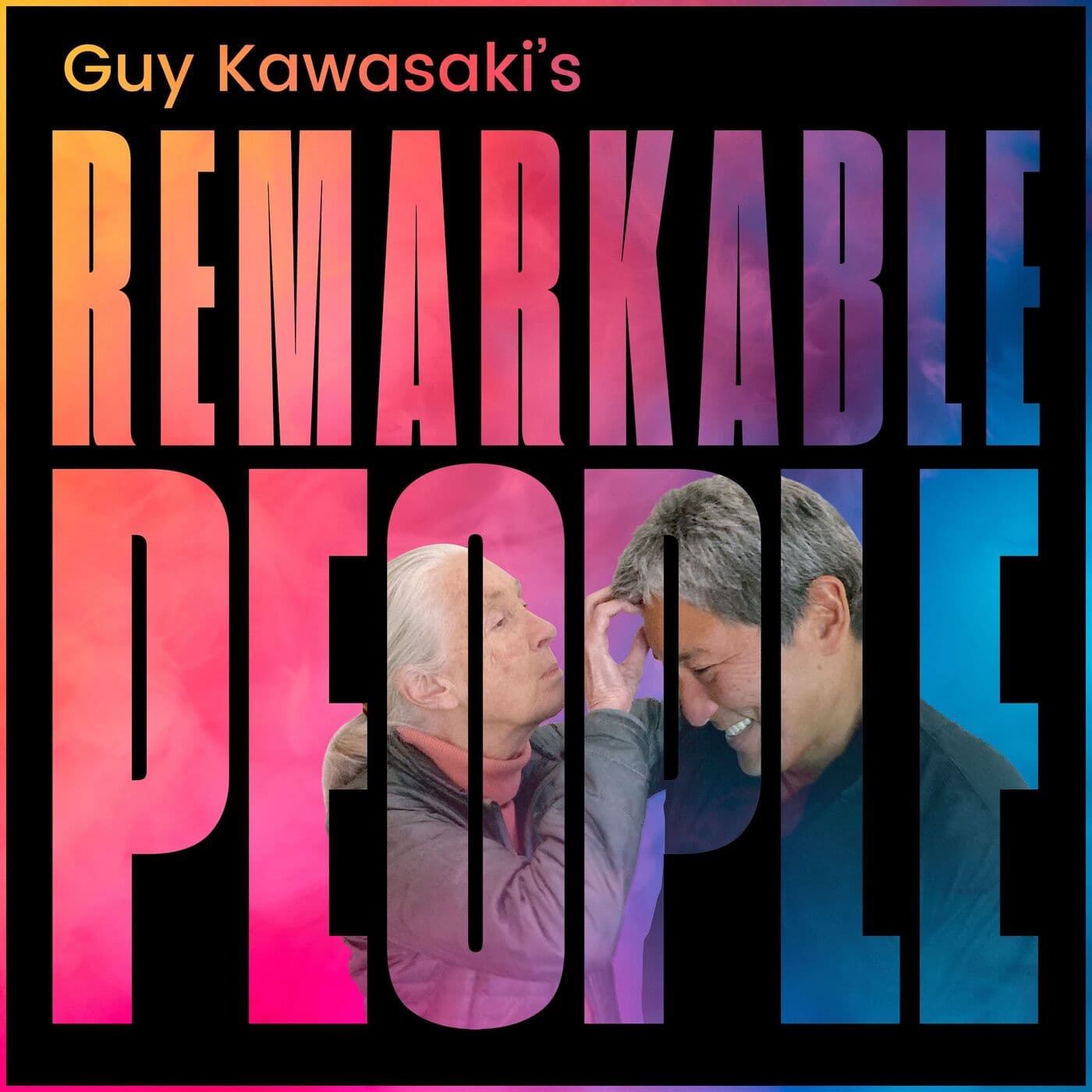
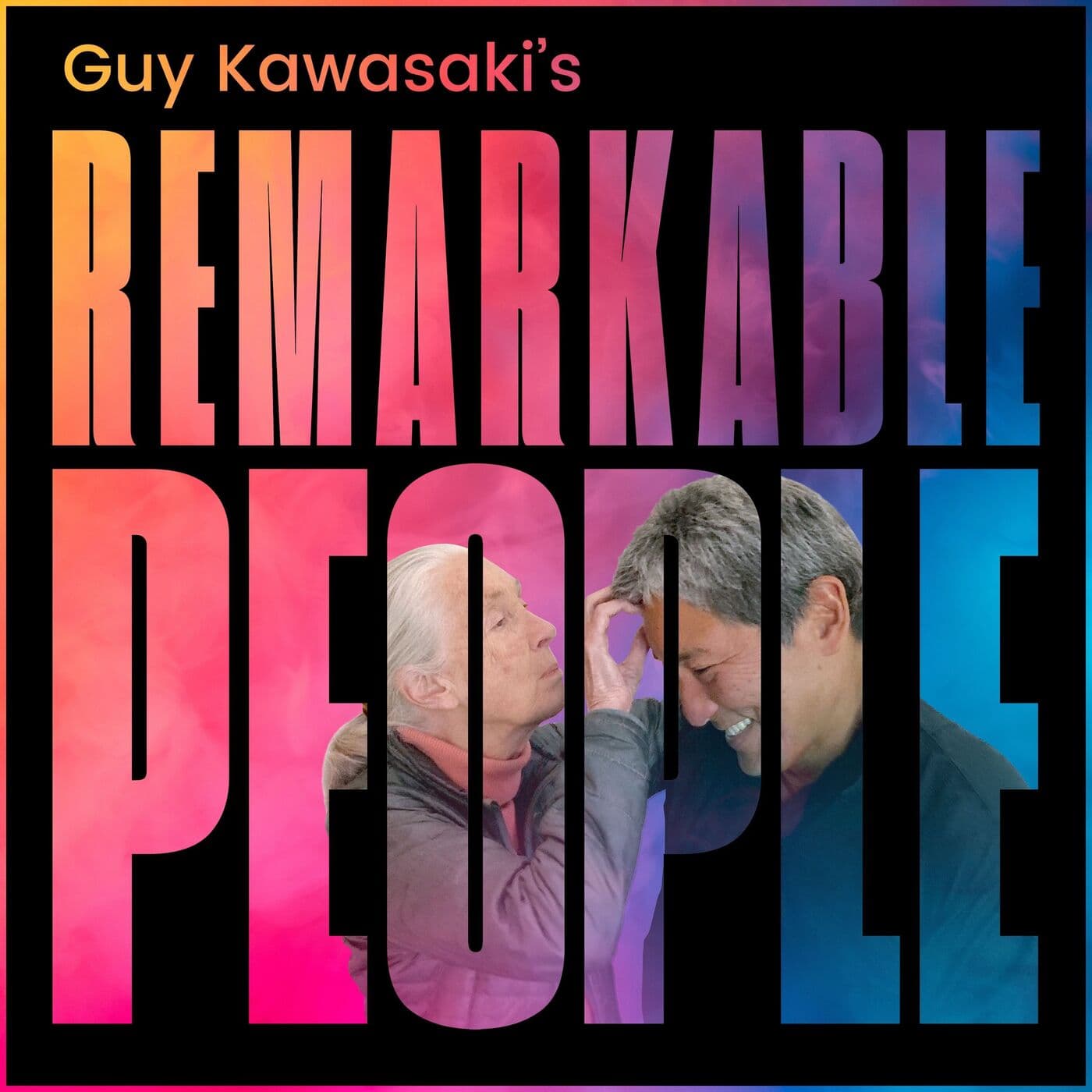
- Title: Guy Kawasaki's Remarkable People
- Description: Guy Kawasaki interviews remarkable individuals to share stories, lessons, and practical tips from their experiences in technology, entrepreneurship, and marketing.
Episode Overview
Episode Title
Guy Kawasaki on Masters of Scale: Evangelizing Innovation
- Release Date: March 2024
- Description: Guy Kawasaki shares his journey of evangelizing transformative products during his time at Apple and Canva. He discusses the importance of passion, demo presentations, and the future impact of AI in innovation.
Key Themes and Takeaways
Journey and Experiences
- Background:
- Guy Kawasaki's career began at Apple in 1983 as a Software Evangelist, playing a crucial role in launching the Macintosh.
- His experience spans multiple high-profile companies, including roles as an advisor and investor.
- Early Inspirations:
- Growing up in Hawaii, Kawasaki emphasizes the importance of relationships (Ohana) in his life and career.
- Transitioned from law school to a career in technology, highlighting the value of adaptability.
Evangelism in Innovation
- Role of Evangelism:
- Evangelists like Kawasaki are essential in bridging the gap between technology and the public, encouraging adoption and innovation.
- He utilizes personal experiences to illustrate the effectiveness of demos in showcasing product value.
- Impact of Demos:
- "A demo counts for a thousand slides" - the effectiveness of visual demonstrations in pitching products.
Lessons from Apple and Canva
- Scaling Innovations:
- Kawasaki reflected on the early days at Apple, highlighting the company's evolution and the mindset that drove its success.
- Encourages companies to adopt innovative approaches and separate teams focused on new ideas to avoid stagnation.
- Growth Mindset:
- Emphasized the importance of a growth mindset among entrepreneurs and innovators.
- Cited examples of remarkable individuals who pivoted in their careers and succeeded.
The Future of AI
- AI as a Transformative Force:
- Believes AI will revolutionize industries more profoundly than personal computers.
- Challenges entrepreneurs to leverage AI for innovation rather than fear it.
- Using AI in Writing:
- Kawasaki shared personal insights on using AI tools like ChatGPT for research and enhancing productivity in his writing.
- Stressed the importance of maintaining the human element in AI-assisted processes.
Insights on Business Strategy
- Navigating the Competitive Landscape:
- Discussed the importance of differentiating products in a crowded marketplace.
- Highlighted the necessity for companies to adapt and embrace change to stay relevant.
- Advice for Entrepreneurs:
- Focused on understanding customer needs and continuously improving products.
- Suggested maintaining a passion for the product to effectively evangelize and inspire others.
Conclusion Guy Kawasaki's insights provide invaluable lessons for entrepreneurs and innovators looking to navigate the challenges of scaling transformative products. His experiences at Apple and Canva, combined with his views on AI, paint a picture of a rapidly evolving landscape that requires bold thinking and adaptability.
For further insights, listeners are encouraged to explore Kawasaki’s podcast, *Remarkable People*, which features interviews with various accomplished figures.
Written by AI. May contain mistakes. Listen to the episode to check what was said.
Transcript
Automatic transcript. May contain errors.0:00From October 7th to 9th in San Francisco, the Masters of Scale Summit returns. It's where the boldest minds in business, tech, and beyond gather to build the future. And we want you to join us. Hear from the CEO of the New York Times, scientists using cutting-edge technology to find cures, the leader of crypto powerhouse Coinbase, a retired four-star general, and many, many more. They're all on the same stage, and it's not just another conference. It is the gathering for remarkable people. Apply to attend at mastersofscale.com slash remarkable. That's mastersofscale.com slash remarkable. From time to time, we're going to add a few episodes to the Remarkable People podcast.
0:46These will be rebroadcasts of other people's podcasts or interviews of Guy or Madison or maybe speeches. Stuff that's just a little treat, a little icing on the cake. We're calling it the Paohana series. Paohana are the words in Hawaiian for after work. So we're going to post these after work, typically Friday afternoons or maybe Saturdays. This first one is the rebroadcast of the Masters of Scale interview that was conducted in March 2024. It was, in my humble opinion, particularly good, particularly fun, really great production values. So we thought we would run it. Here you go. Masters of scale.
1:37Mahalo and aloha. 20 years ago, I had a Porsche 911 and I'm driving in Menlo Park, California in my Porsche.
1:55That's Guy Kawasaki, author, podcast host, a veteran of the early days at Apple, and currently chief evangelist for Canva. So I pull up to this stop sign, and I look to my left, and there's a car with four teenagers in it. And they're smiling, they're laughing, they're making eye contact with me. And the girl in the front seat, she makes this motion, roll down your window. I press the button, the window goes down She sticks out her head And like in my mind I'm saying to myself Guy, you have truly arrived Even teenage girls know who you are It's because of your work at Apple It's your startupgrudge.com It's your writing, it's your speaking It's your TEDx, you know Everybody knows who you are These are thoughts going through my head As I'm sitting in my 9-11 So she sticks her head out and she says to me, are you Jackie Chan?
3:00Oof, on so many levels. But Guy says he used that day to distill a deep learning. Don't worry about what motivates you. Just worry about that you got motivated and you made a difference. The lesson that I took away from the story is that now one of my motivations in life is that someday Jackie Chan is in Hong Kong in his Bentley or his S-Class or his Panamera and he pulls up to a stop sign and there's four teenagers in this car next to him. and they roll down the window and they say to Jackie Chan, are you Guy Kawasaki? That's one of my goals in life. We would all be so lucky to be mistaken for Guy Kawasaki and to dream as big as he does.
4:00And I don't just mean movie star status.
4:06guys. Guy joined Apple in 1983 and helped launch the Macintosh line of Apple computers starting in 1984. His title was Software Evangelist, selling and advocating the new product line. Since the 1980s, he's held the position of Evangelist, Advisor, and Brand Ambassador at several high profile companies, including Mercedes-Benz, Motorola, and now with the design firm Canva. He's been a founder and investor in tech beyond personal computers through his firm, Garage Technology Ventures. Now in the fifth decade of his career, Guy also shares his experience far beyond his business partners. He's written 16 books on entrepreneurship, leadership, and personal growth.
4:49Guy hosts a podcast called Remarkable People with accomplished figures from all walks of life. He says the one thing they have in common is an insatiable desire to learn and to do more. It's this combination of an impressive corporate resume and personal growth that I wanted to explore with Guy Kawasaki. He has keen insight into how founders and entrepreneurs can grow their companies by expanding their thinking about what's possible in their own lives. You've got to have incredible talent at every position. It's like this huge push. There are fires burning when you're going home. Can you believe it?
5:25Such an idiot. And then you go back to, this is totally going to be amazing. There are so many easy ways. I have no idea what to do. Sorry, we made a mistake. But you have to time it right. Oops. Working out of a three-bedroom apartment. Stuff that just seems absolutely nut balls. Ten years later, we're like, well, that's just how you do it. We haven't made it just how you do it.
5:48This is Masters of Scale.
5:56I'm Jeff Berman, your host. One of my favorite aspects of Masters of Scale is hearing the stories behind groundbreaking innovations. And it's not just the person with the original idea who takes it to scale. The people to first work alongside any boundary-pushing founder need to have vision too. Vision, perseverance, and a growth mindset. That's the perspective we focus on today. Guy Kawasaki had an up-close view of the early scaling journey at Apple. The first days of the computers we now simply call Macs. but he didn't set out to work in a brand new industry or for a maverick company. Guy Kawasaki grew up in Hawaii before moving to California for college at Stanford University.
6:38His early understanding of relationships would have a huge impact on his life and on his career. Growing up in Hawaii, you learned about family. The Hawaiian word for family is ohana, but ohana extends beyond your blood relatives. You know, there's this sort of honorary title that you give to people who are like family, but not blood related. I think that the sort of horizons in Hawaii, if you were successful, you ran Sears Roebuck at the Ala Moana Shopping Center. You ran Hilton Hawaiian Village. You work for Dole Pineapple. That was the sort of spectrum of opportunities there. if you were very successful.
7:25And then I get off this airplane and I land in California. And it was as if the scales were removed from my eyes because there's Hewlett, Packard, there's National Semiconductor, there's Intel. And these people are creating international companies, not just one great department store, one great hotel. And so it just totally broadened my horizon. After graduating from Stanford, Guy tried law school. He got in and he started, but he dropped out after just two weeks. Law school was basically saying, yeah, you may be bright, but we're going to tear down your mind and build it back up again. And I could not handle that pressure.
8:08Quite frankly, I wimped out. Maybe that's the last time I wimped out. Of course, you could make the case that, Guy, you wimped out and you ended up working for Steve Jobs, which is quite the contrast. But before Apple, Guy earned an MBA from UCLA. While I was at UCLA, I worked for, of all things, a small family-owned jewelry manufacturer. So I literally schlepped gold and diamonds, and we sold to retailers. And from there, I sort of jumped the curve from jewelry to software in the Macintosh division. And the only explanation I can give you for that is nepotism. My Stanford classmate and buddy hired me.
8:55And on paper, you know, you wouldn't need AI to reject me as a candidate to be software evangelist for the Macintosh division. Well, I'm going to push back on you that it was nepotism because one, that was Ohana you made, not Ohana you were born into. And two, the lesson that I've heard you talk about having learned from shopping jewelry all over the world is that sales is everything. And you have to know how to take care of your customers. And I have to imagine at Apple in those early days, having someone in your role who was relentlessly focused on the needs of the customers was a critical component.
9:34And so actually you seem like the ideal hire for it, given the experience that you'd had. Far be it from me to correct the record, but let me more accurately describe this. So people think of sales today as, should I make the border blue or should I make it yellow? And let's do A-B testing and see if we get more than 1 % click-through rate increase. This jewelry business is hand-to-hand combat. You called on jewelry store owners and you begged them for business. They kept you waiting in the lobby. Sometimes the end of the day came and they said, sorry, I don't have time to see you anymore. And they stick your designs on a scale and they want to pay you slightly over what the scrap value of your ring is.
10:22And all that really taught me how to sell. And that skill has stayed with me the rest of my life. Believe it or not, working in the jewelry business prepared me to be a tech evangelist. In jewelry, Guy had to convince his buyers that something about the product made it worth more than just its literal weight in gold. Maybe the design, the craftsmanship. At Apple, the pitch was more complicated. What exactly did this job title mean? Software evangelist? In the 1980s, it meant convincing software developers to make programs for Macintosh computers. Guy was the hype man. He had an enthusiasm and grit rooted in his sales experience and the knowledge and passion to push for widespread acceptance of Apple's new technology.
11:09It was sales, marketing, and leadership all rolled into one. And so, with Guy as software evangelist, Apple's Macintosh computer set off the desktop publishing revolution, empowering customers to produce documents with text and images. Guy also fostered relationships with developers who designed software and programs for Apple computers. He convinced them it would be worth the effort. When Guy left Apple in 1987, the company was just starting its meteoric rise. When you reflect back on those early days at Apple, was there a sense of how big Apple could be back then? So you are talking to a person who quit Apple twice and turned down Steve for a third position.
11:55So, you know, the receipts indicate that I obviously did not think that Apple was going to be the most valuable company in the world because I left there twice and turned down the chance to come back. Guy's referring to the time he came back to Apple for a couple of years in the 1990s, then left again for his own projects and declined later opportunities to return to Apple. He left to pursue other opportunities that simply couldn't happen within Apple. And maybe there's no scenario where Apple or any other big company could have contained his multitudes. But there are ways for leaders to encourage and keep innovative team members within their ranks.
12:34The intrapreneurs, those who are bursting with ideas they dream of pursuing. What can big companies learn from your experience about how to not just keep talent like you, but inspire talent like you, especially when your role is as evangelist? You're the one who's outpitching the vision for the company. Well, I've thought about this a lot, and I'll give you some factors that I believe would help entrepreneurs. So first of all, you will need an egomaniac leader because this egomaniac leader has to withstand a lot of pressure from the existing infrastructure of the company. And the negativity that this leader is going to face is that the sales force is going to say, we're not interested in this product.
13:24Just give us better, faster, cheaper status quo. If you don't make the company jump to the next curve, the company will die. and Kodak is a particularly good example because in 1975 Steve Sasson an engineer at Kodak invented the digital camera now if you invent these digital camera and you go to your boss and you say guess what boss I figured out a way people don't have to buy film anymore am I not a remarkable engineer you would have been probably fired because they were geared towards making film. And so the lesson is, do you want to be the next Kodak? Or do you want to be like Apple that went from personal computer to handheld devices to app stores to continuously reinventing itself?
14:25It sounds counterintuitive, redirecting resources, time and energy from the current product line for an experimental future unknown innovation. But as Guy says, the bold thinking of these entrepreneurs is what allows companies to survive in a competitive marketplace and have a chance to dominate it. A second thing you need is a separate physical building. I don't think you can do intrapreneurship inside physically a company that is already existing. And if you are sharing resources physically inside a building, you're never going to be top priority. You want people who are going to live and die with your idea, not people who are matrix managed and giving a slight part of their perspective and a slight part of their bandwidth to one thing.
15:21and they're doing mostly the existing thing. I think that separate building should be at least a mile away from headquarters. You want something that's close enough where you can come back and steal resources, but far enough so that when managers at the company, if they want to come see you, they have to get in a car. And it's like such a psychological barrier. Oh God, I got to get in my car. I got to drive. I got to find parking. I'll just leave them alone. Well, Guy, part of what's inherent in what you're saying also is something I've experienced a number of times in my career. I've been asked to present a five-year business plan, right?
15:57And you're laughing because it's a joke, but you think about where we were five years ago, right? I mean, as we sit here today, we hadn't had COVID. Generative AI was not something that more than a few thousand people were really thinking about seriously. I mean, the world is a very different place. And five years from now, it's going to be even more different. So given that we know that this is true, why do so many investors, why do so many big companies, why do they think in this very narrow, constrained way where you're trying to forecast something that is literally unimaginable? Who among us five years ago said there was going to be a day when there's large language models that are sentient and smarter than most people and they can write your essays, they can create your PowerPoints, they can generate images?
16:44Nobody said that. It's part of a game that you have to play, that you have to pretend like you know what's going to happen in five years. Because if you took the opposite approach and somebody asked you for a forecast and you said, listen, I have no freaking idea. I don't know what's going to happen. I'm just making it up as it goes, which is the truth. I would not say that is an optimal answer for receiving investment. And I think that the sophisticated entrepreneur realizes it is part of the game. It has to do with the fact that many venture capitalists have to report to limited partners and limited partners are fund managers and fund managers are spreadsheet jocks.
17:29And that's part of the game they play. But truly sophisticated investors and sophisticated entrepreneurs know that it is a game. And so it's kind of a litmus test on how they feel about your business as opposed to, you know, really what they're trying to do is due diligence. Well, it's interesting. I hadn't thought about it this way before, but the way you're describing it, it sounds like it is a filter for deciding what work to do that is similar to Warren Buffett's investment thesis. If you love the product, if you use the product, if you're obsessed with the product, then that sounds like a pretty good place to be.
18:05Well, it's easy to evangelize great stuff, and it's hard to evangelize crap. Guy has been evangelizing for his current company, Canva, long before most of us heard about it. He started there in 2014 when awareness of the product was critical, and the role of evangelist was clear. Guy saw similarities between Canva and the early days at Apple. Canva was trying to democratize design the way Apple did for computing. So 10 years ago, it was me and a handful of people looking like fools when everybody was using Photoshop and Illustrator. And people were saying, if you truly want to be a designer, you have to learn Photoshop.
18:45You have to be an Adobe customer. And same thing with Macintosh, when everybody was using MS-DOS. And I guess what I learned, at least in my life, is that a demo is worth a thousand slides. So you can have all the slides you want and talk about your differentiation and your key selling points. And everybody makes a chart and there's these features in your competition and your competition's column is all empty. but your column is all check, check, check, check, check. Everybody does that. It's all BS. So I think the rubber hits the road when you, back then in 1983, you pull your Macintosh out of a bag, and you show them Mac Paint, and you show them Mac Write.
19:38Now, these are people who are used to selectric, correctable typewriters, or at best, at best, daisy wheel printers. and you show them MacPaint and MacWrite and bada bing, bada bang, they either get it in 10 seconds or they never get it. I think the same is true with Canva. With Canva, I can build that Instagram graphic faster than most people can boot Photoshop and you immediately get it. So I'm telling you, if there's a skill that is necessary for entrepreneurs to succeed, It is you have to do a great demo. A demo counts for a thousand slides. It is a well-worn adage of sales and marketing that when you're selling something great, it is far better for a prospective customer to experience the product rather than merely hear a pitch.
20:35Do you remember the first time you used a product or service that was simple? It was useful, perhaps even a beautiful experience? That was Canva for Guy. When he first saw the product, he knew the impact it could have. For Guy, evangelizing Canva meant and means showing people its customer-friendly interface for graphic design. The company has attracted 170 million monthly users and earns$2 billion in annual revenue. At first, it drew mostly individuals and small enterprises, customers who needed visual assets for marketing without hiring a designer. Now, clients include FedEx, Zoom, and Starbucks.
21:15By deeply understanding and believing in the advantages of his products, Guy has helped Apple, Canva, and others scale to incredible heights. After the break, we'll explore more of his personal experiences and insights, especially around AI. And spoiler alert, when it comes to AI, Guy is yet again an evangelist.
21:47We're back with author, entrepreneur, podcast host, and tech evangelist Guy Kawasaki. To watch our complete conversation, head over to the Masters of Scale YouTube channel.
22:01Guy has worked alongside entrepreneurs who grew their ideas into some of the most valuable businesses of the last half century. He's also struck out on his own, starting a venture fund and his own companies. He's learned countless lessons in leadership, marketing, sales, and attracting investors. His most recent endeavor ranges widely outside the realm of business. Guy's podcast, Remarkable People, features just what you'd expect from the title. Life stories and lessons from authors, scientists, politicians, and more. With so many hours of incredible insights on the show, Guy decided to turn the podcast premise into a book.
22:42Guy, we sit here talking in March of 2024. Your book, Remarkable People, is just out. You've talked a little bit about how you've used AI in the process of writing. Can you give a specific example of where AI made a real difference for you in writing the book? Absolutely. I use AI as a research assistant. I don't just go to ChatGPT and say, give me 50 ,000 words on how to think remarkable and be a remarkable person. I use it as a research assistant to help me write the book. Writing a nonfiction book today with ChatGPT is so much easier than before. Because before, you had to depend on reading extensively and knowing a lot of people who could give you ideas.
23:28That approach meant using AI tools to help identify examples and patterns, adding layers of insight to Guy's innate curiosity. When someone's story struck him, he boiled it down to some specific elements he found intriguing. And then he asked an AI to help him find more. And I noticed this book comes from interviewing 250 remarkable people like Jane Goodall, Stacey Abrams, Wozniak. And what I noticed is that every remarkable person had a growth mindset. To be remarkable, you have to have a growth mindset. Now, there are two kinds of paths for many of these remarkable people. Some people like Jane Goodall, they fall in love with animals at age six.
24:14And for the next 84 years, they're focused on animals. Then there's people like Julia Child. Julia Child, until her mid-30s, was a spook working for the OSS. The OSS is the organization that became the CIA. And in her mid-30s, she moved to France, fell in love with French food, and that's why Julia Child is the French chef. There's these two theories. and part of being remarkable is you have to be able to hold two conflicting ideas in your head. One is be like Jane Goodall, stick to the path and grow on that path. Another is change horses in the stream. And so I love the theory of people making great changes.
25:00So I need examples. So I go to ChatGPT and I said, give me five or six examples of people who have made radical shifts in their career and achieved great success. 30 seconds later, ChatGPT says, Jeff Bezos. Jeff Bezos started as a private equity person, and he moved to selling books and e-commerce. And the second example it provides is Julia Child. And I say, Julia Child, how is Julia Child an example of switching careers? And that's how I learned she worked for the OS now. ChatGPT makes crap up. So then my co-author, I just read this about Julia Child. Go verify that it's true that she worked for the OSS.
25:47And I can tell you with total certainty that Julia Child would not be an example in my book were it not for ChatGPT.
25:57And I would make the case that at least at the state of the art today, generative AI, you still have to make sure that the message is right. so it is the world's greatest assistant but it is not a replacement for you I hear that and as I use AI as as the the team behind masters of scale uses AI we're getting more efficient it's helping us work more quickly whether that's grammarly or descript it's incredible how much more productivity we get but that human element is still there. And it feels like what a lot of AI is becoming right now and is likely to be, at least for the next few years, which is it's not a replacement for the human element.
26:42It's really a co-pilot. It's something that's augmenting your analysis, informing your decision-making, but it's like AI informed, not AI determined. And I would say that's a very good use of AI for writers, and it's a very good use for investors to make decisions. At the very least, you could stick in a business plan and ask ChatGPT, are there any other similar ideas that are floating around the world? Because I don't know about you, but I've met many entrepreneurs and they always say that no one else is doing what we're doing and no one else is capable of doing what we're doing. And I'll tell you that my initial reaction to anyone who says that is, do you not know how to use Google?
Read the full transcript
27:30I mean, how stupid are you? At the end of the day, there's only going to be one, two or three winners. So what's your unfair advantage? And I think that is the most difficult question an entrepreneur will face. And when I looked at plans and pitches, I kind of made the assumption that, yes, they can deliver on the technology. Yes, they can do this. And now let's assume they can do this. How do they differentiate from everybody else? And I'll tell you something. The irony of this is that that's going to occur in LLMs. Like today, if I had to explain to someone when to use ChatGPT, when to use Bard, when to use Perplexity, when to use Claude, when to use all this, I can't.
28:25I mean, I use all fives kind of at random. And in the car business, if somebody says, well, I want the car that's the safest, okay, Volvo. I want the car that's the sexiest, okay, Ferrari. You know, I want the car that gets the furthest on a charge. Okay, I understand that. But I don't know how LLMs are going to create unique, you know, positioning in people's minds. We don't yet know how AI tools are going to distinguish themselves from each other. We also don't yet know how and whether customers will care which large language models power those AI tools. But if anyone knows how to make a product stand out in a new or underdeveloped market, it's Guy Kawasaki.
29:13And he sees AI as something every company should embrace to speed its innovation. I'm a glass half full kind of guy. And I would say if I were running these companies, I would say, oh, my God, this is the best thing ever for us to innovate. And we're going to embrace AI before our competition does. And we're going to embrace AI before two guys in a garage do. And we're going to take those two guys and two gals in a garage who are innovative. And if we can't out-innovate them, we're going to buy them. And even if they're close to us, then we have to use our other strengths, such as brand awareness, scalability.
29:58Huh, what a concept. There should be a podcast about that. So we can scale. You know, Apple has significant advantages to make anything over any two guys, two gals in a garage. So I think that you just have to figure that this is going to happen. And I think it's the most exciting time. To me, AI is a bigger deal than personal computers, chips, social media, Internet, all combined. This is, I cannot believe how much has happened in one year. Bigger than the Industrial Revolution? Bigger than the Industrial Revolution. I seriously think so. I feel so lucky to have been born and, you know, been living when this happened.
30:46This is humongous. It's great talking to you. I appreciate you. Thank you. Of all the lessons Guy Kawasaki shares, I'm perhaps most struck by the simple question that every entrepreneur should ask. How does my product improve on what came before? When you answer that question with conviction, your team members, investors, and customers are far more likely to join you on your journey. Passionate advocates who've seen and believe in new products can authentically spread the message of their value. That's evangelism. Done well, it works no matter what you are selling.
31:36I'm Jeff Berman. Thank you for listening.
31:47Masters of Scale is a Weightblot original. Our executive producer is Eve Trow. The production team includes Chris Gautier, Alex Morris, Tucker Ligurski, Masha Makutunina, and Brandon Klein. Mixing and mastering by Aaron Bastinelli. Original music by Eduardo Rivera and Ryan Holiday. Our head of podcasts is Lital Malad. Visit mastersofscale.com to find the transcript for this episode and to subscribe to our email newsletter.
32:23Thank you.
From the publisher
I had a blast appearing on the Masters of Scale podcast, where I shared stories and lessons from my journey evangelizing transformative products at Apple and Canva. From using passion and demos to scale adoption, to why I believe AI will be an even bigger revolution than the PC, to the growth mindsets of the remarkable leaders I've interviewed - this episode covers a lot of ground. I pack in plenty of colorful stories and hard-earned wisdom from my decades in the trenches of Silicon Valley. Check out my conversation on Masters of Scale for an inside look at my tech career and thoughts on what it takes to scale world-changing innovations.
---
Guy Kawasaki is on a mission to make you remarkable. His Remarkable People podcast features interviews with remarkable people such as Jane Goodall, Marc Benioff, Woz, Kristi Yamaguchi, and Bob Cialdini. Every episode will make you more remarkable.
With his decades of experience in Silicon Valley as a Venture Capitalist and advisor to the top entrepreneurs in the world, Guy’s questions come from a place of curiosity and passion for technology, start-ups, entrepreneurship, and marketing. If you love society and culture, documentaries, and business podcasts, take a second to follow Remarkable People.
Listeners of the Remarkable People podcast will learn from some of the most successful people in the world with practical tips and inspiring stories that will help you be more remarkable.
Episodes of Remarkable People organized by topic: https://bit.ly/rptopology
Listen to Remarkable People here: https://podcasts.apple.com/us/podcast/guy-kawasakis-remarkable-people/id1483081827
Like this show? Please leave us a review -- even one sentence helps! Consider including your Twitter handle so we can thank you personally!
Thank you for your support; it helps the show!
See Privacy Policy at https://art19.com/privacy and California Privacy Notice at https://art19.com/privacy#do-not-sell-my-info.