Ask ChatGPT


 GZERO World with Ian Bremmer
24 Oct 2026 · 27m · 11 chapters
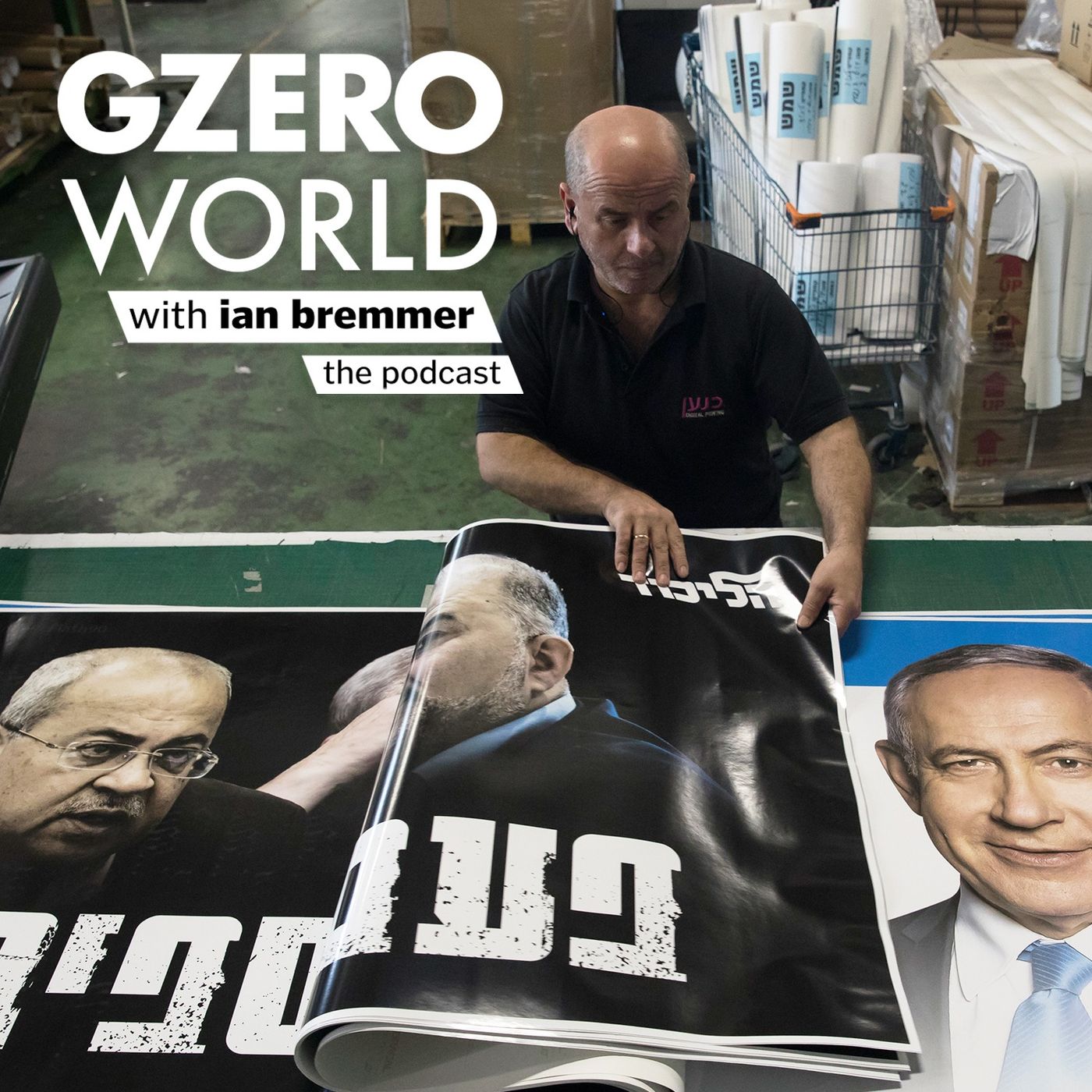
Middle East elections and escalation amid U.S.-Iran tensions, Houthi attacks, and Israel’s upcoming vote; McGurk argues the U.S. is militarily more engaged but diplomatically less, and warns escalation is likely without coherent political goals.
Brett McGurk, former top U.S. Middle East official (over two decades across four presidents), led the campaign against ISIS, served as Biden’s top Middle East coordinator, and helped negotiate the October 7 Hamas hostage releases; author of Brink: Inside the Race to Free the October 7th Hostages.
Houthi missile/drone capability grew after U.S. reduced presence and supply; Saudis lack a sustainable military solution. For Iran, economic pressure should be leveraged toward a nuclear-enrichment deal including Strait of Hormuz. After midterms, escalation is more likely than de-escalation.
Riyadh airport missile strike; Prosperity Guardian coalition vs current U.S. isolation; proposed 2023 UAE-backed Hodeidah port operation; June Iran deal “blown up”; West Bank policy differences under potential Israeli leader Adi Eisenkot.
Written by AI. May contain mistakes.
Ian Bremmer discusses the escalating conflict in the Middle East and the political uncertainty in Israel.
“Houthi missiles struck the Riyadh airport in Saudi Arabia.”
Brett McGurk discusses the impact of the Houthis in Yemen and their ties to Iran.
“You look a lot at how the world has changed since October 7th, and most recently, headlines being driven from the Middle East from perhaps an unlikely corner, the Houthis.”
McGurk elaborates on the complexities and military challenges posed by the Houthis.
“launching ship-seeking anti-ship ballistic missiles, first time ever used in a combat situation, targeting commercial ships, targeting our ships.”
Discussion on potential U.S. strategies to respond to Houthi attacks and regional instability.
“I kind of go back in time to, you know, there was options early on.”
McGurk emphasizes the importance of U.S. leadership in fostering international coalitions in the region.
“Is there a strike package that we had contemplated during that first campaign that we left off the table you can maybe do now?”
Discussion on the shifting alliances and the potential dangers they pose to regional stability.
“One is before October 7th, we were working with Saudi Arabia on a comprehensive set of agreements which included Saudi recognition of Israel.”
Learn about Iran's military strength and its implications for global security.
“There's some differences, but at the end of the day, they are all missiles and drones.”
Explore the complexities of American war goals and strategic decisions in the Middle East.
“american war goals have been but we're eight months into this yeah now um what would you want But now that, again, if you're parachuted in, what do you think American war goals should presently be?”
Understand the difficulties in negotiating with Iran regarding nuclear capabilities and regional control.
“And who's in power in Iran now, I think, demonstrates why it's going to be very hard to get a deal on anything because it's Vahiti and the guys in the Revolutionary Guard.”
Examine potential changes in Israeli foreign policy with upcoming elections and leadership dynamics.
“And it'll flare up and then it'll have a kind of temporary down.”
Discuss the balance between military action and diplomatic engagement in U.S. foreign policy.
“What worries me is you'll have the two main coalitions kind of tied and you'll have the Arab coalition in the middle and you can't form a government.”

Get the gist, explore an idea or ask about something said.
 Claude
On GZERO World with Ian Bremmer, what are the key points of this episode?
Searching your listeningAutomatic transcript. May contain errors.
0:02Hello and welcome to the GZERO World Podcast. This is where you can find extended versions of my interviews from public television. I'm Ian Bremmer. President Trump has made a lot of promises about the Middle East and wars, bring peace to the region and put America first. But nearly two years into his second term, the United States is more militarily involved in the region than it has been in years. Eight months into the war with Iran, there is no clear end in sight. Straight Hormuz remains a flashpoint. Tehran's nuclear desires persist. And despite months of military and economic pressure, Washington and Tehran appear no closer to any sort of agreement.
0:40Iran is weakened, but its influence certainly hasn't disappeared. The Iran-backed Houthi militants in Yemen have emerged as one of the region's most disruptive forces just recently. Houthi missiles struck the Riyadh airport in Saudi Arabia. And despite years of American and Saudi military operations against the Houthis, there's still no obvious solution to the problem. Israel is facing its own moment of political uncertainty. Later this month, Israelis head to the polls in an election that could bring an end to Benjamin Netanyahu's long tenure as prime minister. Across the region, the questions are piling up.
1:14Can Trump force Iran into a deal? Can the United States protect its partners without getting dragged deeper into regional conflicts? And can Washington maintain its influence as more countries look elsewhere for security? Brett McGurk has spent over two decades at the center of American Middle East policy, serving under four presidents, Republican and Democrat, from George W. Bush to Joe Biden. He helped lead the U.S. campaign against ISIS, served as Biden's top Middle East coordinator, and was deeply involved in the negotiations to free hostages taken by Hamas on October 7th. His new book, Brink Inside the Race to Free the October 7th Hostages, takes readers behind the scenes of those negotiations and the difficult decisions facing American policymakers in the aftermath of the attacks.
1:57And here's our conversation.
2:07Cox Enterprises is proud to support GZERO. Cox is a family-run company that has thrived across three centuries. We're building a brighter future in automotive, greenhouse agriculture, clean tech, environmental conservation, and beyond. around Cox Enterprises in the business of what's next since 1898. Learn more at coxenterprises.com.
2:36Brett McGurk, good to have you. Thank you, and great to be here. You look a lot at how the world has changed since October 7th, and most recently, headlines being driven from the Middle East from perhaps an unlikely corner, the Houthis. We've been there before. I want to start with that. I dealt with this problem directly. In fact, in the brink, the book I have out, the first chapter talks a little bit about this problem. Now, the Houthis are an indigenous group to Yemen, and they overthrow the legitimate government, but they're heavily backed by the Iranians. And I mean, their main weapon system is anti-ship ballistic missiles and ballistic missiles, which we saw recently in Riyadh, tragically.
3:09And that is all IRGC in Iran. That happened really over a decade. And I think there are a lot of lessons learned here. When Biden took office, one of the first things he asked me to do was go see the Crown Prince of Saudi Arabia to explain to the Crown Prince changes in U.S. Saudi policy, because Biden had made a number of promises on the campaign trail. So my instructions were, we're going to explain to you, we're going to cut you off from various so-called offensive weapon systems. These are amateur ground munitions. We were lifting the terrorist designation of the Houthis that the Trump administration had done.
3:42and we also significantly reduced our military presence in the region. And one anecdote I remember quite vividly, I was in Oman actually seeing the Iranians before October 7th and everything. I saw Brad Cooper. He was a deputy CENTCOM commander. Now he is CENTCOM commander overseeing all of this. And I asked him, you know, what are you seeing on Iranian supply to the Houthis? And he said, you know, Brad, it's hard to say because I only have one ship in the water right now. And what we learned later as we pulled back and as we kind of made clear to the world that we were stopping that supply to Saudi Arabia, Iran really amped up their supplies to the Houthis.
4:27And when after October 7th, when the Houthis kind of joined the fight, suddenly they're launching ship-seeking anti-ship ballistic missiles, first time ever used in a combat situation, targeting commercial ships, targeting our ships. and they have like almost seemed like an endless supply of these things um i went to see the iranians in the middle of this in january 2024 to try to contain it and it kept coming and that led to the military campaign against the houthis in yemen so just to cut to where we are right now uh this is a an awful awful problem um the houthis are dispersed across yemen they're dug into mountains in the age of drone warfare you can launch a drone from anywhere they're very accurate And I struggle to come up with the kind of military answer to the Houthi problem.
5:19Yeah, it appears that the Saudis don't have a military answer. I mean, Mohammed bin Salman is like moving from secure location to secure location. He's not able to be in public right now. You've got missiles that are traveling hundreds of miles that the Saudis are apparently not able to intercept that are hitting Riyadh airport. As you say, tragically, 13 people dead, hundreds of civilians that are wounded. And now the airport is closed for what appears to be a week. This is clearly not sustainable. So what do you do? I mean, how should the Americans be responding to this? And how should the Saudis respond if those things are different?
5:59Yeah. First question for any scenario like this, I always ask, what's the objective? I think you've got to think about what is it. Is the objective to defeat the Houthis? Is the objective to degrade the Houthi missile and drone capability? Is the objective to contain and do a deal with the Houthis, as the Saudis have done a number of times? I mean, what are we actually trying to do? Right now, I don't think the Saudis have an answer to that question. I think they would like to somehow find a way to actually defeat the Houthis and get rid of this problem. That's probably not going to happen. Some of their initial announcements were take all the land back, but that hasn't been moving.
6:31So then it gets into degrading their capabilities, and that's an objective. But, again, we've tried that. That's very difficult. I kind of go back in time to, you know, there was options early on. And this gets into UAE-Saudi tension, too. I mean, you know this story quite well. Funding different sides of that fight. Yeah, and the UAE was very mobilized inside Yemen. And during the Trump administration, I was not working on the Houthi problem at the time. I was working on ISIS. But there was a proposed operation to seize the port of Hodeidah, which is kind of the main port in the Red Sea, from the Houthis.
7:03The UAE was backing that operation, asked for U.S. support. We did not give them support, and the operation did not happen. I think that might have been a moment to kind of help take care of this problem and not grow into what it is now. Right now, it's an international menace. These guys control access to the Red Sea. They are able to, as we just saw recently, with very accurate ballistic missile capabilities, target civilian airports. You can't just say, okay, we're going to back out of this problem. Saudis are not going to do that. And yet there's really no clear answer to it. I mean, it's a gnarly, gnarly problem.
7:37So the Americans have basically said, okay, you're attacking the Saudis. You're not attacking us. So we're not going to be directly involved again in this fight. The Saudis are clearly extremely concerned about that. But if you're the United States, if you were advising the president right now, you would say, good, stay clear of that or not? I would say, we have a dead American at this attack in the... One dead American. Civilian, yes. Dead American civilian. In the airport, yeah. An attack on an international civilian airport is an act of terrorism. So it would be a very natural course to say, first of all, we have to know what the options are, Ian.
8:16So it's hard to answer this question about knowing the options. I think CENTCOM will come into the White House with, here are some options. Here are some things that we have left off the table in the past. Here are some things we might do together with the Saudis. When I dealt with this problem in real time, when the Houthis were targeting American naval ships, and people forget about this. I mean, one thing that was keep people back in. Again, they're not doing right now. Not doing right now because of the deal that was cut in the first year of this current Trump administration. It was basically like U.S.
8:44went to war with the Houthis. A deal was cut through the Omanis. They're not going to target our ships, but the Houthis retain the right to target others. So we basically got out of it to protect U.S. shipping, which was the objective the president had set. But now the problem has expanded. So what are the options? Is there something that might have a deterrent effect? Is there a strike package that we had contemplated during that first campaign that we left off the table you can maybe do now? But I come back to another problem, which is broader in the world right now. When we tried to get at this in the Red Sea back in 2023, 2024, we did build an international coalition.
9:20It's called Prosperity Guardian. We had the UK. We had the Netherlands, a number of other countries with us, at least working together in the Red Sea in some coordination. Right now, it is the U.S. working in some isolation. We work with the Saudis. The Saudis are now in this alliance with Pakistan and Turkey. I've never seen a moment, Ian, I've been doing this for 20 years, that things are so fluid and, like, first principles are open up in almost every capital. Who are our partners? Who are our allies? Yeah, because if you're Saudi Arabia, you don't know that you can count on the United States going forward.
9:54Who do we count on? And you have these kind of shifting dynamics, and I think it's troublesome. The sense is that the U.S. is receding potentially. You start to see more and more hedging behavior. And it's kind of what I'm seeing right now. So you have Saudi, Turkey, Pakistan. I think more on paper than what that means. In fact, you will see. That is an alliance of countries that do not see eye to eye with others in the Gulf. So UAE, if you had to say, where's the UAE aligned right now? It's UAE, Israel, Greece, India. So the risk here is you kind of import all these other global rivalries into the combustible atmosphere of the Middle East.
10:40And I don't want to overstate it because a lot of these rivalries and these kind of packs, there's kind of less there than meets the eye. But as you just kind of play this out, you can see these shifting dynamics. And every country acts in their own interest. Turkey has their own interests. Israel has their own interests. Pakistan has their own interests. And so how they then play off the different countries in the Middle East, I think, is potentially quite dangerous, honestly. And I would like the United States to play a bit more of a forceful diplomatic role to try to pull this together in a way we have some sort of concerted, organized, collective effort.
11:14I mean, right now I'm not seeing that. So that would imply a more specific set of security guarantees provided to the Saudis, for example, when they're facing these attacks. I'll give you two anecdotes. Two anecdotes happen to be a brink. One is before October 7th, we were working with Saudi Arabia on a comprehensive set of agreements which included Saudi recognition of Israel. And that was kind of the agenda. I had the Saudis in my office on October 6th. and one of the pieces of that package was a mutual defense treaty with Saudi Arabia, which would have had to go to the Senate and it would have been debated, and we were talking to a number of senators of both parties about that.
11:55When I look at history, where we do have a mutual defense pact, the argument against that was that it could draw us into a Middle East conflict. In fact, where we do have a mutual defense pact, it actually helps keep peace. And these agreements are written away. There's no automaticity. So you still have, even in any future scenario. But I think having that - Right. So NATO has one. Ukraine does not. Right. That's relevant. Yeah. Yeah. We all want South Korea. North Korea has attacked South Korea. We have not gone to war on behalf of South Korea against North Korea since the Korean War. But having that alliance in place provides a dampening effect and I think a deterrent effect from other - I know we have none of that.
12:33It's completely open. And so I think that that path we were on was beneficial. But now we're so far off that path. But the other anecdote is when we started to grapple with the Houthis, I have this scene in the book, President Biden, I was very much of the view we had to take military action against the Houthis because we were from day to day. And what I was hearing from the Pentagon and Central Command, we were within seconds of having dozens of dead American sailors. I cannot overemphasize how serious this situation was. You have these anti-ship ballistic missiles being fired at our ships. We are firing interceptors to take these.
13:08This is the first time it ever happened in combat. And Biden's view was, I'm not going to take this on ourselves. So do the diplomatic legwork, build a coalition, and then we'll take it on. That was kind of his late 2023. You get a sense of how these debates happen inside an administration when you're contemplating military action. So just to bring it up to present day, finding a way, and it's hard right now, and this is not the kind of the modus operandi of the current administration, finding a way to bring countries together, I think it's really important. because if it's just the U.S., Saudis on their own, UAE kind of on their own, Iran, Kuwait, everyone is looking around like, you know, where is the U.S.
13:53going to be in two years? Where's the world heading? And who is going to help protect us from a problem? And you're right, the Houthis are not Iran. There's some differences, but at the end of the day, they are all missiles and drones. Without Iran, you don't have all this stuff. And Iran is just so loaded up with missiles and drones, and once they get that capacity and production back up, they'll be able to scale it. It's a huge challenge for the future of the world.
14:26Cox Enterprises is proud to support GZERO. Cox is a family-run company that has thrived across three centuries. We're building a brighter future in automotive, greenhouse agriculture, clean tech, environmental conservation, and beyond. Cox Enterprises, in the business of what's next since 1898. Learn more at coxenterprises.com.
14:55you've been critical let's say about the war because it has at best been incoherent what american war goals have been but we're eight months into this yeah now um what would you want But now that, again, if you're parachuted in, what do you think American war goals should presently be? Leave aside whether or not the decision to attack was ill-founded or not. I do think it's worth pausing on that. We can come back to it. But the coherence is a key word and ends ways and means. The textbook Midnight Hammer last year. Had coherence. Versus. This does not. Versus this. This does not. That's clear.
15:39Right. But I've gone through that plenty of times. So here we are. So, but now we're in it. And we're in a very difficult patch. The thought of parachuting into this and even to have that responsibility on your shoulders is something I would not want to think about because I've kind of been in these rooms. This is really, really hard. And you face the problem. I relate a little bit to we're about to have a midterm election. I was in the first Bush White House and Republicans and George Bush got clobbered on the Iraq issue. Democrats took both houses. And what did George W. Bush do? Given the situation, he doubled down in Iraq, we did the search.
16:20And so whatever happens here domestically, I think you cannot just back out of this situation. You cannot just say, okay, fine, Iran, you're going to do your thing in the Strait of Hormuz. We'll kind of maybe regroup and come fight another day. I think that would just accelerate all these kind of negative trends that we just mentioned. So what do you do? I think you try to keep this economic pressure in place. There will be escalations. And then I think that's going to happen over the next two years. But the question is, as you are keeping this economic pressure in place, you're building up leverage in the negotiation ultimately.
16:55And so what I would really, if I was in the councils of government now, what do we want to achieve in that negotiation? What is realistic? And how do we use that leverage we're building to try to get that get that agreement. And is that negotiation principally about control of the strait? Is it also about nuclear enrichment and stockpiling? Is there anything else that you need to throw into that? I think the two, what's amazing, of course, is that Iran had the sweetest deal it could ever have in June. And this shows who's in power in Iran. And who's in power in Iran now, I think, demonstrates why it's going to be very hard to get a deal on anything because it's Vahiti and the guys in the Revolutionary Guard.
17:36The fact that they blew up that deal in June was nuts. Straight up Hormuz has to be part of it, but it's the nuclear. I mean, at the end of the day, it's the nuclear program enrichment. I can't see the Trump administration backing off on that. Missiles, drones, I've done these negotiations with Iran, and I know what it's like. It's going to be extremely hard. But yeah, you're building up unprecedented economic leverage, and it's a decent hand to play if you're a diplomat in the room with the Iranians. But I think it has to include the nuclear. And I do think we should keep a hard line on this at this point, on Iran giving up its enrichment capability.
18:11They're not enriching now. The risk is they try to rebuild that capability in Pickaxe Mountain, which is an even harder target than Fordow. And then you've got to have a much harder problem on your hands. So use economic leverage to try to get the best possible deal you can, with the nuclear being the primary objective. And you mentioned at the beginning that after Bush got pasted in the midterms, he engaged in a surge. Trump is about to get pasted in the midterms. Do you worry that beyond the economic blockade and stranglehold as it's intended, and the Iranians are not getting oil out right now, so it is going to affect them economically, that Trump is in danger of making that same decision?
18:54Well, for the surge, I was in the White House with President Bush and the surge. I supported that decision. I thought, because given the, we did a whole strategic review, we looked at every possible option. And we had to affect that basic ends, ways, and means problem, which is the Iraq war had never been resourced. And we did the, I thought the surge was the right thing to do. I don't think the Trump administration will go through that type of rigorous strategic review process. It feels unlikely. But I cannot, and this is where, and let's face it, I think people have underestimated Trump's commitment on this issue.
19:22And so if I had just my pure analyst hat, if I had to do a scenario analysis, I think the more likely scenario after the midterms is an escalation rather than a de-escalation. And that's kind of what I can see. From the U.S.? Yeah. From the U.S., maybe with Israel joining in. But then what does Iran do? So, you know, Iran is, I think, has used this time most likely to prepare for strikes across the Gulf. So more energy strikes and it can be a real mess. But if I had to say, where is this heading? We're going to have midterm elections. There will be an Israeli election. Are we heading towards a deal?
19:57I don't think so, just given who's making decisions in Iran and given that gap between what Trump can accept and what the Iranians might be willing to give. And I can see this returning to a military conflict. And it'll flare up and then it'll have a kind of temporary down. But this will not be over. I've sat at the table with the Iranians many times over the years. They will wait out the Americans. I think Putin sees the same way. And, you know, there's something to that. Now, my report to him was, you're a country that your government has lost support of your own people. There's only so long you can hold on and everything else.
20:28I mean, you kind of have these types of discussions. But it was revealing about how the Iranians see the United States and like as bad as it might be from them. Again, the guys are making decisions, not the Iranian people. They'll wait the U.S. out. Now, can this economic pressure get so dire that they actually can't? I know some Iranian experts who have that view. We have not seen that yet. I have not seen it yet. So one other place I want to talk about in the region, of course, is Israel. And we do, as you alluded, have elections coming up in short order. Never count Netanyahu out in any environment until it's over, maybe not even then.
21:06And yet, there is a possibility, and the polls increasingly look like Adi Eisenkot would lead the next election, former chief of staff for the Israeli Defense Forces. If that were to come to pass, hard to imagine that Israel's foreign policy in the region would suddenly change dramatically. But where do you think it would make a difference? Eisenkot is kind of the thoughtful warrior scholar, like a very deep thinker about where Israel needs to head. A couple of things will not change, I believe, after October 7th. And this is what I think, just whatever you feel about this issue, and I know it's so polarizing, Israel, Gaza, Palestinians, but Israel after October 7th, I think Eisenkot shares this, Netanyahu shares it, will never allow threats to gather again.
21:58Like Israel will never allow 30 ,000 Hezbollah troops to be sitting on the northern border. And that's a problem that you just have to kind of manage. They'll never allow Hamas to be reconstituted in Gaza, ever. I think that applies to threats further abroad, including Iran. Their security doctrine after October 7th has just completely changed. And I think Eisenhower would very much share that. So a change in policy toward Lebanon, Iran, even Gaza, and the fact that whatever comes in Gaza after this, it cannot be Hamas. I think Eisenhower would be the same. Where we would see a difference and an important difference, a needed difference, is the West Bank.
22:35Now, the West Bank, in the Biden administration, we sanctioned Israeli settlers. I mean, it's a big step we took to try it. And some of this has been the fact that Bibi is in coalition. Exactly. At the end of the day. Every leader is constrained by politics. And when Bibi came back into power in 2023, he had a call with Biden. Biden was calling to congratulate him after the election. And Bibi said, unprompted, he said, hey, Joe, I know I got this coalition, you know, but I'm driving the bus, Joe. Meaning Smotrich and Ben Kapir and these guys are kind of in the backseat. So when I was dealing with this, they had a war cabinet, which Smotrich and Ben-Gavir were not included in.
23:15And Eisenhower was there for a significant part of it, kind of a unity cabinet on the Gaza piece. But Smotrich, Ben-Gavir were doing it. And the West Bank has now become such a flashpoint. And, you know, that has to change. So if you have an election in which Eisenhower comes in, I think you'll see a significant change in the West Bank. particularly I do not think you'll see Israeli settlers in areas A and B. But still, I think Eisenhower would bring the hammer down on what the hilltop youth in these groups are doing. On terrorism. Yeah, Israeli terrorism. In the West Bank, yeah. But if anyone's expecting a total sea change in like overall Israel security doctrine and how they're viewing the world, I don't see that.
23:56And even a Netanyahu with a broader base coalition, if that's how it comes out, you also might see some decent changes. Honestly, we'll see. Scenario analysis put my hat on. What are we likely to see? What worries me is you'll have the two main coalitions kind of tied and you'll have the Arab coalition in the middle and you can't form a government. And then you'll have a new election early next year. And then Bibi is still a caretaker. And it just kind of everything is in a bit of a standstill. Israel needs a new government and some sort of a broader based coalition to unify. And the country in some ways is so unified and so divided at the same time.
24:34It's a dichotomy that's troubling. I guess what I want to close with is we take all of this and we look back in the United States. Americans, clearly part of why they voted for Trump, not once but twice, was a desire to end a lot of these very costly and ultimately failed foreign entanglements. Yeah. That was talking about Iraq and Afghanistan. But now you have a sea change, especially among younger Americans, on Israel, too. Yeah. How should American leaders, either party, don't really care, respond to that change? I think don't learn the wrong lessons of the past. I think it's true we have over invested in some cases.
25:19That's the Iraq Afghanistan experience. But also when we under invest and pull back too much, we open a vacuum and get sucked back in massively. I've seen this repeatedly. I saw in Iraq, we left in 2011, then we had ISIS. I saw we just mentioned the Yemen that we pulled back massively, the Houthis strengthened. strengthened. On the Israel question, I think you got to look at our broader all Middle East policy and the support we provide to very important countries, whether it's Jordan, whether it's Egypt, whether it's the countries in the Gulf and why we do it and what we get out of it. And kind of a zero-based budgeting type analysis.
25:55And I think we get a lot out of it. But what troubles me about the Israel debate here domestically has become so polarizing. I think often without a true grappling of the underlying issues and how difficult they are. And one reason I wrote this book was just to say, here's what it's like in the room. Here's what it's like dealing with Hamas on one floor, Israel on another, while Iran is doing everything they're doing. And I don't end the book on a hopeful note. There's often no finality in these things. There's shifting advantages. and the U.S. has to stay diplomatically engaged and maintain our partnerships in the Middle East and around the world.
26:38If we don't, the vacuums that open up and the risks that we take on, things can get even worse. Is it fair to say that right now the U.S. has gotten a lot more militarily engaged but a lot less diplomatically engaged? Is that fair to say? Right now, if I took a snapshot? Yeah, I think that's fair to say. And sometimes you're in the situation room, you have a really bad problem. and someone will say the president needs to give a speech. I say a speech is not a strategy. Like the worst thing I think a president can do is go give a speech. Here are the five things we're going to do without an underlying basis of analysis on how we're actually going to get from A to B.
27:13A lot of examples like that in history. A speech is not a strategy. A military strike is not a strategy. A military operation is not a strategy. It has to be folded into political diplomatic initiatives. And just going back to the current situation on Iran, And this was a military campaign divorced from a diplomatic or political objective, as far as I can see. And now we're trying to catch up. What exactly do you want to achieve? And it's like it's trying to get the best possible deal you can. Brett McGurk, The Book is Brink. Thanks for joining us. Honored to be here. Thank you.
27:50That's it for today's edition of the GZERO World podcast. Why not make it official? Why don't you rate and review GZERO World? Five stars. Only five stars. Otherwise, don't do it. on Apple, Spotify, or wherever you get your podcasts. Tell your friends.
As Israel and the US head toward elections, the Middle East faces the prospect of further escalation. The Iran war has no clear endpoint, Houthi attacks are threatening US partners, and governments across the region are questioning whom they can count on.
On the GZERO World podcast, Ian Bremmer speaks with Brett McGurk, former White House Middle East coordinator, about Washington’s objectives and the difficult choices ahead. Drawing on his experience negotiating with Iran, McGurk explains why economic pressure needs to serve a realistic diplomatic goal. But he is skeptical that an agreement is close: “They will wait out the Americans.”
McGurk also considers what an Israeli government led by Gadi Eisenkot could change, particularly in the West Bank, and shares a personal encounter that shaped his understanding of the former military chief. He explains why Israel’s security doctrine after October 7 is likely to endure regardless of who becomes prime minister.
With American voters weary of foreign entanglements, McGurk argues that pulling back can create new dangers. The challenge is to maintain partnerships and diplomatic engagement without repeating the mistakes of past interventions.
Subscribe to the GZERO World with Ian Bremmer Podcast on Apple Podcasts, Spotify, or your preferred podcast platform, to receive new episodes as soon as they're published.
Hosted by Simplecast, an AdsWizz company. See pcm.adswizz.com for information about our collection and use of personal data for advertising.