Ask ChatGPT
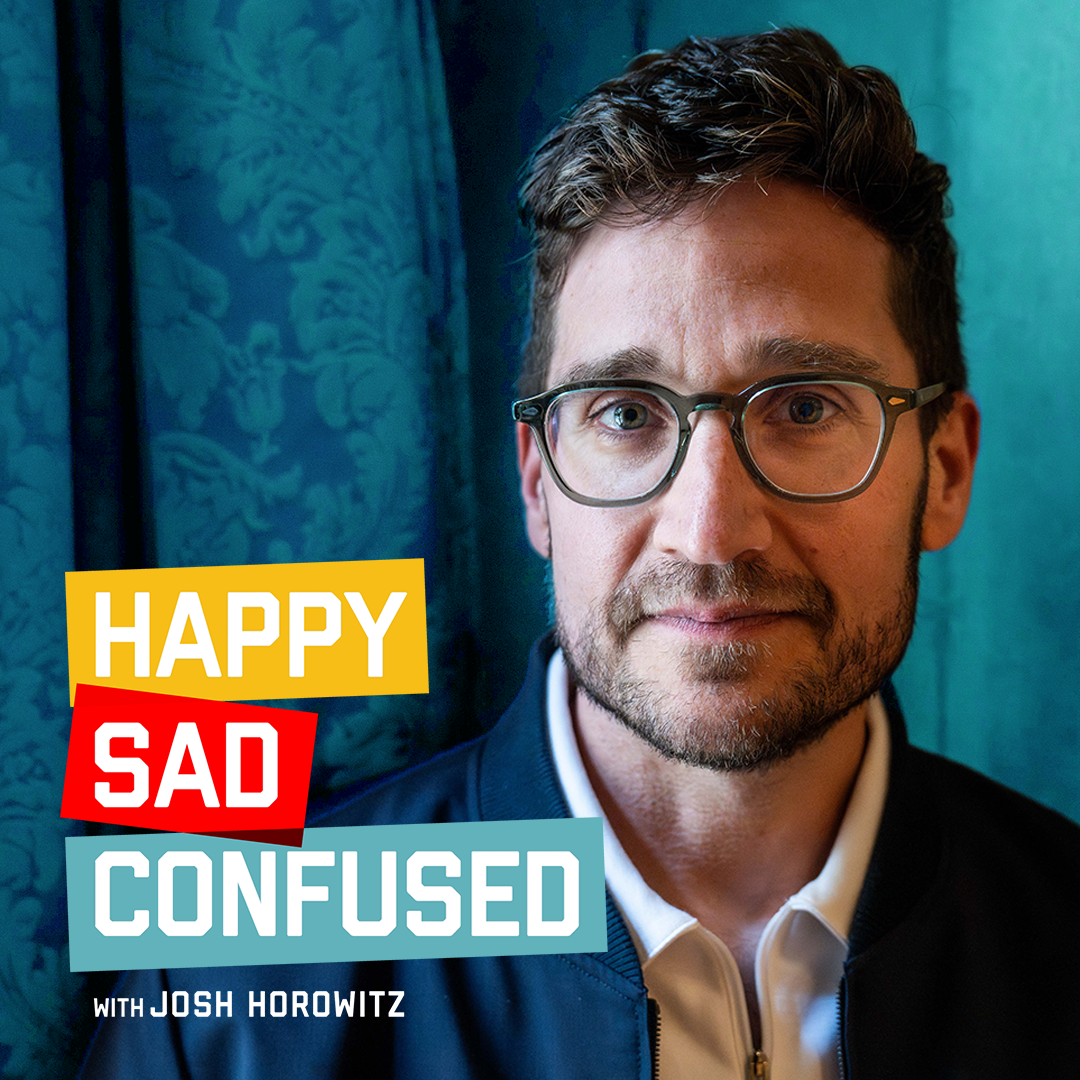

Ben Affleck discusses his directing and acting career, culminating in his Netflix film Animals, and reflects on Hollywood pressures, genre storytelling, and major career turning points (Good Will Hunting, Batman, Gone Girl, and near-directing Batman/Star Wars).
Ben Affleck is the main guest. Josh is the host (Happy Sad Confused). No other guests are interviewed in the provided transcript.
Affleck is an Oscar-winning writer/director/actor, known for Good Will Hunting, Batman, and Gone Girl. He also directed films including Gone Baby Gone and The Town, and stars in Animals with Kerry Washington and Steven Yeun.
Podcast format enables deeper, more contextual conversations than repetitive press junkets. Affleck argues genre conventions are “guardrails” and that serious themes can be delivered through suspense/urgency. He describes being bullied during a career downturn and says risk-taking should be rewarded. He says Justice League was doomed by studio-filmmaker conflict and that personal tragedy (a suicide) and drinking/divorce coincided with the film’s collapse.
Surviving Christmas as a harsh press-tour experience; nearly directing a Batman film with Joe Manganiello (Deathstroke); being offered Star Wars (Force Awakens) but declining; Michael Mann’s feedback on Good Will Hunting; David Fincher directing anecdotes; Batman suit voice/gravelly performance.
Written by AI. May contain mistakes.
Ben shares insights on the evolution of press tours and podcasting.
“Before we get to the main event, though, quick reminder, as always, check out our Patreon for bonus content, for early access to our live events, all sorts of cool stuff.”
Ben reflects on the hardest press tours he's experienced in his career.
“You can't get out for the next 45 minutes.”
Discussion on directing and how it has shaped Ben's career.
“What was the hardest press tour you've ever had to endure in your career, whether because of where you were, because of the film you had to kind of suck it up and promote?”
Ben discusses themes of his film 'Animals' and marriage dynamics.
“I mean, what I find interesting about this is I feel like you're like luring them in with the kidnapping.”
Ben reflects on his experiences with fame and media criticism.
“one of the themes is kind of what constitutes a marriage?”
Ben shares his experience of making a low-budget film and the pressure of its success.
“You know, it was like that competitive every weekend.”
Ben discusses the impact of critical reception on his career trajectory.
“And even though that one, you know, didn't make whatever, a gajillion dollars, it got the critical reception, it earned you the right to make The Town, which ended up being a critical and commercial success.”
Ben talks about potential directing roles he declined, including 'Man of Steel' and 'Star Wars'.
“Can I ask you, I'm always fascinated by sort of like the what ifs, the projects that came and went.”
Ben opens up about the negative experience he had while filming 'Justice League'.
“Joe Manganiello, who was going to be Deathstroke.”
Ben reflects on early auditions and competition among peers in Hollywood.
“I'm coming up with, I'm just going to do this.”
Learn about Ben Affleck's early acting roles, frustrations, and the DIY spirit in filmmaking during his rise.
“And so I was doing a lot of those parts.”
Explore Ben Affleck's experiences with Michael Mann and the challenges of potential sequels to Good Will Hunting.
“Patrick Picklebottom Everyday Mysteries.”
Ben Affleck discusses the challenges and nuances of portraying Batman, including voice modulation and physicality.
“I didn't take that long arguing over whether to be naked in the movie.”
Affleck shares his thoughts on Kevin Feige's influence in the Marvel universe and his own experiences with Daredevil.
“And it's being powered and it's, you know, manned and everything by the whatever the nuclear engines and the guns and all that stuff.”
Ben Affleck participates in a fun bracket-style challenge, choosing his favorite films from his own filmography.
“I just wonder if that's the best, and why am I sniffing?”
Affleck answers quirky questions and shares personal anecdotes about his life and interests.
“Okay, so you're down to the final four, Good Will Hunting versus Gone Girl.”
Ben Affleck discusses being recognized by fans and the complexities of his career.
“I went to the premiere of Flirting with Disaster, and somebody came up and was like, you're amazing in this film.”
Explore Ben Affleck's views on film experiences and personal growth.
“I don't think I'm actually mistaken, but I think they sort of, whatever, dyslexia the names.”
Hear Affleck's thoughts on the dynamics of directing and acting.
“I remember asking Sean Penn once, like what, like, I remember, I don't even know him particularly well.”
Affleck shares the films that elicit strong emotions and performances that resonate.
“I hope the Pacific is as blue as it's been in my dreams.”
A light-hearted discussion about gluten and food choices.
“Although this, I don't mean to prejudice or judge anyone who is, needs to eat gluten-free food.”

Get the gist, explore an idea or ask about something said.
 Claude
On Happy Sad Confused, what are the key points of this episode?
Searching your listeningAutomatic transcript. May contain errors.
0:00Is there something about the Batman suit that like the low pitch, the growl comes? I mean, you have a deep voice anyway, but like every Batman has to do the I'm Batman like that. You can't help it. Is that just go with the territory? Because if you're like, I'm Batman, it just seems farcical, right? Like that's not going to watch you bleed. Yeah, I'm going to watch you bleed. And I'm Batman. Get away from me. I'm Batman. Prepare your ears, humans. Happy, sad, confused begins.
0:29Hey guys, it's Josh. Welcome to Happy Say I Confused. Today on the show, Ben Affleck is here. One of the greats, a legend, a writer, a director, an Oscar winner. He's Batman for God's sakes, and he has a new movie, Animals. We talk about all of it and much, much more. One of my favorite episodes, maybe of all time. I don't want to hype it up too much, guys, but this is a banger of an episode of Happy Say I Confused. Ben Affleck has been on the list for many years. And while I talked to him at the junkets and all that kind of stuff over the years, never did the deep dive with him and spent nearly an hour with Ben just the other day talking about his directing career.
1:06His new film is Animals. It's on Netflix. Check it out. It's him and Kerry Washington, Steven Yeun, but also so much more. This guy has all the stories and he's such a great, candid conversationalist. We talk Good Will Hunting. We talk Batman. We We talk Gone Girl. We talk about being offered a Star Wars movie, about nearly directing the Batman movie. There's tons and tons in this. He really lived up to everything I was hoping and more. I know you guys are going to dig this. I'm so happy it finally happened. Ben Affleck on Happy Sad Confused. Before we get to the main event, though, quick reminder, as always, check out our Patreon for bonus content, for early access to our live events, all sorts of cool stuff.
1:43Patreon.com slash Happy Sad Confused. supporting us over there, helps us make more stuff over here. Okay, here we go, guys. No further ado. He speaks for himself, and he says a lot in this one. Enjoy my conversation with the one and only, and by the way, this was his last conversation of his press tour, so he let it all hang out. So thrilled it happened. Here's me and Ben Affleck. Enjoy. Ben, you're doing the podcast. I am. What a pleasure. You're locked in the room. You can't get out for the next 45 minutes. I'm sorry. I'm back here now. Yeah, I know. And you know what? It doesn't even alarm me.
2:18That's how good you're doing. It's how good my life is. This is flying in the face of sad Affleck. This is no longer. He's happy, Affleck. Sad Affleck, you know. Affleck shows up all the time. Unfortunately, it's my, I feel like any, my kids are obsessed with like taking my picture and trying to find the funniest sticker to make out of it. The worst looking possible picture. but what it's taught me is that I think my sort of general demeanor appears to be depressed. Your resting bent face is what? Resting bent face seems to be beleaguered or something. Or maybe I just, I don't know, it's that thing of when you get a second, you're kind of, oh, maybe my resting face, there should be no surprise.
2:59Oh, my resting face. We'll come back around to that. Let's talk animals and this great, I mean, this is literally the end of your press tour, by the way. Congratulations, you've survived another one. Thank you very much. You know what? They've gotten to be much more interesting experiences because of this phenomena, because of the preponderance, importance and audience of a podcast principally and some other kinds of more, you know, creative sort of like social media shows and stuff. but like so that what used to be four days of 50 consecutive five minute interviews repeated the exact same thing, which was a particular kind of hell, is a very sort of, who wrote No Exit?
3:42Was it something? You know, like very hellish sort of thing. Now you actually move around a little bit and you have longer conversations, like I was saying, where you have some context and you have the ability to talk. It's such an interesting thing. Like I was talking to somebody the other and they were saying like, what do you think it means that we've gone in one direction with this much shorter attention span? Right, the Vine seven second thing. Exactly, to this much more long form thing. And it was sort of, obviously you have a different size audience. So there is no more, oh, 30 million, 40 million people watch Carson or something.
4:19Right, right, right. But you do have your dedicated millions of people that are listening to various podcasts and actually finding the time for something that's more in-depth. And they're hopefully the hardcore folks. If they're investing 45 minutes or an hour in your conversation with me, that means they're more likely to check out animals and be invested in what they do. Yeah, if I can't make it sound interesting in 45 minutes, maybe it's not for you. So this has been a very happy, good press tour. What was the hardest press tour you've ever had to endure in your career, whether because of where you were, because of the film you had to kind of suck it up and promote?
4:54What should I say? I remember that the press tour for, I did a movie called Surviving Christmas. The press tour for that was really unpleasant. Mostly because the studio had totally abandoned it and everybody knew it was a bomb. And it was kind of like, you just feel like you have to walk the plank. I'm like, hey, if you guys are going to pull all the ads, do I still have to go through with it? Every single person who sits down and says, interesting movie. So you're in a real hole. it's like how is this helping anybody yeah yeah um i've had a few of those it's nice also it's different when you direct a movie you know it's like if you can't find stuff to talk about i mean that really is the the standard for me to for choosing something to direct you know you may act in something you do eight ten weeks at the most these days 12 maybe and there can there's a lot that you can find interesting and or within a role for the period of time but for directing it's it's a year plus commitment of work.
5:49And then, you know, there's the expectation naturally, like if the director's not going to promote them, you know, you're going to, you'll do anything to promote what you direct. And, or not anything, but you will do quite a bit of, quite a few interviews. And, you know, ostensibly it's because the movie has themes that you find really interesting and compelling and that merit, you know, discussing to some extent. Well, and connecting that to animals, this is your latest directing offer and you're starring in it. I mean, what I find interesting about this is I feel like you're like luring them in with the kidnapping.
6:19Like, oh, it's good. You know, it's a crime drama. It's the town. And like underneath it all, it's like a like a Cassavetes, like a dissection of a marriage, essentially. But the town was the same thing. You know what I mean? All the movies that I've made, I viewed from even going back to Good Will Hunting, you know, that I've written or that I've kind of created. I've consciously thought, well, you've got to like make, give the entrance some, the audience rather, some entrance, some reason to see the movie. And part of that is like some genre expectation because you might, okay, you know, there's a shorthand around.
6:52I like a movie where, you know, there's kidnapping or horror movies or romantic comedies or whatever they are. Because people do kind of have a sense of what the expectations are. And those conventions are quite useful in the sense that, you know, they're the guardrails that tell you whether, you know, whether you're hewing to the conventions or you're subverting the conventions. It's a common language with the audience they can understand. And this notion that there's a bifurcation or a separation or a difference between movies of a genre and movies which are art movies or serious movies or interesting movies, I think is a real false dichotomy.
7:27ostensibly you know i think it was t.s elliot who said something like the plot of a play is just the meat that you throw the guard dogs while the playwright you know is the cat burglar that breaks into the subconscious of the house right like right right and i really think that's true there needs to be a what's going to happen next urgency yeah just because you know as brando said like an actor's only responsibility is not to bore the audience you've got to engage and be mindful of the audience, but you don't have to pander. In fact, I think what you have to do is surprise the audience, right?
8:00Like somebody said, the ending has to be inevitable and surprising. And then, while you've got the front brain worrying about, gosh, what's going to happen next and who's going to do what, they may not be saying gosh, they may be saying something else, but the subconscious is like experiencing the stuff that is thematically interesting. In this case, as you mentioned, one of the themes is kind of what constitutes a marriage? You know, how vulnerable are we? And in particular, this question of like, or this sort of proposition that, you know, it's somewhat counterintuitive since you want the person to fall in love with you to show a person that you love the aspects of yourself which you don't particularly like or which they may not find appealing.
8:48However, what's really interesting to me is like, is that sort of the ideal like you could really be loved in a different way if somebody if you felt loved for for all of that stuff. All the ugliness and yeah. Yeah and all the and it's a really profound rejection to be rejected you know in for your sort of your true truest self and so one of the things I thought was really interesting about this movie was this is a married couple that does get to the point if only because they kind of think their marriage is more or less over and and they think they have nothing to lose, where they both go, you know what, fuck it, this is who I am, and you know what, and the other one sort of does the same thing.
9:27And what I like about it, I don't exactly lay it out, but I think what's suggested there is that they actually have a very interesting, I mean, giving it away, but I think they actually find a kind of a marriage that really works for them. Right, right. Can we take a step back and look at the directing career, because it strikes me, it's been basically 20 years. 20 years ago probably to almost to a date that you stepped on the set of Gone Baby Gone and launched this career as a filmmaker, six films in. First, where were you at? If I'm doing the math of your career at that time, I guess Hollywoodland had happened, was coming out that year, but you were kind of like bouncing back.
10:06You were kind of reinventing. Oh, I think I was on the verge of extinction. Was directing the way back in for you to kind of reinvent at the time? Yeah, I mean, yes, and it was something that I wanted to do, but because of the nature of, you know, the sort of hand-to-mouth, desperate nature of the psychology of being an actor, I was just incapable of saying no to anything. So then I'm taking a job, I'm taking a movie. Well, I don't have time to be a director, right? And this is why I think Matt Damon has not directed, simply because he's been so consistently presented with opportunities to work with great directors as an actor.
10:45And he's never had this kind of space to do it. Like an 18 month to like, or two years to say, yeah. But I also, for me, it was, you know, it was, I mean, Surviving Christmas, as I mentioned before, like it was pretty much a wrap. I don't think I was gonna be able to work, I was so uncool and so unsought after and so kind of, in fact, at one point I went back and looked at some of the press like around and about me from like 2003, 2004, was like so virile and nasty. Well, they tore you down. They propped you up. They, as we well know. But in a way now that even now would be viewed as irresponsible.
11:23Like one of the real examples of, I don't know if it was the same time, but it was roughly the same time, was like the way Britney Spears was treated. During what was obviously like an episode of tremendous trauma and mental health issues. And there was this sort of gleeful celebration and kind of hideous shodden cultural collective schadenfreude at what was going on with her. And I experienced something kind of similar, which was like, I mean, there were people who were saying like, you know, I mean, literally like, well, one hopes Ben Affleck is dead soon. You know, stuff like that. Yeah. And you think like now people at least would recognize it wouldn't be, you know, that would be called bullying or something, you know, along those lines.
12:04But it's true that at the end of the day, you know, if you do a bunch of work that isn't good, you know, you may not expect that people cheer you to death, but you know, you're not going to work. And so part of the condition really, whether it was explicitly stated or not for me to direct a movie was that, hey, or one of the selling points was I'm not in it. You know, I actually, that was a plus. Truly. Like I remember thinking I don't even want my credit to sort of be eye-catching at the because i don't want people to have a negative connotation i mean it's it's one thing to be unknown it's another thing to be like no we know who you are we just don't like it right it's like collectively as a society's decided and and even the reviews for that movie were like i remember one that was like well now i know what my hat tastes like it was kind of and it wasn't even a rave it was just like fine this isn't the worst piece of shit you've ever seen.
13:01Because it's like, it's a little bit like the high school bullying thing. Like people who hadn't even seen movies that were supposed to be, like you see it happening now, frankly, with Digger. Everybody wants to celebrate this bomb as if like it's the most exciting thing that happened. And you think like, it's a pretty ambitious, interesting movie made by interesting people that have talent. And, you know, everybody wants to count the money, what it may, lost or whatever. And to me, I just think like, if you punish movies that take risks, guess what you're going to get a bunch of shitty homogenized movies vanilla doubles as opposed because if you cannot do something interesting without taking a big swing and that means you're going to sometimes look bad so yeah for me it was i'm not going to be in it and and i got lucky because miramax had been pried away from the weinstein brothers at the time uh i guess they went on to do the weinstein company but disney had gotten rid of them and they didn't have anybody kind of at Disney and fortunately I had pretty good relationships like because I always been a pretty good team player and agreeable and that sort of thing and this guy named Dick Cook who was running Disney at the time and we had a good relationship from Pearl Harbor's another movie that people sort of cheered it was supposed to be a bomb it was a very successful movie but you know and Dick was willing to you know give me a chance with because they just didn't have any Miramax movies or at the time they didn't even have any executives and they gave me you know a low budget to to make a movie and and let me do it and uh you know I I kind of it was just successful enough ironically that came out at a period of time I think the the year of the most theatrical releases in history like as I remember we were in sixth place that weekend and we were ahead of a movie with Meryl Streep and Reese Witherspoon.
14:52You know, it was like that competitive every weekend. And, you know, I kind of got to live to fight another day. But I was keenly aware of the fact that if that movie didn't work, you know, it was really likely that, you know, I may have to find another line of work. And that was really scary. More Happy Say Confused coming up.
15:17Look, it's always a good time to talk about mental health, but especially this month. Did you know that World Mental Health Day is in October? To me, that's just another great reminder of how much we should be talking about how important our mental health is and to take action to help ourselves. Unfortunately, the reality is getting help is still way harder than it should be, really. I mean, that's why I'm thrilled to have RULA, R-U-L-A, as a sponsor of Happy, Sad, Confused. to me it's a no-brainer. Online therapy should be accessible and affordable for everyone. Let's make it easy for anyone who wants help to get help.
15:49That's where Rula comes in. Here's the truth. A lot of online therapy platforms don't take insurance, which means you're either paying out-of-pocket or signing up for some super expensive monthly subscription. Rula does things way differently. They work with over 120 insurance plans, so the average copay is just$15 a session. You heard me right. $15, guys. That means you can get real therapy from a licensed professional without breaking the bank. Plus, RULA doesn't just set you up with a therapist and leave you on your way. They check in along every step of the progress, right? They make sure your care is working for you and make sure you're actually making the progress you want.
16:26So let's embrace World Mental Health Day this month and take it as a reminder to finally take the step to help yourself. Remember, with RULA, appointments are often available as soon as tomorrow. There are no wait lists, no frustrating back and forth. It's truly super easy. Go to Rula.com slash happy. That's R-U-L-A dot com slash happy to get started today. For quality therapy that's covered by insurance, that's Rula.com slash happy. You deserve mental health care that works with you, not against your budget. You know those clothes that you just keep coming back to? Those are the things that make getting dressed easy, and that's kind of what Quince is all about.
17:03They make really high-quality basics using premium materials like 100 % Mongolian cashmere. organic cotton and merino wool. It's the kind of stuff that looks great, it feels great, and you can wear over and over again. It's so easy. And the prices are honestly pretty amazing. They're 100 % Mongolian cashmere sweaters. Start at just$60. So you're getting that luxury quality without spending a fortune. And now that it's getting colder, they've also got great down jackets and classic wool coats. Just really nice, versatile stuff that'll keep you warm all season long. Here's the thing about Quince.
17:39Everything, everything is priced 50 to 80 % less than similar brands. They work directly with ethical factories and they cut out the middlemen. So you're paying for the quality, not that huge brand markup. I've got a cashmere hoodie from Quince that has become one of my absolute favorites. I wear it all the time. It's super comfortable, super cozy. It looks great. I absolutely adore it. And by the way, Quince also isn't just about clothes. They've got bedding, towels, kitchen stuff, even furniture. Basically all kinds of really nice well-made things for your home without the crazy prices. So find your next fall favorites at Quince.
18:14Download the Quince app for app-exclusive offers or go to Quince.com. Get free shipping on your order and 365-day returns. It's now available in Canada and the UK too. And when Quince asks where you heard about them, let them know it was happy, sad, Confused, it's the best way to support our show.
18:36And even though that one, you know, didn't make whatever, a gajillion dollars, it got the critical reception, it earned you the right to make The Town, which ended up being a critical and commercial success. And that really set you off on the path of like where we are today. Yeah. But if both either of those movies hadn't worked, I don't think we'd be having this conversation. Yeah. Surviving Christmas DVD, spectacular reunion. Surviving Christmas. Yeah. Surviving Christmas, Paycheck, Surviving Christmas, Gigli, which is another, that was one that everybody, was similar to, probably more than.
19:07A perfect storm of. It was like, yeah, and also by the way, like a movie that didn't work, but not like the worst. Not the worst. In fact, all the people that mocked and derided it, I think very few actually saw it. It was a function of like, we were so over, we're so exhausted by and overexposed by this Ben Affleck, Jennifer Lopez phenomenon, which itself was a function of being a tabloid story at a time when the tabloids really recognized they had a much wider audience than they realized. And so there was this huge proliferation of these magazines. And so it seemed as if, you know, we were shoving ourselves down everyone's throats and we were wildly overexposed.
19:42So it was a lot of negative factors at work. I'm just upset still that Martin Brest basically was run out of filmmaking. Like he has not made a film since he was a young man. He's still around. Like he could, one of the greats. That was a real shame and a crime. Marty is a really good director. In fact, I probably learned how to direct from him. And, you know, you look at Beverly Hills Cop or Midnight Run. Midnight Run's a perfect movie. I mean, he's made the sense of a woman. He is such a good director. And I'm not sure why. I think he would have had the opportunity to do some stuff had he been willing to, like, after that, do something kind of, like, crummy and ordinary.
20:23but I got the sense that he just wasn't interested in doing that. But yeah, it was, and I feel in some ways, you know, partly responsible for that. I feel bad, I mean, look, that itself was a risky movie. Not a particularly expensive movie, but a risky one, and one that ended up really falling flat kind of loudly, and that was just like, yeah, it was a shame. We lost on, I think, the really interesting movies that Marty might have made subsequent to that. Can I ask you, I'm always fascinated by sort of like the what ifs, the projects that came and went. And there's some directing opportunities that seemingly you had that just didn't work out.
21:00Did you go up for Man of Steel? What became Man of Steel? Did you meet with Chris Nolan and the team about potentially directing Superman? No, I did not meet with him about that. I was considering at a time directing a standalone Batman movie after that and did not feel like ultimately I wanted to do that. But no, I didn't. And there haven't been too many movies that I turned down, whether I was an actor or a director, that I thought like, oh, that's a shame. There have been some that have been successful, so I'm very successful, but particularly as a director, I just think like, eh, it's just somebody else is better for this, you know?
21:36Correct me if I'm wrong, though, didn't you come close to Star Wars? Wasn't Force Awakens like an opportunity that you basically passed on? Yeah, they came to me and asked me, and hey, are you interested in this? And I don't know that that meant they weren't also like talking to J.J. or other people, But I talked to those folks at the time, and that was one where I just was like, again, I thought like, hey, I like Star Wars and I'm a fan, but I'm not the person to direct this movie. I just think someone else who has more passion for this is going to do a better job. And that's not like some great self-sacrificing thing because I thought like, I don't know that I can make a great version of Star Wars or reinvent this.
22:14A lot of challenges to reinventing that. In fact, that you've seen played out, it hasn't been easy for them to reinvent that franchise. Some have done really well, some, and you've got this whole fan base that's got its own very strong opinions. And I, yeah, it just was one that, like plenty of scripts that I've gotten as a director. I've certainly gotten better scripts as a director than as an actor that I've turned down. But I just thought, like, you know what, this would be, I don't think I can do it as well as somebody else. And I don't want to direct something that I don't feel like I have a chance to be really, really proud of.
22:47I have had conversations over the years with a couple of the people that you almost worked with on the Batman film. Joe Manganiello, who was going to be Deathstroke. Bob Richardson, who was going to be your DP. I mean, that's an exciting prospect. Everything he does is remarkable. And I've heard like Joe tell me and others, like he compared it to the game in some respects. And Bob told me a lot of it was in Arkham. Is there anything about that that you did love? Lots. Lots, and I like playing that character, particularly this sort of older, broken, very much derived from, wholly derived from Frank Miller's book, that's what we were trying to do with that Batman versus Superman.
23:25But the truth is that the experience of Justice League for me was so, so negative for lots of different reasons, some of which having to do with just where I was personally, some of which having to do with some of the tragedy that happened during that time, and also the fact that I really saw how not to make a movie like that, which is when the studio is at odds with the filmmaker. You're starting at the worst possible place. You're really making a mistake. And that was what really doomed that. I was really glad and gratified that Zach got to release, and he did in a very kind of canny way, manipulated his way into getting his thing released, which was fucking great.
24:07And I was really happy for him. boy, that was shitty that him, him, him being taken off that movie and the reshoots that we did. That's that, that was the low, if you want the low point of my career was that. So that, that was, I mean, you know, you, you bring it up, like that was seeming like a perfect storm of horrible things happening. What was going on with Zach needles to say was a horrible personal tragedy. You were going through it personally and professionally. And, and, and this film is like kind of collapsing in front of you. Like, did you kind of have any kind of moment of epiphany on that set about personal or professional roles?
24:41Yeah, I mean, look, the personal thing, you know, somebody's death by suicide is, that eclipses everything. And then the way in which that was, I thought, frankly, used as an excuse, I just thought it was one of the shittiest things I'd ever seen, you know? and it was so gross. And then the whole environment and vibe, much of which I wasn't privy to, but that I sort of heard about secondhand in terms of Ray and Gal and other people's experiences. It was just like, wow, this is about as gross as it gets. And I think it really, and I was drinking too much. That's when I started to feel like, boy, I'd like to quit drinking and I'm having a hard time not drinking.
25:34I'm coming up with, I'm just going to do this. I'm just going to do that. And I got divorced. I mean, you know, it was definitely like a very difficult time for me personally. But I can imagine, you know, having gone through and dealt with those things, while painful, were not what impacted that movie. I mean, they just happened to be happening at the same time. Yeah, yeah, yeah. If you'll indulge me going back even outside of the directing career on the acting side, because you know i've talked to matt a bunch on the podcast over the years and he's talked about going up for primal fear and all the roles that he wanted way back when i don't really know about like your story with like the auditions that you were going up for were you going up for the same stuff as matt in that time or those are the group of guys you know this is a time when um i don't know you kind of knew all the other guys who were going up for stuff and and you know because you'd see who would get the part and you'd see them in the rooms you know i was holding our sides and you kind of knew who they were and sometimes you'd work with them and um like who was the who was the guy who was the guy that was taking all your parts well the guy i looked up to you know was river phoenix he was the guy i thought like boy he's the best young actor around i still think that about him it's such a tragedy what happened that guy um and you know leo showed up around that time and he's a he is a mighty talent and has obviously proven that out over the years and and then there you know then of course yeah you had edward and matt and there was there were guys that i you know the brendan fraser and chris o'donnell and and then you know all the actors that i so many actors that i knew and hung out with who were friends like matthew or vince or you know favreau and uh you know and you had like gosh i mean you look through the cast of like school times days you know um were you competitive with those guys or was it sort of Like everyone's going to get their time.
27:22It's going to come, you know, to be honest, like a lot of young actors, I think, I think a lot of actors feel competitive. I'm really lucky. I think my friendship with Matt and the fact that, I don't know this, maybe the fact that my mom always sort of instilled in my brother and I, a sense of like, you know, your own fate has to do with you. There's not, it's not a zero sum game, you know, kind of a thing. I felt like at the end of the day, like, you know, the, someone else's success isn't taken away from me. And then that's, I'm lucky. It's not some great virtue of mine. It's that I was lucky, it made me feel a little bit more sane.
27:58I didn't spend my time looking at movies and going, why the fuck is this guy getting this? Which can happen to people. And I felt just, I kind of had a sense like I was getting cast, I was bigger physically and heavier and kind of every time I went in for the lead, I'd always get called back for the guy, the bully, or the bad guy, or the guy who slams kids into their locker. And so I was doing a lot of those parts. And that was my frustration. And so I, Kevin Smith really was the person who really cast me in a lead role that wasn't, you know, literally throwing someone into their locker, and chasing Amy, and so, you know, that was really meaningful, but also, you know, I was pretty aware that you probably had to make it happen for yourself.
28:50And going out and kind of, this was the time where filmmakers like Rick Linklater, who had done Slacker, or Kevin, who had done Clerks, or Spike, who years earlier had done Do the Right Thing, or Quentin, who did Reservoir Dogs. That was maybe not the first time, I guess, because you had Cassavetes and people like that, but it was a resurgence or an emergence of a DIY spirit that Sundance was really probably in its, I think that it is high point because that was when all these really cool Sex, Lies and Videotape, people were making these movies and the million dollars was kind of the number people threw around.
29:32I have no idea what the movies really cost, but the sense was if you could just cobble together, not that that wasn't a lot of money, it certainly felt out of reach for us. Otherwise, we probably would have tried to finance it. I mean, in fact, when Matt went down and did a TNT movie with Tommy Lee Jones called The Good Old Boys, I was like, okay, give him our script. You know, we're gonna get him attached, like Quentin got Harvey Keitel attached. And we're gonna do, you know, get him on board. And I remember the first night Matt was there in Plano, Texas or wherever it was, I called him up, I said, how'd it go?
30:05And he was like, I don't think Tommy's gonna do our movie. notorious pushover Tommy Lee Jones. Yeah, I worked with him later and I was like, yeah, I get it. Not an easy guy to approach. Yeah. What is it? What do you want, son? No, I will not read your screenplay. What else? Okay. I still love that famous Batman Forever story. What's the Jim Carrey story where he runs into him? I will not sanction your buffoonery. Do you remember that story? I don't even know, but it doesn't surprise me. I did a scene with Tommy Lee where, and he was great in the scene. and it's a movie called Company Men that was, you know, it was about the economic crisis and people getting laid off and suicides.
30:42It wasn't a great commercial success, but I really liked the movie. John Wells was directed and he was great. Chris Cooper was in it. I was at Sundance. I think I talked to you at Sundance for that one. Yeah, and I remember Tommy had this speech where he was walking down this pier and he was talking about, you know, what it used to be and the jobs that had been lost and all, and it was one of those great speeches. And I have a line. And I just was walking along with him, staring at him. And I watched him. But yeah, halfway through a take, I was like, wow, this is good. He got three quarters of the way through it.
31:12I was like, oh, fuck, Tommy is killing it. We got to the end. It was a great take, and he knew it. And it didn't cut or anything. He just turned to the director and said, I think you're going to like your movie. That's amazing. Only Tommy Lee can do that. I was like, I got to use that line. I still haven't used that line to say that. You're welcome, Mr. Fincher. He's like, you're welcome, David. Okay? Ball game. Close it out. More Happy Say Confused coming up.
31:44Starting or growing your own business can be intimidating and lonely at times. Your to-do list may feel endless with new tasks, and lists can easily begin to overrun your life. So finding the right tool that not only helps you out, but simplifies everything as a built-in business partner can be a game changer. For millions of businesses, that tool is Shopify. Shopify is the commerce platform behind millions of businesses around the world and 10 % of all e-commerce in the U.S. From household names like Gymshark, Rare Beauty, and Heinz, to brands just getting started. Shopify has hundreds of ready-to-use templates that can help you build a beautiful online store that matches your brand's style.
32:25And you can tackle all the important tasks in one place, from inventory to payments to analytics and more. No need to save multiple websites or try to figure out what platform is hosting the tool that you need. And if people haven't heard about your brand, you can get the word out like you have a marketing team behind you. With easy-to-run email and social media campaigns to reach customers wherever they're scrolling or strolling. Start your business today with the industry's best business partner, Shopify, and start hearing... Sign up for your$1 per month trial today at shopify.com slash realm.
32:59Go to shopify.com slash realm. That's shopify.com slash realm.
33:09From the parents behind Law & Order comes a mystery the whole family can enjoy. Patrick Picklebottom Everyday Mysteries. Step into the whimsical world of Patrick Picklebottom, a precocious 11-year-old with a love for reading and an uncanny ability to solve mysteries. Inspired by the beloved children's book of the same name, This podcast vividly brings Patrick's tales of deduction and everyday adventures to life as he unravels baffling enigmas and solves clever cases. Patrick Picklebottom Everyday Mysteries is perfect for kids and is just as entertaining for grown-ups who love a good mystery. The whole family can listen now, wherever you get your podcasts.
33:58One of my favorite Good Will Hunting stories is, again, something Matt told me. I'd love your perspective. When you meet Michael Mann and you guys talk to Michael Mann and he basically says, your script's great, but I think you need to go a different way with the movie and basically wanted to kind of do the Michael Mann version of Good Will Hunting. Yeah, which like at the time surprises. But now looking at it, I just think, no, like filmmakers, you know, he he was so. thoroughly rooted in and had such an understanding of and spent so much time researching. And you look at movies like Heat and you see why.
34:30Like the LA crime world. And so we came in and did it. He was like, I like the movie. I do like the picture. But I have something to show you guys. And we were like, okay. And he showed us a video of like a gang fight in an LA club. And he was like, this is what's going on. This is how it is right now. You see what these guys are doing. And I was like, yeah, I see what they're doing. seems like a bunch of Latino guys with face tattoos, like in a riot at some club downtown. It doesn't really have a bearing on, but it was just like what he's drawn to, you know what I mean? And look, Michael's like, you know, I mean, he's making Heat 2 now, you know, and it's that script I read.
35:07It's really fucking good. Did you talk to him about doing Heat 2? I have not, I cannot unfortunately lay claim to. What do you do reading the script? What's going on? Something's going on. You know, you get to a place where you just like, no guys and uh and i don't want to talk out of school but i i because i'm a fan and i and i know him and um i want to read it and it's also a book uh i just thought like in and you know i was curious about it and it's really good i mean and i think you know i mean he's i don't know how old michael is he maybe he's 75 years old you know like he's but i think it's i think it's going to be a terrific movie ferrari was pretty good actually so yeah yeah michael is one of the great yeah um have you had to resist this might sound silly but knowing hollywood like have you had to resist the goodwill hunting sequel have they come to you with like bags of money and like come on guys not bags of money they did at one point when miramax was bought again by somebody and like they did say they did come to us and you want to do a tv show or a sequel and i was like it's just an easy no like yeah no i don't i don't know what it would be and it just seems like a really and look I get it sometimes you get to a place where it's like like I said I've had the the downturn in the career where you go like shit I don't know what else to do and sometimes you get to that place and you go back to the well and go you know what like let me do this and kind of fire it back up I don't have any any judgment whatsoever I've just lucky enough that I've never had to do it and uh honestly I don't know what what the story would be yeah it just one of the nice things about it is that it's kind of contained.
36:42A couple of random ones, Armageddon. Did you, what did you make of the animal crackers scene? Did you feel like this is romance to have animal crackers? And you know, you gotta remember this was at a time when like true romance had come out and you know, or was true or Crimson Tide or whatever. And there was like the silver surfer monologue that Quentin wrote. And so there was a kind of notion that like, you know, you wanted the right kind of surprising, iconic. And also I was like, I had just done Good Will Hunting and screen tested for that movie. And I certainly wasn't in any position to like, my idea was like, just make it work.
37:24If you can make it good, you know, I thought like doing my bad Aussie bit, you know, where I watched the gazelle. That's how I could kind of make it funny. And it's a little silly. I mean, the whole movie's a little silly, but it's got a lot of charm, and it was a lot of fun. And, you know, I got to work with, like, I mean, that was great. It was like Steve Buscemi and... Oh, it's a murderous row of every cool actor. Billy Bob Thornton. I remember Billy Bob, we were doing that, you know, after Good Will Hunting, and then we went... Billy had won the Oscar for writing the year before with Sling Blade, which was a movie that we just, like, you know, worshipped.
37:59And I saw Billy after the Oscars, and I was like... And I saw a party, and he was like, So let me ask you a question. Do they give you guys like half an Oscar? It's like you both wrote it. Did you get half of one? Or what? What the fuck they give you guys? You get a fractional Oscar. You know, mine's a whole one, right? I do got a whole lot. Billy's a funny fucking guy. He was in that movie like, Michael, I'm just wondering what the fuck we're doing here. I mean, I generally like to be in the kind of movies that make sense. You know what I mean? But fuck it. Okay, we don't have to do that. We don't have to do that on this one.
38:32Fuck it. We don't have to make any sense. I just thought maybe it'd make some sense, but I guess not. You're recreating your famous DVD commentary live for me. Thank you. It's amazing. Did I do Billy in the DVD? I don't know, but in terms of calling it out. What was your favorite direction David Fincher ever gave you? What sticks out? Well, I'll tell you the first thing I remember is first or second day, we were doing this kind of walk and talk scene. And I'd heard, oh, David does a lot of takes. And so my thing was like, at that point, I had learned enough to know like you work with a good director, a great director.
39:10That's the goal. And I'm fine with that. If you're great, I'll do the fuck you want to do. I'm with you. I'll go all the way for you. And so my thing was like, I'm never, ever going to be the guy who doesn't want to do another take. I'll go as long as this dude can go and longer. That was kind of my ethos. I was like, you know, start directing anything else. I thought, I don't know that I'm any more gifted than anyone else at this, but I know I can work as hard as anybody. And so I sort of took that approach to that movie, and I remember we had on take 21, David goes, first print, delete all the previous takes.
39:46And I was like, and the motherfucker deleted all the takes prior to 21, and I thought, he's not fucking around. he really is gonna this is really how he works but he doesn't need to say that that's just like that's that's sending a message that's it is sending a message he he he was making a point and uh but you know what i love david oh i loved working for him i really like people i have found like whether it was in high school or anywhere else like the higher standard you know somebody held me to the higher I did and and I loved it and I loved thinking like oh it got addictive like oh we can just keep chasing excellence as hard as we can and so it got to be something like that where I just thought great maybe we'll just bleed all over the place and and go as hard as we can do and and uh and we'll get something great I don't actually now believe that's why David is a good director I actually have another theory about why he does so many takes but he'd get bent out of if I shared it, but what's the truth on the Yankee hat story?
40:52He says on the commentary, maybe he's embellishing that production shut down for four days. He's such a lying motherfucker. That is such a fucking lie. I don't know why he loves to say shit like that. You just said you love David Fincher. Now what just happened? And I'm friends and I adore him and he'll fucking lie if he thinks it'll get a reaction. He doesn't, he's got a very sort of dark sense of humor. And I know he thought like, I'll make Ben suffer for this for many years. The truth is, I don't think anyone had ever said, like, no to him about anything. And he, with this airport scene, and he was like, yeah, I think you're wearing a Yankee set.
41:25And I said, ah, I don't think that's a good idea, David. And he was like, looked at me like, you know, why are you talking to me? And I said, I just think, like, look, I'm a Red Sox fan. It's just going to be a big distraction. I'm wearing a Yankee set. Let's just do something else. And then he decided, no, no, no, it has to be a Yankee set. And I was like, it doesn't, but why? I mean, they sell hats. And he was like, you know, it was probably all of 20 minutes that we talked about it. And eventually it was like, what about the Mets? And I was like, all right, sure, Mets. Fine. Fuck it. You win.
41:54That was it. And then he's like, yeah, it cost us$40 million. Well, Ben Affleck wouldn't wear the fucking. I didn't take that long arguing over whether to be naked in the movie. You know what I mean? Like, I was like, so I'm what? I'm sorry. So hold on. What can we see here? He's like, you're naked. I'm like, but like in what sense? Metaphorical. And then I was just like, oh, fuck it, all right, you know. Is there something about the, one more Batman question, is there something about the Batman suit that, like, the low pitch, the growl comes? I mean, you have a deep voice anyway, but, like, every Batman has to do the, I'm Batman, like, that you can't help it.
42:29Is that, just go with the territory? Because if you're like, I'm Batman, it just seems farcical, right? Like, that's not cool. I'm gonna watch you bleed. I'm gonna watch you bleed. And I'm Batman. Get away from me, I'm Batman, yeah! It's just not gonna, I remember I did, When I did Armageddon, speaking Armageddon, Bruce Willis once turned to me, he was like, man, your voice is too high. I was like, what? He was like, don't have that high voice. I was like, Bruce, that's just my voice. I can't, I don't think, can I change that? Can surgery do what you have to do? He was like, man, you don't want to sound like that, man.
42:58I'm helping you out. Bruce, by the way, I love Bruce. He was the sweetest guy in the world. And he really was giving me a tip. He was also like, man, don't go do that Shakespeare movie, man, you don't want to do that. Can't be right all the time. Yeah, no, he was wrong about that one, but he hadn't read the script in all fairness. It was, that was one where I just didn't want to, you know, like often they're computer modified. And I thought like, well, what if it's just that he, also I liked the idea the guy was, you'd see the Frank Miller book. I mean, the guy is really old. I mean, he's drawn intimidatingly enough to look like Marlon Brando, but he's, you know, quite gray haired and older and just beat to shit.
43:41And so I kind of like the idea of him just being sounding literally, you know, kind of exhausted and gravelly in that sense. And I like the fact that it wasn't, because otherwise it begs the question, you got like the voice modifier in the suit or something like that. And I mean, maybe I took it too literally. It's not a criticism. I'm just always curious about like what happens in there. That was just one of those things where, and honestly you'd just feel a little bit more comfortable. You got to get into it and then kind of, if you don't believe that you're Batman, you're really in trouble.
44:15And it's funny. I heard stories about like Tim Burton and Nicholson, his famous stories about him saying, let the suit do the acting. You know, you got to it's a it's a lesson, actually, that I learned from directing just in general, which is. As an actor, we're apt to think that we need to do more work than we do. And you've got to know that the movie and the momentum of the film and all the efforts that everyone else is putting in is is is, you know, you're on a battleship. And it's being powered and it's, you know, manned and everything by the whatever the nuclear engines and the guns and all that stuff.
44:48And you don't have to paddle the ship yourself. In fact, if you do, it looks like you're working too hard. And the worst thing that you can do is work too hard because all of a sudden the audience is like, stop fucking selling me something, you know. Has Kevin Feige tried to get you back as Daredevil for something? And are you open to it? He hasn't. I wish he would. But Kevin Feige is, I mean, I don't want to say that as if, and I don't, I don't, I really don't mean this in any way other than like, I just feel that I've kind of done my superhero movies and I don't know that I've, there's anything left for me that's particularly interesting in them for me to do.
45:22But I will say that of all the producers in the world who have like sort of pretended to kind of know what the audience wants, the only guy I would ever believe is Kevin Feige. Kevin Feige, if you think about what he was able to do, and the motherfucker was standing there on the set of Daredevil, he just wasn't in charge. It was one of the things I wish I'd go back in time on, is like go back in time and be like, no, not you, you, you, you, come here, come here. What do you think we should do? Do you remember him on set? Did you talk to him at all? I remember him, yeah, he was like a junior guy, and Avi Arad was running it, and you know, the director and all this, and everybody had their ideas, and I was like, should I really be sniffing and saying justice?
46:01I just wonder if that's the best, and why am I sniffing? What am I smelling? And what does that have to do with justice? Is justice a smell? And I feel that Kevin may have been on my side, I like to think. And also Kevin just has a really strong understanding for exactly how to balance the sort of, the degree to which you can be cheeky about the fact that you're wearing pajamas. and then also when you can lean into a serious moment and when you need to like wink at the audience and how much of the sort of, okay, how do you balance these, like a fight scene with a moment of comedy, like he just has a talent for it.
46:49And as such, it would appear to me from the outside, and I have to caveat this by saying is that I'm just as much an outsider as anyone sitting at home. But my view of what he's done is to kind of construct Marvel Studios sort of in the way a great showrunner runs a television series, which is to have like, hey, we have the tone, we have the cast, we have the crew, we built this script, and here's your stunt coordinator. Not that they just come on and say action, but that like, and there's certainly been filmmakers like Ryan Coogler who've really like left a unique stamp and mark on it. And there's also been filmmakers who come into the Marvel Universe and been really successful and left and gone elsewhere, and that isn't the case.
47:34And I do think that it's because there's a kind of Kevin Feige backstop, and you've got a guy, like all the great showrunners, it's just on a bigger scale, and they've done a good job at keeping secret, whatever the, I don't know what gets recut, or what gets hashed out, or whatever, but I would trust him. No, I mean, you hear the stories about how they make these Avengers movies, and you're like, really? and somehow they all work out. Like they start without a script and then they build the reshoots and all this. You can't possibly understand how difficult it is to have 20 some consecutive billion dollar movies.
48:12I mean, I don't, have I ever had one? I mean, Christmas I think made a billion. Surviving Christmas made the one one thousandth of a billion dollars. But I mean, I've had hit movies, you know, like look, you talk about Gone Girl, hey, big hit or Pearl Harbor, half a billion dollars, right? And maybe that's a billion dollars in contemporary inflation adjusted. But nonetheless, Batman v Superman, that was a big success. I think it was an$800 million movie. In order to do that, it's just not an accident. And then, yeah, okay, I'm sure there have been some misses along the way because truly it's an affront to the gods to be perfect.
48:52He may be doing that on purpose. Let me throw him one. Exactly. It's like those old Persian rug makers who intentionally weave a flaw into the rug. You see, I'm human. Yeah, exactly. But he has that understanding for that genre story, whatever. So do I think, could we have fucking benefited from him on Daredevil? Well, I mean, bet your fucking life we could have. If you had a time machine, that's what you'd do. Talk to the guy in the corner. Hell yes. Okay, two challenges for you before you go. I do this with actors that have amazing filmographies. You're going to pick your best movie bracket style.
49:25So I'm pitting them against each other. You ready? Sure. Good Will Hunting versus Chasing Amy. What do you choose? I think Good Will Hunting just because it's more personal to me. Okay. Gone Girl versus Armageddon? Gone Girl is more my kind of movie. Argo versus The Town? You know, just different movies. I really do love both of the movies. I mean, I would say Argo just because I had grown as a director and tried more things. And honestly, I think the level of difficulty was higher. I really did not know whether or not I'd be able to have these two really different tones work in the same movie where you've got like mock execution of real American hostages in Iran and like straight up kind of Hollywood satire comedy.
50:14I thought like we could end up being, you know, laughed off the road with that movie. So I would say, I guess, Argo. BVS versus The Way Back I like them both for different reasons The Way Back again is I'm always going to opt for a more personal story you know obviously a movie where about the loss of a child and that kind of grief and in that case like you know triggering alcoholism and all sorts of things but at the end of the day that movie was also like a real growth movie for me as an actor I feel that I I feel sort of like elite bloomer in a lot of ways and I'm glad that I had the chance to stick around long enough to to become an actor that where I feel I'm capable of doing kind of interesting stuff kind of on purpose uh and that was one where I I I really uh I felt that I was able to like conjure up some kind of authentic stuff that uh you know when I was younger I probably wouldn't have been able to do yeah I'm being brave to like mine your own shit in the best possible possible way and you're always kind of theoretically mining your own ship but again it's sort of you can't get blood from stone you know if you don't have something that gives you the opportunity to do something that's human and real it's a lot of credit credit to to gavin o 'connor who's a wonderful director and uh whom i adore uh and was really my partner on that and you know this dude didn't tick really want to do that movie and we had to bring the price way down and uh but at the end of the day it was like god i love that movie i love working with the young guys who are playing basketball players It reminded me of being that age and doing school ties and just starting out.
51:51And Janine Jermoncar was in the movie I loved. And it was just one of those ones that was a real favorite of mine. Okay, so you're down to the final four, Good Will Hunting versus Gone Girl. Oh, I mean, you know, Good Will Hunting will always be like a formative movie for me. Although, you know, Gone Girl is really also truly, honestly, I love Gone Girl. But like getting to become friends with David Fincher and getting to know him is one of the guys I really love in my life. Life has been an incredibly meaningful gift. This is two of my favorite people in the world that David and Matt. So today, for today, for this moment, you just have to choose one.
52:26It's okay. It's not binding for life. Mallrats. And then Argo versus The Way Back then? Argo. Okay, Argo versus Mallrats, I guess. That's close, but I'm gonna go with Argo. Okay, there it is. We end every happy second to use with profoundly random questions, Ben. are you a dog or a cat person? Dog. What do you collect? Cameras. What's your favorite? Movie posters. Yes. What's your favorite movie poster you got? I've got a Grand Illusion first edition poster. And that's one of my favorite movies, my favorite filmmaker. And that's probably my most cherished of all posters. What's your favorite video game of all time?
53:11Ooh, man, that's a good question. and fuck, that's hard. What sucked the most life out of you, the time out of you? I mean, there was a game called StarCraft that probably took the most life out of me for a period of time, and I just got famous, and all I did was stay home for three years and play StarCraft. Where's Ben? Unavailable due to StarCraft. Although I love Valorant. It's a great game. It's a great game. The problem with that game is that I just, with kids that have been raised, like playing i just get fucking rocked and i i'm like are you motherfuckers cheating you know what i mean and i get mad and they're like 11 and like fuck you loser and it's uh it's very humiliating but that's a great game i love 2k i love madden i love um you know and and the early like doom when i first played that game which then gave rise to quake and gave rise to all that that's a great game we played that you know endlessly for hours like we were doing good hunting we were playing I think we were playing Doom.
54:11Yeah, before even we were playing Doom. I remember writing and taking these long breaks to play Doom. I can't believe it's been that long. And then there's other, I like those kind of real time strategy civilization building style, which has sort of gone out of style. Starcraft was one of those. You know, there's an old game called Myst. That was a fabulous game. The great storytelling. It's a great story. You're on that island. And I feel like there's an opportunity for somebody to do something like that again. That was an amazing video game. It's like the prisoner vibes. Remember that show? I love that.
54:46I mean, but like I played fucking, I mean, you know, like Donkey Kong and Tetris and Ms. Pac-Man for tens of millions of hours. And after school, going to the arcades in the old days when I was a kid playing those classic games. And so much so that I even, I still have a Ms. Pac-Man video, standup video game. And I mean, I'm a great fan of the, and lover of video games. And now I play, I get to play 2K with my son and lose, which is, it's so humiliating. You and your 14 year old son just fucking just beats you and then just mocks me and derides me. And it's all I can do not to get really petty and competitive.
55:29Dakota Johnson asked me this, I ask everybody, would you rather have a mouth full of bees or one bee in your butt? One beat my butt. Yeah. In fact, I'd love that. Anytime you want to. We'll get that sorted for you. What's the wallpaper on your phone? My kids. Picture me and my kids. Has this ever happened? Last actor you were mistaken for? Do you ever get mixed up with anyone? Oh, yeah. I went to the premiere of Flirting with Disaster, and somebody came up and was like, you're amazing in this film. I assume they thought I was Ben Stiller. I get mistaken for Matt all the time, where people call me Matt all the time.
56:01I don't think I'm actually mistaken, but I think they sort of, whatever, dyslexia the names. Siamese twins, yeah, basically. I have been mistaken for maybe Jake Gyllenhaal, probably like Matt Dillon, which like it's random. Like you just don't, I've been mistaken. You know, there is that thing where people are just like, I know you vaguely from something. Just tell me your filmography. That's never awkward. Aren't you the guy from, I'm like, nope. Nope. If you don't know my name, I don't have to stop. That's the deal. No selfies. We're not doing it. I'll get a picture with you. Who are you again?
56:38Nope. Nope. Not doing it. Got to know the name. I was in motherfucking surviving Christmas. Show the respect. The thing about surviving Christmas, I have to say, interestingly, which is, which is the great gift of this life that I've had, which has been enormously fortunate, you know, even punctuated by all the, you know, those moments of disappointment, like surviving Christmas, was like, Jim Gandolfini was one of the great men I've ever known. A prince. Lovely guy. A phenomenal actor. And I wouldn't take that movie back for anything. Christina Applegate, getting to work with her, she is. She's a spectacular person.
57:14So some of these experiences, while maybe not great for the audience, were definitely great for me. I mean, like I say, learned so much from, I've learned more from mistakes and from perceived failures than success. Success hasn't taught me anything other than to be a little bit more conservative or try to maintain it or worry about losing its success failure teaches you that you can get back up off the ground that you can be resilient that like fail that like you can take risk because what's you've survived failure uh and it also teaches you like for me it was like if i'm gonna fail i'm gonna fail on my own merits i'm not gonna kind of hue to what i think other people think i should do because like you might failing on those terms is the worst possible thing yeah yeah what's the worst note a director has ever given you
58:04you can name the name or not uh uh i i mean you know something along the lines of like it's just it's like it's fucking stupid or so you know like i won't say who my man is but he was a very blunt You know, honestly, that's Michael Bay. That's Michael Bay. I'm not going to say, but there are, you know, the truth is like, I remember asking Sean Penn once, like what, like, I remember, I don't even know him particularly well. I'm just a fan. And I ran into him at the thing and we were talking and I asked him what he, what frustrated him with the directors and stuff. Cause I was thinking about it myself and he just said too much talk.
58:45Right. And I remember thinking, yeah, like the truth is once you get there, if you're working with good actors, like it's not so much about the notes. You know what I mean? And Sean's like, I can play one fucking thing. You know, you want to spend talk for a half an hour, man, what faster? Like, what do you want? It's the compulsion to fill the space. Like, Oh, I have to justify my exactly. You can, you can do your whole soliloquy about it. If it makes you feel I'm here and I got to go take all these and go out and play it. Like you're cluttering my brain with your shit. Yeah. You're dumping all your, your shit on me.
59:14Like, um, so, so I've been lucky in that. And I really learned that the thing to do with actors is to give them a sense of authorship, freedom, and support. And that that's really what's likely is to get the best results. Okay, and finally, in the spirit of happy, say I confuse, an actor who makes you happy. See them on screen, you're in a better mood. Ooh, boy. Actor that makes me happy. Let's see, I wanna say somebody, I have to say somebody, I just forgot their name. I'm a new actor who's really terrific, but I feel like my brain is filled up with names. You've got your name at the press store.
59:51An actor who I see that makes me happy, I'll say Morgan Freeman. Every time I see Morgan on screen, it's just like, it doesn't matter what he's doing. It doesn't matter if he's just like, hello. I'm like, this is wonderful. I love the guy, and I had a chance to work with him a couple of times, which is a gift, but he makes me happy to see. I could watch the end of Shawshank Redemption any day, and that would make me happy. That whole, like, you know, I hope. I hope to see my friend Andy again and shake his hand. I hope the Pacific is as blue as it's been in my dreams. I hope, I mean, that's to me like sort of the whole thing in that show.
1:00:25What's a movie that makes you sad? Ooh, gosh, lots of them. I mean, I'll tell you a movie that made me sob with tears that I think is a masterpiece. And the best depiction of alcoholism that's ever been rendered on screen is a movie called To Leslie. Andrea Riceboro's in it. And that performance is as authentic and moving as anything I've ever seen on screen. And that woman, I just, I was so mesmerized by it that I asked to have a meeting with her and I met her. And once I met her, I was just like, it was even harder for me to believe that she did. And I was like, you must be an alcoholic. And she was like, no, no, I'm afraid.
1:01:10And I was like, what? How did you do that? I mean, that's one of the best performance I've seen in, I don't know, decades. She's a chameleon. She's always different. Fuck is she something else, boy. And finally, a food that makes you confused. You don't get it. Why do people eat that?
1:01:31Gluten free things. You like your gluten? Yeah. More gluten. I'm like, if you're not, it's kind of like alcohol free beer. You know what I mean? I'm like, well, I just go ahead and have some sudsy carbs. Like, no, not really. What's the whole point of this thing here is to get your gluten on. Although this, I don't mean to prejudice or judge anyone who is, needs to eat gluten-free food. You lost the gluten lobby, all gluten lovers. No, I believe the gluten-free lovers. All the non, all the gluten allergic people. But yeah, other than that, I don't know why you would choose to eat something that's gluten-free.
1:02:03It's sort of like taking the heart out of the melon, you know. Fuck it, man. that life is, bread is the bread of life. And there's the wisdom. There it is. There's the wisdom of the day. Get yourself a big loaf of bread. Plant yourself in front of the TV. Enjoy animals on Netflix. Congratulations, sir. Your press tour is officially done. And I don't think I was canceled. We'll find out. We'll find out. What's the worst that could happen? You've been through worse. I'd like to think that. I really appreciate the time. Thanks very much. I appreciate it, too. It was great. And so ends another edition of Happy, Sad, Confused.
1:02:42Remember to review, rate, and subscribe to this show on iTunes or wherever you get your podcasts. I'm a big podcast person. I'm Daisy Ridley, and I definitely wasn't pressured to do this by Josh.
1:02:56You've got your favorite blanket, a freshly poured drink, and a cold case burning a hole in your streaming queue. You're not just watching True Crime. you're running the investigation from the comfort of your couch. Welcome to Murder, She Watched, the podcast where we recap, dissect, and slightly overanalyze some of the best and craziest true crime documentaries on our favorite streamers. Did the spouse do it? Why is the shady neighbor wearing leather gloves in July? Why did this guy agree to be interviewed in this documentary? We ask the tough questions that you're often just screaming at your TV.
1:03:33So every week we break down the twists, red herrings, and absurd documentaries that have kept you up all night. It's high drama, cozy vibes, and absolute couch detective energy. Grab your throw blanket and hit subscribe. Search Murder She Watched wherever you listen to podcasts. And let's solve this thing together.
Where to even begin with Ben Affleck? In a true career-spanning conversation, Ben and Josh dive deep on his latest film ANIMALS, how feeling on the verge of extinction led to him directing, why JUSTICE LEAGUE was a low point in his career, and why he still defends GIGLI. Plus, a story about the actor that rejected GOOD WILL HUNTING, the truth about that GONE GIRL hat incident, why Ben would reprise his role as DAREDEVIL, & more!
SUPPORT THE SHOW BY SUPPORTING OUR SPONSORS!
Rula -- Rula patients typically pay $15 per session when using insurance. Connect with quality therapists and mental health experts who specialize in you at https://www.rula.com/happy #rulapod
Quince -- Go to Quince.com/HAPPYSAD for free shipping and 365-day returns.
Limited Time Offer–Get Huel today with my exclusive offer of 15% OFF online with my code happy15 at http://huel.com/happy15. New Customers Only. Thank you to Huel for partnering and supporting our show!
Learn more about your ad choices. Visit megaphone.fm/adchoices