 Ask ChatGPT

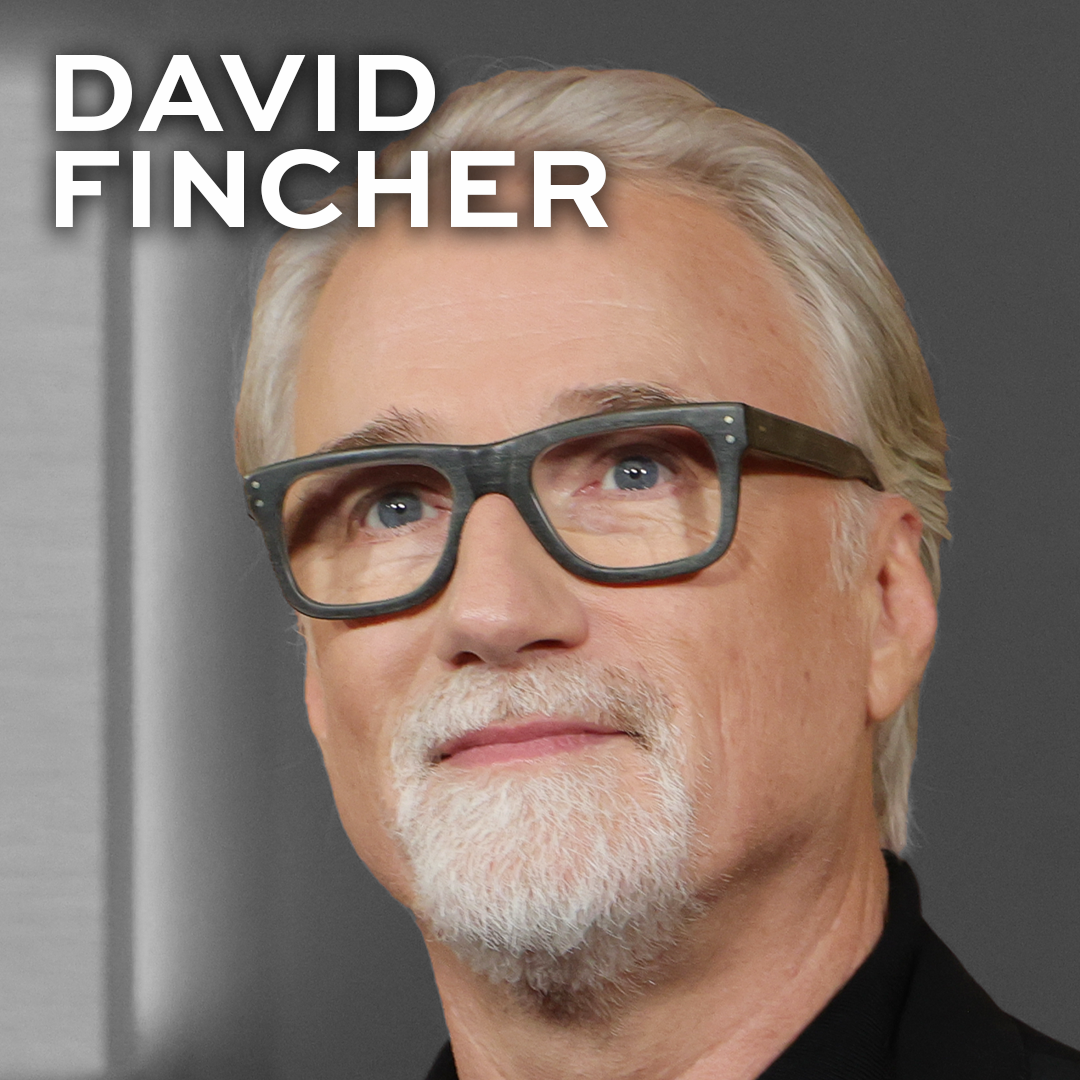
David Fincher discusses his filmmaking approach and specific creative decisions across Alien 3, Seven, Zodiac, and The Further Misadventures of Cliff Booth (IMAX Nov 25; Netflix Dec 23). He also talks about directing actors, narrative “signposting,” audience time, and how he builds unsettling sequences (especially Zodiac’s Lake Berryessa attack).
David Fincher is a film director known for dark, precise thrillers and iconic visual style. The host, Happy Sad Confused, is a long-time Fincher fan (no other guests appear in this excerpt).
Written by AI. May contain mistakes.
Discussion about David Fincher's rare interviews and recent projects.
“David Fincher is my guest today, and it is an absolutely epic chat.”
David Fincher discusses his films including Alien 3 and Zodiac.
“A 90 minute chat with the great David Fincher.”
Fincher reflects on his relationships with actors like Brad Pitt.
“So, no, he did, he was vehemently against wearing the hat.”
David Fincher shares his approach to directing and working with actors.
“It's funny you said that because I was thinking about Seven in respect to like, you know, but back then people didn't know, you know, the famous Fincher methodology.”
Discussion on the importance of spontaneity and authenticity in performances.
“And I really, really don't because I feel like what I want to do is inundate you with thoughts and ideas because I think most conversation is happening while people are processing.”
Exploration of how scripts engage audiences and the role of narrative signposting.
“total face plan you've got them you're protecting them No, we want to be in an environment where you can fall over, your pants fall off, and you spill your orange juice.”
David Fincher discusses narrative structure in films like Jaws and E.T.
“You're not going to use my words against me.”
Discussing how filmmakers engage with the audience through narrative pacing.
“But you do yourself a disservice if you're not conscious of the fact that the audience has, they're going to give you a certain amount of time to make your fucking point or to move them.”
In-depth conversation about the character Cliff Booth and his significance in the narrative.
“Make money on Depop with no selling fees.”
Analyzing the complexities of Karen Crosby's character in relation to Cliff Booth.
Learn about the intricate character dynamics and tonal elements in film scenes.
“Because otherwise Charlie would go, okay, look, here's my problem.”
Discover David Fincher's formative experiences and inspirations in filmmaking.
“Can we talk a little bit about the specificity of the time and the place of this?”
Understand the hurdles filmmakers face and the perseverance required in the industry.
“Not a lot of people were fighting for my input.”
Explore David Fincher's thoughts on iconic films and their lasting effects on audiences.
“to submit your own questions for my guests, exclusive merch, and plenty of bonus content you won't find anywhere else.”
Explore David Fincher's thoughts on iconic films and their lasting effects on audiences.
“I'll have you know, you are maybe the most frequent topic on this podcast the last 12 years.”
David Fincher discusses the psychological impact of the Zodiac killings and the filmmaking choices that evoke dread.
“I put it, it's like, It's the same way Funny Games is one of the scariest movies to me.”
Fincher reflects on the challenges of shooting scenes and studio interference during production.
“It's just, it is, it's the facts of it are enough.”
Fincher shares insights on maintaining creative control and the necessity of having a unified vision in filmmaking.
“I don't need to really build a case for Somerset's green thumb or his ability to like where he's.”
David Fincher discusses the complexities and challenges involved in filmmaking.
“If you can help me solve problems, help me solve problems.”
Fincher emphasizes the necessity of brutal honesty in the filmmaking process and actor relationships.
“Look, I try to bring a little bit of clarity to my own little miasmic corner of Hollywood.”
Fincher reflects on the value of mentorship and supporting the next generation of filmmakers.
“And I'm able to walk up to an actor and go, you know what I think you do in your pinky?”
A discussion on the importance of artistic expression and the risks associated with filmmaking.
“And, you know, I feel like that's the service I provide.”
Insights into working with Quentin Tarantino and his creative approach.
Discussion on the nature of storytelling and the risks filmmakers take.
“because, you know, I think the thing that most filmmakers will agree is the bane of our existence is the Big Mac version of films.”
Comparison of directing styles between David Fincher and Steven Soderbergh.
“I don't know how you can shoot all of these little tiny pieces for weeks and weeks and weeks, knowing or being semi-assured that when it all gets cut together, it's going to be cinema.”
Fincher shares his thoughts on Soderbergh's films and Oscar moments.
“No, I think Soderbergh is the, for our generation, is the lightest touch out there.”
Discussion about Fincher's past pitches for Spider-Man and Batman.
“because I've heard that you had a pitch for Spider-Man a thousand years ago.”
Exploration of the challenges faced during the production of Mindhunter.
“I've always thought that was, you know, I had high hopes for Val Kilmer and I was like, what the fuck?”
Fincher details the casting process and character development for Mindhunter.
“made modifications to the second episode, and then we had to kind of crush the next four episodes into two.”
Learn how the character of Bill Tench was visualized and the initial challenges faced.
“He's got like the whole, like he's a drill sergeant who, you know, if you know Holt in real life, like this guy nursed his mother through her demise in his apartment in Manhattan.”
Discover the difficulties in scriptwriting and production timelines for the show.
“It didn't have – so then it was a mad scramble to, okay, we're starting over.”
Explore the financial challenges of producing the show and growing its audience.
“So the movie came in around, I don't know, 120, 123 or something like that, somewhere in that kind of region.”
Understand the balancing act between artistic vision and corporate expectations in filmmaking.
“And my, you know, I think there's a horrible constricting of the business right now, right?”
Hear about the missed opportunity to direct a James Bond film and the considerations involved.
“I had about a seven-minute meeting with Michael and Barbara that was where she, you know, she was very lovely and forthcoming.”
Learn about a unique approach to a potential Star Wars story focused on character relationships.
“Did you have an actual take on what your Star Wars movie would have been?”
Guests share their thoughts on the film, likening it to a delicious hamburger.
“And, you know, I was just super happy to be asked.”

Get the gist, explore an idea or ask about something said.
 Claude
On Happy Sad Confused, what are the key points of this episode?
Searching your listeningAutomatic transcript. May contain errors.
0:00Oh, heal! You're doing all this when you could just make some cash on Depop? But like, isn't listing clothes online like hard? Harder than this? Look, I made you a listing and somebody just bought your hat. I'm wearing this hat. You were wearing that hat. Make money on Depop with no selling fees. Download the app and start selling today. Dramatization. Sales times vary by item and demand. I have this joke with Jonathan Groff. Jonathan Groff said, you don't like live theater, do you? And I said, no, no, no, Jonathan, you totally misunderstand. I love live theater. I just don't want to be there when it happens.
0:44And this is not to say that I don't appreciate people, but I can't tell you how many times I've gone to see actors that I adore who are friends and people that I've worked with who are doing the West End or doing Broadway or off-Broadway, And you go to see them afterwards and they go, oh, man, you should have been here Tuesday. Right. And you go, what? And, you know, I feel like that's the service I provide. Yeah. Making sure that they're all Tuesdays. Prepare your ears, humans. Happy, sad, confused begins now.
1:23Welcome to Happy, Sad, Confused. Okay, guys, this is a huge one for me. A genuine bucket list interview. maybe the bucket list interview, the notoriously pressed shy. David Fincher is my guest today, and it is an absolutely epic chat. If you've listened to the show for any length of time, you know how obsessed I am with David Fincher. As I said, he almost never does interviews like this, but somehow I got him to sit down, forget this, 90 minutes. It is the longest conversation in the history of happy, sad, confused guys. I can't believe this happened. And we cover a ton. One, Alien 3. Yes, we talk Alien 3.
1:59Seven, Zodiac. And of course, his latest, The Further Misadventures of Cliff Booth, which hits IMAX November 25th. And then it's on Netflix December 23rd. I've seen this film twice. I'm obsessed already. I love it. Of course, I love it. It's David Fincher. It's Quentin Tarantino. Of course. One quick note. This episode is audio only. David is not particularly fond of being on camera, but frankly, that is okay. I will take David Fincher any which way he wants. Um, this is a really special one. I hope you guys enjoyed as much as I did. Here it is. A 90 minute chat with the great David Fincher. Enjoy.
2:37Mr. David Fincher, you're on the podcast. I can't believe this is happening. Thank you for doing this, sir. It's my pleasure. I've, I've, I've locked the doors. This is my panic room. Do you have a safe word that I should release you on? What's the signal? No, my, when I get up and leave. Yeah, it's very subtle. Yeah. It'll be pretty straightforward. I was telling you before, I've had the pleasure of talking to many of your actors over the years, but in recent months. They're not my actors. They are the actors I was lucky enough to seduce. So Rosman was here. Ben Affleck was here. Are you here primarily to rebut Ben Affleck's rebuttal to you about the famous Yankees hat story?
3:16Because he called you a motherfucking liar. He said, not four days. It was like 20 minutes of an argument. I made it up. You know, I mean, look, I was, you know, when you do those DVD commentaries, sometimes you can get lost in trying to keep yourself awake. Keeping yourself entertained. Yeah, exactly. So, no, he did, he was vehemently against wearing the hat. And so I thought I would torture him on the DVD commentary. So he's not quite a regular at this point, but Mr. Pitt is. This is your fourth go around with Brad. Yeah. I don't want to call him a regular, but I. I mean, four times. That's true.
3:58Yeah. Four times is eight years. Do you remember, I don't know, did you guys just have a vibe right from the start when you met on Seven? Like common sensibilities, common methodologies. I'll tell you this. It was, you know, when you start directing, you know, even television commercials, certainly music videos, but even television commercials. and you're the youngest person on set. Because I started when I was 21. So most of the people that I was working with, there were 40-year-old focus pullers and the AD was at least 45. Most electricians were in their 30s and department heads were in their 50s.
4:43Seven was really the first time that I engaged with an actor who was my age and understood my references. I mean, it was the first time that I was like talking to somebody that I could kind of use a sub-carrier phase joke and they would get it. I don't know that Morgan Freeman was that into Monty Python, but certainly Brad was. And so he's a cruel cop, but fair. Like, you know, you'd say that and Browd would laugh and everyone else would sort of look at you, screwy. But it was that thing of like having an advocate, you know, having somebody who heard you, saw you, and kind of understood the same sort of cultural touchstones.
5:38It's funny you said that because I was thinking about Seven in respect to like, you know, but back then people didn't know, you know, the famous Fincher methodology. And someone like Morgan Freeman, did he go along with kind of like the way you wanted to run a set by then? Or was he kind of like, who's this little shit that's? No, I wasn't really allowed to do that. Well, look, I mean, I shot a lot of takes on music videos and I shot a lot of takes in commercials. And then when I started making movies, everybody was like, oh, you can't do it this way. And I was like, really? That makes no sense to me.
6:12But I also was remember this. I think philosophically. I'm not. A person who believes that the longer you have to stew with a note between takes is going to necessarily lead to a better. I actually feel like if an actor processes something all the way through and sort of owns it, it may actually kind of get stale. So my trip, as it has been refined over 40 years, is I'm interested in the pliancy of the response. And I'm very set on the idea of giving really talented people. I mean, I haven't worked with any schlubs. Really talented people, a number of bites at the apple so that they can surprise me and surprise themselves.
7:16And I feel like when you, you know, Cate Blanchett and I were, she really likes having the downtime clear her mind. The slate comes in. It's the curtains rise. The spotlight comes on. She likes that reset thing. And I really, really don't because I feel like what I want to do is inundate you with thoughts and ideas because I think most conversation is happening while people are processing. what they want to say or how they want to say it or how they want to couch it. And so from, you know, I say this to actors all the time who panic, you know, who are like, well, you just gave me nine notes and the scene is running six minutes and now we're resetting and, you know, it's been 20 seconds between takes.
8:05I won't remember all that stuff. And my attitude is, no, you're not. But the stuff that you do remember, the stuff that sticks, is the stuff that we agree upon. you know when you go oh of course yeah and when you go that's fine like part of how we communicate is befuddling our way through the in-between stuff and sort of like yeah taking a lot in and then spitting some of it back out and processing it and it's not to add i'm not looking for an additional level of neuroses or panic but i do want but i do think that it's an interesting thing to watch people wrestle with the generation generating the text and by that i mean in the presentation of these ideas when they fall trippingly off the tongue of the person who's best qualified to play that part it doesn't have to I don't want it to be perfect I don't want it to be I want it to feel like they're finding their way and so my notes process is very much about well keep this in mind and one of the things I was thinking what about and to watch somebody's face as they process this and then we're going again and sometimes it leads to total face plan you've got them you're protecting them No, we want to be in an environment where you can fall over, your pants fall off, and you spill your orange juice.
9:45I mean, I feel like falling, I often describe it as, I can't remember if it was, I can't remember the Dudley Moore movie. I think it's 10, where he falls down the side of a cliff in Malibu or something. It's just this like face first. That's what you're looking for. I want that from actors because I feel like that. I feel like if we're not teetering on that, if you're not teetering on the edge of making a mistake, and that's not for every scene. You know what I mean? But sometimes, like, I like Ben Affleck slightly befuddled, especially by Tyler Perry. I like when he's trying to kind of get in front of the narrative and the way, you know, in the contrast to that is obviously Carrie, who's across the kitchen.
10:43And she's going, you can see on her face that she's going, he is no match for anybody on a talk show on the couch. We have to protect him and Tyler Perry. I find that kind of it. In a scene like that, let's go and let's fuck it up in exactly the right way. And if you get 16 bites at the apple, I guarantee you we are going to find those moments in there that we can collateralize in a way that will make it feel a little bit more like we just met. You said before that sometimes when you read a script. Oh, no. You're not going to use my words against me. I hate this. I've read a lot. You've come to a scene in a script that kind of like makes you realize this is the script.
11:40And famously, Seven, you talk about the scene where John Doe, you know, kind of turns himself in. And it's like sort of like, oh, fuck, this kind of rewrites. I don't know that John Doe turning himself in is a scene that made me go, I want to do this movie. but it was certainly, I realized that I was dealing with a narrative and an author who was, he was willing to do anything to tell his story because this, that kind of, it's audacious, you know. And the most interesting thing about John Doe turning himself in was reading the script and holding 18, 20 pages in my right hand. What's left? And I go, this can't happen on this page and there be only this.
12:34Like this movie has to start over completely, does it not? And it was very that tension. And it translated immediately as I was sitting there thinking, as I was reading it, I was like, if I'm sitting in a movie theater, and that happens, I'm going to be anxious for reasons that don't have anything to do with special effects makeup or the amount of gore or I'm anxious because you're not allowed to do that in the third act. The audience is leaning in now. Yeah. Oh, fuck. And this is, you know, we underestimate the audience at our peril. They signposting, and I don't know if anyone else uses this term, but there's a lot of narrative signposting in most, you know, big, especially big movies.
13:27You know, those movies, there's a – It's about comfort. It's about like, don't worry. We've got you. We're in our embrace. But not even comfort. I would say, you know, like take great crowd – I mean amazing crowd-pleasing movies like E.T. There's a sense of where you are in the narrative. Right. It's very, it's structured in that way. It's meant to take you along. I mean, Jaws is a perfect example. It's like that movie is on a DNA level. I don't know that there's a better American film that's ever been made in terms of like, you know, as Soderbergh calls it, the double helix of masterpiece. piece and and you know you you experience that movie and you have a very very good I mean when that zoom happens and you push through those shark's jaws and you see the orca heading out of the like you know where you are in the story you have a really real and that's an important you know subterranean negotiation that's going on with the audience is like time code right they're like innate time code and i'm not saying that people don't play with that i think that there are very three-dimensional thinking filmmakers who can keep that stuff in mind at the same time that they're looking for narrative brevity and the right performance.
15:00But you do yourself a disservice if you're not conscious of the fact that the audience has, they're going to give you a certain amount of time to make your fucking point or to move them. We'll be right back with more Happy, Sad, Confused. starting or growing your own business can be intimidating and lonely at times your to-do list may feel endless with new tasks and lists can easily begin to overrun your life so finding the right tool that not only helps you out but simplifies everything as a built-in business partner can be a game changer for millions of businesses that tool is shopify shopify is the commerce platform behind millions of businesses around the world and 10 % of all e-commerce in the U.S.
15:49from household names like Gymshark, Rare Beauty, and Heinz to brands just getting started. Shopify has hundreds of ready-to-use templates that can help you build a beautiful online store that matches your brand's style and you can tackle all the important tasks in one place from inventory to payments to analytics and more. No need to save multiple websites or try to figure out what platform is hosting the tool that you need. And if people haven't heard about your brand, you can get the word out like you have a marketing team behind you with easy to run email and social media campaigns to reach customers wherever they're scrolling or strolling.
16:26Start your business today with the industry's best business partner, Shopify, and start hearing. Sign up for your$1 per month trial today at shopify.com slash realm. Go to shopify.com slash realm. That's shopify.com slash realm.
17:10Make money on Depop with no selling fees. Download Depop and start selling today.
17:40Do we do it just as is or do we cut it to the bone or what?
17:47I honestly don't recall. I think it was a question. I don't remember if a distinct conversation was had about whether or not turning. I mean, 230 is, let's say, I mean, there's no such thing as a three-hour miniseries. That's true. So it was in between. Yeah, you were going to need to either come up with another 200 pages in order to flesh it out to six or eight hours. um brad had been talking about doing uh a sequel it's not a sequel okay had been talking about doing another cliff booth project yeah of some uh some length and for nine or ten months and one day he called me and he said i have something i'd love for you to read and i really want i would really like to get your response and i said okay what is it and he said well it's the cliff booth script and i said poof and he i love cliff booth i i loved cliff the most out of the first movie i just thought i thought it cracks me up the idea of brad playing a plus one that's amusing just in and of itself, but also the ease and kind of clarity with which he was able to do that.
19:24When Brad Pitt kind of like shambolically resides in a golf cart next to a Winnebago, you go, that dude knows how to do, he knows what that is. He understands. And so I love Cliff. I mean, there are aspects of it that I felt were like I would want more from or I would want less from or whatever. But I certainly appreciated that character. And so when he called and said this, I said, you know what? I could actually be interested in this. This could be, but I'm not going to read this thing unless you get permission. I'm not going to, I don't want to be, you can't approach Quentin and say, oh, by the way.
20:11He said, okay, okay, okay. And so with permission, I read it. And, you know, again, you read scripts differently if you're reading them as a writing sample or if you're reading them as something you may have wanted to devote two years of your life to. It's a very different read. So when I read it, I thought, there's an awful lot of cool shit in this. There's some very, very funny and, you know, sardonic, which. But there's also some really moving stuff. You know, I think, you know, Joey the Twink and his Detroit is like, well, you know, it's just moves me. And the construction of that was really, I mean, that opening scene is one of the best things I had read in many, many years, many moons.
21:04in the balcony scene um you know karen crosby and her right hook was uh i just i thought i gotta be involved is robert town a lot on your mind for this one i mean he was he became a friend and a yeah you're a collaborator you know yeah that's working on the project before he passed Yeah. Yeah, I spent a lot of time with Robert Towne and all of it is a treasure to me. and the way that he talked about narrative and the way that he talked about Los Angeles and the way that he talked about our business and kind of his strange appreciation for the women in his work. when I read this script I thought there's a lot of what Robert was talking about here and I kind of felt like it was an interesting progression for for Quentin you know I think Karen Crosby especially represents um you know in most of Quentin's work or certainly in all of it that I've seen his characters are fairly intractable they they they know who they are They know what they're about.
22:34They're not quite sure how to maybe work their way to their objectives. And that's the drama of the piece. But they're very solid in what we can expect from them and what their responses will be. And that's kind of what's, you know, there's a lot of mano a mano. Fuck me, fuck you. in his work. There's a lot of showdowns. And what I liked about Karen Crosby was that she was not fully formed in that way. She was kind of, she was trying to find her place. And I love the idea of this giant Aussie who is, you know, preternaturally beautiful and taking no shit. But at the same time, finds herself curious by this guy who is, he's not the Marlboro man.
23:39He's like, he's not a catch. No, he's a fuck up. I mean, he's charming. He's got nice eyes. He's certainly deferential. He's polite as all get out. But he's his own bag of issues. And, you know, a lot of the conversation that Elizabeth and I had was like, okay, well, why is she meeting with him before she puts him together with Scott? Yeah, Charlie. and and one of the things that we came up with what and we're never able to get this in i think it was part of it was part of something i cut early on but i was like well the guy did the guy may have oh you were killed his wife with a spear gun and and you know when when quentin takes you through the actual real story that inspired i mean this woman who shot with a spear gun and apparently nearly fell into pieces when she was transported from so this was like so i was like going, okay, you know, I measure all management as, you know, in most cases, non-essential personnel.
25:10But what I liked about Karen Crosby is she takes it on herself to go, my most important client who I'm making a really good living and have a corner office because of his success. and for the most part yeah he runs me ragged but he's respectful of me and i like him as far as i can throw him and i can throw him pretty far and what i but i think she's doing her due diligence to go okay this guy this guy that my prized client is asking to meet with as soon as possible and I have to hunt this guy down through, I don't know, SAG, you know, SAG residuals. I don't know. However it is she gets a hold of him, she wants to put eyes on this guy because he may or may not have murdered his wife.
26:07He may or may not be, you know, I say this half joking, but, you know, Brad and I have had conversations. Cliff Booth essentially represents almost every single Vietnam vet janitor that I ever had in middle school, right? There was the guy that you go, hey, you spilled that paint. You called the janitor. It's like, I'm not calling that guy. That guy's fucking crazy. Like, you know, he did half the things he says he did. Well, like, you know, the handlebar mustache and the floral print Hawaiian shirts and the attitude of like, son, do you ever come back to Los Angeles? Are we clear? And so that's the scary version of Cliff Booth.
26:51That's kind of like, and now he's been mythologized into this. And he's draped over Brad Pitt. So Brad brings an awful lot to it that is charming and self-effacing and all shucks. So anyway, I thought Lizby and I were talking many, many, many, many months about this first meeting is not – I don't want people to think that Karen Crosby is Charlie Peter's assistant. She's a gatekeeper. and in this scene yeah i want a facade of attraction between them but i also want you know when she says there's more to the story isn't there and he cuts her off she's like okay i understand you've and but what the vibe that she gets from him is that he's not dangerous and he's not crazy he's just maybe past his prime and then she agrees okay well he's kind of he's not I'm not worried about him but you know the scene the kill the pig scene
28:12one of the big conversations that Quentin and Elizabeth and I had was how does Charlie feel about Crosby staying you don't get to the kill the pig scene if Crosby doesn't linger. Because otherwise Charlie would go, okay, look, here's my problem. I was in Manila. I was six sheets to the wind and I got into this incredibly awkward situation with my wife. And so he can't have that conversation. So that was one of the other little aspects when she pulls up a chair and Scotty looks over at her like, oh, okay. So So this is just going to – I'm just going to do my super fan thing with Cliff here. And let's draw him out and see if he's looking for work, if he's interested.
29:07I'm also – I have a lot of real fan questions to ask him. But if Karen Crosby doesn't leave, I can't – so that's what leads to the Velvet Turtle. Let's have – you play tennis? Right. And so the can keeps getting kicked on his being able to actually tell Cliff what it is that he needs from him. And it's only because of Crosby's inserting herself into this. So this is all by way of saying there are little tonal, you know, you're pulling on threads constantly. And I hope that stuff comes across. I know that there was a lot of dialogue that we cleared, that we cleaved out of the meet Karen Crosby scene that may have helped that stuff be a little bit more, but I think we got to a place where it imparts the frisson of that.
30:10Can we talk a little bit about the specificity of the time and the place of this? Because this is like literally set a couple of weeks after Star Wars has basically come out right it is literally i think nine days or something after yeah may 25th or so i mean and for those that don't know i mean star wars is actually a very important part of your your story i mean you're one of your first jobs is working at iom correct yeah yeah yeah was that a mind-blowing experience for a kid that kind of grew up close to george lucas to be working on what was it matte paintings i'm not sure what the contribution was to return of the jedi well my My first job, I worked on, yeah, I lived down the street.
30:48I lived two doors down. And remember at this time, American Graffiti hadn't come out. Or maybe it had. We saw, you know, when I was a kid, living in Marin County at that time, if you had an interest in film, and I did, you know, kids came to, I remember in second grade, kids came to school with their heads shaved because they were extras in THX 1138. I watched, I was in a school bus watching, you know, going down Shady Lane, watching them set, watching Gordon Willis set up, you know, Diane Keaton and Al Pacino in front of Deer Park School. The candidate was being shot in Larkspur Landing. John Cordy was making the autobiography of Miss Jane Pittman.
31:44Phil Kaufman was casting for, I don't know if this would have been too early for that, but later on, you know, Invasion of the Body Snatchers. And then Right Stuff. And then, so, I mean, if you, like, you had to work not to be exposed to this. The fates were conspiring to make you a filmmaker in a way. Yeah, it's not even that. It was just like, you know, I make this joke, but it's true. Like, everybody on, every kid on my block wanted to be a director. Like, nobody, you know, nobody wanted to play football for the 49ers. Everybody wanted to be a director. Did you consider going back to just music videos and doing something else after the infamous first film that shall not be named?
32:30I mean. That's what I did. So after Alien 3, you kind of tuck your tail between your legs for a minute and say, I need to recalibrate. I need to. No, it was. Look, I was. Let's put it this way. Not a lot of people were fighting for my input. No, it was. Yeah, look, you do what you can do. I always say this is like, do the best you can. Try to live it down. And that's my attitude. It's like. But I really work at doing the best I can. I mean, I overdo it. And that for me is my only kind of personal salvation. It's like however many hours I have between now, I mean, the movies you saw, probably the first time you saw it probably still had like 16 temps in it.
33:18And I mean, we just hit render, I don't know, like Thursday of last week. So the famous quote applies, the movie's never finished, it's abandoned. Yeah. No, it's just pulled from your cold, dead hands. More Happy Say Confused coming up.
33:43What are you doing? Setting up my pole. I need to go viral to earn extra cash, and you're going to help me. Here, start filming when I say. Seems like a lot when you could just depop all those boots. Ugh, resale sucks. They take such a big cut. There's no selling fees on Depop, and it's easy to list. Ugh, really? Huh, easy. Make money on Depop with no selling fees. Download Depop and start selling today. Hi, this is Rob Benedict. And I am Richard Spate. We were both on a little show you might know called Supernatural. It had a pretty good run. 15 seasons, 327 episodes. And though we have seen, of course, every episode many times, we figured, hey, now that we're wrapped, let's watch it all again.
34:33And we can't do that alone. So we're inviting the cast and crew that made the show along for the ride. We've got writers, producers, composers, directors, and we'll, of course, have some actors on as well, including some certain guys that played some certain pretty iconic brothers. It was kind of a little bit of a left-field choice in the best way possible. The note from Kripke was, he's great, we love him, but we're looking for like a really intelligent Duchovny type. With 15 seasons to explore, it's going to be the road trip of several lifetimes. So please join us and subscribe to Supernatural then and now.
35:24to submit your own questions for my guests, exclusive merch, and plenty of bonus content you won't find anywhere else. Plus, you're directly supporting the show and helping us keep these conversations going. Just head to patreon.com slash happy, sad, confused. That's patreon.com slash happy, sad, confused. Thanks for your support. And now, back to the show. I'll have you know, you are maybe the most frequent topic on this podcast the last 12 years. Jesus. I'm sorry, I'm sorry. Oh my God. And we've talked a lot, and I know it's your least favorite subject, but like no less than Christopher Nolan and I have talked about Alien 3 and our affection for it.
35:59Yeah, well, you'll be the ones who do it and not I. So for those of us that say we find something to love about it, you don't, you go on with your lives, you're fine. Look, my way, the thing that got me the job was, is still solid. And I feel like, you know, here's, I think that the first movie, which is to me one of the 10 greatest movies ever made. I mean, I hold it in such esteem. It changed my life. It changed my life in ways, I mean, I remember taking my father to see that movie. You know, my father had taken me to see, you know, 600 movies in my life. I mean, when I was 70, he took me to a double bill of Yellow Submarine and 2001 A Space Odyssey.
36:56And I was like. Trippiest double. Yeah. No. But by the way, it blew my, I was like, this is all I want to do. Yeah. Sit and watch shit like this. I mean, I remember the first 15, you know, Dawn of Man sequence. And, you know, I was 15 minutes into the movie and I sort of tug on it. They're not talking. And he goes, that's the point. And you go, oh, OK, great. It's the point. Like, I get it. And that was a great kind of introduction of film school for me. It was like, here's how to think about, you know, persistence vision. So Ailey, the thing I pitched Sigourney and Mr. Giler and Mr. Hill was we've seen the end of the 70s and the assertion.
37:50I mean, one of the great things about Sigourney's role in the first one is when she's saying, we can't bring John Hurd in here. There are real protocols about bringing. And you're going, bitch, open the pod bay doors. Like, what the fuck? Like, the guy's got this thing on his face. It's like a horseshoe crab. It's hideous. We got to get. And then, of course, 15 minutes later, you're going, we should listen to the tall girl. We should have listened to the tall girl. And I love that. And by the way, she's all, you know, I love. Anyway, then the second movie comes along and you go, oh, this is a.
38:25The first movie is Go Back for the Cat, and the second movie is Go Back for the Child. But it's also, there's a maternal component, and I could see that in 80, was it 86, 85? 86, I think. Yeah. I mean, that was like, so if you have the beginning of the me decade in 1979, 8, 9, 79, with the first movie and the assertion of, no, no, no. I know in my heart what it is that's right, and we should not be. John Hurt has to die outside the ship. And that doesn't get listened to. It turns out to be right. All hell breaks loose. And this woman is true to herself, which is she's going back for John Cena.
39:07You go, why? I don't know. I don't have a relationship with a cat like that. And then the second movie discovers this odd maternal instinct. I thought this is a really, this is an interesting trajectory. And so I pitched this idea of, well, what about the wretched? What about the people who, what if you were to release the xenomorph on a place where there's no expectation that anyone is ever going to go, well, we got to give these guys rifles at least. It's like, no, fuck them. Right. And that they together band and go, we are all going to die tonight. The only thing that we're going to be able, the only face saving that we can do here is to take that thing with us.
40:04Right. And that was kind of the idea. And I think everybody was on board with that. But, you know, the thing about movie studios is when shit gets difficult, there's a lot of rats in the water. It's a miracle to me. I mean, you alluded to this with Seven. Seven still feels like a dangerous movie that, like, I don't know how it got on the screen. I feel the same way kind of about. Belligerent. I feel the same way about Fight Club. Like, Fight Club would not be made today by a studio, I feel like. I'm not even sure how it was made. Certainly not by Rupert. Yeah. I mean, famously, Rupert hated it, right?
40:36I mean, is that a fact? You know what? I don't know that Rupert ever saw it. I don't, I don't, I, to be perfectly honest with you, I don't, I don't know about that. I know I was told by Tom Cruise that he watched it with Rupert and that he flipped out about it and thought it was great and that Rupert agreed or disagreed. I don't even know if that's true, you know? Right. Was, was it, I mean, there was battles I imagine on casting, Marla famously, a lot of different people for that. There's battles on everything. It's all a battle. Yeah. But no, but look, that's not bad. That's okay. Listen, you got to.
41:14That is the galvanizing that makes decisions. These are permanent decisions. They have to be thoughtfully made. You had better. You had better want to do something like. and they make you fight for it. Yeah. I get that. It's just Darwinism. Let me ask you a couple other random things. In Zodiac, I mean, it's an all-timer. I mean, I think it's now acknowledged. Even then, it got great reviews, but now it's fully acknowledged to be a masterpiece. And in that masterpiece, there's the Lake Berryessa attack, which is just one of the more disturbing things I've ever seen on screen. It's one of the more disturbing things that can happen in real life.
42:01Well, that's the thing about it. I put it, it's like, It's the same way Funny Games is one of the scariest movies to me. Oh, my God. It's amazing. But now - And both versions. Yeah, I agree. Yeah, both versions are like - Horrifying. But it's the - I mean, that's got a whole other meta. There's like meta sauce on top of all the violence in that. Blake Berryessa was - Look, I was growing up. I was 1969. I was seven. So I was between seven and nine years old. Zodiac was a big deal in my neighborhood. And he occupied this place of, he was just a boogeyman. You know, it was like, you know, whereas most people would talk about, you know, I don't know, the Jason Voorhees or whatever in their teen years or whatever in my grade school, you know, Zodiac's going to get you.
43:00but the recount I knew a lot of people I used to go out to Lake Berry S a lot my next-door neighbor who lived between me me and George Lucas up the driveway his my next-door neighbor his mother worked for Marin County Sheriff and she was she knew Ken Narlow I'd met Ken Narlow in probably 70, I want to say 74, 75 in the kitchen of my next door neighbor's house. And he had recounted to me, again, with all mythology, whenever people play telephone with what. My understanding was this is Marin Headlands. Marin Headlands is the north side of the Golden Gate Bridge. and there's these built-in sort of military, there were gun turrets that were made to stop a Japanese invasion during the Second World War.
43:58And I had always understood, and certainly everybody in my school understood, that that's where the stabbings had happened. And then it was like, no, I met Ken Narlow, and Ken Narlow said, no, it was Lake Berryessa, and I knew Berryessa. And he said, yeah, you go down where the bridge is, and you cross over, and it's one of those first. And he walked me through it. And it's actually when you hear about it, oh, he came down, he asked the people to tie each other up, and then he stabbed them. It's kind of prosaic. You know, it's kind of like, oh, okay. But when you have to stage it. In actual practicality.
44:36When you have to put it in three dimensions and you have to go, okay, well, he's behind a tree. Well, how far away does a guy who's, let's say, let's go by Brian Hartnell. He thought it was 5 '9 to 5 '10. Well, Brian Hartnell's 6 '4, 6 '3 or something like that. So everybody looks short to him. So you go, all right, well, let's put you in this outfit. And let's put you as far away as Brian says he saw you. And then let's find a tree that you could hide behind. And it's a little bit like Artie Johnson. It looks a little silly. But then when you come out in this executioner's hood, you know, all of a sudden this thing goes from surreal and discomforting to dread.
45:23And dread is an interesting petri dish to grow moments out of. And so now that scene can take as long as it needs to. You know, it's that thing. It's the taffy pole. It's like you, you know, you want as much as possible, I think, in cinema to be able to like send the audience have them grab one side of the taffy you grab the other side and they get on a plane and you want to you know hopefully get into at least another area code before the thing snaps but the idea is to um yes it's excruciating and and but the decision to kind of strip it down no music to kind of like just make it feel as There was no, there was no, there was never any idea to put music in it.
46:08There was never any idea to, no, it's. You don't need to sensationalize it. It's just, it is, it's the facts of it are enough. It's so brutal because it's so intimate. Yeah. It's so intimate. You know, it's so like, I, I'm looking in the next three to five minutes to destroy any record of your conscious.
46:35existence. Do you have a favorite credit sequence you've done in your illustrious career, known for some of the most iconic Seven Fight Club, The Dragon Ball 2? Seven's pretty good. I would think a studio, that's like the last thing they want to spend money on. It's like, do you really need any money for credits? Just run the fucking credits, David. Like, is that sometimes a battle? Yeah, I mean, you do a pretty good Bombshé. No, No, nobody wants to spend, no movie studio wants to spend for anything extra, right? When I had a hole in the movie. Originally, there was a beautiful scene that Andy had written about Somerset buying a, I mean, I think it was described as a farm, but it's a farmhouse in upstate New York somewhere.
47:31and of course you know we didn't shoot the movie in new york we didn't shoot anywhere near new york we didn't have a train there was a whole sequence where he gets goes there on a train comes back and he looks at this little sunlit beautiful house near a bunch of trees and and you kind of go oh this is sweet what is this and i of course you know immediately went to my references it was like the bank sequence in Butch Cassidy at the beginning, where a character wanders through and muses on what would it be like if I put all this behind me and I was here. We found a house in Ventura, and we shot it.
48:13We shot some of the sequence, and I wasn't that happy with it, and it was going to cost another day of shooting or two days to find some place where we could get on a train and get something other than Pacific Coast Highway on one side of the train or the Pacific Ocean on the other, which was intensely problematic. And so in the muddling through production, because we had one day of shooting that we did that, we did the interior of the farmhouse, and then we started looking for a train, and we couldn't find one that we liked, and the studio and New Line said, fuck it. You don't need that. Like he sees the house.
48:59He doesn't have to return on the train. I said, we have a bigger problem than that. I don't need to really build a case for Somerset's green thumb or his ability to like where he's. But I do need, you know what I really need? I need John Doe somewhere in this narrative. To linger over the narrative. Yeah, just some kind of. Yeah. And and so I went to Kyle Cooper, who's a genius. And I said, I think the thing that I need here is some idea that there's a particularly deranged person somewhere in this city doing some evil shit. And he proffered. What are you doing with all these notebooks? And I hadn't thought about the notebook since we shot that scene.
49:49And I said, well, they're in storage somewhere. And he said, can I have them? And I said, of course. We'd spent, I think, probably$15 ,000 or$20 ,000 making these notebooks. There were about, I'm going to say there were 50 of them, maybe less, 40 of them that were 100 % filled. Like you could actually read it and go there. And then a lot of were duplicates of those. but those were the ones that we could shoot close-ups with and we wanted to be able to kind of go you know there's real madness here yeah yeah yeah um so we turned those over to kong kong came back with a storyboard he said what if we see what if we have all of these vignettes that will show us what john doe is up to before we ever meet him and i said great you know give me a board.
50:46And so he did a storyboard and I probably half of it loved and the other half of it we tossed out and then he started in on, you know, I think it was kind of he was looking for permission, you know, can I see him chomping his finger, scraping his fingerprints off? And I was like, fuck yeah, are you kidding? You know, well can I, you know and then, so he went through the books and he said, I think we should see this, I think we should see that. I think we should see outside that. And listen, nothing to, I take nothing from Kyle Cooper. Kyle Cooper is, was, is, was, and will be amazing. But he had some help.
51:25And, and Harris Savita shot that. And Harris Savita is maybe one of the five most talented cinematographers who ever lived. And I would put him above, I would put him above almost anybody. And Angus Wall cut it. And Angus Wall is a fucking stone-cold genius. And they cut it on the film. They moved in. Harris shot the stuff. We turned it over to Angus. Angus went to pack title and lived there for about two and a half weeks and did all the scratching and all of the distressing and all of the, and Finley Bunting, who's an assistant cameraman, he took, I can't remember what it was. It was not an Airflex.
52:21Me, I don't remember what kind of camera it was, but he shot the lithos of the hand-scratch type in his closet in his apartment. He set this thing up, and he's the one who did all the water falling, like loading the camera incorrectly so that you would end up with desynchronizing the shutter. And he came back to us, I mean, hours and hours of Lee Ermey smearing vertically, Lee Ermey smearing, you know. And then Angus would go through and take those pieces, and then we turned it over to the optical department, and they were like, well, we have to clean this stuff. And I was like, no, you don't.
53:05The sweeter the better. This should come out of Chris Watkins' ass with that watch. And that's what it needs to look like. But it accomplishes exactly what you say. Then it's lingering. It's like, oh, that fucker is out there. This is what they're leading to. He's percolating. But, I mean, I like this. I love what Tim Miller did for driving Tattoo. Yeah. That's your demented Bond sequence, essentially. Yeah, I don't know that it was a Bond. I mean, for me, it was kind of like what Bond stuff should have been. I mean, I like Maurice Binder's stuff. I mean, there's certainly, and obviously, you know, Saul Bass is like you have to, you know, one must genuflect.
53:55But Danny Kleinman's done some really fucking amazing stuff. There are a lot of people out there now. At the time, there was Kyle Cooper and then there was nobody else. And now you can really, that corner of the room is well populated. You mentioned Bond, and I just want to bring this up. There have been, I mean, the Wikipedia page on David Fincher has a separate Wikipedia on unrealized projects. Yeah, I don't understand the fascination with this. But look, let me say this. Okay. Because I'm so fucking tired of this. It's not that I am, certainly I'm hard to get along with, but I learned a very valuable lesson on my first movie, which is if everyone's not in sync, spin on your heel and walk away.
54:45Right. Because you cannot, there's only so much stupidity you can overcome. And I don't like to be involved. I mean, I don't mind going into a room with six people who can say yes about X, Y, or Z and selling my wares. But from that moment on, I want to be left alone to do what it is that I can do. I take very seriously the amount of money that I spend. I take very seriously my reputation as somebody who I want to deliver on my promises. But I can't deliver on my promises and assuage all of your anxiety 24 hours a day. So I choose not to do the second thing. Once you say yes. If you agree to a David Fincher version of this, let me make the David Fincher version of this.
55:32Well, I've done it the other way. I tried it once. I tried to be a good soldier. And I think I'm a much better soldier as a general than I am as an infantryman. And also, look, I'm going to kill myself anyway. I don't want to kill myself for people who don't understand what's at play. If you can help me solve problems, help me solve problems. People who are generally good problem solvers don't have an issue with my wanting to exert myself in the way that – and again, it's not like it's my way or the highway. It's like I want to – I love vigorous exchanges of different points of view. But somebody has to take responsibility for the thing.
56:34And I've been in a situation where all the people who were vigorously screaming their points of view when it didn't work at Rolling Stone were like, well, he did it. You know what I mean? So you're going to get all the credit. You're going to get all the blame. You might as well make the decisions that you can live with. And so when a project like the Black Dahlia, where you fight tooth and nail to say, no, it's extremely important to the story that Bucky Blackheart go to Mexico. the best scene in that book is him with a shovel
57:22disinterring all of those corpses on the beach in wherever it is, Tijuana, or I don't know. I can't remember any longer. And when somebody says, well, we just don't have the money for that, and I go, well, wait a minute. How do you not have the money for the best scene in the book? For the reason to make it, yeah, yeah. And when he finally realizes that this has been this bizarre shanghaying of, like, that's a huge component. So when somebody says, well, that's something we can't afford, and you go, well, okay, fine. Yeah, go make your movie if that's what you want to do. And I'd worked on that three years, maybe more, four years.
58:06I also had, we had this guy who called himself the producer of it, who at the last minute when I took it to New Regency, I think. And I mean, I think we had 85, 90 million dollars to make it in black and white with Tom Cruise. and um and this guy who called himself a producer decided that his rate should increase to five million dollars because he had put the package together and i don't i think that you know he was counting on me saying oh my god i've invested three four years of my life i gotta and i was like fuck you buddy i'll see you around and everybody's like wait wait wait it's so close and i was like There's no chance.
58:54There's no chance. I'm not doing this. I'm not going to. I'm not. I'm not. I don't. I believe that. Under the best circumstances. Making a good movie is almost impossible. Under the worst circumstances. There's no chance. And I want to be in the business of making good movies. Or at least to be trying. Don't play poker with David Fincher. He'll call your bluff. That's what I'm learning. No, it's not about, yeah. Look, I try to bring a little bit of clarity to my own little miasmic corner of Hollywood. Well, you're nothing if not honest with all of your. Fucking A. Right? No, no, no. And I feel that way.
59:39I mean, I enjoy, I think, pretty great relationships with actors because I want them to hear the truth. And I want them to hear the truth in the proper context. And they, in my experience, as much as an actor wants to hear what they're doing is great all the time, they really want the truth. I think that's my relationship with Brad. I mean, he says shit to me and I say shit to him that I wouldn't say to my wife. And my wife wouldn't say to me. Right. And, you know, I feel like...
1:00:28And this is a, it's, it's fishing, right? Like a scene, it's not magic. It's fishing. You bring this element into proximity to this other element and you create this energetic environment. And that's a very kind of personal trusting, like it needs to be. But that material, part of what it puts off, it has to be stoked with brutal honesty, right? You have to be in that relationship. I remember on Gone Girl, you know, on the first day of shooting, Rosamond got sick. I think she was sick. I think she was. She told me this story when she was here. Yeah. Yeah. And, but part of it was also she was scared.
1:01:29And I didn't know why she was scared because she's fabulous, you know. But she was scared. And so she had sort of, I think she had sort of wound herself into a. and so I got to call it I don't know our call was supposed to be 6 or 6.30 or something I had to call at 5.30 and first day shooting and they said you know Rosamund is she's in bad shape I said okay I'll come down and see her oh well I don't know no no no I'm coming over so I went over and I went in and she was she hadn't slept and she said I don't think I can do it and I said why And she said, I think I may vomit. I said, I'll have a bucket just out of frame.
1:02:12And she said, really? You're going to make me shoot? And I said, yeah. And she said, why? And I said, because I think you can do it. I think you're going to be great. I think you can do it. And she went out there and she was great. And that's not like a parental thing or it shouldn't be. It's just like I see you and I see the stress that you're under. and you know I know a lot of times you know you ask an actor okay I need one more and they look at you like well what am I doing wrong so you're not doing anything wrong we're excavating we don't know what's going on let's keep trying let's see what else we can find bring your brush and your little Q-tips let's get down this hole let's figure out what's down here and I think that for actors to
1:03:04all an actor wants to know is that they're being seen. And I... You're watching. I watch TV for a living. And I watch 4K TV for a living. And I buy vocals. And I'm right up... I watch everything. And I'm able to walk up to an actor and go, you know what I think you do in your pinky? What are you talking about when you put your hands in your jeans? Like, the pinky's out? I don't want you to do that. And it's because you're saying, I got you. I'm watching you like a hawk. I'm making sure. I think that that's the relationship that you want to have with everybody. You want to have the relationship, which is, I'm watching everything.
1:03:48Tell me what your concerns are. If you don't and you present to all of us as, I'm going to be able to single that thing out and go, you know that great thing, a little less than that. And that's my job. And I feel like initially sometimes people go, oh, all he ever does is tell you about things he doesn't want. It's like, well, I can tell you about all the things that I want you to do exactly the same again, but you're not going to be able to do that. And no actor wants to be told that. Do exactly the same thing except make this, you know. You have to work through that. Can I ask you one more thing?
1:04:31Sure, sure. Just one more. Just one more. No, I have time. I mean, are you worried about it? I will talk as long as you're here. Go ahead. You tell me when you're feeling it. What does mentorship mean to you at this point? I noticed you're thanked in the credits, for instance, to weapons, Zach Greger's weapons. I'm not sure if that's showing you a cut or what, but I would imagine a lot of filmmakers like myself put you on a pedestal. They look to you. Is that something that, I don't know, is it important to you to kind of be a sounding board to the next generation i have always enjoyed i mean i got my first agent because sydney pollack happened to be walking past the doorway when somebody's playing a rick springfield video and he went who did that and junior junior junior ca agent said oh yeah there's a guy we're thinking about signing and he said sign him and then i met sydney years later and i said i don't even know if you remember this but this is the reason i'm at ca and he was like yeah i remember that video I don't know a filmmaker doesn't want to help another filmmaker out I don't know anybody who's lived through this experience who doesn't want to go dude you don't have to worry about that like um so yeah mentorship I don't even call it mentorship friendship in in this in this specific arena is important to me because people gave it to me people gave me I mean Ridley Scott Ridley Scott took a real interest and, you know, and meeting him, you know, when I was 24 or whatever, and knowing that he, Martin Scorsese, the first time I met Martin Scorsese, he opened the door to the hotel room and he goes, oh, you're the guy who did the Madonna video in the snow.
1:06:16And I said, yeah. And he goes, you got them from Wild Strawberries. And I said, you know, I'm embarrassed to say I have not seen Wild Strawberries yet. He said, maybe not, but that's where you got it. And I said, okay, great. Whether you know it or not, that's where I came from. Yeah. But that's true, too. You know, there is osmosis. You know, there is like, you know. But meeting those people who could say to you, you just keep being you. You're on the right path. just yeah it's like the path the path is about the path is about squeezing you out of it that's what you're you're not changing it to something else be the ultimate expression of yourself essentially well let's face facts you have no choice you might as well double down on you yeah this idea that somehow you're gonna go okay you know i i don't want anyone to see my freaky side it's like you're going to make a decision at some point it's going to at least it's going to somebody's going to go there seems to be a freaky side to this and you're gonna you may you may decide but it's going to come out this this work it's not these aren't watercolors right this is this is not something that's inert and it's going to sit there and this is a moving evolving emotional um every time you decide to put music under something it's going to tell us about you every time you decide not to put music under something it's going to tell us about you this is a you know that's the thing that's i think so impressive about alfred hitchcock was this guy let his freak flag fly like he did not give a buck he was like yeah I like blondes I like them from about two four blocks away I like to watch blondes and you go and yeah his palette was limited but it led to some of the most interesting cinema and remember it's the cinema of the voyeur is it true you almost did rope at one point was that intriguing to do was it about the the notion of i don't know the continuous shot film or the no i'm with i'm with hitchcock on it the problem with rope is that it's anti-cinema the notion of the one take movie yeah one take movie like look i have this joke with jonathan groff jonathan groff said you don't like live theater do you and i said no no no jonathan you totally misunderstand i love live theater i just don't want to be there when it happens and this is not to say that i don't appreciate people but i can't tell you how many times i've gone to see actors that i adore who are friends and people that i've worked with who are doing the west end or doing broadway or off broadway and you go to see them afterwards and they go oh man you should have been here tuesday right and you You go, what?
1:09:26And, you know, I feel like that's the service I provide. Yeah. Making sure that they're all Tuesdays. Did Quentin even try to convince you to shoot this on film? Was that even a discussion? No. No. And look, there's the public Quentin. there's the public Quentin who is very assured of his perspective on the world and cinema and then there's working with Quentin and working with Quentin is an entirely different beast he is he knows that you gotta make your bed man you know this is over to you yeah he seems like he was deferential once he turned it over he obviously had thoughts but this is yours now I mean he's never without thoughts but there's also tonally things that I think look I'm appreciative I am appreciative of the other I'm appreciative of I mean there are certain things successes that I don't understand that I look at and I go
1:10:43So any and all success by filmmakers who take risks and reveal parts of themselves, every time somebody takes a risk and it pays off, it accrues to all of us. because, you know, I think the thing that most filmmakers will agree is the bane of our existence is the Big Mac version of films. Homogenized, like the same. Well, or, you know, I mean, I have a saying, and I think it's true. If you can get 11 people to agree on anything, it is not worth doing. you know, consensus is, especially in storytelling and, and, and by storytelling, I mean, okay, so there's an aspect like this movie, for instance, there's an ass aspect of what Quentin does, which is, you know, the guy at the bonfire with the hookah going, you never believe what happened to me.
1:12:01And there's, and that's a, it's undeniably satisfying. way of storytelling that he is an expert in. And he wrote me at one point during the movie and he said, you know, I'm watching Zodiac again and I don't know how you do this. I don't know how you can shoot all of these little tiny pieces for weeks and weeks and weeks, knowing or being semi-assured that when it all gets cut together, it's going to be cinema. He said, you know, my thing that I like to do is I write a great scene, and then I get Al Pacino to say it, and I get Leonardo to listen to it, and then by the end of that day, I go, man, that was great.
1:12:52And the thing that you do is like coitus interruptus for for weeks and months at a time and i just don't understand it and i just said thank you no it's like but i i feel similar i watch the stuff that he does and i and i get joy from it but i could never do it that way or soderbergh your buddy soderberg couldn't work in a different more a different way than you at all like could he like i mean the way he is i don't know he i mean he's got a cut of the film by the last day of the shoot he's kind of He's got a cut of the film. We have a joke. He has a running joke. His joke is, yeah, I think I can do this in less than one take.
1:13:34You're the guy. Any man can. No, I think Soderbergh is the, for our generation, is the lightest touch out there. He is so deft and has such a comprehensive understanding of the three-dimensional aspect. I mean, part of it is he's his own editor. He's his own cinematographer. He's essentially his own producer.
1:13:58And he has a very, you know, specific way of dealing with actors. Some of them like it, some of them don't. But look, I don't, it's hard to look. I mean, I look at Aaron Brockovich, which I got. I mean, I was sent the script and I said, I don't see it. It's a TV movie to me. I don't get it. Oh, wow. And then I went to the premiere and I saw Albert Finney and I saw Aaron Eckhart and I saw Juliet do her best work, probably still. And then, I don't know, was it two months later I saw Traffic? I was like, fuck you, dude. And I remember the night that he gave probably the greatest Oscar speech that I've ever heard.
1:14:50You know, he was convinced. He's like, yeah, I canceled myself out. It's Gladiator. And I was like, I don't think so, dude. He got it right. He got director that night. Yeah, he did. Yeah. But he did not have his speech prepared for a wise reason, which is, of course, Aaron Brockovich cancels out traffic or vice versa. One last nerdy question, just to indulge my inner nerd. because I've heard that you had a pitch for Spider-Man a thousand years ago. Supposedly you were up for Batman. David Gore told me you had a Blade film you were doing way back when. Were any of those close to your heart, like the comic book kid in you that you really wanted to see to fruition?
1:15:32Or was it just sort of? No. I mean, listen, I loved the idea. I wanted to do. I really just wanted to kill Gwen Stacy. But I just love that plummeting and catching her, you know, two feet off the deck of the Brooklyn Bridge and that her heart stopped. And I just thought was such a great, you know, such a great Stan Lee moment. Batman was, you know, they asked me what they were like. And I was kind of like, I mean, if this, this, this. And they were like, thank you very much. What were a couple of the ifs? What were a couple of the ifs? Well, let's put it this way. I think what Matt did with the last one was kind of what I was pitching in 1990-whatever.
1:16:22A detective story a little bit more? No, it's just about how sinister and how brackish we could make that world. Because I felt, you know, remember when Tim Burton's movie came out, people thought it was dark. You know, you look at it now. Yeah, that's right. It looks like, I mean, you buy that wallpaper at fucking K-Mart. It's like the Adam West version now. Yeah, it's ridiculous. I mean, I love it, but still, yeah. Well, but it's, yeah, it is like the Adam West. It's colorful. It's playful. I don't, quite honestly, I'll be honest with you, I don't think anyone has ever, I think the best Batman has been Michael Keaton because what he really did with, I, that first movie works for me because of Michael Keaton saying, when he's trying to explain, yeah, it's like, you're seeing kind of trying to, this is the psychotic break and the guy's trying to, and I've always loved that.
1:17:21I've always thought that was, you know, I had high hopes for Val Kilmer and I was like, what the fuck? Well, that was the wrong fit. That was the wrong. He's, I love Val Kilmer. I mean, don't get me wrong, but yeah, wrong. Yeah. Val was tricky. Val was famously tricky. You never directed Val to do, No, but I had an offer once. He wanted to meet me, and he was proposing that we do a movie together where I would direct the camera and he would direct the actors. What? And I said, Val, this is great. Thanks for the pastrami sandwich, but it's not really what I'm looking for. I'm releasing you out into the world.
1:17:57No, no, no, no, no. Seriously? Yeah, yeah, yeah. Let's go. You're amazing. Should I give up on Mindhunter at this point? The fans always ask about Mindhunter. But dude, hang on a sec. This I don't get. Like, I'm washed up and haven't had a good movie since Gone Girl. Then you go, well, but this masterpiece that you just turned your back on. Well, that was another three years of my life. Look, the thing about Mindhunter, and I don't understand why people, why this is so hard to absorb.
1:18:28We hired Joe Penhall. Joe Penhall wrote a Bible and about six pretty good scrims. We cannibalized four of them, pretty much shot the pilot essentially as he had it written, made modifications to the second episode, and then we had to kind of crush the next four episodes into two. So we were in this kind of panic in season one. and um and uh and we you know we did we did the hollywood thing you know we went out and we we hoovered up as much manpower as we could and brought in a bunch of writers and and i have real issues with the with the television writers room i don't i don't work well with teams of people there's no authorial voice there's no well you know what it is it's like in television there's because i was just i did not list myself as showrunner i did not want to be showrunner but de facto i ended up being that and everybody is sort of it's like skeet shooting you know and what about this and what about this and that's interesting that's interesting that's interesting but it's really important about how they how those things come together yeah and then you would read it and you'll go it's not it and they would go well you that's what you wanted and you go hang on like and i don't get that from aaron sorkin i didn't get that from quentin and i i've never got it from steve salian andy walker like i've worked on the eric roth i've worked with really really good writers who have never basically said i'm taking dictation right and and And so the first season, which I'm very happy with, I was proud of, and we did the best we could.
1:20:26And I was learning. You know, I really felt like Mindhunter could do for the things that I had tried to do in Zodiac, could do it in a lab setting, in an interesting Petri dish. you know I put that cast together I adore those people I had missed out on being able to work with Jonathan Groff on social network not I mean he was up for the Sean Parker role and the thing is Jonathan looks like Sean Parker he's a brilliant actor and he has zero venality. Like you can't fake it. He's the sweetest man on the planet. He's literally, he's the nicest human being. And I was so, I was so, you know, I saw the footage that he had done from, was it Aang's movie?
1:21:28Was it the Woodstock? Oh yeah, taking Woodstock. I'd seen that and I was like, God, that's the guy we should get to play Sean Parker. And then he came in and I was like, well, you're just, why can't you act like a CA agent? Like I need you to understand that if I sit you two motherfuckers, there's 10 % of both of you in it for me. Like there's not that, he doesn't have that component. And so I was like, it's not going to work. And then we put out a casting call looking for people for this show about behavioral science. And the first person to send in an audition was Jonathan Groff. And I go, get that motherfucker on a plane and get him out here.
1:22:05And he came out and he was ready to read and he was dressed like a Mormon and the whole thing. And I go, Jonathan, And like, you're the guy. He's like, what? I go, yeah, I'm here. Here's what I want to know from you. Can you stay healthy enough? I can't. You can have one sick day. Like, there's no scene that you're not in. So the responsibility, I know you have the chops to do what I will ask of you. I have no reservations in that. But I need to know how serious you can be about the fact that there's literally an entire circus that's depending on one clown. Be my clown. And you're the most important clown to the circus.
1:22:52And you've got to be there with a big red smile every single day. And he did that. So we did the first season. while we were doing the first season we were going okay we can't do this anymore Dave you can't be the showrunner it's too much work I mean it is so much work it's that's that show that was a 90 hour work week when I wasn't directing and this is Ben Fincher saying it was a lot of work which is saying something yeah you know yeah and I'm not afraid of a lot of work like to me it's like that that's how i i know i'm alive when i'm at work um but that first season was from um it was a clusterfuck you know it was it was like we were getting we were finding the characters we were figuring out and a tour was like a fabulous like discovery for me because you know So that was another Holt.
1:23:51You know, I thought Holt was on another television show, and he came in to read for Bill Tench. And I was so touched. I was like, are you kidding? Like, that's a perfect Bill Tench. He's already got the haircut. He's got like the whole, like he's a drill sergeant who, you know, if you know Holt in real life, like this guy nursed his mother through her demise in his apartment in Manhattan. And you go, this is a guy who has this whole aura of sensitivity that he's never going to be allowed to use. Let's do it here. And so we did. And we were finding our way. And we were trying to figure out the scripts.
1:24:32And we were trying to get the stories and really make Pittsburgh work for us in 1970s and blah, blah, blah, blah, blah. And while that was going on, there was a writer's room. We hired a showrunner that Netflix really liked, had a great reputation. I read a couple of his scripts and he went to work and he wrote, I don't know, or he supervised a team of writers and they wrote eight or nine scripts for the second season. And I was so up in it in Pittsburgh that I didn't get to read until I got back to L.A. and I was starting to cut the first season. And I read these scripts and I threw them away.
1:25:10It was not our show. It didn't have – so then it was a mad scramble to, okay, we're starting over. We've got to get eight to ten. I wanted to have ten in my pocket before we started shooting. I think we got eight. And it was the same kind of clusterfuck the second time. And we cost them – throwing those scripts out cost us almost a year. I mean in the in the totality in terms of so now we had a show that wasn't coming back the next season was not coming back and the next season was coming back in 18 or 19 months by the time we were getting to season 3 it was pretty obvious that was going to be the same thing it might have been longer I think it was 24 months and that's when Netflix said look we got to be honest with you like there are two million people who love the show they're great and the show cost a hundred million dollars a season and it's basically guys with styrofoam cups in their hands sitting at stainless steel tables getting the rundown is there anything you can do so this audience can grow and i said what do you mean?
1:26:33They said, I don't know. Like, can they, will they ever run after somebody with a gun in their hand? And I said, no, no, they're, and that's not what it is. And they were like, Hey, we get it, but we have to ask, is there, is there, can you make concessions to get closer to CSI? And I said, no, I can't, I won't. And I don't think you really want me to. And they said, we don't, but we don't know how else, how else are we going to grow this? So every time somebody says to me, you know, can't you just do a quick third season? Come on. Can't we bring that back? I say, here's what I need you to do.
1:27:08You need to go out. You need to make 10 million friends. And you need each of them to send me$10. And then I'll do it. All right. We're going to start the crowd fund. Yeah. But I'm just, look. Practicalities. I love the fact that people finally love the show. Where were you? Yeah. Yeah, and it's not a, I'm not scolding. It's not like, I'm just saying things have a time and a place. And the best laid plans led to a kind of, you know, not an optimal delivery system or schedule. and that getting off on that wrong foot put us on the wrong foot for the second season and we were very close to being quadriplegics by the third season.
1:28:04And I just said, I can't see, I don't understand what those concessions would be that would grow an audience from 2 million to what, 10, 12? What does it need to be? I mean, I think at our highest point, you know, I think House of Cards had seven or eight million. And that begins to justify the cost. But these are expensive propositions. And another thing, which I don't think a lot of people who blog about movies understand, is that by the time you get to the third season, you have a very different cost. Pay structure for the actors, et cetera. And so, and look, you know, the same thing is true.
1:28:44like you know you take cliff booth for example you know cliff booth is rumored at 200 i wish we had 200 i'd still be shooting but um but uh no we made that movie for i i told ted sarandos i said i'll make the movie for in and around what quentin made the first one for and he said okay that's now there are ia increases there are it's more expensive to shoot in los angeles six years later Surprise, surprise. So the movie came in around, I don't know, 120, 123 or something like that, somewhere in that kind of region. The first one was like 97. I mean, it's ostensibly the same amount of days, ostensibly the same size of crew employed the same amount of people.
1:29:30But there are real fiscal consequences to being able to say, back off man were doctors and and uh i don't want to be in that look i got offered uh what is the lord of the rings thing at amazon oh rings of power okay i got offered that i mean they were ready to just direct like the pilot or just to show run to show but this is before this is before it went to amazon right this is like and i was like
1:30:10no way like that is a that's a that is a it's an extension of a corporate interest that you just i mean i look at i look at james gunn and i think you know those are bigger balls than i have i would not mean to take on dc and all of its fiduciary responsibilities. And it's dysfunction. Like its innate DNA is dysfunctional. Kathy Hennie and I had a long conversation about Star Wars and taking Lucasfilm public before it sold to Disney. So I was very interested in the idea of Star Wars. And what I said to her was, why don't we go to Wall Street? So, look, there are all kinds of ways to skin these cats.
1:31:05And my, you know, I think there's a horrible constricting of the business right now, right? You know, with Paramount Warner Brothers and, you know, there's this constriction of the business. We're going to have to come up with really interesting new ways to, it's becoming more and more difficult to protect the individual voice in cinema, in mass market, get under 3 ,000 screens, be available to this streamer or that streamer. How do you skin this cat? But I think that's the same thing was true in 1969, 68, when Mark Harris writes about it very eloquently. I think that Ted Ashley and Gareth Wiggin and that regime at Warner Brothers, they took risks on stuff, not because they were bold risk takers, but because they were out of other options.
1:32:13Hopefully that's where we're at now. Ted and Gareth are both guys I've met, and they're elegant, high-quality executives. But they had reached a point where they had to ask Francis Copeland, Phineas Rainbow, what do you got? What do you got that people are like, well, my friend George has this cruising movie that he wants to make. He goes, ah, fuck, we can't see. I guess. Right, exactly. So these – We need to reach that point. Well, it is worse, like, in recent days, you know, the Denis Villeneuve Bond movie, and you hear, like, Jeff Bezos saying, like, yeah, I was a big part of the casting process.
1:32:49And you're like, like, Godspeed, Denis. Like, will he be able to make his movie in that structure? He seems pretty insulated. I hope so. Look. Yeah. Yeah. I mean, yeah, I don't know. I don't know. Where can you take James Bond? You dabbled with that, too. You made a pitch at some point. I had about a seven-minute meeting with Michael and Barbara that was where she, you know, she was very lovely and forthcoming. And she said, you know, I think this is, I don't think this is after Alien 3. This may have been before Alien 3. I don't think I got any calls after Alien 3. But I think it was right around the Pierce Brosnan.
1:33:40Yeah, so GoldenEye came at like 95. So that would have been in between. Somewhere in there. Yeah, yeah, yeah. Somewhere in there. But she said to me, she said, you know, we make these, you'd be surprised at how little money we make these movies for. And I said, really? And she said, yeah. You know, if you were to take this on, we're thinking that the below the line on this is about$22 million. Wow. And I said, thank you very much for your time.
1:34:06But I mean, I mean, that was the, I mean, it was like, let's go in with our eyes. Are we talking about reality or are we talking about globe trotting James Bond on a dime? Yeah. I mean, I don't think they made a movie. I don't think Thunderball was made for$22 million. Should we go out with what discovering your Star Wars pitch besides going public? Did you have an actual take on what your Star Wars movie would have been? No, no. No, my thing was about, and this is, look, everybody, I have a very personal relationship to Star Wars, obviously, because I was stealing storyboards out of the garbage cans at Lucasfilms in 1975.
1:34:48So I, you know, and I knew Ralph McQuarrie and I knew, you know, like, I mean, here's what I was interested in. Here's what I pitched Kathy. I said the thing that has always interested me about, certainly from the first movie, was the relationship between Threepio and R2, that they were essentially slaves who would bear witness to the folly of man. And I always thought that them being captured by Jawas and then sold off and being in the periphery, on the periphery, and witnessing the Skywalker saga was such a crucial element to it. And I really felt that it had gotten away from this kind of, oh, excuse me.
1:35:48It had gotten away from this kind of, there was a kind of moral judgment. I mean, it was fairly obvious, even from Threepio, who's politic. At his worst, you could say he's politic. He had a kind of understanding as to what the empire meant, how evil they were. and he was kind of trying to decide whether or not he wanted to invest in having a relationship with Luke Skywalker when he's getting his oil bath and they're talking about. And I always thought that was, that's something like losing those, losing those guys from the, I mean, even in Empire, when Threepio is turned back on and he recants for you, recounts for you what he sees with the stormtroopers already being in, what's the floating city?
1:37:05Bespin. So, like, that was, whenever they used the robots for that, I was always really excited. I always thought that was a kind of interesting thing that you had to kind of go through. Witness that. Yeah. You have to go through the recorder, like the court reporter to find out what it is that happened and so that's what we had started talking about and then I said to her, I kind of pictured this idea, I said let's take this thing to let's take this thing to Wall Street and you know, let the market decide and I think it was a month later or something she said bad news, apparently there's a seven billion dollar offer on the table i don't think we we're not gonna beat that like you know um i'm thrilled to say in our 12 years 750 episodes this is this is the longest happy sad confused episode ever and it's one like my my favorite film maker it's too confused no we can try let's aim for sadness no but i i listen um i'm glad you like the movie um i um I hope people have a good time in it.
1:38:17And really, that's what it was about. And, you know, I was just super happy to be asked. Not because I wasn't already busy. I mean, I had to put an awful lot on the back burner in order to do it, but willing to do it because these guys are pretty tremendous. It's a delicious hamburger, as Karen Crosby might say. It's a hamburger of a movie. What do you say? Dude, it's a fucking double cheeseburger. What are you talking? Sorry. I didn't mean to. Extra pickles. No, look, I just, it is a hamburger movie and it's meant to be, and it's meant to get all over you. It did. And it will again. Scenicwise, more to come.
1:39:05Mr. Finters, thank you for this. Thank you. Good heavens. This was easy. And so ends another edition of Happy, Sad, Confused. remember to review rate and subscribe to this show on itunes or wherever you get your podcasts i'm a big podcast person i'm daisy ridley and i definitely wasn't pressured to do this by josh
1:39:28hey first time love those sneakers thanks depop got them cheap oh yeah okay downloading there's loads on there. Wow. Wish I'd had this last week. I just paid full price for mine. Oh, right. And you can't get these ones anywhere. Find what you want for less on Depop. Oh, sneakers worn once. Excellent condition.
David Fincher, HSC’s most anticipated guest, finally joins the podcast. Fincher sits down with Josh for Happy Sad Confused’s longest episode yet: an hour-and-a-half deep dive into one of the greatest living directors’ filmography, from ALIEN 3’s original pitch, to the opening sequence of SEVEN, to what drew him to collaborating with Quentin Tarantino on his latest film, THE FURTHER MIS-ADVENTURES OF CLIFF BOOTH. Find out why he won’t make another season of MINDHUNTER, how he shot the most disturbing scene in ZODIAC, and why he sees actors better than anyone. Plus, Fincher shares what his pitches were for STAR WARS, BATMAN, SPIDER-MAN, & more! This is an extensive, career-spanning conversation for any Fincher fan out there. Enjoy!
UPCOMING EVENTS!
December 6th -- Tom Hiddleston & Hayley Atwell -- tickets here: https://www.92ny.org/event/much-ado-about-nothing
December 8th -- David Corenswet -- tickets here: https://www.92ny.org/event/mr-irrelevant
SUPPORT THE SHOW BY SUPPORTING OUR SPONSORS!
Rula -- Rula patients typically pay $15 per session when using insurance. Connect with quality therapists and mental health experts who specialize in you at https://www.rula.com/happy #rulapod
Quince -- Go to Quince.com/HAPPYSAD for free shipping and 365-day returns.
Limited Time Offer–Get Huel today with my exclusive offer of 15% OFF online with my code happy15 at http://huel.com/happy15. New Customers Only. Thank you to Huel for partnering and supporting our show!
Learn more about your ad choices. Visit megaphone.fm/adchoices